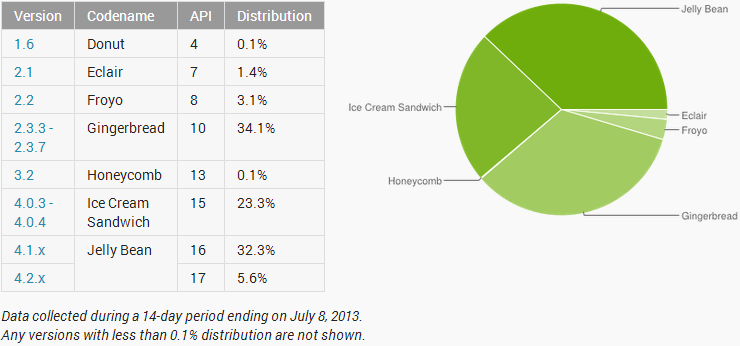
Google has updated their Android platform distribution numbers for the month of June, 2013. It appears that Jelly Bean is currently running on 37.9% of active devices (of which only 5.6% accounts for Android 4.2.2) — up from last month’s 33%.
Breaking down the numbers more specifically, 37.9 percent of Android users are using Jelly Bean, 23.3 percent have devices powered by ICS, 0.1 percent are on Honeycomb, 34.1 are stuck with Gingerbread, and 3.1 percent unfortunately still have Froyo.
OS Donut and Eclair have are almost completely vanished, but there’s still 1.5% of users somewhere out there rocking the original version.
Remember, this isn’t really representative of Android as a whole — for all we know there are millions of Android devices in the world still running on Eclair.
Google recently tweaked its algorithm in regards to how it counts users for these figures. In its own words, the company said:
Note: Beginning in April, 2013, these charts are now built using data collected from each device when the user visits the Google Play Store. Previously, the data was collected when the device simply checked-in to Google servers. We believe the new data more accurately reflects those users who are most engaged in the Android and Google Play ecosystem.
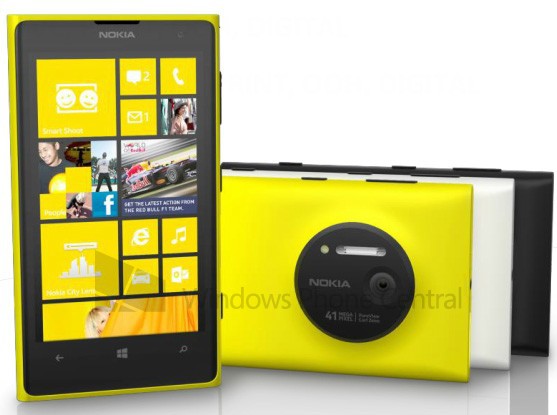
The Nokia Lumia 1020’s name was confirmed today by a couple of Flickr photos posted by Windows Phone head, Joe Belfiore and now we are running out of things to expose about the 41MP smartphone.
As we know, it will look like the Lumia 920 on the front, but will have a 41MP camera sensor, Carl Zeiss optics lens and Xenon flash on the back. Windows Phone Central has a few more tidbits to share before the official release date, and they’re quite juicy.
The Nokia Lumia 1020 will have optical image stabilization, so extra-dark shots will stay blur-free and truer to life. This is an upgrade from the mechanism in the PureView 808, which had the same sensor but lacked OIS. The device will also be able to take photos at both 32MP and 5MP at the same time in 16:9, and there will be 7:1 oversampling when converting higher-res photos down to manageable sizes. Photos taken at the native aspect ratio of 4:3 will be 38 megapixels.
It will sport 32GB of internal storage and, thankfully, 2GB of RAM, likely to help quickly offload those high-resolution images. And, like other devices shipping with the “Amber” GDR2 update, the Lumia 1020 will support FM radio and flip-to-silence, two features that will hopefully come to older WP8 devices.
As rumoured, there will be a special “Pro Camera” app exclusive to Lumia devices that will allow Nokia Lumia 1020 owners to change white balance, ISO, focus, shutter speed and flash settings. This is sounding more and more like a regular camera every day.
Features of the Nokia Lumia 1020 revealed by WPCentral :
It has optical image stabilization (OIS) built in
It takes the image in a 32MP and 5MP at the same time in 16:9
The 5MP image is over sampled dropping 7pixels into one “super pixel”
It shoots 38MP in 4:3
“Nokia 909” was an early name for it but it will be “Lumia 1020” for release
2GB of RAM, an increase of 1GB from other high end Windows Phone 8 devices
32GB of internal storage, no SD
WP8 V 8.0.10322.71
FM radio (Amber)
Flip to silence (Amber)
NFC is on board
Optional wireless charging backplate will be available
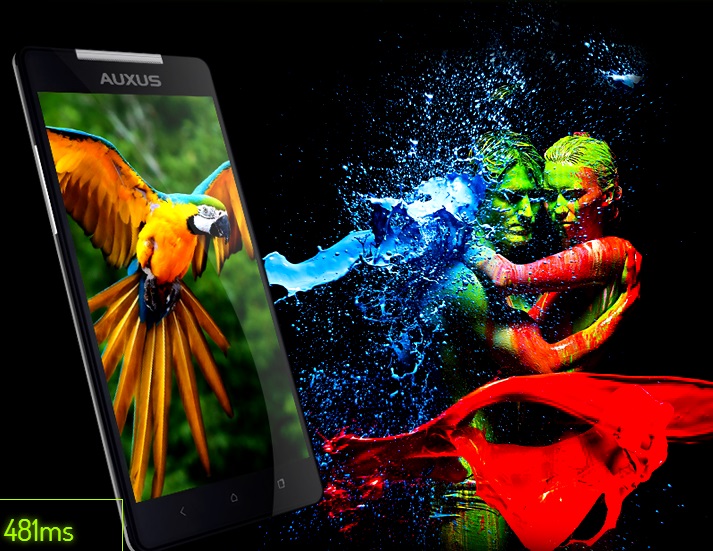
iBerry is all set to launch their first smartphone in India, the Auxus Nuclea N1.
The Auxus Nuclea N1 will have a Full HD 1080p 1920 x 1080 resolution One-Glass Solution display with Active Matrix technology. It will come equipped with a MediaTek MT6589T Quad core Turbo 1.5GHz processor and a PowerVR SGX 544MP GPU clocked at 357MHz for the graphics. The Auxus Nuclea N1 will also come with other features such as Gesture control, Voice Unlock, Magnetic sensors etc. It is a dual Sim phone 3G +2G smartphone.
The Auxus Nuclea N1 will come with a 13MP rear facing camera with a BSI sensor and AutoFocus,along with an impressive 8MP front facing camera and will run on Android 4.2 Jelly Bean. A Li-ion battery measuring 2800mAh will be used in this smartphone. Typically, the Auxus Nuclea N1 will come bundled with 4 colour variants in the box, which means users will be able to choose which colour panel they would use for the day on the basis of their occasion and costume.
The internal memory and RAM have not been specified yet.
With the use of Active Matrix Display with OGS technology together, each pixel of the display is individually controlled to provide a sharp image at a wide viewing angle so that users will have a different and a unique viewing experience.
The Auxus Nuclea N1 will go on a 10-day-pre-booking starting from 13 Jul 2013 at a price of Rs.15990 while the regular order price is set at Rs.18000. The pre-booking goes live on their website www.iberry.asia as well as on the online portal ebay.in officially.
iBerry will also be opening up over 400+ service centres across India, the list and location of which will be made available on their website on the day of pre-booking
Gionee today launched their latest smartphone of the Elife lineup, the Gionee Elife E5.
The Unibody Gionee Elife E5 is powered by a 1.5 GHz Quad Core Processorand has a 4.8″ HD Super AMOLED display at 306 PPi with 1280×720 pixels screen resolution. It runs on Android Jelly Bean v4.2. It is just 6.85mm thick.
The Gionee Elife E5 has a 5 Mega Pixel Full HD Front camera and an 8 Mega pixel BSI rear camera with additional features including Gesture recognition, face detection, Smile detection, skin tone enhancer and touch focus.The 5 MP front camera also provides enhanced video recording experience for its users.
It has a 2000 mAh battery and 16GB of internal storage. It also boasts of in-built Digital Theatre System (DTS) and 3D Surround System.
Itwill be available in vibrant colors including Yellow, Graphite Black and White. The Gionee Elife E5 would be available at an estimated price of INR 19,999.
[toggle title=”Press Release”]The world’s slimmest, HD Super AMOLED phone is here. Life will never be the same again.
New Delhi, July 8, 2013 : After creating ripples with the launch of its E-Life series last month, Gionee brings yet another specimen of impeccable craftsmanship, the E-life – E5. At 1.5 Quad Core and just 6.85 mm Thin, the E5 is sure to get heartbeats racing.
The latest in the ELIFE series, the E5 is a stunning example of exquisite style and exemplary substance. The Unibody Elife E5 is powered with a lightning fast 1.5 GHz Quad Core Processor which will enable high performance as well as high efficiency at low power consumption. With a stunning 4.8″ HD Super AMOLED display at 306 PPi with 1280×720 pixels screen resolution this piece of art provides excellent screen clarity along with super smooth multi– touch interface with an Android Jelly Bean v4.2.
The cool and stylish E5 comes with a sharp and astonishing 5 Mega Pixel Full HD Front camera and an 8 Mega pixel BSI rear camera with additional features including Gesture recognition, face detection, Smile detection, skin tone enhancer and touch focus enable a superior picture capturing experience. The 5 MP front camera also provides enhanced video recording experience for its users.
E5 powered by a 2000 mAh battery to provide a long lasting standby time with high efficiency processor with low power consumption. With an in-built Digital Theatre System (DTS) and 3D Surround System, E5 is sure to deliver breathtaking multimedia experience. E5 comes with an in-built memory of 16GB which provides plenty of space to install apps and save music and video files.
Pushing its own limits to create excellent smartphones, Gionee keeps up with the style quotient of Elife Series E5. It will be available in vibrant colors including Yellow, Graphite Black and White. The Gionee E5 would be available at an estimated price of INR 19,999. [/toggle]
Nikon will broaden its market beyond cameras as it looks to fend off the growing threat of smartphone photography.
Nikon president Makoto Kimura has expressed a desire to develop products specifically designed to counter and capitalize on the rise of smartphone photography.
“Rapid expansion of mobile devices is a change in business environment given to us,” Kimura said in an interview with Bloomberg. “Our task going forward is to find an answer to that change.”
Apparently Nikon is looking for alternative ways to generate growth – they have assembled a new Nikon Imaging team that is working on secret products that will be available in less than 5 years:
“We want to create a product that will change the concept of cameras. It could be a non-camera consumer product.”
Although Nikon has been slow to innovate in some areas, the company was the first manufacturer of note to develop an Android-based camera; the Coolpix S800c disappointed upon release with slow performance and unimpressive image quality. Kimura’s comments suggest that the company has learned from that experience and plans to make a more pronounced effort in the future.
Cameras and compact cameras are increasingly merging. Samsung has announced its own hybrid camera, the Galaxy NX. The camera runs on Android and offers 4G support and interchangeable lenses.
The president Makoto Kimura did not comment on whether Nikon is working on a smart phone.
Ex-Xbox chief Don Mattrick tried to tempt Microsoft bosses into buying Zynga years before his recent appointment as its CEO, a new report suggests.
Don Mattrick attempted to orchestrate an acquisition of Zynga during his tenure as head of Microsoft’s entertainment and devices division.
According to a report on Bloomberg, which cites a number of people familiar with the matter, Mattrick opened negotiations with Zynga CEO Mark Pincus in 2010. At that time, Facebook games were ascendant, adding millions of new players every month.
Though Zynga’s market dominance has floundered in the past few years and – according to Bloomberg’s sources – the negotiations fell through, Mattrick’s interest in the company clearly never waned as he’s set to succeed Pincus with a rather attractive deal that was detailed in all in its financial glory last week.
The Xbox head honcho eventually left following a storm of controversy over policies for Xbox One and an eventual, embarrassing U-turn on the ones that were most unpopular. Far from a knee-jerk reaction to Microsoft’s troubles, Mattrick’s departure appears to have been long planned.
Mattrick is said to make $19.3 million this year, and as much as $50 million over the next three years if certain parameters are met.
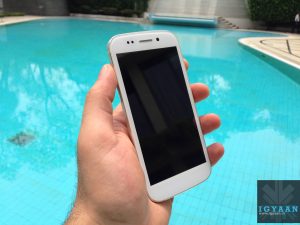
Micromax today launched their new flagship device, the Micromax Canvas 4. It has been priced at Rs. 17,999/-.
It replaces the Micromax Canvas HD at the pinnacle of Micromax’s Canvas lineup, so we take a look at what it offers over the HD.
Both the devices have 720p IPS displays.
When we talk about the screen, both the Micromax Canvas HD and the Canvas 4 sport 720p HD IPS LCD displays. Both feature a MediaTek MT6589 chipset with quad-core CPU’s clocked at 1.2 GHz.
The camera seems to be the only major difference between the 2 devices.
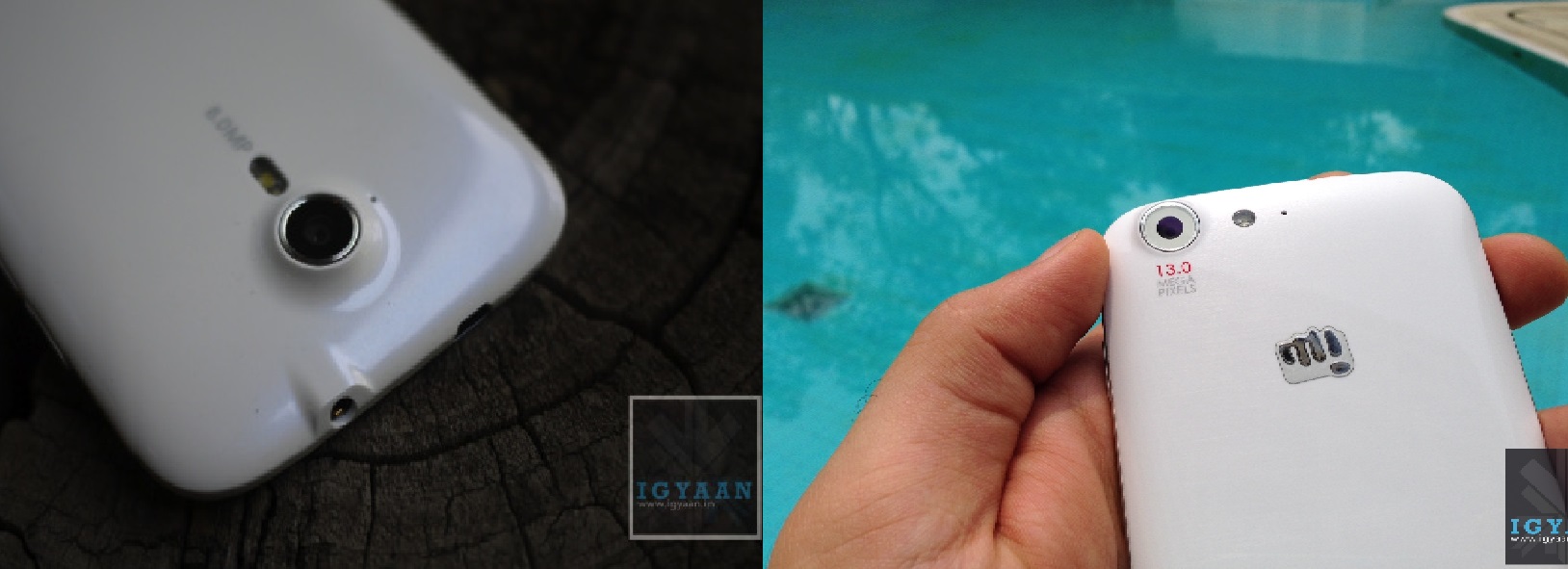
Graphics are handled by a Power VR SGX544 GPU and the battery on both is a Li-Ion 2,000mAh. The rear camera on the Micromax Canvas HD is a 8 Megapixel snapper, whereas the Canvas 4 has a 13 Megapixel camera. The front camera on the Canvas HD is 2.1 Megapixel whereas the Canvas 4 has a 5 Megapixel front camera.
Obviously, the Canvas 4 boasts of some enhancements on the software front with features like Blow to unlock and video pinning. It will also have OTA support for firmware updates.
So basically, all Micromax seems to have done with the Canvas 4 is add a better camera with some software enhancements. We’re sure this isn’t what most customers were looking for when they pre-ordered the device from their website.
Most customers will be left disappointed by what Micromax has to offer with their latest flagship device.
At an event in New Delhi today, Micromax announced their new flagship device, the Micromax Canvas 4.
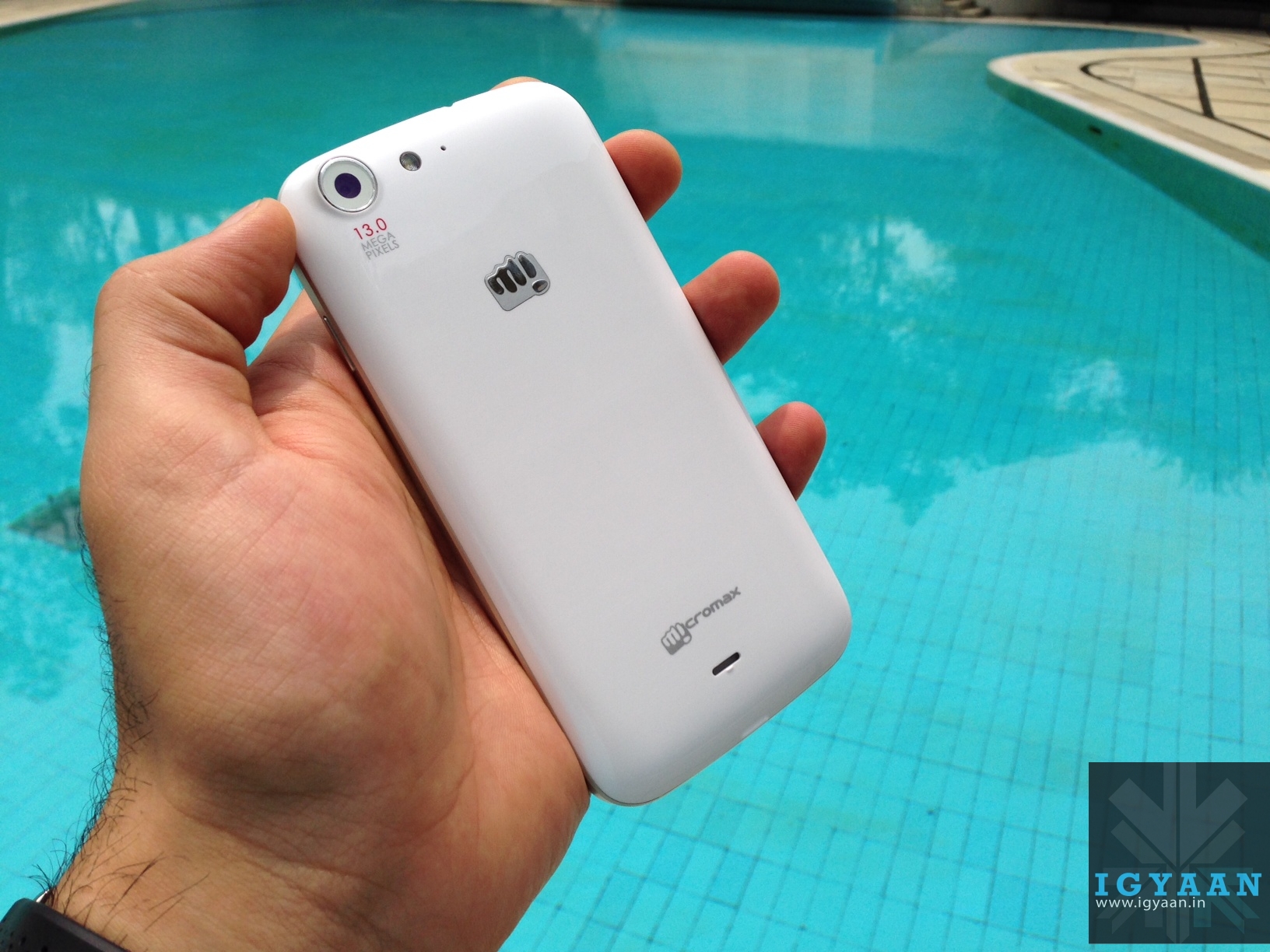
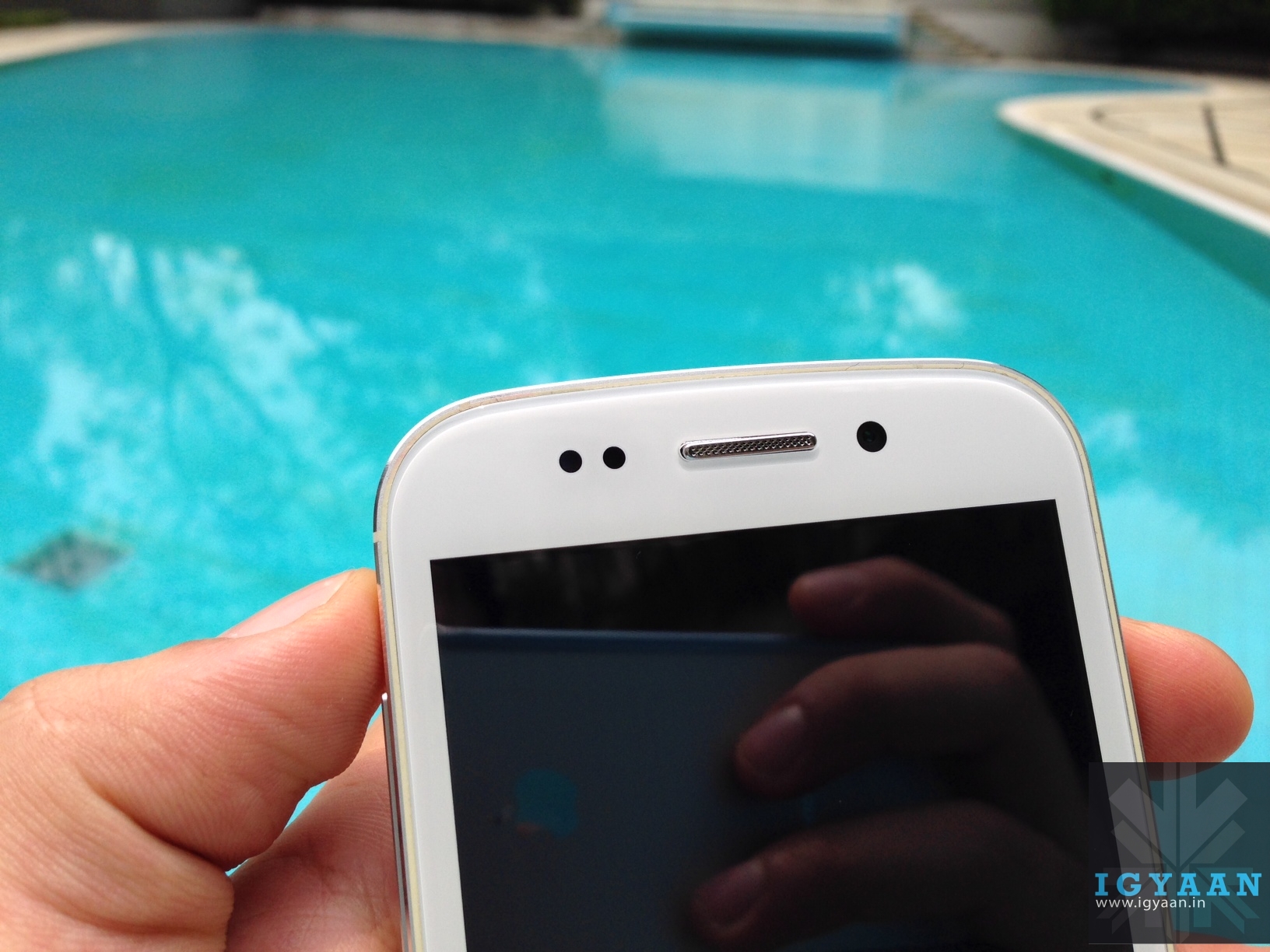
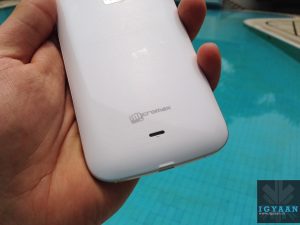
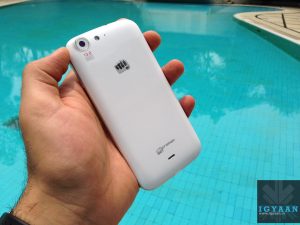
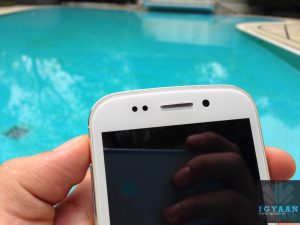
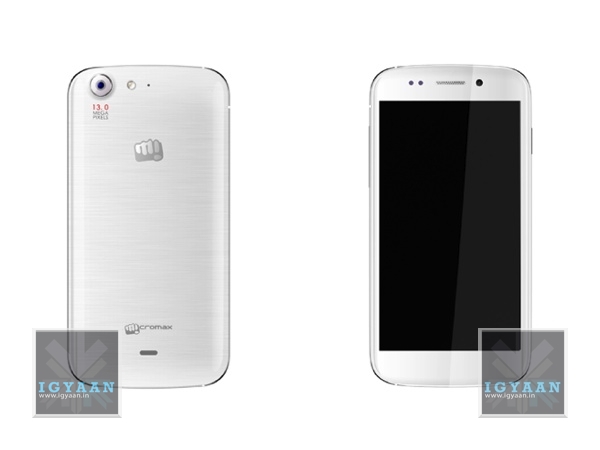
Micromax Canvas 4’s key feature is a blow to unlock software. That and a 5 MP camera in the front ensure that the users have nothing to complain about lack of basic features. The main camera is a 13 MP autofocus camera and the back panel is glazed just like on Samsung Galaxy phones.
The Micromax Canvas 4 A210 has a HD 720p display on a 5-inch screen. The phone sports the MediaTek MT6589 SoC. There will be 1 GB RAM, 16 GB internal storage and a 2000 mAh battery. It will run on Android 4.2 Jelly Bean. The phone is 144 mm high (5.67 inches ) and 76 mm wide (2.87 inches).
We’ve often heard people complain about the after sales service provided by Micromax, and it seems that Micromax is trying to improve their reputation. At the event today, Micromax announced that if you submit your Micromax Canvas 4 for repairs at one of their service centers and the device is not fixed within 7 days, they will give you a brand new replacement free of cost.
At the moment, this scheme is only available for Canvas 4 devices, but Micromax said they will be rolling out this feature to other devices in the coming months.
Although many websites were reporting that the Micromax Canvas 4 A210 will launch for upwards of 24 thousand Rupees, it’s been officially launched today at a price of Rs 17,999.
Micromax Canvas 4’s key feature is a blow to unlock software. That and a 5 MP camera in the front ensure that the users have nothing to complain about lack of basic features. The main camera is a 13 MP autofocus camera and the back panel is glazed just like on Samsung Galaxy phones.
The Micromax Canvas 4 A210 has a HD 720p display on a 5-inch screen. The phone sports the MediaTek MT6589 SoC. There will be 1 GB RAM, 16 GB internal storage and a 2000 mAh battery. It will run on Android 4.2 Jelly Bean. The phone is 144 mm high (5.67 inches ) and 76 mm wide (2.87 inches).
Micromax presently moves out over 300,000 units of their canvas series on a monthly basis and a device like this priced around the 15,000 Rupee price mark could easily increase that by 50%.
Micromax had managed to create a lot of buzz around the Micromax Canvas 4 launch with aggressive marketing on social media and Television. It also started pre-booking of the Micromax Canvas 4 at a price of Rs. 5,000.
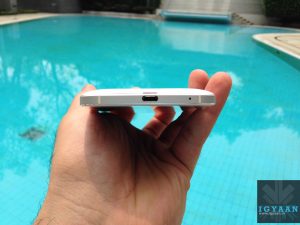
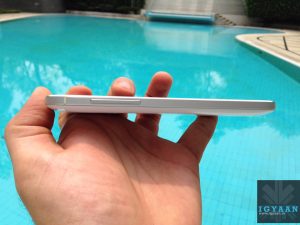
Micromax has launched the Canvas 4 A210 in White and Black colors, with a graphic texture back panel. There will also be a flip cover included inside the box. You can expect iGyaan style videos to follow suit.
Micromax today launched the Micromax Canvas 4 at an event in New Delhi.
In terms of specs, the Micromax Canvas 4 sports a 5 inch 1920 x 1080 display. The phone is powered by a MediaTek MT6589 SoC. There will be 1 GB RAM, 8 GB internal storage and a 2500 mAh battery. It will run on Android 4.2 Jelly Bean. The phone is 144 mm high (5.67 inches ) and 76 mm wide (2.87 inches).
The phone has been aggressively priced as the company will expect to do large numbers in terms of sale.
You can watch our live hands-on with the Micromax Canvas 4 below :
For music aficionados, it should be made clear that the importance of headphones cannot be overestimated. While some of us are content to walk around with ear-buds, there are more than a few that need to have a massive pair of phones pumping the jams into their ears.
A Glaswegian family-run business has come up with an innovative solution to smartphone battery life using headphones: OnBeat Solar headphones that recharge your phone on the go.
How it works
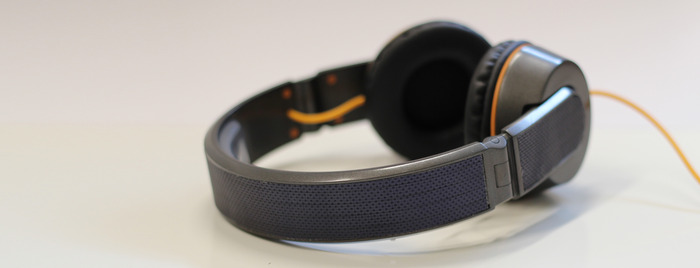
The OnBeat Solar Headphones have an integrated flexible solar cell that covers the full headband which capture solar energy whilst out and about. The solar cell has a surface area of 55cm3 with a charge capacity of approximately 0.55W. The energy is stored in two light-weight Lithium Ion batteries held within the two ear cups for a balanced weight and fit on the head. For those rainy days they have also developed the headphones to be able to be charged via USB directly from your computer or mains socket.
The OnBeat Solar headphones feature a lightweight and fully adjustable folding headband with custom developed ear-pads to ensure a comfortable fit for hours of gaming and music.
It can also be charged up at home via mains, making the device like a solar-powered battery pack rolled into a pair of headphones.
But Andrew Anderson, who is also a music producer, hasn’t scrimped on audio quality. “We don’t want to create a novelty [product],” he says. “We want to create a good quality set of headphones”.
Their KickStarter page reads : We have been working hard for the last year to develop a set of headphones that not only provides excellent sound quality, but simultaneously re-charges your mobile devices on the go. The integration of rechargeable batteries and a full headband solar panel means that wherever you go you will be able to keep your devices running all day.
The OnBeat Solar headphones have 40mm audio drivers, an impedance of 32 +/- 10% Ohms, frequency response of 20hz to 20,000Khz and sensitivity of 100 +/- 3dB.
At the moment you can donate to the Kickstarter (the company is seeking £200,000), which actually bodes well for you in the long run. You can reserve a pair on Kickstarter for the early bird price of £69 plus £20 shipping, with an expected delivery date in February next year.
The OnBeat Solar headphones might not be such a bad idea for us in India, as we are mostly exposed to ample sunlight!
The reliable @evleaks recently posted an image of the LG Optimus G2 and now LG has more or less confirmed that the device will be unveiled at an event in New York on August 7th.
It’s been suggested that this machine will be a hero device for LG to take on the HTC One and the Samsung Galaxy S 4. To do this, the company is tipped to be bringing a top-notch display with edge-to-edge technology making for a rather unique experience in the palm of the users’ hand.
Added together with the rest of the year’s leaks and projections to date, the LG Optimus G2 is expected to feature a full 1080p HD 5.2-inch touchscreen with a retina-busting 423ppi pixel density.
A Snapdragon 800 processor backed by up to 3GB of RAM will power the LG Optimus G2, with the rear will feature a 13-megapixel camera. Android 4.2.2 Jelly Bean is expected to be driving things at the helm, with a new build of the Optimus UI running on top.
@evleaks had earlier posted a leaked shot of LG Optimus G2 that indicated the volume rocker keys will be placed behind the smartphone.
This smartphone will likely start retailing from the third quarter of 2013.
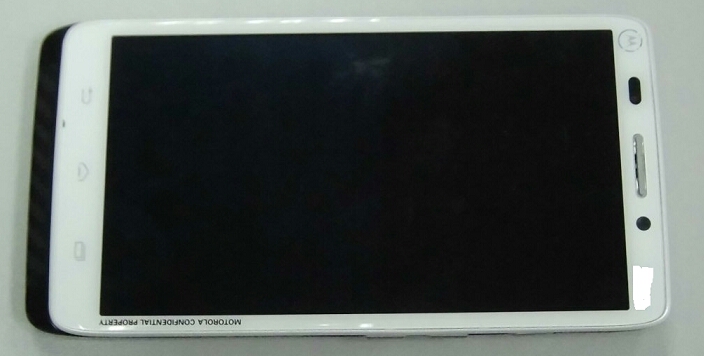
A photo of the Motorola Droid Ultra XT1080 has appeared on the XDA Developers forum as leaked by user xavierk75, according to Engadget. Earlier this week the first press images appeared of Motorola‘s upcoming DROID MAXX.
There is absolutely zero details to go along with the leak, but hopefully more will be coming. A random 1-post user over on XDA revealed the photo, so we’re stuck waiting for more. Right out the gate we see Motorola has changed their mind from last year, and they’ve returned to capacitive touch hardware buttons.
The Motorola Droid Ultra in the photo shows a white face plate with thin bezels. It has a speaker and sensors on its top and a power button and volume controls on one side. Just beside the display, the smartphone is labelled “Motorola confidential property.” It also sports the new Motorola logo that was launched some time ago, the same one which has been seen on other purported photos of leaked Motorola phones. White is expected to be one of the color choices that will be available for the handset, along with red and black, so there may be a chance that this is a real image of the device.
Rumoured specs of the Motorola Droid Ultra include a Dupont Kevlar coating, various color options, a 4.3-inch, 540 x 960-pixel Super AMOLED Advanced qHD screen, Dual-Core 1.5GHz processsor, Android 4.1 Jelly Bean, 8GB of memory, 2000 mAh Li Ion battery, NFC, and 8 MP/0.3 MP cameras.
@evleaks says that the Motorola Droid Ultra has the product code XT1080, whereas the Droid MAXX has the code XT1080M.
We grew up listening to the classic Beatle ( or Kishore Kumar for most) songs that our parents used to listen to. As we matured, we formed our own taste and style in music, and the technology surrounding us evolved. And as consumers, we adapted to it. We embraced the technology, incorporating it into our lifestyle and thereby becoming routine. Music plays a vital role in our society.
Hence, it was only natural for most of us to own a portable mp3 player that we would listen to every day, everywhere. But dwindling sales have led many to believe that the days of portable media players are numbered. We take a look.
Why MP3?
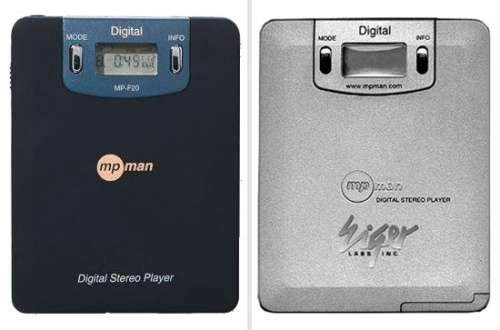
Before there were any MP3 players, there were MP3s: invented in 1987 by a group of German scientists looking for a way to shrink video files so that they would be easier to use on computers. To achieve this they stripped out as much “extraneous” data as possible, supposedly the stuff we wouldn’t miss. This loss of quality is at its least discernable when listening on headphones with the volume cranked up, so by 1998 the first portable digital music player had arrived: the MPMan F10, created by South Korean company SaeHan. (It wasn’t a hit; SaeHan now mostly manufactures textiles.)
The world’s first portable media player.
Mp3 also known as MPEG Audio Layer 3 is used to compress audio files so they take up lesser hard disk space. It can be stored and played on many digital devices such as computers, mobile phones and portable mp3 players. Consumers use mp3 files to listen to and store music.
For example, “A four-minute song on a CD would create a file of 42 MB (megabytes), while the same song encoded to MP3 would be reduced to just 3.84 MB. This reduction means that the file requires one-tenth of the hard disc space, allowing 10 times as much music to be stored in the same space.”
Quick Adoption
These new Portable Media Players would hold 1000 songs, could be recharged within an hour and would cost around 3-4k at that time. They were compact, came in a bunch of colours and were the “in thing” during that era.
[pullquote_left]”The internet and easy-to-share programs like Napster and Limewire played the role of catalysts for Portable Media Players by providing easy and free access to music files.”[/pullquote_left]
By 2004, the digital music market was still wide open, with MP3 players comprising a small portion of all portable audio sales, and the biggest players wanted in. Apple had launched the iTunes Music Store in October of 2003, but wouldn’t sell a billion songs for nearly two years. Companies like Archos, Creative, and iRiver had been building players all along, but the early aughts weren’t for purely digital music yet. With the arrival of faster internet speeds and easy-to-share programs like Napster and Limewire, acquiring music was easier than ever.
This led to people opening up to the idea of carrying a portable, compact device to fulfill their music needs.
Apple – The Biggest Player
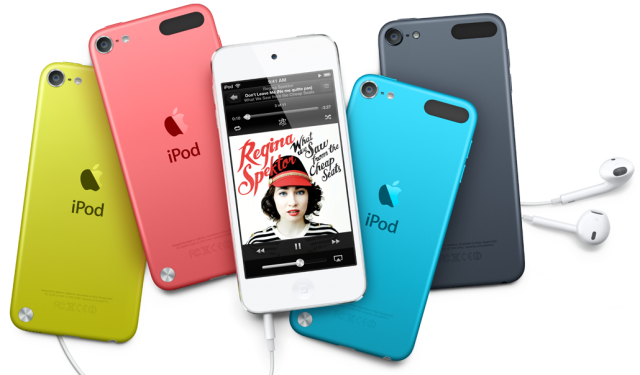
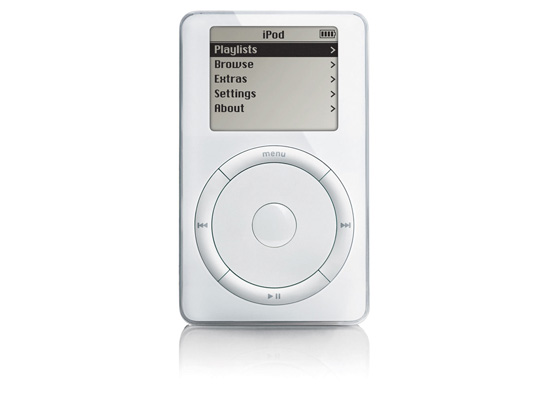
Apple was without doubt the biggest player in this segment. The iPod was a very clever piece of hardware that utilized new 1.8?”hard drives that Toshiba had developed for a market that didn’t exist yet. Encased in a pearl white and metal casing, the iPod utilized a moving scroll wheel (later, a touch-based one) that served a novel scrolling interface on a relatively large 2″ monochromatic display.
The first Apple iPod
The iPod would set the standard for Portable Media Players for years to follow, ignoring the plethora of buttons that plagued devices at the time, going so far as to omit a power button. But while the iPod hardware had many of the markings of a success story, its ecosystem (or rather, lack thereof) and price held it back from significant sales numbers for the first three years of its life.
During that time, numerous other companies realised the hidden potential in this segment of technology. MP3 players were substantially less expensive compared to CD players.
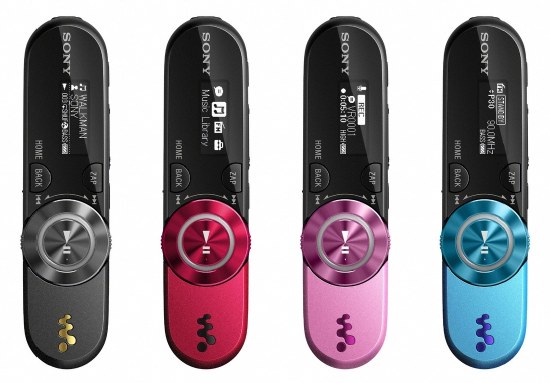
The Sony Walkmans were a hit among teenagers.
Companies like Sony, Philips, Cowon began churning out various different models of Portable Media Players. The Sony Walkman series gained popularity among teenagers.
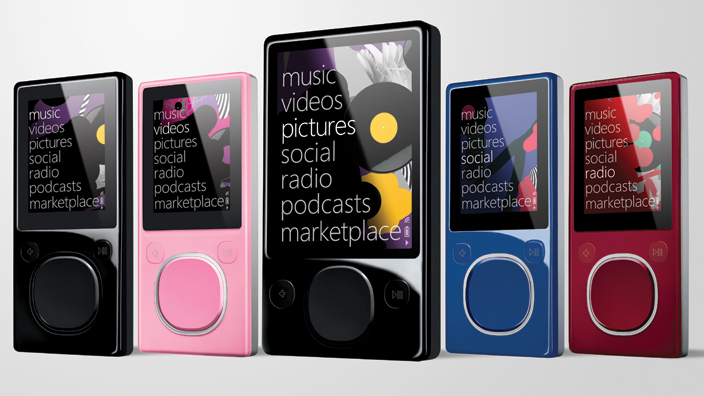
Microsoft unveiled various versions of the Zune to compete with Apple.
Microsoft’s Zune was probably Apple’s closest competitor. The hardware was slightly bigger than iPod’s similar hard drive model at the time, but came equipped with a large 3″ color screen, an FM tuner, a segmented circular directional pad that favored the Media Center-derived Twist interface for navigating menus, and a pair of buttons on its face mirrored by a shallow concavity on the backside. The player’s software was also a direct descendant of the Portable Mobile Center OS.
The casing came in five iridescent color schemes. Connectivity was provided by a proprietary 30-pin connector similar to ones used by the iPod. But their success didn’t last long.
Non-Apple Portable Media Players were put to shame. Bruised. Battered. Beaten to death. All gadgets that attempted to outrank the iPod were ambushed and annihilated. Unless you held a personal grudge against Mr. Steve Jobs, or have had some downers with Apple in the past, you wouldn’t switch to a media player not belonging to the Apple clan.
The Demise
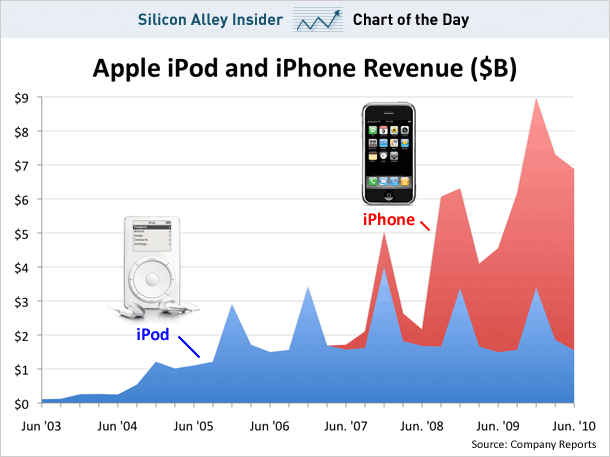
In 2007, Steve Jobs introduced the first iPhone to the world. People were awestruck. But right there, a small iPod logo on the device’s screen spelled the beginning of the end for portable media players.
The iPhone killed its own parent product.
The iPhone promised a music experience which matched that of the iPod. Except you could make calls, play games, surf the internet, all at the same time while listening to your favourite tracks. Why have two gadgets when you can have one?
We all love our shiny smartphones, but the latest stats on MP3 players prove that the sleek handset in your pocket is a cold-eyed killer.
Yep, according to Mintel’s research sales of the humble portable media players – and let’s face it that means mainly Apple iPods – have dropped by a massive 22 per cent year on year.
‘Microsoft will no longer be producing Zune players,’ the company recently said in a statement timed very close to Apple’s latest iPhone announcements – a good time for tech companies to bury bad news.
Earlier, mobile phones did not offer music playback and so consumers were forced to carry a separate MP3 player, but when the smartphone market took off in 2007, offering devices with huge storage and comprehensive media players, the MP3 player’s days were numbered.
Sales have been dwindling.
Despite Sony and Samsung each offering alternatives to the iPod with their Walkman and Galaxy ranges respectively, iPods dominates the MP3 player market; but their sales are falling continuously as smartphones continue to thrive, and while the iPod classic is still available, it features in none of Apple’s advertising and hasn’t received an update for more than three years.
I personally like using my 3rd generation iPod Nano and would’t trade it for anything, but smartphone provide me with the convenience of not having to carry two separate devices in the notorious Delhi public transport.
So while you may still use your portable media players while at the gym (though I’ve seen people use tablets to listen to music in the gym! Ridiculous!) or while out for a jog, the fact is that the end of MP3 players is near.
EVLeaks, the source of almost all major leaks of the tech world, has just released an image of the rumoured Motorola Droid Maxx.
EVLeaks has also posted a tweet with the names of several upcoming Motorola smartphones and their corresponding model numbers. According to the leak, the XT1030 is the Droid Mini and the XT1080 is the recently-leaked Droid Ultra. The tweet also claims that a Motorola Droid Maxx is coming with the model number XT1080M.
The render shows a device with the same angled corners as previous Motorola Droid Razr devices and a kevlar coating that wraps around to the front of the phone. Interestingly, this DROID MAXX also appears to have ditched the on-screen keys found on its DROID RAZR MAXX HD predecessor in favor of a set of capacitive buttons. We can also see a front-facing camera near the top of the phone as well as a power/lock button and volume rocker on its side. We expect the device to have a massive battery, similar to the one seen on the Motorola RAZR MAXX.
Along with the trio of Droid devices, @evleaks says that the Moto X will come to market carrying the model number XT1060. No specs are available yet.