Author: Shivaank Rana

  • Leaked : Nokia EOS 41-MP PureView Hardware Photos

    Leaked : Nokia EOS 41-MP PureView Hardware Photos

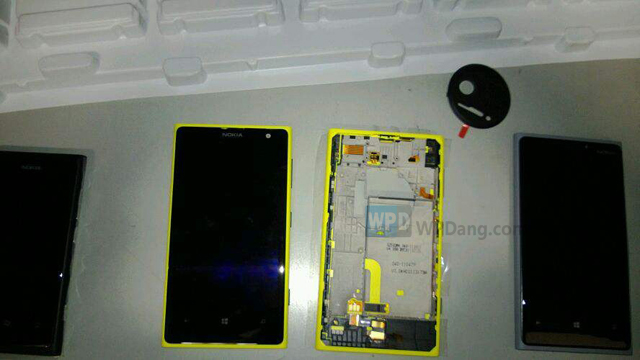
    The reliable leakers over at WPDang have trudged up some interesting shots of the hotly anticipated Nokia EOS, a Lumia-looking device, similar in size to the Lumia 920, with an enormous camera sensor and lens combination, like the PureView 808.

    Nokia EOS

    Like the PureView 808, this model appears to have quite a hump on the back of the phone to accommodate the 41MP sensor, which is believed to be identical to the one found in the original. There will be undoubtedly be improvements made to the lens system, however, and you can expect the inclusion of optical image stabilization and a host of other algorithmic optimizations as well.

    The front of the device appears nearly identical in size and shape to other Lumia devices, but is not squared off like the recently-announced Lumia 928 and 925. It will apparently feature a 4.5-inch 1280×768 pixel AMOLED display, like the Lumia 928, along with wireless charging support and a full-sized Xenon flash.

    Nokia EOS

    The PureView 808 creates near-lossless photos, even when zooming, by using a technique called oversampling, or pixel binning, which combines the data captured by multiple pixels into one sharper, less grainy pixel. This works to create photos of sharable 5MP size from a much larger sensor. It seems the handset will also support wireless charging, and there are whispers even about variable aperture on the camera.

    The veracity of these photos is not completely verifiable, but they look about as real as any leak can be.

    The Nokia EOS release date is said to be July 9th and if true the official unveiling should happen very soon.

    [Mobile Syrup, WPDang]

  • Samsung Galaxy S4 Active Is Now Official

    Samsung Galaxy S4 Active Is Now Official

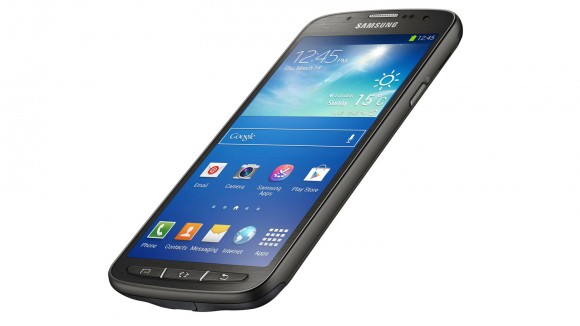
    The Samsung Galaxy S4 Active is now official after what seems to be months rumours. 

    “The Galaxy S4 Active is the newest addition to the Galaxy series and is purposefully designed for active users who love the outdoors,” JK Shin, CEO and President of IT & Mobile Communications Division at Samsung said. “Samsung has taken the innovative features of the Galaxy S4 and added breakthrough protective design elements to create a device that thrives in an active environment and is built for a lifestyle of travel and exploration.”

    Specifications for the Galaxy S4 Active include a 5-inch 1080p Super LCD display, a Qualcomm Snapdragon 600 quad-core processor clocked at 1.9GHz, 2GB of RAM, 16GB of internal storage, and an 8-megapixel camera. That’s down from the 13-megapixel shooter found on the standard Galaxy S4, but Samsung says that this camera is optimized to take pictures underwater thanks to a new “Aqua Mode”.

    galaxy s4 active

    A microSD card slot is also included for expandable storage up to 64GB, and just like the Galaxy S4, the Active features a large 2,600mAh battery. Android 4.2.2 will run on the phone out of the box. That added protection against the elements brings a little bulk to the phone, though. Samsung says the Active is 9.1mm thick and weighs 151g. That’s a slight jump from the Galaxy S4’s 7.9mm thickness and 130g weight.

    In terms of the Samsung Galaxy S4 Active release date all we know is that it will go on sale sometime this summer in select markets.

  • “Smaller” Windows 8 Tablets To Get Office 2013 For Free

    “Smaller” Windows 8 Tablets To Get Office 2013 For Free

    Aside from announcing that Outlook 2013 will be coming to Windows RT 8.1 later this year, Microsoft has revealed at Computex 2013 that all new “small” x86 tablets running Windows 8 will come with basic Office 2013 apps for free.

    So far, there are few details regarding what products will be eligible for the bundle, what version of Office will be included and whether it will be a time-limited deal, but we do know that Word, Excel, PowerPoint and OneNote will form the free package.

    Only x86 Windows 8 tablets will qualify for the bundle, as they are the only devices able to run the full version of Windows 8. The ARM processors used to power Windows RT devices, such as the Microsoft Surface RT, can’t run x86 applications and will miss out.

    This follows with what we’ve seen in recent tablet launches, such as the 8-inch Acer Iconia W3, which comes with a free copy of Office 2013 installed out of the box. Expect more information about Windows 8 and the inclusion of these Office 2013 apps at BUILD 2013, Microsoft’s developer event scheduled for later this month.

    Microsoft is also adding a version of its Outlook email and calendar app to Windows RT — the version of Windows 8 that runs on ARM-based chips from Qualcomm and Nvidia. Prior devices, such as Surface RT, came with only Word, Excel, PowerPoint and OneNote, along with a custom e-mail and calendar program.

    “We’re always listening to our customers and one piece of feedback was that people want the power of Outlook on all their Windows PCs and tablets,” Microsoft said in a statement.

  • Lenovo Launches 6 New Phones, Including K900 With World’s First Intel Atom Z2580 Processor.

    Lenovo Launches 6 New Phones, Including K900 With World’s First Intel Atom Z2580 Processor.

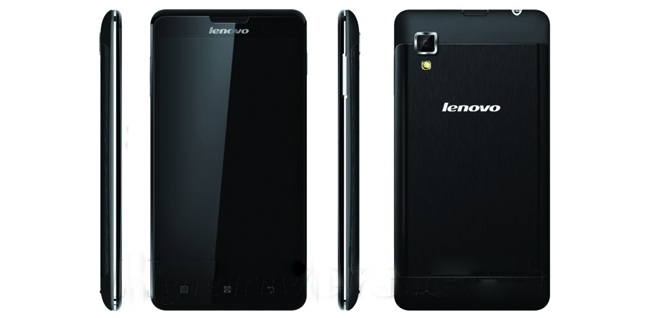
    Lenovo today launched 6 new smartphones in India.

    Lenovo

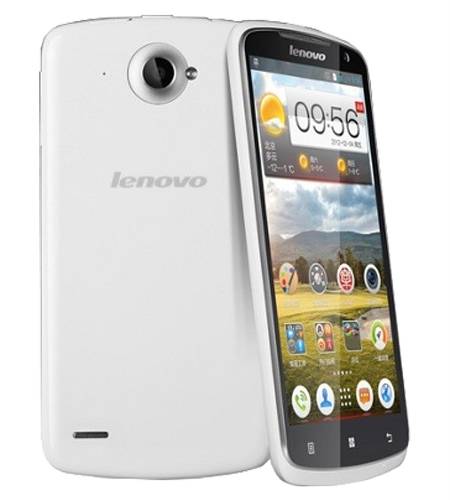
    The flagship device will be the K900, which is the world’s first smartphone based on the latest Intel Atom Z2580 processor, clocked at 2GHz and which utilizes Intel’s Hyper-Threading technology to boost performance.

    Features of the new smartphone include a 5.5″ IPS display with 1080p full high-definition resolution with 400+ pixels-per-inch, a 13MP camera with Sony Exmor BSi sensor, an 88-degree viewing angle front camera and a graphics media accelerator.

    The Lenovo K900 has been priced at Rs. 32,999/- and will be available across India from July 13. 

    Lenovo

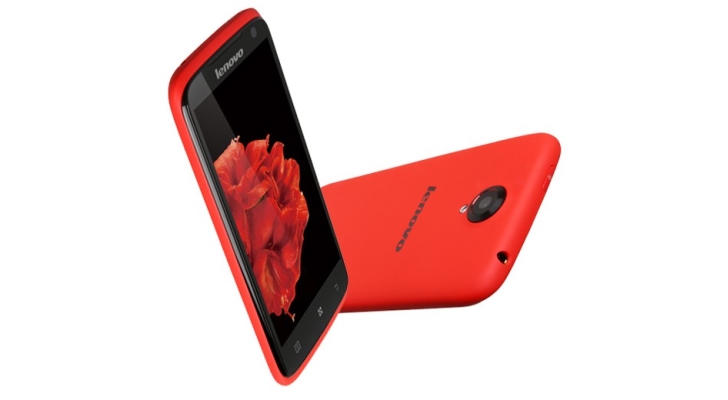
    The P780 has been launched with a massive 4,000 mAh battery. A 5-inch IPS display, a 8MP camera, and a 1.2 GHz quad-core processor. It has been priced at Rs 22,529/-.

    Lenovo

    The Lenovo S920 runs on Android Jelly Bean and has Dual SIM support. It has a 5.3 Inches IPS display (1280 x 720), 1.2 GHz Quad-core MTK 6589 Processor with 1GB of RAM, 8MP rear and 2MP front camera with LED flash and autofocus, 4GB Internal memory, expandable up to 32GB via microSD card and a 2250 mAh Li-Ion battery. The retail price for the S920 is Rs. 26,399/-.

    lenovo

    The Lenovo S820 has a 4.66″ (720 x 1280 pixels, 315 ppi pixel density) IPS LCD display and runs on  Android Jelly Bean. It is powered by a Quad-core 1.2 GHz MTK 6589 processor with 1GB of RAM. It features a 12MP rear and 2MP front camera with LED flash and Autofocus, 4GB Internal memory, expandable up to 32GB via microSD card and a 2000 mAh Li-Ion battery. It has been priced at Rs. 19,599/-.

    Lenovo

    Next is the Lenovo A706, which sports a 4.5-inch FWVGA IPS capacitive touchscreen display. That’s a 16:9 854 x 480 screen resolution which should bring the pixel density to an average 217ppi. Under the hood, the Lenovo A706 uses a quad-core processor that clocks at 1 GHz. While it is equipped with 1GB RAM, it only has 4GB worth of internal storage. It has been priced at Rs. 15,949/-.

    Lenovo

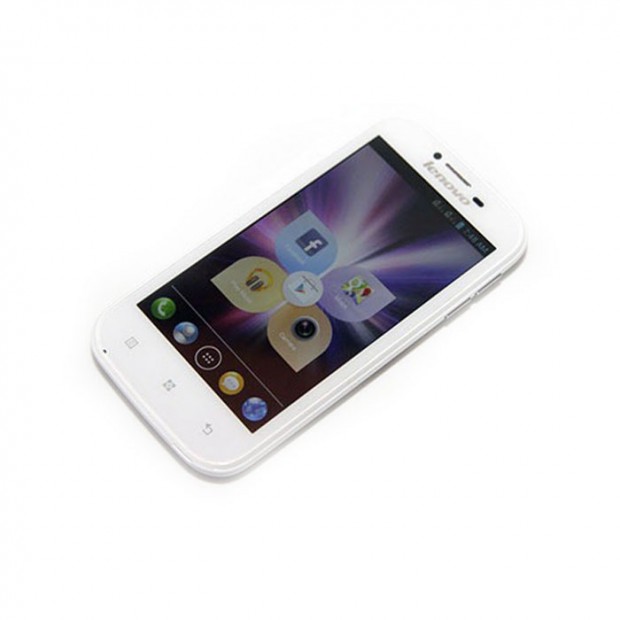
    Lastly, the Lenovo A390 has a  4″ (480 x 800 pixels, 233 ppi pixel density) display and is powered by a dual-core 1 GHz processor with 512MB of RAM. It too has 4GB of internal memory and a 5 MP camera. It has been priced at Rs. 8,689/-.

  • Google Glass XE6 Update Brings HDR Photography, Captioning

    Google Glass XE6 Update Brings HDR Photography, Captioning

    Are you among the few out there with Google Glass? Now you’ve got better pictures — and the ability to add a caption – on the way.

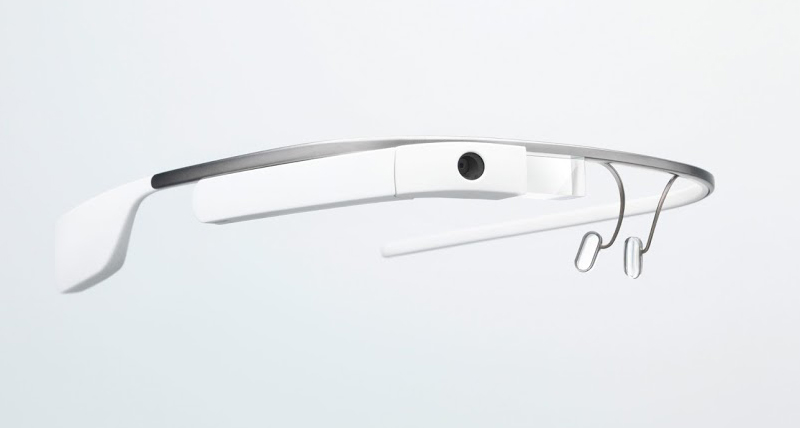
    Google has begun rolling out a software update for the Google Glass heads-up-display computers with major changes to the way the device takes and handles photographs. Notably, the device will now take photos in rapid succession so you can choose the best photo possible.

    Google

    The update brings “rapid sequence of shots”. This feature takes a burst of photos with every photograph that is taken. Those multiple images are then merged together, producing a single image that is more detailed and better exposed than the previous images Glass would take.

    You can now shoot HDR images on Glass, which will help in high contrast situations. This involves taking a brighter, darker and mid-range image and combining them together to reproduce a fuller range of tones. It’s very common now on smartphones and other cameras, so it’s nice to see it come to Glass.

    There’s also a new option to add a photo caption via voice as you share your photo out. Just tap and talk and a caption will appear with your social sharing to Google+.

    The camera aside, there are some other small changes and improvements that are included in update XE6, such as a change to the shut down notification sound and Off-Head detection sound. Hangouts produces a ring when connecting, Google Now Sports and Birthdays cards are new and improved, off-head detection is better, and several small fixes have been applied.

    [The Next Web]

  • HTC COO Departs After Reporting Highest Revenue In 11 Months

    HTC COO Departs After Reporting Highest Revenue In 11 Months

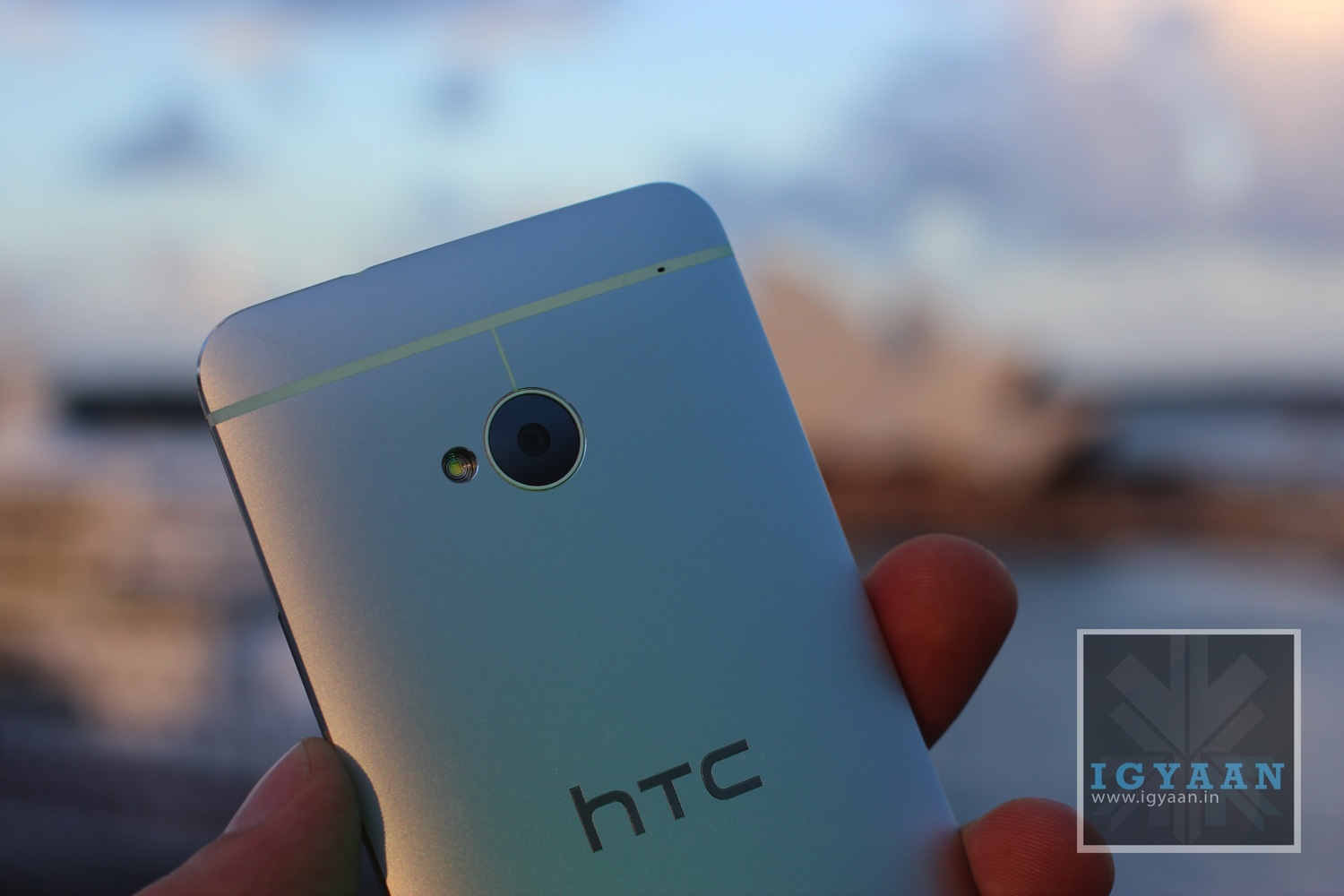
    HTC reported that sales of their flagship HTC One hit ‘around 5 million.’ This is certainly great news for CEO Peter Chou as he previously declared that he would resign if the One was not a success. For now the all-aluminum Android is pressing forward. Earlier today the company their strongest month of revenues in almost a year. Unaudited revenues ending May 31st hit $967 million, but still down 3.3%.

    That’s the good news. Unfortunately another exec has departed the company. Bloomberg is reporting that Matthew Costello, Chief Operating Officer, has decided to part ways after a 3-year stint. No other details were given, but “Costello will stay on as an executive adviser after moving to Europe.” His role will be absorbed by Fred Liu, currently president of engineering and operations, and will now oversee “operations, quality, sales operations and services.”

    This marks the seventh HTC executive to fly the coop since the beginning of the year. According to The Verge, the May departure of Asia CEO Lennard Hoornik and Kouji Kodera, chief product officer, were the latest in a slew of employee losses, including Jason Gordon, vice president of global communications; Rebecca Rowland, global retail marketing manager; John Starkweather, director of digital marketing, and Eric Lin, product strategy manager.

    In an interview last week with AllThingsD, Jason Mackenzie, HTC’s president of global sales, sought to put the departures into context and suggested that the media was blowing them out of proportion.

    “HTC has been around for 15 years now, so it’s still a relatively young company, and still a company where it feels like a family. It feels like a mom and pop organization because many of the founders are all still there. And so it’s tough when we lose one employee; we’re like that,” he said. “But the news around this ‘mass exodus’ has really been overblown. We’re a big company today and we’ve lost a few people. Some were planned and some were not. But it’s not masses of people.”

    Another interesting point in the report notes that HTC will be forming a new quality assurance division that will “handle product lifecycle matters” and “product reliability.” This division will be run by Georges Boulloy and will most likely hone in on improving device launch time.

    [Mobile Syrup, The Verge]

  • Sandisk Announces Extreme II SSD (PR)

    Sandisk Announces Extreme II SSD (PR)

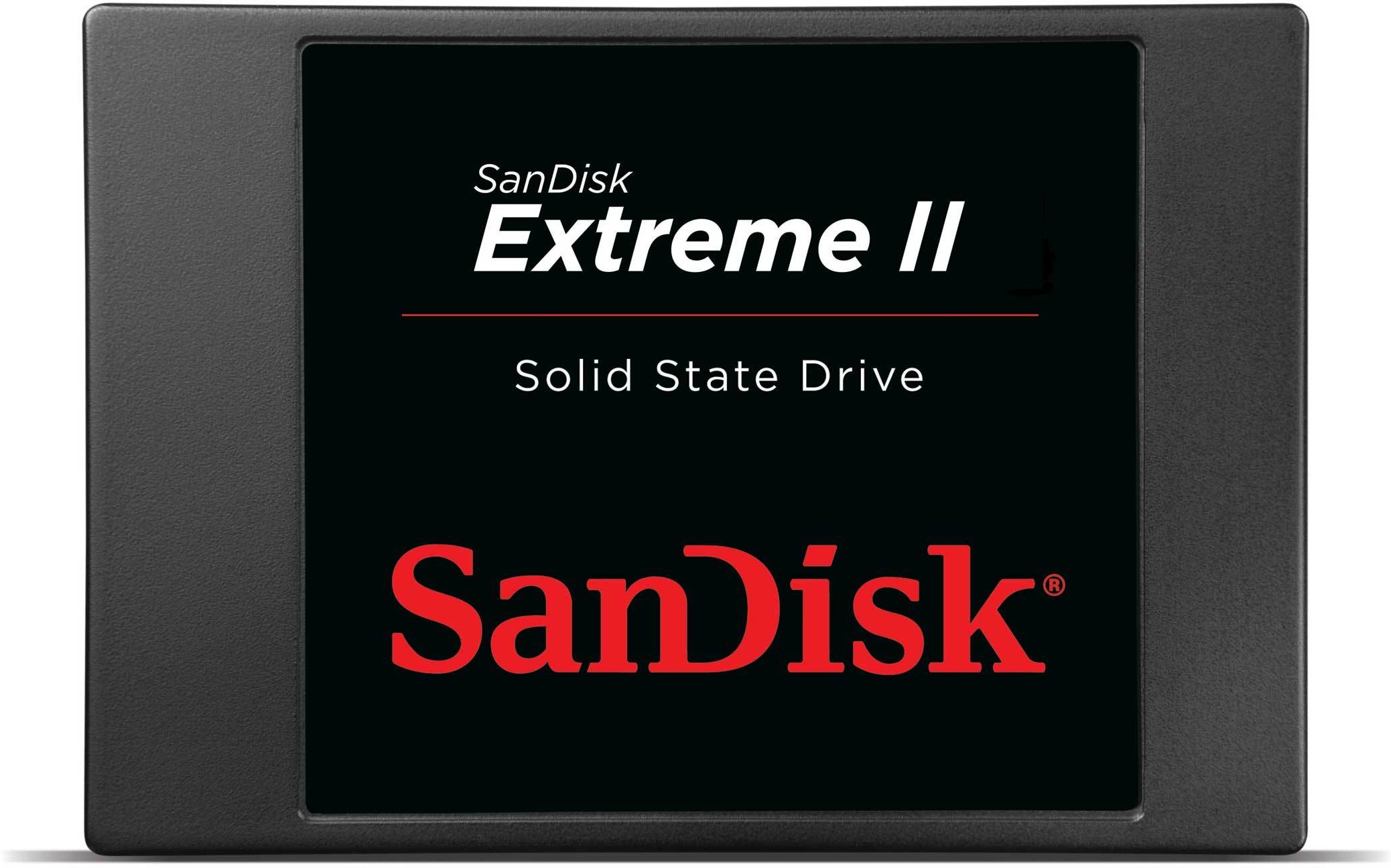
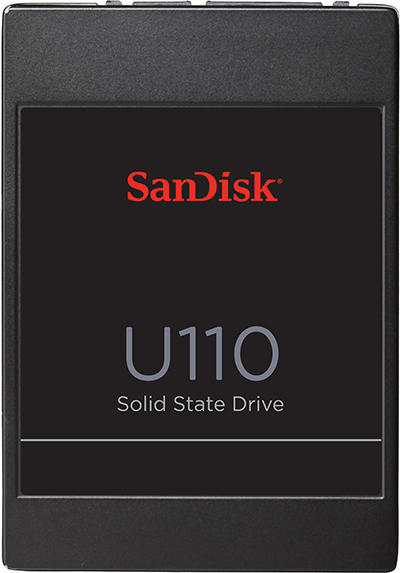
    SanDisk announced the release of the SanDisk Extreme II, U110 and i110 SSDs which are designed for OEMs and extend SanDisk’s line-up by offering drives that match a range of applications.

    These Solid State Disks use 19 nm NAND which likely is manufactured by Flash Forward, the joint venture between Toshiba and SanDisk. The drives will become available in capacities of 120, 240 and 480 GB.
    Extreme II

    Zeroing in on the Extreme II SSD, the company hails it as a faster devices that “significantly” speeds up data rates and makes both start up and shutdown faster. SanDisk aims it at gamers, too, saying it makes game loading faster and improves game play.

    The Extreme II SSD offers a maximum read rate of 550MB/second and a maximum write speed of 510MB/second, making it faster than the original Extreme SSD. There’s also up to 95,000 in random read IOPS, and 78,000 in random write IOPS.

    SanDisk has also incorporated their nCache technology in these drives which is a large non volatile write cache,  which should improve random write performance.

    SanDisk is also announcing that their SanDisk X110 SSD is now shipping in an mSATA form factor with capacities at 32GB, 64GB, 128GB and 256GB. The new mSATA SanDisk X110 SSD is now available through SanDisk for Business.

    [toggle title=”Press Release”]SanDisk Extends Innovative SSD Line-up for Consumers, PC Makers
    Introduces SanDisk Extreme® II SSD for Superior Computing Performance and Reliability for Gamers and Multimedia UsersNew SanDisk U110 SSD and SanDisk iSSD™ i110 integrated storage device Offer Fast, Compact Storage for PC OEMs
    TAIPEI, Taiwan —
    SanDisk Corporation (NASDAQ: SNDK), a global leader in flash memory storage solutions, today announced that it has further expanded its trusted and broad solid state drive (SSD) portfolio with the addition of three new models – the high-performance SanDisk Extreme II SSD for technology enthusiasts and gamers, as well as two new OEM SSDs designed to enable cutting-edge notebooks and tablets.

    All of the new SSDs introduced by SanDisk today are built with the company’s advanced 19 nanometer (nm) manufacturing process technology and rely on SanDisk’s intelligent flash memory architecture. This combination enables SanDisk to create SSDs that are exceptionally responsive, reliable and energy-efficient1. SanDisk will be showcasing its full SSD line-up at the company’s booth at COMPUTEX TAIPEI on June 4-8, 2013 (booth number N0804).

    “Today, we again raised the bar by bringing our latest technology innovations to a new generation of SSDs that address the most demanding computing needs,” said Kevin Conley, senior vice president and general manager of Client Storage Solutions at SanDisk. “The SanDisk Extreme II SSD, our fastest and most responsive SATA III SSD to date, is a great option for gamers, PC enthusiasts or any consumers who want to get the most from their computing experience. And, we’ve enhanced two of our most popular OEM SSDs to enable PC makers to push the boundaries of computing even further. These new SSD products reaffirm the standard set by SanDisk for performance, reliability and flexibility.”

    SanDisk Extreme II SSD for Responsive and Reliable Performance

    The blazing fast SanDisk Extreme II SSD significantly improves data-transfer, application launching, and boot-up and shut-down times for notebook computers and desktops1. Leveraging SanDisk’s advanced 19nm flash memory and proprietary high-performance tiered system architecture (which includes the company’s exclusive nCache™ acceleration technology2), the SanDisk Extreme II SSD brings a fast and enjoyable user experience to data-intensive multimedia applications, such as digital music and photography experiences. For gamers, the SanDisk Extreme II SSD enables quick game loading and enhances gameplay.

    Exceptional Speed: The SanDisk Extreme II is faster than the original SanDisk Extreme SSD, delivering up to 550MB/sec sequential read and 510MB/sec sequential write speeds, and up to 95,000 random read IOPS and 78,000 random write IOPS.3
    Trusted Reliability: As SanDisk’s fourth-generation retail SSD, the SanDisk Extreme II SSD delivers the robust reliability that SanDisk customers have come to trust. The SanDisk Extreme II SSD is qualified to deliver 80 terabytes written (TBW)4 over its lifetime. It comes with a five-year limited warranty5 with purchase.
    Pricing and Availability: The new SSD is available now worldwide in 120GB, 240GB and 480GB6 capacities at $129.99, $229.99 and $439.99 MSRP7 respectively.
    New SSD Models and Form Factors for OEM Customers

    SanDisk also today broadened its line-up of advanced SSDs for PC makers. Bringing advanced 19nm technology to SanDisk’s industry leading form factors and computing capabilities, the SSDs are designed to bring nimble performance, robust capacity and advanced power management to ultra-thin notebooks and tablets. The new SSD products and form factors include:

    The SanDisk U110 SSD: The cost-effective and responsive SSD solution is available in multiple formats to accommodate a variety of computing device designs, including Half-Slim SATA, mSATA, mSATA mini, 2.5” cased and M.2.
    The SanDisk iSSD™ i110 integrated storage device: The company’s smallest solid state device, the i110 iSSD delivers up to 128GB of digital storage in a compact BGA form factor. The solution is well-suited for use in incredibly thin and light mobile computing devices, and many ‘convertible’ laptops, which offer both tablet and notebook functionality. The i110 SanDisk iSSD integrated storage device is available in both 16x20mm and 12x16mm form factors.
    The SanDisk X110 SSD in mSATA form factor: The recently introduced SanDisk X110 SSD is now available in the mSATA format and can be purchased in 32GB, 64GB, 128GB and 256GB capacities6.
    The new mSATA version of the SanDisk X110 SSD is also now available through the company’s worldwide distribution channel, “SanDisk for Business”. SanDisk for Business offers OEM and enterprise-grade SSDs to value-added resellers (VARs), system integrators and direct market resellers (DMRs).

    About SanDisk

    SanDisk Corporation (NASDAQ:SNDK) is a global leader in flash memory storage solutions, from research and development, product design and manufacturing to branding and distribution for OEM and retail channels. Since 1988, SanDisk’s innovations in flash memory and storage system technologies have provided customers with new and transformational digital experiences. SanDisk’s diverse product portfolio includes flash memory cards and embedded solutions used in smart phones, tablets, digital cameras, camcorders, digital media players and other consumer electronic devices, as well as USB flash drives and solid-state drives (SSD) for the computing market. SanDisk’s products are used by consumers and enterprise customers around the world.

    SanDisk is a Silicon Valley-based S&P 500 and Fortune 500 company, with more than half its sales outside the United States. For more information, visit www.sandisk.com.

    © 2013 SanDisk Corporation. All rights reserved. SanDisk and SanDisk Extreme are trademarks of SanDisk Corporation, registered in the United States and other countries. SanDisk iSSD and nCache are trademarks of SanDisk Corporation. Other brand names mentioned herein are for identification purposes only and may be the trademarks of their holder(s).

    1 As compared to 7200 RPM SATA 2.5” hard drive. Based on published specifications and internal benchmarking tests.

    2 Up to stated speed. Based on internal testing; performance may vary depending upon drive capacity, host device, OS and application. 1 megabyte (MB) = 1 million bytes.

    3 nCache™ acceleration technology is a large Non Volatile Write Cache, a unique feature in SanDisk SSDs that improves random write performance and ensures an improved user experience.

    4 Approximations based on SanDisk internal metrics, that quantifies how much data can be written to a SSD in its lifespan expressed in terabytes written (TBW). Data is written using typical PC transfer size, written at a constant rate over the life of the SSD and data is retained for at least 1 year upon TBW exhaustion. Based on SanDisk internal measurements, a typical client PC user writes 4 GB/day.

    5 Five year warranty in regions not recognizing limited warranty. See http://www.sandisk.com/wug.

    6 1 GB = 1,000,000,000 bytes. Actual user capacity less.

    7 MSRP for United States. Actual pricing may vary.

    This news release contains certain forward-looking statements, including expectations for market share, market growth, product sales, industry trends, future memory technology, production capacity and technology transitions and future products that are based on our current expectations and involve numerous risks and uncertainties that may cause these forward-looking statements to be inaccurate. Risks that may cause these forward-looking statements to be inaccurate include among others: the market demand for our products may grow more slowly than our expectations or our products may not be available in the capacities that we expect or perform as expected, or the other risks detailed from time-to-time in our Securities and Exchange Commission filings and reports, including, but not limited to, our most recent quarterly report on Form 10-Q and our annual report on Form 10-K. We do not intend to update the information contained in this press release.[/toggle]
  • Qualcomm Announces New Snapdragon 400 Chip (PR)

    Qualcomm Announces New Snapdragon 400 Chip (PR)

    Qualcomm’s announced the new Snapdragon 400, a low-power processor aimed at mid-range smartphones and tablets.

    Quaclomm detailed the 8926 Snapdragon 400 processor, a new quad-core chip with integrated multimode 3G/4G LTE. That’s in addition to support for TD-SCDMA, 42Mbps HSPA+ and dual SIMs. Rounding out the 8926’s list of features is QuickCharge 1.0, 802.11ac Wi-Fi, Bluetooth, NFC, FM radio and compatibility with both Android and Windows Phone 8. The 8926 Snapdragon 400 processor is expected to be available starting in late 2013. You can expect it to launch late this year along with their new, and much more sleek, Reference Design tablet.

    Additionally, the chip-maker also announced that it is working with Microsoft in order to bring Qualcomm Snapdragon 800 processors to Windows RT 8.1 devices. The chips will support the new platform in addition to integrated multimode 3G/4G LTE modem. The CPU clocks at speeds of up to 2.2 GHz per core and also offer USB 3.0 and support for Windows RT 8.1 features and services. Later this year is when you should expect to see devices powered by the new chip and Microsoft Windows RT 8.1.

    [toggle title=”Press Release”]Qualcomm Integrates Multimode 3G/4G LTE into Qualcomm Snapdragon 400 Processors with Quad-Core CPUs for High-Volume Smartphones in Emerging Regions

    — Newest Addition to Snapdragon 400 Tier and Reference Design Counterpart Broadens Portfolio of Multimode 3G/4G LTE Processors with Premium Multimedia and Connectivity —

    TAIPEI, TAIWAN – June 04, 2013 – Qualcomm Incorporated (NASDAQ: QCOM) today announced that its wholly-owned subsidiary, Qualcomm Technologies, Inc., is expanding the offering of its Qualcomm Snapdragon™ 400 processors with the introduction of its newest processor, featuring quad-core CPUs with integrated multimode 3G/4G LTE. This makes the Snapdragon 400 tier the first to offer multimode 3G/4G LTE on processors with both dual-and quad-core CPUs for high-volume smartphones. In addition to multimode 3G/4G LTE, the processor integrates key modem features that are important to China and other emerging regions, including TD-SCDMA, HSPA+ (up to 42Mbps), and multi-SIM capabilities. The new Snapdragon 400 processor (8926), along with its Qualcomm Reference Design counterpart, will be available in late 2013 and will deliver the optimal balance of multimedia features, modem technologies and performance to high-volume smartphones.

    “By offering a multimode 3G/4G LTE variant to Qualcomm Snapdragon 400 tier of processors with quad-core CPUs, we are ensuring that emerging regions are equipped and prepared for the imminent transition to multimode 3G/4G LTE, in addition to being equipped for every major 2G and 3G technology,” said Cristiano Amon, executive vice president and co-president of mobile and computing products, Qualcomm Technologies. “Snapdragon 400 processors provide customers with a wide range of innovative smartphones for both the high-volume and mid-tier segments.”

    Building on Qualcomm Technologies’ previous Snapdragon processors, the newest Snapdragon 400 processor will continue to support multi-SIM capabilities of Dual SIM, Dual Standby and Dual SIM, Dual Active and is optimized to deliver a smooth, graphics-rich gaming experience and provides Miracast™ support for wireless streaming of multimedia content. The platform also supports a rich set of wireless connectivity functionality including integrated Qualcomm VIVE™ 802.11ac Wi-Fi, Bluetooth, FM and NFC. It also offers a differentiated feature set that includes support for the latest Android and Windows Phone 8 software. In addition, it includes the QuickCharge 1.0 feature charges devices up to 40 percent faster than conventional charging methods.

    Qualcomm Technologies will also be releasing a Qualcomm Reference Design (QRD) version of the Snapdragon 400 processor with integrated multimode 3G/4G LTE. The QRD program provides device manufacturers with comprehensive handset development platforms and access to third-party providers of tested and verified hardware and software components. Under the QRD program, customers can rapidly deliver differentiated smartphones to budget-conscious consumers. There have been more than 200 public QRD-based product launches to date in collaboration with more than 40 OEMs, and there are currently more than 100 designs in progress.

    About Qualcomm Incorporated

    Qualcomm Incorporated (NASDAQ: QCOM) is the world leader in 3G, 4G and next-generation wireless technologies. Qualcomm Incorporated includes Qualcomm’s licensing business, QTL, and the vast majority of its patent portfolio. Qualcomm Technologies, Inc., a wholly-owned subsidiary of Qualcomm Incorporated, operates, along with its subsidiaries, substantially all of Qualcomm’s engineering, research and development functions, and substantially all of its products and services businesses, including its semiconductor business, QCT. For more than 25 years, Qualcomm ideas and inventions have driven the evolution of digital communications, linking people everywhere more closely to information, entertainment and each other. For more information, visit Qualcomm’s website, OnQ blog, Twitter and Facebook pages.[/toggle]

  • E Ink Introduces 1.73″ Mobius Flexible Display For Smartwatches (PR)

    E Ink Introduces 1.73″ Mobius Flexible Display For Smartwatches (PR)

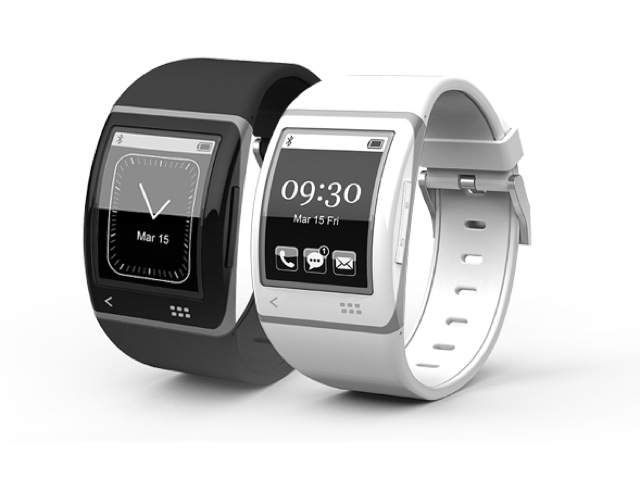
    Today, E Ink has announced a new business deal with Sonostar to release a new line of watches using a 1.73 inch display. E Ink offers a variety of electronic paper displays in many different sizes, some of them flexible.

    e ink

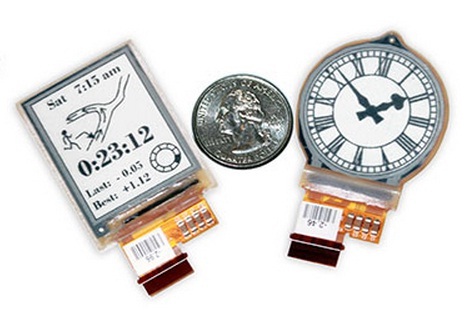
    The essence of this new 1.73 inch e-paper display is the new Mobius technology that is found in the new Sony 13.3 inch e-reader. The resolution will be 320×240 and will be able to display 16 levels of grey. It is said that this watch will last for a full month, before needing a recharge.

    E Ink’s Director of Product Management, Giovanni Mancini, said, “The joint development between Sonostar and Transmart is the perfect example of the how E Ink can help its customers get their product to market. E Ink displays enable unique products that capture the customer’s imagination. Our business development team has the expertise to help our customers design the displays into their products in ways never before thought possible.”

    Interest in wearable has exploded in recent months following reports earlier this year that Apple already had 100 people working on a much-rumored iOS-based smartwatch some have dubbed “iWatch.” Apple is said to be experimenting with wristwatch-like devices that sport curved glass.

    [toggle title=”Press Release”]June 2, 2013 – Cambridge, MA — E Ink® Holdings, “E Ink” (8069.TW), a digital signage and display visionary, announces the addition of a 1.73″ flexible display to its Mobius product line of flexible electronic paper display (EPD) technology. The 1.73″ display has been specifically engineered for smartwatch and watch applications. The display is based on flexible TFT technology developed and brought to production by E Ink. The first commercial product to use this 1.73″ display is the Sonostar Smartwatch announced this week at Computex in Taipei, Taiwan.

    The Sonostar smartwatch was jointly developed by E Ink’s subsidiary Transmart Co. Ltd and Sonostar. The smartwatch was chosen by the Taipei Computer Association as one of only 10 major product highlights at Computex, which will run from June 4-8 in Taipei, Taiwan.

    The 1.73″ Mobius display supports a resolution of 320X240 pixels with 16 greyscale levels. The display size and characteristics make the technology ideal for the smartwatch market. Using a flexible substrate, the 1.73″ Mobius is lightweight and rugged and is conformable so the end product has a better fit for the consumer. Its low power usage and sunlight readability make this technology ideal for mobile devices. Unlike conventional displays, the 1.73″ Mobius display can be cut into different shapes.

    “The joint development between Sonostar and Transmart is the perfect example of the how E Ink can help its customers get their product to market,” said Giovanni Mancini, director of product management for E Ink Holdings. “E Ink displays enable unique products that capture the customer’s imagination. Our business development team has the expertise to help our customers design the displays into their products in ways never before thought possible.”

    More information on the Sonostar smartwatch can be obtained by visiting the Sonostar booth at Taipei World Trade Center Hall I (No: C0317) during Computex Taipei 2013 (June 4 to 8) or by going to www.sonostar.com/Smartwatch/. You can get more information about the Mobius 1.73″ display by visiting www.eink.com.

    About E Ink Holdings
    Founded in 1992 by Taiwan’s leading papermaking and printing group YFY (1907.TW), E Ink Holdings Inc. (8069.TW) is the pioneer of TFT and ePaper business in Taiwan. Its corporate philosophy aims to deliver revolutionary products, user experiences, and environmental benefits through advanced technology development. This vision has led to its continuous investments in the field of ePaper display as well as its 2008 acquisition of Hydis Technologies, manufacturer of the world’s best wide viewing angle LCDs and its 2009 acquisition of E Ink Corporation, the worldwide leader in ePaper. Listed in Taiwan’s GreTai Securities Market and the Luxembourg market, E Ink Holdings is now the world’s largest supplier of displays to the eReader market. For corporate information, please visit www.einkgroup.com; for EPD information, please visit www.eink.com / tw.eink.com; and for FFS information, please visit www.hydis.com.

    All trademarks above are property of their respective owners.[/toggle]

    [GoodeReader]

  • Google Bans Google Glass Porn App, Changes Policy

    Google Bans Google Glass Porn App, Changes Policy

    The first pornography app for Google Glass has launched, though not for long.

    Porn company Mikandi, which calls itself the world’s top app store for porn, released “Tits and Glass” this morning. A very classy title of course, as befits the porn industry. The app was designed to make “authentic” porn, allowing users to create, upload, and share photos taken with Glass.

    It would also allow users to comment and vote on their favorite content, according to a statement from MiKandi.

    “Google Glass is still in its infancy. The technology is really awesome, but it’s still brand new,” said Jesse Adams, CEO of MiKandi. “It’s important for us to stay on the cutting edge, though. It’s going to be connected to everything, so it’s important for us to push limit and see whats possible.”

    Google officially banned sexually explicit material on the futuristic eyewear.

    The company changed its Google Glass Platform Developer Policies today:

    Sexually Explicit Material: We don’t allow Glassware content that contains nudity, graphic sex acts, or sexually explicit material. Google has a zero-tolerance policy against child pornography. If we become aware of content with child pornography, we will report it to the appropriate authorities and delete the Google Accounts of those involved with the distribution.

    More than 10,000 people have visited the landing page for the app, and a dozen Google Glass owners had signed up with the app, MiKandi CEO Jesse Adams said in a blog post.

    He said the company made sure it was following the Google Glass developer terms when it started creating the app two weeks ago, but those rules were quickly changed by Google. MiKandi will comply with the new rules, and plans on rolling out a new app that somehow doesn’t include any of the forbidden content.

    MiKandi, also wants to explore direct Glass-to-Glass interactions.

    [CNN]

  • Nvidia Showcases New Stylus Input Technology

    Nvidia Showcases New Stylus Input Technology

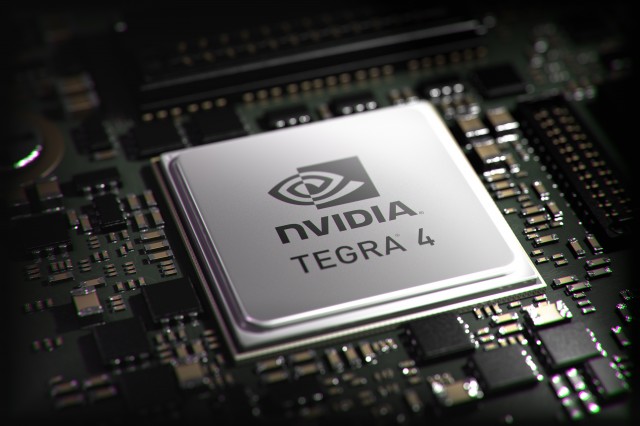
    Today at Computex, Nvidia’s CEO Jen-Hsun Huang showed off a software-based pressure sensitive display powered by the company’s Tegra 4 chipset, using a normal non-digitizer stylus to draw on it.

    As the Verge reports : 

    Using the third generation of Nvidia’s own DirectTouch technology on a reference Tegra 4 tablet, Huang was able to draw with extreme precision using a very basic and crude conductive stylus. “The precision of DirectTouch is many, many times higher than your normal touch controller,” said the CEO, “the resolution and sample rate are much higher.”

    The software is able to sense how much the stylus’ head is pressing down on the display at the point of writing and adjusts the stroke sizes accordingly. Huang also flipped the stylus around to erase what he wrote, and because the stylus had a specific thickness at that end, it’s able to “know” that it should be erasing. 

    nvidia
    Image Credit : CNET

    Also, speaking at Computex, Asia’s biggest PC trade show, Chief Executive Jen-Hsun Huang told The Wall Street Journal that the Santa Clara, Calif., company is interested in technologies that “fit into its businesses,” but declined to give more specifics. He revealed that Nvidia was open to acquisitions. 

    The chip maker is expanding beyond selling chips by developing a portable device that can play videogames. The handheld console called Shield will be priced at $349 and is on track to ship by the end of June, Mr. Huang said.

    [CNET, Wall Street Journal, The Verge]

  • Android Jelly Bean Now On 33 Percent Of Android Devices According To June Figures

    Android Jelly Bean Now On 33 Percent Of Android Devices According To June Figures

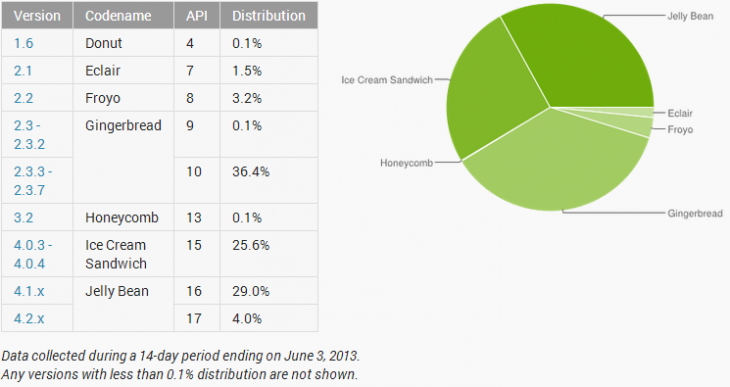
    The latest Android distribution stats are in as of June 3rd, and things are looking up for Jelly Bean.

    Jelly Bean, including Android 4.1 and 4.2, now makes up 33% of all users. Coupled with Ice Cream Sandwich at 25.6%, nearly 60% of users run Android 4.0 and above.

    android

    Changes from last month are minor, Android 4.2 finally got a bit boost, almost doubling from 2.3% to 4% in less than a month, on the strength of the Samsung Galaxy S4. Android 4.1 also jumped 2.9% from last month as more customers upgraded from older devices; 2.1, 2.2 and 2.3 saw slight drops this month.

    It also appears that manufacturers are making good on their word to upgrade ICS users to Jelly Bean, as much of the Android 4.1 gain came at the expense of 4.0 — the former gaining 2.9% and the latter losing 1.9%.

    There are some unfortunate conclusions to be made here: while it’s gratifying to see Android 4.0+ rising to 60% of all users, Gingerbread’s demise is taking far larger than it should and it is hampering the rollout of apps that take advantage of newer platform features only possible on ICS and above.

    It’s important to remember that Google recently tweaked its algorithm in regards to how it counts users for these figures. In its own words, the company explains:

    Note: Beginning in April, 2013, these charts are now built using data collected from each device when the user visits the Google Play Store. Previously, the data was collected when the device simply checked-in to Google servers. We believe the new data more accurately reflects those users who are most engaged in the Android and Google Play ecosystem.

    Also, according to a tweet from the well-connected and accurate @LlabTooFeR Twitter account, Android 4.3 Jelly Bean could be rolling out a few weeks after the HTC One Nexus hits the Google Play Store.

    @LlabTooFeR is best known as a source of HTC-related rumors, and has proven to be very accurate in most cases.

    Exciting times for all Android fans!

  • Gmail Version 4.5 For Android Now Rolling Out

    Gmail Version 4.5 For Android Now Rolling Out

    Google has started rolling out its new version of Gmail for Android today.

    Like the desktop version, Gmail for Android gets the organizational luxury of “categories”. Those tabs are meant to filter email messages into a type of sub-folder system, rather than clutter your inbox. 

    Also, now there is the option to refresh the feed by pulling down on the feed.

    The left-side navigation bar is also present, making it much easier to navigate between Labels.

    The update is rolling out slowly to the hundreds of millions of Android Gmail users, so head to Android Police for the APK download. No word on when the iOS version will be released. The tablet UI is the same, though the left menu remains on the screen.

    Have you tried the new Gmail layout on your desktop or laptop? What do you think of the new design for Android? Let us know your thoughts.

    If you’re the impatient kind, and cannot find the update on the Play Store, you might like to try one of the following download links to grab the updated APK today:

    All mirrors courtesy of Android Police

    [Android Police]

  • Vine Now Available For Android

    Vine Now Available For Android

    Vine for Android is now available for devices running Android 4.0 and above.

    While the wait has been arduous for thousands of Android users accustomed to simulteanous app releases, but Twitter has finally released Vine for Android to the world. The six-second video social network has been the talk of the media and journalism circuit since its iPhone release in January, and an Android version was promised shortly thereafter.

    The initial Android app is bare-bones: you can view the masterpieces from your stream of followers, upload your own six-second Vines, explore popular posts and Editors’ Choice clips, and share content to Twitter and Facebook. Unlike the iPhone version, however, you can’t tag users in posts, nor can you use hashtags. You also can’t engage the front-facing camera, something that was added to a previous iPhone release. There are also no push notifications in the first version, which will be disappointing to some users.

    Vine for Android includes a Zoom feature, something that does not exist on the iOS version.

    Mainly, though, Vine for Android is slow. Whereas the iPhone version renders video while you’re filming, the Android equivalent takes a long time to render after the filming. It takes over 30 seconds to render a six-second video.

    In a blogpost on 3 June, Twitter said Android users can expect, “frequent updates with new features […] as well as bug fixes and performance improvements” in the coming weeks.  This will include front-facing camera support, push notifications, the ability to mention people and use hashtags, and the ability to search.

    [Mobile Syrup] 

  • Samsung Galaxy Tab 3 10.1 And 8.0 Announced

    Samsung Galaxy Tab 3 10.1 And 8.0 Announced

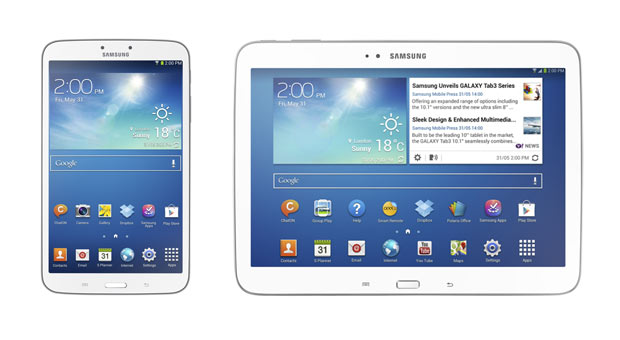
    Samsung has added two new Android tablets to its Galaxy Tab 3 range, an 8-inch model and a 10.1-inch model, each running Android 4.2 Jelly Bean.

    samsung galaxy

    In terms of hardware specifications, the 8-inch tablet uses a 1.5GHz dual-core processor, has 1.5GB of RAM and comes in both 16 and 32GB offerings, with storage expandable by microSD. You also get a pair of cameras, with 5-megapixels to play with on the back and 1.3 megapixels on the front.

    The Galaxy Tab 3 8.0 will also feature a proper LTE radio, meaning you can browse the web easily on the go. The screen is the only real weak part of the whole setup. At 1280 x 800, the 189 ppi display isn’t as high resolution as a lot of the competition. 

    samsung galaxy

    On the 10″ model, Samsung has opted to stick with a 1280×800 display resolution on the 10-inch Tab 3, meaning you’ve got the same pixel count as the Samsung Galaxy Tab 3 8.0, only spread over a much larger area. However, there is a faster 1.6GHz dual-core processor, 6,800mAh battery and strangely, a lower resolution 3 megapixel camera and only 1GB of RAM. Also, as you can see from the image above, Samsung has completely dumped the on-screen keys in favor of physical buttons below the display.

    There’s no word of any official release date or price just yet, however.

    samsung galaxy

    Meanwhile, SamMobile reports that Samsung Kazakhstan confirmed the Galaxy Note III and Galaxy S4 Zoom by mistake. The model numbers showed up on a page that talks about a special VIP-service. The page refers to a number of unannounced products like the Galaxy S4 Zoom (SM-C1010), Galaxy Tab 3 10.1 (GT-P5200) and the highly anticipated Galaxy Note III (SM-N9000).

iGyaan Network
Privacy Overview

This website uses cookies so that we can provide you with the best user experience possible. Cookie information is stored in your browser and performs functions such as recognising you when you return to our website and helping our team to understand which sections of the website you find most interesting and useful.