Author: Shivaank Rana

  • Apple considering Twitter investment

    Apple considering Twitter investment


    Apple Inc. held discussions with Twitter Inc. more than a year ago about taking a strategic investment in the short-messaging service, according to a person familiar with the talks.

    People familiar with the matter said there are no current formal investment or acquisition discussions between the companies.

    News of the investment talks was first reported by the New York Times.

    Since the discussions between Twitter and Apple ended, the landscape has shifted for many fast-growing Web start-ups, both public and private. Facebook Inc. had a rocky initial public offering in May, and its shares are now down more than a third below their IPO price. Valuations of other high-profile tech companies, including Groupon Inc. and Zynga Inc. also continue to fall to earth — developments that have made investors question rich valuations placed on consumer-Internet start-ups such as Twitter.

    While Apple has been hugely successful in selling phones and tablets, it has little traction in social networking, which has become a major engine of activity on the Web and on mobile devices. Social media are increasingly influencing how people spend their time and money an important consideration for Apple, which also sells applications, games, music and movies.

    Apple has not made many friends in social media. Its relationship with Facebook, for example, has been strained since a deal to build Facebook features into Ping, Apple’s music-centric social network, fell apart. Facebook is also aligned with Microsoft, which owns a small stake in it. And Google, an Apple rival in the phone market, has been pushing its own social network, Google Plus.

    [quote]“Apple doesn’t have to own a social network,’’ Timothy D. Cook, Apple’s Chief Executive, said at a recent technology conference. “But does Apple need to be social? Yes.’’[/quote]

    Twitter and Apple have already been working together. Recently, Apple has tightly sewn Twitter features into its software for phones, tablets and computers, while, behind the scenes, Twitter has put more resources into managing its relationship with Apple.

    Though an investment in Twitter would not be a big financial move for Apple by any stretch — it has $117 billion in liquid investments, and it quietly agreed to buy a mobile security company for $356 million on Friday — it would be one of Mr. Cook’s most important strategic decisions as Chief Executive.

    And it would be an uncommon arrangement for Apple, which tends to buy small startups that are then absorbed into the company.

    But such a deal would give Apple more access to Twitter’s deep understanding of the social Web, and pave the way for closer Twitter integration into Apple’s products.
  • Revealed : iPad, iPhone prototypes in court documents

    Revealed : iPad, iPhone prototypes in court documents

    Whoops! Something went wrong!
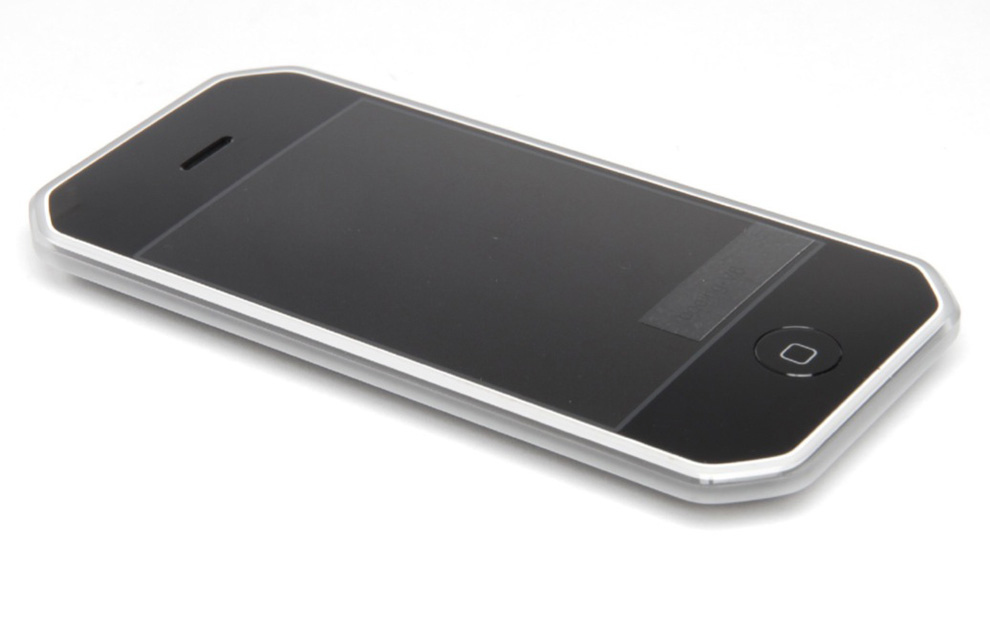
    Possibly an iPhone 3gs prototype

    Early concepts of Apple’s market-leading iProducts revealed as a result of a sprawling legal battle with arch-rival Samsung show wacky ideas — including octagonal shapes, handles and kickstands.

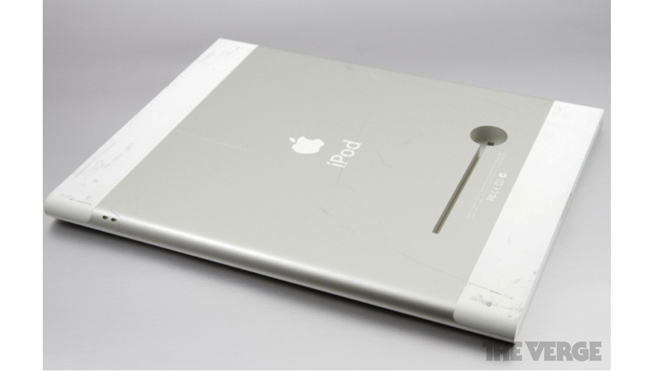
    Images revealed by tech news site The Verge, show Apple was intent on pursuing a kickstand for its tablet, with multiple iPad prototypes working through how such a stand would work.

    Other renderings show a version of the iPad that never was, with molded grips integrated into the frame to make it easier to hold.

    “Many of the iPad prototypes also feature ‘iPod’ on the back, perhaps giving insight into Apple’s early naming considerations,” the site noted.

    An iPad prototype with a kickstand

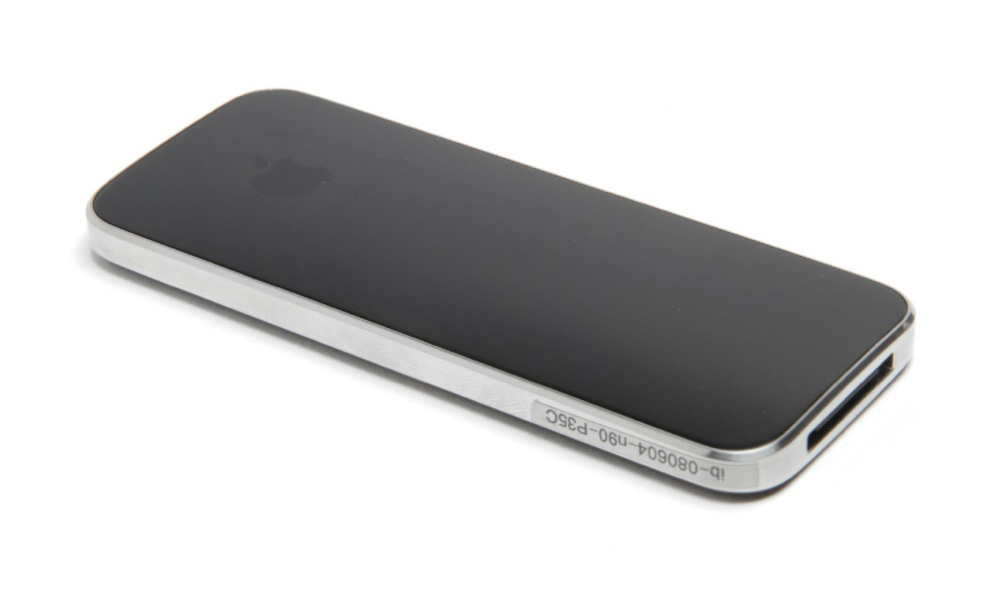
    Meanwhile, sleuths at Buzzfeed uncovered an alternate version of the iPhone with squared off edges — an early version of the game-changing smartphone that carried the prototype name N90.

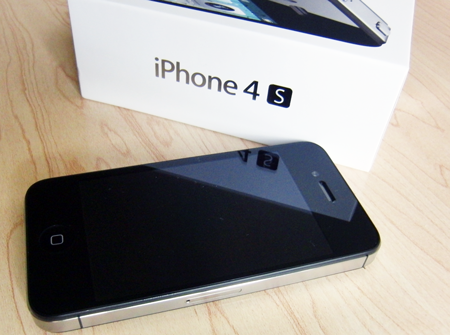
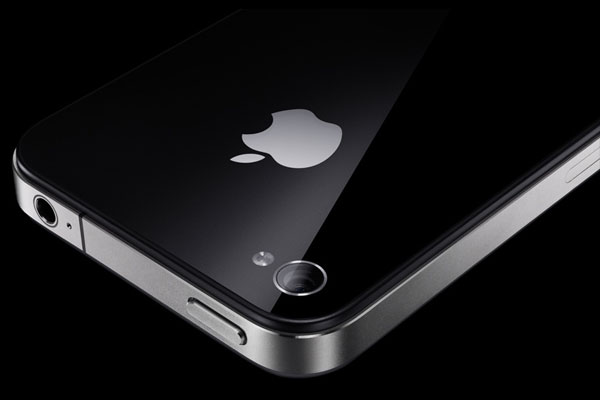
    An iPhone 4s prototype

    The device is clearly similar to Apple’s glass-and-metal design, but different enough to catch the eye. 

    Source : Fox News

  • Google admits it did not delete Street View data

    Google admits it did not delete Street View data

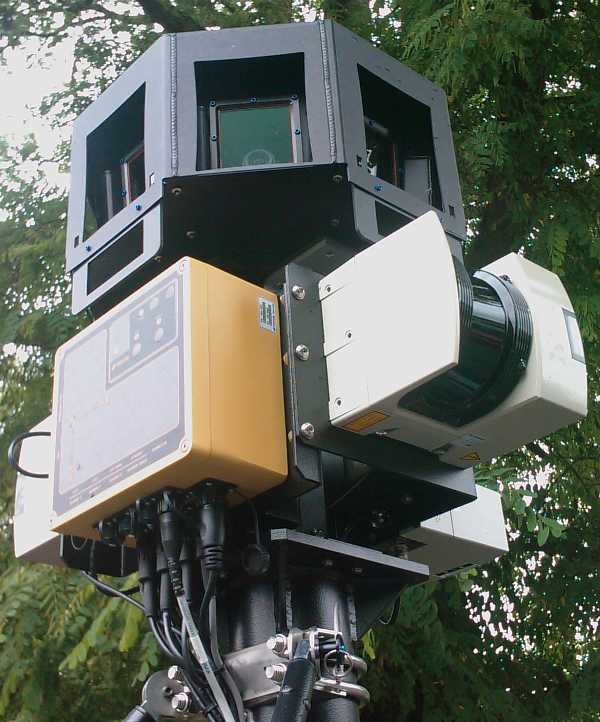
    Google was ordered to delete the collected data

    Google Inc said on Friday it had not kept its promise to delete all the personal data, such as emails, its Street View cars collected in Britain and other countries in 2010.

    The data should have been wiped almost 18 months ago as part of a deal signed by the firm in November 2010. Google has been told to give the data to the UK’s Information Commissioner (ICO) for forensic analysis.

    The ICO said it was co-ordinating its response with other European privacy bodies.

    In May 2010 it was revealed that Google had scooped up about 600 gigabytes of personal data from unsecured wireless networks while gathering images and location data for Street View.

    Google apologised for gathering the data and said it was a “mistake”. The blunder led to legal action, fines and investigations around the world.

    In the UK, Google gave an undertaking to destroy the data it was holding and issued a statement saying it had done so in December 2010. However, said the ICO, Google had recently contacted it to report that some of the data it had gathered had not been deleted.

    The company approached the ICO with the revelation to find out how it should act. In response, the ICO told Google to hand over the data immediately “so that we can subject it to forensic analysis before deciding on the necessary course of action”.

    Google were fined $25,000 in April for impeding a U.S. investigation into Street View data collection.

  • Apple to buy fingerprint sensor maker AuthenTec for $356 million

    Apple to buy fingerprint sensor maker AuthenTec for $356 million


    Apple Inc has agreed to buy AuthenTec Inc for $8.00 per share, the maker of fingerprint sensor chips used in personal computers said, in a deal valued at about $356 million.

    AuthenTec makes security software and chips for mobile phones that it licenses to companies such as Samsung Electronics Co Ltd (. It also produces chips for fingerprint recognition and near-field communication (NFC).

    Melbourne, Florida-based Authentec disclosed the deal in a filing with the U.S. Securities and Exchange Commission.

    Based on Thursday’s closing price $5.07, the offer represents a premium of 58 percent for AuthenTec’s shares.

    AuthenTec, which also counts Lenovo Group Ltd , Fujitsu Ltd  and Dell Inc ( as customers, has annual revenue of about $70 million.

  • Nuance’s Swype launches ‘Hinglish’ version

    Nuance’s Swype launches ‘Hinglish’ version

    Nuance Communications said that its next-generation of its Swype touch keyboard will support ‘Hinglish,’ a cross between Hindi and English, in an effort to cater to India’s mobile market.

    Going forward Swype will recognize Hinglish words like chai, paani, desi, garam and masti.

    The new version of Swype contains unique adaptive capabilities that enable it to understand user’s preferences and typing patterns over time. This allows the application to become smarter and more personalised every time it is being used. It learns from the users every time they type or swipe their fingers to create words and offers them the next time they use the keypad by offering not just word suggestion but whole sentence suggestions as well.

  • Google Talk back in service after suffering global outage

    Google Talk back in service after suffering global outage


    The Google Talk IM and video chat service suffered a massive global outage beginning early on Thursday, leaving users mum for more than four hours. The service was restored around 8.25PM. 

    The outage was first reported by users on Twitter, a social networking website. “Google talk being down is massively annoying! You don’t realise how much you take it for granted,” Pete Gould, a Twitter user said. 

    Many Google Talk users reported that they could log into the service, saw their contacts with the respective status but failed to send messages to them. Some other users could not log in. The service is not only used by people to keep in touch with friends but has also become a popular way to interact with co-workers in offices. 

  • Hacking experts find new ways to attack Android phones

    Hacking experts find new ways to attack Android phones

    Hacking experts have demonstrated ways to attack Android smartphones using methods they said work on virtually all such devices in use today, despite recent efforts by search engine giant Google to boost protection.

    Google spokeswoman Gina Scigliano declined to comment on the security concerns or the new research.

    Accuvant researcher Charlie Miller demonstrated a method for delivering malicious code to Android phones using a new Android feature known as near field communications. “I can take over your phone,” Miller said.

    Near field communications allow users to share photos with friends, make payments or exchange other data by bringing Android phones within a few centimeters of similarly equipped devices such as another phone or a payment terminal. 

    Miller said he figured out how to create a device the size of a postage stamp that could be stuck in an inconspicuous place such as near a cash register at a restaurant. When an Android user walks by, the phone would get infected, said Miller. 

    He spent five years as a global network exploit analyst at the U.S. National Security Agency, where his tasks included breaking into foreign computer systems. 

    Miller and another hacking expert, Georg Wicherski of CrowdStrike, have also infected an Android phone with a piece of malicious code that Wicherski unveiled in February.

    That piece of software exploits a security flaw in the Android browser that was publicly disclosed by Google’s Chrome browser development team, according to Wicherski.

    Google has fixed the flaw in Chrome, which is frequently updated, so that most users are now protected, he said.

    But Wicherski said Android users are still vulnerable because carriers and device manufacturers have not pushed those fixes or patches out to users.

  • YouTube asks users to post real names in bid to clean up abusive comments

    YouTube asks users to post real names in bid to clean up abusive comments


    YouTube is pushing its notorious commenters to name themselves. When you comment on, or upload a video, YouTube will now urge you to “start using your full name on YouTube,” and ask if the video-sharing site can begin displaying the identity you’ve associated with your Google+ account (assuming you use Google’s social network). If you decline, Google makes you select a valid reason, like “My channel name is well-known,” . 

    YouTube’s move toward real names was foreshadowed last month, when a YouTube product lead told developers at the Google I/O conference that the video service was planning some unspecified changes to its commenting system, widely regarded as a Hellmouth of crude abuse. 

  • Lenovo unveils ultraslim IdeaCentre A720 PC for INR 89,990

    Lenovo unveils ultraslim IdeaCentre A720 PC for INR 89,990

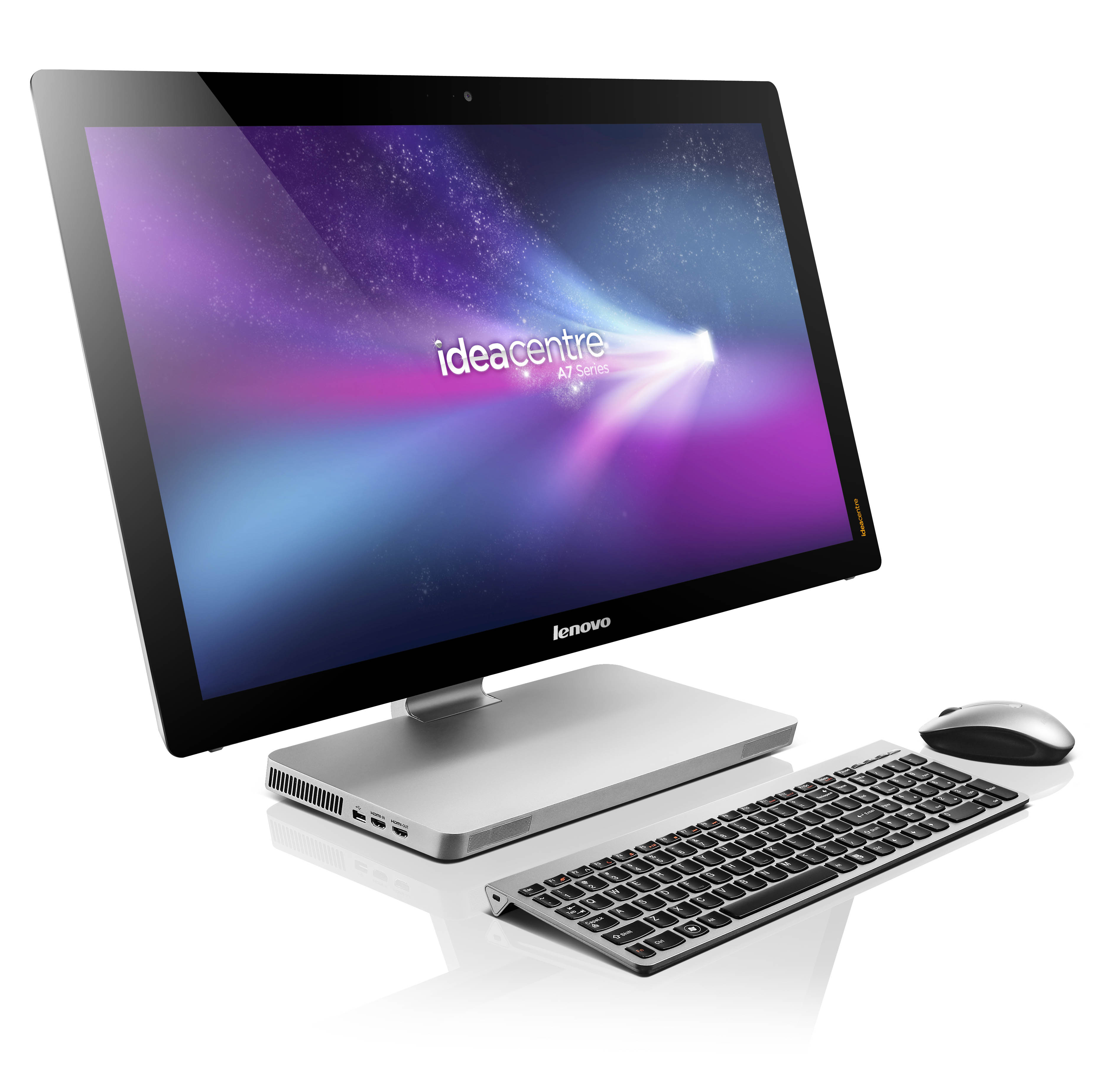
    PC vendor Lenovo has announced the launchof IdeaCentre A720, billed the world’s slimmest all-in-one at a price of Rs 89,000. The USP of this PC, which is powered by a 3rd generation Intel Core i7 processor, is its thin, frameless display.

    The Lenovo IdeaCentre A720 boats of a 10-finger multi-touch screen that folds down for interactive tabletop games. 
    It is packed with entertainment features—like Lenovo High-Sense (720p HD) webcam and Lenovo IdeaTouch, a suite of touch-optimised applications and games.

    The Lenovo IdeaCentre A720 is powered by NVIDIA® GeForce® graphic engine and apart from coming alongwith Windows 7 Home Premium, it is also Windows 8-ready.

    It sports a 27-inch full HD (1920×1080) frameless 10-point multi-touch display, has Bluetooth, Wi-Fi (802.11b/g/n), USB2.0, and USB3.0 connectivity. It has an in-built 6-in-1 card-reader, HDMI in/out and integrated stereo speakers that support Dolby Home Theatre.

    It also boasts of 40% faster boot time than standard Windows 7 computers. 

  • Samsung eyes 60% market share in smart TVs

    Samsung eyes 60% market share in smart TVs

    Electronics major Samsung India today said it is eyeing 60% market share in the smart television space in the country this year and a sales turnover of Rs 225 crore from Kerala during ‘Onam’ festival next month.

    [quote]”Samsung aims to garner 35% market share in flat panel television in India against the current market share of 30% and 60% market share in smart televisions,” Samsung India Vice-President (AV Business) Raj Kumar Rishi said.[/quote]

    To attract consumers in the state during the festive season, the company launched a smart TV that enables consumers use voice, gesture control and face recognition through ‘Smart Interaction’ technology to control and interact with TV without touching the remote.

    Consumers can switch the television on or off, activate applications or search and select content in the web browser just by speaking, moving their hands or showing themselves to the systems built in cameras, he said.

    The company also announced the global availability of the Angry Birds App for the smart TV.

    Developed by Rovio Entertainment, a Finnish entertainment media company, Angry Birds is one of the top smartphone application worldwide.

    The new ‘India customised’ EH series will also be available to consumers during the festival period. Samsung is also offering consumers an enhanced Home Appliance line up, comprising five star rated Refrigerators, Split ACs, ‘Ecobuble’ front-loading washing machines and Microwave ovens.

    Mahesh Krishnan, Vice-President, Home Appliance Business, said they hope to achieve Rs 225 crore sales during the Onam festival period from July 25-Aug 31. Samsung is targetting sales of about 30,000 units of flat panel TV and 1,500 smart TVs during Onam in the state.

  • Apple seeks more than $2.5 billion in Samsung patent case

    Apple seeks more than $2.5 billion in Samsung patent case

    According to a partially redacted filing on Tuesday with a federal court in San Jose, California, Apple believes Samsung owes “substantial monetary damages” because the Korean company illegally “chose to compete by copying Apple.”

    Apple said this allowed Samsung to overtake it as the world’s largest maker of smartphones, and reap “billions of dollars in profits” while costing Apple $500 million of profit.

    It said damages, including reasonable royalty damages, reach “a combined total of $2.525 billion.” Apple said it also plans to seek a permanent injunction to stop future violations.

    Samsung countered Apple’s allegations in a filing 13 minutes later, accusing the Cupertino, California-based company of trying “to stifle legitimate competition and limit consumer choice to maintain its historically exorbitant profits.”

    It said Apple, in fact, should pay for the use of Samsung’s patented technology, “without which Apple could not have become a successful participant in the mobile telecommunications industry.”

    Their dispute is part of a worldwide legal battle over the alleged theft of technology used in smartphones and tablets, including those powered by Google Inc’s Android, which Samsung uses in its most popular devices.

    Apple Chief Executive Tim Cook and top Samsung executives last week participated in court-supervised mediation to try to resolve the case but a resolution appeared to be unlikely, people familiar with the matter said.

  • Wait for next iPhone may hit Apple’s revenue

    Wait for next iPhone may hit Apple’s revenue

    As iPhone fans await the release of a new model, they are delaying purchases and may cause Apple Inc., the world’s largest company by market value, to post its slowest sales and profit growth in more than two years.

    Analysts estimate that sales of iPhones — Apple’s biggest source of revenue — slid in the fiscal third quarter from prior periods. While analysts predict that the next iPhone will be the best-selling smartphone yet from Cupertino, California-based Apple, the purchasing delays will probably weigh down results until the device hits stores.

    The iPhone 5 is only expected to hit store shelves around October — just in time for the holidays — with a thinner, larger screen and fine-tuned search features. Couple that pre-launch lull with slowdowns in Europe and China, Apple’s biggest markets outside of North America, and sentiment on the Wall Street darling is more muted than many can remember in a while. 

  • Now a screen protector on which finger prints fade away!

    Now a screen protector on which finger prints fade away!

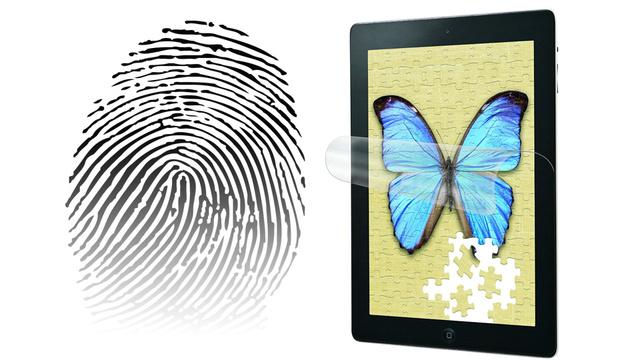
    There is no way around it – after even the slightest use, it seems that your mobile device’s display is encased in fingerprints. Somedays it feels like we spend more time cleaning it then using it. If that sounds like a day in the life of you, you may want to check out 3M’s Natural View Fingerprint Fading Screen Protectors.
     
    We do not know how it works,  but it does promise that fingerprints will fade away without blurring the image. Additionally, it also features a scratch resistant surface and “stay-clean edges” that will keep the fuzzies out of your seams. 3M also claims one of the features is that the protector is “easy to apply,” but if you have ever installed a screen protector, particularly on a large display such as a tablet, you know that promise may be a bit of a stretch, especially to get it on bubble-free.
     
    Currently these screen protectors are available for the iPad 2 and the new iPad and will be available soon for the Samsung Galaxy Tab 2 7.0. You can grab a 2-pack for your iPad direct from 3M for about $28 or head over to Amazon to find the same product for a few bucks less.
  • Apple’s next iPhone reaffirmed to have smaller 19-pin dock connector

    Apple’s next iPhone reaffirmed to have smaller 19-pin dock connector

    The iPhone 5, Apple’s next generation iPhone expected to go on sale around October, will come with a 19-pin connector port at the bottom instead of the proprietary 30-pin port “to make room for the earphone moving to the bottom”, the sources said.

    It would mean the new phone would not connect with the myriad of accessories such as speakers and power chargers that form part of the ecosystem around iPods, iPads and iPhones, without an adaptor.

    The redesign may annoy owners, but accessories manufacturers are preparing for a sales boom, according to analysts.

    “It represents an opportunity for accessory vendors,” said Pete Cunningham, London-based analyst at technology research firm Canalys.

    “The iPhone connector has been a standard for a long time now and I would expect the same to be true for a new connector, should Apple change it as expected.”

    Tech blogs have long speculated on the demise of the 30-pin connector, which at 21mm wide takes up a lot of space, especially as the latest technologies such as microUSB offer more power in less space. They say that a smaller connector would give Apple more scope for new product designs or a bigger battery, or simply to make ever smaller products.
  • Google halts 16GB Nexus 7 sales due to heavy demand

    Google halts 16GB Nexus 7 sales due to heavy demand

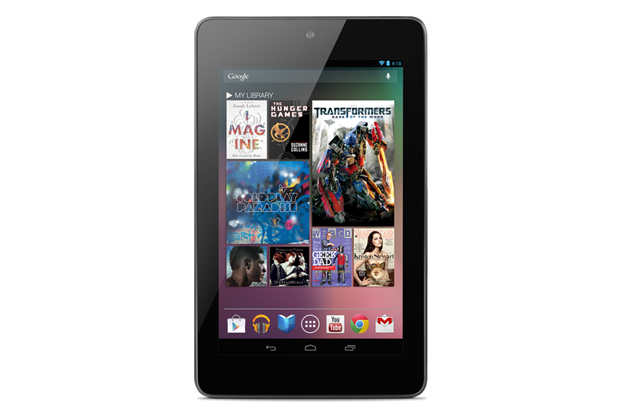
    Sources close to Google say the search giant seriously underestimated the demand for the 16GB version of its 7in Nexus 7 tablet, which has sold out from stockists and other sources while demand for the smaller 8GB version remains comparatively low.

    The company has now halted further orders of the 16GB version of the tablet, costing £199, on its Google Play store in the US and UK. Orders made in the period up to the end of last week are due to be fulfilled, but a shortage of stock now means a hiatus in sales.

    While the 8GB model, which costs £159, is shown as “in stock and being delivered in 3-5 business days, the 16GB version only offers an option to “sign up to be notified by email when it becomes available.

    The 8GB version is only being sold through Google’s own store, rather than physical retailers – but online buyers appear to have shunned it, surprising Google, which had thought that the cheaper version, despite having only half as much storage, would sell better than it has.

    The Guardian understands that Google’s planners had thought that buyers on the Google Play store, more than from physical or online retailers, would be more committed to the company’s “cloud” concept, and so would have more of their content stored online, rather than wanting to keep it on the device.

    But most buyers appear to have noted that the storage on the device cannot be upgraded and decided to get the larger model.

    The Nexus 7 appears to have been a huge hit, although Google has not yet released any figures for sales. Its principal competitors for sales in physical stores such as Currys and PC World in the UK are Apple’s iPad and Amazon’s Kindle Touch. A spokesperson for Dixons Retail, which sells all three, said sales of the Nexus 7 have been “extremely brisk” but declined to say where it ranked against the other two.

    Google has already put off the date for deliveries of the 16GB versiononce, extending it by up to a week. Asus is believed to be ramping up production of another batch of models, but that could take some weeks to arrive.

    In the UK, Tesco is understood to have turned down a number of orders made online for the 16GB version after overwhelming demand. It is not selling the 8GB version.

    Google has seen huge demand for the Nexus 7 since announcing it on 27 June and offering online ordering directly from the Google Play online store, followed a few days later by the announcement that a number of physical retailers would be selling it.

    The Nexus 7 marks Google’s first foray into the tablet business. The device is made to Google’s specifications by Asus; the 8GB version is being sold almost at cost ($199 compared to the build cost of $157), according to estimates by IHS iSuppli. The 16GB version is more profitable for Google.

    Source : The Guardian

iGyaan Network
Privacy Overview

This website uses cookies so that we can provide you with the best user experience possible. Cookie information is stored in your browser and performs functions such as recognising you when you return to our website and helping our team to understand which sections of the website you find most interesting and useful.