Category: AutoGyaan

Cars, Bikes, Alternative Vehicles, Air Transport et All

  • BEAT Electric – Coming Soon

    BEAT Electric – Coming Soon


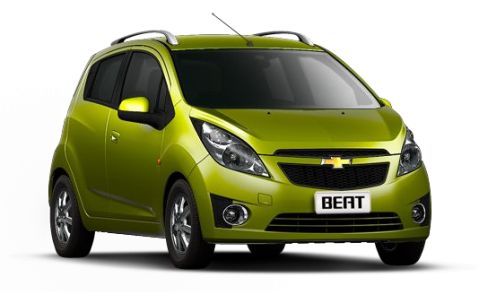
    With the launch of the Chevrolet BEAT Diesel next month, GM plans to unveil an electronic varient of the car. Working alongside Reva for the past year, the auto manufaturer has developed a vehicle with a range of 130Kms on a full charge which taks 8 hours, and a motor that gives 60bhp.

    A GM official said that, “The plan is to just showcase our technology and organise test drives for a few people. The vehicles will be assembled here from parts designed and sourced globally. We are not looking to launch this immediately as we do not have the right charging infrastructure for EVs in this country as yet.”

  • Toyota Kirloskar Motor registers 24% growth in sales

    Toyota Kirloskar Motor registers 24% growth in sales

    Toyota Kirloskar Motor registered sales of 7470 units in May 2011. The company sales grew by 24% when compared to the corresponding period last year. Etios sold 3412 units in May 2011.

    This is great news for the company who saw declining numbers just two years ago.

    Mr. Sandeep Singh, Deputy Managing Director, Marketing, TKM said, “The actual impact of the suspension of production is seen in the drop in sales in May. The production was back to full swing from 20th May onwards, much earlier than expected. We are now back on track and are all set to launch the Etios Liva. With the increase in Etios production, we would like to bring down the waiting period to one month before we launch Liva. The launch will be as per schedule in the last week of June”.

  • Germany to Get Hydrogen Fuel Station Network

    Germany to Get Hydrogen Fuel Station Network

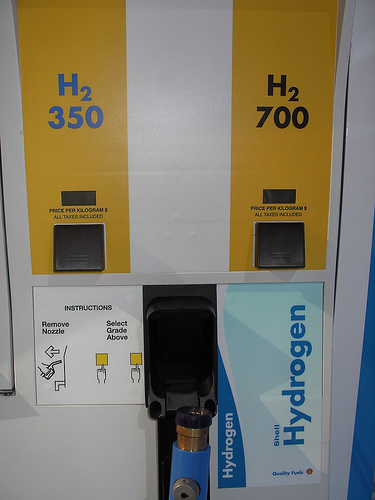
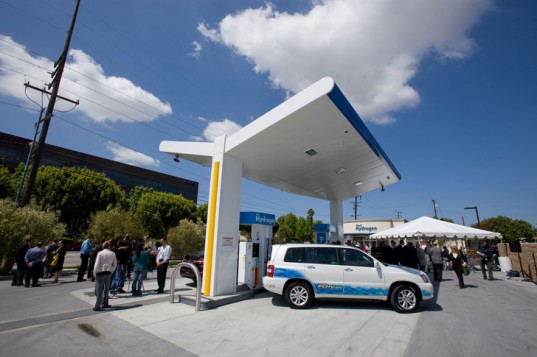
    The development of a German network of hydrogen filling stations is gaining pace. The automotive manufacturer Daimler AG  and the Linde technology group announced in Stuttgart that they intended to open 20 new filling stations in Germany over the next three years. This will more than triple the number of public hydrogen filling stations in the country. The new stations are to be set up in the regions of Stuttgart, Berlin and Hamburg, which are already supplied with hydrogen, and along the most contiguous possible North-South and East-West axis. For the first time, this would enable every location in Germany to be reached by a fuel-cell vehicle by the year 2015.

    The setup of the 20 new filling stations will begin in 2012, at existing convenient locations already operated by various oil companies. The joint initiative by Daimler and Linde, which involves an investment in the tens of millions, has also been opened up to other potential partners in the fuel, energy and automotive industry.

    The infrastructure initiative of Daimler and Linde forms a bridge with already existing hydrogen projects such as the H2-Mobility or Clean Energy Partnership, which are being subsidised by the National Innovation Programme for Hydrogen and Fuel Cell Technology (NIP). Germany will therefore assume the leading position in terms of an international hydrogen infrastructure.

    “The development of electrical mobility will be largely characterised by the hydrogen fuel-cell”, explained Wolfgang Reitzle, Chairman of the Board of Linde AG. “We are delighted to be able to shape this development in cooperation with Daimler. We see ourselves as a forerunner in the field, and aim to promote the market maturity of hydrogen-powered vehicles.” The aim now is to ensure the gradually increasing number of fuel-cell powered vehicles running on generatively produced hydrogen.

    “Circling the globe with our three green B-class vehicles has shown that the time is ripe for electric vehicles powered by fuel cells. We must now address the subject of the relevant infrastructure”, said Dieter Zetsche, Chairman of the Board of Daimler AG, and Director of Mercedes-Benz Cars, looking forward to the immediate future. “Car-drivers can only benefit from the advantages of technology if there are enough hydrogen filling stations available: long rangers, short refuelling times and no local emissions.” A focal point of the infrastructure development in Baden-Württemberg will be where such a re-intervention should start, 125 years after the original invention of the automobile.

    The establishment of a comprehensive network of filling stations is an essential requirement for the successful introduction of hydrogen-powered vehicles, as planned by Daimler for the year 2015. Of the 30 hydrogen filling stations in Germany, only seven currently formed part of public filling station operations. In comparison: five to 10 filling stations would be required to supply a major city. The connection of individual major conurbations now undertaken, such as Berlin and Hamburg, Stuttgart and Munich, with hydrogen filling stations along main traffic routes is the logical next step towards a comprehensive network of filling stations.

  • Tata Pixel – The Nano’s High-Tech Cousin

    Tata Pixel – The Nano’s High-Tech Cousin

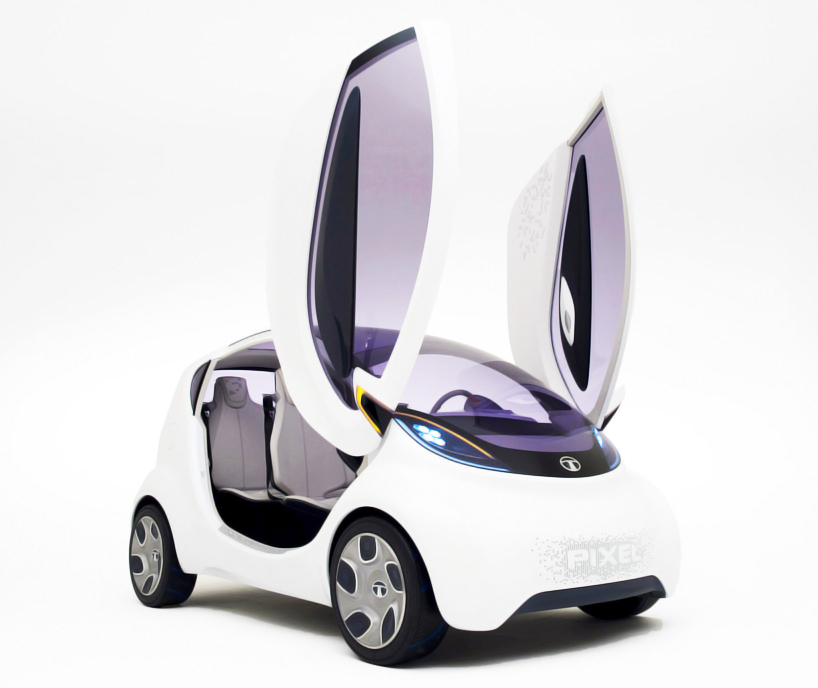
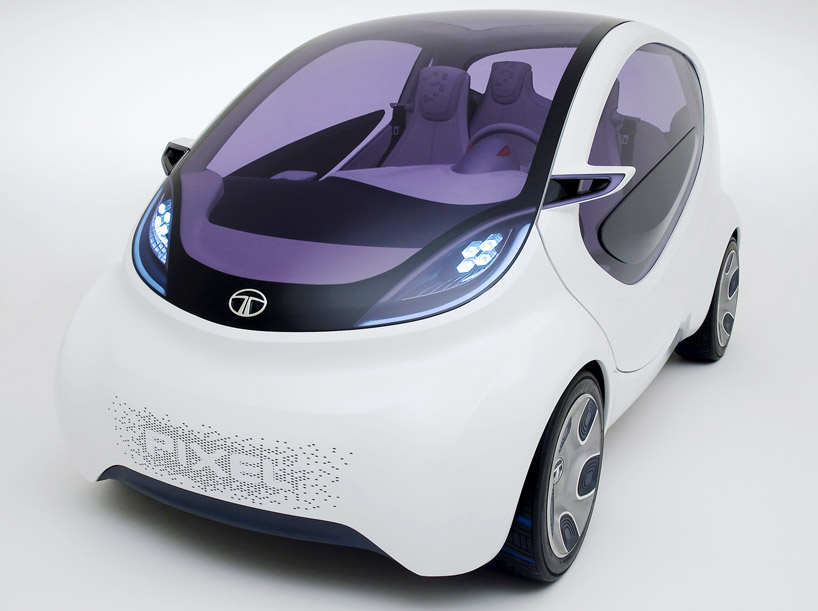
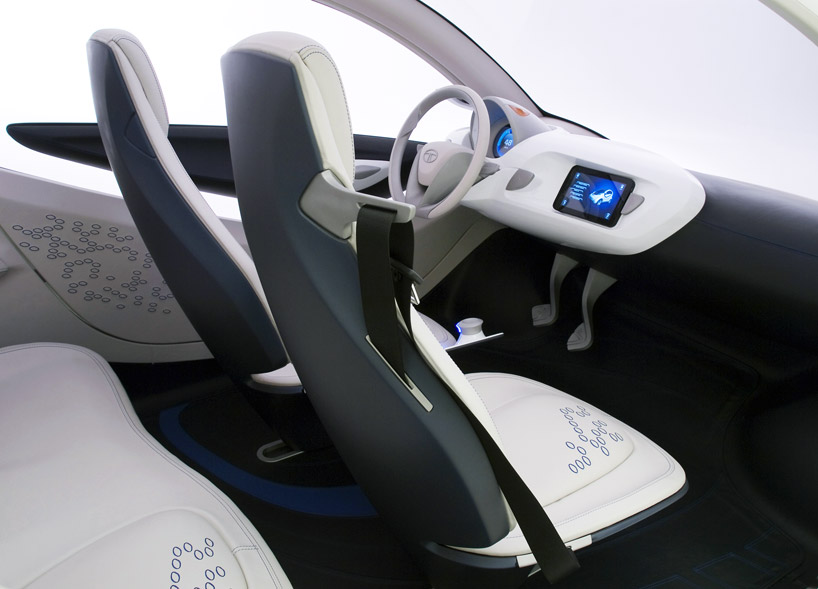
    Everyone must remember the Tata Nano. Well, they’ve come out with a similar high-tech varient for the european market. It boasts high fuel efficiency, ‘zero turn’ technology for minimal turning radius, built-in integration with tablets and smartphones, and an innovative door design. Measuring three meters (9.8 feet) long, the highly efficient ‘pixel’ combines a 1.2L three-cylinder turbocharged diesel engine with stop-start technology and an aerodynamic design to offer a combined cycle fuel economy of 3.4 L/100 km (69mpg), and producing carbon emissions limited to 89 g/km (0.3 lb/mi). ‘Zero turn’ technology makes use of the vehicle’s toroidal infinitely variable transmission to rotate the outer rear wheel forwards and the inner rear wheel backwards as the front wheels turn, producing a turning circle radius of 2.6 meters (8.5 feet).

    We’ll let you decide if they should have launced this in India…

  • Mercedes-Benz Germany’s strongest brand: ADAC AutomarxX (PR)

    Mercedes-Benz Germany’s strongest brand: ADAC AutomarxX (PR)

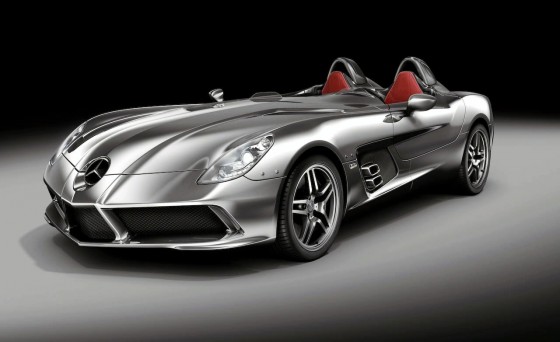
    According to the ADAC AutomarxX study, Mercedes-Benz is the most successful brand since AutomarxX was introduced in 2001, capturing first place a total of 13 times and beating its competitors in more than half of all the rankings.

    The Title is held in several categories and Mercedes Benz defended it in several areas

    • Brand Image
    • Market Strength
    • Customer Satisfaction
    • Product Strength/Vehicle Quality
    • Environment
    • Safety

    “We’re very pleased that we once again are ranked first in the ADAC AutomarxX study,” says Dr. Joachim Schmidt, Executive Vice President Sales and Marketing, Mercedes-Benz Cars. “The result confirms our ambition to deliver our customers the very best. Our first place finish demonstrates that Mercedes-Benz continues to be the strongest brand. This also includes Mercedes-Benz being a pioneer in the development of active and passive safety systems. We also want to set benchmarks when it comes to continuous improvement of our vehicles’ efficiency. The significant improvement in the CO2-ranking shows we are successful in this as well.”

    The company also moved up 11 ranks in the CO2 ranking. Read the full PR below


    PRESS RELEASE


    Stuttgart – Mercedes-Benz has once again defended the top position in the ADAC AutomarxX study, making it Germany’s strongest automotive brand. Mercedes-Benz is the most successful brand since AutomarxX was introduced in 2001, capturing first place a total of 13 times and beating its competitors in more than half of all the rankings. The ADAC AutomarxX study assesses the automotive brands sold in Germany in six categories: Brand Image, Market Strength, Customer Satisfaction, Product Strength/Vehicle Quality, Environment, and Safety. The results reflect the current capabilities of all automakers that are of relevance in Germany. A winner is ascertained for each category and out of this the overall winner is determined.

    “We’re very pleased that we once again are ranked first in the ADAC AutomarxX study,” says Dr. Joachim Schmidt, Executive Vice President Sales and Marketing, Mercedes-Benz Cars. “The result confirms our ambition to deliver our customers the very best. Our first place finish demonstrates that Mercedes-Benz continues to be the strongest brand. This also includes Mercedes-Benz being a pioneer in the development of active and passive safety systems. We also want to set benchmarks when it comes to continuous improvement of our vehicles’ efficiency. The significant improvement in the CO2-ranking shows we are successful in this as well.”

    Taking the number four slot, Mercedes-Benz moved up 11 places in the CO2-ranking, far ahead of its competitors in the premium segment. The improvement was mainly due to the introduction of new, highly efficient engine variants in high-volume models such as the new-generation C-Class. The new engines, the enhanced 7G TRONIC PLUS automatic transmission, and the ECO start-stop function reduce fuel consumption by up to 31 percent compared to the figure for the predecessor model.

    The main factors in the Safety category are availability of active and passive safety systems and the fact that the systems are fitted as standard. The new-generation C-Class, for example, impresses not only as a result of its greater efficiency, but also because of its many new assistance systems. Thanks to features ranging from the ATTENTION ASSIST fatigue detection system to DISTRONIC PLUS proximity control, the C-Class reaches a new level of safety.

    The evaluation for the Brand Image category incorporates the results of the ADAC Motorwelt image survey of 4,000 German respondents as well as an assessment of vehicle residual values. In the image survey, the participants were primarily interested in maximum quality and the highest-possible safety standards. Not only did Mercedes-Benz take first place in both of these areas; the people surveyed also ranked the brand at the top with regard to automotive research and development.


  • Ferrari Opens first Dealership in India in New Delhi

    Ferrari Opens first Dealership in India in New Delhi


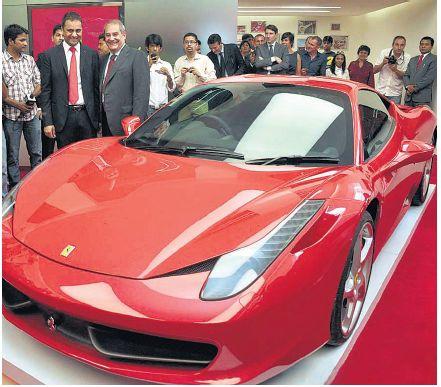
    Italian supercar maker Ferrari has opened its first exclusive showroom in India. With prices starting from Rs 2.2 crore, four models are now available for bookings

    • The California
    • The 458 Italia
    • The 599 GTB
    • The four-door FF

    India, the second-fastest growing car market after China, sold 15,702 luxury cars, including some 300 super-luxury machines, last year. This maket is growing at close to 60% rate.Ferrari aims to sell more than 100 cars by 2014.

    “Ferrari is synonymous with sports. There are huge enquiries and we are confident that we will be able to sell more than 100 cars in next three years,” Shreyans Group Chairman Ashish Chordia said.

    Shreyans, which is also an importer for Porsche and Ducati, hopes to open four more Ferrari outlets by next year.

  • The Gecko Nano Pad

    The Gecko Nano Pad


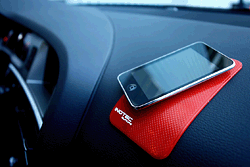
    The Nano Pad is a hand-sized pad that makes use of nanotechnology to create a vacuum system onto which cellphones and other devices stick. One can put it on the car dashboard to hold iPods, mobiles, PDAs, MP3 players, pens, coins or even reading glasses. The pad forms a vacuum seal “like a gecko’s foot”, making your cellphone, camera or other small gadgets “hands-free” while you are driving or busy with something else. The Nano-pad only comes in one size but will stick by being placed on any part of a hard, flat surface. It comes in a variety of colours and can be used indoors as well as in your car. It is said to be heat and cold resistant so we shouldn’t face any issues leaving it in our cars in the Indian summer.


  • Boeing 747-8, Boeing’s largest commercial jet takes flight

    Boeing 747-8, Boeing’s largest commercial jet takes flight

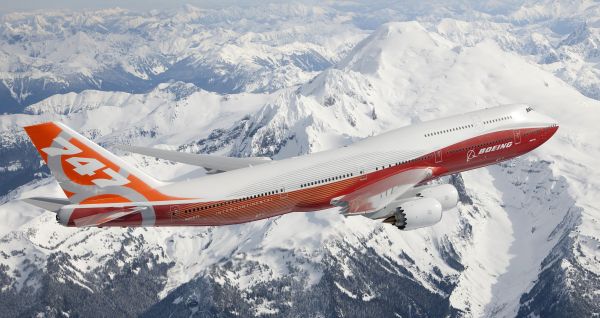
    A 250-foot passenger plane with a 224-foot wingspan — 19 feet longer and 13 feet wider than the gargantuan 747-400– took flight for the first time. The Airliner uses the company’s newest weight trimming technology making this an exceptionally well accepted and fuel efficient passenger airliner.


    Full Press Release

    Newest passenger member of 747 family touches down after four-hour, 25-minute flight

    SEATTLE, March 20, 2011 /PRNewswire/ — The Boeing (NYSE: BA) 747-8 Intercontinental successfully began its flight test program today, taking off from Paine Field in Everett, Wash., before several thousand employees, customers, suppliers and community leaders. The airplane landed four hours and 25 minutes later at Boeing Field in Seattle. The 747-8 Intercontinental’s first flight marks the beginning of a flight test program that will finish in the fourth quarter.

    With 747 Chief Pilot Mark Feuerstein and Capt. Paul Stemer at the controls, the newest member of the 747 family took off at 9:59 a.m. and landed at 2:24 p.m. local time.”What a great privilege to be at the controls of such a great airplane on its first flight,” said Feuerstein. “And what an honor to share this day with the thousands of men and women who designed and built this airplane.”

    Today’s flight was the first of more than 600 flight hours in the test program for the new 747-8 Intercontinental. The airplane followed a route over Eastern Washington, where it underwent tests for basic handling and performance. The airplane reached a cruising altitude of 19,000 feet (5,791 meters), and a speed of up to 250 knots, or about 288 miles per hour (463 kilometers).

    “This a great day for the 747-8 team and for all of Boeing. What an honor it is to see such a beautiful airplane fly,” said Elizabeth Lund, vice president and general manager of the 747-8 program. “I want to thank everybody who had a hand in designing, building and preparing this airplane for flight – our engineers, our manufacturing employees, our colleagues in Boeing Fabrication, our colleagues in Boeing Test & Evaluation, our external suppliers – for all their hard work.”

    The 747-8 Intercontinental will have the lowest seat-mile cost of any large commercial jetliner, with 12 percent lower costs than its predecessor, the 747-400. The airplane provides 16 percent better fuel economy, 16 percent less carbon emissions per passenger and generates a 30 percent smaller noise footprint than the 747-400. The 747-8 Intercontinental applies interior features from the 787 Dreamliner that includes a new curved, upswept architecture giving passengers a greater feeling of space and comfort, while adding more room for personal belongings.

    Korean Air and VIP customers have joined launch customer Lufthansa in ordering a total of 33 747-8 Intercontinentals. First delivery of the 747-8 Intercontinental is scheduled for the fourth quarter. Air China also has agreed to order five Intercontinentals, pending government approval.

    The airplane is painted in a new Sunrise livery of red-orange and is a significant departure from Boeing’s standard blue. The new colors honor many key Boeing customers whose cultures recognize these colors as symbols of prosperity and good luck. The Sunrise livery only will appear on the first 747-8 Intercontinental, which is scheduled to be delivered to a VIP customer at the end of the year.

  • HINDUSTAN Motors launches the AMBASSADOR GRAND BS4!

    HINDUSTAN Motors launches the AMBASSADOR GRAND BS4!

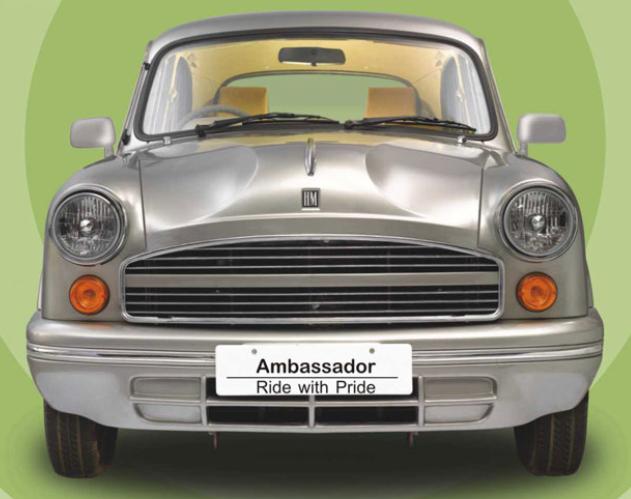
    Hindustan Motors has launched the new Ambassador Grand, without much fanfare.

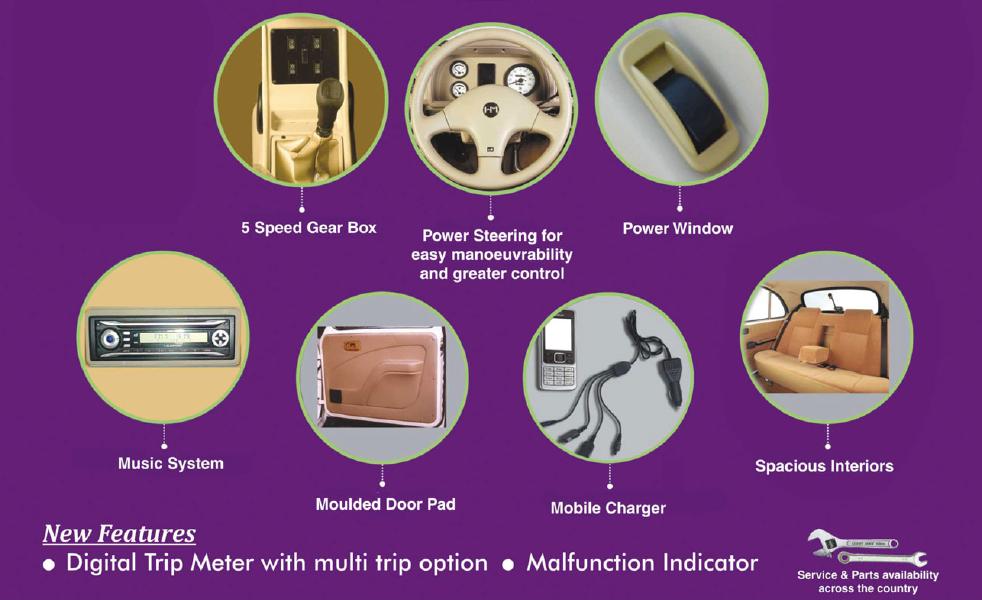
    Main Improvements include

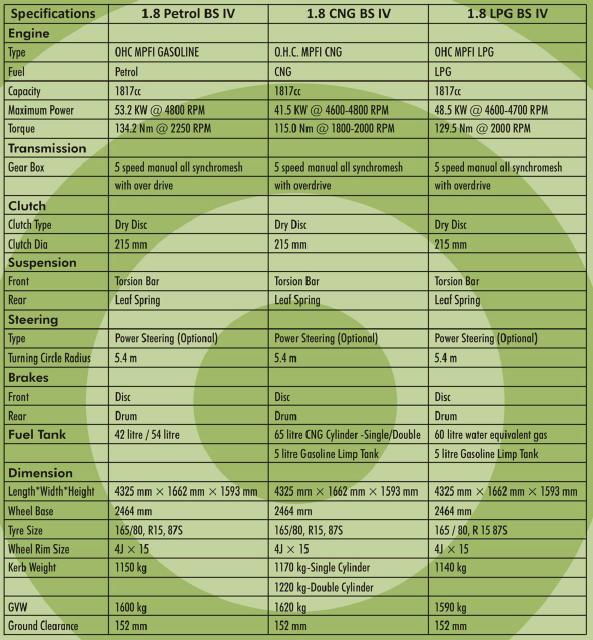
    • A revamped 5 speed gearbox
    • Improved power Stering + windows
    • A new Moulded interior door panel
    • Free Mobile Phone Charger
    • Dual tone interiors
    • Side Indicator with Escutcheon
    • Rear view mirror
    • Headlamp with Clear glass
    • Body colour bumper
    • Full wheel hub cover
    • Soft touch door handle
    • Diamond cut tail lamp

    A whole set of new colors

    • Jet Black
    • Lunar Silver
    • Fire Brick Red
    • Oyster Blue
    • Ecru Beige
    • Crystal White

    All these features are still in the Year 2002-2004 era and don’t really step it up to the mark with current competition. The quality of controls and knows, spares and parts used is still cheap and hence, parts and repair/service of the car is extremely pocket friendly.

    Either way the Ambassador will always stay a classic with our hearts, and will hopefully survive in the tough years to come.


    Thanks : Vinay

    [BurnYourFuel]

  • BMW’s i3 and i8 caught testing on ice, with ski clothing?

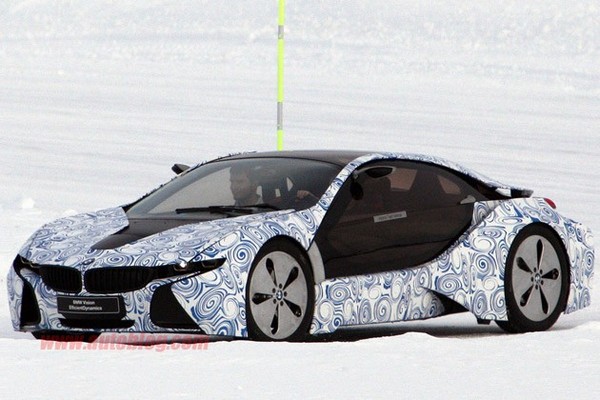
    BMW’s i3 and i8 caught testing on ice, with ski clothing?

    Just a few weeks back BMW announced the “i” series cars. This series is meant to be the first full range electric/hybrid vehicles from the automaker. The cars with 62MPG rating and a 0 – 62 time of 4.8 seconds.

    [Autoblog]

  • Rolls – Royce makes an Electric Phantom – Wants your opinion on production!

    Rolls – Royce makes an Electric Phantom – Wants your opinion on production!

    Luxury car maker Rolls Royce has just announced an electric prototype of its flagship the “Phantom”. Possibly the best luxury car available today. The car dubbed 102EX is still a prototype and the company along with the CEO want people to join in a global debate to see  whether or not they should go into production. Primarily if Luxury and an electric motor can co-exist in harmony without denting the ego of the Phantom owner!

    Join the global debate at www.ElectricLuxury.com


    PR

    Rolls-Royce Motor Cars Confirms Electric Test Vehicle Project

    Goodwood UK

    Rolls-Royce Motor Cars today confirmed the development of 102EX, a one-off, fully electric powered Phantom, to debut at the Geneva Motor Show on 1 March 2011. The car will tour during 2011, serving as a test bed to gather a bank of research data which will be crucial in informing future decisions on alternative drive-trains for Rolls-Royce Motor Cars.

    “We have engineered the world’s first battery electric vehicle for the ultra-luxury segment,” said CEO Torsten Müller-Ötvös, speaking from the company’s headquarters in Goodwood. “With this vehicle, we begin an exploration into alternative drive-trains, seeking clarity on which alternative technologies may be suitable to drive Rolls-Royce motor cars of the future.”

    Rolls-Royce produces cars that represent the pinnacle in luxurious motoring for the world’s most discerning customers. With 102EX, also known as the Phantom Experimental Electric (EE), it is the company’s intention to carefully test the opinions and reactions to alternative drive-train options of a range of stakeholders including owners, enthusiasts, members of the public and the media.

    102EX will serve as a working test bed for a global tour that takes in Europe, the Middle East, Asia and North America. Through test drives, owners will be given the opportunity to experience an alternative drive-train technology and to feedback their experiences, thoughts and concerns directly to Rolls-Royce.

    While there are no plans to develop a production version, as one of the company’s EX models it will serve to begin a dialogue with existing owners and stakeholders, posing as well as answering questions of its audience.

    These include the car’s ability to deliver an acceptable range between re-charges and to operate in extreme weather conditions. But also to benchmark reliability and quality against customer expectations of the world’s pinnacle automotive brand.
    “I must be convinced that any alternative drive-train we choose for the future delivers an authentic Rolls-Royce experience,” added Müller-Ötvös. “It must be a technology that is right for our customers, our brand and which sets us on a sound footing for a sustainable future.”

    In preparation for the Geneva debut, Rolls-Royce will launch the website www.electricluxury.com this week, a portal to fuel a wider global debate seeking views on the question of electric luxury from media, VIPs and stakeholders. The site will also deliver regular updates of the car’s progress while on tour.

    Full technical specifications for 102EX, as well as images and b-roll will be published at 00:01 GMT on 1 March 2011.

  • Volvo will unveil V60 Plug-in at Geneva

    Volvo will unveil V60 Plug-in at Geneva

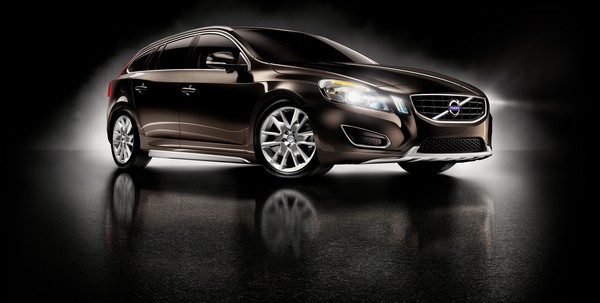
    Volvo has announced it will unveil the PHEV V60 in Geneva in March before releasing it for sale in 2012. Fully charged it will offer 50km (31 miles).

    It has a 70hp electric motor mounted in the rear with a 12kWh Li-ion battery pack. A 215hp, 2.4 liter, five-cylinder turbodiesel remains in the front bonnet.

    PRESS RELEASE

    The Volvo V60 Plug-in Hybrid
    – another world-first from Volvo Car Corporation

    At the 2011 Geneva Motor Show, Volvo Cars will be unveiling the V60 Plug-in Hybrid – a virtually production-ready car with carbon dioxide emissions below 50 g/km, which translates into fuel consumption at 1.9 l/100 km.
    In 2012 Volvo Cars will be the first manufacturer on the market with this new breed of hybrid – which is the result of close cooperation with the Swedish energy supplier Vattenfall.

    The V60 Plug-in Hybrid features the very best properties from three different car types in one, single attractive sports wagon. This includes a possibility for the driver to drive up to 50 kilometres on pure electricity.
    “This second-generation hybrid is the perfect choice for the uncompromising buyer who wants a superbly carbon dioxide-lean car packed with driving pleasure,” says Stefan Jacoby, President and CEO of Volvo Cars.

    D5 engine and Electric Rear Axle Drive
    The front wheels of the V60 Plug-in Hybrid will be driven by a five-cylinder 2.4-litre D5 turbodiesel, which produces 215 horsepower and maximum torque of 440 Nm. The rear axle features ERAD (Electric Rear Axle Drive) in the form of an electric motor producing 70 horsepower, which receives its power from a 12 kWh lithium-ion battery pack. The car features a six-speed automatic transmission.

    “In order to get true car enthusiasts to think green, you have to offer them the opportunity to drive with low carbon dioxide emissions without taking away the adrenaline rush that promotes genuine driving pleasure. The V60 Plug-in Hybrid has all the traditional properties of a genuine sports wagon. What we’ve done is to spice it up with spearhead technology,” says Stefan Jacoby.

    The Volvo V60 Plug-in Hybrid will be revealed at a press conference in Geneva on March 1st 2011.

  • Volkswagen’s XL1 concept plug-in diesel hybrid has 133 KMPL range

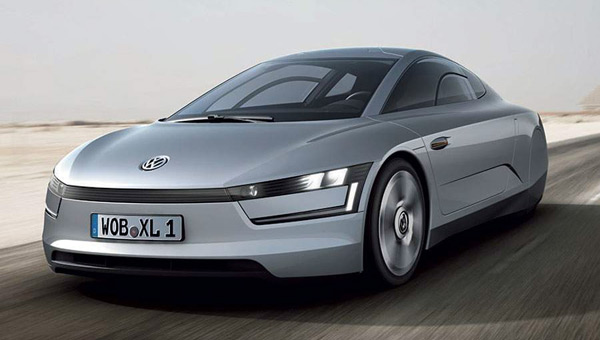
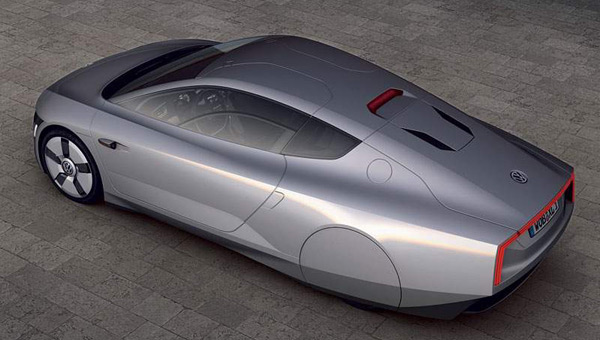
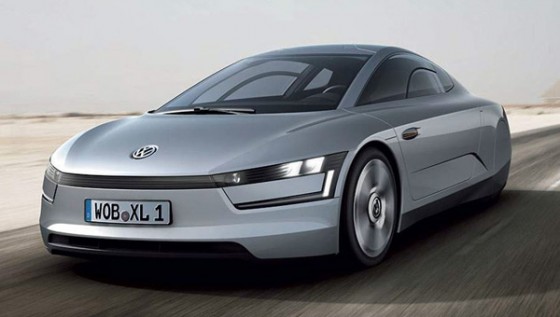
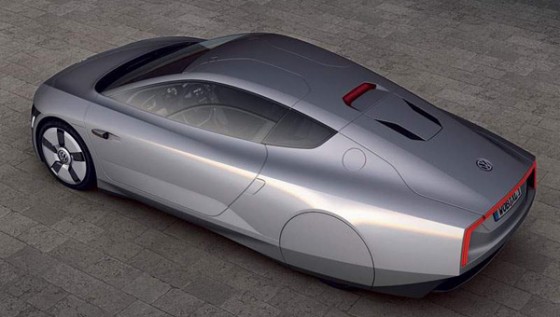
    Volkswagen’s XL1 plug in hybrid diesel (futuristic) concept car, is perfect for the Indian Consumer. If we all remember Maruti’s new advertising campaign “Deti kitna hai?”. This car delivers a whopping 133 KPML range – and that too on Diesel. Brilliant, isn’t it? It also, produces only 24g of CO2 per kilometer traveled.

    Volkswagen has achieved a 795kg curb weight by using carbon fiber, magnesium, ceramics, and aluminum to shave down any excess weight from the XL1, Testing shows only 0.186 drag coefficient.
    Read the PRESS STATEMENT below to get a better feel.

    Volkswagen unveils the XL1 Super Efficient Vehicle in Qatar

    The new Volkswagen XL1 Super Efficient Vehicle (SEV) has been unveiled at the Qatar Motor Show. Pioneering construction techniques, an advanced plug-in hybrid drivetrain and innovative packaging all play a part in allowing the XL1 to return 313 mpg on the combined cycle while emitting 24 g/km of CO2 to set a new benchmark for vehicle efficiency.

    Powering the XL1 is a compact 800 cc TDI two-cylinder common rail diesel engine developing 48 PS. It’s linked to an electric motor producing 27 PS, resulting in a total of 75 PS – a modest output yet more than enough when the low kerb weight (795 kg) of the vehicle is taken into account.

    The TDI engine is linked to an electric motor and a seven-speed DSG gearbox with an automatic clutch mounted between each unit. The electric motor can either work independently of the TDI engine or in tandem when accelerating. In pure electric mode the XL1 can travel up to 35 km before the diesel engine cuts in. Accelerating from rest to 62 mph can be achieved in 11.9 seconds; the electronically limited top speed is 99 mph.

    In both its styling and packaging the XL1 draws on lessons learned from the 1-Litre car (2002) and the L1 concept (2009). The XL1 has evolved to feature staggered seating with the driver and passenger placed next to each other in a body structure made from advanced new materials providing immense strength yet weighing just 230 kg.

    To make such weight savings possible, and yet viable for series production, Volkswagen developed and patented a new system for the manufacture of the Carbon Fibre Reinforced Polymer (CFRP) parts on the car called the Resin Transfer Moulding (RTM) process.

    In total the XL1 weighs 795 kg. In addition to the body structure, the weight is accounted for by the drivetrain (227 kg), the running gear (153 kg), the interior including a pair of bucket seats (80 kg) and the electrical system (105 kg). In total just 23.2 per cent of the car (184 kg) is made out of either steel or iron.

    Further savings are made through the extensive use of lightweight materials including magnesium (wheels), ceramics (brake discs) and aluminium (dampers, steering system, brake calipers).

    The styling of the XL1 is borne out of functional requirements – easy access to the interior is granted via a pair of elegant scissor doors that hinge on the A-pillar while the profile of the car has been honed in the wind tunnel, the result being a remarkable coefficient of drag figure of 0.186. The XL1’s overall length (3,970 mm) and width (1,682 mm) are similar to those of a Volkswagen Polo yet its height (1,184 mm) is more akin to that of a Lamborghini Gallardo Spyder.

    Although the XL1 is still very much a concept, its unveiling marks the next step towards the birth of a new class of Super Efficient Vehicles, while the advent of a process such as RTM is a significant milestone.

    Source : Volkswagen
  • BMW 5 Series Electric – But, only for China?

    BMW 5 Series Electric – But, only for China?

    As part of the company’s partnership with Brilliance China Automotive, BMW Brilliance Automotive is planning to create a pure EV 5-series, and will launch it this year. BMW saw a massive growth in China – 87% – and since the green market is heating up, they probably thought best to release an electric version of their hottest selling sedan.

    In 2010, the BMW Group sold 169,000 BMW and Mini vehicles in Chinan, In 2011, the group will introduce at least three new models into China through imports – the new BMW X3, the new BMW 6-series and the Mini Countryman.

    Via Engadget

    Source Automotive News Europe

iGyaan Network
Privacy Overview

This website uses cookies so that we can provide you with the best user experience possible. Cookie information is stored in your browser and performs functions such as recognising you when you return to our website and helping our team to understand which sections of the website you find most interesting and useful.