Category: Google

  • 500,000 Google Reader Users Migrate To Feedly

    500,000 Google Reader Users Migrate To Feedly

    Feedly,a news aggregator or RSS feed reader application service for Web/mobile iOS and Android users, is riding high, announcing that it has picked up 500,000 new users in a mere 48 hours. This follows Google’s recent move to shutter its Reader service has helped to boost the RSS service.

    Feedly is now using ten times the bandwidth it was using before Google’s announcement. The app is now the number one free app in the Apple App Store.

    Google’s decision to kill off its Reader product led to a storm of complaints. Despite RSS being an aged technology whose best days are firmly in the past, Reader retained a core, active constituency. That userbase was up for grabs the moment that Google decided to end Reader, and many alternatives stood up to accept the fleeing masses.

    The company claims that Google Reader users can, prior to the end of Reader, “migrate seamlessly” to its service.

    The most recent post on Feedly’s official blog states, “Our main priorities over the next 30 days are 1) to keep the service up, 2) listen to new users for suggestions and 3) add features weekly.”

    Reports earlier this week from social news company Digg confirmed that they would be working on a replacement to the Google Reader.

    With all of the time and money spent by these sites trying to replace Google Reader, wouldn’t it be funny if Google decided that with all of the petitions and the number of new accounts opened by other sites, it decided to give Reader another shot?

  • Google Reader RSS Aggregator To Be Retired Due To Declined Usage

    Google Reader RSS Aggregator To Be Retired Due To Declined Usage

    Google is shutting down its Google Reader service due to a declining number of users – and fans of the service have been given three months to find an alternative.

    Google Reader, which was launched in 2005, is a content aggregator of web feeds, meaning users can go to just one place to view content from their favourite sites.

    But the company said Google Reader would be retired on July 1 due to a dwindling number of users.

    [pullquote_left] “There are two simple reasons for this: usage of Google Reader has declined, and as a company we are pouring all of our energy into fewer products,” Google said in its official blog. [/pullquote_left]

    Despite a near-obsessive following among journalists – who have few options as comprehensive as RSS feeds from news sites – updates through Twitter, Flipboard and other networks have largely replaced it.

    Since the announcement on Wednesday night, a petition on Change.org has already amassed more than 15,000 signatures. User Daniel Lewis started the petition because he says that despite using it less, he still relies on it several times a week.

    At least one dedicated website has been set up asking Google to reconsider.

    Bringgooglereaderback.com opens with “Dear Google” then displays an animation of Mad Men actress and Comic Con favourite Alison Brie looking at first shocked, then upset on apparently hearing the news.

    The website then displays the words: “You should bring back Google Reader.”

    google reader

    In addition to killing off Reader, from next week Google is ending support for the Google Voice app for BlackBerrys, instead pointing users toward the HTML5 webapp.

  • Google Removes Ad-Blocking Apps From Google Play for Violation Of Terms

    Google Removes Ad-Blocking Apps From Google Play for Violation Of Terms

    Usually when Google removes apps from the Play Store it’s because they’re malicious, stealing your data, or otherwise messing with your phone in a way you don’t actually want. Today we’ve learned of Google’s most recent wave of culling apps from the Play Store, only this time the apps themselves weren’t doing anything naughty, and instead Google decided to interpret its Android Developer Distribution Agreement to prohibit all ad-blockers.

    Google has decided that all these apps are in violation of Section 4.4 of the Android Developer Distribution Agreement, and has removed all of them from the official storefront.

    Even open source software such as AdAway has been removed from the app portal, and is expected to never appear there again.

    4.4 Prohibited Actions. You agree that you will not engage in any activity with the Market, including the development or distribution of Products, that interferes with, disrupts, damages, or accesses in an unauthorized manner the devices, servers, networks, or other properties or services of any third party including, but not limited to, Android users, Google or any mobile network operator. You may not use customer information obtained from the Market to sell or distribute Products outside of the Market.

    Basically, Google seems to be saying don’t mess with advertising — which is the Web giant’s central source of revenue.

    Jared Rummler, the developer for the Ad Blocker Root app, announced on Twitter that his app was yanked from Google Play today.

    Some of these apps are still available as cache on the Play Store, but all have been removed the affected developers’ app listings. We’ll update this story as we learn more.

  • IIT Graduate Sundar Pichai Takes Over For Andy Rubin As Head Of Android At Google

    IIT Graduate Sundar Pichai Takes Over For Andy Rubin As Head Of Android At Google

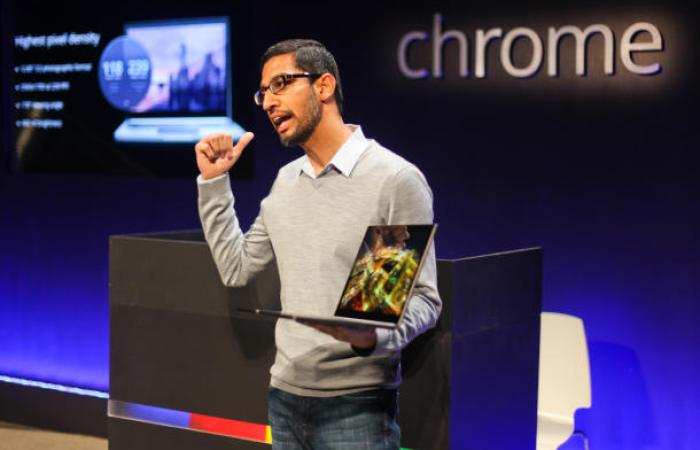
    Andy Rubin, head of Android at Google, is leaving that job to take on another unspecified role at the company in a surprise management switch up, Google CEO Larry Page announced in a blog post today. Sundar Pichai, head of Chrome and Apps, is now in charge of Android.

    Pichai will take on leading Android in addition to his existing duties spearheading efforts with Chrome and Apps, which indicates a move to unify all these platforms.

    “Having exceeded even the crazy ambitious goals we dreamed of for Android — and with a really strong leadership team in place — Andy’s decided it’s time to hand over the reins and start a new chapter at Google,” Page wrote. “Andy, more moonshots please!

    The merger of the Chrome and Android divisions helps resolve a longstanding tension in the Mountain View, California-based company’s corporate strategy, and reflects a convergence of mobile and desktop software.

    When Google poured resources into launching the Chrome web browser five years ago, the company laid out a vision of the Internet and an ecosystem of Google apps based on the Web. But the Android operating system, acquired by Google in 2005, has also been a runaway success, enabling third-party handset makers like Samsung to overtake Apple Inc while also spawning a massive economy of third-party apps that are only loosely affiliated with Google.

    Under Pichai’s direction, Google has released several netbook computers using the Chrome operating system. Last month, when Pichai unveiled the Chromebook Pixel, the first Chrome-based laptop with a touch-screen interface, analysts noted that Chrome and Android appeared to be on converging paths.

    It’s not the first time in recent memory that one of the biggest names within a top tech company has moved on to pastures new. In fact, iOS Vice President Scott Forstall left Apple towards the end of last year, closely followed by the departure of Windows chief Steven Sinofsky over at Microsoft.

    [Reuters]

  • Google To Pay $7 Million To U.S States As Street View Data Capturing Case Settlement

    Google To Pay $7 Million To U.S States As Street View Data Capturing Case Settlement

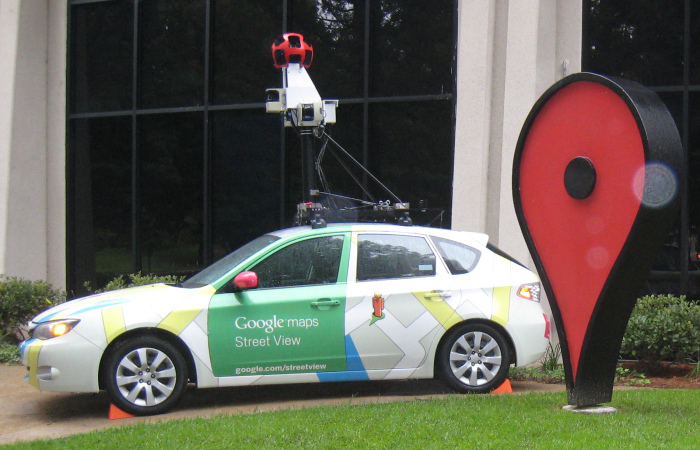
    Google has agreed to pay a $7 million fine to settle claims from 37 states and the District of Columbia that the search giant improperly collected data from unsecured wireless networks across the United States using its “Street View” vehicles.

    The announcement of the settlement is expected to be made by the states early next week, according to the person, though some of the final details of the deal were still being hammered out on Friday. Google has said the incident was a mistake.

    A group of states, led by then-Connecticut Attorney General Richard Blumenthal, began the investigation into Google in 2010 after the company revealed that its fleet of Street View cars had inadvertently collected the data from unsecured wireless networks.

    “While the 7 million dollars is significant, the importance of this agreement goes beyond financial terms,” Connecticut Attorney General George Jespen said after the settlement.

    “Consumers have a reasonable expectation of privacy. This agreement recognizes those rights and ensures that Google will not use similar tactics in the future.”

    As part of the settlement, Google said it would destroy the personal data it collected.

    It has also removed the equipment and software used to collect the data from its Street View vehicles and will not collect additional information without prior notice and consent, the Attorney General of New York said in a statement.

    It’s a relatively small sum for a company of Google’s size. To put the settlement in context, it’s a little more than the $6 million bonus that Google will pay Executive Chairman Eric Schmidt for his work at the company in 2012, according to a regulatory filing Tuesday.

    Google will also provide a training program to its employees for 10 years about privacy and the confidentiality of user data, and will launch a public-service advertising campaign to educate consumers about keeping their personal information secure on Wi-Fi networks.

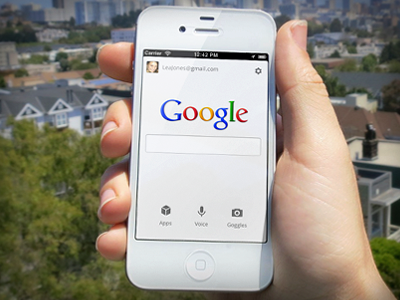
  • Google Maps For iOS Updated To Version 1.1

    Google Maps For iOS Updated To Version 1.1

    Google has released its first update to Google Maps for iOS, bringing some features over from Android and the web.

    Version 1.1, available on the App Store on Tuesday, now allows users to search for addresses based on their Google Contacts if they choose to log into their Google accounts. Additionally, the app now allows users to search for general categories like “restaurants,” “bars,” “gas stations,” and so on. Non-US users will also rejoice at the ability to choose between kilometers and miles for the app’s distance estimates.

    Users can now sync up previously-searched locations based on contact information, so if you have an address saved under Mom, searching by name will point you to the place on the map.

    Google asks customers to note that some of these features “may not be available in all countries.”

    Google Maps is a free download from the App Store.

    [toggle_box title=”Change Log” width=”Width of toggle box”]

    Full change log for Google Maps version 1.1:


    – Search your Google Contacts; sign in to have your saved addresses show up when you search for friends and family by name.
    – Quickly search for local places by selecting popular categories such as restaurants, bars, cafes, gas stations, etc.
    – Choose between Kilometers or Miles for your preferred distance units.
    – Note that some features may not be available in all countries.

    [/toggle_box]

  • Jelly Bean Now On 16.5% Android Devices, ICS Drops Slightly From Last Month

    Jelly Bean Now On 16.5% Android Devices, ICS Drops Slightly From Last Month

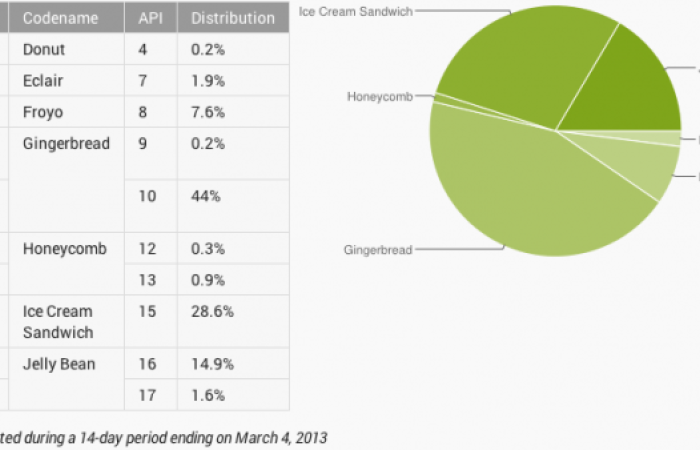
    Google today updated its developer dashboard, which showed that Jelly Bean (version 4.1 and 4.2 combined) increasing its market share of the Android platform usage on devices by 2.9 percent month-over-month from 13.6 percent last month to 16.5 percent this month. Gingerbread, the hands-down leading version of the OS running on active devices, dropped in market share by 1.4 percent to 44.2 percent of devices.

    Android Ice Cream Sandwich, the second newest Android version behind Jelly Bean, saw its market share fall slightly from 29.0 percent to 28.6 percent.

    Froyo and Eclair, Android 2.2 and 2.1 respectively, also dropped slightly, but Donut remained static at 0.2%. Honeycomb also seems to be steady at 1.2%.

    Slowly, manufacturers are updating compatible phones to Jelly Bean – most of these updates are only Android 4.1.x upgradess for now – but also announcing new machines that will run Android 4.1.x out of the box.

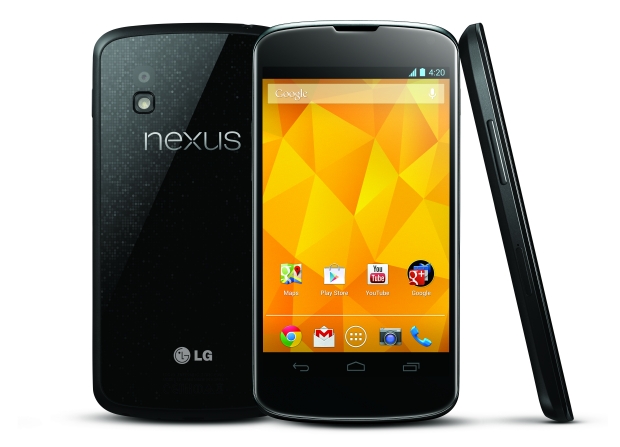
    Most Nexus devices have been updated to the latest Jelly Bean version, Android 4.2.2, but it will probably be a while until more devices will be updated to the latest Android version in a timely fashion.

    Overall it looks like things are progressing fairly nicely for the newer versions of the OS, though we’d love to see Gingerbread drop more quickly.

    All the data from Google’s developer dashboard was collected from android devices that had accessed Google Play within a 14-period, which ended on March 4.

  • Report : Google Testing Data Compression To Speed Up Chrome for Android

    Report : Google Testing Data Compression To Speed Up Chrome for Android

    Google’s Chrome for Android team is experimenting with a new data compression proxy feature to speed up browsing similar to the methods used by Opera Turbo and Amazon Silk. The feature is currently optional but could one day be flipped on by default if Google deems it ready, significantly helping those on slow connections.

    The latest build of Chromium, the open source browser project which Chrome is built upon, sports this new functionality. The feature was first spotted by developer Francois Beaufort, who talked about it in a Google+ post.

    “Reduce data consumption by loading optimized web pages via Google proxy servers,” Google describes the feature.

    The feature is still in early testing, users can enable it in Chrome for Android via a command line flag, which means they’ll need to be able to run a command like shell on their phones, either remotely via adb or via a terminal emulator on the device.

    It’s unclear whether the technology actually works at this point or whether it’s just a placeholder.

    There are several ways in which Google could lighten the load on the connection and speed up website loading. For one, as the name suggests, Chrome will connect to the Google cloud via SPDY, reducing some of the overhead.

    What’s more, using the proxy means that Chrome will connect to the closest Google data center rather than to a server which may be halfway around the world. Popular websites would also be cached by Google ensuring faster load times.

    Both Opera Turbo and Silk use pre-processing on their respective company’s servers to optimize a web page, reducing the amount of data that is sent to the browser by compression and other methods.

    [TNW]

  • Google Glass Preview Video Shows New Functionality

    Google Glass Preview Video Shows New Functionality

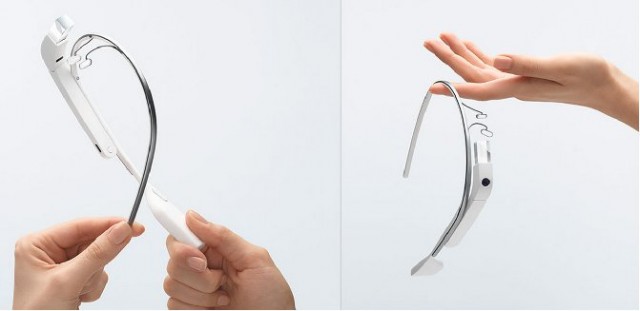
    Fresh details about Google’s eagerly-anticipated smart glasses have been released by the company.

    A YouTube video uploaded by the company shows Google Glass in action – including the interface which appears in the wearer’s line of sight.

    The search giant has also opened up the trial of the product to “creative individuals” and developers.

    [quote]”We’re looking for bold, creative individuals who want to join us and be a part of shaping the future of Glass,” Google said “We’re still in the early stages and, while we can’t promise everything will be perfect, we can promise it will be exciting.”[/quote]

    Users will say, “OK, glass” to initiate verbal input, and will be able to search the web, get directions, share video and photos, and more. This isn’t the open UI of Android; Google is wisely keeping Glass a closed ecosystem, limited to a few core functions. Of course, Google Now will play a big part, providing information about attractions, directions and more when relevant to the user.

    Some examples of how the glasses can be used include turn-by-turn navigation, taking photos and translating languages on the spot.

    The video depicts a combination of people going about their everyday lives and other adventures, like skydiving, and shows them using Glass to record video, take pictures or navigate.

    According to Google’s website, Google Glass will come in five colors: charcoal, tangerine, shale, cotton and sky.

    Google is asking users who want one to compose a short story around the hashtag #ifihadglass and post it to Google+ or Twitter. Once selected, customers will have to pay $1500+tax for the privilege.

  • Google Brings Chrome App Launcher To Windows

    Google Brings Chrome App Launcher To Windows

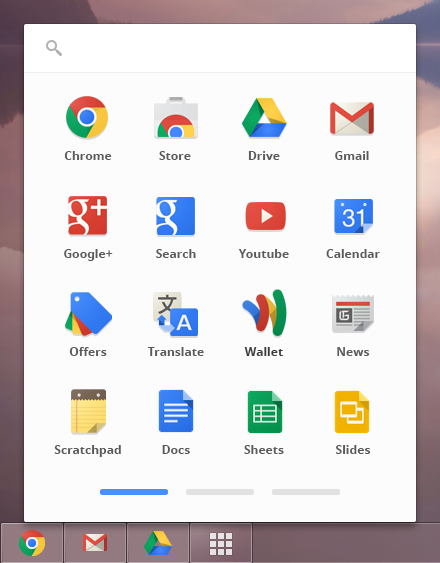
    Google on Wednesday announced a significant bridging of the gap between Chrome and Chrome OS: the app launcher, a little window that features all your apps in one place. The company has ported the dedicated “home for your apps” from Chrome OS to its Chrome browser.

    Available now in a developer preview, the launcher experience is similar to that available on Chrome OS. Users can scroll their mouse over the Chrome icon on the task bar and be provided with a list of Chrome apps to launch them quickly. 

     In the developer preview, Google has included its own Chrome web apps such as Gmail and YouTube, as well as packaged Chrome apps downloaded by users from the Chrome Web Store. Packaged apps deliver an experience as capable as a native app, written in HTML5, JavaScript, and CSS – usually meant to work offline.

    As of now the app launcher is available only for Windows, but the Chrome team said the feature would come to Mac OS X and Linux soon. 

    The Next Web also said users can continue using the Chrome browser as just that – a browser – without having an extra menu.
     
    For those wondering, Google is expected to release Chrome 25 this week or next. This feature won’t be ready till Chrome 26 or Chrome 27, however, meaning it will arrive in April at the earliest.
     
    [The Next Web]
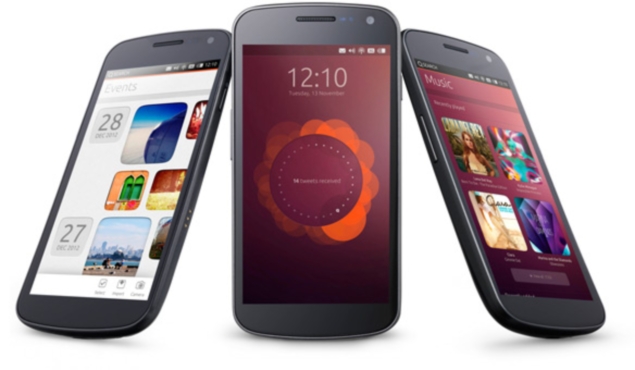
  • Ubuntu Preview For Galaxy Nexus, Nexus 4 Coming Out On February 21st

    Ubuntu Preview For Galaxy Nexus, Nexus 4 Coming Out On February 21st

    Linux enthusiasts rejoiced at the news that Canonical would be bringing Ubuntu to the mobile realm, and although it was promised a developer preview would be available for the Galaxy Nexus at some point early this year, it now looks as though the Nexus 4 will be joining it. From 21st of February, anybody in ownership of either device will be able to get a first look at the OS, which is set to release at some point in October, and although developers may not be leaping out their seats in excitement, it’s hard not to take at least a fleeting interest in its progress.

    Developers will be able to download and flash the software to these phones to aid in the creation of apps using the preview SDK.

    The SDK, which is built atop of the latest Qt framework, comes with tutorials and design guidelines to ensure developers create beautiful, functional apps. As for casual users, it looks like there won’t be much to the installation process, though it will be a little more involved than flashing a custom Android ROM.

    Canonical stresses that this is a developer preview and not finalized code, so you probably won’t be running this as your daily driver just yet. 

    It has been reported earlier that the first Ubuntu Phone OS powered devices will hit shelves later this year,in October to be more precise.

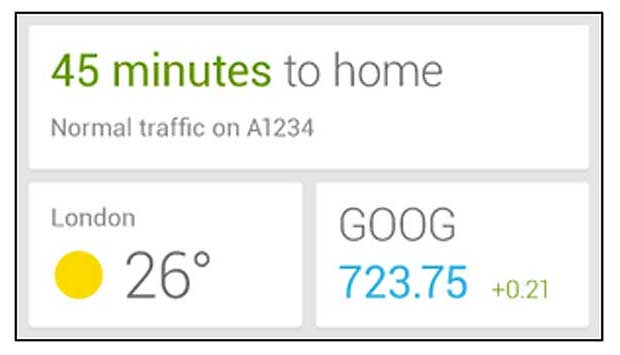
  • Google Search App For Android Update Brings Google Now Widget, Movie Ratings And More

    Google Search App For Android Update Brings Google Now Widget, Movie Ratings And More

    Google has issued an update to its Search app for Android, bringing the rumoured widget functionality to devices running Jelly Bean and higher. The update brings in fresh data, and adds support for movie tickets from Fandango.

    The update, for Android 4.1 and higher, will now provide users with movie ratings from Rotten Tomatoes, and real estate information from Zillow, when a house is listed on the markets and resides in that provider’s database. Also, if you live in the United States, and use the app, you will now be provided with a music button a song is currently employed and the app is in voice mode.

    What’s in this version:
    For Android 4.1+ (Jelly Bean):
    – Google Now widget for home screen or lock screen.
    – Movie passes from Fandango
    – Movies now includes ratings from Rotten Tomatoes
    – Real estate listings from Zillow when in the market for a home
    – Music button when a song is playing in voice mode (US only)
    – Support for US college sports

    Google, which made the widget announcement in an Android blog post, assured that Now is just getting started, so we’re sure to see many more updates and improvements hit the pipeline before long.

    The Google Search app for Android is available as a free download from the Google Play Store.

  • Real Racing 3 To Be Free-to-Play, Releasing On February 28th For iOS And Android

    Real Racing 3 To Be Free-to-Play, Releasing On February 28th For iOS And Android

    Electronic Arts has announced that the third release from its popular Real Racing series will be landing at the Google Play Store for Android, and the App Store for iOS, as of the 28th February. The iPhone 5 launch gave us a glimpse of things to come from Real Racing 3, but while the snippets appeared remnant of Gran Turismo, fans have had to wait quite a while for a solid release date.

    Now, the wait appears to be almost over, and by the end of the month – provided no unforeseen delays crop up – the mobile arena’s favorite racer will be back for a third lap.

    The title promises “46 licensed vehicles covering 3 classes, a 22 car grid, real world tracks, 8 varied event types and 900+ events.”

    real racing

    As you might expect, not all of that content will be free right away. Though players will be able to unlock all content for free over time, they can also skip the rigmarole by simply purchasing cars and tracks with real cash, according to CNET.

    The freemium model has worked wonders for many other developers, as it entices gamers to try out a game in the first place. At $9.99/INR 550, one is only likely to spend money having played before, but if a gamer can try – and enjoy – a title for free having just found it while browsing the App or Google Play Stores, the inclination to spend further money is certainly higher.

    Much like other racing games, Real Racing revolves around racing around in cars. The first game was critically acclaimed with an average review score of 94 percent on Metacritic. The series is praised for its visuals and intelligent AI.

    The second game was released in December 2010. It features a number of real cars, including the 2006 BMW Z4 M Coupe, the 2010 Chevrolet Corvette C6.R, and the 2010 Ford Shelby Mustang GT500, among others. As with the first game, it features an extensive career mode, time trials, and online play.

    [CNET, Redmond Pie]

  • Report : Google To Pay Apple $1 Billion To Be Default Search Engine

    Report : Google To Pay Apple $1 Billion To Be Default Search Engine

    Despite their continuing legal battles, new reports have suggested search giant Google will pay bitter rival Apple as much as $1 billion (£638.24 million) to be the default search browser on the company’s market dominating hardware ranges.  In 2009, the search giants paid only $82 million for the privilege.

    It seemed like an impressive win for Mozilla when the new three-year, $900 million deal with Googlewas announced. The Foundation derives the bulk of its funding from that search deal and in return Google gets billions of search hits. But that deal may pale in comparison to what it pays Apple.

    Business Insider brings a little hyperbole into the equation, saying that if the iPad continues to grow that it’ll surpass PCs in 5 years — at which point an Apple switch to another search provider could be devastating for Google. They base this speculation on the recent news that iPhoto has dropped Google Maps as a location provider, which some feel is an indication that Apple no longer needs Google at all.

    For every dollar of revenue Google makes on iOS thanks to advertising and data collection, Apple gets 75 cents from Google. The number is only going to increase in the coming years if iOS sales keep growing.

    Are you an Apple iDevice or Mac user? Do you stick strictly to the Google search options of your device or  make use of alternatives such as Bing?

    [Business Insider]

  • Android 4.2.2 Rolling Out For Nexus Devices

    Android 4.2.2 Rolling Out For Nexus Devices

    Nexus owners may have a reason to stay up tonight, as a couple of Reddit users report that Android 4.2.2 has begun rolling out to the GSM Galaxy Nexus and the Nexus 7. This is a release Google was rumoured to start shipping in Brazilian Nexus 4?s over a month ago, but nothing ever came of that assertion.

    The report mentions that the update is being rolled out to select devices, carrying the JDQ39 build number. 

    We had earlier reported that the update is expected to roll out by the mid of February, so it doesn’t really come as a surprise that Google has started seeding it out.

    The update comes in at little over 46MB and considering the fairly significant size may feature plenty more under-the-hood changes. Android 4.2.2 is currently rolling out in waves and will likely hit the Nexus 4 in the following days if previous deployments are of any indication. For Galaxy Nexus owners there is an OTA Android 4.2.2 update file that can be manually downloaded and installed afterwards using ADB Sideload in the recovery.

    Unfortunately, there’s nothing too exciting to report, as the update provides mainly performance and stability fixes, and allegedly fixes a bug related to streaming music over a Bluetooth connection.

    It’s not surprising that the update doesn’t deliver many new features, as Google is widely expected to announce the next major release of its Android mobile operating system, which is likely to be named Android 5.0, at its Google I/O conference in May.

    Via: Reddit

iGyaan Network
Privacy Overview

This website uses cookies so that we can provide you with the best user experience possible. Cookie information is stored in your browser and performs functions such as recognising you when you return to our website and helping our team to understand which sections of the website you find most interesting and useful.