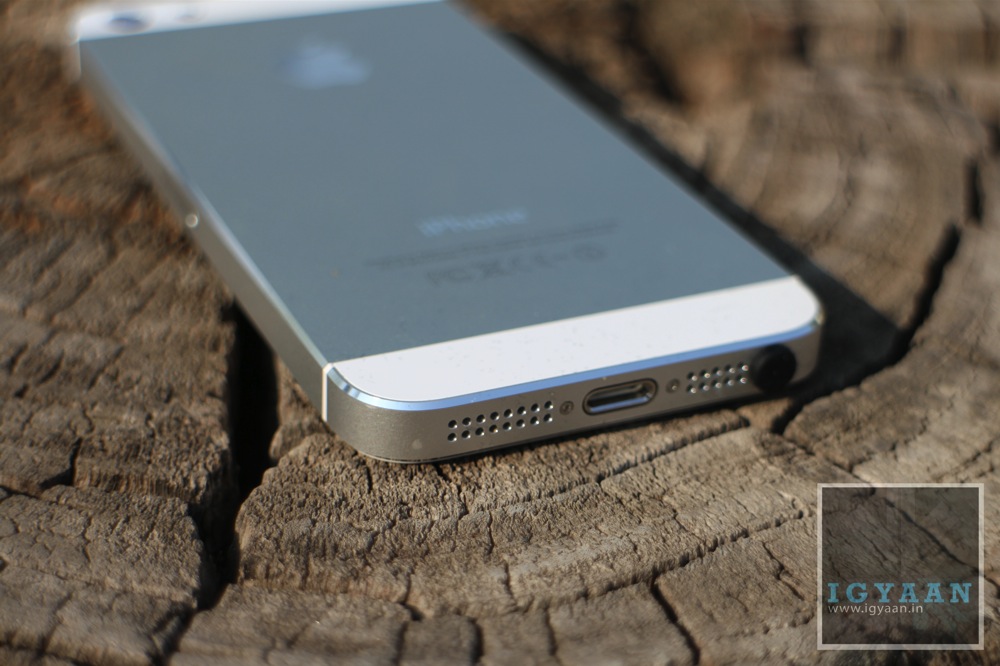
Future iPhone devices may come with intelligent batteries that draw down power based on a user’s location and charging habits, a new patent application suggests.
From the application :
A method for modifying one or more characteristics of a mobile electronic device in order to save or reduce power consumption of the device. The method includes determining by, a processor of the mobile electronic device, an estimated use of the mobile electronic device during an upcoming time period; using the estimated use, determining, by the processor, whether an internal power source of the mobile electronic device has sufficient power to continue operation of the mobile electronic device in a first state during the upcoming time period; based on the estimated use and the internal power source, if the internal power source does not have sufficient power, adjusting the one or more characteristics to reduce a power consumption of the mobile electronic device during the upcoming time period.
Apple proposes a system that can compare the estimated time period a user will spend on their device with battery reserves, determining whether the device has sufficient power to last for said period. If the battery does not have sufficient power, the system will adjust “one or more characteristics” to conserve energy.
Image Courtesy : Apple Insider
As devices like the iPhone get thinner and come packed with more features, improving or maintaining the same battery life will be one of the biggest challenges for Apple. It will also have to come out with innovative software based solutions to improve battery life.
We’re already seen Apple use software based solutions such as intelligent scheduling, opportunistic updates, coalesce updates, push notification triggers etc. to bring us smarter multitasking in iOS 7 without having a major impact on your iPhone’s battery life.
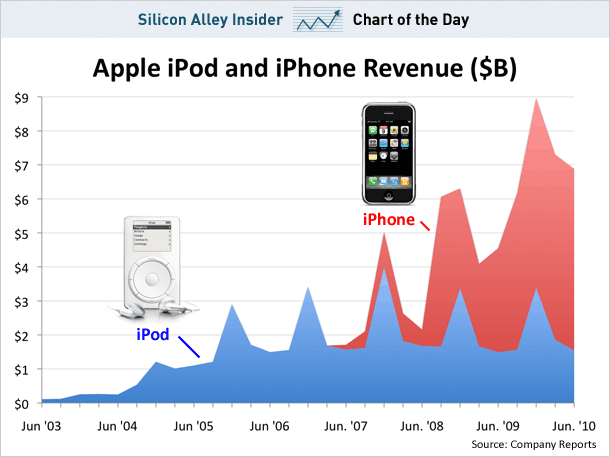
It is only with Apple that analysts would express disappointment in a year over year quarterly drop from $8.8 billion to $6.9 billion, but a drop it was. Apple posted strong fiscal Q3 earnings today with revenue of $35.3 billion, up slightly from the same period a year ago and ahead of expectations.
As expected, the numbers posted today, which include the period between March 31 and June 30, were massive, with 31.2 million iPhones and 14.6 million iPads sold. The average sales price of the two devices has dropped — $581 for the iPhone; $436 for the iPad — likely due to the introduction of the iPad mini and the wider availability of the iPhone 4 and 4S as “value” devices in developing countries, but the overall number of iPhones sold increased year over year and set a new June record, according to Apple. The total number of iPads sold dropped, however, from 17 million in Q3 2012.
Earnings per share were $7.47, ahead of analysts’ expectations but down from $9.32 last year this time. Gross margin continues to tick downwards, at 36.9% versus 42.8% Q3 2012.
Apple is predicting revenue of between $34 and $37 billion for next quarter, with gross margins stable between 36 and 37%.
Tim Cook said in a prepared statement that Apple is “really excited about the upcoming releases of iOS 7 and OS X Mavericks, and we are laser-focused and working hard on some amazing new products that we will introduce in the fall and across 2014.”
Last Thursday iOS developers had been unable to login to Apple’s Developers Portal. Most people assumed it was maintenance or a simple website upgrade. As it turns out, hackers broke into the website and stole an indeterminate amount of data.
The portal was originally designed to provide developers with access to materials and session videos relating to application development for both the iOS and OS X platforms, as well as the tools necessary to change information relating to their applications published to the iTunes App Store.
Members of Apple’s developer portal had begun receiving password reset emails en masse. In the email, Apple states that an intruder managed to get into the system, and while it’s not certain at this point, it’s not ruling out the fact that the perpetrator could have snagged names, mailing addresses, and email addresses. The company is clear to state that all sensitive information is encrypted, so passwords and potential financial information stored should be considered safe.
Techcrunch confirmed today that “The hack only affected developer accounts; standard iTunes accounts were not compromised Credit card data was not compromised They waited three days to alert developers because they were trying to figure out exactly what data was exposed There is no time table yet for when the Dev Center will return”
Apple pulled the Developer Center site and is “completely overhauling our developer systems, updating our server software, and rebuilding our entire database.”
Apple, in a bid to improve its infamous mapping system, today acquired popular transportation app HopStop.
Apple confirmed the purchase late Friday afternoon, though did not go into detail about what it intends to do with the company.
The new mapping software Apple debuted in September with the iPhone 5 has been faulted for getting users lost and for its lack of public transportation directions. HopStop shows users in more than 500 cities the fastest way to travel by foot, bike, subway and car; Locationary deploys real-time data from a variety of sources to help users find featured businesses.
The functionality is similar to the newly-acquired Waze, except it is for transit rather than automobile traffic.
HopStop’s App Store description reads :
Get detailed subway, bus, train, taxi, walking and biking directions, real-time transit information via “HopStop Live!”, as well as official transit maps, nearby station search, and station-to-station schedules in over 600 cities throughout the US, Canada, Europe, Australia and New Zealand.
In addition, you’ll benefit from our latest feature, HopStop Live!, which lets you see what other HopStop users are saying, in real-time, about the stations, trains, lines and buses you use most. HopStop Live! empowers our community of millions of transit riders to work together towards a common goal to get everyone to where they need to go, faster.
With HopStop Live! you can:
Follow your favorite lines, stations or stops
Report real-time delays and issues
Contribute pictures of what you’re seeing on buses and trains
Share to Facebook and Twitter
The app also supports these great features as well:
Get directions from your current location
Get schedules for hundreds of regional rails, subways, buses, ferries, light rails, streetcars, trams, trolleys & more
Map a location & see nearby subway & bus stops
Estimate travel time & cost for a taxi & call cab companies
See a list of all possible routes with Smart Route
Get biking directions in NYC, DC, Chicago, & SF
Earlier on Friday a report from All Things Digital noted that Apple had purchased Locationary, a location-based data company that blended data from multiple sources, including things like business listings and products and services.
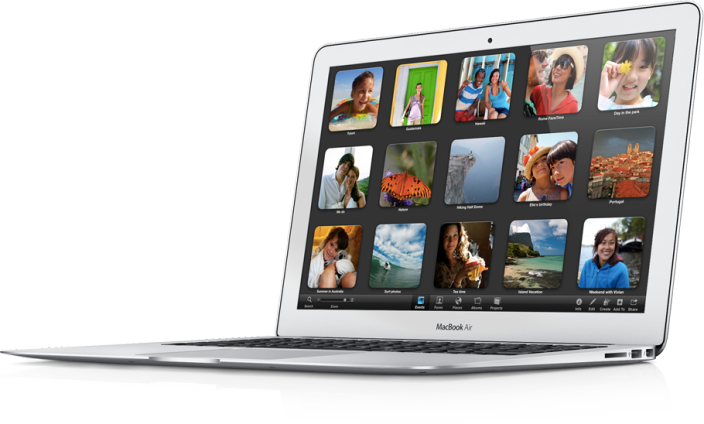
A software update is now available for the recently launched 2013 MacBook Air. Apple describes it as follows:
This update fixes an issue that in rare instances may cause an intermittent loss in wireless connectivity, an issue with Adobe Photoshop which may cause occasional screen flickering, and an issue which may cause audio volume to fluctuate during video playback.
News of the screen flickering issue emerged shortly after the release of the 2013 MacBook Air, when users began noticing display flickering when using Photoshop, especially when accessing the app’s larger brush tools. An Adobe representative noted that it was likely a driver or GPU issue.
Another problem cropped up last week when MacBook Air owners complained of uncontrollable volume fluctuations while playing video content in both first-party and third-party applications. This too has reportedly been solved with the latest Software Update 1.0.
Considering how many issues it’s meant to address, it’s a little surprising that the the MacBook Air (Mid 2013) Software Update only takes up 3.35 MB. You can download it via Apple’s site. As AppleInsider notes, Apple even took advantage of the opportunity to update its Support downloads page so it’s more in line with the design shift seen throughout the rest of the site.
Apple is currently testing a larger 10.8.5 update to OS X, as well as the next major release of the operating system (10.9, also known as Mavericks).
The big Google Maps update that hit the Android Play Store last week is now rolling out to Apple’s mobile platform. The update, which brings the app to version 2.0, contains a number of new features including iPad support and indoor maps.
Google Maps version 2.0 brings the iOS title more in line with the native Android offering, including indoor mapping and the newly released “Explore” pane.
Google Maps 2.0 for iOS includes both live traffic updates and incident reports that offer details on current traffic conditions. Unlike the Android version of the app, it does not include on-the-fly rerouting, but Google has said that it plans to add the feature in the future. The new version of Maps also offers indoor directions and maps for malls, airports, transit stations, and more.
Google Maps is currently unavailable to download in the App Store for many countries until this update is released.
As 9to5Mac reports, some users have had success downloading the new version of Google Maps by deleting their current version and downloading it from iCloud.
Google launched an overhaul of its Maps service at its IO event in May, and following that it announced an acquisition of the mobile mapping service Waze for just over $1 billion last month.
The enormously successful mobile chat tool WhatsApp, which Apple recently listed as the 6th most popular paid app of all time, has received some major updates today.
Today, the company has issued an update with a few nice features, and have quietly removed the 99c / Rs. 60 barrier to entry, reverting to an annual subscription model of the same amount.
The paid app business model is really a vestige of an older era where developers would sell their work up-front. But over time, many paid apps have made the switch toward going free with paid features. Games really triggered this wave, but other high-usage apps like messaging have gone for a freemium strategy.
The new version also adds iCloud message backup, which allows synchronization of chat states between devices and backup and restoration of content after logging out of changing devices.
The company has also added third-party URL schemes, which allows various apps to share data to WhatsApp and vice versa, and users can now send multiple messages to an individual or group (much needed!).
While this isn’t the visual overhaul many users were hoping for, it’s a great update nonetheless.
WhatsApp is one of the most popular cross platform messaging services out there. It recently announced that the service has over 250 million monthly active users, not to mention the fact that WhatsApp handles more than 27 billion messages every single day.
Tumblr has rolled out a “very important” security fix for its iOS app for the iPhone and iPad in response to a flaw identified within the service.
Tumblr’s statement regarding previous versions of its iOS app:
If you’ve been using these apps, you should also update your password on Tumblr and anywhere else you may have been using the same password. It’s also good practice to use different passwords across different services by using an app like 1Password or LastPass.
Please know that we take your security very seriously and are tremendously sorry for this lapse and inconvenience.
Another statement read : We have just released a very important security update for our iPhone and iPad apps addressing an issue that allowed passwords to be compromised in certain circumstances¹. Please download the update now.
Tumblr gave a statement to The Verge, noting that the company was “notified of a security vulnerability” introduced into its iOS app earlier today and therefore took immediate action to fix the issue and notify its affected users. It is unknown how many people may have been affected.
Tumblr is one of the Web’s most popular blogging platforms. Bought by Yahoo for $1.1 billion in a deal that closed in June, its network of blogs see more than 300 million monthly unique visitors. Tumblr says there are 120,000 new signups every day with 900 posts published every second.
Apple has already filed for a trademark for the name, “iWatch” in Japan and a new report from the Financial Times suggests that Apple’s also working to ramp up the number of employees working on the iWatch.
In what would be Apple’s first new product launch since the death of Steve Jobs, CEO Tim Cook seems acutely aware of the need for perfection – perfection the company can ill afford to miss.
The Financial Times report that the recruit stems from the “hard engineering problems that they’ve not been able to solve”, which could be seen as a blow to investors.
According to the sources of Financial Times, Apple chief executive Tim Cook may consider delaying the launch of the product if these engineering problems are not resolved in time.
The report says : As Apple moves from iPods, iPhones and iPads into an entirely new category of product, it is looking beyond its existing staff in Cupertino for the talent required to build it – an indication that the endeavour involves “hard engineering problems that they’ve not been able to solve”, according to one source.
Given these developments, it seems very likely that we won’t be seeing the iWatch for at least another year. A survey a couple of months ago suggested that 19% of consumers have interest in purchasing an iWatch, or at least something like it, and there’s no doubt that Apple understands the potential here.
While some might consider it unfortunate that the wait for the iWatch has effectively been extended, what results should be very interesting.
The iPad mini Retina display may be taking longer than expected and a new report suggests we won’t see it until 2014.
The claim was published on Friday by China’s Economic Daily News, which said that though Apple originally planned to launch a Retina iPad mini this fall, it may be delayed until the first quarter of 2014. As such, the rumor suggests that a second-generation iPad mini will not launch this year.
That doesn’t mean we won’t get a new iPad Mini before the end of the year, though. The report notes that Apple may release a refreshed model before the end of year without Retina Display, though it’s unclear how prices and specs may differ across the two tablets.
The news lines up with an earlier report from NPD Display Research analyst Richard Shim, suggesting Apple will roll out a refreshed tablet with a thinner design, A6 processor and iOS 7 out of the box.
It’s been nearly a year since the iPad Mini was introduced. It features a 7.9 inch display with a screen resolution of 1,024 x 768 pixels, advanced Wi-Fi connections, built-in applications including Siri and FaceTime, impressive A5 chip, 10-hour battery life, iSight camera, HD video for full 1080p, 5 megapixel camera and AirPlay. It’s a small tablet with the premium experience. It also comes with a somewhat hefty price tag.
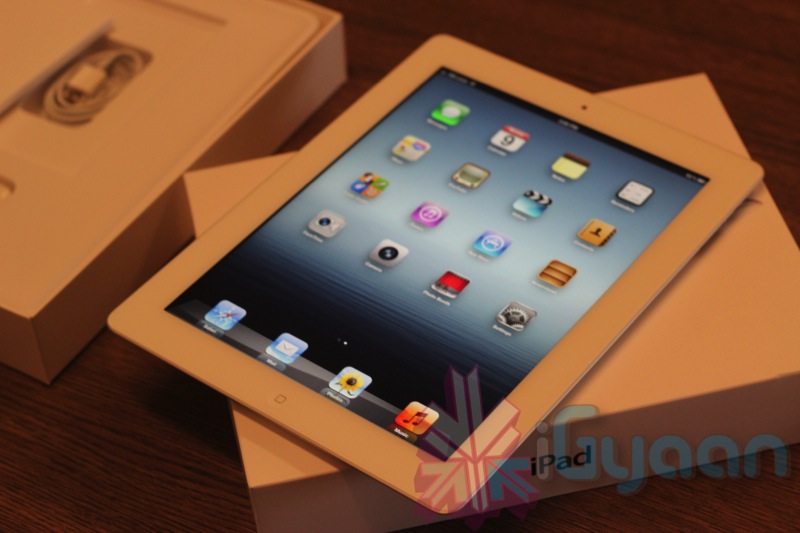
With more than 65 percent of the market and an even greater degree of mindshare, there is no doubt the Apple iPad dominates the tablet market. And for good reason: Aside from the brief, ridiculous distraction that was the Joo Joo, the iPad was the first real consumer tablet to catch on. Plus, Apple has done a brilliant job of leveraging the iTunes ecosystems and the App Store to deliver a seamless and enjoyable tablet experience. For more than 2 years, no tablet could touch the iPad, but that’s changed.
The iPad is a great tablet, but it is not for everyone. Be it price, preference or special software requirements, many people choose alternatives to the iPad. Android tablets tend to provide a greater amount of control than the iPad, with the ability to customize the tablet and plug in USB devices without a special adapter. The newest alternative are Windows-based tablets, which come in two flavors: Windows 8, which is compatible with all Windows software, and Windows RT, which is a scaled down version of Windows that can only run a small subset of Windows software.
Here we present to you 5 alternatives to the Apple iPad, both from the Android and Windows stables.
1. Google Nexus 7
The most popular and widely appreciated Android tablet at the moment, the Google Nexus 7 sports a 7-inch display with a resolution of 1280 x 800 pixels and is powered by the Nvidia Tegra 3 quad-core processor paired with 1GB of RAM.
With such raw power under the hood, the Google Nexus 7 is still one of the best tablets available in the market today. The version of Nexus 7 available on the Play Store is the base version, which comes with 16GB of internal storage and Wi-Fi connectivity. There’s also a 1.2 megapixel camera on the front and the tablet runs on Android 4.1 Jelly Bean out-of-the box, but can be upgraded to Android 4.2.2 as soon as you take it out of the box.
It might not have the Retina Display of the iPad, but again, it doesn’t cost a bomb like the iPad either.
Cost : Rs. 15,999
2. Google Nexus 10
With the Nexus 10, Google comes in direct competition with the king of the tablet word, the iPad. The Nexus 7’s big brother, the Nexus 10 has is more suited to match the specifications of the iPad.
The Nexus 10 hits the iPad directly where it hurts the most and that is, the display. Google Nexus 10 boasts of a 10.1 display with a resolution of 2560 x 1600 pixels, which amounts to a whooping 299 pixels per inch (ppi) and puts even the iPad’s Retina display to shame, which loses to the Nexus 10 at 264 ppi. Thus, the Nexus 10 has the best display on a tablet at present in the market. the screen is protected by Corning Gorilla Glass 2 and thus, you won’t have to worry about any sort of scratches on the device.
Under the hood, the Google nexus 10 is powered by a 1.7GHz dual-core Samsung Exynos processor coupled with 2GB of RAM and thus, you can expect it to keep pace with anything and everything you throw at it. Running on stock Android 4.2, you’ll get a pire Google experience on this tablet and won’t even have to worry about software updates as you would get the updates as soon as Google releases them.
Even with all these top of line specifications, the Nexus 10 manages to keep a lower price tag as compared to it’s rivals and currently retails in the US for $399 (16GB) and $499 (32GB). In India, it is available at various online retailers for a price tag of about Rs. 34,500.
Cost : Rs. 34,000 to Rs. 36,000.
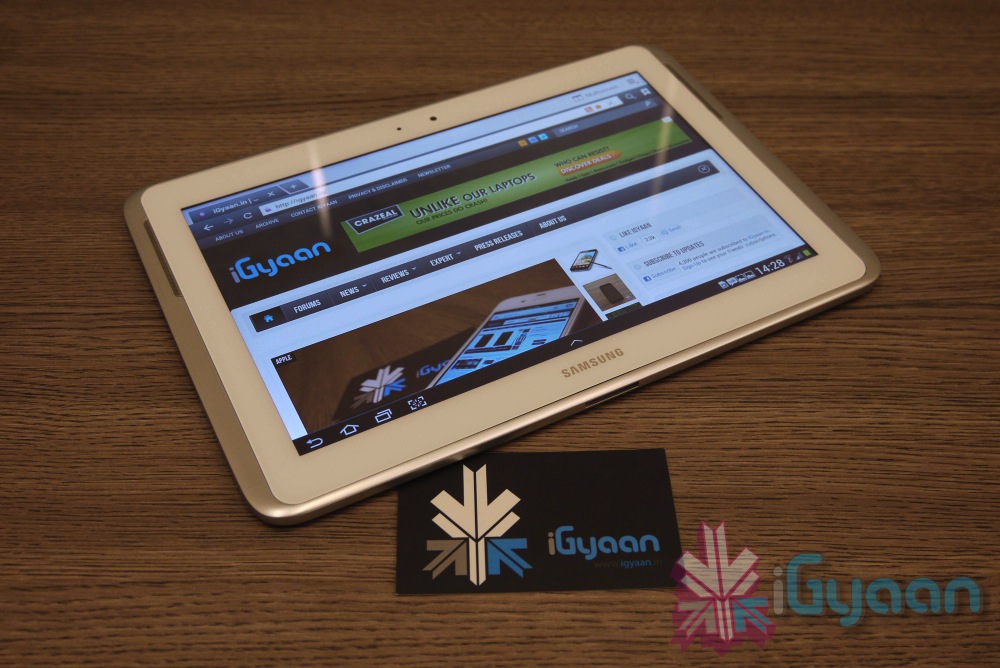
3. Samsung Galaxy Note 10.1
Though it didn’t quite reach the sales figures Samsung expected, the Galaxy Note 10.1 still is a really capable alternative to the iPad.
A tablet with a big screen, a quad core processor and the might of the S Pen… known as a stylus to me and you.
Well, not just a stylus – with many levels of pressure sensitivity and the ability easily sketch and annotate on a wide range of items, the Galaxy Note 10.1 offers so much more than your average tablet.
In terms of Hardware the Tablets is packed to the top with top line hardware. Exynos quad chipset with Mali400mp GPU 2 GB RAM and 16GB +64GB expandability.
The Tablet has a high colour density 1280 x 800 px 10.1 inch display that allows you to really enjoy wathcing movies or playing games on this tablet.
The drawback? Pricing seems to be on the higher side. You can read our review of the tablet here.
Cost : Rs. 38,500
4. Sony Xperia Tablet Z
Weighing in at only 1.1 pounds and only 0.27 inches thick, the 10.1-inch Sony Xperia Tablet Z packs 2GB of RAM, an 8-MP rear-facing camera, 2-MP front-facing camera and 16GB of internal storage into a beautiful, sleek exterior.
On top of that, it boasts superior battery performance (three hours longer than average on our Laptop Battery Test) and NFC capability for seamless touch transfer between NFC-supported devices. The Android-powered Z also comes with a Remote Control app and an infrared transmitter that lets you use it to control your home entertainment system.
The Xperia tablet Z is powered by a 1.5GHz Qualcomm Snapdragon S4 Pro quad-core processor paired with 2GB of RAM.
While it’s not really available in India, it still is a really nice tablet if you could overlook its absurd pricing (which, if rumours are to be believed, will be coming down pretty soon).
With a higher resolution screen than the Surface RT, and running the full blown version of Windows 8 the Surface Pro is kinder on the eyes and more powerful under hand, making for a potent, portable offering.
Making your mind up about the Surface Pro is less about what it is and what it does and more about what you want out of a tablet. As a hybrid PC it’s an undeniable compromise – but that’s no bad thing.
It’s a bulky device with significant weight, but at the end of the day you’re pretty much getting a portable PC, and all that power means there’s a wealth of options available on the Surface Pro which you just can’t get on the more standard of tablets.
Honourable Mentions
Asus Transformer Pad Infinity, Galaxy Note 8.0, ASUS Eee Pad Transformer Prime.
What do you think? What tablet would you choose over the Apple iPad? Let us know below!
The worldwide Apple store is down, and it has been down for the past 3 hours, giving rise to speculations that new/refreshed products will soon be announced.
Apple, from time to time, takes down its websites for maintenance and user interface upgrades so it could all just be a false alarm. However, if Apple were to announce a new device right now, it would most probably be a new line of Macbook Pros. Other than that, it could officially release the Mac Pro, the device they said would be announced later this year.
The new Mac Pro will be at least doubly powerful on every count than its predecessors. Its flash storage will be 10 times faster than any hard drive Apple has installed in its Mac Pros yet. The flash storage will offer 1.26 Gbps for reading and 1 Gpbs for writing. It will run on Intel Xeon chips, with up to 12-core configurations possible.
Among the changes to the casing, the new Mac Pro will be able to rotate using a handle on top. Motion sensors will detect when it is being rotated and the computer will light up the input panel for greater visibility.
Guess we’ll just have to wait and see whether it’s a false alarm.
There are currently concerns over an illegal mining operation of tin in Indonesia, and Apple has updated its “Supplier Responsibility” page to note that it is investigating the issue along with the Electronic Industry Citizenship Coalition (EICC). Below is the new section from Apple’s page describing its action in Indonesia.
Bangka Island, Indonesia, is one of the world’s principal tin-producing regions. Recent concerns about the illegal mining of tin from this region prompted Apple to lead a fact-finding visit to learn more. Using the information we’ve gathered, Apple initiated an EICC working group focused on this issue, and we are helping to fund a new study on mining in the region so we can better understand the situation.
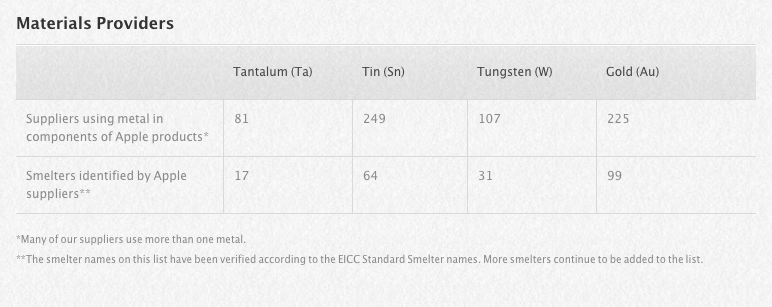
Among Apple’s suppliers, 249 use tin in the components they provide to the company, and 64 EICC-certified tin smelters have been identified. Apple is also tracking sourcing of tungsten, tantalum and gold.
In recent years, Apple has stepped up its examinations of suppliers, issuing yearly Supplier Responsibility Reports and in 2013 fired one of its Chinese suppliers for child labor violations.
Friends of the Earth has been calling for Apple to come clean on whether or not it uses tin from the Bangka area for a long time, amassing over 24,000 signatures on its campaign. The activists say that the tin has been “linked to the destruction of tropical forests, coral reefs and fishermen’s livelihoods.”
We grew up listening to the classic Beatle ( or Kishore Kumar for most) songs that our parents used to listen to. As we matured, we formed our own taste and style in music, and the technology surrounding us evolved. And as consumers, we adapted to it. We embraced the technology, incorporating it into our lifestyle and thereby becoming routine. Music plays a vital role in our society.
Hence, it was only natural for most of us to own a portable mp3 player that we would listen to every day, everywhere. But dwindling sales have led many to believe that the days of portable media players are numbered. We take a look.
Why MP3?
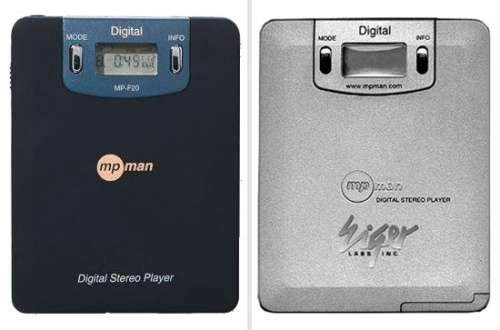
Before there were any MP3 players, there were MP3s: invented in 1987 by a group of German scientists looking for a way to shrink video files so that they would be easier to use on computers. To achieve this they stripped out as much “extraneous” data as possible, supposedly the stuff we wouldn’t miss. This loss of quality is at its least discernable when listening on headphones with the volume cranked up, so by 1998 the first portable digital music player had arrived: the MPMan F10, created by South Korean company SaeHan. (It wasn’t a hit; SaeHan now mostly manufactures textiles.)
The world’s first portable media player.
Mp3 also known as MPEG Audio Layer 3 is used to compress audio files so they take up lesser hard disk space. It can be stored and played on many digital devices such as computers, mobile phones and portable mp3 players. Consumers use mp3 files to listen to and store music.
For example, “A four-minute song on a CD would create a file of 42 MB (megabytes), while the same song encoded to MP3 would be reduced to just 3.84 MB. This reduction means that the file requires one-tenth of the hard disc space, allowing 10 times as much music to be stored in the same space.”
Quick Adoption
These new Portable Media Players would hold 1000 songs, could be recharged within an hour and would cost around 3-4k at that time. They were compact, came in a bunch of colours and were the “in thing” during that era.
[pullquote_left]”The internet and easy-to-share programs like Napster and Limewire played the role of catalysts for Portable Media Players by providing easy and free access to music files.”[/pullquote_left]
By 2004, the digital music market was still wide open, with MP3 players comprising a small portion of all portable audio sales, and the biggest players wanted in. Apple had launched the iTunes Music Store in October of 2003, but wouldn’t sell a billion songs for nearly two years. Companies like Archos, Creative, and iRiver had been building players all along, but the early aughts weren’t for purely digital music yet. With the arrival of faster internet speeds and easy-to-share programs like Napster and Limewire, acquiring music was easier than ever.
This led to people opening up to the idea of carrying a portable, compact device to fulfill their music needs.
Apple – The Biggest Player
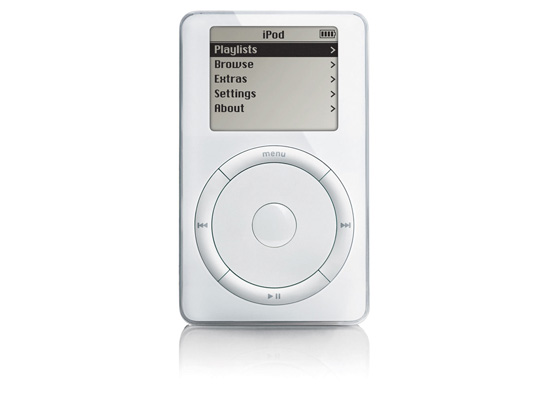
Apple was without doubt the biggest player in this segment. The iPod was a very clever piece of hardware that utilized new 1.8?”hard drives that Toshiba had developed for a market that didn’t exist yet. Encased in a pearl white and metal casing, the iPod utilized a moving scroll wheel (later, a touch-based one) that served a novel scrolling interface on a relatively large 2″ monochromatic display.
The first Apple iPod
The iPod would set the standard for Portable Media Players for years to follow, ignoring the plethora of buttons that plagued devices at the time, going so far as to omit a power button. But while the iPod hardware had many of the markings of a success story, its ecosystem (or rather, lack thereof) and price held it back from significant sales numbers for the first three years of its life.
During that time, numerous other companies realised the hidden potential in this segment of technology. MP3 players were substantially less expensive compared to CD players.
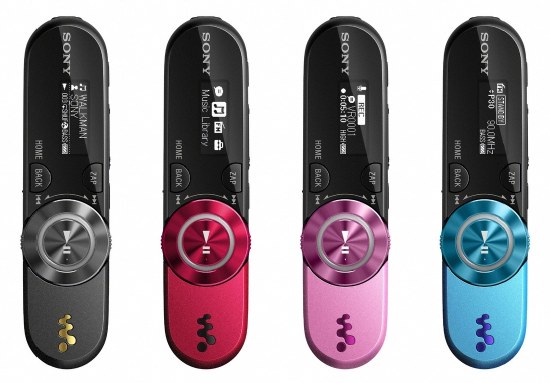
The Sony Walkmans were a hit among teenagers.
Companies like Sony, Philips, Cowon began churning out various different models of Portable Media Players. The Sony Walkman series gained popularity among teenagers.
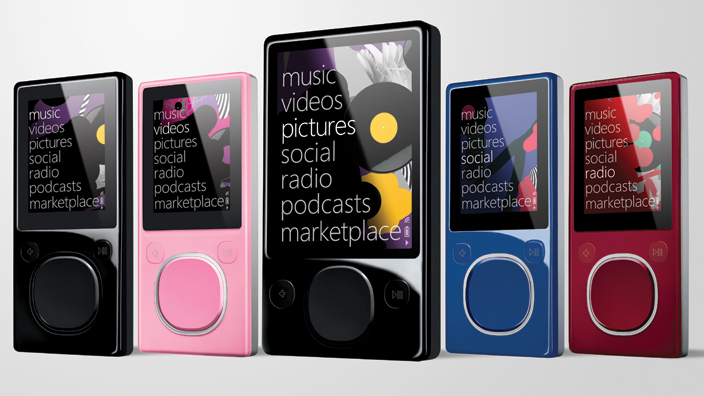
Microsoft unveiled various versions of the Zune to compete with Apple.
Microsoft’s Zune was probably Apple’s closest competitor. The hardware was slightly bigger than iPod’s similar hard drive model at the time, but came equipped with a large 3″ color screen, an FM tuner, a segmented circular directional pad that favored the Media Center-derived Twist interface for navigating menus, and a pair of buttons on its face mirrored by a shallow concavity on the backside. The player’s software was also a direct descendant of the Portable Mobile Center OS.
The casing came in five iridescent color schemes. Connectivity was provided by a proprietary 30-pin connector similar to ones used by the iPod. But their success didn’t last long.
Non-Apple Portable Media Players were put to shame. Bruised. Battered. Beaten to death. All gadgets that attempted to outrank the iPod were ambushed and annihilated. Unless you held a personal grudge against Mr. Steve Jobs, or have had some downers with Apple in the past, you wouldn’t switch to a media player not belonging to the Apple clan.
The Demise
In 2007, Steve Jobs introduced the first iPhone to the world. People were awestruck. But right there, a small iPod logo on the device’s screen spelled the beginning of the end for portable media players.
The iPhone killed its own parent product.
The iPhone promised a music experience which matched that of the iPod. Except you could make calls, play games, surf the internet, all at the same time while listening to your favourite tracks. Why have two gadgets when you can have one?
We all love our shiny smartphones, but the latest stats on MP3 players prove that the sleek handset in your pocket is a cold-eyed killer.
Yep, according to Mintel’s research sales of the humble portable media players – and let’s face it that means mainly Apple iPods – have dropped by a massive 22 per cent year on year.
‘Microsoft will no longer be producing Zune players,’ the company recently said in a statement timed very close to Apple’s latest iPhone announcements – a good time for tech companies to bury bad news.
Earlier, mobile phones did not offer music playback and so consumers were forced to carry a separate MP3 player, but when the smartphone market took off in 2007, offering devices with huge storage and comprehensive media players, the MP3 player’s days were numbered.
Sales have been dwindling.
Despite Sony and Samsung each offering alternatives to the iPod with their Walkman and Galaxy ranges respectively, iPods dominates the MP3 player market; but their sales are falling continuously as smartphones continue to thrive, and while the iPod classic is still available, it features in none of Apple’s advertising and hasn’t received an update for more than three years.
I personally like using my 3rd generation iPod Nano and would’t trade it for anything, but smartphone provide me with the convenience of not having to carry two separate devices in the notorious Delhi public transport.
So while you may still use your portable media players while at the gym (though I’ve seen people use tablets to listen to music in the gym! Ridiculous!) or while out for a jog, the fact is that the end of MP3 players is near.
As reported by Bloomberg, Apple recently applied for iWatch name ownership in Japan, a country where devices arrive in stream — and the filing reveals that Apple’s iWatch is categorized as “handheld computer or watch device.
The maker of iPhones is seeking protection for the name which is categorized as being for products including a handheld computer or watch device, according to a June 3 filing with the Japan Patent Office that was made public last week.
Apple has a team of about 100 product designers working on a wristwatch-like device that may perform some of the tasks now handled by the iPhone and iPad, two people familiar with the company’s plans said in February.
You may call it a “defensive move” against copycat manufacturers, but it also shows that Apple is looking to introduce its own wearable device to compete with the other big guns.
In May, speaking at an All Things Digital conference, Apple Chief Executive Tim Cook said the market for wearable computing is ripe for innovation, noting that the wrist was a natural place for such a device.
The Apple iWatch will likely include biometric sensors and applications such as mapping tools and ways to view information that comes via an iPhone or iPad.
As The Verge reports, the company has been known to trademark plausible names for future products, like 2009’s iSlate application, as well as ideas it’s more loosely tied to, such as 1988’s Knowledge Navigator.
Apple’s rivals are already offering their own version of smartwatch, including Sony, a maker of the Android-based devices.