Category: Google

  • Android was not a Touchscreen platform in the Pre Apple Era

    Android was not a Touchscreen platform in the Pre Apple Era

    New documents filed in the never ending Apple vs Samsung battle have revealed that Google’s plans for Android back in 2006 involved physical keys for control and no touchscreen input support.

    Google vice president of Android, Hiroshi Lockheimer, walked the jury through early development of Android and said engineers actually tried to make software that was very different from Apple’s iOS mobile operating system. He emphasised that the company liked to have its own identity and ideas, adding that it was very passionate about what it was doing, and it was important that it had its own ideas.

    According to the file “the product [Android] was designed with the presence of discrete physical buttons as an assumption. However, there is nothing fundamental in the product’s architecture that prevents the support of touchscreen in the future.”

    A lot of differentiating factors also came into light, including  removable storage, third-party application support, widgets, notifications and all those Google services. The design of the 2006 Android beta build lacked touchscreen and required cursors and physical keys, this was changed to a “Touchscreen Required” minimum, in 2007 post the launch of the first Apple iPhone.

    Read the full filed document below:


  • Google Announces Android Wear; Clean Android for Wearables

    Google Announces Android Wear; Clean Android for Wearables

    Looks like Google has been noticing the recent influx of Smart watches and will be extending its love to devices more than just Google Glass. Google has announced Android Wear, a new way for the company to bring Android to wearable technology. Many call it the Nexus of smart watches, its more a clean Android interface the way google wanted it. 

    The Android Wear project will bring an ever aware, smart watch which is always listening. So just say “okay Google!” and open your garage door.

    Android Wear promises to be more than just voice commands and just a user interaction based response system. The Android Wear project promises to bring contextual updates and notifications based on your likes, location and available choices keeping in mind weather conditions and local ambiances. 

    The new project promises to bring better interaction with your smartphone, alongside better health features and tracking. 

    If you’re a developer, there’s a new section on developer.android.com/wear focused on wearables. Starting today, you can download a Developer Preview so you can tailor your existing app notifications for watches powered by Android Wear.


    Google has gone ahead to announce that Asus, HTC, LG, Motorola and Samsung are working on Android Wear devices; chip makers Broadcom, Imagination, Intel, Mediatek and Qualcomm are helping with the hardware; and fashion brands like the Fossil will bring it to the global consumer.

  • Google Translate for Android, Brings the Love for Handwriting  in 13 new Languages including Punjabi, Gujrati and Arabic

    Google Translate for Android, Brings the Love for Handwriting in 13 new Languages including Punjabi, Gujrati and Arabic

    Google’s latest translate app update will offer a lot of help to travelers and locals of the middle east and South Asia including India. With handwriting recognition added in 13 new languages including Arabic and Persian as well as Indian dialects like Gujarati, Kannada, Punjabi, Tamil and Telugu. You’ll also find support for Bosnian, Cebuano, Hmong, Maltese, Mongolian and Somali.

    Google is constantly updating their language tools and it becoming easier and easier to communicate with people of a different language thanks to these updates. With handwriting support added, those from India who cannot type can now scribble directions to the nearest bar on this app. Lovely!

  • Google’s Project Ara Conference Announced

    Google’s Project Ara Conference Announced

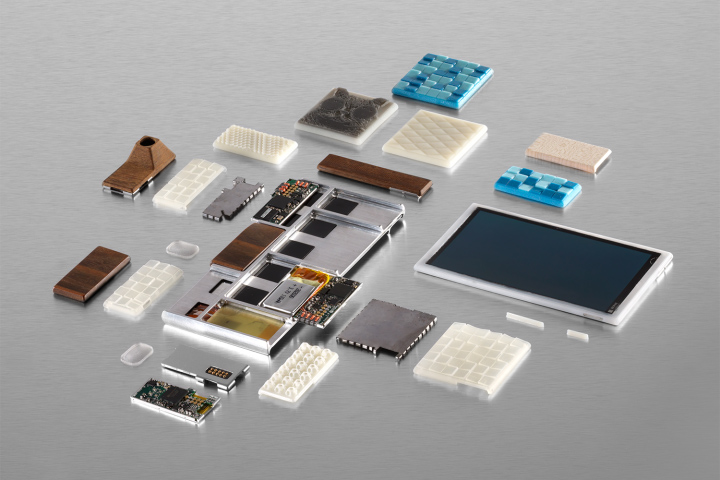
    Google today revealed the first details of its Ara Developers’ Conference, a series of events that’ll focus on getting devs up to speed on the current and upcoming features of Project Ara. A new follow-up profile by TIME indicates we could see the device come to market by next year, with a $50 price tag to start. 

    That MDK should be released in early April, Google says, as a free and open platform specification, along with a reference implementation that will help would-be Ara module developers to create their own piece.

    The event will take place in Mountain View, California, and will be streamed online to the whole world. In fact, Google claims that Project Ara is designed for 6 billion people. This indicates that Android maker may be working on a highly affordable modular phone for the masses.

    Project Ara began as a project in the Motorola Mobility skunkworks, but after the news that Lenovo would buy the smartphone company, Google confirmed that it would be keeping the Ara team. 

    Headed under the Advanced Technology and Projects (ATAP) division, the platform is meant to be a single hub onto which the user can place their own hardware.  This means CPUs, cameras, sensors, screens, baseband, modems, connectivity, storage – the whole gamut.

  • Google Announces Project Tango, a 5 inch Android Smartphone that Can Map the World Around You

    Google Announces Project Tango, a 5 inch Android Smartphone that Can Map the World Around You

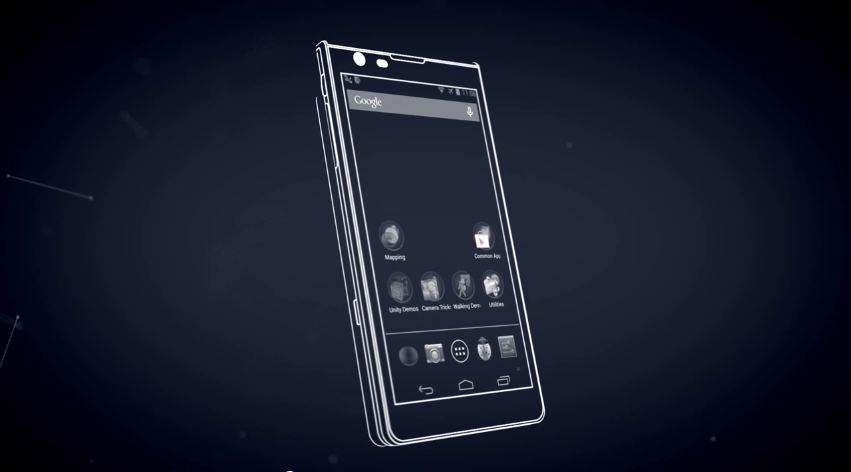
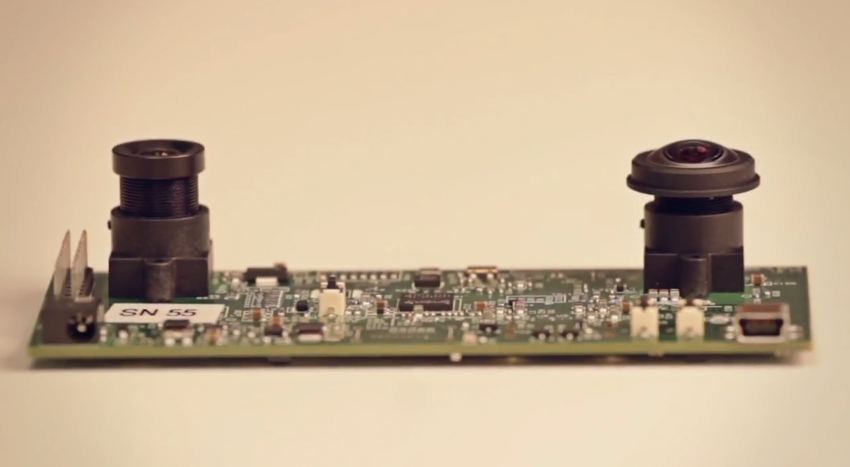
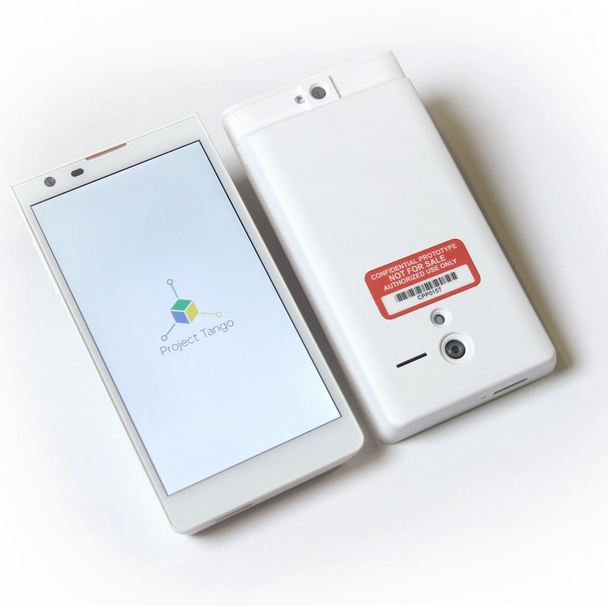
    The goal of Project Tango is to give mobile devices a human-scale understanding of space and motion. The device is a 5 inch Android prototype smartphone equipped with 3D sensors and other components to track motion and map the surroundings around you. 

    project tango 5

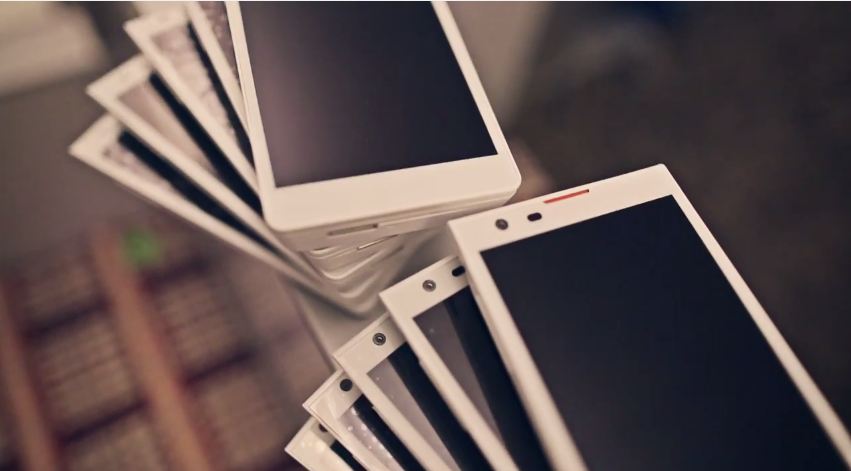
    Google has 200 devices that they are preparing to give out to developers who want to build mapping tools, games, and new algorithms that can take advantage of the technology on the prototype smartphone, and these developer editions will ship by 14th March 2014 as planned by Google. 

    Google’s Advanced Technology and Projects (ATAP) group is the brains behind the project Tango. By now, you might have got an idea of what exactly is Project Tango, now lets see how it works:

    project tango

    The device in the Tango project will work by using a motion tracking camera and a sensor built into the backside of the prototype android smartphone. Once the smartphone is moved around, the sensors will detect everything in front of them, and as a result it will build a 3D map of the surroundings using the data captured. 

    The Project Tango is capable of doing more as per ATAP, while they emphasize this on being at an early stage, they also believe developers will do wonders with this prototype. Project Tango is result of one year research from ATAP, they worked with universities, research labs, and industrial partners spanning nine countries around the world to harvest research from the last decade of work in robotics and computer vision, concentrating that technology into the prototype smartphone. 

    tango

    This project comes from Google’s Advanced Technology and Projects team, the same team which was associated with Motorola but Google decided to keep them, while they let go Motorola. We will keep you updated with all the latest happenings related to the Project Tango, however, you might want to watch the video below to know more:

    [youtube url=”http://www.youtube.com/watch?v=Qe10ExwzCqk”]

    [Project Tango]

  • Google $3.2 Billion Nest Deal Now Official

    Google $3.2 Billion Nest Deal Now Official

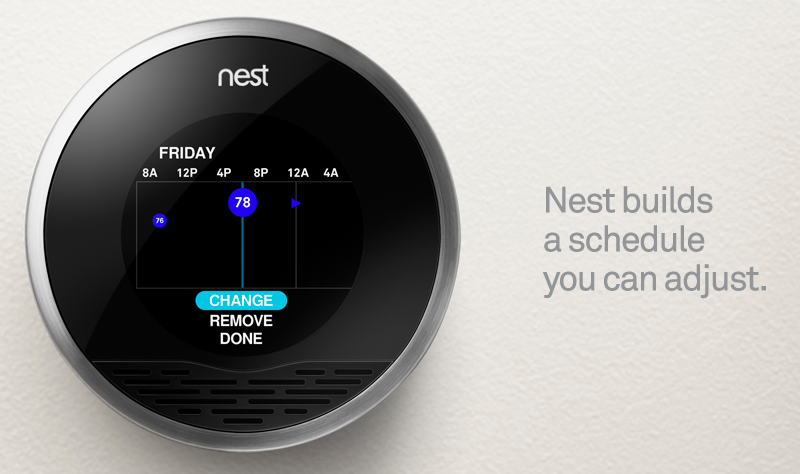
    Google said in a regulatory filing this morning that it had closed its acquisition of Nest on Feb. 7.

    Nest has always been on Google’s radar. Google Ventures, the company’s startup investment arm, was one of the Nest’s early investors. Google was previously rumored to be building a Nest thermostat competitor, and there were even leaked screenshots of a smart thermostat app built by Google called “EnergySense,” which would let you control the temperature from a smartphone or Web client.

    Google is pretty famous at this point for acquiring vast amounts of data on its users, as well as sharing that data. Co-founder of Nest, Matt Rogers, said in a Q&A on the company’s blog, “Our privacy policy clearly limits the use of customer information to providing and improving Nest’s products and services.” He goes on to claim that will not change. 

    Nest uses complex technology to solve a problem that lots of people have on an everyday basis. That’s what Page wants to do with Google. He wants to use complex technologies to come up with simple solutions for complex problems that huge masses of people have — like controlling their climate of their homes in an energy-efficient way.

    A quick finalization of the deal was expected after the Federal Trade Commission fast-tracked its approval last week.


  • Tim Cook : Google Was Not Committed to Motorola

    There’s plenty to talk about with the sale of Motorola to Lenovo, from what it means for the future of the American Smartphone manufacturer to the reasons Google bought them in the first pace, and everyone seems to have an opinion, including Apple’s CEO Tim Cook. 

    “I wasn’t surprised,” said Cook in an interview with The Wall Street Journal. “Google gets rid of something that’s losing money, something that they’re not committed to.” Cook went on to state that becoming a company that melds hardware, software, and services together is quite difficult and that Google obviously hasn’t quite gotten proficient in this arena, which makes “Apple so special.”

    The CEO further took dig at Google’s Android OS, calling the experience on its tablets ‘crappy,’ because the app is nothing more than a stretched out smartphone app.

    When asked if Apple will do a larger screen iPhone, Cook responded, “What we’ve said is that until the technology is ready, we don’t want to cross that line. We want to give our customers what’s right in all respects – not just the size but in the resolution, in the clarity, in the contrast, in the reliability. There are many different parameters to measure a display and we care about all those, because we know that’s the window to the software.”

    Other comments from Cook revolve around Google’s acquisition of Nest, stating that he and Apple both feel that buying large companies simply for the sake of “being big” and buying them is not what Apple wants or believes in. They are not against buying a large company, they simply care more about buying one that is fit right for them.

  • Google Dodges Fine with EU Antitrust Deal

    Google Dodges Fine with EU Antitrust Deal

    As The Wall Street Journal reports, Google has clinched a settlement in its high-profile case with European Union antitrust regulators to address concerns that it is abusing its dominance in online search.

    EU Antitrust Commissioner Joaquin Almunia said that he’s “strongly convinced” the new proposals sufficiently address the competition concerns, marking a major milestone in the three-year-old case. “This is an important step forward,” he told reporters in Brussels.

    Google had been accused of giving favourable treatment to its own products in search results. The company said it looked forward to resolving the matter.

    As FT reports, on the European Commission’s side, there is still going to be a final approval process. The groups that filed the original complaint against Google will be consulted, but it will not be a formal “market test”. The commission will monitor whether Google sticks to its promises.

    The agreement means the world’s dominant search engine has avoided a process that could have lead to a fine of up to $5 billion, or 10 percent of its 2012 revenue. It must stick to the deal for the next five years. Google has a market share of about 90 percent of Internet searches in Europe, compared with around 70 percent in the U.S.

    However, Google may still face a second EU investigation, this time into its Android operating system for smartphones, with potentially bigger risks for the company.

  • Samsung and Google Sign Global Patent License Agreement

    Samsung and Google Sign Global Patent License Agreement

    Samsung Electronics and Google Inc. further extended their partnership with a global patent cross-license agreement covering a broad range of technologies and business areas. 

    “This agreement with Google is highly significant for the technology industry,” said Dr. Seungho Ahn, the Head of Samsung’s Intellectual Property Center. “Samsung and Google are showing the rest of the industry that there is more to gain from cooperating than engaging in unnecessary patent disputes.”

    This new agreement covers Samsung’s and Google’s existing patents as well as the ones that will be filed over the next 10 years. This agreement allows Samsung and Google to get access to each other’s patents portfolios, which might lead to focus more on product innovations than on filing lawsuits. 

    “We’re pleased to enter into a cross-license with our partner Samsung,” said Allen Lo, Deputy General Counsel for Patents at Google. “By working together on agreements like this, companies can reduce the potential for litigation and focus instead on innovation.”

  • Google To Face Hefty Fine For SimpleAir Push Notification Patent Infringement

    Google To Face Hefty Fine For SimpleAir Push Notification Patent Infringement

    SimpleAir is seeking $125M in damages from Google after a jury found that push notification services in Android infringe on a SimpleAir patent, the company said Tuesday.

    The accused services are the Google Cloud Messaging (GCM) and Android Cloud to Device Messaging (C2DM) services. The services are used by Google to process and send instant notifications for Android applications, such as Facebook, Twitter, and Gmail.

    It’s worth noting that Google isn’t the first company to run into trouble with SimpleAir. Microsoft, Apple and even Blackberry all have licensing agreements with the company, after all. 

    Because the jury did not agree on how much to award in damages, a limited second trial will be held to determine the amount. SimpleAir said in a press release that it will seek US$125 million, though it did not specify how it had calculated the amount.

    [modal heading=”Press Release” text=”Press Release” size=”btn-medium”]Federal Jury Finds Google Infringed SimpleAir Patent January 21, 2014 03:45 PM Eastern Standard Time MARSHALL, Texas–(BUSINESS WIRE)–SimpleAir announced today that a federal jury returned a verdict that SimpleAir’s U.S. Patent No. 7,035,914 is infringed by Google. The verdict was reached on Saturday, January 18, 2014, following a week-long trial presided over by the Honorable Rodney Gilstrap, U.S. District Judge for the Eastern District of Texas. “We are grateful for the jury’s hard work in this case and pleased with their verdict” SimpleAir had alleged that Google’s push notification services for the Android smartphones and tablets infringed five claims of the ‘914 patent. The jury agreed unanimously on all counts of infringement and also found unanimously that each claim was valid. The validity of the patent had previously been confirmed by the U.S. Patent and Trademark Office during a Reexamination proceeding that concluded in February 2013. The accused services are the Google Cloud Messaging (GCM) and Android Cloud to Device Messaging (C2DM) services. The services are used by Google to process and send instant notifications for Android applications, such as Facebook, Twitter, and Gmail. The jury was unable to reach a unanimous decision on the amount of damages to award for Google’s infringement. The damages issue will be decided by a separate jury in a limited second trial. SimpleAir will seek damages in excess of $125 million for Google’s infringement in the damages retrial. “We are grateful for the jury’s hard work in this case and pleased with their verdict,” said John Payne, who is the lead inventor and majority owner of SimpleAir. “There was a lot of information presented to the jury and they did an exceptional job figuring out what mattered and what didn’t. We look forward to addressing the issue of damages in the second trial and hope the jury in that trial will be as dedicated as this one was.” SimpleAir is an inventor-owned technology licensing company. The company holds eight issued U.S. Patents and several pending patent applications in the areas of wireless content delivery, mobile applications, and push notifications. SimpleAir has licensed its inventions to many leading technology companies. SimpleAir is represented by Greg Dovel, Jeff Eichmann, and Simon Franzini of Dovel & Luner LLP and by Calvin Capshaw, Elizabeth DeRieux, and Jeff Rambin of Capshaw DeRieux LLP.[/modal]

  • Google Launches Chrome 32 Browser

    Google Launches Chrome 32 Browser

    Google today released Chrome 32 for Windows, Mac, and Linux. 

    While users running beta versions of Chrome might already be familiar with some of the new features, it is the first time Google has brought these features to the masses.

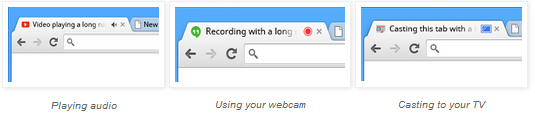
    One of the features that are present in Chrome 32 are tab indicators for when a site is playing sound, accessing the webcam and sending video to your Chromecast. Google uses a speaker icon, blue rectangle and red dot to indicate these different functions.

    chrome 32

    Google has fixed five vulnerabilities in its Chrome 32 browser and also has activated a feature that will block malicious file downloads automatically. The change is a major security upgrade for Chrome and will help prevent users from unwittingly downloading harmful files, an attack vector that attackers count on for the success of drive-by downloads and other attacks.

    Google has also introduced the beta version of its “supervised users” feature, which will help parents monitor and control their child’s browser activity.

    If you’re a Windows 8 user, Chrome now looks much better on Microsoft’s latest OS. In Metro mode, Chrome 32 now looks like ChromeOS  with its integrated app launched on Windows. 

    You can get more details on Chrome 32 here.

  • Bump and Flock Will Shut Down On January 31

    Bump and Flock Will Shut Down On January 31

    Google acquired contact and file-sharing app Bump back in September. Bump co-founder and chief executive David Lieb said the company was “thrilled” to join Google, citing similar passions for sharing information between people and devices. We’re not too sure he’ll feel the same way now.

    Bump and Flock are no more and will stop working and be removed from Google Play (and the App Store) on January 31st, 2014. The reason for this decision: Lieb and his team are now “deeply focused” on new projects within Google and don’t have the resources or time to devote to innovating on either product.

    The app allows iPhone and Android users to “bump” together two phones to share contact details and files between devices. Later versions also allowed phone users to “bump” phones with desktop computers.

    In September 2011, the company announced it had 50 million downloaders and 10 million active “bumpers.” Just less than a year later, more than 600 million photos were shared by “bumping” phones. Later it released an iPhone-only version photo-sharing app dubbed Flock (not to be confused with the social browser of the same name).

  • Google Celebrates the Last Day of 2013 with a Doodle

    Google Celebrates the Last Day of 2013 with a Doodle

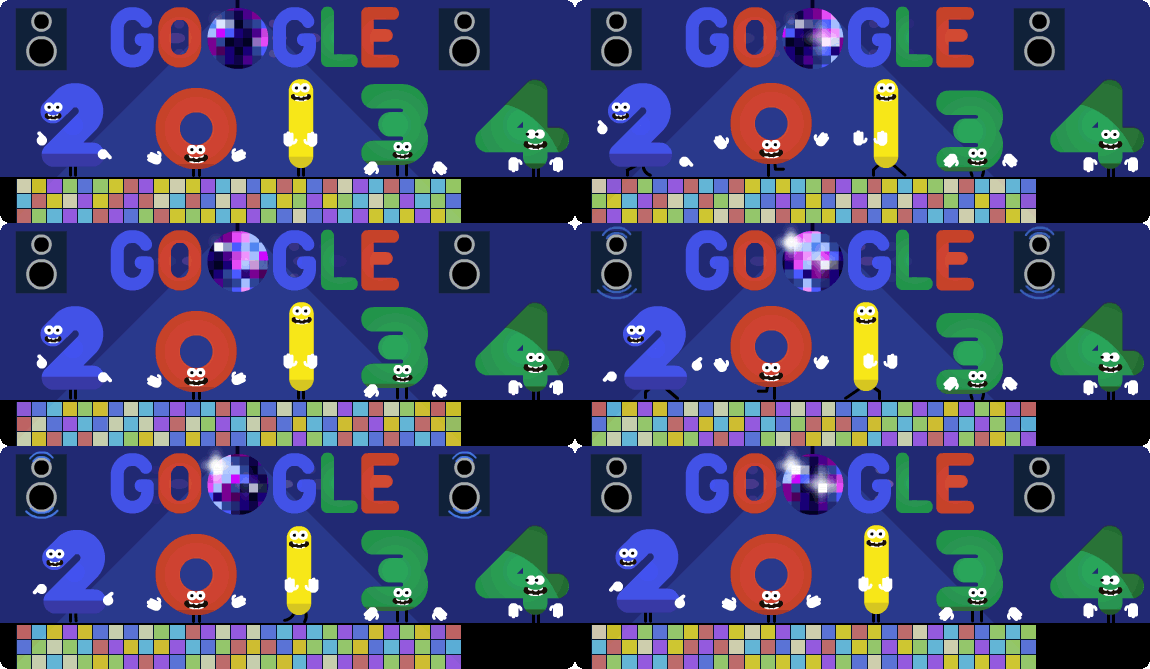
    Google’s doodle for today, is the last doodle that you will see in 2013. The doodle features numbers 2 0 1 and 3 on the dance floor with the number 4 waiting along the side.  The word Google is seen sandwiched between two speakers, with the second O replaced by a disco ball.

    The Doodle showcased today is not interactive, unlike other Doodles. However, Google has included an option below the search bar that says: “What did the world search for this year? Remember the moments of 2013“, once you click on the link it will give you various options like: What did the world search for in 2013? and also gives you an option to look around the top 100 stories of 2013.

    Screen Shot 2013-12-31 at 12.10.03 PM

    Some of the most popular stories include, Nexus 5, iOS 7, HTC One, Windows 8.1, Samsung Galaxy S4, BlackBerry 10, Xbox One, iPhone 5s, PlayStation 4 and alot more.


  • Chrome Updates the Web Store Policy Keeping Chrome Extensions Simple

    Chrome Updates the Web Store Policy Keeping Chrome Extensions Simple

    Google has updated its Chrome Web Store policy to keep Chrome fast enough by restricting the extensions on the web browser.

    This new policy from Google will start implementing today. With this update, Google is aiming towards extensions that have a single purpose, which is narrow and easy-to-understand. The multi-purpose extensions can crowd the browser UI and slow down the web browsing experience.

    chrome-internet

    The blog from Erik Kay (Engineering Director) notes, a simple and speedy browsing experience has been part of the core principle of Chrome since the beginning. It further notes that Chrome will not use any toolbars as more toolbars reduces the capabilities of the browser. Users would have more control over features they add to their browser. For more information check out the source link below.

    [Chromium]

  • Winter Solstice: First Day Of Winter in the Todays Doodle

    Winter Solstice: First Day Of Winter in the Todays Doodle

    Google has always been creative with the doodles, we have seen a variety of them on different occasion. For today, Google has released a new Doodle on its homepage to celebrate the First Day of Winter, also known as Winter Solstice.

    December 21 is the shortest day and the longest night of the year in the Northern Hemisphere. This is called the winter solstice, which usually occurs on either December 21 or December 22. The Winter Solstice is the shortest day of the year as the sun reaches its southernmost point in the sky. Further, the sun begins moving northward, making the days longer for those in the northern hemisphere.

    Countries like America will only see the daylight for 9 hours 32 minutes. Whereas, in Iceland the sun rises at 10 am and the sun sets at 4:49 pm and in countries like Alaska there is not sunrise.

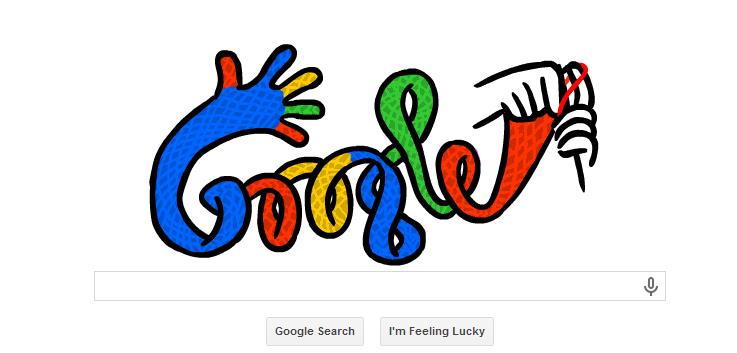
    The animated Doodle, created by German illustrator Christoph Niemann, shows a scarf being knitted into the shape of Google’s logo.

iGyaan Network
Privacy Overview

This website uses cookies so that we can provide you with the best user experience possible. Cookie information is stored in your browser and performs functions such as recognising you when you return to our website and helping our team to understand which sections of the website you find most interesting and useful.