Microsoft has to come up with a new name for Skydrive, its cloud based data storage service.
Skydrive is used by Microsoft users to upload and share content. Unfortunately Microsoft did not give enough consideration to the fact that British Sky Broadcasting might have had a trademark on the word “sky”.
A UK court has ruled that Microsoft has infringed on a trademark owned by British Sky Broadcasting Group with the name “SkyDrive.” Microsoft has reportedly agreed to change the name, and they will not appeal the court’s decision.
A new name will not be given overnight. BSkyB will continue to let Microsoft use the name for a “reasonable period of time” as they try to rename the service. Microsoft has been using the SkyDrive name for their cloud-storage service for around 5 years now. The name has become synonymous with Windows 8, Windows Phone, and all of Microsoft’s new devices. Hopefully this brand change does not disrupt Microsoft’s vision.
There were also some financial and other terms in the agreement, however the details are confidential.
“We’re glad to have resolution of this naming dispute, and will continue to deliver the great service our hundreds of millions of customers expect, providing the best way to always have your files with you,” said Microsoft.
Sony has admitted it won’t carry on its appeal against a £250,000 fine handed to the firm in Britain following serious breaches of its PlayStation networks in 2011.
ICO fined the firm back in January, after finding that the breach was “preventable” and that Sony, as a business, “should have known better” as the occurrence fell under the Data Protection Act.
A Sony spokesperson said. “After careful consideration we are withdrawing our appeal. This decision reflects our commitment to protect the confidentiality of our network security from disclosures in the course of the proceeding. We continue to disagree with the decision on the merits.”
The fine was handed to Sony by the Information Commissioner’s Office after its PlayStation Network was breached and data on 77 million users exposed. Further breaches of SCEE-related infrastructure led to data of millions more being compromised.
Despite it’s decision not to appeal the fine, Sony said it continues to “disagree with the decision on the merits.”
Unsurprisingly, ICO said that it was delighted with the change of heart. “We welcome Sony Computer Entertainment Europe Limited’s decision not to appeal our penalty notice following a serious breach of the Data Protection Act,” a representative said.
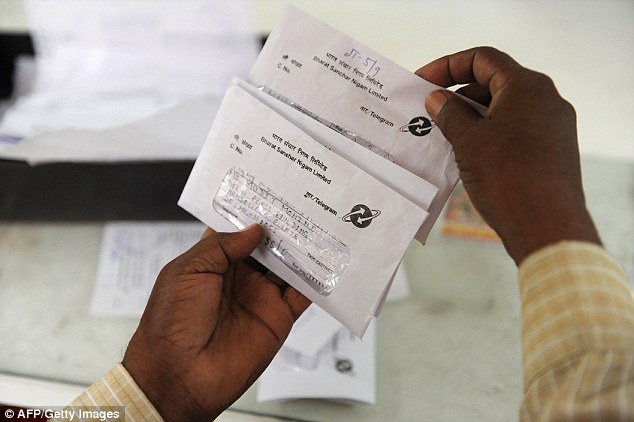
The telegram has been the most efficient way of communication for our country’s snail mail service. Sort of an instant messaging service in the pre mobile era, the Telegram or the Telegraph was intended to help the modern Indian communicate with the rural Indian, and apart from that communicate in general cross the nations boundaries and international quarters.
While the term Telegram may refer to a method of encoding a message that is known to both the sender and receiver, in which case it could be any form of coded communication like smoke signals, hand signs, beacons and even morse code.
The Telegram in India has been based on an electrical signal which was adopted after the basic courier service was replaced by electric telegraph or telex machines in the early 1900s. The message is captured at the sender’s post office and transmitted to the receiving post office where it is printed and sent out for delivery. After 162 years of connecting people via this old-school yet loved service, India is now set to disband the world’s last major telegram service and its legions of cycle-borne delivery workers. The service is being halted and the final message will be sent next Monday, July 15.
India’s first telegraph lines were laid by British rulers in 1851 in the colonial capital of Kolkata, stretching about 25 miles (40 kilometres) down the Hoogly River to a key harbour on the Bay of Bengal. This was primarily used by the east India Company to maintain political control and communication. At its peak 125,000 miles of wire had been unrolled and the service was used for much more than trade and commerce and employed thousands of educated Indians. Presently only 75 telegraph offices remain nation-wide, employing less than 1,000 telegraph operators. In 2012 a mere 40,000 messages were sent using the Telegram service also known as the “Taar” in local slang. The Central Telegram Office in Delhi transfers a mere 10 messages a day at present, with even the remotest areas now connected via email.
A Tokyo court ruled on Friday that Samsung Electronics had infringed on rival Apple’s patent for a “bounce-back” feature on earlier models of its popular smartphones.
The rubber-banding patent refers to the bouncing animation that takes place when a user scrolls past the end of a page while on a mobile device.
Samsung has already changed its interface on recent models to show a blue line at the end of documents, the report noted.
The Tokyo District Court issued a partial verdict Friday in favor of Apple. Damages were not announced. A final verdict is expected later.
Apple and Samsung are embroiled in similar battles in the U.S., South Korea, Germany, Italy, the Netherlands, Britain, France and Australia.
The Japanese court’s decision comes after the US Patent and Trademark office judged in April that Apple’s patent for the bounce-back feature was invalid, allowing older Samsung models that had a similar feature to remain on sale.
Samsung and Apple, the world’s two biggest smartphone makers, have each scored victories in patent disputes fought over four continents since the maker of the iPhone accused Asia’s biggest electronics maker of “slavishly copying” its devices. The companies, are competing for dominance of a global mobile-device market estimated by researcher Yankee Group at $346 billion in 2012.
Further details regarding the Tokyo court’s decision will be announced when the final ruling is handed down later today.
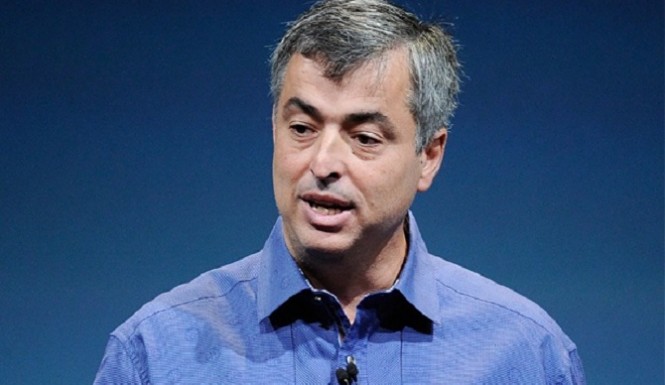
Eddy Cue, the Apple Inc. executive in charge of negotiating the company’s controversial e-book deals, defended how the tech giant started its online bookstore as he made his highly anticipated appearance on the witness stand in a federal antitrust trial.
Cue testified that he didn’t know about any of the e-mails and more than 100 phone calls involving the CEOs of five of the biggest U.S. book publishers in late 2009 and early 2010.
Cue said he “struggled and fought” with the publishers, in individual talks before the introduction of the iPad, to get them to sign contracts to sell e-books on Apple’s iBookstore. Cue testified it’s his opinion the CEOs weren’t coordinating over their negotiations with Apple.
“If they were talking to one another, I would assume I would have had a much easier time getting those deals done,” Cue testified.
Steve Jobs closely monitored the negotiations but was “indifferent” about the outcome for Amazon, Cue testified. However, when asked if Jobs knew that there was a chance that once the iBookstore launched, publishers would withhold best sellers and new releases from Amazon, he responded, “I believe so, sure. Smart guy.”
When Tim Cook was asked about the trial during his recent appearance at the All Things D conference, he called the trial “bizarre,” noting that Apple wasn’t going to settle and effectively admit to something it didn’t do.
Cue’s testimony on Thursday marked the end of this week’s proceedings. The trial will resume next Monday and scheduled to wrap up late next week.
Bo Jiang, a Chinese research scientist who worked at a NASA facility and was suspected of stealing secrets, is expected to plead guilty today–not for espionage, but for downloading porn on his work computer.
Jiang was nailed down in suspicion of trying to spy on the National Aeronautics and Space Administration but was instead found guilty of downloading porn movies on his NASA laptop.
According to court documents, Jiang was previously characterized as a “low risk” hire at NASA, despite his status as a foreign national, because his team was “not working on classified material or any development that is critical to the success of a current mission.”
But even if Jiang didn’t have access to any such information, there are still directives barring NASA laptops “from being used for official business on international trips without prior written permission of the Chief Information Officer for NASA’s Langley Research Center.”
Jiang took his laptop and an external hard drive along on two trips to China without written permission, according to court documents, which also said that while Jiang was in China, he corresponded with colleagues about work-related matters.
His lawyers said he was doing “generic work” and did not have access to sensitive information. But he did have something else that could earn him a criminal record: Pirated movies and porn on his old NASA-issued laptop.
The charge for making a false statement “has been resolved,” a prosecutor said, without providing details. Nasa had previously said it took “any allegation of a security violation very seriously”.
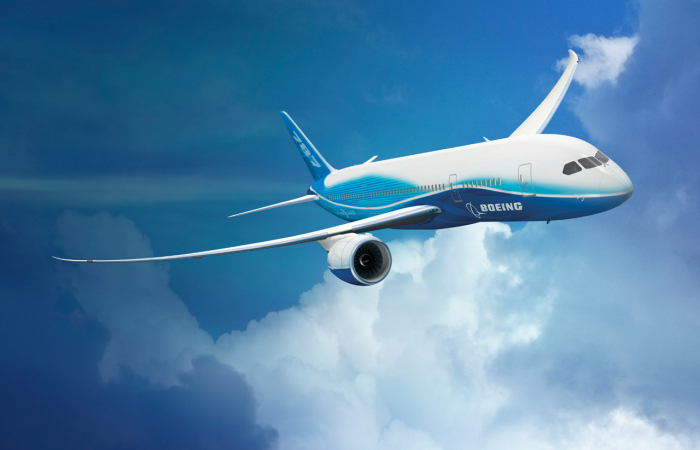
Boeing Co.’s 787 Dreamliner is poised to resume flights in Japan, ending a more than three- month hiatus that grounded numerous planes owned by airlines around the world, including our country’s national carrier, Air India.
The 787, Boeing’s newest and most technologically advanced plane, is the first airliner to make extensive use of lithium-ion batteries.
Lithium batteries weigh less, store more energy and recharge faster than conventional batteries, making them attractive to aircraft makers and their airline customers.
The world’s total fleet of 50 Boeing 787s had been grounded since January 16 as Boeing and investigators tried to determine why one aircraft battery caught fire and another smoldered, forcing an emergency landing. Both cases concerned aircraft owned by Japanese airlines.
The battery system was designed with four layers of protection against overcharging, and overcharging wasn’t suspected in the two January incidents.
Boeing did some of the safety testing on the 787 battery system, but testing was also performed by a subcontractor, Thales of France, which made the 787’s electrical system, and by battery maker GS Yuasa of Japan.
To solve the problem, Boeing made changes to the battery design and added a steel enclosure to prevent any overheating from affecting the plane.
Too Little Too Late For Air India?
A technical team from Boeing is in India and will install new battery systems in the national carrier’s B-787 fleet by early May, which the airline officials say will give them ample of time to restart services on existing and new routes.
“A Boeing team is arriving in India, in addition to another team which is already present here. They will be making some key technical changes to the battery system of at least two aircraft at a time,” a senior Air India official said.
The grounding of the fleet was bad news for Air India.
The airline grounded the aircraft after the Directorate General of Civil Aviation asked Air India to stop using the Boeing 787 till the problem with a battery on board had been sorted out.
In February, it was revealed that Air India flew some of its Boeing Co 787 Dreamliner aircraft even after U.S. regulators grounded the global fleet the month before after the battery problems.
Dreamliners operated by India’s national carrier were flown to Mumbai for maintenance reasons, Arun Mishra, the head of India’s civil aviation regulator, had said.
“When the Dreamliners were grounded, they had come to Delhi from Frankfurt and Paris. Air India asked us for permission to take them to Mumbai because they have their maintenance facility there and also they were paying very high parking charges in Delhi,” Mishra, director general of civil aviation, told Reuters. “We gave them permission with strict orders that no passenger will be allowed.”
Air India had deployed the Dreamliners on long routes due to the efficient operation of the aircraft. After the grounding of the fleet, the national carrier incurred heavy losses as the Dreamliners had become their most lucrative source for cash flow. The airline was looking at the induction and use of the Boeing 787 aircraft to turn around its financial fortunes. The fleet was generating revenues of Rs 2 crore a day when it was in service.
Air India had booked 27 Boeing 787s in a mega deal in 2006 and is supposed to get seven more planes in 2013.
The airline was operating its six B-787s from Delhi to Bangalore, Chennai, Dubai, Paris and Frankfurt. The Dreamliner has been instrumental in replacing the fuel-guzzling Boeing 777 on some international routes, thus saving on costs and increasing efficiency.
Air India had booked 27 Boeing 787s in a mega deal in 2006 and is supposed to get seven more planes in 2013, five in 2014, six in 2015 and three in 2016.
But for the carrier, the problems don’t end here. Most of the Air India’s fleet has been rendered inoperable due to negligence and poor maintenance.
As Business Week reports, the carrier, which has lost at least 281 billion rupees ($5.2 billion) since April 2007, is saddled with $8 billion in debt. It owes 42.5 billion rupees to jet fuel suppliers, Panabaka Lakshmi, India’s junior minister for petroleum and natural gas, said in parliament on March 8. Among its 16 grounded planes are leased jets it hasn’t returned to their owners because it can’t afford to refurbish them.
The return of the Dreamliner might turnour national carrier’s fortune around, or is it too little too late for Air India?
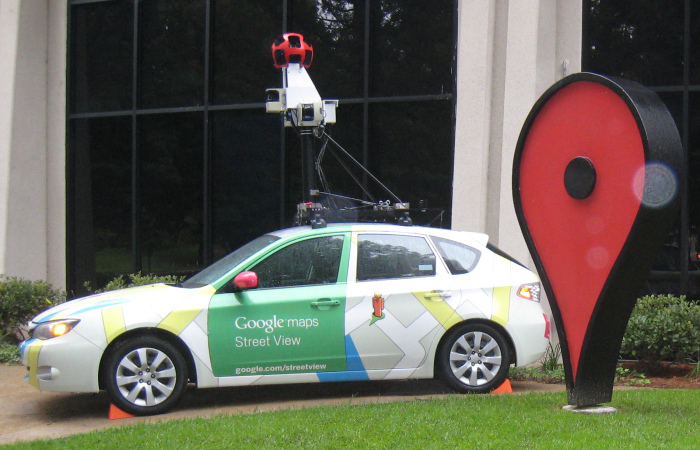
A German privacy regulator fined Google €145,000 on Monday for its systematic, illegal collection of personal data while it was creating its Street View mapping service, and it called on European lawmakers to significantly raise fines for violations of data protection laws.
It found that while specially equipped Google vehicles took city snapshots between 2008 and 2010 for its Street View function, which supplements its standard map service, they had also picked up data from unsecured wireless networks.
“Among the information gathered in the drive-bys were significant amounts of personal data of varying quality. For example emails, passwords, photos and chat protocols were collected,” the Hamburg authorities said in a statement.
Hamburg data regulator Johannes Caspar explained: “In my view, this is one of the biggest data protection rules violations known,” said Caspar. Google’s “internal control mechanisms must have severely failed.”
It not the first time Google as been fined for such a breach of data protection, with the French privacy regulator levying a €100,000 penalty on Google in 2011. However Google has now tightened up its policy with using the Google Street View car systems to address issues raised in the latest data protection violation, Peter Fleischer, Google’s global privacy counsel, said in a statement.
The commissioner also ordered Google to delete all the data it had gathered. A third party verified that Google indeed deleted the data.
A federal judge handed a major victory to YouTube on Thursday, one year after a federal appeals court breathed new life into Viacom’s $1 billion lawsuit. Viacom had accused YouTube of illegally hosting videos that infringe on the company’s intellectual property, including popular content like MTV videos and TV shows like Comedy Central’s “South Park.”
The case has flip-flopped in federal courts, with YouTube winning the first round in 2010 when U.S. District Judge Louis L. Stanton dismissed Viacom’s allegations that YouTube had violated copyrights by displaying videos of Viacom shows uploaded to the site by users. Stanton ruled that YouTube was shielded by the safe harbor provisions of the Digital Millennium Copyright Act by removing such videos when asked to and granted Google’s request for a summary judgment.
YouTube submitted 63,060 video clips that were later identified as infringing copyrights and challenged Viacom to prove adequate notice of infringement was given to YouTube. Viacom admitted in January that “neither side possesses the kind of evidence that would allow a clip-by-clip assessment of actual knowledge. Defendants apparently are unable to say which clips-in-suit they knew about and which they did not.”
In a decision filed Thursday in U.S. District Court of Southern New York, Stanton reaffirmed his original stance. “The burden of showing that YouTube knew or was aware of the specific infringements of the works in suit cannot be shifted to YouTube to disprove,” Stance said. “Congress has determined that the burden of identifying what must be taken down is to be on the copyright owner.”
Google, which purchased YouTube in 2006 for $1.8 billion, hailed the outcome.
“The court correctly rejected Viacom’s lawsuit against YouTube, reaffirming that Congress got it right when it comes to copyright on the Internet,” Kent Walker, Google’s Senior Vice President & General Counsel, said in a statement. “This is a win not just for YouTube, but for people everywhere who depend on the Internet to exchange ideas and information.”
Apple has been named in an article listing several websites and app stores being investigated in China for providing pornographic content.
The People’s Daily article is not featured prominently in Wednesday’s paper, nor does it make efforts to emphasize Apple, which is listed next to the names of other app stores singled out in the middle of the second paragraph of the article. According to Apple’s terms of use, pornographic content is not allowed on its app store.
Apple has been scrutinized by the Chinese government over pornographic content before, and it’s not the only major company to come under fire for this. Back in 2009, Chine Central Television accused Google of spreading pornography, leading to hacks that cause Google to move its operations to Hong Kong the following year.
As the Wall Street Journal reports, the Chinese government is better known for its crackdowns on politically sensitive content, but it has also long sought to keep pornography off the web in China. To accomplish this quixotic task, it has launched repeated campaigns to block illicit material online, shuttered hundreds of websites and blog accounts, and even called Internet executives into industry-wide meetings to call for greater vigilance. Occasionally the Chinese government will use bans on pornography to censor politically sensitive content, according to analysts.
Apple was recently criticized by Chinese media over its hardware warranty policy, forcing CEO Tim Cook to publicly apologize and announce a few changes to that policy.
The CBI on Wednesday filed an affidavit in the Supreme Court to bring on record the relevant facts regarding the alleged role of Sunil Bharti Mittal in a corruption case linked to allocation of additional 2G spectrum in 2002 as disclosed by its chargesheet filed in the 2G court.
In its 11-page affidavit accompanying voluminous documents gathered during the investigations, the CBI listed the sequence of events to argue that Bharti Televentures’ IPO and the allocation of additional spectrum were part of a concert involving Mittal and the late Mahajan.
As TelecomLead reports, the IPO of Bharti Tele-Ventures with a floor price of Rs 45 was the first ever 100 percent book building issue that opened for bidding from January 28, 2002 for six days and closed on February 2, 2002.
Thanks to institutional support, the IPO was oversubscribed over 2.5 times. While the total demand received under the book was Rs 2137.5 crore, the amount retained by the company at the issue price of Rs 45 per share is Rs 833.85 crore. The IPO became the backbone of Bharti Airtel’s growth in India. 2G spectrum was the game changer for Airtel’s success as it brought enough confidence to investors and valuation to the telecom operator.
The CBI said that an overall revenue loss of Rs 846 crore was caused to the exchequer by the low rates of Adjusted Gross Revenue imposed in favour of three companies.
Sunil Mittal and Essar group promoter Ravi Ruia, were summoned as accused in the additional 2G spectrum allocation case and appeared on Thursday in a Delhi court, which posted the matter for further proceedings on 16 April.
According to a leaked PDF acquired by Wired, Apple has agreed to pay a $53 million class action settlement for its failure to honor warranties for iPhones and iPod Touch devices which were seemingly damaged by water. The issue is that the strips inside those iOS devices (called “Liquid Contact Indicators”, or simply “LCIs”), which were made by 3M, could be triggered even if there wasn’t necessarily actual water damage. Humidity, for example, could give a false positive on the LCIs, which were located in the headphone jacks and dock connectors.
The settlement, which should be filed in San Francisco federal court in the next couple of weeks, provides cash payouts to possibly hundreds of thousands of iPhone and iPod Touch customers that say Apple did not honor either their one-year standard or two-year extended warranty.
According to several lawsuits combined in San Francisco, no matter what the problem, Apple refused to honor warranties if a white indicator tape embedded in the phone near the headphone or charging portals had turned pink or red. However, the tape’s maker, 3M, said humidity, and not water contact, could have caused the color to at least turn pink.
In November 2010 Apple adjusted their damage assessment procedures so that repair staff had to inspect devices even if a device’s indicator tape was “triggered” and changed color. Prior to that change, Apple would rely on the indicator tape when determining a liquid damage event, which would not be covered by Apple’s warranty.
The devices encompassed in the lawsuit include the original iPhone, the iPhone 3G, the iPhone 3GS, and the first three generations of the iPod Touch. The ballpark estimate for payouts is about $200 per claim, but that figure could either rise or decline depending on how many affected users actually submit a claim. The type of device affected will also influence the extent of individual payouts.
Apple also agreed to set up a website where users can learn about the case and access all documents needed to either submit a claim via the web or by printing out a mailable form.
Bloomberg reports Seoul Metropolitan Police Agency investigators entered the Samsung Display HQ in Asan as they look into the possibility that LG partners may have leaked secrets of its technology.
Police are investigating whether partners of rival panel maker LG Display Co. leaked technology secrets and whether Samsung is involved, Nathan Kim, a spokesman for Samsung, said by phone today. The two companies have been involved in criminal probes of alleged technology theft since last year. In July, six employees of LG Display were charged over theft of OLED technology from Samsung.
“We have no reason to steal other companies’ technology, as we have the world’s best OLED technology,” Jun Eun Sun, a spokeswoman for Samsung, told Bloomberg today in Asan.
LG Display said it didn’t report Samsung to police in connection with the current investigation.
Police secured documents and computer hard disks as they probe allegations Samsung swiped OLED, or organic-light-emitting diode, panel technology in 2010 from a subcontractor of key competitor LG Display.
“The latest investigation is related to large-sized OLED TV panel technology, but the police have made the allegation themselves,” Son Young Jun, a Seoul-based LG Display spokesman.
The OLED television is more technologically advanced than other flat display panels, including liquid crystal display or plasma display panel TVs. The OLED technology is regarded to be the key technology of next-generation televisions.
Samsung says the truth will be revealed through the police investigation, adding that the probe is focused on the alleged technology leak by LG Display’s subcontractor.
It seems that each time Facebook redesigns its News Feed, an entire swath of the Internet comes out and swears that they’ll never use Facebook again. But then, active users just increase more and more. But with Facebook Home, it’s a little different. Analysts and users alike have been asking Facebook for more clarity on what Home means for privacy — particularly for those who go with an HTC First, where there’s really no avoiding the Facebook connection.
Now Facebook has posted a Q&A on its website about the privacy implications of its new Facebook Home software for Android phones, though it was unclear if it has addressed all the concerns raised.
In a blog post Friday, the company said it had received “a few questions about how Home works with privacy.” It then posed several questions to itself about Home and privacy and answered them.
Home is essentially a software wrapper for Android smartphones that modifies the home screen, among other things, to put Facebook photos and messages front and center. It was announced on Thursday.
First of all, Facebook notes, Home is a completely optional experience. People have to install it to use it and they continue to use the regular Facebook app if they don’t like or want Home. That’s probably going to stay true for the mid-term future at least.
They can also uninstall Home or disable individual features. For example, Facebook says Home can be turned off in the “Home Settings.”
It’s unclear whether that means all “Home” features will be disabled leaving you with the core Facebook app functionality without actually uninstalling Home or whether this disables things like the Cover feed on the homescreen and that’s it.
The data use policy states that the data Facebook collects can include Internet Protocol addresses and a user’s location. “For example, we may get your GPS or other location information so we can tell you if any of your friends are nearby.”
It was not clear from Facebook’s post whether Home collects location data any more frequently than does the Facebook mobile app, and Facebook didn’t immediately respond to a question about that sent late on Friday.
Facebook has riled users in the past with respect to their privacy. Last year it settled a class-action lawsuit over a feature called Sponsored Stories, which used people’s photographs to suggest that they were endorsing companies’ products.
A U.S. District Court Judge has ruled that a lawsuit between Facebook and Timelines.com will in fact go to trial, after denying Facebook’s notion that the trademark-infringement lawsuit should be killed due to overly-generic trademarks, Bloomberg reports.
Timelines, a website to collaboratively record and share history, filed a complaint against Facebook in September, 2011, and sought a restraining order to bar Facebook from offering its Timeline service, but this was denied, according to records of the U.S. District Court for the Northern District of Illinois, Eastern Division.
The company was set up in January, 2007 and launched its Timelines.com website in 2009. It owns U.S. federal trademark registration numbers for “Timelines,” “Timelines.com” and for its “Timelines” design mark, according to court papers. It also operates a website called LifeSnapz.com and other services.
Facebook filed for a summary judgment on each of the claims of the plaintiff and on its own counterclaims, including cancellation of Timelines’ registered marks, which was refused by the judge on Monday.
Facebook “has failed to demonstrate, as a matter of law, that the marks are generic,” U.S. District Judge John W. Darrah in Chicago wrote in a ruling today. “At this stage in the proceedings, it is not unreasonable to conclude that as to this group of users, ‘timeline(s)’ has acquired a specific meaning associated with plaintiff.”
The judge said Timelines had millions of dollars invested in its business and more than a thousand active users.
The case is now set to proceed to trial before a jury on April 22.