Category: Government, Law and Policy

  • Google Unified Privacy Policy To Lead To Fines

    Google’s privacy policies are to be investigated by Information Commissioner’s Office (ICO) to see if they are illegal under UK law.

    The move comes after French data protection regulatory CNIL confirmed that Google had made no attempt to meets it concerns over its renewed privacy policies, first unveiled in March 2012, despite its numerous complaints that the changes were illegal.

    In a statement on its website, the CNIL confirmed that despite meeting with Google, the firm had refused to take any action to appease its concerns.

    “On 19 March 2013, representatives of Google were invited at their request to meet with the taskforce led by the CNIL and composed of data protection authorities of France, Germany, Italy, the Netherlands, Spain, and the UK. Following this meeting, no change has been seen,” it said.

    Google did not implement the recommendations within the allotted four months, even after a meeting in March with CNIL and data protection authorities (DPAs) from Germany, the UK, the Netherlands, Spain and Italy. And now we see the result. According to a CNIL statement on Tuesday:

    “It is now up to each national data protection authority to carry out further investigations according to the provisions of its national law transposing European legislation. Consequently, all the authorities composing the taskforce have launched actions on 2 April 2013 on the basis of the provisions laid down in their respective national legislation (investigations, inspections, etc.)

    “In particular, the CNIL notified Google of the initiation of an inspection procedure and that it had set up an international administrative cooperation procedure with its counterparts in the taskforce.”

    This latest brush with Europe’s data protection watchdogs was triggered by Google’s action last year to consolidate more than 60 separate product privacy notices into one unified policy. After an investigation, European privacy regulators published a list of privacy recommendations for Google, including suggesting the company should make it clearer to users how their personal information may be used, and how it is collected and collated from different services. They also wanted Google to offer users an opt-out. It is these recommendations that Google has apparently failed to comply with, resulting in today’s actions.

    [V3, TechCrunch]
  • Apple Alleges $85 Million Error In Court Damages Order

    Apple Alleges $85 Million Error In Court Damages Order

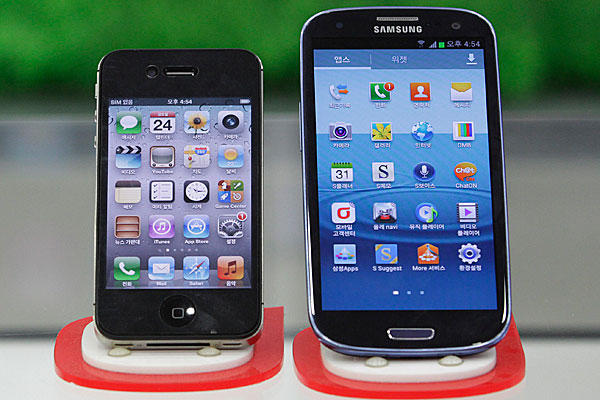
    Samsung can’t seem to shake Apple off its back and although damages of $599 million were awarded to Apple, the tech giant still isn’t satisfied. In documents filed by Apple, they claim Judge Lucy Koh made an $85 million error in calculating damages. Supposedly, Koh thought the jury had granted $44,792,974 for the Infuse 4G and $40,494,356 for the Galaxy S II on AT&T, Florian Mueller reports for FOSS Patents. However, according to Apple, Samsung’s own statements prove that “disgorgement of profits for design patent infringement”, were permissible.

    “The number of products for which the damages award can stand would go up from 14 to 16, while the number of products for which a new determination is needed would go down from 14 to 12. The affirmed damages award would increase from $600 million to $685 million, almost two thirds of the $1.05 billion verdict”.

    Apple now seeks the court’s permission to bring a motion for reconsideration, though the request to bring such a motion is, for the time being, conditional.

    Apple’s conditional motion cites Civil Local Rule 7-9(b)(3). The related rule of the Northern District of California allows a motion for reconsideration in the event of “[a] manifest failure by the Court to consider material facts or dispositive legal arguments which were presented to the Court before such interlocutory order”.

    This is getting interesting! 

    [FOSS Patents]

  • Court Says File-Sharing Service IsoHunt Illegally Fosters Piracy

    Court Says File-Sharing Service IsoHunt Illegally Fosters Piracy

    US content owners’ battle against online piracy has received a significant boost with the US Court of Appeals for the Ninth Circuit issuing a unanimous decision against the website isoHunt for “inducing” users to download and distribute copyrighted material such as movies and TV programmes illegally.

    The decision by a three-judge panel of the 9th U.S. Circuit Court of Appeals, hailed by the Motion Picture Association of America, marks the first time a federal appeals court has ruled against a BitTorrent search engine. IsoHunt, TorrenTBox and Podtropolis unlawfully pointed the way to free movies, music, videogames and software that were copyrighted and not authorized for the sites’ operator — Gary Fung — to help distribute, the court said.

    Programmer Bram Cohen released the BitTorrent file-sharing protocol in 2001, and its efficient way of transferring files has become the method of choice for illicit, peer-to-peer sharing of copyright-protected content that sites like Canada’s isoHunt and Europe’s The Pirate Bay have capitalized upon.

    “This ruling affirms a core principle of copyright law: Those who build businesses around encouraging, enabling and helping others to commit copyright infringement are themselves infringers, and will be held accountable for their illegal actions,” said Henry Hoberman, a vice president for the MPAA, which initially sued Fung in 2009.

    Even if you interpret the data in a light favorable to IsoHunt, there’s no question that the site’s main use was to trade copyrighted material, the judges wrote. Columbia’s expert found that between 90 and 96 percent of content on the site was confirmed or “highly likely” to infringe copyright. And while Fung “takes issue” with some aspects of the methodology, “he does not attempt to rebut the factual assertion that his services were widely used to infringe copyrights.” Even tripling the margin of error on the Columbia survey would mean that the overwhelming use of IsoHunt was to violate copyright.

  • THX Sues Apple Over Speaker Patent

    THX Sues Apple Over Speaker Patent

    Apple Inc. has been accused by THX Ltd., a company founded by “Star Wars” producer George Lucas, of stealing speaker technology used in iPhones, iPads and iMac products.

    According to the complaint, Apple knowingly infringed and continues to infringe upon THX’s U.S. Patent No. 7,433,483 for “Narrow profile speaker configurations and systems,” a property granted in 2008 describing methods to effectively enhance sound quality in compact speaker arrangements integrated into consumer electronics like computers and televisions. 

    As noted by Bloomberg, THX claims Apple’s violation caused monetary damages and irreparable harm, and seeks royalties or damages to make up for lost profit. 

    Given the products Apple allegedly uses the technology in, it is reasonable to assume that monetary damages could be a substantial sum.

    THX originated as a way to make sure that the audio in Lucas’s Star Wars movies could be properly produced outside of the theater. The company did this by establishing standards, as well as a certification for sound systems, reports Bloomberg.

    This year, San Rafael, California-based THX announced its first mobile application, THX tune-up, available in Apple’s iTunes App Store, according to a Jan. 29 statement from THX. The app allows consumers to use an Apple device with the iOS operating system to adjust the performance of televisions, projectors and speakers, according to the statement.

    Neither company would comment outside of THX which simply said that this was a “pending legal matter”.

    [Via Bloomberg]

  • Airtel Ordered To Stop 3G Services In 7 Regions, Fined

    Airtel Ordered To Stop 3G Services In 7 Regions, Fined

    DoT on Friday issued a fresh order to Bharti Airtel to stop intra-circle 3G roaming in seven circles where it did not have the spectrum and also levied a penalty of Rs 350 crore (Rs 50 crore per circle) on the company for violating the licence terms and conditions. Airtel has been asked to stop the services within three days.

    DoT is expected to send a similar notice to Vodafone India Ltd next week. Bharti Airtel is likely to approach the Delhi high court for a stay on the notices. Friday’s notice is the second to be sent to Bharti.
     
    Last week, DoT made a case for sending the notices on the grounds that the operators were selling new 3G connections in circles where they did not get spectrum in the 2010 auction. This was not allowed as their telecom licences in those circles were not modified to allow them to offer the high-speed wireless data services. The licences were specifically amended for circles where they won 3G spectrum in 2010.
     
    Bharti Airtel, Vodafone and Idea won 3G airwaves in 13, nine and 11 circles, respectively, in the 2010 auctions, and between them have a national footprint. They subsequently entered into intra-circle roaming pacts with each other and rode on the airwaves of their partners in circles where they did not hold spectrum themselves. This enabled them to offer high-speed data services on a pan-India basis.
     
    [Via LiveMint]
  • Apple Suffers Setback In iPhone Trademark Apple In Mexico

    Apple Suffers Setback In iPhone Trademark Apple In Mexico

    Apple’s appeal to overturn a previous ruling against its sole ownership of the “iPhone” trademark in Mexico was rebuffed on Friday, with the Mexican Supreme Court saying a local tech company holds the official rights to the “iFone” name in the country.

    In a case of David vs. Goliath, the Mexican Supreme Court has upheld a lower court ruling that iFone, a small IT company in Mexico City, is the rightful owner of the iPhone name in that country.

    The company registered the name in 2003, four years before Apple rolled out the smartphone it dubbed the iPhone, according to the Wall Street Journal.

    The case goes back to 2009, when Apple tried to register the phone brand name in Mexico and the Mexican Industrial Property Institute said it was already taken. Apple tried to take the name by suing, arguing that it had expired for iFone, but a federal court disagreed.

    Ifone, based in Mexico City, specializes in server-based telecommunications systems, such as software that controls IP telephony, and is the local representative for software-based communications solutions provider AltiGen Communications Inc.

    The ruling marks another setback for Apple in Latin America. A month ago, Brazilian authorities rejected Apple’s attempts to register the iPhone name because Brazilian electronics maker IGB Eletronica SA, better known by its brand name Gradiente, already owned rights to the name.

    Last year Apple fought with Chinese company Proview over the rights to the iPad trademark in the country. That dispute, which threatened sales of the popular tablet, was settled last July for $60 million.

    [Via LA Times]

  • Google Removes Ad-Blocking Apps From Google Play for Violation Of Terms

    Google Removes Ad-Blocking Apps From Google Play for Violation Of Terms

    Usually when Google removes apps from the Play Store it’s because they’re malicious, stealing your data, or otherwise messing with your phone in a way you don’t actually want. Today we’ve learned of Google’s most recent wave of culling apps from the Play Store, only this time the apps themselves weren’t doing anything naughty, and instead Google decided to interpret its Android Developer Distribution Agreement to prohibit all ad-blockers.

    Google has decided that all these apps are in violation of Section 4.4 of the Android Developer Distribution Agreement, and has removed all of them from the official storefront.

    Even open source software such as AdAway has been removed from the app portal, and is expected to never appear there again.

    4.4 Prohibited Actions. You agree that you will not engage in any activity with the Market, including the development or distribution of Products, that interferes with, disrupts, damages, or accesses in an unauthorized manner the devices, servers, networks, or other properties or services of any third party including, but not limited to, Android users, Google or any mobile network operator. You may not use customer information obtained from the Market to sell or distribute Products outside of the Market.

    Basically, Google seems to be saying don’t mess with advertising — which is the Web giant’s central source of revenue.

    Jared Rummler, the developer for the Ad Blocker Root app, announced on Twitter that his app was yanked from Google Play today.

    Some of these apps are still available as cache on the Play Store, but all have been removed the affected developers’ app listings. We’ll update this story as we learn more.

  • Google To Pay $7 Million To U.S States As Street View Data Capturing Case Settlement

    Google To Pay $7 Million To U.S States As Street View Data Capturing Case Settlement

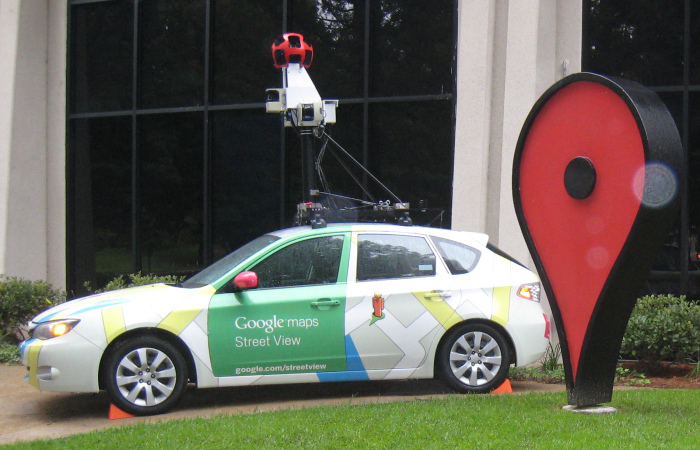
    Google has agreed to pay a $7 million fine to settle claims from 37 states and the District of Columbia that the search giant improperly collected data from unsecured wireless networks across the United States using its “Street View” vehicles.

    The announcement of the settlement is expected to be made by the states early next week, according to the person, though some of the final details of the deal were still being hammered out on Friday. Google has said the incident was a mistake.

    A group of states, led by then-Connecticut Attorney General Richard Blumenthal, began the investigation into Google in 2010 after the company revealed that its fleet of Street View cars had inadvertently collected the data from unsecured wireless networks.

    “While the 7 million dollars is significant, the importance of this agreement goes beyond financial terms,” Connecticut Attorney General George Jespen said after the settlement.

    “Consumers have a reasonable expectation of privacy. This agreement recognizes those rights and ensures that Google will not use similar tactics in the future.”

    As part of the settlement, Google said it would destroy the personal data it collected.

    It has also removed the equipment and software used to collect the data from its Street View vehicles and will not collect additional information without prior notice and consent, the Attorney General of New York said in a statement.

    It’s a relatively small sum for a company of Google’s size. To put the settlement in context, it’s a little more than the $6 million bonus that Google will pay Executive Chairman Eric Schmidt for his work at the company in 2012, according to a regulatory filing Tuesday.

    Google will also provide a training program to its employees for 10 years about privacy and the confidentiality of user data, and will launch a public-service advertising campaign to educate consumers about keeping their personal information secure on Wi-Fi networks.

  • Nokia Joins Apple In Bid For Samsung Ban

    Nokia Joins Apple In Bid For Samsung Ban

    In a surprising twist, Windows Phone device manufacturer Nokia has filed a brief with US courts in support of Apple’s ongoing legal battle against Samsung.

    Acting as an amicus curiae (friend of the court, a party who offers information to a case they are not directly involved with), Nokia has filed a brief on behalf of Apple to the US Court of Appeals for the Federal Circuit this week.

    In the brief, Nokia asked the court to permit permanent injunctions on the sale of Samsung phones that were found to infringe Apple’s patents.

    As part of its ongoing legal battle with Samsung, Apple has repeatedly requested the courts to impose an injunction on the sale of Samsung products that have infringed on the iPhone maker’s patents.

    As noted by Reuters, the brief itself is currently sealed, but an accompanying motion supplies an overview of Nokia’s argument. The company questions Judge Koh’s December ruling requiring a patent holder to first establish a “causal nexus” between a patented feature and customer demand before securing a permanent injunction against offending products. If such a precedent were set, Nokia asserts, the ability of patent holders to obtain sales bans would be crippled.

    [quote]The “causal nexus” requirement as applied by the district court here, making the evidentiary standard for obtaining a permanent injunction so burdensome and strict that it may rarely, if ever, be met, will essentially lead to a compulsory-licensing system wherein patent holders are forced to license patented technology to competing firms, which could in turn harm incentives to innovate.[/quote]

    In her ruling late last year, Judge Lucy Koh said that sales bans on Samsung products will not be given, and they can only be removed from sale if the feature deemed to infringe on a patent is one that is solely responsible for consumer demand for the product.

    [Apple Insider]

  • Judge Cuts $450 Million From $1 Billion Award To Be Paid By Samsung To Apple, Second Trial Ordered

    Judge Cuts $450 Million From $1 Billion Award To Be Paid By Samsung To Apple, Second Trial Ordered

    A judge on Friday cut $450 million from the $1 billion award to be paid by Samsung in a landmark patent lawsuit from Apple, saying a jury had wrongly calculated the damages.

    U.S. District Judge Lucy Koh in San Jose, California, today reduced the jury’s damages award by $450.5 million and said Samsung deserves a new trial on infringement claims over its Galaxy Prevail and other smartphones. Koh rejected Apple’s request to enhance the jury’s award, saying the amount Samsung owed was heavily disputed and the jury wasn’t bound to accept either side’s damages estimate. 

    [quote]“It is not the proper role of the court to second-guess the jury’s factual determination as to the proper amount of compensation,” Koh said in her ruling.[/quote]

    The rulings are the latest twist in the global litigation war between Apple and Samsung. The case at issue covers a series of older Samsung products that Apple says violated its intellectual property. A second lawsuit is pending before Koh in which Apple makes similar claims against Samsung’s more recent smartphones and tablets.

    [quote]”We are pleased that the court decided to strike $450,514,650 from the jury’s award,” Samsung said in a statement. “Samsung intends to seek further review as to the remaining award. We are also pleased that the court earlier found that Samsung had not acted willfully, denied Apple’s request for a permanent injunction, and denied Apple’s motion for increased damages.” [/quote]

    While not an outright loss for Apple, the ruling is not the best news for a company that’s been on bit of legal losing streak.

  • Australia Orders Apple, Microsoft, Adobe To Pricing Inquiry

    Australia Orders Apple, Microsoft, Adobe To Pricing Inquiry

    apple

    Apple Inc has been ordered to appear before Australia’s parliament with fellow technology giants Microsoft Inc and Adobe Systems Inc to explain why local consumers pay so much for their products, despite the strong Aussie dollar.

    The House of Representatives launched a probe in July last year to see if some goods were more expensive in Australia than in other parts of the world.

    Consumer bodies have often complained that Australians are overcharged.

    The firms have previously made written submissions to the committee but have so far declined to appear in person. They are now scheduled to appear before the committee on 22 March.

    Ed Husic, a member of the Australian House of Representatives, says that some estimates suggest Australian prices on some products are up to 60 percent higher than in the U.S. Husic told Kotaku Australia that “in what’s probably the first time anywhere in the world, these IT firms are now being summonsed by the Australian Parliament to explain why they price their products so much higher in Australia compared to in the U.S. Adobe, Apple and Microsoft are just a few firms that have continually defied the public’s call for answers and refused to appear before the IT Pricing Inquiry.

    Husic took aim at Apple last week over local taxes paid by the company, telling parliament that Apple generated A$6 billion in revenue in Australia in 2011, but paid only A$40 million in tax – less than one percent of turnover.

    Good move!

  • TRAI says that the current tariff is fine

    trai

    The Telecom Regulatory Authority of India (TRAI), in a move to calm worried telecom firms reeling under huge losses, has said on Monday that the current tariffs are not objectionably high and are good for competitive environment. 

    The major issue on the mind of the TRAi being the deactivation of inactive mobile connections, TRAI said that the recommendations for the same should be finalized by March.

    [quote]The mobile tariffs are competitive. We could not find that tariffs have been in any objectionable territory, In normal course, it (the recommendations) should take one-and-a-half-month more from now,”Rajeev Agarwal, secretary,TRAI [/quote]

    Recently again many firms have hiked data tariffs by 25-30% to improve margins. TRAI sought views of stakeholders on the need to review the existing regime of tariff forbearance. Views were also sought on a suitable tariff framework for data services.

    While deactivation of a SIM without prior intimation and on arbitrary grounds has become an issue of debate as it deprives a subscriber of his mobile number which might have been an identity for him for a long time.

    According to a consultation paper floated by TRAI, consumers can also suffer from a potential loss of activity in both personal and professional set-ups causing an adverse impact on livelihood.

    Last year the telecom tribunal had also rejected the telecom operators’ petition against TRAI’s guidelines on VAS which asked operators to take prior confirmation before activating and charging subscribers for such services and asked them to comply with the directive by February 2.

    In 2011, TRAI’s directives said that an operator was required to obtain confirmation from their subscribers through SMS, e-mail, fax or in writing within 24 hours of activation of VAS.

  • LG Wants Ban On Samsung Galaxy Note 10.1 Tablet Sales in Korea

    LG Wants Ban On Samsung Galaxy Note 10.1 Tablet Sales in Korea

    samsung

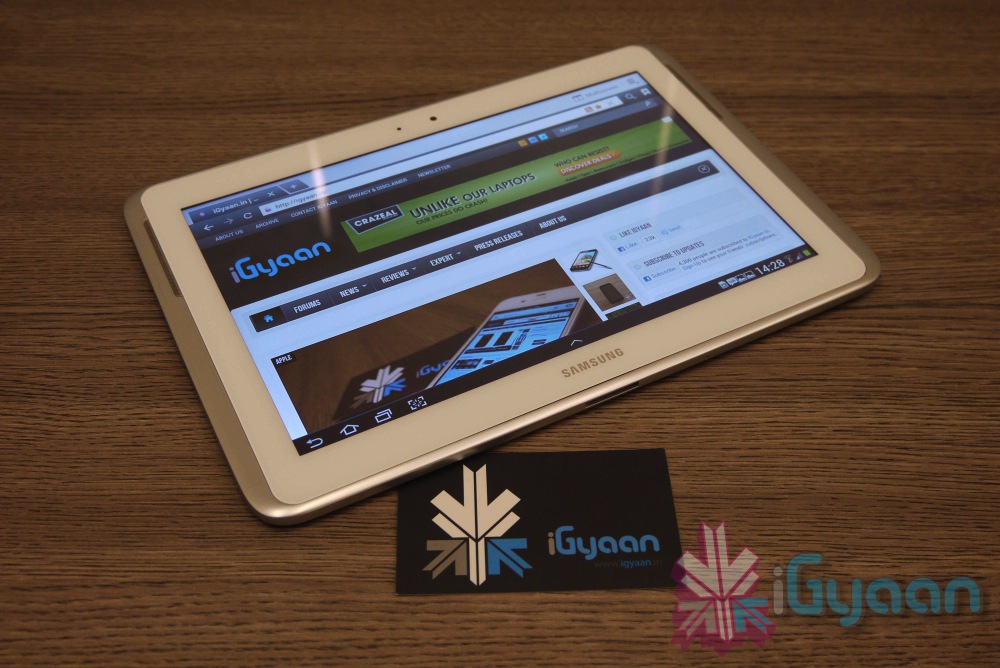
    The war between Korea’s two biggest mobile makers continues after LG Display moved to ban the sale of Samsung’s Galaxy Note 10.1 tablet on the grounds that it infringes three of its display patents, according to a Dow Jones report.

    A statement made to the news agency confirmed that LG has made the request for a sales injunction and is seeking compensation of 1 billion won ($933,000) for each day of the “continued non-compliance”.

    The two companies have been in a patent row since September when LG Display one of the world’s top flat-screen TV makers filed suits against Samsung Electronics and Samsung Display for allegedly infringing patents on seven organic light-emitting diode (OLED)-related technologies.

    LG said that five of Samsung’s products, including its global hit Galaxy S-series smartphones and tablet computer Galaxy Tab, infringed its patents.

    Later the same month, Samsung filed a court complaint accusing LG of luring away senior Samsung OLED researchers even though they had signed contracts preventing them working for a rival. LG’s new suit comes just over a month after Samsung moved to have seven of its rival’s patents annulled by Korean courts.

    Samsung has also been battling Apple’s patent infringement allegations for a while now. Recently, in a rather interesting turn of events, Samsung affirmed that it would drop its lawsuits seeking a sales ban on Apple’s products in Europe. The company said it will not make attempts to stop the sale of some Apple products in Germany, Britain, France, Italy and the Netherlands. Interestingly though, Samsung has made no mention of whether it would put an end to its court battle for compensation.


  • Marvell Ordered to Pay $1.17 Billion in Carnegie Mellon University Patent Case

    Marvell Ordered to Pay $1.17 Billion in Carnegie Mellon University Patent Case

    marvell

    A jury on Wednesday hit Marvell Technology Group with a billion-dollar verdict, ruling that the US chip maker “willfully” infringed on patents held by Carnegie Mellon University.

    Northern California-based Marvell violated CMU patents on technology that increase the accuracy of reading data from high-speed magnetic disks, according to a verdict delivered in federal court in the state of Pennsylvania, where the university is based.

    Jurors rejected the argument by Marvell that the CMU patents were not valid and ordered Marvel to pay $1.1 billion in damages, according to the K&L Gates legal team that represented the university at trial.

    [quote]”We take special pride in this trial victory because of the decades-long relationship between our firm and Carnegie Mellon University and our deep appreciation for CMU’s path breaking and leadership role in the Information Age,” said law firm partner Peter Kalis.[/quote]

    Shares of Marvell fell 10.3 percent on Wednesday, closing down 85 cents at $7.40 on the Nasdaq.

    Carnegie Mellon said it was gratified by the verdict. “Protection of the discoveries of our faculty and students is very important to us,” it said.

    Marvell is based in Hamilton, Bermuda. Its U.S. operating unit Marvell Semiconductor Inc is based in Santa Clara, California, and was also a defendant in the case.

    The company posted a $615.1 million profit on net revenue of $3.39 billion in its most recent fiscal year, which ended on January 28. It counts Western Digital Corp and Seagate Technology Plc among its largest customers.

  • Instagram Hit With Lawsuit Over Terms Of Service Change

    Instagram Hit With Lawsuit Over Terms Of Service Change

    Instagram

     A class action lawsuit against Instagram has been filed in San Francisco federal court, following user outrage regarding the mobile photo sharing app’s changed Terms of Service.

    This appears to be the first civil lawsuit filed as a result of Instagram service term changes, Reuters reports.

    The new Terms of Service agreement included clauses that referred to the company’s new powers to sell users’ photos without warning or compensation, reported RT. New clauses also said that users waived their rights to participate in class-action lawsuits against the company.

    A strong backlash, including a blizzard of news coverage, made Instagram relent and issue a statement of apology. The company agreed to reword the terms and delete some of the more controversial language.

    Instagram did, however, retain the clause forbidding arbitration as well as ads with user content.

    The lawsuit was filed by the San Diego-based law firm Finkelstein & Krinsk on behalf of Instagram user Lucy Funes and others. The plaintiffs in the suit claim that Instagram breached their contract with users as the only way to get out of the terms is to deactivate the service altogether.

    This controversial issue has also caused many users to switch to other services which are similar to Instagram such as Yahoo!’s Flickr which released the new mobile app for iOS with build in vintage filters to rival with Instagram prior to the changes of terms and conditions by Instagram. Flickr also started offering it’s user three months of free Flickr Pro service to take advantage of this situation.

iGyaan Network
Privacy Overview

This website uses cookies so that we can provide you with the best user experience possible. Cookie information is stored in your browser and performs functions such as recognising you when you return to our website and helping our team to understand which sections of the website you find most interesting and useful.