Category: Government, Law and Policy

  • BSNL Announces Free Unlimited Night Calling Across India

    BSNL Announces Free Unlimited Night Calling Across India

    In an attempt to revive its landline service, Indian telecommunications company BSNL announced an unlimited scheme for its landline users. Under this scheme, users of BSNL fixed line service will be able to make free calls to any landline or mobile operator across the globe during night hours, i.e. between 9pm to 7am. The plan will kick off from 1st May.

    BSNL said in a statement –

    BSNL has introduced unlimited free calling during night hours from its landline phones to all landline phones and mobile phones of all service provider’s network on all India basis from 1st May. This unlimited free night calling shall be available from 9 pm to 7 am.

    This scheme covers all major plans of rural and urban areas like landline general plans, landline special plans and all major Combo (landline with broadband) plans. The company said that it will review the responses of its customers after six months; however, they haven’t provided an end date for the scheme.

    The Chairman and Managing Director of BSNL, Anupam Shrivastava remarked about the same, “We hope to resurrect our fixed-line business, and we hope that it will attract customers back to fixed-line. There will be some impact on revenues, but with only 10% calls made at night, it may go up to 15% with the offer. However, if we can add more customers, then, it is worth the attempt.”

    Since the entry of more versatile mobile operators like Airtel, Vodafone, Tata Docomo and few more, BSNL has been losing its market slowly. Bharat Sanchar Nigam Limited (BSNL) is hopeful that the new scheme will yield positive results. In the past five years, fixed landline subscriptions have fallen from 27.83 million in 2010 to 16.93 million in 2015. The latest TRAI data also shows that BSNL was the biggest loser of fixed landlines customers in February, while Airtel emerges as the top gainer. Still, BSNL’s share in the market was 62.26 percent in February.

    Recently, BSNL announced that it will be setting up Wi-Fi hotspots with 3G, 4G networks across the country within the next 3 to 4 years. Read more about it here.
  • TRAI Receives More Than One Million Emails in Favour of Net Neutrality

    TRAI Receives More Than One Million Emails in Favour of Net Neutrality

    The heated debate over Net Neutrality doesn’t seem to end up anytime soon. In response to the online protest initiated by TRAI, the independent telecommunications authority received over 1.5 lakh e-mails within two days. Now, the protest has touched one million mark.

    The Telecom Regulatory Authority of India has received more than one million emails in support of Net Neutrality from the citizens of India. The statement was made by a voluntary group managing the ‘Save the Internet’ program. The figures are of until yesterday, and the emails are continuously flooding TRAI’s Inbox.

    net-neutrality

    As per a report, netizens have been bombarding the TRAI with 50 emails every minute. This resulted in the campaign hit one million mark within just 12 days. The creators of savetheinternet.in were surprised as they expected the campaign would not last more than 15,000 emails.

    TRAI put up a consultation paper called “Regulatory Framework for Over-the-Top (OTT) Services” and asked users for their comments. April 24, i.e. today, is the last date of submit your vote and make your voice heard. Click here to back the movement.

    Many celebrities and well-known personalities from different fields have come in support of free internet. Rahul Gandhi is the latest to join the club and ask for freedom of the internet.

  • Indian Tech Startups Write an Open Letter to PM Modi to Help Save Net Neutrality

    Indian Tech Startups Write an Open Letter to PM Modi to Help Save Net Neutrality

    An unbiased internet is a right of all and should not be a distinctive property limited to a privileged few. For the Internet to be a free entity is extremely important for regular internet users, as it is the equally essential for the budding businesses to grow. Start-up firms, who are launching themselves to gain recognition using the internet, need a non-discriminatory medium to establish themselves. For them, an unbiased platform both on the basis of cost and speed is a crucial need.

    A group of tech start-ups has pushed its concern over the lack of Net Neutrality. The emerging companies wrote an open letter to PM Modi which states the necessity of free Internet to build a Digital India. The letter throws light on the fact that the dream of India to produce the next Google is impossible without a non-discriminatory Internet. The Prime Minister of India, few days back, remarked in his speech that he wants India to be the birthplace of next renowned search engine.

    net-neutrality

    The letter by the small businesses reads, “We dream that an Indian startup may one day become the next Google, Facebook or Amazon. We know that you share our dream. We share another dream with you, the dream of a Digital India. We dream of this as Indians, and also as businesses that wish to serve a fast-growing Indian internet market. These dreams cannot be achieved without the open Internet.”

    The message ends up with the comment, “We request that open-house debates be held in major Indian cities after the consultation process is over. We, the start-ups that are at the forefront of creating Digital India, request you to take action now. We need you to protect our nation’s innovation ecosystem.” The open letter is signed by some of the fresh companies like Housing.com, Goibibo, TheSecretKart.com and much more.

    Late last year, Airtel attempted to violate net neutrality by charging extra for free calls and chat services, but faced an aggressive backlash resulting it to withdraw the proposed plan. Recently Airtel Zero, a scheme to offer free data access to a variety of mobile apps, faced such hostility that it forced Flipkart to back off from Airtel’s Zero plan. However, Airtel stood by its initial claim and came out openly denying the allegations.

    Meanwhile, the government has stepped into the matter and will look into the Zero plan. Facebook and Twitter are flooded with various campaigns such as #SavetheInternet, #NetNeutrality, to save the internet from classism.

    To read the full letter, click here.

  • National Roaming Charges Set to Drop From 1st May

    National Roaming Charges Set to Drop From 1st May

    The Telecom Regulatory Authority of India (TRAI) has issued a statement that mobile phone users will be paying 23% less for calls and up to 75% less for sending texts while on roaming. The reduced roaming charges will come to effect on May 1, 2015.

    National roaming service lets subscribers to keep using their number while travelling outside the coverage of their home networks. Companies have offered roaming packs in the past which lets users reduce their roaming charges but a government mandated roaming charges will bring relief for all users.

    As laid down by TRAI, For outgoing calls on roaming, the present charges of Rs 1 per minute has been slashed down to 80 paise per minute. As for STD calls, the rates has been slashed from Rs 1.50 to Rs 1.15 per minute.

    Incoming calls on roaming will now be charged at 45 paise per minute instead of the earlier 75 paise. Local texts will now cost 25 paise while an STD text will be charged at 38 paise.

    The rates for national roaming services were last revised in 2013. Telecom companies have been notified to introduce the new roaming tariff’s from May 1. The telecom companies have already been losing revenue to various messaging apps and hence have started attacking net neutrality in India. This order will further cut down their revenue stream. The companies might respond by raising data tariff’s or push for loose net neutrality laws in the country. Though the slash is a good news for the consumers, the developments in the Indian telecom space needs to be watched more vigilantly.

  • TRAI Recommends an American 911-like One Stop Emergency Number For India

    TRAI Recommends an American 911-like One Stop Emergency Number For India

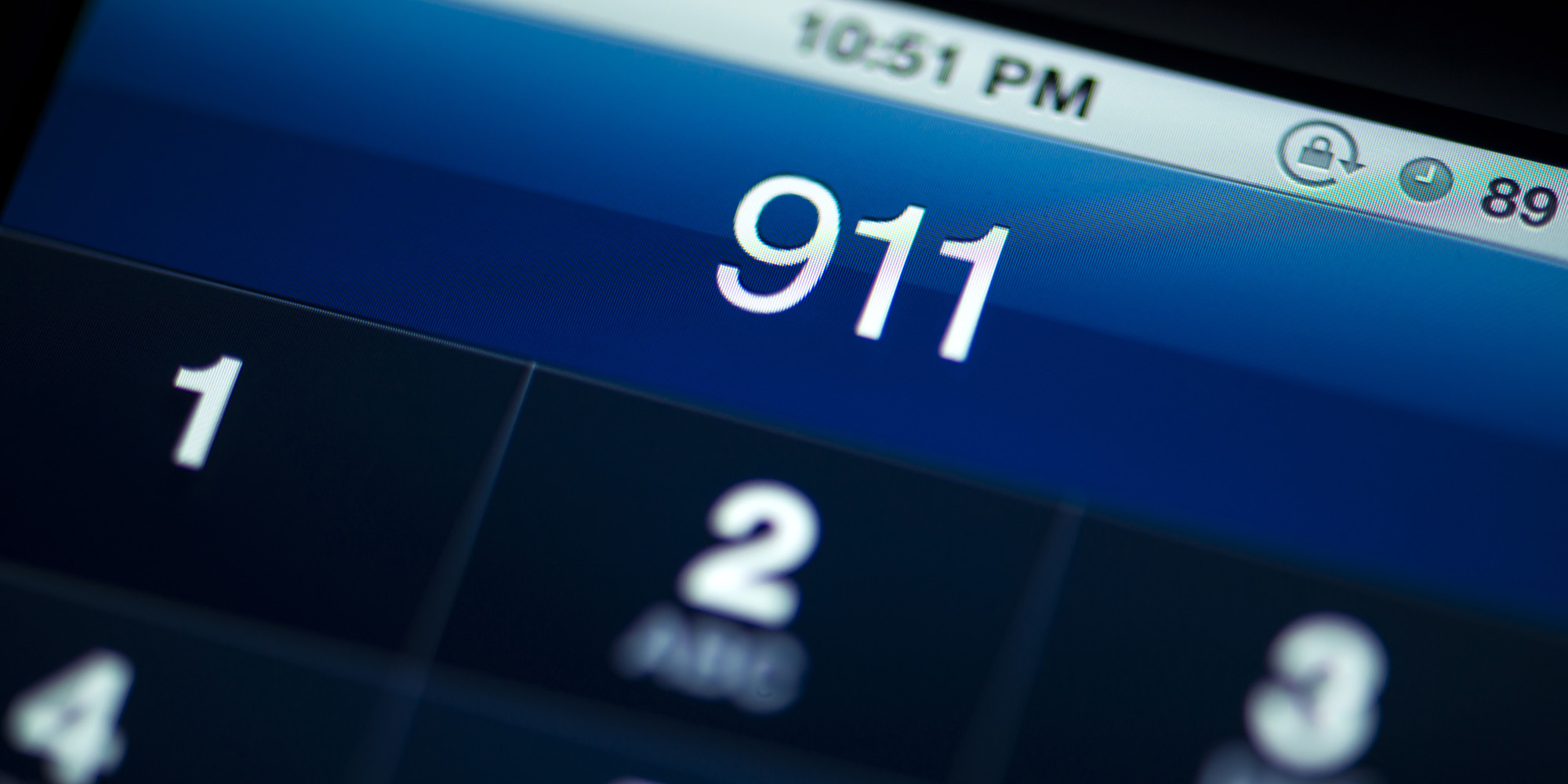
    “911 how may I help you?” This sentence is perhaps the most popular reference to the American government’s one-stop emergency number for all kinds of public discomfort. By dialling this one number, the citizens can get access to emergency services like police, fire department ambulance and disaster management organizations. Now TRAI (Telecom Regulatory Authority of India) has recommended that Indians should get a similar service and for this purpose they want to assign the telephone number, “112.”

    Currently, the various emergency services have different contacts; citizens have to dial 100 for police, 101 for fire, 102 for ambulance and 108 for emergency disaster management. TRAI says that this move will allow users to save critical seconds during an emergency and will be able to alert the authorities immediately.

    This move will be appreciated by the citizens who had to fumble previously with various number during emergency situations. TRAI has also proposed to keep the present number as a backup or secondary contact numbers. Even when the users make a call on those numbers, they will be re-routed to 112.

    To add even more convenience during an emergency and offer ease of access, TRAI has asked that the calls to 112 be allowed even if the outgoing facility on the phones have been debarred or the temporarily suspended. There is also a proposal to allow access to emergency services through SMS.

    TRAI has recommended the establishment of specialised call centers called the Public Safety Answering Points (PSAPs). It will be manned by professionals trained in handling calls of distress. This is a fantastic move by the regulator and though the service should have been instituted long back, but all we’ll say is, better late than never.

  • BSNL Aims to Install 2,500 3G and 4G Wi-Fi Hotspots Across The Country

    BSNL Aims to Install 2,500 3G and 4G Wi-Fi Hotspots Across The Country

    BSNL officially announced that it will be investing Rs 7,000 crore in setting up WiFi hotspots with 3G, 4G networks across the country within the next 3 to 4 years.

     [quote text_size=”small” author=”Anupam Shrivatava” author_title=”Chairman and Managing Director of BSNL”]

    Wi-fi is an obvious choice for BSNL going forward but it alone cannot be successful. It has to be integrated with 3G, 4G network so that the customer can be seamlessly transferred to WiFi. In two to three years, we will be investing Rs 7,000 crore to set up integrated WiFi across the country.

    [/quote]

    BSNL has already started rolling out the service in places like Varanasi and aims to extend it to more tourist spots by the end of this year. Additionally, BSNL has also partnered along with QuadGen Wireless for setting up Wi-Fi hotspots on a revenue sharing basis. QuadGen will be setting up WiFi hotspots in the South and the West Zone under the terms of the partnership. Anupam Shrivastava says they aim to set up at least 2,500 WiFi hotspots around the country.

    In the words of M S S Rao, Chief General Manager of BSNL Telecom, since huge amounts have been invested in the spectrum auction, it is a high time to invest in the networks.  BSNL seems to be taking the right steps in ensuring that all part of our well connected.

  • Indian Government Puts Greater Stress On Using Open Source Software

    Indian Government Puts Greater Stress On Using Open Source Software

    The software markets around the world are dominated by US based products. With the revelation of the NSA snooping on the data of major companies like Google, Microsoft and other players, the governments around the world have become vary of using such products. The Indian government too is taking measures to reduce the dominance of US based products in its workflow and hence has introduced a new Open Source Software(OSS) Policy.

    With the use of open source software, the government intends to bring greater transparency. It is also looking to invest in propriety software for official functions. The development costs of OSS’s are also lower than the big brand software.

    An official statement said that the new policy will be applicable to the central government institutions, and state governments will have to induct the policy when they upgrade their e-governance systems. It also added that under the Digital India program, the government intends to bring low-cost, but high-quality services to the citizens and OSS are an optimal way of going about with the plans.

    All government institutions, under this policy, would have to consider OSS for implementing the E-governance model. The source code of these softwares will be available to community/adopter/end-user to study and modify the software. These softwares will also be “royalty-free.”

    India’s stand for open source software is appreciable and will lead to greater transparency. The governments of US, UK, Germany and many European nations have stressed on OSS platforms too. India’s crowdsourcing platform, MyGov.in has already been built on open source platforms.

  • After Spending Heavily On Spectrum Auction, Telecom Companies Might Increase Tariffs

    After Spending Heavily On Spectrum Auction, Telecom Companies Might Increase Tariffs

    The spectrum auctions have come to a close, and the government has received total payment of Rs. 1,09,874.91 crores this time around. But what might be a good amount of revenue for the government, might not be good news for the mobile subscribers in India says Moody, the global financial credit rating agency. It means that the telecom companies might soon hike their tariff’s to make up for lost resources.

    Moody said that the high rates of spectrum will tremendously increase debts and is negative for the credit of the telecom companies, and they would increase their tariffs to address the issue. It said that the hike will be gradual so as to keep their market.

    Moody also mentioned that the companies would be able to recover a good amount of their departed fortunes with the increase in demand for 3G data plans. Telecom Minister of India, Ravi Shanker Prasad said that as per expert analysis, the annual load on the companies will be Rs. 5300 crore.

    The latest telecom auctions saw significant spending on the parts of the network providers. Idea Cellular made a commitment to pay Rs. 30,306.98 crore followed by Airtel at Rs. 29,130.20 crore and Vodafone with Rs. 29,959.74 crores. Other telecom companies too pitched thousands of crores to secure spectrum and stay in business.

    It is also being said that due to the massive investment in spectrum acquirement, the companies might slow the expansion of their 3G and 4G services. They might hold off major investments for the next phases of upgrades. So this would also be a disappointment for the users who have been waiting to use their new LTE enabled smartphones to their maximum potential. So dear Indians, brace up, the hike is coming.

  • India Preps its Own Navigation System With the Launch of IRNSS-1D

    India Preps its Own Navigation System With the Launch of IRNSS-1D

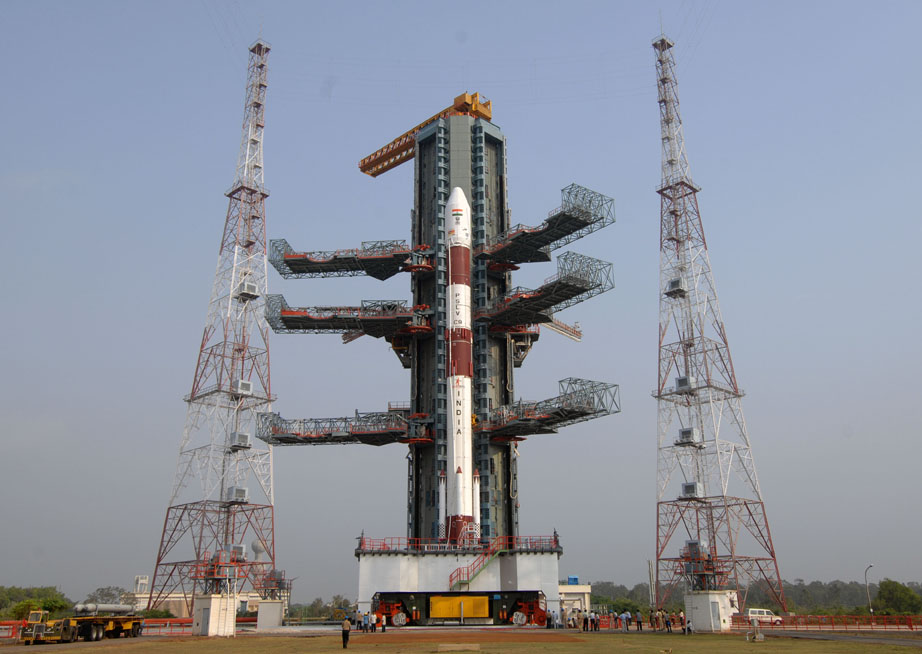
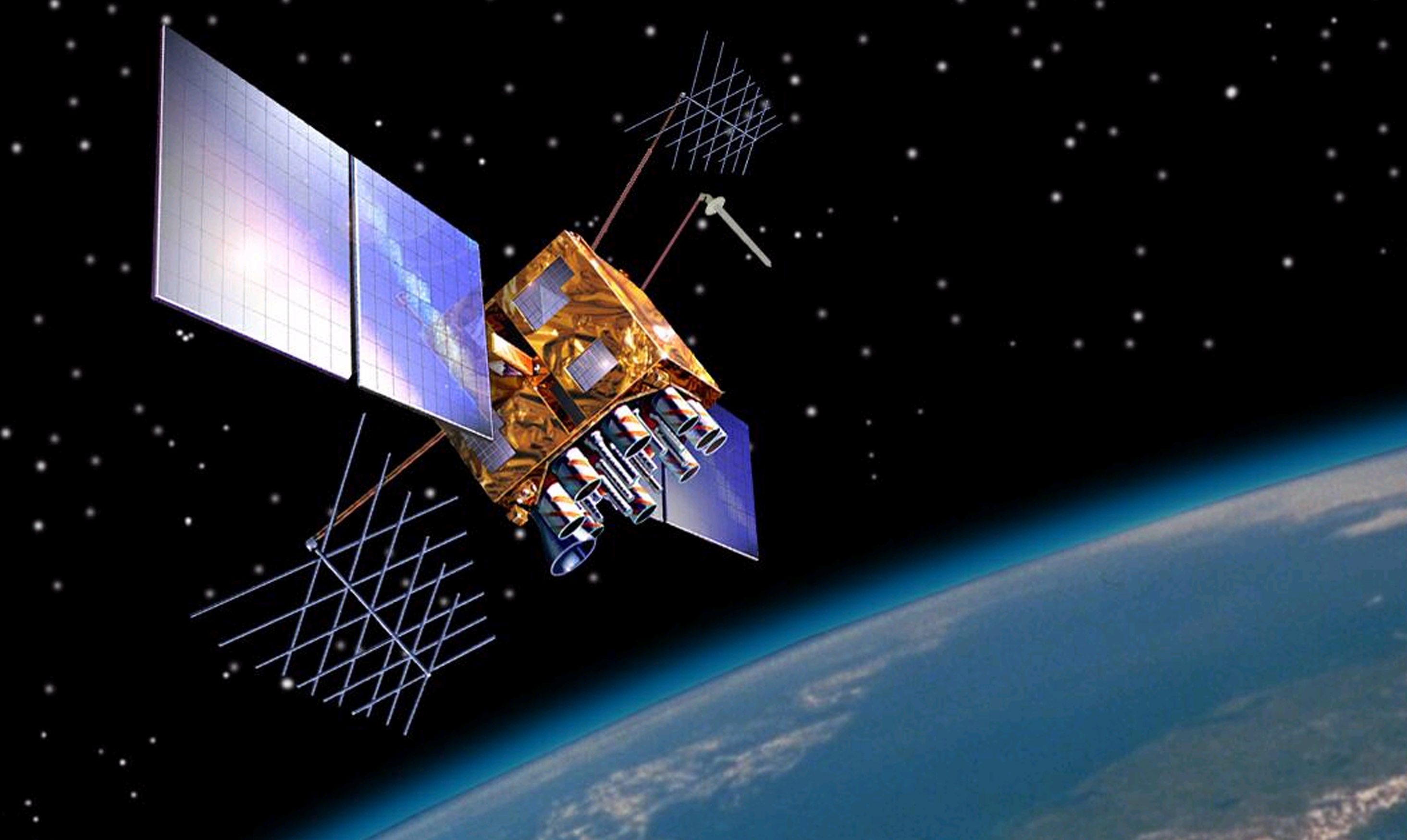
    We have known for a while that India is working on its satellite-based positioning system called Indian Regional Navigation Satellite System (IRNSS.) This will be a competitor to the US-operated GPS system which is the most prominent navigation system around the world. ISRO has launched PSLV-C27, which carries in itself the IRNSS-1D, which is the fourth satellite in the constellation of seven satellites which will make up for India’s own operating system.

    Today’s launch was previously supposed to be held March 9th, but it was postponed due to technical issues in one of the sub-systems. IRNSS-1D has a mission lifespan of 10 years. It will provide navigation, tracking and mapping services. This is the fourth satellite in the constellation of seven satellites. The four satellite will be capable of offering navigational assistance on their own, but the other three satellites will add more accuracy to the system. Once completed, the IRNSS would be on par with US-based GPS system.

    IRNSS will be made of a constellation of seven satellites.
    IRNSS will be made of a constellation of seven satellites.

    IRNSS will be accessible from mobile devices and navigational systems, just like GPS. It will offer terrestrial and marine navigation, assist in disaster management, help track vehicles and will also provide visual and voice navigation for drivers. The system will be established this year and cost the taxpayers a sum of Rs. 1420 crores. IRNSS will focus on South Asia so India’s neighbours can also benefit from it.

    The Kargil War of 1999 had incited a need for an in-country navigation system. The US government back then had refused the request of the Indian government to use the navigation system to keep track of enemy movement. This led to the inception of the IRNSS, and now it has reached the half way mark to completion. India is not the only country which wants to break the dominance of GPS and US influence in the navigational front. Russia with its GLONASS system is already in the market while European Union’s Galileo positioning system and China’s Beidou Navigation Satellite System are in the planning stages.

  • Delhi Government Asks IT Ministry to Block Uber, Meru Genie and Ola Mobile Apps

    Delhi Government Asks IT Ministry to Block Uber, Meru Genie and Ola Mobile Apps

    The app-based taxi services have made it possible for us to travel with ease. What more can one expect than a car waiting at your doorstep? But the question still hovers around their registration issues.

    Recent news points out that the Union Information Technology Ministry has been asked by the Delhi Government to block the mobile applications of Ola, Uber and Meru Genie taxi-hailing companies. That means soon these taxi service providers are going to cease their operations, unless they receive their licence in time.

    This nationwide ban was issued for all unregistered web-based taxi companies in December last year because of a knee-jerk reaction to the rape of a female in the capital by a Uber driver. In spite of this ban, Uber the US-based taxi service company brought out UberX, a low-cost option with a new revised fare charts to operate in January. Ola, backed by Japan’s SoftBank Corp also applied for a radio taxi license, and they continued to contravene the December order.

    As of now, license has been provided to Easy Cab, Yo Cab, Mega Cab, Meru Cab, Chanson Cab and Air Cab by the Delhi Transport Authority.

    The government opines that they are not against these public convenient services. But they’d like them to follow proper guidelines by installing a GPS tracking system and an emergency button in the cabs for the sake of their smooth operation.

    By Ritam Talukdar

  • Indian Govt Collaborates with Twitter for the Digital India Initiative, Launches ‘Twitter Samvad’

    Indian Govt Collaborates with Twitter for the Digital India Initiative, Launches ‘Twitter Samvad’

    Twitter today inaugurated a tweet-powered digital media service called ‘Twitter Samvad’ in India in association with the Narendra Modi government. The new service allows users to get daily updates via tweets and SMS on their handsets.

    Through Twitter Samvad, anybody who is registered for the service can get updates on government policy, services, and activities from the government and national leaders’ Twitter handles. Anyone who owns a mobile phone can sign up for Twitter Samvad with each of the 16 launch partners. The signup process is easy and doesn’t rely on internet. Anyone with or without a net pack can register by giving a missed call to the phone numbers allotted to each of the partners.

    The Prime Minister of India, Mr. Narendra Modi, put forward a vision to digitize India, and Twitter Samvad is a step towards the right direction. Moreover, it will help government bodies to connect directly with the citizens.

    The CEO of Twitter Dick Costolo talked about the launch –

    Based on Indian technological innovation, Twitter Samvad is dedicated and specially built for the largest democracy of the world. The Lok Sabha election of 2014 was the first-ever Twitter Election in India and we want to continue contributing to the development of digital governance in India. As part of the Prime Minister’s Digital India initiative, this Tweet-powered service enables citizens to be the first to know about the government’s actions by receiving political content in real-time on their mobile devices anywhere in the country.

    This is another major announcement of the day after the decision of Supreme Court to cease Section 66 A of the Information Technology Act, 2000. Today, the Supreme Court of India made the judgment in favour of internet freedom, saying that it has been guaranteed by the constitution.

    The list of 16 government partners contributing in Twitter Samvad, along with their phone numbers, is given below:

    Accounts Phone Number
    @NarendraModi 011 3006 3006
    @PMOIndia 011 3006 3007
    @adgpi 011 3049 6116
    @RailMinIndia 011 3049 6222
    @anandibenpatel 011 3049 6050
    @CMofKarnataka 011 3049 4737
    @CPBLR 011 3049 5141
    @BlrCityPolice 011 3049 5242
    @blrcitytraffic 011 3049 5464
    @ncbn 011 3049 5767
    @TelanganaCMO 011 3049 5868
    @YadavAkhilesh 011 3008 3380
    @UPGovt 011 3049 6353
    @NitishKumarJDU 011 3008 2828
    @MamataOfficial 011 3008 3333
    @MeaIndia 011 3049 5969
  • Supreme Court of India Junks Section 66 A, Upholds Freedom of Speech

    Supreme Court of India Junks Section 66 A, Upholds Freedom of Speech

    Starting the day on the right note, the Supreme Court today deemed Section 66A of the Information and Technological Act as unconstitutional. This Act granted police the power to arrest anyone for sending out offensives messages from computers, mobiles or any other communication portals. The law had a maximum penalty of 3 years for the offenders. The Court stated that freedom of expression was directly affected by the Section 66 A of the IT Act and hence the law needed to be quashed.

    Commenting on its decision, Supreme court said that such law hampers with the freedom of expression which is one of the pillars of a democratic nation like India. The court ordered the section to be removed from the law books, as there have been several cases where Section 66A was misused by the authorities.

    The first PIL was filed after two girls in Maharashtra were arrested for a post on Facebook relating to a famous political figure. Several other cases soon came to light which led to mass protest against the draconian law. Below are some of the examples were the section was misused by the authorities to suppress descenting voices:

    1. Jadavpur University professor Ambikesh Mahapatra was arrested for forwarding comic strips on Trinamool Congress chief Mamata Banerjee on Facebook in 2012.

    2. A tourism officer in Varanasi was arrested for uploading “objectionable” pictures of Samajwadi Party chief Mulayam Singh Yadav, Uttar Pradesh Chief Minister Akhilesh Yadav and senior SP leader Azam Khan on Facebook.

    3.  Activist Aseem Trivedi was arrested in 2012 for drawing cartoons of Parliament and the Constitution to portray their ineffectiveness. He was arrested on charges of sedition, leading to an array of huge protests.

    4. Recently, a class 11 student was arrested for making a Facebook post about UP minister Azam Khan.

    Petitioners, including several NGOs and civil right groups, argued that the law interferes with the fundamental right of a citizen, Freedom of Speech. The activists as well as the common public applauded the decision of the court.

    The Government though had asked the court to uphold the law. They were against the removing the Act and warned that the removal of the same could incite the people into uploading grossly offensive material which could trigger lawlessness, public anger or violence. The Government stated that the Act cannot be declared unconstitutional, merely because of the possibility of ‘abuse’.

    Lastly, the court said that terms like ‘illegal’, ‘grossly offensive’, ‘menacing characters’ are vague and empty expressions which are more likely to be misunderstood and abused. It also added that ‘what may be offensive to some, may not be offensive to others.’

    After weeks of protesting against the tyranny of the Indian Government banning Beef, the AIB Roast and the documentary India’s Daughter; this news provides much-needed relief. It reassures and reminds us that we have a strong judicial system which protects us from our ruling government; if and when the need arises.

  • AAP Takes The First Step Towards Providing Free Wi-Fi In Delhi

    AAP Takes The First Step Towards Providing Free Wi-Fi In Delhi

    Following the news of free Wi-Fi in Kolkata, one of the major poll promises of providing free Wi-Fi to Delhi is now under way by the AAP government. Ideas and suggestions are being crowd-sourced by the public for the same. The Government has set up ten questions by which ideas are being considered for wider consultation. Tips are also being adopted from different countries worldwide which already has established free public WiFi zones. The primary aim of this is to use much of the existing infrastructure to mount routers and other equipments, like electricity poles, etc.

    According to AAP, universal access to the Internet is a transformative idea that can empower the citizens of the state. Delhi Dialogue Commission (DDC), an advisory body of AAP government chaired by Chief Minister Arvind Kejriwal, said that it will transform Delhi and become a role model for the rest of India to look up to.

    [quote text_size=”small”]

    It can be argued that the next greatest enabler of opportunities for the poorest of the poor would come from access to the information highway and Internet, and this will democratise opportunities and empower the ordinary man.

    [/quote]

    The ten questions asked by DDC are:

    1. What should be the ideal level of access of public wi-fi and whether it can be made available right up to citizens’ doorsteps?
    2. What are the feasibility and technological challenges and whether the wi-fi should be made available at well-defined public spaces in every neighbourhood?
    3. what is the infrastructure and technology required to create the public wi-fi network?
    4. What should be the essential services that a government should aim at providing through public wi-fi?
    5. What is the capex and opex required to create and operate public wi-fi?
    6. What could be a model that makes public wi-fi viable, sustainable and scalable in terms of usage, technology and finance?
    7. Can public wi-fi network be made financially self- sustainable if viewed from the welfare service perspective alone?
    8. Should there be multiple operators or an exclusive operator in a well-defined zone of the city?
    9. What could be the operating architecture that brings all the stakeholders together?
    10. What are the advantages and disadvantages of a private enterprise model vis-a-vis a PSU model?

    The Delhi Dialogue Commission (DDC) is inviting opinions, ideas, suggestions within 200 words on the above ten questions at [email protected] or the Whatsapp helpline, +919643327265. DDC is also considering case studies of public Wi-Fi from other parts of the world.

  • Government Puts MTNL, Air India and Other PSUs On the Sick List, Might Be Shut Down

    Government Puts MTNL, Air India and Other PSUs On the Sick List, Might Be Shut Down

    The present Indian government had the mammoth task of bringing the Indian economy back on track. There was a need for radical reforms to pay off the country’s debts and boost the development process. There was though no mention of the radical reforms in the budget, but the government seems to be in a cost-cutting mode and has tabled a list of 65 sick public sector undertakings (PSU) in the Parliament whose future hangs in the balance.

    The government has said that of the 65 heavy loss-making PSUs, it is shutting down five companies including the three HMT units. The Minister for Heavy Industry, Anant Geete informed the Lok Sabha during question hour that the employees of such PSU’s will be offered “very good” voluntary retirement schemes.

    Air-India-Logo
    Air India, founded by J R D Tata in 1930, has been gathering huge losses

    MTNL and Air India were the most prominent addition to the list of sick PSU. MTNL or the Mahanagar Telephone Nigam Limited is the state-owned telecommunications service provider in the metro cities of Mumbai and New Delhi in India and in the island nation of Mauritius in Africa. It was founded in 1986 and had a monopoly over New Delhi and Mumbai till 1992. The company has been struggling lately due to immense competition from private operators.  MTNL has said that it has sent a revival proposal that is currently under the consideration of the department of telecommunication(DoT).

    Air India, on the other hand, was founded by J R D Tata in 1930 as Tata Airlines. It has been India’s national carrier since 1948. The public owned airlines has been gathering huge losses and has slipped to the third spot behind Indigo and Jet Airlines.

    Minister of State for Civil Aviation, Mahesh Sharma said that it was important to have a flag carrier for the country and so there are no plans for shutting down Air India. He said that the government is infusing the allocated funds in Air India as a part of its turnaround and financial restructuring plan, approved by the UPA government in 2012. Shutting down the national carrier would have been embarrassing for the country’s image.

    These PSUs were declared sick as they incurred losses worth 50 percent or more of their average net worth during four previous years. Some of the reasons for their losses are obsolete plants and machinery, heavy interest burden, resource crunch, surplus manpower and shortage of working capital.

    goverment
    Indian Government PSUs sick as they incurred losses worth 50 percent or more of their average net worth during four previous years.

    The board for reconstruction of public sector enterprises (BRPSE) has recommended revival packages for 48 CPSEs, which has been approved by the government. Some of the other companies in the list are Scooters India, Hindustan Shipyard, ITI and Hindustan Cables.

    This is still a news in progress, and more details will be available soon. It seems like the government is seriously considering measures to trim down the fat so the resources of the nation can be used efficiently. But the government also needs to take care of the welfare of the employees who have given their lives to these companies.

  • Telecom Minister : India to Play an Important Role in the Future of the Internet

    Telecom Minister : India to Play an Important Role in the Future of the Internet

    The internet is in a process of updating itself. ICANN (Internet Corporation for Assigned Names and Numbers) is the non-profit organization that is responsible for overseeing the growth of the internet. Its primary mission is to make sure that every domain has a unique identifier or URL, and that each domain has a unique IP address. The organisation was under the influence of the US government but considering the importance of the internet, it is now shifting to model where it will be answerable to multiple stakeholders and not just the US government. The CEO of ICANN recently said that India’s role is central in the conversation about the future of the internet.

    ICANN CEO Fadi Chehade made the comments during an event in New Delhi where he said:

    [quote text_size=”small” author=”Fadi Chehade” author_title=”CEO, ICANN”]

    I know everyone speaks about Digital India, but the digital world without Digital India simply loses its digital way. India is not simply getting into the digital world; India is already an incumbent, a driver in the Digital world in every sense of the word.

    [/quote]

    The US government decided to let go of the stewardship of ICANN last year in the month of March. ICANN’s contract with the US government expires in September of this year. The organization is looking at multiple transitional plans for the future. It has welcomed governments, civil societies, and other internet organizations to discuss the future of the internet architecture.

    The Minister of Communication, Mr. Ravi Shanker Prasad was also at the event. He said that the future architecture of the web isn’t a prerogative of a few and should be open to all. He also added that the Internet must be equitable, effective, open-for-all, and no one should be able to claim an early arrival benefit.

    At present, the official policy of the government of India on the future of the internet is yet not clear. The various ministries of the government have varied views the matter that has lead to a delay in talks. Industry experts and activists have stressed that it’s high time India makes its stand clear at global platforms. Mr. Chehade said that India has to engage now to have a greater say in the future. The government should take his suggestion and work towards making India an important decision maker in the future working of the global internet.

iGyaan Network
Privacy Overview

This website uses cookies so that we can provide you with the best user experience possible. Cookie information is stored in your browser and performs functions such as recognising you when you return to our website and helping our team to understand which sections of the website you find most interesting and useful.