All the Latest, News, Reviews, Updates, How To, Mobile Phone news, Global and International News, From Cameras to Automobiles, from TV To PC and a lot more! Constantly updating!
#RIP the hashtag. It had a good run, August 2007 – January 2013. At least it’s still alive and respected in every other country apart from France.
It’s a dark day for the Gallic Internet, as the French Government drive to preserve their language by altering the settled will of the online community. The hashtag will no longer be used in official communications or papers.The replacement term will be mot-dièse.
The decision was made by a government office, the Commission Générale de Terminologie et de Néologie, which is tasked with inventing French-language equivalents to foreign-language terms found popping up in France.
While Twitter users in France won’t be penalized for referring to hashtags, all official French government legislation and correspondence will be required to refer to mot-dièses instead of hashtags. Back in 2003, the same commission mandated French citizens refer to email as courriel with some success. Compared to other Western governments, France actively takes an interventionist approach to Internet use within the country: Various protectionist Internet laws have been proposed, including taxing Internet companies for data mining. All this is in addition to paternalist policies surrounding the French language to stop cross-cultural fusion like le hamburger. Maybe they’re just nostalgic for the days of the Minitel?
Back in August we reported that MPEG had released a new draft for a video codec, H.265, also informally known as High Efficiency Video Coding (HEVC) – now, the video format has been approved by the ITU. This approval could eventually see Ultra HD 4K video to future networks, as well as making streaming HD video on low bandwidth mobile networks.
The new video format is the successor to the H.264 codec, which nearly every video publisher has standardized after the release of the iPad and several other connected devices. It seems crazy now, but once upon a time, Apple’s adoption of H.264 and insistence on HTML5-based video players was controversial — especially since most video before the iPad was encoded in VP6 to play through Adobe’s proprietary Flash player.
The hope is that, through improved compression techniques, H.265 will enable publishers to stream 1080p video with about half as many bits as required today. That should make true streaming HD video available not just in broadband households, but on mobile and tablet devices, using networks that are a lot more bandwidth-constrained. Doing so could make online video more widely available in markets with poor connectivity or mostly mobile connections.
In places where there is decent broadband connectivity, H.265 could enable even higher-quality video. With 4K TVs finally becoming available, there’s an opportunity for even greater video resolution. The only problem is that networks aren’t built to support the load that streaming that video would require. With H.265, 4K streaming could be possible with as little as 20-30 Mbps of bandwidth. Still a lot by today’s standards, but not completely unheard of.
We should see software encoders by the end of the year, but hardware? Not in the short-term. Broadcom announced at CES that they had their new BCM7445 chip which was one of the first to support H.265. Devices with this chip won’t be seen until 2014 at least, as high-volume shipments aren’t expected to ramp up until then.
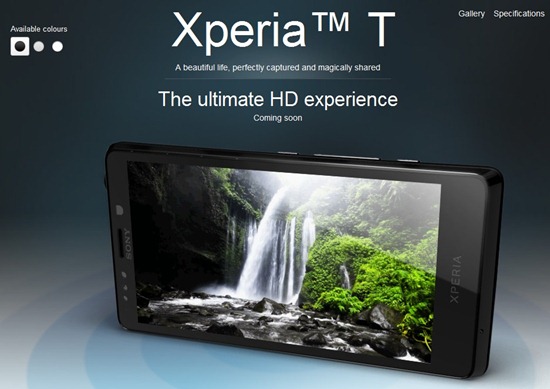
Sony Mobile has just announced that they have rolled out the Android 4.1.2 Jelly Bean alpha ROM for the Xperia T, and if you prefer to go by model numbers, then LT30p would fit the bill nicely. This is certainly in line with the corporate character of Sony Mobile, as their tradition had always been to introduce alpha and beta ROMs for upcoming firmware updates. Needless to say, you ought to take into consideration that pre-release firmware is only meant for folks who want to check out what is to come in the most recent update.
A few caveats apply here — radio functionality like Bluetooth, Wifi and mobile data is not included (likely for regulatory reasons), nor are Google apps. In addition, Sony says the UI has not yet been updated to reflect the final look and feel of the Xperia Jelly Bean firmware — i.e. what’s on the new Xperia Z. And crucially, if you unlock your Xperia T and apply this alpha ROM, you won’t be able to update to the official Jelly Bean firmware once it’s released. So this ROM really is one for advanced users and adventurous devs only.
The Xperia T is a great phone, and should find itself significantly better with a dash of Google Now and Project Butter, the main ingredients in Android 4.1 Jelly Bean.
Hopefully today’s release will accelerate the progress of Jelly Bean-based custom ROMs for the Xperia T. If nothing else, we’d expect this to be hacked into something with working radios and Google Apps in a relatively short space of time. If you possess both a Sony Xperia T and a strong sense of adventure, you can find full instructions over at the source link.
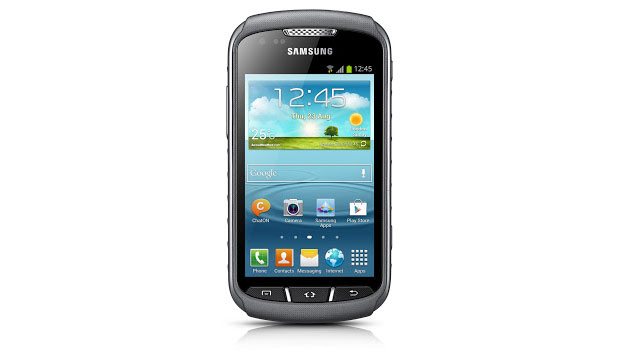
Samsung has announced what is going to be the most notable, rugged launch ahead of schedule in 2013, the Xcover 2. Along with a 1 GHz dual core processor, 4-inch WVGA display all on Android 4.1 with TouchWiz, the device also has a 5-megapixel camera with a dedicated camera shutter button.
The Xcover 2 also has GPS and GLONASS to cater to the explorer in you. The Xcover 2 will also pack a Cardio trainer Pro workout app along with a physical hand strap and mount.
[toggle_box title=”Press Release” width=”Width of toggle box”]
Samsung GALAXY Xcover 2
January 25, 2013
SEOUL, Korea – January 25, 2013 – Samsung Electronics Co., Ltd, today unveiled the Samsung Xcover 2, the ideal smartphone for active explorers who are enjoying outdoor lifestyles and seeking a durable mobile device with essential smartphone capabilities.
• The GALAXY Xcover 2 is optimized to endure against the most rugged outdoor conditions, whether you’re at work or play. Protected against the elements, it is dust and sand proof. It’s even water resistant to a depth of one meter for up to 30 minutes (IP67 Certified). You can now take photos under water with the direct camera key, hold on tight to your device with the strap holder and not worry about dropping your phone as the battery cover lock gives added protection.
• Pre-downloaded Google map data, an enhanced GPS ? GLONASS which shortens the satellite signal detection by up to 20? to tracks your location more accurately, LED Flash next to the camera which can be used like a torch and a huge battery capacity of 570 hours(1,700mAh), making the GALAXY Xcover 2 is the best possible smartphone partner for outdoor exploration.
• In addition, the Cardio Trainer Pro workout application will also help you achieve your fitness goals by creating a tailored training program, checking your progress and recording your track and speed.
• For everyday, users can expect the powerful performance characteristic of a Samsung smartphone with the robust GALAXY Xcover 2 shell. Its vivid 4.0″ (100.8mm) WVGA display provides a clear and wide viewing experience, a 5-megapixel camera and VGA front camera that will let you record precious moments in high resolution, Bluetooth® v 4.0 gives a better connection that consumes less power and detects devices 50 meters away. An impressive 1GHz dual core processor powers the core of the GALAXY Xcover 2, which ensures a fast operating speed for seamless multitasking, faster webpage loading and softer UI transitions.
• Samsung GALAXY Xcover 2 runs Android™ 4.1 (Jelly Bean) enabling faster and smoother screen transitions and providing an enhanced user interface featuring a new, easier-to-use notification panel. As a premium Samsung Android™ phone, the device is packed with a series of innovative features and services to boost performance and the overall user experience. The intuitive Motion UI understands your movements to shake and update or turn over to mute; data can be synced, backed up and restored with S-Cloud; S Voice lets users control the phone using their voice, allowing you to see the weekly weather forecast, the contact number you’re trying to find or even take a picture as you speak; Best Shot recommends the best shot from a series of photos; Smart Stay recognizes whether the user is looking at the screen to dim the screen accordingly. Users can also enjoy all the benefits of Samsung Hubs, including the latest versions of Readers Hub, Video Hub, Game Hub and Music Hub.
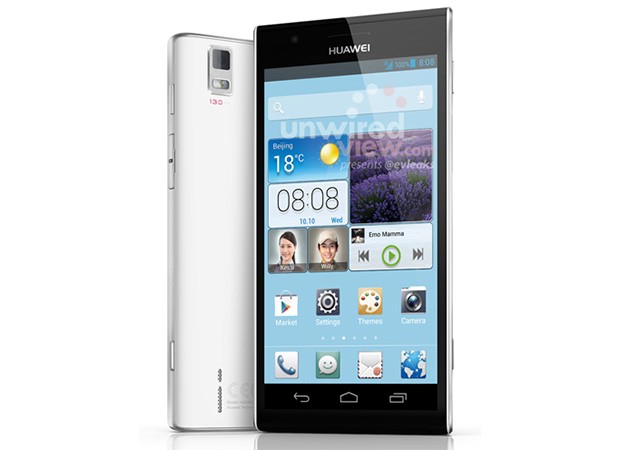
Wondering why Smartphones are still so fat? Well Huawei might be there with an answer to all the bulk with the new Huawei Ascend P2, a smartphone thats only 6.45mm thick.
The leaked images confirm that the Huawei Ascend P2 is indeed in the pipeline, and that too with a mammoth 13 MP camera and a slick metal body. Apart from the details mentioned little is known about the P2 , although rumors are pegging a full 1080p HD display at only 4.5 inches, 2GB of RAM, and a big 3000mAh battery for power.
The Huawei Ascend P2 is said to be Shipping with Jelly Bean 4.x, and the only think keeping the media vary is the 1.8 GHz Quad Core SOC which is of an unknown / self developed / Chinese nature. Keeping performance estimates on this device low. However, with the recent trend of phablets, Huawei might just do well in a market like India with a Quad Core Full HD Phone, with 2 Gb of RAM at the price of say a Galaxy Grand.
Microsoft says its fourth-quarter earnings slipped 4 percent, despite a lift from its latest version of Windows.
The Redmond, Washington-based software giant posted revenue of $21.46 billion and net income of $6.38 billion, with earnings per share of 77 cents. That’s largely in line with what Wall Street had been expecting, though a bit lower on the revenue side and higher on the earnings side — ahead of today’s financial report, the analyst consensus was that Microsoft would post earnings of 75 cents a share on $21.53 billion in revenue.
The results announced Thursday are the first to include Windows 8. The program is a dramatic overhaul of the Microsoft Corp operating system that powers most PCs. Windows 8 came out 26 October with slightly more than two months left in Microsoft’s fiscal second quarter.
When Windows 8 finally hit the market, Microsoft also unveiled its own tablet computer, Surface, as a showcase for the operating system. Microsoft didn’t disclose Thursday how many Surface devices were sold in the October-December period.
Microsoft’s Entertainment & Devices division, which is responsible for the Xbox and Surface, saw an 11% decline from last year, with only $3.77 billion of revenue. This comes after Microsoft announced that the Xbox 360 was the top-selling gaming console for two years straight. It looks like holiday sales weren’t as great as the company expected.
Microsoft’s Online Services division saw more growth, however, with $869 million in revenue, which is an 11% increase year-over-year. Thanks to the upcoming Office 365 suite and SkyDrive, Microsoft’s online services don’t seem to be slowing down anytime soon, especially with the deal that Microsoft made with the city of Chicago to bring Office 365 services to city employees.
Samsung announced its Q4 2012 financial results today and, as expected, they are impressive. Consolidated operating profit over the three-month period hit a new record of 8.84 trillion won (circa $8.3 billion), from revenue of 56.06 trillion won (approximately $52.4 billion). The firm saw its profit increase 10 percent on the previous quarter — that’s 89 percent year-on-year– while revenue was up 7 percent on Q3 2012 and 19 percent year-on-year).
Mobile has always been a key market for Samsung, but the release is terribly vague when it comes to breaking down exactly how the company did with regard to units sold. Even so, revenue from Samsung’s Mobile Communications division grew 4 percent from the prior quarter, and Samsung specifically calls out the Galaxy S III and Galaxy Note II as key performers — the inclusion of the latter isn’t much of a shock considering it sold around 5 million units in its first two months on the market, and is reportedly nearing 10 million units sold globally. Taking a step back, Samsung’s IT and Mobile Communications unit as a whole reported 5.44 trillion won ($5.09 billion), slightly down from Q3 but more than double the 2.56 trillion won ($2.39 billion) Samsung recorded in the year-ago quarter.
[quote]Robert Yi, senior vice president and head of Investor Relations, said: “Despite uncertainties in Europe and concerns over the US fiscal cliff creating a difficult business environment, we did our best this quarter to achieve strong earnings based on a strategic focus on differentiated and high value-added products as well as our technological competitiveness.”[/quote]
However, despite the firm’s impressive Q4 profits, Yi remains cautious with regards to Samsung’s position in the market over the coming 12 months.
The company has suggested that the significant number of new products coming to market and the inevitable price competition to follow will make 2013 a challenging year.
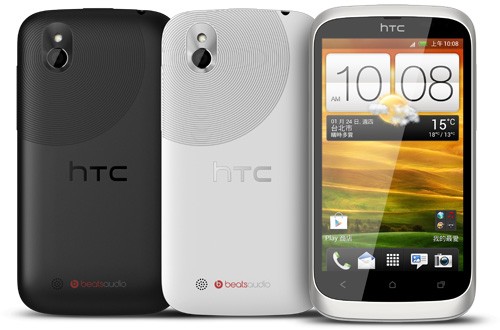
HTC has launched a brand new budget phone targeted at developing markets like our very own. The HTC Desire U will come with a 1 GHz Single core CPU along with Android 4.0 with HTC Sense. The HTC Desire U will have 4 GB of Store and 512 MB of RAM along with microSD card expandability.
The working bands will include HSPA/WCDMA : 900/2100 MHz / GSM/GPRS/EDGE : 900/1800/1900 MHz. Connectivity includes WiFi, Blutooth 4.0 and micro-USB 2.0. A 5-megapixel WVGA Video capable camera and Beats audio support inbuilt into the device.
As far as battery is concerned 1650mAh is the number, and the display is a 4 incher with a resolution of 480 x 800 px.
While this device could be a good replacement for the HTC explorer in India, pricing will be key to the success of this HTC
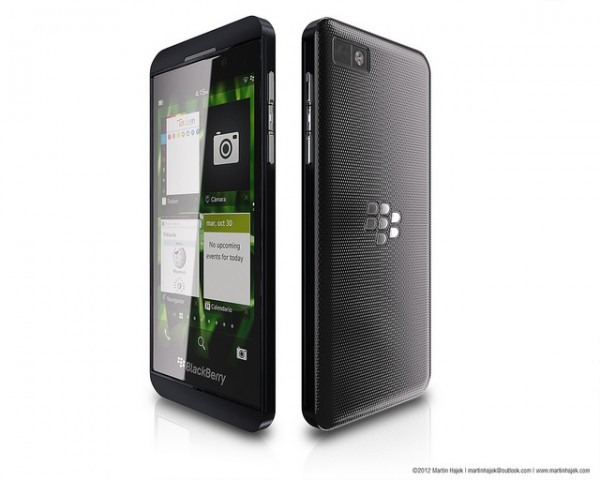
RIM is about to release its latest BlackBerry 10 platform by next week. But even with this new development, the Canadian company is not off the hook when it comes to its market predicament. BlackBerry is a platform on the decline, and apart from BB10, RIM is thinking of ways to revitalize its business. Among the possibilities is licensing is operating system or even selling off its hardware division.
Lenovo is reportedly mulling over a purchase of RIM’s traditionally-unprofitable hardware division as it determines how best to move into the international smartphone and tablet market.
Lenovo is the world’s number two PC manufacturer, and although sales have been strong over the last few quarters, rocketing past Dell in market share, desktop and laptop sales are slowing in the wake of smartphones and tablet proliferation. Lenovo rose to be the number two smartphone maker in China in 2012, but it has a lot of work to do if it ever wants to be an international player.
Analysts speculate that even if BlackBerry 10 proves a success for the company — which, if early indications are a bellwether, it likely will — RIM may choose to sell its hardware business anyway, focusing on its network and software assets. A partnership with a company like Lenovo or even Samsung, which was also rumoured to be interested in acquiring RIM at one point, could push the Waterloo-based outfit back into the black.
On related news, RIM’s shares rose with the reports of Lenovo’s interest. The Toronto Stock Exchange-listed shares rose 3%. Still analysts say RIM is likely to wait until it launches BlackBerry 10 before seriously considering partnerships or asset sales.
Sony Computer Entertainment has been fined a record £250,000 by the data protection watchdog after the personal details of millions of gamers – including passwords and credit card numbers – were leaked online.
The Information Commissioner’s Office on Thursday said the security breach was “one of the most serious” it has handled under the Data Protection Act. The £250,000 fine is the maximum penalty awarded by the ICO against a private company.
The privacy blunder happened in April 2011, when computer hackers targeted the Sony PlayStation Network. It compromised the personal information of millions of customers, including names, addresses, e-mail addresses, dates of birth and account passwords. Customers’ payment card details were also at risk, the ICO said.
“An ICO investigation found that the attack could have been prevented if the software had been up to date, while technical developments also meant passwords were not secure,” it added.
Sony, however, has released a statement saying that it plans to appeal the fine.
“Sony Computer Entertainment Europe strongly disagrees with the ICO’s ruling and is planning an appeal,” it said. “SCEE notes, however, that the ICO recognises Sony was the victim of “a focused and determined criminal attack,” that “there is no evidence that encrypted payment card details were accessed,” and that “personal data is unlikely to have been used for fraudulent purposes” following the attack on the PlayStation Network.”
Sony executives, including President and CEO of Sony Corporation Kazuo Hirai, made a public apology for the PSN hack in May 2011
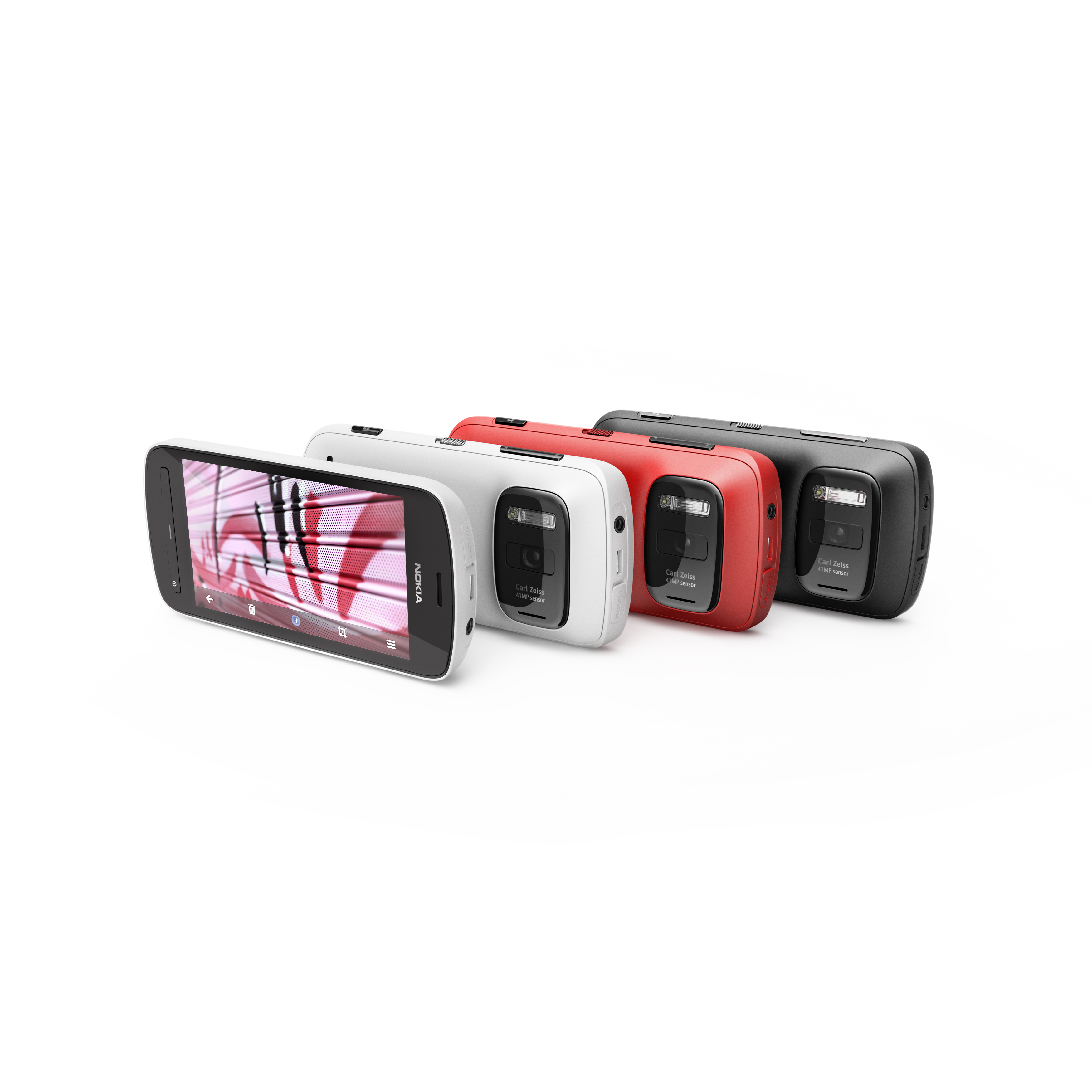
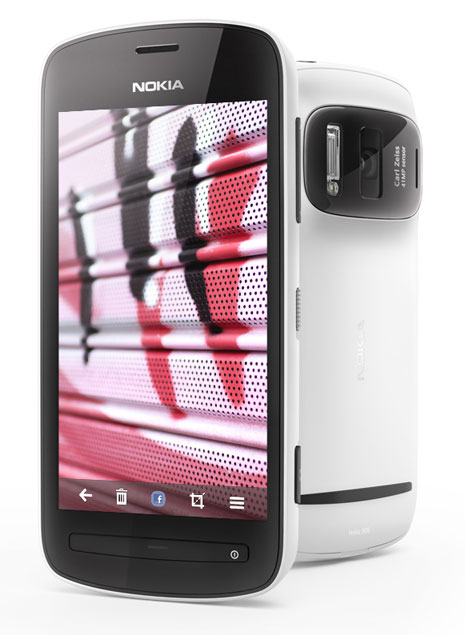
Nokia has confirmed in its Q4 financial results that the 808 Pureview smartphone will be the last Symbian device it will ever produce.
This morning Nokia reported operating profits for the first time in six quarters of €439m on revenues of €8.04bn and chimed that its strategy to turn its fortunes around is working.
An essential part of that turnaround strategy has been an alliance with Microsoft to produce smartphones based on the Windows Phone operating system.
That strategy is paying dividends with over 4m Lumia devices shipped during the busy Christmas sales season. The casualty of this strategy, however, is Nokia’s longstanding use of the Symbian operating system.
[quote]In its fourth quarter and full year 2012 Interim Report (spotted by the eagle eyes at TechCrunch), Nokia states: “During our transition to Windows Phone through 2012, we continued to ship devices based on Symbian. The Nokia 808 PureView, a device which showcases our imaging capabilities and which came to market in mid 2012, was the last Symbian device from Nokia.”[/quote]
The news, which shouldn’t come as a surprise to anyone really, means the transition to Windows Phone is complete from a hardware perspective, although we suspect Nokia still has plenty of Symbian handsets still on shelves around the world for those that want a piece of history.
Symbian OS on Nokia devices has played a key part in the smartphone game over the past ten years, but its significance was severely reduced once the touchscreen revolution started. Some of the most notable phones to come out of Nokia were powered by Symbian – beginning with the 9210 Communicator. The Nokia E61 started a messenger phone hype that peaked with the E71, making Symbian OS the only viable competitor to the then-strong BlackBerry portfolio of messengers.
The 808 PureView, Nokia’s last Symbian device, picked up the Best New Mobile Handset Award at the Mobile World Congress in 2012. The device created quite a stir at the time because it came with a 41-megapixel camera lens from Carl Zeiss as well as NFC capabilities.
Nokia is rumoured, and almost expected, to include PureView technology in a new Windows Phone 8 smartphone out later this year.
The highly-acclaimed Temple Run for Android has just its deserved sequel. Keith Sheperd, co-founder of Imangi Studios, creators of the game, has just announced Temple Run 2 has been published on Google Play Store.
The sequel to the popular endless runner game promises “beautiful new graphics, gorgeous new environments and new obstacles”. And as well as running, sliding and jumping, you can now also swing on a rope and ride in a mine cart.
Initially launched on iOS, Temple Run 2 shot to the top of the free-app chart last week within eight hours of its release. Within 24 hours it had clocked up an astonishing six million downloads and on Monday, just four days after it first landed in the iOS app store, maker Imangi Studios announced it had been downloaded over 20 million times. Expect the Android version to follow suit.
Thanks to in-app purchases, Temple Run 2 has also landed in third spot in the iOS top-grossing-apps chart.
[quote]”The response from fans has been overwhelming. We are thrilled players want more of the Temple Run universe, and we hope to grow and expand the game over the coming months,” says Keith Shepherd, co-founder of Imangi.[/quote]
In June last year, Imangi Studios had teamed up with Disney for a special edition of the game and brought Temple Run Brave for iOS and Android, with the the locale and character based on the Disney – Pixar movie, Brave. You are in control of Merida, the main protagonist – helping her run, slide, jump and turn and shoot your way across the wilds of Scotland.
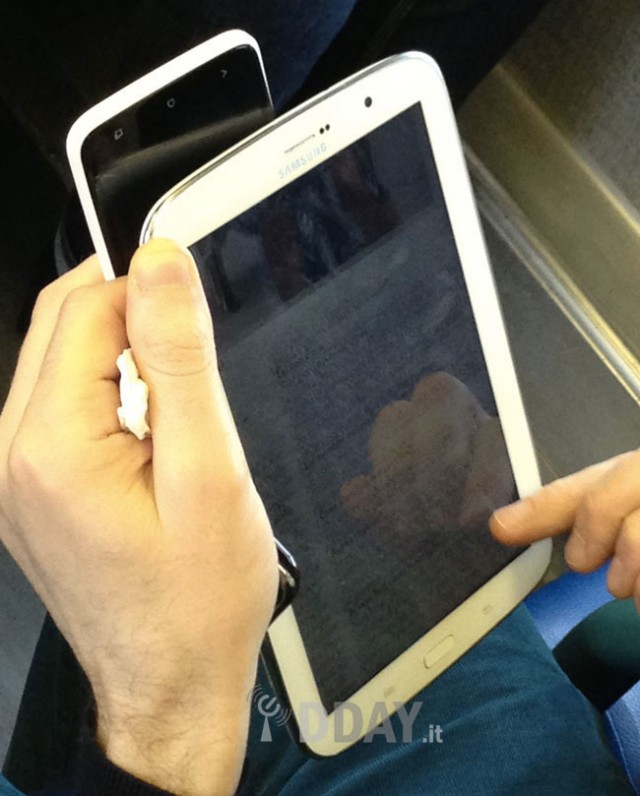
On Monday, Samsung’s vice-president announced that the Galaxy Note 8.0 would be formally announced at this year’s Mobile World Congress at the end of February. Excitement has clearly gone around the company, enough for an alleged picture of the new device, as well as its hardware specifications, to leak online via a Twitter account of Spanish language classifieds website which has not hesitated to spread the word and win its fair share of publicity.
This new size of tablet joins the plethora of other Samsung tablets, but comes in with a different design. Taking shape from the Galaxy S III and Note II, the Note 8.0 looks to be incredibly thin and has curved corners. According to the Italian site dday.it they state that “We are holding the picture of what seems to be the new Samsung tablet, do not know whether a prototype or the final version (but it seems to be).”
As for the specs, the Note 8.0 has an 8-inch display with a resolution of 1280 x 800, a 1.6Ghz quad-core processor, 5MP camera on the back with a 1.3MP fron-facing camera, 16GB or 32GB versions (3G, Wi-Fi), runs Android OS 4.2 Jelly Bean, 4600 mAh battery, 330 grams and overall dimensions are expected to be 211.3 x 136.3 x 7.95mm. Finally, the S-Pen is located at the bottom right of the Note 8.0. No word on when the 8.0 will be available or potential price points, but this will be showcased at the upcoming Mobile World Congress in Barcelona.
According to rumours, Samsung will launch two versions of the tablet, depending on the connectivity suite. While model number GT-N5100 will have cellular data as well as Wi-Fi, the version named GT-N5110 will be a Wi-Fi-only unit. Other connectivity options in the device will be Bluetooth 4.0 and microUSB 2.0. The tablet is said to weigh 330gm and run on a 4,600mAh battery.
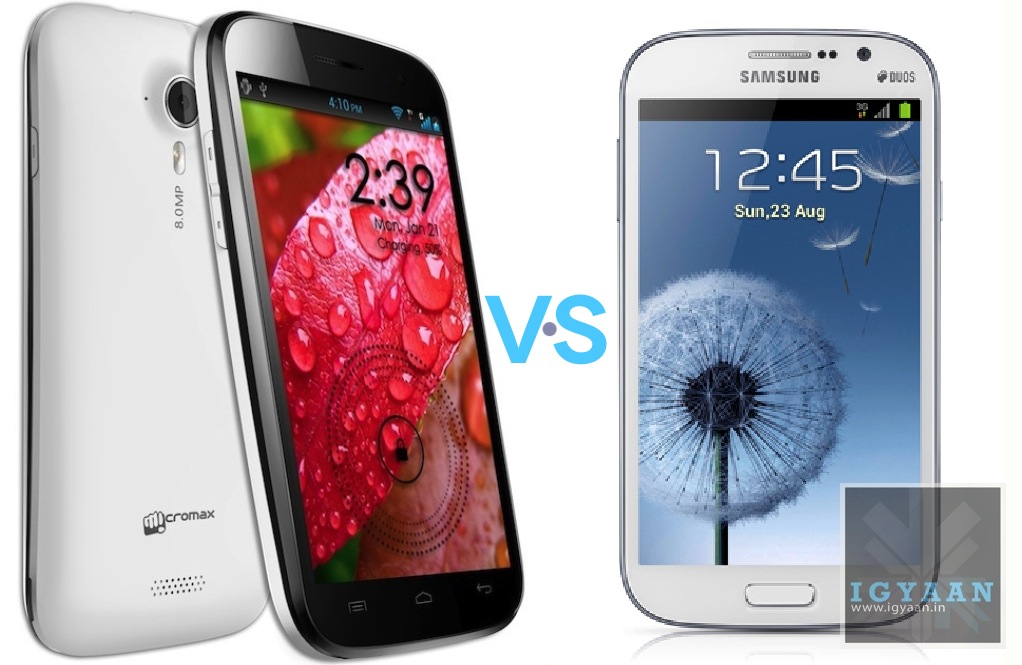
The market is a blaze with possibly the two best dual sim smartphones of this quarter, The Micromax A116 Canvas HD and the Samsung Galaxy Grand I9080. The question that everyones asking is what is really the difference between the two.
Brand Names
Apart from being manufactured totally differently, the two phones come from two different type of manufacturers. Micromax up until recently was known as a “Budget/cheap” phone maker for India, whereas Samsung has enjoyed the market name and snob value of a luxury phone brand.
Canvas HD A116
SOC
The Micromax A116 is built on a Mediatek SOC, a relevantly newer company formed in 1997, that also builds components for “Budget and Chinese” devices. The company has made some breakthroughs in technology in the past two years and shares a considerable chunk of the marketshare.
The Galaxy Grand is built on a 1.2 GHz processor which remains unknown as of now. Several indicators point to the use of a Broadcom BCM28155 SoC. It comprises a pair of ARM Cortex-A9 cores and Broadcom’s own VideoCore-IV graphics engine for 2D and 3D acceleration. Whether this performs any better than the Mediatek processor is currently unknown.
Sim Cards
Both the phones have Dual Sim, The Galaxy Grand has a slight advantage here, because it has smart autoforward, so it allows a busy Sim Card’s calls to be sent to the other phone, keeping both sims active at once. Although the chip inside the A116 is capable of similar features, the Canvas HD currently is only single sim active.
Displays
Displays are an interesting comparison for these devices, while the Canvas HD boasts a whopping 1280 x720 pixel laden 5 inch IPS display the Galaxy Grand only comes with a 480 x800 px LCD display. Numbers aside the display on the Grand was pretty impressive and does not feel pixellated as the numbers on the sheet would suggest. We also found that the colors were more vivid on the Galaxy Grand’s display as opposed to the Micromax Canvas HD.
Galaxy Grand i9080
Canvas HD A116
Cameras
Both Carry 8 MP camera’s which will only be tested while we are reviewing the devices, but if Samsung is using their own sensor in the camera, the Grand could have a slight advantage over the A116. The front camera on the Galaxy Grand is also superior to the 0.3 MP basic front camera on the Canvas HD A116.
Operating System
Samsung puts in a lot of effort into making a custom UI for their devices, along with several apps and tweaks. So Samsung definitely gets the upper hand here. With features like pop up play, direct call, multi window and most importantly an inbuilt task manager the Galaxy Grand gets the much needed upper hand here. Of course TouchWiz UI has several other features and good looking icons that most are aware of.
Micromax clearly looses here, the software is basic Android jelly bean, with a bit of customizations done by the Micromax Software Research team in conjunction with the manufacturers. The UI can become laggy and does not have the easy tweaks as seen in TouchWiz . However Micromax’s UI offers several customizations and file access that is restricted in Samsung devices. You can almost install any app and replace the UI, But you will not get the fit and finish of a manufacturer made custom UI. Maybe in the coming years with the success of the Canvas series Micromax can build their own UI (or buy one : MiUi would fit the name too)
Build Quality and Looks
More or less built with plastic, both devices have identical looks. The Micromax Canvas HD A116 seems a lot more refined to look at in comparison to the Canvas 2, and feels a lot more sturdier than the already sturdy past model. The Galaxy Grand is set to resemble the Note 2 when it arrives in the market, with a glossy bezel and identical looks and matching colors with flip cases. A user could easily pass off as using a company flagship for half the price. Build to that the identical user interface and similar features including perks like multi window puts the Galaxy Grand a step ahead in the Looks department.
Samsung India is banking on identical looks to be a key sales factor in India, especially because Grand owner can get the feel of a Note 2 for almost Half the price.
Price
In India its all about the price, and Samsung will loose here, miserably. The Galaxy Grand is priced at Rs. 21500 at street level selling price. Whereas the Micromax Canvas HD A116 has a MRP. of 14999 and is expected to sell under Rs. 13000. This puts a gap of 10000 Rupees or almost US$ 200 between the two. An amount which in some cases could comprise of a monthly salary of working individuals.
Conclusion
While we honestly cannot tell if one performs better than the other until we have our dirty claws in the dish and can review both these phones side by side. We do have one news that is set to make matters difficult for everyone, Karbonn and Lava are all set to announce quad core phones, so Stay Tuned.
The Nokia EOS is set to be the first Windows Phone 8 handset to sport the Finnish firm’s impressive PureView camera technology.
A source “familiar with Nokia’s plans” claims that the codenamed EOS will pack a camera similar to the one found in the 808 PureView – suggesting it also sports a 41MP sensor.
Sources also claim that the Pureview EOS will also be built using an aluminum shell as opposed to the polycarbonate generally used in Nokia Constructions. The phone will be pegged in a higher end category, so it may never reach markets like India commercially, considering the already high price of the Lumia 920. While many rumors are pointing toward a total remake of the Lumia series, the Pureview EOS will be the flagship, while the whole lineup drops polycarbonate to go for a aluminum chassis.
Nokia had first showcased its 808 PureView at the Mobile World Congress (MWC) 2012. This smartphone garnered a lot of attention, thanks to the massive 41-megapixel camera sensor that it has on-board. Other features of the smartphone include a 4-inch 360x640pixel AMOLED display, 16GB of internal storage, 1.3GHz processor and Nokia Symbian Belle OS.
This rumor is also being backed up by Italian smartphone guru Flavio via his Twitter account, which claims “project EOS” will indeed have a 41-megapixel camera.
Nokia 808 PureView debuted in India in June 2012. Its current price is mentioned as Rs. 26,499 but it is currently listed as out of stock on Nokia India official store.
The Verge claims that the Pureview EOS handset will be primarily designed for US network AT&T, who will make the device available to consumers later this year. Reports are already rimming a replacement of the 920 with a lighter aluminum shell called “Catwalk” . Nokia’s Catwalk device is designed as a successor to the Lumia 920 and will debut as a replacement to the company’s current Windows Phone 8 flagship with similar internal hardware specifications. A move towards aluminum brings Nokia back to the pre-Windows Phone days when the company launched N8 a Symbian 3 device.