Category: Science

  • Toyota Has Patented A ‘Cloaking Device’

    Toyota Has Patented A ‘Cloaking Device’

    From the One Ring to conceal the wearer’s identity to Harry Potter’s disappearing blanket, invisibility has been a fascinating feature of Science Fiction. Scientists have been hard at work to make this technology see the light of day for many years now. Joining the research is Toyota, the Japenese carmaker which has patented a “cloaking device.”

    The company recently acquired a patent from the United States Patent and Trademark Office (USPTO) for “Apparatuses and methods for making an object appear transparent,” which Toyota filed on June 17. The company has forayed into the invisibility tech, not to make its cars invisible, but, a part of it at least.
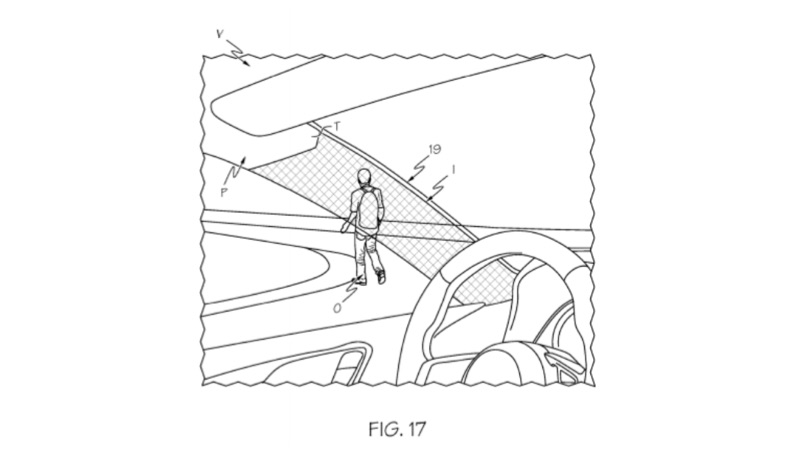
    The patent describes the cloaking device designed to turn the A-pillars on the right and left side of the car’s dashboard invisible. The aim to make the pillar invisible is to improve the on-road visibility for the driver. Ironic how making something invisible will improve the visibility on the road, isn’t it? Toyota has said that this is the way to move forward since the A-pillars have become broader to follow crash-safety standards. It’s logical since the wider these pillars are, the more they’ll obstruct the driver’s vision. The cloaking device would use mirrors to bend visible light around the A-pillars to allow the driver to “see” through them. This would give drivers a wider view of the road and their surroundings. It also benefits pedestrians, as drivers would see them better.

    Light from an object on an object-side of the cloaking device [i.e., facing the road] is directed around an article [the A-pillars] ]within the cloaking region and forms an image on an image-side of the cloaking device [i.e., facing the driver’s seat] such the article appears transparent to an observer looking towards the object

    The way to make things transparent or “invisible” is by manipulating light. Studies around the world currently working on some variant or the other of a possible cloaking device are also trying to do the same. For example, researchers from the Max Planck Institute are working on mimicking the biology of moths’ eyes to turn lenses and glass invisible. All these researches are working on bringing us closer to a technology that can make objects invisible, or at least transparent and Toyota’s venture into the same is proof that a “cloaking device” may just be a few years away from existence.

     

  • “Smart Stickers” Which Will Detect And Prevent Sexual Assault

    “Smart Stickers” Which Will Detect And Prevent Sexual Assault

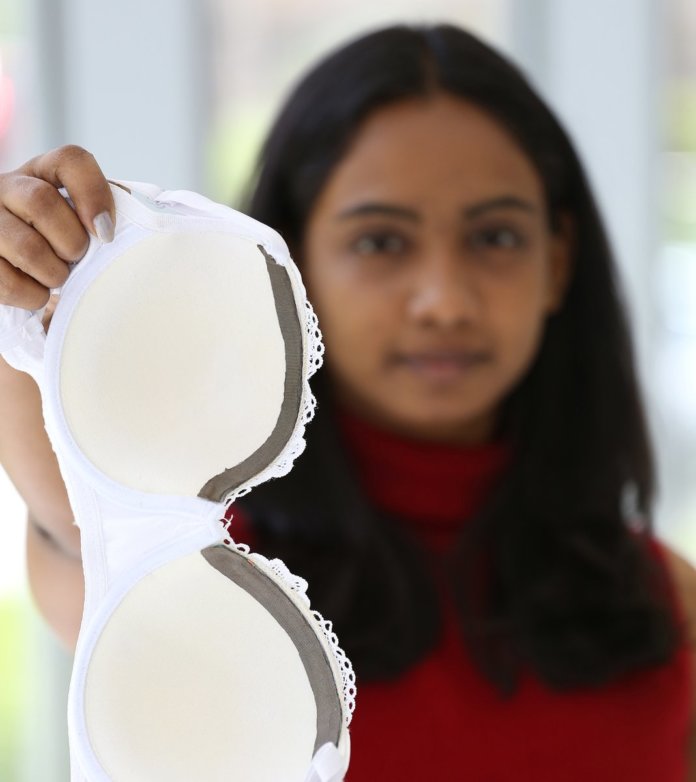
    Manisha Mohan, an Indian grad student and researcher at the MIT, invented “Intrepid” –  an electronic sticker that can detect forcible grabbing. The smart clothing detects “forcible touch” and sends a distress signal to your network of friends and family via message or a phone call.

    The Intrepid can be attached to any piece of clothing and connected to user’s phone via Bluetooth. If the piece of clothing attached to the device is taken off forcibly, the device waits for 30 seconds after which a “loud alert” goes off for 20 seconds. If there is still no response from the wearer, an SOS is sent to the listed emergency contacts. With the help of an accompanying app, Intrepid can also record encounters in the case of no timely response from the wearer. These recordings can be further used in the court in the case of legal proceedings.

    [embedyt] https://www.youtube.com/watch?v=RgU_evcSPrs[/embedyt]

    The “Smart Stickers” operate in two modes – active and passive. Manisha explains that, “An active mode [for] for instances when the victim is unconscious or cannot fight against the assaulter, for example in the case of infants, bed-ridden patients, elderly, disabled, intoxicated people and the passive mode where the victim can self-actuate the safety mechanism.”

    The Intrepid uses methods like olfactory stimuli (sense of smell) to detect initial signs of assault. It differentiates between the effect of smells on sexual arousal and partner selection with the effect of smells on forced touch or disrobing.

    Sexual abuse, assault, and harassment are regarded as some of the most common human rights violations in the world. As per the data release by the NCRB and Delhi Police, cases of sexual assault across the country remain high, with India’s “rape capital” Delhi registering six cases of rape on an average every day. The reports paint a pretty bleak picture in regard to ensuring safety against sexual assault.

    With crimes against women on the rise, and women being left with no choice but to stay indoors after dark, a device like Intrepid can not only help by improving the response time in cases of sexual assault but more importantly, it can make women feel safer when stepping out on the streets.

    The proposed solution, as Manisha states, can help combat rape, assault, harassment, child sexual abuse, abuse of elderly and disabled and might offer some peace of mind.

  • Vector’s Micro Rocket Took Off Successfully For The Second Time

    Vector’s Micro Rocket Took Off Successfully For The Second Time

    Vector Space Systems, a private spaceflight startup, was founded in 2016 by Jim Cantrell. (Interestingly, Jim is also one of the founding members of Elon Musk’s venture -SpaceX.)

    Vector Space Systems (VSS)  is a micro satellite company based out of Tuscan, Arizona, and in contrast to SpaceX’s huge probes, it focuses on small satellites, weighing a few dozen pounds. The company had received over $1 million to work on its first vehicle called the “Vector – R”, which took off for its first test flight on 3rd May 2017.

    Following the successful flight test of the Vector – R, Jim Cantrell commented, “We always wanted to build micro-rockets” and “We were more attracted to the smaller stuff.”

    The first sub-orbital launch of the Vector-R on 3rd May 2017

    Instead of taking the conventional route of building and assembling multiple parts, the company switched to using 3D-printing technology to build everything in one piece for the Vector-R. Employing the 3D-printing technology helped minimize costs and made the assembling of the parts easier.

    After Vector-R’s first successful flight test, the company successfully pulled off the second test flight launch of the 40-foot-tall vehicle from a spaceport in Georgia. It was the second flight of the Vector-R, a full-scale prototype of the company’s micro rockets.

    Designed to launch small payloads weighing up to 145 pounds into lower Earth orbit, Vector-R is one of two rockets the company hopes to start launching on a regular basis. The other vehicle, Vector-H, is still under development and is expected to be slightly larger than Vector-R. Once ready, Vector-H will be able carry payloads weighing over 350 pounds into orbit.

    VSS plans to launch both the rockets “hundreds of times a year” once the initial testing phase concludes successfully. This would help in getting small probes into space a lot faster than the typical bulky vehicles.

    Jim Cantrell, CEO and co-founder of Vector, said, “We’re not going to be the guys developing new rockets,” and “We hope to get these two vehicles running and milk the hell out of them… We’re going to be building the same thing over and over — like the McDonald’s of rocket business.”

    On the financial front, Vector recently raised $21 million, which amounts to more than $30 million in overall funding. The company has also managed to strike a chord with a few major players in the aerospace industry. Today’s launch was fully funded by Vector’s customers and carried test payloads from NASA’s Ames Research Center, the Center for Applied Space Technology, and Astro Digital (it specializes in small imaging satellites).

    Today’s test launch was the first rocket flight ever out of Camden Spaceport, located near the coast of Georgia. Though the vehicle didn’t reach Earth’s orbit, these test flights will help mark the beginning of launching tiny satellites to into space.

  • Human Embryos Edited For The First Time In The US-Using CRISPR

    Human Embryos Edited For The First Time In The US-Using CRISPR

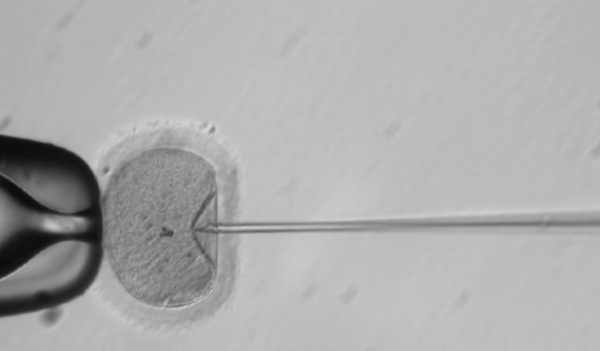
    A new era of genetically modified humans may arrive sooner than we expected. Recent reports show that researchers in the US have been successful in their first attempt at creating genetically modified human embryos. This research was carried out by a team in Portland, Oregon. Scientists used a gene altering tool called CRISPR to edit the DNA of viable human embryos.

    Source – MIT Technology Review

    The yet to be published research was led by Shoukhrat Mitalipov of Oregon Health and Science University. According to reports, the research included fertilising donated human eggs with sperm carrying inherited diseases. The team used CRISPR to correct the disease-related mutations and allowed the embryos to develop for a few days. The reports state that a series of tests resulted in embryos accepting the desired genetic changes in the majority of their cells with minor errors.

    This is not the first time human embryos have been edited. China has also experimented on altering the human embryos using CRISPR.

    Considering the NIH’s (National Institutes of Health) ban on using gene-editing technologies in human embryos, this research of editing viable human embryos can be termed controversial. However, in February, a committee created by the National Academy of Sciences and the National Academy of Medicine encouraged the use of genetic altering of human embryos in case of  no “reasonable alternative” available.

    The ability to edit human DNA can allow scientists to correct defective genes causing inherited diseases. It is also a big leap in the medical sector as the research may prevent incurable diseases or disabilities in new born babies.

    Despite being a revolutionary breakthrough, this research may raise concerns regarding genetically modified humans. And though the DNA editing tool – CRISPR is extremely precise, it still has a long way to go. Few fear that the tool may pose danger of minor errors leading to permanent problems. Also, many skeptics question the power of making genetic tweaks in a human due to ethical reasons.

    CRISPR engineered humans may still be a far fetched dream, as according to the research, the embryos were developed for a few days and were not implanted. Without implantation, embryos cannot develop into babies. This raised questions about the “ground breaking” research. Many believe that the real breakthrough will be when the scientists will actually be able to develop a genetically modified human being.

    Regardless, the research shows how far gene editing has come. It may not be long before the concept of customised designer babies becomes more than just a theory.

  • IBM  Breaks The Record – Stores 330TB Data Into A Tiny Tape

    IBM Breaks The Record – Stores 330TB Data Into A Tiny Tape

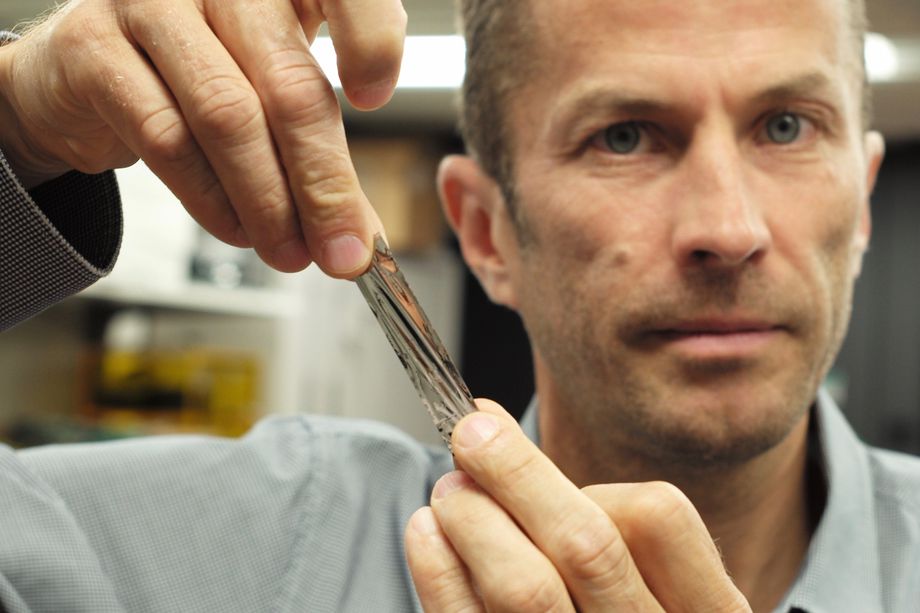
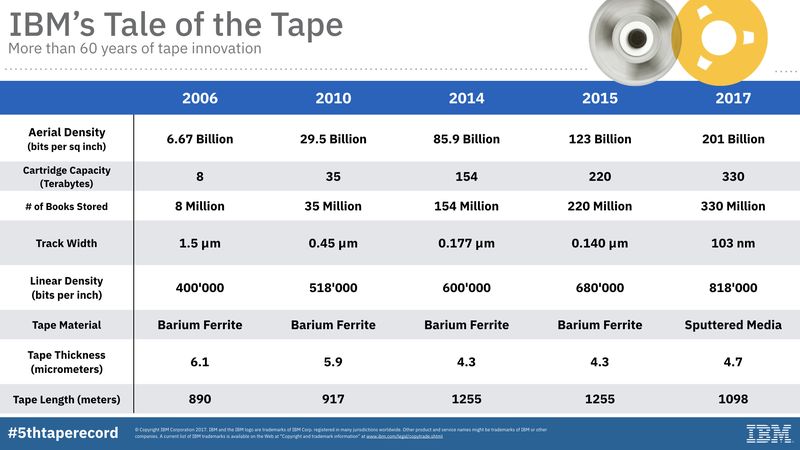
    IBM Research Scientists created a new world record in tape storage. Their latest invention can capture 330 terabytes of uncompressed data (equivalent to 330 million books) into a single tape cartridge that can fit into the palm of your hand.

    The new record of 201 gigabits per square inch in areal density was achieved on a prototype sputtered magnetic tape developed in collaboration with Sony Storage Media Solutions.

    The tape holds 330 terabytes per square inch,  beating the earlier record of 220 terabytes of uncompressed data per square inch. The prototype tape is more than 20 times the areal density currently used in commercial tape drives. (Areal recording density is the amount of information that can be stored on a given area of surface.) Since IBM’s first tape unit which could hold upto 2 megabytes of data, this invention is a huge step forward into the future of tape storage. Invented over 60 years ago, storage tapes are typically used by businesses to archive huge amounts of data like tax documents, health care records, etc.

     Evangelos Eleftheriou from IBM said

    Tape has traditionally been used for video archives, back-up files, replicas for disaster recovery and retention of information on premise, but the industry is also expanding to off-premise applications in the cloud,  and While sputtered tape is expected to cost a little more to manufacture than current commercial tape, the potential for very high capacity will make the cost per terabyte very attractive, making this technology practical for cold storage in the cloud.”

    Analysts predict that by 2020, global data storage will amount to 40 trillion gigabytes – around 5,200 gigabytes per person. According to experts, using tape is a cheaper and more energy efficient way of storing data in comparison to power-consuming, bulky data centres full of drives.

    It wasn’t an easy task creating a tape that could hold 201 gigabits per square inch, as IBM researchers had to develop several new technologies. Working in collaboration with Sony, IBM was able to develop this tech, particularly on enabling increased areal recording densities.

    However, retrieving data from tape is a far slower process. In a storage tape, data can only be accessed in the order in which it was written, in other word – sequential access. But IBM and Sony are apparently working on speeding up the data retrieval process.

  • IIT Delhi Student Invents A New Way To Detect Breast Cancer

    IIT Delhi Student Invents A New Way To Detect Breast Cancer

    IIT Delhi student, J.Jean Rossario Raj from the department for biomedical engineering, presented an alternate design in ultrasound transient elastography system for early detection of breast cancer. The project was to expertly diagnose and differentiate between malignant (cancerous) and benign (non-cancerous) tumours by combining various ultrasound imaging modes.

    Studies show that the malignant tumours are stiffer than benign ones. And one of the ways to detect the tumor is through Ultrasound elastography. It is a non invasive imaging technique which helps differentiate between the two types of tumours by evaluating the elasticity of the tumour.

    In an abstract, Jean provided a detailed account of her research. The research was conducted on 72 breast cancer patients using conventional non-invasive tumour detection techniques. With the help of the data collected during the research, Jean built a prototype for faster and efficient detection of cancer. The clinical data of the patients was tested using the prototype. The results show that the machine was able to detect tumours with 94.7% sensitivity, 90.6% specificity and 91.7% accuracy. The machine was also able to differentiate between the malignant and benign tumours with accuracy.

    Breast cancer is the most common cancers in women worldwide. It is the fifth most common cause of death from cancer in women. Nearly 1.7 million new cases were diagnosed in 2012, which represents about 12% of all new cancer cases and 25% of all cancers in women.

    In developed countries with advanced medical care, the survival rate of early stage breast cancers is 80-90 %, which falls to 24% for cancers diagnosed at a more advanced stage. Whereas, in developing countries, the survival rate further decreases to 40%.

    Breast cancer is increasing rapidly in developing countries where the majority of cases are diagnosed at later stages. The lack of early detection and adequate diagnosis of the cancer reduces the survival rate.

    Following is the standard procedure of diagnosing breast cancer

    • Breast Exam/Physical Exam
    • Mammography
    • Ultrasound Imaging
    • Biopsy
    • MRI

    Currently, a biopsy is the only definitive way to detect breast cancer. The procedure requires removing a sample of breast cells to analyse –

    • Whether the cells are cancerous
    • Type of cells involved in the cancer
    • Grade of the cancer
    • Hormone receptors of the cancer cells

    A biopsy is a time taking and invasive process. The machine uses a non invasive technique which will allow the doctors to diagnose the cancer at an early stage. The device will also allow the doctors to bypass the standard time consuming process and achieve faster results with  significantly improved specificity and accuracy. If used by medical practitioners and doctors, the machine invented by J.Jean Rossario Raj can help detect breast cancer early, thereby reducing female mortality.

iGyaan Network
Privacy Overview

This website uses cookies so that we can provide you with the best user experience possible. Cookie information is stored in your browser and performs functions such as recognising you when you return to our website and helping our team to understand which sections of the website you find most interesting and useful.