Category: Social Media

  • Snapchat Update: Video Chat and Texting Features Added

    Snapchat Update: Video Chat and Texting Features Added

    Snapchat claims that over 700 million pictures are shared everyday on their service, which would make it the most-used photo-sharing app — compared to Facebook, WhatsApp, and others. And now they have come up with new feature by which you can text and video chat as well. Staying true to their philosophy the text messages disappear as soon as the conversation is over. They hope to make video chats feel unforeseen, attempting to reproduce momentary meets on a street corner. Unlike Skype calls, which always prove to be tedious to plan out with friends.

    snapchat23-year-old CEO, Evan Spiegel in an interview with ‘The Verge’ said that the reason none of his friends video call each other on a daily basis is because “calling” was born of an era where software needed to imitate real-world tools. “What does a phone look like without a ringer?” he asks. He sums up his idea more neatly. “For Snapchat, the closer we can get to ‘I want to talk to you’ — that emotion of wanting to see you and then seeing you — the better and better our product and our view of the world will be.” To Spiegel, the future of communication isn’t about rethinking or upgrading phone calls as Skype, FaceTime, and Hangouts have done. It’s about imagining a future that leaves the phone metaphor behind entirely.

    Snapchat stripped out conventional texting-app features like read receipts, typing indicators, online statuses, and photo attachments. “Typing and read receipts make a lot of sense for messaging,” says Spiegel. “You write a letter, you put it in an envelope, you send it to a friend, and you want to know when they get it.” According to Spiegel, a modern chat app should feel like you’re really in the same room as the person you’re talking to.

    It started with sharing short-lived pictures, but Spiegel’s vision is faraway from just photos. You can call it anything — social network, utility, future-phone — Snapchat has managed to stick around, though it’s addictive features are still not so easy to classify. He’s trying to produce digital spaces with the identical closeness and immediateness we get in actual world conversations. Smartphones have altered the way we all commune with one another. But if Spiegel can achieve his vision, Snapchat could be the app that changes it back.

  • Facebook Acquires Oculus VR For $2 Billion

    Facebook Acquires Oculus VR For $2 Billion

    Mark Zuckerberg and his team are following up their Whatsapp acquisition with another big acquisition of the virtual reality company Oculus VR for $2 billion in stock and cash.

    Confirming this through a Facebook post, Mark Zuckerberg said “I’m excited to announce that we’ve agreed to acquire Oculus VR, the leader in virtual reality technology.

    Our mission is to make the world more open and connected. For the past few years, this has mostly meant building mobile apps that help you share with the people you care about. We have a lot more to do on mobile, but at this point we feel we’re in a position where we can start focusing on what platforms will come next to enable even more useful, entertaining and personal experiences.

    This is where Oculus comes in. They build virtual reality technology, like the Oculus Rift headset. When you put it on, you enter a completely immersive computer-generated environment, like a game or a movie scene or a place far away. The incredible thing about the technology is that you feel like you’re actually present in another place with other people. People who try it say it’s different from anything they’ve ever experienced in their lives.

    Oculus’s mission is to enable you to experience the impossible. Their technology opens up the possibility of completely new kinds of experiences. 

    Immersive gaming will be the first, and Oculus already has big plans here that won’t be changing and we hope to accelerate. The Rift is highly anticipated by the gaming community, and there’s a lot of interest from developers in building for this platform. We’re going to focus on helping Oculus build out their product and develop partnerships to support more games. Oculus will continue operating independently within Facebook to achieve this.

    But this is just the start. After games, we’re going to make Oculus a platform for many other experiences. Imagine enjoying a court side seat at a game, studying in a classroom of students and teachers all over the world or consulting with a doctor face-to-face — just by putting on goggles in your home.

    This is really a new communication platform. By feeling truly present, you can share unbounded spaces and experiences with the people in your life. Imagine sharing not just moments with your friends online, but entire experiences and adventures. 

    These are just some of the potential uses. By working with developers and partners across the industry, together we can build many more. One day, we believe this kind of immersive, augmented reality will become a part of daily life for billions of people.

    Virtual reality was once the dream of science fiction. But the internet was also once a dream, and so were computers and smartphones. The future is coming and we have a chance to build it together. I can’t wait to start working with the whole team at Oculus to bring this future to the world, and to unlock new worlds for all of us.”

    It is clear that Facebook will run Oculus as a seprate entity all together after the Acquisition.  Zuckerberg called out virtual reality as one of the computing platforms of the future following desktops and mobile. Stay tuned for more information on this acquisition! 

  • WhatsApp’s VOIP functionality for iOS Leaked in a Screenshot

    WhatsApp’s VOIP functionality for iOS Leaked in a Screenshot

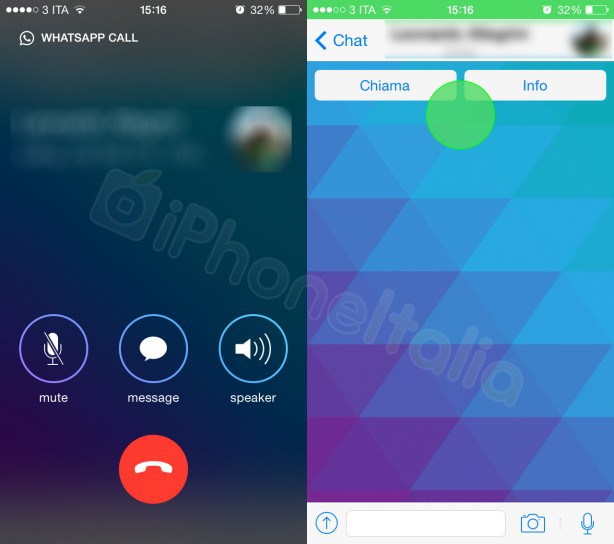
    During WhatsApp’s recent Facebook acquisition, CEO Jan Koum hinted that WhatsApp may get voice call functionality by the summer. This new leaked screenshot of the App’s upcoming update for iOS shows off those supposed calling capabilities, designed to work along with iOS 7’s design layout.

    The camera button on the top also hints at video call functionality. WhatApp will allow free voice calls and video calls with your friends on your WhatsApp list over Wifi and Cellular.

    It is also rumored that this functionality comes via Skype or using Skype’s voip technology as Facebook currently integrates Skype calling within its chat windows.

    With this feature WhatsApp may become the single point of social networking that everyone has been looking for. Now if only they could work out their battery drain.

  • Flipboard Buys Rival Zite From CNN

    Flipboard Buys Rival Zite From CNN

    Flipboard, the magazine-style news reading app, is buying competitor Zite from CNN, the companies announced Wednesday.

    The Zite app was a part of CNN for three years, since it had acquired the company for nearly $20 million. The terms and money involved in this deal have not yet been disclosed clearly. The move is a sign of ongoing consolidation in the space and comes in the wake of Facebook launching a Flipboard competitor called Paper. Flipboard benefits by cutting one more competitor from the field through the sheer act of buying it. 

    “We’re going to integrate the technology into Flipboard in the coming months,” Flipboard CEO Mike McCue said during a press call Wednesday. “We do not plan to continue to evolve Zite, we think we should focus on a single product.”

    He added that Zite users will be able to use their logins to set up a new Flipboard account, and that Flipboard will continue to support Zite for the time it takes to complete the integration of its technology.

    If you are not familiar with Zite, it is a personal news reading application that launched on the iPad in 2011. Essentially, Zite was a big recommendation engine that gives you articles based on what you like to read—based on your social feeds like Facebook and Twitter, but also based on your reading history and preferences.

  • Yahoo! To End Facebook And Google Sign-Ins

    Yahoo! To End Facebook And Google Sign-Ins

    Yahoo is planning on removing all of the Facebook and Google login functionality in a move to heighten the overall user experience. This latest move by CEO Marissa Mayer who has been shaking up nearly everything from search to company culture to acquisitions.

    “Yahoo is continually working on improving the user experience,” the company said in a statement, noting that the new process “will allow us to offer the best personalized experience to everyone.”

    For now, users can still access Yahoo services using their Facebook or Google log-ins. A timeline wasn’t provided for when exactly they will cease to exist.

    As TNW reports, the move to integrate Facebook and Google log-ins three years ago came as Yahoo sought to tap on their huge numbers of users — but it seems like CEO Marissa Mayer is keen to take a different route in a bid to reclaim native users and revive its ecosystem.

    The first Yahoo service to require the new sign-in process is Yahoo Sports Tourney Pick’Em, a service focused on the NCAA college basketball tournament which begins later this month. News of the change to Yahoo’s Tourney Pick’Em sign-in process was first reported by the technology blog Betanews.

  • Facebook Acquires WhatsApp: Here is Everything You Would Like to Know

    Facebook Acquires WhatsApp: Here is Everything You Would Like to Know

    The big news for today is from Facebook, the company has agreed to acquire the most used instant messaging service all around the world. Facebook acquires WhatsApp for $19 Billion and the WhatsApp team will now work with Facebook.

    With the mission of connecting people around the world, Facebook has taken another initiative to make that possible. “Our mission is to make the world more open and connected. We do this by building services that help people share any type of content with any group of people they want. WhatsApp will help us do this by continuing to develop a service that people around the world love to use every day” – Mark Zuckerberg 

    450 Million people across the world use the WhatsApp application out of which 70% are active every day. If facts are to be believed, the users to this application are growing(currently adding more than 1 million new registered users per day). 

    Jan Koum, WhatsApp co-founder and CEO, said, “WhatsApp’s extremely high user engagement and rapid growth are driven by the simple, powerful and instantaneous messaging capabilities we provide. We’re excited and honored to partner with Mark and Facebook as we continue to bring our product to more people around the world.”

    WhatsApp as a brand will be maintained, its headquarters will still remain in Mountain View, CA. Jan Koum(WhatsApp co-founder and CEO) will join Facebook’s Board of Directors and WhatsApp’s core messaging product and Facebook’s existing Messenger app will continue to operate as standalone applications.  

    [toggles behavior=”toggle”]
    [toggle title=”More Details”]Upon closing of the deal, all outstanding shares of WhatsApp capital stock and options to purchase WhatsApp capital stock will be cancelled in exchange for $4 billion in cash and 183,865,778 shares of Facebook Class A common stock (worth $12 billion based on the average closing price of the six trading days preceding February 18, 2014 of $65.2650 per share). In addition, upon closing, Facebook will grant 45,966,444 restricted stock units to WhatsApp employees (worth $3 billion based on the average closing price of the six trading days preceding February 18, 2014 of $65.2650 per share). As of February 17, 2014, Facebook had 2,551,654,996 Class A and B shares outstanding plus approximately 139 million dilutive securities primarily consisting of unvested RSUs. The Class A common stock and RSUs issued to WhatsApp shareholders and employees upon closing will represent 7.9% of Facebook shares based on current shares and RSUs outstanding. [/toggle]
    [/toggles]

    Why did Facebook Acquire WhatsApp ? 

    WhatsApp as an application has more than 315 Million active users each day. Facts say that the number of messages sent through WhatsApp is approximately the same as the total number of SMS traffic throughout the world. Not only here in India, but in countries like Brazil, Mexico and South Africa; WhatsApp is the most used messaging service. 

    WhatsApp team’s intentions of keeping the application ad free still remains, so we will have to see what change does Facebook brings to this app for generating revenue. For now, WhatsApp’s core messaging product and Facebook’s existing Messenger app will continue to operate as standalone applications

  • Twitter Commerce Will Allow Users To Buy Directly From Tweets

    According to a recent report on the Re/code site, popular social network Twitter appears to be getting serious about commerce on its service; and is probably close to finalizing an agreement with payment services firm Stripe. 

    The site posted mockups, reportedly created by Fancy, of what would be called Twitter Commerce, a new program that would allow people to purchase items through Twitter. The documents, discovered in a public area of Fancy.com’s website, showed a “buy” button embedded directly in tweets. Customers would have to provide Twitter with payment credentials prior to using the service. 

    Twitter will report its first ever quarterly earnings next Wednesday with investors and analysts sure to be interested in Twitter Commerce and other plans for bringing in revenue. 

    Twitter’s decision to add revenue streams may be a good move for the company but following the recent series of hacks on the social network site raises questions about the safety of user’s financial data.


  • Twitter Buys 900 IBM Patents

    Twitter has agreed to buy 900 patents from International Business Machines Corp. to gain access to new technology and build a defense against infringement suits.

    The deal came about a month after Twitter revealed that IBM had accused it of violating three of its patents related to advertising, “resource locators,” and discovery of contacts. Twitter was willing at that time to handle the situation outside of court, and it appears it went that way.

    A cross-licensing agreement will help safeguard Twitter against similar claims in the future. The most high profile exhibit of buying patents to curb future lawsuits would be Google’s purchase of Motorola Mobility.

    IBM is one of the industry’s largest research spenders and stockpilers of intellectual property, a consistent leader in US patent filings and the owner of some 41,000 patents. Twitter is following on the heels of Facebook, which itself faced similar claims before its own 2012 IPO. 

    Twitter is seeking to get more revenue from retailers and is trying to make it easier for users to shop via its 140-character messages.

  • Facebook Paper Coming Soon To Rival Flipboard

    Facebook Paper Coming Soon To Rival Flipboard

    After the entire 2013 passed with rumours about Facebook’s news reader being launched, the time may finally be upon us. Facebook could launch a brand new app called Facebook Paper next week according to Re/code’s Mike Isaac.

    Facebook Paper will act like Flipboard, aggregating media content from mainstream publications like CNN and the New York Times, while also adding status updates from Facebook into the mix.

    Facebook’s developers are believed to be taking Paper back to “a time before digital devices” in its aesthetic, with ReCode reporting that the name refers to a new “paper-like” format. 

    Re/code explains that the project spun off from an attempt to redefine the news feed :

    Like many Facebook initiatives, the Reader project originally began years ago as an idea to completely overhaul the News Feed itself, but after numerous delays and design refreshes, the project was split into pieces. Parts of the redesign made it into Facebook’s March refresh of the News Feed, according to three sources, when the team had not finished what would eventually turn into “Paper.” While this initiative has been Cox’s pet project, CEO Mark Zuckerberg has also been directly involved (as he has final oversight over Facebook products), according to sources.

    Facebook Paper would fit in with the company’s strategy of trying to become the go-to place for internet users looking to know what is going on in the world, a strategy Mark Zuckerberg pointed to at the launch of Facebook’s revamped news feed.

  • Bump and Flock Will Shut Down On January 31

    Bump and Flock Will Shut Down On January 31

    Google acquired contact and file-sharing app Bump back in September. Bump co-founder and chief executive David Lieb said the company was “thrilled” to join Google, citing similar passions for sharing information between people and devices. We’re not too sure he’ll feel the same way now.

    Bump and Flock are no more and will stop working and be removed from Google Play (and the App Store) on January 31st, 2014. The reason for this decision: Lieb and his team are now “deeply focused” on new projects within Google and don’t have the resources or time to devote to innovating on either product.

    The app allows iPhone and Android users to “bump” together two phones to share contact details and files between devices. Later versions also allowed phone users to “bump” phones with desktop computers.

    In September 2011, the company announced it had 50 million downloaders and 10 million active “bumpers.” Just less than a year later, more than 600 million photos were shared by “bumping” phones. Later it released an iPhone-only version photo-sharing app dubbed Flock (not to be confused with the social browser of the same name).

  • Chuck Norris Betters Jean-Claude Van Damme’s Split In Parody Video

    Chuck Norris Betters Jean-Claude Van Damme’s Split In Parody Video

    Chuck Norris sends a special Christmas and New Year greeting while copying and topping Van Damme’s famous Volvo leg splits. This time the famous feat is ‘performed’ between airplanes – with a little help from CGI and Delov Digital.

    The American action star and martial artist Chuck Norris one-upped his international counterpart in a holiday-themed parody of the well-known Volvo advertisement. The video from Hungarian firm Delov Digital, “Greetings from Chuck,” features Chuck Norris balancing 11 uniformed men in the shape of a Christmas tree standing atop his cowboy hat, all while he does the splits between a couple of flying jets.

    It’s a CGI parody of Jean-Claude Van Damme’s Volvo trucks split made by Hungarian animation studio Delov Digital and probably the most epic Christmas greeting card you’ll see this year.

    [youtube url=”http://www.youtube.com/watch?v=T-D1KVIuvjA”]

iGyaan Network
Privacy Overview

This website uses cookies so that we can provide you with the best user experience possible. Cookie information is stored in your browser and performs functions such as recognising you when you return to our website and helping our team to understand which sections of the website you find most interesting and useful.