Tag: Adoption

  • Android Jelly Bean Now On 52.1% Of Active Devices

    Android Jelly Bean Now On 52.1% Of Active Devices

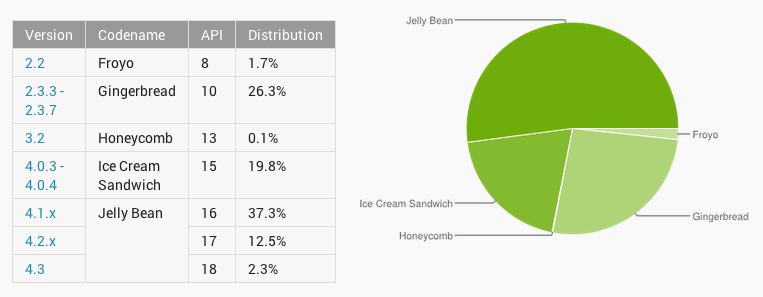
    According to Google’s monthly Android OS distribution chart — which tracks devices that actively visit Google Play Store — Jelly Bean (OS 4.1 to 4.3) now makes up for 52.1%of all devices, up from 48.6% last month. Every other OS dropped in usage, most notedly Android Gingerbread by 2.2% to run on 26.3% of Android device . This is still a huge number as the OS was introduced almost 3-years ago (December of 2010).

    android

    Next month will be interesting as we’ll see the uptake on the new 4.4 KitKat, plus those stats might also give a peek into early Nexus 5 sales.

  • Android Jelly Bean Now On 33 Percent Of Android Devices According To June Figures

    Android Jelly Bean Now On 33 Percent Of Android Devices According To June Figures

    The latest Android distribution stats are in as of June 3rd, and things are looking up for Jelly Bean.

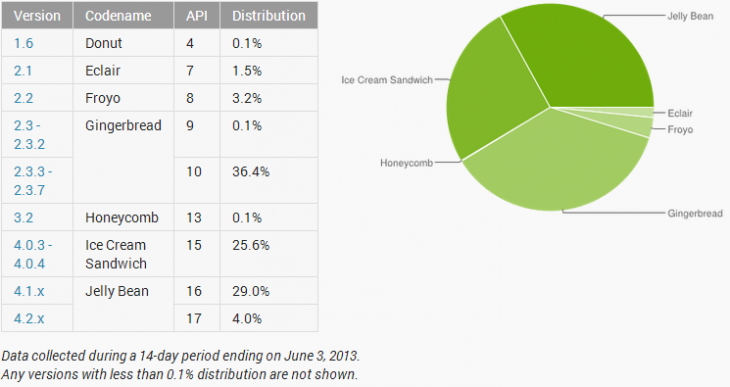
    Jelly Bean, including Android 4.1 and 4.2, now makes up 33% of all users. Coupled with Ice Cream Sandwich at 25.6%, nearly 60% of users run Android 4.0 and above.

    android

    Changes from last month are minor, Android 4.2 finally got a bit boost, almost doubling from 2.3% to 4% in less than a month, on the strength of the Samsung Galaxy S4. Android 4.1 also jumped 2.9% from last month as more customers upgraded from older devices; 2.1, 2.2 and 2.3 saw slight drops this month.

    It also appears that manufacturers are making good on their word to upgrade ICS users to Jelly Bean, as much of the Android 4.1 gain came at the expense of 4.0 — the former gaining 2.9% and the latter losing 1.9%.

    There are some unfortunate conclusions to be made here: while it’s gratifying to see Android 4.0+ rising to 60% of all users, Gingerbread’s demise is taking far larger than it should and it is hampering the rollout of apps that take advantage of newer platform features only possible on ICS and above.

    It’s important to remember that Google recently tweaked its algorithm in regards to how it counts users for these figures. In its own words, the company explains:

    Note: Beginning in April, 2013, these charts are now built using data collected from each device when the user visits the Google Play Store. Previously, the data was collected when the device simply checked-in to Google servers. We believe the new data more accurately reflects those users who are most engaged in the Android and Google Play ecosystem.

    Also, according to a tweet from the well-connected and accurate @LlabTooFeR Twitter account, Android 4.3 Jelly Bean could be rolling out a few weeks after the HTC One Nexus hits the Google Play Store.

    @LlabTooFeR is best known as a source of HTC-related rumors, and has proven to be very accurate in most cases.

    Exciting times for all Android fans!
  • Android Jelly Bean Now On 25% Devices As Google Counts Active Users

    Android Jelly Bean Now On 25% Devices As Google Counts Active Users

    Every month Google releases stats that give a glimpse into the distribution of the various versions of Android. Like clockwork, the percentages of the older versions (Donut, Eclair or Froyo) tend to trail off, while newer versions such as Ice Cream Sandwich and Jelly Bean amass greater authority.

    Last month's data
    Last month’s data

    Starting with the release of the new charts, Google has changed the way it collects information for the monthly Dashboard release. Back in the day when Froyo and Eclair were the current builds, Google took information from Android phones each time they checked in to Google servers. Now, the data comes from phones as they visit the Google Play Store. This should result in more accurate information.

    android

    Jelly Bean has reached 25 per cent marketshare, but is still not in the lead with the most active users. Android 3.2 Gingerbread, released in 2010, leads with more than 40 percent of users, followed by Ice Cream Sandwich with 29 per cent of users. 

    Before the change in the way Google counts, Jelly Bean sat at roughly 15 percent marketshare, which makes for a considerable jump. Android has long been blamed for taking longer to seed its latest update to new devices than Apple’s iOS. The new numbers, while aimed at developers, definitely paint a better picture to the public.

    At any rate, developers now have a better understanding of who to target their apps to.

iGyaan Network
Privacy Overview

This website uses cookies so that we can provide you with the best user experience possible. Cookie information is stored in your browser and performs functions such as recognising you when you return to our website and helping our team to understand which sections of the website you find most interesting and useful.