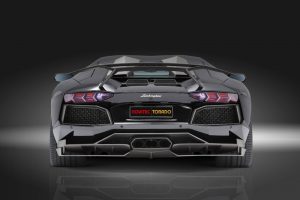
German aftermarket tuner Novitec has completed its tuning program for the Lamborghini Aventador, under the name Torado. The already imposingly aggressive Aventador is given a lot more grunt both outside and under the hood.
A new body kit complete with carbon fiber vents, spoilers and scores of protrusions lining the body from front to back has been mounted on.
Novitec says it’s good for daily use, with four different stages of power tune and a fifth completely outrageous injection called “Bi-Kompressor.” The power bumps start at 722 horsepower and 519 pound-feet and go up to 969 hp and 672 lb-ft with the bi-kompressor. The exhaust systems included in those packages are also good for shaving around 20 kilos from the car’s weight.
Watch the video below to see the Novitec Torado Lamborghini Aventador in a wind tunnel.
Almost all cars from Michael Bay’s upcoming edition of the hugely successful Transformers franchise have been confirmed over the last few months, save for the pivotal Bumblebee.
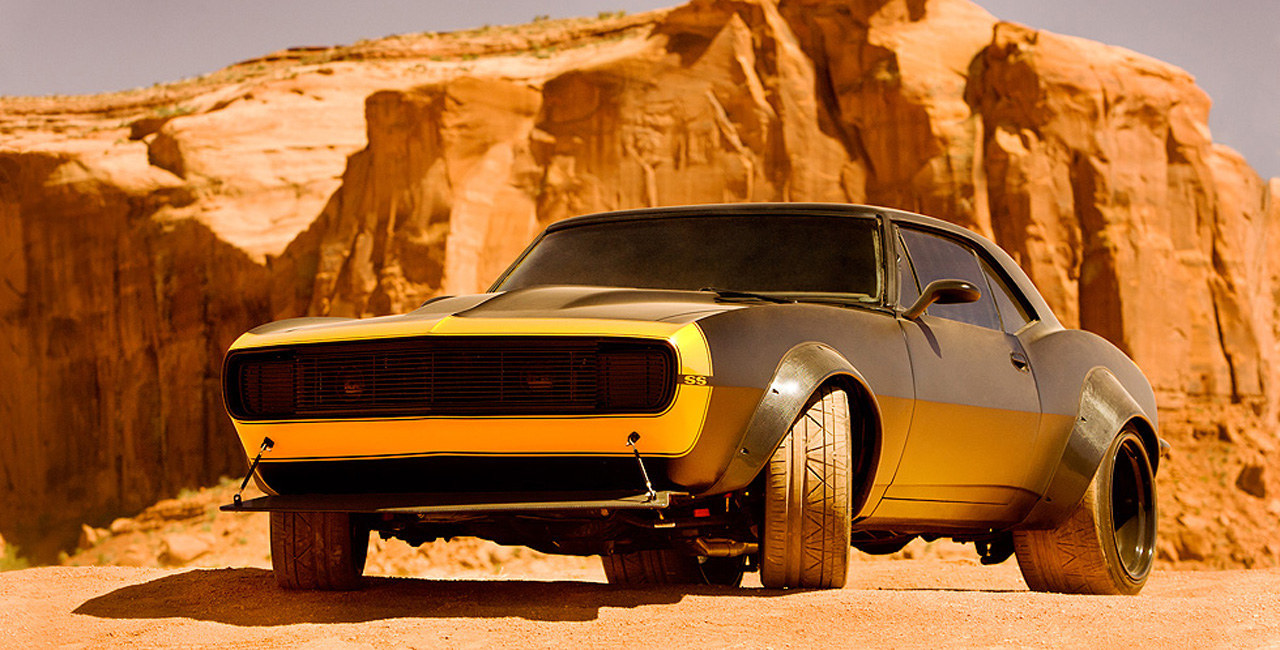
It looks like the wait may be over now, after shots of the 2014 Camaro Concept at the shooting site were released. The new Camaro is a strong modern equivalent to the Bumblebee of old times which we’ve already been shown earlier. A serious reimagination of the Camaro was done, and the 2014 Concept could surely lead the way for the production model. With a very aggressively sculpted front end and piercing headlamps, the car looks ready to roll for Transformers 4.
Some of the other vehicles being used in the film include the C7 Corvette Stingray, Bugatti Veyron Grand Sport Vitesse, Lamborghini Aventador, Pagani Huayra and a Chevrolet Sonic Rally Racer.
According to reports, Lamborghini is set to put a cap on its 50th anniversary celebrations with the unveil of one last concept car at the Frankfurt Motor Show in September, which will closely preview the upcoming Gallardo replacement. The production version of the new two-seater, is set to go on sale in the UK during the second half of next year and will follow its predecessor in sharing key components, including a lightweight carbonfibre and aluminium spaceframe structure, with the replacement for the current Audi R8, due in 2015.
Rumours suggest that the Gallardo replacement will be called the Cabrera. In keeping with Lamborghini tradition, it refers to a line of Spanish bulls whose lineage can be traced to other famous breeds, including the Miura, Gallardo, Navarra and Veragua.
The Gallardo’s 5.2-liter V-10 will carry over, but with extensive revisions to deliver more power and fewer emissions. Peak output should come in at 592 horsepower, which in metric figures converts to about 600 horses. This means the new car is likely to be an LP 600-4. Note, an engine with these very specs was previewed in the Egoista concept. The engine will be mated to a standard six-speed manual gearbox, while the new seven-speed dual-clutch automatic from the R8 will be available as an option, replacing the current Gallardo’s six-speed automated manual ’box. Lamborghini plans on introducing a rear-wheel drive model as well, apart from the usual range of four-wheel drive variants.
The Gallardo replacement’s design is expected to be a blend of the Sesto Elemento and Egoista concepts. The new car, which carries the internal codename LP724, is said to have grown marginally in length to almost 4500mm, or 16mm longer than its predecessor, with width and height remaining close to the 1900mm and 1165mm respectively of the Gallardo. Together with an edgy new exterior, the Gallardo replacement is set to adopt a new interior layout that, with a slight increase in wheelbase over its predecessor at 2600mm, will offer added levels of accommodation.
Lamborghini had initially planned to base its new car around a contemporary carbonfibre monocoque similar to that of the Aventador, however parent compant Audi has dictated them to follow a more conservative route, keeping in mind the second-generation R8.
Since the R8’s conception, both cars have shared a modular spacefame. This allows them to share vital components, and will therefore continue to be the case. A new, lightweight carbonfibre and aluminium structure weighing 198kg will be used by the Audi. That is 24kg less than the all-aluminium structure used by the current R8.
The new spaceframe structure will be clothed in a body that uses a combination of carbonfibre-reinforced plastic and aluminium panels. The move is aimed at bringing the new mid-engined Lamborghini to the scales at less than 1500kg — the official kerb weight of today’s four-wheel-drive Gallardo.
We saw some pretty high-profile reveals along with an array of launches by Chinese manufacturers over the weekend in Shanghai. Here’s our pick of the best on display.
MG CS Concept
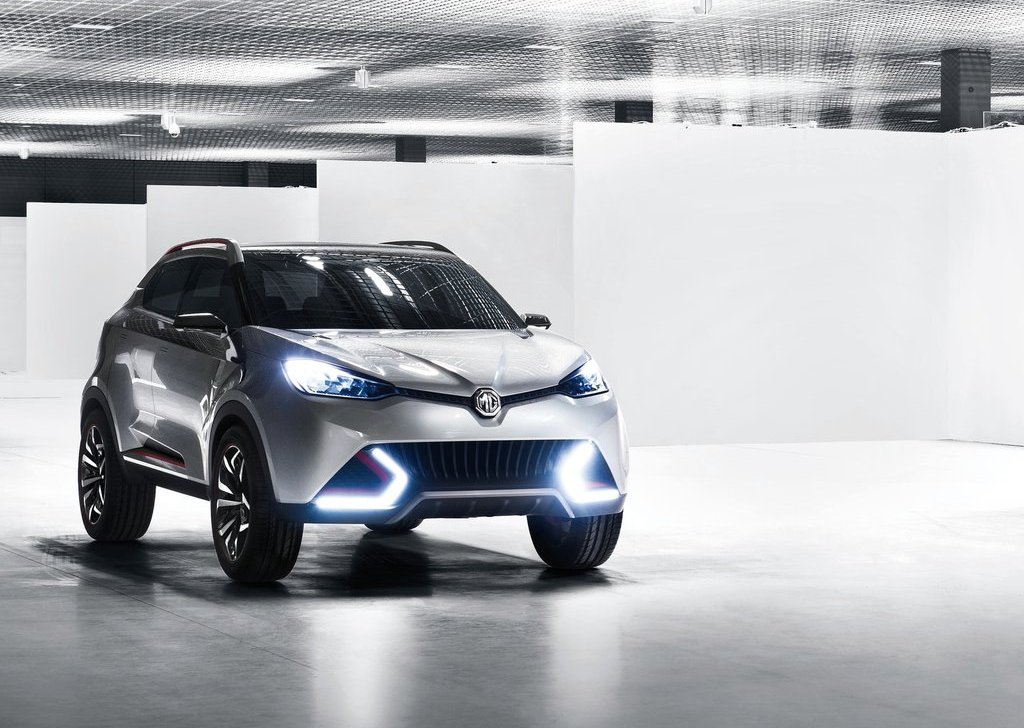
One of the bigger stars of the Shanghai Motor Show was also one of the biggest surprises. MG unveiled its CS Concept SUV, adding to the competition in the compact SUV segment. However, the production model is at least 2 years away, and in all probability won’t look as flashy as the concept. Still, we like MG’s new direction, and can’t wait for more details about the CS to be released.
Nissan Friend-Me Concept
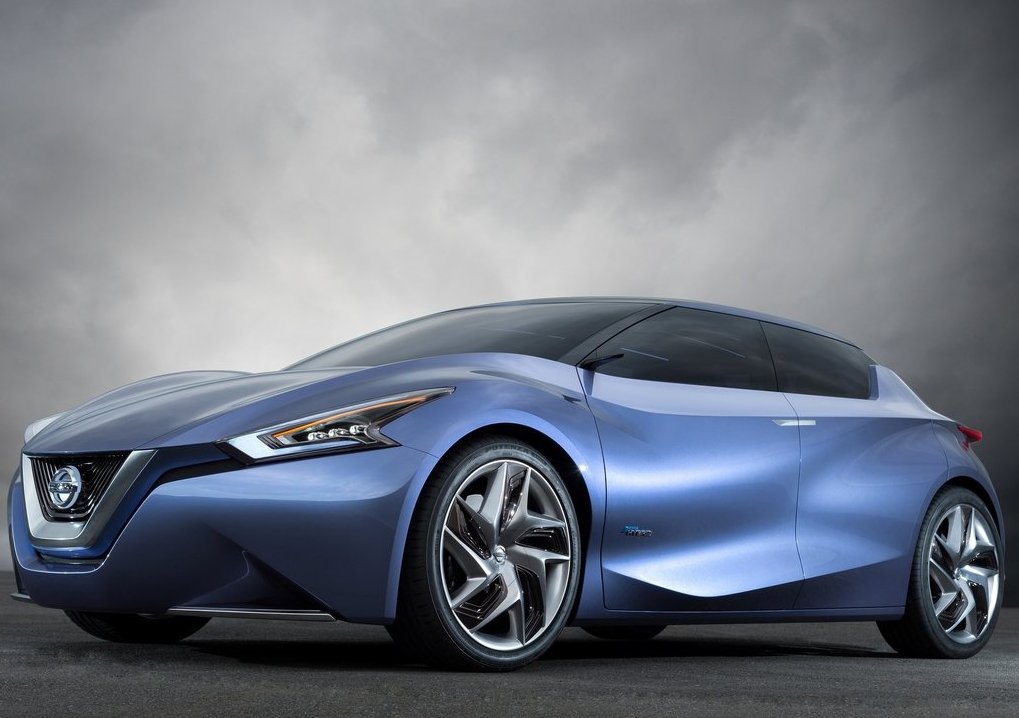
When it comes to identifying future trends, and thinking ahead, few automotive manufacturers have the foresight that Nissan does. For this reason, the long and unconventionally designed 4-door sedan caught everyone’s eye with its sharp styling. Knowing Nissan, there is a good chance that the ‘Friend-Me’ may actually reach the production stage, though we’re not sure how long the name will stick for.
Buick Riviera Concept
Sharing its name with the famous Buick, last seen in 1999, the Riviera Concept is said to be a preview to Buick’s future styling direction. The Riviera Concept incorporates some beautiful flowing lines over its long shell, and shows-off new versions of the marque’s classic waterfall grille design. It’s powered by Buick’s dual-mode wireless plug-in hybrid electric vehicle propulsion system, which allows the car to be charged wirelessly just by driving atop a special charging mat on the ground, the car’s powertrain is just as futuristic as its exterior shape. This one’s for the future.
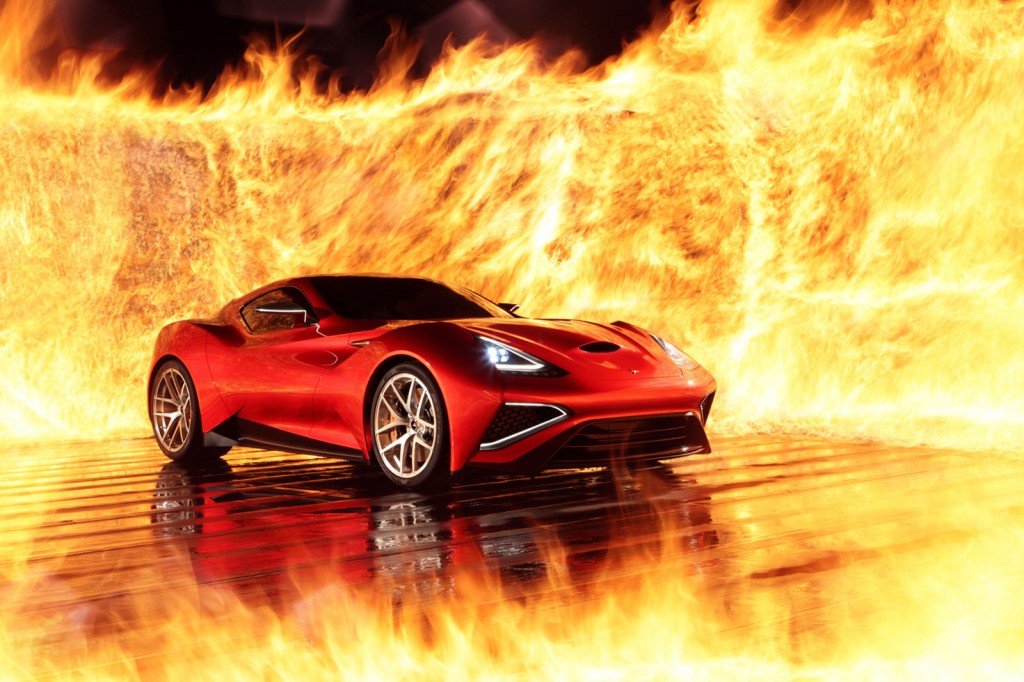
Icona Vulcano
One of the standouts of the show was the stunning Vulcano concept from Italian-owned but Shanghai-based design firm Icona. Designed by a former Bertone employer, and engineered by a former Scuderia Ferrari engineer, the Vulcano was mobbed at the Shanghai Motor Show. Originally conceived as a one-off example to showcase Icona’s styling prowess, it has now been announced that 5 total Vulcanos will be built. Reminiscent of the Lexus LFA as well as the Ferrari F12 Berlinetta, the Vulcano has an option of two powertrains, 870 or 950 bhp and goes from 0-97 kmph in 2.9 or 3.0 seconds depending on the powertrain. It also boasts a top speed of 217 mph.
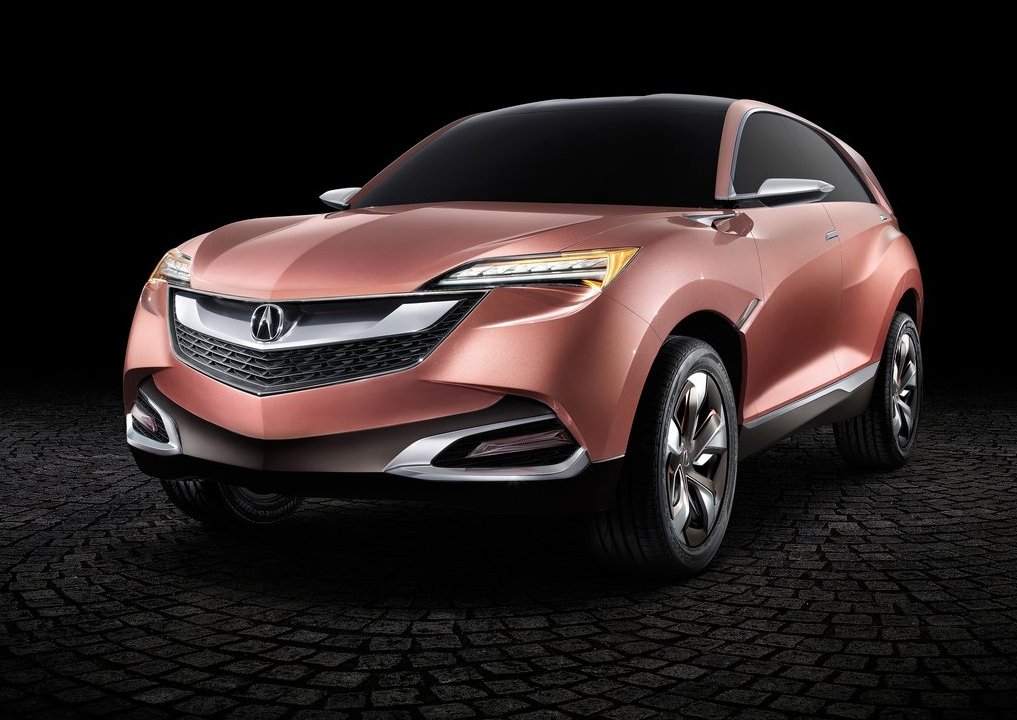
Acura SUV-X Concept
The SUV-X Concept from Acura is another in a long line of aspirants in the compact SUV segment. Acuras have known to be packed with tons of technology on the inside, but have never really turned heads on the streets. The SUV-X Concept deviates from the trend, with bold and eyecatching styling, pleasantly surprising all of us. Acura says that the SUV-X is the precursor to a production offering from the brand in China that will come in about three years.
Ford Escort Concept
The Escort is back!! Well, as a concept for now. At the very interesting reveal, Ford said, “Customers in China described seeking a vehicle that is stylish – but not one that is arrogant or pretentious” and that’s what it believes the new Escort will be about. Always known for being excellent as an affordably daily driver, but not one to set benchmarks in performance or design, the new Escort Concept’s minimal design is contemporary and appealing on the whole. This car will probably be launched only in the Chinese market, and is expected to create quite a stir when it does.
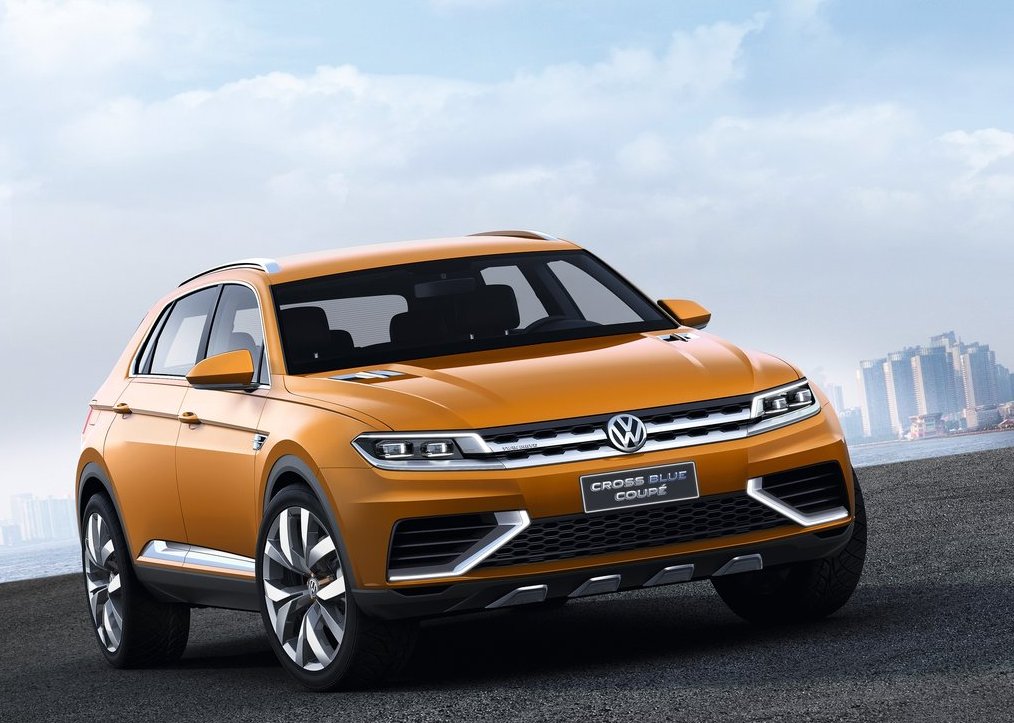
Volkswagen CrossBlue Coupé Concept
This sportier member of the CrossBlue family sits in between the Tiguan and the Touareg in size and has all the hallmarks of becoming another success for the brand. Featuring a high-tech drivetrain that consists of twin electric motors, one up front and one at the rear, powered by a 9.8-kWh lithium-ion battery, the Concept also has a 295 bhp, direct-injection, gasoline-burning V6 under the hood. These three powerhouses put out a total of 415 bhp. Also, atleast in theory, the Concept should be able to travel 21 miles on electricity alone and we think it looks pretty nice as well. What’s not to like?
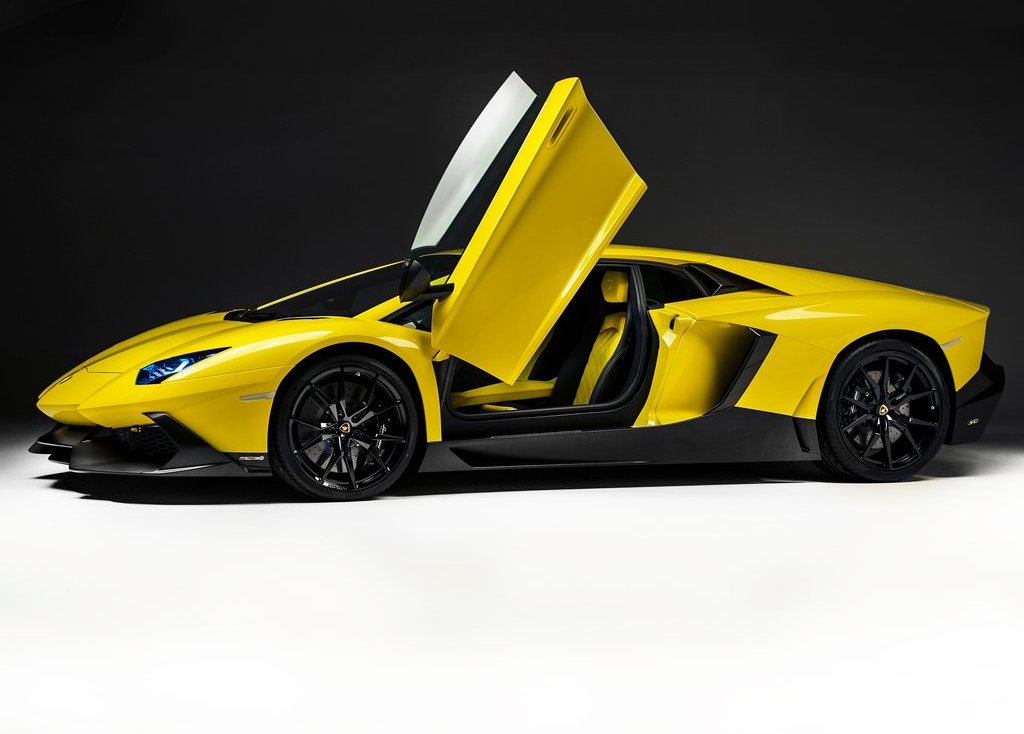
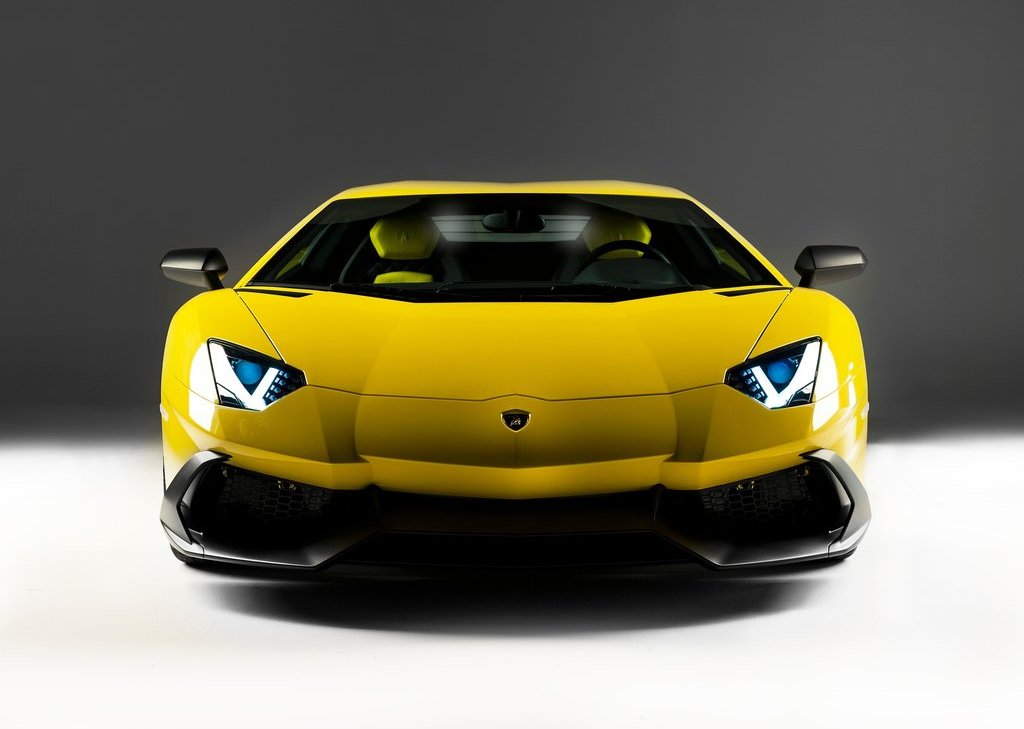
Lamborghini Aventador LP 720-4 50° Anniversario
Lamborghini unveiled the Aventador Anniversario at Shanghai as part of its 50 year celebrations. Offering the same engine as the base Aventador, it manages to produce 720 bhp instead of 700 due to different tuning, and features a couple of external upgrades. Read more about it here.
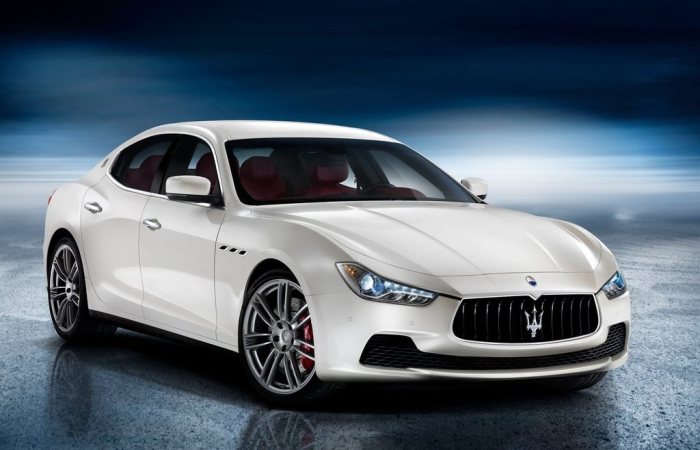
Maserati Ghibli
The Ghibli name is back in the form of an entry-level luxury sedan as Maserati hopes to expand its sales figures to compete with the likes of BMW, Audi and Jaguar. The Ghibli is the first Maserati in history to have a diesel engine as an option, with a turbocharged 3.0-litre V6. Read more about it here.
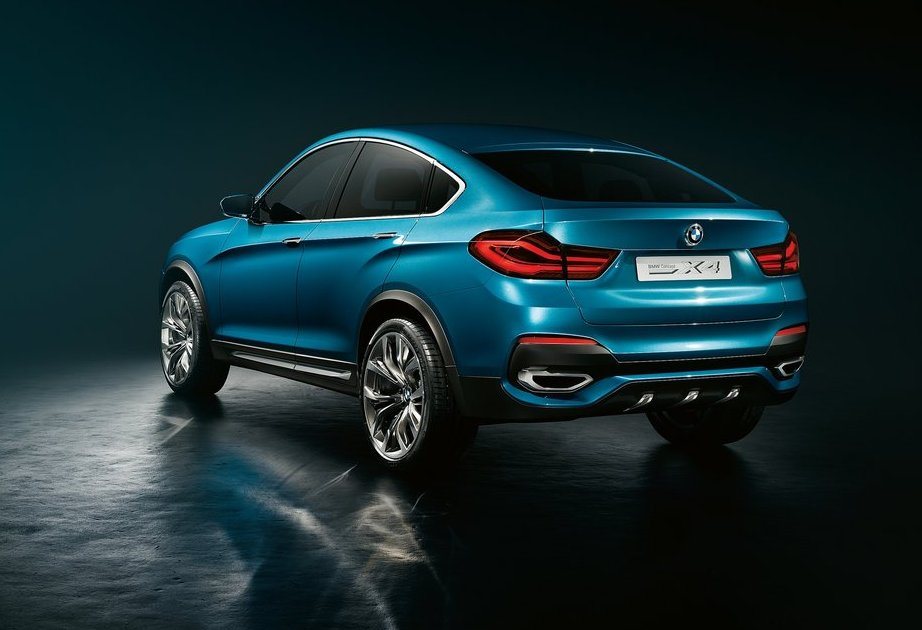
BMW X4 Concept
Yet another addition to the compact SUV segment, BMW unveiled the baby X6 or the X4 concept at Shanghai. BMW claims that the X4 is a preview to what the entire X range will look like in the coming years. Read more about it here.
Lamborghini is 50 years old this year, and is launching a couple of new models as part of the birthday celebrations. Aside from the radically designed Veneno, new versions of the Gallardo and the Aventador are on their way. Both will also be on display at the ongoing Shanghai Motor Show.
The Aventador LP 720-4 50° Anniversario, squeezes about 20 extra bhp from the 6.2-litre V12 engine of the base Aventador courtesy of different engine tuning. Apart from this, aggressive aerodynamic changes can be seen with an extended front splitter and a much larger rear diffuser (2009 Murcielago SV, anyone?). Lamborghini claims these aero changes have made it 50% more aerodynamic than the base LP 700-4 Aventador. It comes with the same wheels as the Aventador Roadster, 20″ in the front, 21″ in the back, all in glossy black.
The colour on the Aventador LP 720-4 50° Anniversario is inspired by the Lamborghini Miura; Lamborghini says yellow has been its most successful colour. Standard is a two-tone paint job with a bright yellow Giallo Maggio covering most of the car, and lower body panels painted matte black. However customers can have their car in any colour they want, courtesy of Lamborghini’s extensive personalisation programme.
The base Aventador LP 700-4 was launched in 2011 and a convertible roadster went on sale earlier this year. The Aventador is a mid-engine, all wheel drive supercar with a single clutch 7-speed semi-automatic transmission. It can hit a top speed of 217 mph (349 kmph) and can go from 0-100 kmph in 2.9 seconds.
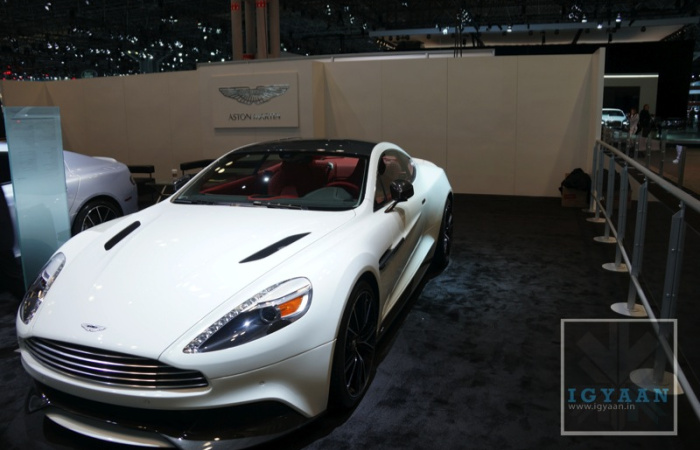
Walk up to the Aston Martin Vanquish, and at first glance you could almost certainly justify about $100,000 of the $280,000 base price. Aston Martin has been criticized quite a bit in recent years over stubborn design policies. People don’t like how all Aston Martins have looked pretty much the same for a few decades, save for a headlight here and a spoiler there. But does it really matter, when they look like this? Imagine what you sound like when you say, “I’m sorry, I’m sick of the stunning lines on every car”.
The Vanquish, seen here at the New York Auto Show, is absolutely drop dead gorgeous. Its curvier than the DBS, and features some very smooth flowing lines from front to back. The body is now a concoction of aluminium, magnesium and exposed carbon fiber bits for added muscle. It takes some evident design cues from the biggest brother in the Aston Martin lineup, the One-77, and I’m not complaining. It oozes elegance, has tons of character and manages to seek attention in the classiest way possible.
It manages to keep up on the asphalt as well. The 5.9 litre V12 engine produces 565 BHP and has a lot of improvements – variable valve timing at intake and exhaust, improved intake manifold, larger throttle body – which have lowered peak torque deeper in to the rev range. This produces some serious pull coming out of corners leaving quite a few pulses racing. The double wishbone suspension and monotube adaptive adjustable dampers allow some compliance in normal and sport mode, but track mode may definitely cause the small issue of a slipped disc. Carbon ceramic Brembo brakes are standard, and get the job done, and well.
The Aston Martin Vanquish is not as expensive as its V12 competitors, like the Lamborghini Aventador and the Ferrari F12 Berlinetta. Its also not nearly as powerful, with the Lambo grinding out 691 BHP and the F12 a massive 730 BHP. But then again, the Vanquish isn’t going after the same target demographic either. It comes with heated seats, a 13-speaker 1000 watt Bang & Olufsen sound system, and a very functional infotainment system with haptic feedback buttons. The interior is trimmed with Fine Luxmil and semi-aniline leather and Alcantara, all hand stitched. Its aimed at people who want a comfortable grand tourer, which they can take on road trips through Europe, and maybe to the supermarket on the weekends.
Not many people buy Aston Martins because of superb performance or exclusivity. They buy them because whenever they peep out of their bedroom windows to take a look at the weather, and they see the silhouette of their Aston Martin glowing in the setting sun’s orange light, it puts a big fat smile on their faces.
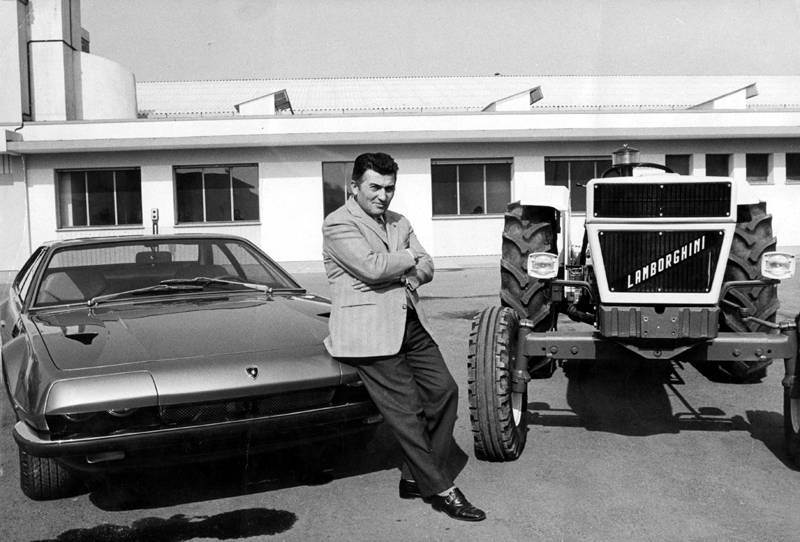
Back in the 50s, there lived a man in Italy, who had a very successful tractor business. His name was Ferruccio Lamborghini, and like any other wealthy Italian industrialist, he had a penchant for fast, expensive cars. The proud owner of a vast and stunning collection including a Mercedes Benz 300 SL and a Jaguar E-Type, he decided to gift himself the legendary Ferrari 250 GT. He liked it a lot but was also disappointed with the lack of refinement. Repeated trips to Maranello for maintenance added to his annoyance. Legend has it, that he was so frustrated with the gearbox in his 250 GT that he went to visit Enzo Ferrari personally to discuss the matter. In reply, the proud Modenan dismissed him, telling him to stick to tractors and to let him build the sports cars. At this point, he decided that there was nothing Ferrari could do which he couldn’t do better, and so began the tale of Automobili Lamborghini.
Today, Lamborghini is famous globally for producing some of the world’s fastest cars, very easy on the eyes and very heavy on the wallet. The current flagship model, the Aventador has quickly become one of the most desired cars in the world. A spectacle to see and a dream to drive, it boasts a 6.5 L V12 engine producing a mammoth 690 BHP. It goes from 0 to 100km/h in 2.9 seconds and using its pushrod-actuated double wishbone suspension, it can manoeuvre any corner without so much as breaking a sweat. The Aventador is named after a valiant bull, keeping with the long-standing Lamborghini tradition of associating itself with bullfighting. Dripping with character and typical Italian flair, it reeks of the identity Ferruccio Lamborghini worked so hard to build, right from the beginning.
The Miura, popularly known as the first supercar ever made, was truly an engineering marvel when it arrived in 1966. It looked like nothing anyone had seen before, and went faster than was thought possible. At the same time, the clutch was too heavy, the ride was unbearably stiff and it was easier to turn an 18-wheeler. Driving it would surely cause a case of arthritis, but none of it mattered one bit. Time stood still when a Miura drove by.
The Lamborghini Miura
Much of the same followed when the Countach was launched in 1974. Featuring a striking and revolutionary design, the Countach was the first production car to feature ‘scissor doors’, which have since then become a trademark for all flagship Lamborghinis. It was again, extremely uncomfortable to drive, but became an instant icon because of its outrageous design.
The Diablo, launched in 1990, was the first Lambo capable of exceeding 200mph and was a humongous hit, not only for its head-turning looks, but for record-breaking performance as well. Automotive engineers, race car drivers and car designers were equally in awe of the machine, which was the fastest car in production at the time.
But despite the uproar over the Countach & the Diablo, Lamborghini had been suffering from financial troubles for almost half its existence. In 1998 Audi acquired Lamborghini, and soon followed the asphalt hugging Murcielago. The ‘baby Lambo’ called the Gallardo was also launched soon after, and the two along with responsible management by Audi phenomenally turned the manufacturer’s fortunes, slowly achieving unprecedented sales figures.
The Murcielago with its big V12 engine was still plagued with the typical handling issues of all the big Lambos which came before it, but stayed true to their extraterrestrial performance figures, reaching a top speed of 340km/h. Calling it understated would be a bit of a stretch, with its low, wide stance and aerodynamically designed body. However, it seemed to lack the madness of the Countach and the Diablo. Much more refined, and engineered, it was a lot more civilised than its ancestors.
Rear, left to right: Miura, Countach Front, left to right: Murcielago, Aventador, Diablo
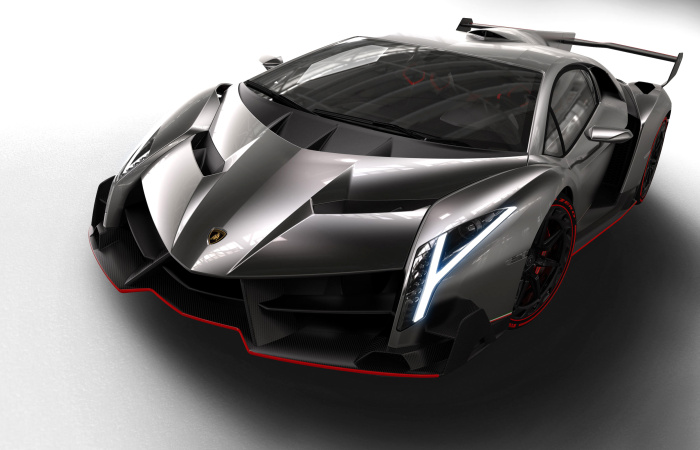
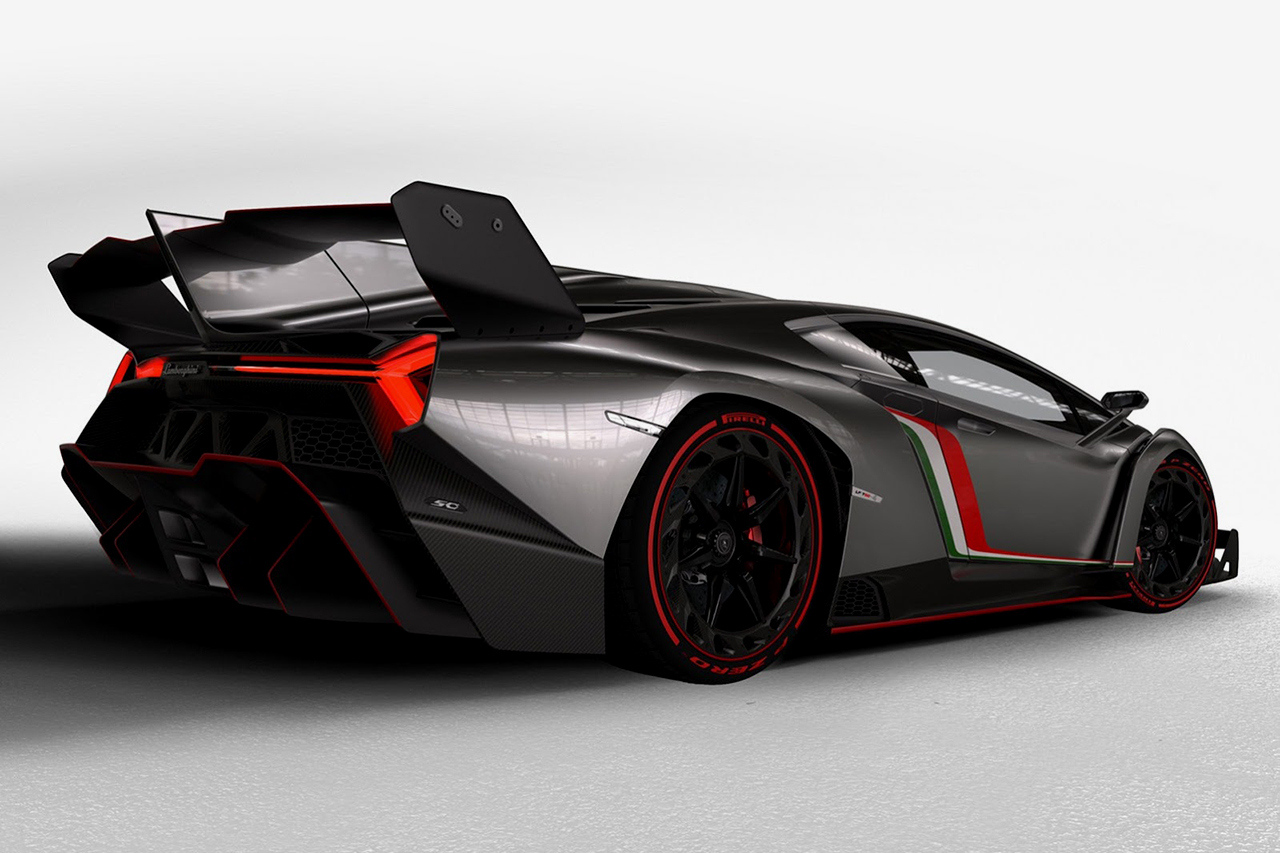
And then, there was one. In early March 2013, Lamborghini unveiled the Veneno, a limited edition hypercar which looks like Megatron on steroids. A grand total of 3 Venenos were produced for sale as part of the 50th year celebrations at Lamborghini, and all were sold by invitation for a jaw-dropping $ 4.6 million before the buyers had even seen the car.
The Lamborghini Veneno
Fanaticism of this sort comes as no surprise when you take a look at some of the other recent show cars, the fighter jet inspired Reventon & the lightest Lambo ever, the Sesto Elemento. Literally translating to ‘poison’, the 740 BHP Veneno has brought back the era of the poster car, and will surely grace the bedroom walls of 14 year old boys for years to come.
![Novitec tunes the Aventador to produce 969 hp [w/Video]](https://www.igyaan.in/wp-content/uploads/2013/07/Novitec-Torado-04.jpg)