Tag: buyout

  • Twitter Buys 900 IBM Patents

    Twitter has agreed to buy 900 patents from International Business Machines Corp. to gain access to new technology and build a defense against infringement suits.

    The deal came about a month after Twitter revealed that IBM had accused it of violating three of its patents related to advertising, “resource locators,” and discovery of contacts. Twitter was willing at that time to handle the situation outside of court, and it appears it went that way.

    A cross-licensing agreement will help safeguard Twitter against similar claims in the future. The most high profile exhibit of buying patents to curb future lawsuits would be Google’s purchase of Motorola Mobility.

    IBM is one of the industry’s largest research spenders and stockpilers of intellectual property, a consistent leader in US patent filings and the owner of some 41,000 patents. Twitter is following on the heels of Facebook, which itself faced similar claims before its own 2012 IPO. 

    Twitter is seeking to get more revenue from retailers and is trying to make it easier for users to shop via its 140-character messages.

  • BlackBerry Looking To Rope In Google, Cisco, SAP For Potential Sale

    BlackBerry Looking To Rope In Google, Cisco, SAP For Potential Sale

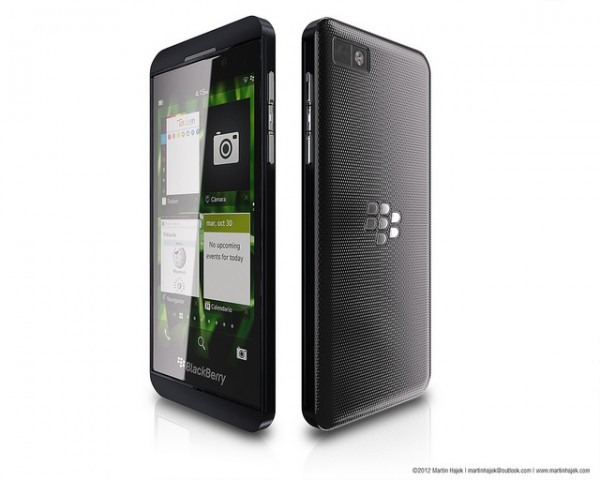
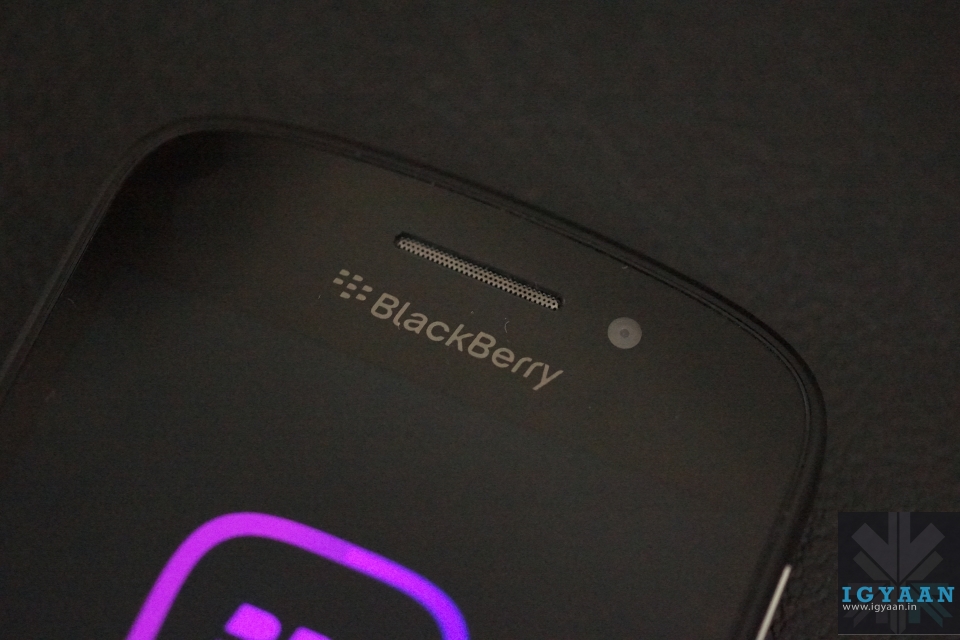
    Another round of big name organizations are reportedly interested in BlackBerry. According to a report in Reuters today, Cisco Systems, Google and SAP are all ‘in talks’ with BlackBerry and considering purchasing the companies assets, specifically its secure server network and patent portfolio.

    In addition, the report also notes that BlackBerry ‘has asked for preliminary expressions of interest from potential strategic buyers, which also include Intel Corp and Asian companies LG and Samsung.’ This is particularly interesting as Samsung has repeatedly declared they have no interest in the Waterloo-based company.

    A week ago BlackBerry announced a $4.7 billion bid from Toronto-based Fairfax Financial, but the clause still ‘entitled to go-shop’ for other potential offers. New York-based Cerberus, who apparently specializes in investing in troubled organizations, is nowhere close to closing a deal and ‘is aiming to sign a confidentiality agreement that would allow it to access BlackBerry’s private financial information.’

    The WSJ also reports that there’s another ‘distressed-investing firm’ interested in snatching up BlackBerry, but the ‘person familiar with the matter’ didn’t want to disclose the name. In addition, as previously rumoured, BlackBerry co-founder, Mike Lazaridis is considering a bid for the business.

    BlackBerry declined to comment on the potential investor, stating “We do not intend to disclose further developments with the respect to the process until we approve a specific transaction or otherwise conclude the review of strategic alternatives.”

  • Report : Beats Audio To Buy Out Remaining HTC Stake For $265 Million

    Report : Beats Audio To Buy Out Remaining HTC Stake For $265 Million

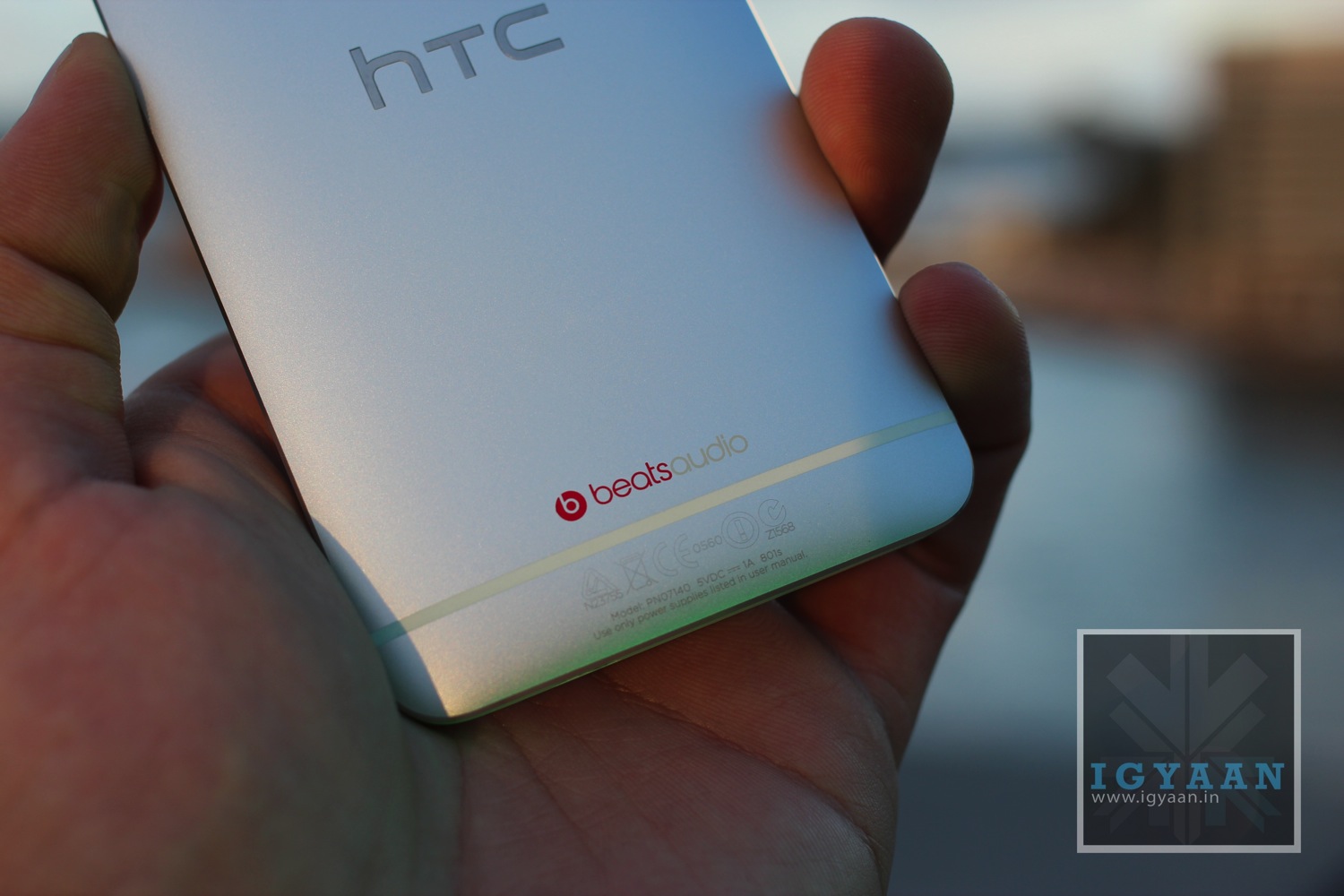
    Reports are coming in that HTC is indeed about to sell its stake back to Beats. In 2010, HTC owned 50 percent of Beats, before selling half last year for $150 million. The remaining 25 percent has increased in price considerably since then, as the new deal will close at $265 million.

    It seems that Beats has already taken on a new partner in the form of Carlyle Group, which is said to be investing $500 million into Beat’s expansion efforts.

    “We are confident that Beats will continue to drive innovation and growth in the premium audio accessory market, particularly as the proliferation of smart phones and tablets stimulate increased consumption of digital media,” Sandra Horbach, a managing director at Carlyle, said in a statement.

    Now that the partnership is ending, Beats is free to continue down the path of pushing its Beats audio technology into other products including in-car dashes, HP computers and – of course- its premium headphone line. For HTC, it means a pretty hefty cash infusion that can help the company can (hopefully) use to further facilitate growth and recovery after years of struggle. 

    Founded in 2006 by rapper Dr. Dre and Iovine, chairman of music label Interscope, Beats has come to dominate the market for pricey headphones. According to the NPD Group, Beats has grabbed more than 60 percent of the U.S. market for headphones costing more than $100. Its signature headsets retail for between $200 and $400.

  • Dell’s $25 Billion Buyout To Take The Company Private Approved

    Dell’s $25 Billion Buyout To Take The Company Private Approved

    Michael Dell clinched shareholder approval on Thursday for his $25-billion offer to buy and take Dell Inc. private, ending months of conflict with the company’s largest investors and removing the uncertainty surrounding the world’s No. 3 PC maker.

    The results of a shareholder vote were just announced moments ago at a special meeting of shareholders in Round Rock, Texas. The final vote tallies haven’t been released yet, but CNBC, citing sources familiar with the result, have pegged the vote in favor at 65 percent to 35 percent. A final tally will be read out a little later, as the meeting is still under way.

    As AllThingsD reports, the final buyout price is $13.75 per share, and includes a 13 cent per share special dividend, for a total price of $13.88, or $24.9 billion. The deal also guarantees an eight cent per share quarterly dividend when Dell next reports earnings, in November.

    The path to victory was practically guaranteed today because Dell’s chief competitor, Carl Icahn, had backed out of his bid to take the company in another direction. Earlier this week, Icahn announced that he has abandoned plans to offer an alternative option to shareholders, saying that it would be “impossible” for him to win.

    In a statement on the vote, Michael Dell said that he was “pleased” with the shareholder vote, adding that the vote will now allow his company to move forward to “serve our customers.”

    [Via]

  • Microsoft Will Acquire Nokia for €5 billion

    Microsoft Will Acquire Nokia for €5 billion

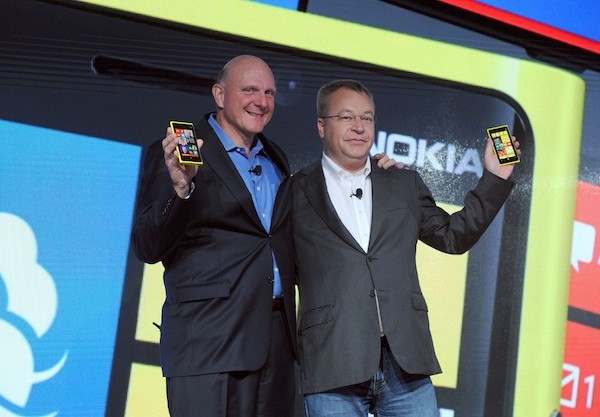
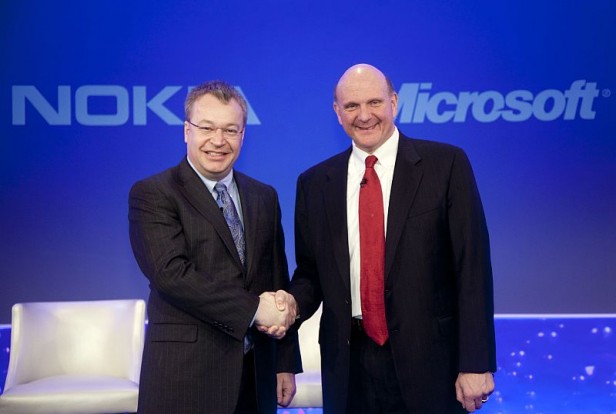
    Microsoft is set to buy Nokia’s Devices and Services unit, bringing the Lumia lineup under its own ownership. The move unites Windows Phone 8 with its biggest hardware supporter, giving the company the integrated mobile offering that it has been looking for with the Microsoft Surface and other similar devices. When the deal closes in the first quarter of 2014, Microsoft will pay 3.79 billion Euros to Nokia, plus another 1.65 billion Euros for its portfolio of patents. 

    Microsoft hopes that acquiring the largest Windows Phone manufacturer will speed up growth of the operating system that has yet to see commercial acceptance like similar platforms i.e. Android.

    “It’s a bold step into the future – a win-win for employees, shareholders and consumers of both companies. Bringing these great teams together will accelerate Microsoft’s share and profits in phones, and strengthen the overall opportunities for both Microsoft and our partners across our entire family of devices and services.”- Microsoft CEO, Steve Ballmer.

    According to the press release from Nokia, about 32,000 Nokia employees will migrate to Microsoft on the completion of the deal. The release further adds that Nokia is assigning its long-term patent licensing agreement with Qualcomm along with other patents to Microsoft.

    microsoft to buy nokia

    Microsoft also announced that it has selected Finland as the home for a new data center that will serve its  consumers in Europe. The company also said it would invest more than a quarter-billion dollars in capital and operations of the new data center over the next few years, with the potential for further expansion over time. 

  • BlackBerry Creates “Special Committee”, Will Consider Sale

    BlackBerry Creates “Special Committee”, Will Consider Sale

    Looks like the rumours from last week were true about BlackBerry potentially going up for sale. The company has announced this morning that the Board of Directors have created a ‘Special Committee’ to “explore strategic alternatives” that could include ‘possible joint ventures, strategic partnerships or alliances, a sale of the Company or other possible transactions.”

    According to the press release the Special Committee will be chaired by Timothy Dattels, plus include Barbara Stymiest, Thorsten Heins, Richard Lynch and Bert Nordberg. Leading the “Exploration of Strategic Alternatives” process will be JP Morgan Securities as its financial advisor, Skadden, Arps, Slate, Meagher & Flom LLP and Torys LLP are serving legal advisors.

    Timothy Dattels, Chairman of BlackBerry’s Special Committee of the Board, stated “Given the importance and strength of our technology, and the evolving industry and competitive landscape, we believe that now is the right time to explore strategic alternatives.”

    This isn’t the first time we’ve heard of BlackBerry investigating its options in an increasingly-competitive smartphone market — in early 2012, the company reportedly hired Goldman Sachs to evaluate its options, and last June the company was reportedly investigating the selloff of its handset business.

    Of course, a lot has happened since last year — BlackBerry 10 finally launched in 2013, but so far the new OS hasn’t stopped the bleeding for the formerly-dominant company.

    [Via]

  • Report : Microsoft Was Close To Acquiring Nokia But Talks Broke Down

    Report : Microsoft Was Close To Acquiring Nokia But Talks Broke Down

    Technology pundits have long speculated that, one day, Microsoft would buy its way into manufacturing of its own mobile phones. Apparently that day came a lot closer to fruition than people had thought.

    Microsoft’s acquisition of Nokia’s mobile phone business – the deal you probably assumed would happen sooner or later – has been scuppered before talks were even made public, according to a new report.

    On Wednesday, the Wall Street Journal wrote that Microsoft has been engaged in “advanced talks” to snap up the Finnish mobile maker, but that those discussions have recently broken down and are not likely to resume.

    The WSJ also adds that both companies were close to an oral agreement with Microsoft purchasing the device division of Nokia, using some of Redmond’s reported $66 billion held in off-shore businesses. That method would have let Microsoft avoid a hefty tax penalty for purchasing the massive phone maker.

    microsoft

    The price was reportedly too high in Microsoft’s reckoning and the software giant was understood to be concerned by Nokia’s inability to mount a serious challenge to the likes of Apple and Samsung in the smartphone business. This may sound a little rich coming from Microsoft, but the addition of HTC to the ranks of top class smartphone makers and the recent return to form of Sony and BlackBerry has made Nokia an outside bet in the smartphone race.

    Nokia’s smartphones exclusively use Microsoft Windows Phone software, under a deal the two companies struck two years ago.

    [Via]

  • Yahoo Acquires Mobile News Start-Up Summly

    Yahoo Acquires Mobile News Start-Up Summly

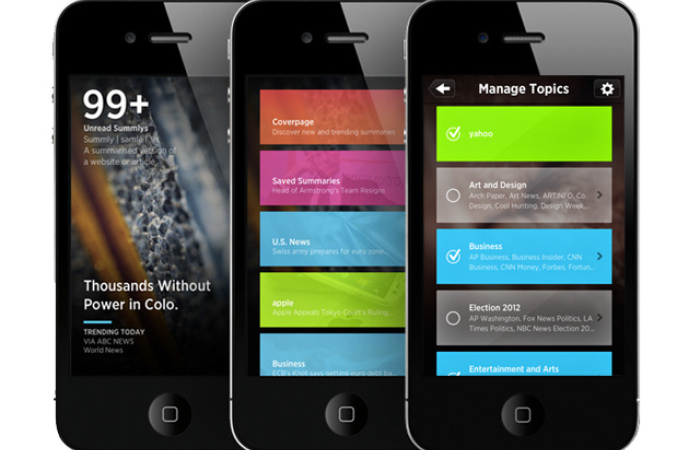
    A London teenager has sold a mobile app he first designed in his bedroom for between £20 million and £40 million.

    Nick D’Aloisio, 17, said he would probably buy a new computer and trainers after Yahoo bought his Summly software for an undisclosed sum.

    Yahoo said today on its blog that Nick D’Aloisio  will join Yahoo along with the rest of his team.

    The free iPhone app automatically boils down lengthy news stories and features to make them more “user friendly” for a mobile screen.

    Chief Executive Officer Marissa Mayer is focusing Yahoo on providing Web services that are customized for individual users, and aims to add engineers by buying small technology startups, she said on a conference call last year. Yahoo has acquired at least six such teams — including Jybe Inc., Stamped Inc., OntheAir, Snip.it and Alike — since Mayer took over in July.

    “Most articles and Web pages were formatted for browsing with mouse clicks,” Yahoo said on the blog. “The ability to skim them on a phone or a tablet can be a real challenge. We want easier ways to identify what’s important to us.”

    Mayer has said she sees the company building sites and technologies that are daily habits for consumers, such as checking e-mail and stock tickers. In January, she said she’s focused on technology that will personalize content from the Web and deliver it to people on their handheld devices.

    “We think about how do we take the Internet and order it for you,” Mayer said. Yahoo intends to be “a feed of information that is ordered, the Web is ordered for you and is also on your mobile phone.”

    [Via Bloomberg]

  • Apple Acquires WiFiSLAM Indoor Location Tech Startup

    Apple Acquires WiFiSLAM Indoor Location Tech Startup

    The Wall Street Journal is reporting that Apple has acquired indoor mobile location positioning firm WiFiSLAM, in a deal worth somewhere in the neighborhood of $20 million.

    The Wall Street Journal‘s Jessica Lessin reports:

    “Apple has acquired indoor-GPS company WifiSLAM, a sign that the war over indoor mobile location services is heating up. Apple paid around $20 million for the Silicon Valley-based company, according to a person familiar with the matter who said the deal closed recently.


    The two-year-old startup has developed ways for mobile apps to detect a phone user’s location in a building using Wi-Fi signals. It has been offering the technology to application developers for indoor mapping and new types of retail and social networking apps.”

    Founded in 2010 by former Google engineering intern Joseph Huang and Jessica Tsoong, WifiSlam develops technology that allows mobile apps to find a person’s exact location inside a building by using wi-fi signals. Such tech has been alluring to brick-and-mortar retail organizations that wish to gain more location-based data on customers as they browse a store, not to mention museums, theme parks, malls, and convention centers.

    Apple could implement the positioning assets into its much maligned iOS Maps app as an answer to Google’s Indoor Maps initiative, which leverages crowdsourcing to deliver indoor location information for a number of sites worldwide.

    [Wall Street Journal]

  • Lenovo Interested In Buying RIM’s Hardware Division

    Lenovo Interested In Buying RIM’s Hardware Division

    lenovo

    RIM is about to release its latest BlackBerry 10 platform by next week. But even with this new development, the Canadian company is not off the hook when it comes to its market predicament. BlackBerry is a platform on the decline, and apart from BB10, RIM is thinking of ways to revitalize its business. Among the possibilities is licensing is operating system or even selling off its hardware division.

    Lenovo is reportedly mulling over a purchase of RIM’s traditionally-unprofitable hardware division as it determines how best to move into the international smartphone and tablet market.

    Lenovo is the world’s number two PC manufacturer, and although sales have been strong over the last few quarters, rocketing past Dell in market share, desktop and laptop sales are slowing in the wake of smartphones and tablet proliferation. Lenovo rose to be the number two smartphone maker in China in 2012, but it has a lot of work to do if it ever wants to be an international player.

    Analysts speculate that even if BlackBerry 10 proves a success for the company — which, if early indications are a bellwether, it likely will — RIM may choose to sell its hardware business anyway, focusing on its network and software assets. A partnership with a company like Lenovo or even Samsung, which was also rumoured to be interested in acquiring RIM at one point, could push the Waterloo-based outfit back into the black.

    On related news, RIM’s shares rose with the reports of Lenovo’s interest. The Toronto Stock Exchange-listed shares rose 3%. Still analysts say RIM is likely to wait until it launches BlackBerry 10 before seriously considering partnerships or asset sales.

    [Mobile Syrup]

  • HTC will Buy S3 Graphics as a dead investment, security for future Patent suits.

    HTC will Buy S3 Graphics as a dead investment, security for future Patent suits.

    HTC has assured that after a final assessment of the worth of S3 graphics the company will wrap up the buyout some time soon. The 270 patents that come into HTC portfolio will help the company fight off any legal issues that may arise in the future.

    The strong Patent portfolio may also scare potential competition and make them think twice before any other patent wars begin

    [Focus Taiwan]

  • Sony Ericsson split complete : Sony Mobile Communication is the new name

    Sony Ericsson split complete : Sony Mobile Communication is the new name

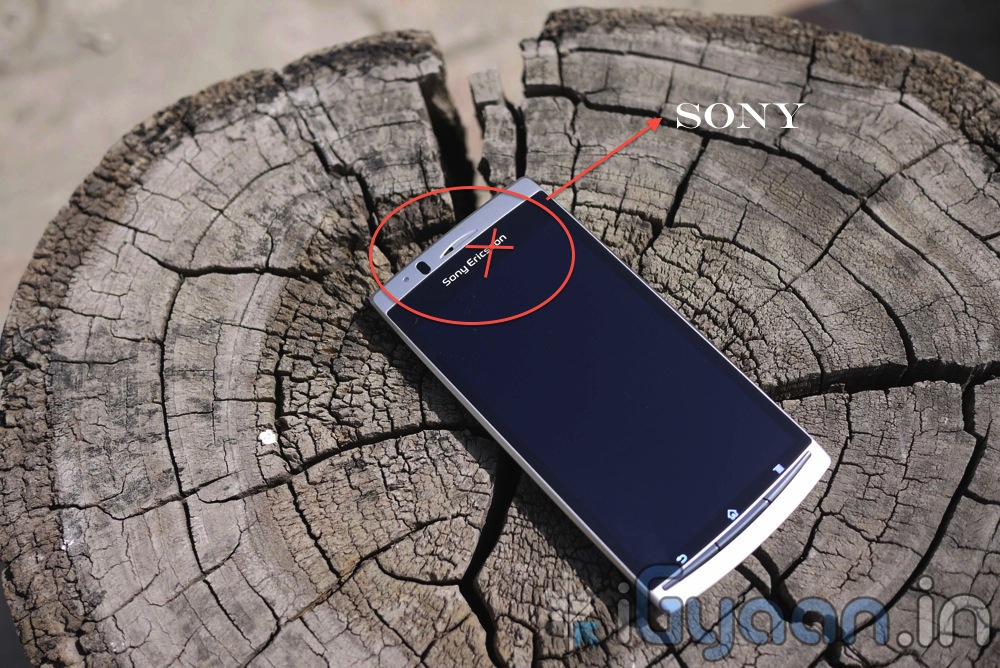
    The big split is finally, final. Sony and Ericsson have finally spilt up, to name the new company Sony Mobile Communications. Sony has finally taken over Telefonaktiebolaget LM Ericsson’s 50-percent stake in the pair’s former joint venture, reported to have cost €1.05 billion ($1.37 billion). The reports of this split started to appear in the last months of 2011.

    PRESS RELESE : 

    • The previously announced divestment of Ericsson’s share of Sony Ericsson to Sony, including the broad IP cross-licensing agreement, completed on February 15, 2012
    • Ericsson’s gain on the transaction will be approximately SEK 7.5 billion and reported as ‘Other operating income’

    Ericsson (NASDAQ:ERIC) has today completed the divestment of its 50 percent stake in Sony Ericsson Mobile Communications AB (“Sony Ericsson”), including the broad IP cross-licensing agreement, jointly announced by Sony Corporation (“Sony”) and Ericsson on October 27, 2011. This makes Sony Ericsson a wholly-owned subsidiary of Sony. The agreed cash consideration for the transaction is EUR 1.05 billion.

    Ericsson’s gain on the transaction will be approximately SEK 7.5 billion and will be reported in the first quarter result on April 25, 2012, as ‘Other operating income’ in the income statement.


    [via]

    [Sony]

  • US and EU give their approval to the Google Motorola Deal

    US and EU give their approval to the Google Motorola Deal

    Both the United States Justice Department and European regulators have given the Google Motorola deal their sign of approval. The proposed takeover that was decided mid 2011 had gaining concerns from interested parties, other android using manufacturers and some non related manufacturers as well. Major play for Motorola will give google a huge chunk of patents to play with in the fight ahead with companies like Apple. 

    The US department of Justice has clarified that the takeover /merger poses no real threat to competition and that it “will not hesitate to take appropriate enforcement action to stop any anticompetitive use of SEP (standard essential patent) rights.”

    More approvals are still needed from China, Israel and Taiwan, but, with the two superpowers out of the way, minorities may to really matter.

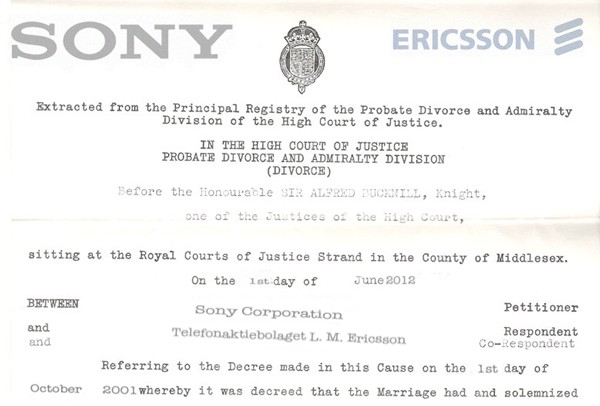
  • Sony and Ericsson literally get divorced, to become Sony in Mid 2012

    Sony and Ericsson literally get divorced, to become Sony in Mid 2012

    The court of MiddleSex  has announced a Divorce b/w Sony and Ericsson and the latter has till the mid of 2012 to clear out their stuff and vamoose. Sony Ericsson will be renamed Sony in mid 2012 as apart of a merger break up decided earlier this year. Sony Vice President Kristian Tear said that the company will have a “‘fierce” advertising campaign to push the brand back into the eyes of the consumer.

    [Times of India]

  • End Of Days: Sony Buys out stake from Sony Ericsson at €1.05 billion

    End Of Days: Sony Buys out stake from Sony Ericsson at €1.05 billion

    Rumors are all out, and put to an end. Sony has confirmed that it will buy out its stake from the JV of Sony Ericsson for a whopping €1.05 billion in exchange for its 50 percent. This will give Sony full ownership of the company soon to be rebranded worldwide. This will also enable the company to have a more systematic alignment with the arsenal of tablets and PCs it plans in the future.

    The buyout will also give IP cross-licensing agreement and ownership of “five essential patent families” to ensure they stay in the mobile phone business. The separation will be finalized in Jan 2012.

    [toggle title_open=”Press Release” title_closed=”Press Release” hide=”yes” border=”yes” style=”default” excerpt_length=”0″ read_more_text=”Read More” read_less_text=”Read Less” include_excerpt_html=”no”]Ericsson: Sony to acquire Ericsson’s share of Sony Ericsson

    October 27, 2011, 08:16 (CEST)

    Sony Ericsson to become a wholly-owned subsidiary of Sony and integrated into Sony’s broad platform of network-connected consumer electronics products
    The transaction also provides Sony with a broad IP cross-licensing agreement and ownership of five essential patent families
    Ericsson to receive EUR 1.05 billion cash payment
    Sony and Ericsson to create wireless connectivity initiative to drive connectivity across multiple platforms
    Ericsson (NASDAQ:ERIC) and Sony Corporation (“Sony”) today announced that Sony will acquire Ericsson’s 50 percent stake in Sony Ericsson Mobile Communications AB (“Sony Ericsson”), making the mobile handset business a wholly-owned subsidiary of Sony.

    The transaction gives Sony an opportunity to rapidly integrate smartphones into its broad array of network-connected consumer electronics devices – including tablets, televisions and personal computers – for the benefit of consumers and the growth of its business. The transaction also provides Sony with a broad intellectual property (IP) cross-licensing agreement covering all products and services of Sony as well as ownership of five essential patent families relating to wireless handset technology.

    As part of the transaction, Ericsson will receive a cash consideration of EUR 1.05 billion.

    During the past ten years the mobile market has shifted focus from simple mobile phones to rich smartphones that include access to internet services and content. The transaction is a logical strategic step that takes into account the nature of this evolution and its impact on the marketplace.

    This means that the synergies for Ericsson in having both a world leading technology and telecoms services portfolio and a handset operation are decreasing. Today Ericsson’s focus is on the global wireless market as a whole; how wireless connectivity can benefit people, business and society beyond just phones. Consistent with that mission, by setting up a wireless connectivity initiative, Ericsson and Sony will work to drive and develop the market’s adoption of connectivity across multiple platforms.

    “This acquisition makes sense for Sony and Ericsson, and it will make the difference for consumers, who want to connect with content wherever they are, whenever they want. With a vibrant smartphone business and by gaining access to important strategic IP, notably a broad cross-license agreement, our four-screen strategy is in place. We can more rapidly and more widely offer consumers smartphones, laptops, tablets and televisions that seamlessly connect with one another and open up new worlds of online entertainment. This includes Sony’s own acclaimed network services, like the PlayStation Network and Sony Entertainment Network,” said Sir Howard Stringer, Sony’s Chairman, Chief Executive Officer and President. Mr Stringer also noted that the acquisition will afford Sony operational efficiencies in engineering, network development and marketing, among other areas. “We can help people enjoy all our content – from movies to music and games – through our many devices, in a way no one else can.”

    “Ten years ago when we formed the joint venture, thereby combining Sony’s consumer products knowledge with Ericsson’s telecommunication technology expertise, it was a perfect match to drive the development of feature phones. Today we take an equally logical step as Sony acquires our stake in Sony Ericsson and makes it a part of its broad range of consumer devices. We will now enhance our focus on enabling connectivity for all devices, using our R&D and industry leading patent portfolio to realize a truly connected world” said Hans Vestberg, President and CEO of Ericsson.

    When Sony Ericsson started its operations on October 1, 2001, it combined the unprofitable handset operations from Ericsson and Sony. Following a successful turnaround the company has become a market leader in the development of feature phones by integrating Sony’s strong consumer products knowledge and Ericsson’s telecommunications technology leadership. The WalkmanTM phone and Cyber-shotTM phone are well known examples.

    With the successful introduction of the P1 in 2007, Sony Ericsson early on established itself in the smartphone segment. More recently, the company has successfully made the transition from feature phones to Android-based Xperia(TM) smartphones. By the end of the third quarter of 2011, Sony Ericsson held a market share of 11 percent (by value) in the Android phone market, representing 80 percent of the company’s third quarter sales. During its ten years in operation Sony Ericsson has generated approximately EUR 1.5 billion of profit and paid dividends totalling approximately EUR 1.9 billion to its parent companies. Prominent models include “XperiaTM arc” and “XperiaTM mini” which received 2011 EISA Awards, while recent notable additions to the lineup include “XperiaTM PLAY” and “XperiaTM arc S”.

    The transaction, which has been approved by appropriate decision-making bodies of both companies, is expected to close in January 2012, subject to customary closing conditions, including regulatory approvals.

    Ericsson has accounted for its 50 percent share in Sony Ericsson according to the equity method. Following completion of the transaction, Ericsson will have no outstanding guarantees relating to Sony Ericsson and will no longer account for Sony Ericsson as an investment on balance sheet. The transaction will result in a positive capital gain for Ericsson which will be defined after closing of the transaction.

    SEB Enskilda is acting as Ericsson’s sole financial advisor in the transaction.[/toggle]
iGyaan Network
Privacy Overview

This website uses cookies so that we can provide you with the best user experience possible. Cookie information is stored in your browser and performs functions such as recognising you when you return to our website and helping our team to understand which sections of the website you find most interesting and useful.