Tag: car

  • The Gecko Nano Pad

    The Gecko Nano Pad


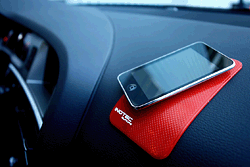
    The Nano Pad is a hand-sized pad that makes use of nanotechnology to create a vacuum system onto which cellphones and other devices stick. One can put it on the car dashboard to hold iPods, mobiles, PDAs, MP3 players, pens, coins or even reading glasses. The pad forms a vacuum seal “like a gecko’s foot”, making your cellphone, camera or other small gadgets “hands-free” while you are driving or busy with something else. The Nano-pad only comes in one size but will stick by being placed on any part of a hard, flat surface. It comes in a variety of colours and can be used indoors as well as in your car. It is said to be heat and cold resistant so we shouldn’t face any issues leaving it in our cars in the Indian summer.


  • HINDUSTAN Motors launches the AMBASSADOR GRAND BS4!

    HINDUSTAN Motors launches the AMBASSADOR GRAND BS4!

    Hindustan Motors has launched the new Ambassador Grand, without much fanfare.

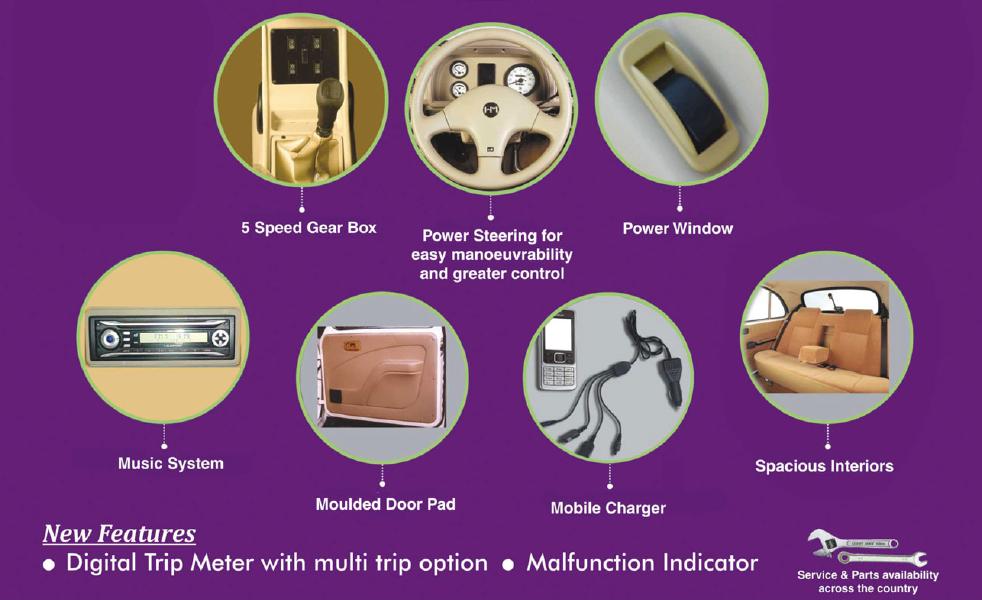
    Main Improvements include

    • A revamped 5 speed gearbox
    • Improved power Stering + windows
    • A new Moulded interior door panel
    • Free Mobile Phone Charger
    • Dual tone interiors
    • Side Indicator with Escutcheon
    • Rear view mirror
    • Headlamp with Clear glass
    • Body colour bumper
    • Full wheel hub cover
    • Soft touch door handle
    • Diamond cut tail lamp

    A whole set of new colors

    • Jet Black
    • Lunar Silver
    • Fire Brick Red
    • Oyster Blue
    • Ecru Beige
    • Crystal White

    All these features are still in the Year 2002-2004 era and don’t really step it up to the mark with current competition. The quality of controls and knows, spares and parts used is still cheap and hence, parts and repair/service of the car is extremely pocket friendly.

    Either way the Ambassador will always stay a classic with our hearts, and will hopefully survive in the tough years to come.


    Thanks : Vinay

    [BurnYourFuel]

  • Rolls – Royce makes an Electric Phantom – Wants your opinion on production!

    Rolls – Royce makes an Electric Phantom – Wants your opinion on production!

    Luxury car maker Rolls Royce has just announced an electric prototype of its flagship the “Phantom”. Possibly the best luxury car available today. The car dubbed 102EX is still a prototype and the company along with the CEO want people to join in a global debate to see  whether or not they should go into production. Primarily if Luxury and an electric motor can co-exist in harmony without denting the ego of the Phantom owner!

    Join the global debate at www.ElectricLuxury.com


    PR

    Rolls-Royce Motor Cars Confirms Electric Test Vehicle Project

    Goodwood UK

    Rolls-Royce Motor Cars today confirmed the development of 102EX, a one-off, fully electric powered Phantom, to debut at the Geneva Motor Show on 1 March 2011. The car will tour during 2011, serving as a test bed to gather a bank of research data which will be crucial in informing future decisions on alternative drive-trains for Rolls-Royce Motor Cars.

    “We have engineered the world’s first battery electric vehicle for the ultra-luxury segment,” said CEO Torsten Müller-Ötvös, speaking from the company’s headquarters in Goodwood. “With this vehicle, we begin an exploration into alternative drive-trains, seeking clarity on which alternative technologies may be suitable to drive Rolls-Royce motor cars of the future.”

    Rolls-Royce produces cars that represent the pinnacle in luxurious motoring for the world’s most discerning customers. With 102EX, also known as the Phantom Experimental Electric (EE), it is the company’s intention to carefully test the opinions and reactions to alternative drive-train options of a range of stakeholders including owners, enthusiasts, members of the public and the media.

    102EX will serve as a working test bed for a global tour that takes in Europe, the Middle East, Asia and North America. Through test drives, owners will be given the opportunity to experience an alternative drive-train technology and to feedback their experiences, thoughts and concerns directly to Rolls-Royce.

    While there are no plans to develop a production version, as one of the company’s EX models it will serve to begin a dialogue with existing owners and stakeholders, posing as well as answering questions of its audience.

    These include the car’s ability to deliver an acceptable range between re-charges and to operate in extreme weather conditions. But also to benchmark reliability and quality against customer expectations of the world’s pinnacle automotive brand.
    “I must be convinced that any alternative drive-train we choose for the future delivers an authentic Rolls-Royce experience,” added Müller-Ötvös. “It must be a technology that is right for our customers, our brand and which sets us on a sound footing for a sustainable future.”

    In preparation for the Geneva debut, Rolls-Royce will launch the website www.electricluxury.com this week, a portal to fuel a wider global debate seeking views on the question of electric luxury from media, VIPs and stakeholders. The site will also deliver regular updates of the car’s progress while on tour.

    Full technical specifications for 102EX, as well as images and b-roll will be published at 00:01 GMT on 1 March 2011.

  • Volkswagen’s XL1 concept plug-in diesel hybrid has 133 KMPL range

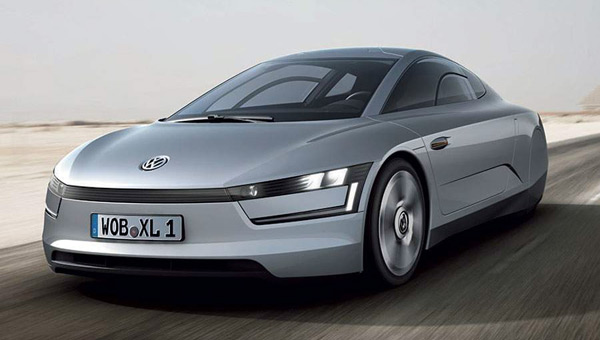
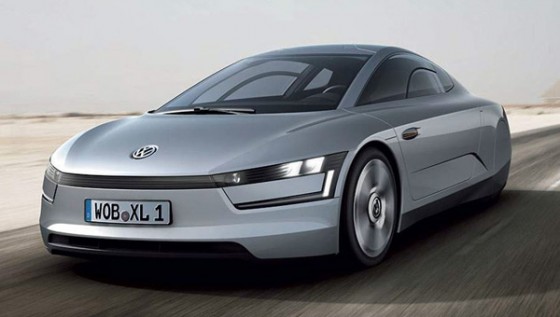
    Volkswagen’s XL1 plug in hybrid diesel (futuristic) concept car, is perfect for the Indian Consumer. If we all remember Maruti’s new advertising campaign “Deti kitna hai?”. This car delivers a whopping 133 KPML range – and that too on Diesel. Brilliant, isn’t it? It also, produces only 24g of CO2 per kilometer traveled.

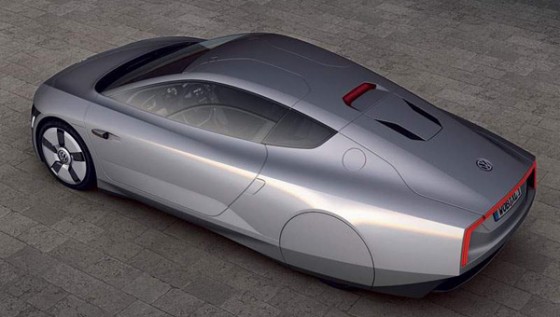
    Volkswagen has achieved a 795kg curb weight by using carbon fiber, magnesium, ceramics, and aluminum to shave down any excess weight from the XL1, Testing shows only 0.186 drag coefficient.
    Read the PRESS STATEMENT below to get a better feel.

    Volkswagen unveils the XL1 Super Efficient Vehicle in Qatar

    The new Volkswagen XL1 Super Efficient Vehicle (SEV) has been unveiled at the Qatar Motor Show. Pioneering construction techniques, an advanced plug-in hybrid drivetrain and innovative packaging all play a part in allowing the XL1 to return 313 mpg on the combined cycle while emitting 24 g/km of CO2 to set a new benchmark for vehicle efficiency.

    Powering the XL1 is a compact 800 cc TDI two-cylinder common rail diesel engine developing 48 PS. It’s linked to an electric motor producing 27 PS, resulting in a total of 75 PS – a modest output yet more than enough when the low kerb weight (795 kg) of the vehicle is taken into account.

    The TDI engine is linked to an electric motor and a seven-speed DSG gearbox with an automatic clutch mounted between each unit. The electric motor can either work independently of the TDI engine or in tandem when accelerating. In pure electric mode the XL1 can travel up to 35 km before the diesel engine cuts in. Accelerating from rest to 62 mph can be achieved in 11.9 seconds; the electronically limited top speed is 99 mph.

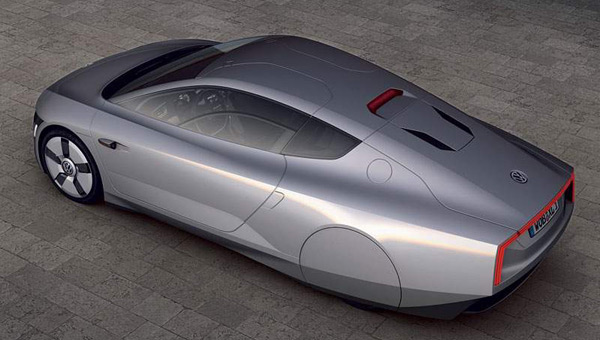
    In both its styling and packaging the XL1 draws on lessons learned from the 1-Litre car (2002) and the L1 concept (2009). The XL1 has evolved to feature staggered seating with the driver and passenger placed next to each other in a body structure made from advanced new materials providing immense strength yet weighing just 230 kg.

    To make such weight savings possible, and yet viable for series production, Volkswagen developed and patented a new system for the manufacture of the Carbon Fibre Reinforced Polymer (CFRP) parts on the car called the Resin Transfer Moulding (RTM) process.

    In total the XL1 weighs 795 kg. In addition to the body structure, the weight is accounted for by the drivetrain (227 kg), the running gear (153 kg), the interior including a pair of bucket seats (80 kg) and the electrical system (105 kg). In total just 23.2 per cent of the car (184 kg) is made out of either steel or iron.

    Further savings are made through the extensive use of lightweight materials including magnesium (wheels), ceramics (brake discs) and aluminium (dampers, steering system, brake calipers).

    The styling of the XL1 is borne out of functional requirements – easy access to the interior is granted via a pair of elegant scissor doors that hinge on the A-pillar while the profile of the car has been honed in the wind tunnel, the result being a remarkable coefficient of drag figure of 0.186. The XL1’s overall length (3,970 mm) and width (1,682 mm) are similar to those of a Volkswagen Polo yet its height (1,184 mm) is more akin to that of a Lamborghini Gallardo Spyder.

    Although the XL1 is still very much a concept, its unveiling marks the next step towards the birth of a new class of Super Efficient Vehicles, while the advent of a process such as RTM is a significant milestone.

    Source : Volkswagen
iGyaan Network
Privacy Overview

This website uses cookies so that we can provide you with the best user experience possible. Cookie information is stored in your browser and performs functions such as recognising you when you return to our website and helping our team to understand which sections of the website you find most interesting and useful.