
Tag: chipsets

  • Facebook Could Soon Design Its Own Chipsets

    Facebook Could Soon Design Its Own Chipsets

    It might be an understatement to say that Facebook has had a tumultuous month and a half. Ever since the Cambridge Analatyica data breach controversy broke out, Facebook has been under the cosh for its lackadaisical data privacy guidelines. However, not all is gloomy for the social media giant as the company seeks to build its own chipset designing team.

    According to a job listing on its corporate website, Facebook is looking to hire a manager to build an:

    End-to-end SoC/ASIC, firmware and driver development organization.

    The listing indicates that the process of building this team is still in its early stages. Interestingly, Facebook AI researcher Yann LeCun tweeted about some of the job postings as well.

    Facebook, just like a lot of other tech giants, appears to have taken this step to, in the future, reduce the cost of production and also have greater control over the final product. As Apple has proven time and again, optimisation of software and hardware can do wonders for a product.

    The social media company has joined a long list of companies moving away from outsourcing chipmaking tasks. According to a few people close to the matter, Facebook is building a team to design its own semiconductors to lower their dependence on chipmakers such as Intel Corp. and Qualcomm Inc. Apple started making its own chipsets in 2010 and now uses them across many of its major product lines like iPhones, iPads etc. Google as well, has developed its own artificial intelligence chip.

    Facebook has long been rumoured to be working on a bunch of smart speakers. The company will also launch the Oculus Go, a standalone VR headset which will run on a Qualcomm chipset. Building a team to design its own chipsets could be for the future of its hardware business.
  • Xiaomi to Join Hands With Leadcore to Offer Cheaper Handsets

    Xiaomi to Join Hands With Leadcore to Offer Cheaper Handsets

    Chinese technology powerhouse Xiaomi is all set to acquire chip maker Leadcore. The company might take a 51% stake in the company. It is expected that with the inclusion of these chips, the price of Redmi phones might go even further down.

    Xiaomi presently uses Qualcomm Snapdragon chipsets in its handsets. It’s the power of the snapdragon line of chipsets that has given a boost to Xiaomi to take on the world market. Its inclusion of high-quality equipments even on its lower-end devices has created a trust factor amongst its present and future customers.

    The company debuted with the Xiaomi Redmi line. But the spec-sheet of these devices helps them to take on other available devices with much higher price tag. Xiaomi has to be very cautious about the quality of its products. They should make sure that the Leadcore chipsets provide the same level of performance as they got from Snapdragon chipsets. Xiaomi will still be using Snapdragon chipsets for its devices that are higher up in the food chain.

    There is also a great news for the potential consumers with this development. With Leadcore chips under their belt, the Redmi line of devices can see a major price cut. The phones are expected to lose as much as Rs. 2,000 off their price tag. The device will then truly become disruptive for the market and may cause loads of worry for the competitors. The ones who will seriously feel the brunt will be local manufacturers like Micromax, Lava and others. Guess we just have to wait to  see another bloodbath, courtesy again by Xiaomi.

  • Samsung Details Exynos 5422, 5260 Chipsets

    Samsung Details Exynos 5422, 5260 Chipsets

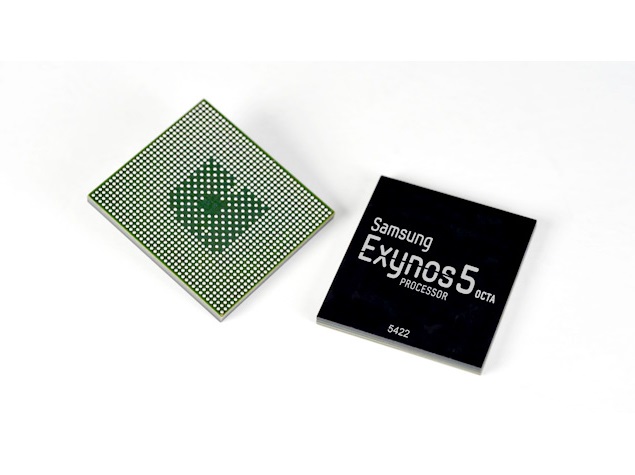
    Samsung is adding two new processors to its Exynos family. The Samsung Exynos 5422 is an updated, faster version of the Exynos 5420 octa-core processor, while the new Exynos 5260 is the company’s first hexa-core chip.

    The line struggles to compete with Qualcomm when it comes to LTE radio capabilities, so like previous releases we’ll see the Exynos version of the phone in markets where LTE isn’t an option yet. In the US and in parts of Europe where LTE has been steadily growing, we’ll see the Qualcomm variant so users can take advantage of the special bonded download feature Samsung has implemented for the Galaxy S5.

    The 5422 has four Cortex-A15 cores clocked at 2.1GHz and four Cortex-A7 cores @ 1.5GHz. This is a good 200MHz upgrade over the previous Exynos 5420 SoC. The 5422, naturally, uses the big.LITTLE ARM architecture, but comes with Samsung’s own tweak – HMP (Heterogeneous Multi Processing) technology. The HMP allows the device to utilize any combination of cores, even all eight, at once.

    Another addition to the Samsung’s Exynos family is the 5 Hexa or the Exynos 5260, is seen in the Galaxy Note 3 Neo, which features six CPU cores: two 1.7GHz ARM Cortex A15 cores and four 1.3GHz ARM Cortex A7 cores.

    As per Samsung, the Exynos 5 Hexa supports WQXGA (2560 x 1600) display resolution and also supports full-HD (1080p) playback at up to 60 frames-per-second (fps).

    Samsung further revealed that the samples of the processor are scheduled for mass production in the first quarter of 2014, while the Exynos 5260 is currently in mass production.

iGyaan Network
Privacy Overview

This website uses cookies so that we can provide you with the best user experience possible. Cookie information is stored in your browser and performs functions such as recognising you when you return to our website and helping our team to understand which sections of the website you find most interesting and useful.