Tag: CONCEPT

  • Tata Pixel – The Nano’s High-Tech Cousin

    Tata Pixel – The Nano’s High-Tech Cousin

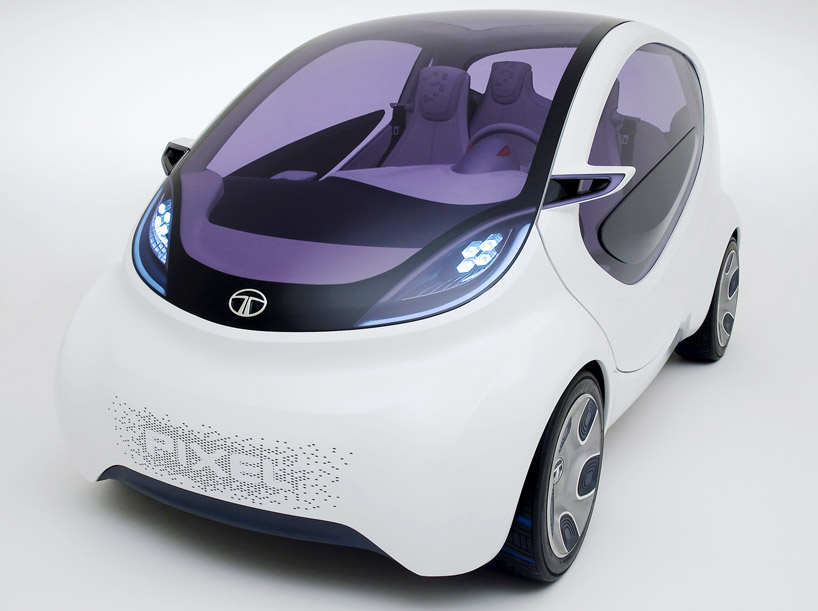
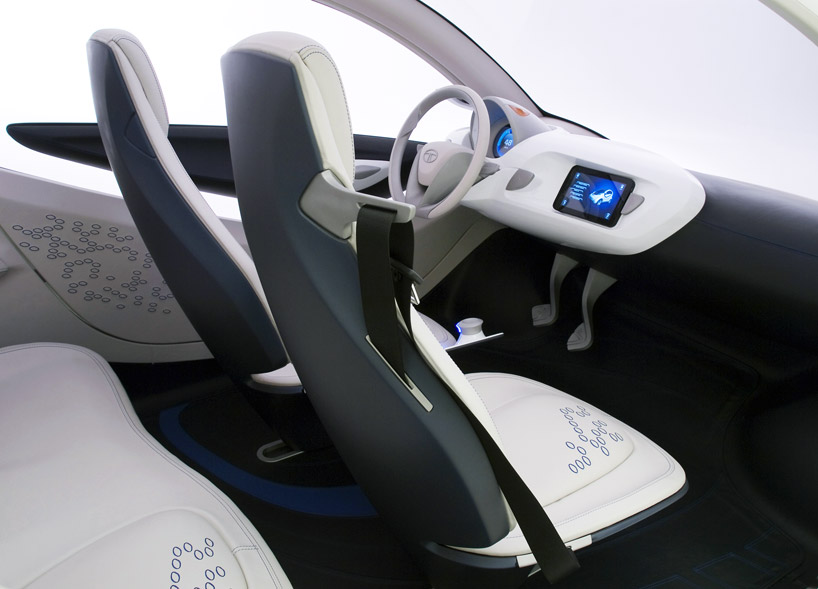
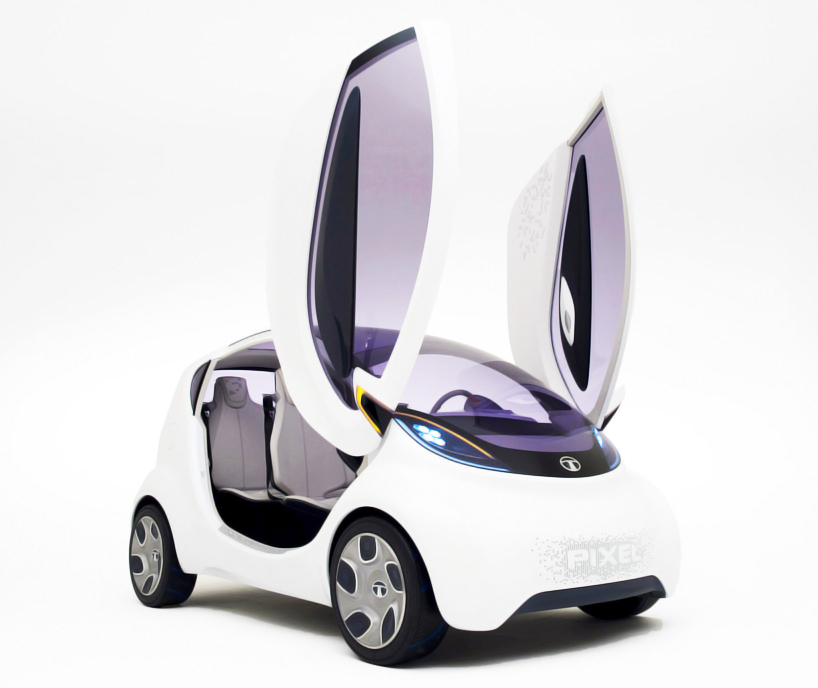
    Everyone must remember the Tata Nano. Well, they’ve come out with a similar high-tech varient for the european market. It boasts high fuel efficiency, ‘zero turn’ technology for minimal turning radius, built-in integration with tablets and smartphones, and an innovative door design. Measuring three meters (9.8 feet) long, the highly efficient ‘pixel’ combines a 1.2L three-cylinder turbocharged diesel engine with stop-start technology and an aerodynamic design to offer a combined cycle fuel economy of 3.4 L/100 km (69mpg), and producing carbon emissions limited to 89 g/km (0.3 lb/mi). ‘Zero turn’ technology makes use of the vehicle’s toroidal infinitely variable transmission to rotate the outer rear wheel forwards and the inner rear wheel backwards as the front wheels turn, producing a turning circle radius of 2.6 meters (8.5 feet).

    We’ll let you decide if they should have launced this in India…

  • The Bento Book – A Laptop & Tablet Hybrid

    The Bento Book – A Laptop & Tablet Hybrid


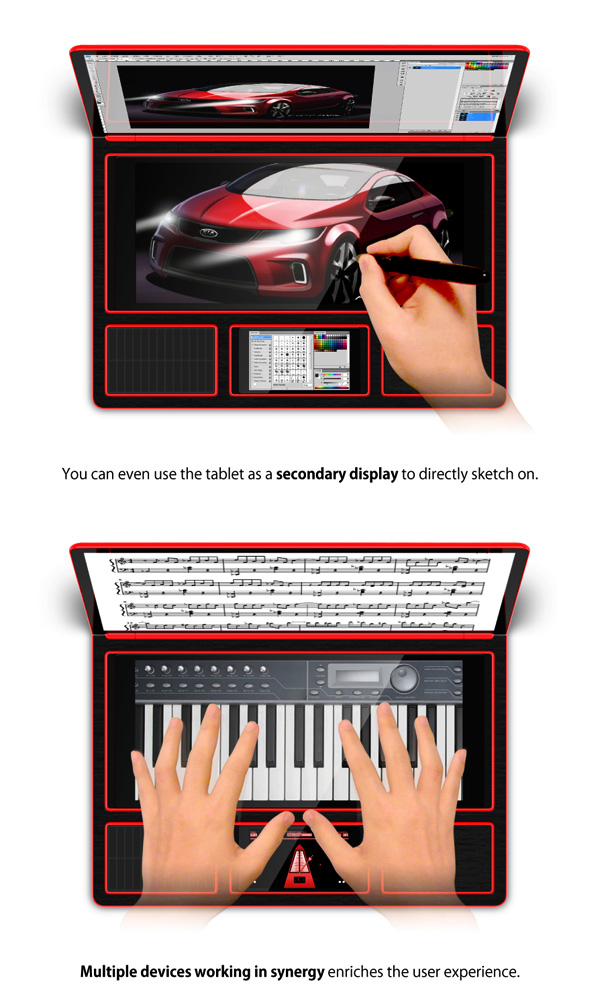
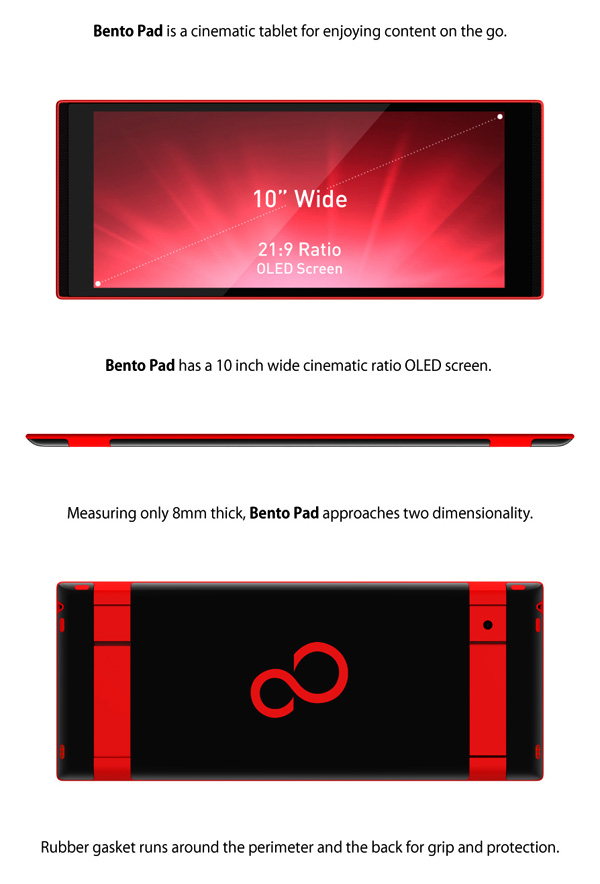
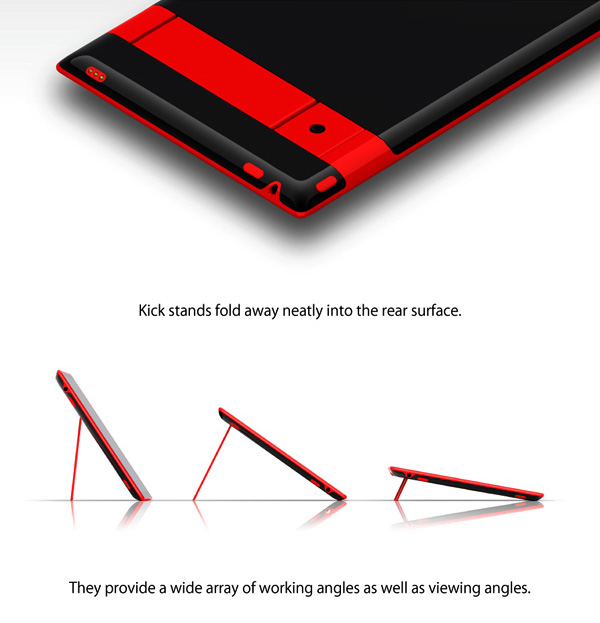
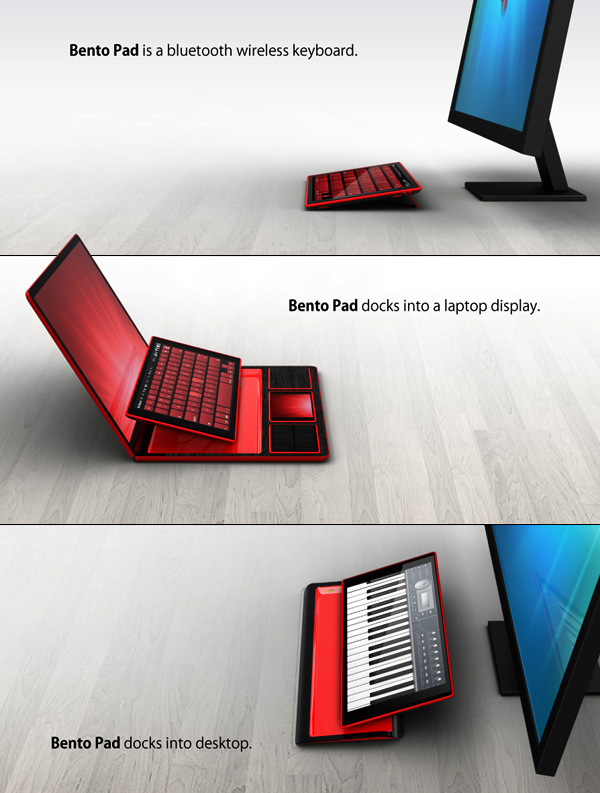
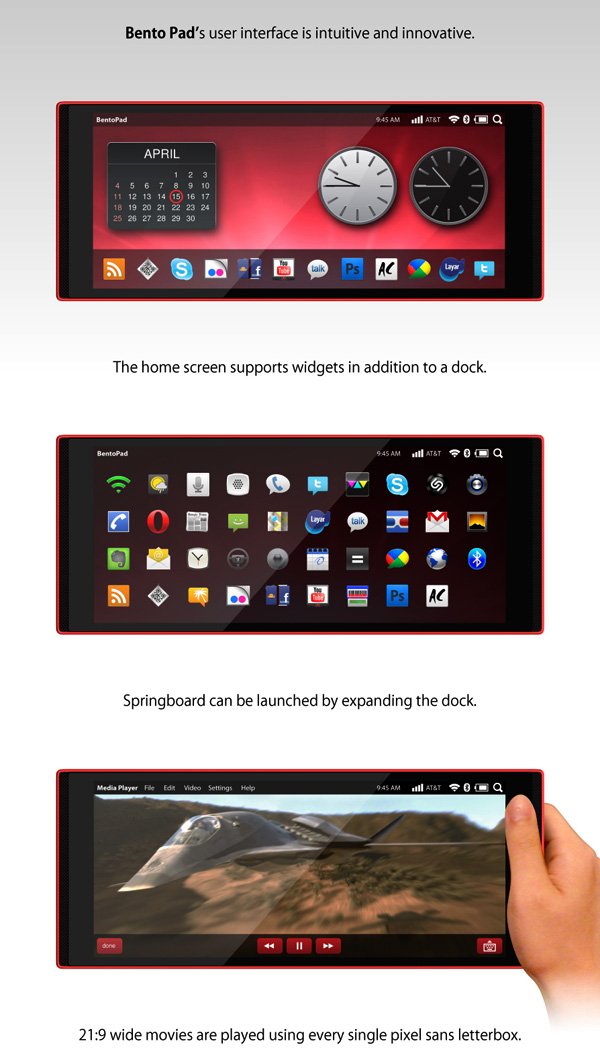
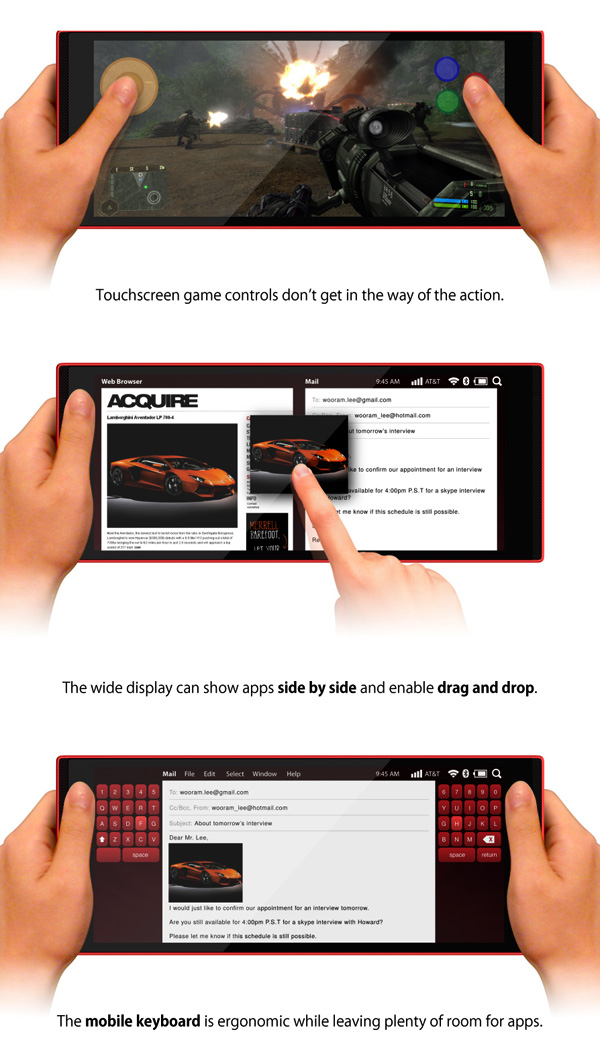
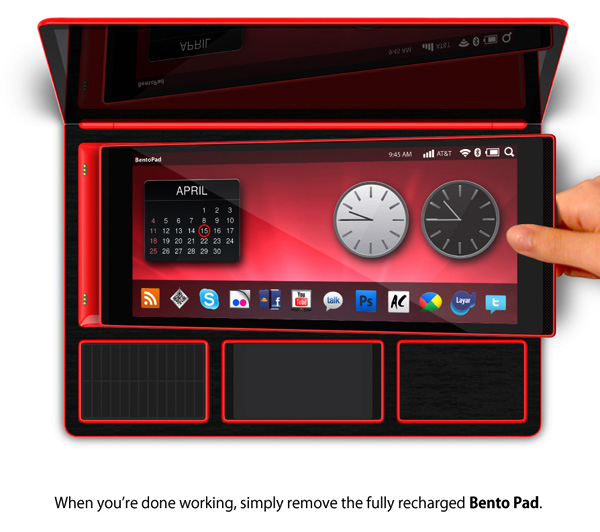
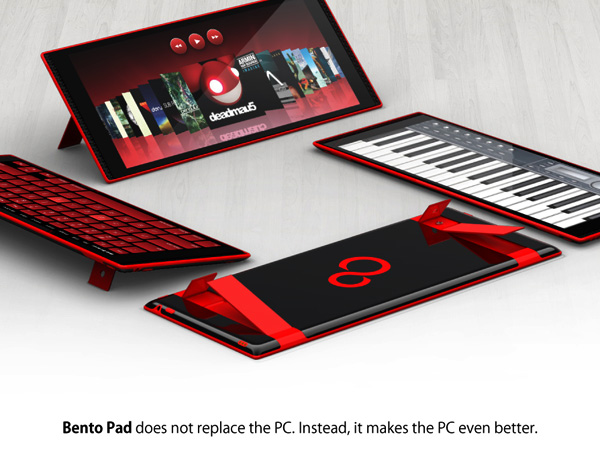
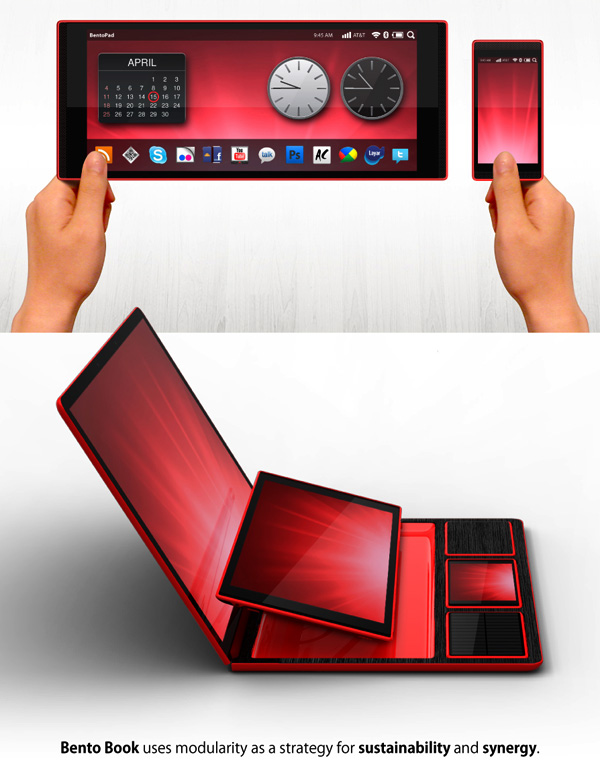
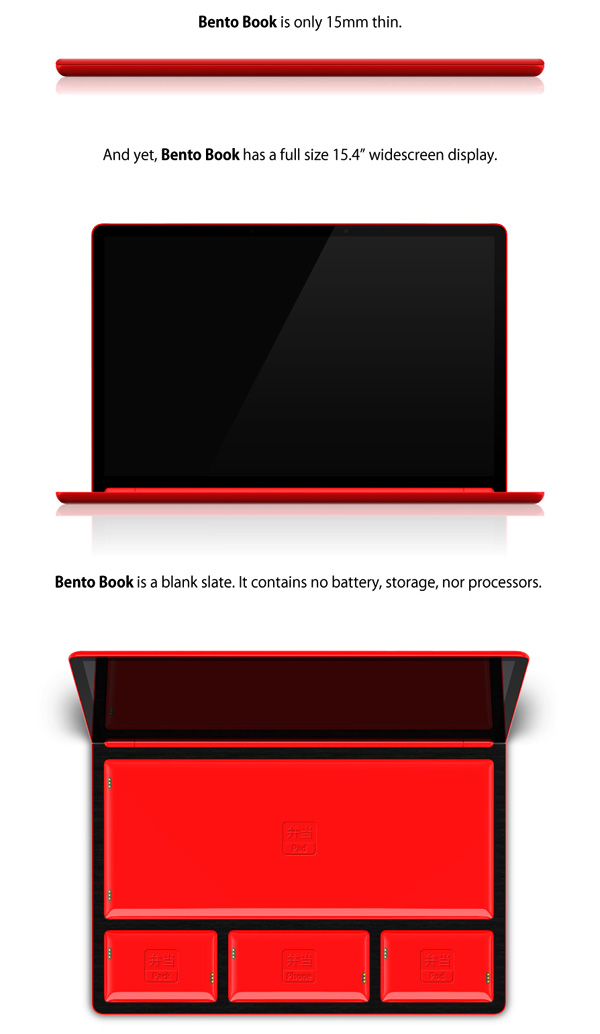
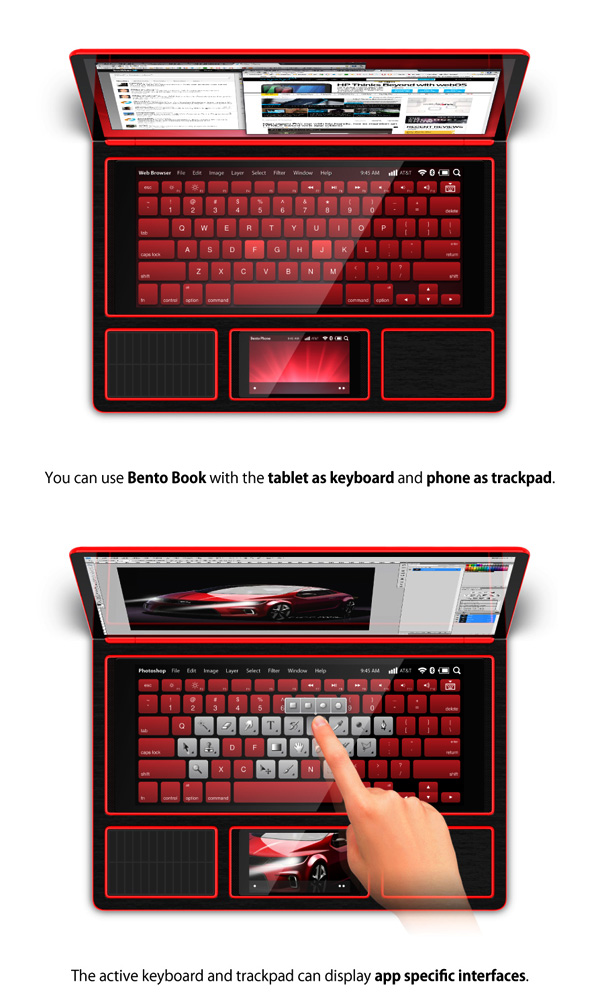
    Bento is quite an exceptional and forward thinking concept by René Woo-Ram Lee. It’s quite a plausible scenario that most of us use/own a tablet, a PC, external hard drives and a smartphone. Now combine the power of these to have fully customizable Bento Laptop! The Box accommodates all the gear to work as one whole unit or individually; as you see fit.

    Features

    • Laptop with 15″ OLED screen
    • 11″ tablet and 4″ phone sit in shallow depressions
    • Solar powered lithium-ion battery
    • 1TB SSD drive
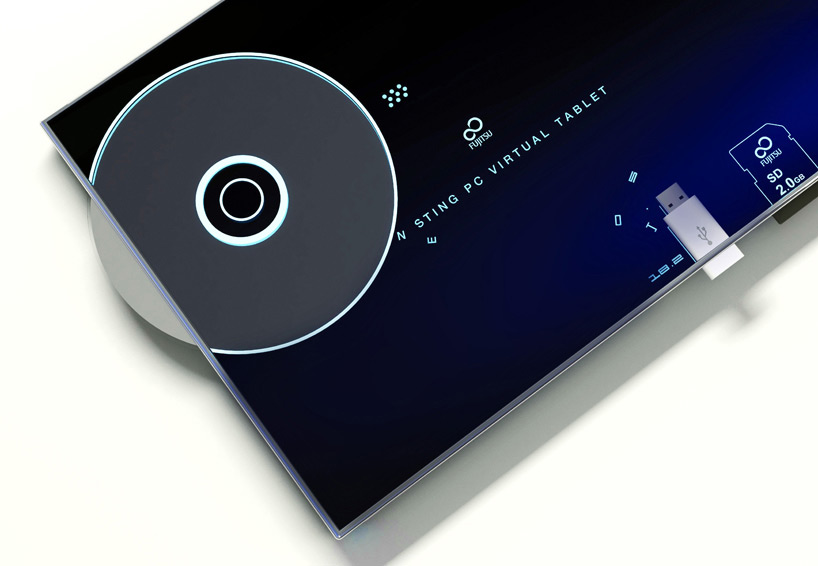
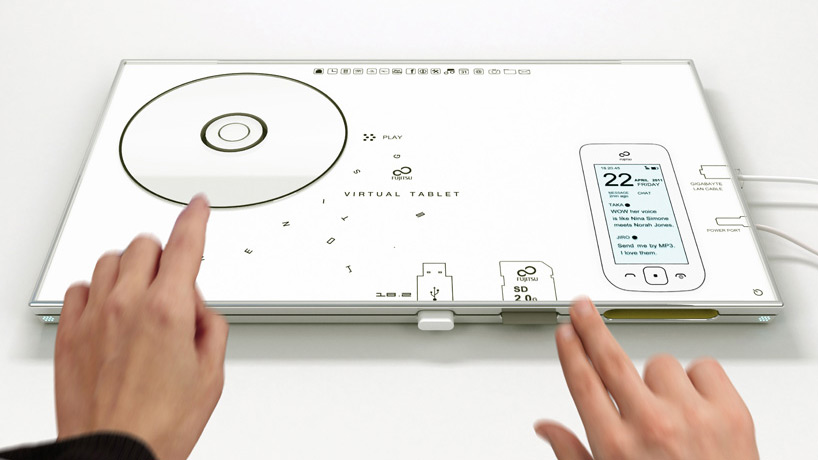
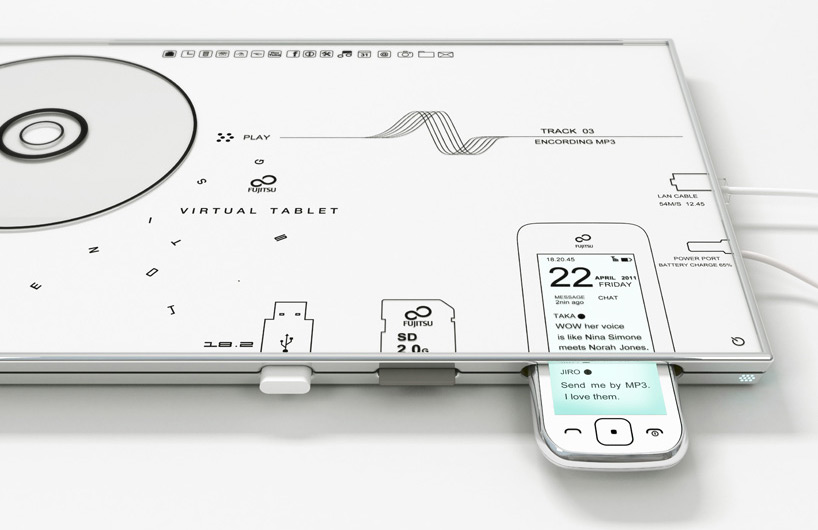
  • Nesting PC Virtual Tablet

    Nesting PC Virtual Tablet


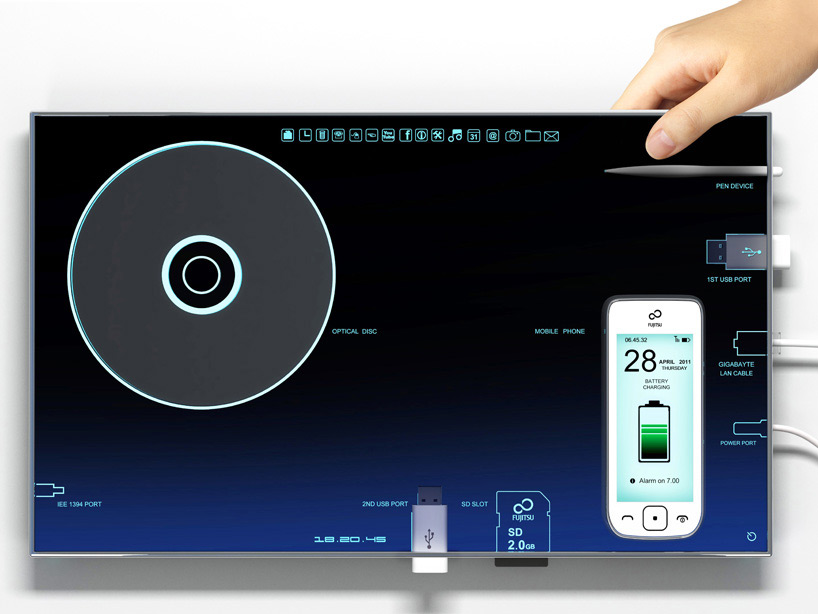
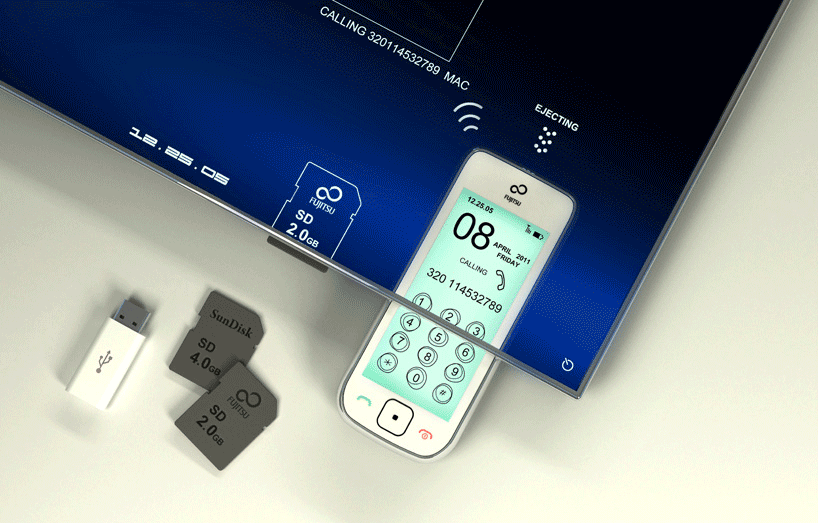
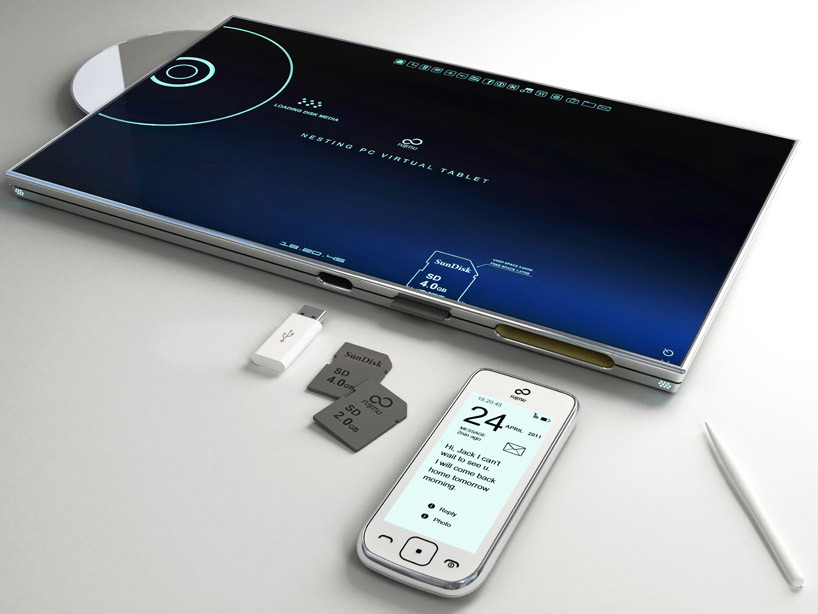
    The 13-inch concept tablet features a dedicated dock for mobile phones and other devices. When inserted, a visualization of the phone onscreen works in the same manner as would the device itself, permitting dialing, calling, texting, and other use. the loading of disk media or flash drives offers a similar intuitive functionality. Integrated charging eliminates the need for AC or outlet-specific adapters for these kinds of devices.


    This device has been created by Japanese Born, Italy Based designer Sono Mocci. He defines the device as a combination tablet and data visualization interface with automatic battery charging and data syncing. Phones, memory cards, CDs, USB ports, and I/O cables can be plugged directly into the device, where they will show up as images on the touchscreen for easy manipulation and access.


  • New Console Concept – The Razor Switchblade

    New Console Concept – The Razor Switchblade

    The Razor Switchblade, an amazing console made by Razor, is a revolutionary concept device that brings gaming to a new level. Razor has not released the specs for this device but from first looks at CES 2011 we can tell that the device comes with a 7 inch screen and a tactile transparent keyboard with an LCD underneath that remaps keys to the games you are playing. At the moment it comes with a Atom processor but that might not be included in the final specs. All in all it looks like an amazing device that could give the big names in games a run for their money.

  • Triple Screen Android Phone Concept

    Triple Screen Android Phone Concept

    When we first saw this video we were quite impressed with the concept of a triple screen phone. It has a few features we found very interesting such as the rolodex and the book reader app. However, after some heated discussion we came to the conclusion that the third screen doesn’t bring much to the  phone as most functions that it performs can be achieved with just 2 screens. The third screen seems a little over the top and reminds us of the old Paan Parag add when Jalal Agha pulls out a strip of sachets when asked ‘Ek se mera kya hoga?’

  • The Line Phone – Scalable | Multitouch | Concept

    The Line Phone – Scalable | Multitouch | Concept

    Ever wish you had an iPhone or a Multi-touch smart phone? Well you can wish again because we’ve just found the Line Phone. It has a very interesting multi-touch interface that seems very easy to use and very well thought out. The phone comes with many features that we have come to expect from technology out of the box.

    It performs even basic tasks such as photography and Internet surfing with a flair that we cannot find in todays devices. The best thing we like about this concept is its ability to seamlessly scale the size of the display for performing more complex tasks such as Desktop use and Gaming. Check out the video for more info.

  • The Mozilla Seabird Concept

    The Mozilla Seabird is a concept device which promises to herald in a future where we have to carry just one device for all our technology needs. It threatens to replace traditional desktops, laptops and even tablets. The device was conceptualized a few years ago, and it seems that the base technology to run this magical device is finally catching up. You never know when your next Android phone might pop out a projected keyboard from the sides. Watch the video above.

  • Leaked : Nokia’s Windows Phone 7 concept revealed!

    Leaked : Nokia’s Windows Phone 7 concept revealed!

    Folks over at Engadget have caught hold of an image that showcases the upcoming Windows Phone Device from Nokia. At the announcement Nokia said that engineers from both Microsoft and Nokia have already spent a lot of time together developing on this. This could mean that, this may as well be the first phone from the Nokia-Microsoft alliance.

  • Volkswagen’s XL1 concept plug-in diesel hybrid has 133 KMPL range

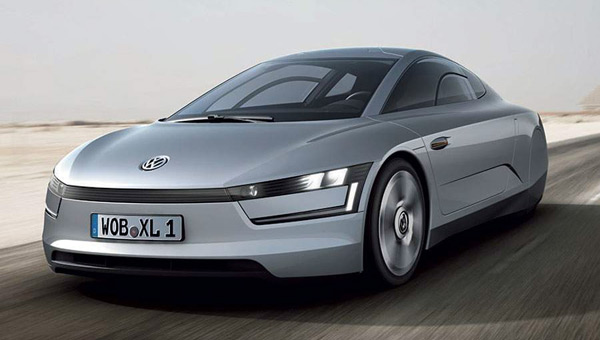
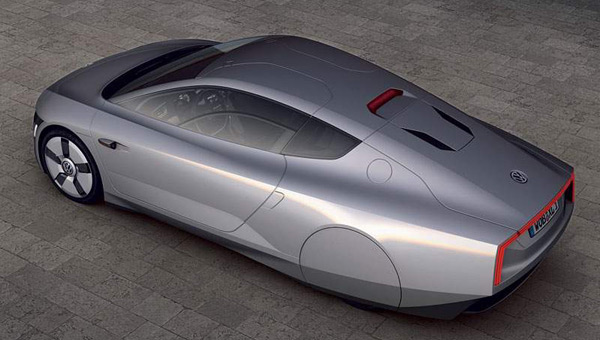
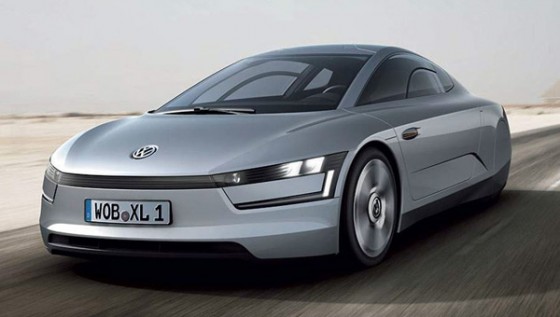
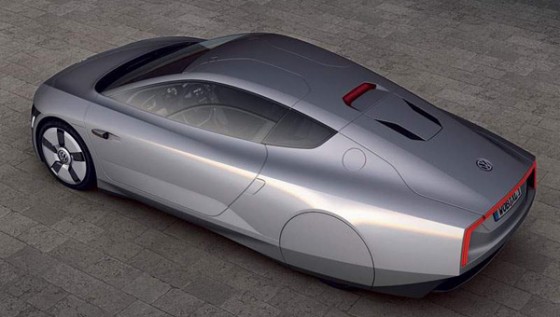
    Volkswagen’s XL1 plug in hybrid diesel (futuristic) concept car, is perfect for the Indian Consumer. If we all remember Maruti’s new advertising campaign “Deti kitna hai?”. This car delivers a whopping 133 KPML range – and that too on Diesel. Brilliant, isn’t it? It also, produces only 24g of CO2 per kilometer traveled.

    Volkswagen has achieved a 795kg curb weight by using carbon fiber, magnesium, ceramics, and aluminum to shave down any excess weight from the XL1, Testing shows only 0.186 drag coefficient.
    Read the PRESS STATEMENT below to get a better feel.

    Volkswagen unveils the XL1 Super Efficient Vehicle in Qatar

    The new Volkswagen XL1 Super Efficient Vehicle (SEV) has been unveiled at the Qatar Motor Show. Pioneering construction techniques, an advanced plug-in hybrid drivetrain and innovative packaging all play a part in allowing the XL1 to return 313 mpg on the combined cycle while emitting 24 g/km of CO2 to set a new benchmark for vehicle efficiency.

    Powering the XL1 is a compact 800 cc TDI two-cylinder common rail diesel engine developing 48 PS. It’s linked to an electric motor producing 27 PS, resulting in a total of 75 PS – a modest output yet more than enough when the low kerb weight (795 kg) of the vehicle is taken into account.

    The TDI engine is linked to an electric motor and a seven-speed DSG gearbox with an automatic clutch mounted between each unit. The electric motor can either work independently of the TDI engine or in tandem when accelerating. In pure electric mode the XL1 can travel up to 35 km before the diesel engine cuts in. Accelerating from rest to 62 mph can be achieved in 11.9 seconds; the electronically limited top speed is 99 mph.

    In both its styling and packaging the XL1 draws on lessons learned from the 1-Litre car (2002) and the L1 concept (2009). The XL1 has evolved to feature staggered seating with the driver and passenger placed next to each other in a body structure made from advanced new materials providing immense strength yet weighing just 230 kg.

    To make such weight savings possible, and yet viable for series production, Volkswagen developed and patented a new system for the manufacture of the Carbon Fibre Reinforced Polymer (CFRP) parts on the car called the Resin Transfer Moulding (RTM) process.

    In total the XL1 weighs 795 kg. In addition to the body structure, the weight is accounted for by the drivetrain (227 kg), the running gear (153 kg), the interior including a pair of bucket seats (80 kg) and the electrical system (105 kg). In total just 23.2 per cent of the car (184 kg) is made out of either steel or iron.

    Further savings are made through the extensive use of lightweight materials including magnesium (wheels), ceramics (brake discs) and aluminium (dampers, steering system, brake calipers).

    The styling of the XL1 is borne out of functional requirements – easy access to the interior is granted via a pair of elegant scissor doors that hinge on the A-pillar while the profile of the car has been honed in the wind tunnel, the result being a remarkable coefficient of drag figure of 0.186. The XL1’s overall length (3,970 mm) and width (1,682 mm) are similar to those of a Volkswagen Polo yet its height (1,184 mm) is more akin to that of a Lamborghini Gallardo Spyder.

    Although the XL1 is still very much a concept, its unveiling marks the next step towards the birth of a new class of Super Efficient Vehicles, while the advent of a process such as RTM is a significant milestone.

    Source : Volkswagen
iGyaan Network
Privacy Overview

This website uses cookies so that we can provide you with the best user experience possible. Cookie information is stored in your browser and performs functions such as recognising you when you return to our website and helping our team to understand which sections of the website you find most interesting and useful.