Scientists are developing a new technology that would enable blind people to see through their cell-phones and tablets. The technology is being developed at the University of Lincoln, UK where specialists in computer vision and machine learning are trying to create a system that would describe new environments to people with sight challenges. The program is funded through a Google Faculty Research Award.
“This project will build on our previous research to create an interface that can be used to help people with visual impairments,” says project lead Dr Nicola Bellotto, an expert on machine perception and human-centred robotics from University of Lincoln’s School of Computer Science.
The team will use colour and depth sensor technology inside smartphones and tablets to enable 3D mapping and localisation, navigation and object recognition. Then it will develop the best interface to relay that to blind users – through vibrations, sounds or the spoken word.
“There are existing smartphone apps that are able to, for example, recognise an object or speak text to describe places. But the sensors embedded in the device are still not fully exploited. We aim to create a system with ‘human-in-the-loop’ that provides good localisation relevant to visually impaired users and, most importantly, that understand how people observe and recognise particular features of their environment,” says Dr. Belloto
To recognise the visual clues in an environment, the team will develop a system. The data will be detected through the device camera and identify the type of room as the user will move around the space. The more accustomed the blind user gets, the more quicker and easier it would be for the system to identify the room.
It’s important to celebrate and encourage all kinds of technology that help the impaired. This is a major step towards the future.
For the frequent traveller, it could be the perfect way to attend those urgent meetings while staying at home.
The Double robot can turn your iPad into a ‘virtual you’ that can be sent anywhere in the world. The $2,000 robot is described as ‘the simplest, most elegant way to be somewhere else in the world without flying there’
Imagine you’re at your company, seated at your desk, when this iPad perched on a kind of pared-down Segway rolls up beside you. On the screen is the face of one of your co-workers located in another country who today is poking about your office, getting to know the layout, meeting some new people, asking a few questions. After a brief chat, it rolls off to the other side of the office. You look up five minutes later and do a double-take as you notice two of these devices having a conversation with each other by the water cooler.
Thanks to Double Robotics’ iPad-on-wheels – otherwise known as ‘Double’ – such a scenario could one day become a reality.
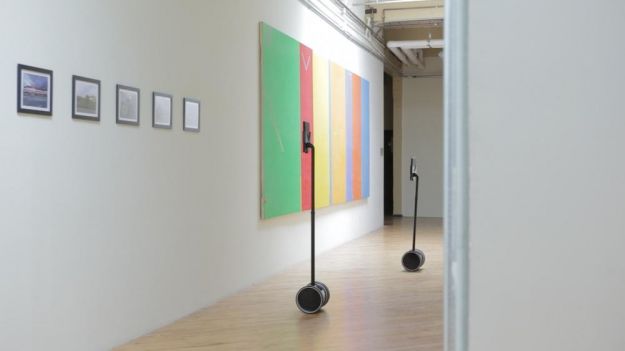
Double, which its maker claims offers the “most elegant way to be somewhere else in the world without flying there,” comprises a pair of wheels, a battery-powered motor, an adjustable pole and an iPad holder.
The telepresence robot is controlled remotely by someone using Double’s app on another iPad. The app enables the operator to move Double around its location, with its minimalist design helping to ensure it doesn’t get in the way of ‘real’ on-site workers. The length of the pole can also be adjusted using the app, allowing its user to talk face-to-face with co-workers, or peer over partitions to see what others are up to when they think no one’s looking.
Weighing a delicate 15 pounds (7 kg), there’s little chance of Double causing any damage to furniture, or humans for that matter, should its operator fail to see upcoming obstacles.
The California-based firm behind Double believes its creation offers a unique teleconferencing experience, allowing you to move around a location freely, meeting co-workers in any location, although presumably the bathroom will be off-limits.
Double Robotics suggest its robot could be used by companies who regularly communicate with remote workers, as well as school campuses, “enabling potential students to walk the halls and talk to professors.” Museums and galleries could also use Double, offering tours to those too far away to visit in person.
While some may consider Double to be an unnecessary luxury, the museum/gallery idea is certainly an appealing one, where anyone on the planet could work their way around such places using simply an iPad and an app.
Of course, there are already a number of telepresence robots like this in existence, but what makes this one stand out is its reasonable price – $2,499, or just $1,999 if pre-ordered – iPad not included. The firm is set to ship its first batch this December, with orders placed from this week going out early in 2013.
Scientists have discovered a new molecule that will make your teeth cavity-proof, the formula has been dubber “Keep 32” and can kill cavity producing bacteria in 60 seconds. The researchers claim that the flexibility of the molecule allows it to be added to any substance like toothpaste or mouthwash, even chewing gum and candies.
The scientists have said that the product/formula needs to be in your mouth for at least 60 seconds for it to make your teeth cavity proof. It will eliminate the dreadful cavity causing Streptococcus Mutans and will prevent its regeneration for many hours.
The research on the molecule began in 2005 and has now been fully developed, the scientists plan to license the formula to companies like Colgate, PnG etc. They will also be licensing it to candy companies.
Speaking at Le Web in Paris Google CEO, spoke about why Apps were first written for iOS and then ported over to Android. The response was one that would not surprise any Android user, Schmidt claims ” In about 6 months its going to be the other way round.” He predicts that the new OS Ice Cream Sandwich will remove the device fragmentation and lead people closer to the OS, making it a preferred choice of developers.
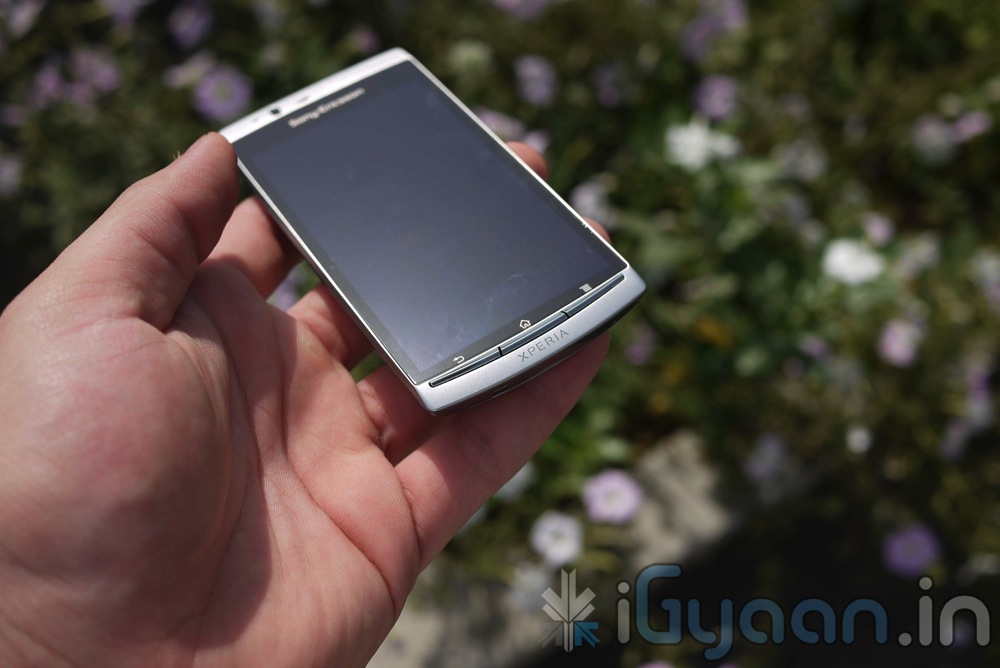
Sony Ericsson has handed its support to the FreeXperia dev team, which is dedicated to bringing CyanogenMod 7.1 .The company has donated 20 phones to the cause, realizing that “not all Android phones are alike”.
Even though Sony Ericsson do not promote the unlocking of the bootloader and developing Android software on the Xperia devices, They certainly allow you to do it and also give you a step by step.
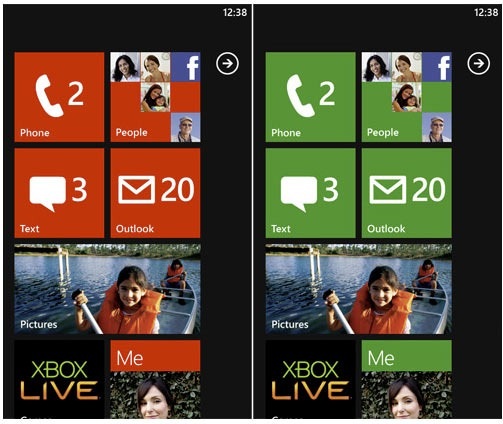
Microsoft demoed the upcoming version changes on the next generation of Windows Phone 7 Devices , major features including multitasking, background audio, push notifications and raw sensor data (not to mention over 1500 new APIs) in the next version of Windows Phone. Check out the video below courtesy of Engadget.
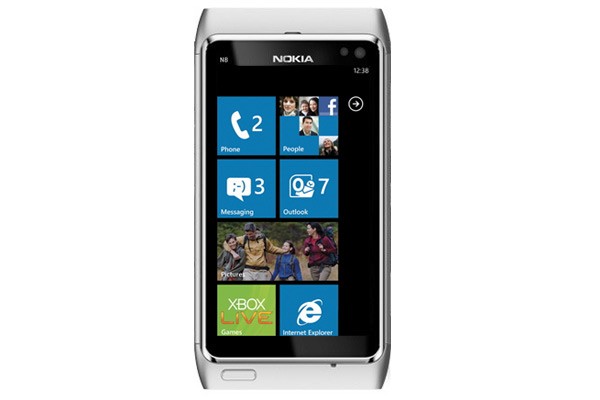
So, Nokia has joined hands with Microsoft to develop future products, what does this mean? We have the details and will be shedding light on the insides and out of the alliance and what it does for us.
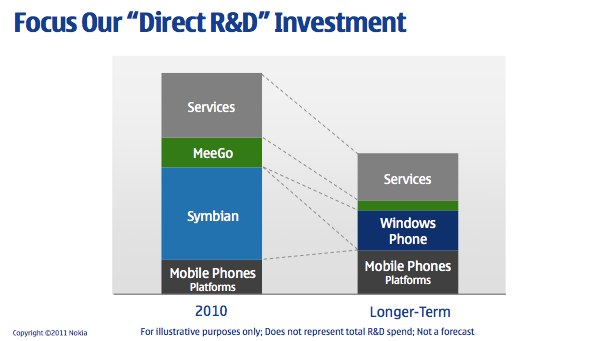
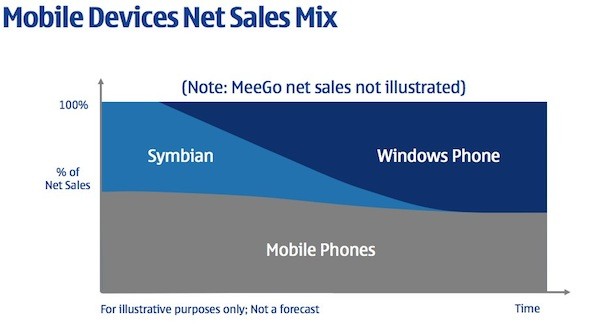
To start off, we expected Symbian to either be completely re-invented or be completely exterminated. Nokia choose the latter, they probably thought it was much easier than to invent an OS in a market that was way ahead of them. This alliance comes with the death of Symbian in a slow and steady manner. In the presentation created by Stephen Elop (ceo of Nokia) t it’s clear that Symbian which is claimed to be a “franchise” OS that Nokia will “harvest” and will be taken over by Windows Phone on Nokia devices just as soon as Nokia and Microsoft can complete the transition.
The transition as Nokia and Microsoft stated, would go on through 2011-2012, and by 2013 Nokia will be shipping only Windows Phone 7 or 8 or whatever version Microsoft throws out to the world. In simple words : Nokia will only ship Windows Phone devices 2013 onwards.
“Nokia expects 2011 and 2012 to be transition years, as the company invests to build the planned winning ecosystem with Microsoft. After the transition, Nokia targets longer-term: (1) Devices & Services net sales to grow faster than the market. (2) Devices & Services non-IFRS operating margin to be 10% or more.”
Stephen Elop says that he expects Nokia to ramp up the transition this year and be ready to ship Windows Phone 7 devices in significant volume in 2012.
With the arrival of Windows Phone to Nokia devices, there are substantial changes that will go on in Nokia’s infrastructure. When Elop was asked by a concerned Finnish reporter, “What happens to Finland,” Stephen responded that a successful Nokia is good for Finland but there will be “substantial reductions in employment” in Finland and around the world. That does mean a lot of frustrated Nokia employees, and a lot of anxiety for them. This may also be a great blow to investors or stock holders, as this may ruin Nokia’s market value on the long run.
Nokia has also been on the Qt warpath for years after purchasing the developer framework from Trolltech back in January of 2008. While Qt will continue on as the development framework for Symbian and MeeGo, Microsoft will give for free Windows Phone Developer Tools (Visual Studio 2010, Expression, Silverlight and the XNA Framework) to developers interested in the platform and exclusively developing for it. Qt will not be adapted for Windows Phone 7 APIs.
Whatever said and done, We personally believe, Nokia’s focus on hardware development will improve the outcome and toss Nokia back up on the anticipated phones / devices list. Also we believe Nokia will be launching a tablet later this year. A tablet that will run a mix of operating systems and an interesting hardware speck at a price that will remain unrivaled. There are only good things to see from Nokia now (or at-least we want them).
Elop also expressed the fact that, Nokia will be allowed to alter anything in the WP7 platform, including layouts and skinning. But, Elop also mentioned that Nokia likely won’t make extensive use of this freedom to tailor Microsoft’s OS. This is a major shift for Microsoft, who forbade HTC from skinning Windows Phone 7 with Sense, the proprietary skin from HTC.
Read the Q&A below from the post announcement session.
No specific announcement for when we’ll see the first Nokia Windows Phone. Ballmer mentioned that the engineering teams have spent a lot of time together already.
Elop confirmed that Nokiawill not be moving to Silicon Valley or anywhere else.
Ballmer said that the partnership is “not exclusive” but some things that Microsoft is doing with Nokia are “unique” allowing Nokia to differentiate itself in the market. Elop added that it’s important for the Windows Phone 7 ecosystem to thrive, which means that multiple vendors must succeed.
Elop didn’t believe that Nokia could create a new ecosystem around MeeGo fast enough.
Nokia will “substantially reduce” R&D expenditures while increasing R&D productivity moving forward.
Nokia did consider adopting Android but decided that it “would have difficulty differentiating within that ecosystem” and the “commoditization risk was very high — prices, profits, everything being pushed down, value being moved out to Google which was concerning to us.” Microsoft presented the best option for Nokia to resume the fight in the high end smarpthone segment.
Elop clarified that MeeGo will ship this year but “not as part of another broad smarpthone platform strategy, but as an opportunity to learn.” Something that sounds very similar to position Nokia took with its so-called “experimental” Maemo-based N900 last year. After the first (and apparently, only) MeeGo device ships this year, the MeeGo team will then “change their focus into an exploration of future platforms, future devices, future user experiences.” Trying to determine the “next disruption” in smartphones.
Responding to “hope for a broad MeeGo-based ecosystem,” Elop said that Nokia simply wasn’t moving fast enough to effectively win and compete against Apple and Google. Windows Phone makes it a “three-horse race,” something that Elop says is pleasing to the carriers he’s been speaking with.
Nokia has different options for its tablet strategy including using something from Microsoft or something that Nokia has developed internally.
Watch the Video of the whole event below
Click on the Next Link Below to read Press Releases