Google has let out a sly update to their Google+ apps on Android and iOS. The biggest addition is now allowing, Android phones to join Hangouts on Air, a feature we might use as soon as Today.
For iOS the app, it now allows you to open links in Chrome instead of Safari, making the dreams of a default chrome browser more real than ever.
What’s in this Android version:
– Teens can now create and join Hangouts from mobile – Join Hangouts on Air from mobile – Floating timestamp in photos view – Shortcuts for post creation – Ability to report abuse in Events
What’s in this iOS version :
? Web links in posts now open in Chrome (if installed) ? Teens can now join and create Hangouts ? Instant Upload bug fixes to improve performance
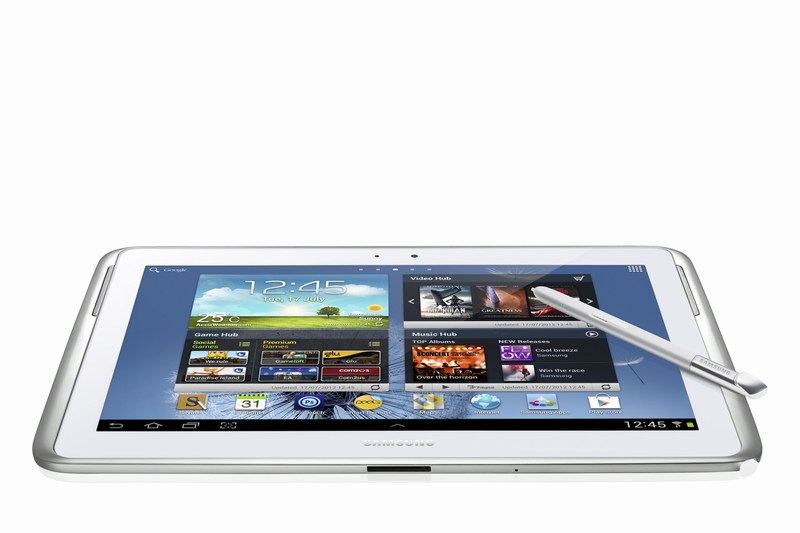
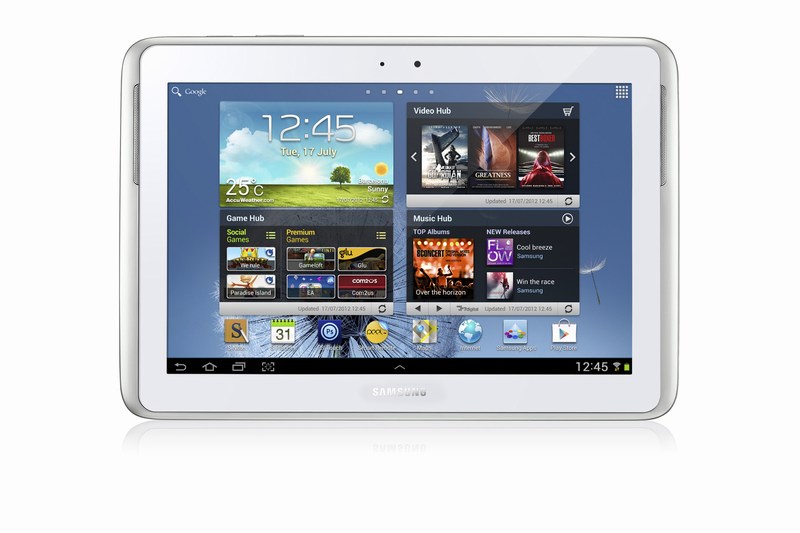
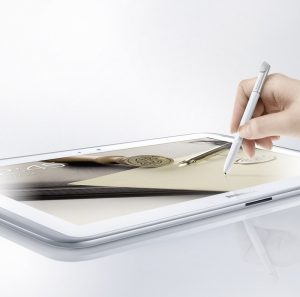
The Samsung Galaxy Note 10.1 is a larger version of the Galaxy Note smartphone launched in Nov 2011. The Note 10.1 smart tablet was announced at the Mobile World Congress 2012 and has some exciting features that should intrigue a lot of potential customers.
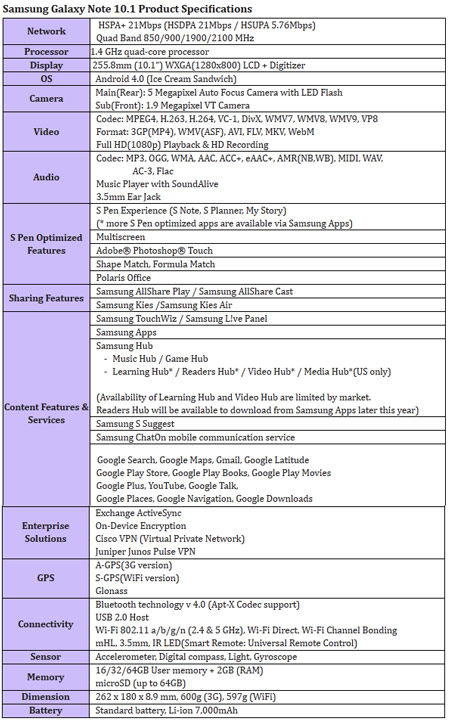
The device runs Android 4.0 (Ice Cream Sandwich) operating system. It is powered by a 1.4GHz quad-core processor and 2GB RAM, and It also comes packed with a 7,000mAh Li-ion battery. But that is not what makes the Note 10.1 special. The tablet features a 6.5mm S Pen, similar to the one on the original Galaxy Note, which is optimised for the creation of personalised and expressive content. The S Pen is embedded directly in the device and, when removed, automatically launches specially-optimised applications, including S Note and S Planner
New level of multitasking can be achieved on the Note 10.1 thanks to a new multiscreen feature, users can effortlessly utilise two different applications side-by-side. Galaxy Note 10.1 also incorporates Learning Hub for accessing educational curricula and Adobe’s premium creative application Photoshop Touch.
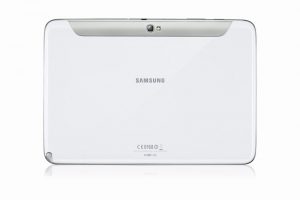
Optics are there : The device also includes a 5-megapixel main camera and a 1.9-megapixel front-facing camera. both capable of HD video. The Galaxy Note 10.1 comes in three connectivity options: WiFi-only and WiFi-and-3G HSPA-Plus connectivity, which are both available at launch, and WiFi-and-LTE which will be available later this year.
The Tablet is supposedly going to be announced in India a day or two. Expect a full iGyaan Treatment soon after.
[toggle_box title=”Press Release of the Note 10.1″ width=”Width of toggle box”]
SAMSUNG GALAXY NOTE 10.1 AVAILABLE GLOBALLY IN AUGUST
Samsung inspires a culture of active content creation, productivity and learning
London UK, August 6 2012 – Samsung today announced the launch of the Galaxy Note 10.1, an extension of the Galaxy Note category. The Galaxy Note 10.1 offers the functionality and precision of a pen and paper on a 10.1-inch large display, which will enable people to amplify their creativity, productivity, and learning ability.
Providing an intuitive experience and armed with a 1.4 GHz quad-core processor and 2GB RAM for enhanced performance, the Galaxy Note 10.1 is designed to simplify the process of capturing ideas, accessing information and multi-tasking, making each easier and faster and allowing people to express their ideas in an efficient way.
Simon Stanford, Vice President, UK & IRE Telecommunications & Networks Division, Samsung UK and Ireland said: “Following the success of the very first Galaxy Note which we launched at the end of last year, we’re delighted that our UK customers will now be able to experience the evolution of this device for themselves. The Galaxy Note 10.1 is a product we are very excited about and will offer our customers a new way to use and experience a tablet device. As well as being able to consume content such as videos, photos, document and the Internet, the Galaxy Note 10.1 also gives them the power to produce, create and customise that same content – something they won’t get from any other product on the market.”
The Galaxy Note 10.1 incorporates key intuitive features and capabilities such as side-by-side multitasking. This is thanks to its ‘Multiscreen’ on a 10.1-inch large screen; unique S Pen with a variety of S Note templates and productive tools (Shape Match and Formula Match); Learning Hub* for accessing educational curricula and Adobe’s premium creative application Photoshop® Touch.
True Multi-Tasking with Multiscreen feature
With the Galaxy Note 10.1’s Multiscreen feature, it’s possible to use two different applications side-by-side simultaneously. So Web pages and videos can be viewed, or applications launched using one half of the screen, at the same time as the other half is used for writing or sketching ideas with the S Pen. What’s more, customers can capture and crop images, and paste them onto the other screen to make personal notes. The Multiscreen feature allows people to be more productive and efficient whilst also enjoying multimedia content. Galaxy Note 10.1 brings a new culture of creation through the owner’s own notes, and enables an entirely new experience to improve productivity and enjoyment.
S Pen & S Note for Personalised and Organised Note-taking
Featuring its advanced 6.5mm S Pen, the Galaxy Note 10.1 is optimised for the creation of personalised and expressive content in the most natural and intuitive way. The S Pen’s feel and functionality are specifically designed for an optimal experience on the 10.1-inch screen. The S Pen is embedded directly in the device and, when removed, automatically launches specially optimised applications, including S Note, S Planner, Crayon physics, Adobe® Photoshop® Touch, and Polaris Office.
Alternatively, people can easily set their preferred application to be launched instantly. For example, S Note can be launched instantly when the S Pen is taken out from the device. Owners can also tap the screen twice while pressing the S Pen button for quick S Note access via the S Note-dedicated widget, which can be easily moved anywhere on the display, never hindering or obstructing creativity or productivity.
The S Note is a unique tool that enables notes and sketches to be combined with other digital content in ready-to-use templates. The Shape Match and Formula Match features help correct and digitise geometric shapes and solve numeric formulas hand-written with the S Pen. The S Note is also integrated with knowledge search engines so that content can be searched for and information obtained, and then easily drag and dropped onto S Notes without having to switch between screens. Exclusively pre-loaded on Galaxy Note 10.1, the Adobe® Photoshop® Touch application means owners can professionally edit photos with the ease and precision of the S Pen.
Active Learning Experience
The Galaxy Note 10.1 is an ideal learning tool that allows students to take notes directly on an eTextbook whilst in lectures, or research the Web at the same time as writing an essay. Samsung’s Learning Hub service is optimised for Galaxy Note 10.1 allowing owners to access extensive multimedia educational content whatever their age. This content includes eTextbooks, video lectures, interactive coaching and much more, and can be shared with multiple Samsung devices. Furthermore, Learning Hub comes with a learning management system providing schedule management and performance and achievement management tools so students of any age can learn at their own pace.
Superior Hardware Performance
Galaxy Note 10.1 is designed with advanced hardware technology, including a 1.4GHz quad-core processor and 2GB of internal RAM. Seamless multi-tasking, high-standard graphics, and blazing-fast performance without any lag are essential features of the device. The Galaxy Note 10.1 also includes a 5- megapixel main camera and a 1.9 megapixel front-facing camera.
Several other features have been added to the Galaxy Note 10.1, including Smart Stay, which tracks the owner’s eye to ensure that the screen is always on while being looked at; and Pop Up Play, which allows a video to be watched anywhere on the screen while simultaneously running other tasks. With AllShare® Play, content can be shared with a large group in real-time by connecting the Galaxy Note 10.1 to Samsung HD TVs, mobile tablets, laptops, and other consumer electronic devices on the same network. With AllShare Group Cast, people can also share and collaborate on documents, presentations, or images without loading the files separately.
The Galaxy Note 10.1 comes in three connectivity options: WiFi-only and WiFi-and-3G HSPA-Plus connectivity, which are both available at launch, and WiFi-and-LTE which will be available later this year.
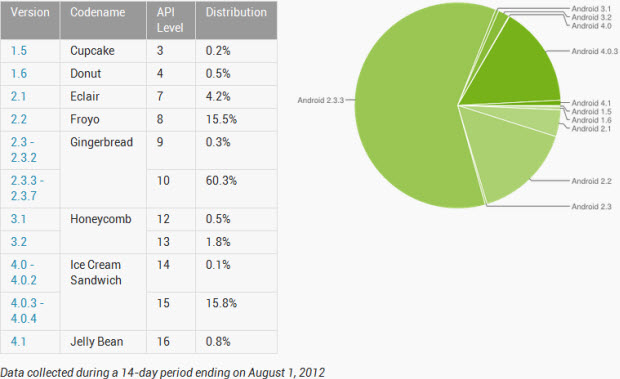
Ice Cream Sandwich’s share of the Android market continues to grow rapidly, with the operating system now present on nearly 16 percent of all Android phones.
Ice Cream Sandwich has more than doubled its distribution share over the space of a single month — variants of Android 4.0 have risen from a combined total of 7.1 percent to 15.9 percent, according to figures from Google.
Gingerbread still reigns supreme at 60.6 percent, but that was down from the 64 percent of the market it held inJune.
Ice Cream Sandwich just barely ekes past Froyo, which is still present on 15.5 percent of Android devices. Eclair is on 4.2 percent, Donut has 0.5 percent of the pie, and Cupcake is now down to 0.2 percent.
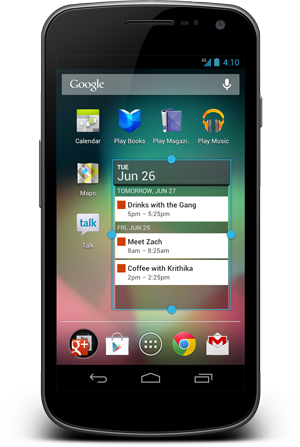
Android 4.1 ‘Jelly Bean’, which was officially unveiled at Google’s I/O conference on June 27th, and was released as an over-the-air (OTA) update for the Samsung Galaxy Nexus on July 11, has reached 0.8% market share.
The data was collected from Android devices that access Google Play, the Android app store formerly known as the Android Market, during the two week period ending August 1.
Hacking experts have demonstrated ways to attack Android smartphones using methods they said work on virtually all such devices in use today, despite recent efforts by search engine giant Google to boost protection.
Google spokeswoman Gina Scigliano declined to comment on the security concerns or the new research.
Accuvant researcher Charlie Miller demonstrated a method for delivering malicious code to Android phones using a new Android feature known as near field communications. “I can take over your phone,” Miller said.
Near field communications allow users to share photos with friends, make payments or exchange other data by bringing Android phones within a few centimeters of similarly equipped devices such as another phone or a payment terminal.
Miller said he figured out how to create a device the size of a postage stamp that could be stuck in an inconspicuous place such as near a cash register at a restaurant. When an Android user walks by, the phone would get infected, said Miller.
He spent five years as a global network exploit analyst at the U.S. National Security Agency, where his tasks included breaking into foreign computer systems.
Miller and another hacking expert, Georg Wicherski of CrowdStrike, have also infected an Android phone with a piece of malicious code that Wicherski unveiled in February.
That piece of software exploits a security flaw in the Android browser that was publicly disclosed by Google’s Chrome browser development team, according to Wicherski.
Google has fixed the flaw in Chrome, which is frequently updated, so that most users are now protected, he said.
But Wicherski said Android users are still vulnerable because carriers and device manufacturers have not pushed those fixes or patches out to users.
The HTC HD2 has always been the most easily adapted phone when it came to running multiple OS’ . This was the first phone to triple boot Android and Windows phone 7 with Windows Phone 6.5.
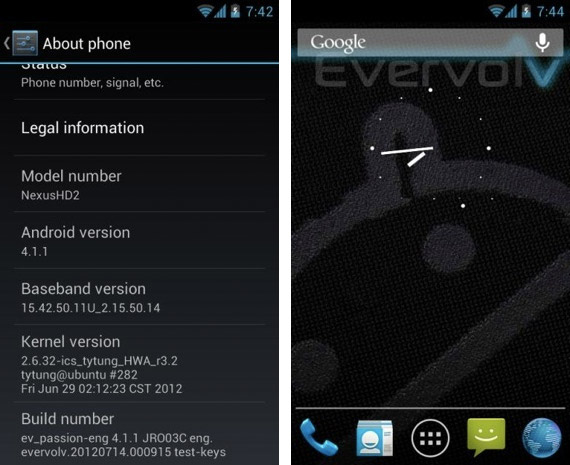
Evervolv at the XDA-Developers forums has produced a pre-alpha port of Android 4.1 for the originally Windows Mobile-based phone. The funny thing is that in comparison to other devices, the HD2 build is running quite stably, except the camera, Google Now and web browser.
The build is not meant for day to day use, but the devs are working hard to deliver a fully usable build. And knowing the history of this handset, we don’t fear it too far.
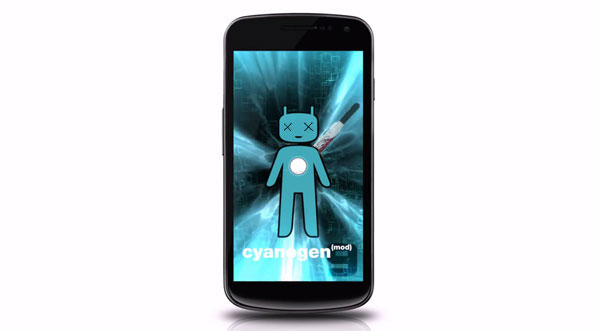
The CyanogenMod team has uploaded a video of an LG Optimus 4x HD running CyanogenMod 10 with Jelly Bean Android 4.1. The build is still in early production and has trouble with Google’s new Search dynamics, but considering the Jelly Bean Source code just came out, the progress is quite impressive.
Steve Kondik and the CyanogenMod team usually are really quick in bringing latest updates for Android to existing users. According to the team a few minor tweaks are needed to merge Google’s latest with the custom Android code, making CyanogenMod 10 easy to release.
According to the team any device that runs CyanogenMod 9 will also run CyanogenMod 10 easy. Stay tuned for more updates.
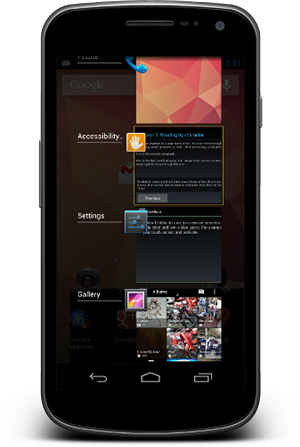
Google has officially taken the curtain down from what is the next big mobile OS for the company. Android 4.1 Jelly Bean brings to Android what ICS missed out on. The biggest change according to Google is something they like to call “project butter” which now allows the the whole interface to run at 60fps. While the difference in speed is a few milliseconds, you will notice the difference when a Jelly Bean device is placed next to a ICS device.
The home screen has been tweaked, adding features like dynamically resizing widgets,that resize and move unwanted apps and icons out of the way. The camera app, which was already a highlight of ICS, has gotten even better in 4.1. Now, the gallery is slickly integrated, allowing you to quickly pull up the photo you just took with a swipe to the left. Something like what you would see in the Windows Phone Camera app.
Deleting images is as simple as swiping a pic off the screen. The unique undo button allows you to recover a photo you might have accidentally deleted. Google Android Jelly Bean 4.1 brings something that most smartphone users have asked for in the past year, voice to text without data. The language model in Jelly Bean adapts over time, and the keyboard even guesses what the next word will be before you’ve started typing it. With improved text-to-speech capabilities, voice typing on Android is even better; it works even when you don’t have a data connection, so you can type with your voice everywhere you go.
Jelly Bean also bring advanced Accessibility to the mix, With Jelly Bean, blind users can use ‘Gesture Mode’ to reliably navigate the UI using touch and swipe gestures in combination with speech output. Jelly Bean also adds support for accessibility plugins to enable external Braille input and output devices via USB and Bluetooth.
Taking note from the Galaxy S3 the new Jelly Bean OS for Android brings Android Beam to every smartphone running it, with just a simple tap, in addition to sharing contacts, web pages, YouTube videos, directions, and apps. Just touch two NFC-enabled Android devices back-to-back, then tap to beam whatever’s on the screen to your friend. Instantly pair your Android phone or tablet to Bluetooth devices like headsets or speakers that support the Simple Secure Pairing standard by just tapping them together – no more syncing or searching required.
Android 4.1 Jelly Bean also Improves Google Search on the phone OS, it has a new look-and-feel, and has faster and more natural Voice Search.Predictive input lets you select your search criteria, before you even ask. The new Knowledge Graph is used to show you search results in a richer way. It’s easier to quickly get answers and explore and browse search results.
With JB 4.1 and the new “Google Now” tells you today’s weather before you start your day, how much traffic to expect before you leave for work, when the next train will arrive as you’re standing on the platform, or your favorite team’s score while they’re playing. The Knowledge database build around your likes and wants and build your phone to become more and more personal over time.
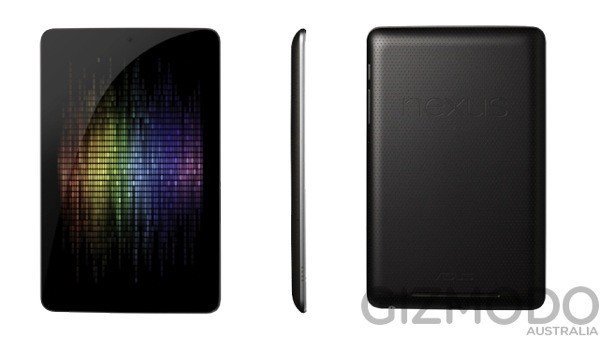
Google’s long rumored Nexus tablet has been rendered and now has a price, $199 to be precise. Specs of this upcoming tablet are expected to be a 7-inch, quad-core Tegra 3 slate with a front 1.2-megapixel camera, NFC, 8GB to 16GB of storage and a 1280 x 800 IPS-based LCD.
Google’s I/O conference should reveal more information about this elusive device, especially wen it is finally showcased.
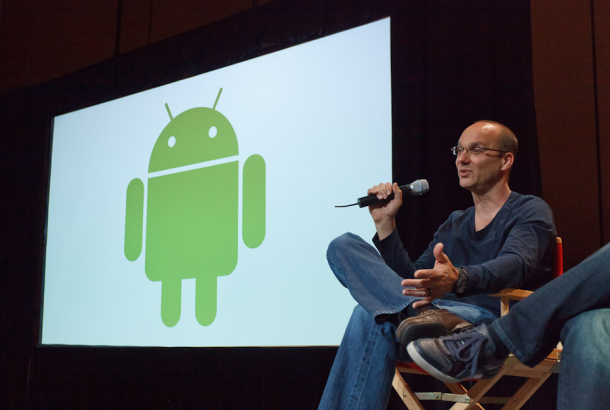
Android activations are at an all time high, considering companies are hell bent on stuffing the OS into anything possible. At MWC 2012 Andy Rubin had announced that Android activations were at about 850,000 a day, now the number is higher. Much Higher at 900,000, or just short of a million devices a day (woot!)
Just a day before WWDC (Apple’s Developer Event) Andy Rubin has dropped this information to crunch the usual numbers you can expect from Tim Cook’s Keynote event.
Incidentally we will have all the information on iGyaan.in
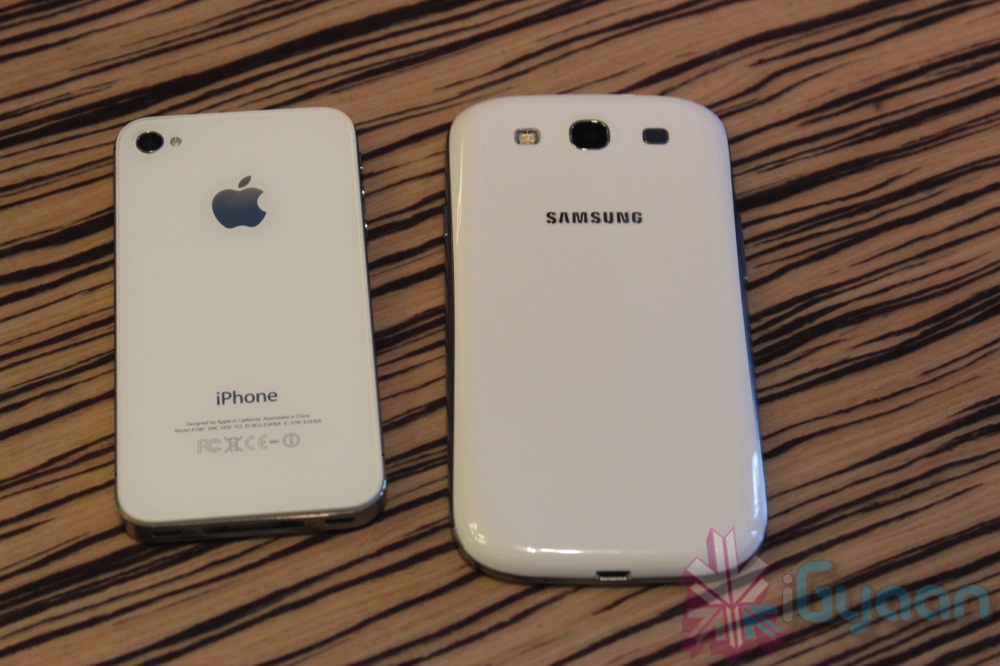
They are at it again. Apple and Samsung are in legal hot waters yet again, only when things couldn’t get worse. Apple has called for early ban on Samsung’s new flagship device the Galaxy SIII. According to Apple the Galaxy S III violates at least two patents, one is the data tapping patent, the exact on in their suitagainst HTC and the other a unified search patent that covers Siri.
Apple is also arguing that a Million Pre-orders are evidence of the potential damage if the US court lets the dispute slide. Samsung has confirmed that the injunction will not affect the US launch schedule. But knowing how this battle has heated up, we can only wait nd watch what really will happen.
2011 was a year of Samsung, the company has taken the consumer electronics market by storm, grabbing attention one way or another. Samsung also led as India’s number one manufacturer for mobile phones in all categories. From basic feature phones to high end Smart phones, the company has managed to challenge all odds and gain the market respect.
But all this does not come cheap, Samsung employs a huge amount of its annual earning into marketing. In 2011 alone Samsung is estimated to have spent over US $ 2 Billion in advertising their products. Out of which a major 40% is targeted towards mobile devices and 6-7 % towards new phones. Samsung also deploys twice that amount into market research and development, so that its teams know what the next big thing from the company is going to be.
Galaxy S2
In 2011 Samsung took a huge stab at Apple’s dominant spot as the world leader in smartphone sales. By quarter 3 2011 Samsung had replaced Apple as the world most selling smartphone manufacturer ( if you consider number of handsets and not just one model of handset). Samsung Galaxy S2 was the phone that changed everything for Samsung, the new innovations in the field of mobility that challenged design and construction, and innovative softwares threw huge limelight on Samsung’s potential in this market space. Android loyalists were drawn by Samsung’s willingness to answer to their demands and stuffing their handsets with all features requested (and more) by the users.
Who ever imagined a device like the Galaxy Note, a fully capacitive screen that had massive scribbling promise, a handwriting recognizing monster with the capabilities of real time editing and project handling. Live annotations and screen captures were there in previous Samsung handsets, but the precision with with the Note is able to do these tasks is excellent. People want change and innovation and that what Samsung has started to give to its users.
The South Korean company is earning high praise for the design of its new line of OLED television sets, its oversized Galaxy Note smartphone and its
Galaxy Tab 750
new line of laptops, dubbed Series 9. Samsung has held the title of the top TV maker for the past six years, and recently surpassed Apple Inc. to become the world’s top smartphone manufacturer. Samsung posted a US$4.5-billion profit in the most recent quarter, one of the best in the company’s history.
The Company now has set its sights on the personal computer and tablet markets, hoping to replicate the success the company has had in its smartphone and television businesses. Targeting their efforts at Apple, Hewlett-Packard Co. and Dell Inc, companies which are current leaders in the domain. This won’t be easy for Samsung either especially because globally they don’t even fall in the top 5 PC manufacturers category.
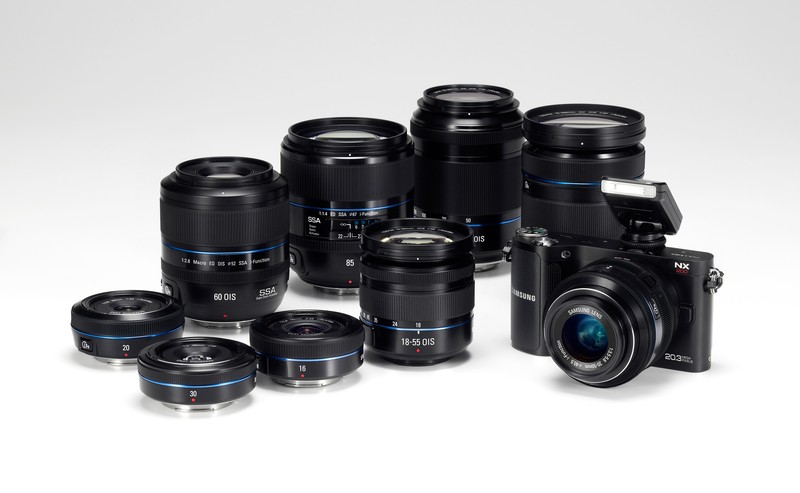
nx System Camera
One of Samsung’s biggest strengths is its component manufacturing facilities. Samsung itself manufactures 75% of the components used in its TVs, PCs and smartphones, enabling the company to innovate and test new products quickly. Samsung is also emerging big in a category seldom seen with asian companies, Cameras. With a exciting range of digital point and shoot cameras from the company, including innovative flip lcd type cameras. The company also has pioneered the professional SLR segment with their range of NX cameras, that are getting appreciation from professional Photographers.
The future of the brand also seems bright, as people have less and less faith in Apple’s ability to give what the users want. The next revision of the iPad and the iPhone 5 no longer seem as exciting as the Samsung Galaxy S3 or the Galaxy Tab 3 headed our way in 2012.
Its been a long time since our last edit, this one was long over due. The smartphone industry is ever changing, with constant evolutions in a battlefield of major companies and small startups. In a world where companies become large in a matter of months and fall even faster, we can only guess what the future holds in the massive divide.
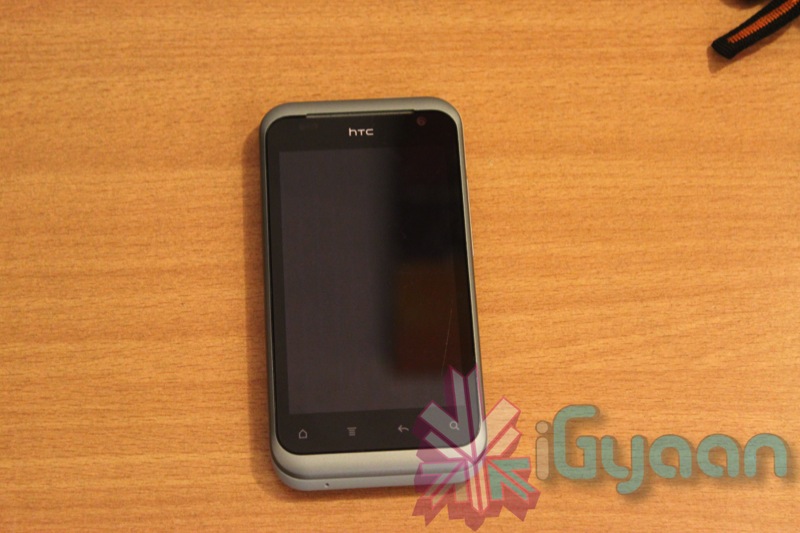
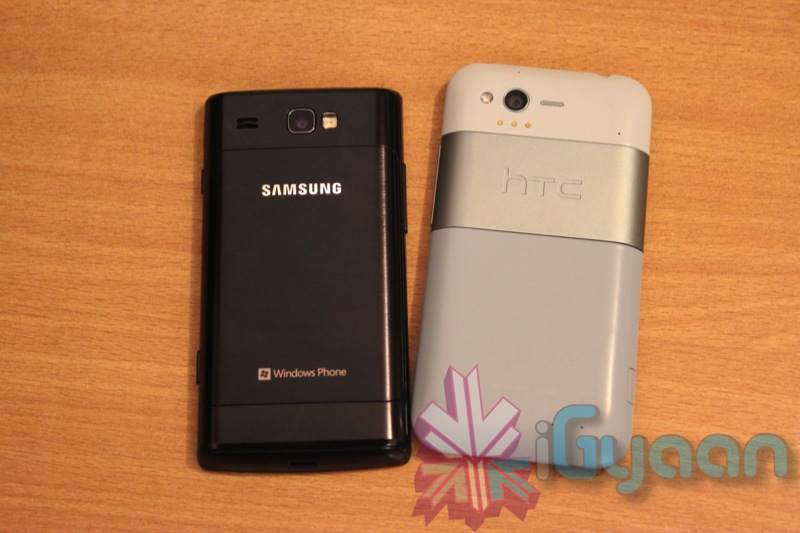
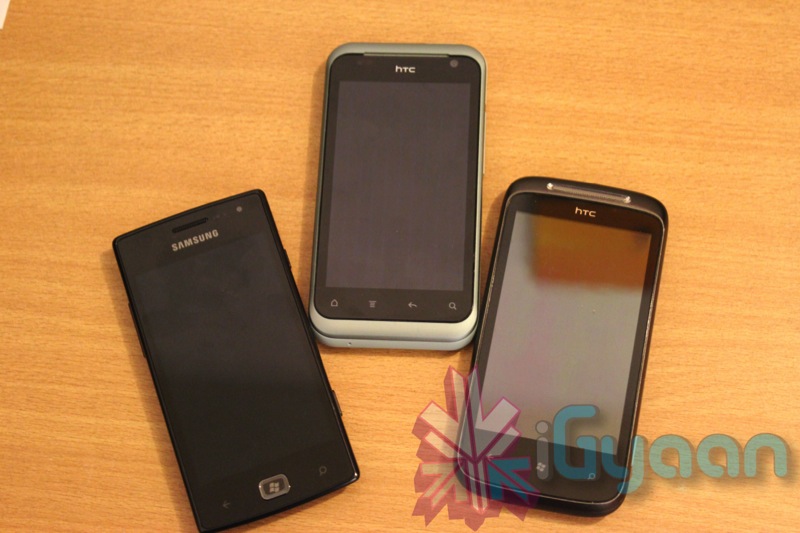
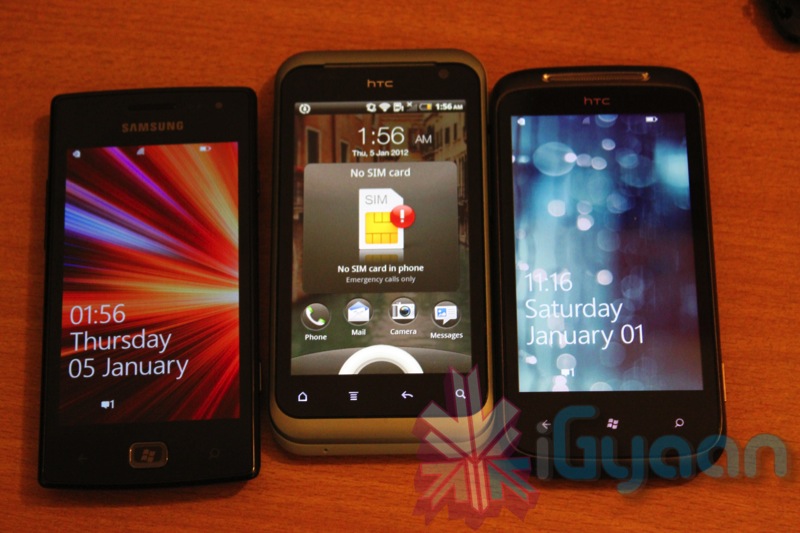
HTC Rhyme was announced a while back and it promised a lot of hope, especially because initial pricing pointed towards a Rs. 15000 launch. When the device was finally launched at Rs. 25000 , it seemed like a bit of a disappointment. The functionality and specs of the device prove otherwise.
Bundled are really nice quality in ear earphones with remote and mic, also in the box is the wonderful light charm which will effectively signal women that their phone is ringing somewhere in the depths of their handbags. Simply targeted at the younger Gen. buyers and more so at the smartphone buying ladies. Specs include 480 x 800 pixels, 3.7 inches SLCD display along with a 1 GHz Scorpion + Adreno 205 GPU. For media and apps there is 4 GB storage plus 768 MB RAM.
A group of Galaxy Tab 8.9 owners couldn’t wait anymore and decided to homebrew their own Ice Cream Sandwich build for the Tab 8.9. Using files from the upcoming final build of Cyanogen Mod 9, this home cooked build is anything but final. Bluetooth, GPS, hardware acceleration and the accelerometer are functioning, while Wifi still remains a problem. The group is refraining from releasing builds for download at the moment, but they are promising quick updates. Check out the video preview below, but if anything, like a user comment, it seems it was recorded on a potato.
Looks like fragmentation continues for Samsung on their global launch platforms. The Galaxy Note for the US At&t is said to sport a dual-core 1.5GHz MSM8660 Qualcomm chip. Everything else will remain the same, including the brilliant 5.3 inch screen, and smart pen features. The new radios will support 700MHz / 1700MHz bands to power up the LTE.
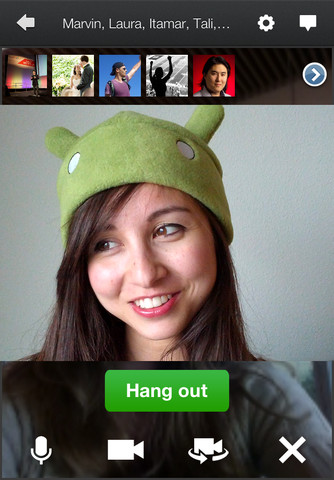
 Google has let out a sly update to their Google+ apps on Android and iOS. The biggest addition is now allowing, Android phones to join Hangouts on Air, a feature we might use as soon as Today.