Tag: lithium-ion battery

  • Tips to Prolong Smartphone Battery Life Cycle

    Tips to Prolong Smartphone Battery Life Cycle

    With an abundance of apps and services available today that require a significant amount of juice to run, we all have at some point of the other felt the pain of our smartphone battery dying on us. Honestly, for all its superpowers of computing, your smartphone is still at the mercy of the Lithium-Ion battery that powers it.

    iGyaan today comes to you with tips and tricks to better care of your smartphone’s battery so that you can prolong it’s life, and delay the inevitable.

    iphone battery

    Power Cycling the Battery

    Lithium-Ion batteries run for a limited amount of charge cycles before they start showing signs of deterioration. This process can be slowed down significantly, and battery life prolonged by understanding and using these charge cycles properly.

    For optimum use of these limited cycles, partial discharging of the phone is recommended. Complete discharges and full charging of the battery is to be avoided as it puts undue pressure on the Lithium-Ion pack. The Lithium-Ion battery inside your device is a complicated beast to tame, and as such it prefers constant and even charge patterns to irregular ones.

    For an average user, trying to discharge the smartphone’s battery down to 40% most times, and then juicing it up back to 80%, before removing the charger is recommended. This habit mixed with a complete discharge once every 30 cycles, or say a month, will ensure a happy battery set to a nice charging pattern.

    Lose the Heat

    maxresdefault (1)

    No amount of stressing on this one single point can be enough. Lithium-Ion batteries in your phones have no bigger enemy than heat. It is their Kryptonite. The battery inside your smartphone will degrade at a faster pace if the thermal levels aren’t to its liking. Regardless of it being used or not, if it runs hot, it sees its maker.

    So if you love the battery inside your phone enough, try what’s recommended, and keep the phone in cool conditions. Best tip here would be to avoid charging it inside a hot car, or charging/using it when the phone gets too hot. FHor emergency charging situations, car chargers should be avoided, and power banks should rather be used.

    Say No to Non- Branded Power Banks and Chargers
    sony_usb_charger_power_bank_mobile

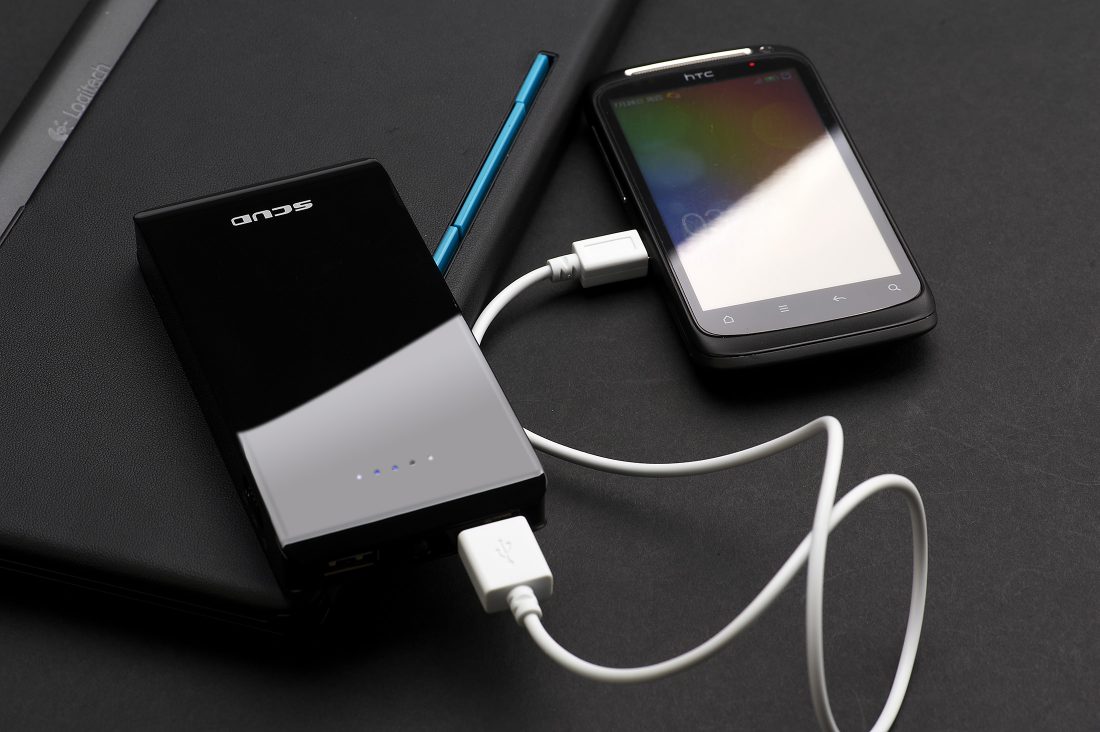
    Non-Branded chargers and power banks can cause irreparable damage to your smartphone’s battery. Irregular power surges could lead to the device’s battery frying itself in a minute. Even if you’re lucky enough to avoid a disaster like this, using such power banks and chargers to juice your phone could over time lead to the battery prematurely aging, and as a result, starting to malfunction.

    Lithium-Ion batteries as stated above prefer continuity, and can malfunction if there are irregularities when it comes to power being fed to them. Cheap car chargers and power banks are notorious for not being able to maintain power flowing through them, and as such should be avoided in any case.

    Another quick tip here would be to avoid plugging your phone into any random USB ports for charging. Laptops, wall outlets and branded power banks that promise a constant ampere rating should be used.

    Avoid Wireless and Fast Charging
    lg-g3-wireless-charging

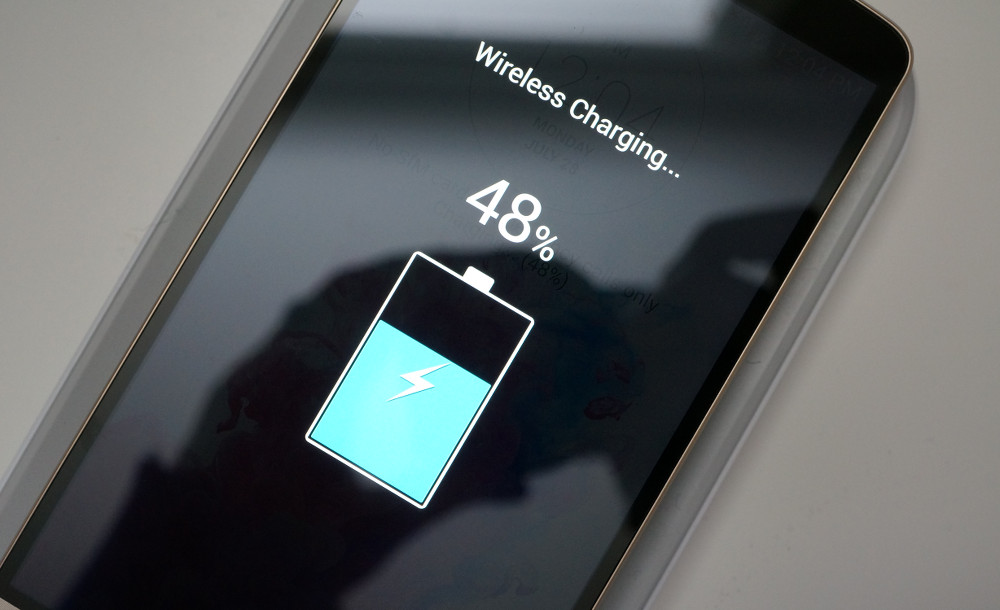
    Don’t hate us for this, but avoid Wireless charging as much as possible. This fancy new tech that the race of smartphones has been introduced to is convenient alright, but it also does harm to your Lithium-Ion battery. The inductive, wireless chargers in the market generate waste heat during the charging process. This waste energy also heats your battery in the process causing it to run hot, and degrade at a faster pace.

    Fast Charging, on the other hand, does not produce waste heat but instead forces the Lithium-Ion battery to charge in a way that it does not like. These batteries inside your phone like to be fed slow and steady, and any change to that habit upsets them. But having said that, this one’s an extreme measure really. Since fast charging only applies the extra voltage at the start of the cycle which does not last too long this particular nifty charging trick does not end up doing too much damage after all.

     

  • Stanford University Scientists Invent Batteries Which Can Fully Charge Your Device Within a Minute

    Stanford University Scientists Invent Batteries Which Can Fully Charge Your Device Within a Minute

    Scientists at Stanford University have invented an aluminium battery that could potentially allow smartphones to charge within a minute. This battery, according to its inventors, is so powerful that it could revolutionise the industry. The new battery is claimed to go from flat to full within a minute and pulls in enough electricity to fully charge a phone, a laptop or a tablet.

    The Apple iPhone takes around two hours to completely charge its inbuilt battery. But if it were fitted with the aluminium power source, it would completely top up within 60 seconds. Though the invention is still in its infant stage, scientists claim that the aluminium battery can withstand more than seven times of charging cycles than traditional battery. If a traditional battery can be recharged around 1,000 times,  then the aluminium battery can withstand 7,500 cycles.

    [quote text_size=”small” author=”Hongjie Dai” author_title=”Professor of chemistry at Stanford University”]

    Otherwise, our battery has everything else you’d dream that a battery should have: inexpensive electrodes, good safety, high-speed charging, flexibility and long cycle life. We have developed a rechargeable aluminium battery that may replace existing storage devices, such as alkaline batteries, which are bad for the environment, and lithium-ion batteries, which occasionally burst into flames. I see this as a new battery in its early days. It’s quite exciting.

    [/quote]

    As of now, the aluminium battery cannot produce more than half the voltage of a lithium battery, scientists are confident they will improve the output within the next few years. Another feature of aluminium batteries is that these can be bent or folded, and can be used in flexible electric devices and are also cheaper than lithium. Aluminium batteries are safer than conventional lithium-ion batteries used in millions of laptops and cell phones today, Hongjie Dai added.

  • Silk May Be The Key to Longer Lasting Li-Ion Batteries

    Silk May Be The Key to Longer Lasting Li-Ion Batteries

    In today’s world, where almost everyone is dependant on battery-burning devices, research in the field of extending battery life has been on its peak.

    A new study has suggested that Silk can be used to make rechargeable Li-Ion batteries last longer. Li-Ion batteries have found a major place in today’s era of technology. The reasons for its acceptance stands in its above average battery life and small size. However, demand for these batteries to last longer on a single charge is increasing steadily, and the same is being researched upon. One such research has led to the creation of a new green material that is derived from silk and can be used to create Li-Ion batteries that last longer.

    Scientist, Chuanbao Cao, and his colleagues from Beijing found out a way to process natural silk to create carbon-based nanosheets that could potentially used to store energy in devices. This material can store five times more lithium than graphite, which is critical in improving battery performance. This worked perfectly, completing 10,000 cycles with only a 9% loss in stability.

    As of now, the team has been able to install silk-based materials effectively only in prototype batteries and super-capacitors. It could be the first step in yielding longer lasting batteries in thousands.

  • These Powerful Lithium-ion Batteries Will Power Project Ara’s Smartphones

    These Powerful Lithium-ion Batteries Will Power Project Ara’s Smartphones

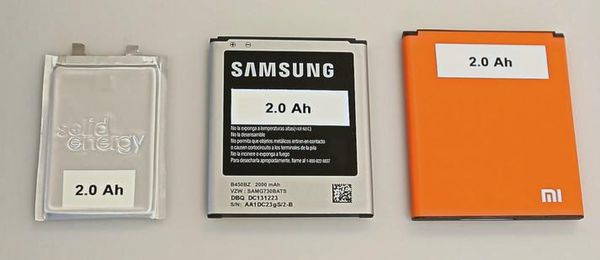
    In spite of compelling features and specs, the only thing that annoys the users of high-end phones is the battery life. Smartwatches too suffer from the same issue. SolidEnergy, a startup formed in 2012, seems to have resolved the energy problem with its new lithium-ion battery. This battery can store far more lithium ions and can last twice as long between charges.

    The new cells replace the conventional graphite electrode with a thin sheet of lithium metal foil, which is capable of storing more lithium ions. This replacement is potentially dangerous and such experiments have either stopped working or have caused explosion, when tested previously. SolidEnergy has been able to overcome the problem by using an ultra-thin metal anode and an electrolyte that both have solid and liquid parts.

    solidenergy-battery

    These batteries are reportedly coming to Project Ara. The Founder and CEO of SolidEnergy Dr. Qichao Hu commented on the same saying –

    Our battery basically makes the Project Ara phone more practical. Right now, one of the major challenges with this phone is that the battery life is too short

    The company has also managed to trim down the size of the battery. It can be recharged 300 times while retaining 80 percent of its original storage capacity than the other prototypes that can be recharged only a few times.

    SolidEnergy says that amid of most announcements of battery breakthroughs, this one should be taken with some caution. The company says that making a small number of high-performance prototypes is easy, but producing the same in large numbers can be difficult.

    The company plans to roll out the new Lithium-ion battery for mobile devices in 2016, while the same technology will be infused in electric cars in 2017. Check out the video below to understand the battery technology better:

    https://www.youtube.com/watch?v=oxNAJuFUmSY

iGyaan Network
Privacy Overview

This website uses cookies so that we can provide you with the best user experience possible. Cookie information is stored in your browser and performs functions such as recognising you when you return to our website and helping our team to understand which sections of the website you find most interesting and useful.