Tag: NASA

  • With LDSD, NASA Finally Has its Own Flying Saucer For Mars

    With LDSD, NASA Finally Has its Own Flying Saucer For Mars

    Flying saucers were an integral part of our 20th century pop culture. Movies like “The Day the Earth Stood Still” initiated our obsession with the rounded spaceships of unknown visitors. They also inspired a million hoaxes and countless imaginative tales of anal probes. But now NASA has made its own version of this Science Fictional travel medium to further transport capabilities to Mars.

    The test program, called the Low-Density Supersonic Decelerator (LDSD), was put into an evaluation phase over the last weekend and it came out with flying colors. The test was done at the U.S. Navy’s Pacific Missile Range Facility in Kauai, Hawaii.

    LDSD (3)
    Retrieving the craft from the Ocean

    The LDSD is an important technology to look forward to. The successful landing of the one tonne Curiosity rover using the rocket powered Sky crane set the precedence for this craft. NASA realized that the future missions will try to get even bulkier equipment on board and if the current plans of forming a human settlement on Mars have to succeed, they need to find a way to deliver payload efficiently and cost effectively.

    The LDSD, along with the Supersonic Inflatable Aerodynamic Decelerator (SIAD) was tested in the Stratosphere at the heights 36.58 KM above the earth surface where the winds are as thin as Mars. In the stratosphere, the LDSD payload underwent a rocket-powered trajectory to reach supersonic speeds. After this the deployment and optimum functioning of the inflatable decelerators were tested. This was followed by the recovery of the balloon and test vehicle in the ocean.
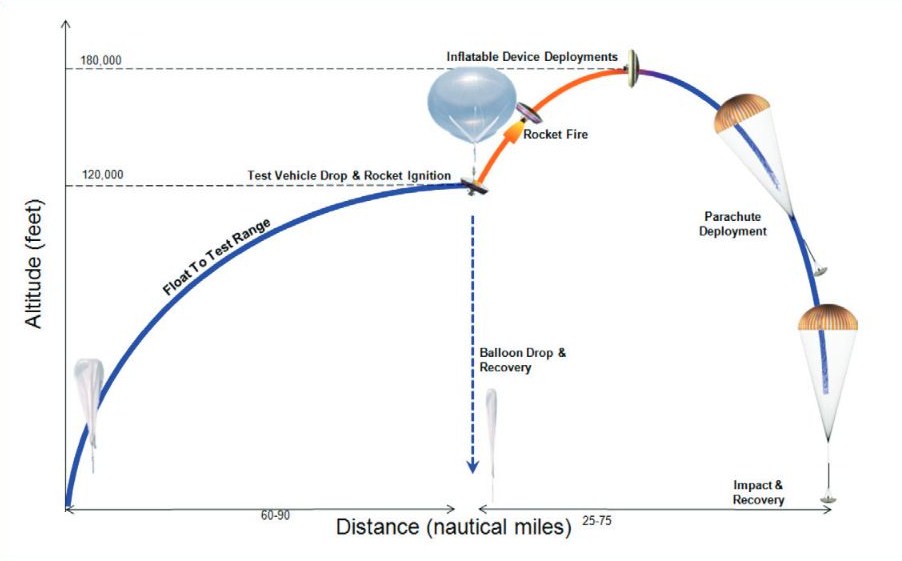
    LDSD 4
    The Test Plan

    NASA intends to use atmospheric drag as a landing solution, thereby saving rocket engines and fuel for final maneuvers and landing procedures. The technology for bigger spaceships will be bulkier to assist the massive crafts with landing capabilities. As the name suggests the craft is deployable at supersonic speeds and can bring the speed down for safe landing.

    Mars is a complicated environment for landing spacecraft’s. As it has a thin atmosphere, the parachutes need to be massive. Airbags and rockets have been used for past missions, but they would not be that efficient with larger payloads.
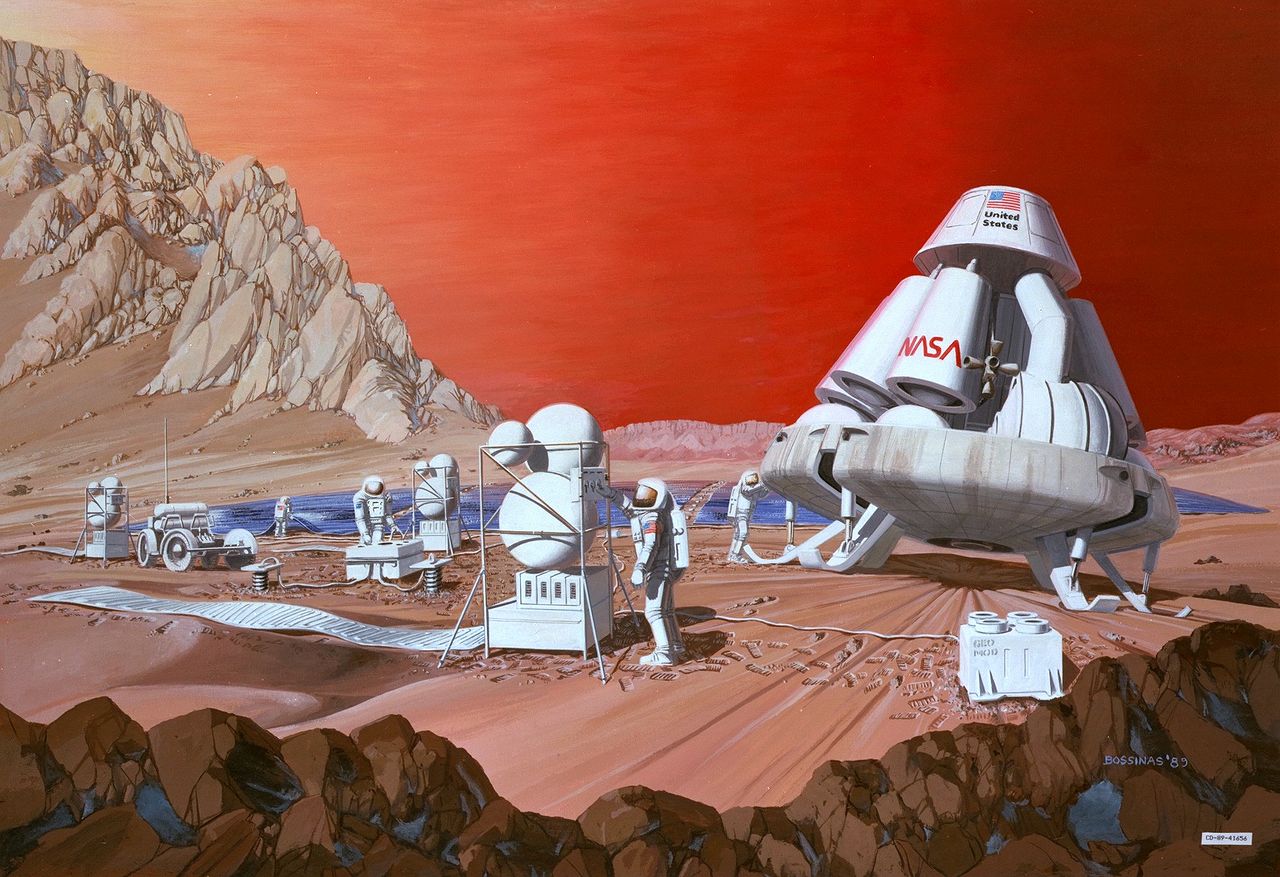
    The Dream of Human Mars mission got a bit closer to reality with this LDSD test
    The Dream of Human Mars mission got a bit closer to reality with this LDSD test

    This was the first of the three tests for the LDSD technology. There will be two other devices which will be tested later. As the mission dates for the audacious plans for landing humans on Mars is drawing closer, NASA intends to attain flight level maturity in the coming two-three years.
  • The Z-2: Next Generation Space Suits by NASA

    The Z-2: Next Generation Space Suits by NASA

    Ever since Yuri Gagarin set a milestone for the human race in 1961, the quest for leaving the gravitational restrictions of planet earth and floating in the mammoth void of space has gained momentum. Over the last 50 years human space flight technology has taken a giant leap. Space suits are required to provide astronauts with: Protection from extreme pressure variations, protection from the Sun’s and cosmic radiation, mobility, breathable air, regulation, communication systems and the ability to collect both solid and liquid wastes of the human body.

    Clearly, space suits have to perform exceptionally in all the above aspects as they are to be entrusted with a highly trained human life. As NASA plans to set a human base on Mars in 2030, there is a race to get the technology for interplanetary travel up to speed.

    nasa-spacesuit03
    nasa-spacesuit03

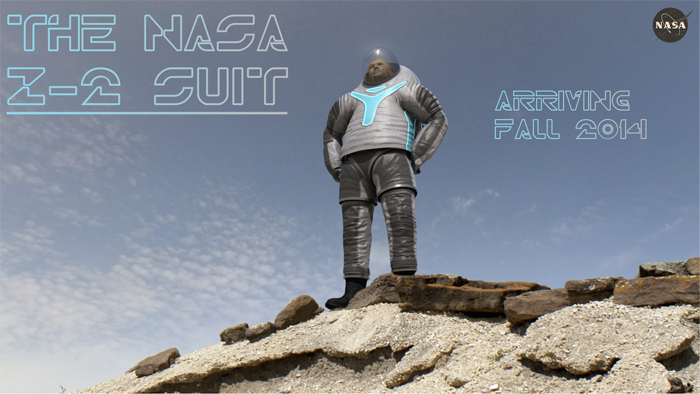
    NASA’s Z-2 Spacesuit is a project under the Advanced Exploration Systems Division which pioneers the development and demonstration of new technologies for future human missions beyond Earth orbit as part of the Human Exploration and Operations Mission Directorate.

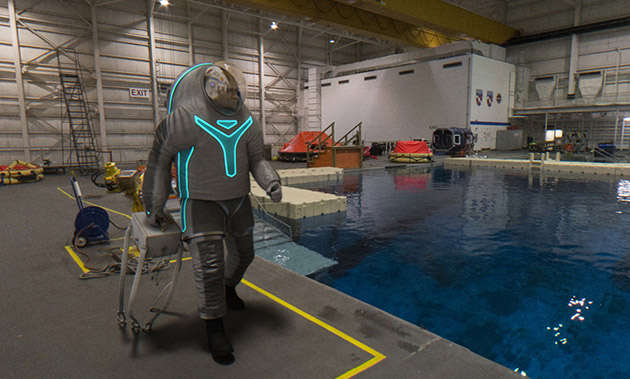
    They asked the general public to vote on three options dubbed Technology, Bio mimicry and Trends in Public. The Technology option won easily, with almost 60% votes, most likely because of its Tron-like appearance. But the picture released by NASA seems to resemble more like Gru’s(Despicable Me) Suit.

    nasa-spacesuit02

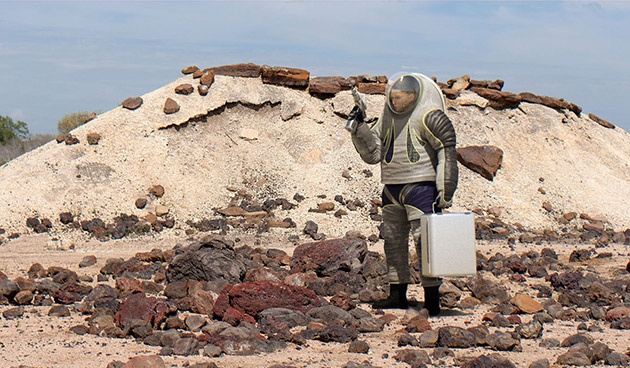
    The Z-2 will go under extensive testing sessions. Engineers will conduct multiple vacuum chamber tests, including one series at full vacuum, mimicking the lack of atmosphere found in space. The tests will take place at the Neutral Buoyancy Lab – the huge indoor pool used to train astronauts to spacewalk. Also, the rocky Martian surface tests will help evaluate the suit’s mobility, comfort and performance for the Red planet. Ultimately, all of these tests will guide engineers in designing the Z-3.

    Engineers and scientists around the world are working hard to develop super technologies. They’re hoping that astronauts will, one day, use them to live and work on Mars and return safely home after taking a giant leap for humanity.

  • NASA Scientist In China Accused Of Being A Spy After Downloading Porn

    NASA Scientist In China Accused Of Being A Spy After Downloading Porn

    Bo Jiang, a Chinese research scientist who worked at a NASA facility and was suspected of stealing secrets, is expected to plead guilty today–not for espionage, but for downloading porn on his work computer.

    Jiang was nailed down in suspicion of trying to spy on the National Aeronautics and Space Administration but was instead found guilty of downloading porn movies on his NASA laptop.

    According to court documents, Jiang was previously characterized as a “low risk” hire at NASA, despite his status as a foreign national, because his team was “not working on classified material or any development that is critical to the success of a current mission.”

    But even if Jiang didn’t have access to any such information, there are still directives barring NASA laptops “from being used for official business on international trips without prior written permission of the Chief Information Officer for NASA’s Langley Research Center.”

    Jiang took his laptop and an external hard drive along on two trips to China without written permission, according to court documents, which also said that while Jiang was in China, he corresponded with colleagues about work-related matters.

    His lawyers said he was doing “generic work” and did not have access to sensitive information. But he did have something else that could earn him a criminal record: Pirated movies and porn on his old NASA-issued laptop.

    The charge for making a false statement “has been resolved,” a prosecutor said, without providing details. Nasa had previously said it took “any allegation of a security violation very seriously”.

    [NBC News]

  • NASA Smartphone Satellites Return Images Of The Earth

    NASA Smartphone Satellites Return Images Of The Earth

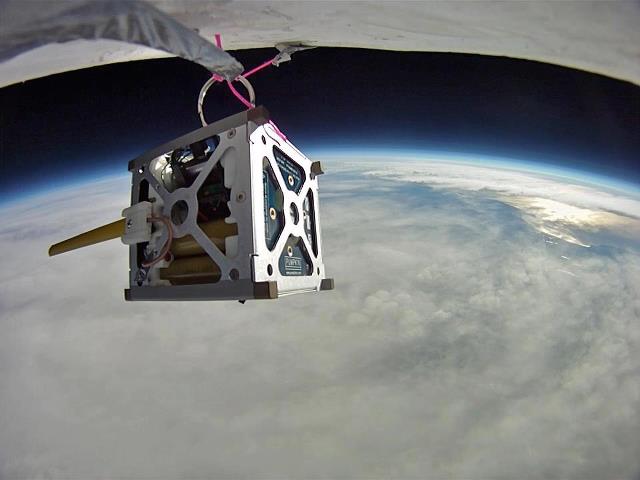
    The trio of Android smartphones NASA blasted into orbit recently have ended their journey by burning up in the atmosphere, but not before snapping shots of Earth — and the pictures don’t look too bad.

    The “PhoneSats” were a NASA experiment to develop super-cheap satellites and to determine whether a consumer-grade smartphone can be used as the main flight avionics of a capable satellite, NASA said.

    The agency launched a rocket containing three of its PhoneSats, cubical satellites four inches on a side with that old classic the Nexus One tucked within.They have GPS, motion sensors, and a camera built-in. So, the project cost less than $10,000 using off-the-shelf technology. A custom-built system might have cost upwards of a million dollars. The module was equipped with extra lithium-ion batteries. Data, along with photos from the smartphone camera, are still being analyzed.

    nasa

    The photos above come straight from the phones’ five-megapixel cameras themselves. That part was successful, though the pictures aren’t exactly detailed. Between the transmission artifacting and the smartphone grade cameras it gets a little messy.

    A major concern was whether smartphones could withstand space temperatures. “On Earth here, there’s not many situations where your phone will reach to 40, 50 degrees Celsius, and so I think we were pushing the limit, but we were really interested in seeing if this would really work,” said Watson Attai with the PhoneSat engineering team.

    The mission successfully ended Saturday, April 27, after predicted atmospheric drag caused the PhoneSats to re-enter Earth’s atmosphere and burn up, NASA said.

    [Network World, Engadget]

  • NASA Left Red Faced As Rovers Accidentally Draw A Penis On Mars

    NASA Left Red Faced As Rovers Accidentally Draw A Penis On Mars

    The Mars Rovers, obviously bored out of their robotic minds traversing the red planet, are now whiling away the time like immature students everywhere: by drawing dirty pictures.

    Rover


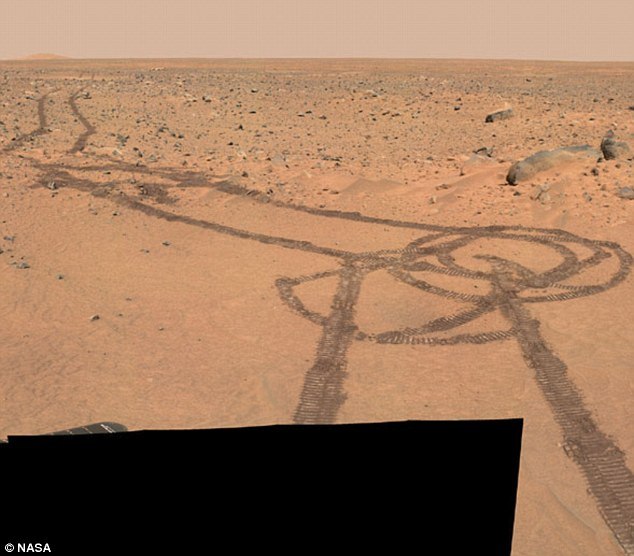
    A keen-eyed person spotted a photo of Rover tracks on NASA’s site that looks remarkably like a penis. The pic was posted to Reddit with the caption “Mars Rover = $800M, Team to Operate = $1B. Drawing a penis on the surface of another planet = Priceless.”

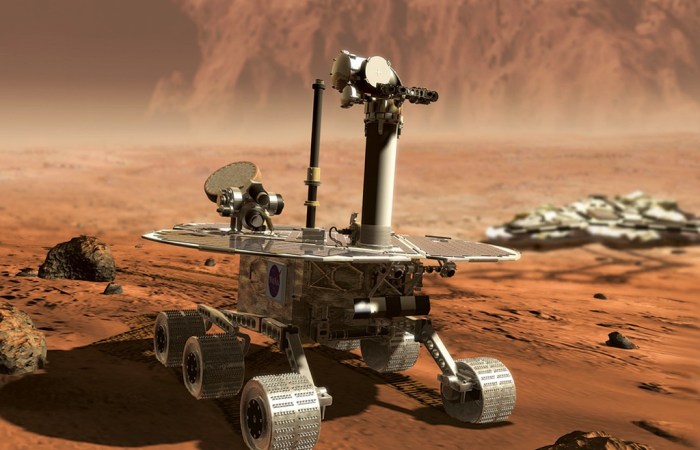
    As the Huffington Post reports, the twin exploration vehicles Spirit and Opportunity were launched nine years ago, in an effort to search the surface of Mars for signs of water erosion and possibly even life.

    According to Nasa, since then the rovers have driven over more than 10km of Martian land, directed by teams back on Earth combined with autonomous cameras designed to avoid potential problems with the terrain.

    It’s not clear which of the rovers drew the shape, or even when it was made. It’s been suggested the rude drawing came as a result of the Rover turning in tight circles to find a new route.

    Nasa lost communication with the Spirit rover in 2009 after it became stuck in some sand. Meanwhile the Opportunity is still traversing the surface on its way to the Endeavour crater.

    Last year they were joined on the Red Planet by Nasa’s $1.5billion rover Curiosity, which has so far not stooped to the immature levels of its rover cousins.

    [Huffington Post]

iGyaan Network
Privacy Overview

This website uses cookies so that we can provide you with the best user experience possible. Cookie information is stored in your browser and performs functions such as recognising you when you return to our website and helping our team to understand which sections of the website you find most interesting and useful.