Tag: Net Neutrality

  • Mark Zuckerberg Stays Hopeful About Internet.org in India After TRAI Bans Free Basics

    Mark Zuckerberg Stays Hopeful About Internet.org in India After TRAI Bans Free Basics

    Telecom Regulatory Authority of India has spelled doom for Facebook’s Free Basics campaign by banning it from India. So much for all the voiced opinions in the last couple of weeks.

    Though this is big setback for Internet.org, Mark Zuckerberg refuses to let it douse his spirits. In a post he put up earlier today, he says,

    “Our work with Internet.org around the world has already improved many people’s lives. More than 19 million people in 38 countries have been connected through our different programs. Connecting India is an important goal we won’t give up on, because more than a billion people in India don’t have access to the internet.”

    One cannot help but question Facebook’s ‘altruistic’ intentions, or ones it cannot stop talking about when it comes to Free Basics. With its infinite resources can’t Facebook simply set up a company that provides Internet to remote locations for free? Wi-Fi powered stations that provide connectivity can be used to help with these attempts. Once there are a substantial amount of people involved, there can surely be a way figure out a way to make money without necessarily compromising on net neutrality.

    It is a fact that Facebook has provided some sort of Internet connectivity, mostly through the platform of Free Basics in 38 countries. But in the future, both Internet.org and Free Basics are expected to face the same trouble it did in India elsewhere as well over net neutrality.
  • Trai Bars Differential Pricing of Data Services, Win for Net Neutrality

    Trai Bars Differential Pricing of Data Services, Win for Net Neutrality

    The Telecom Regulatory Athority of India (TRAI), today has announced final guidelines on differential pricing. Ruling heavily in favour of Net Neutrality, TRAI has said, ” No service provider shall offer or charge discriminatory tariffs for data services on the basis of content”

    The telecom sector regulator with this ruling has barred differential pricing of data products, which effectively will mean that controversial zero-rating ideas such as Facebook’s Free Basics won’t be allowed to kick-off in the country.

    TRAI also looks increasingly likely to disallow subsidised data packages already on offer which allow services, such as Whatsapp or Twitter etc to be availed at discounted prices through special packages.

    Net Neutrality

    The Regulator has warned operators that they cannot enter into any arrangement based on discriminatory pricing failing which they could be fined upwards of Rs 50,000 a day.

    “Prohibition of discriminatory tariff is necessary to ensure that service providers continue to fulfill obligations in keeping internet open and non-discriminatory,” TRAI said.

    This particular decision by TRAI will come as bad news for telecom operators who have been increasingly looking at differential pricing of data services as a source of increasing revenues. It will also come as a huge blow to social networking giant, Facebook which has invested heavily in Free Basics.

  • TRAI Takes on Free Basics After Response from Users

    TRAI Takes on Free Basics After Response from Users

    In what will come as welcome news to millions of netizens across the country, the Telecom Regulatory Authority of India(TRAI) in its latest communication to Facebook, has in rather stern words intimated to the company that it does not approve of the manner in which Facebook is misrepresenting the results of its ‘support Free Basics’ campaign, and what it seems to be suggesting is a subtle attempt at nudging the voice of the people out of the decision-making equation.

    This letter from the desk of TRAI’s joint advisor K.V Sebastian, pulls up Facebook for the way it has conducted itself through the campaign to save Free Basics from being shut down. TRAI has suggested that Facebook is guilty of not conveying the full text of the regulator’s message to users who had supported Free Basics, and hence is misleading them into making uninformed choices.

    India-for-or-against-Net-Neutrality

    TRAI had earlier asked Facebook to convey to its users in support of Free Basics and zero-rating campaigns four specific questions which the telecom regulator wanted answers to before taking any final decision on the matter. Facebook, for its part responded to TRAI’s request by sending back a highly charged template response in favour of saving Free Basics which it claimed reflected the sentiment of its users.

    TRAI’s reply to this read,

    “Your response is silent on whether the text of TRAI has been shared with users as was specifically requested by TRAI. In light of the tangential natures of the responses by the users to the questions asked, the communication of the text was vital to demonstrating and ensuring that those who are responding to TRAI are making informed decisions.”

    The letter further goes on to say that in light of Facebook not disclosing crucial information to users, TRAI does not accept Facebook’s assertion that the initial template responses in support for ‘Free Basics’ and ‘Digital Equality’ are an appropriate representation of what people are saying.

    TRAI, not mincing its words, has also slammed Facebook in this letter over what it calls as ‘self-appointed’ spokesmanship on behalf of its users who it says “have not authorized Facebook of speaking on their behalf collectively.”

    It has further said that it does not approve of this practice of Facebook, and believes that what the company is doing through these uninformed template responses is curbing “public consultation” which it believes “has the flavour of reducing this meaningful consultative exercise designed to produce informed decisions in a transparent manner into a crudely majoritarian and orchestrated opinion poll”.

  • TRAI Received Only 21 Counter-Comments On Net Neutrality

    TRAI Received Only 21 Counter-Comments On Net Neutrality

    Last year, the Telecom Regulatory Authority of India (TRAI) raised the issue of net neutrality and, needless to say, it sparked off a major debate. This eventually led TRAI to invite public comments on the differential pricing of net services and the last date to submit counter-comments was 14th January.Net Neutrality

    Of the total 24 million applications submitted over TRAI’s paper on the differential pricing of data, a significant aspect of net neutrality, there were only 21 counter-comments submitted by individuals or organisations.

    List of telecom operators that countered the proposal of keeping net services neutral of discriminatory pricing include Airtel, Vodafone, Idea Cellular and Reliance Communications, through industry bodies, Cellular Operators Association of India (COAI) and Association of Unified Telecom Service of India (AUSPI). COAI and AUSPI said in their joint counter-comment,

    “Price differentiation will allow TSPs to cater to specific consumer requirements, including facilitation of access to those segments that are currently unconnected or poorly connected. Price differentiation is a widely adopted business practice used in many industries.”

    While talking about the net-neutrality debate in India, how can we not talk about Facebook and its Free Basics? While openly opposing differential pricing of internet services, Facebook continued to defend Free Basics and claimed one more time that it’s not a threat to net neutrality.The company defended itself in an official statement,

    “This is not true and evidence refutes it. In addition, this need not be a material concern since the programme is open to all operators on the same terms in a non-exclusive manner.”

    While the future of net neutrality still seems uncertain, we can only hope to wait and watch the events unfold. In the meantime, find more information here Facebook’s Free Basics.

  • Report : Google India Takes a Stand Against Net Neutrality

    Report : Google India Takes a Stand Against Net Neutrality

    According to various news reports, Google could be lobbying against net neutrality in India, as it has been asking the Internet and Mobile Association of India (IAMAI) to support zero rating plans.

    The zero rating plans allow people to use certain web services for free, this basically also allows telecom operators to selectively offer its users access to certain applications/websites without incurring any data charges. Therefore, any telecom company that signs up for this plan would have to pay the telecom provider a large sum of money in order to make their apps and services free for users.

    Net Neutrality

    Early this year, Airtel had decided to offer its own Airtel Zero plan in India. This plan was said to be in violation of net neutrality. Very recently though, MediaNama reported an email exchange between Google and the IAMAI, which suggested that Google was trying to push for the removal of zero rating plans from the IAMAI’s submission to the Department of Telecom. Google has further argued that there was no unanimity among internet companies on this issue and therefore, should be removed.

    In the recent past, Google has been a part of the zero rated plan, but has put it on hold to provide free data to end users in India. Some companies have still not responded to the net neutrality debate in India, however, Facebook is reported to have taken a stand supporting zero rating.

    Let us know your comments on the zero rating plans and net neutrality.

    Source

  • According to BJP, ‘The Internet Must be Governed’

    According to BJP, ‘The Internet Must be Governed’

    BJP said the internet is a crucial part of one’s life, and should be governed very carefully without the need to compromise the freedom of speech and expression.

    Speaking at an Internet governance event organised by industry chamber Assocham, BJP National Spokesman, Sambit Patra said,

    Internet is extremely important and since it is extremely important for governance also, because every person is within the ambit of government, Internet has to be governed in a way that does not take away basic essence of Internet which is freedom of speech and expression.

    He also stated that the government had formed a community along with TRAI on Net Neutrality. He said,

    Once the TRAI submits its recommendation to the Telecom Commission and then after the commission approaches the government, the government will take the decision in favour of people.

    On March, the Supreme Court deemed Section 66A of the IT Act as unconstitutional. This Act granted police the power to arrest anyone for sending out offensive messages from computers, mobiles or any other communication portals with a maximum penalty of 3 years in jail. Sambit Patra stated this Act had been misused in the past, due to vagueness of words.

    On the contrary, Congress leader and former Union Minister, Manish Tewari, challenged Patra’s discussion by stating that the Internet should not be governed and must be left the way it is to develop. He supported his statement by saying,

    Difficulty is where do you draw the line? Someone may be liberal and may draw the line on the left and someone may conservative may draw the line on the extreme left.

    A few days back, the Indian Government came out in support of Net Neutrality. The government hasn’t been issued with a final verdict on the same but is committed to keeping the Intenet open and evenly accessible to everyone. Standing up in support of free internet, Telecom and IT minister Ravi Shankar Prasad in a firm voice said that the practices of blocking and deliberately slowing down or speeding up of lawful content on web should not be allowed. Read more about it here.

  • Reliance’s New AD Pulls an ‘Airtel Zero’, Promotes Net Neutrality Violation

    While the hue and cry over Airtel’s controversial ‘Airtel Zero’ was justified, we need to be reminded that there are several other players in the market working on a similar plan.

    Here’s why we had a problem with Airtel Zero – it was a new platform that let companies buy data to offer their apps to consumers for free. It allowed users to access these apps without incurring data charges. This was seen as a direct violation of net neutrality as it gave priority access to some apps over others.

    Now let’s have a look at Reliance’s ‘Freenet’ service. Freenet is a service jointly launched by Reliance and Facebook in India, which hosts around 20 popular websites, (including AajTak, Facebook, Wikipedia etc) free of charge for Reliance customers.

    Notice a difference between the two services? We couldn’t find one either. Check out the ad here:

    https://www.youtube.com/watch?v=XT3-9odXdUg&feature=youtu.be

  • Indian Government Comes Out in Support of Net Neutrality

    Indian Government Comes Out in Support of Net Neutrality

    The much heated issue of Net Neutrality now has the Centre’s support. The government hasn’t come out with a final verdict on the same, but is committed to keeping the Intenet open and evenly accessible to everyone. Standing up in support of free internet, Telecom and IT minister Ravi Shankar Prasad in a firm voice said that the practices of blocking and deliberately slowing down or speeding up of lawful content on web should not be allowed.

    While responding to a discussion on Net Neutrality in Rajya Sabha, Prasad commented –

    Government stands for ensuring non-discriminatory access to Internet for all citizens of the country. The government agrees with the viewpoint that blocking and deliberately slowing down/speeding up of lawful content on the Internet should not be allowed, and customers should have unrestricted access to all lawful content on the Internet.

    Prasad stressed on the fact that the Government has all powers to direct Telecom Regulatory Authority of India (TRAI) on public policy. “However, TRAI’s powers to regulate tariff and quality of service are subject to overall public policy of the government and the government has sufficient powers under the Trai Act to invoke its national policy objectives to give directions to Trai,” stated Prasad.

    ravi shankar prasad
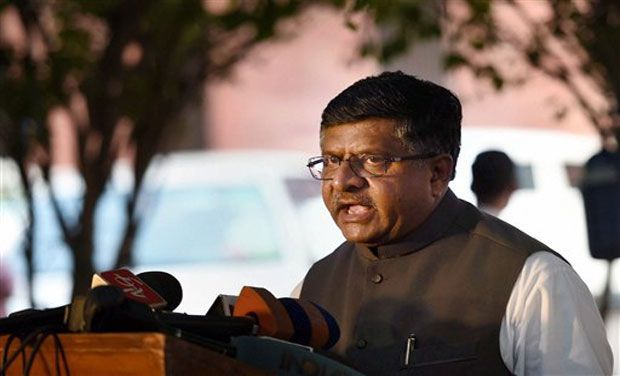
    Telecom and IT minister Ravi Shankar Prasad spoke up about keeping the Internet an open platform.

    He further mentioned that a detailed examination on topics like traffic management, national security, integrity of network and infrastructure investment is needed by experts on Net Neutrality.

    It should be kept in mind that government hasn’t laid down the structured guidelines on net neutrality principles. Once the government frame rules for the content flow on web, telecom operators wouldn’t be able to adopt illegitimate pratices to earn more money.

    A while back, TRAI’s consultation paper on its official website gathered millions of emails in support of Net Neutrality.  From the comments of the Telecom minister, it seems like the final verdict would slay the Airtel Zero plan, once and for all.

  • Government Body NIXI Stands for Net Neutrality, Says its Against Selective App Bundling

    Government Body NIXI Stands for Net Neutrality, Says its Against Selective App Bundling

    Yesterday the deadline to cast a vote for saving the internet ended. Though we have to wait for the final take of the government on the issue, Neutral Internet Exchange of India (NIXI) has given its answer. The body under IT ministry said that it fully backs Net Neutrality and any move to bundle apps would go against the concept of Internet.

    NIXI made a remark –

    National Internet Exchange of India as the neutral exchange in the country, strongly supports Neutrality of the Internet which is the only way forward to make the Internet open, free and innovative.

    Any move by Telcos to bundle application or content selectively will hamper the very basic concept of Internet.

    The government-run organisation also expressed concern over the impact of discriminatory Internet on budding businesses. NIXI commented, “Under these circumstances any dilution of the neutrality of the Internet, is expected to affect the freedom of expression, development of innovative ideas and newer applications and entrepreneurship of youngsters and start-ups.” A couple of days back, a number of tech start-ups wrote an open letter to the Prime Minister of India asking for a free internet. They mentioned how the emerging companies would suffer and would never be able to become the next Google and Amazon.

    Telecom Regulatory Authority of India (TRAI) is yet to give a response to over 1 million emails supporting SaveTheInternet.in campaign, but the organisation is not bound by any time frame. In such circumstances, the telecom operators are open to implementing any plan. The volunteer group behind ‘Save the Internet’ program is requesting the government to impose a temporary restriction on telcos to roll out any plan until the final verdict.

  • TRAI Receives More Than One Million Emails in Favour of Net Neutrality

    TRAI Receives More Than One Million Emails in Favour of Net Neutrality

    The heated debate over Net Neutrality doesn’t seem to end up anytime soon. In response to the online protest initiated by TRAI, the independent telecommunications authority received over 1.5 lakh e-mails within two days. Now, the protest has touched one million mark.

    The Telecom Regulatory Authority of India has received more than one million emails in support of Net Neutrality from the citizens of India. The statement was made by a voluntary group managing the ‘Save the Internet’ program. The figures are of until yesterday, and the emails are continuously flooding TRAI’s Inbox.

    net-neutrality

    As per a report, netizens have been bombarding the TRAI with 50 emails every minute. This resulted in the campaign hit one million mark within just 12 days. The creators of savetheinternet.in were surprised as they expected the campaign would not last more than 15,000 emails.

    TRAI put up a consultation paper called “Regulatory Framework for Over-the-Top (OTT) Services” and asked users for their comments. April 24, i.e. today, is the last date of submit your vote and make your voice heard. Click here to back the movement.

    Many celebrities and well-known personalities from different fields have come in support of free internet. Rahul Gandhi is the latest to join the club and ask for freedom of the internet.

  • Indian Tech Startups Write an Open Letter to PM Modi to Help Save Net Neutrality

    Indian Tech Startups Write an Open Letter to PM Modi to Help Save Net Neutrality

    An unbiased internet is a right of all and should not be a distinctive property limited to a privileged few. For the Internet to be a free entity is extremely important for regular internet users, as it is the equally essential for the budding businesses to grow. Start-up firms, who are launching themselves to gain recognition using the internet, need a non-discriminatory medium to establish themselves. For them, an unbiased platform both on the basis of cost and speed is a crucial need.

    A group of tech start-ups has pushed its concern over the lack of Net Neutrality. The emerging companies wrote an open letter to PM Modi which states the necessity of free Internet to build a Digital India. The letter throws light on the fact that the dream of India to produce the next Google is impossible without a non-discriminatory Internet. The Prime Minister of India, few days back, remarked in his speech that he wants India to be the birthplace of next renowned search engine.

    net-neutrality

    The letter by the small businesses reads, “We dream that an Indian startup may one day become the next Google, Facebook or Amazon. We know that you share our dream. We share another dream with you, the dream of a Digital India. We dream of this as Indians, and also as businesses that wish to serve a fast-growing Indian internet market. These dreams cannot be achieved without the open Internet.”

    The message ends up with the comment, “We request that open-house debates be held in major Indian cities after the consultation process is over. We, the start-ups that are at the forefront of creating Digital India, request you to take action now. We need you to protect our nation’s innovation ecosystem.” The open letter is signed by some of the fresh companies like Housing.com, Goibibo, TheSecretKart.com and much more.

    Late last year, Airtel attempted to violate net neutrality by charging extra for free calls and chat services, but faced an aggressive backlash resulting it to withdraw the proposed plan. Recently Airtel Zero, a scheme to offer free data access to a variety of mobile apps, faced such hostility that it forced Flipkart to back off from Airtel’s Zero plan. However, Airtel stood by its initial claim and came out openly denying the allegations.

    Meanwhile, the government has stepped into the matter and will look into the Zero plan. Facebook and Twitter are flooded with various campaigns such as #SavetheInternet, #NetNeutrality, to save the internet from classism.

    To read the full letter, click here.

  • Airtel Finally Speaks Up About Net Neutrality

    Airtel Finally Speaks Up About Net Neutrality

    In the past few weeks, Airtel has managed to unite the online world against it. It did so, by launching the infamous Airtel Zero plan, which is a clear violation of net neutrality. Earlier today, Flipkart, paying heed to the online negativity gathered, announced that it had made the wise decision of backing out of the Airtel Zero plan.

    Read what Airtel has to say below:

    Airtel fully supports the concept of Net Neutrality. There have been some misconceptions about our toll free data platform – Airtel Zero. It is a not a tariff proposition but is an open marketing platform that

    1. Allows any application or content provider to offer their service on a toll free basis to their customers who are on our network.

    2. Such customers whether on a data pack or not will therefore be able to access these toll free services free of charge.

    3. No site whether on the toll free platform or not under any circumstances is blocked, throttled or provided any form of preferential access.

    4. The toll free platform is open to all content providers on a completely non discriminatory basis and operates on the same principle as 1-800 toll free voice services.

    The statement made by Flipkart regarding their decision not to offer toll free data service to their customers is consistent with our stand that Airtel Zero is not a tariff proposition. It is merely an open platform for content providers to provide toll free data services. The platform remains open to all companies who want to offer these toll free data services to their customers on a completely non discriminatory basis.

  • Flipkart Backs Off From Airtel Zero, Sticks to the ‘Larger Cause of Net Neutrality’

    Flipkart Backs Off From Airtel Zero, Sticks to the ‘Larger Cause of Net Neutrality’

    After facing a barrage of criticism for tying up with the controversial Airtel Zero plan, e-commerce giant, Flipkart, has withdrawn out of the service. According to a Flipkart spokesman, the e-commerce giant has taken the wise decision to walk away from their partnership with Airtel and instead they want to commit themselves to the ‘larger cause of Net Neutrality’.

    A week back, Flipkart caused a major outburst when they announced that they would be joining Airtel Zero. This act allows companies to buy data from telcos and offer their consumers free internet access. This lead to violation by discriminating various Internet services on the basis of price.

    Here’s the complete official statement from Flipkart:

    We at Flipkart have always strongly believed in the concept of net neutrality, for we exist because of the Internet. Over the past few days, there has been an enormous amount of debate, both internally and externally, on the topic of zero rating, and we have a deeper understanding of the implications. Based on this, we have decided on the following:

    We will be walking away from the ongoing discussions with Airtel for their platform Airtel Zero.

    We will be committing ourselves to the larger cause of Net Neutrality in India. We will be internally discussing over the next few days, the details of actions we will take to support the cause.

    We will be working towards ensuring that the spirit of net neutrality is upheld and applied equally to all companies in India irrespective of the size or the service being offered, and there is no discrimination whatsoever.

    To protest against Airtel’s net neutrality violation, a website has been launched called www.SaveTheInternet.in, using which anyone can send a direct mail to TRAI in support of the cause. According to reports, within three days a record of 1.5lakh petitions were emailed to TRAI.

    After Flipkart, many politicians are showing concern and have joined in to pitch in for Internet freedom. Next month, a panel of six members will be set up by the telecom department, who will give in their final take on Net Neutrality.

    To know more about Net Neutrality, click here.

  • Report : Government to Intervene on Airtel’s Net Neutrality Violation

    Report : Government to Intervene on Airtel’s Net Neutrality Violation

    Net Neutrality is currently a heated issue amongst the people of India. Recently, Bharti Airtel has received a lot of flak for its contentious “Airtel Zero” plan from social media users. Following the reports of Airtel’s preferential treatment for websites, the government has reportedly decided to intervene and has said that it plans to keep a close watch on the company’s developments.

    According to a report by the Times of India, the Department of Telecom (DoT) is looking into the Airtel’s Zero plan to give special privileges to some websites and confined access to the others. A high-rank official stated about the government will take on the Zero plan, “DoT is looking into finer details and whether it goes against the spirit of net neutrality.”

    airtel net neutrality

    Meanwhile, the Telecomm Regulatory Authority of India (TRAI) has also started an online protest against net neutrality, which has received a tremendous response from users. Last Saturday, government uploaded a consultation paper called “Regulatory Framework for Over-the-Top (OTT) Services” where stakeholders were asked to comment. Within two days, the government received over 1.5 lakh e-mails asking to protect network neutrality in the country. A vast group of people are in support of net neutrality and want Internet to be a free space – where everyone can access anything at the same speed.

    The inspection by DoT will be in conjunction with TRAI’s OTT program and will also bring to light Airtel’s previous attempts to assault net neutrality. The national telecom operator tried to induce differential charges for various online services like Skype, Viber, WhatsApp, but received an aggressive backlash resulting it to withdraw the proposed plan.

    The source also stated that the government might not take any immediate action against Airtel and will scrutinize the matter initially. Meanwhile, Airtel has denied allegations and said that the Zero plan is “non-discriminatory” and doesn’t give undue preference to any company.

    The net neutrality campaign has gained momentum over social media, and people of diverse streams are joining hands to make Internet a free and fair space. Various campaigns are trending on Facebook and Twitter like #SavetheInternet, #NetNeutrality  in an attempt to make sure that the internet doesn’t get dragged into a class system.

  • National Roaming Charges Set to Drop From 1st May

    National Roaming Charges Set to Drop From 1st May

    The Telecom Regulatory Authority of India (TRAI) has issued a statement that mobile phone users will be paying 23% less for calls and up to 75% less for sending texts while on roaming. The reduced roaming charges will come to effect on May 1, 2015.

    National roaming service lets subscribers to keep using their number while travelling outside the coverage of their home networks. Companies have offered roaming packs in the past which lets users reduce their roaming charges but a government mandated roaming charges will bring relief for all users.

    As laid down by TRAI, For outgoing calls on roaming, the present charges of Rs 1 per minute has been slashed down to 80 paise per minute. As for STD calls, the rates has been slashed from Rs 1.50 to Rs 1.15 per minute.

    Incoming calls on roaming will now be charged at 45 paise per minute instead of the earlier 75 paise. Local texts will now cost 25 paise while an STD text will be charged at 38 paise.

    The rates for national roaming services were last revised in 2013. Telecom companies have been notified to introduce the new roaming tariff’s from May 1. The telecom companies have already been losing revenue to various messaging apps and hence have started attacking net neutrality in India. This order will further cut down their revenue stream. The companies might respond by raising data tariff’s or push for loose net neutrality laws in the country. Though the slash is a good news for the consumers, the developments in the Indian telecom space needs to be watched more vigilantly.

iGyaan Network
Privacy Overview

This website uses cookies so that we can provide you with the best user experience possible. Cookie information is stored in your browser and performs functions such as recognising you when you return to our website and helping our team to understand which sections of the website you find most interesting and useful.