Tag: snapdragon

  • Qualcomm Launches Three New Snapdragon Chipsets For Mobile Devices

    Qualcomm Launches Three New Snapdragon Chipsets For Mobile Devices

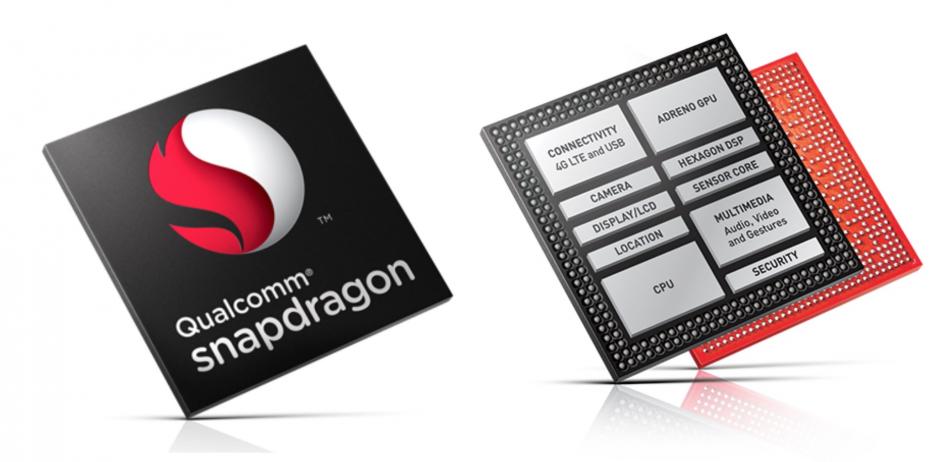
    On April 9 2019, American technology company Qualcomm added three new chipsets to its mobile SoC lineup which include the Snapdragon 665, Snapdragon 730 and the Snapdragon 730G. The ‘G’ suffix in the newly launched chipset stands for ‘Gaming’, which means that the Snapdragon 730G is intended for gaming smartphones. Overall, the company claims that the aforementioned chipsets will primarily focus on Artificial Intelligence, Camera and Gaming.

    Qualcomm Snapdragon 665
    The Snapdragon 665 chipset is the base model in the lineup unveiled on April 9, however, it has significant improvements over the Snapdragon 660. The new 11nm chipset comprises of an octa-core Kryo 260 CPU. Four cores of the aforementioned 8 cores are dedicated to performance, while the other cores enhance the efficiency of the device, the company claims. For graphics, the chipset packs an Adreno 610 GPU with the Vulkan 1.1 graphics driver. Furthermore, the chipset features Qualcomm aptX Adaptive Audio and Aqstic to improve the gaming experience of the user.
    The company has included the Spectra 165 ISP, which integrates support for triple cameras and AI while capturing images. Also, the chipset enables features such as Hybrid autofocus, zero shutter lag and optical zoom, in addition to 48-megapixel image support. The SoC has the third-generation Qualcomm AI Engine, providing support for features such as 3D Face Unlock. Qualcomm claims that the chipset will deliver almost 2x faster AI device processing than the Snapdragon 660. Moreover, the SoC is enabled with Quick Charge 3.0 Fast Charge technology.

    Qualcomm Snapdragon 730 and 730G
    Qualcomm made it quite clear that the Snapdragon 665 will be targeted towards smartphones lying in the entry-level segment. For mid-range segment devices, the San-Diego company unveiled the Qualcomm Snapdragon 730, which is built on an 8nm process. Some features that were previously only present on Snapdragon’s 8xx series have been carried over to the Snapdragon 730. The SoC comprises of Kryo 470 octa-core CPU, which have a maximum clock speed of 2.2 GHz. Six cores are dedicated to regulating the power and efficiency of the smartphone, whereas the other two cores are dedicated solely to performance. The chipset has the Adreno 618 GPU, which is claimed by the company to provide a 25% performance boost over its predecessor.
    In addition to Qualcomm aptX Adaptive audio and Qualcomm Aqstic audio, the chipset has the Spectra 350 ISP, which features a dedicated Computer Vision ISP. This will enable the capture of 4K HDR videos in portrait mode, that can be further mingled with bokeh effects. The Snapdragon 730 SoC has an inbuilt X15 LTE modem which claims to provide downloads up to 800Mbps. The chipset is Wi-Fi 6 ready and features Qualcomm Quick Charge 4+ technology.
    Also Read: Redmi Note 7 Pro With 6GB RAM To Go On Sale In India Starting Today

    The Snapdragon 730G shares most of its features and specifications with the 730, but as mentioned before, the ‘G’ means that it has significant upgrades with regard to mobile gaming support. For instance, it features an overclocked version of the Adreno 618 GPU, providing a 15% graphic rendering boost over the Snapdragon 730. The company claims that the gaming-focused chipset can offer True HDR gaming, with more than 1 billion shades of colours. Other features include a “Jank-Reducer” (which reduces game-quality-drops by almost 90 percent during the game), Anti Cheating extensions and an integration to manage Wi-Fi Latency to provide lag-free gameplay experience. Furthermore, the chipset includes support for HD super-slow-motion video recording at 960 fps.
     

  • Snapdragon 712 Announced With Faster CPU And Quick Charge 4+ Support

    Snapdragon 712 Announced With Faster CPU And Quick Charge 4+ Support

    Qualcomm has announced the latest Qualcomm Snapdragon 712 Mobile Platform. With performance boosts and support for the all-new Quick Charge, Snapdragon 712 is may end up being used for mid market gaming devices. 

    Performance Boosts

    The Snapdragon 712 retains the 10nm process of its predecessor and runs the multicore Qualcomm AI Engine. It consists of the Qualcomm Kryo 360 CPU, the Adreno 616 graphic unit, and the Qualcomm Hexagon 685 DSP. Talking about performance increase, the 712 offers up to 10 percent of more power over the Snapdragon 710. 
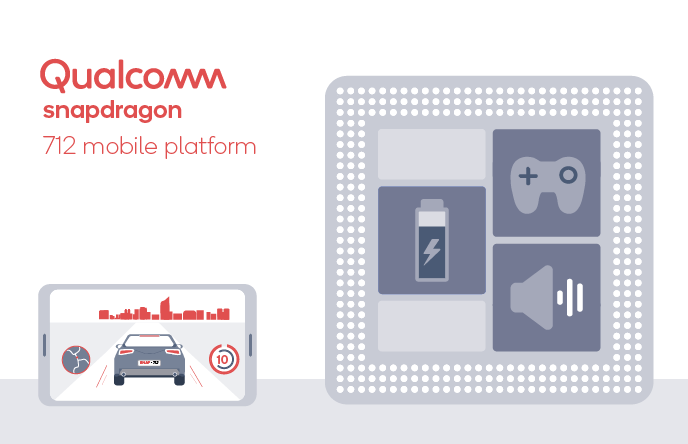
    Qualcomm claims that the Snapdragon 712 is designed for mid budget gaming devices. It also claims that the chipset can help render over a billion shades of colors. Qualcomm’s Aqstic audio technology will be added to the chipset for seemingly better audio experience. 
    What Is Quick Charge 4+?

    The Snapdragon 712 is targeted at improving your battery life. Now the real question that arises is how will 712 manage to do that?
    It is engineered in a way that it’s heterogeneous computing structure automatically works out the perfect balance between workloads, heat management & optimization. What’s more, it also supports Qualcomm Quick Charge 4+. This means what it can bring your phone battery from 0 to 50 percent in under 15 minutes. 

    More Features

    Snapdragon 712 has a ton of other enhanced features that already were present in the Snapdragon 710. It integrates the Qualcomm Snapdragon X15 LTE Modem. Qualcomm claims this offers almost double download speeds with LTE Advanced Capability.
    The new chipset offers video noise reduction and the Snapdragon 712 understands your settings and adapts to them, so you don’t have to lose battery over it. 

    Also Read : Sony Xperia XA3 Will Have A 21:9 Aspect Ratio Display

    Will the Snapdragon 712 be the next big mobile platform especially in the Low-mid market? With all the performance boosts and AI development, it sure looks that way. And the Quick Charge 4+ is a welcome add-on. 


  • Qualcomm Unveils Snapdragon 8cx SoC for Windows 10 Laptops

    Qualcomm Unveils Snapdragon 8cx SoC for Windows 10 Laptops

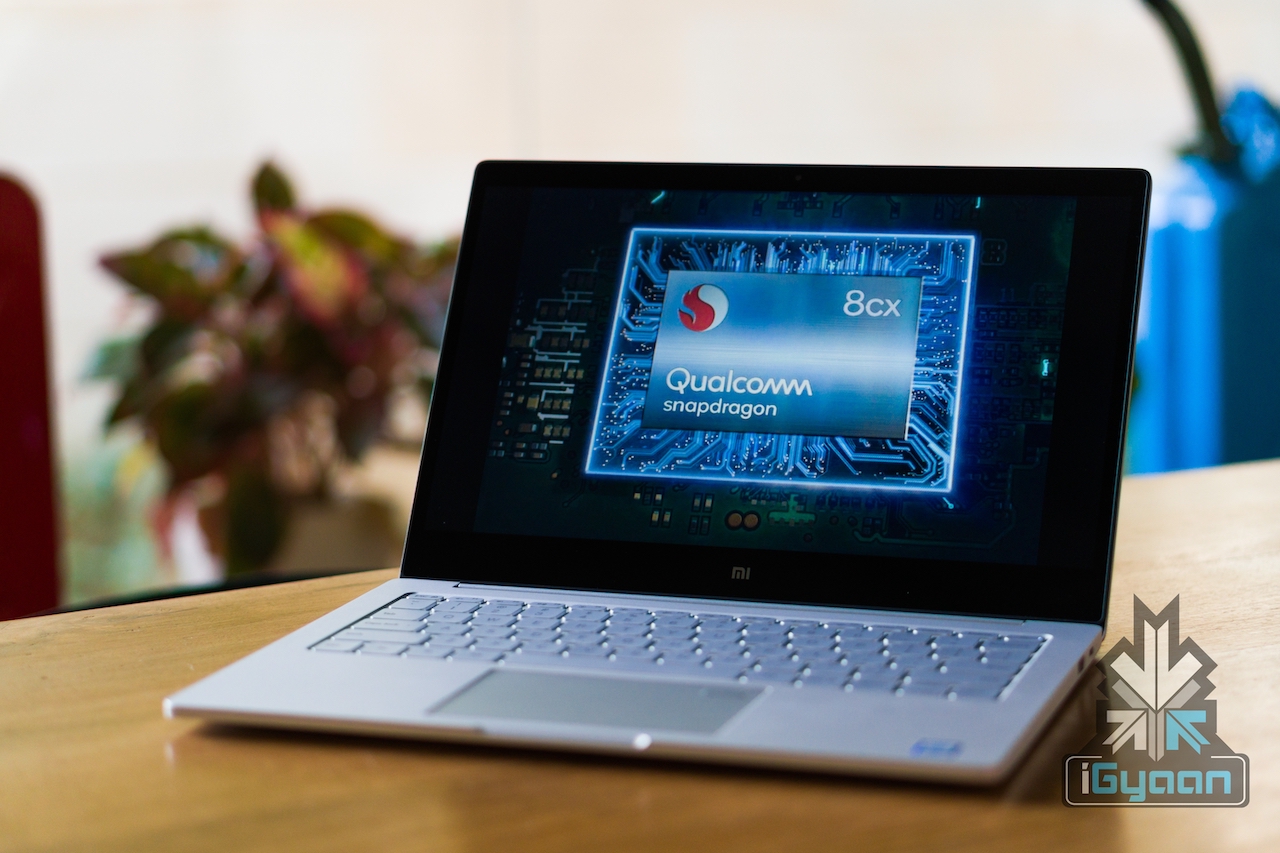
    After dominating the smartphone market, Qualcomm is looking forward to taking on the Windows computer industry. In a recently held Snapdragon summit in Hawaii, the company has announced their first purpose-built chipset for laptops. The new chipset gets the Snapdragon 8cx moniker and is a successor to the previously showcased Snapdragon 850. The Snapdragon 850 was a just a tweaked Snapdragon 845 which is a mobile chipset. However, the Snapdragon 8CX is designed to meet the requirements of a high-end Windows computer.

    Snapdragon 8cx

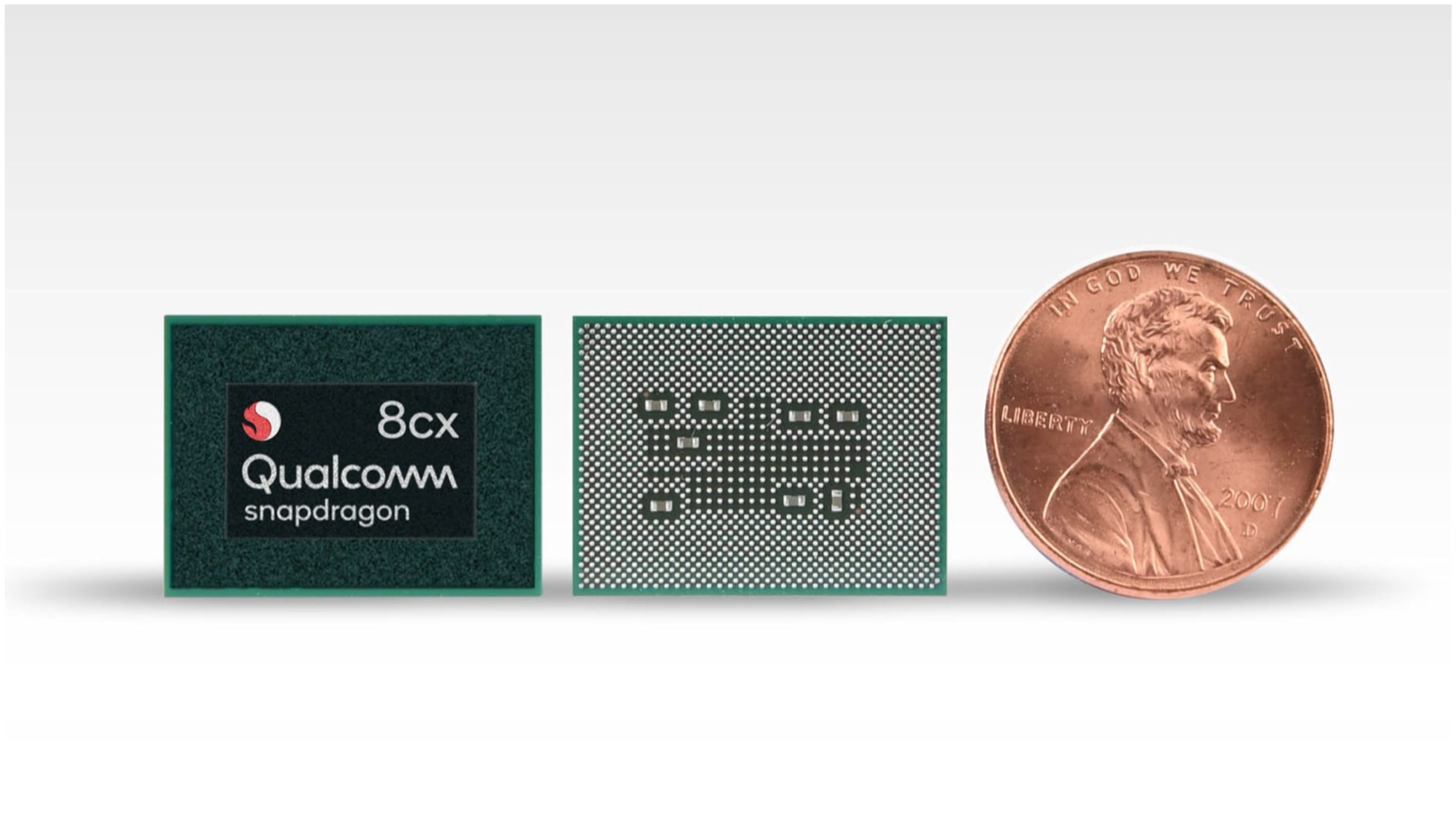
    The Snapdragon 8cx comprises of Octa-Core Kryo 495 CPU’s and Adreno 680 GPU. Both CPU and GPU are integrated into a single chip which provides better multi-tasking performance and highly efficient graphics memory bandwidth. The latest Snapdragon 8cx is manufactured using 7nm FinFET technology. Therefore, it will be more power efficient than other chipsets like AMD and Intel.

    Qualcomm addressed that the “cx” suffix in the Snapdragon 8cx stands for “compute” and “extreme”. According to the company, the Adreno 680 GPU can easily handle dual 4K HDR displays and it will have hardware acceleration for 4K HDR video playback at 120fps. For high-speed internet connectivity, the Snapdragon 8cx also accommodates the Snapdragon X24 Modem. Theoretically, it can support download speeds of up to 2Ggbps and uploads of up to 316  Mbps. 

    The Snapdragon 8cx being a complete system on a chipset also gets Bluetooth 5.0, NVMe SSD support and fast charging support. It has a built-in Hexagon 685 DSP (Digital signal processor) which will enable support for voice assistants like Cortana.

    Need Of An ARM Laptop Chipset 


    ARM is a company that designs CPU cores which are used by other companies to develop their chipsets as per their needs. Unlike Intel’s X86 and AMD 64, ARM cores are designed with efficiency and space conservation in mind. Following are the benefits of using an ARM chipset on a PC:

    Also Read: Qualcomm’s New Mid-Range Snapdragon SM6150 Spotted On Geekbench

    Better Battery-Life: As the ARM cores were first intended for mobile devices they are highly energy efficient. Using them in laptop computers can offer a very good battery backup. The previously demonstrated Snapdragon laptops offered up to 24 hours of battery backup.

    Compact Size: As Qualcomm CPU’s are much smaller in size than their Intel and AMD counterparts. Their temperatures can be kept under control using a passive CPU cooler like a copper tube. In simpler terms, Snapdragon laptops can do away with clunky CPU coolers and save up on some space making the laptop more portable and easy to carry.

    All in all, the Snapdragon 8cx seems like a very promising chipset. Sadly, the first devices featuring it will only make their way into the market in late 2019.

  • Turing Monolith Chaconne has 3 X Snapdragon 830 And Everything More than the Cadenza

    Turing Monolith Chaconne has 3 X Snapdragon 830 And Everything More than the Cadenza

    If we were about our wits with the bold plans of the Turing Phone Cadenza, with its 2 processors and triple battery advantage, Turing Robotic Industries, the mastermind behind the phone has convened its PR team to deliver a better phone (on paper).

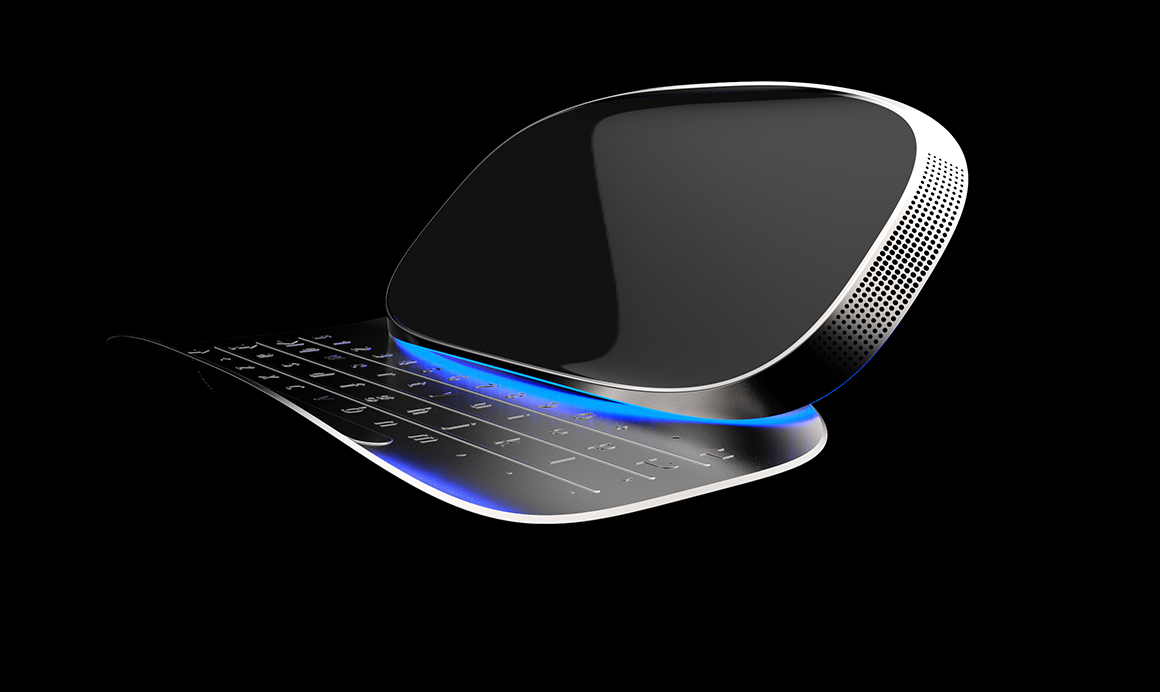
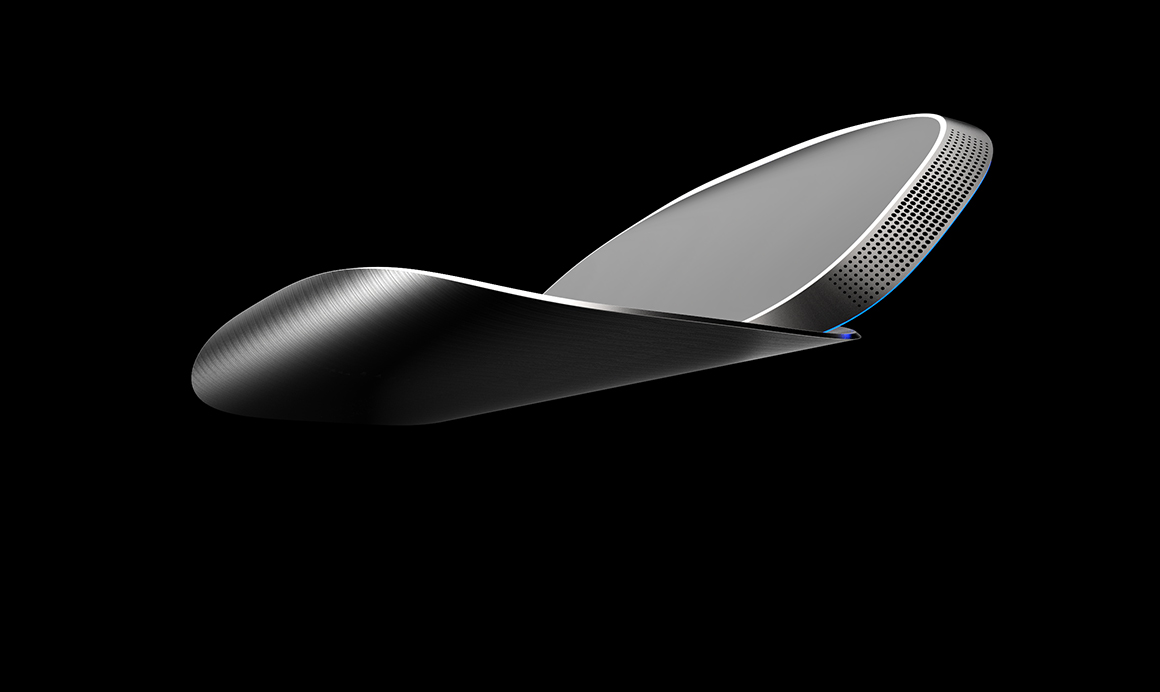
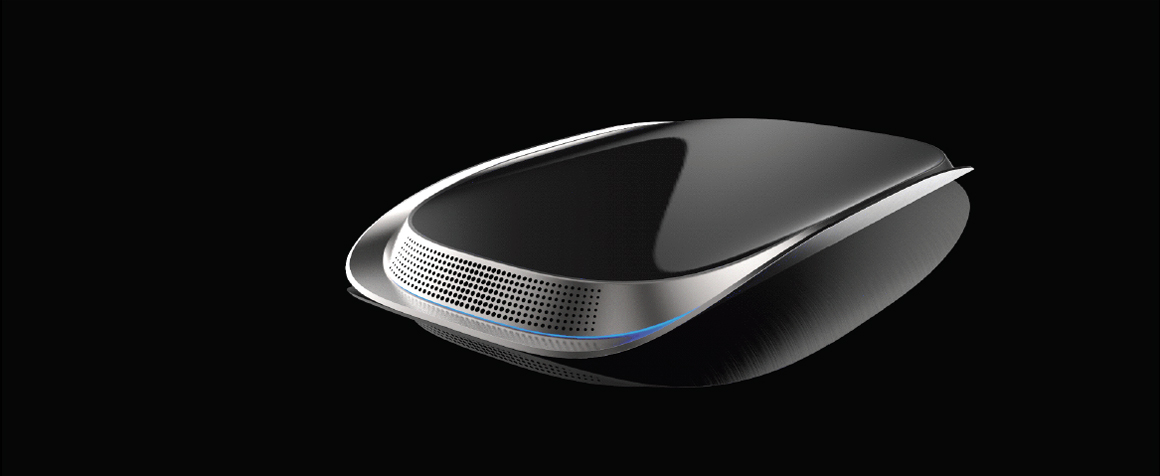
    Dubbed the Turing Monolith Chaconne, this imaginative next generation phone is not only the successor to the yet to launch Cadenza, it is even more far-fetched.

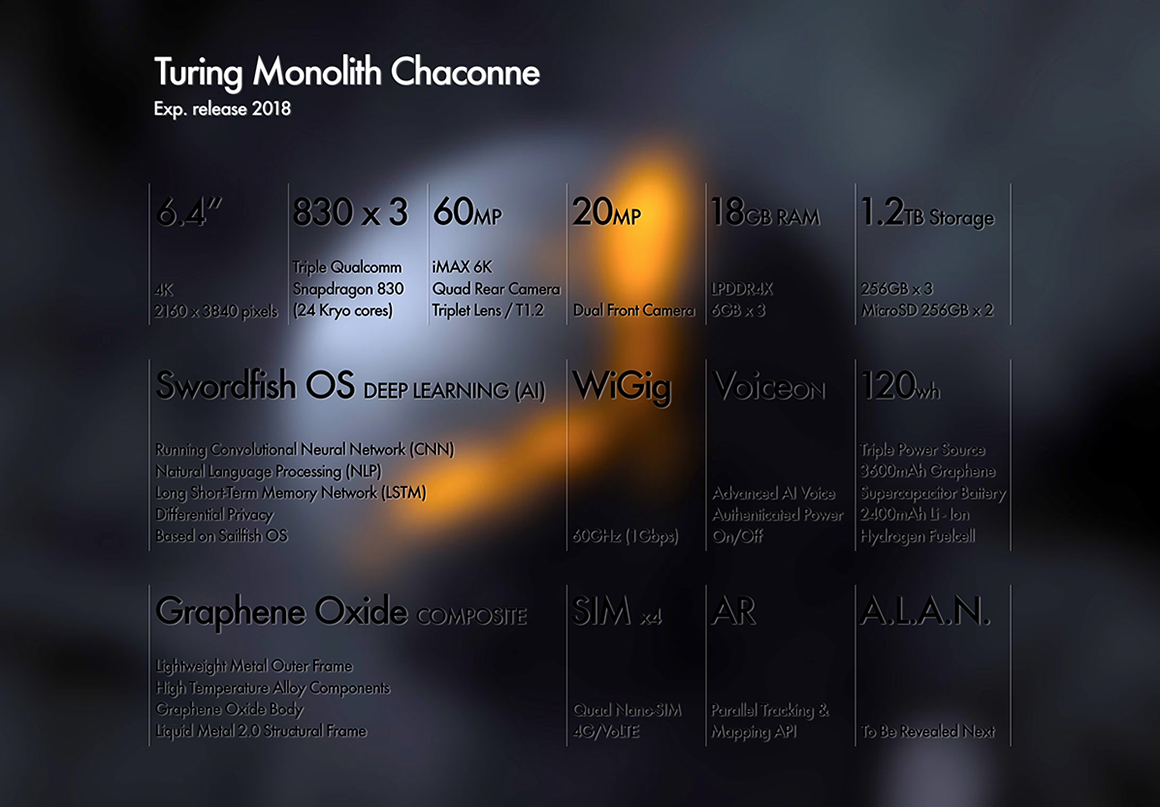
    To wow the internet, the Turing Monolith Chaconne will have three (yes 3) Qualcomm Snapdragon 830 Chipsets. The company has kept the same optics with a 60 MP and a 20 MP combination, made the display larger at 6.4 inch on a 4K 3840 x 2160 px resolution, and the RAM and Storage both get a memory boost. 18 GB of RAM and upto 1.2 TB of onboard using a mix of 2 NAND flash chips and 2 memory card slots.

    The Turing Monolith Chaconne will feature a slide out flat backlit physical keyboard, because we need those with our giant phones.

    The company wants to power this successor of the yet to launch Cadenza with a 3600 mAh Graphene Superconductor power cell battery mated with a 2400 mAh li-on battery and a Hydrogen Fuel Cell ( umm … Yeah x 3!). The battery setup will deliver a total of 120 wh of juice a big 20 wh more then the Cadenza ( yes yet to launch)

    Turing Monolith Chaconne specs

    The Turing Monolith Chaconne will be launched in 2018 according to the company, and will work on 4G and VoLTE. Apparently, we will not have 5G networks by 2018.

    Turing has also kept similar on the OS, with the phone running Swordfish OS, which boasts a deep learning AI, and is based on the Sailfish OS. Oh, and you still get a Graphene Oxide Composite frame with a Liquid metal structure.

    Sure, Turing had a great specification idea for a phone, and they laid it out with the Cadenza. And sure, a lot of people actually found hope in a revolutionary new battery solution offered by the triple battery system. But, they might have overstretched their expectation muscle here, and we all know what happens when you overstretch. It is sounding more like hokum now.

    Turing Monolith Chaconne side

    Also, tablets will be made from chocolate by the year 2020 and will support VoLTE.


  • Qualcomm Announces “Snapdragon Wear 2100” for Smart Wearables

    Qualcomm Announces “Snapdragon Wear 2100” for Smart Wearables

    Today we saw Qualcomm not just take the lid off it’s upcoming SoCs for mobile phones, but also along with it the company, take the opportunity to unveil its new range of processors for wearables. Qualcomm has aptly named it Snapdragon Wear 2100.

    This is rather exciting news for smartwatch makers, and users alike. In the past manufacturers except Apple, and Samsung have had to use low end SoCs meant for mobiles in their wearables which led to improper management of energy, and wastage of scarce battery power.

    Snapdragon Processor

    Qualcomm sensing the need of the market has come out with a fix by introducing the Snapdragon Wear 2100 that is designed with wearables in mind.

    The company claims that this dedicated solution will be 30% smaller in physical size than the S400, enabling more compact designs and thinner wearables. It will at the same time be 25% more power efficient than the S400 used in the Moto 360 2nd Gen.

    The Snapdragon Wear 2100 SoC is a quad-core system with Cortex A7 running at up to 800MHz or 1.2GHz  paired with an Adreno 304 GPU and 400MHz LPDDR3.

    Qualcomm with the Wear 2100 will also be able to offer an integrated X5 modem for basic cellular connectivity. Two versions of the chip will be provided (Bluetooth/Wi-Fi only), the other – connected, with full 2G/3G/LTE cellular connectivity. The chip also supports NFC and GPS, and comes with Quick Charge 2.0 capabilities.

    And just in case more proof was needed about how important this launch is -we have LG’s Wearables branch Vice President David Yoon’s word who indicated that the Korean giant is already working on smartwatches which will be powered by the Snapdragon Wear 2100, and will be launched later this year.

  • Snapdragon Announces Mid/low Range SoCs

    Snapdragon Announces Mid/low Range SoCs

    Qualcomm has today announced its much awaited mid and low range chipsets for 2016. The Snapdragon 625, 425 and 435 which are slated to come with marked improvements over their predecessors will be more powerful and energy efficient than SoCs from previous years.

    These new SoCs which are expected to power handsets around the globe in the coming year support LTE , 802.11ac Wi-Fi with MU-MIMO, dual camera ISPs and the Qualcomm Hexagon DSP for more efficient audio and sensor performance and monitoring. They also support all of Android 6.0 Marshmallow‘s sensor requirements and Quick-Charge technology.

    qualcomm-snapdragon

    The Snapdragon 625 in particular is an interesting proposition as it is the first chipset from the 600 series to be built using the 14nm process.This chipset comes with eight Cortex-A53 cores to be clocked at over 2Gh. It also comes equipped with an Adreno 506 GPU to take care of graphics intensive tasks.

    Qualcomm has also claimed this chipset while being high on performance will still be 35% better than last year’s 617 when it comes to energy efficiency.

  • Here’s Why the Upcoming LG Nexus 5X Comes with Snapdragon 808

    Here’s Why the Upcoming LG Nexus 5X Comes with Snapdragon 808

    You may be aware that the Qualcomm Snapdragon 808 and Snapdragon 810 processors were announced last year. Since then the processors have been slowly making its way into smartphones, with LG G4 being the first smartphone to use the Snapdragon 808. The recent China-only Xiaomi Mi 4c also sports the 808 as its SoC and the upcoming Nexus 5X will feature the same.

    But what exactly does the Snapdragon 808 deliver? We’ve decided to provide a deeper understanding into the specs of the processor to show just what it is capable of delivering.

    Right off the bat, the Snapdragon 808 features a high performing CPU that clocks in around 2000 MHz, with 6 cores that result in faster mutli-tasking. The processor is also able to reduce energy consumption as it couples slower, low power processor cores with faster, high-power processor cores. The big or faster cores are used for computation-intensive tasks such as gaming.

    The GPU is a significant upgrade from the previous 801 processor. While the 801 had an Adreno 330 GPU, the 808 features an Adreno 418 GPU, which delivers better graphics by creating larger blocks of data. Some of the devices that feature the Snapdragon 808 are LG G4, LG Nexus 5X, Xiaomi Mi Edge, and Xiaomi Mi 4c to name a few. Here’s a spec table that will tell you all you need to know about the Snapdragon 808 processor.

    CPU Dual-core ARM Cortex A57 up to 2 GHz and quad-core A53 with 64-bit support
    GPU Adreno 418 GPU
    DSP Hexagon V56 DSP (up to 800MHz)
    RAM Interface 933 MHz 64-bit LP-DDR3 SDRAM interface
    Connectivity USB 3.0/2.0, Bluetooth 4.1, Wi-Fi Qualcomm VIVE™ 2-stream 802.11n/ac with MU-MIMO
    Primary Camera Support 55 MP
    Display Resolution Support 2560 x 1600 pixels
    Process Technology 20 nm
  • Qualcomm to Tap Samsung to Build Next-Gen Snapdragon 820 Chip

    Qualcomm to Tap Samsung to Build Next-Gen Snapdragon 820 Chip

    Qualcomm has long association with one of the world’s largest semiconductor foundry Taiwan Semiconductor Manufacturing Company (TSMC). The latter firm has provided some of the cutting-edge chips like Snapdragon that are fitted to most of the high- and low-end smartphones of the decade. But Qualcomm seems to giving a break to its customary practice and is planning to head towards Samsung for the next-generation Snapdragon processor.

    As per a report by Re/code, Qualcomm will make use of Samsung’s manufacturing arm to build the upcoming Snapdragon 820, stated an insider. This means we might see the high-end 2016 smartphones powered by a Snapdragon processor manufactured at Samsung’s chip-making plants. Meanwhile, it is heard that Apple has also given the contract to Samsung for the A9 chips.

    Samsung Galaxy S6 Edge side

    The present Snapdragon 810 made by TSMC lags behind Samsung’s own Exynos 7, equipped with the latest Galaxy S series handsets. Unlike previous processors, the Snapdragon 810 heats up and slows down immensely after certain minutes of usage. This led to a major loss to Qualcomm, who lost a major chunk of its customers because of the problematic Snapdragon 810 processor.

    Samsung also has an edge over TSMC as it uses thinner 14nm transistors instead of 20nm used at TSMC. A thin wiring adds benefits to the phone. As the wires are slim, the chips would be small and smaller chips costs less. Smaller chips also give a better battery performance.

    qualcomm-snapdragon-mobile-processor

    Qualcomm has all reasons to turn to Samsung as Snapdragon is the major revenue factor for the company. To regain its lost clients, the global semiconductor firm may make a switch and tie up with the Korean company for improved chips. It is welcoming news for Samsung who has shown tremendous growth in the smartphone, as well as hardware business.

    According to the source, the Snapdragon 820 will have built-in LTE modem along with a graphics core and a custom-designed Qualcomm processor. For now, both Samsung and Qualcomm hasn’t slipped any information, and we have to wait for an official announcement for the authenticity of the report.

  • Qualcomm Joins Hands With Cyanogen to Give a Push to Snapdragon-Run Devices

    Qualcomm Joins Hands With Cyanogen to Give a Push to Snapdragon-Run Devices

    At the Mobile World Congress 2015, Qualcomm Technologies and Cyanogen announced a new surprise collaboration. The two renowned companies are joining hands with each other to facilitate users with more improved features on the unique user interface of Cyanogen OS.

    Chipset maker, Qualcomm will work in close coordination with Cyanogen to include features and UI enhancements on Qualcomm Snapdragon processors in the 200, 400 and 600 series. The software maker will make available all its unique features to the Qualcomm Reference Design (QRD) program.

    The CEO of Cyanogen Inc. Kirt McMaster announced about the collaboration –

    We’re delighted to collaborate with Qualcomm on their QRD program. We’re addressing the needs of device makers in developed and developing markets looking for a truly differentiated software experience that matter to consumers.

    Jason Bremner, SVP of Product Management, Qualcomm Technologies further elaborated saying that they have chosen to work with Cyanogen because of their deep Android expertise and innovative approach to enhancing smartphone software.

    Through the QRD program, the company aims to boost the production of low-cost smartphones. Qualcomm’s Reference Design program helps unrecognized companies to choose smartphone templates and launch them under their brand. Cyanogen’s Android version will replace Qualcomm’s own builds on devices embedded with a Snapdragon 200, 400 or 600 processor.

    Through this deal, Qualcomm will be able to revamp its devices running on Snapdragon and Cyanogen and can widen its user base, which is now restricted to limited devices. Cyanogen is the true Android experience for people who prefer to tinker with the user experience. Qualcomm’s active support will help boost the reach of this amazing user interface to a broader user base.

  • Qualcomm Announced The Snapdragon 805 Processor With Ultra HD Mobile Video

    Qualcomm Announced The Snapdragon 805 Processor With Ultra HD Mobile Video

    While many smartphones for India are still not powered by Qualcomm Snaprdragon 800 chipset, this hasn’t stopped Qualcomm from making a new and improved chipset.

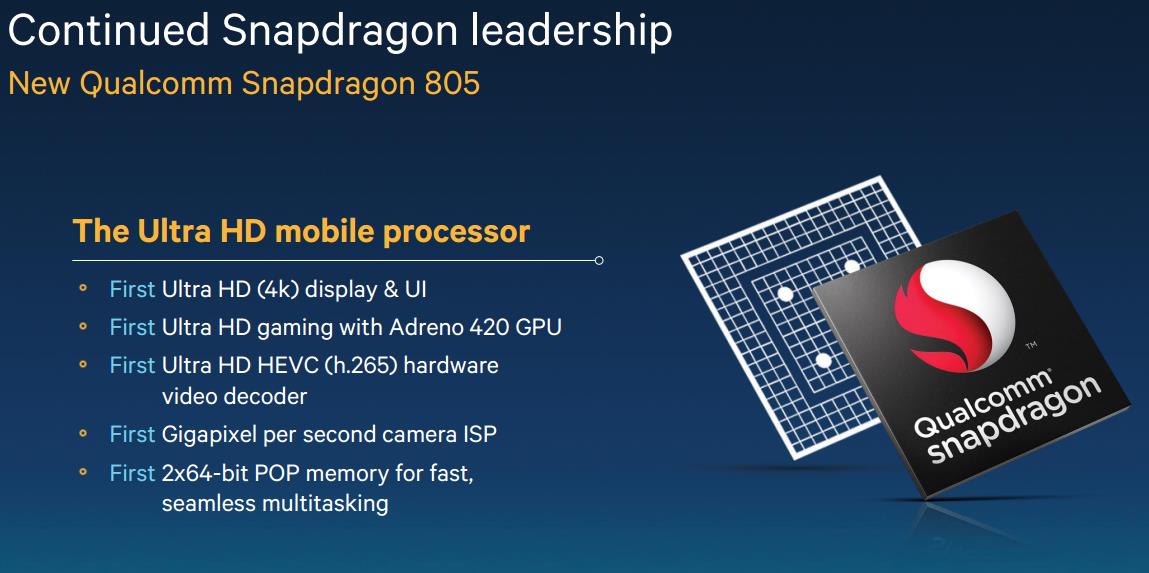
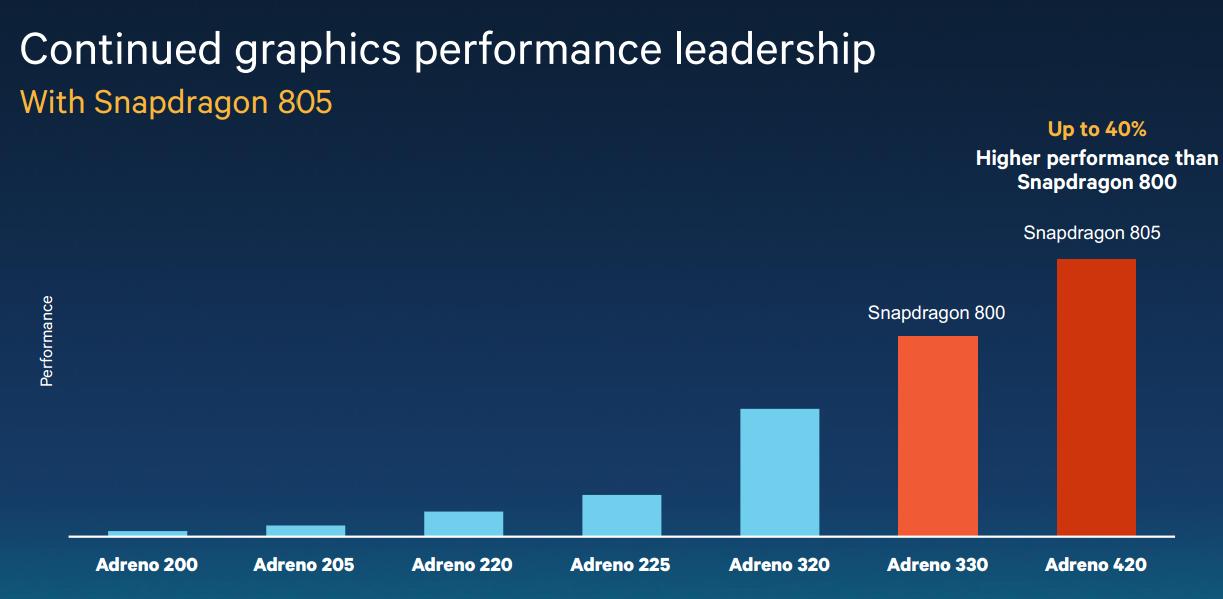
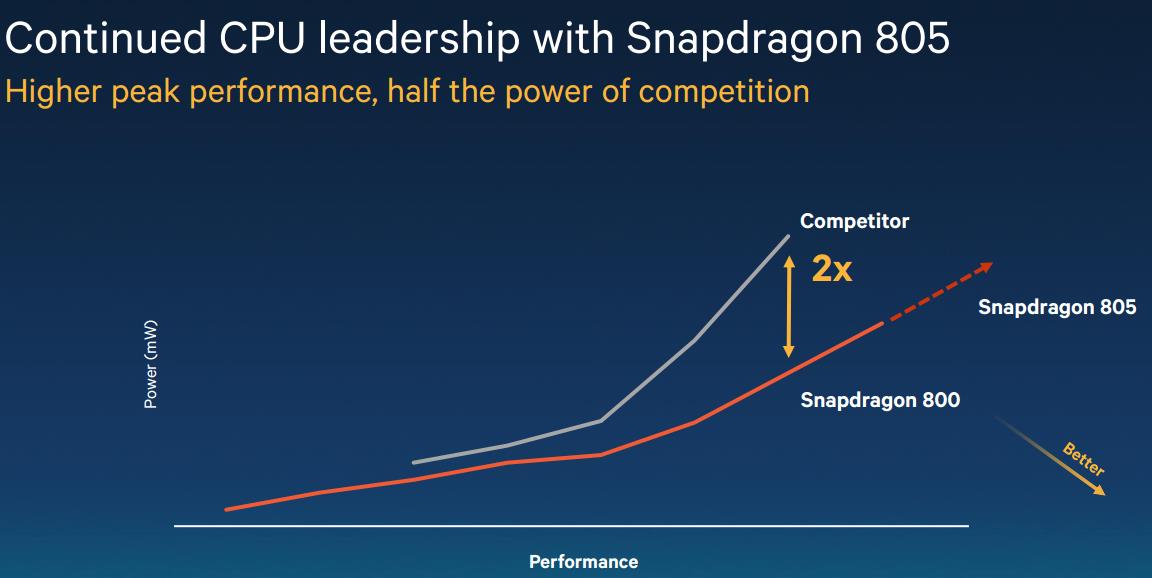
    Qualcomm has unveiled the next generation of the Snapdragon 800, dubbed the Snapdragon 805. Along with this new processor the company adds support for the Ultra High Definition video(UHD) playback on smartphones, tablets and televisions. This will have a new Adreno 420 GPU, which will provide up to 40 percent more graphic processing power than its predecessor.

    Using a smartphone or tablet powered by Snapdragon 805 processor is like having an UltraHD home theater in your pocket, with 4K video, imaging and graphics, all built for mobile,” said Murthy Renduchintala, executive vice president, Qualcomm Technologies, Inc., and co-president, QCT. “We’re delivering the mobile industry’s first truly end-to-end Ultra HD solution, and coupled with our industry leading Gobi LTE modems and RF transceivers, streaming and watching content at 4K resolution will finally be possible.”

    805

    The new Qualcomm Snapdragon 805 chipset features a Krait 450 quad-core CPU, to which the company claims is the first mobile CPU to run at speeds of up to 2.5 GHz per core. This will communicate with memory at 25.6 GB/second at the max, to make all apps run faster. Qualcomm says the Snapdragon 805 also supports Hollywood Quality Video (HQV) for video post processing, and has hardware 4K HEVC (H.265) decoding for extremely low-power HD video playback.

    The new processor will come with 28 nm Gobi MDM9x25 modem to support higher speeds for, 150 Mbps LTE. It will also have an option of a new LTE modem, 20nm Gobi MDM9x35 which will bring speeds upto 300 Mbps LTE advanced. Qualcomm says that both chips support “all carrier aggregation band combinations approved by 3GPP” while enabling manufacturers to bring LTE devices to market faster. Overall, when this will be available to the users in the smartphones they can expect smoother video recording and faster image processing.

    8051

    As said by Vice President of Qualcomm “Using a smartphone or tablet powered by Snapdragon 805 processor is like having an UltraHD home theatre in your pocket”,  but we will have to wait and see which smartphone will first support this processor, although we do have some suspects. The Snapdragon 805 processor is sampling now and expected to be available in commercial devices by the first half of 2014.

  • HTC Desire 600 Dual Sim Unboxing and Hands On

    HTC Desire 600 Dual Sim Unboxing and Hands On

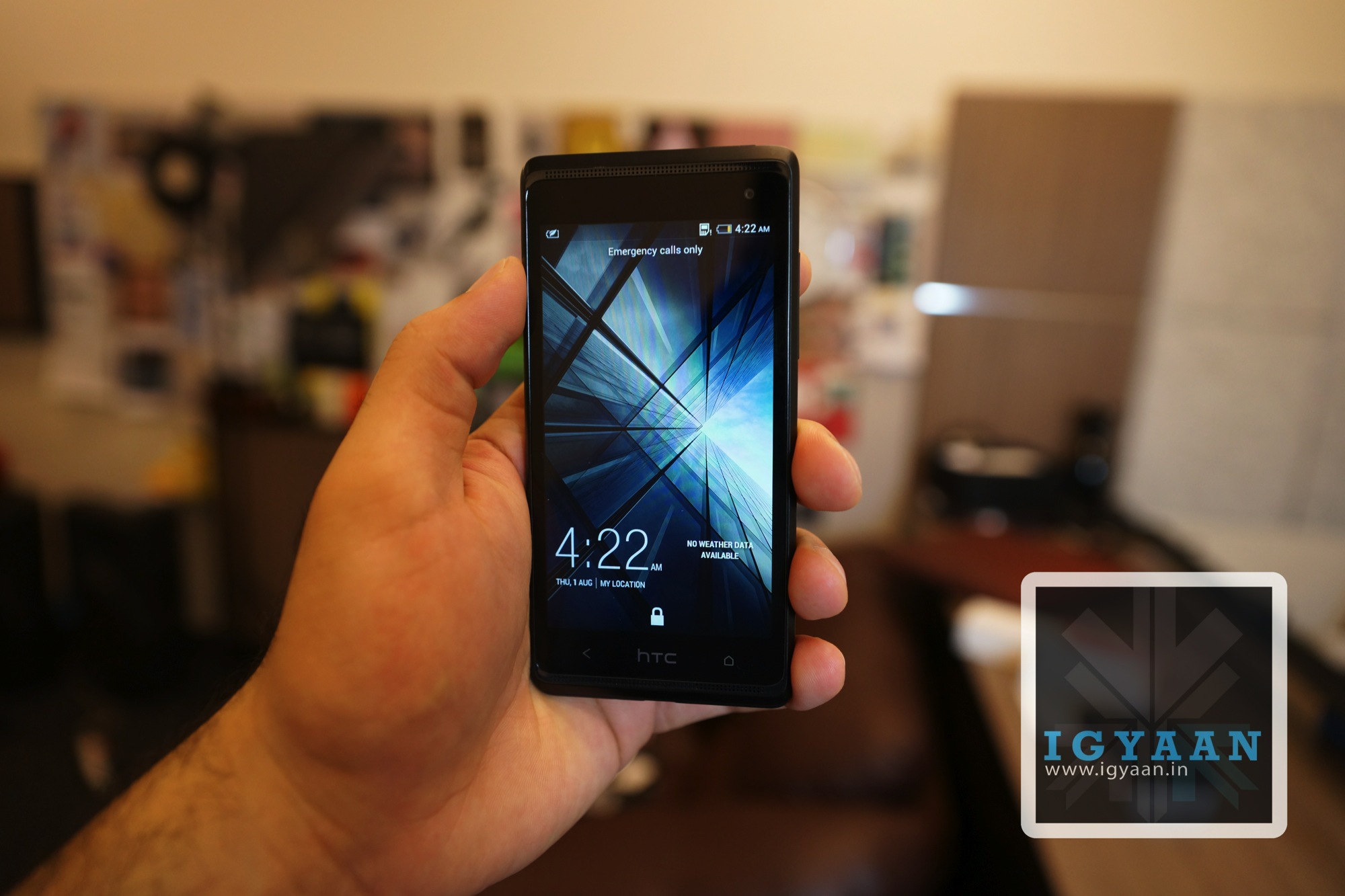
    HTC is ready to bring its flagship features to the masses with the new HTC Desire 600 Dual Sim. The Smartphone running Android 4.1 Jelly bean also features the Latest HTC Sense and Blinkfeed UI. Laid out with a 4.5 inch 540 x 960 px Super LCD2 capacitive touchscreen display, it has a nimble 242 ppi pixel density. Cameras are borrowed from the HTC 8X with a 8 MP snapper 1/3.2” sensor size, 1.4µm pixel size. The front facing camera is a 1.7 MP shooter both will do 720p video.

    The HTC Desire 600 dual sim is based on a Qualcomm MSM8625Q Snapdragon 200 with a Quad-core 1.2 GHz Cortex-A5 and an Adreno 203, all of which according to the company can tak on any Mediatek based handset offering similar features. The Build quality and feel of the HTC Desire 600 Dual Sim is definitely great. With its rubberized grippy back panel and slim brushed steel bezel the dual sim smartphone is really worth of the brand.

    The box we got is not a retail box , but the usual in-box items should include :

      • Handset
      • Earphones
      • USB Cable
      • Warranty
      • User Guide
      • Wall Charger
      • 1860 mAh Battery

    HTC has not left out on the usual Sense features bundling 25 GB Dropbox storage. Check out the unbxoing video (uploading) and stay tuned for Gaming Benchmarks and full review shortly.


  • LG Optimus G Pro E988 / E985 Launched In India for Rs. 39900 (Hands-On)

    LG Optimus G Pro E988 / E985 Launched In India for Rs. 39900 (Hands-On)

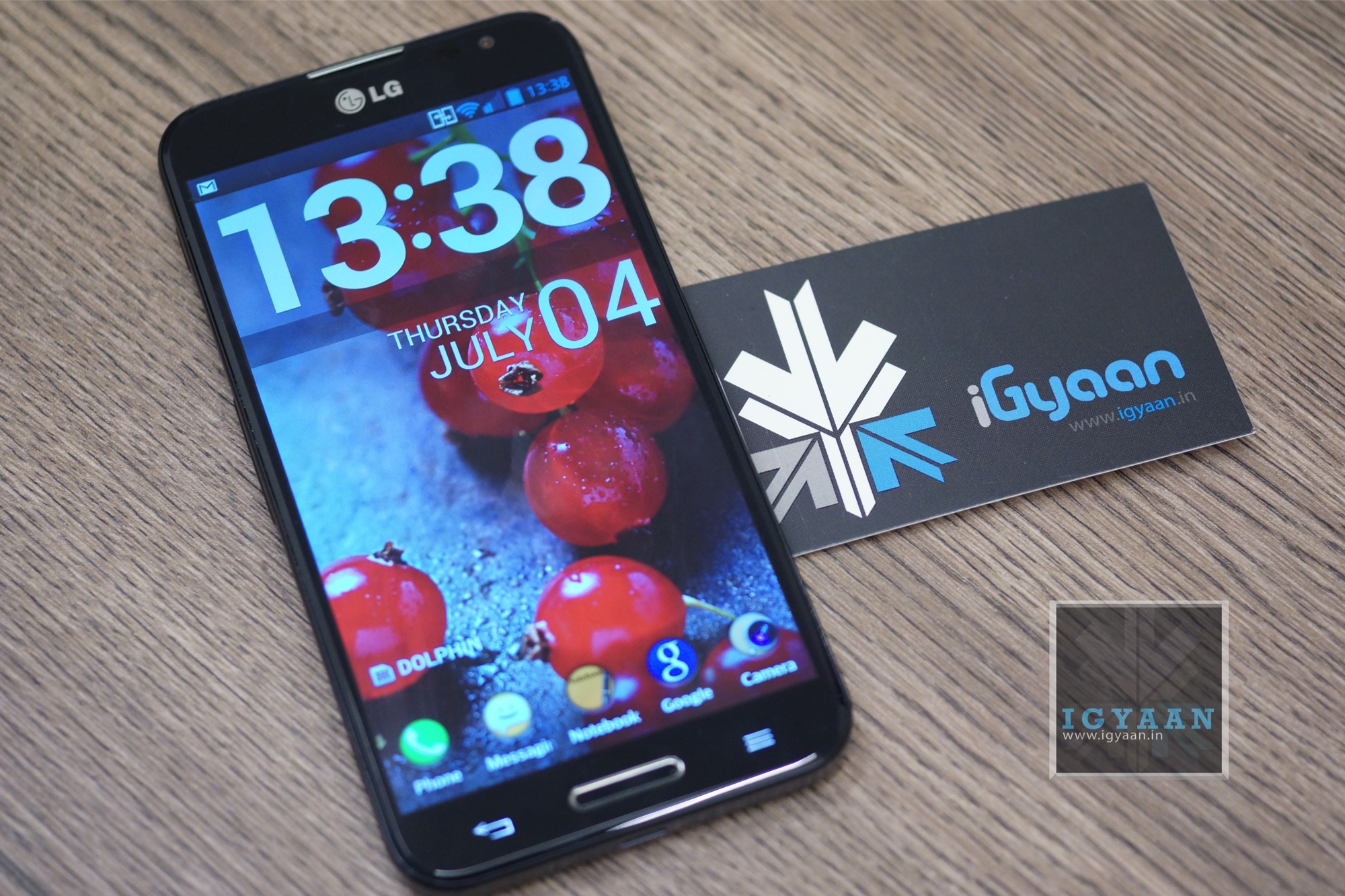
    LG might be enjoying the success of the Nexus 4 in India, and in order to retain that streak the company has launched the new LG Optimus G Pro E988 in India. The 5.5 inch smartphone from LG falls into the Galaxy Note 2 category of phone sans the stylus.The LG Optimus G Pro has a  True Full HD IPS Plus LCD capacitive touchscreen with a resolution of 1080 x 1920 pixels.

    The Optimus G Pro has a Qualcomm Snapdragon 600 processor, which features a 1.7GHz Quad-Core CPU and Adreno 320 GPU, a massive 3140 mAh battery and 2GB of RAM.

    LG Optimus G Pro E988 Hands On0

    The LG Optimus G Pro has 16/32 GB storage options along with 64 GB expandability via microSD card. A 13 MP rear camera and a 2.1 MP front camera enable full HD video recording and LG was also the first to show off dual camera features with the LG Optimus G Pro, right before Samsung launched the S4 into the market. 

    “LG’s Optimus G Pro sets a new benchmark in the over 5-inch display smartphone category which is catching on with consumers everywhere who aren’t interested in owning both a phone and a tablet,” said Dr. Jong-seok Park, president and CEO of LG Electronics Mobile Communications Company. “Asian customers are leading many of today’s technology trends and we’re confident Optimus G Pro will find a large following in this region.”

    LG Optimus G Pro E988 Hands On3

    The MRP of the Optimus G Pro is set at Rs. 42500, but the phone goes on sale in the country for a price of Rs. 39900. At this price the phone competes head to head with the likes of the Galaxy S4, the HTC One and the Galaxy Note 2, the three predominant Smartphones in this price range. The LG Optimus G Pro brings the Note 2 screen size and the S4 comparable performance in a single package. The LG Optimus G Pro also has a IR blaster and quick remote app to control your electronics.

    Watch our old hands on of the LG Optimus Pro E985 below and stay tuned for an Unboxing and Hands on of the LG Optimus Pro E988.


    [youtube id=”B08JYEJDTj0″ width=”100%” height=”300px”]


    Buy Now


  • Qualcomm Unveils Next-Gen Snapdragon 800, 600 Series Processors

    Qualcomm Unveils Next-Gen Snapdragon 800, 600 Series Processors

    snapdragon

    Not to be outdone by Nvidia’s new Tegra 4 processor, Qualcomm has unveiled its latest high-end mobile-friendly chipsets at CES 2013, with the Snapdragon 800 promising to bring UHD video and mind-boggling battery performance to phones and computers later this year.

    Qualcomm says that the high-end Snapdragon 800 will deliver 75 per cent better battery performance than the current top-end S4 Pro.

    But the real story here is the new Krait 400 CPU inside the Snapdragon 800: not only does it support four cores at up to 2.3Ghz each, but it utilizes a new 28nm High-K/Metal Gate manufacturing process that ensures the lowest power consumption at high performance numbers. Qualcomm promises much lower latency than previous Snapdragon S4 chips, and improved L2 cache performance.

    Qualcomm’s also managed to fit asynchronous SMP architecture in, which ekes the best possible performance from each core without needing specialist cores.

    The new chip also handles 4K Ultra High Definition encoding and decoding, and can project resolutions of up to 2560×2048, as well as stream video wirelessly at 1080p to a Miracast-compatible television or dongle.

    Somewhat overshadowed by the 800 but still impressive is the new Snapdragon 600, intended for mid-to-high-end mobile devices and offering rich graphics and 40 per cent better battery performance than the S4 Processor that’s around now.

    It comes with a new Krait 300 quad-core CPU with speeds up to 1.9GHz, a speed-enhanced Adreno 320 GPU and support for LPDR3 memory.

    The Snapdragon 600 should also hit phones sooner than the 800, expected by the second quarter of the year (April-June).

    [Tech Radar]

  • HTC Launches Desire X in India for Rs 19799

    HTC Launches Desire X in India for Rs 19799

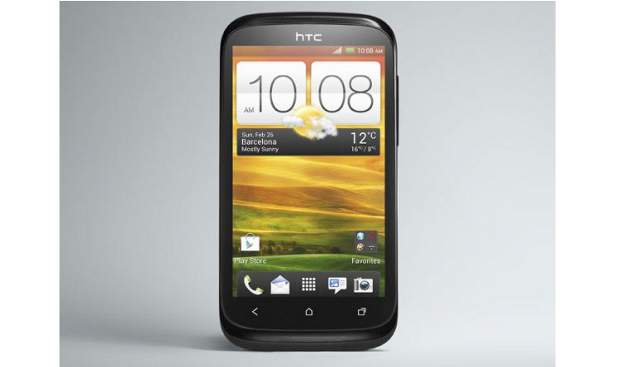
    desire XThe Desire X has been launched in India for a price of Rs. 19799.4-inch. The phone has a Super LCD touchscreen display and a  a dual-core 1 GHz Qualcomm Snapdragon mobile processor. The Desire X will also have Beats Audio technology and is priced at 19799 in the Indian Market.

    More information on the Desire X a 4-inch Super LCD display with 480×800 pixel resolution and a 223 ppi pixel density. The phone is fairly slim and the side profile is only 9.3 mm thick. The Desire X has a dual-core 1 GHz Qualcomm Snapdragon S4 Play MSM8225 mobile processor with Adreno 203 graphics chip. 

    The phone has 768 MB RAM and the new HTC Sense 4.0 along with Android v 4.0.4 ICS. The phones sports 3G and Wifi antennas along with 5 megapixel camera with autofocus and LED flash at back and 4 GB on-board storage along with support up to 32 GB microSD card. The Desire X features a 1650 mAh battery and will go on sale immediately.

  • Qualcomm Introduces Entry-Level quad-core Snapdragon S4 “Play”

    Qualcomm Introduces Entry-Level quad-core Snapdragon S4 “Play”

    Qualcomm is on a tear. Its Snapdragon S4 processors, in both dual- and quad-core versions, are proliferating through the mobile phone industry like wildfire.

    But it’s mainly the high-end MSM8960 and APQ8064 variants we’ve seen, which sport LTE compatibility and fast-as-heck 1.5Ghz speeds. Today, Qualcomm is introducing a new line of lower-speed quad-core chips dubbed the MSM8225Q and MSM8625Q.

    They’re part of the S4 “Play” line, which is considered entry-level in the scheme of things. While still significantly faster than various legacy S2 and S3 chips, they don’t have the same memory bandwidth, nor the LTE support, of their more expensive peers. They’re not the same Krait architecture as the S4 Plus and S4 Pro line, instead being based on the far less-advanced ARM Cortex-A5 design.

    These chips will support 720p displays and 720p video encoding and decoding, so devices with these chips will be somewhat limited in their camera capabilities. To save die space (and cost), the chips will not have WiFi or Bluetooth support on-board; instead, they will have to be added via a separate chip. The chips will natively support high-speed 3G speeds, though.

    With this new line Qualcomm is looking to bring quad-core power and efficiency to the mass market. Enabling manufacturers to use powerful dual-core processors, and in many cases quad-core S4 Play processors on even mid-range and entry-level smartphones. This means you’ll no longer have to get the flagship, most expensive phone on your carrier to get awesome performance.

    The MSM8225Q and MSM8625Q will be available to the public starting in first quarter 2013, so expect your next entry-level phone to be capable of a lot more than you thought.

iGyaan Network
Privacy Overview

This website uses cookies so that we can provide you with the best user experience possible. Cookie information is stored in your browser and performs functions such as recognising you when you return to our website and helping our team to understand which sections of the website you find most interesting and useful.