Tag: solar energy

  • IIT Delhi Wants To Solve the Irrigation Problem For Indian Farmers

    IIT Delhi Wants To Solve the Irrigation Problem For Indian Farmers

    India being an agrarian economy, is largely dependent on farmers, the seasonal monsoon and a reliable irrigation system. In a country where power cuts are in abundance and money is scarce, being able to get a proper irrigation system going is a real challenge. Taking the present scenario in account, the farmers face multiple challenges to simply irrigate the fields. Apart from the endless power cuts and the cost of fuel, other factors like the safety, sustainability and durability of the irrigation system are extremely questionable.
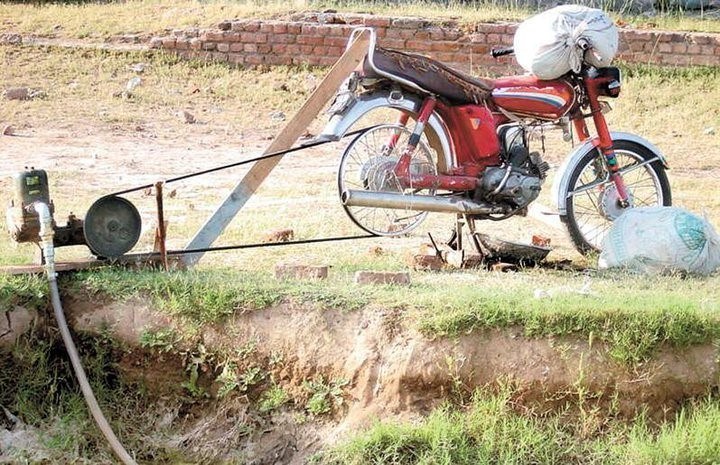
    Farmers currently resort to a device called “Jugaad pump” for irrigating the fields.This irrigation system is powered by a functional motor bike and is used for extracting water from open channels and ponds to deliver water for irrigation. While this “Juggad” works for some time, the bike run pump is not the ultimate and long term solution. A team of researchers from IIT Delhi has decided to build a solution which is sustainable and durable.

    IIT Delhi researchers are designing solar pumps and invertors that are cost effective and energy saving. The project which is in partnership with industry partner Shakti Pumps Limited, will boost the productivity of the farmers and has received a massive funding of Rs 1.12 crore. The IIT Delhi research team includes Prof. Bhim Singh (Principal Investigator) and research scholars Utkarsh Sharma, Aryadip Sen, Md Kashif, Rashmi Rai, Hina Parveen, Yalavarthi Amarnath.

    The research is carried out as a part of the project titled – Design and Development of Solar PV Based Super Efficient Agricultural Pumps and Hybrid Multidimensional Inverters- and falls under the Uchhatar Avishkar Yojana of the Ministry of Human Resource Development (MHRD).
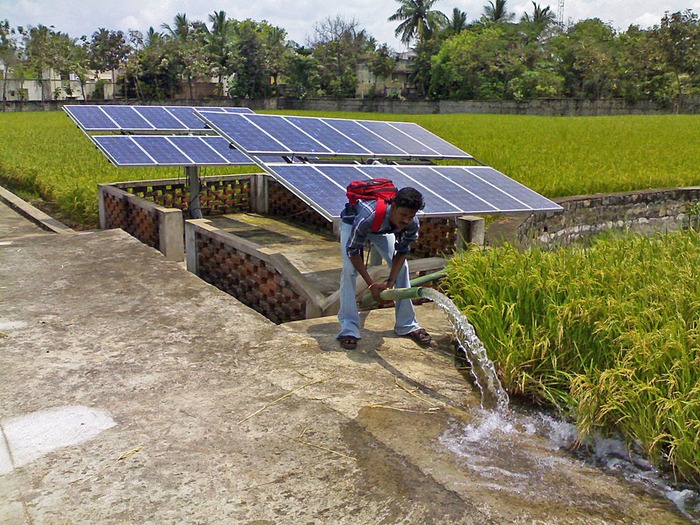
    The project is based on decreasing the irrigation cost, or the cost of the energy (electricity or diesel) to drive the water pumps in remote areas where electricity is not yet available. The current irrigation cost in remote areas is upto 30% of the total input cost incurred by a farmer. This cost can be drastically reduced by solar powered water pumps.

    The solar pumps will incur one time installation cost and expected battery maintenance cost approximately every two years. The pump will convert solar energy into electricity and employ Direct Current (DC) as opposed to the Alternating Current (AC) which is being currently used by most farmers. A DC powered battery is more efficient and durable and will keep the solar powered pump working for a longer period.

    Project investigator Prof Bhim Singh says, “Besides development of super-efficient pumps we aim to design solar water pump with suitable motor considerations and variable frequency operation. We will subsequently be designing and developing the on grid/off grid hybrid inverter,”

    Professor further states that the project is aimed at design and development of the industrial products under three verticals. The team will also develop cost efficient inverters running on solar power which can be used to light up the household and feed the electrical grid. The final deliverables would include new technology in electrical drives fed from solar power, novel motor and pump design along with the hybrid inverter design.

    This project can help improve the lives of millions by making solar powered technology available at an affordable cost. But the maintenance cost after approximately every two years may make the farmers stick to their traditional method. A one time installation of the solar pump is expected to be expensive as well which may dissuade farmers not willing to incur the installation and the additional maintenance cost.
  • Cochin Becomes India’s First and World’s Largest Solar Powered Airport

    Cochin Becomes India’s First and World’s Largest Solar Powered Airport

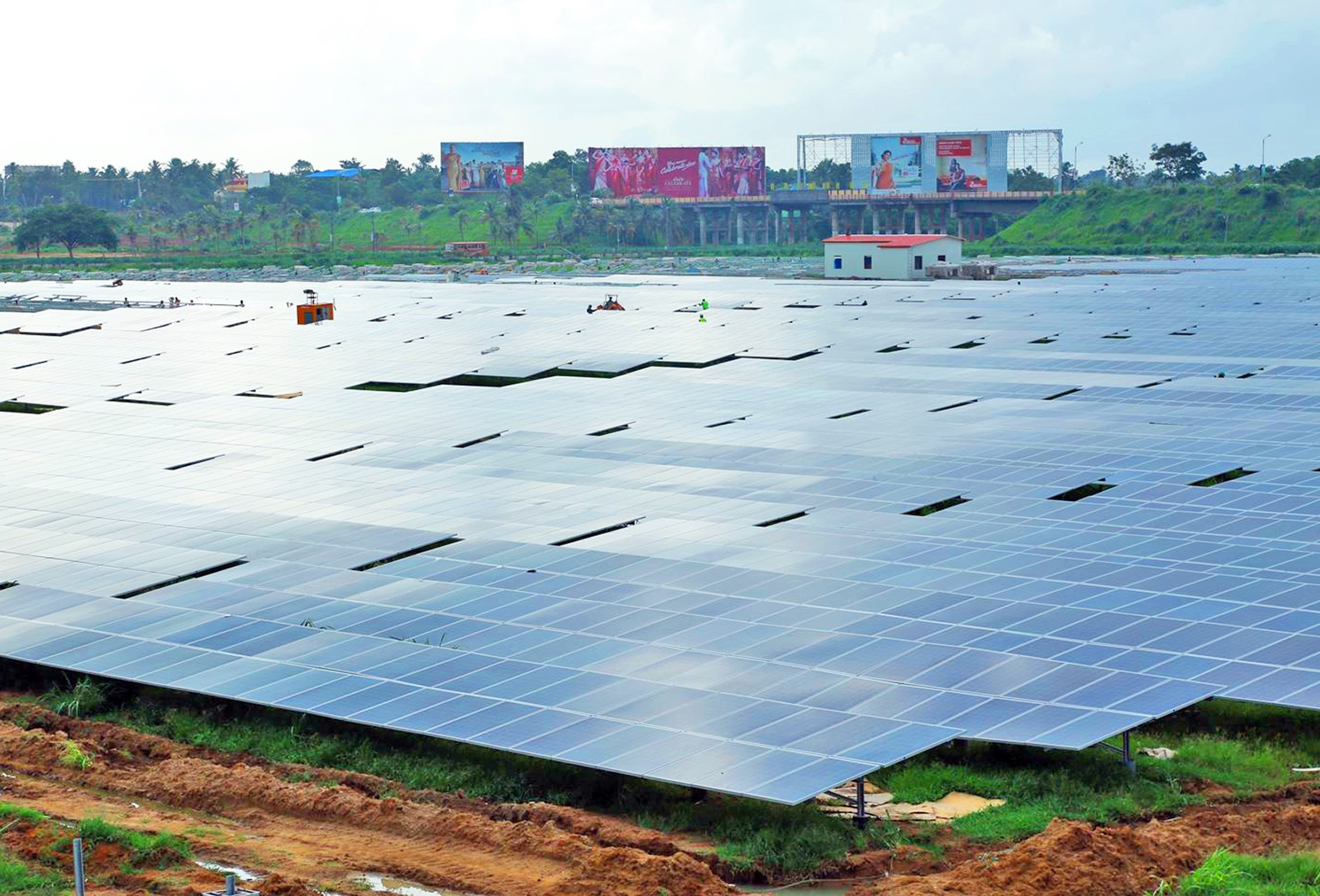
    Cochin becomes India’s first city to have an airport entirely powered by solar energy. This comes as great news for a country already struggling with electricity deficit.  The city, famous for its beauty and the consequent tourism, now has another feather added to its cap. The airport is also the largest in the world to operate completely on solar power.Cochin International Airport

    The solar plant was constructed by German engineering giant Bosch with a specification of 12 MWp. It consists of 46,150 solar panels across 45 acres to generate power. The airport further possesses 100 kilowatt peak (kWp) rooftop photovoltaic (PV) plant which was first built in 2013.

    According to the Airport Authority’s website, the plant would be able to cut down on carbon emissions over the next 25 years in quantities equivalent to planting 3 million trees, or not driving 1.2 billion km (750 million miles). Inspired by the success of the Cochin airport, the government of India plans to equip 30 airports across the country in the same manner.

  • Researchers Develop a Cheap and Efficient Way to Harness Solar Energy

    Researchers Develop a Cheap and Efficient Way to Harness Solar Energy

    Solar energy has the potential to power the civilizations of tomorrow. It is one of our best bets to save the species from the menace of fossil fuels and help us breath fresh air again. The race to perfect this energy source is getting fierce. A new technique could answer the question about solar energy that everyone asks; “what to do when there is no sunlight?”

    A team of researchers led by Michael Grätzel at the Laboratory of Photonics and Interfaces at EPFL, Switzerland have figured out the elusive answer to the query. The team has created a solar cell that takes the energy from the sun and converts it into hydrogen that can be used to power fuel cells that light up the house when the sun doesn’t shine. The team has published the research in the journal Science.

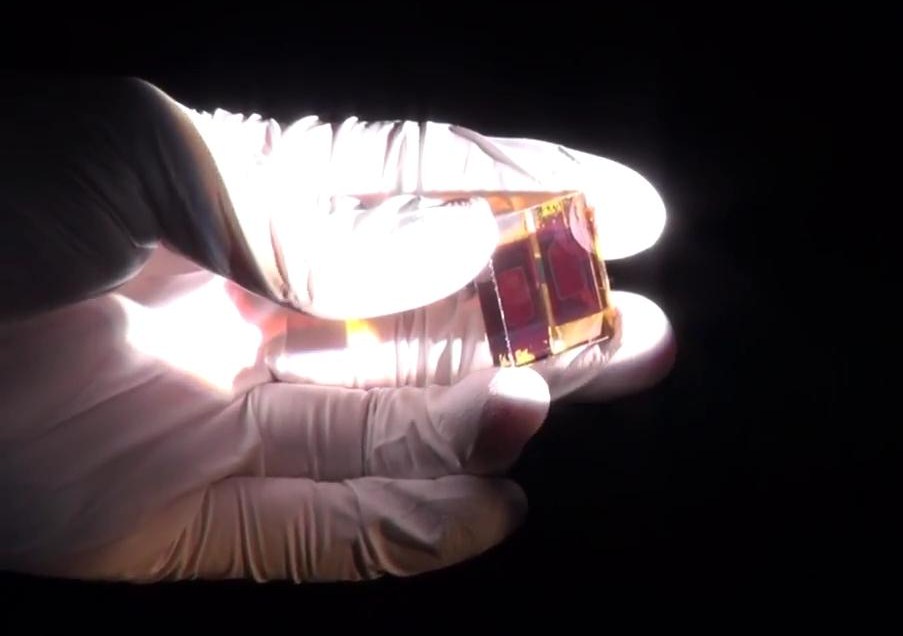
    nickel and iron as catalysts in its two 'water-splitting' electrodes
    nickel and iron as catalysts in its two ‘water-splitting’ electrodes

    The secret ingredient in the process is a new material called Perovskite. It was discovered in 2009 and is said to absorb light much more efficiently than silicon. The most astounding feature of this technique is the device’s ability to store 12.3 per cent of the sun’s energy in the form of hydrogen. In comparison, the accepted benchmark for efficient solar-hydrogen converters is 10%, so this technique is the most advanced yet. The device is also cheap to produce as most of its ingredients are available abundantly on the planet. Along with the Perovskite, the device uses nickel and iron as catalysts in its two ‘water-splitting’ electrodes.

    Solar cells are judged for efficiency in four criteria’s. Firstly it should be efficient, which the device is, secondly it should use cheap materials for production. The third criteria is abundance of raw materials, that is also in the positive. The device only lags in the fourth criteria, reliability, which is a rather important aspect of the solar cells. Currently, the perovskite is not as efficient as silicon and degrades much faster than silicon. The researchers are trying to address the issue by adding a layer of carbon to the surface.

    This seems like a great new advancement, and hopefully, it will have a chance to reach the market before being trashed by the powerful interests. Apart from making solar energy 24/7, it is a double-edged sword that can even power the economy of tomorrow.

  • This 3D Printable Solar Panel Might Just Be The Alternative We Need

    This 3D Printable Solar Panel Might Just Be The Alternative We Need

    Solar energy is known to be the best alternative energy source. We have known its potential for over a hundred years but haven’t been able to take advantage of this clean energy source because of multiple reasons. Fortunately (or unfortunately), the world is now on an emergency alternative searching mode with the effects of global warming being felt everywhere. There have been a good number of R&D going into making efficient Solar panels that are pocket-friendly too. One such alternative can be found in the manufacturing technology of tomorrow, i.e., 3D Printing.

    3D printing is an efficient method of production. Like a regular printer, designs can be downloaded from the internet and printed at any location. As it can be digitally spread, it can be easily sent to any part of the world where it can be copied and printed. It’s a boon for space travel as we don’t need to carry a huge load of spares. Now this revolutionary technology is used by 50 scientists who are experts in various fields to power the planet.

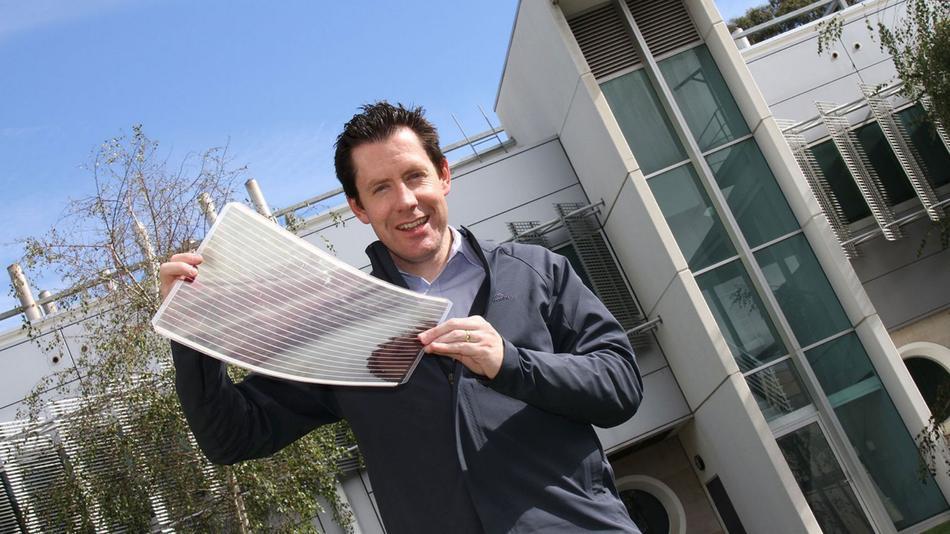
    The scientist have worked for years to develop paper-thin, printable solar panels as part of the Victorian Organic Solar Cell Consortium. The consortium is comprised of members of CSIRO, Melbourne and Monash Universities. The technology, they say, will change the way we charge personal electronics. Imagine your laptop bags, Phone and Tablet covers will not just be safely covered but will help charge up the device on the move.

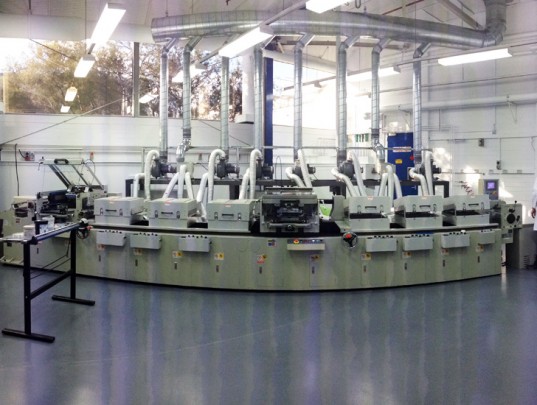
    3D printers, printing the Solar Panels
    3D printers, printing the Solar Panels

    The ultimate goal they say will be to create these panels for all the windows of the skyscrapers so that these building could power up themselves. According to the consortium’s website, the difference between existing solar panels and the technology it is developing is “organic cells offer the potential to allow printing directly onto materials such as roofing and windows and therefore open intriguing building integrated design opportunities.”

    The researchers have been successful in reducing the size of the solar panels to the size of a coin. This was achieved by using ordinary 3D printers adapted to work with solar ink. They say this technique results in cheaper solar cells in comparison to conventional silicon rooftop solar panels.

    solar_panels

    The team wants to take the research to an even more convenient stage. They are presently working on spray painted coating. They say connecting to their solar panels is as simple as connecting a battery.

    The potential of this technology is limitless. The researchers see a huge number of consumer applications of the technology like product packaging, windows and window furnishings, temporary structures, remote locations and developing communities.

    Many companies seem to be showing interest in this technology. Hopefully this technology is implemented before the present fuel reserves are exhausted and we are left with no light and no internet. The day without Facebook would be the day of the apocalypse.

  • India’s upcoming floating Solar Farm

    India’s upcoming floating Solar Farm

    India is in a major energy crisis. With the population multiplying on a daily basis the need for cheap forms of electricity have become a must. India has large plans, whether politically invoked or not; we might be one of the first few nations with a large chunk of renewable electricity sources.

    About five years ago large parts of the Thar desert in Rajasthan and surrounding areas was sanctioned for subsidised privately run solar farms. The land was practically given for free, and an energy reclaim of Rs. 5/ KW (8 cents approximately) was promised to the solar energy companies that were supposed to be set up.

    The project is yet to see the light of day. However, sources tell us that the work is still underway.

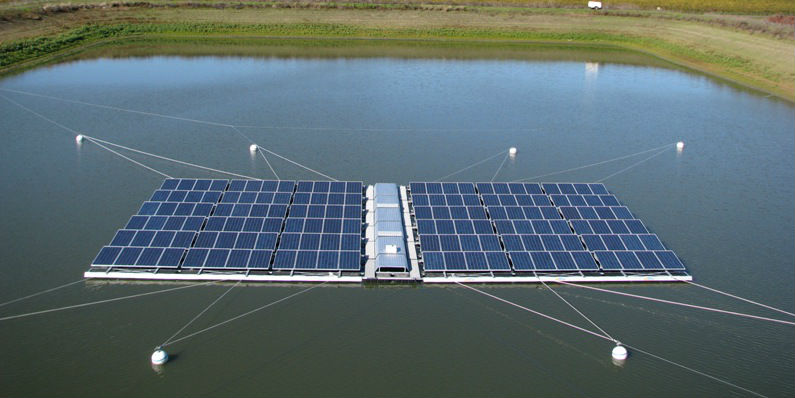
    Meanwhile, a new project in the southern state of Kerala is said to lead the Solar energy revolution in India, thanks to the abundance of sun and large water bodies. A new 50MW plant built entirely on 1.27 million square meter floating platform in Kerala is said already to be in the works. The plant has been approved by the NHPC and will get commissioned in October of 2014. (Yes this year).

    This Solar Farm project will provide cheap and renewable electricity to about 18,000 homes. After the states announcement on building two lakh megawatt of solar power generation capacity, the price of barren solar usable land rose this quarter by tenfold, building a plant on water will be cheap for the government as well as the people enjoying the electricity.

    [quote text_size=”small” author=”SP Gon Choudhury” author_title=”chairman of the Renewable Energy College”]

    Each station would require around 3,000 square feet of space to generate 20 kilowatt of power. There are many water bodies that could be used for this

    [/quote]

    The total project is estimated to cost between Rs 350 crore and Rs 400 crore, the Renewable Energy College will assist in sourcing material till commissioning of the plant.
    The first phase of this Solar Farm, estimated to cost Rs 35 lakh, has been fully funded by the ministry of new and renewable energy and is expected to generate around 12 kilowatt of power to begin with by October 2014.

    [quote text_size=”small” author=”SP Gon Choudhury” author_title=”Chairman of the Renewable Energy College”]

    The ecology of the water body is not likely to be affected much, and it will also reduce evaporation, thus helping preserve water levels during extreme summer. Solar panels installed on land, face reduction of yield as the ground heats up. When such panels are installed on a floating platform, the heating problem is solved to a great extent

    [/quote]

    The yield on these panels is expected to be 20% higher than land based solar power plants. The overall capital cost for such solar projects will be around Rs 6.5 crores per megawatt, which will bring down costs of electricity to Rs 7 / unit. This price will then be further regularised by the state electricity board.

    With the large availability of Sun energy in the country, the future may finally hold a strong supply of electricity for everyone, everywhere!

iGyaan Network
Privacy Overview

This website uses cookies so that we can provide you with the best user experience possible. Cookie information is stored in your browser and performs functions such as recognising you when you return to our website and helping our team to understand which sections of the website you find most interesting and useful.