Author: Anand Kapre

  • App A Day: Tiny Tower

    App A Day: Tiny Tower

    Do you remember when you were younger, there used to be a game called SimTower? Today we bring you another free game for your iDevice called Tiny Tower which is kind of a remake of the older game. Tiny Tower lets you build a tiny tower and manage the businesses and bitizens that inhabit it. The objective is to build the highest most revenue generating tower that you can.

    The game starts out very simply. You have a lobby on which you have to construct a new floor. You start with a simple residential floor. It can hold 5 “Bitizens” who pay you rent every day and work for you in your tower. Once your residential floor is completed, you can build your first business!

    All businesses require employees. While playing, you’ll come across many different bitizens with a variety of strengths and weaknesses, It is up to you to assign the right bitizen to the right job. Along the way, you may just give a few people their dream jobs.

    When you tap a business floor, a new interface pops up that allows you to hire and fire people as well as to produce items for sale. Different businesses produce different items, and each item is prepared in a different quantity and in a different amount of time. Each business can produce three levels of products. The first level sells the cheapest and is produced in the least amount of quantity, time and money, while the third level sells for the highest price and is produced in a higher quantity but is more expensive and takes the maximum amount of time to produce. To produce a level 1 item, you need to have one employee, two employees for level 2 and three employees for level 3. Once items are ready, the business has to be “stocked” by tapping the business again. Once a business is stocked, it will continue to sell products even if you aren’t playing the game while it still has stock remaining. Once it is sold out, the business will close down and you start the whole process again.

    A really easy, though low paying, way to make money is to do the job of the elevator attendant. From time to time, different people will walk into the lobby and request to be dropped to a specific floor. While this sounds easy, when your tower reaches 20+ floors, you’ll realize that it starts to take a while for you to get from the lobby to the floor and back.

    Sometimes special bitizens with a large VIP label show up. VIPs provide various advantages to your tower. They range from a real estate agent who can instantly fill up a residential floor to a rich tycoon who buys out all of one item from the business that you take him to. When a VIP appears, you can drop them to the floor that you feel will provide you the most advantage. Choose carefully though.

    As your tower starts to grow, you can reorganize floors by moving them and you can also customize the look and feel of each floor by repainting it. Has your tower grown too tall? Relax. You can upgrade your elevator too.

    As with most free to play games, there are various in-app purchases that allow you to buy various “TowerBux” packages. TowerBux can be spent on speeding everything up in your tower, from construction to item production.

    All in all this game isn’t one that you’ll be playing for hours at a stretch, but it is the game that you’re gonna come back to for five minutes every hour.




    Tiny Tower - NimbleBit LLC

  • App A Day: MetalStorm Wingman

    App A Day: MetalStorm Wingman

    Do you love airplanes? Are you an air fanatic? Do you want to shoot down enemy fighters while you’re partnered up with your best friend? If you answered yes to those questions, then you HAVE to try this game.

    Metalstorm: Wingman is the successor to the highly successful game Metalstorm: Online. It is a highly addictive flight combat simulator which offers a wide range of gamers the ability to pilot their very own fighter jet. The game is fairly simple to play. At the very basic level, you have to shoot down enemy planes with missles and cannons. You control your aircraft by tilting your iDevice in the desired direction of flight. The on screen controls allow you to fire your weapons, control the speed of your jet, change the camera view and pause the game. You can also swipe the screen in any direction and have your plane perform an advanced evasive maneuver in that direction.

    The game offers players a variety of aircraft to purchase, as well as a detailed tech tree for each. Players also have the option of equipping their aircraft from a wide arsenal of missles and cannons.

    While these features alone would have made the game quite nice, what makes it truly amazing are its multiple game modes. You have the standard campaign and single player modes but there is also a multiplayer ‘verses ‘ mode as well as a ‘Co-Op survival mode’. What this means is that you can play a game verses your friend and blow his plane to bits, or you could team up with them and see how many waves you can survive as wingmen together. Did we happen to mention that there’s a little icon that pops up in the corner of your screen in multiplayer games? It lets you talk to your wingman/opponent while you’re in-game. Multiplayer in Metalstorm is achieved through the Game Center. It works flawlessly (during numerous tests) over both WiFi and 3G, with players in the same room or across the world.

    But wait! There’s More! Do you have a nice, big, shiny and sleek TV in your room? Yes! Ever wanted to play a game from your phone on that big TV? Yes! Do you happen to also have an Apple TV? Yes! All you have to do is connect the Apple TV and your iPad 2/iPhone 4s/iPod Touch and start AirPlay Mirroring. Congratulations. You’re now ready to play Metalstorm: Wingman in 720p on your TV. While the screen is being mirrored, the game shows the inside of a cockpit on your device’s screen, which adds to the coolness of the entire experience.

    The only feature of this game that we did not like was the fact that you have to be online to play it, either over WiFi or 3G. You cannot play this game without a connection. Not even single player mode. We can hope that they will disable this feature in a future update.

    So how much does this game cost? Nothing. Its free to download and free to play. There are various in-app purchases available for various coin packages to easily help you to upgrade your plane, restock your weapons and even buy an all new plane.

    Here’s hoping to see you in the skies someday. God speed. And Good Luck.

    MetalStorm: Wingman - Z2Live, Inc

  • Ubuntu’s First Bug Report

    Ubuntu’s First Bug Report

    Let it not be said that the open source community does not have a sense of humor. As many of you may know, all bugs that are found in Ubuntu are reported to launchpad’s bug tracker. We were quite surprised to find this nugget as the first ever Ubuntu bug report:


    [box border=”full”]

    Bug Description

    Microsoft has a majority market share in the new desktop PC marketplace.
    This is a bug, which Ubuntu is designed to fix.

    Non-free software is holding back innovation in the IT industry, restricting access to IT to a small part of the world’s population and limiting the ability of software developers to reach their full potential, globally. This bug is widely evident in the PC industry.

    Steps to repeat:

    1. Visit a local PC store.

    What happens:
    2. Observe that a majority of PCs for sale have non-free software pre-installed.
    3. Observe very few PCs with Ubuntu and free software pre-installed.

    What should happen:
    1. A majority of the PCs for sale should include only free software like Ubuntu.
    2. Ubuntu should be marketed in a way such that its amazing features and benefits would be apparent and known by all.
    3. The system shall become more and more user friendly as time passes.

    [/box]

  • Tech 101: How Batteries Work

    Tech 101: How Batteries Work

    The first “modern” battery consisted of an apparatus made with metal plates and brine soaked cardboard and was invented by an Italian physicist named Count Alessandro Volta in 1799. Since then, the materials used have changed tremendously, but the basic principle has remained the same. When a device is connected to a battery, a reaction takes place that generates electricity. This is called an electrochemical reaction.

    Mankind’s appetite for electricity has grown exponentially since the 1800s. Today, batteries are found in a vast variety of devices from wristwatches and alarm clocks to smartphones and laptops. Lets look at a few of the most common batteries that we find around us everyday.

    If you look at any battery today, be it a pencil cell or a car battery, the first thing you’ll notice is that it has two terminals marked + and – . On pencil cells and flashlight batteries like AA, AAA, C or a D cell battery, the terminals are at opposite ends of the battery. On higher capacity batteries like a 9V or a car battery the terminals are located together on top of the battery. If a wire is connected to both terminals, electricity will flow from the -‘ve terminal to the +’ve terminal as fast as possible. This will drain the battery very quickly and is dangerous when applied to larger batteries. 

    A battery consists of five main components. There is a cathode, which connects to the +’ve terminal, an anode, which connects to the -‘ve terminal, a seperator, which prevents the anode and cathode from touching each other, an electrolyte, which allows the charge to flow from the anode to the cathode and lastly a collector, which conducts the electricity out of the battery.

    When you put a battery in a device, it completes the load circuit. What happens next differs from battery to battery but the idea remains the same. The anode goes through an oxidation reaction in which two or more ions from the electrolyte react with the anode material and creates a new compound and two or more electrons. At the same time, the cathode goes through a reduction reaction in which the cathode material, ions and free electrons combine to form other compounds. While this sounds very complicated, its actually very easy. The anode reacts  with the electrolyte to create electrons and the cathode reacts with the electrolyte to absorb electrons. The end result is electricity. A battery will last as long as it has materials to continue the reaction at both electrodes.

    A few commonly found batteries include:

    • Zinc Carbon Battery: This type of battery chemistry is commonly found in many cheap AA, AAA, C and D cell batteries. The anode is Zinc, the cathode is Manganese Dioxide and the electrolyte is Ammonium Chloride or Zinc Chloride.
    • Alkaline Battery: This is also another commonly found battery chemistry. The cathode is composed of a manganese dioxide mixture, while the anode is a zinc powder. It gets its name from the potassium hydroxide electrolyte, which is an alkaline substance.
    • Lithium Ion: Lithium ion batteries are used in high performance devices that require frequent charging. These include phones, laptops, tablets and even electric cars. While the exact components of Lithium Ion batteries vary, the most common practice is to have a lithium cobalt oxide cathode and a carbon anode.
    • Lead Acid: This is the typical car battery. It consists of lead dioxide and metallic lead electrodes that are suspended in a Sulfuric Acid solution.

    The two main categories of batteries are Primary (one time use) batteries and Secondary (rechargeable) batteries. The only difference between the two is that when an external current is applied to a secondary battery, the electrochemical reaction happens in reverse, which restores the charge of the battery. There are three main types of rechargeable batteries, Lithium Ion (LiOn), Nickle Metal Hydride  (NiMH) and Nickle Cadmium (NiCd). NiCd batteries were the first widely available rechargeable batteries but they suffered from a problem known as the memory effect. These batteries, if not fully discharged during every use, would quickly start to loose power. 

    NiCd batteries were largely replaced by NiMH batteries which boasted a much larger capacity as well as a reduced memory effect. The only problem with NiMH batteries was their relatively short shelf life.  Like NiMH batteries, LiOn batteries have a long life, but they hold a charge better, operate at higher voltages, and come in a much smaller and lighter package.

    An offshoot of the LiOn technology is the Lithium Polymer (LiPo) battery. While LiOn batteries are the norm for most laptops, LiPo batteries offer significant advantages in space as well as weight savings. These types of batteries consist of an anode and cathode material that has been laminated onto a microperforated plastic sheet which, as the name implies, allows the passage of ions but seperates the anode from the cathode. This allows LiPo batteries to created in almost any shape from round to square and anywhere in the middle. Most mobile phones and tablets have these batteries as they boast the highest charge density of any battery available in the market today.

    Looking to the future, many people believe that the days of the battery are numbered and that they will soon be replaced by fuel cells. While we look forward to the day we have to start popping H2 cartridges into our phones once a month, it is still a while away.

  • ARM launches Android dev kit, focus on Power management (PR)

    ARM launches Android dev kit, focus on Power management (PR)

    ARM is playing its fever and has launched the Android Development Kit for ARM SOC and other chipsets. With the release of Development Studio 5 Community Edition, the company has expanded its dev kit’s repertoire to include not just Linux, but Google’s Linux-based mobile OS we all know and love. DS-5 even integrates with the standard Android SDK as well as Eclipse IDE. 

    [toggle title_open=”Press Release” title_closed=”Press Release” hide=”yes” border=”yes” style=”default” excerpt_length=”0″ read_more_text=”Read More” read_less_text=”Read Less” include_excerpt_html=”no”]ARM Launches Free Toolkit For Android Application Developer Community
    28 November 2011

    ARM® Development Studio 5 Community Edition helps Android™ application developers create native software that can run up to 4 times faster than Java code.

    Cambridge, UK – 28th November 2011 – ARM today announced the release of the ARM® Development Studio 5 (DS-5™) Community Edition (CE) – a free-to-use edition of its reference software development toolkit. The new edition is dedicated to the Android application developer community and helps them create native software for compute intensive tasks that can run up to 4 times faster than Java code. DS-5 CE complements the standard SDK and NDK Android development kits by offering developers a unique set of tools to help them achieve the performance and energy-efficiency advantages made possible when ARM native code is used in Android applications.

    DS-5 Community Edition includes limited, but essential functionality from the premium DS-5 toolkit to help solve common Android application developer pain points. It achieves this by providing an integrated graphical debugger for NDK-generated code and visibility of advanced processor information, including ARM NEON™ Single Instruction Multiple Data (SIMD) registers. The new toolkit permits development of Java and C/C++ code in the same Eclipse integrated development environment (IDE) to maximise productivity and ease of use.

    DS-5 Community Edition features a tailored version of the ARM Streamline™ Performance Analyzer for use with compatible Android development platforms. Streamline captures detailed, system-wide performance statistics from a variety of sources which helps developers to locate hotspots in their code and isolate potential causes. Platform builders can add support for Streamline by integrating an open source driver available from the Linaro website.

    “With over half a million apps on the Android market today, developers need to deliver an outstanding user experience to succeed commercially,” said John Cornish, executive vice president and general manager, system design division, ARM. “ARM DS-5 Community Edition offers developers an easy to use environment for debugging and optimizing C/C++ code. This allows them to take full advantage of ARM processor technology using native code to deliver the performance and functionality that consumers demand.”

    Partner Quotes:

    “We have been using DS-5 extensively for system level debugging and performance tuning”, said Duan ZhiQiang, CTO, Thundersoft. “With the release of the Community Edition, it will enable our ISV and IHV partners to access similar capabilities, improving our platform as an application development target and expanding its ecosystem.”

    “The community edition of DS-5 (DS-5 CE) will further reduce the barriers to open source development on ARM. We have worked closely with ARM to ensure that DS-5 support is available as an easy to install add-on for Linaro Ubuntu images in the past and are working together to deliver a similar convenient developer experience for DS-5 CE as part of our Android images”, said Alexander Sack, Platform Technical Director, Linaro. “This initiative will help users of the community edition take full advantage of Linaro optimized images.”

    “The release of ARM DS-5 Community Edition is welcomed by Orange and solves some of the pain points of Android native apps developers”, said Yves Christol, Head of Advanced Software Centre, Devices, Orange.

    Availability

    The DS-5 CE is available free-of-charge for use by individuals and organizations with annual revenue of $100,000 or less, and up to 10 employees. DS-5 CE is available from ARM and can be downloaded now. For more information go to:

    DS-5 CE: http://www.arm.com/ds5community
    DS-5: http://www.arm.com/ds5
    Linaro platform evaluation builds http://www.linaro.org/downloads/

    About ARM

    ARM designs the technology that lies at the heart of advanced digital products, from wireless, networking and consumer entertainment solutions to imaging, automotive, security and storage devices. ARM’s comprehensive product offering includes 32-bit RISC microprocessors, graphics processors, video engines, enabling software, cell libraries, embedded memories, high-speed connectivity products, peripherals and development tools. Combined with comprehensive design services, training, support and maintenance, and the company’s broad Partner community, they provide a total system solution that offers a fast, reliable path to market for leading electronics companies. Find out more about ARM by following these links:

    ARM website: http://www.arm.com/
    ARM Connected Community: http://www.arm.com/community/
    ARM Blogs: http://blogs.arm.com/
    ARMFlix on YouTube: http://www.youtube.com/user/ARMflix
    ARM on Twitter:
    o http://twitter.com/ARMMobile
    o http://twitter.com/ARMCommunity
    o http://twitter.com/ARMEmbedded
    o http://twitter.com/ARMLowPwr
    o http://twitter.com/ARMTools
    o http://twitter.com/ARMMultimedia

    ARM is a registered trademark of ARM Limited. Cortex, Connected Community and MPCore are trademarks of ARM Limited. All other brands or product names are the property of their respective holders. “ARM” is used to represent ARM Holdings plc; its operating company ARM Limited; and the regional subsidiaries ARM Inc.; ARM KK; ARM Korea Limited.; ARM Taiwan Limited; ARM France SAS; ARM Consulting (Shanghai) Co. Ltd.; ARM Germany GmbH; ARM Embedded Technologies Pvt. Ltd.; ARM Norway, AS and ARM Sweden AB[/toggle]

    [ARM]

  • iPhone 4S Pre Order Starts Today

    iPhone 4S Pre Order Starts Today

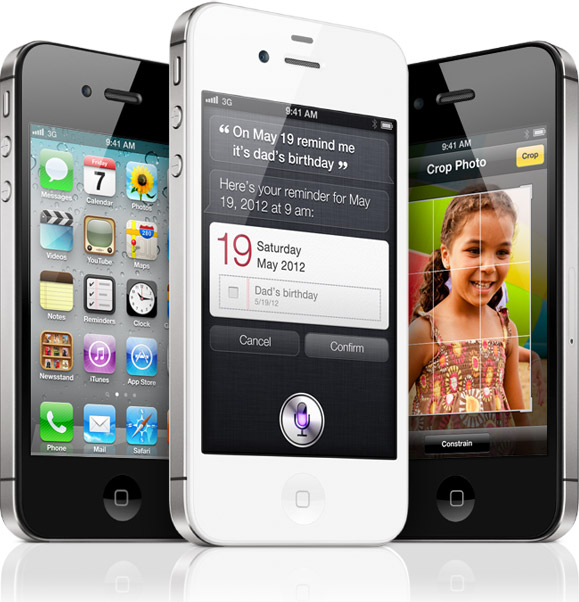
    The much awaited iteration to Apple’s Jesus Phone has now attained pre-order status. The devices are available from Apple’s online stores. The phone is available in black and white colours at  £ 499 for the 16GB version, £ 599 for the 32GB version and £ 699 for the 64GB version from the UK store.  

    We’ve already got ours. Now its time to get yours…

    Place your order at the Apple UK store or at the Apple US store.

  • McAfee Shares Vision for Bringing Mobile Devices into the Security Infrastructure (PR)

    McAfee Shares Vision for Bringing Mobile Devices into the Security Infrastructure (PR)

    McAfee has developed a three sided plan to ensure the future of mobile devices in the corporate environment. This plan was developed to help users secure their devices as the mobile malware market has seen an exponential growth in the last quarter. Read the Press Release for more details.


    [toggle title_open=”Collapse Press Release” title_closed=”Expand Press Release” hide=”yes” border=”yes” style=”default” excerpt_length=”0″ read_more_text=”Read More” read_less_text=”Read Less” include_excerpt_html=”no”]

    McAfee, today shared its vision for securing mobile devices in corporate environments. The three-pronged approach for protecting mobile devices, mobile data, and mobile applications, is designed to help businesses and consumers manage their devices securely, as the threat environment quickly evolves.

     Attacks on smartphones are becoming more common, and according to McAfee Labs, new malware targeting Android devices jumped 76 percent in the last quarter. The need to secure mobile devices from attacks has never been more important. IT security operations that were once smooth-running have recently come under intense pressure to adopt new technologies and fully support completely new platforms, operating systems, and architectures.  McAfee is developing products and strategies to allow businesses to bring these consumer devices securely into the IT infrastructure.

     “Mobile device adoption is exploding, and unfortunately, so are the threats targeting mobile platforms. If McAfee’s historical experience analyzing threats on numerous platforms is any indication, we believe that the emerging mobile malware we are seeing today is just the beginning,” said John Dasher, senior director, mobile security for McAfee. “It’s a whole new world, and a challenge for IT to craft security policies that make sense while updating their infrastructure. At McAfee, we’re working hard to create new technology to help enterprises address the challenge of securely incorporating these new mobile platforms into their environment.”

    New Endpoints, New Challenges

    Traditional endpoints relied mostly on email and web for application framework. Mobile has a whole new freedom in custom applications. But each new application – either public or private – introduces new threats and risks to corporate IT. Today, challenges include the consumerization of IT, mobile platform diversity that includes iOS, Android, BlackBerry and Windows Phone, and an explosion of applications. Additionally, most Android-based devices have a slightly different implementation of the OS making software development and support that much harder.

    McAfee is unique in being able to bring mobile devices into the security infrastructure. With a broad portfolio of security technologies including anti-malware, data loss prevention, application security, web protection, and more, McAfee has the technology needed to securely welcome these new endpoints. McAfee® ePolicy Orchestrator® security management software, which covers more than 30 million endpoints today, and McAfee Global Threat Intelligence, support and work across these integrations.

    McAfee’s Three-Pronged Approach to Mobile Security

    • Protecting Mobile Devices — With data and device protection for today’s most popular mobile devices, McAfee provides a complete security solution that embraces mobile device diversity. To meet this challenge, McAfee offers the following:
      • Anti-malware protection from the growing number of threats targeted at mobile devices through McAfee® VirusScan® Mobile software.
      • Web protection that alerts mobile devices users when they are accessing malicious sites, such as phishing sites is offered through McAfee SiteAdvisor technology.
    • Protecting Mobile Data — Protecting sensitive corporate data is a requirement. McAfee can ensure that only those devices with encryption access the corporate network and data.  McAfee offers
      • Data protection when using the McAfee EMM product, including the prevention of data leakage from Jailbroken and Rooted devices.
      • Anti-theft and loss features allow for remote backup, lock and wipe to make sure that sensitive data does not get into the wrong hands.
      • Additional data protection technologies are under development including the separation of business and personal data.
    • Protecting Mobile Apps – Beyond traditional email and web, mobile apps are readily available and proliferating by the millions. McAfee sees this as potentially the biggest threat vector of the future.
      • McAfee has released in beta McAfee® App Alert™ software to inform users how apps access their personal data.
      • McAfee is expanding the scope of its Global Threat Intelligence to include mobile app reputation services to identify apps that are malicious or put privacy at risk.
      • McAfee also has app-scanning technologies that have been successfully deployed in app stores, adding a crucial layer of application security that helps vendors provide customers a safe app experience.

    [/toggle]

  • The Parrot Asteroid – The Next Generation of In Car Entertainment

    The Parrot Asteroid – The Next Generation of In Car Entertainment

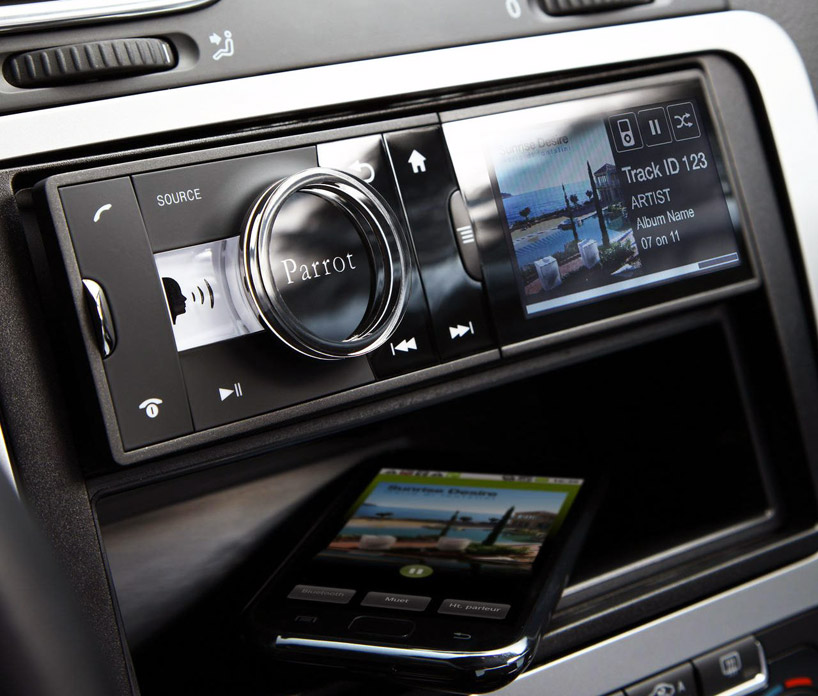
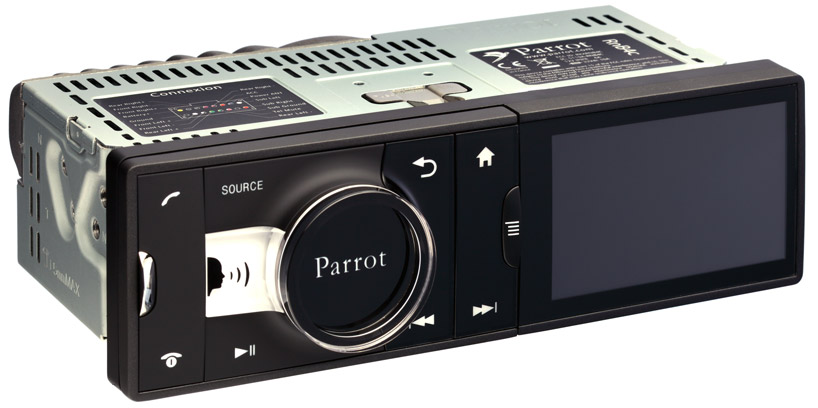
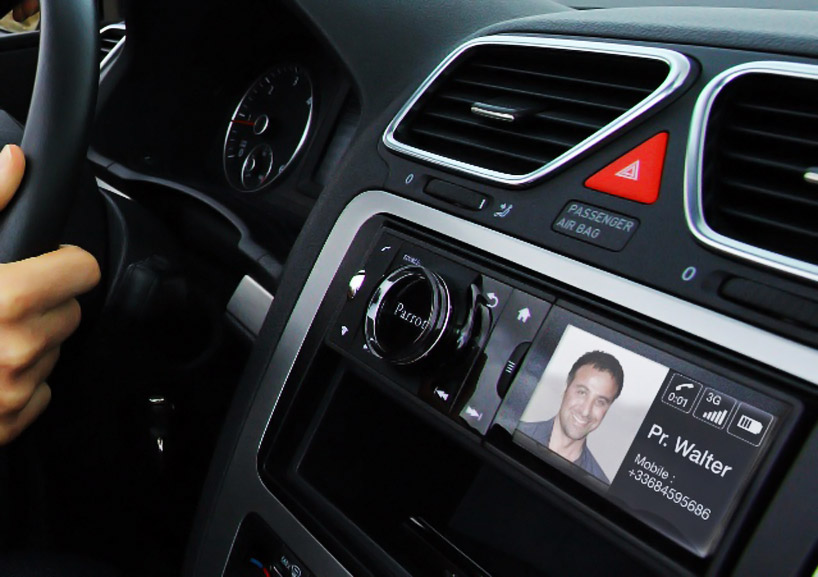
    From the makers of the much acclaimed Parrot AR Drone, a quadricopter for the iPhone, comes a new product for your car. They have designed an Android powered in car entertainment system supporting maps and attractions, voice calling, weather, and other applications in addition to providing radio and music playback.

    The device fits into the head-unit of  a standard 1-DIN car, and features a 3.2 inch LCD as well as tactile buttons and a jog dial to control the various features of the device. Many of the Asteroid’s features can also be controlled via voice input. It is able to connect to the Internet via your smart phone or a separate 3G dongle, and the device can also connect to an external GPS to provide its location based services. With the help of the Fuel for Less app, the Asteroid can display the nearest petrol pump, and can also display the prices of the various fuels offered. The device has another app called iCoyote which can warn users of upcoming speed and red light cameras as well as traffic jams and accidents.

    For music playback, the device integrates with iPod, iPhone, USB or SD card sources, analog players, bluetooth stereo, and FM and Internet radio and is equipped with a built-in amplifier and sub-woofer. For digital sources, all music can be accessed by voice with the ‘vocal music search’ that responds to the names of artist or albums in users’ music libraries.

    The Asteroid will be available from October 2011 and will retail for around $200.

  • The Wind Cube – A Modular Green Power System

    The Wind Cube – A Modular Green Power System

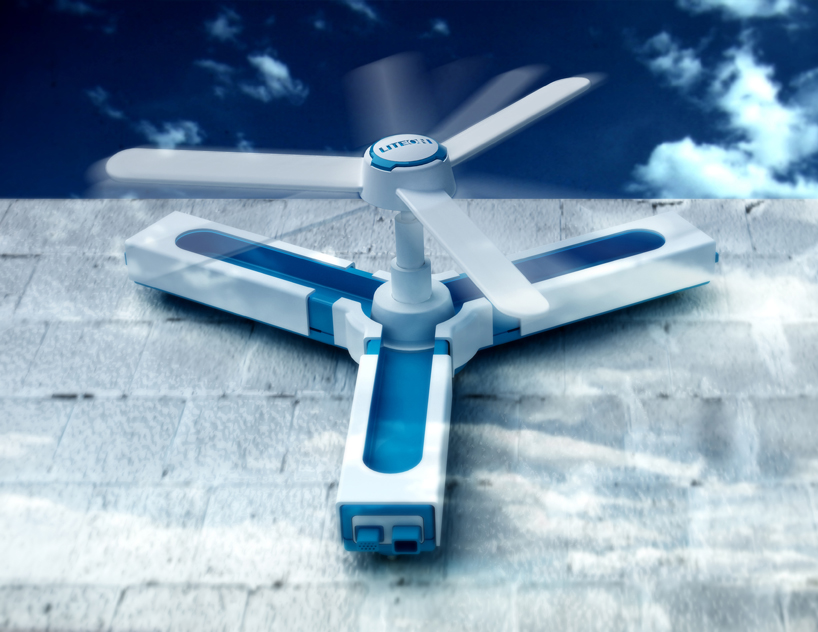
    The Wind Cube is a modular green energy power system that has been designed by Chen Liao Hsun for urban household use. “The concept,”he says, “is to use three-dimensional wind fields to make up for the insufficiency of two-dimensional ones.” Each individual unit can produce around 100 W of electricity which translates into an estimated 21.6 KWh a month. For an average family of 4 members, a total of 15 Wind Cube units would be enough to take them off the grid.


    This concept provides many advantages over traditional windmills. Each unit is designed to fit into adjacent units to form a hexagonal honey-comb structure which is very sturdy. Each unit is also designed with telescopic blades which can be pulled out when a gentle breeze is blowing and can be retracted during rough and stormy weather. In terms of installation, the units have been designed so that they plug into each other to automatically form a circuit and they have a three step installation process.


    While the real life efficiency of these devices is yet to be tested, it just might turn out that the honey-comb structure would be strong enough to set these up as a fence. This would perhaps increase the efficiency of these devices by providing them with an advantage in terms of wind speeds as compared to units that are installed against a wall.


  • The Razer Blade Laptop

    The Razer Blade Laptop

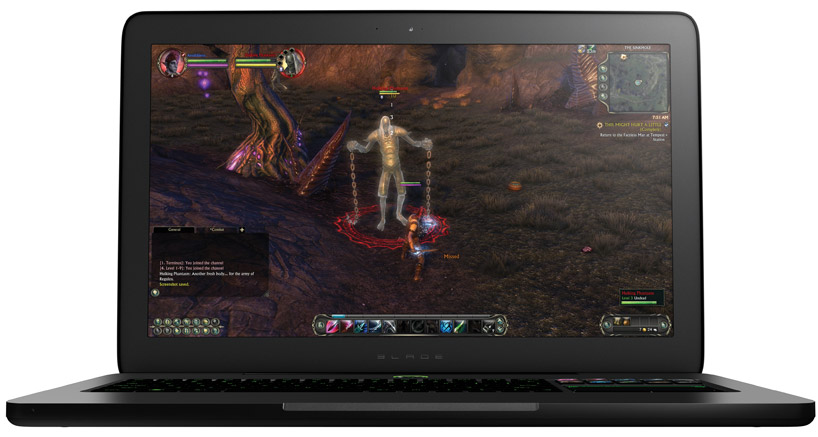
    Razer, nVidia and Intel have teamed up to create what they call the worlds first “True” gaming laptop.

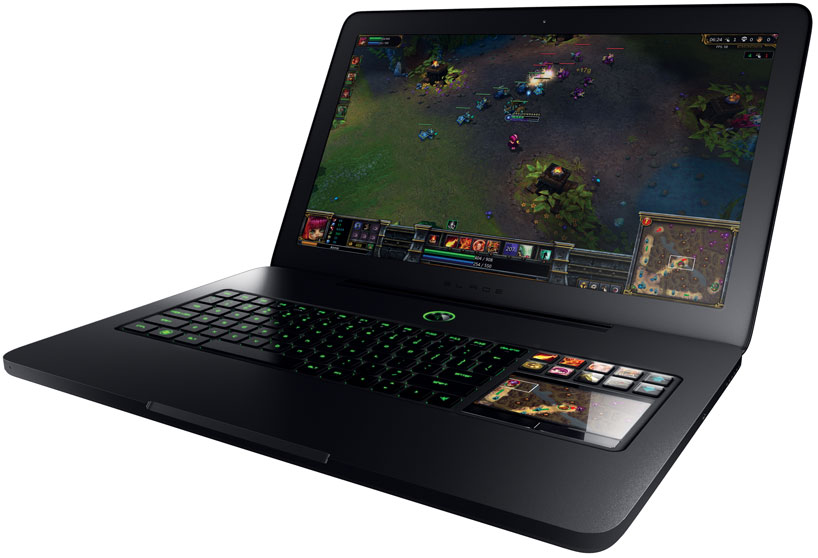
    Dubbed the “Blade”, the laptop is made with an aluminium body that’s only .88″ thick, weighs 3.2 Kgs and houses some pretty mean hardware. It features a 17″ 1920 x 1080 px LED display which is powered by an nVidia GPU and the latest generation Intel Core i7 processor.

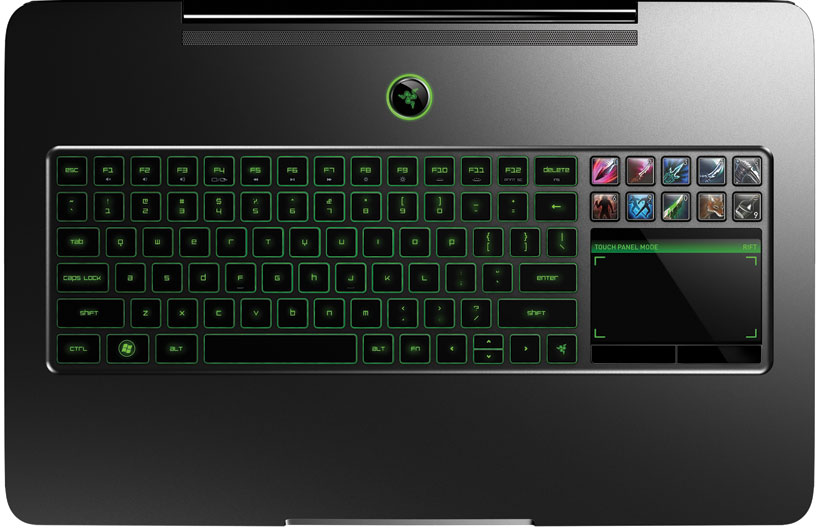
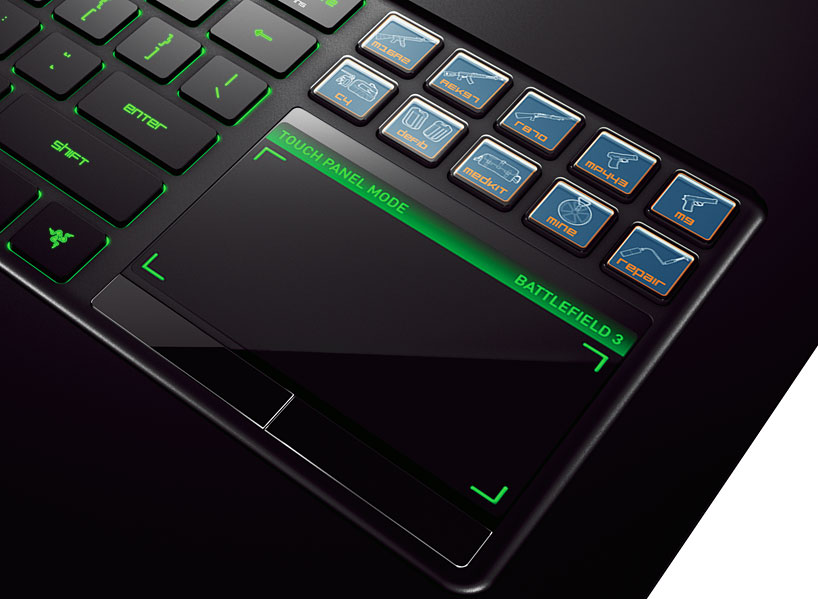
    The laptop also has a back-lit keyboard as well as Razer’s Switchblade interface which consists of ten programmable tactile keys and an LCD which doubles as a multi touch input and a display for in-game information when the system detects an external mouse being used. Each of the ten buttons can be programmed for in-game commands/actions and they can also be assigned an image which would be displayed on the in-built LCD.

    It also features a HD web-cam and is expected to retail for around USD 2800 later in the year.

  • Solar Powered Smartphones Without Solar Panels – Coming Soon

    Solar Powered Smartphones Without Solar Panels – Coming Soon

    In a very interesting development, researchers from the UCLA Henry Samueli School of Engineering and Applied Sciences, have created an LCD screen which can charge its own batteries from any ambient light source such as the sun, an incandescent bulb and even its own backlight!

    We took a look a little while ago at How Modern LCDs Work. As you might remember, each LCD has a polarizing sheet that controls the amount of light that passes through any given pixel. These polarizers are very inefficient, and waste most of the absorbed energy. With this new development however, the standard polarizers have been replaced by a polarized sheet made with organic photovoltaics. These photovoltaics convert any absorbed energy, into electricity, thereby increasing the battery life of any device that it is used in.

    The researchers say that they are speaking to manufacturers so that this technology may be incorporated into future products.

  • WIMM – The Wearable Android Module

    WIMM – The Wearable Android Module

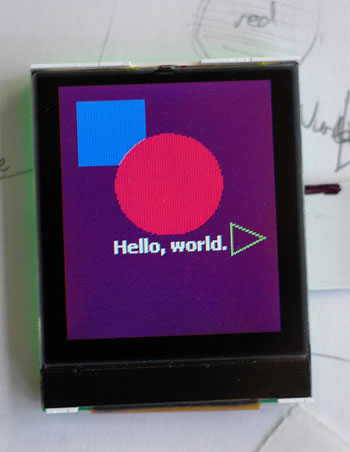
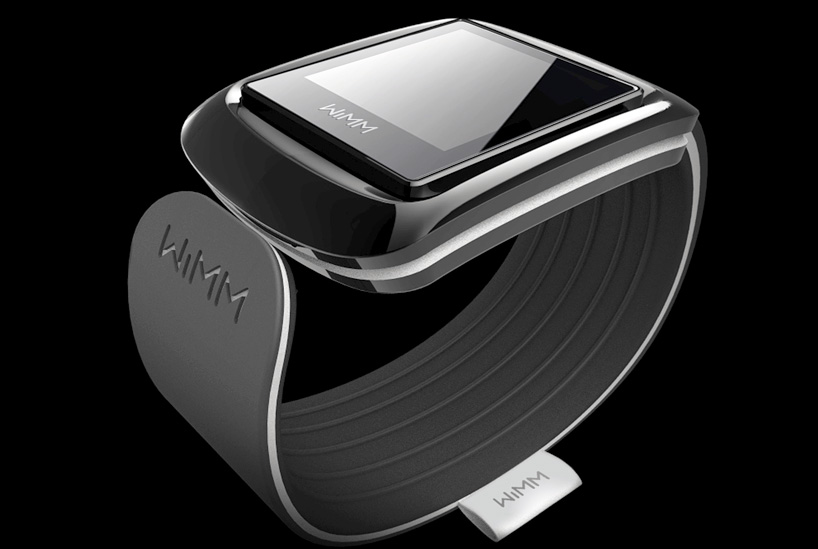
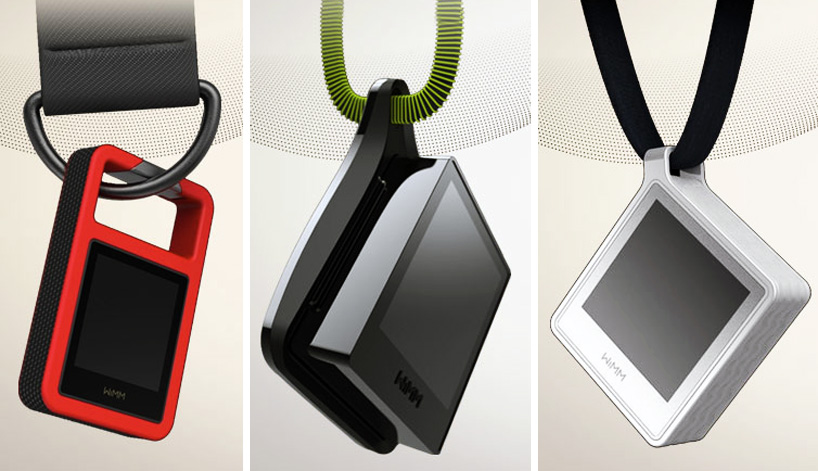
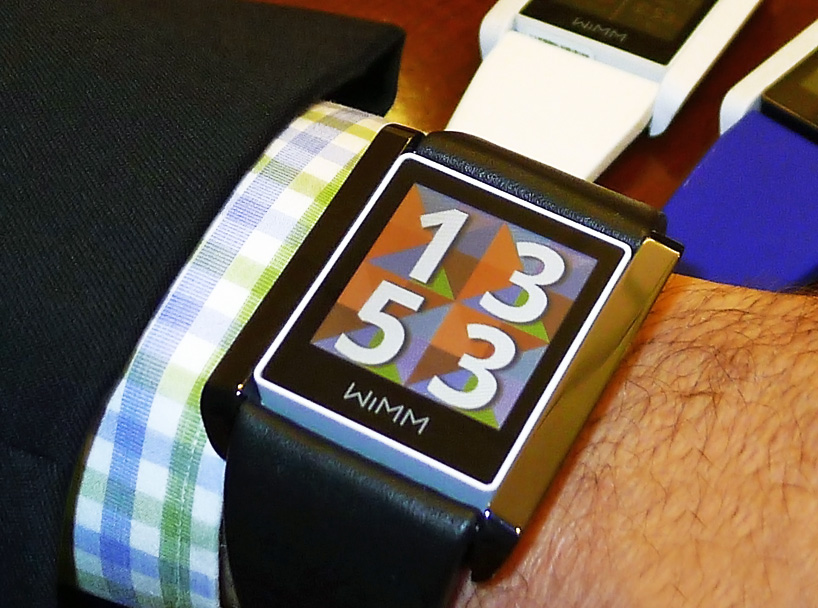
    The Wimm Module has been developed by Wimm Labs to be an extensible and customizable touchscreen module that can be incorporated into devices such as watches, remotes, and other modules that can be small enough to be integrated with wearable products.

    The device sports a 1 inch square, full colour 160x160px capacitive touch screen display and its wifi and bluetooth ready versions also feature an accelerometer as well as a magnetometer. The devices run a modified version of the Android operating system and are compatible with most devices running Android, Blackberry or iOS.

    Weighing only 22 g, the Wimm Modules are designed to be integrated into a wide range of products from watches and pendants to ‘Smart’ wallets. Possible applications include use as calendars and appointment books, pedometers, calorie counters and other health trackers, mobile payment solutions, music and video players, file storage, and universal remotes.

  • McAfee Report Shows Significant Growths in Mobile Malware (PR)

    McAfee Report Shows Significant Growths in Mobile Malware (PR)

    Today, Mcafee released a report which showed that the number of Malware targeted Android devices has skyrocketed in this quarter to 76%, which makes it the most attacked mobile OS. Read the Press release for more information.


    [toggle title_open=”Collapse Press Release” title_closed=”Expand Press Release” hide=”yes” border=”yes” style=”default” excerpt_length=”0″ read_more_text=”Read More” read_less_text=”Read Less” include_excerpt_html=”no”]

     McAfee today released the McAfee Threats Report: Second Quarter 2011, showing that the amount of malware targeted at Android devices jumped 76 percent since last quarter, to become the most attacked mobile operating system. 2011 has also resulted in the busiest ever first half-year in malware history, including a first-ever appearance of Mac fake AV and a significant uptick in rootkits, suggesting that McAfee’s comprehensive malware “zoo” collection will reach a record 75 million samples by the year’s end.


    “Overall attacks are becoming more stealth and more sophisticated, suggesting that we could see attacks that remain unnoticed for longer periods of time. High-profile hacktivist groups have also changed the landscape by drawing a line between attacks for personal gain and attacks meant to send a message.”

    “This year we’ve seen record-breaking numbers of malware, especially on mobile devices, where the uptick is in direct correlation to popularity,” said Vincent Weafer, senior vice president of McAfee Labs. “Overall attacks are becoming more stealth and more sophisticated, suggesting that we could see attacks that remain unnoticed for longer periods of time. High-profile hacktivist groups have also changed the landscape by drawing a line between attacks for personal gain and attacks meant to send a message.”


    The report also details specific activity shaping the way cybercriminals operate, such as cybercrime “pricebooks” that determine the going rate for large email address lists, and acts of hacktivism and cyberwar.


    2011 On Track to Reach Record “Malware Zoo”


    With an approximate 12 million unique samples for the first half of 2011, a 22 percent increase over 2010, this has been the busiest first half-year in malware history. With the addition of Q2’s numbers, the grand total of total malware samples in McAfee’s database has reached approximately 65 million, and McAfee researchers estimate that this “Malware Zoo” will reach at least 75 million samples by the year’s end.


    Android Nabs Top Spot for Most Mobile Malware


    With the vast amount of personal and business data now found on user’s mobile phones, mobile malware is steadily increasing, often mimicking the same code as PC-based threats. In the second quarter of 2011, Android OS-based malware surpassed Symbian OS for the most popular target for mobile malware developers. While Symbian OS and Java ME remain the most targeted to date, the rapid rise in Android malware in Q2 indicates that the platform could become an increasing target for cybercriminals – affecting everything from calendar apps, to comedy apps to SMS messages to a fake Angry Birds updates.


    Fake Anti-Virus for Apple, Rootkits and Stealth Malware Reach New Terrain


    There are more Mac users than ever before, and as organizations increasingly adopt Macs for business use, Apple now has become more a target for malware authors. Though historically the Apple platform has been unaffected by fake anti-virus (fake AV) software, activity in Q2 indicates that it is now being affected. Although this type of fake AV is the first of its kind, McAfee Labs does expect fake AV in general will drop off over time.


    Another malware category that is demonstrating recent steady growth is stealth malware. The tactic of hiding malware in a rootkit is used by cybercriminals to make malware stealthier and more persistent, and has seen this type of attack gain in prominence over the past year, with high-profile attacks such as Stuxnet. Stealth malware has increased more rapidly in the last six months than in any previous period, up almost 38 percent over 2010.


    Acts of Hacktivism and Cyberwar Make Their Mark


    Acts of hacktivism, primarily from the groups Anonymous and LulzSec, were among some of the most prominent cyber news generators for Q2. The report details hacktivist activity from Q2, with at least 20 global attacks reported in Q2 alone, and with the majority allegedly at the hands of LulzSec. The report also outlines acts of cyberwar that occurred in Q2, including attacks on United States’ Oak Ridge National Laboratory, and an attack on South Korea’s National Agricultural Cooperative Federation.


    Email “Black Market” for Spammers


    Though spam is still at historic low levels, due in part to the Rustock takedown, McAfee Labs still expects to see a sharp rise in activity over the coming months. A common method for cybercriminals to increase their volume of spam activity is to purchase a bulk list of emails in order to flood as much spam as possible to a widespread group of people. Whether it’s a botnet or a rental service, prices vary for such enterprises, often by location. For instance, in the United States, the going rate for 1 million emails is $25, whereas in England 1.5 million emails are worth $100.

    [/toggle]

  • Outrun – The Only Racing Game That Drives As You Play

    Outrun – The Only Racing Game That Drives As You Play

    Game maker SEGA has come up with a very interesting concept video game. The game is called Outrun and it is basically a prototype video-game car that has been designed by artist-scientist Garnet Hertz. It combines a car shaped arcade cabinet with an electric golf cart and some custom software. It all comes together in a video game system that you can actually drive! Creator Garnet Hertz had this to say:

    Outrun [is designed] to de-simulate the driving component of a video game: where game simulations strive to be increasingly realistic (usually focused on graphics), this system pursues ‘real’ driving through the game. Additionally, playing off the game-like experience one can have driving with an automobile navigation system, Outrun explores the consequences of using only a computer model of the world as a navigation tool for driving.

    The windshield of the Outrun vehicle has some custom software which can convert the drivers movements in the video game into movement of the car in real life. It also converts the scenes from real life into an 8-bit style race course in which the driver drives the car.


  • Mobile Gaming By The Numbers

    Mobile Gaming By The Numbers

    The mobile gaming industry was worth $33 Billion in 2010. Statistics show that you are more likely to leave home without your wallet than your phone. While most people would rather play a game on a console or computer, the mobile market is rising. Check out the info-graphic below for more facts on mobile gaming:


iGyaan Network
Privacy Overview

This website uses cookies so that we can provide you with the best user experience possible. Cookie information is stored in your browser and performs functions such as recognising you when you return to our website and helping our team to understand which sections of the website you find most interesting and useful.