Author: Anand Kapre

  • iRiver Story HD – Google’s New E-Book Reader

    iRiver Story HD – Google’s New E-Book Reader

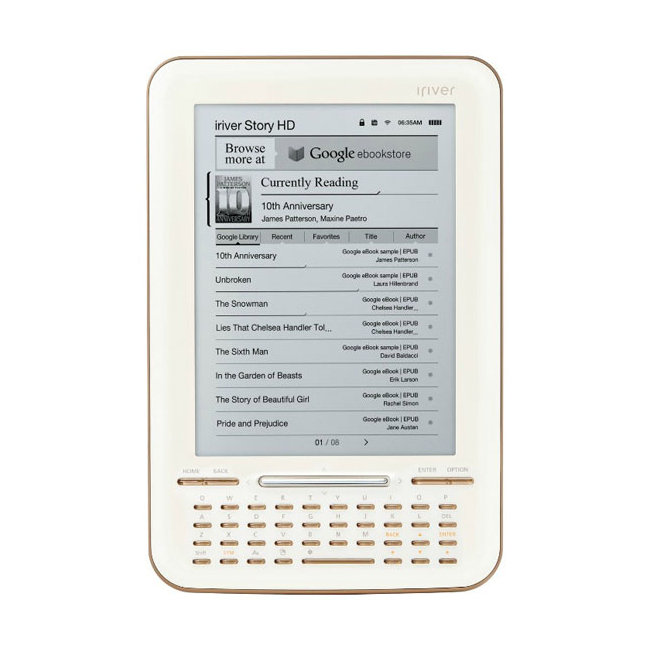
    Google had launched an e-bookstore in December but the store never really took off as using it with an e-book reader was quite a pain. You had to download stuff to your PC and sync it across to your device. Now, a new e-book reader is all set to change that process and challenge the likes of the Kindle and the Nook.

    Created by iRiver, the company behind a range of MP3 players, the device is called the Story HD and hooks directly into the Google Library. The Story HD will pull books directly from the Google Library without having to use a PC to perform a sync to the device. This means that the device will have access to over three million free titles as well as access to hundreds of thousands of paid books.

    There are over 80 devices that currently support Google’s e-book format when synced via a PC including the Kindle and the Nook. None of the readers natively support the e-bookstore however, if you have a smartphone, you could just use the Google Books app to access the store.

    The iRiver Story HD will be available for $140 online. The device will have built in WiFi as well as a black and white screen with a QWERTY keyboard. For comparison, the Nook and the Kindle are available for the same price as well.
  • Acer Aspire Ethos

    Acer Aspire Ethos

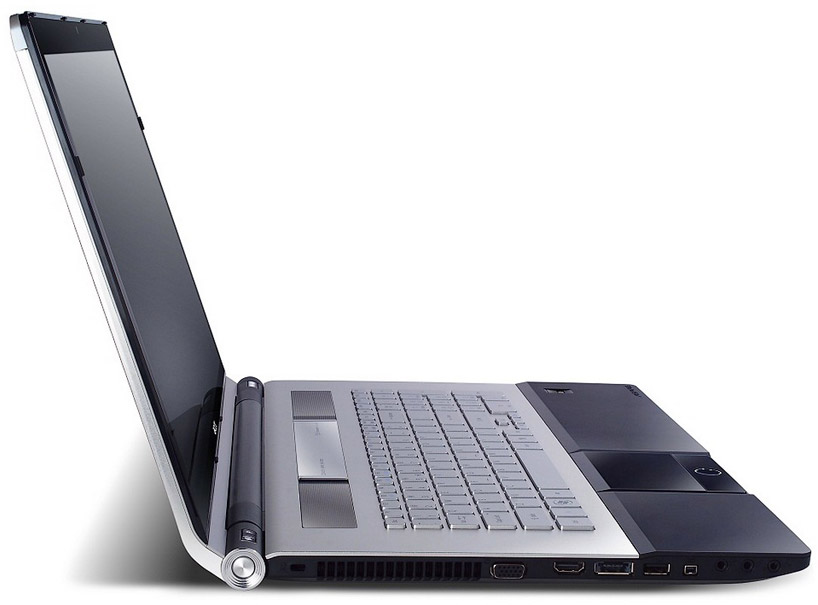
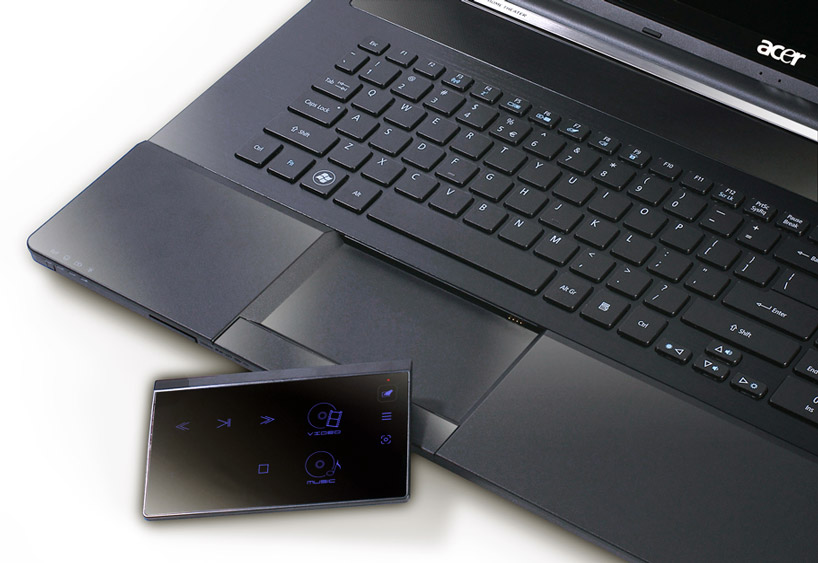
    Acer’s new Ethos laptop series was designed from the ground up for entertainment and features a removable track pad that doubles up as a remote alongside powerful audio and video ready hardware.

    The detachable track pad, is capable of controlling multimedia playback on the device from a distance, and features a sensor enabling it to be used either horizontally or vertically. The Aspire Ethos also features Acer’s Clear.Fi media sharing platform, enabling digital media stored on any Clear.Fi-ready device on the home network to be shared and accessed from any other.

    The 8951G model of the Ethos boasts 5 built in Dolby speakers as well a a pair of Acer sub-woofers for surround-like sound and has a full HD 1920x1080p 18.4 inch display. The 5951G comes with 2 built in speakers and an Acer Bass Boost system along with a 15.6inch 1366×768 display.

    The frame-less laptop utilizes Intel’s Turbo Boost Technology 2.0 on top of Intel Core I Processors, alongside a Nvidia Geforce T500 graphics processor. The integrated power-smart long-life battery lasts over three times as long as conventional notebook batteries. A USB 3.0 port, multi-in-1 card reader, web-cam, and built-in microphone round out the hardware offerings of the device, while an instant on arcade key permits fast booting for movie, music, and photo playback. Mobile devices may be charged via USB even when the laptop itself is turned off.

  • The Samsung NC215s – The Solar Powered Netbook

    The Samsung NC215s – The Solar Powered Netbook

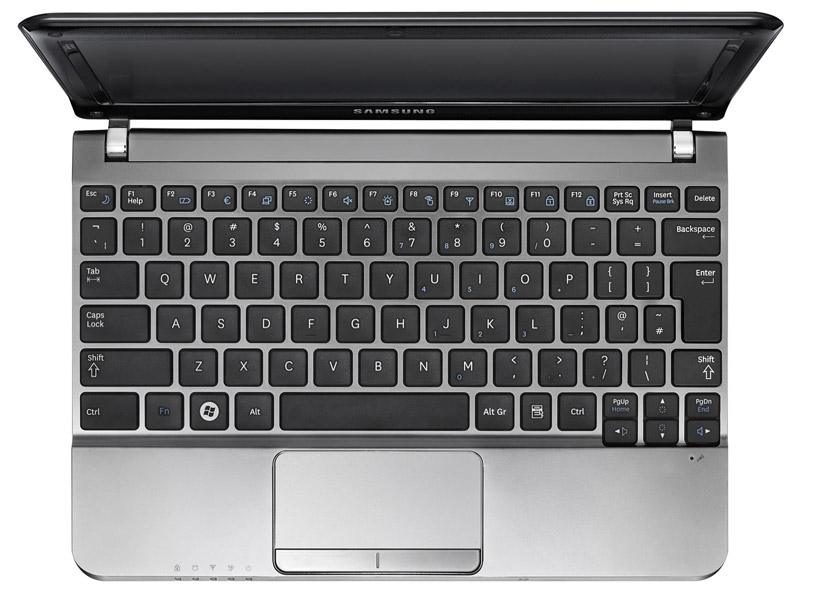
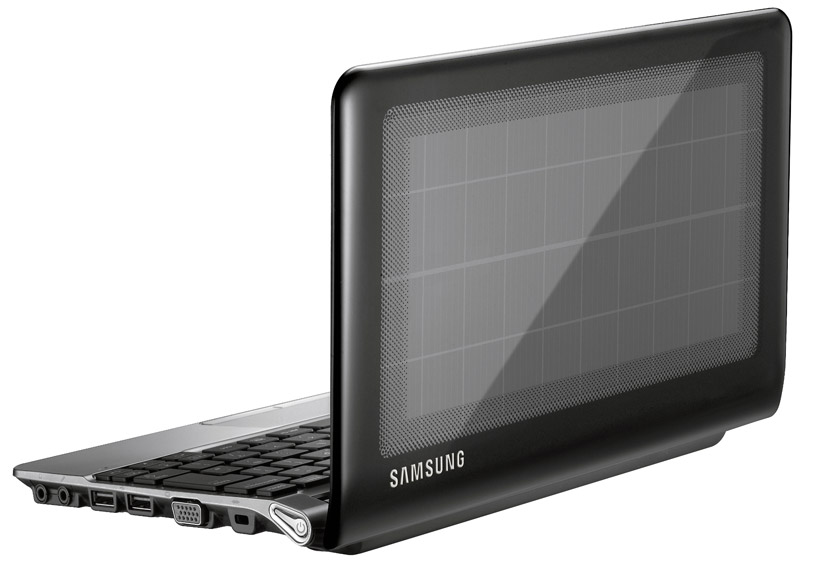
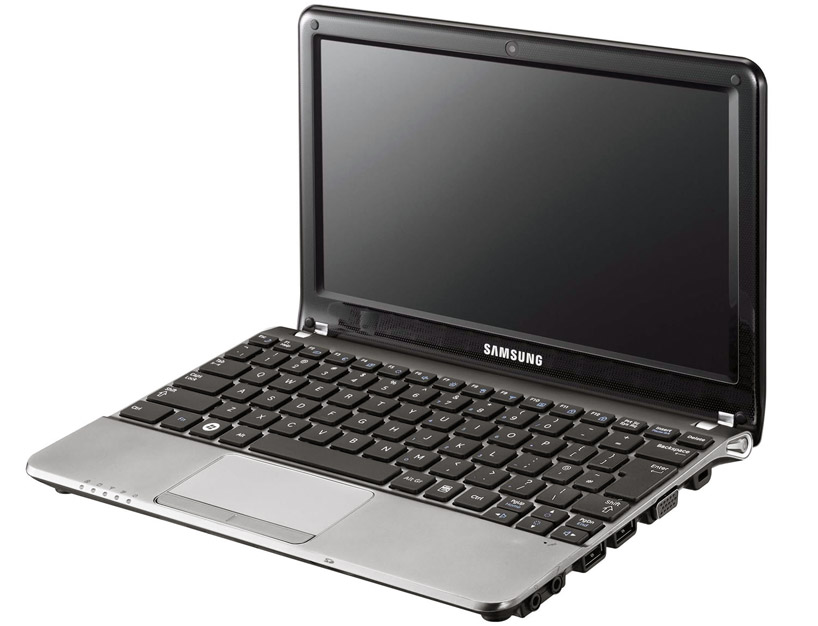
    Samsung has released a Solar powered netbook that will be available in the US and Russia. The rear side of the display houses a solar panel that can generate an hours worth of power for every two hours of exposure to direct sunlight.

    The netbook’s 10.1 inch 1024x600px display is specially designed for extra brightness and is also layered with an anti reflective coating  for use outdoors. The netbook features either a dual-core N570 or single-core N455 Intel Atom processor, with a choice of a 250 or 320 GB harddrive. A sleep mode called ‘Samsung Fast Start’ combines the stability of hibernation with the fast reloading of sleep, while ‘sleep-and-charge’ enables the charging of external USB devices even when the computer is off. A full charge of the six-cell battery is reported to provide up to 14 hours of use. The Samsung NC215S is expected to be released in the United States in early July at a cost of 400 USD, and in Russia in early august, for 13,999 rubles (500 USD).

  • The Air Pick – Release Your Inner Rock Star

    The Air Pick – Release Your Inner Rock Star

    There have been many times that we’ve heard a song and strummed on our air guitars imagining ourselves to be Jimmy Page or Jimmy Hendrix. We thought we were awesome and the crowds went wild for us. Well, when we landed back into reality, we realized that not only did we not know how to play the guitar, but we didn’t even have one.

    Well those days are past because a new product is on the market for all of us air guitarists. It’s called the Air Pick. The Air Pick is shaped like a standard plectrum and has a speaker with some electronics built in. It comes pre-loaded with up to 3 songs and can play the chords in time to your strumming. Songs would include such classics as Smoke on the Water, Born to be Wild and Satisfaction. It’s time to release your inner Rock Star.


  • Introducing the USB Vault

    Introducing the USB Vault

    Are you paranoid about your data? Have you ever misplaced (read lost) your pen drive? Is software encryption not good enough for you? If you answered yes to these questions, then have we got the device for you!

    A Russian designer felt that his data wasn’t secure so he drafted up a design in AutoCAD and came up with this device. It adds a layer of physical security to a regular pen drive by adding a five wheel combination lock to it. Specifics are scarce but we believe the device was laser-cut from the design and is made of brass.

    Not only does the device look cool, but it appears to be secure as well. We’ve lost our fair share of pen drives over the years, but we imagine that with such a device, if nothing else, our data WILL be secure.

  • Printable Antenna Generates Electricity from Out of the Blue

    Printable Antenna Generates Electricity from Out of the Blue

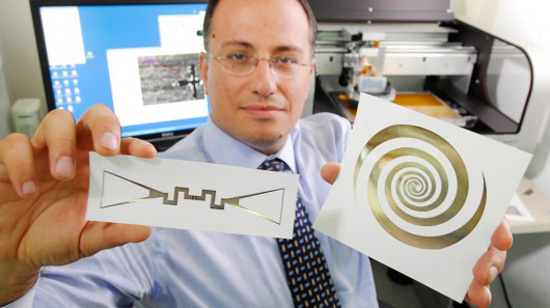
    WiFi networks, Cellphone and Radio Signals. These are just a few of the waves that are spamming the Electro Magnetic Spectrum around you most of the time. You can harvest this energy for more than its intended use. With printable antennas, you can power battery free electronics in most urban environments.

    Since this technology is still in its infancy and generates only a few milliwatts, so don’t expect it to power your cellphone or laptop anytime soon. What this technology is good for is powering networks of sensors in locations that don’t have electrical outlets, batteries or access to solar power. This could be a temperature sensor placed in the wall of your home, or a sensor built into the body of your car to check for structural damage. These sensors could also be teamed up with capacitors to collect power and send short bursts of wireless data to a receiver nearby.

    Theoretically, the amount of electricity generated could be increased in two ways. The first way would involve stacking these antennas one on top of the other and the second way would be to increase the surface area of each antenna. Combined, perhaps we could have a self charging battery or phone in the near future. We can only hope…

  • Toshiba Unveils a New CMOS Sensor

    Toshiba Unveils a New CMOS Sensor

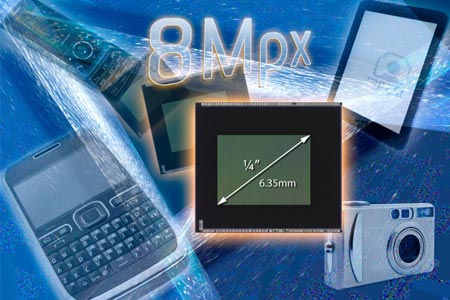
    Toshiba has released a new CMOS image sensor with a 0.25 inch optical format. This new sensor has the smallest pixel size to date of 1.12 micrometers and delivers cutting edge peformance with its built in back-side illumination technology.

    The sensor has been designed to accomodate tight form factors and still capture high definition images. Due to this feature, the company expects it to be embedded into mobile devices such as cameras, smartphones, tablets and even laptops in the near future. The 8.08 MP sensor can capture video at 60 frames per second at both 720p and 1080p resolutions.

    Andrew Burt, vice president, Analog and Imaging Business Unit, System LSI Group, TAEC had this to say,

    As smartphones and other portable digital devices move to smaller form factors, image sensors must also shrink in size. This presents imaging subsystem designers with a challenge: how do you get smaller and smaller image sensors to support higher image resolutions when miniaturization can cause a fall off in performance? Our BSI technology overcomes this problem by deploying the lens on the rear of the sensor, on its silicon substrate, not on the front, where wiring limits light absorption. This positioning boosts light sensitivity and absorption, and allows Toshiba to make finer quality image pixels in smaller-sized CMOS image sensors. This increased sensitivity also makes our BSI CMOS image sensors more suitable for video applications, such as video capture or video chat.

  • Lens Free Camera Developed at Cornell

    Lens Free Camera Developed at Cornell

    Patrick Gill, a postdoctoral associate, led a team that invented the camera in the laboratory of Alyosha Molnar, assistant professor of computing and electrical engineering at Cornell. Their working prototype, resolves images 20 pixels across, which is not studio quality but is quite impressive from a camera that’s only a hundredth of a millimeter thick. The camera was developed to shed light onto objects that were previously hard to see.

    Gill’s camera looks like a tiny compact disc and is made of a flat piece of doped silicone, which makes its manufacturing costs amount to just a few cents. The camera is incredibly small and light and is much cheaper than traditional small cameras which cost a dollar or more to manufacture and require bulky focusing optics.

    The scientists call the camera a Planar Fourier Capture Array (PFCA) since it uses the principles of the Fourier transformation, which is a mathematical tool that allows multiple ways of capturing the same information. The scientists would continue to refine the camera’s resolution and efficiency as they believe that such a device can have a multitude of applications. It could be used in devices that need to measure the angle of the sun or in a simple robot that requires a vision system to navigate.

  • Apple – Stylus Patents Approved

    Apple – Stylus Patents Approved

    Apple had applied for two patents for styluses for capacitive touchscreens and other surfaces last year, but the US Patent office has approved them only yesterday. The first patent is for a stylus with a heated conductive tip which would be charged when it is inserted back into the phone to be used with touchscreen devices.

    The second patent is for a stylus which could be used to write on any surface, with the results appearing on a computing device; a phone, tablet or computer, which is programmed to receive the input. This would be similar to the already existing Livescribe pen. These patents leave us wondering just what kind of devices does Apple have is store for release.

  • The Apple App Store Crosses the 15 Billion Downloads Milestone

    The Apple App Store Crosses the 15 Billion Downloads Milestone

    Apple has claimed that over 200 million devices running its mobile operating system, iOS, have been sold to people across 90 countries. With over 425,000 apps in its app store, the company claims that it has crossed the 15 billion app downloads milestone. Of these 425,000 apps, over 100,000 have been specifically optimized for the iPad.

    These figures represent a considerable challenge for rivals like Hewlett Packard and Google who also offer online application storefronts. Of these competitors, the Android Marketplace possibly comes the closest to Apple’s App Store with hundreds of thousands of applications available to users on their mobile devices running Google’s Android OS. However, out of all the hundreds of thousands of apps available, a very tiny fraction have been optimized for tablets running Android which gives Apple’s iPad a huge advantage.

    With the release of OSX “Lion”, Apple will be including a built in Mac-App store with the ability to download full screen applications for the companies line of Desktops and Laptops. This change shows how Apple’s advances in mobile software have affected its entire product line.

    Apple’s soon to be released iOS5 will offer a huge number of improvements over its predecessor, some of which seem to be directly targeted towards its competition. The iMessage feature seems like a direct answer to RIM’s Blackberry Messenger service. Perhaps the most anticipated feature of iOS5 will be iCloud. The iCloud service allows users to keep all their devices and media in sync, over the cloud. It is also integrated with applications to allow them to push updates wirelessly. It remains to be seen how this update will affect the sale of Apple’s products as well as its competition.

  • YouTube – Cosmic Panda Interface Now Available

    YouTube – Cosmic Panda Interface Now Available

    With the beta test of Google+ we’ve seen an across the board redesign of most of Google’s services. Google search got the black bar on top. Gmail got two new themes for users to try out. Now it’s YouTube’s turn.

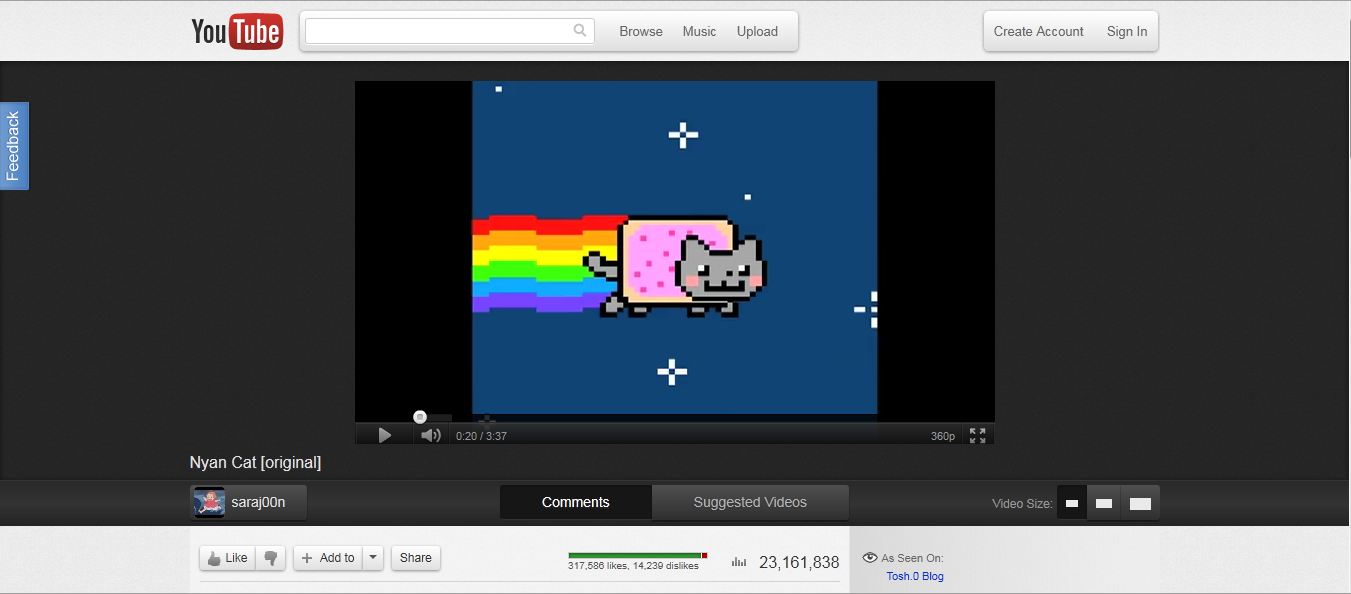
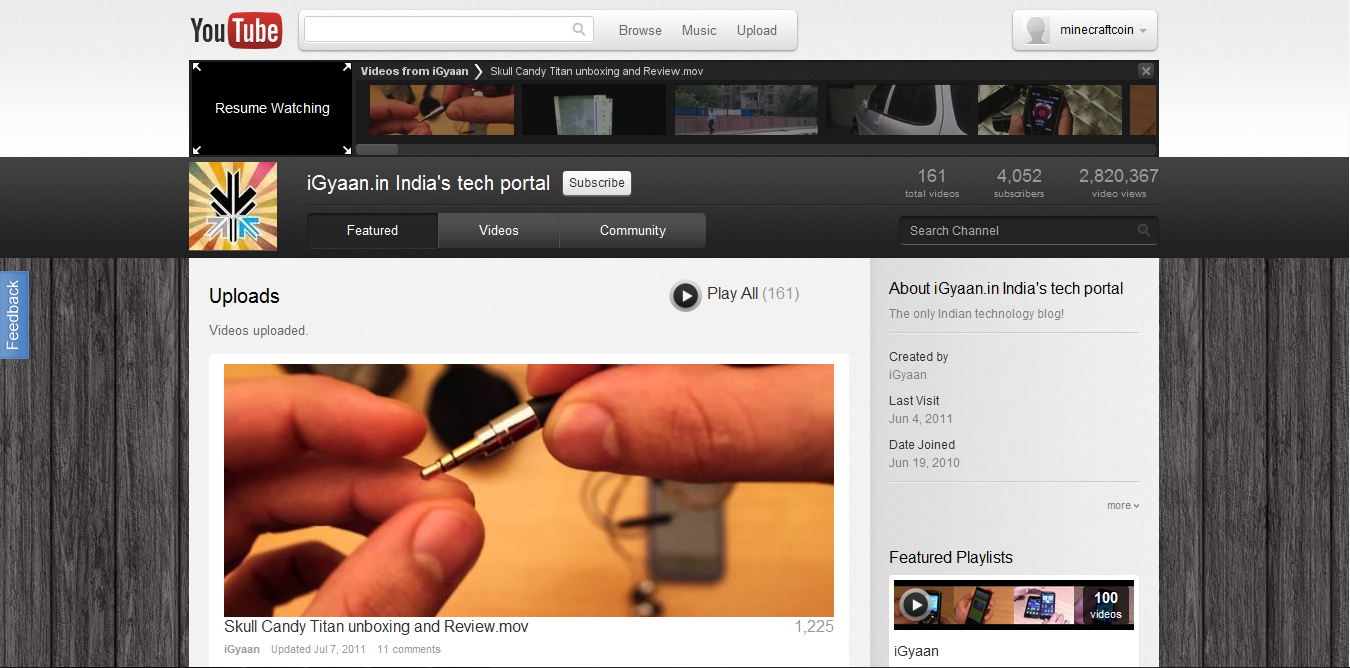
    Google has announced the availability of the Cosmic Panda Interface for users to test. The interface sports a clean and professional look which gives more emphasis to video space. The interface is designed to be quite dark, which might be an effort by Google to reduce electricity consumption across the world.

    The first thing that you notice when you use the new interface is the video. It has been brought to the center of the screen and the clutter around it has been removed. It is very easy to switch video sizes from the buttons at the bottom of the interface. The comments section has been placed under the video in a better interface which makes viewing comments easier.


    Another feature to note is that Google has increased the size of the related video preview images. This makes it easier to view related videos but the downside is that it requires users to scroll a bit more. One feature we really liked is the redesign of the video player itself. The progress bar has been coloured in such a way that the loaded section is grey and blends into the background. The section that has already been played turns red like the old interface.


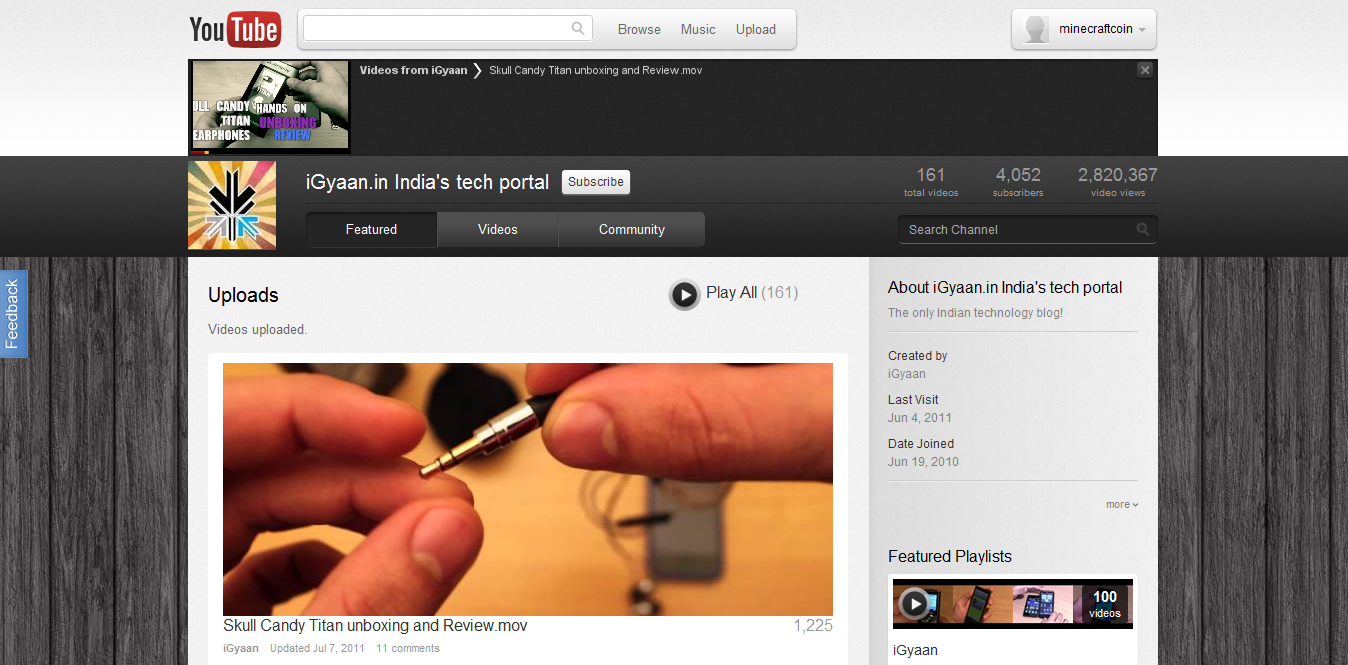
    The channels interface has gone through an upgrade as well. The video links are now much larger and the latest video player has been removed. Chrome users will benefit from a really cool feature called “Keep Watching” which lets you watch a video and browse a users channel at the same time to queue your next video. The video that is playing gets reduced to a small thumbnail on the top of the screen. You can queue videos and resume watching the currently playing video simply by clicking the thumbnail.

    You can test out the new interface and leave your feedback with Google at http://www.youtube.com/cosmicpanda.

  • Plushtography’s Lenstastic Pillows

    Plushtography’s Lenstastic Pillows

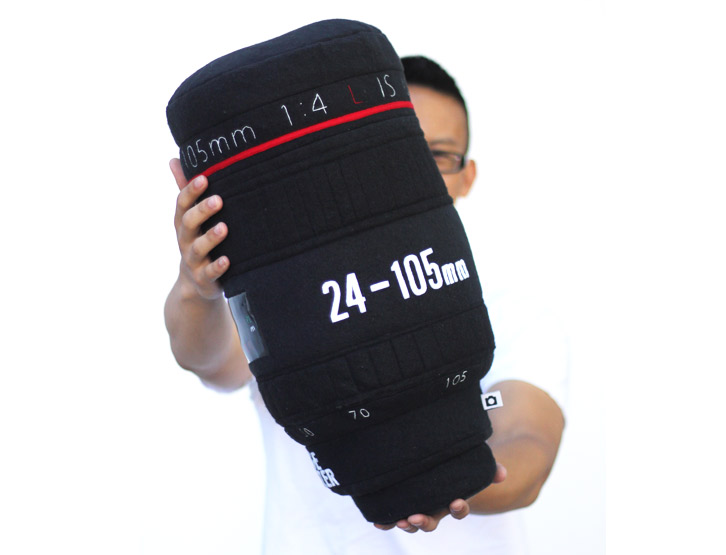
    Are you an avid photographer? Do you keep thinking about how to get the perfect shot? Well do we have the accessory for you. Plushtography has come out with a line of pillows that are ‘pre-hugged by a team of koalas to ensure maximum huggability.’

    The pillows come in various designs ranging from the Canon 50mm and 24-105mm to the Nikon 35mm. Each pillow is hand sewn and made with a secret mixture of fleece, felt and a little bit of love. They range in price from $35 to $65 each and can take upto 10 days for delivery. They won’t imbibe you with any special photography skills but they will make for an interesting conversation starter.

  • How To: Move your Facebook Photos to Picasa

    How To: Move your Facebook Photos to Picasa

    With Google+’s popularity on the rise, a lot of users are looking for an easy way to shift their albums from Facebook to Picasa. The aptly named move2picasa.com website allows you to log in with your Facebook id and copy all your photos to Picasa. Please note that the photos would be moved without captions etc.

    If you have a lot of photos, it could take you a few hours to transfer them. Apparently, the more photos that you and others try to transfer, the slower the service will be. Despite the wait, this seems to be an adequate solution for most people. One other thing, you either move all your photos or you move none. There is no feature to select or filter which images are copied.

    Once your photos are in Picasa, sharing them with your circles is very easy. The web app was built by AmiWorks’ Aman Kumar Jain and Amogh. According to the website, some 300,000 photos have already been moved.

  • Mole Rats May hold the Cure to Cancer

    Mole Rats May hold the Cure to Cancer

    The naked mole has wrinkly skin, no hair and out-sized teeth and resembles something akin to a saber-toothed sausage. While it doesn’t look like much, this rat may hold the key to curing cancer. The mole rat has a life span of close to 30 years, almost seven times longer than an average rat, and it seems to be immune to most diseases including cancer.

    The mole rat is uniquely adapted to survive the deserts of East Africa. It lives underground, is impervious to pain and can survive the severely depleted oxygen levels in its burrows. Dr Joao Pedro Magalhaes, who led a team at the University of Liverpool unravelling the animal’s genetic blueprint, hoped one day it would provide therapies to treat conditions in humans.

    The level of resistance it has to disease, particularly cancer, might give us more clues as to why some animals are more prone to disease than others. With this work we want to establish the naked mole rat as the first model of resistance to the chronic diseases of ageing.

    Scientists cut out sections out of strands of DNA using chemical ‘scissors’, which allowed them to read the strands and insert them back into the genome. Their investigations will now focus on the methods by which cells repair themselves and protect against disease.

    Larger animals usually live longer than smaller ones, but scientists were stumped with the mole rats almost a decade ago as they just did not seem to die. In the US, scientists started to focus on their lifespan instead of the primary reason they were being researched in the first place, their social habits.

    Mole rats tend to live in large groups of upto 300 individuals with a single reproducing queen. During mating season, the queen mates with upto three males and the remaining males in the colony suppress their reproductive tendencies to focus on their roles in the defence of the colony against predators such as snakes.

  • New Swift to be More Economical

    New Swift to be More Economical

    Maruti Suzuki Swift, is one of india’s best selling hatchbacks. After nearly six years in service, the car is finally due for an overhaul. The new Swift which is due to launch next month is said to be more fuel efficient and will come in 1.2l Petrol and 1.3l Diesel varients.

    The new Swift is built on a slightly longer platform and engineers have managed a substantial weight reduction by replacing the metal fuel tank with a plastic one. This has improved the car’s mileage by almost 13%. The new model will be produced in the company’s Manesar Facility. The petrol version is said to give a mileage of around 20 kmpl as compared to the existing mileage of 17.9 kmpl. Similarly, the diesel variant will give a mileage of around 23.8 kmpl as compared to the existing mileage of 21 kmpl. No pricing details have been shared by the company as yet.

    According to an industry expert, plastic fuel tanks are usually 25-35 per cent lighter than the conventional metal tanks. Besides the decrease in weight, these tanks are corrosion-free, durable, non-explosive and easily recyclable. Maruti may also offer a four-speed automatic transmission option in the petrol version of the new car.


iGyaan Network
Privacy Overview

This website uses cookies so that we can provide you with the best user experience possible. Cookie information is stored in your browser and performs functions such as recognising you when you return to our website and helping our team to understand which sections of the website you find most interesting and useful.