Author: Shivaank Rana

  • Apple Details iPhone 5s Touch ID Scanner

    Apple Details iPhone 5s Touch ID Scanner

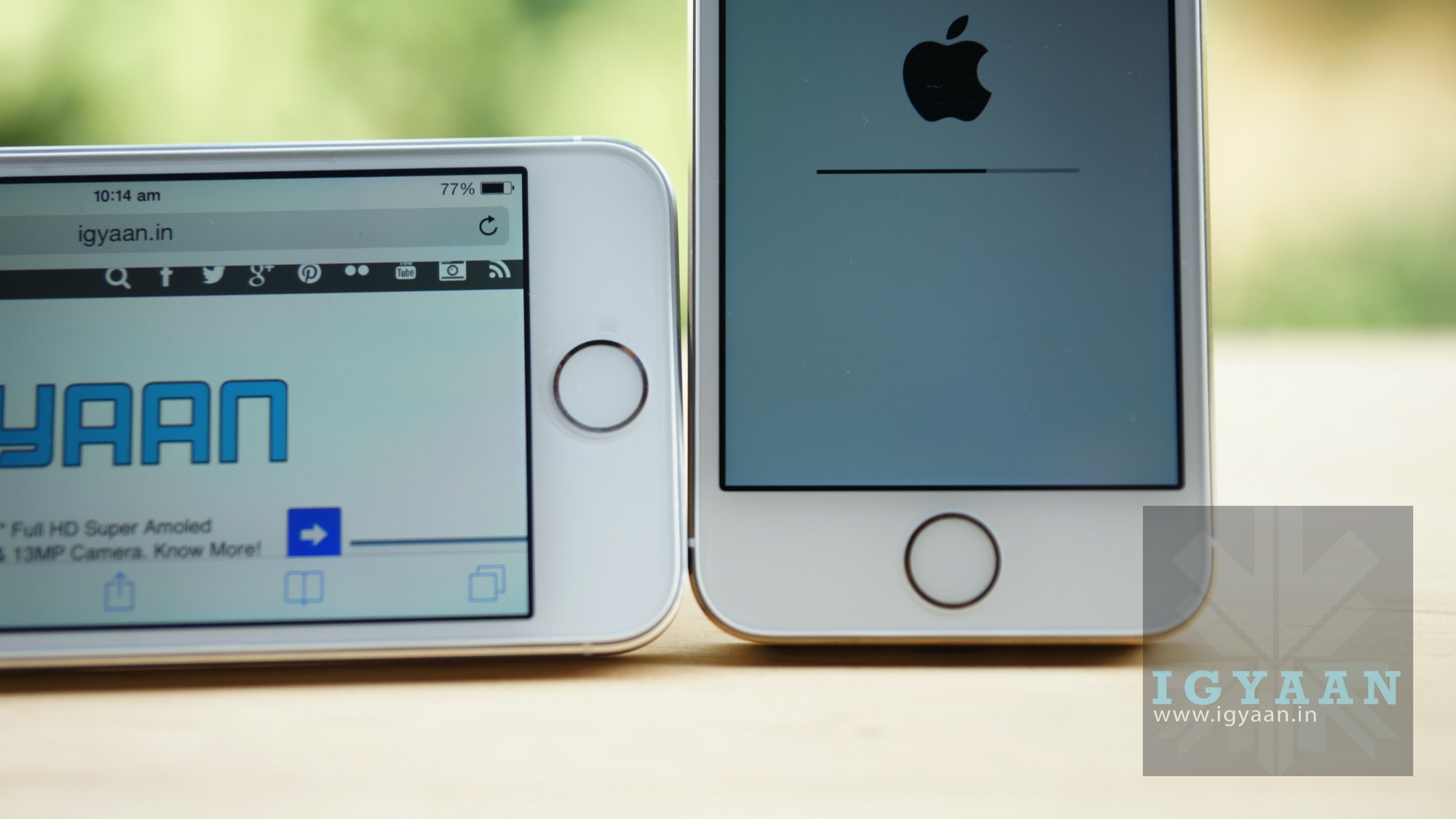
    Apple has updated its iOS Security document to include intricate, detailed information pertaining to the Touch ID sensor that is found on the iPhone 5s. 

    Apple reiterates that Touch ID and its Secure Enclave store only data from scanned fingerprints, rather than actual images. Using a secure boot process, the Enclave – a coprocessor inside of Apple’s A7 processor – verifies and signs information independently of other iOS hardware and software.

    All Secure Enclaves can function independently even if a kernel is compromised and each one contains a unique ID inaccessible to other parts of the system and unknown to Apple, preventing the company or any other third parties from accessing data contained within.

    “Each Secure Enclave is provisioned during fabrication with its own UID (Unique ID) that is not accessible to other parts of the system and is not known to Apple. When the device starts up, an ephemeral key is created, tangled with its UID, and used to encrypt the Secure Enclave’s portion of the device’s memory space,” the document said.

    “Additionally, data that is saved to the file system by the Secure Enclave is encrypted with a key tangled with the UID and an anti-replay counter.”

     And while the A7 processor deals with data from Touch ID, this information is encrypted by the scanner, making it unreadable to the rest of the phone. Only Secure Enclave can authenticate the data.

    “It’s encrypted and authenticated with a session key that is negotiated using the device’s shared key that is built into the Touch ID sensor and the Secure Enclave,” the document reads. “The session key exchange uses AES key wrapping with both sides providing a random key that establishes the session key and uses AES-CCM transport encryption.”

    Apple has also spelt out that it has strict no-third party app rule when it comes to TouchID data. “Touch ID authentication and the data associated with the enrolled fingerprints are not available to other apps or third parties,” reads the document.
  • Google’s Project Ara Conference Announced

    Google’s Project Ara Conference Announced

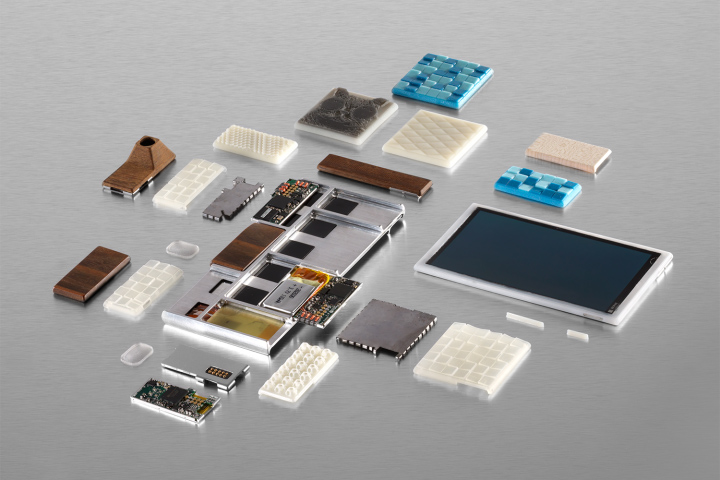
    Google today revealed the first details of its Ara Developers’ Conference, a series of events that’ll focus on getting devs up to speed on the current and upcoming features of Project Ara. A new follow-up profile by TIME indicates we could see the device come to market by next year, with a $50 price tag to start. 

    That MDK should be released in early April, Google says, as a free and open platform specification, along with a reference implementation that will help would-be Ara module developers to create their own piece.

    The event will take place in Mountain View, California, and will be streamed online to the whole world. In fact, Google claims that Project Ara is designed for 6 billion people. This indicates that Android maker may be working on a highly affordable modular phone for the masses.

    Project Ara began as a project in the Motorola Mobility skunkworks, but after the news that Lenovo would buy the smartphone company, Google confirmed that it would be keeping the Ara team. 

    Headed under the Advanced Technology and Projects (ATAP) division, the platform is meant to be a single hub onto which the user can place their own hardware.  This means CPUs, cameras, sensors, screens, baseband, modems, connectivity, storage – the whole gamut.

  • Samsung Details Exynos 5422, 5260 Chipsets

    Samsung Details Exynos 5422, 5260 Chipsets

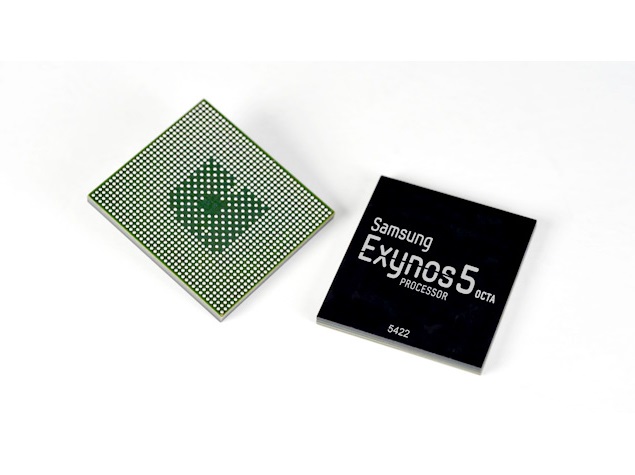
    Samsung is adding two new processors to its Exynos family. The Samsung Exynos 5422 is an updated, faster version of the Exynos 5420 octa-core processor, while the new Exynos 5260 is the company’s first hexa-core chip.

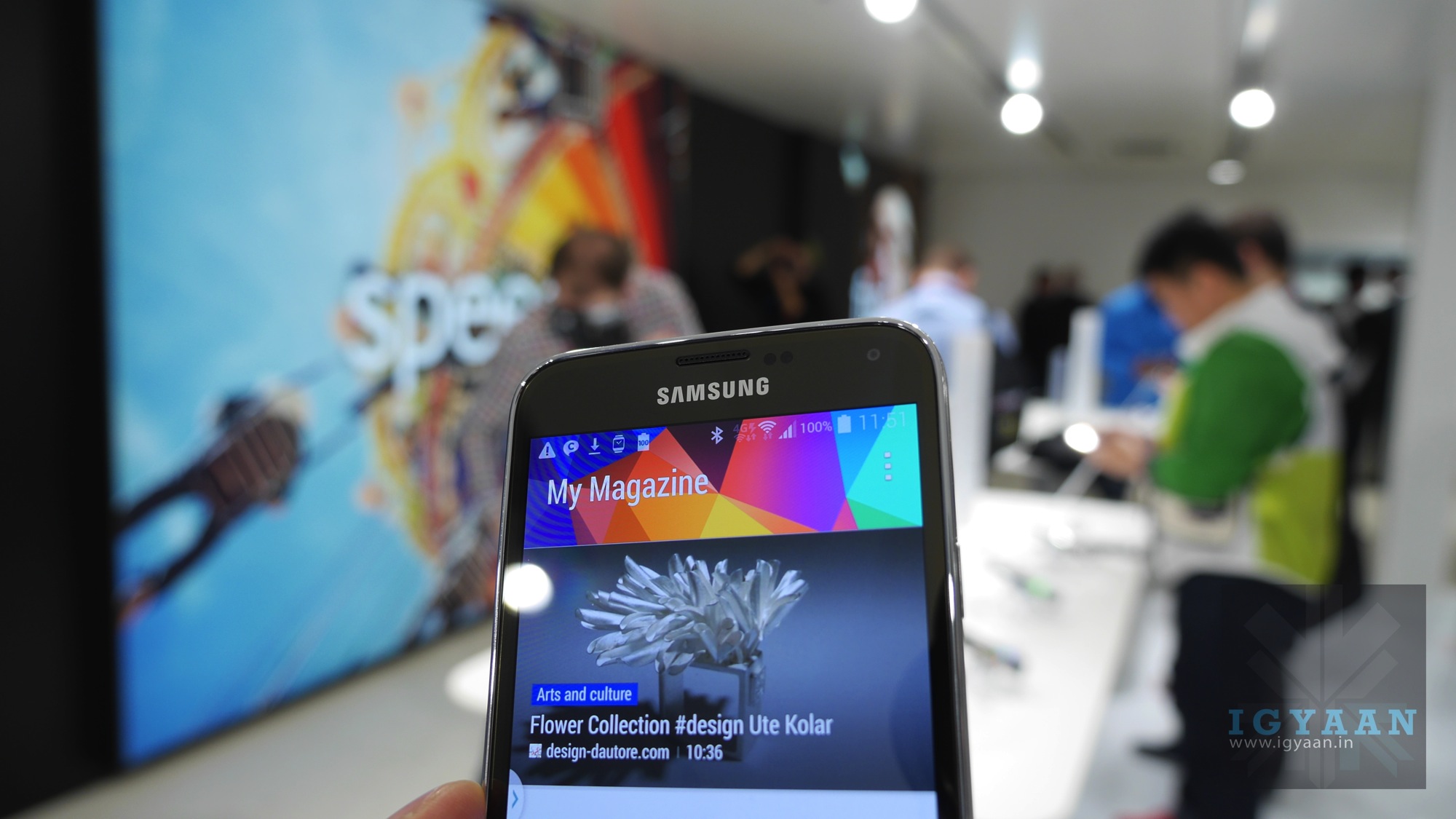
    The line struggles to compete with Qualcomm when it comes to LTE radio capabilities, so like previous releases we’ll see the Exynos version of the phone in markets where LTE isn’t an option yet. In the US and in parts of Europe where LTE has been steadily growing, we’ll see the Qualcomm variant so users can take advantage of the special bonded download feature Samsung has implemented for the Galaxy S5.

    The 5422 has four Cortex-A15 cores clocked at 2.1GHz and four Cortex-A7 cores @ 1.5GHz. This is a good 200MHz upgrade over the previous Exynos 5420 SoC. The 5422, naturally, uses the big.LITTLE ARM architecture, but comes with Samsung’s own tweak – HMP (Heterogeneous Multi Processing) technology. The HMP allows the device to utilize any combination of cores, even all eight, at once.

    Another addition to the Samsung’s Exynos family is the 5 Hexa or the Exynos 5260, is seen in the Galaxy Note 3 Neo, which features six CPU cores: two 1.7GHz ARM Cortex A15 cores and four 1.3GHz ARM Cortex A7 cores.

    As per Samsung, the Exynos 5 Hexa supports WQXGA (2560 x 1600) display resolution and also supports full-HD (1080p) playback at up to 60 frames-per-second (fps).

    Samsung further revealed that the samples of the processor are scheduled for mass production in the first quarter of 2014, while the Exynos 5260 is currently in mass production.

  • A New Record? Goophone Clones Galaxy S5 in TWO Days!

    A New Record? Goophone Clones Galaxy S5 in TWO Days!

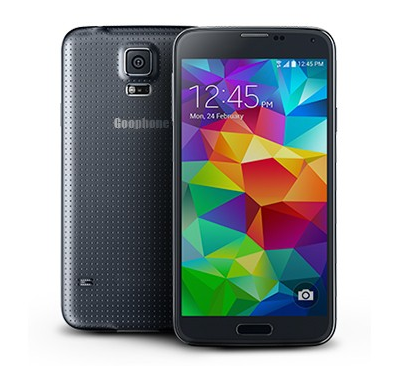
    Goophone has come out in support of those who can’t afford the newly launched Samsung Galaxy S5 – by cloning the device in just 2 days and naming it, imaginatively, the Goophone S5.

    The Goophone S5 will pack a 5-inch 1920×1080 display and will be powered by a MediaTek octa-core chipset clocked at 2GHz. It will come with 2GB of RAM, 32GB of onboard storage, WiFi, dual-SIM capabilities, a 2,800mAh battery, a 13MP rear-facing camera, a 5MP front-facing camera, and will be priced at $300.

    goophone

    The Samsung Galaxy S5 on the other hand, features a 5.1 inch Super AMOLED Full HD display with a resolution of 1920 x 1080 pixels. The Galaxy S5 is powered by a 2.5 Ghz Snapdragon 800 processor and runs on Android 4.4 KitKat. This latest flagship from Samsung is packed with a 2 GB of RAM and 16/32 GB internal storage options along with expandability of 64 GB via MicroSD card.

    The knockoff S5 obviously contains the “Goophone” branding on the rear shell, but that appears to be the only design element that differentiates the two pieces of kit. 

    The Goophone S5 will compliment the company’s line of familiar looking offerings, like the Goophone i5S,Goophone i5C, Goophone N3 and the Goophone Smart Watch.

    We’re not sure if Samsung will be taking any legal action against Goophone and their blatant and very obvious Galaxy S5 ripoff. The official site for the product is currently showing as “out of stock“.

  • MWC : Samsung Announces KNOX 2.0

    MWC : Samsung Announces KNOX 2.0

    Samsung has launched Samsung Knox 2.0, the second generation of its enterprise orientated security software. 

    Samsung has sold over 25 million devices running Knox, with more than one million active users on the platform. Samsung also revealed this week that it sees 210,000 Knox-enabled devices each month, translating to an average of approximately 7,000 devices each day.

    Thus, with a new slew of Galaxy mobile devices on the way, so to is the next version of Knox.

    One of the greatest updates to arrive on KNOX 2.0 is how it handles Android apps. In its first version Samsung focussed on individual work and personal “containers” and needed to have separate apps in each, but now they’ve improved the wrapping process by removing the need for dedicated environments and this reportedly works with “most of Android apps.” In addition, Samsung will launch a dedicated Knox marketplace that desires to be a one stop shop for SMBs to find and buy enterprise-related apps.

    Knox 2.0 will also take advantage of the Galaxy S5’s new fingerprint scanner embedded in the home button, just as Apple did with the Touch ID sensor in the iPhone 5S.

    KNOX 2.0 will be come pre-installed on the Galaxy S5 and those with KNOX 1.0 will be able score 2.0 after upgrading to KitKat.

  • MWC : BlackBerry Z3 and Q20 Announced

    MWC : BlackBerry Z3 and Q20 Announced

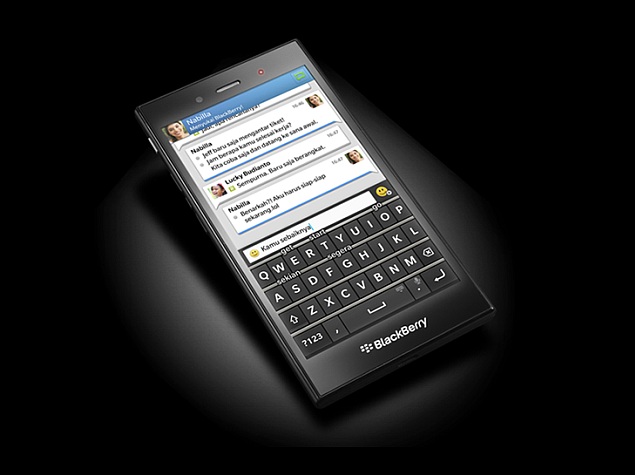
    BlackBerry has unwrapped two new handsets at the Barcelona expo – the BlackBerry Q20 and BlackBerry Z3.

    The BlackBerry- and Foxconn-built 3G-only BlackBerry Z3 is an entry-level BlackBerry 10 smartphone running 10.2.1 with a 5-inch 960×540 pixel qHD display, a 1.2 GHz dual-core Snapdragon processor, 1.5 GB RAM, 8GB storage, a 2650 mAh non-removable battery, a 5MP rear camera and a 1.1MP front-facing camera. The BlackBerry Z3 will be available in Indonesia this coming April for under $200. There are future plans to create the Z3 as an LTE-capable device, but no indication of an Indian release.

    CEO John Chen also said the company will bring a ‘classic’ take on one of their BlackBerry 10 smartphones. It was rumoured that BlackBerry would re-introduce the “belt” of function keys and trackpad back into its devices and Chen confirmed this by saying the Q20, along with a “classic” BlackBerry look, will launch later this year. 

    The Q20, available before the end of the year, will have a traditional BlackBerry layout, aimed squarely at the company’s original core business and government customers, Chen said. BlackBerry has not revealed much about the device’s specs just yet, but has confirmed the phone will feature “sculpted” keys and frets on the keyboard, similar to the popular BlackBerry Q10 design which made typing an absolute joy. 

  • Mozilla Will Include Ads In Its Firefox Browser

    Mozilla Will Include Ads In Its Firefox Browser

    Ads are coming to the New Tab page of Mozilla Firefox. The company announced the new move, Tuesday, during the annual meeting of the Interactive Advertising Bureau in California.

    This is a slight paradigm shift for sure, considering how New Tab pages have remained ad-free before. Darren Herman,  Mozilla’s VP of Content Services, says the content in the new Directory Tile program will  include “pre-packaged content for first-time users.  Some of these tile placements will be from the Mozilla ecosystem, some will be popular websites in a given geographic location, and some will be sponsored content from hand-picked partners to help support Mozilla’s pursuit of our mission.”

    Darren says that Mozilla is “excited about Directory Tiles because it has inherent value to our users, it aligns with our vision of a better Internet through trust and transparency, and it helps Mozilla become more diversified and sustainable as a project. While we have not worked out the entire product roadmap, we are beginning to talk to content partners about the opportunity, and plan to start showing Directory Tiles to new Firefox users as soon as we have the user experience right.”

    The revenue opportunity is significant, as Mozilla sees 100 billion tile impressions in the U.S. alone each year, according to a company spokesperson. 

  • Google $3.2 Billion Nest Deal Now Official

    Google $3.2 Billion Nest Deal Now Official

    Google said in a regulatory filing this morning that it had closed its acquisition of Nest on Feb. 7.

    Nest has always been on Google’s radar. Google Ventures, the company’s startup investment arm, was one of the Nest’s early investors. Google was previously rumored to be building a Nest thermostat competitor, and there were even leaked screenshots of a smart thermostat app built by Google called “EnergySense,” which would let you control the temperature from a smartphone or Web client.

    Google is pretty famous at this point for acquiring vast amounts of data on its users, as well as sharing that data. Co-founder of Nest, Matt Rogers, said in a Q&A on the company’s blog, “Our privacy policy clearly limits the use of customer information to providing and improving Nest’s products and services.” He goes on to claim that will not change. 

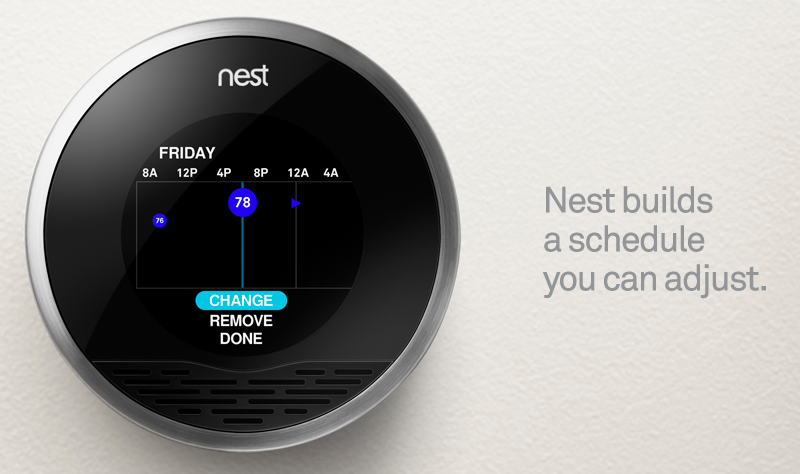
    Nest uses complex technology to solve a problem that lots of people have on an everyday basis. That’s what Page wants to do with Google. He wants to use complex technologies to come up with simple solutions for complex problems that huge masses of people have — like controlling their climate of their homes in an energy-efficient way.

    A quick finalization of the deal was expected after the Federal Trade Commission fast-tracked its approval last week.


  • Tim Cook : Google Was Not Committed to Motorola

    There’s plenty to talk about with the sale of Motorola to Lenovo, from what it means for the future of the American Smartphone manufacturer to the reasons Google bought them in the first pace, and everyone seems to have an opinion, including Apple’s CEO Tim Cook. 

    “I wasn’t surprised,” said Cook in an interview with The Wall Street Journal. “Google gets rid of something that’s losing money, something that they’re not committed to.” Cook went on to state that becoming a company that melds hardware, software, and services together is quite difficult and that Google obviously hasn’t quite gotten proficient in this arena, which makes “Apple so special.”

    The CEO further took dig at Google’s Android OS, calling the experience on its tablets ‘crappy,’ because the app is nothing more than a stretched out smartphone app.

    When asked if Apple will do a larger screen iPhone, Cook responded, “What we’ve said is that until the technology is ready, we don’t want to cross that line. We want to give our customers what’s right in all respects – not just the size but in the resolution, in the clarity, in the contrast, in the reliability. There are many different parameters to measure a display and we care about all those, because we know that’s the window to the software.”

    Other comments from Cook revolve around Google’s acquisition of Nest, stating that he and Apple both feel that buying large companies simply for the sake of “being big” and buying them is not what Apple wants or believes in. They are not against buying a large company, they simply care more about buying one that is fit right for them.

  • Google Dodges Fine with EU Antitrust Deal

    Google Dodges Fine with EU Antitrust Deal

    As The Wall Street Journal reports, Google has clinched a settlement in its high-profile case with European Union antitrust regulators to address concerns that it is abusing its dominance in online search.

    EU Antitrust Commissioner Joaquin Almunia said that he’s “strongly convinced” the new proposals sufficiently address the competition concerns, marking a major milestone in the three-year-old case. “This is an important step forward,” he told reporters in Brussels.

    Google had been accused of giving favourable treatment to its own products in search results. The company said it looked forward to resolving the matter.

    As FT reports, on the European Commission’s side, there is still going to be a final approval process. The groups that filed the original complaint against Google will be consulted, but it will not be a formal “market test”. The commission will monitor whether Google sticks to its promises.

    The agreement means the world’s dominant search engine has avoided a process that could have lead to a fine of up to $5 billion, or 10 percent of its 2012 revenue. It must stick to the deal for the next five years. Google has a market share of about 90 percent of Internet searches in Europe, compared with around 70 percent in the U.S.

    However, Google may still face a second EU investigation, this time into its Android operating system for smartphones, with potentially bigger risks for the company.

  • Twitter Commerce Will Allow Users To Buy Directly From Tweets

    According to a recent report on the Re/code site, popular social network Twitter appears to be getting serious about commerce on its service; and is probably close to finalizing an agreement with payment services firm Stripe. 

    The site posted mockups, reportedly created by Fancy, of what would be called Twitter Commerce, a new program that would allow people to purchase items through Twitter. The documents, discovered in a public area of Fancy.com’s website, showed a “buy” button embedded directly in tweets. Customers would have to provide Twitter with payment credentials prior to using the service. 

    Twitter will report its first ever quarterly earnings next Wednesday with investors and analysts sure to be interested in Twitter Commerce and other plans for bringing in revenue. 

    Twitter’s decision to add revenue streams may be a good move for the company but following the recent series of hacks on the social network site raises questions about the safety of user’s financial data.


  • Twitter Buys 900 IBM Patents

    Twitter has agreed to buy 900 patents from International Business Machines Corp. to gain access to new technology and build a defense against infringement suits.

    The deal came about a month after Twitter revealed that IBM had accused it of violating three of its patents related to advertising, “resource locators,” and discovery of contacts. Twitter was willing at that time to handle the situation outside of court, and it appears it went that way.

    A cross-licensing agreement will help safeguard Twitter against similar claims in the future. The most high profile exhibit of buying patents to curb future lawsuits would be Google’s purchase of Motorola Mobility.

    IBM is one of the industry’s largest research spenders and stockpilers of intellectual property, a consistent leader in US patent filings and the owner of some 41,000 patents. Twitter is following on the heels of Facebook, which itself faced similar claims before its own 2012 IPO. 

    Twitter is seeking to get more revenue from retailers and is trying to make it easier for users to shop via its 140-character messages.

  • Olympus OM-D E-M10 Mirrorless Camera Announced

    Olympus OM-D E-M10 Mirrorless Camera Announced

    The Olympus OM-D E-M10 is the latest addition to Olympus’ OM-D CSC camera line-up. The new interchangeable lens camera (ILC) shares the retro looks of the E-M1 and M5, but in a more compact form factor with consumer-friendly features including a built-in flash.

    The E-M10 has a 16-megapixel sensor, Olympus’ new TruePic VII processor, and ZUIKO optics, with 81-point FAST AF borrowed from the EM-1 and Tracking AF. There’s in-body, 3-axis VCM IS, and 8fps sequential shooting, and Olympus has even found space for a pop-up flash and a live-view EVF with 100-percent coverage to go with the 3-inch, 1037k dot LCD. ISO 100-25600 is supported.

    The OM-D E-M10 also has built-in Wi-Fi, a pop-up flash and is compatible with all micro four thirds lenses. 

    There are also 2 HDR modes, interval shooting modes with time-lapse movie capture, a Live Composite Mode for long exposure shot previews and 12 art filters. 

    The Olympus OM-D E-M10 is available from mid-February for £529.99 body only, in black or silver. There’s also a kit for £699.99, which comes with an M.Zuiko Digital 14-42mm 1:3.5-5.6 EZ pancake electronic zoom lens. 

  • Nintendo Executives Take Pay Cuts For Faltering Wii Sales

    Nintendo Executives Take Pay Cuts For Faltering Wii Sales

    Following some pretty miserable financial results, Nintendo president Satoru Iwata has said he will take a 50% cut to his salary. For at least the next five months, Iwata will take home half as much money as usual, and other prominent executive staff will see pay reductions as well. Shigeru Miyamoto and Genyo Takeda, will take a 30% pay cut, while other board members will take a 20% pay cut.

    The cuts will stay in place until June, when the board will see if it deserves to go back to normal. That will depend not so much on a turnaround in the Wii U’s fortunes – which won’t really be evident until nearer Christmas – but in how Nintendo presents itself to investors and convinces them it has a new plan for turning themselves around.

    The struggling Japanese gaming firm revealed profits slumped 30 per cent in the nine months to December, falling to 10.2 billion yen (£60 million).

    Nintendo also warned it expects sales to “decrease significantly” in  the current quarter as Christmas sales end.

    The Super Mario Brothers and Donkey Kong creator has been weighed down by weaker-than-expected sales of its Wii U console, launched at the end of 2012.

    Nintendo will be holding a big corporate meeting tomorrow to outline and plan its new business strategy. 

  • Video : iOS in The Car Functionality Shown Off

    Video : iOS in The Car Functionality Shown Off

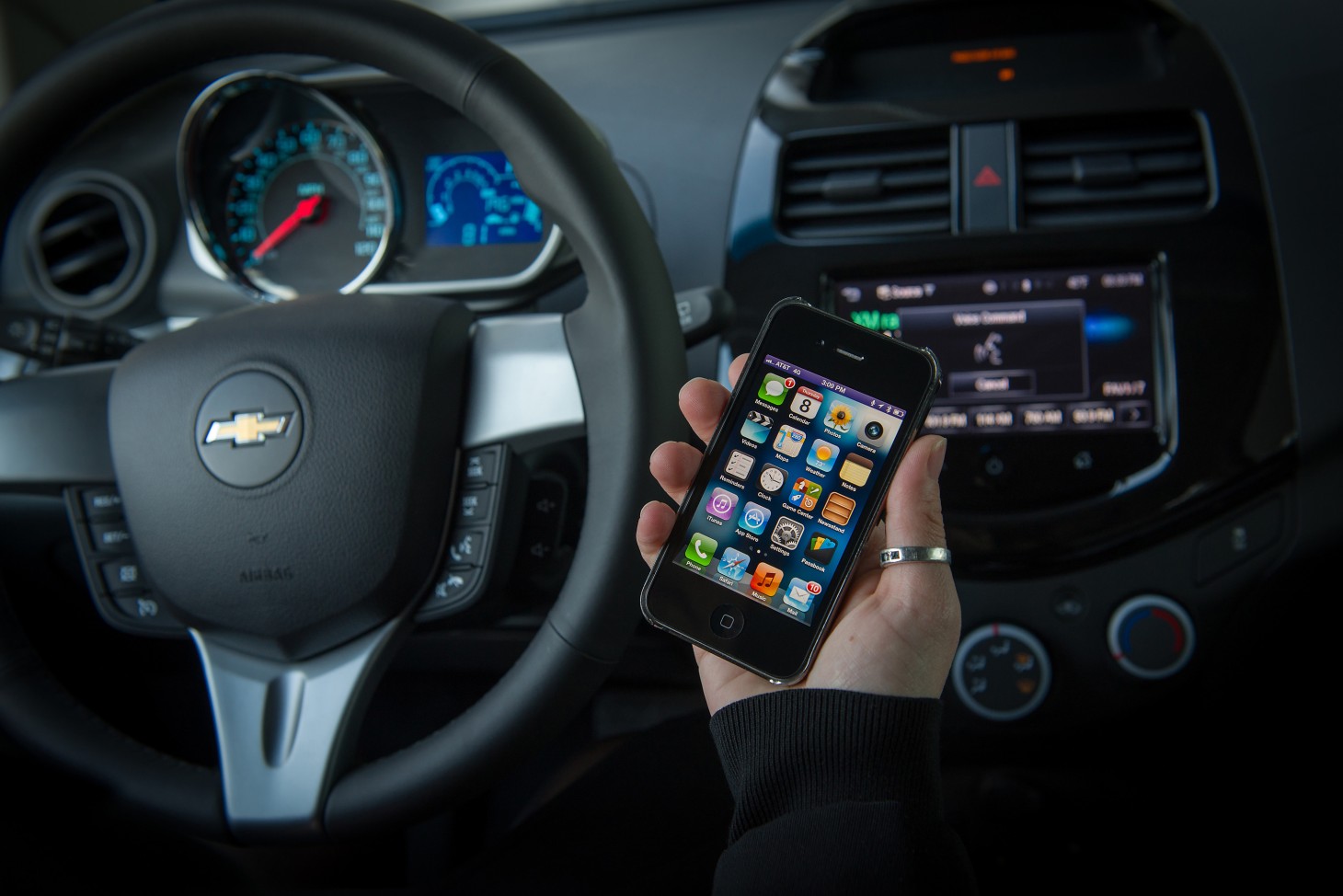
    Last week, app developer Steven Troughton-Smith shared a series of screenshots of what seemed to be Apple’s “iOS in the Car” feature announced by Apple as “coming soon” to iOS 7 devices.

    The developer has now taken this a step further by posting a video showing the feature running via iPhone Simulator. The video below shows iOS in the car running on iOS 7.0.3 in the iOS Simulator software which is available for developers, the in dash display is shown by an 800 x 480 pixel window.

    [youtube url=”http://www.youtube.com/watch?v=M5OZMu5u0yU”]

    Apple first demoed the new feature at the Worldwide Developers Conference in June 2013. During an earnings call last summer, Apple CEO Tim Cook called the feature a “key focus” for the company.

    Since then, a number of car manufacturers have announced their support for the feature. These have included: Acura, Chevrolet, Mercedes-Benz, Hyundai, Kia, Volvo, Opel, and Jaguar.

     Troughton-Smith points out that the iOS in the Car feature supports multiple resolutions of external displays, touch input and hardware controls, and voice input.

    – Supports Multiple Resolutions 
    – Supports touchscreens (presumably single-touch?), hardware buttons, wheels and touchpads 
    – Does not support multitasking – car display will always show same current on-screen app as iPhone (which can be locked/asleep) 
    – Whitelisted to specific Apple apps – no public API for developers [yet?] 
    – Has no keyboard UI – voice recognition as input 
    – UI clearly subject to change 
    – Missing functionality in video is due to iOS Simulator not containing all the stock iOS apps

iGyaan Network
Privacy Overview

This website uses cookies so that we can provide you with the best user experience possible. Cookie information is stored in your browser and performs functions such as recognising you when you return to our website and helping our team to understand which sections of the website you find most interesting and useful.