Author: Shivaank Rana

  • Microsoft To Rename SkyDrive After Losing Trademark Case

    Microsoft To Rename SkyDrive After Losing Trademark Case

    Microsoft has to come up with a new name for Skydrive, its cloud based data storage service.

    Skydrive is used by Microsoft users to upload and share content. Unfortunately Microsoft did not give enough consideration to the fact that British Sky Broadcasting might have had a trademark on the word “sky”.

     A UK court has ruled that Microsoft has infringed on a trademark owned by British Sky Broadcasting Group with the name “SkyDrive.” Microsoft has reportedly agreed to change the name, and they will not appeal the court’s decision.

    A new name will not be given overnight. BSkyB will continue to let Microsoft use the name for a “reasonable period of time” as they try to rename the service. Microsoft has been using the SkyDrive name for their cloud-storage service for around 5 years now. The name has become synonymous with Windows 8, Windows Phone, and all of Microsoft’s new devices. Hopefully this brand change does not disrupt Microsoft’s vision.

    There were also some financial and other terms in the agreement, however the details are confidential.

    “We’re glad to have resolution of this naming dispute, and will continue to deliver the great service our hundreds of millions of customers expect, providing the best way to always have your files with you,” said Microsoft. 

    [Via]
  • LG Launches PD233 Pocket Sized Printer In India

    LG Launches PD233 Pocket Sized Printer In India

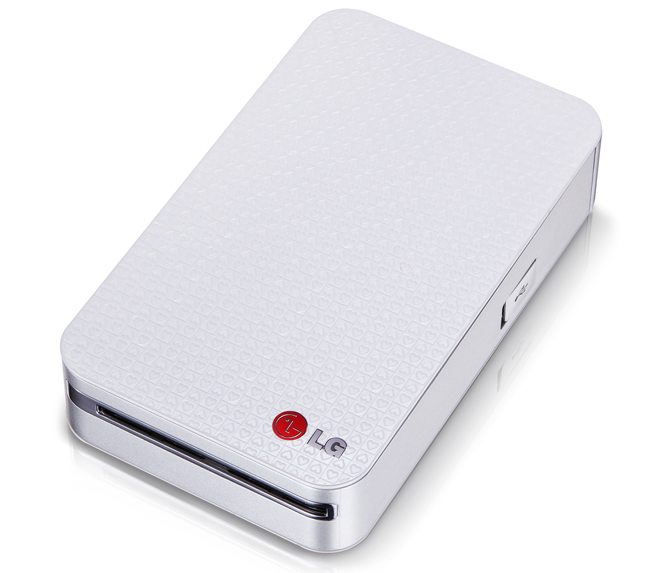
    LG today launched a pocket-sized photo printer called LG PD233 Pocket Photo in India. The LG PD233 is available at retail stores across India for Rs 14,990.

    Named Pocket Photo, the mini photo printer is compatible with both Android and iOS devices, operating wirelessly over either Bluetooth or near field communications (NFC).

    Fitting in the palm of your hand, Pocket Photo produces small 3x2in colour prints as requested by the connected device. In order to do so, however, users need to download the LG photo app from the Apple App Store or Google Play store, where they can also embed QR codes or make quick edits directly from the device before printing.

    Pocket Photo employs inkless printing technology from Zink, which LG claims eliminates the need for expensive ink cartridges.

    “Printed photos offer a certain intimate appeal and tactile pleasure that digital images simply can’t provide,” LG said. “Whether you want to keep a photo in your wallet or add it to a personal scrapbook or diary, LG’s smart mobile printer offers the ideal solution.”

    The Pocket Photo measures 72x120x24mm and weighs 215g.

  • MI6, NSA And Other Spy Agencies Ban Lenovo Laptops Over Hacking Vulnerability

    MI6, NSA And Other Spy Agencies Ban Lenovo Laptops Over Hacking Vulnerability

    Chinese companies such as Huawei have always been accused of helping the Chinese government in its spying operations. Countries such as the U.S. and U.K. take special measures to ensure that any Huawei equipment being installed is free from all vulnerabilities that can let China spy on them. A new report from the Australian Financial Review claims that top spy agencies like the MI6 and CIA have banned Lenovo machines from their networks over fears that they might contain “back-door” hardware that would aid China’s spying attempts.

    Machines produced by the state-backed technology company, which is the largest PC producer in the world, are claimed to have been found in tests by MI5 and GCHQ to have modifications in their circuitry which could allow remote access to the devices without the owners’ knowledge.

    If the reports are true, the timing of the ban coincided roughly with Lenovo’s purchase of IBM’s PC business in 2005.

    The UK Government Communications Headquarters (GCHQ), MI5 and MI6 are all named as participating in the Lenovo ban, as well as the Security Intelligence Organisation and the Secret Intelligence Service in Australia, and the US National Security Agency (NSA).

    Lenovo, today voiced its “surprise” at the alleged move and completely denied any fault in its machines.

    [Via, Via]

  • iOS 7 Beta Code Confirms Fingerprint Sensor Feature For Next iPhone

    iOS 7 Beta Code Confirms Fingerprint Sensor Feature For Next iPhone

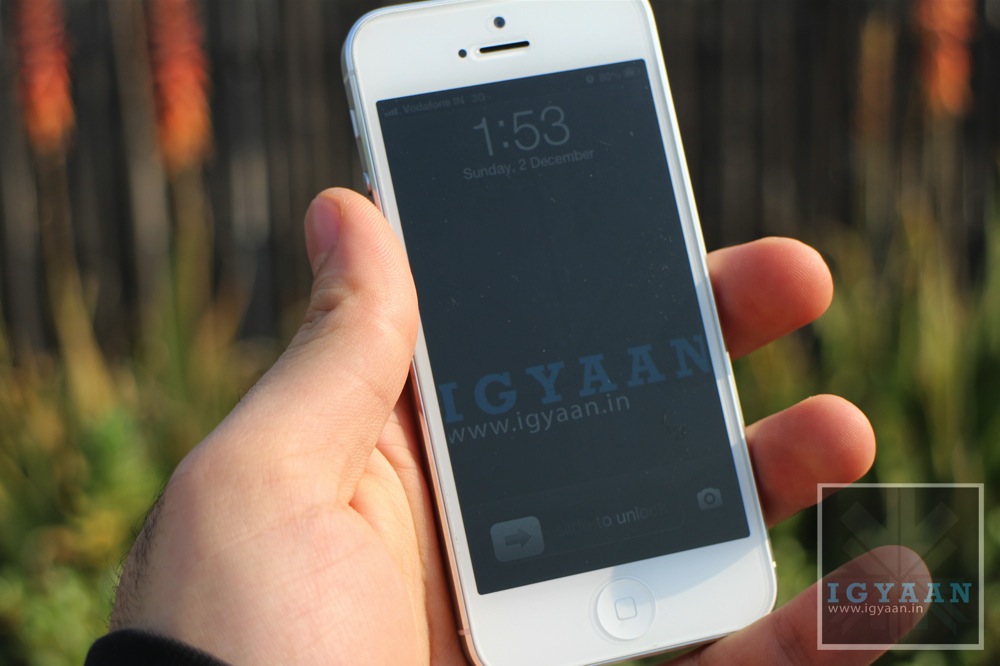
    In case you were wondering whether or not the next-generation iPhone will have that rumored fingerprint sensor, look no further than the latest iOS 7 beta.

    A folder dubbed “BiometricKitUI” has been discovered in iOS 7 Beta 4 by Hamza Sood (and made public by 9to5mac) and, while the folder bears enough evidence of the fingerprint sensor in and of itself, the contents provide even more clues regarding the biometric capabilities of Apple’s next iPhones.

    fingerprint sensor

    Following its 2012 acquisition of mobile security firm AuthenTec, which specialized in fingerprint sensors, Apple has been rumored to be looking to incorporate its technology into its future products.

    The folder references a biometric user interface, complete with descriptions of a setup process that includes images of a colour-changing fingerprint and a person holding an iPhone with their thumb on the Home button.

    Earlier this month Apple was granted a patent for an in-display fingerprint sensor which would allow for biometric functionality while negating the need for a separate sensor panel.

    Details on the names for the new iPhone models have been scarce until earlier this week when a new photo leaked showing the packaging for a device called the iPhone 5C. This could be the name for the low-cost model scheduled to come out this fall.

    But it’s potentially even more interesting than that. As Bulgarian designer/developer Pavel Simeonov just tweeted, “Fingerprint sensor in iPhone 5S is much more than a gimmick. This + iCloud keychain = end of passwords.” So this is not just about security, but also convenience. If iCloud keychain converts and safeguards all of your passwords that you—and only you—can access via your iPhone, then Apple will have scored a tremendous usability coup that potentially makes its phone the key to your life—quite literally. 

    [Via]

  • Instagram Deleting Posts Uploaded Through Third Party Windows Phone App

    Instagram Deleting Posts Uploaded Through Third Party Windows Phone App

    Those of you using Instance, the unofficial Instagram client for Windows Phone, have probably noticed that things aren’t running as smoothly as they should since yesterday. Indeed Instance seems to be in some trouble.

    Numerous users report that photos that they share to the social photo service are being deleted shortly after being uploaded. This issue is in addition to an earlier problem that saw some users receiving a log-in error message when trying to use the app, although the two may be connected.

    The problems started when Instagram changed their keys that are used to authenticate, and Windows Phone users obviously got left out. However that problem was quickly fixed once Daniel Gary, the app’s developer, got wind of it.

    The Facebook-owned photo-based network hasn’t developed an official Instagram app for Windows Phone users. As a result, people have been forced to use third-party clients, such as the popular Instance application. 

    There’s no clear explanation why this is happening and the app’s creator Daniel Gary half-jokingly posted the tweet below.


    It’s unclear at this point whether the automatic deletions are a technical problem, or an intentional decision by Instagram to disincentivize third-party applications on the Windows Phone platform.


  • Samsung Working On 12.2″ And 10″ Tablets With 2,560 x 1,600 Resolution Panels

    Samsung has just released three new tablets in the form of the entry-level Galaxy Tab 3 7.0, the mid-range Galaxy Tab 3 8.0 and the in-the-middle Galaxy Tab 3 10.1. While all are clear improvements over their predecessors, both in terms of appearance and software, they still lack the high-end components of some of their Galaxy Note counterparts.

    According to evleaks, Samsung is to release a 12.2-inch Galaxy Note variant with an Exynos 5 Octa chip and high-resolution screen of 2560×1600 pixels, along with an S-Pen. This will likely appeal to the stationary tablet user, someone who wants a large, sharp display for sketching or drafting. Its model number is slated to be SM-P900.

    Another tablet, a more manageable 10-inch variant, will likely join the Galaxy Tab family, and have a similar resolution of 2560×1600 pixels — this is the same density as the Nexus 10 — along with an ultra-fast Qualcomm Snapdragon 800 SoC. Model number P600.

    Expect these tablets to debut in the coming months, as Samsung continues to saturate the phone and tablet market with every conceivable price range and screen size.

    There also exists the possibility that both of these tablets may have 3GB of RAM onboard. Right now no alleged pictures of both tablets have leaked and it is not known when Samsung plans on making them official.

    [Via]

  • MediaTek Unveils Quad-Core MT8135 big.LITTLE SoC

    MediaTek Unveils Quad-Core MT8135 big.LITTLE SoC

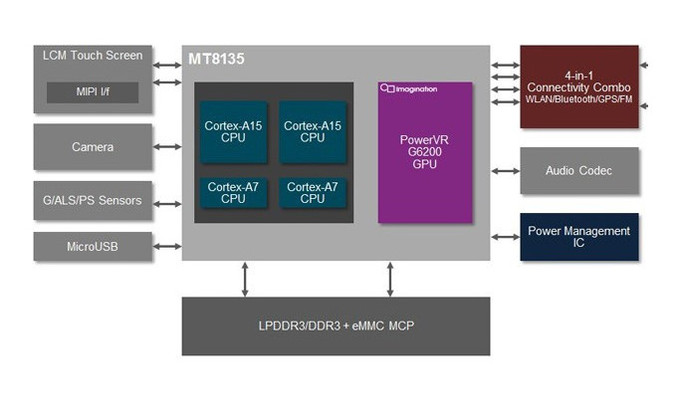
    Taiwanese chip maker MediaTek is looking to make its presence better known, and to that end, the company has announced its new quad-core MT8135 processor for high-end tablets. 

    It consists of four cores in total. Two Cortex A15 cores are paired with two Cortex A7 core in ARM’s big.LITTLE architecture. However, unlike the Exynos 5 chipset, the configuration here is called big.LITTLE MP, which allows both Cortex A15 and Cortex A9 clusters to work simultaneously. This makes it essentially a quad core processor (and that is just what MediaTek is touting it as).

    The new configuration is also said to make the processor more efficient than current chips using big.LITTLE architecture.

    The firm’s MT8135 SoC will use Imagination Technologies’ PowerVR G6200 GPU, which supports OpenCL GPU computing. 

    Imagination Technologies said the PowerVR Series 6 GPU used in the Mediatek MT8135 SoC uses its tile-based deferred rendering architecture. The firm also touted support for Miracast, giving tablets that use the chip the ability to stream content to supporting televisions.

    Mediatek could in theory use the MT8135 SoC to power Windows tablets, especially since the PowerVR Series 6 GPU supports DirectX 10.1. However it is far more likely that the chip’s OpenGL ES and OpenGL support will be used along with OpenCL and Renderscript. 

    MT8125

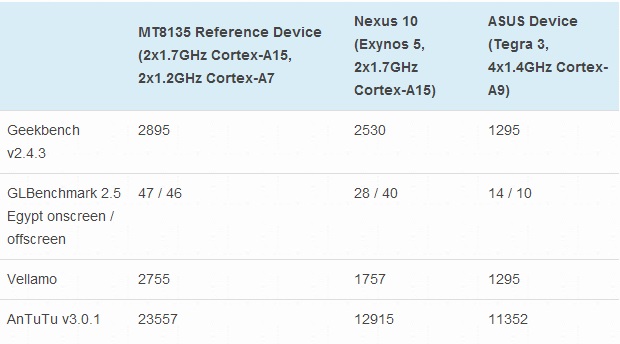
    The benchmarking scores provided by MediaTek for the chip, also puts it ahead of both Exynos 5 in the Nexus 10 and Tegra 3.

    No word on pricing or availability yet.

    [youtube id=”Kf_ZGDoEPMo” width=”100%” height=”300px”]

  • Sony And Panasonic Will Team Up To Create 300GB Optical Discs

    Sony And Panasonic Will Team Up To Create 300GB Optical Discs

    The highest capacity optical disc on the consumer market today is Blu-ray. In standard form it can hold 25GB of data or 50GB if dual layer. There’s also been the recent roll out of the BDXL format, which increases that capacity to 128GB. But such levels of storage are fast becoming too small, and both Sony and Panasonic have realized this and decided to do something about it.

    It has been announced today that both Sony and Panasonic are joining forces to create the next generation standard for optical discs. The objective with these discs is to expand their potential for long term data storage. Both companies hope to improve their development efficiency through technologies held by each company, their plan is to release optical discs touting a recording capability of at least 300GB by 2015. Sony and Panasonic will continue to hold discussions regarding the specifications related to the development of this new standard.

    In a joint release, the companies said: “Optical discs have excellent properties to protect them against the environment… they also allow inter-generational compatibility between different formats, ensuring that data can continue to be read even as formats evolve.”

    Much larger volumes of storage are expected to be required in the future both amongst broadcast and motion picture industries but also cloud data centers.

    Of course a new optical disc capable of storing much larger amounts of data could ultimately make its way on to the consumer market, with 4K Ultra HD video the most obvious material, if indeed 4K ever gets a disc format. 

  • Nokia Working On Bluetooth-Powered ‘Treasure Tag’ To Track Precious Objects

    Nokia Working On Bluetooth-Powered ‘Treasure Tag’ To Track Precious Objects

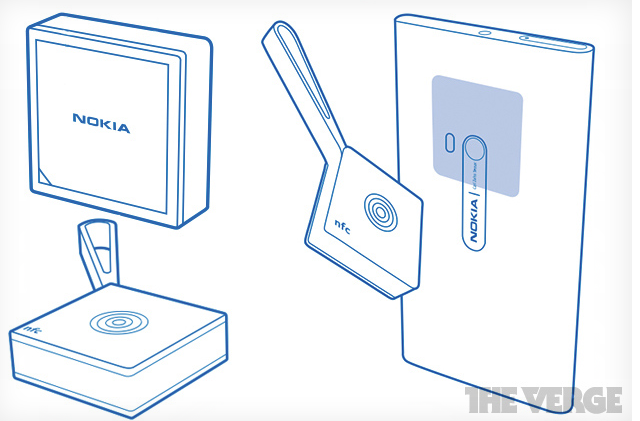
    Is Nokia getting into the accessories business? The Finnish company is reportedly making a Bluetooth 4.0 Low Energy-based device that, combined with NFC connectivity, will allow users to “tag” certain objects by attaching it to them, or placing it near them.

    Like the Selfstarter-funded Tile, Nokia’s “Treasure Tag” as it will apparently be called will communicate with a Nokia Lumia device via Bluetooth in order to gauge where the tag, and therefore the associated object, happens to be. 

    The whole idea is to fix this small device to something that’s precious to you: your keys, your laptop, your shiny golden Ring of Power. You’ll then be able to keep track of said object by using an app on your Lumia smartphone. You’ll even be able to find your phone by sending a notification from the Treasure Tag back to the phone, but that will only work if you’re in range.

    treasure tag

    At this point, it’s clear that Nokia is creating Treasure Tag to expand the desirability of its Lumia line; this is not a cross-platform product, and is unlikely to work with non-Nokia Windows Phones.

    The Treasure Tag app, according to The Verge, will let users see where the tag is on a map, or its last location if it has fallen out of range. LiveSight, Nokia’s augmented reality technology recently integrated in the HERE series of apps, will be available for more easily orienting oneself to the object. Users will be able to activate an alarm to more easily locate the object, too.

    In terms of usability, Treasure Tag is ostensibly rated for six months of “always on” usage, and will be inexpensive enough to replace on a bi-annual basis.

    The accessory requires Bluetooth 4.0, which Nokia is planning to enable across its entire Windows Phone 8 lineup with the upcoming Amber update, which will begin rolling out shortly.

    There’s no word on pricing but similar devices are in the $25 range so it should probably be close to that.

    [Via]

  • Apple Supplier Report Reveals Plastic Back Casing For Budget iPhone

    Apple Supplier Report Reveals Plastic Back Casing For Budget iPhone

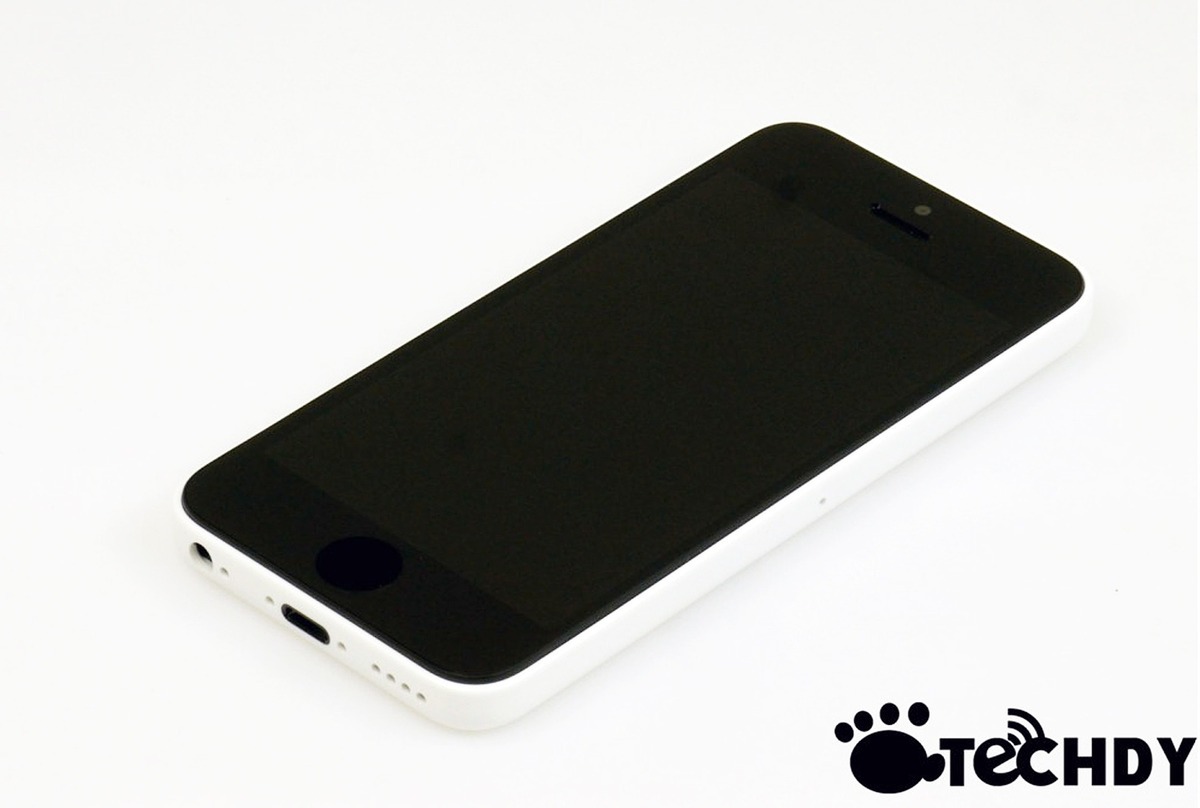
    Rumblings of a low-cost, plastic iPhone have been popping up on a fairly frequent basis throughout 2013, and today the rumored device is making headlines once again. 

    Apple’s future plan to introduce a plastic device is confirmed within this morning’s shocking report into labor abuses at manufacturing partner, Pegatron.

    As part of the investigation, China Labor Watch inserted people inside three of Pegatron’s factories. In one of these reports it confirms the future debut of a plastic iPhone:

    “Today’s work is to paste protective film on the iPhone’s plastic back cover to prevent it from being scratched on assembly lines. This iPhone model with a plastic cover will soon be released on the market by Apple,”the report explains.

    “The new cell phone has not yet been put into mass production, so quantity is not as important,” a worker wrote. “This makes our job more slow paced than in departments that have begun mass production schedules.”

    In addition, China Labor Watch’s company profile notes that Pegatron is responsible for building “low-priced plastic iPhones” for Apple, in addition to the iPhone 4, 4S and the 5.

    The report accuses Pegatron of violating labor regulations in China, as well as international labor laws and Apple’s own standards. 

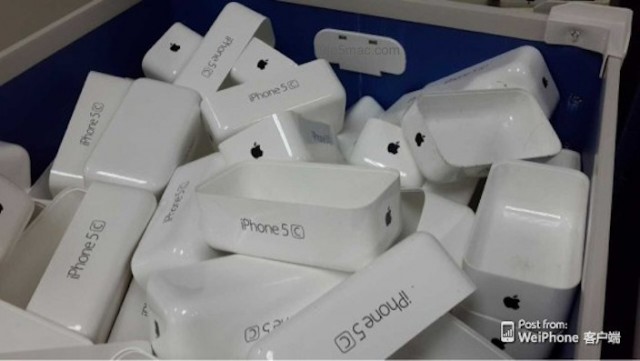
    Photographs allegedly detailing the new iPhone’s packaging were uploaded to the Chinese forum WeiPhone over the weekend. The name iPhone 5C is printed on the side of the box, possibly leaking the name of the device.

  • Alleged Packaging For Budget ‘iPhone 5c’ Leaked

    Alleged Packaging For Budget ‘iPhone 5c’ Leaked

    Apple is expected to launch a new iPhone in the coming weeks. Images and videos of what’s being rumoured to be a budget iPhone – or the iPhone ‘Lite’ – have surfaced online. This new iPhone will reportedly come with a plastic build, 4-inch display and multiple colour options.

    Additional proof of this new Apple device has popped up, courtesy of WeiPhone, and potentially shows its final retail packaging. A picture reveals a bin full of boxes indicating this budget device will go under the brand name of “iPhone 5C. ” Some speculation is that the C stands for ‘colour’.

    This, or course, is still a rumour until Apple officially announces the device. The new low-cost device could possibly be released in August or September. The WeiPhone forums are a fairly frequent source of Apple rumors, although the site itself does not frequently report on them, making it difficult to determine a steady track record as posting in the site’s forums come from a variety of different posters.

    The iPhone 5, which is almost a year old, was the most popular iPhone sold in Apple’s quarter ending June 30, but the 4 (first available June 24, 2010) and 4S (first available October 14, 2011) models sold well in emerging markets, indicating demand for a more updated budget smartphone to go along with the new, rumoured iPhone 5S in the fall lineup.

    [Via]

  • Motorola Moto X To Feature Magic Glass

    Motorola Moto X To Feature Magic Glass

    Moto X, the upcoming new Android-based smartphone from mobile phone maker Motorola, is expected to become official on August 1 with some appealing design features packed inside, some of the latest reports via Android and Me founder Taylor Wimberly on the matter suggest. 

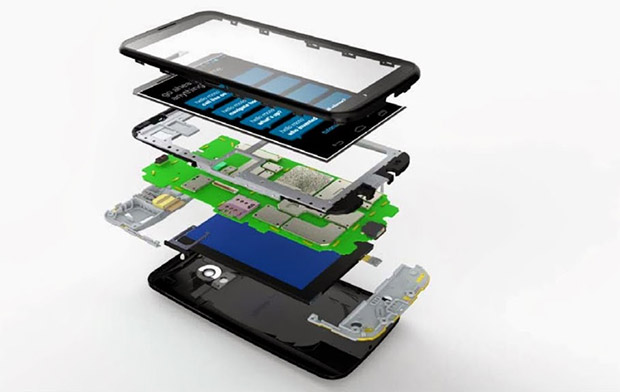
    The Moto X will come equipped with Moto Magic Glass, a single layer of Gorilla Glass which is molded to a special polymer to make for a continuous surface that wraps around the entire front and edges of the phone. In addition, the Moto X will feature zero gap construction, allowing for a smooth and seamless feel along the backside.

    The Android expert also claims that the handset will come equipped with Dual LTE MIMO Smart Antennas to give users the best LTE speeds and reception possible. The Moto X will allegedly contain five antennas total, with two dedicated exclusively to 4G LTE connectivity (not that this matters much to us Indians…).

    According to TechnoBuffalo, Google was working with Motorola on a Moto xWatch that would launch alongside the Moto X. The two Moto X devices “definitely integrate in some interesting ways for device authentication,” Wimberly explained.

    As usual, it all sounds great, but we’ll have to wait and see how much is accurate when the official word comes next week.

    [Via]
  • Instagram Posts Pictures Of Smoothies And Fruit To Their Accounts

    Instagram Posts Pictures Of Smoothies And Fruit To Their Accounts

    An Instagram hack that posts pictures of fruit to users’ timelines has returned after a sabbatical. 

    The security issue is called the ‘Smoothie Hack”, some clever smooth-ie criminal has decided to post pictures of this drink, but once you click on them this is where the breach happens. The pictures come with some text trying to explain that they are drinking a new diet and that others should try it by clicking on a URL link within their Instagram  bio, he wants you to try it with him.

    The hack seems to be harmless enough as far as these types of things go. Still, if you have been affected you should change that passcode (assuming you still have access to your account) and also change any other account passcodes that may have been the same as what you had been using on Instagram. 

    As The Next Web reports, the links being inserted into bios are made to look like BBC links, but the domain being used was actually registered just yesterday (although the registrant details may well be fake) – suggesting that it may have been registered specifically for use in this hack.

    In the meantime we offer this as advice — don’t click the links and move forward with a password reset as soon as possible.

    [Via]

  • Samsung Is Now Producing The “World’s Fastest” eMMC 5.0 Flash Memory

    Samsung Is Now Producing The “World’s Fastest” eMMC 5.0 Flash Memory

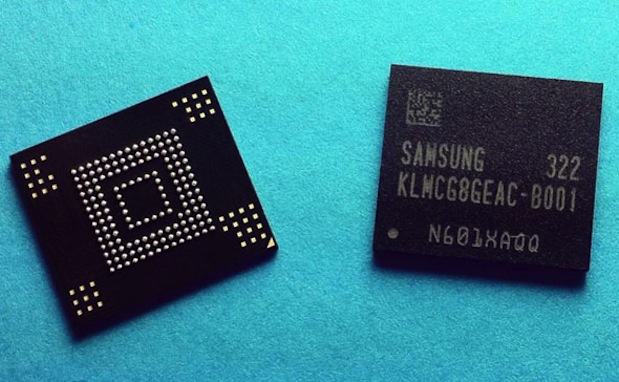
    Samsung is now mass-producing what it said is the world’s fastest mobile memory, an embedded MultiMedia Card (eMMC) that comes in 16GB, 32GB and 64GB densities for next-generation smartphones and tablet.

    Aiming for the title of the fastest embedded memory, the chips are said to be capable of peaking at 400MB/s, enabling quick application booting and reduced loading times. The latter two storage choices will be able to operate at 250MB/s sequential read speeds and write sequentially at 90MB/s. According to the company, these modules are over 10 times faster than class 10 external memory cards. 

    By comparison, Samsung’s current eMMC Pro chips (based on the 4.5 specification) offer up to 2,000 IOPS random write and 3,500 random read IOPS, and 150MB/sec sequential read and 50MB/sec write rates.

    “With timely mass production of our ultra-fast eMMC PRO lineup offering a more than 10x performance increase over external memory cards, Samsung will accelerate the spread of high-end mobile devices as the market for devices with larger screens and more multimedia functionality expands even further,” Samsung’s vice president of memory marketing, KyongMoo Mang, said in a statement.

    The company asserts that the 32GB and 64GB can also obtain random read and write speeds of 7000 IOPS. The Samsung eMMC 5.0 modules have been developed by leveraging the 64Gb 10nm class NAND flash technology. Additionally, the conglomerate has integrated its own NAND controller and firmware into the modules.

    Samsung’s 16GB, 32GB and 64GB eMMC 5.0 devices come in 11.5mm x 13mm packages, making them suitable for mobile devices where space on the printed circuit board is extremely limited. Again, just like the 3GB of RAM, we would expect the Galaxy Note III to be the first device that uses this faster and more capable storage chip.

    [Via]

  • MediaTek Reveals The World’s First True Octa-Core Mobile SoC

    MediaTek Reveals The World’s First True Octa-Core Mobile SoC

    Samsung and Qualcomm are often associated in making the markets leading processors that are found in numerous mobile devices, while MediaTek are often responsible for providing chips for more affordable hardware. Now though MediaTek beats Samsung with the first true Octa-Core MT6592 processor.

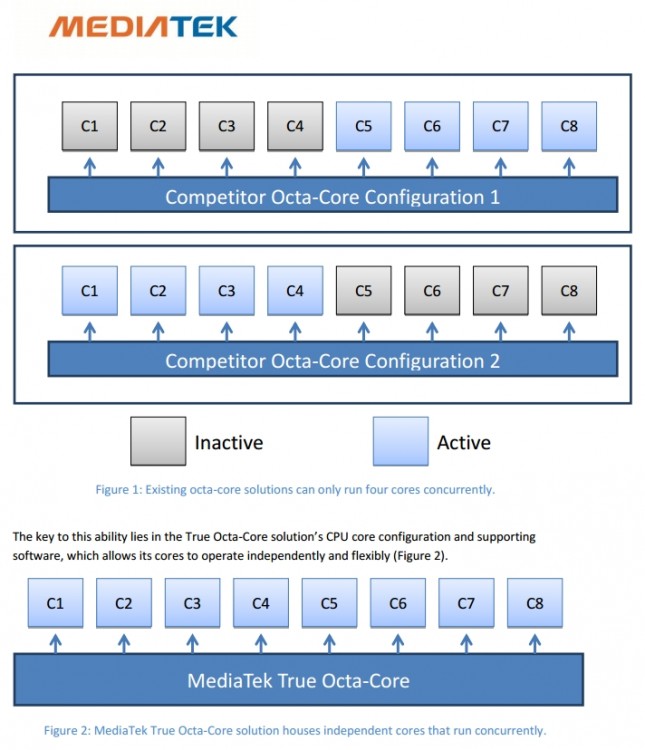
    The supplier of cheap quad-core chipsets to Chinese Smartphone manufacturers has announced the world’s first true Octa-core processor, where all 8 cores work together in tandem, and will reportedly feature performance that matches or surpasses that of the most powerful mobile SoC (based on ARM) currently, the Qualcomm Snapdragon 800 SoC. The True Octa Core SOC will run at speeds of 1.6GHz to 2GHz.

    mediatek

    MediaTek said the product is a “true octo-core solution,” whereas other existing octo-core processors can only switch between using four cores at a time.

    For example, Samsung’s previous octo-core chip, the Exynos 5410, is essentially two quad-core chips packed together and was used in some versions of its Galaxy S4 smartphone. One set of quad-core chips is designed for high-performance tasks such as gaming or video playback, while the other is made to handle less intensive processes like emailing or texting. But only four of the cores can be active at one time.

    Do you think we will see many high end mobile devices using the MediaTek MT6592?

    [Via]

iGyaan Network
Privacy Overview

This website uses cookies so that we can provide you with the best user experience possible. Cookie information is stored in your browser and performs functions such as recognising you when you return to our website and helping our team to understand which sections of the website you find most interesting and useful.