Author: Shivaank Rana

  • iPhone Sales Help Apple Post Strong Q3 Revenue

    iPhone Sales Help Apple Post Strong Q3 Revenue

    It is only with Apple that analysts would express disappointment in a year over year quarterly drop from $8.8 billion to $6.9 billion, but a drop it was. Apple posted strong fiscal Q3 earnings today with revenue of $35.3 billion, up slightly from the same period a year ago and ahead of expectations.

    As expected, the numbers posted today, which include the period between March 31 and June 30, were massive, with 31.2 million iPhones and 14.6 million iPads sold. The average sales price of the two devices has dropped — $581 for the iPhone; $436 for the iPad — likely due to the introduction of the iPad mini and the wider availability of the iPhone 4 and 4S as “value” devices in developing countries, but the overall number of iPhones sold increased year over year and set a new June record, according to Apple. The total number of iPads sold dropped, however, from 17 million in Q3 2012.

    Earnings per share were $7.47, ahead of analysts’ expectations but down from $9.32 last year this time. Gross margin continues to tick downwards, at 36.9% versus 42.8% Q3 2012.

    Apple is predicting revenue of between $34 and $37 billion for next quarter, with gross margins stable between 36 and 37%.

    Tim Cook said in a prepared statement that Apple is “really excited about the upcoming releases of iOS 7 and OS X Mavericks, and we are laser-focused and working hard on some amazing new products that we will introduce in the fall and across 2014.” 
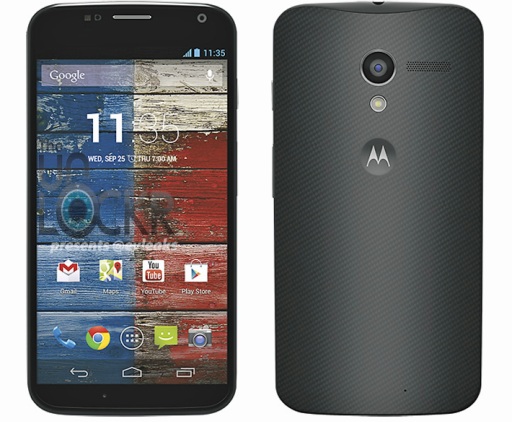
  • Leaked : Motorola Moto X Camera Interface

    Leaked : Motorola Moto X Camera Interface

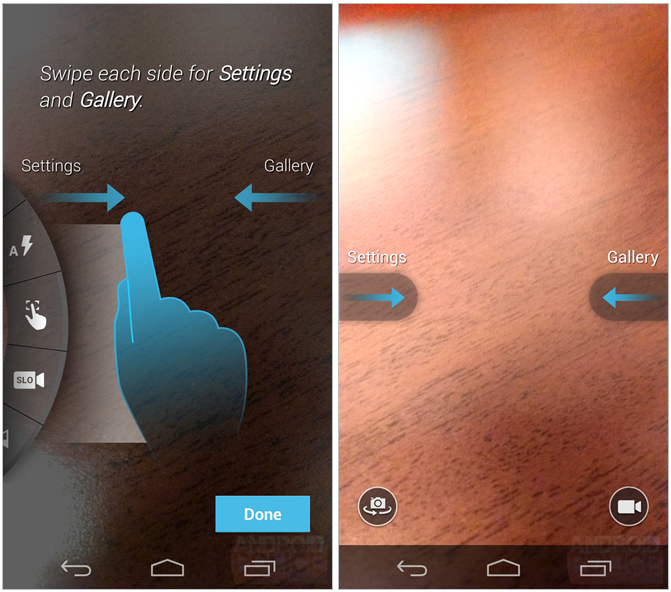
    With a mere week and a couple days remaining before the Moto X launches, the device’s camera user interface was leaked in the wild by Android Police.

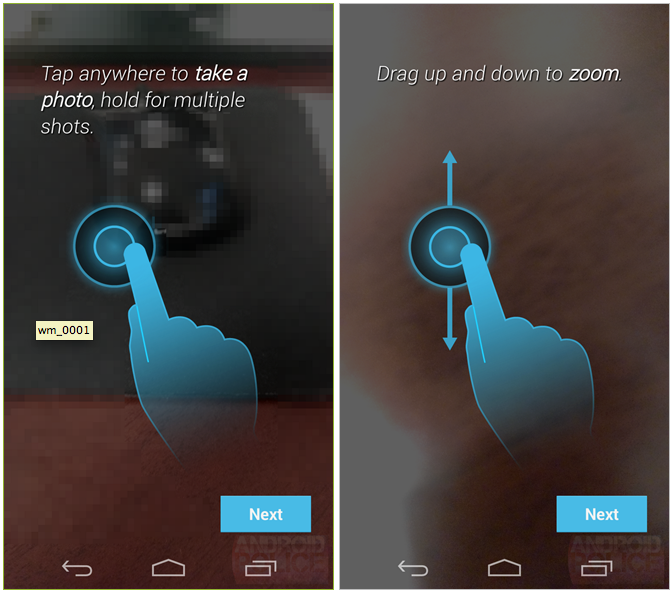
    Instead of an overwhelming amount of on-screen options, the Moto X’s camera interface is surprisingly minimalist and primarily controlled by swipe gestures.

    moto x

    Swiping in from the left side of the screen brings up a control wheel that contains typical camera settings, while swiping in from the right side opens up your photo gallery. You can take a picture simply by tapping anywhere on the Moto X’s screen and zoom by swiping up and down.

    We also get a glimpse of the Quick Capture mode, which allows you to open the camera app with two flicks of the wrist. This can be done while the phone is off or from any app. 

    moto x

    Whether or not this is the next stock Android camera UI isn’t known at this point, but we should know soon enough, maybe before this phone is made official.

    Aside from the above features, the Moto X’s rear camera is also said to include Clear Pixel technology and, for the bare essentials, a 10.5-megapixel sensor. 

    We’ll keep you up-to-date on everything that’s happening, so be sure to check back often! 

    [Via]

  • Moto X Specs And Benchmarks Leaked In Screenshot

    Moto X Specs And Benchmarks Leaked In Screenshot

    The leaks of Motorola’s upcoming Moto X just keep on coming. We’ve already seen a plethora of pictures, videos and event official press shots, but now a few more images have arrived online that confirms the specs. 

    moto x

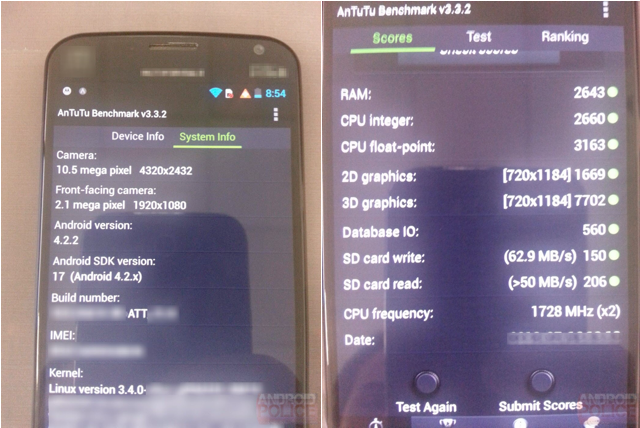
    AndroidPolice have managed to score themselves a few shots of the device and the ‘About” screen reveals the following mid-range specs of the model number XT1058:

    – 1.7GHz dual-core Qualcomm S4 Pro processor, Adreno 320 GPU
    – 2GB of RAM – confirmed by our photos
    – 4.7-inch display with a resolultion of 720×1184 (about 4.5? without on-screen buttons)
    – 10.5MP rear camera with flash
    – 2.1MP front-facing camera
    – 802.11a/b/g/n/ac Wi-Fi, NFC
    – Android OS 4.2.2 Jelly Bean
    – 16GB internal memory (12GB of which is user-accessible)
    – 2,200 mAh non-removable battery

    It has an AnTuTu score of about 18.7K and about 7.1K in 3DMark Ice Storm Extreme – decent scores for a mid range device.

    moto x

    Speaking of the camera, Motorola has also spread a bland Tweet on their Twitter account. This shows four blurred images of a child, with the remark: “Either this kid is really fast or the phones of today are really slow,” This tells us that the camera of the Moto X will most likely be capable of shooting high speed, blur-free images too. But we’ll wait to see the evidence first hand. 

    [Via]

  • 750 Million Phones Vulnerable To Hacking Due To SIM Card Flaw

    750 Million Phones Vulnerable To Hacking Due To SIM Card Flaw

    Up to 750 million mobile phones around the world carry SIM cards that contain a programming flaw that could leave their owners vulnerable to fraud. The bug allows a hacker to remotely access personal data and authorise illegal transactions within minutes. 

    The flaw in question is found in SIM cards using DES (Data Encryption Standard) for encryption, which is an older standard that is slowly being phased out by most manufacturers, but the point is that it is still baked into hundreds of millions of SIMs across the world. The founder of German firm, Security Research Labs, Karsten Nohl, found that sending a fake carrier message to a phone prompted an automated response from 25% of DES-based SIMs, which revealed the cards’ 56-bit security key.

    Once the sequence key is obtained hackers will be able to send a virus to the SIM card. This will allow eavesdropping on calls or allow mobile purchases with payments charged directly to the mobile account. 

    Nohl added that “We can remotely install software on a handset that operates completely independently from your phone. We can spy on you. We know your encryption keys for calls. We can read your S.M.S.’s. More than just spying, we can steal data from the SIM card, your mobile identity, and charge to your account.”

    Nohl says his team had been unsuccessfully attempting to breach SIM cards since 2011, using over-the-air-programming (OTA) – unseen text messages that are sent by the mobile phone operator to change settings on the phone of a user within their network.

    Mr. Nohl is a well known figure in the security industry. In 2009, he has published a software that can easily decode the 64-bit key needed to encrypt GSM-based conversations. This has caused the industry to scramble for a better safeguarding strategy. His Germany-located company, Security Research Labs, acts as advisor to multinational companies around Germany and the U.S on any issues involving mobile security.

    [Via]

  • Apple Reveals Developer Portal Was Hacked, Will Undergo Overhaul

    Apple Reveals Developer Portal Was Hacked, Will Undergo Overhaul

    Last Thursday iOS developers had been unable to login to Apple’s Developers Portal. Most people assumed it was maintenance or a simple website upgrade. As it turns out, hackers broke into the website and stole an indeterminate amount of data.

    The portal was originally designed to provide developers with access to materials and session videos relating to application development for both the iOS and OS X platforms, as well as the tools necessary to change information relating to their applications published to the iTunes App Store.

    apple

    Members of Apple’s developer portal had begun receiving password reset emails en masse. In the email, Apple states that an intruder managed to get into the system, and while it’s not certain at this point, it’s not ruling out the fact that the perpetrator could have snagged names, mailing addresses, and email addresses. The company is clear to state that all sensitive information is encrypted, so passwords and potential financial information stored should be considered safe.

    Techcrunch confirmed today that “The hack only affected developer accounts; standard iTunes accounts were not compromised Credit card data was not compromised They waited three days to alert developers because they were trying to figure out exactly what data was exposed There is no time table yet for when the Dev Center will return” 

    Apple pulled the Developer Center site and is “completely overhauling our developer systems, updating our server software, and rebuilding our entire database.” 

  • Leaked : Press Images Of The New Nexus 7

    Leaked : Press Images Of The New Nexus 7

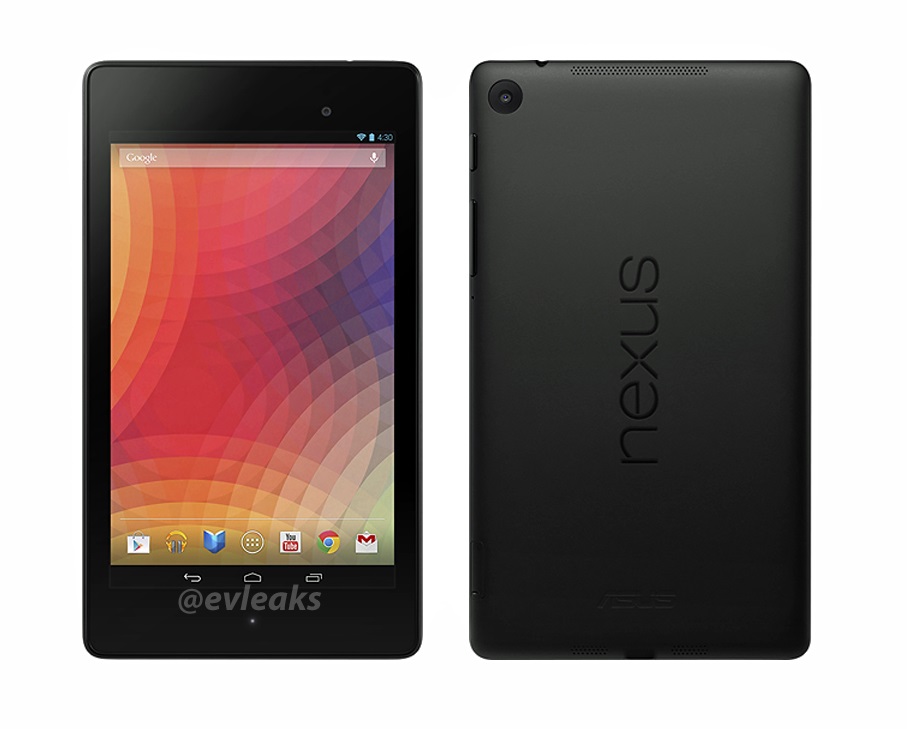
    Prolific leaker @evleaks has shared some press shots that give us a clear look at the front and rear of the new Nexus 7. The upcoming ASUS-made slate showed up in a BestBuy print catalogue as well.

    According to a number of previous reports, the next Nexus 7 will sport 1.5GHz quad-core processor, 7-inch full HD display, wireless charging, 2/4GB of RAMAndroid 4.3 and the aforementioned 5-megapixel rear camera and a 4000 mAH battery. We’ve also seen mentions of the upcoming tablet show up in a retailer’s inventory, so really all that’s left is for Google to make the device official.

    nexus 7

    Perhaps most tantalizing is the possibility that the Nexus 7 redux will offer up our first real glimpse of Android 4.3, unless you count those leaked builds that started trickling out soon after Google began selling its Google Play Edition Ones and S4s.

    It would have been nice to see Google stick to the sub-$200 price point for the Nexus 7, however considering the spec sheet on this revised Nexus 7 it is actually a bit surprising that they are managing to hit $229. Safe bet we’ll be hearing more about the new Nexus 7 from Google this week so all will be revealed soon.

    It’s also possible that the event will bring the official reveal of Android 4.3, which has been leaking quite frequently lately.

    [Via]

    Related Products


  • Yamaha Recalls 56,082 Ray Scooters In India

    Yamaha Recalls 56,082 Ray Scooters In India

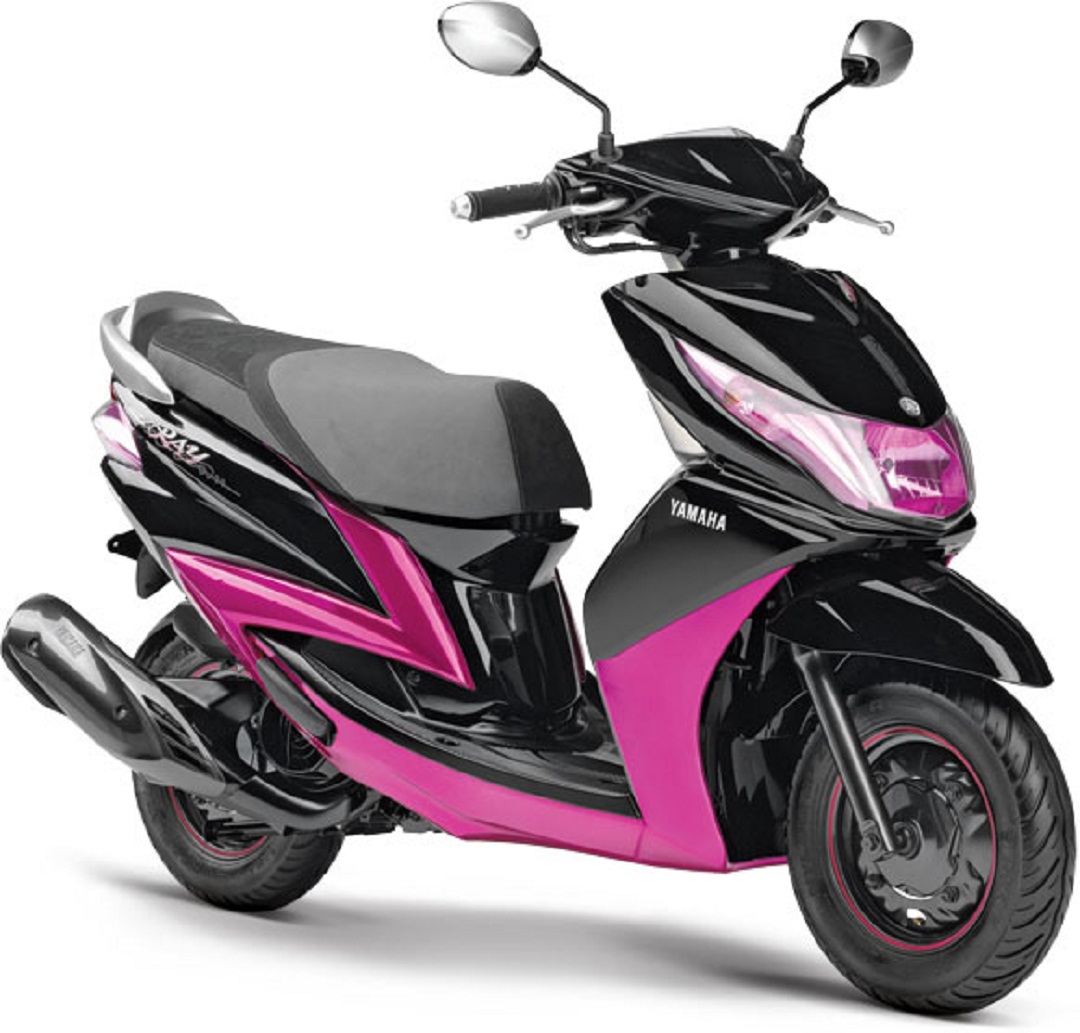
    Yamaha Motor today said it is recalling 56,082 units of its first scooter, the Ray, after detecting insufficient strength in the handlebar of some vehicles due to inadequate welding.

    “There is a chance in extreme cases that this might impact the steering operation. As a part of an exercise to rectify the problem, the company will reach out to each individual customer in possession of such scooter to process the recall,” India Yamaha Motor said in a statement on Saturday.

    Apparently, the fault in Ray was identified during one of the field studies and the handle bars in all identified vehicles will be replaced free of charge.

    Yamaha entered the scooter market in India only last year and has been able to capture 16 per cent of the scooter market already. The company’s first product, the Yamaha Ray, has seen good response with around 9,000 units being sold every month.

    Yamaha’s first offering in the segment is powered by a 4-stroke 113cc engine with Continuous Variable Transmission (CVT) that produces 7.1PS @ 7500rpm and a torque of 8.1Nm @ 5000rpm. Aimed specially at the fairer sex, the Ray looks young and has a seat that is specially designed keeping in mind easy leg reach. The Yamaha Ray is offered in six colours: Pink, Purple, Blue, Burgundy, Grey and Black.

  • Apple Acquires Transportation App HopStop

    Apple Acquires Transportation App HopStop

    Apple, in a bid to improve its infamous mapping system, today acquired popular transportation app HopStop. 

    Apple confirmed the purchase late Friday afternoon, though did not go into detail about what it intends to do with the company.

    The new mapping software Apple debuted in September with the iPhone 5 has been faulted for getting users lost and for its lack of public transportation directions. HopStop shows users in more than 500 cities the fastest way to travel by foot, bike, subway and car; Locationary deploys real-time data from a variety of sources to help users find featured businesses.

    The functionality is similar to the newly-acquired Waze, except it is for transit rather than automobile traffic.

    HopStop’s App Store description reads : 

    Get detailed subway, bus, train, taxi, walking and biking directions, real-time transit information via “HopStop Live!”, as well as official transit maps, nearby station search, and station-to-station schedules in over 600 cities throughout the US, Canada, Europe, Australia and New Zealand.

    In addition, you’ll benefit from our latest feature, HopStop Live!, which lets you see what other HopStop users are saying, in real-time, about the stations, trains, lines and buses you use most. HopStop Live! empowers our community of millions of transit riders to work together towards a common goal to get everyone to where they need to go, faster.

    With HopStop Live! you can:

    • Follow your favorite lines, stations or stops
    • Report real-time delays and issues
    • Contribute pictures of what you’re seeing on buses and trains
    • Share to Facebook and Twitter

    The app also supports these great features as well:

    • Get directions from your current location
    • Get schedules for hundreds of regional rails, subways, buses, ferries, light rails, streetcars, trams, trolleys & more
    • Map a location & see nearby subway & bus stops
    • Estimate travel time & cost for a taxi & call cab companies
    • See a list of all possible routes with Smart Route
    • Get biking directions in NYC, DC, Chicago, & SF

    Earlier on Friday a report from All Things Digital noted that Apple had purchased Locationary, a location-based data company that blended data from multiple sources, including things like business listings and products and services.

    [Via]

  • Report : Some Samsung Galaxy Note 2 And S3 Variants To Skip Android 4.2.2 For 4.3

    Report : Some Samsung Galaxy Note 2 And S3 Variants To Skip Android 4.2.2 For 4.3

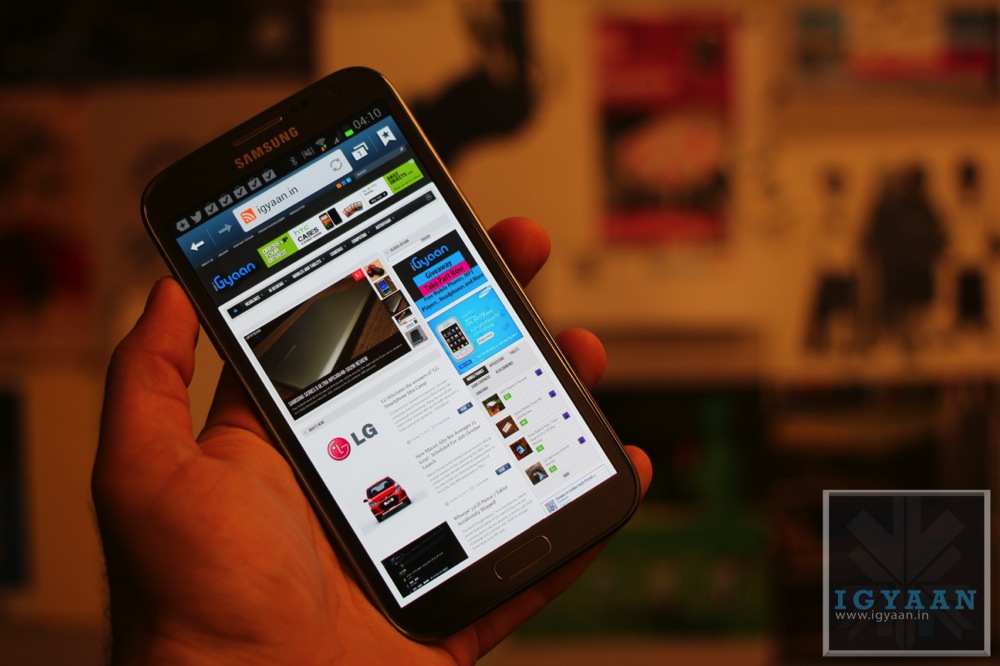
    Samsung Galaxy Note II users, along with Galaxy S3 owners, have been waiting rather impatiently for their turn to upgrade to Android 4.2.2, which came pre-installed on the flagship GS4.

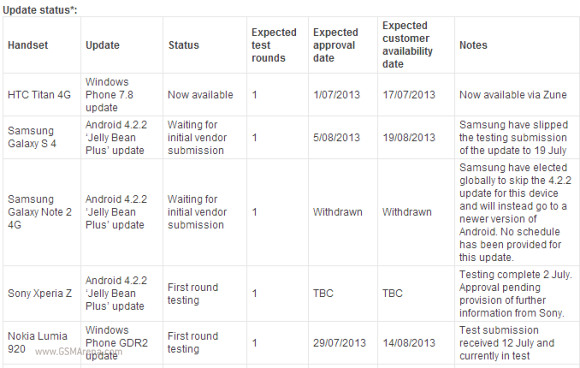
    Now, it seems as though the company may be moving away from releasing a version of the eight month-old software in favour of waiting for Google’s inevitable Android 4.3 release, which is slated to come to AOSP next week.

    Telstra, an Australian network provider released a statement on their upgrade page claiming, “Samsung have elected globally to skip the 4.2.2 update for this device and will instead go to a newer version of Android. No schedule has been provided for this update.”

    galaxy

    In some ways, this is a good move. Android 4.3 brings OpenGL ES 3.0 support along with standardized Bluetooth LE functionality and a host of other small improvements. Considering some devices, like the Nexus 7, actually dropped in performance from Android 4.1 to 4.2, Samsung may be waiting for Google to fix some underlying code issues before pushing the upgrade trigger.

    While this is in no way an official report, the same would seem likely for the Galaxy S3, which is only waiting in limbo for some sort of upgrade news.

    [Via]

    Related Products


  • ZTE Launches 6 Android Smartphones In India

    ZTE Launches 6 Android Smartphones In India

    Chinese manufacturer ZTE today launched 6 new Android smartphones in India. The smartphones are part of the company’s Blade, Grand and Kis series.

    “ZTE enjoys a customer base of over 32 million Indian handset users. With the initial launch of six devices priced between Rs 5,000 and Rs 15,000, we will build further on our handset portfolio in the months to come. By the year end, we aim to have our pan India presence with the smartphones and data cards,” said Xu Dejun, CEO, ZTE India.

    The most expensive of these smartphones is the Grand X (top), which is the flagship device of ZTE and it is priced at Rs. 14,999. The ZTE Grand X is essentially a dual SIM phone and sports a 5 inch qHD display with a resolution of 540 x 960 pixels.  The device runs on Android 4.2 Jelly bean operating system and is powered by a 1.2 GHz quad core processor.  It has 1 GB of RAM and 4 GB of internal storage.  Memory can be expanded up to 32 GB via micro SD card.  The handset comes equipped with a 5 megapixel rear camera and 0.3 megapixel front facing camera. Connectivity features include WiFi, Bluetooth, GPS and WiFi. A 2500 mAh battery powers the device.

    The next top end smartphone that ZTE has launched is Blade L, which is priced at Rs 12,599. It also has a 5-inch screen, but comes with a 1 GHz dual-core CPU, 512 MB RAM and runs on Android 4.0.

    The ZTE Blade G2 features 4.5-inch FWGVA display, Android 4.1 and 1GHz quad-core processor with 512MB of RAM. The phone also packs 4GB of internal storage, and 5-megapixel rear camera. It is priced at Rs.11,599.

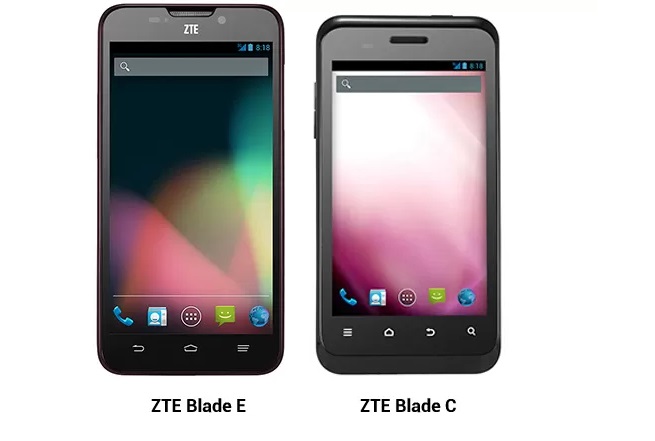
    Priced Rs. 11,999, ZTE Blade E runs on Android 4.1.2 Jelly Bean OS. It is powered by a 1.2 GHz quad core processor. It sports a 4.5 screen, 512 MB of RAM, 4 GB of internal storage, a 5 megapixel rear camera, 0.3 megapixel front camera and as far as connectivity is concerned, it has WiFi, GPS and Bluetooth.

    zte

    Apart from these mid-range smartphones, ZTE introduced two budget Android handsets with dual-sim functionality. ZTE Blade C has a 4-inch screen, 1GHz dual-core CPU, 512MB and costs Rs 7,599. Below it is the ZTE Kis Flex, priced at Rs 5,799 and having features like 3.5-inch display, 1GHz processor and 256MB RAM.

    ZTE, in partnership with Pune-based Calyx Communications, also introduced the At Your Doorstep service model in select cities of the country. Under this initiative, it will resolve issues with users’ handsets at their homes.

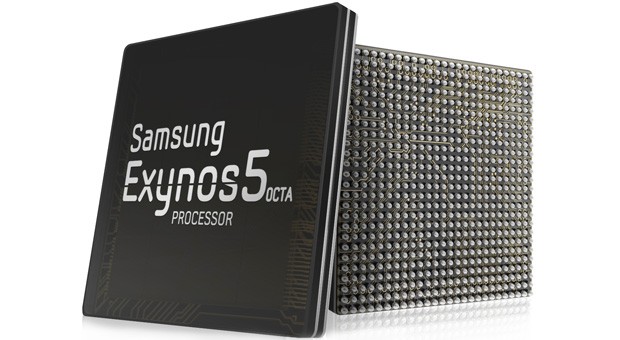
  • Samsung’s New Exynos 5 Octa Coming Next Week

    Samsung’s New Exynos 5 Octa Coming Next Week

    While U.S. Samsung Galaxy S4 owners received a Qualcomm Snapdragon SoC in their handsets, some global variants, including Indian devices, were released with Samsung’s octa-core Exynos 5 Octa SoC.

    Samsung took to Twitter today to announce an upgrade to their Exynos processors, claiming, “a new Exynos 5 Octa is coming next week!” While we are not sure what improvements have been made to the octa-core processor, Samsung claims that it will be “more powerful” and “enhanced” than the older version.

    Exynos 5 Octa

    Speculation calls for the new chip to be the Samsung Exynos 5420 and will feature a higher clock speed along with improved optimization for the 8 integrated cores. Not technically a true octa-core chip, the Exynos 5 Octa is comprised of two sets of quad-cores with one set of Cortex-A15 chips doing the heavy lifting while the other set of quad-core Cortex-A7 chips takes care of the light housekeeping. Not all 8 cores can be used at once. When one set of quad-core chips are being used, the other cannot. 

    Looking at history, Samsung has always created an Exynos processor and improved it in some way soon after. Whether it be double the cores (in the case of the Exynos 4) or LTE capabilities, Samsung always steps up its game with the second version of its processors. 

    As PhoneArena reports, a road map from low cost chip producer MediaTek showed off a true octa-core chip coming, manufactured using TSMC’s 28nm process. Mass production of this chip, the MT6592, is expected to start in November with the first handsets powered by the silicon to launch early next year. All 8 cores will be available for use at once.

    We expect the next generation Samsung Galaxy Note smartphone to be powered by the new Exynos 5 Octa chip.

    [Via]

  • VLC Media Player Returns To iOS App Store

    VLC Media Player Returns To iOS App Store

    Late in 2010, an iOS version of the popular, open-source VLC media player appeared on the App Store. But by January 2011, Apple had pulled the app, facing possible litigation from one of VLC’s original creators. According to a report from Ars Technica, version 2.0 of the app has now returned to the New Zealand and Australian App Stores, with a U.S. launch scheduled for late Thursday night and worldwide roll out later.

    The visual appearance of the app has remained fairly consistent to the old version from 2010. The app was completely rewritten and is much faster thanks to modern output modules for audio and video, and offers multi-core decoding and support for any video files available in VLC media player for desktop operating systems.

    Along with the faster performance, VLC for iOS 2.0 has a number of new features, including the ability to sync media via WiFi, Dropbox, 3rd party apps, or web download. It also added support for network streams, video filters, subtitle rendering, and more.

    VLC supports a “WiFi Upload” feature as mentioned above, that lets you upload files through a desktop web browser running on the same local WiFi network, as well as a new “Download from Web Server” option where you can enter the URL of a file you want to download within the app. The app comes with support for iTunes file sharing, and Dropbox integration. 

    Back in 2011, VLC developer Rémi Denis-Courmont filed a complaint against the original VLC iOS app, created by developer Applidium. At the time, VLC was licensed under the now-outdated, open source GNU General Public License version 2.

    [Via]

  • Google Posts Profits But Misses Revenue Expectations

    Google has released its Q2 2013 earnings today and, though they appear strong in absolutes, they missed analysts’ expectations by a fairly wide margin.

    The company posted $14.1 billion in revenue, up slightly from last quarter and an improvement of 20% from the previous quarter last year, but analysts were expecting  $14.4 billion. Net income was solid at $3.23 billion and $9.56 per share but, again, they were below expectations.

    Motorola maintained its reputation as an anchor weighing down the otherwise-profitable Google, as the hardware division posted a quarterly loss of $342 million on revenue of $998 million. Revenue was down from the previous quarter, while the net loss was up, placing even higher expectations on Moto X, which is expected to debut at the end of the month.

    Google’s average cost-per-click, which includes clicks related to ads served on Google sites and the sites of its network members, decreased about 6% in the quarter compared with a year ago. Analysts had predicted prices would drop about 3% in the period.

    “The shift from one screen to multiple screens and mobility creates tremendous opportunity for Google. With more devices, more information, and more activity online than ever, the potential to improve people’s lives even more is immense,” CEO Larry Page in a press release.

    Google is expected to spend upwards of $500 million on advertising Moto X, which is rumoured to be customizable by colour, engraving and build material. The company is otherwise extremely healthy, with over $53 billion cash on hand.

    [Via]

  • AMD Exceeds Expectations But Posts Losses In Q2

    AMD Exceeds Expectations But Posts Losses In Q2

    A day after its competitor Intel posted financial results for its most recent quarter that came in slightly below analyst’s estimates, AMD bucked that disappointing trend – but it’s not quite out of the woods yet.

    AMD reported its second quarter results on Thursday after markets closed, and reported a loss of $0.09 per share on sales revenues of $1.16bn.

    In the previous first quarter, revenues came in at $1.09 billion, down 32 percent from a year ago. Last quarter, the chip maker’s net loss per share (after one-time items) was 13 cents a share, or $94 million.

    The Sunnyvale, Calif.-based AMD, the No. 2 maker of PC microprocessors, has had a tough couple of years as it trailed Intel in competitiveness and saw a slowdown in demand as consumers began to favor tablets and smartphones over PCs. Since it wasn’t well positioned for that transition, the slowdown hit AMD harder than Intel

    Analysts expected a loss of 13 cents a share on revenue of $1.1 billion for the second quarter. AMD had a profit of 6 cents a share a year ago.

    A.M.D. processors are being used in Microsoft’s coming Xbox One and Sony’s next-generation PlayStation game consoles. These devices are largely behind A.M.D.’s upbeat revenue forecast.

    A.M.D. said its gross margin in the second quarter was 40 percent and would fall to about 36 percent in the third quarter. Analysts on average had expected a third-quarter gross margin of 39 percent. 

    [Via]

  • Apple 2013 MacBook Air Update Pushing Out To Fix WiFi Issue

    Apple 2013 MacBook Air Update Pushing Out To Fix WiFi Issue

    A software update is now available for the recently launched 2013 MacBook Air. Apple describes it as follows:

    This update fixes an issue that in rare instances may cause an intermittent loss in wireless connectivity, an issue with Adobe Photoshop which may cause occasional screen flickering, and an issue which may cause audio volume to fluctuate during video playback.

    News of the screen flickering issue emerged shortly after the release of the 2013 MacBook Air, when users began noticing display flickering when using Photoshop, especially when accessing the app’s larger brush tools. An Adobe representative noted that it was likely a driver or GPU issue.

    Another problem cropped up last week when MacBook Air owners complained of uncontrollable volume fluctuations while playing video content in both first-party and third-party applications. This too has reportedly been solved with the latest Software Update 1.0.

    Considering how many issues it’s meant to address, it’s a little surprising that the the MacBook Air (Mid 2013) Software Update only takes up 3.35 MB. You can download it via Apple’s site. As AppleInsider notes, Apple even took advantage of the opportunity to update its Support downloads page so it’s more in line with the design shift seen throughout the rest of the site.  

    Apple is currently testing a larger 10.8.5 update to OS X, as well as the next major release of the operating system (10.9, also known as Mavericks).

iGyaan Network
Privacy Overview

This website uses cookies so that we can provide you with the best user experience possible. Cookie information is stored in your browser and performs functions such as recognising you when you return to our website and helping our team to understand which sections of the website you find most interesting and useful.