Author: Shivaank Rana

  • Twitter’s Vine App For Android “Coming Soon”

    Twitter’s Vine App For Android “Coming Soon”

    Vine, Twitter’s popular video sharing app, has been a success on iOS and consistently remained as being one of the top ten social apps.

    vine

    The free app allows you to record 6-second looping videos and share them via Vine, Twitter or Facebook. Dom Hofmann, the original creator of Vine, spoke with The Verge and he noted that a future enhancement that will be coming to iOS will be the option to tag people, which as a result will make it even more social.

    In addition, Vine is poised to expand past Apple and integrate into the lives of Android users. 

    The company told The Verge recently that an Android version is coming soon, but didn’t say exactly when we can expect it to hit the Google Play store.

    Clues pointing to a Vine Android app have been out ever since February, when the company has started looking for a lead Android engineer. Why would anyone do that, unless they were developing an Android app?

    More interesting though is the thought process that went into creating Vine. Vine co-founder Dom Hofmann told The Verge that the key to the app was not in “reducing complexity” as Steve Jobs and Jony Ive were noted for saying, but rather “concealing complexity”.

    In other words, allowing users to do something relatively complex in a simple way. Quite an interesting interview if any of you are interested. 

    In any case we’ll keep you guys updated, but in the meantime Android users, are you guys excited?

    [The Verge]

  • Microchip Expands Embedded Wireless Portfolio With New Bluetooth, Wi-Fi And ZigBee Products

    Microchip Expands Embedded Wireless Portfolio With New Bluetooth, Wi-Fi And ZigBee Products

    Microchip Technology Inc., today announced a major expansion of its embedded-wireless portfolio.

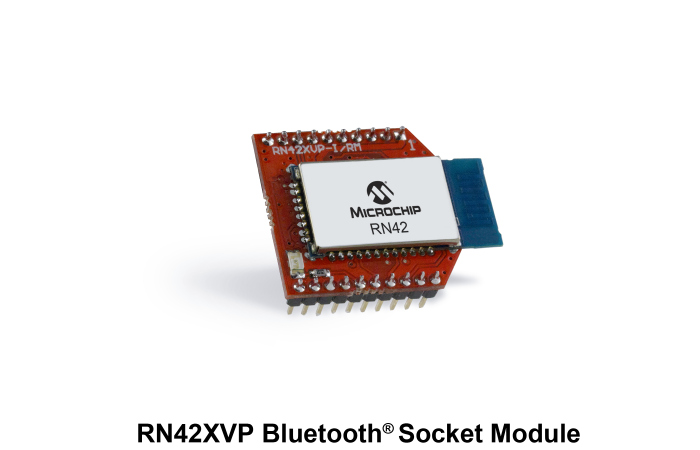
    The Bluetooth additions include the PIC32 Bluetooth Audio Development Kit, featuring modules, stacks and CODECs, and XBee footprint-compatible socket modules with integrated stacks. The new Wi-Fi offerings comprise IEEE 802.11b/g Wi-Fi modules with Microchip’s feature-rich and free source-code TCP/IP stack running on a PIC microcontroller for greater configurability, as well as XBee footprint-compatible socket modules with integrated stacks for ease of use.

    Microchip is also adding a low-power 2.4 GHz radio that supports – for the first time in one chip – both the IEEE 802.15.4 and proprietary data rates (from 125 kbps to 2 Mbps), including the ZigBee, MiWi and other proprietary protocols.

    “Whether you are designing wireless networks optimised for Bluetooth, Wi-Fi, ZigBee or proprietary protocols, Microchip has you covered,” said Steve Caldwell, director of Microchip’s Wireless Products Division.

    There are many wireless network designs that need to operate with very low power consumption. Examples include battery-powered home and industrial automation wireless-sensor mesh networks, as well as ZigBee RF4CE-standard-based remote controls. Microchip’s next-generation, 2.4 GHz IEEE 802.15.4 MRF24XA transceiver radio provides a very low operating voltage range of 1.5 to 3.6V and receives power consumption of only 13 mA, which enables years of battery life.

    This is also Microchip’s first radio that can support both the IEEE 802.15.4 and proprietary data rates (from 125 kbps to 2 Mbps), including the ZigBee, MiWi and other proprietary protocols.Some designers want an easy way to migrate their 802.15.4 designs to either Wi-Fi or Bluetooth, in order to make them accessible from smart phones and tablets, or to add internet connectivity.

    This includes applications such as wireless sensor networks, remote monitoring/control and measurement, and M2M cable replacements for home, commercial and industrial networks. The RN XV series of Wi-Fi and Bluetooth socket modules provide agency-certified, drop-in connectivity for any XBee socket.

    To simplify designs, the stacks are integrated on the module, configured via simple ASCII commands, and can easily connect to any MCU via a serial interface. Other designers want to add more extensible Wi-Fi functionality, such as a complete Web server and email, via a configurable source-code TCP/IP stack that is resident on one of many PIC microcontrollers.

    The new low-power and agency-certified MRF24WG0MA/MB modules connect at all IEEE 802.11b/g data rates, up to 54 Mbps, and are Microchip’s first to support a sustained throughput of 5 Mbps. This provides a footprint-compatible migration path for users of Microchip’s existing Wi-Fi modules who need greater speed or increased access-point compatibility, along with more features.

    Bluetooth digital audio is rapidly expanding in high-volume applications such as accessories for smart phones and tablets, as well as audio sound bars. To meet this demand, designers need a cost-effective development platform that provides high-quality audio. Microchip’s 32-bit PIC32 microcontrollers provide a high-performance platform for developing quality digital-audio playback and accessories. The new PIC32 Bluetooth Audio Development Kit builds on Microchip’s existing stack-integrated Bluetooth audio module with a new low-cost, agency-certified Bluetooth HCI transceiver module based on a standard radio, AVRCP and A2DP Bluetooth profiles tailored for the PIC32, as well as both standard and advanced audio CODECs such as SBC, AAC and MP3.

    Additionally, this kit can be used with Microchip’s existing Made for iPod and Android stacks. Together, these elements provide a versatile and powerful development platform with a high level of customisation and flexibility.

  • Smartphones Outselling Feature Phones For The First Time Ever

    Smartphones Outselling Feature Phones For The First Time Ever

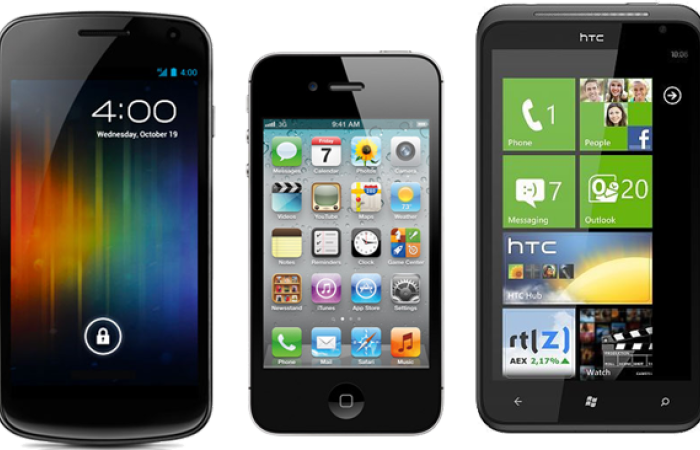
    Smartphones are now outselling cheaper feature phones for the first time in history, according to new findings from research firm IDC.

    Tracking shipments over the first three months of 2013, 51.6% of the 418.6 million mobile phones shipped were smartphones. The number of phones shipped for the traditionally slow quarter (Q4 2012, the holiday season, saw shipments hit 483.2 million) rose year-on-year too, with 2012’s Q1 shipments peaking at 402.4 million.

    “Phone users want computers in their pockets. The days where phones are used primarily to make phone calls and send text messages are quickly fading away,” said Kevin Restivo, senior research analyst with IDC’s Worldwide Quarterly Mobile Phone Tracker.

    “As a result, the balance of smartphone power has shifted to phone makers that are most dependent on smartphones.”

    Samsung Electronics continues to dominate. It shipped 70.7 million smartphones during the first quarter, 60.7 percent more than a year earlier, according to IDC.

    smartphones

    Apple remains the second-largest smartphone vendor, shipping 37.4 million iPhones. That’s an annual growth rate of just 6.6 percent, though, the slowest of the top five vendors. The last time iPhone sales posted a single-digit year-on-year growth rate was in the third quarter of 2009.

    LG, on the other hand, managed to more that double its shipments, to 10.3 million units. That was enough to outship both Huawei Technologies and ZTE, which last year were ahead of the South Korean vendor. LG’s growth was driven in large part by its 3G smartphone portfolio, including the L series and the Nexus 4. LTE-enabled devices, including the Optimus G series, also contributed to LG’s success, according to IDC.

    [IDC, Memeburn]

  • Nokia Chat Beta For Lumia And Asha Devices Released

    Nokia has released the first public beta of its Nokia Chat app for Windows Phone 7.5 and 8 devices. Similar to software like WhatsApp, Kik, Kakao Talk and Facebook Messenger, Nokia Chat allows cross-platform messaging between Windows Phone, Asha, Symbian and S40 devices.

    nokia chat

    The first beta includes Canada, along with the United States, United Kingdom, Australia, Nigeria, South Africa and a few others, to ease the company’s servers into the load before opening to a wider audience. While the app likely won’t get much play in North America, it stands to be quite popular in countries with established bases of Symbian, Asha and S40 devices, of which there are hundreds of millions still in use.

    Windows Phone 8 users can take advantage of lock screen notifications, but all WP users will receive toast push notifications and live tile updates. The app also integrates with Yahoo Messenger, but it would be nice if Nokia could integrate Google and Facebook, as the current solutions on the platform are pretty terrible.

    For Windows Phone 8 users, the app can also take advantage of voice dictation, voice commands — example “Chat with Michael Jordan” — as well as lockscreen notifications. The last feature displays a counter informing you of the number of unread messages.

    Nokia Chat for Windows Phone is available to download through Nokia Beta Labs.

  • Nokia To Unveil New Lumia In London On May 14, Will It Be The “Catwalk”?

    Nokia is planning to hold a May 14 press conference in London to talk about where it is headed with its Lumia line of Windows devices.

    Nokia

    Nokia Catwalk rumors have been looming in the air since a few weeks now, and this week, a couple of images had surfaced on the Chinese website Baidu, giving us an idea of how the smartphone might look like. 

    The Nokia Catwalk is expected to come with a 4.5-inch OLED display with a resolution of 1280 x 768 pixels. The smartphone will be powered by a 1.5GHz dual-core Snapdragon S4 processor paired with 1GB of RAM, just like the Lumia 920, but the Nokia Catwalk will comes with lesser, 16GB of internal storage, as opposed to 32GB on the Lumia 920.

    The Nokia Catwalk is expected to sport a 8.7 megapixel f2.0 camera and a 2,000mAh non-removable battery. The dimensions of the upcoming device are expected to be 129 x 71 x 8.4mm, and it is expected to weigh-in at just 132 grams. 

    And though the company recently announced entry- and mid-range devices in the Lumia 520 and 720, it hasn’t launched a flagship model since the the Lumia 920 was unveiled in September. In the smartphone world, that is a very long time.

    We’ve also heard rumours that Nokia might debut a Windows 8 tablet, and considering the length of the event — it’s set to last six hours — we wouldn’t be surprised to see more than one product announced.

    Nokia’s partnership with Microsoft seems to be stronger than ever at this point, which would make a Windows 8 tablet — or even a Windows RT slate — a possibility.

    We’ll have to wait and see what Nokia has in store for us. But keep in mind that it is launching the product(s) the day before Google I/O begins, so expect big things from the company.

    [TechnoBuffalo]

  • Alexander Graham Bell’s Voice Identified On 130 Year Old Wax Recording, You Can Hear It Too

    Alexander Graham Bell’s Voice Identified On 130 Year Old Wax Recording, You Can Hear It Too

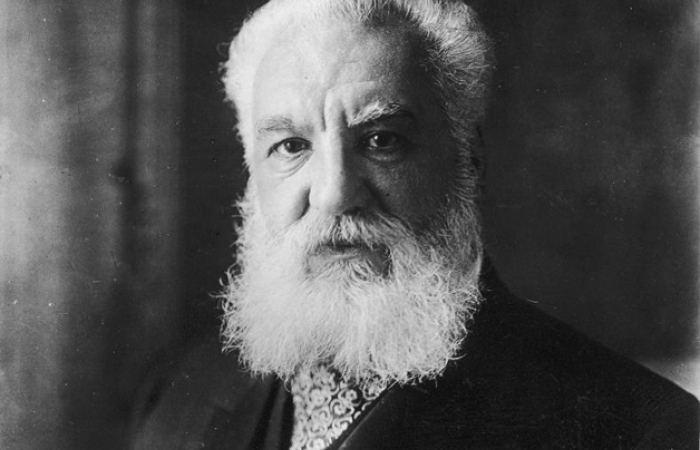
    Researchers have identified the voice of Alexander Graham Bell for the first time in some of the earliest audio recordings ever created.

    The National Museum of American History discovered the recording on a wax disc from 1885, which had been donated to the Smithsonian Museum.

    Alexander Graham Bell
    A closeup of the recording that revealed Alexander Graham Bell’s voice for the first time.

    The Smithsonian has released the audio recovered from a wax and cardboard disc dated April 15, 1885.

    “Hear my voice, Alexander Graham Bell,” the inventor said.

    As the SmithsonianMag reports, from the 1880s on, until his death in 1922, Bell gave an extensive collection of laboratory materials to the Smithsonian Institution, where he was a member of the Board of Regents. The donation included more than 400 discs and cylinders Bell used as he tried his hand at recording sound. The holdings also documented Bell’s research, should patent disputes arise similar to the protracted legal wrangling that attended the invention of the telephone.

    Until very recently, these wax recordings were unplayable. We did not have the right tools, and even if we had, playing them would ruin the wax cylinders or fragile records upon which the sounds were stored. 

    In late 2011, scientists played back some of Bell’s earliest recordings for the first time with new technology that reads the sound digitally from tiny grooves in the wax disc using light and a 3D camera. 

    The breakthrough offered a glimpse at the experiments with sound and recording at the dawn of the information age when inventors were scrambling to secure patents for the first telephones and phonographs.

    The recordings were packed away for more than 100 years and were deemed obsolete until new technology allowed them to be replayed.

    Fascinating! 

    You can here the audio recording below (courtesy Gizmodo) :

     [SmithsonianMag, The Atlantic, Gizmodo]

  • Apple Celebrates iTunes 10th Anniversary With Timeline

    Apple Celebrates iTunes 10th Anniversary With Timeline

    To celebrate the 10th anniversary of iTunes, Apple has put together an entertaining multimedia timeline of the digital music store.

    The iTunes’ formal birthday isn’t until Sunday, but the timeline, which is called “A Decade of iTunes,” is online now in the music section of the store.

    itunes

    The timeline marks the period from the time iTunes was first launched on April 28 2003 right up to the release of Justin Timberlake’s new album on March 19 this year. Peppered along with the milestones are the best selling song and album on the day of the milestone (for e.g. on 10 May 2005 when the iTunes store was officially launched in European countries like Denmarak, Norway, Sweden and Switzerland, ‘Speed of Sound’ from Coldplay’s X & Y was the best selling song, while Morcheeba’s ‘The Antidote’ was the best selling album).

    “The sky was falling, and iTunes provided a place where we were going to monetize music and in theory stem the tide of piracy. So, it was certainly a solution for the time,” said Michael McDonald, who co-founded ATO Records with Dave Matthews and whose Mick Management roster includes John Mayer and Ray LaMontagne.

    The iTunes music store became much more than a solution; it changed how we consume music and access entertainment. It’s not only music’s biggest retailer, it also dominates the digital video market, capturing 67 percent of the TV show sale market and 65 percent of the movie sale market, according to information company NPD group. Its apps are the most profitable, it has expanded to books and magazines, and it is now available in 119 countries. This week, iTunes posted a record $2.4 billion in revenue in first-quarter earnings.

    The app store now reaches 90 percent of the world’s population, Oppenheimer said, and is available in 155 countries. There are now over 850,000 iOS apps in the store, 350,000 of which are tailored for iPad.

    As of the second fiscal quarter of 2013, iTunes now offers 35 million songs in 119 countries, 60,000 movies in 109 countries and 1.7 million iBook titles. 

    Apple also said that payouts to app developers has reached $9 billion since the App Store initiative launched in 2008, and the company is currently meting out some $1 billion per quarter to app makers.

    [LATimes]

  • LG Has Plans To Launch An OLED Flexible Display Smartphone This Year

    LG Has Plans To Launch An OLED Flexible Display Smartphone This Year

    LG announced their Q1 2013 results yesterday and declared smartphone shipments of 10.3 million units. Executives said these results were “healthy” and mainly from the global success of the flagship devices like the Optimus G and Nexus 4. By the end of the year LG estimates their smartphone shipments will reach 45 million units.

    LG

    If everything works out the way they intend, LG will be come to market this year with a smartphone that has a flexible display. This is something Samsung wanted to accomplish, but has reportedly met with technology delays. According to the Wall Street Journal, Yoon Bu-hyun, vice president at LG’s mobile business, said they’re currently working closely with the LG Display Company and will produce a smartphone that has a flexible OLED screen.

    No other details on specs or timing, but will be great to finally see this technology come to market. Hopefully it’s priced reasonable and made available globally. Perhaps the go-to-market name will be the LG Optimus “Flex.”

    LG is among several mobile companies, including one of its chief competitors, Samsung, eyeing flexible OLED display technology. The companies envision devices featuring fully flexible screens, allowing for more leniency in product design. At the Consumer Electronics Show in January, Samsung showed off a 5-inch demo unit with a flexible screen. Nokia has also shown off similar prototypes.

    A year ago, LG trotted out a design for a flexible display for e-book readers.

    [Wall Street Journal, CNET]

  • Hublot Celebrates The Launch Of The LaFerrari With Stunning Watch

    Hublot Celebrates The Launch Of The LaFerrari With Stunning Watch

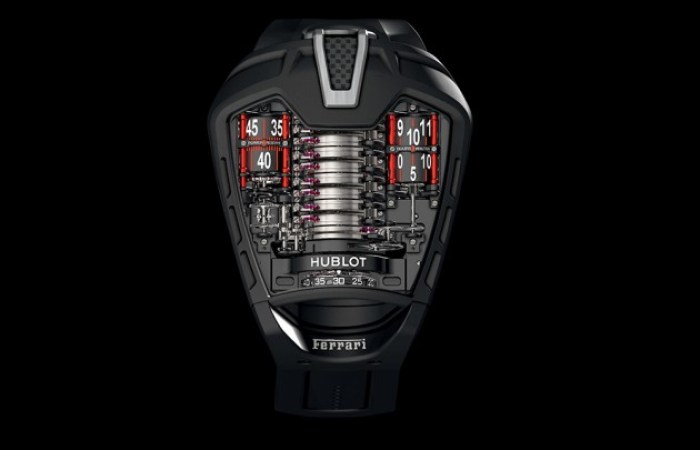
    Next to their impressive collaboration with Monster on new luxury headphones, Hublot has presented another highlight today at Baselworld – the Masterpiece MP-05 LaFerrari. Paying tribute to the new flagship Ferrari super car, the LaFerrari, the brand has developed a watch from the future.

    Hublot’s MP-05 “LaFerrari” has been designed, developed and manufactured entirely by the Swiss firm and features a 50-day power reserve–a world record power reserve for a hand-wound tourbillon watch. It has a unique in-house crafted mechanical movement principle, that can keep it ticking as far as two months after you stopped wearing it.

    laferrari

    It has a special microblasted black PVD-coated titanium case, which encases 637 individual components and thanks to the tour billion movement system, they are arranged to look like a Ferrari engine bay, hinting to the red cylinder banks with the admission manifold in the middle.

    With carbon fiber on the case, there are some light design cues in the watch from the Ferrari car. The top crystal is one, and the entire case design is meant to mimic the shape of the beautiful car, though it is a light connection. The Ferrari relationship allows Hublot to experiment in new areas and work with the famous automaker to produce rather original timepieces such as this one.

    The hour and minute are displayed to the right of the barrels, also indicated by means of one anodized black aluminum cylinder each. On their left is the cylinder indicating the power reserve. Reinforcing bars either side, made from anodized red aluminum, also bring to mind Ferrari’s signature exteriors.

    Hublot will make only 50 of these stunning watches, so only one in ten LaFerrari buyers will be able to have one.

    Price or the Hublot Masterpiece MP-05 LaFerrari watch will be about 300,000 Swiss Francs (or Rs 17234400.00). When are you getting yours?

    [AutoEvolution]

  • NASA Left Red Faced As Rovers Accidentally Draw A Penis On Mars

    NASA Left Red Faced As Rovers Accidentally Draw A Penis On Mars

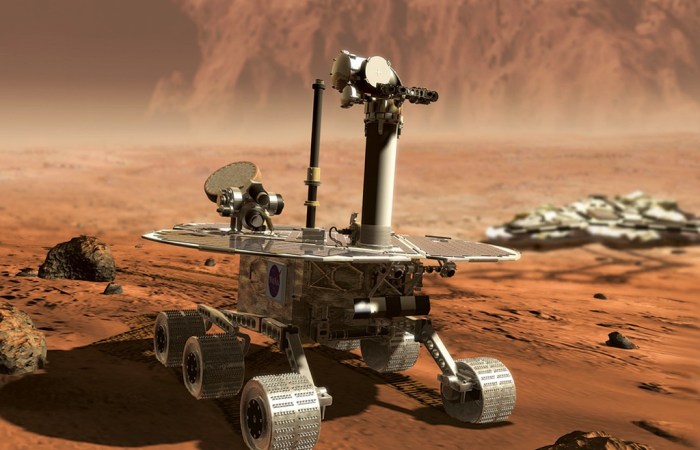
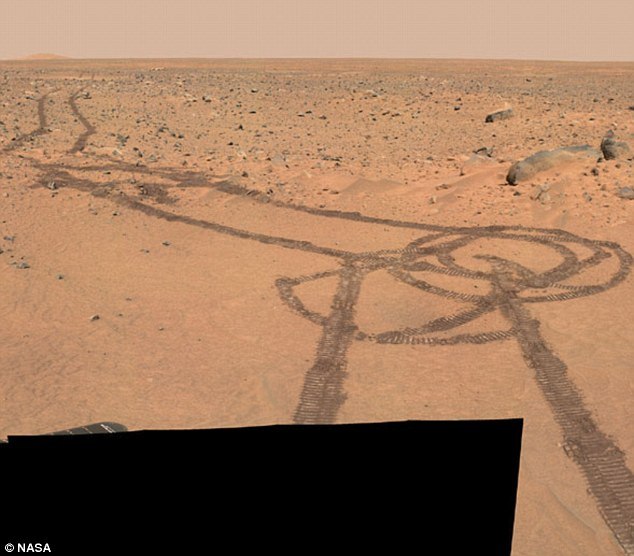
    The Mars Rovers, obviously bored out of their robotic minds traversing the red planet, are now whiling away the time like immature students everywhere: by drawing dirty pictures.

    Rover


    A keen-eyed person spotted a photo of Rover tracks on NASA’s site that looks remarkably like a penis. The pic was posted to Reddit with the caption “Mars Rover = $800M, Team to Operate = $1B. Drawing a penis on the surface of another planet = Priceless.”

    As the Huffington Post reports, the twin exploration vehicles Spirit and Opportunity were launched nine years ago, in an effort to search the surface of Mars for signs of water erosion and possibly even life.

    According to Nasa, since then the rovers have driven over more than 10km of Martian land, directed by teams back on Earth combined with autonomous cameras designed to avoid potential problems with the terrain.

    It’s not clear which of the rovers drew the shape, or even when it was made. It’s been suggested the rude drawing came as a result of the Rover turning in tight circles to find a new route.

    Nasa lost communication with the Spirit rover in 2009 after it became stuck in some sand. Meanwhile the Opportunity is still traversing the surface on its way to the Endeavour crater.

    Last year they were joined on the Red Planet by Nasa’s $1.5billion rover Curiosity, which has so far not stooped to the immature levels of its rover cousins.

    [Huffington Post]

  • Google Joins FIDO Alliance To Find An Alternative To Passwords

    Google has joined a consortium of tech companies including PayPal and Lenovo attempting to stop passwords being the sole protector of personal accounts.

    The group, the FIDO Alliance, is working on technology that would give the device a person was using a role in authenticating them so that a password alone is not enough to unlock an account. That approach can make it impossible to compromise accounts just by stealing passwords, as hackers did in order to break into Twitter this year and LinkedIn last year.

    google

    There have been some rumors about Google working on an authentication device, something like a USB stick for example, and this is what FIDO, which stands for Fast IDentity Online, specializes in.

    FIDO is working on a standard way of providing authentication online. It doesn’t necessarily have to do with the device or method used for the authentication, but with the way in which websites can request authentication and in which users can provide it.

    “Joining the FIDO Alliance is a great way to increase industry momentum around open standards for strong authentication,” Sam Srinivas, who leads information security at Google, said. “We look forward to continuing our current development work on strong, universal second-factor tokens as part of a new FIDO Alliance working group,” he added.

    In practice, users would have an authentication device, which could be a USB device with a key or a fingerprint scanner or anything else of the sort. 

    The unique key provided by the device would be used by websites to provide access. This key would be hard to spoof and harder to obtain.

    Certainly a step in the right direction.

    [Softpedia]

  • Nokia Announces The Asha 210, QWERTY Keyboard, Dedicated Whatsapp Button

    Nokia Announces The Asha 210, QWERTY Keyboard, Dedicated Whatsapp Button

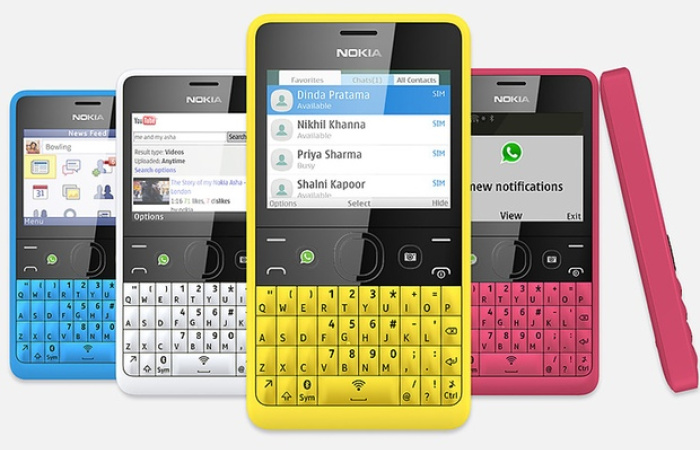
    Nokia teased those interested in a physical QWERTY the other day and promised they’ll show the world their latest handset today. Well, it’s the S40 Asha 210. A lightweight entry-level phone that has a full QWERTY keyboard and a dedicated WhatsApp button. The 210 is targeting the uber cost conscious crowd and has priced this at a measly $72 USD (Rs 4000/-) outright, aiming “to go on sale in the second quarter of 2013.

    asha 210

    As for specs, the Asha 210 has a physical QWERTY keyboard, a 2.4-inch QVGA display (320×240 resolution and 169ppi), 2MP camera and no front-facing camera, “offers an astonishing battery life” that will garner you “up to 46 days standby with the Single SIM model; up to 24 days with Dual SIM.” The Asha 210 weighs 99.5 grams and will be available in yellow, cyan, black, magenta, white.

    The highlights of the 210, apart from the physical keyboard, is the dedicated WhatsApp button for quick access to your conversations.

    Not the biggest deal dealbreaker, but WhatsApp has also promised that they’ll waive the $0.99 yearly subscription fee for the Nokia Asha 210 user.

    Pricing and availability for Indian customers has not been revealed yet. More to come soon!

  • Applications Open For Astronauts Willing To Take A One-Way Trip To Mars

    Applications Open For Astronauts Willing To Take A One-Way Trip To Mars

    The main requirements are strong health, good people and survival skills, being 18 or older, and having a reasonable grasp of the English language.

    The non-profit company, called “Mars One,” aims to land its first four astronauts in 2023 for a televised reality show that would follow the exploits of the first humans to attempt to establish a colony on Mars.

    mars

    At a press conference in New York City, the company’s CEO Bas Lansdorp announced an open call for anyone to apply for the flight.

    The mission will be one-way only, since there currently is no technology that would enable a return trip from Mars to Earth.

    “Today, the Mars One foundation starts the search for Mars inhabitants. The search for people from all nations who want to settle on Mars,” he said. “Mars One is a non profit organisation that is working on landing the first crew on Mars in 2023 and another crew every two years after that.”

    The goal is to establish a permanent human colony, he said.

    The biggest obstacles, he said, are financial. The company has revealed some of its sponsors and hopes to gain more via media coverage. It’s not clear whether enough money will be collected in time.

    There are also practical issues: Can the kinks in having a sustainable system for people to survive in such a harsh environment be worked out by 2023?

    The Netherlands-based non-profit plans to send new missions thereafter every two years, with the second crew joining in 2025. 

    Each flight will carry two males and two females, but Lansdorp said Mars One was not requiring anyone to take fertility tests.

    “These people will be living on Mars in a very small environment with just four people. It will be a dangerous environment and any prospective parent should always ask themselves is this the right time and place for me to have children,” he said. “These are responsible people that we are sending to Mars.”

    A range of potential pitfalls might prevent the project from becoming a reality, including the inability to return to Earth, the small living quarters and the lack of food and water on Mars. 

    What do you think?

    [Telegraph]

  • Spice Up Your Computer With This Iron Man Mouse!

    Spice Up Your Computer With This Iron Man Mouse!

    Iron Man fever is currently sweeping the globe, with fans of the Marvel series naturally stoked about the prospect of Iron Man 3 hitting cinemas very, very soon. If you’re anxiously waiting for the film to reach your local cinema and need your fix this instant, you may want to check out this uber-cool Iron Man mouse. While it doesn’t do anything particularly groundbreaking, it does look rather awesome, and although it only ships in certain parts of Asia, we thought some of you die-hard fans would want to check it out.

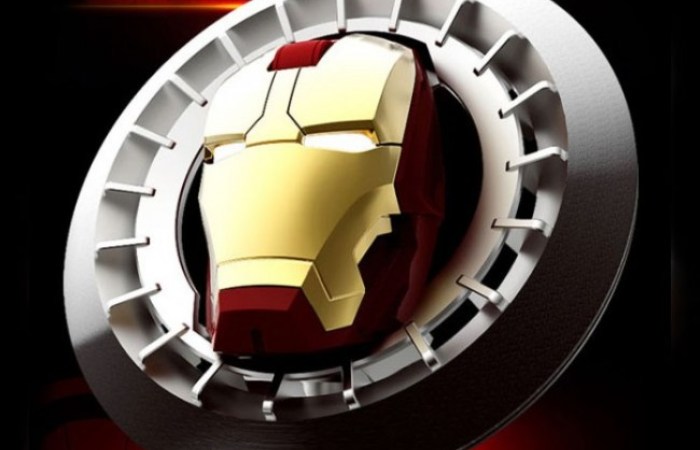
    The Iron Man Mouse has been designed to look like the helmet from Tony Stark’s Iron Man suit and is the first limited edition Iron Man 3 wireless mouse of its kind, complete with an arc reactor display case.

    iron man

    The E-Blue Iron Man mouse is powered by dual AAA batteries and is equipped with a 1000 dpi sensor for tracking and the eyes within the mask light up when in use.

    The new Iron Man mouse is now available in Chins for 699 yuan approximately $113, however no information on worldwide availability or pricing has been released as yet.

    Sure, ergonomics weren’t really considered paramount in this design, but it’s a small price to pay for this collector’s desktop accessory. Did we mention its eyes illuminate red?

    [Redmond Pie, PCPOP]

  • Tlaloc II-TC Robot Explores Mexico’s Ancient Temple Of Quetzalcoatl

    Tlaloc II-TC Robot Explores Mexico’s Ancient Temple Of Quetzalcoatl

    The idea of using a robot to go where a human wouldn’t has been a popular one in science fiction, and to a lesser degree, in reality as well. Robots capable of performing such feats haven’t been around all that long, but the concept of sending in the robots has just been made a bit more credible thanks to plans to send in a robot to the Teotihuacan archaeological site in Mexico to finish off the exploration, where humans would have a much tougher time reaching. Tlaloc II-TC

    The tunnel, discovered under the Temple of the Plumed Serpent, or Quetzalcoatl, is believed to lead to a chamber almost 2,000 years old, probably a place where dignitaries of the pre-Columbian city received their investiture or were buried, the National Anthropology and History Institute, or INAH, said.

    Experts expected to find just one ancient chamber at the end of a stretch of the 2,000-year-old unexplored tunnel at the site. Instead, the remote-controlled vehicle has beamed back images of three mysterious caverns.

    The three-foot-long investigator, named Tlaloc II-TC after the Aztec god of rain, was first lowered into the depths of the pyramid to check it was safe for human entry.

    This is only the “third time anywhere in the world that such an automaton [has been] used to design excavation strategies,” adds HispanicallySpeakingNews.com.

    The Tlaloc II-TC looks almost like a robotic version of a “rat rod,” except with tracks instead of wheels, sloped downward to almost look like a wedge. That makes it well-suited for operating in small, tight spaces like the last part of a tunnel in the Teotihuacan site.

    Tlaloc II-TC is equipped with a video cameras and a mechanical arm to clear obstacles out of its way as it maneuvers through the tight passageway.

    Excellent use of drones, we must say!

    [Daily Mail, BLDG BLOG]

iGyaan Network
Privacy Overview

This website uses cookies so that we can provide you with the best user experience possible. Cookie information is stored in your browser and performs functions such as recognising you when you return to our website and helping our team to understand which sections of the website you find most interesting and useful.