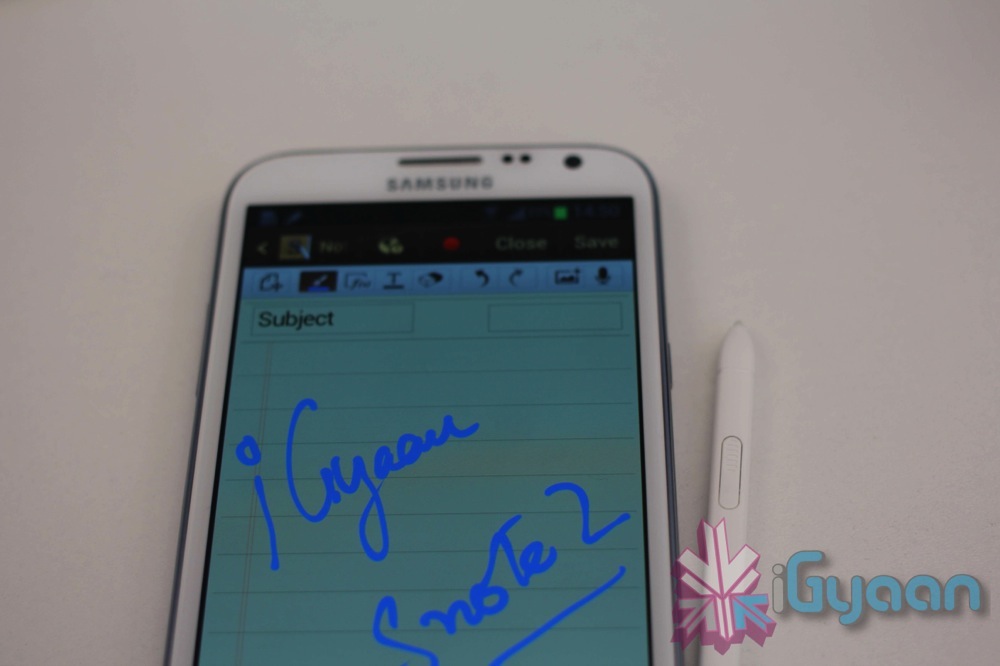
Today, Samsung announced that the Samsung Galaxy Note 2 has sold three million units in just over 30 days since the phablet launched. And those sales figures should only increase once the device hits the two biggest carriers in the United States, AT&T and Verizon, which its poised to do in the weeks ahead.
The sales growth was more than three times faster than its previous model Galaxy Note, of which sales breached the 3-million mark in three months after its launch, reported Xinhua.
“The rapid Galaxy Note 2 sales have a meaning of not just creating a new category of smartphone, but also of popularizing the category,” said an official at Samsung.
Research firm IDC estimates Samsung topped the global smartphone market in the July-September third quarter with 56.3 million sales – more than double Apple’s 26.9 million iPhone sales.
Samsung’s hotly awaited new phone will launch on 8 November in the UK, the company has announced.
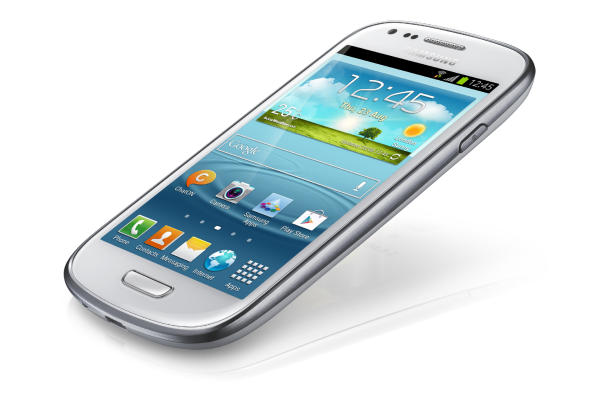
The compact version of the world’s best-selling Android phone, the Galaxy SIII, will be in shops a week today, and come with free games The Sims 3 and Bejewelled 2.
The Mini features a 4″ screen compared to the regular SIII’s 4.8” version. It also offers a dual core processor rather than the quad core in the main model.
Aimed at a more mid-range market, the device is expected to capitalise on Christmas upgrades, as well as appeal to those who find the larger screens of top Android phones too cumbersome.
Both the SIII and the SIII Mini have now been upgraded to the latest version of Android Jelly Bean (version 4.1), and changes to Gmail the search system Google Now announced earlier this week in version 4.2 can also be downloaded separately.
No news on the pricing yet though, but we expect it to be around the Rs 20,000/- mark.
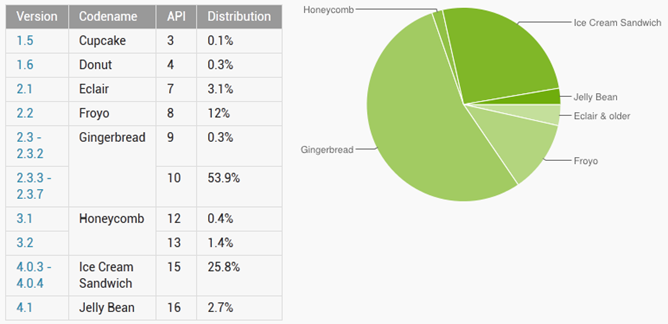
Google has once again released their numbers of where each Android OS version is sitting at. This month it’s OS 4.1 Jelly Bean that has seen a modest boost, now powering 2.7% of all Android devices and up 0.9% in the last month. Ice Cream Sandwich also rose a respectable 5.1% to 25.8%. Still making up the largest share is OS 2.3 Gingerbread with 54.2%, but a good sign is that it decreased in the last four weeks by 1.6%. In addition, Cupcake, Donut Eclair and Froyo have all falled in percentages and continue to make their way into the history books.
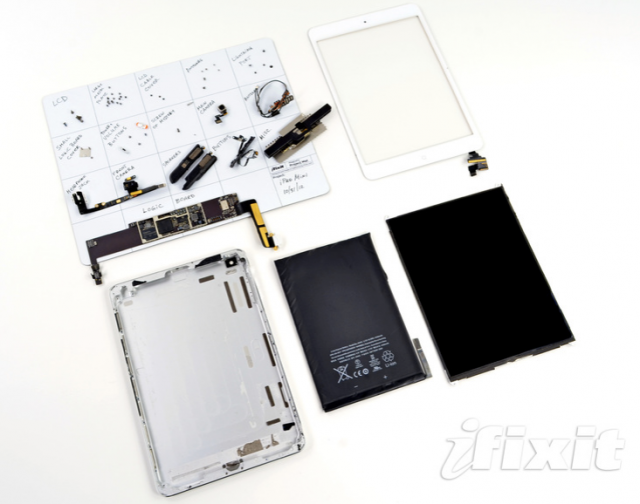
The iPad mini isn’t even officially on sale yet, but iFixit managed to get its hands on one to tear apart.
Like many of Apple’s other gadgets, the iPad mini isn’t very easy to open up and repair yourself. iFixit gives it a 2 out of 10 repairability rating.
A lot of the parts are familiar, coming from either the iPhone 5 or MacBook Air, and Samsung makes a somewhat surprising appearance as an LCD panel supplier, something some early reports suggested Samsung would not be involved in supplying this component for this device.
[quote]”Though the markings on the back of the LCD (display) don’t turn up much information, the Samsung display driver IC (chip) reveals that Apple, once again, went with Samsung in its display manufacturing,” iFixit said, detailing the teardown on its website.[/quote]
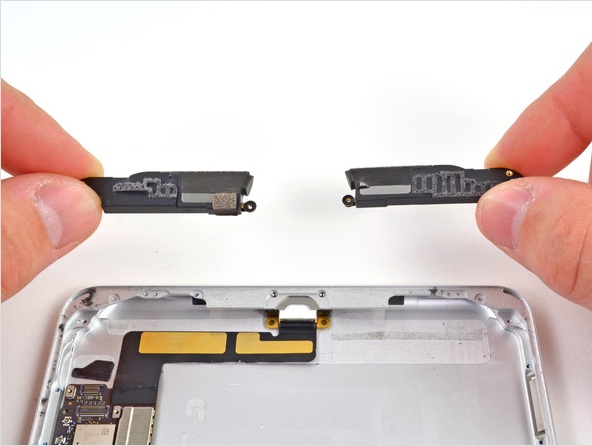
The iPad mini is the first Apple tablet to come with stereo speakers, likely owed to the space saved from the new Lightning port. This makes it more-than-likey the fifth generation iPad will sport a similar design. Judging from early reviews, the lack of physical speaker separation renders the addition largely superfluous — there’s no real dynamic range — but it’s still a welcome find.
Image Courtesy : iFixit
Unlike with the iPhone 5, the mini’s LCD and glass are not fused together into a single unit, so these parts can be replaced individually if needed. Also, the battery is also not soldered to the logic board here. Still, the battery and other parts like the front- and rear-facing cameras, front glass, and logic board are held together with “copious amounts of adhesive,” according to iFixit.
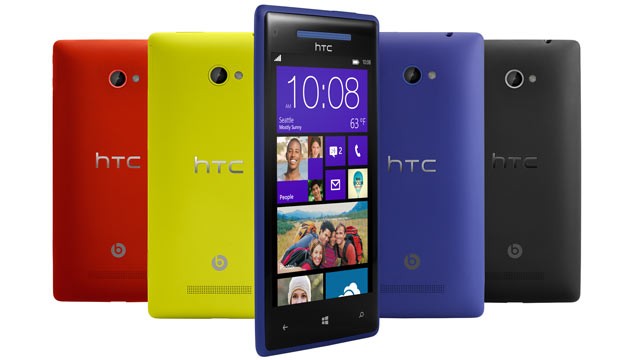
Windows Phone 8 devices from HTC, the 8X and 8S and the HTC One X Plus will be hitting Indian shores next week.
The pricing of the three devices have been revealed. The Windows Phone 8 powered 8X and the HTC One X Plus have been priced at Rs 37,000 whereas the 8S has been priced at Rs 20,000.
The 8X and the One X Plus are expected to launch before Diwali.
The HTC 8S comes with a Qualcomm S4 1 dual-core processor but this is clocked at 1Ghz.It has a total storage space of 16 GB, and has spaced for a Micro SD card slot to increase space. The RAM is less though, only 512 MB. It’s smaller phone though with a 4 inch Touchscreen with super LCD and WVGA resolution. Again it uses a Gorilla Glass screen. It has a 5 megapixel rear camera with auto focus and LED flash. The video camera allows video recording at 720p. There is no front camera though
Built using a 4.3 inch SuperLCD 2 display, with a true 720 pixel resolution, the HTC Windows Phone 8X comes protected with Gorilla Glass 2, which further enhances the durability of the device. The device is powered by a Qualcomm Snapdragon, 1.5 GHz dual-core Krait processor along with the Adreno 225 GPU and 1 GB of RAM.
The HTC Windows Phone 8X features an 8 megapixel camera with a Back Side Illumination sensor with an F/2.0 aperture and a wide 28mm field of view. In the front, there is another F/2.0 camera which is capable of doing 2.1 megapixel still shots as well. Both the cameras are capable of recording HD 1080p videos with stereo sound. It also has NFC functionality.
The One X Plus features a 4.7-inch display, a Tegra 3 1.7GHz quad-core processor, a 2100 mAh battery, an 8-megapixel camera and Android 4.1 Jelly Bean. And like all HTC phones, the One X+ will come preloaded with Beats Audio and its Sense 4+ user interface layered over Jelly Bean.
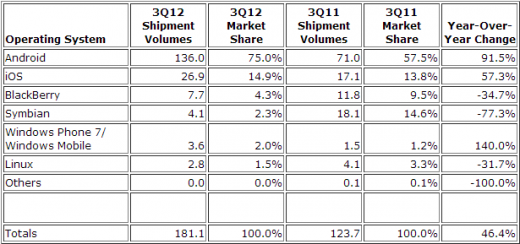
Smartphones running Google’s Android software have leapt to 75% share of worldwide smartphone shipments, according to market tracker IDC.
Google’s OS was present on 136 million devices shipped in Q3, up from 71 million a year ago, a boost of 91.5% year-over-year. Apart from RIM and Apple, most smartphone manufactures have produced a wide variety of handsets that run on Android.
Coming in a distant second was Apple’s iOS with 14.9% of the smartphone market. That is also impressive as Apple has only three phones in production, the iPhone 4, 4S and 5.
Top-end Androids like Samsung’s Galaxy S III (which is expected to sell 30 million this year) are holding their own against Apple’s iPhone.
Coming in 3rd place is RIM – who hasn’t come out with a new smartphone in over a year – and they captured 4.3% of the market, significantly dropping of 34.7% over last year. Hopefully RIM’s tune will change when they launch their new BB10 devices in early 2013.
Nokia’s Symbian squeaked in with 2.3% market share, meanwhile Microsoft’s Windows Mobile/Windows Phone rose 140% over the year to take hold of 2% of the market, but have failed to grab the buyers attention. This might shift with all their new WP8 handset coming out in a couple weeks.
Microsoft has finally released its long-awaited software development kit (SDK) for Windows Phone 8. It’s been a long time coming, but it makes sense since today is the first day of Microsoft’s BUILD conference in Redmond, Washington.
The SDK is described as an environment “for building apps and games for Windows Phone 8 and Windows Phone 7.5.” That’s pretty obvious but why 7.5? That’s the odd thing here.
It has a stand-alone Visual Studio Express 2012 edition. It can also work as an add-on to Visual Studio Express 2012 edition for Windows Phone or works as an add-in to Visual Studio 2012 Professional, Premium or Ultimate editions. Microsoft says the SDK also includes emulators and additional tools for profiling and testing a Windows Phone app under real-world conditions.
Requirements:
Hardware:
4 GB of free hard disk space
4 GB RAM
64-bit (x64) CPU
Windows Phone 8 Emulator:
Windows 8 Pro edition or greater
Requires a processor that supports Second Level Address Translation (SLAT)
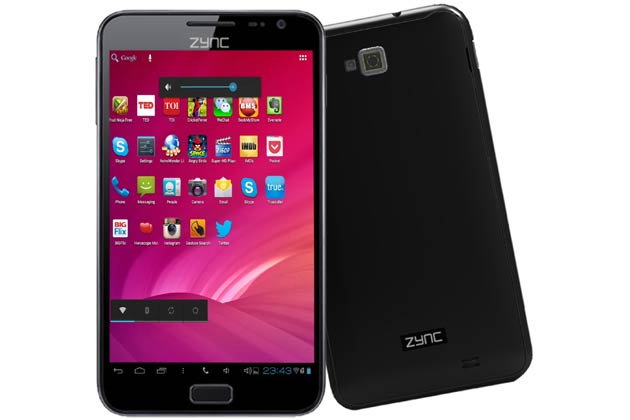
Zync has launched a dual-SIM Android phablet – Coud Z5 – which features a 5-inch capacitive multi-touch display with a 480×800 pixel resolution. It runs Android 4.0 Ice Cream Sandwich operating system.
The Zync Cloud Z5 is powered by a 1 GHz Single-Core processor and 512 MB RAM. The device comes with an internal memory of 4 GB and has a Support TF card up that allows for up to 32 GB expandable memory.
The dual SIM Phablet supports 3G, Wi-Fi, GPS, Bluetooth and FM radio as well. The device comes with an 8 MP camera with flash and auto focus and a 0.3 MP front Camera. The device is quite light in weight and weighs merely 190 gm.
The other features that the Phablet possesses are Ebook, Email, Messaging, VPN Services, Google search, Flash Player, Light Sensors, Documents to go, wallpapers, Calendar, Calculator, Clock, tethering & portable hotspot, etc. Zync claims that the phablet has a long battery life of 2500mAh which provides talk time up to 05 hrs.
The Zync Cloud Z5 is priced at Rs. 9,490 and is available for purchase through various online retailers.
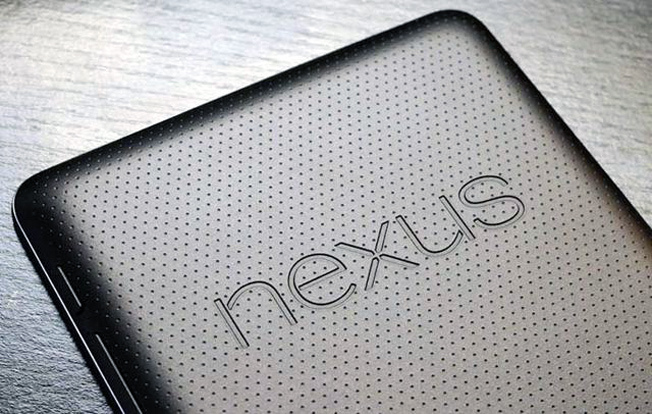
Sales of Google and Asustek’s Nexus 7 tablet have steadily increased since its launch, and are now near 1 million units per month.
Asustek Chief Financial Officer David Chang told The Wall Street Journal that Nexus 7 sales have grown from a start of about 500,000 units in the first month. In the latest month of sales, the number was “close to 1 million.”
[quote]David Chang said , “At the beginning, it was, for instance, 500K units a month, then maybe 600, 700K. This latest month, it was close to 1 million.”[/quote]
Even though Apple sold some 14 million iPad for this quarter, 3 million devices for the quarter is a pretty big number for Google’s tiny tablet. Asus also showed a 43 percent jump in net profits — $230 million compared to $160 million last year, says the report.
The Nexus 7 and Kindle Fire face stiff competition from Apple’s new 7.9-inch iPad mini, which will go on sale this Friday. The iPad mini has a starting price of $329, which places it at a premium over the $199 entry price of the Kindle Fire HD and Nexus 7.
Late Monday, Google also released an upgraded version of the Nexus 7. The $199 version now has 16GB space while there’s another 32GB version with 3G for $299. Wi-Fi only 32GB Nexus 7 will cost $249.
The original 8GB Nexus 7 has been discontinued. The new version runs pure Google Android OS version 4.2 aka Jelly Bean.
Advanced Micro Devices (AMD) is to release its first ARM-based chip in 2014.
The central processing units (CPUs) will power computer servers used to run websites and smartphone app services.
The US firm said the move would let it offer more energy efficient products.
It is significant because AMD – alongside Intel – has been one of the key forces behind the rival x86 chip architecture.
AMD added that it was also considering making ARM-based chips for consumer-targeted computers, but no decision had been made as yet.
The company follows in the steps of Dell and HP which have previously announced plans to build ARM-based servers.
The news is a coup for the British chip designer. Cambridge-based ARM designs and licenses its chip architectures but does not manufacture processors itself.
Its creations already dominate the smart device market, powering most tablets and smartphones. Licensees including Apple, Samsung, Qualcomm, and Nvidia.
AMD says internet-connected devices are likely to create more demand for ARM-based server chips
AMD said it already accounted for about 4-5% of the x86-based server market, but had responded to demand for “denser server clusters” in which more processors are packed into a smaller space, creating the need for chips that produce less heat and consume less energy.
“For the energy and space efficiency that the mega-data centres require ARM processors are always the best approach,” Suresh Gopalakrishnan, general manager of AMD’s server division, told the BBC.
He added that the shift towards smartphones and tablets had led to a rise in demand for such centres as consumers made use of remote computers to provide cloud-based services.
“People started with music and pictures, now you see firms offering 2GB blocks of storage for free,” said Mr Gopalakrishnan.
“A lot of data is being put into the cloud and served onto these tablets and smartphones, and the goal of these devices is to have the longest battery life possible so a lot of the processing gets done in the cloud and then gets sent over into the devices.”
AMD said it had held off offering an ARM-based product until now while it waited for the British firm to release a 64-bit, rather than 32-bit, design. 64-bit chips can make use of more random access memory (RAM) at once, helping make them faster at dealing with memory-intensive tasks.
Since ARM-based chips produce less heat Mr Gopalakrishnan said more could be placed on each “pizza-box-shaped” server rack unit. However, the trade-off is that at present each chip is a less powerful processor than x86-based products on the market.
As a result he said AMD would focus its new ARM products at servers used to power apps, host websites and carry out data analysis for business.
Servers used to stream video, offer cloud-based gaming, carry out facial recognition and other more complicated tasks would be best off using x86-based chips, he added, at least for the next few years.
The announcement comes during a period of upheaval at AMD. Earlier this month the company announced it was laying off 15% of its staff and warned its third-quarter sales would be weaker than Wall Street had expected.
The shift towards ARM will incur extra costs as it will have to pay a fee for the use of the British firm’s technology – it does not incur such a charge for its x86-based chips.
However, one industry watcher said the move was no surprise.
“The demand for low powered chips is going through the roof,” said Chris Green, principal technology analyst at consultants Davies Murphy Group Europe.
“AMD has traditionally offered powerful but power-hungry products and doesn’t have the in-house technology to design such chips.
“But manufacturing ARM-based processors for servers alone wouldn’t be cost effective – so I think they will use the server market to perfect the product and then release ARM-based processors for tablets, smartphones and ultralight laptops.”
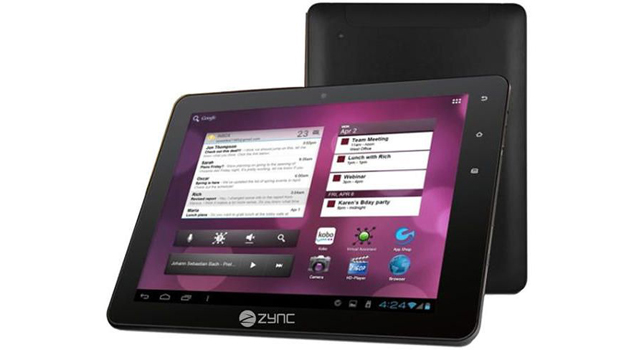
Zync has launched a new 9.7-inch tablet in the country for Rs. 10,990. Known as the Zync Z1000, the tablet is already available with online retailers like Snapdeal and HomeShop18.
The Zync Z1000 ships with Android 4.0 (upgradeable to Android 4.1 Jelly Bean) and features comes with a slim design sporting a 9.7 inch 5-point multi-touch capacitive HD IPS display with screen resolution of 1024 x 768.
The inbuilt 3G support and Wi-Fi along with other multi processing capabilities give the tablet an added advantage. The tablet comes with freebies worth Rs.1350 inside the box with add-on practical accessories like Lycra Pouch, Screen Protector, ear phones and a Big Flix 1 Month Subscription too.
Powered by a 1.5 GHz processor, the tablet runs on an ARM Cortex A8 processor coupled with 1 GB DDR3 RAM. The tablet has a front and rear camera both with 0.3 mp and 2.0 mp respectively. It has a SIM card slot and comes with 8 GB onboard memory which is expandable up to 32 GB. The Z-1000 has a 7000 mAh battery. The other features include an inbuilt 3G support with a Mini HDMI & a Micro USB Port, a TF card, , 3.5 mm Earphone Jack and a DC port.
The tablet also comes with a host of pre-installed applications including an Office Suite, Ibibo, BigFlix, Hungama and other social networking websites like Facebook. Zync is also offering a free Lycra sleeve pouch with every purchase.
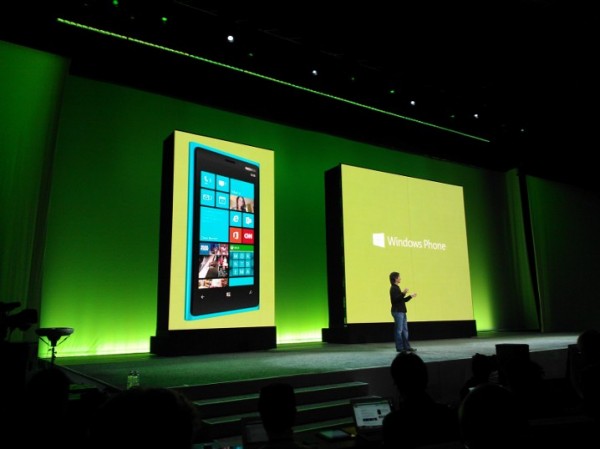
Microsoft lifted the veil on its latest Windows Phone 8 (WP8) operating system (OS) at an event in San Francisco today. Handsets from HTC, Samsung and Nokia will feature the new mobile OS. Huawei is expected to launch a device as well. Those living in Europe will be able to get the new WP8 handsets this weekend. Other markets, such as Asia, are expected to be able to buy the handsets in November.
“There’s one more thing that sets Windows Phones apart,” said CEO Steve Ballmer. “That is new, killer hardware.”
The flagship of the Windows Phone lineup is the Nokia 920, built out of a partnership between the two companies. It will be available in the U.S. in November.
Two other high-end smartphones, the Samsung Ativ S and HTC Windows Phone 8X, were previewed by CEO Steve Ballmer.
“The global launch of Windows Phone 8 is just starting,” said Ballmer.
The software presents a very different home screen from the rows of icons found on Apple or Android phones and is a key design feature of the operating system.
Its design uses the same active tiles found on Windows 8, Microsoft’s new PC operating system that launched Friday. The tiles are constantly changing with fresh information so, for example, a weather tile will update with the latest forecast while the email app will show the latest message received.
“The static grid of icons has been the standard on smartphones,” said Belfiore. “We decided not to use that tired old metaphor. Our way is to put people at the center of the experience.”
People users interact with can be given their own tiles so that the latest interactions on email or social media are updated.
“It’s the most personal smartphone operating system you can get and keeps you closer to the people that matter most in your life because of that,” he said.
New features include the speed of Internet Explorer 10 which it said was up to seven times faster than the version on WP7.5 at handling webpages based on the commonly used Javascript language. In addition it has been designed to make use of devices’ graphics processing units (GPUs) to render videos or animations written in the HTML5 computer language.
The firm also showed off Kid’s Corner – a function designed for parents who give their handsets to their children to play with. It allows them to restrict access to a limited number of apps without giving access to email, phone call or text message functions.
Microsoft said a survey had suggested about two-thirds of smartphone-owning parents in the US had used the handsets to occupy their children while out shopping, visiting friends or some other activity.
Another new feature is Rooms which allows users to create an invitation-only environment in which members share their calendars, notes, photos and other material. The firm suggested it might be used to help families, sports teams and other community groups stay “in sync”.
Microsoft also made much of an “always-on” Skype experience.
This addresses one of the major flaws with its previous mobile system which had not allowed the video chat program to run in the background. That had meant that users of iOS and Android phones had been able to receive calls while using other apps, but WP7.5 devices had not – a notable omission bearing in mind Microsoft paid $8.5bn (£13.7bn) to buy Skype in 2011.
Overall, it has been an interesting day with the WP8 launch and Google’s announcements! More to follow.
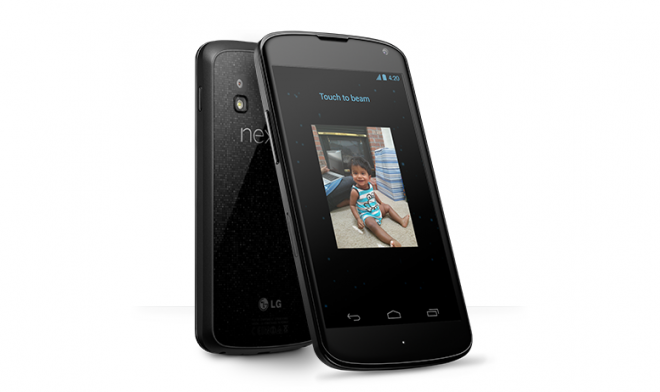
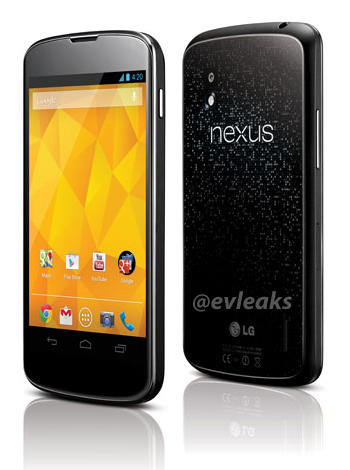
Google today announced the Google Nexus 4 Smartphone, the Google Nexus 10 Tablet and the 32 GB version of the Google Nexus 7 tablet.
The Google Nexus 4, the newest smartphone in the Nexus line-up from Google, was announced today for availability starting next month in select markets.
[quote]“LG is proud and excited to play this role in helping build the latest Nexus smart-phone,” said Dr. Jong-seok Park, President and CEO of LG Electronics Mobile Com-munications Company. “Users will be delighted by the perfectly balanced combination of form and function with the latest generation of Android.”[/quote]
The specs of the Google Nexus 4 include a 4.7-inch True HD IPS Plus display (1,280 x 768), an 8 megapixel rear camera, Gorilla Glass 2, a Qualcomm Snapdragon S4 Pro processor, 2GB of RAM and the latest rendition of Google Now. Turn-by-turn navigation via Google Maps is included, as are 3D Maps, Street View and Indoor Maps. The Nexus 4 will be sold unlocked, supporting some 200 carriers that play by the GSM / HSPA+ rules. It’ll be made available in both 8GB and 16GB versions starting November 13 in the US, UK, Canada, Germany, France, Spain and Australia, with pricing set for $299 (8GB) / $349 (16GB).
[quote]“This is the first time we collaborated with LG to build a Nexus device,” said Andy Ru-bin, Senior Vice President of Mobile and Digital Content at Google. “They brought an extraordinary amount of talent to the project, and the result is a feature-packed device that feels great in your hand, and blazingly fast under the hood.”[/quote]
[toggle_box title=”Press Release” width=”Width of toggle box”]
LG AND GOOGLE ANNOUNCE NEXUS 4
Sleek, New Smartphone Combines LG’s Best-in-Class Hardware with the Best of Google
SEOUL, Oct. 30, 2012 – Designed collaboratively by LG and Google, Nexus 4, the newest smartphone in the Nexus line-up from Google, was announced today for avail-ability starting next month in select markets. With a sophisticated hardware design from LG, your favorite Google Apps, and the latest version of Android™, Nexus 4 puts the best of Google in the palm of your hand.
“LG is proud and excited to play this role in helping build the latest Nexus smart-phone,” said Dr. Jong-seok Park, President and CEO of LG Electronics Mobile Com-munications Company. “Users will be delighted by the perfectly balanced combination of form and function with the latest generation of Android.”
“This is the first time we collaborated with LG to build a Nexus device,” said Andy Ru-bin, Senior Vice President of Mobile and Digital Content at Google. “They brought an extraordinary amount of talent to the project, and the result is a feature-packed device that feels great in your hand, and blazingly fast under the hood.”
Capture and share your world Nexus 4 comes with a high-performance 8MP camera and takes stunning Photo Sphere images, letting you capture every detail of the world around you. Up, down and all around you, it’s like no camera you’ve ever seen; with Nexus 4, you can snap pictures in every direction that come together into incredible, immersive Photo Spheres that put you right inside the scene. Plus, photos upload themselves with Instant Upload so you’ll never lose a shot.
All of this comes to life with stunning clarity and crisp, natural color on the vibrant 1280-by-768 4.7-inch True HD IPS Plus display supported by Zerogap Touch technol-ogy. Gently curved glass edges allow your finger to slide smoothly on and off the 320ppi screen, while cutting edge display technology means you feel like you’re touch-ing every pixel, protected by scratch resistant Corning? Gorilla? Glass 2.
Built for speed Nexus 4 comes with a cutting-edge Qualcomm Snapdragon™ S4 Pro processor, so you’ve got speed and power to spare. Zip around the web, experience rich 3D graphics and gameplay, and effortlessly switch between multiple apps without ever missing a beat. With 2GB of RAM and the fastest version of Android ever, Nexus 4 is the snappi-est Nexus smartphone yet.
Information at your fingertips Nexus 4 comes with the latest Google apps, putting the best of Google in the palm of your hand. The latest version of Google Now is built-in, which keeps you even more organized – get reminders about upcoming flights, restaurant reservations, hotel confir-mations and even nearby photo opportunities – when and where you need them.
Get to the places you care about quickly and easily with Google Maps™ for Android. With turn-by-turn GPS navigation, live traffic info, and integrated driving, walking and public transit directions, getting from A to B has never been easier. 3D Maps and rich satellite imagery give you a more realistic sense of what’s around you while features like Street View and Indoor Maps make sure you always know what’s in front of you.
Nexus 4 is sold unlocked and is GSM/HSPA+ compatible so it will operate on more than 200 network providers worldwide. Just pop in a supported SIM card and be up and running in no time. It will be available to purchase in both an 8GB version and a 16GB version on Google Play™ starting November 13 in the US, UK, Canada, Germany, France, Spain and Australia. Offline availability in Europe, Central/South Americas, Asia, CIS and the Middle East will begin from the end of November.
[/toggle_box]
Also, Google released the 32GB version of the Nexus 7 tablet, signalling an end to the 8GB version. The 16GB Google Nexus 7 has now taken center stage in Google’s Play Store, with $199 netting you a slate that’s currently boasting a “now shipping” status. Those willing to fork out $249 can get a 32GB model (also listed as “In Stock”), while $299 provides access to a GSM-enabled 32GB model that’ll hop onto cellular networks — unfortunately, that one’s listed as “coming soon.”
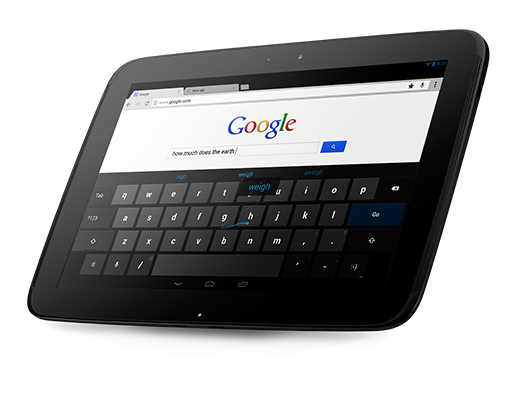
And last but not least, out comes the iPad rival from Google’s stable, the Google Nexus 10. The new tablet, built in collaboration with Samsung, has one big bragging point — the highest resolution display of any tablet on the market — a 2560 x 1600, 300ppi, 10-inch touchscreen. Google promises about 9 hours of continuous video playback and about 500 hours of standby time. Despite being a Nexus device, the new tablet picks up on the design language of the Galaxy Tab 10.1 and Galaxy Note 10.1. It features a pair of front-facing stereo speakers on either side of the display (when it’s held in a landscape orientation) plus an 8-megapixel rear camera and a 1.9-megapixel front camera for video chats. Under the hood, there’s a dual-core processor, 2GB of RAM and built-in NFC. It also gets a built-in micro-HDMI port.
Like the Nexus 4, the Google Nexus 10 will ship with Android 4.2 Jelly Bean. One new 4.2 feature Nexus 10 users may enjoy is the ability to have multiple user profiles on a single device. The Nexus 10 will ship on Nov. 13 at a price of $400 for 16GB of storage and $500 for 32GB.
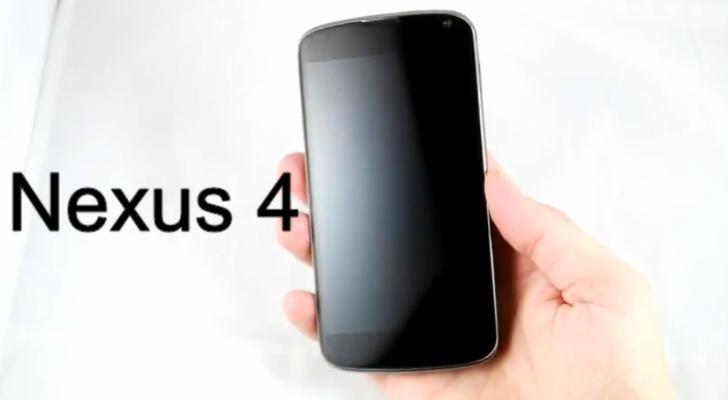
We were supposed to get a reveal of the LG Nexus 4 today, but thanks to the threat of Hurricane Sandy, that won’t be happening. Fortunately, the delay of Google’s Android event leaves more time for leaks, and today we’ve got a pretty big one to share with you. The folks over at Swedroid have posted an intriguing new video that not only gives us a look at the sleek Nexus 4, but also shows it running Android 4.2.
The device looks exactly like the pictures we’ve already seen, but the silver bezel seems to more prominent that I first thought. The new ‘pure Android’ runs OS 4.2 and the video length is 1:47. No word from Google on when the official launch date will be. Check it out below.
Over the weekend, yet another Nexus 4 leak emerged. This time, @evleaks showed off what is ostensibly going to be the new home screen of Android 4.2. While the overall look remains the same — some think this will still be called Jelly Bean — it shows off something very interesting.
On all other Nexus devices, Google has put four icons on the bottom dock in order of importance. Phone, then Contacts, then Messaging, then Browser. In Android 4.1, the Browser icon became Chrome for Android, but the order was the same. These are icons that stay with you regardless of what home page you’re on; these are the ones you’re likely tapping the most.
If the above render is accurate, Google has changed up this order for the first time since the Nexus One in 2010. On the left-most side now is Chrome, emphasizing the fantastic browsing abilities of the new device. Then we have Gmail, which was previously relegated to the Google folder. After that, another new icon in the dock: Camera. While the Galaxy Nexus didn’t have a great camera sensor, Google reworked the camera UI to make taking photos much enjoyable.
Lastly, we see the Phone icon, which still remains an important part of the show, but less so than ever. Judging from the informal surveys I’ve taken of smartphone users over the years, voice calls are decreasing in importance as users transition to text-based forms of communication. Data — and therefore browsing — have become paramount in the eyes of the average Android user. Email, too, has maintained its importance, and Android 4.2 is expected to improve the experience dramatically with a new Gmail app.
Now, this render could be totally bunk, or it could be that I’m reading way too much into this. But if it turns out to be true, Google is certainly making a statement about what it thinks is the future of smartphone usage. Or, it could just be a big, fat arbitrary coincidence.