Author: Shivaank Rana

  • Swiss Photographer Sues Apple Over the Use of Her Photo to Promote the Retina Display

    Swiss Photographer Sues Apple Over the Use of Her Photo to Promote the Retina Display

    Swiss photographer Sabine Liewald has filed suit against Apple in a US District Court in New York, alleging that Cupertino’s marketeers used one of her photos without her permission in its MacBook Pro with Retina Display flack attack.

    “Despite representing that it did not intend to use the photo and knowing that it had not obtained a license,” the lawsuit, filed this Wednesday, claims, “Apple proceeded to copy, publish, and exploit Plaintiff’s ‘Eye Closeup’ photograph, including in its MacBook Pro advertising campaign, keynote address, and related advertising materials without permission or compensation.”

    Liewald claims that when Apple approached her agency (Factory Downtown) to request a high-resolution version of the photo, the company had said the image would only be used for “layout purposes” (AKA “comping“) and not in any advertising campaign.

    The photographer was then surprised when Apple did exactly what it said it wouldn’t do. When the company’s keynote address was held last year to introduce the new portable computer, the photograph was featured prominently in the promotional images.

    In addition to statutory damages for copyright infringement, Liewald is also demanding “actual damages including defendant’s profits.” Apple is the most valuable company in the world, and its profit figures come with quite a few zeros; the photographer is going for serious money here.

    Via Peta Pixel

  • Rumour : Apple Rethinking Samsung Chip Partnership Amid Strained Relations

    Rumour : Apple Rethinking Samsung Chip Partnership Amid Strained Relations

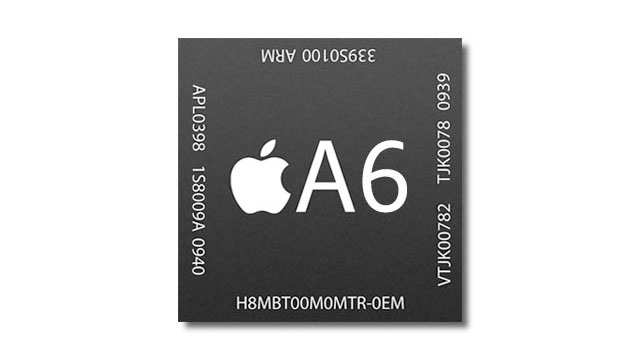
    New reports online are claiming that Apple is looking to move away from Samsung when it comes to the chips for its products by moving to processors provided by Taiwan Semiconductor Manufacturing Co. Ltd.

    Every single iOS device has had Samsung-produced processors. Reports says that TSMC will provide Apple with quad-core processors fit for future iPads, the long-rumored iTV, and MacBooks that will use a 20 nanometer processor over Samsung’s 32 nanometer processors. The rationale is that Apple has already verified TSMC’s 20nm chips in August and might begin production in November to prepare for devices in 2013. 

    As for iPhone processors, it is rumoured Apple will stick to dual-core processors for future models because of their “low-power consumption merit.”

    Apple’s reported efforts to marginalise Samsung comes following a long courtroom battle, which has left extremely bitter feelings on both sides of the Pacific Ocean.

    One industry source told CNET that the relationship between the two companies has effectively broken down and will result in the two companies parting ways at the end of existing agreements.

  • Apple Pays for Swiss Railway Clock Design

    Apple Pays for Swiss Railway Clock Design

    Apple may be willing to spend millions in court over some copyright fights, but it has learned the lessons of history and has decided not to mess with the Swiss.

    Last month, Switzerland’s railway operator SBB took Cupertino to task for stealing the design of its clock for iOS 6’s Clock app. Now the world’s favorite fondleslab manufacturer has agreed to pay up and license the design from SBB, rather than risk the wrath of the Swiss railways.

    The iPad Clock app, according to an SBB spokesperson, was “an unauthorized use by apple,” and thus they needed to work out a “legal and financial” resolution to the issue in order to prevent copyright infringement.  However, SBB later admitted that it was “rather proud that a brand as important as Apple is using our design,” to clarify that they weren’t simply taking money for the use of the design.  SBB already does in fact license the clock’s design to other companies, including the watchmaker Mondaine, so it can be assumed that Apple did pay to use the design.

    According to SBB, the railway clock, which was originally designed by Hans Hilfike in 1944 has become “a symbol of innovation and reliability.”

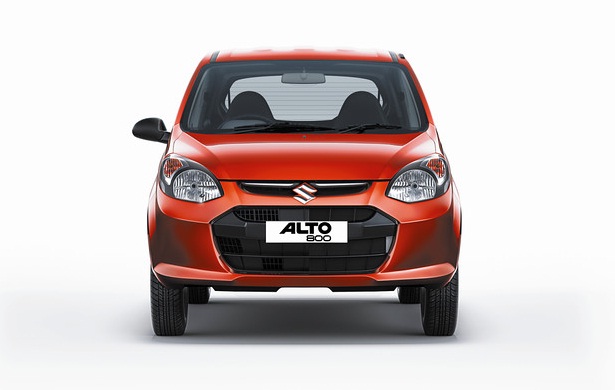
  • Maruti Alto 800 Crosses 6000 Pre-Launch Bookings

    Maruti Alto 800 Crosses 6000 Pre-Launch Bookings

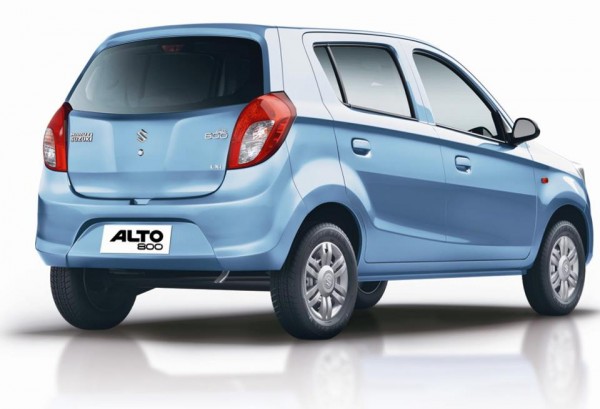
    Maruti Alto 800

    Maruti Suzuki has bagged 6000 pre-launch booking orders for the eagerly awaited Maruti Alto 800. Bookings for the small car have opened on October 1 after Maruti launched a web page (www.marutisuzukialto800.com/). On the site, those interested can complete all the details and pre-book the car, with deliveries expected to start during the Diwali holidays.

    Looking at the response, the company believes that 10,000 bookings before the car’s official launch is very much possible. 

    The new Maruti Alto 800 is more fuel efficient than the outgoing variant and has been developed at an investment of Rs 470 crores and is based on the same platform seen on the earlier Alto which was launched 12 years ago. The current model will offer fuel efficiency of 22.74 kmpl which is enhanced by 15% as compared to the previous model while it will sport improved gear shift and additional space in rear passenger cabin. Once launched, MSIL hopes to have a production schedule of 800 cars per day.

  • Asus PadFone 2 Details Revealed, Sports a 4.7-inch display

    Asus PadFone 2 Details Revealed, Sports a 4.7-inch display

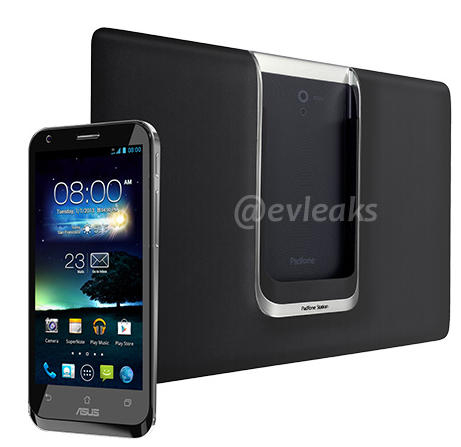
    The details of the Asus Padfone 2 smartphone, which is set to be showcased in an event in Italy next week, have been revealed online. Running on a quad-core Qualcomm Snapdragon processor, the Padfone2 sports a 4.7-inch IPS 720p HD display.

    Asus has provided the next iteration of the smartphone-tablet combo with a 4.7-inch Super IPS+ HD display, supporting a 1280×720 pixel resolution. The Padfone 2 will sport a massive 10.1-inch display while powered by a 1.5 GHz quad-core Qualcomm Snapdragon S4 Pro APQ8064 processor supported by 2GB RAM. The device is powered by a 2140 mAh battery.

    It also comes equipped with a whopping 13MP rear-facing camera, which Bloomberg assures us can take some “phenomenal” pictures. It’s hard to tell the quality of the images from watching the video, but it’s pretty easy to imagine how good pictures look when snapped with a 13MP camera.

    The folks at Bloomberg were luckily enough to briefly go hands-on with the device in an interview with ASUS chief Jerry Shen, and were kind enough to put video of the encounter up on YouTube for the entire world to see.

  • Pinch-to-Zoom, Swipe To Delete Features Coming To Gmail for Android

    Pinch-to-Zoom, Swipe To Delete Features Coming To Gmail for Android

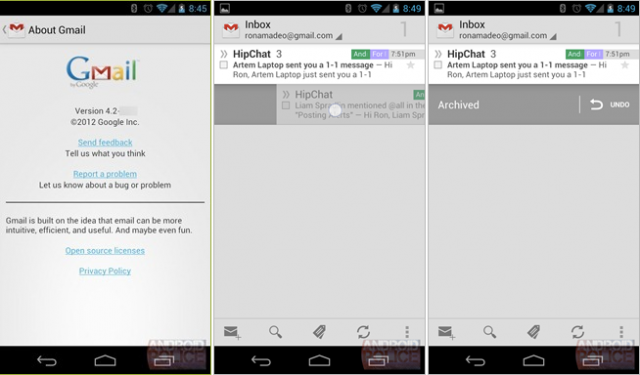
    We have some exciting news for long-suffering Android users patiently waiting for a feature that arguably should have been included since the beginning. Google is set to add pinch-to-zoom to its next version of Gmail, presumably to be added to the final build of Android 4.2 when the Nexus 4 launches next month.

    AndroidPolice obtained exclusive access to the .APK file, which seems to work without issue on Android 4.1 Jelly Bean. Besides the obvious improvements, Google has added some subtle things such as swipe right to archive/delete, as well as reporting phishing from inside the app.

    Even more features are said to be on their way, including the ability to swipe an email in the inbox view left or right to either archive or delete, always delete, or do nothing when in the All Mail or Sent views.

    We imagine the “archive or delete” option will hit you with a prompt asking you which one you want to do. You’ll also be able to do this for labels. Performing the gesture on “regular labels” will remove that label.

    Finally, a new “Report Phishing” feature has been added. Google probably wanted to give users a way to report the far more serious problem of phishing instead of the more generalized spam. This should hopefully allow them to bust these malicious emails more effectively and efficiently.

    You can check out a preview video after the break. Android Police says it’s working on obtaining permission to release the .APK to rooted Android users running Jelly Bean, but we’re sure other copies will crop up in the near future.

  • iPhone 5 Passes Samsung Galaxy S III in Web Traffic

    iPhone 5 Passes Samsung Galaxy S III in Web Traffic

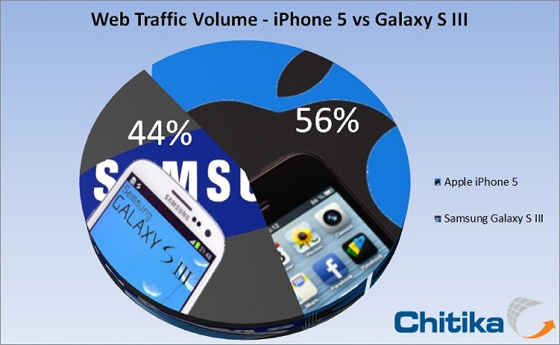
    The new iPhone 5 has topped the Samsung Galaxy S III’s Web traffic in just 18 days, according to stats from mobile ad firm Chitika.

    Chitika based its findings on millions of mobile ad impressions from the iPhone 5 and Galaxy S III across its U.S. and Canadian network between Oct. 3-9. By Oct. 9, about 56 percent of impressions were from Apple’s new smartphone, while 44 percent were from the Galaxy S III.

    [quote]Following the release of Apple’s iPhone 5 on September 21st, Chitika Insights was interested in comparing the Web usage rates of the newest phones from both manufacturers. To quantify our latest study, we conducted a user agent analysis on millions of mobile ad impressions, spanning a 7-day time frame from October 3rd through October 9th, 2012. Looking solely at impressions coming from the iPhone 5 and Galaxy S III, we were able to observe the difference in Web traffic volume between the two devices, depicted in the figure above.[/quote]

    Earlier this month, mobile-app analytics firm revealed that Galaxy S3 sales are growing. When the iPhone 5 was announced last month, Galaxy S3 sales grew by 15 percent. At the end of September, sales growth was at 9 percent.

  • Google Brings Free SMS on Gmail in India

    Google Brings Free SMS on Gmail in India

    Google has extended its free SMS chat service to India, whereby users can send text messages to mobile phones via Gmail Chat.

    [quote]”You can send SMS messages to your contacts’ mobile phones using Gmail Chat … Google does not charge for using this service,” according to information available with Google’s website.[/quote]

    The SMS service is available in India and 51 other countries in Asia, Africa and North America.

    According to the feature, people using either chat programmes ( GTalk, or Gmail chat ) can send texts to mobile users for free and cell phone subscribers can reply at regular SMS rates.

    To ensure maximum coverage, the company has tied up with mobile service providers Aircel, Idea, Loop Mobile, MTS, Reliance, Tata DoCoMo, Tata Indicom and Vodafone in a few cities, including Delhi, Mumbai and Kolkata.

    The service starts with 50 SMS credits for each user, every sent SMS costing one credit. Every reply received adds on 5 credits subject to the maximum level being 50 SMS at any given time. There is no official statement from Google on the launch of this service, however the service has gone live this evening in the chat windows of many users. 

    But don’t stress if you run out. “In case the SMS credit goes down to zero, it will increase automatically to one text after 24 hours. Keep in mind that if you’d like a higher message credit, you can always send an SMS to your own phone, and then reply to that message multiple times. Every time you reply, your SMS credit is increased by five. Effectively, you’re buying more messages by paying your phone company for these outgoing messages,” says Google in an explanatory post on its website.

  • Royal Enfield Thunderbird 500 Launched For INR 1.8 lakh

    Royal Enfield Thunderbird 500 Launched For INR 1.8 lakh

    Royal Enfield, the maker of iconic motorcycle Bullet, launched its next generation Thunderbird (500 & 350) cruiser motorcycles, as well as a range of accessories in Mumbai on Wednesday.

    Developed on an all-new platform, the new Thunderbird 500 is priced at Rs 1,82,571. The Bullet-maker will also be rolling out a range of accessories.

    [quote]By next year, the company plans to increase it two-wheeler capacities by 50% to 1,50,000 bikes a year. “Eicher is currently selling 1000 units of Thunderbird 350 in a month. The waiting period for other bikes will lower as we grow production by 2013,” Lal added.[/quote]

    Furthermore, he said that the company’s new plant will be ready in three months and will keep adding capacities. 
     
    The new Thunderbird, which is targeted at highway cruising motorists, is priced at Rs 1,82,571 (on road Mumbai for the 500 cc) and Rs 1,43,346 (350 cc). According to a PTI report, the company has dropped its plans to launch a diesel variant of the aforementioned model.
     
    Moreover, it is also important to note that the company’s new launch comes at a time when the September sales figures for in the country rose by a staggering 19%.
  • Karbonn Announces New Android Devices

    Karbonn Announces New Android Devices

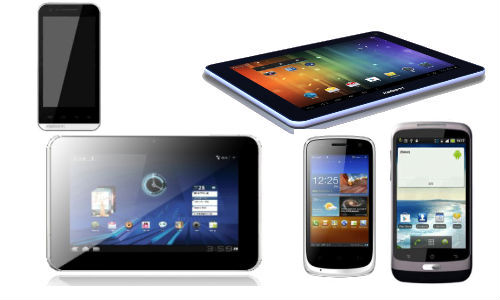
    Indian handset maker Karbonn has announced the launch of two new tablets, and three dual-sim smartphones in its portfolio. Part of Karbonn Smart series, these tablets will join company’s Jelly Bean tablet Smart Tab 1 and have been priced at Rs. 5,990 and Rs. 7,990 respectively, while the smartphones are Karbonn Smart A11, A7+ and A1+.

    Karbonn Smart Tab 3 (Blade), is loaded with Android 4.0 (Ice Cream Sandwich) running on a 1.2GHz processor, and features a 7.1-inch capacitive touchscreen. Powered by a 2,600mAh battery, the tablet features 3D gravity sensor, Wi-Fi and 3G support through USB dongle. The Karbonn Smart Tab 3 comes with 1.3MP front camera and various pre-installed applications like Karbonn Smart Browser and Karbonn Smart games. 

    Karbonn Smart Tab 9 (Marvel),  is loaded with Android 4.0 (Ice Cream Sandwich) and features a 9-inch capacitive touchscreen. The new tablet is powered by a 1.2GHz processor and runs on a 4,000mAh marathon battery. It features 3D gravity sensor, Wi-Fi and 3G support via USB dongle, comes with a 1.3MP front camera and pre-embedded apps like Karbonn Smart Browser and Karbonn Smart games. 

    The A 11 is a dual-sim Android 4.0 (Ice Cream Sandwich) smartphone that boasts of a 4-inch display, 1GHz processor, 1,500mAh battery, and support for up to 32GB microSD card. The new smartphone, costing Rs 9,990, also features a 5MP rear snapper with LED flash, along with a 1.3MP front camera. 

    Karbonn A7+ and A1+ are the two other dual-sim smartphones launched by the company in India, priced at Rs 8,990 and 4,990, respectively. Both phones have 1GHz processors, 3.5-inch touchscreens, video calling front cameras, 3G support, Wi-Fi, Bluetooth and microSD card support up to 32GB. The Karbonn A7+ has a 5MP primary camera wih dual LED flash and a 1,420mAh, while the Karbonn A1+ comes with a 3MP camera without flash and 1,500mAh battery.

     
  • Scratches and Blemishes Behind iPhone 5 Supply Issues

    Scratches and Blemishes Behind iPhone 5 Supply Issues

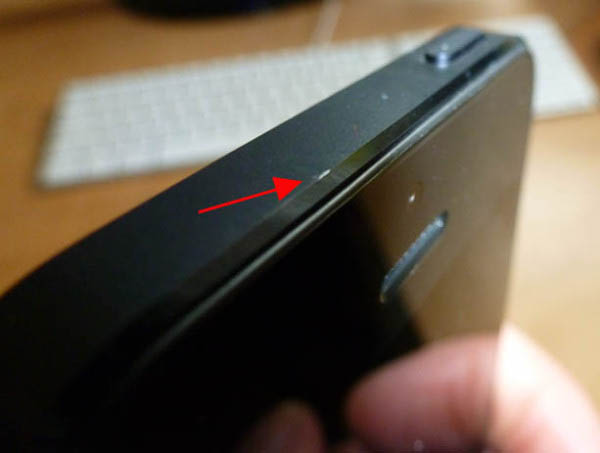
    Apple’s iPhone 5 supply shortfall is being exacerbated by a quality-control crackdown at Foxconn Technology Group that’s designed to cut the number of devices shipped with nicks and scratches, according to a source familiar with the matter.

    The scrapes, which sparked complaints with the iPhone’s debut last month, are due to Apple’s decision to use a type of aluminum that helps make the smartphone thinner and lighter. Senior Apple managers told executives at Foxconn near the end of September to tighten production standards, said the source, who asked not to be named because the matter was private.

    Stricter benchmarks have hampered production of the iPhone 5’s anodized aluminum housings, forcing Foxconn’s Hon Hai Precision Industry to idle factories, the source said. The slowdown is heightening supply concerns that have cost Apple about $US60 billion in market value since the iPhone debut – a shortcoming of the drive to imbue products with qualities that make them alluring yet more difficult to manufacture.

    The iPhone 5’s sleek design and aluminium body are causing production issues at Apple’s factory.

    “The iPhone 5 is not easy to put together because it’s a minimalist design,” said Shaw Wu, an analyst at Sterne, Agee & Leach Inc. “Apple has a very high standard, where it aims to produce each model to be an exact replica where variance is measured in microns.”

    While Apple sold a record 5 million iPhone 5s the first weekend the device was on sale, the tally would have been higher if not for supply constraints, the company said. Apple shares have declined 8.7 per cent since a record close on September 19, two days before the new iPhone went on sale.

    Easily scratched

    Analysts at RBC Capital Markets have cut their forecast for iPhone 5 sales for the December quarter, partly due to a dearth of components. The analysts project sales of 49 million units, compared with 57 million before.

    Apple, based in Cupertino, California, designs its products in the US and relies on Foxconn and other contract manufacturers to make them.

    Steve Dowling, a spokesman for Apple, declined to comment. Louis Woo, a spokesman for Foxconn Technology Group, whose units include Hon Hai Precision Industry, assembler of the device, and Foxconn Technology Co., a maker of the aluminum housings, denied that any factories were idled and declined to comment on the companies’ customers.

    Every step in the iPhone 5 production process, from the manufacturing of the aluminum housing to final assembly, offers opportunities to scratch the soft metal exterior, making it difficult to produce enough of the devices that can meet the new standards, according to workers interviewed by Bloomberg.

    ‘Normal’ chipping

    Professional reviewers had mostly positive responses to the iPhone 5, though a few had faulted its mapping application. Some consumers swiftly drew attention to scratches on the phone even before it was unpacked.

    “As soon as I opened the box, I noticed nicks and scuffs in the bezel,” Matthew Pendergraff, wrote on a discussion board on Apple’s website on September 21, when iPhone 5 went on sale. “I realise that at some point this might happen from normal wear and tear, but right out of the box is unaccepted.”

    An unofficial response from Apple came four days later, in the form of an e-mail from a senior executive to another customer who complained, according to Apple-focused website 9to5Mac.com.

    “Any aluminum product may scratch or chip with use, exposing its natural silver color,” Phil Schiller, Apple’s senior vice president for global marketing, wrote in the note, posted by 9to5Mac.com. “That is normal.”

    Metal finish

    Within days, Apple executives were expressing their displeasure to Foxconn, according to the source familiar with communications between the two companies.

    The clash between quality and quantity in iPhone 5 output is felt acutely at Foxconn Technology Co., a smaller unit of Terry Gou’s manufacturing empire and the major producer of the housings made out of what Apple calls “anodised 6000 series aluminum,” the same material used in its notebooks.

    Anodising involves dipping the aluminum into a bath of chemicals and running an electric current through it, which helps to protect the metal against corrosion and makes it easier to adhere color. Scratches on the iPhone 5 are more noticeable because of the contrast between the outer color and underlying metal. The glass casing of the iPhone 4 and iPhone 4S made it less prone to scratches, though it was susceptible to cracks.

    “It’s a trade-off because aluminum is strong and tougher to break, and it’s light and more economical, yet it is also easier to scratch,” said Jacob Huang, a professor of materials engineering at National Sun Yat-Sen University in Kaohsiung, Taiwan. “You could use magnesium, which is lighter, but even softer and easier to scratch, or glass which is heavier but harder yet more brittle.”

    Tighter standards

    As Foxconn Technology Co. tightened quality standards, fewer metal housings passed muster. That’s meant a shortage of parts in the warehouses of Hon Hai, which assembles the device and had to halt production for a day at one of its factories in Shenzhen on October 6, according to the source with knowledge of the situation.

    C.K. Liu, a spokesman for Taipei-listed Foxconn Technology Co., said production continues and is increasing at its factories. He declined to comment on specific customers.

    For those working on assembly lines with enough anodised aluminum housings for production, the pressure has intensified, because the iPhone 5 is more delicate and easier to scratch during the assembly process, said five factory workers interviewed by Bloomberg News outside the Zhengzhou plant. They spoke on condition that their full names not be used.

    Factory dispute

    The employees said high demand for the phone, along with the difficulty of avoiding mistakes, has put them under greater pressure now than when they worked on earlier versions, such as the glass-encased iPhone 4.

    The pressure and stricter guidelines enforced by quality assurance personnel fueled a dispute at the Zhengzhou factory between employees, according to workers at the site who were interviewed by Bloomberg News. China Labor Watch highlighted the incident in a press release, saying as many as 4000 walked off the job in protest.

    Foxconn denied on October 6 that the incident occurred and said there was no strike and no production was halted.

    The production hurdles, including labor and materials supply, add to challenges facing Apple chief executive officer Tim Cook as he seeks to keep up with customer demand. The handset is Apple’s top-selling product, accounting for about two-thirds of its profits.

    Operation challenges

    Apple’s supply chain has largely been developed by Cook, who earned the trust of co-founder Steve Jobs by managing the hundreds of suppliers who provide the components needed to manufacturer the company’s iPhone, iPad, iPod and Mac lines.

    With Cook taking over as CEO, responsibility falls to Jeff Williams, Apple’s senior vice president for operations. A former IBM engineer, Williams joined Apple in 1998, around the same time as Cook, and is the executive in charge of ensuring suppliers meet Apple’s quality standards.

    While the stricter requirements and assembly disruptions affect output, Foxconn and Apple are well-experienced in dealing with such challenges, said Jeff Pu, a Taipei-based analyst at Fubon Financial Holding Co.

    “These stricter standards would lower the yield on good products being shipped out,” Pu said. “They’ll handle it by increasing labor and machinery, and Apple may even use its cash to buy new equipment to assist Foxconn.”

    [Sydney Morning Herald]

  • Sony Launches 84-inch Bravia TV, Personal 3D Viewer, A99 Camera Amidst Other Things

    Sony Launches 84-inch Bravia TV, Personal 3D Viewer, A99 Camera Amidst Other Things


    At an event here in New Delhi, Sony India launched  products cutting across product categories such as Television, Digital Imaging and IT products, during this festive season in the Indian market. 

    [quote]Extending warm festive greetings, Mr. Kenichiro Hibi, Managing Director, Sony India, said, “Diwali is one of the biggest and most celebrated festivals in India and Sony plans to make this Diwali even bigger and brighter. We are pleased to offer our customers a premium collection of innovative products, that would enrich their experience to a whole new level, and festive offers that will cater to their distinct preferences in a country as diverse as India. This festive season with our revolutionary product portfolio and compelling offers, we are confident of achieving 50% increase over our last year’s festive season sales, taking it to Rs. 2,850 crores (Sep – Nov ’12 period) this year”.[/quote]

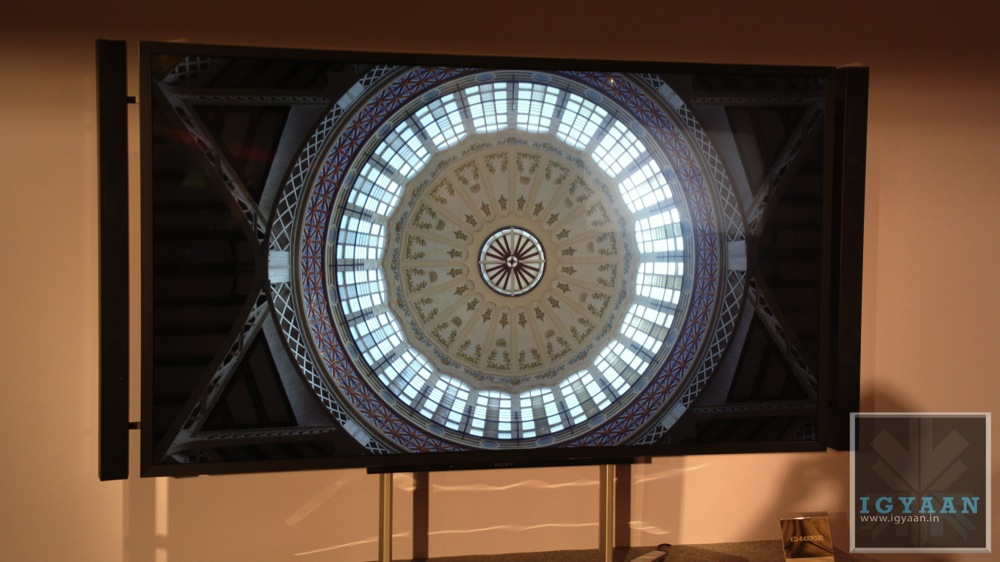
    The biggest attraction (pun intended) was the BRAVIA KD-84X9000. Sony launched India’s first ever 4K technology enabled 84” 4K BRAVIA LCD TV. This TV is equipped with 4K resolution which gives four times the resolution of Full HD, so customers can see the world reproduced in a way impossible for traditional TVs.

    Its “4K X-Reality PRO” Picture Engine is capable of up-scaling any HD content to 4K, so customers can seamlessly enjoy up-scaled 2K content at any time. It has a 10 unit Live Speaker side speaker system built into a rigid aluminium speaker housing, thus delivering powerful, three-dimensional sound from a TV contributing to the ultimate, immersive viewing experience.  The TV is priced at Rs 16,99,900 and will be available by the end of November.

     Next in line was the Personal 3D Viewer HMZ-T2 which was showcased at IFA earlier this year! The all-new Personal 3D Viewer from Sony is a head-mounted, High Definition 2D and 3D personal display with virtual 5.1 surround sound. It has two OLED screens for each eye, which eliminates crosstalk, making it ideal for both film enthusiasts and solid gamers.  The HMZ-T2 is priced at Rs 69,990.

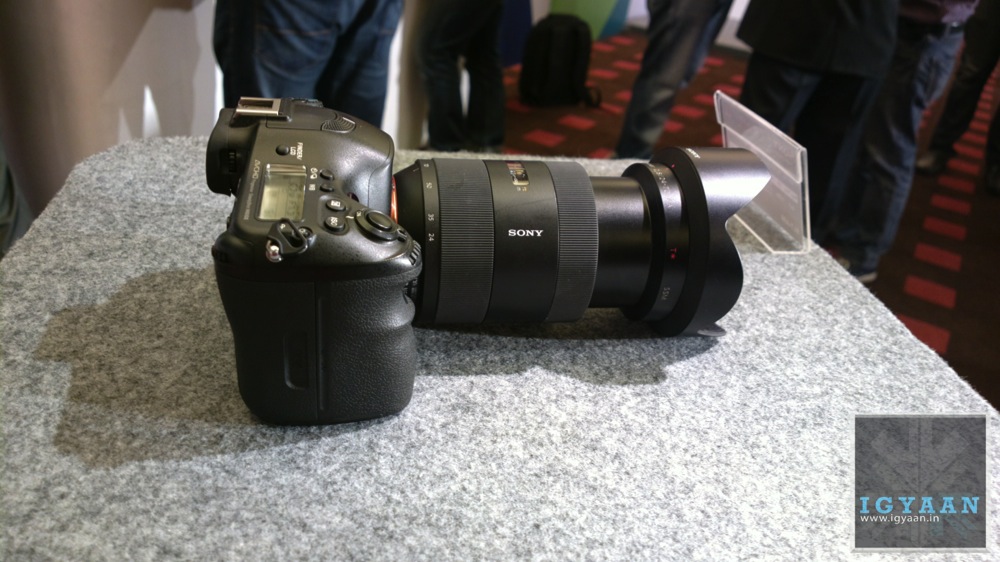
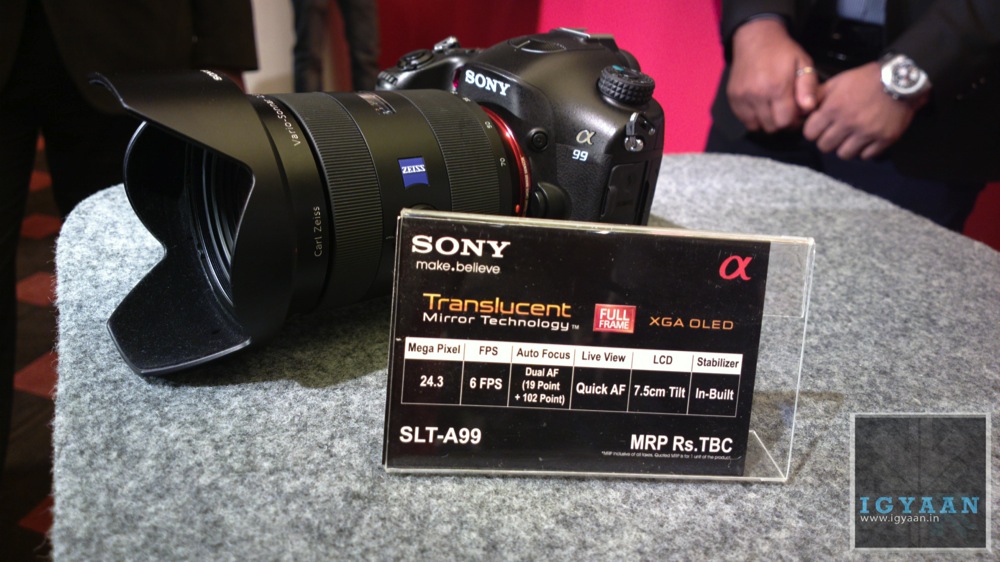
    Our favourite product was the ?99 Full-Frame DSLR camera, its flagship model. With Translucent Mirror Technology and newly developed 24.3 effective megapixel full-frame Exmor CMOS sensor, customers can enjoy crisp, sharp and perfectly-focused images.

    It also features the world’s first Dual AF system and by maximizing the strength of both the sensors, it vastly improves subject tracking performance as well as focussing precision. It also has other benefits such as quick and continuous focus in full HD video shooting and quick shooting while using live view screen in this camera and with its professional sound quality system, users can achieve versatile, high-quality sound expression that is suitable for full-frame movie quality. At around Rs 1,80,000, the Alpha 99 will be among the select full-frame options available in the market along with the Nikon D600.

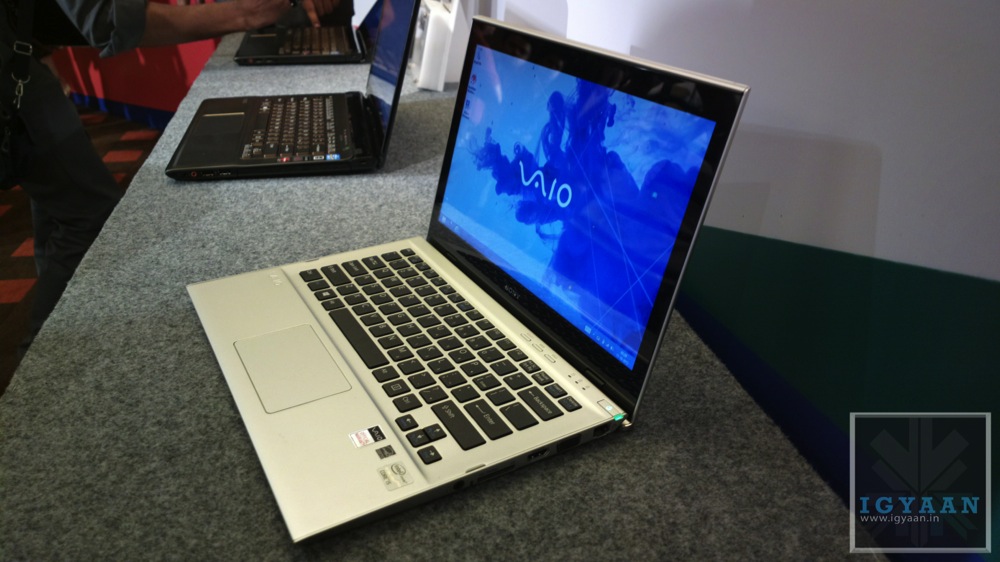
    The VAIO  ultrabooks also witnesses an up-gradation to Windows 8 with the launch of touch-screen enabled VAIO models namely, VAIO E14P Series and Ultrabook, VAIO T Series. 

    Check out the Press Release below : 


    [toggle_box title=”Press Release” width=”Width of toggle box”]

    Sony introduces new and innovative products this festive season


    Sony launches India’s first-ever, the biggest screen size 84” BRAVIA 4K LCD TV,  the first ever Personal 3D Viewer – Head Mounted Display HMZ-T2, the first touch-screen VAIO with Windows 8, the new flagship Full-Frame ?99 interchangeable lens camera and Cyber-shot RX100, the professional compact camera with big sensor


    New Delhi, October 11th, 2012: Sony India launches never-seen-before innovative products cutting across product categories such as Television, Digital Imaging and IT products, during this festive season in the Indian market. India, one of the fast growing markets for Sony, currently stands at 6th position in contribution to global sales and plans to gain the 5th position by end of Financial Year 2012 (1st Apr ‘12 – 31st Mar ‘13). Living up to the brand equity that Sony enjoys in India, it is indeed important for Sony to launch its most innovative products in this market. Hence, Sony is pleased to announce the launch of a very premium product gamut, as below:


    • BRAVIA KD-84X9000: Sony launches India’s first ever 4K technology enabled 84” 4K BRAVIA LCD TV. This TV is equipped with 4K resolution which gives four times the resolution of Full HD, so customers can see the world reproduced in a way impossible for traditional TVs. Its “4K X-Reality PRO” Picture Engine is capable of up-scaling any HD content to 4K, so customers can seamlessly enjoy up-scaled 2K content at any time. It has a “10 unit Live Speaker” side speaker system built into a rigid aluminium speaker housing, thus delivering powerful, three-dimensional sound from a TV contributing to the ultimate, immersive viewing experience. 


    • Personal 3D Viewer HMZ-T2: Empowering the company’s strong lineage of device technology and innovation, the all-new Personal 3D Viewer from Sony is a head-mounted, High Definition 2D and 3D personal display with virtual 5.1 surround sound, now even more light and comfortable. It is indisputably, the best 3D experience in the world with two OLED screens for each eye, which eliminates crosstalk, making it ideal for both film enthusiasts and solid gamers.


    • ?99: Sony India introduces the next generation of DSLR camera, Full-Frame ?99, its flagship model. With Translucent Mirror Technology and newly developed 24.3 effective megapixel full-frame Exmor CMOS sensor, customers can enjoy crisp, sharp and perfectly-focused images. It also features the world’s first Dual AF system and by maximizing the strength of both the sensors, it vastly improves subject tracking performance as well as focussing precision. It also has other benefits such as quick and continuous focus in full HD video shooting and quick shooting while using live view screen in this camera and with its professional sound quality system, users can achieve versatile, high-quality sound expression that is suitable for full-frame movie quality.


    • DSC-RX100: At the heart of the Cyber-shot RX100 is the world’s first 1.0-type Exmor CMOS sensor with a resolution of 20.2 effective megapixels. DSC RX100’s sensor has an area that’s around four times larger than the 1/2.3-type imager in regular point-and-shoot cameras. Capturing far more light than small-sensor cameras, it’s the key to beautiful, detail- packed images and Full HD movie clips with very low noise.


    • VAIO with Touch-screen: VAIO witnesses an up-gradation to Windows 8 with the launch of touch-screen enabled VAIO models namely, VAIO E14P Series and Ultrabook, VAIO T Series.


    On top of this, Sony India with the integration of Sony Mobile, is now enjoying the success of its recently launched Sony Xperia Smartphone, Tipo. Sony’s first Sub-10k price product in the Indian market, Tipo is available in single-sim and dual-sim version at the price of Rs. 9,999 and Rs. 10,449 respectively.


    With reference to the performance of Sony’s key product categories, BRAVIA, Cyber-shot and VAIO, in the First Quarter of FY12, Sony has achieved quite a significant position in each of them. BRAVIA, with 27.4% market share in Value (as per GFK) and Cyber-shot, with 47% share in Value (as per Import Data) have achieved No. 1 market share in the Flat Panel TV and Compact Camera Market in India. Even VAIO has obtained high market share in the consumer PC segment, with an overwhelmingly strong brand image among customers in India.


    Elaborating on the BRAVIA TV line-up; this year, Sony launches BRAVIA TVs powered with new picture settings.  It means that BRAVIA TVs are now exclusively designed to cater to versatile demands and preferences of Indian customers for brighter displays and sharper contrast. Last year, Sony engineers personally met a large number of Indian customers to precisely understand their preference in terms of picture quality. As a result, Sony developed new picture settings, which means the brightness and vividness in the BRAVIA TVs is in tune with the taste of the audience in India. This new BRAVIA line-up, which is already available in the market, has been very well accepted in India and Sony is witnessing robust sales since the launch.


    In Cyber-shot range, Sony offers the widest variety of compact cameras in the High Zoom range. Sony realized that there has been significant demand for High Zoom in the compact camera segment and now boasts of a very wide product range to cater to this demand. Worth mentioning here, is the launch of Cyber-shot DSC-H100, which again, has been designed as per the taste of Indian customers.  Post customer feedback, Sony came up with this product which offers very powerful zoom of 21X in a premium design, with an attractive price point of Rs. 12,990. Not only this, Sony launched Cyber-shot DSC-WX150, which combines high zoom in a compact design, thereby offering a much more value-added product to the customers. Sony expects high sales for this particular model during the festive season.


    Moving on to Sony’s marketing initiative for the festive season, Sony has tied-up with Sony Pictures Entertainment for the much awaited James Bond action thriller – Skyfall. The James Bond franchise holds tremendous popularity and power in the Indian market, and with this association, Sony is sure to gain a higher mind share during the festive season. To build on the excitement, Sony introduces an extravagant Lucky Draw for its consumers, namely, ’This Diwali Bond with Sony’. On purchase of Sony products, customers can participate in the lucky draw and stand to win more than 1,800 prizes including 55” BRAVIA TV, the latest personal 3D Viewer, XPERIA™ TABLET and XPERIA™ SMARTPHONE, Tipo.


    Extending warm festive greetings, Mr. Kenichiro Hibi, Managing Director, Sony India, said, “Diwali is one of the biggest and most celebrated festivals in India and Sony plans to make this Diwali even bigger and brighter. We are pleased to offer our customers a premium collection of innovative products, that would enrich their experience to a whole new level, and festive offers that will cater to their distinct preferences in a country as diverse as India. This festive season with our revolutionary product portfolio and compelling offers, we are confident of achieving 50% increase over our last year’s festive season sales, taking it to Rs. 2,850 crores (Sep – Nov ’12 period) this year”.


    Sony will also have a 360 degree multi-media campaign for BRAVIA, Cyber-shot, Xperia Tipo and Handycam. This will include ATL & BTL activities such as print and television commercial, cinema, outdoor, Web and PR activities. Sony has allocated marketing budget of Rs. 150 crore during October – November period towards the same.


    About Sony India Pvt. Ltd.


     Sony India is one of the most recognized consumer electronics brand in the country, with a reputation for new-age technology, digital concepts and excellent after sales service. In India, Sony has its footprint across all major towns and cities in the country through a distribution network comprising of over 10,400 dealers and distributors, 270 exclusive Sony outlets and 23 direct branch locations. Sony India also has a strong service presence across the country with 255 service outlets. Manned by customer friendly and informed sales persons, Sony’s exclusive stores ‘Sony Center’ are fast becoming the most visible face of the company in India. A distinctive feature of Sony’s service is its highly motivated and well-trained staff that provides the kind of attentive and sensitive service that is rare today.


    For more details, please visit: www.sony.co.in


    [/toggle_box]

  • Google+ App Update For iOS, Android Brings iPhone 5 Support, New Widget

    Google+ App Update For iOS, Android Brings iPhone 5 Support, New Widget

    Google+ for iOS and Android now seem to be iterating at the same pace, after months of what seemed like preferential treatment by Mountain View for the latter version.

    The most recent update adds Pages administration abilities, so you can add, view and comment on posts if you own a company or a brand. This is one of the most helpful new additions, as it doesn’t you to your computer when performing social media-related work duties. Facebook already has a separate app for its Pages administration.

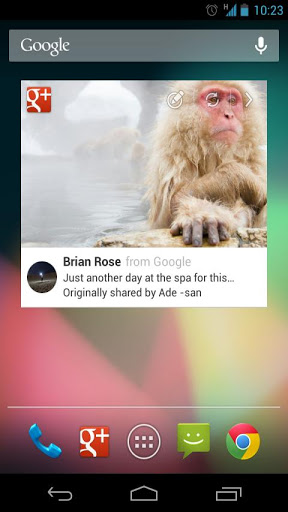
    Google+ for Android also received a new widget design (above), while iPhone 5 users can now stretch out in front of your 4-inch display. iOS users can now edit posts, while both versions have gained the ability to search for people and posts. 

  • LG felicitates the winners of ‘LG Smartphone Idea Camp’

    LG felicitates the winners of ‘LG Smartphone Idea Camp’

    LG Electronics’ innovative consumer-connect campaign, the LG Smartphone iDEA Camp, has culminated successfully, lifting the veil off the name of the winners who got to walk away with a hefty cash prize-worth Rs. 1,000,000 along with LG Smart phones as an additional prize of Rs. 500,000. The LG Smart Phone iDEA camp, which commenced on August 1, 2012, witnessed an extremely encouraging and enthusiastic response from the youth who unleashed their creativity and passion through this campaign. The international campaign, which kick-started from India, invited consumers from varied fields to submit their unique app, feature, concept, service, design or UI (User Interface) ideas that they desire in their Smart phones on www.lg.com/in/smartphoneideacamp. The contest received registrations from 3700 contestants and ended on 15th September, 2012. The eminent jury members of the Smartphone Idea camp narrowed down the vast number of entries received to Top 40 ideas.

    The camp finale, which was held between 4th to  6th October, 2012, at the Le Meridian hotel, New Delhi, was conceived as an industry first where the Top 40 selected participants participated in an unique Innovation workshop called – LG Inno Jump. Inno Jump is LG’s creative problem solving process, designed to develop innovative ideas and solutions for products and technology. The Grand Finale of the “LG Smartphone iDEA Camp”saw the top 8 selected group innovators present their innovative ideas before a high powered jury comprising of Mr. Brian Kwon, Sr. VP Product Planning LGE Korea, Mr. Yong Joo Lee, President LGSI R&D. The winning team comprising of 5 members, walked away with the prize money of Rs. 350, 000. Further winners got Optimus 4X HD Smartphone and internship at LG R&D center at Bangalore, along with a promise from LG to use their ideas in the future LG Smartphone line-up.

    [quote]Mr. Brian Kwon, Sr. VP Product Planning, LGE Korea, said it is amazing to see the response, we saw some great ideas. While a large chunk of the entries were app- centric, concepts related to the screen size, security of phones and the data within were immensely popular too. The Smartphone Idea Camp further proved that innovation is not some entity that is specific to a body of professionals; everyone can be innovative. LG’s Smartphone Idea Camp is in line with the concept that, since consumers are the demand generators and best deciders of what they need, the camp provided them a platform to express the same.  The Camp was LG’s honest attempt to reach out to the consumers, gain their insights and get inspired from their imagination and think creatively and paint a new landscape.[/quote]


    [quote]“India is at par with the global consumers when it comes to technological awareness, thanks to the growing consumerization of technology. In a country like India, where the youth constitutes a huge chunk of the population, one can only imagine the huge potential lying under the seams. The LG Smartphone Idea Camp was as successful as we had expected it to be, if not more. The sheer brilliance of the ideas received and insights gathered is incredible. The objective of this competition is to recognize the emerging talent in the design & technology category at the national level. The concept behind Smart phone idea camp is to promote ‘out of the box thinking’ and believe that sky is the limit when it comes to innovation. “, says Mr. Soon Kwon, MD, LG Electronics India.[/quote]


    Two years back, in 2010, LG created a bond with the youth by conducting a unique campaign called the Design Innovation. LG Cube invited design students from esteemed institutes to let their imaginations fly by designing devices that can be branded as ‘unique’ in every sense of the word. The objective of this competition was to recognize the emerging talent in the design category at the national level. This year, LG once again invited the youth to come and participate in another innovative campaign called the LG Smartphone iDEA Camp. The online campaign saw an overwhelming response from the consumers, constituting mostly of the college students and young adults. Large traffic of the entries came from participants who were active tech enthusiasts and mostly were engineering, M. Tech, B. Tech, MBA, marketing and design students from metros as well as small cities.


    India is one of the biggest mobile markets in the world, with a total mobile subscriber base of 930 million. Smartphone sales have drastically surged worldwide in the past year. According to a survey conducted by Nielsen Informate Mobile Insights, there are 27 million smartphone users in urban India, which constitute a total of 9% of all mobile users in urban India. Industry analysts forecast the smartphone market in India to grow at a CAGR of 116.4 percent over the period of 2012-2015. Smartphones are increasingly gaining greater ground in the market, with a large segment of the same being aimed at the youth. The youth are the most technologically informed of the population, what with their obsession with everything new. Smartphones have now become an essential piece of kit for the youth which enables them to keep in touch with their friends in all sorts of ways. Apps too are wildly popular amongst the youth, who find innovative ways to develop and use apps for even the most banal things. Being connected to everyone and involved in everything via apps has become emotionally important and an integral part of our daily lives.


  • New Maruti Alto 800 Averages 23 kmpl : Scheduled For 16th October Launch

    New Maruti Alto 800 Averages 23 kmpl : Scheduled For 16th October Launch

    Maruti Suzuki India Limited has announced official market release of their upcoming Alto 800. The company has already started accepting orders for the new model on initial booking amount of Rs.5,000. Alto 800 possesses a 796cc engine with fuel efficiency of 22.74 kmpl which is 15% higher than their previous model. It is this factor that will make it one of the most economic cars in the country.

    The new Maruti Alto 800 small car should come with an expected price tag that stays at the Rs 4 lakh mark. Alto 800 replaces MSIL best seller Alto as the company seeks to overcome tough market conditions such as higher petrol costs and increased interest rates all of which have adversely affected sales of small cars in the country.

    Alto 800 will be offered in a choice of six variants – 3 petrol and 3 CNG. Petrol variants are expected to offer mileage approximately at 23 kmpl while the CNG version will give mileage of around 31 kmpl. Interiors are fashionable and offer enhanced head and leg room making the Alto 800 ideal even for taller passengers. While the Alto K10 will continue being availabe as is, Maruti Alto 800 exports to Latin America and other markets will begin soon. Alto 800 once launched is likely to compete with Tata Nano and Hyundai Eon. MSIL Alto sales have been declining since the past few months. In the period April to August 2012, the company sold 89,000 units while in the same period in the previous year this figure stood at 1.22 lakhs

    [Rushlane]

iGyaan Network
Privacy Overview

This website uses cookies so that we can provide you with the best user experience possible. Cookie information is stored in your browser and performs functions such as recognising you when you return to our website and helping our team to understand which sections of the website you find most interesting and useful.