Category: Google

  • Google says voice is the future of web search, introduces Siri-like app for iOS

    Google says voice is the future of web search, introduces Siri-like app for iOS


    Google Inc showed off enhancements to its voice-based search technology for Apple Inc’s iPhone and said it was testing a new service that will combine its Web-based email with its search engine.

    The new version of Google’s search app for the iPhone and iPad, expected to be available within a few days, will let users find information about everything from the weather to nearby movie showings by speaking into the devices, matching some of the capabilities offered by Apple’s own Siri technology.

    Google’s new app recites answers to search results in a human sounding voice, similar to Apple’s Siri, which some analysts and technology observers believe could make iPhone users less reliant on Google’s search service.

    The news comes as the relationship between the two companies grows increasingly competitive. On Monday Apple said it would no longer offer Google’s YouTube app as a pre-loaded app in future versions of its iPhone.

    Google, which unveiled a version of the voice-based search app for its Android software earlier this year, showcased the version for Apple devices at a press event at its San Francisco offices on Wednesday.

    The company also announced a test version of a new service that will integrate users’ personal emails into searches on the Google website. The service, which Google said will initially be available to 1 million users, aims to make it easier for consumers to access information such as flight schedules or shipping orders.

    A truly universal search will “have all the information that humanity has put on the Web and information that’s your information,” Amit Singhal, senior vice president of Google Search.

    The initial “field trial” will work with Google’s Gmail, but Singhal said the company was open to working with other email providers.

    Source : Reuters
  • India ranks No.2 in Google search queries for education

    India ranks No.2 in Google search queries for education

    India ranked second in the number of education queries on Google, the search engine major said today.

    India was ranked 8th in 2008, and is now behind only to the US, reveals a study titled ‘Students on the web’ compiled by Google India. The study was compiled by combining Google search query patterns and an offline research conducted by TNS Australia on behalf of Google India

    [quote]“With over 60 million Internet user population in India being in age group of 18-35, educational related search queries are exploding on Google. Our core objective behind compiling this study was to understand the impact Internet is having on this young population with regard to education related decision making by the students,” Google India Vice President and Managing Director Rajan Anandan said.[/quote]

    Education related queries on Google in India are growing at over 46 per cent year on year that highlights strong demand for information on institutes and courses that are available in the country.

    Out of all education related search queries on Google, over 40 per cent of queries were for higher education courses and institutes.

    Search queries from mobile phones have considerably grown showing a growth of over 135 per cent and amounting to over 22 per cent of all education related search queries.

  • Google to shut down podcast app Listen, Video for Business & Apps for Teams

    Google to shut down podcast app Listen, Video for Business & Apps for Teams

    Google will be shuttering Apps for Teams, Google Listen, Google Video for Business and an unspecified number of its more than 150 blogs.

    [quote]“Technology has the power to change people’s lives. But to make a difference, we need to carefully consider what to focus on, and make hard decisions about what we won’t pursue,” Google wrote in a blog post. “This enables us to devote more time and resources giving you products you love, and making them better for you.”[/quote]

    Google says it’s made changes to around 50 products, features and services in the past year. By eliminating products, it says, it can better allocate its time to more popular products, which will be used by more people.

    Google Apps for Teams was launched in 2008 to allow people with school or business email addresses to collaborate on non-email applications, such as Google Docs, Google Calendar and Google Talk. Come Sept. 4, Google will turn Team accounts into regular Google accounts.

    In 2009, Google Listen was launched for improved podcast discovery, which the company says has been made irrelevant because of Google Play. The podcast search function will be discontinued Nov. 1, though people who’ve already downloaded specific tracks will still be able to listen. Podcast subscriptions will be available in Google Reader, under the “Listen Subscription” folder.

    Google Video for Business has allowed Apps for Business and Apps for Education users to use video for internal communications. Stored videos will be migrated this fall into Google Drive, but will not count against a user’s storage quota.

    Though Google did not elaborate on which of its more than 150 blogs it would be terminating, the company says it won’t reduce post quantity, rather it will consolidate its communications in its most popular blogs.

  • Ice Cream Sandwich on 16 Percent of Android Devices

    Ice Cream Sandwich on 16 Percent of Android Devices

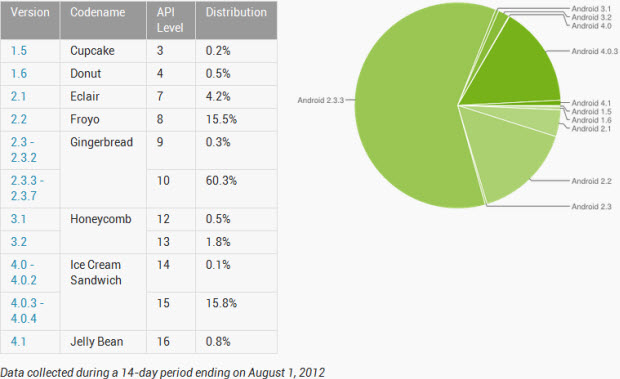
    Ice Cream Sandwich’s share of the Android market continues to grow rapidly, with the operating system now present on nearly 16 percent of all Android phones.

    Ice Cream Sandwich has more than doubled its distribution share over the space of a single month — variants of Android 4.0 have risen from a combined total of 7.1 percent to 15.9 percent, according to figures from Google.


    Gingerbread still reigns supreme at 60.6 percent, but that was down from the 64 percent of the market it held inJune.

    Ice Cream Sandwich just barely ekes past Froyo, which is still present on 15.5 percent of Android devices. Eclair is on 4.2 percent, Donut has 0.5 percent of the pie, and Cupcake is now down to 0.2 percent.

    Android 4.1 ‘Jelly Bean’, which was officially unveiled at Google’s I/O conference on June 27th, and was released as an over-the-air (OTA) update for the Samsung Galaxy Nexus on July 11, has reached 0.8% market share. 

    The data was collected from Android devices that access Google Play, the Android app store formerly known as the Android Market, during the two week period ending August 1.

  • Now Google Plus Hangout directly from GMail

    Now Google Plus Hangout directly from GMail

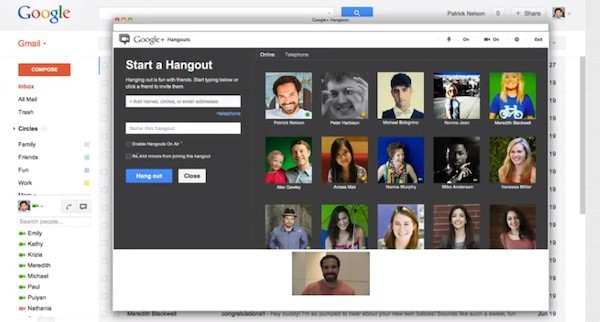
    Google has really begun to promote their new Hangouts. You can now start a Hangout with up to nine friends or colleagues straight from Gmail with a click of a button. It provides access to people with an Android or iOS device and those on Google+ in a web browser.


    [toggle_box title=”Google Hangouts” width=”Width of toggle box”]


    Since the introduction of Gmail video chat back in 2008, many of you have told us that you love the direct, personal communication it provides. That’s why we’re excited to announce that video chat is being upgraded to a more modern video calling technology — Google+ Hangouts. 

    Unlike the old video chat, which was based on peer-to-peer technology, Hangouts utilize the power of Google’s network to deliver higher reliability and enhanced quality. You’ll be able to chat with all the same people you did before and, in fact, with Hangouts you’ll now be able to reach them not only when they are using Gmail but also if they are on Google+ in the browser or on their Android or iOS devices.

    All Gmail users will benefit from this upgrade, but if you and the person you’re chatting with also use Google+, you’ll get even more from the Hangouts experience. You’ll be able to video chat with up to nine people at once, watch YouTube videos together, collaborate on Google documents and share your screen. Plus, Hangouts has a bunch of fun effects that you can try out…because any conversation is better when you’re wearing a virtual mustache or pirate hat.

    [/toggle_box]

    [Official Gmail Blog]


  • Google admits it did not delete Street View data

    Google admits it did not delete Street View data

    Google was ordered to delete the collected data

    Google Inc said on Friday it had not kept its promise to delete all the personal data, such as emails, its Street View cars collected in Britain and other countries in 2010.

    The data should have been wiped almost 18 months ago as part of a deal signed by the firm in November 2010. Google has been told to give the data to the UK’s Information Commissioner (ICO) for forensic analysis.

    The ICO said it was co-ordinating its response with other European privacy bodies.

    In May 2010 it was revealed that Google had scooped up about 600 gigabytes of personal data from unsecured wireless networks while gathering images and location data for Street View.

    Google apologised for gathering the data and said it was a “mistake”. The blunder led to legal action, fines and investigations around the world.

    In the UK, Google gave an undertaking to destroy the data it was holding and issued a statement saying it had done so in December 2010. However, said the ICO, Google had recently contacted it to report that some of the data it had gathered had not been deleted.

    The company approached the ICO with the revelation to find out how it should act. In response, the ICO told Google to hand over the data immediately “so that we can subject it to forensic analysis before deciding on the necessary course of action”.

    Google were fined $25,000 in April for impeding a U.S. investigation into Street View data collection.

  • Google Talk back in service after suffering global outage

    Google Talk back in service after suffering global outage


    The Google Talk IM and video chat service suffered a massive global outage beginning early on Thursday, leaving users mum for more than four hours. The service was restored around 8.25PM. 

    The outage was first reported by users on Twitter, a social networking website. “Google talk being down is massively annoying! You don’t realise how much you take it for granted,” Pete Gould, a Twitter user said. 

    Many Google Talk users reported that they could log into the service, saw their contacts with the respective status but failed to send messages to them. Some other users could not log in. The service is not only used by people to keep in touch with friends but has also become a popular way to interact with co-workers in offices. 

  • Hacking experts find new ways to attack Android phones

    Hacking experts find new ways to attack Android phones

    Hacking experts have demonstrated ways to attack Android smartphones using methods they said work on virtually all such devices in use today, despite recent efforts by search engine giant Google to boost protection.

    Google spokeswoman Gina Scigliano declined to comment on the security concerns or the new research.

    Accuvant researcher Charlie Miller demonstrated a method for delivering malicious code to Android phones using a new Android feature known as near field communications. “I can take over your phone,” Miller said.

    Near field communications allow users to share photos with friends, make payments or exchange other data by bringing Android phones within a few centimeters of similarly equipped devices such as another phone or a payment terminal. 

    Miller said he figured out how to create a device the size of a postage stamp that could be stuck in an inconspicuous place such as near a cash register at a restaurant. When an Android user walks by, the phone would get infected, said Miller. 

    He spent five years as a global network exploit analyst at the U.S. National Security Agency, where his tasks included breaking into foreign computer systems. 

    Miller and another hacking expert, Georg Wicherski of CrowdStrike, have also infected an Android phone with a piece of malicious code that Wicherski unveiled in February.

    That piece of software exploits a security flaw in the Android browser that was publicly disclosed by Google’s Chrome browser development team, according to Wicherski.

    Google has fixed the flaw in Chrome, which is frequently updated, so that most users are now protected, he said.

    But Wicherski said Android users are still vulnerable because carriers and device manufacturers have not pushed those fixes or patches out to users.

  • Google adds a Full Scientific Calculator to Google Search

    Google adds a Full Scientific Calculator to Google Search

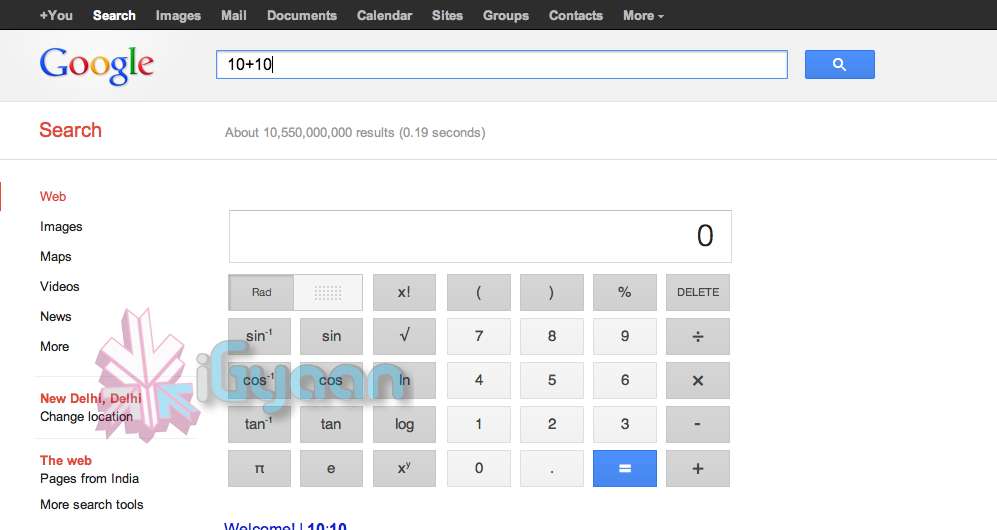
    Google has fancied up some search fun for everyone by adding a full featured Scientific Calculator to the Search results. Simply perform a mathematical search and poof! A full fledged Scientific Calculator pops right up.

    Users that input the beginnings of an equation from either the desktop site or mobile version (landscape only) will instantly see a 32-button layout appear in the space below, mapped for all the mathematical functions you can handle.


    [Google]

  • Google halts 16GB Nexus 7 sales due to heavy demand

    Google halts 16GB Nexus 7 sales due to heavy demand

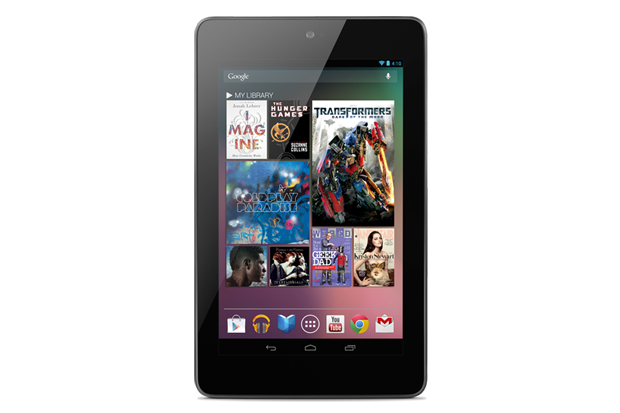
    Sources close to Google say the search giant seriously underestimated the demand for the 16GB version of its 7in Nexus 7 tablet, which has sold out from stockists and other sources while demand for the smaller 8GB version remains comparatively low.

    The company has now halted further orders of the 16GB version of the tablet, costing £199, on its Google Play store in the US and UK. Orders made in the period up to the end of last week are due to be fulfilled, but a shortage of stock now means a hiatus in sales.

    While the 8GB model, which costs £159, is shown as “in stock and being delivered in 3-5 business days, the 16GB version only offers an option to “sign up to be notified by email when it becomes available.

    The 8GB version is only being sold through Google’s own store, rather than physical retailers – but online buyers appear to have shunned it, surprising Google, which had thought that the cheaper version, despite having only half as much storage, would sell better than it has.

    The Guardian understands that Google’s planners had thought that buyers on the Google Play store, more than from physical or online retailers, would be more committed to the company’s “cloud” concept, and so would have more of their content stored online, rather than wanting to keep it on the device.

    But most buyers appear to have noted that the storage on the device cannot be upgraded and decided to get the larger model.

    The Nexus 7 appears to have been a huge hit, although Google has not yet released any figures for sales. Its principal competitors for sales in physical stores such as Currys and PC World in the UK are Apple’s iPad and Amazon’s Kindle Touch. A spokesperson for Dixons Retail, which sells all three, said sales of the Nexus 7 have been “extremely brisk” but declined to say where it ranked against the other two.

    Google has already put off the date for deliveries of the 16GB versiononce, extending it by up to a week. Asus is believed to be ramping up production of another batch of models, but that could take some weeks to arrive.

    In the UK, Tesco is understood to have turned down a number of orders made online for the 16GB version after overwhelming demand. It is not selling the 8GB version.

    Google has seen huge demand for the Nexus 7 since announcing it on 27 June and offering online ordering directly from the Google Play online store, followed a few days later by the announcement that a number of physical retailers would be selling it.

    The Nexus 7 marks Google’s first foray into the tablet business. The device is made to Google’s specifications by Asus; the 8GB version is being sold almost at cost ($199 compared to the build cost of $157), according to estimates by IHS iSuppli. The 16GB version is more profitable for Google.

    Source : The Guardian

  • YouTube offers face-blurring tool

    YouTube offers face-blurring tool

    Whoops! Something went wrong!

    YouTube has launched a feature which blurs the faces of people in videos uploaded to the site.

    According to a Wednesday blog post by the video sharing site, this application is its first step toward providing visual anonymity for YouTube videos, enabling the sharing of “sensitive protest footage” without showing the faces of activists involved, or protecting the identities of people in the videos.

    [quote]“Whether you want to share sensitive protest footage without exposing the faces of the activists involved, or share the winning point in your 8-year-old’s basketball game without broadcasting the children’s faces to the world, our face blurring technology is a first step towards providing visual anonymity for video on YouTube,” wrote Amanda Conway, a YouTube policy associate, on the company blog post.[/quote]

    The technology is similar to the one deployed by Google across several of its services such as StreetView and Google goggles.

    People can check if the blurring has worked frame by frame through a preview function.

    [quote]Conway added: “This is emerging technology, which means it sometimes has difficulty detecting faces depending on the angle, lighting, obstructions and video quality. It’s possible that certain faces or frames will not be blurred. If you are not satisfied with the accuracy of the blurring as you see it in the preview, you may wish to keep your video private.[/quote]

  • Google Maps adds walking directions for 44 African nations

    Google Maps adds walking directions for 44 African nations


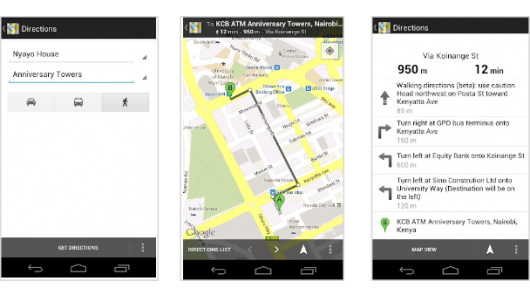
    Google has just announced an update for its popular Maps service, extending support for walking directions to 44 African countries. Following the mandatory safety warnings that come with the beta tag (routes may be missing pedestrian crossings etc.), Google is encouraging residents to try out the service, available today on both web and mobile. A separate update will no doubt be appreciated by cyclists in Europe and Australia.

    As the African continent develops, there should be no shortage of users for the mobile version of the service. Telecoms & Media reported last year that Africa is now the second most connected region in the world in terms of its mobile subscription count. There are currently more than 500 million mobile users on the continent, and by 2015, there are expected to be 265 million mobile broadband subscriptions in Africa, a significant increase from the current estimate of 12 million.

    Support for cycling directions has also been improved. Previously only available in the US and Canada, the service has now been extended to both Australia and Europe, just in time for the yearly post-Tour de France cycling enthusiasm. Routes devised for biking are designed to make use of dedicated bike lanes and avoid significant hills whenever possible.

  • Samsung Galaxy S3 / SIII Pebble Blue Unboxing

    Samsung Galaxy S3 / SIII Pebble Blue Unboxing

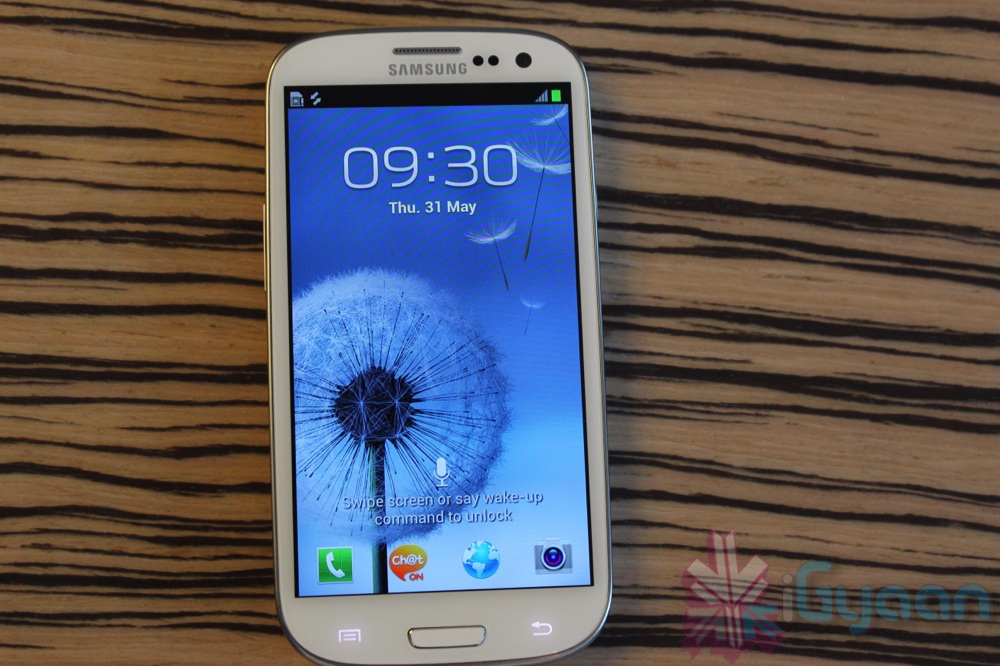
    As requested by our viewers, Bharat Nagpal unboxes the Pebble Blue version of the Samsung Galaxy S3. The box contains a 2100 mAH battery, Stereo headphones with changeable earbuds and a microphone, a mains plug with USB sync charge cable, a Quick start guide and a Warranty card.  The MRP of the device is INR 42,000 but is available in the market for around INR 36,000.

    We will be coming out with a full in-depth review soon, so stay tuned! 

    Check out our unboxing, hand-on, video and image samples and launch videos here :

  • US Court lifts Galaxy Nexus smartphone ban, tablet still blocked

    US Court lifts Galaxy Nexus smartphone ban, tablet still blocked

    Whoops! Something went wrong!

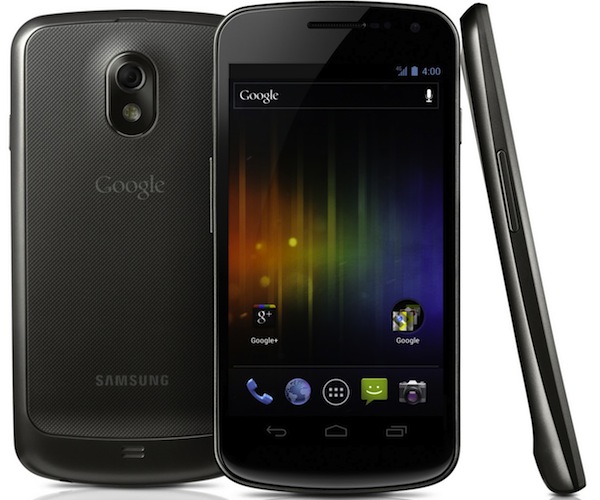
    A US appeals court gave Samsung a temporary reprieve Friday on the sale of its Galaxy Nexus 7 smartphones while leaving intact a court ban on US sales of its tablet computers in a patent battle with Apple.

    In two rulings in the bitter patent dispute, the US Court of Appeals in the capital Washington gave one to Apple and one to Samsung, but only temporarily.

    But the “stay” was just temporary until the panel receives arguments from Apple, which argues the phone infringes on patents in its iPhone.

    In a separate decision, the appellate judges refused to lift Koh’s injunction on the 10-inch Galaxy Tab computer, which Apple claimed was copied from the iPad.

    The court panel in Washington ordered Apple to respond by July 12, while denying a Samsung request to stay, or halt the injunction.

    Both Galaxy devices are powered by Android operating software that Google makes available for free to gadget makers. Nexus is the Mountain View, California-based technology company’s own branded line.

  • Google faces $22.5m fine over iPhone, iPad privacy breach

    Google faces $22.5m fine over iPhone, iPad privacy breach

    Whoops! Something went wrong!

    Google faces a $22.5m fine (£14.5m) for breaching the privacy of iPhone and iPad users after bypassing cookie rejection settings on the devices, according to reports.

    If confirmed, the fine would be the largest ever imposed by the US Federal Trade Commission (FTC) against a single company – and would be the second time this year that the search giant has fallen foul of regulators in the US.

    The Wall Street Journal reports that the FTC and Google are close to agreeing a settlement over the privacy breach, in which Google circumvented Apple’s protections on the iPhone and iPad against the setting of third-party “cookies” – small text files stored on the user’s device – for tracking where users went on the web.

    The discovery of the circumvention, by Jonathan Mayer of Stanford University, was first revealed in February. Millions of users of Apple’s iOS software on iPhones and iPads could have been affected, said Mayer. Google declined a request from the Guardian to specify when it began the tracking.

    However, Google may have escaped further prosecution for breaching an FTC consent decree over privacy that it signed in March 2011 because although the breach seems to have started in or before December 2011, the documentation in which Google explained what it would do dates back to 2009, before the decree, which covered privacy breaches caused by the Google Buzz social network, since closed.

    Whether or not the FCC fines Google over the cookie infraction, it will also publish a report which would detail how it reached the decision, probably with documentation from Google about how many people were affected and for how long.

    Google insisted at the time that the ad tracking was inadvertent and that the workaround to plant the Google cookie was feasible within Apple’s system. It said then: “The Safari browser contained functionality that then enabled other Google advertising cookies to be set on the browser [by other advertising companies using the DoubleClick network]. We didn’t anticipate that this would happen, and we have now started removing these advertising cookies from Safari browsers. It’s important to stress that, just as on other browsers, these advertising cookies do not collect personal information.”

    Apple said at the time that “We are aware that some third parties are circumventing Safari’s privacy features and we are working to put a stop to it.”

iGyaan Network
Privacy Overview

This website uses cookies so that we can provide you with the best user experience possible. Cookie information is stored in your browser and performs functions such as recognising you when you return to our website and helping our team to understand which sections of the website you find most interesting and useful.