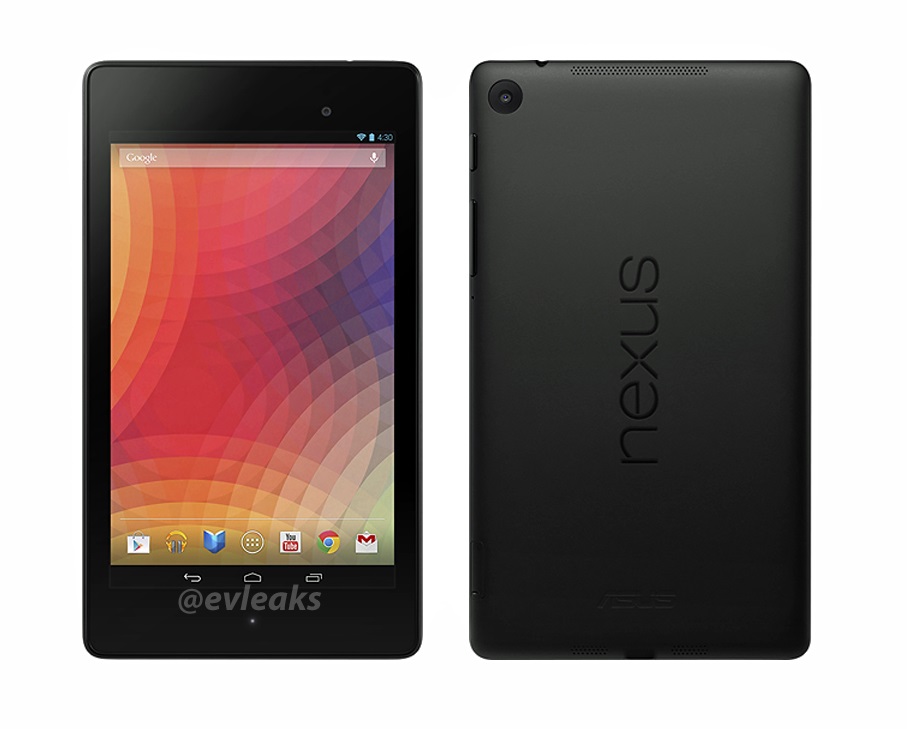
Prolific leaker @evleaks has shared some press shots that give us a clear look at the front and rear of the new Nexus 7. The upcoming ASUS-made slate showed up in a BestBuy print catalogue as well.
According to a number of previous reports, the next Nexus 7 will sport 1.5GHz quad-core processor, 7-inch full HD display, wireless charging, 2/4GB of RAM, Android 4.3 and the aforementioned 5-megapixel rear camera and a 4000 mAH battery. We’ve also seen mentions of the upcoming tablet show up in a retailer’s inventory, so really all that’s left is for Google to make the device official.
Perhaps most tantalizing is the possibility that the Nexus 7 redux will offer up our first real glimpse of Android 4.3, unless you count those leaked builds that started trickling out soon after Google began selling its Google Play Edition Ones and S4s.
It would have been nice to see Google stick to the sub-$200 price point for the Nexus 7, however considering the spec sheet on this revised Nexus 7 it is actually a bit surprising that they are managing to hit $229. Safe bet we’ll be hearing more about the new Nexus 7 from Google this week so all will be revealed soon.
It’s also possible that the event will bring the official reveal of Android 4.3, which has been leaking quite frequently lately.
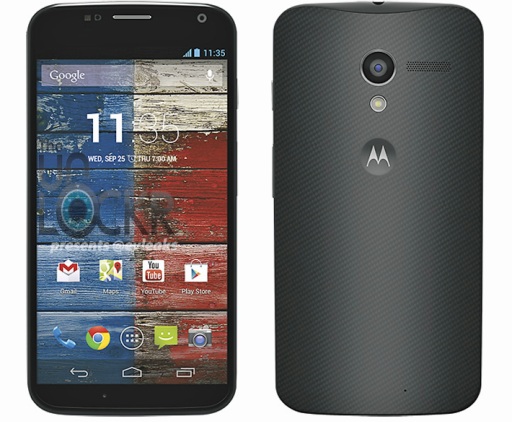
If you are actively following the news around the Moto X you will know that earlier today the launch date for the elusive Moto X was finalized. Now @eveleaks the notorious tipster for the mobile world has leaked press renders for the hardware.
The Moto X is expected to be a Mid Range handset and expected to be priced around 300-400 US $. The hardware expectations are running anywhere from a 4.7 inch to 5 inch HD display which may only run up to 1280 x 720 p screen. An 8 MP main camera and a 2.1 MP front facing camera will finish off the optics, and a Quad Core chipset will handle the processing needs of the Android 4.3 capable handset.
If you closely inspect the render it appears to have a carbon fibre weave on the back which sort of resembles the design of the Blackberry Q10, and the interface appears to be running stock Android with no tweaks or overlays as earlier expected.
Update July 22nd : White Render also leaked :
The color will be known as Unicorn White, and will be available alongside the black Moto X at launch unlike the Nexus 4. Although rumors of many other colors exist, no real confirmations have come forward.
Motorola’s launch teaser for the new Moto X just went out and it seems the company is ready to launch the new phone on August 1st. While the leaks of the super-phone from the company have been a-plently what needs to be seen is whether this will be the next Nexus or not. Google’s Eric Schmidt who was allegedly already spied many times using the phone in the past has not been too secretive about the product.
No strict details are known, but the fibre like construction and slick curves are the beginning of a new design change at the Google-Motorola campus. The Moto X is expected to be a mid range smartphone and not something that’s all that jazz. The Handset will be targeting the mass market and may even go for free on contract with various US carriers. Despite the fact that Motorola shut down its campus in India, it is expected that the company will make a sharp return India side.
Lets see what Google have up their sleeve for the July 25th conference and the 1st August unveiling of the Moto X. Read below Motorola’s Press Note
[toggle title=”PR”]Moto X: The First Smartphone Assembled in the USA
There are more than 130 million smartphones in use in the USA today and not one of them was assembled here…until now.
May 28, 2013 Danielle McNally
Today at the AllThingsD conference Dennis Woodside revealed how we are reinventing Motorola through a portfolio of products starting with Moto X, a new flagship smartphone that will be designed, engineered and assembled in the USA. We’re not talking about just a handful of units either — available this summer, every Moto X sold in the USA will be assembled in Fort Worth, Texas, making it the first smartphone ever assembled domestically.
There were a few reasons why we decided to do this. There are several business advantages to having our Illinois and California-based designers and engineers much closer to our factory. For instance, we’ll be able to iterate on design much faster, create a leaner supply chain, respond much more quickly to purchasing trends and demands, and deliver devices to people here much more quickly. And as a part of Google we’re being encouraged to take big bets on things that make a difference.
We still have a network of global operations, and that won’t change. Our global manufacturing partner remains Flextronics and we’ll continue to assemble devices locally in China and Brazil. But Flextronics is busy looking for people for the new Fort Worth facility now. If you’re interested, we encourage you to check the available positions and apply.
This is an incredibly exciting time to be in the mobile device industry. Our role in inventing the mobile phone is well known. We’re happy to be shaping its future as well.[/toggle]
Google has released its Q2 2013 earnings today and, though they appear strong in absolutes, they missed analysts’ expectations by a fairly wide margin.
The company posted $14.1 billion in revenue, up slightly from last quarter and an improvement of 20% from the previous quarter last year, but analysts were expecting $14.4 billion. Net income was solid at $3.23 billion and $9.56 per share but, again, they were below expectations.
Motorola maintained its reputation as an anchor weighing down the otherwise-profitable Google, as the hardware division posted a quarterly loss of $342 million on revenue of $998 million. Revenue was down from the previous quarter, while the net loss was up, placing even higher expectations on Moto X, which is expected to debut at the end of the month.
Google’s average cost-per-click, which includes clicks related to ads served on Google sites and the sites of its network members, decreased about 6% in the quarter compared with a year ago. Analysts had predicted prices would drop about 3% in the period.
“The shift from one screen to multiple screens and mobility creates tremendous opportunity for Google. With more devices, more information, and more activity online than ever, the potential to improve people’s lives even more is immense,” CEO Larry Page in a press release.
Google is expected to spend upwards of $500 million on advertising Moto X, which is rumoured to be customizable by colour, engraving and build material. The company is otherwise extremely healthy, with over $53 billion cash on hand.
The Nexus 7 sequel has been on the docket for a long time, and rumoured specifications have been floating around for months — a 7-inch 1280×800 display, a quad-core Snapdragon 600 SoC, 2GB RAM, a 1.2MP front-facing camera, 5MP rear camera, Android 4.3 — but nothing has been confirmed.
Today Google started sending out invites to a “breakfast” conference being held next week with Android head, Sundar Pichai, but Engadget got their hands on an internal OfficeMax document stating that the “new Google Nexus 7″ is also launching next week. Coincidence? Probably not.
The device is expected to launch at $229 USD for the 16GB model, increasing to $269 for the 32GB version. Not the $199 we saw the original debut at, but this is a much more powerful machine.
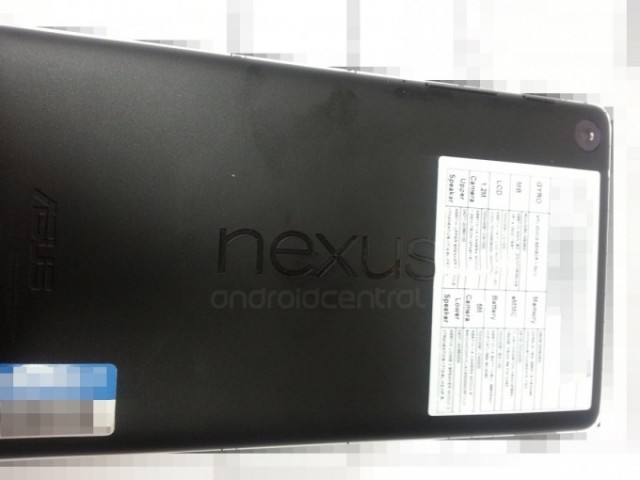
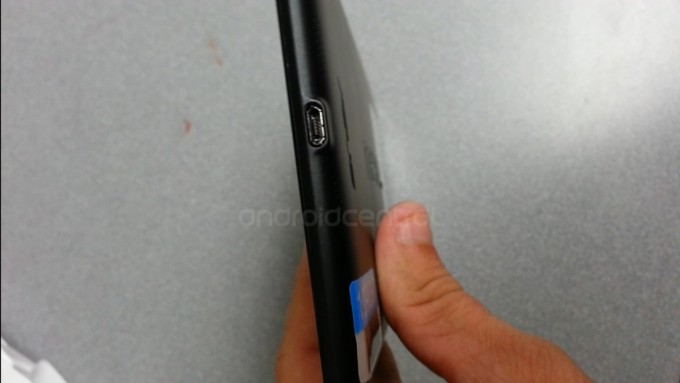
The more interesting info comes from Android Central, who got their hands on the device itself. “we have no idea if what we see here is a finished product, or prototype,” cautions the site, but the pics certainly look legitimate.
The only change from previously rumoured specs according to Android Central being the inclusion of 4GB of RAM (unlikely) and a slower Snapdragon S4 Pro SoC. And, of course, it will be manufactured once again by Asustek.
The new design appears to mimic its predecessor. The Nexus insignia on the rear is similarly placed as before, as are the various buttons, rockers and ports. There are two speakers on the device, which will provide stereo sound playback and hopefully be an improvement over the original.
The design is also slightly more squared-off than last year’s model, but we can’t be sure if what we’re seeing is a prototype or a finished product.
Google is also expected to launch Android 4.3 next week, a small but important update to the current software. The existing Nexus 7, as well as the Galaxy Nexus, Nexus 4 and Nexus 10 should receive the new version in the weeks following the announcement.
For its part, Apple is also expected to refresh its 8-inch tablet in the not-so-distant future.Recent rumors suggest that a new version of the iPad mini will launch alongside a redesigned iPad 5 this fall, though it doesn’t sound like it’ll get the Retina treatment.
What do you think of the next-gen Nexus 7 thus far?
In June, Microsoft announced new “bounty programs” for people who could find exploits inside Windows 8.1 or vulnerabilities in the Internet Explorer 11 preview. This week, Microsoft announced that it has already informed one person that he has won money for finding an issue in IE11.
According to a post published by Katie Moussouris, senior security strategist at Microsoft, the company has already paid one security engineer for finding a glitch in Internet Explorer 11, but no specifics have been provided.
“The security community has responded enthusiastically to our new bounty programs, submitting over a dozen issues for us to investigate in just the first two weeks since the programs opened. I personally notified the very first bounty recipient via email today that his submission for the Internet Explorer 11 Preview Bug Bounty is confirmed and validated. (Translation: He’s getting paid.)” Moussouris wrote.
And still, Moussouris mentioned the name of the lucky winner in a short tweet the past week, revealing that he’s none other than Ivan Fratric, a Google information security engineer who also won $50,000 (€38,300) in 2012 in the software maker’s BlueHat contest.
While the Windows 8.1 bounty program is ongoing, the IE11 preview bounty program will end on July 26. Moussouris said a number of other researchers have also found exploits in IE11 and will be notified of that fact very soon. The reported vulnerabilities can qualify for bounties between $500 and $11,000, or even more in particular cases, depending on the gravity of the vulnerability and the quality of the report.
Motorola’s new flagship device has been heavily leaked over the past number of weeks. This will reportedly have a half-billion dollar marketing budget behind it and bring customers various levels of customization – everything from the colour to engraving features.
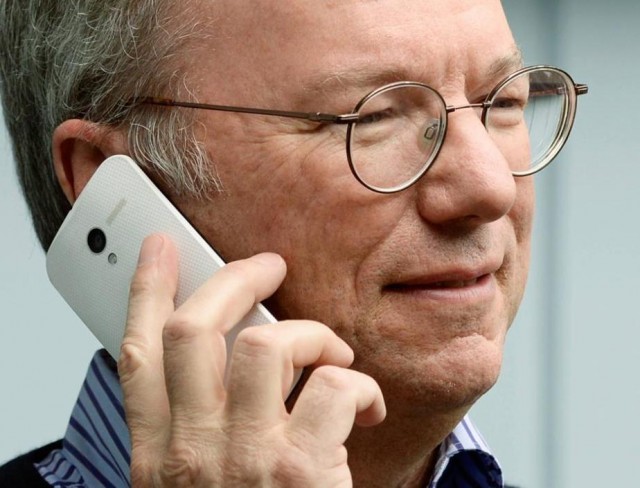
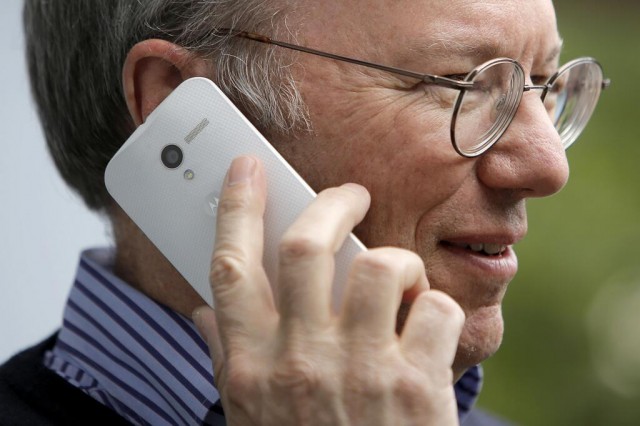
Being Google’s executive chairman means being able to play with all the newest toys. Eric Schmidt, Google’s own Chairman, is in on the fun and went out in public using the Motorola Moto X.
Photographers at this year’s Allen and Co. conference snapped a few photos of the phone, which the Google chairman didn’t seem particularly shy about using.
The Moto X was teased last month by Dennis Woodside, and now it looks like Schmidt is following suit by being the first person to pull out the phone.
What we know of the Moto X so far is mostly rumors, with a couple of leaked images of black phones with the Motorola M on them. Schmidt’s Moto X is the first white version of the phone we have seen, though it looks like the phone is only white on the back. We’ve seen this with previous Motorola phones, so it’s not a huge shock to see it here.
We didn’t get any confirmation of the previously leaked specs though. As you might recall the Motorola X is said to sport a 720p display and a 1.7 GHz dual-core Qualcomm Snapdragon S4 Pro chipset along with 2 GB of RAM, 10 megapixel rear camera and Android 4.2.2 Jelly Bean.
Also a Google+ post by Robert Scoble shows the Moto X at the event, noting that “Tonight I was at a certain technology company (you might recognize it, except we weren’t supposed to share anything about what we were doing there) and someone handed +Daria Musk a really out-of-tune low-cost guitar. So I started shooting with Glass and this is what happened.”
In the 2004-2007 period, if you would’ve asked any teenage boy/girl about that one phone they wished they had, the answer would’ve been simple – the Motorola MotoRazr.
Right from its sleek, futuristic design to that V3i advertisement where a guy dressed like 007 (but travelling in the “metro”), uses his blade (read : MotoRazr) to cut through a woman’s dress and then fight her when she retaliates, everything about Motorola spelled success.
It was a period where when you looked anywhere, you would see someone on a Motorola RAZR. The company sold over 120 million units of that phone, making it the second most popular phone in 2005 and then along came the iPhone. Motorola who?
Last year, the company shut down operations in India altogether, after being bought by Google. So we ask ourselves, can we see Motorola charming us with its devices once more?
How It All Began
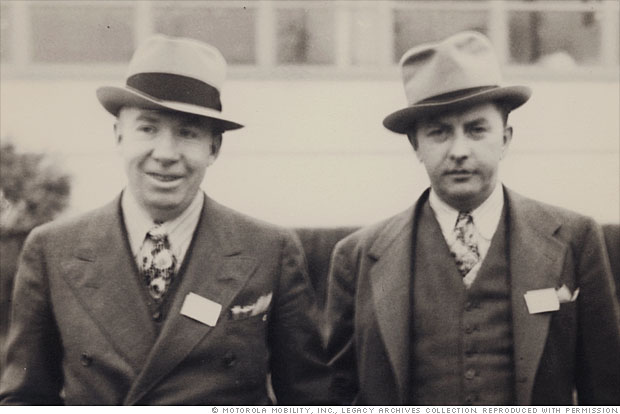
Motorola is an American company with many “firsts” in the field of science and technology. It started in Chicago in 1928. Company founders Paul V. Galvin and Joseph Galvin created the brand name Motorola for the car radio – linking “motor” (for motorcar) with “ola” (which implied sound)
Founders Paul V. Galvin and Joseph Galvin.
The Motorola car radio was released by the Galvin Manufacturing Corporation in 1930, two years after the company’s founding in Chicago, kicking things off with a battery eliminator, aimed at letting battery-powered home radios run off of household electricity. In 1947, the company dropped its name for simply Motorola.
[pullquote_left] Motorola provided the radio technology for APOLLO 11’s moon landing. [/pullquote_left]
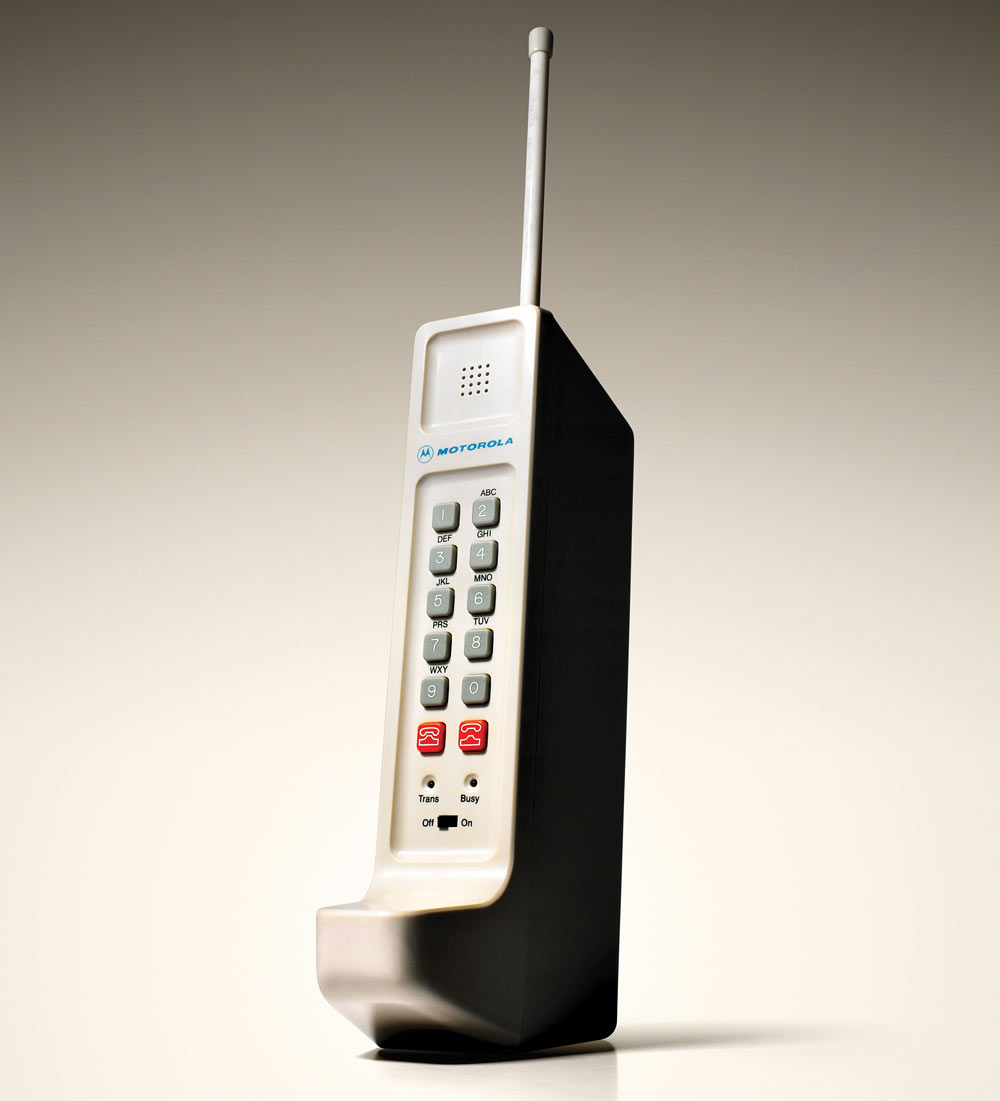
In 1973, Motorola took some major steps toward the technology that would define it in the decades to come, showing off the DynaTAC and demonstrating the phenomenon of cellular telephones to the world. It wasn’t until 1984 that the brick-sized phone would actually start making its way into the hands of consumers.
The Motorola DynaTAC Photo: Dan Forbes
Fast forward to 2004, the MotorRazr became the best selling clamshell ever made.
The Fall
Post 2007, after a certain turtleneck sweater aficionado introduced the iPhone to the world, everyone forgot about their love for Motorola and turned their attention towards Apple.
Steve Jobs unveiling the iPhone in 2007.
And could you blame them?
According to the NPD Group, which released the sales numbers, four of the five best-selling handsets at that time were optimized for messaging and other advanced Internet features. The only one that wasn’t? The Razr.
At the high end of the market, Motorola’s designs didn’t keep up with consumer expectations, and the game-changing iPhone set back the company further. Motorola also got squeezed out by competitors at the lower end, where the cell-phone business had the most potential for growth globally.
Motorola failed to use its huge advantage in the early days of higher end handsets to become one of the leaders in the emerging smartphone business, which is now dominated by Apple and Samsung.
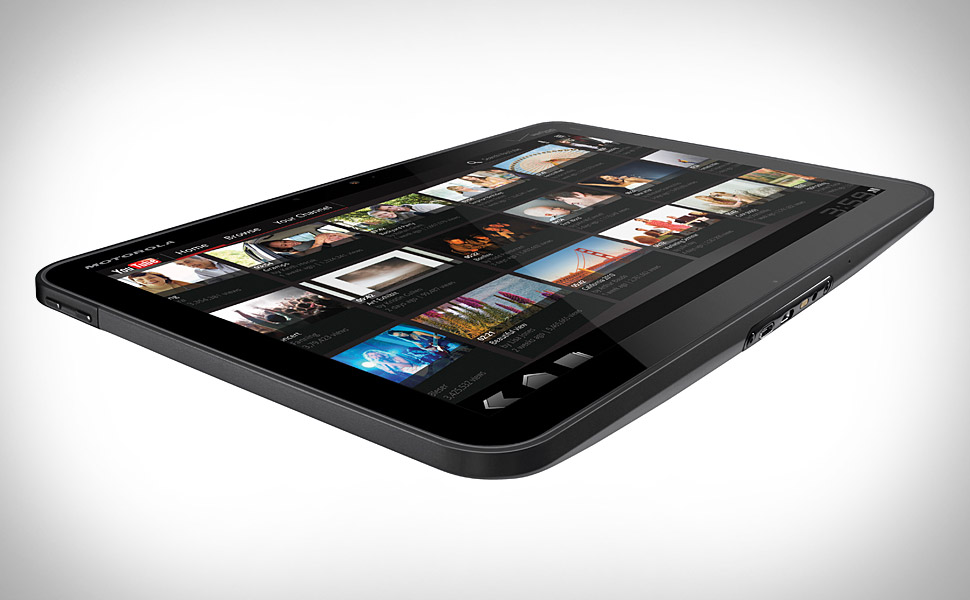
Motorola failed to make an impact in the tablet market with the Motorola XOOM.
After a stint with Android, including it’s XOOM tablet, Motorola gave up altogether and closed down operations in India last year.
The result? In August of last year, Google announced that it would be acquiring Mobility for around $12.5 billion, a deal that would close nearly nine months after it was first made public.
Who’s To Blame?
What Motorola failed to realize was that the cellphone market changed their buying decisions from “hardware”, to a “software decision”. People wanted to run real, native, apps on their phones.
In 2009, Motorola joint-CEO Greg Brown blamed Motorola’s own decisions for the company’s decline. While Brown did make the obligatory hat-tip at the economy – for exacerbating the situation – the executive mainly criticized Motorola’s planning, products and blindness to the changing needs of consumers.
Speaking to the Financial Times, Brown highlighted the absence of a RAZR replacement as a key failure for Motorola. That, together with a misplaced focus on the developing market and over-investment in budget handsets, meant Motorola missed the growing messaging trend.
[pullquote_right] Warren Buffet once said that when a manager with a great turnaround reputation encounters a company with a reputation for dysfunction, it is the company that will keep its reputation. [/pullquote_right]
Warren Buffet once said that when a manager with a great turnaround reputation encounters a company with a reputation for dysfunction, it is the company that will keep its reputation. And that’s how it panned out. Post Geoffrey Frost’s death in November 2005 after putting Motorola on the road to success, Garriques tried to build the next hit with the system.
Then after being unable to conjure up the same magic, Garriques left for Dell and the Motorola machine ran back to the security blanket of processes. Constant “safe pairs of hands” were used to replace him. Casey Keller was brought from Nabisco to do a job and failed too. The succession of replacements for Garriques just made things worse.
What Now?
Everyone loves a good comeback, whether it’s Manchester United stealing a win in the final minute of the Champions Trophy in 1999 or Mickey Rourke snagging an Oscar nomination for The Wrestler.
In Google, Motorola have their own version of Sir Alex Ferguson to take it back to the top.
In Google, Motorola have their own version of Sir Alex Ferguson, the recently-retired Manchester United manager who broke the “Old Firm’s” dominance in Scotland with Aberdeen, and Liverpool’s dominance in England. Google has the expertise and means to take Motorola back to the top.
The rumoured comeback phone, called the Moto X, will be built at a 500,000 square-feet facility in Texas that will employ 2,000 people by August.
Though Motorola boasts of a long, impressive history of mobile innovation, the present CEO, Dennis Woodside, acknowledges how challenging it is for the company to reach the same state of glory it enjoyed some time back. The company aims at hiring a large number of employees to manufacture a new generation of mobile phones.
“We like to be the challenger. So we’re filling the company with people who want to transform the company into a winner,” said Woodside.
There’s still a lot of life left in Motorola, which, bruises and all, remains one of the grand names in world technology.
“Motorola is still a huge business and an iconic company,” Brown says.
If things go according to plan — and Brown says he’s confident they will — the Motorola mobile business could again find itself on the leading edge of wireless, setting the pace of global innovation for the next century and beyond.
The company recently unveiled their new logo, with a clear emphasis on it now being a Google enterprise, and I personally think that the road to its comeback will be long and hard, but Motorola will reach its former glory in the coming years.
What do you think? Will Motorola be able to charm consumers again? Let us know in the comments section below!
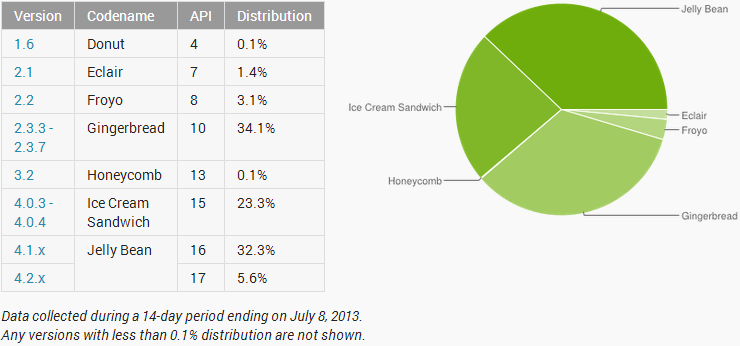
Google has updated their Android platform distribution numbers for the month of June, 2013. It appears that Jelly Bean is currently running on 37.9% of active devices (of which only 5.6% accounts for Android 4.2.2) — up from last month’s 33%.
Breaking down the numbers more specifically, 37.9 percent of Android users are using Jelly Bean, 23.3 percent have devices powered by ICS, 0.1 percent are on Honeycomb, 34.1 are stuck with Gingerbread, and 3.1 percent unfortunately still have Froyo.
OS Donut and Eclair have are almost completely vanished, but there’s still 1.5% of users somewhere out there rocking the original version.
Remember, this isn’t really representative of Android as a whole — for all we know there are millions of Android devices in the world still running on Eclair.
Google recently tweaked its algorithm in regards to how it counts users for these figures. In its own words, the company said:
Note: Beginning in April, 2013, these charts are now built using data collected from each device when the user visits the Google Play Store. Previously, the data was collected when the device simply checked-in to Google servers. We believe the new data more accurately reflects those users who are most engaged in the Android and Google Play ecosystem.
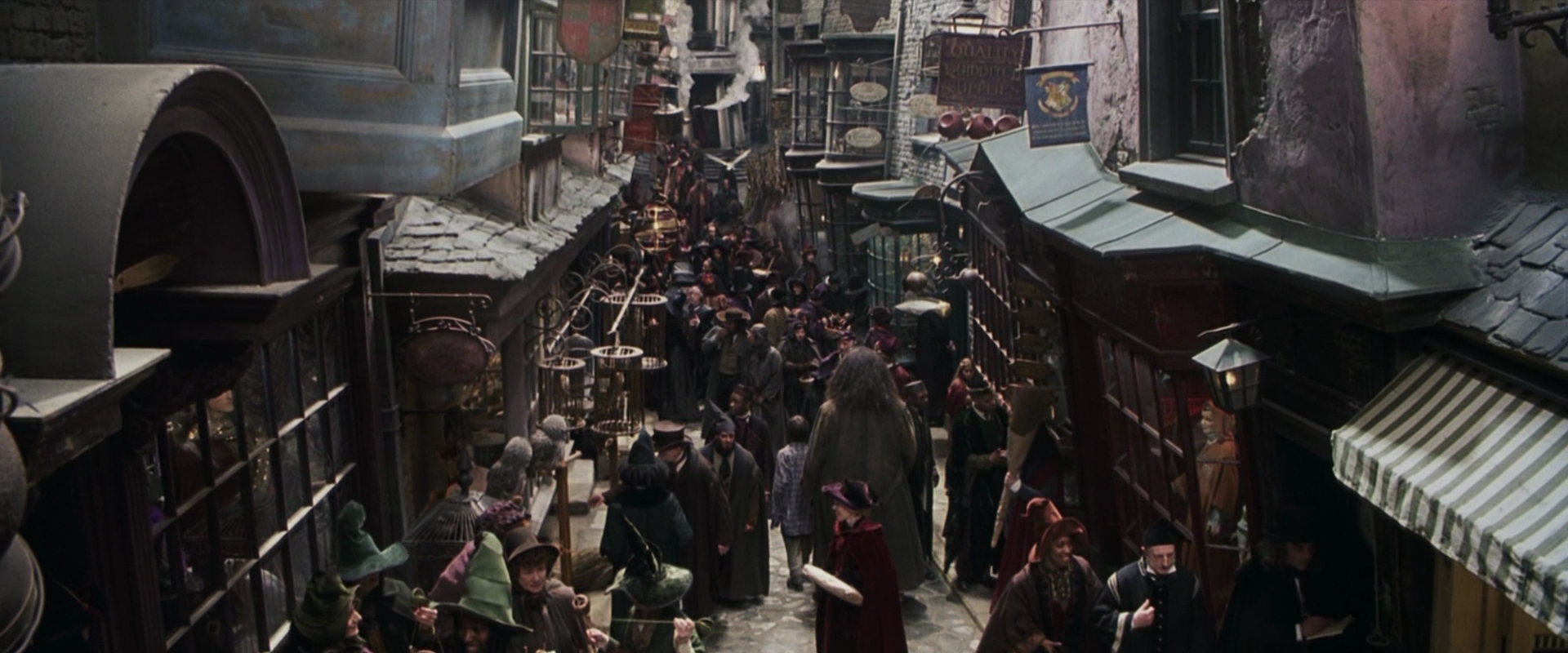
Google has given its map users access to many wonderful, bizarre and otherwise impossible to access places, but now it is opening up fictional worlds to exploration by adding Diagon Alley from the Harry Potter series to Street View.
The Street View application has just added 360 degree views of Diagon Alley, the fictional cobblestone wizarding marketplace from the Harry Potter books and films, where all manner of magical paraphernalia can be acquired.
For the films, Diagon Alley was built bricks-and-mortar in precise detail on a soundstage at Warner Brothers’ London studios. On Street View, users can swoop in from above the studios’ expansive grounds and into the dark confines of the pre-Victorian marketplace, where they can pass by Potter fan icons like Gringotts Wizarding Bank, Ollivanders Wand Shop and Mr. Mulpepper’s Apothecary.
In reality, Diagon Alley Ollivanders Wand Shop, Weasleys’ Wizard Wheezes joke shop and the entrance to Gringotts Wizarding Bank are all part of the entrance to the Warner Bros Studio Tour in London.
The Diagon Alley set took more than three months to build and the 20,000 products on the shops’ shelves were created over six months.
After Deathly Hallows wrapped filming in 2010, part of Leavesden Studios (where all eight Potter movies were shot) was converted into a tour attraction along with permanent sound stages for future films to use.
The Warner Bros. Studio Tour London: The Making of Harry Potter opened in 2011 and has served as the country’s sole Potter attraction.
Google recently announced that it had added 1,001 new destinations to Street View, including historical landmarks and sports stadiums.
If you use AdBlocks and still find some ads creeping into your webpages, don’t be surprised. Major advertisers, including Google, can pay to have some of their ads “whitelisted” — in essence, given a free pass through AdBlock Plus.
Adblock Plus’ own FAQ addresses the “feature”:
Do companies pay you for being added to the (Acceptable / Non-intrusive Ads) list?
Whitelisting is free for all small websites and blogs. However, managing this list requires significant effort on our side and this task cannot be completely taken over by volunteers as it happens with common filter lists. That’s why we are being paid by some larger properties that serve nonintrusive advertisements that want to participate in the Acceptable Ads initiative.
Adblock Plus’ goal is to eliminate annoying video ads, according to its parent company Eyeo. It defends the whitelisting practice, according to Salon, pointing out that “whitelisting is free for all small websites and blogs.”
Horizont said in a report that it’s unclear how much Google has paid Eyeo, the company behind Adblock Plus, to whitelist its ads, and that it doesn’t know which other companies are doing the same
“However, managing this list requires significant effort on our side and this task cannot be completely taken over by volunteers as it happens with common filter lists.”
“That’s why we are being paid by some larger properties that serve nonintrusive advertisements that want to participate in the Acceptable Ads initiative.”
Which large companies pay to skirt the ad-blocking software remains a mystery, as does the parent company’s criteria for determining small websites and large websites that have to pay.
The company Bluebox security, has found a security hole in Android’s operating system. What’s even more scary about this news is the report states that this security hole has been around since Android 1.6 Donut. Apparently what can happen is malicious developers can change the APK of a legitimate company, without any breaks to its cryptographic signature. This basically means that if an app is hacked on Android, the user would not know and could be entering their information and sending it to the malicious hackers unknowingly.
Android apps (packaged as an “APK”) are signed with an encryption key (just like iOS apps) to prevent a malicious party from changing the code. Signed apps are expressly designed to enable the system to detect any tampering or modification.
Since verified apps are granted complete access to the Android system and all applications on a phone, the security weakness is potentially huge, although it remains theoretical since it is unclear how malicious apps and updates would be served to users.
Apps listed on the Google Play store are immune from this tampering, so a hacker would need to lure a user into downloading a malicious version of an app in other ways, perhaps via a third-party app store or fake app links. A phishing email with a link to a fake update for a popular app, for example, might generate some downloads.
If Google has not done anything up to this point, it makes you wonder if they taking this security issue as seriously as they should. Smartphone malware is becoming a huge problem and in order to prevent threats, the security companies along with the OS developers must work together, to stop this ongoing threat.
As SlashGear reports, according to Bluebox, it informed Google of this Android vulnerability in February of this year. To take care of the issue, every device manufacturer will need to create a patch and roll it out to its users, who will then need to install it. The security firm says it will release “tools/material” and more info about this vulnerability during Blackhat USA 2013, which takes place later this month.
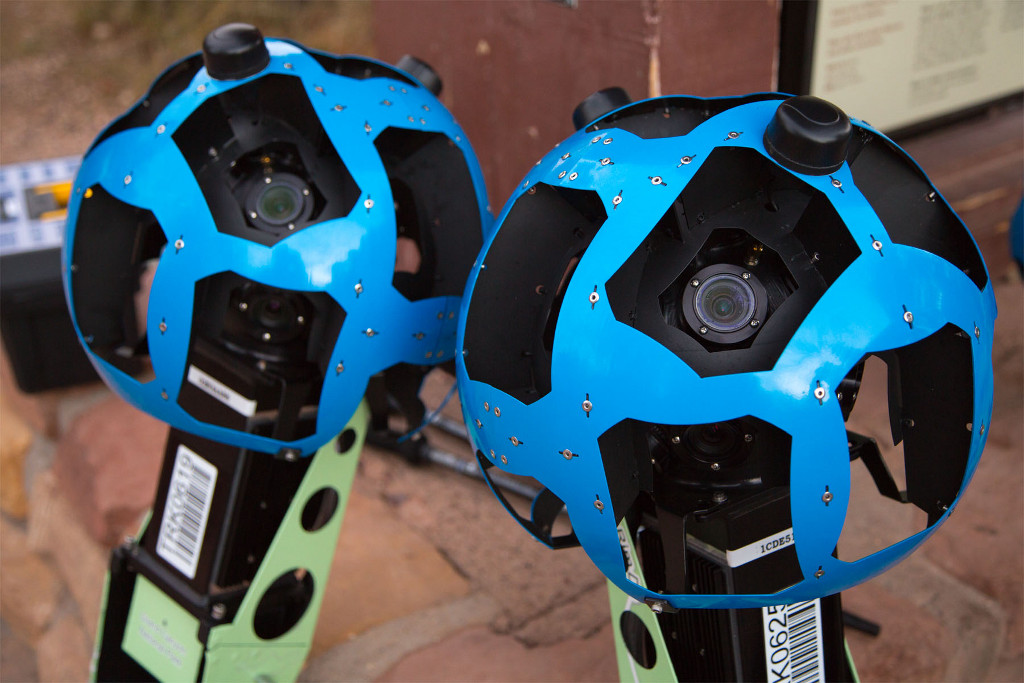
Google has announced that they are opening up their Street View Trekker program to third-party non-profits. Google is looking to expand Street View imagery off the beat path. To do this, they need to take their Trekker backpacks by foot into areas not accessible by cars or other imaging devices.
The Street View Trekker is a compact version of the same tech used in Google’s Street View cars. The pièce de résistance is a 15-lens camera, mounted atop a spire-like appendage, that can capture 46MP images.
“With 360-degree interactive imagery of the islands, people all over the world can see and explore the beautiful islands before they go, including some remote and hard-to-reach places they may never have discovered on their own,” Google Street View program manager Deanna Yick wrote in a blog post.
Until recently, only Google and select third parties got the opportunity to strap on a Street View Trekker, but now interested organizations can fill out a form to line up for a chance at borrowing one. If you snap top-notch stuff, Google may add your work to its Street View collection, which includes the Galapagos and the Grand Canyon.
As SlashGear reports, the loan scheme is open to tourism boards, non-profits, government agencies, universities, and research groups, with Google asking for details on proposed visits, expectations around what sort of photography might be captured, and why it’s thought that it could benefit Street View. There’s also the thorny matter of whether special permissions are required. “Even for public parks we often need to get written permission, legal releases and/or filming permits from the organization that manages the site” Google points out.
In typical Google style, the company has a YouTube video for the new initiative:
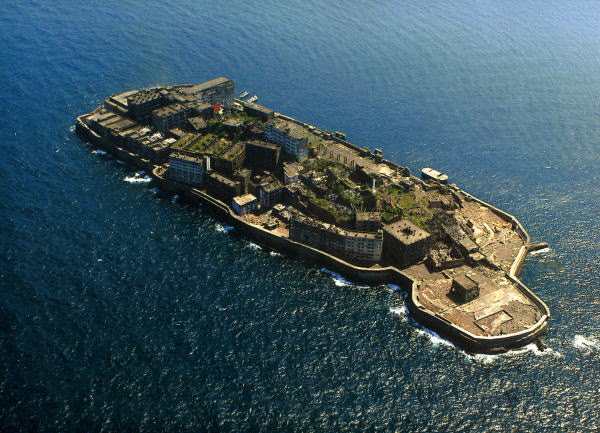
If you’ve seen 007 : Skyfall then we’re sure you must have noticed the eerie island where Raoul Silva operated from. Well, now you can take a virtual tour of that island, called Gunkanjima (Japanese for Battleship Island, due to it’s resemblance) thanks to Google.
Gunkanjima is one among 505 uninhabited islands in Nagasaki Prefecture about 15 kilometers (9 miles) from Nagasaki itself. The island was populated from 1887 to 1974 as a coal mining facility.
The island is called Battleship Island because of it’s resemblance to a military warship.
It is known for its coal mines and their operation during the industrialization of Japan. Mitsubishi bought the island in 1890 and began the project, the aim of which was retrieving coal from undersea mines. They built Japan’s first large concrete building (9 stories high), a block of apartments in 1916 to accommodate their burgeoning ranks of workers.
Concrete was specifically used to protect against typhoondestruction. In 1959, the 6.3-hectare (16-acre) island’s population reached its peak of 5,259, with a population density of 835 people perhectare (83,500 people/km2, 216,264 people per square mile) for the whole island, or 1,391 per hectare (139,100 people/km2) for the residential district.
As petroleum replaced coal in Japan in the 1960s, coal mines began shutting down all over the country, and Hashima’s mines were no exception. Mitsubishi officially announced the closing of the mine in 1974, and today it is empty and bare, which is why it is called Ghost Island. Travel to Hashima was re-opened on April 22, 2009 after 35 years of closure.
Despite being off-limits to travellers, the island has become an irresistible magnet for urban explorers who go to extraordinary lengths to investigate and photograph the island’s abandoned buildings.
Google is giving users 360° panoramas of Battleship Island, and some of the imagery collected with the Google Trekker goes beyond the cordoned-off areas for tourists and into paths that are off-limits. It still remains illegal to venture inside the city’s walls, meaning urban explorers must go to great lengths to covertly trespass the island.
The crew of Skyfall couldn’t film on the island itself due to its dangerous state of disrepair, so production designer Dennis Gassner visited the island instead and recreated a section at Pinewood Studio in the UK, with other parts rendered digitally.
Google’s attempt to compress the entire world’s streets, websites, businesses, and countries into one comprehensive database got another boost today with the announcement of an updated version of Google Maps’ Earth view.
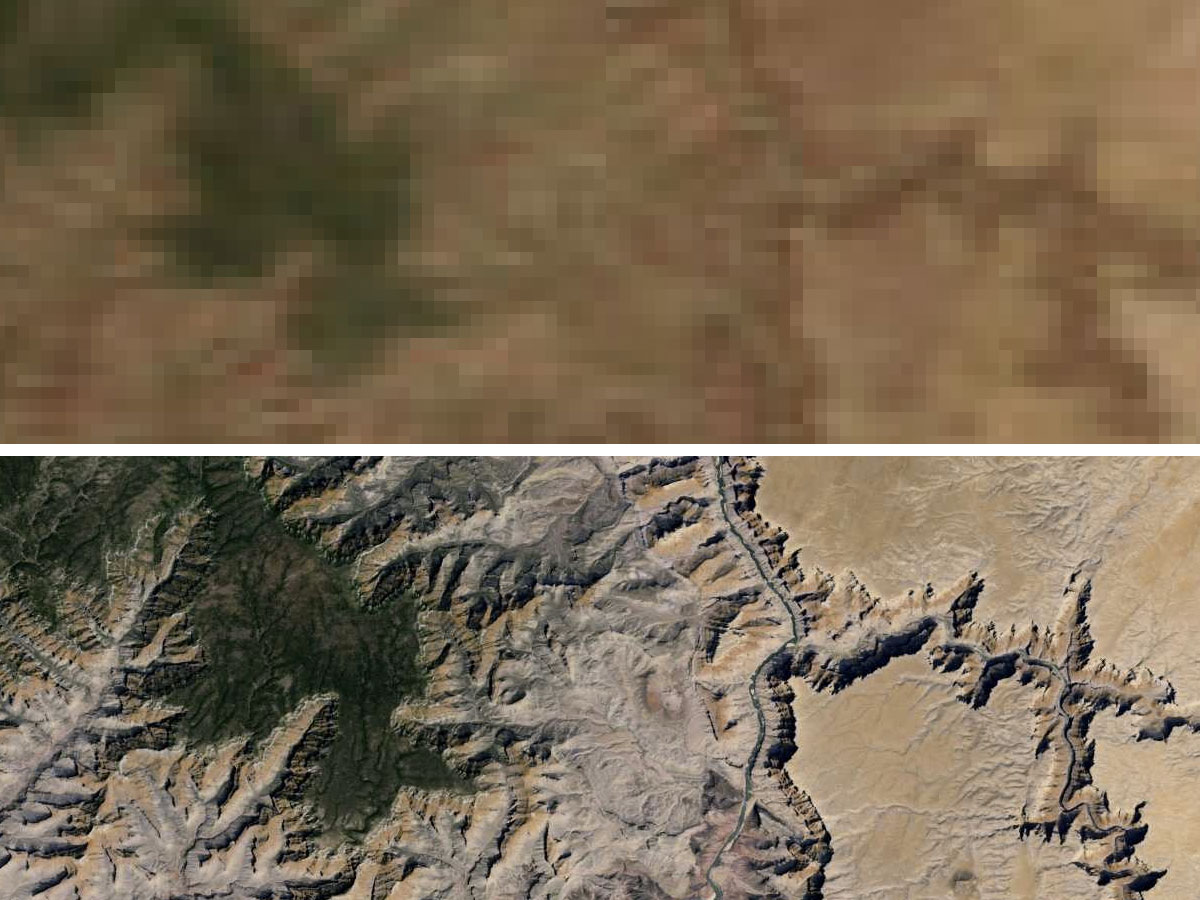
Google have updated their popular Google Maps and Google Earth with 800,000 megapixels of new imagery.
Google Earth for Android or iOS now features a new user-interface and Street View imagery, enabling explorers to virtually browse the Earth from street-level straight from their handsets.
“We’re unveiling new satellite imagery for all Google mapping products today. This stunning new imagery of the earth from space virtually eliminates clouds, includes refreshed imagery for regions of the world where high-resolution imagery is not yet available, and offers a more comprehensive and accurate view of the texture of our planet’s landscape,” wrote Matt Hancher, Tech Lead for Google Earth Engine in a blog post.
The updated app brings a new streamlined interface, where a tap on the Earth logo in the top-left corner serves up informative layers like Panoramio Photos and Wikipedia. Google Earth also features improved directions, allowing users to “visualise step-by-step transit, walking and biking directions in full 3D”, according to a post on the Google Lat Long blog.
The new imagery offers a nearly cloud-free snapshot of the entire planet, providing unobstructed views of Earth’s topography, as well as more detailed looks at previously low-resolution areas of the map.
Thanks to hundreds of terabytes of data swiped from the USGS’s and NASA’s Landsat 7 satellite, zooming out to a global view now fills your screen with 800,000 megapixels of pristine, cloudless Earth. Plus, multiple regions have been bestowed with refreshened imagery including Russia, Indonesia and central Africa.
Google said the new Landsat 8 satellite, which launched earlier this year, would capture even more up-to-date imagery in the months and years ahead. Users can access the new satellite imagery by going to Google Maps and turning on satellite view or by launching Google Earth.