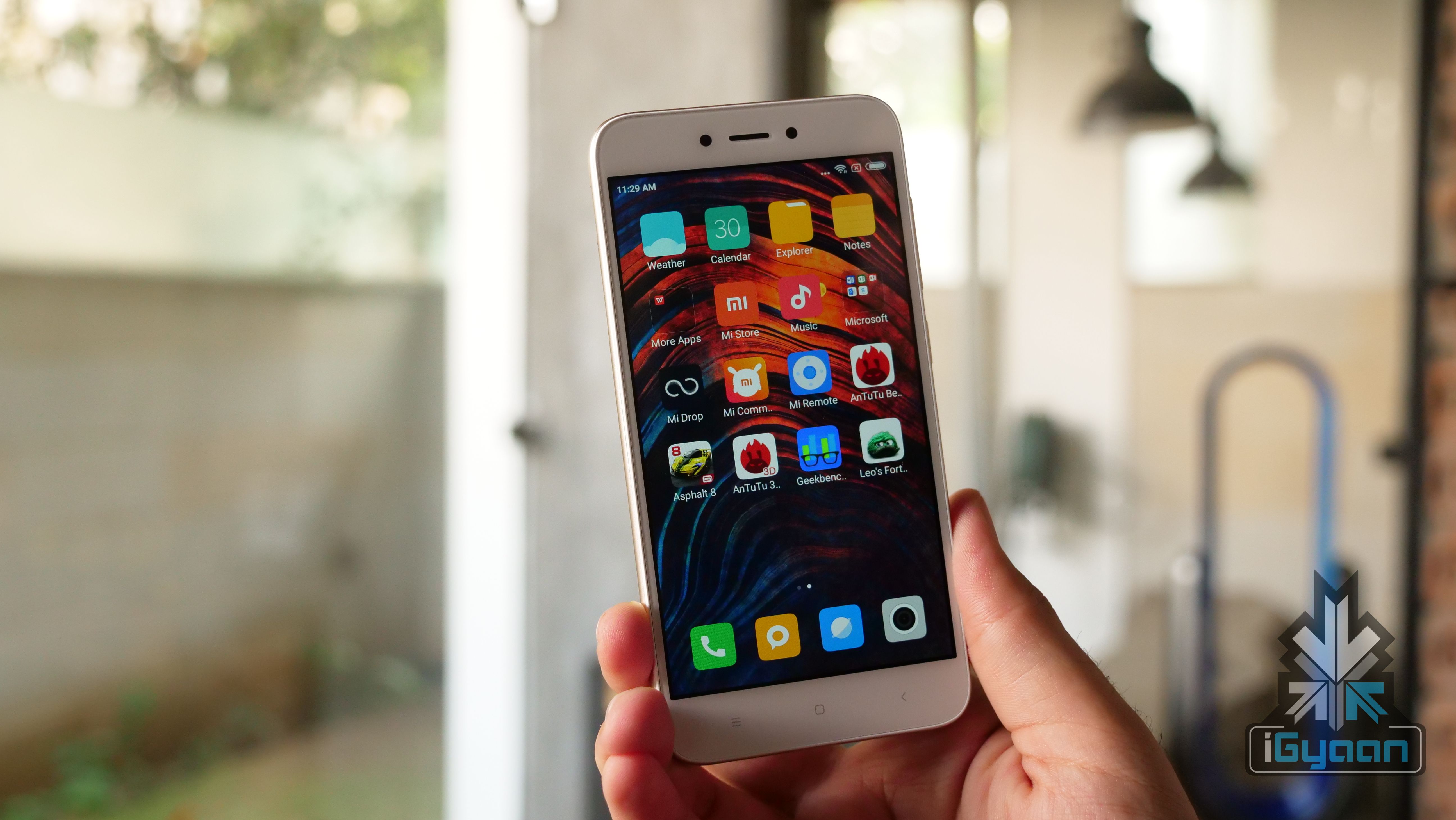
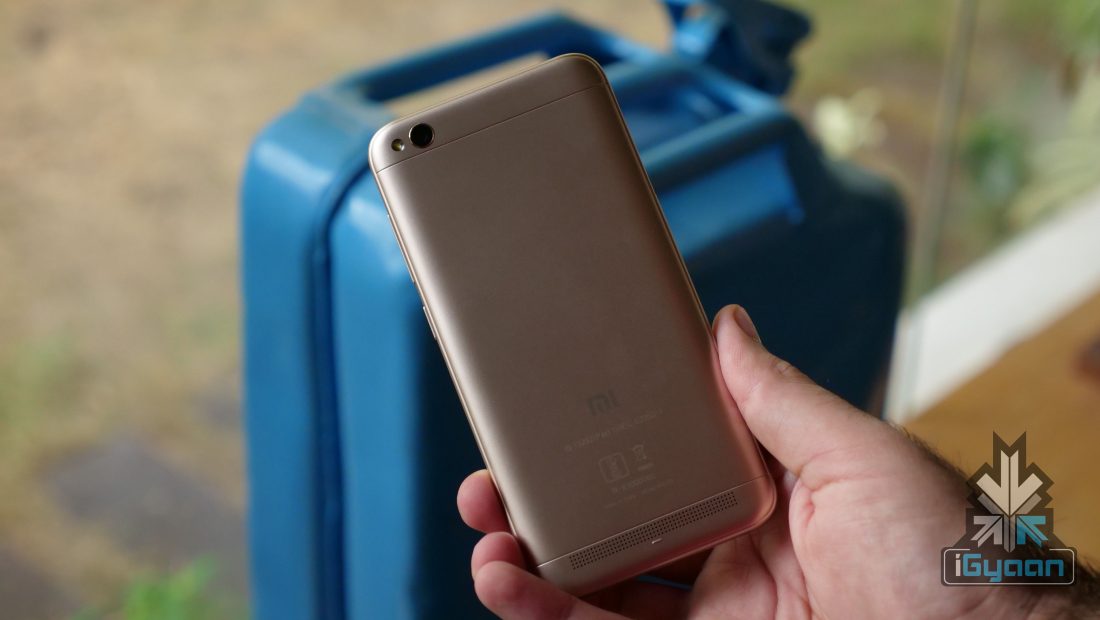
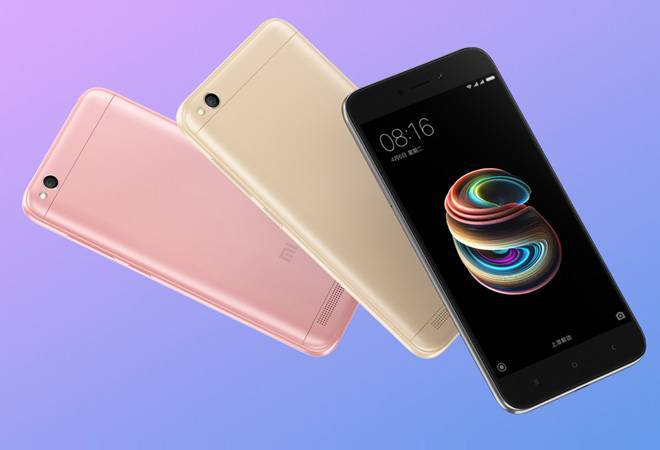
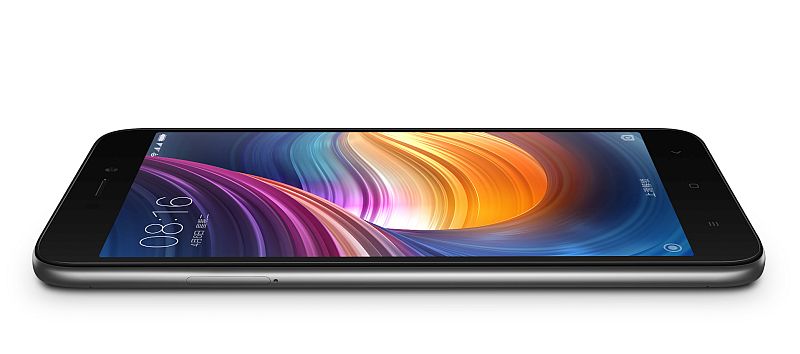
Xiaomi has launched the Redmi 5A in India as the ‘Desh Ka Smartphone’ at a price of Rs 4999 for the 2GB RAM variant and Rs 6999 for the 3GB RAM variant.
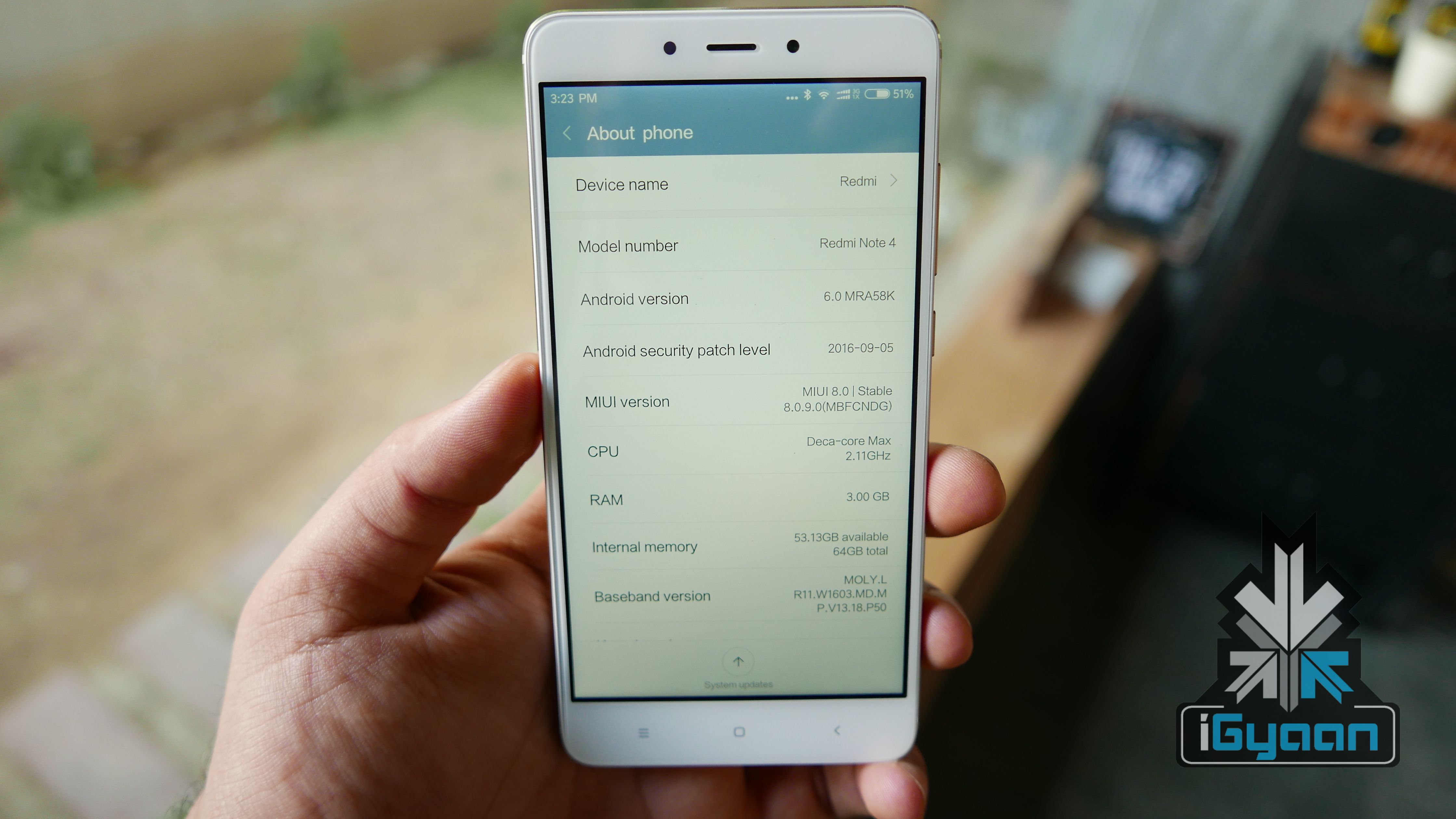
The Redmi 5A isn’t a huge upgrade over its predecessor, the Redmi 4A. The Redmi 5A has a 5 inch LCD display with a 1280 x 720 px resolution.
Just like the Redmi 4A, the new smartphone is also powered by the Qualcomm Snapdragon 425 chipset, quad-core CPU clocked at 1.4GHz, along with 2GB/3GB of RAM, 16GB/32GB of onboard storage which can be expanded up to 128GB via microSD card. The dual-SIM Redmi 5A is powered by a 3000 mAh battery which seems to be a downgrade when compared to the Redmi 4A which packs a 3120 mAh battery.
The device will run Android 7.1 Nougat out of the box with Xiaomi’s custom MIUI 9 skin on top.
The Redmi 5A has a 13MP rear camera with an f/2.2 aperture, burst mode, panorama mode, HDR mode, and more. To the front is a 5MP camera with an f/2.0 aperture. The smartphone records 1920 x 1080 px videos.
The Redmi 5A will be a Flipkart exclusive and go on sale on the 7th of December.
Xiaomi will launch its new Redmi smartphone in India today. It is widely expected that the Redmi 5A will be unveiled as the successor to the Redmi 4A with an even cheaper price tag. Watch the live stream here.
The Redmi 5A has a 5 inch LCD display with a 1280 x 720 px resolution.
The Redmi 5A has the Qualcomm Snapdragon 425 chipset, quad-core CPU clocked at 1.4GHz, along with 2GB of RAM. At the time of its launch in China, only one storage model was announced but, more storage and RAM variants could be introduced for its India launch. The current model has 16GB of onboard storage which can be expanded up to 128GB via microSD card.
The dual-SIM Redmi 5A is powered by a 3000 mAh battery which seems to be a downgrade when compared to the Redmi 4A which packs a 3120 mAh battery. The device will run Android 7.1 Nougat out of the box with Xiaomi’s custom MIUI 9 skin on top.
The Redmi 5A has a 13MP rear camera with an f/2.2 aperture, burst mode, panorama mode, HDR mode, and more. To the front is a 5MP camera with an f/2.0 aperture. The smartphone records 1920 x 1080 px videos.
Xiaomi has been teasing the launch of a ‘Desh ka Smartphone’ on social media for a couple of weeks now. The launch is set for the 30th of November and will be a part of the Redmi lineup. Since it is being marketed as the ‘India Ka Smartphone’, it could be priced under Rs 5000 for the base model.
Redmi India’s Twitter account has been teasing a few features of the phone such as long battery life and multiple Indian local languages support. This suggests that Xiaomi could launch the Redmi 5A in India come 30th of November.
The Redmi 5A isn’t a huge upgrade over its predecessor, the Redmi 4A. The Redmi 5A has a 5 inch LCD display with a 1280 x 720 px resolution.
The Redmi 5A has the Qualcomm Snapdragon 425 chipset, quad-core CPU clocked at 1.4GHz, along with 2GB of RAM. At the time of its launch in China, only one storage model was announced but, more storage and RAM variants could be introduced for its India launch. The current model has 16GB of onboard storage which can be expanded up to 128GB via microSD card.
The dual-SIM Redmi 5A is powered by a 3000 mAh battery which seems to be a downgrade when compared to the Redmi 4A which packs a 3120 mAh battery. The device will run Android 7.1 Nougat out of the box with Xiaomi’s custom MIUI 9 skin on top.
The Redmi 5A has a 13MP rear camera with an f/2.2 aperture, burst mode, panorama mode, HDR mode, and more. To the front is a 5MP camera with an f/2.0 aperture. The smartphone records 1920 x 1080 px videos.
Dual cameras, a trend that started in 2016 in flagship phones trickled down to budget smartphones in 2017. From the iPhone 7 Plus in 2016 to Lenovo K8 Plus in 2017, the trend of dual-camera smartphones is here to stay and has become a norm for a top-performing budget Android device. In a sea of budget smartphones with identical specifications and price, which dual-camera phone should you buy this holiday season? iGyaan brings you its pick for the best budget dual-camera phones you can buy right now:
Xiaomi Mi A1
One of the best budget phones to be launched in 2017, the Mi A1 combines Xiaomi’s hardware and Google’s stock Android OS in this perfectly priced budget phone.
The smartphone has a 5.5 inch 1920 x 1080 px display with Corning Gorilla Glass on top for protection and metal unibody build.
The phone has the Qualcomm Snapdragon 625 chipset, 2.0GHz octa-core processor, 4GB RAM and 64GB of onboard storage which is expandable via microSD card. Handling the graphics under the hood is the Adreno 505 GPU. The pyrolytic graphite sheet will help in heat management as well, Xiaomi claims. The Xiaomi Mi A1 has an IR blaster to control appliances in your home or office. Powering the device is a 3,080 mAh battery and fast charging through the Type C port
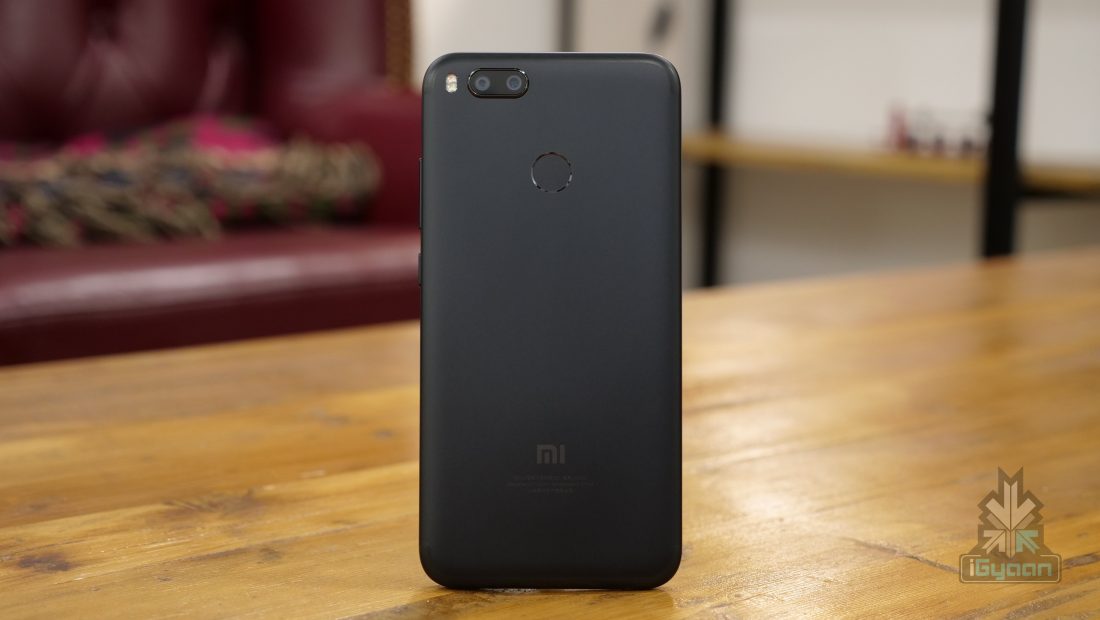
The fingerprint sensor sits at the back of the device below the camera. Xiaomi has also included a dedicated headphone amplifier for better music listening experience.
The Mi A1 runs pure Android 7.1.2 Nougat OS and thanks to Android One program, the Mi A1 will get software to Android 8.0 Oreo and Android P as well.
It’s worth noting that despite the stock Android OS, Xiaomi has still introduced a few apps of its own like the Mi Camera app, since Google’s app doesn’t support dual-camera right now. Other apps like the Mi Remote and the Mi Store are also present in the Xiaomi Mi A1.
In terms of optics, the smartphone features a 12MP dual-camera setup with 1.25-micron pixel size. Out of the two cameras at the back, the primary one is equipped with a telephoto lens and the secondary camera has a wide-angle lens. The telephoto lens allows the user to take bokeh effect shots with blurred background and a 2X optical lossless zoom. For landscape shots, Xiaomi has introduced a wide angle lens while on the front is a 5MP camera.
Moto G5s Plus
Successor to one of the best budget camera smartphones the Moto G5 Plus, Moto G5s Plus was launched close to the Xiaomi Mi A1 and carries an identical price tag as well.
The Moto G5S Plus has a 5.5 inch 1920 x 1080 px display with Corning Gorilla Glass 3 on top for protection.
The smartphone has the Qualcomm 625 chipset, an octa-core processor clocked at 2.0 GHz with 4GB RAM and 64GB of onboard storage which can be expanded up to 128GB via a microSD card. The fingerprint sensor is housed inside the home button which sits below the display. The device is powered by a 3,000 mAh battery with included turbo charge capabilities.
The Moto G5S Plus runs Android 7.1.1 Nougat with little customisation done by the manufacturer resulting in stock Android OS experience.
The Moto G5S Plus features rear-mounted 13MP dual-cameras with an f/2.0 aperture. The dual camera captures Bokeh, and selective focus shots, along with other capabilities of background replacement and exposure management. On the front is a wide angle 8MP camera with a single LED flash and a panoramic mode. The rear cameras capture videos in 4K at 30 FPS and the front camera records videos in 1080P at 30 FPS. According to Motorola, additional features such as Night Display and Quick Reply enhance the software experience. The implementation of the dual-camera setup on the Moto G5S Plus is different than that on the Mi A1.
Lenovo K8 Note
The Lenovo K8 Note features a 5.5-inch 1920 x 1080 px display with a pixel density of 441ppi and a Corning Gorilla Glass with oleophobic coating for scratch and smudge resistance.
The K8 Note is also splash resistant due to its P2i coating, although the resistance might decrease with time due to wear and tear of the nano coating. The fingerprint sensor sits at the back of the device under the cameras.
The Lenovo K8 Note is run on a MediaTek MT 6797D Helio X23 a Tri-cluster, 64-bit chipset with a 2.3 GHz high-performing deca-core processor and the Mali T-880 MP4 GPU. The device has either a 3GB or 4GB RAM and 32GB or 64GB onboard storage which is expandable via a microSD card.
The Lenovo K8 Note has a 13M Pure cell sensor mated with a 5MP Samsung BSI sensor dual camera setup and dual LED flash at the back. The phone is capable of depth mode effects along with 1920 x 1080 px Video capture. A 13MP camera with LED flash and an f/2.0 aperture sits on the front of the device above the display. The camera UI will also feature a stock Android layout with no customisation offered by Lenovo apart from the depth mode.
Honor 9i
The Honor 9i has a 5.9-inch 2160 x 1080px display with an 18:9 aspect ratio.
It also has Huawei’s in-house octa-core Kirin 659 chipset, octa-core 2.36 GHz processor, along with 4 GB of RAM and 64 GB onboard storage. Powering the device is a 3340 mAh battery which charges via a micro USB port.
The device runs Android 7.0 Nougat out of the box with Huawei’s EMUI 5.1 skin on top
This is the only smartphone on this list which has four cameras. The rear of the phone contains a 16 MP main sensor and a 2 MP secondary sensor, while the front has a 13 MP camera and another 2 MP secondary sensor. A fingerprint sensor is placed at the back of the phone since the phone has thin bezels and no physical button at the front of the phone.
Dual cameras, a trend that started in 2016 in flagship phones trickled down to budget smartphones in 2017. From the iPhone 7 Plus in 2016 to Lenovo K8 Plus in 2017, the trend of dual-camera smartphones is here to stay and has become a norm for a top-performing budget Android device. In a sea of budget smartphones with identical specifications and price, which dual-camera phone should you buy this holiday season? iGyaan brings you its pick for the best budget dual-camera phones you can buy right now:
Xiaomi Mi A1
One of the best budget phones to be launched in 2017, the Mi A1 combines Xiaomi’s hardware and Google’s stock Android OS in this perfectly priced budget phone.
The smartphone has a 5.5 inch 1920 x 1080 px display with Corning Gorilla Glass on top for protection and metal unibody build.
The phone has the Qualcomm Snapdragon 625 chipset, 2.0GHz octa-core processor, 4GB RAM and 64GB of onboard storage which is expandable via microSD card. Handling the graphics under the hood is the Adreno 505 GPU. The pyrolytic graphite sheet will help in heat management as well, Xiaomi claims. The Xiaomi Mi A1 has an IR blaster to control appliances in your home or office. Powering the device is a 3,080 mAh battery and fast charging through the Type C port
The fingerprint sensor sits at the back of the device below the camera. Xiaomi has also included a dedicated headphone amplifier for better music listening experience.
The Mi A1 runs pure Android 7.1.2 Nougat OS and thanks to Android One program, the Mi A1 will get software to Android 8.0 Oreo and Android P as well.
It’s worth noting that despite the stock Android OS, Xiaomi has still introduced a few apps of its own like the Mi Camera app, since Google’s app doesn’t support dual-camera right now. Other apps like the Mi Remote and the Mi Store are also present in the Xiaomi Mi A1.
In terms of optics, the smartphone features a 12MP dual-camera setup with 1.25-micron pixel size. Out of the two cameras at the back, the primary one is equipped with a telephoto lens and the secondary camera has a wide-angle lens. The telephoto lens allows the user to take bokeh effect shots with blurred background and a 2X optical lossless zoom. For landscape shots, Xiaomi has introduced a wide angle lens while on the front is a 5MP camera.
Moto G5s Plus
Successor to one of the best budget camera smartphones the Moto G5 Plus, Moto G5s Plus was launched close to the Xiaomi Mi A1 and carries an identical price tag as well.
The Moto G5S Plus has a 5.5 inch 1920 x 1080 px display with Corning Gorilla Glass 3 on top for protection.
The smartphone has the Qualcomm 625 chipset, an octa-core processor clocked at 2.0 GHz with 4GB RAM and 64GB of onboard storage which can be expanded up to 128GB via a microSD card. The fingerprint sensor is housed inside the home button which sits below the display. The device is powered by a 3,000 mAh battery with included turbo charge capabilities.
The Moto G5S Plus runs Android 7.1.1 Nougat with little customisation done by the manufacturer resulting in stock Android OS experience.
The Moto G5S Plus features rear-mounted 13MP dual-cameras with an f/2.0 aperture. The dual camera captures Bokeh, and selective focus shots, along with other capabilities of background replacement and exposure management. On the front is a wide angle 8MP camera with a single LED flash and a panoramic mode. The rear cameras capture videos in 4K at 30 FPS and the front camera records videos in 1080P at 30 FPS. According to Motorola, additional features such as Night Display and Quick Reply enhance the software experience. The implementation of the dual-camera setup on the Moto G5S Plus is different than that on the Mi A1.
Lenovo K8 Note
The Lenovo K8 Note features a 5.5-inch 1920 x 1080 px display with a pixel density of 441ppi and a Corning Gorilla Glass with oleophobic coating for scratch and smudge resistance.
The K8 Note is also splash resistant due to its P2i coating, although the resistance might decrease with time due to wear and tear of the nano coating. The fingerprint sensor sits at the back of the device under the cameras.
The Lenovo K8 Note is run on a MediaTek MT 6797D Helio X23 a Tri-cluster, 64-bit chipset with a 2.3 GHz high-performing deca-core processor and the Mali T-880 MP4 GPU. The device has either a 3GB or 4GB RAM and 32GB or 64GB onboard storage which is expandable via a microSD card.
The Lenovo K8 Note has a 13M Pure cell sensor mated with a 5MP Samsung BSI sensor dual camera setup and dual LED flash at the back. The phone is capable of depth mode effects along with 1920 x 1080 px Video capture. A 13MP camera with LED flash and an f/2.0 aperture sits on the front of the device above the display. The camera UI will also feature a stock Android layout with no customisation offered by Lenovo apart from the depth mode.
Honor 9i
The Honor 9i has a 5.9-inch 2160 x 1080px display with an 18:9 aspect ratio.
It also has Huawei’s in-house octa-core Kirin 659 chipset, octa-core 2.36 GHz processor, along with 4 GB of RAM and 64 GB onboard storage. Powering the device is a 3340 mAh battery which charges via a micro USB port.
The device runs Android 7.0 Nougat out of the box with Huawei’s EMUI 5.1 skin on top
This is the only smartphone on this list which has four cameras. The rear of the phone contains a 16 MP main sensor and a 2 MP secondary sensor, while the front has a 13 MP camera and another 2 MP secondary sensor. A fingerprint sensor is placed at the back of the phone since the phone has thin bezels and no physical button at the front of the phone.
As the West continues to indulge in the festivities and take advantage of the Black Friday deals, iGyaan has some amazing deals for you as well. Gearbest is offering a 50% off on top Xiaomi products from smartphones to drones!
Xiaomi Mi 6
The Mi 6 has a 5.15 inch 1920 x 1080 px LCD display. Powering the device is a 3350 mAh battery and the phone runs Android 7.1 Nougat with MUI skin on top. Under the hood, the device has Qualcomm Snapdragon 835 and Adreno 540 GPU for graphics. The fingerprint sensor is housed in the home button just below the display. Xiaomi Mi 6 is also splash-resistant, with the SIM tray also sealed against splashes.The Xiaomi Mi 6 does have stereo speakers and is missing a 3.5mm headphone jack, much like the iPhone 7 and it seems to have become a norm these days.
The Mi 6 has a dual camera set up of two 12MP cameras at the back. One of the cameras has a wide-angle lens with 4-axis Optical Image stabilisation with an f/1.8 aperture while the other one is equipped with a telephoto lens with an f/2.6 aperture for 2X lossless zoom and bokeh effect photos. On its front, it has an 8MP camera which records 1080P videos.
The smartphone has a 5.5 inch 1920 x 1080 px LTPS display with Corning Gorilla Glass on top for protection and aluminum unibody build. Powering the device is a 3080 mAh battery and 2A charging through the Type C port. The Mi A1 runs pure Android 7.1.2 Nougat OS.
The phone has the Qualcomm Snapdragon 625 chipset, 8x ARM Cortex A53 2.0GHz 64-bit processor, 4GB RAM and 64GB of onboard storage which is expandable via microSD card. Handling the graphics under the hood is the Adreno 505 GPU. The fingerprint sensor sits at the back of the device below the camera.
The Xiaomi Mi A1 features dual sensors – 12MP with an f/2.2 aperture (26mm) and 12MP with an f/2.6 aperture (50mm) setup with 1.25-micron pixel size. Out of the two cameras at the back, the primary one is equipped with a telephoto lens and the secondary camera has a wide-angle lens. The telephoto lens allows the user to take bokeh effect shots with blurred background and a 2X optical lossless zoom. For landscape shots, Xiaomi has introduced a wide angle lens while on the front is a 5MP camera.
The Xiaomi Mi MAx 2 is priced at Rs 13999 in India. The phablet is retailing at Gearbest right now for US $105 (Rs 6800 approx.) which is almost half the price of its Indian variant.
The Mi Max 2 has a unibody metal design along with a 6.44-inch display. It has the Qualcomm Snapdragon 625 chipset, 4GB of RAM and 64GB/128GB of onboard storage. It runs Android 7 Nougat with MIUI 8 on top.
It has a 12MP rear-facing camera and a 5MP front facing camera.
The Xiaomi Mi 5X has a 5.5-inch 1920 x 1080 px IPS LCD display. The smartphone is powered by a 3,080 mAh battery with fast charging capabilities through the USB Type C port, although, the included charger does not provide a fast charge.
The Mi 5X has the Qualcomm Snapdragon 625 chipset, 2.0 GHz octa-core processor, 4GB RAM and 64GB onboard storage which is expandable via microSD card up to 128GB.
The Mi 5X runs Android 7.1.1 based on MiUi 8.5The phone has 12MP dual-cameras with the secondary camera equipped with a telephoto lens for 2X lossless optical zoom. The camera app has a portrait mode very similar to the one on iPhone 7 Plus with features that include a portrait mode, blurring out the background. The dual-cameras are also capable of recording 4K videos at 30 FPS and 720P videos 120 FPS. On the front is a 5MP camera that records 1080P videos at 30 FPS.
Smartphones nowadays, are no longer a luxury. Smartphones have become an affordable necessity that keeps on moving in two directions. On one hand, we saw the thousand dollar or the “1 lakh” barrier being crossed by the iPhone X this year, and on the other hand we have much more affordable Android phones which do not skim down on quality.
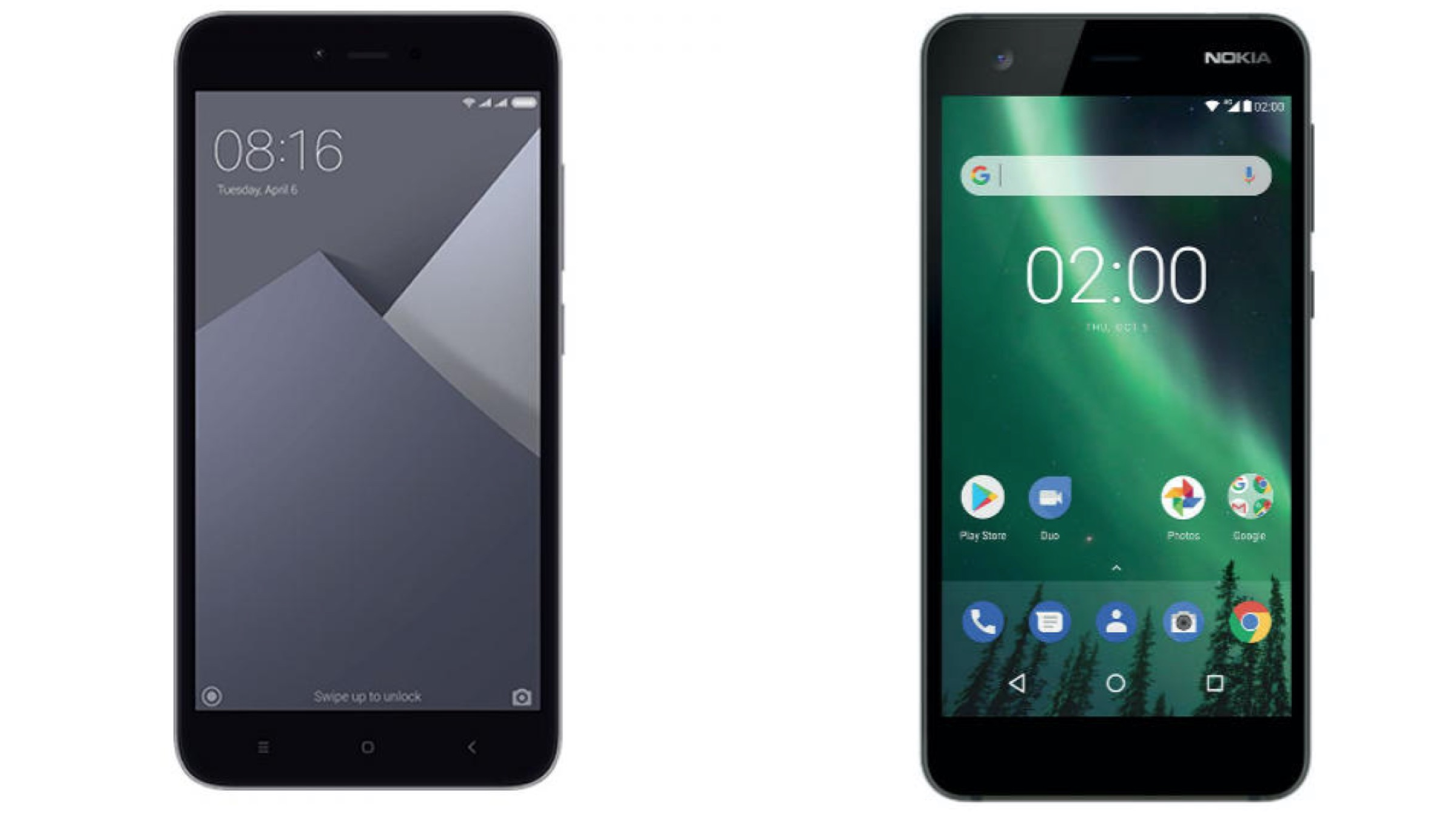
Xiaomi and HMD Global recently launched two Android phones at the same price tag of Rs 6999. While Xiaomi has slowly reached the pinnacle of the Indian smartphone market, HMD Global and Nokia are still trying to find its feet after a lengthy absence from the scene.
Today, lets stack the two budget giants against each other and see which phone trumps the other one!
<a href=”http://amzn.to/2z7n9HO”>Click here for latest price</a>
Rs 6999
Display
5.5 inch IPS LCD
5 inch TFT
Display Resolution
1280 x 720 px
1280 x 720 px
OS
Android 7.1 Nougat
MIUI 8.5 (Update to MIUI 9 guaranteed)
Android 7.1 Nougat
Stock Android OS
Chipset
Qualcomm Snapdragon 425
Qualcomm Snapdragon 212
GPU
Adreno 308
Adreno 304
RAM
2GB
1GB
Storage
16GB, Expandable up to 128GB
8GB, Expandable up to 128GB
Battery
3080 mAh
4100 mAh
Primary Camera
13MP f/2.0
8MP
Secondary Camera
5MP with f/2.4 aperture
5MP
Other Features
Pro selfie mode
None
On pure specifications, the Redmi Y1 Lite is ahead of the Nokia 2 in almost every aspect except the battery. MIUI is an Android skin people love to hate, and it depends on you whether you prefer the customisability but, a certain level of unpredictability of this skin.
However, if you are on the lookout for a secondary device which you need just for calling, then a 4100 mAh battery and stock Android OS could be the way to go.
Xiaomi India recently announced the opening of a new facility in India strictly dedicated to making its new power bank, the Mi Power Bank 2i. Now, it appears that a new smartphone specifically made in India and for the Indian audience, will be launched very soon.
In the tweet, it is visible that Xiaomi is clearly targeting the Indian audience with a smartphone that will be a part of its ‘Make In India’ project. So far, most of the smartphones from Xiaomi that launch in India are first launched in China and then renamed for the Indian audience and unveiled in India.
The recently launched Xiaomi Mi A1 was also just the Xiaomi Mi 5X which was launched in China but, with stock Android OS.
Xiaomi could launch a smartphone under the Rs 5000 bracket which will compete with the likes of other Indian brands.
This new phone could even be the Redmi Note 5 which will make sense, as the Redmi Note 4 has been the company’s most successful smartphone in India.The Redmi Note 5 already has a lot of anticipation in the Indian market and if the phone is a part of the company’s ‘Make In India’ project, then it will increase the Redmi Note 5’s desirability even more.
Xiaomi has already launched about 8 devices in India so far, and in arecent chat with Mr. Manu Kumar Jain, VP of Xiaomi, he said that the company is satisfied with the products it has in all the price segments. What is missing however, is a phone made in India, and this could be Xiaomi’s entry to that smartphone market.
Leaked Redmi Note 5
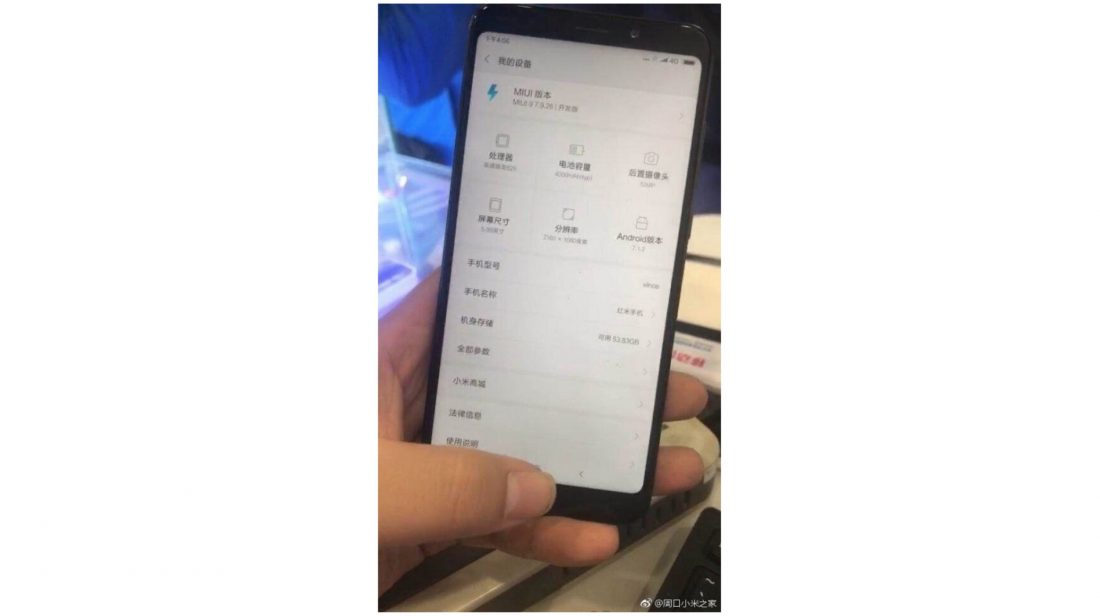
According to a recent leak of the Xiaomi Redmi Note 5, the Redmi Note 5 will have Snapdragon 625 chipset. The phone also has a 5.99 inch display with a very 2017-like 18:9 ratio and Full HD+ (2160 x 1080 px) resolution.
The phone shows 54GB of storage available, meaning that the variant in question here is the 64GB unit. There is at least one camera with a 12 MP sensor and the smartphone runs on Android 7.1.2 Nougat.
The device appears to be powered by a 4000 mAh battery and due to thin bezels, the fingerprint sensor is placed at the back of the phone, much like the Redmi Note 4.
With the west side of the world basking in the glory of ‘Black Friday’ sales, iGyaan brings you the top tech deals that you can avail right now at Gearbest.
Maze Alpha
The Maze Alpha has a design similar to the Doogee Mix, with a huge bottom chin and ultra-thin bezels on the two sides and top of the device. The phone has a 6 inch 1920 x 1080 px display with an 83% screen-to-body ratio and Corning Gorilla Glass 4 for protection. The Maze Alpha packs a 4,000 mAh battery and supports Quick Charge through the USB Type C port.
It runs on the MediaTek MT6757CD Helio P25 chipset along but, with 4GB RAM and 64GB onboard storage which is expandable via microSD card up to 256GB. The back of the device features a 13Mp + 5MP dual-camera setup with Samsung S5K3L8 sensor and an f/2.2 aperture the front has a 5MP camera.
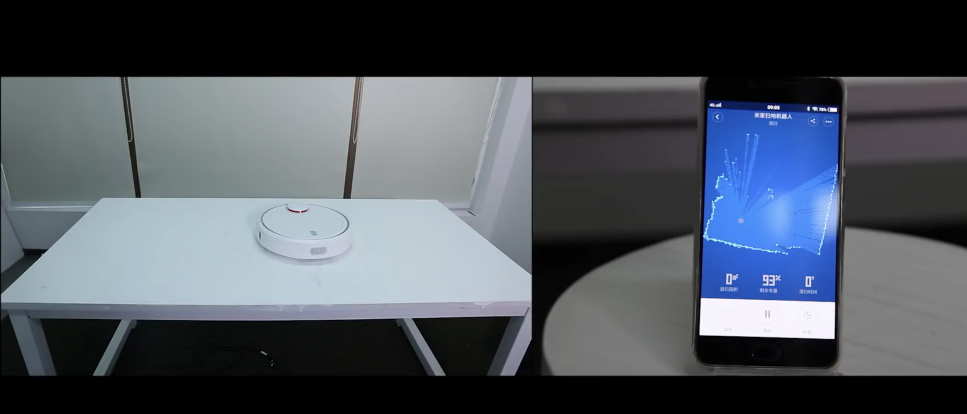
If you live away from your family and never get the time to clean your house, then the Robotic Vacuum cleaner is just the piece of tech you need! A full suite of Intelligent Sensors beneath the robot allow this futuristic looking robotic cleaner to work its way around furniture and avoid stairs or other dangerous drop-offs. Thanks to Simultaneous Localization and Mapping ( SLAM ) algorithm, the vacuum cleaner maps out the ideal route to go about cleaning the house after studying the environment. It has a 5200 mAh battery which gives up to 2.5 hours of run time, enough to clean your house once.
Ideal for people who like living the Bluetooth life as we near the slow death of the headphone jack. These bluetooth earbuds are available right now for about US $20 which is a steal! It has Bluetooth 4.1 and IPX4 sweat resistance so that you can take these with you for a run or to the gym. It has a 280 mA battery which translates to a 7 hour play time.
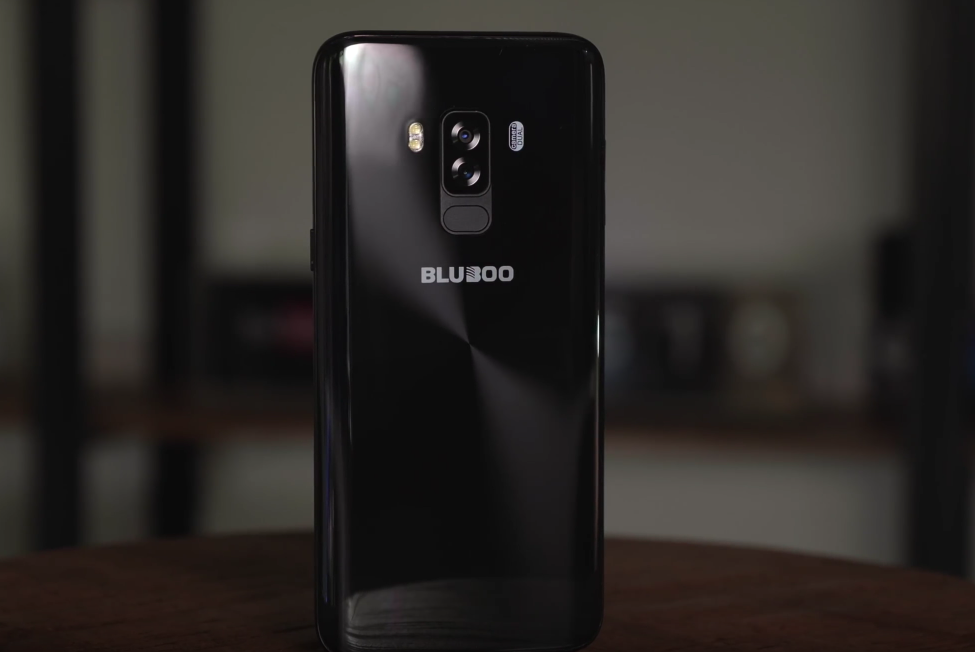
Another budget bezel-less offering from Blueboo, the Bluboo S8+ sounds and looks uncannily similar to the more famousS8+, the Samsung Galaxy S8+. At a price of US $159, this phone has a lot to offer without compromising much on the quality. It has a 6 inch display with a 1440 x 720 pc display with minimal bezels at the top and bottom of the phone. Under the hood, the the smartphone has the MediaTek MTK6750T chipset, 4GB of RAM and 64GB of onboard storage. It runs Android 7.0 Nougat and is powered by a 3600 mAh battery.
Click Here To Buy
Yeelight RGB Light
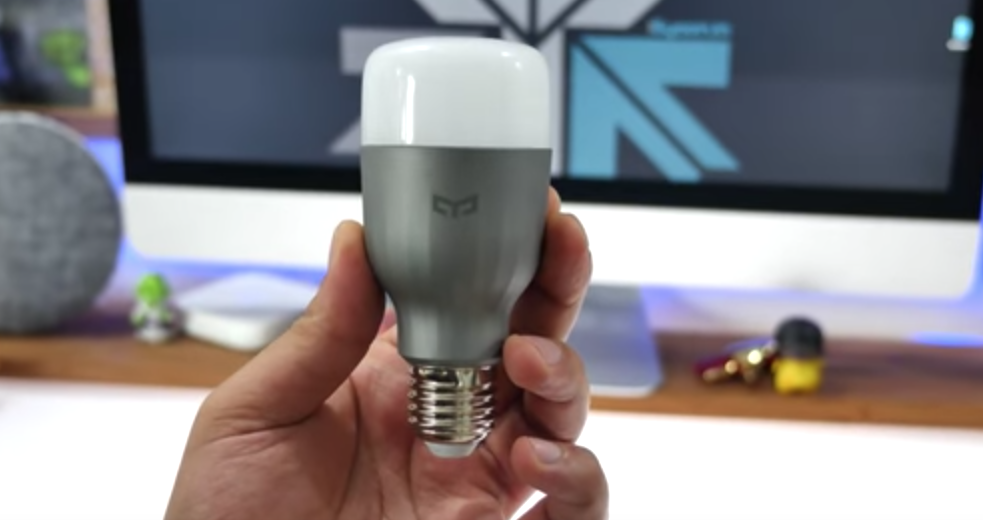
Smart lights are the new trend and a trend that is pricey. Yeelight RGB light is the budget offering for anyone who is starting to tech out their house or office space. It is available around US $16 which is much cheaper than the likes of Philips Hue. It is controlled via the Mi Home app and connects to other smart devices via WiFi.
The Xiaomi Mi Note 3 has a 5.5 inch 1920 x 1080 px IPS LCD display with a pixel density of 403ppi and a 94.4 percent NTSC colour gamut. Under the hood, the Xiaomi Mi Note 3 has the Qualcomm Snapdragon 660 chipset, Adreno 512 GPU, 6GB RAM, and 64GB or 128GB onboard storage options. The smartphone is powered by a 3,500 mAh battery with QuickCharge 3.0 through USB Type C port.
Out of the box, the Xiaomi Mi Note 3 runs Android 7.1.1 Nougat with Xiaomi’s custom MIUI 8.5 on top. As soon as you boot up the device, you get a software update which brings MIUI 9 with all of its features to the Xiaomi Mi Note 3.
The Mi Note 3 features a dual-camera setup at the back. The primary 12MP camera has a wide angle lens and an f/1.8 aperture and the secondary 12MP camera has a telephoto lens with an f/2.6 aperture. The front facing camera has a 16MP sensor with a 2-micron pixel size. Xiaomi has boasted about the phone’s ‘Adaptable AI Beautify’ feature, which the Chinese smartphone maker claims is a result of over half a year’s R&D.
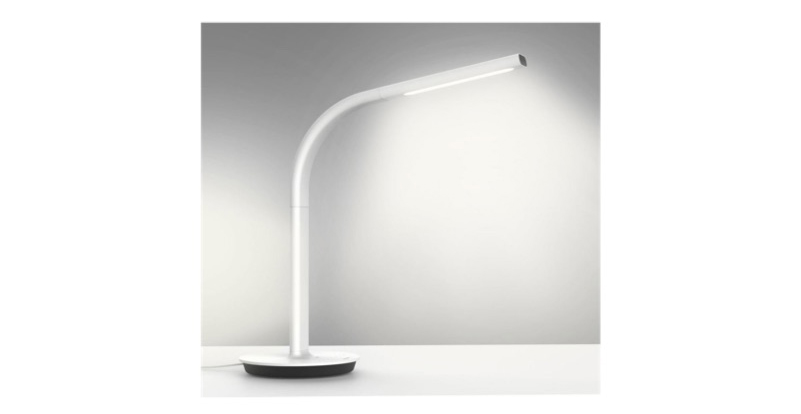
The strain caused to your eyes while working in a setting where the lighting is either too bright or too dim is something we’ve all experienced. In this era of smart lighting, Xiaomi has come up with a smart lamp in collaboration with Philips and it’s an instant winner. Take good care of your eyes and don’t let this lamp go out of stock!
The Mi 6 has a 5.15 inch 1920 x 1080 px LCD display. Powering the device is a 3350 mAh battery and the phone runs Android 7.1 Nougat with MUI skin on top. Under the hood, the device has Qualcomm Snapdragon 835 and Adreno 540 GPU for graphics. The fingerprint sensor is housed in the home button just below the display. Xiaomi Mi 6 is also splash-resistant, with the SIM tray also sealed against splashes.The Xiaomi Mi 6 does have stereo speakers and is missing a 3.5mm headphone jack, much like the iPhone 7 and it seems to have become a norm these days.
The Mi 6 has a dual camera set up of two 12MP cameras at the back. One of the cameras has a wide-angle lens with 4-axis Optical Image stabilisation with an f/1.8 aperture while the other one is equipped with a telephoto lens with an f/2.6 aperture for 2X lossless zoom and bokeh effect photos. On its front, it has an 8MP camera which records 1080P videos.
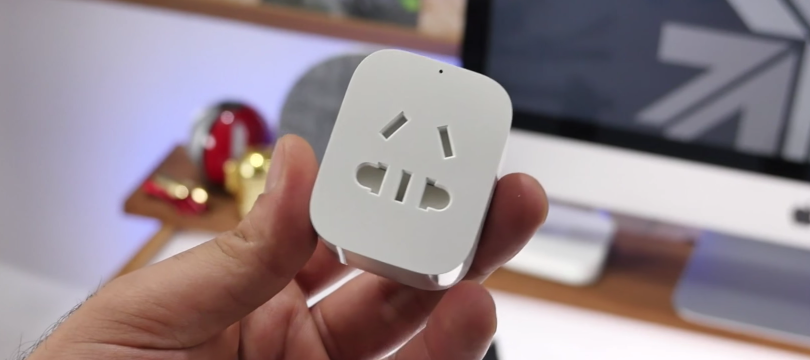
Talking about teching out your home or office, this smart socket from Xiaomi is ideal for everyone. It connects to your WiFi and can be controlled via the Mi Home app. You can remotely switch the plug on or off and even set a timer for the plug.
Next in line is the Bluboo S1 with an impressive 90% screen-to-body ratio and costs around $200 (RS 12,800 approx.). It sports a 5.5 inch 1920 x 1080 display with Corning Gorilla Glass 4 for protection. Running Android 7.0 and powered by a 3,500mAh battery, the Bluboo S1 packs the MediaTek Helio P25 chipset. The device also has 4GB RAM and 64GB onboard storage which is expandable via microSD card up to 256GB. For the cameras, it features a 13MP + 3MP dual camera setup at the back and a 5MP front-facing camera which is placed below the display.
Ever since the Xiaomi India’s head, Manu Kumar Jain tweeted an image of “i” launching in India, the speculations of the Redmi Note 5 have soared high. It was revealed later that the “i” stood for India as the Chinese smartphone maker launched a Made In India Mi Power Bank 2i. Now, the leaks of the Redmi Note 5 have surfaced again, this time in live images.
According to the image, the Redmi Note 5 will have Snapdragon 625 chipset. The phone also has a 5.99 inch display with a very 2017-like 18:9 ratio and Full HD+ (2160 x 1080 px) resolution.
The phone shows 54GB of storage available, meaning that the variant in question here is the 64GB unit. There is at least one camera with a 12 MP sensor and the smartphone runs on Android 7.1.2 Nougat. The device appears to be powered by a 4000 mAh battery and due to thin bezels, the fingerprint sensor is placed at the back of the phone, much like the Redmi Note 4.
The Redmi Note 5 will be a successor to the Redmi Note 4, Xiaomi’s most successful phone in the Indian market.
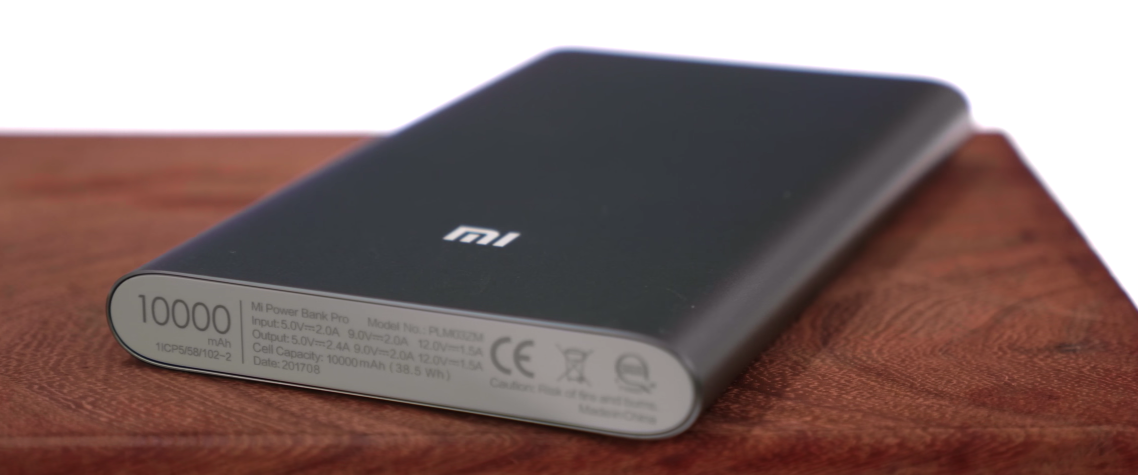
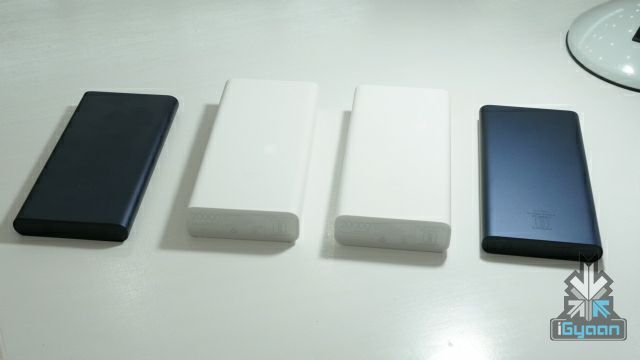
Xiaomi has announced the launch of a new power bank, the Mi Power Bank 2i in two capacity variants, one with 10000 mAh and the other with 20000 mAh. The 10000 mAh power bank is priced at Rs 799 while the bigger capacity power bank is priced at Rs 1499. The power banks will first go on sale on Mi.com and Mi Home Stores on the 23rd of November. From December, the two power banks will be sold via Amazon and Flipkart and offline, they will be sold via various stores such as Big Bazaar, Vijay Sales and more from December.
Xioami had been teasing a new product with the letter “i” on social media for the past few days. As the speculations of the Redmi Not 5 launch grew taller, it has been announced that the letter “i” indeed stands for ‘India’.
The Mi Power Bank 2i, as Xiaomi has said, is “Made In India, Made For India.” Xiaomi has also announced that it will produce 7 power banks per minute in India. The power bank, just like the previous ones from Xiaomi will have an aluminium built. The power bank is made of anodised aluminium and the chipset will be made by Texas Instruments.
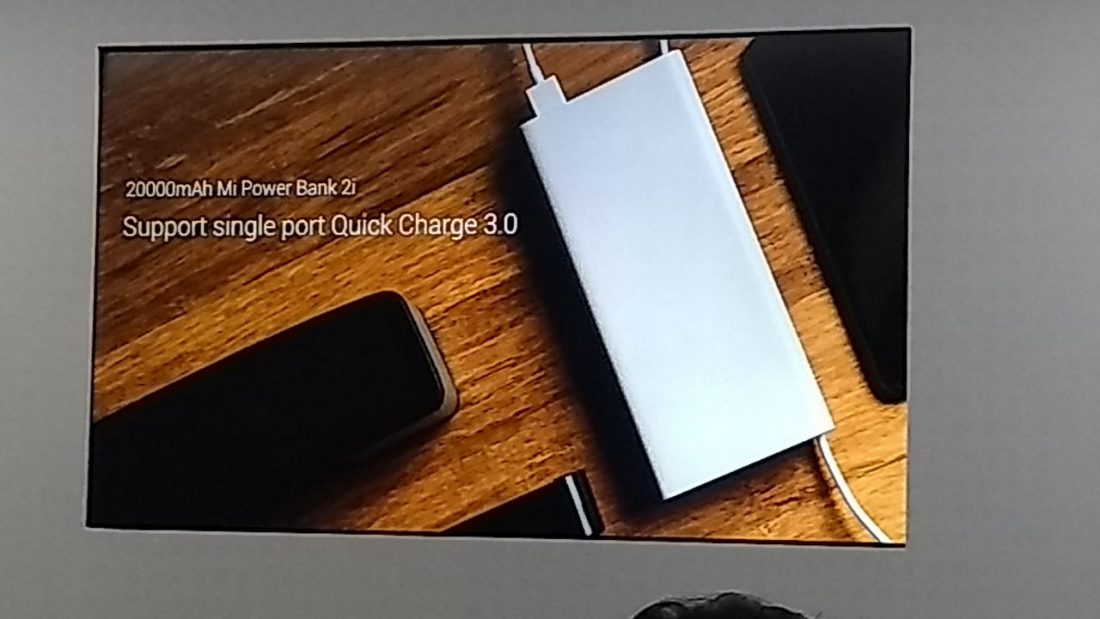
The 20000 mAh power bank also supports single port QuickCharge 3.0.
Since the new Mi Power Bank 2i is made for India, it is also extremely efficient since the Chinese tech giant has introduced dual USB ports for the first time in power bank lineup.
To give you an idea about how much capacity the 10000 mAh Mi Power Bank 2i has, it can charge the Redmi Note 4 (which has a 4100 mAh battery) 1.5 times and a Xiaomi Mi A1 up to 2.2 times on a single charge.
Xiaomi recently announced its plans of rolling out MIUI 9 to its Indian smartphones. Along with the launch of the Xiaomi Redmi Y1 Lite and Redmi Y1, the company released a list of smartphones that will get the MIUI 9 stable ROM update in the coming weeks. However, in a recent blog post, it also announced that for Mi 2/2S, Mi 4i, Redmi 1S, Redmi Note 4G, Redmi 2, Redmi 2 Prime, and Mi Note, MIUI 9 will be last update ever.
In a blog post, Xiaomi wrote:
To ensure the best performance of MIUI, we have to make a tough decision of suspending the update of 6 devices after a long-time discussion and evaluation about the release time of devices, active users, hardware performance, etc.
As far as the final MIUI 9 Global stable ROM is concerned, it will be gradually rolled out to aforementioned devices from December 2017 to January 2018.
Users who flashed the MIUI 9 beta version on their smartphone should have a keen eye on the Xiaomi forums as the company will be posting instructions for flashing to the MIUI 9 Global Stable ROM. Xiaomi has also said that MIUI Global Beta ROM 7.11.16 will be the last beta update for the smartphones that are mentioned above.
Here is a list of smartphones that will receive the new MIUI 9 update-
Mi 2, Mi 3, Mi 4, Redmi Note 4G, Mi Note, Mi 4i, Redmi 2, Redmi 2 Prime, Redmi Note 4G Prime, Redmi Note 2, Mi Mix, Mi Note 2, Mi 5, Mi 5s, Mi Max, Mi Max Prime, Redmi Note 3, Redmi 3, Redmi 3S, Redmi 3S Prime, Mi Mix 2, Mi Note 3, Mi 6, Mi Max 2, Redmi Note 4, Redmi Note 4xX, Redmi Note 5A, Redmi 4, Redmi 4A, Redmi Y1 and Redmi Y1 Lite.
Xiaomi’s most successful line of smartphones in India, the Redmi Note series might be getting its new flag bearer very soon. The Redmi Note 5, apparent successor to the hugely successful Redmi Note 4 might be coming to India soon.
A recent listing on a couple of e-commerce websites have shed some light on what the Redmi Note 5 might have to offer when it launches.
The Redmi Note 5 will sport a 5.99-inch display with a 2160 x 1080 px resolution, and as rumoured for weeks, will feature an 18:9 aspect ratio.
The listing suggests that the Redmi Note 5 will have the Qualcomm Snapdragon 625 chipset, but, since that is an old chipset, expect the Snapdragon 630 chipset instead. The device is also expected to be launched in a couple of variants, one with 3GB of RAM and 32GB of onboard storage and the other one with 4GB of RAM and 64GB of onboard storage. As is with a lot of Redmi Note phones, the Redmi Note 5 is also expected to be powered by a massive battery.
Xiaomi Redmi Note 4
The Redmi Note 5 is expected to have a 12MP rear-facing camera and a front facing 5MP camera.
Xiaomi recently announced a permanent price cut for the Redmi Note 4 which suggests that the company is making room for the Redmi Note 5 in that price bracket which already flooded with phones from other OEMs.
Additionally, Manu Jain, Head of Xiaomi India shared a teaser on Twitter hinting at launch of a new product.
Xiaomi followed up the 2016 Mi Mix with the new Mi Mix 2 with slightly thinner bezels and upgraded hardware. The Mi Mix 2 has the Qualcomm Snapdragon 835 chipset, 6GB of RAM and is priced at Rs 35999 in India. So, at this price, does it give the OnePlus 5 a run for its money?
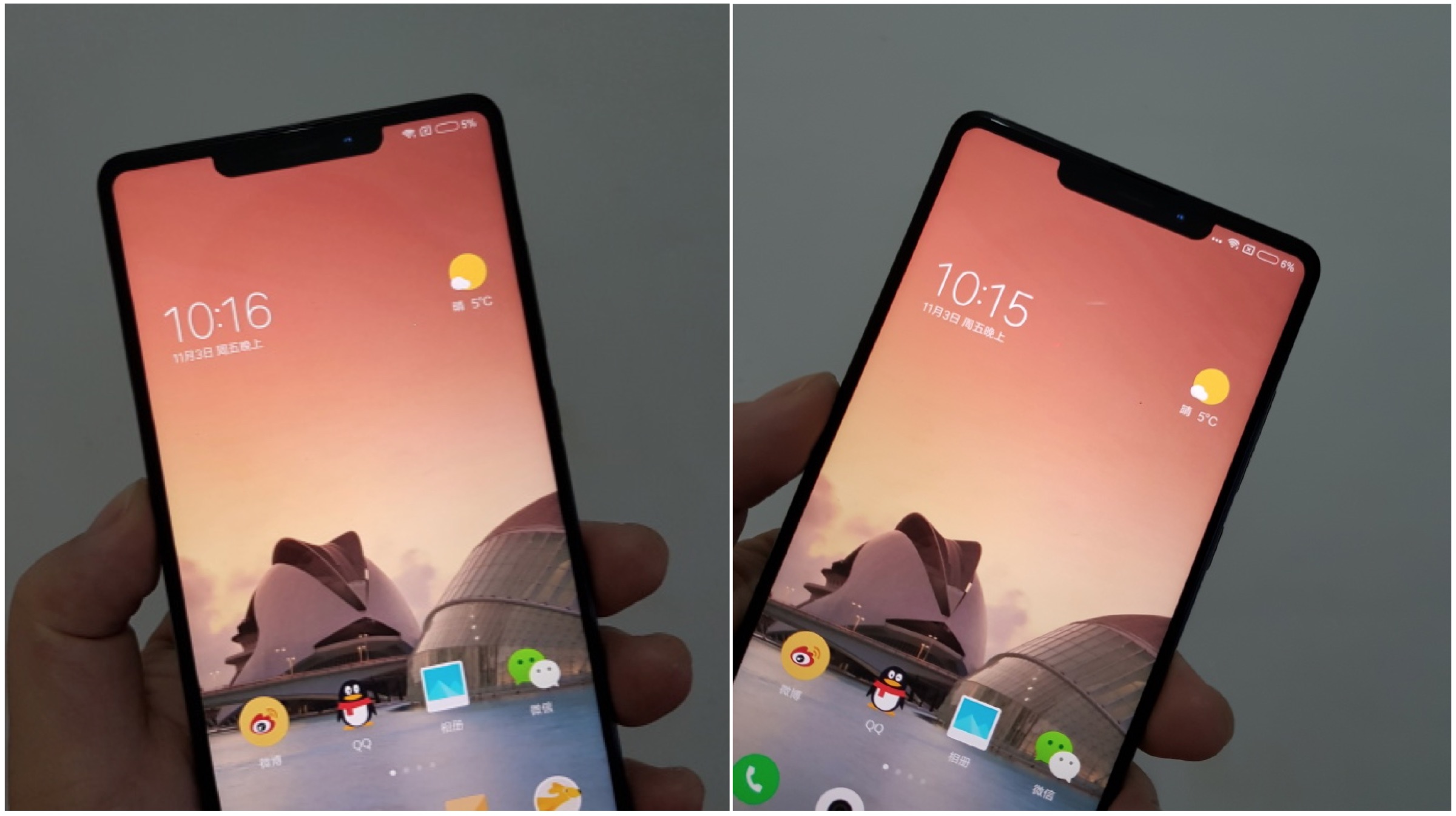
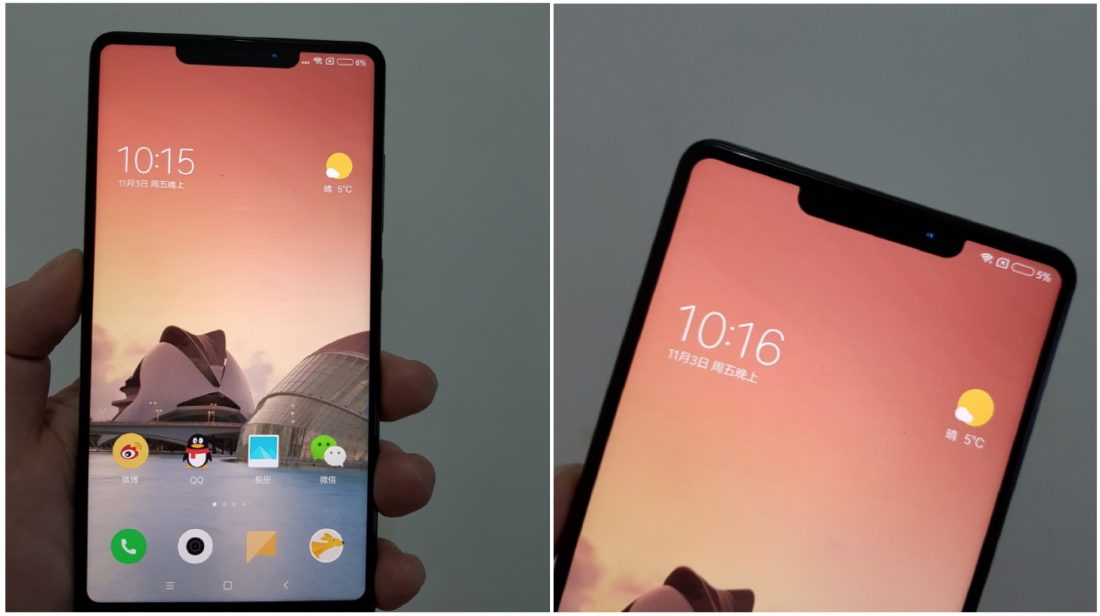
If these early images of the alleged Xiaomi Mi Mix 2s are anything to go by, then it looks like the iPhone X ‘notch’ is here to stay. The leaked images of the upcoming Mi Mix 2s show a very iPhone X-like top notch which appears to house the front camera and sensors.
If this does happen, and the Mi Mix 2s is launched with a notch so similar to the iPhone X, this phone will definitely grab the headlines. For design purposes, a notch will help the front camera move to a more natural position than in the bottom bezels, found on the Mi Mix and Mi Mix 2. Further, the notch can also help decrease the size of the bottom bezel which is not visible in the images.
Xiaomi Mi Mix 2
The notch on the Mi Mix 2s however, looks a bit forced, rather than natural as compared to the one found on the iPhone X. Looking at the inages, it is visible that the “horns” around the cutout are wider, leaving more room for icons in the status bar compared to the iPhone.
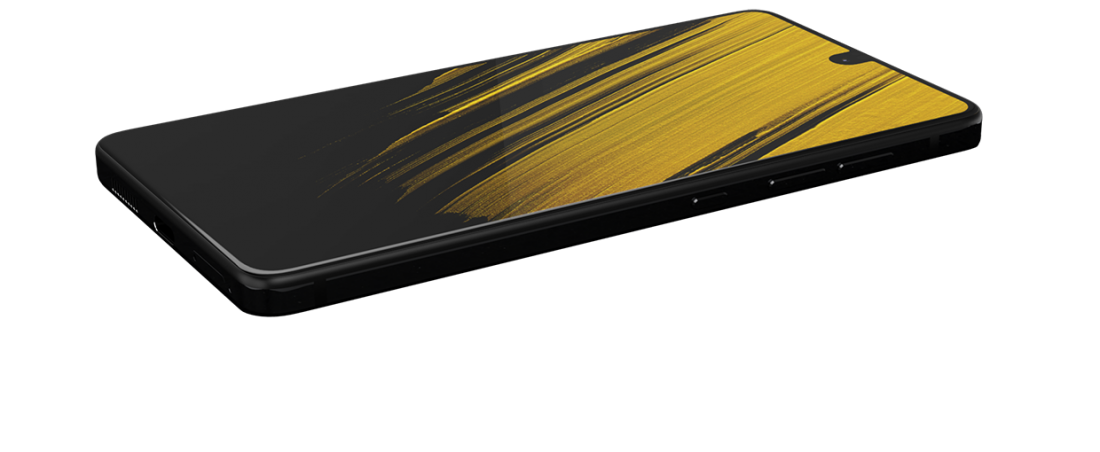
The Xiaomi Mi Mix 2s if launched, will not be the first Android device with a notch. The Essential Ph-1, which was released in August has a cyborg-like cutout for the front facing camera. Android apps, as found on the Essential Ph-1 do not deal well with a notch and developers need to actively update their apps to make use of the full 18:9 aspect ratio and also deal with a notch on the screen.
Essential Ph-1
The Xiaomi Mi Mix, launched in 2016 was the phone that prompted big smartphone makers to produce bezel-less devices. With the Mi Mix 2, Xiaomi entered a global market with its marquee device and with the Mi Mix 2s, it looks like the Chinese smartphone maker wants to take Apple head-on with another ‘top-notch’ device.