Category: Government, Law and Policy

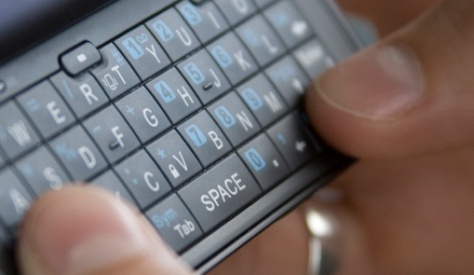
  • Ban on bulk SMS, MMS lifted

    Ban on bulk SMS, MMS lifted

    The restrictions imposed on sending bulk SMSes and MMSes, imposed in the wake of nationwide rumours of attacks on persons of northeastern states, was has been lifted by the government.

    “The restrictions on SMSes and MMSes has been removed,” home ministry spokesperson K.S. Dhatwalia said here. The government issued a notification in this regard.

    The telecom ministry had, on direction of home ministry, imposed the ban for 15 days on August 17. Later, the restriction was reviewed on August 24 when the telecom ministry increased the limit from five SMSes to 20 SMSes.

  • Apple wins $1 billion in Samsung patent case

    Apple wins $1 billion in Samsung patent case

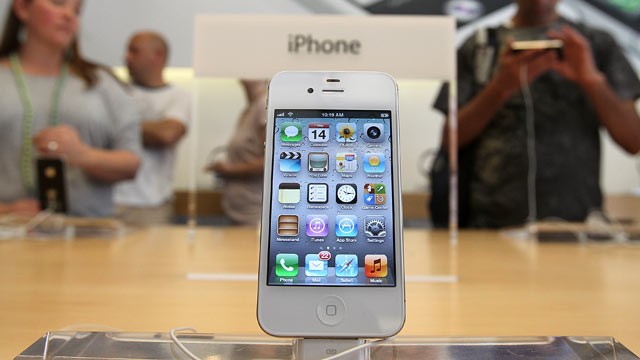
    Apple Inc scored a sweeping legal victory over Samsung on Friday as a U.S. jury found the Korean company had copied critical features of the hugely popular iPhone and iPad and awarded the U.S. company $1.05 billion in damages.

    The verdict — which came after less than three days of jury deliberations — could lead to an outright ban on sales of key Samsung products and will likely solidify Apple’s dominance of the exploding mobile computing market.

    The US lawsuit was one of several cases around the world between California-based Apple and South Korean Samsung over technology rights and innovation in the fast-growing mobile computing sector.

    Apple sued Samsung in April 2011, and Samsung countersued. The companies have also sued each other in Britain, Australia and South Korea. The California case was the first to go to a US jury.

    Apple sought $2.75 billion for its claims that Samsung infringed four design patents and three software patents. Samsung demanded as much as $421.8 million in royalties for claims that Apple infringed five patents.

    For the ’381 patent, which covers the “bounce-back” feature in document scrolling, all applicable Samsung products were found to be infringing for Samsung Electronics Ltd, Samsung Electronics America, and Samsung Telecommunications America, with the exception of the Galaxy Tab under Samsung Telecommunications America. This is a total of 21 smartphones and tablets including the Samsung Nexus S 4G, Galaxy s II (AT&T and i9100), Galaxy Tab, and Galaxy Tab 10.1.

    One bit of good news for Samsung: The jurors found that the Galaxy Tab 10.1 tablet did not infringe on any physical iPad design patents, as Apple had claimed.

  • South Korean court bans some Apple, Samsung products

    South Korean court bans some Apple, Samsung products

    Apple and Samsung have been ordered to stop selling some smartphones and tablet computers in South Korea and pay damages after a court ruled they each infringed the other’s patents.

    The South Korean court said that Apple had infringed two of Samsung’s wireless patents, while Samsung had infringed on a fruity firm patent related to a “bounce-back” touchscreen feature, Bloomberg, the Financial Times and others reported.

    The court also awarded damages to both sides, but only enough to cause a momentary fumble in their pockets. Apple only needs to pay 40m won ($35,000, £22,000) and Samsung just has to hand over 25m won ($22,000, £14,000).

    The Seoul Central District Court ruling called for a partial ban on sales of products including iPads and smartphones from both companies, though the verdict did not affect the latest-generation phones — Apple’s iPhone 4S or Samsung’s Galaxy S3.

    The ruling affects only the South Korean market, and is part of a larger, epic struggle over patents and innovation unfolding in nine countries. The biggest stakes are in the U.S., where Apple is suing Samsung for $2.5 billion over allegations it has created illegal knockoffs of iPhones and iPads.

  • Google, Facebook Working on India Request to Remove Content

    Google, Facebook Working on India Request to Remove Content


    According to the Wall Street Journal, Facebook and Google are working on requests from India to remove from their web sites “inflammatory and hateful content” that New Delhi blames for sparking a mass exodus of people from several cities.

    Tens of thousands of panic-stricken students and workers from northeast left for home last week, spurred by rumors they would be attacked in retaliation for communal violence in Assam that left at least 78 people dead.

    India on Monday blocked as many as 245 Web pages for hosting video clips and other content that the authorities said were distorted and were used for spreading the rumors.

    The government is wary of social networks being misused for inciting violence and has asked companies including Google, Facebook, Twiter Inc. and Microsoft Corp. to remove such content from their websites.

    Facebook, which has about 50 million users in India, acknowledged receiving the requests and said it is working through those requests and responding to the agencies.

    [quote]”Facebook will remove content which breaches our terms,” as defined in its agreement with its users, it said in a statement.[/quote]

    The U.S.-based company said it is encouraging its users to flag such content through its website “so that we can investigate and take action fast.”

    [quote]Search-engine giant Google, which provides services such as YouTube and Orkut said: “We understand the gravity of the situation… and continue to work closely with relevant authorities.”[/quote]

    Content intended to incite violence is prohibited on all Google products, the company said in a statement.

  • SMS Curb May Lead to 7-8% Revenue Loss To Mobile Companies

    SMS Curb May Lead to 7-8% Revenue Loss To Mobile Companies

    Restriction on SMSes to five per day is not only causing problems for millions of mobile phone users but may also lead to loss of 7-8 percent revenue of telecom operators for the month.

    The government had banned bulk SMSes and MMSes for 15 days across the country from 18 August to check spread of
    rumours which has led to exodus of people from northeastern states from cities like Bangalore, Hyderabad and Pune.

    There were reports of widespread circulation of SMSes and MMSes containing misleading information about Assam violence, threats to people from northeast states living in other parts of the country and doctored videos.

    While pre-paid mobile users, who account for over 90 percent of the 930 million mobile subscriber base, are unable to send more than five messages per day, postpaid users do not seem to be facing any problem.

    People across the country wanting to wish their friends and relatives for Eid are feeling the pinch of the government order restricting the text messages.

    “A ban of 15 days means they could lose around seven to eight percent of revenue this month from this service alone,” Cellular Operators Association of India (COAI) Director General Rajan S Mathews said.

    Operators on an average get 15-18 per cent revenue from data services of which SMS is a part, he said.

    Mathews, however, added that “all the members will definitely make every effort to abide by the rules, as national security and human lives are at stake.”

    Youngsters are the largest users of SMS and many of them are upset by the restriction. “I wanted to SMS my Eid greetings to friends as it is not possible to call everyone. However, after five messages, I am unable to send anymore messages. As a subscriber, I feel cheated,” Pragya Gupta, a student at Delhi University said.

    The order, which limits the number of SMS’ a subscriber can send for the next 15 days, was given after bulk messages were circulated that provoked exodus of northeast people from various cities like Bangalore and Pune. “SMS has become a way of life. As a media professional, I need to stay in touch with industry peers and it is generally over messages. However, with this ban, we are finding it difficult and it is impacting our work,” Rakesh Kumar Jha, a PR professional said.

    He, however, added that “the situation is very sensitive and I can understand the government’s decision to ban bulk sms in order to prevent any untoward incident”.

    Subscribers trying to send their sixth SMS received messages like “As per the government’s order, your limit is 5 SMS a day”.

    The order however does not cover transactional messages related to banking, financial institutes and railways.

    [FirstPost]
  • Aakash 2 to be out soon : Kapil Sibal

    Aakash 2 to be out soon : Kapil Sibal


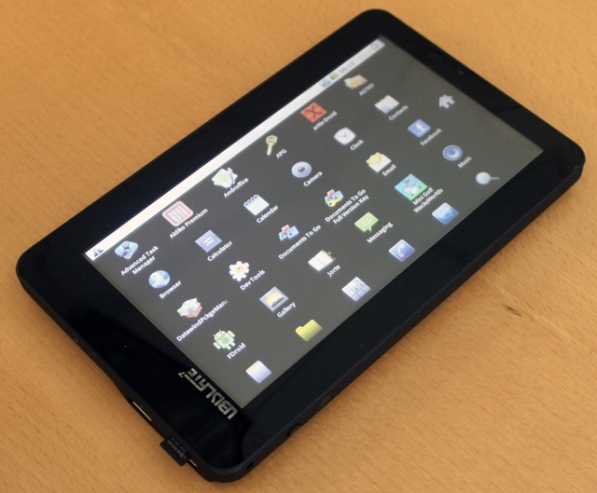
    As declared by HRD Minister Kapil Sibal today, very soon an improved version of Aakash will be introduced in the market. In the month of June, this new and much better version of Aakash has been already inaugurated by Sibal at IIT-Bombay.

    The improved version is fitted with a faster processor (most probably an 800 Mhz processor) and enhanced battery life among other features. 
    [quote]
    “It (the idea of low cost computer) was rejected throughout the world and it was said that India would not be able to make it. Our HRD ministry was committed to the Aakash project and ultimately we came out with the first version of the Aakash which costs Rs 2,276. Now, Aakash-2 has been rolled out with battery life of three hours, 800MHz processor, providing internet access everywhere and it has a capacitive screen. The process to distribute this device has begun and it would be formally launched very soon,” Sibal said. [/quote]

  • Indian Government to set up cloud storage for storing critical data

    Indian Government to set up cloud storage for storing critical data

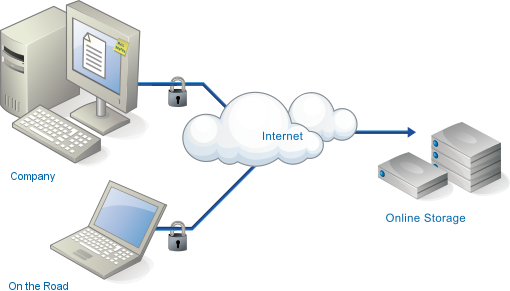
    While our cyber security experts fret over our below-par security standards, the Indian government is planning to set-up a cloud network storage to facilitate the storage of critical data. 

    According to the Economic Times : 

    Department of Information Technology is planning to set up a national cloud based network that connects all state data centers which would make that the backbone of national e-governance plan, which when completed would deliver many government to citizen and government business services via the internet. In effect, each of the 28 states and 7 union territories will now have a private cloud of their own. The Department of IT has invited proposals from IT companies like Hewlett Packard (HP), IBM, Cisco (CSCO) and Dell to set up and maintain private clouds in each state. The move may cost the government less than (around 100 million rupees), and will help the exchequer prevent waste of money on duplication of resources.

  • Google changes its search formula to address piracy

    Google changes its search formula to address piracy

    Google says it will introduce changes to its search engine that will discourage piracy by placing legitimate copyrighted content higher in online queries.

    The change was viewed as a concession to movie studios, music labels and television companies that have tried to lobby, cajole and, in some cases, sue Google into helping them shut down online piracy.

    This week, the company will begin using algorithms that push potentially pirated material to a lower position in search results, it said in a blog posting on its website.

    Entertainment companies have urged Google for years to make pirated content harder to find. The new system will use ”removal notices”, or complaints from entertainment companies, that a website has received in ranking search results, Amit Singhal, the senior vice-president for engineering, said. Hollywood applauded the move.

    ”We are optimistic that Google’s actions will help steer consumers to the myriad legitimate ways for them to access movies and TV shows online,” Michael O’Leary, a senior executive vice-president at the Motion Picture Association of America, said.

    Lower rankings do not represent a conclusion that copyright has been violated, Mr Singhal wrote. The company received 4.3 million copyright removal notices in the past 30 days, he said.

  • TRAI to ask for import ban on phones with fake IMEI

    TRAI to ask for import ban on phones with fake IMEI

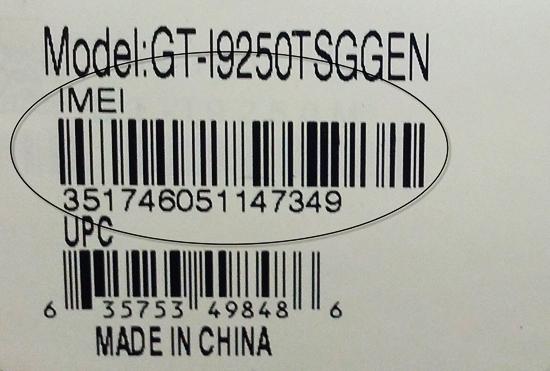
    Telecom regulator TRAI is planning to approach the Commerce and Industry Ministry to ban imports of mobile phones carrying inauthentic unique IMEI (International Mobile Equipment Identity) numbers, which help the authorities track users.

    [quote]“TRAI will soon write to the Commerce Ministry to ban such phones. Import of only those cell phones should be allowed which are certified by GSMA-and TIA-authorised bodies for GSM [Global System for Mobile] and CDMA handsets respectively,” an official told PTI.[/quote]

    The GSM Association and Telecommunications Industry Association are global bodies that provide unique numbers to mobile handset companies.

    The move aims to check proliferation of mobile handsets with duplicate or cloned IMEI numbers, which are dangerous for national security.

    An IMEI comprises 15-digit codes assigned to a handset and it appears on the operator’s network whenever a call is made. Concerns had been raised over their usage after terror attacks in India.

    Cloning issues in the case of CDMA handsets are negligible but rampant in the case of GSM handsets, the official said.

    The government has banned services on mobile handsets with fake IMEI numbers after November 30, 2009.

    However, according to informed sources, during a test conducted in a telecom service area, government officials were surprised to see over 18,000 mobile handsets using the same IMEI number.

    “The idea is to ask importers of handsets to provide a certificate issued by a GSMA or TIA authorised body for entry of his consignment in the country,” the official said.

    Mobile phones without the unique security code are making inroads into the grey market by cloning the IMEI numbers of genuine sets. Through cloning, the IMEIs of bona fide mobile sets can be used by antisocial elements.

iGyaan Network
Privacy Overview

This website uses cookies so that we can provide you with the best user experience possible. Cookie information is stored in your browser and performs functions such as recognising you when you return to our website and helping our team to understand which sections of the website you find most interesting and useful.