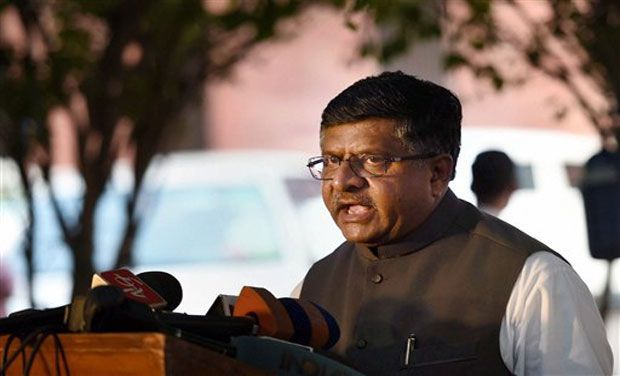
There is someone out there who feels that people have suffered long enough from dropped calls. The Telecom Regulatory Authority of India (TRAI) today made it mandatory for telecom companies to compensate consumers for call drops. Customers will now be compensated by 1 rupee for every call drop with a limit of three dropped calls a days.
This new ruling will be made effective from January 1, 2016. Telecom operators will have to send a message through SMS or USSD to its calling customer giving details of the amount credited in his/her account within four hours of a dropped call. The detail of the credit should be provided in the bill for post-paid customers.
TRAI said that this mandate will give some relief to consumers who have been troubled by call drops. At the same time, this new rule will cause service providers to improve their quality of service. TRAI also said that it will make sure service providers are compensating consumers properly and will undertake a review after six months.
Accroding to some reports, telecos are not at all pleased with this decision and are looking in to this matter with a possibility of taking TRAI to court. Individual service providers are complaining of serious financial hit with this move. “It will be a hefty payout and, in many cases, it is not technically feasible to monitor call drops.”
A final decision is expected to be taken in a day or two.
The latest draft of the National Encryption Policy released by DeitY has found itself on the receiving end of ridicule and scathing criticism. Being condemned as an obsolete move that puts India decades behind in the tech-world, the proposal is seen as an attack on privacy on the internet.
The draft aims to “enable information security environment and secure transactions in Cyber Space for individuals, businesses, Government including nationally critical information systems and networks”.
This proposition is facing criticism because inherent within it is the implication of weakening of the encryption codes that would make private files on the internet accessible to the government. Apple offers an advanced version of iMessages where the company itself has no record of the messages of its users, and fights it out with the US government in the court regarding the latter’s involvement in the virtual existence of its citizens.
Back home, India asks its citizens to make themselves more vulnerable in Cyber Space in the form of regulation regarding the internet. It goes ahead to talk of plans of imposing a 90-day-compulsory-period of storage on all data exchanged using services like WhatsApp or iMessage, which make use of an end-to-end-encryption technology.
“All information shall be stored by the concerned B / C entity for 90 days from the date of transaction and made available to Law Enforcement Agencies as and when demanded in line with the provisions of the laws of the country.”
The complete draft of this new policy has been posted by DeitY on their website. The authorities ask for comments on the decision which can be sent to [email protected], until October 16, 2015.
Gujarat is once again in the news and this time even we have a reason to report why – the state has banned mobile internet services due to civil disturbances. These disturbances began when a certain Hardik Patel began demanding an OBC status for the otherwise economically stable Patel community.
As reported, Gujarat was plunged in arson and stone-pelting by members of the Patel community after the police detained Hardik Patel on Tuesday. A curfew had been imposed on three towns, while Ahmedabad has reportedly been faced with violent incidents, such as city buses and police posts being set on fire. The police resorted to lathicharge to control the situation.
Security has been maximised, due to the tense situation in the state. Schools and colleges remain shut while mobile internet services have temporarily been banned, so as to control or prevent any ‘rumor-mongering’ through social media.
This move is being highly debated and is raising a bundle of political questions about Hardik Patel’s demand. However, what is the difference between China and India if we’re going to now control information being shared on social media? On the other hand Gujarat has also previously seen communal violence escalating to an unprecedented level. What do you think of this ban?
As users complain of call drops and call lags, the government has asked Telecom companies to improve their standards by ‘focusing on improving capital expenditure and optimising resource utilisation to curb call drops,’ as stated by Business Standard.
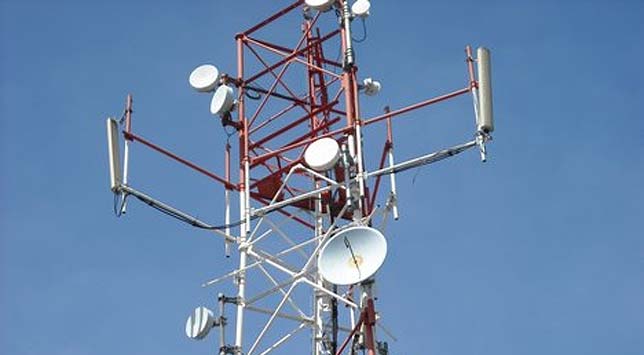
“The projected acute shortage of towers due to non-cooperation of state government and local bodies can’t be accepted as a reason for the call drops in last four to six months as this problem has assumed severe proportion during this period,” it said.
A meeting was held on Tuesday with the Telecom Secretary Rakesh Garg and the CEOs of telecom service providers (TSP) and the main issue of call drops was discussed at length. Garg concluded the meeting by saying that the government was lending as much support as possible regarding ‘the issue of dispelling of unfounded fears from EMF radiation and other issues raised by TSPs.’
He also asked the TSPs to look into areas such as deployment of additional sites to ensure optimum coverage, use of geo-spatial tool for micro-analyzing time-spatial performance, real time network optimization and load balancing etc, which will all lead to the betterment of the QoS (Quality of service.)
In response, the operators have claimed an investment of Rs.134,000 crore, out of which Rs.24,000 crore is for capital equipment with a capital expenditure revenue ratio of 73% against global coverage of 12-18%.
The government issued another statement saying:
“There is an immediate requirement of rigorous optimisation exercise to be taken up by all service providers.”
Now that the operators have been picked up for not being able to deliver good service quality, they have assured the government that they will take action for optimisation of networks and do it on a regular basis, thereby improving the overall performance.
In a rather exciting turn of events, the Delhi Government has moved a step closer to their promise of free WiFi. They have proposed to provide free WiFi usage of 1GB for a month.
Supposedly a phase by phase initiative, the government will provide the much needed facility first to all government and private college said Ashish Khetan, vice-chairman of Delhi Dialogue Commission. In the second and third phases, Khetan has stated that WiFi will reach other parts like rural areas and unauthorised colonies respectively.
“The minimum speed of the WiFi that we are proposing is 1 Mbps for good user experience and each user should get 1 GB of downloads for a month free.”
While it is great news that the government has finally listened to its citizens and proposed such a novel idea, they have said that they won’t be taking any infrastructural responsibility. They expect companies which have expertise in that field to develop the infrastructure while they provide the WiFi service only, thereby making sure the quality of services provided is impeccable.
“One thing that we want to do is that when we announce public wi-fi, the experience of the service should be best. When we announce a policy, it should be on an expected line. It should be on the expectations and aspirations of the people,” Khetan said.
The government believes that free WiFi will help the business sector and boost the tourism in India. He stressed on the fact that this was the AAP governments best received proposition and that they will cease to disappoint. Let’s keep our fingers crossed and hope for the same.
‘Make in India’ is an initiative that was started back in September 2014 by the Prime Minister of India, Narendra Modi. The principal objective of this initiative is to build manufacturing firms within India to generate more job opportunities and improve the skills of the people of India across different sectors like automobile, aviation, biotechnology, defence manufacturing, mining, oil and gas, ports, railways, textile and much more. As a part of the ‘Make in India’ campaign, Prime Minister, Narendra Modi, has launched the ‘Digital India Week’ today. He says the campaign is a part of a grander plan in the future and hopes to give better services with the use of IT.
Narendra Modi has been named as the chairman of the Digital India Week, where he also unveiled the official logo of the campaign that seeks to transform India into a digital powerhouse. For this campaign, Digital India will provide broadband connectivity to all panchayats, Wi-fi in all the schools and universities and public wi-fi hotspots in all important cities by 2019. It will be extended for giving services in areas like health, education, agriculture and banking. The vision is focused on three important areas:
Digital infrastructure as a utility to every citizen
Governance and service on Demand
Digital empowerment of Citizens
The event saw tech powerhouses like Reliance Industries, Tata Group, Wipro, Bharti Group, etc. investing crores on the Digital India Programme.
Officials say a plan will also be announced for “billions of dollars” of investment, most likely in manufacturing—critical for a government that needs to create more jobs, at a faster rate.
India’s first cyber prime minister, Modi has used social media and particularly Twitter, where he has 13 million followers, to fashion himself as a leader in handling technology.
With a growing economy and declining handset prices, India is one of the fastest developing smartphone markets in the world, and Modi is looking to harness India’s potential for social development in fields like education and health.
For now, many companies are in support of the Make in India campaign. Companies from China like Alibaba and Xiaomi showed their full backing for the project. Alibaba Chairman said, “We are excited about India. We are excited about Make in India and Digital India.” Xiaomi President Lin Bin too showed his support and stated, “We have some big plans for India. We fully support Make in India.”
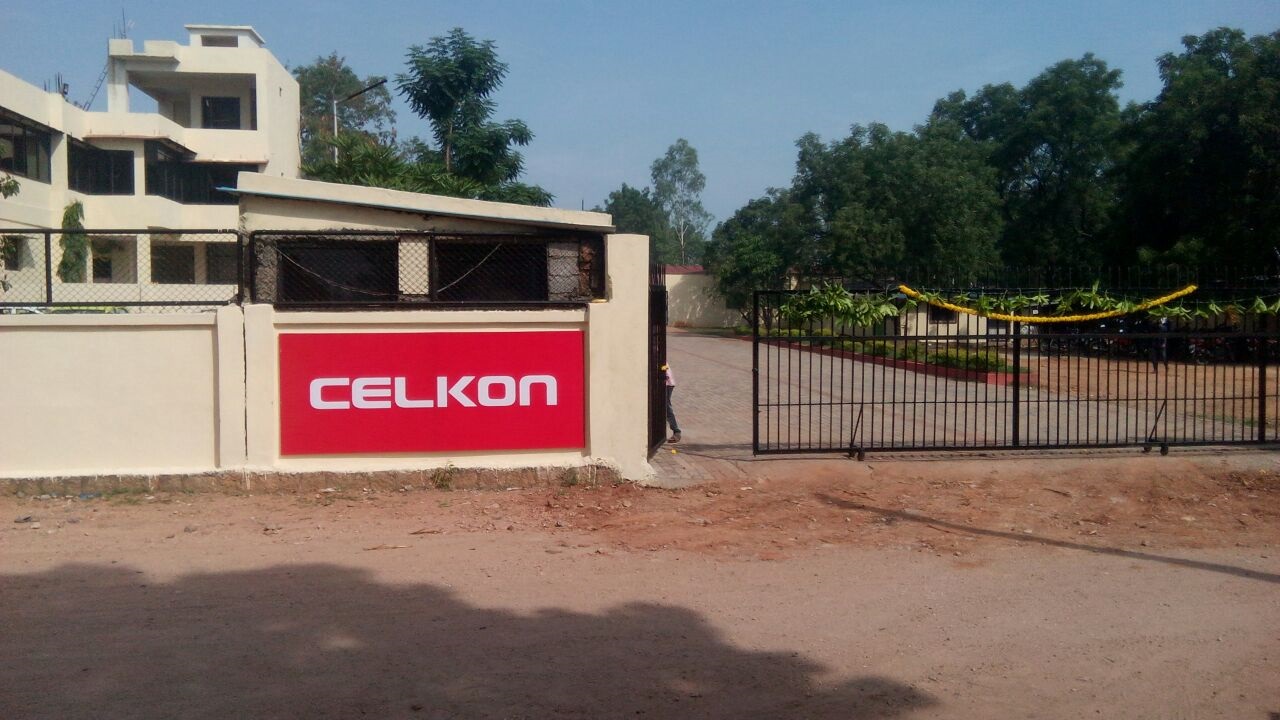
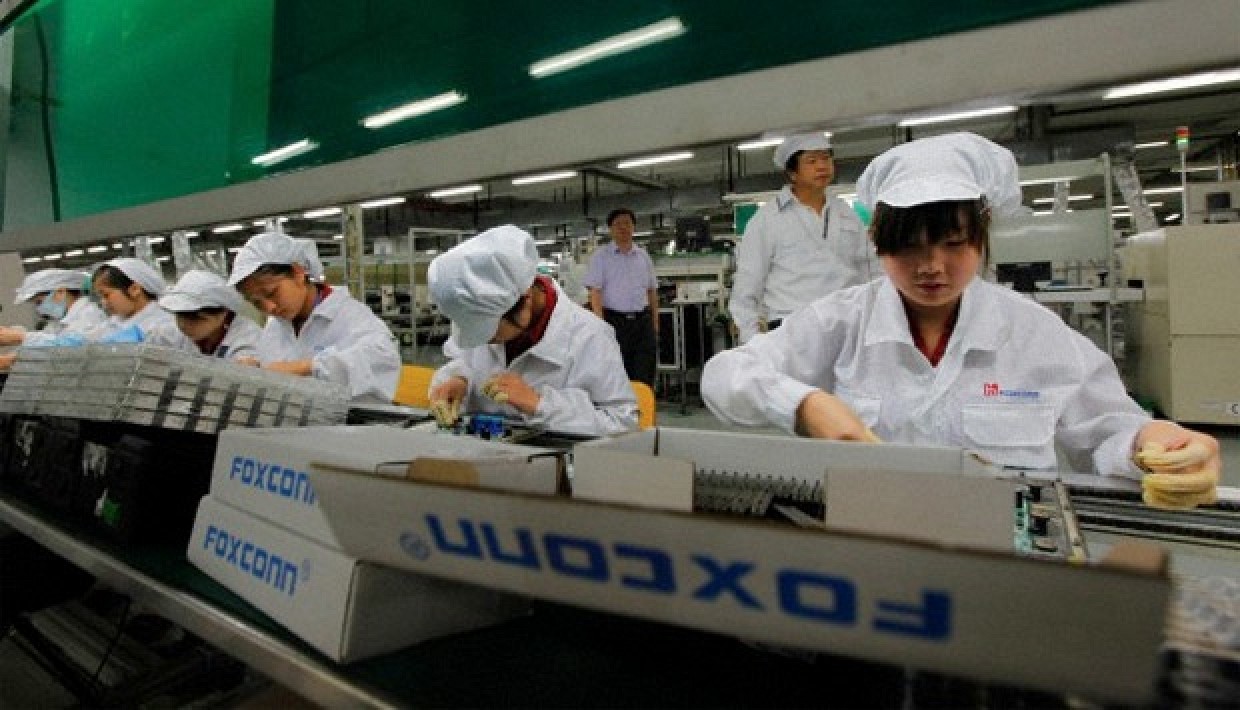
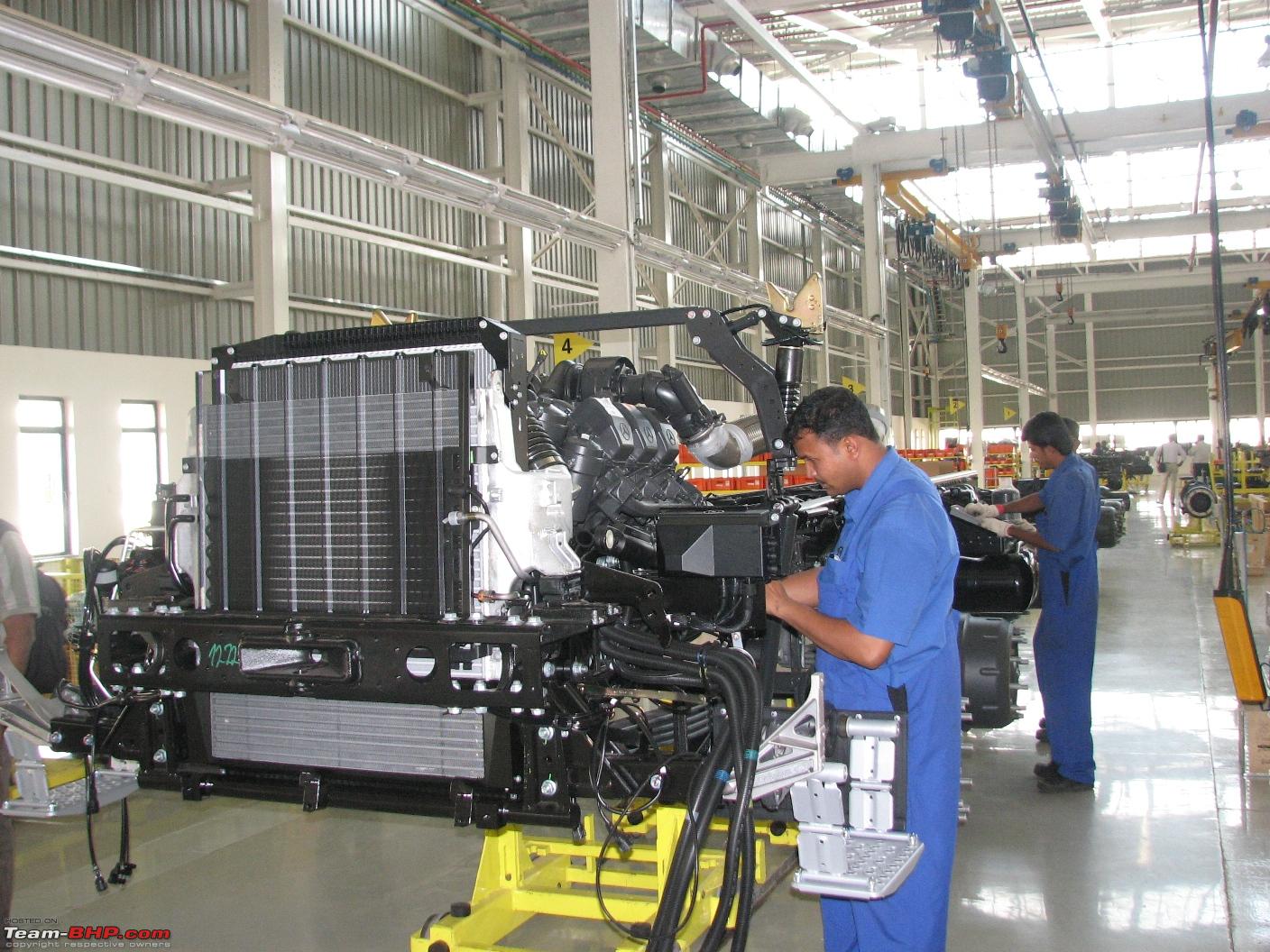
Many companies have started putting up production houses in India like Celkon, Foxconn, Mercedes-Benz, etc.
This initiative looks very promising. This can improve the economic well-being of Indian masses.
Let us see how the campaign shapes up in the future.
You can also follow Make in India YouTube campaign here.
India has been stuck in the internet revolution for many a years. And while the country is progressing at a rapid speed, infrastructure is not growing fast enough. With new businesses sprouting each day, the need for a connected economy has increased considerably.
India’s Massive Market
India is one of the largest consumers of mobile phones in the world. Enough so, that many manufacturers have put India in the first list of launch countries. According to the TRAI Performance Indicator Report, India has 414.18 million wireless GSM connected users as of March 2015. But this is just in the rural sector, the all India number is at 705.21 928 Million according to the COAI report of May 2015 and Others report of Dec 2014. This number also receives staggering growth of 2.5% month on month in the Rural sector and a growth of 0.90% month on month nationwide.
What appears to be a small growth percentage, 2.5% growth means that the industry is adding approximately 10.2 million rural subscribers a month at the current trend. This additional user base earns the industry approximately Rs. 1200 crore each quarter. This large number is only a dip in an industry that moved around Rs. 26781 crore in revenue in Q4 2014.
The large revenue for the telecom operators is driven largely by the large number of users and large user base additions each month. But how much has the industry progressed since the begining of the internet age.
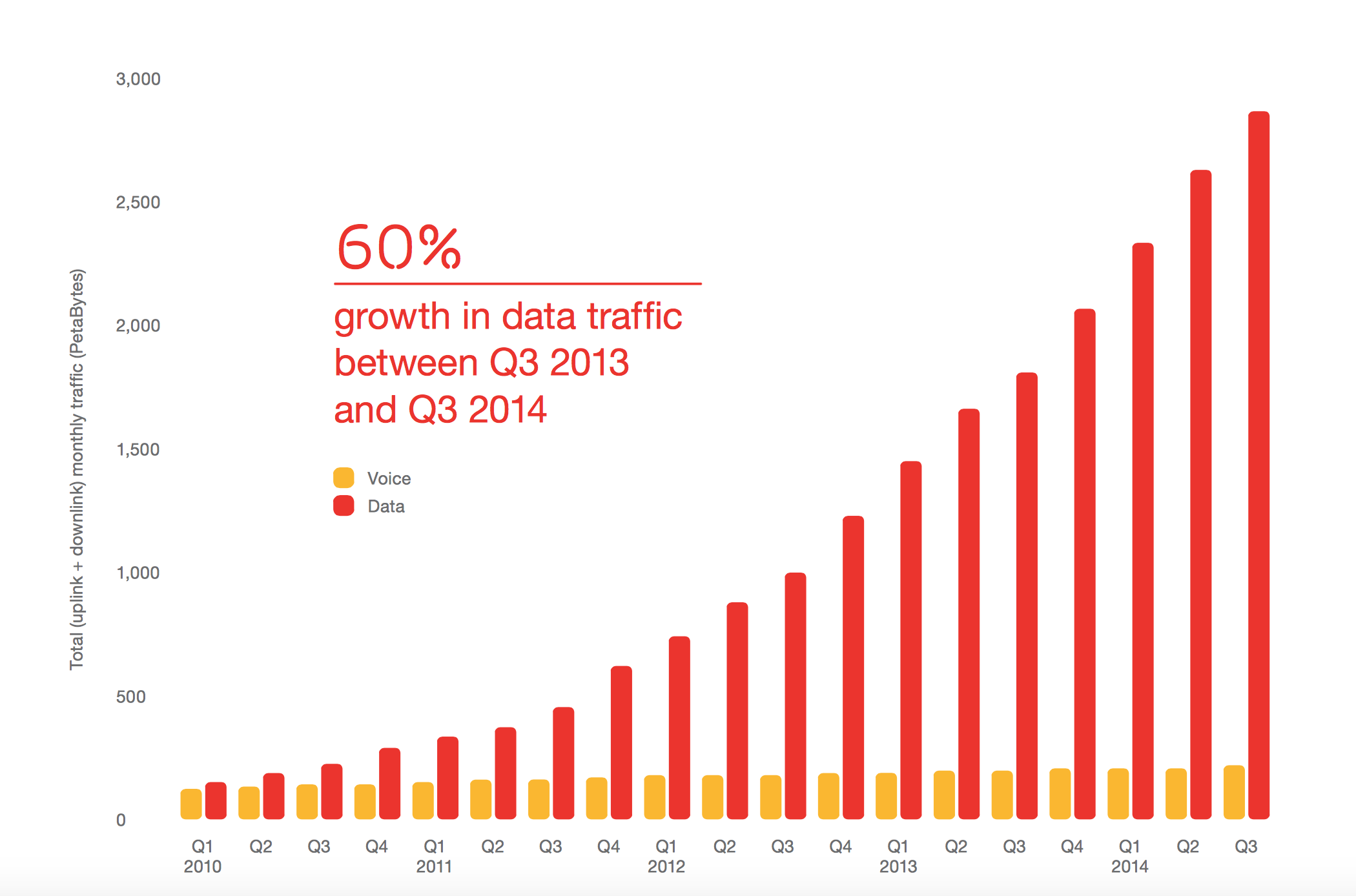
[pullquote_left] By the End of 2014 the World was Consuming 3000 PetaBytes of Data [/pullquote_left]
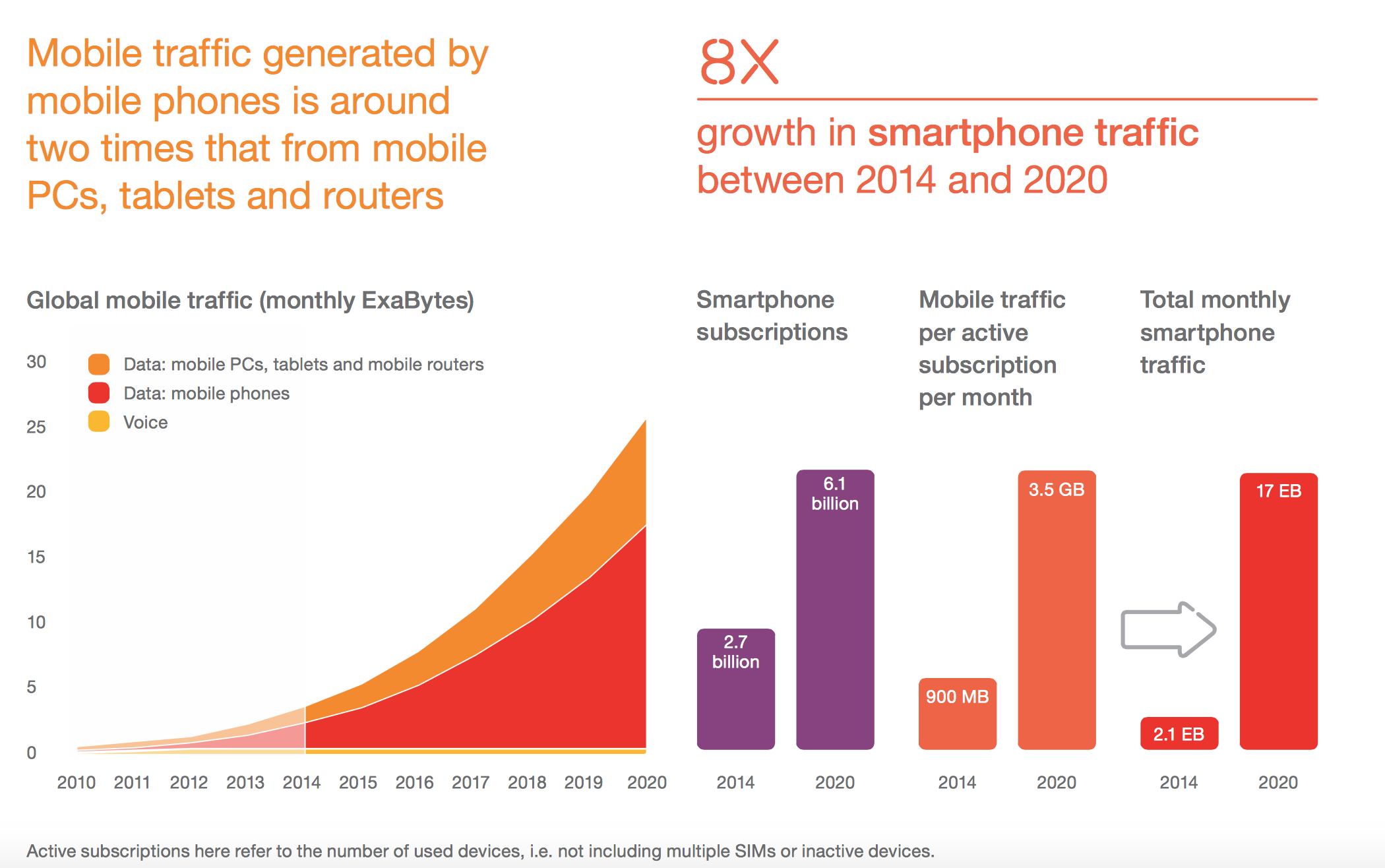
Global consumption of mobile data is through the roof. By Q4 2010 the world was only getting acquainted to mobile data and consumption of data on a portable phone was at 400 PetaBytes (mobile data traffic Up+Down). However, by the end of 2014 the world was consuming 3000 PetaBytes of Data. The industry estimates that the growth with continue by 60-70% each month.
Global Launch Trends
HSPA 42 Mbps networks have been commercially launched in 86 countries, while LTE networks have been commercially launched in 112 countries. So far, 40 LTE TDD networks have been made commercially available in 27 countries, with 27 operators launching LTE services using only the TDD mode, and 13 deploying both TDD and FDD modes together. 6 In a mixed LTE FDD/TDD network, the use of FDD for the uplink can improve the effective coverage area of the TDD band, and can also make TDD more efficient on the downlink.
On the other side mobile operators in 75 countries have now launched HD voice commercially. VoLTE or “voice on LTE” provides users with telecom-grade HD voice, video calling and other new, richer communication services on LTE smartphones.
State of Indian Networks
Despite all the launches mentioned above, India remains as a part of none of them. While India contributes to a large percentage of global mobile data usage, it all somehow comes from poor data connections.
It is estimated that if connection quality and speeds were to improve in India, the present data consumption would increase by 400%. A number that the industry should play close attention to. Over 60% of the data consumption in India was mobile data by the end of 2014.
Mobile Data Drivers
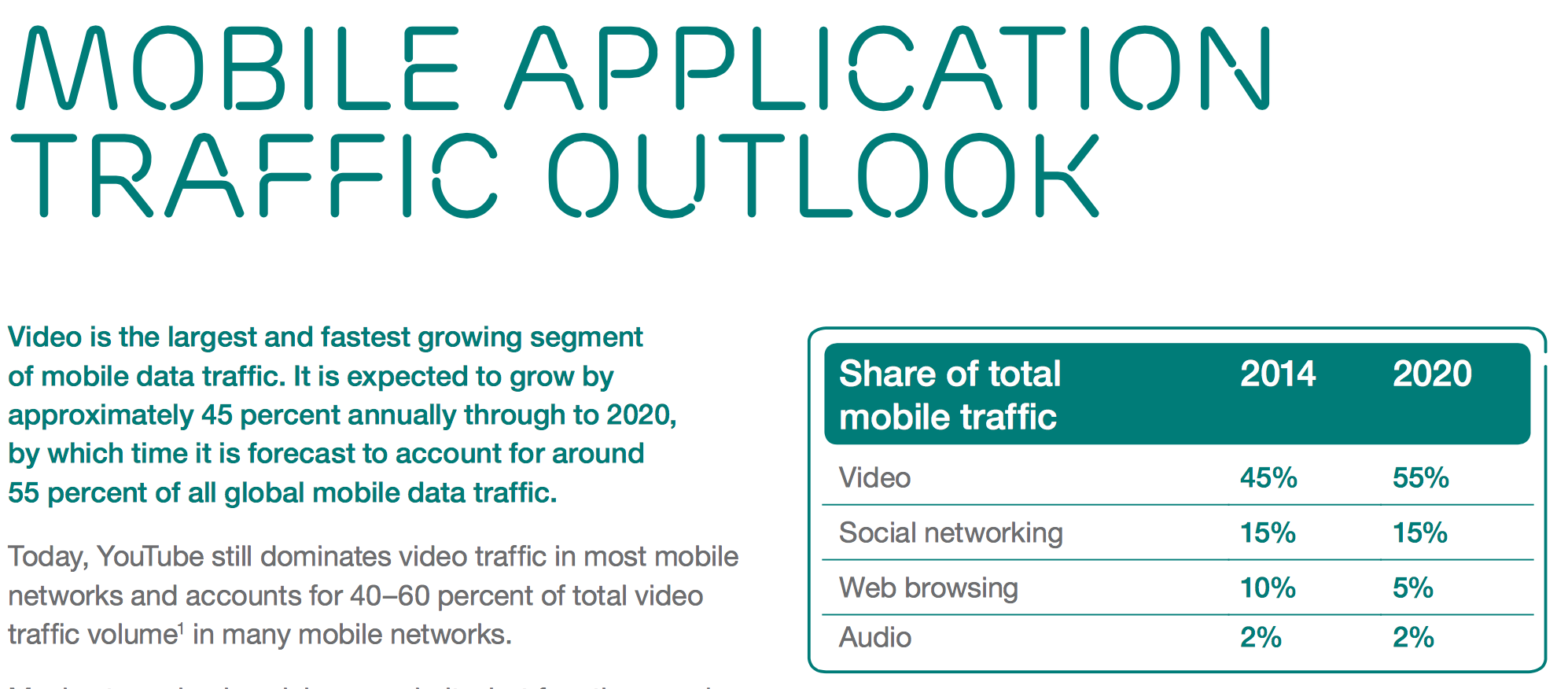
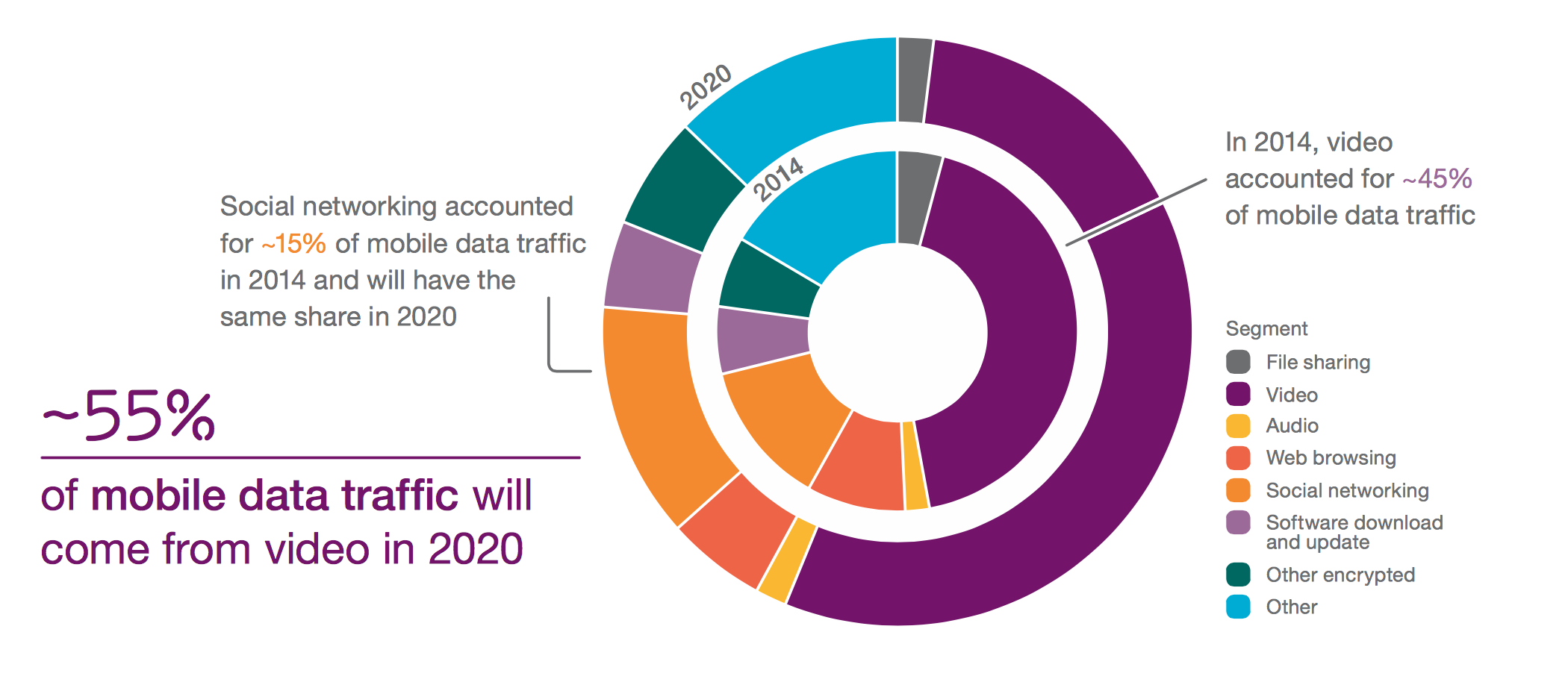
Out of the total mobile data consumed in India, 45% comes from video playback from websites like YouTube. A large chunk of music streaming services are also responsible for driving mobile data in the country.
Mobile Data Usage
[pullquote_left]55% of mobile data will be consumed for Video services[/pullquote_left]
Globally, YouTube is responsible for consumption of 40-60% of mobile data, a number which is relatively lower at 17% in India due to mobile data connectivity and speed limitations.
It is estimated that by the year 2020, 55% of mobile data will be consumed for Video services. Reaching this percentage will be possible by the implementation of 5G mobile data globally. 5G services are being tested in over 8 countries as we read this, while implementation for global markets is kept at 2019. India (and some other markets) are not a part of this implementation list.
India is about 5 years behind the 4G rollout targets (Dec 2010) and 2 years behind LTE 2.0. HD Voice and Video are not being talked about by the Indian industry leaders, despite the fact that India is one of the largest contributors to the overall revenue for the mobile industry.
Data and Future
India needs fast internet access, as a developing nation, its metropolitan cities need to be connected to the world. With a boom in startup culture and high paying jobs with international markets, most suffer due to lack of internet access. Video consumption and video calling with services like Skype, Google Hangouts and even FaceTime are at an all time high and consumers end up paying large sums of money just to say connected.
[pullquote_right]FUP has slowed down growth[/pullquote_right]
The biggest limiting factor in the whole telecom industry is the limited usage policies implemented by the companies. The limited usage policy or fair usage policy (FUP) was first implemented by Airtel and Tata Teleservices to prevent users for exploiting their internet connection speeds and downloading illegal materials from the internet.
The FUP has since not been removed and with no pressure from TRAI (Telecom Regulatory Authority of India) this antiquated method continues to haunt each user.
Airtel is one of the biggest users of this aged method of policing the usage of high speed data and is also one who exploits its use the most to benefit in the long run. Airtel has annoying auto redirects (Smart Bytes) that transfer you to a buy page insisting that you buy additional data packs to continue on the fast speed. These packs are usually 4-5 times the cost of the bundled data and tend to really hurt consumers financially.
The world is getting connected, using a highway of data which is not only fast but also super efficient and budget friendly.
However, we are no where near that future. Most operators globally offer the ability to choose a plan that suits the customers needs. The United States and countries like United Kingdom, Australia, South Korea, Japan, New Zealand, Spain, Canada and many others are not familiar with the term FUP. In fact, any form of throttling is against the law in many of these countries. Terming the so called limiting plans as “marketing gimmicks” countries have ensured that the consumer gets what he pays for, no more and especially no less.
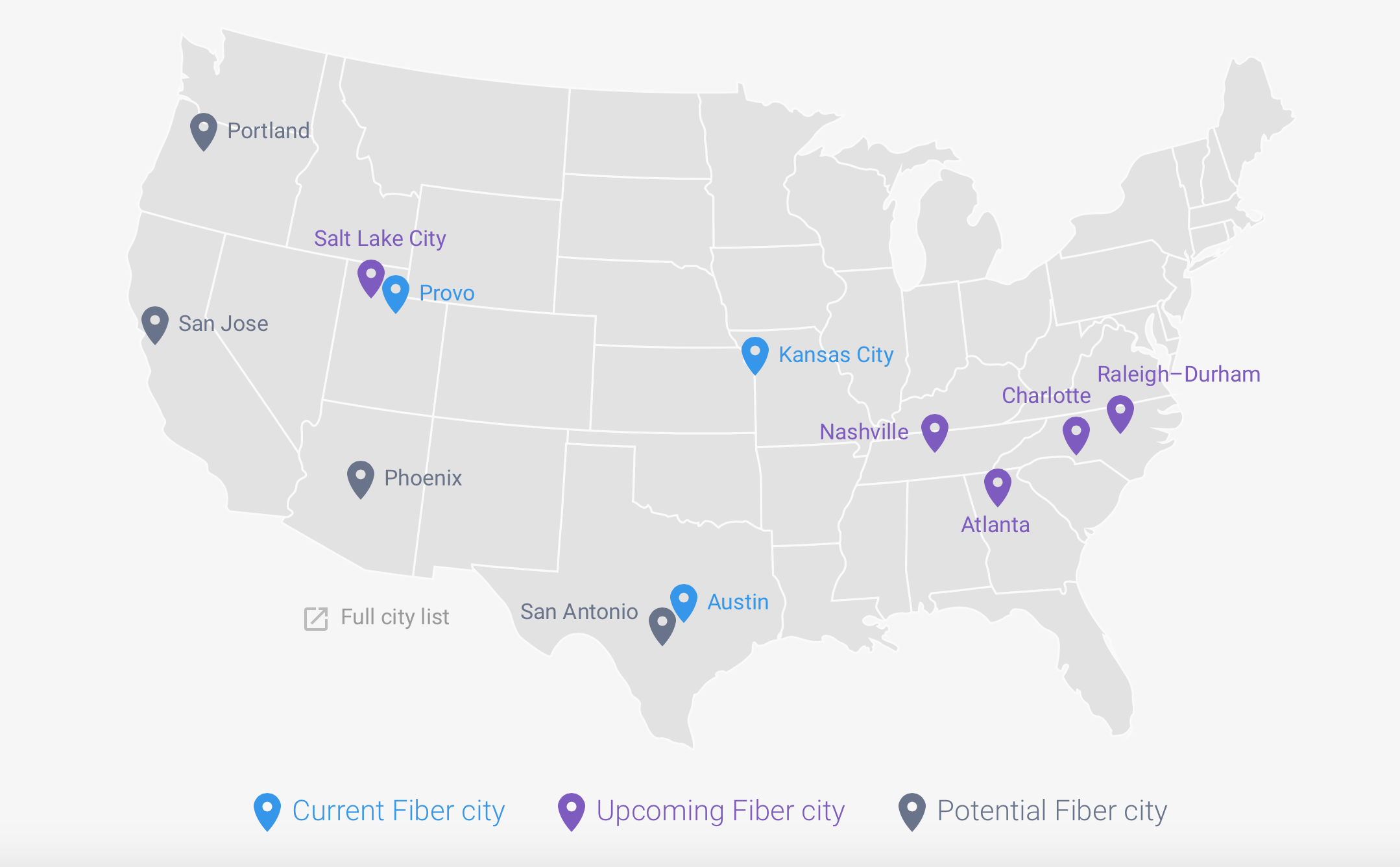
Google Fibre Deployment Map
Then there are packages from the likes of Google Fibre limited in reach and availability, Google has made possible speeds of upto 1000 Mbps for as little as US $ 70/month (chump change compared to what iGyaan spends for Internet) available at residences across the United States. They also offer a “Basic Plan” which is at 5 Mbps downloads and 1 Mbps uploads (unlimited) for a price of US $0 if you pay the installation fee. Free Internet! If that does not help the startup economy, then what else will?
Something needs to change
India and Indians deserve the ability to get unlimited internet, the users seem to be paying for it, but nobody seems to be getting it. Riddled by hidden corporate talk and contracts that fool the customers into believing that they are getting the best possible deal. Everybody has the right to stay connected, and a fast internet connection is more like a lifeline today.
Many sectors in the country do offer high speed data connections for a higher price. However, these too are controlled by limits, and speed drops are often too high. A 100 Mbps connection from Airtel Fibrenet drops to a mere 512 Kbps post a 100GB download. A simple math calculation will tell you that it takes just 2 Hours, 23 Minutes and 9.93 Seconds to download 100 GB on such a connection. Post the download you either have to pay heavy sums of money to get data packs or live with a devastatingly slow 512 Kbps which would take 19 Days, 10 Hours, 2 Minutes and 1.6 Seconds to download the same 100 GB. Airtel charges INR 5,999 + tax for this plan , making it well over US $100. Now compare this to Google’s 1000 Mbps line with no limits whatsoever, which costs US $ 70 /month.
Something needs to change and fast! Sign our petition below and be part of the voice of change. #StopFUP #EndFUP
‘Make in India’ is an initiative that was started back in September 2014 by the Prime Minister of India, Narendra Modi. The primary objective of this initiative is to create manufacturing firms within India to create more job opportunities and enhance the skills of the people of India across different sectors like automobile, aviation, biotechnology, defence manufacturing, mining, oil and gas, ports, railways, textile and much more. With this initiative, the Government of India hopes to bring in high-quality standards and minimise the impact on the environment.
The scope and potential, the breadth and length of infrastructure and related developments is very huge in India: PM @narendramodi
Many companies are in support of the Make in India campaign. Companies from China like Alibaba and Xiaomi showed their full backing for the project. Alibaba Chairman said, “We are excited about India. We are excited about Make in India and Digital India.” Xiaomi President Lin Bin too, showed his support and stated, “We have some big plans for India. We fully support Make in India.”
In response to the Make in India call, The United Kingdom announced in January, about its campaign to forge collaborations with Indian companies. Dubbed as the ‘Great Collaboration’, it will be the first partnership between UK’s BP Petroleum company and India’s Reliance Industries Limited for developing and producing energy. The UK and the Indian Prime Ministers have already appreciated the financial ties between the two countries.
Many companies have started putting up manufacturing houses in India. Celkon, one of the leading cellphone players, is right now in the planning process of setting up its manufacturing firm in Medchal, Telangana. IT Minister, KT Rama Rao, said the manufacturing business unit will be set up within a few days after June and will begin with four production lines, and will eventually increase its capacity to higher levels.
Celkon Plant in Medchal, Telangana
Similarly, Foxconn Technology, who is one of the world’s largest contract makers of electronic products, is trying to develop 10-12 facilities in India, including factories by 2020. The Taiwan-based tech giant said that the company is in talks to manufacture Apple iPhones in India. This could lower the price on the world’s No.3 smartphone market where the US firm trails Samsung Electronics and local players.
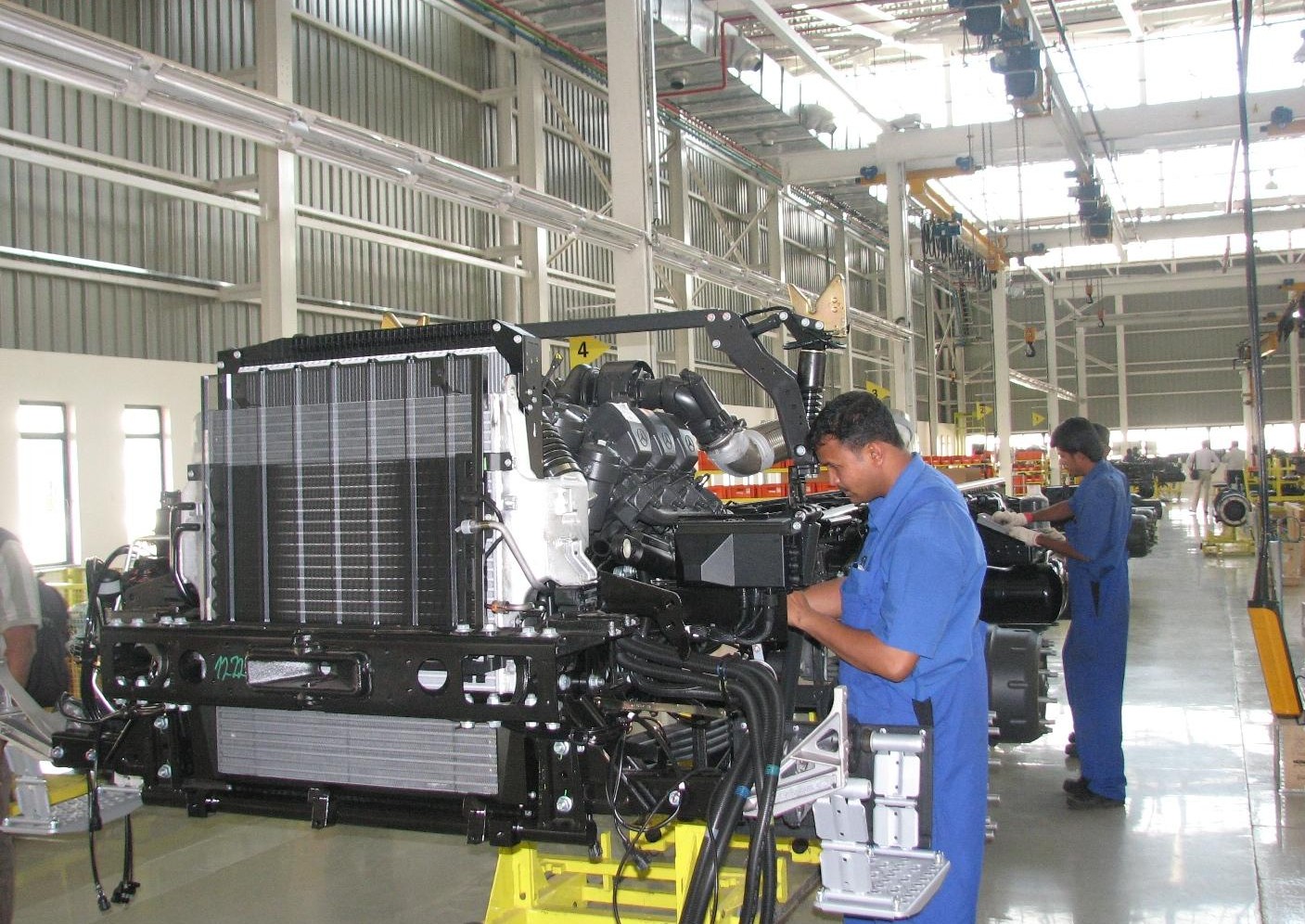
Mercedes-Benz will be doubling its annual capacity in India to 20,000 units, thanks to the Make in India project. India will also be the first market to receive the GLA entry SUV outside of Germany.
“India is one of the focus markets for Mercedes-Benz internationally, and with the addition of a new plant, we are getting future ready,” said company India MD & CEO Eberhard Kern. The plant was inaugurated by Maharastra chief minister Devendra Fadnavis and Union environment minister Prakash Javadekar. With the addition of the GLA SUV to the assembly line, the company now makes six models locally which include C-, E-, S-Class sedans and the ML- and GL-Class SUVs. The CLA entry sedan will be added to the local assembly list later this year while the A- and B-Class models come in after that.
On a smaller scale, Amity scientists have developed a 100% safe, pure and indigenous herbal colours with absolutely no synthetic or harmful additives, in a bid to contribute towards Modi’s ‘Make in India’ initiative. “The herbal colours indigenously produced at Amity, when used extensively in all the industries, will herald a revolution in the country, which is reeling under the pressure of products loaded with synthetic components and chemicals,” said Harsha Kharkwal, faculty at Amity University.
In February 2015, Huawei opened a new research and development (R&D) campus in Bengaluru. It had invested $170 million to establish the research and development centre. In February 2015, Hitachi said it was committed to the initiative. It said that it would raise its employees in India from 10,000 to 13,000, and it would try to boost its revenues from India from ¥100 billion in 2013 to ¥210 billion. It said that an auto component plant will be set up in Chennai in 2016.
This initiative looks very promising. It is understandable that many more companies will join in, soon.This can create a lot of job opportunities here in India and improve the economic well-being of its masses.
Let us see how the campaign shapes up in the future.
You can also follow Make in India YouTube campaign here.
Frequent call drops in the middle of the conversation must have caused anguish within customers, and telecom operators are accountable for this. The Indian Government is taking notice of the inconvenience caused to its people and has cautioned telcos to minimize call drops and strengthen its mechanism.
Telecom Minister Ravi Shankar Prasad stated in a press conference –
Call drops need to be minimized. Private operators need to reinforce their mechanism. I have directed officials in the telecom department to work on a disincentive architecture (for the operators) to address the issue.
Prasad further said that The Department of Telecom (DoT) will settle on penalty clauses and measures to reduce call drops by year-end. Telecom Regulator Authority of India (TRAI) has set the maximum permissible call drop limit to 2% calls, and there is no mention of reimbursement of any sort by the independent regulator. The panel is considering re-evaluation and chances are that it may fix a lower threshold for call drops in the wake of numerous complaints. According to an official, it may be as early as the next six months.
The choked network in metros and poor broadband connectivity have always been an issue with service providers. Despite that, customers are bound to pay through their noses as the services remain unsatisfactory. It is nice to see that the government is taking notice of public grievances and is considering taking action by the end of this year. However late, the news is certain to bring a big smile on everyone’s face.
There are a few telecom companies such as Reliance and Uninor that are compensating for the glitch on their part, but other mobile operators like Vodafone, Airtel, that have a larger consumer base are still to make a move in this direction. It would not be easy for the government to make telcos agree to its conditions as it will stir their revenue, but the government seems determined in its aim. The next few months will be the deciding point that will finally put an end to call drops.
BJP said the internet is a crucial part of one’s life, and should be governed very carefully without the need to compromise the freedom of speech and expression.
Speaking at an Internet governance event organised by industry chamber Assocham, BJP National Spokesman, Sambit Patra said,
Internet is extremely important and since it is extremely important for governance also, because every person is within the ambit of government, Internet has to be governed in a way that does not take away basic essence of Internet which is freedom of speech and expression.
He also stated that the government had formed a community along with TRAI on Net Neutrality. He said,
Once the TRAI submits its recommendation to the Telecom Commission and then after the commission approaches the government, the government will take the decision in favour of people.
On March, the Supreme Court deemed Section 66A of the IT Act as unconstitutional. This Act granted police the power to arrest anyone for sending out offensive messages from computers, mobiles or any other communication portals with a maximum penalty of 3 years in jail. Sambit Patra stated this Act had been misused in the past, due to vagueness of words.
On the contrary, Congress leader and former Union Minister, Manish Tewari, challenged Patra’s discussion by stating that the Internet should not be governed and must be left the way it is to develop. He supported his statement by saying,
Difficulty is where do you draw the line? Someone may be liberal and may draw the line on the left and someone may conservative may draw the line on the extreme left.
A few days back, the Indian Government came out in support of Net Neutrality. The government hasn’t been issued with a final verdict on the same but is committed to keeping the Intenet open and evenly accessible to everyone. Standing up in support of free internet, Telecom and IT minister Ravi Shankar Prasad in a firm voice said that the practices of blocking and deliberately slowing down or speeding up of lawful content on web should not be allowed. Read more about it here.
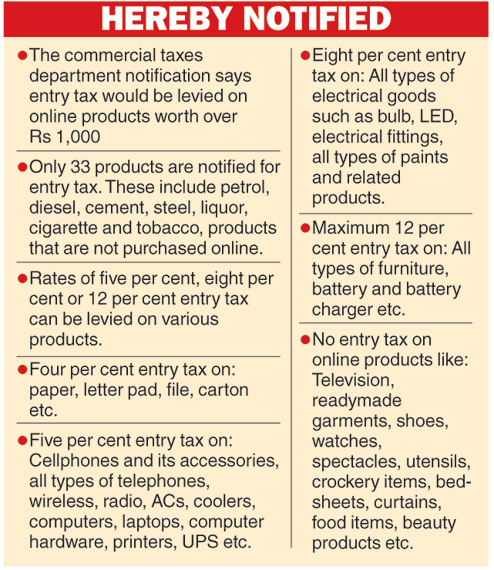
The country is enjoying the perks of the commerce boom, all consumers of the online marketplaces have experienced easy shopping and great discounts. However, online shopping as it turns out, is going to become expensive for the residents of Bihar. The Bihar state government has introduced an entry tax of upto 12% for all the products bought online from E commerce Websites. A notification was issued by the state commercial taxes department that brings online business under this tax net.
According to the notification, the products purchased on the web will be charged with additional 12% of entry tax (maximum) and the minimum charges on the products would be 5%. The additional tax will be levied on the products listed under the entry tax list and whose cost is Rs. 1,000 or more.
Here’s how Bihar government has decided to impose entry tax on the online products:
While many believe that this will promote retail growth, the future still looks bleak for retail merchants. The online marketplace has become the home of many products, some which are rarely available offline. The online only model has also attracted the likes of YU, Xiaomi and Oneplus among many other to do business in India.
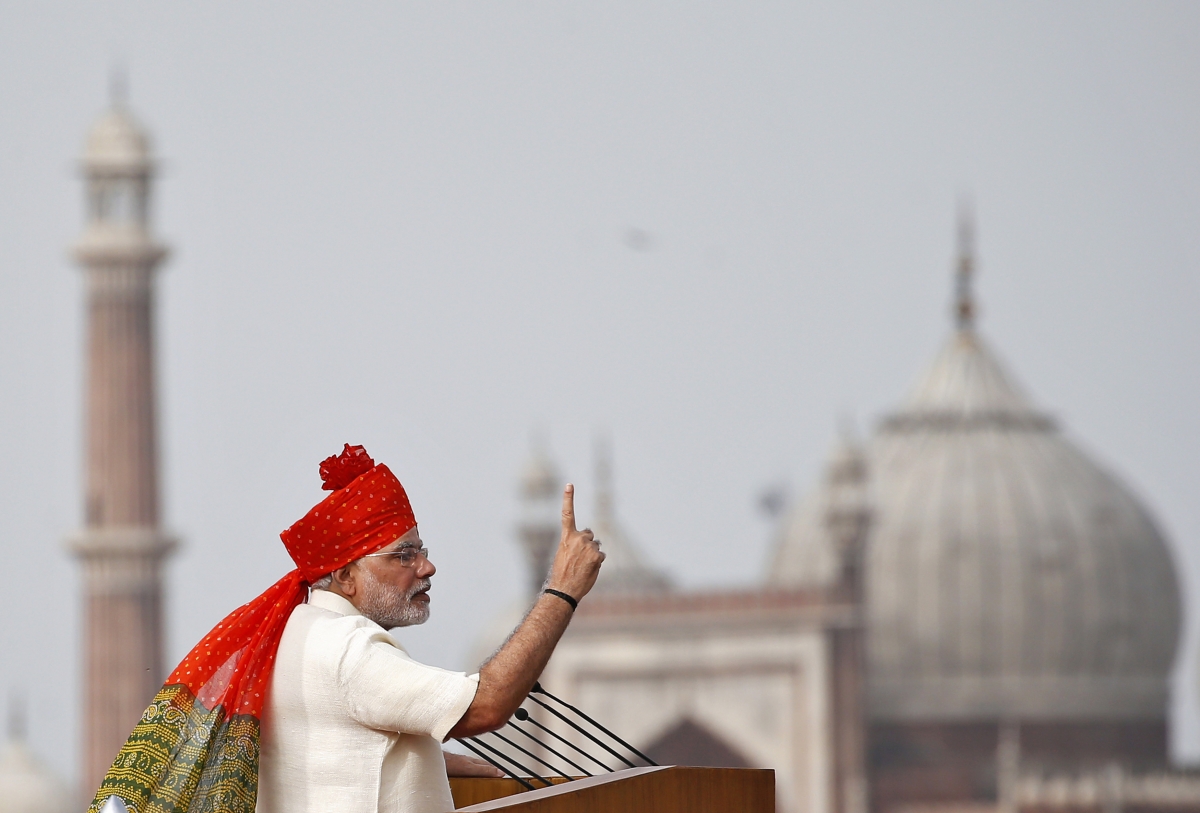
The Prime Minister of India, Mr. Narendra Modi, in his Independence Day speech, shared his vision to make the country a technology hub. He hopes for an India where government services can be delivered through the creation of technological infrastructure. Giving a push to his Make in India campaign, Modi will sit down with top officials of the two leading tech powerhouses, LG and Samsung, to set up a manufacturing unit in India. The establishment of their manufacturing plants will stimulate the production of smartphones in India.
Minister of Communication and IT, Ravi Shankar Prasad, confirmed about the meeting with the South Korean companies, saying, “Earlier, I had personally met senior executives of these companies and we expect something concrete now.” Modi will have a talk with Samsung Electronics’ President and Head, JK Shin and LG’s Global CEO and Vice-Chairman, Bon-Joon Koo. LG India’s Managing Director stamped the ties to some extent stating Modi’s visit will enhance bilateral ties.
How LG and Samsung’s Participation will Make a Difference
LG and Samsung are the two front runners in the smartphone race whose products are appreciated worldwide. Not to forget, these firms have a strong foothold in the smartphones domain as well as the semi-conductors arena. Samsung manufactures Exynos chips equipped on the Galaxy S6 series, and if the company sets up a plant on the Indian soil, smartphones will become a lot cheaper than their current launch price.
For now, only 74% of the Indians own a mobile and considering the large size of the Indian population, there is still a massive number of people who are yet to own mobiles. Modi aims to reach that 26% residing in the rural area with cheaper phones produced on our homeland. He aims to connect India through its length and width by 2019. The Prime Minister has sanctioned Rs. 113,000 crore fund for the Digital India project.
Investment in technological infrastructure will lead to a speedy growth in the economy. It will also help in bringing better, technology-aided education to the children of India, thereby forging a promising future of the country.
The much heated issue of Net Neutrality now has the Centre’s support. The government hasn’t come out with a final verdict on the same, but is committed to keeping the Intenet open and evenly accessible to everyone. Standing up in support of free internet, Telecom and IT minister Ravi Shankar Prasad in a firm voice said that the practices of blocking and deliberately slowing down or speeding up of lawful content on web should not be allowed.
While responding to a discussion on Net Neutrality in Rajya Sabha, Prasad commented –
Government stands for ensuring non-discriminatory access to Internet for all citizens of the country. The government agrees with the viewpoint that blocking and deliberately slowing down/speeding up of lawful content on the Internet should not be allowed, and customers should have unrestricted access to all lawful content on the Internet.
Prasad stressed on the fact that the Government has all powers to direct Telecom Regulatory Authority of India (TRAI) on public policy. “However, TRAI’s powers to regulate tariff and quality of service are subject to overall public policy of the government and the government has sufficient powers under the Trai Act to invoke its national policy objectives to give directions to Trai,” stated Prasad.
Telecom and IT minister Ravi Shankar Prasad spoke up about keeping the Internet an open platform.
He further mentioned that a detailed examination on topics like traffic management, national security, integrity of network and infrastructure investment is needed by experts on Net Neutrality.
It should be kept in mind that government hasn’t laid down the structured guidelines on net neutrality principles. Once the government frame rules for the content flow on web, telecom operators wouldn’t be able to adopt illegitimate pratices to earn more money.
A while back, TRAI’s consultation paper on its official website gathered millions of emails in support of Net Neutrality. From the comments of the Telecom minister, it seems like the final verdict would slay the Airtel Zero plan, once and for all.
Hackers from the Anonymous India group took down the Telecom Regulatory Authority of India (Trai) website in an attempt to stand against the violation of Net Neutrality in the country. The website may be back online for the time being, but the group remains active on their twitter voicing out their reasons. The DDOS attack was done to the website to stand against the releasing of Email IDs by the organization, claims Anonymous India group.
Although TRAI took to the media outlets and said that the website was down due to technical glitches. However the hacktivist group has asserted claim over the DDOS attack.
TRAI had released a list of email-ID’s from which it had received responses towards and agains Net Neutrality. This makes clear the severe lack of privacy of information from a govt. organization. A lot of Indians voiced their opinions on the lack of discipline in the TRAI functioning.
Anonymous India claimed to have stopped the attack, because a lot of tweets asked them to, Although, they claim that if no action is taken by TRAI, a similar incident will take place in the future.
Yesterday the deadline to cast a vote for saving the internet ended. Though we have to wait for the final take of the government on the issue, Neutral Internet Exchange of India (NIXI) has given its answer. The body under IT ministry said that it fully backs Net Neutrality and any move to bundle apps would go against the concept of Internet.
NIXI made a remark –
National Internet Exchange of India as the neutral exchange in the country, strongly supports Neutrality of the Internet which is the only way forward to make the Internet open, free and innovative.
Any move by Telcos to bundle application or content selectively will hamper the very basic concept of Internet.
The government-run organisation also expressed concern over the impact of discriminatory Internet on budding businesses. NIXI commented, “Under these circumstances any dilution of the neutrality of the Internet, is expected to affect the freedom of expression, development of innovative ideas and newer applications and entrepreneurship of youngsters and start-ups.” A couple of days back, a number of tech start-ups wrote an open letter to the Prime Minister of India asking for a free internet. They mentioned how the emerging companies would suffer and would never be able to become the next Google and Amazon.
Telecom Regulatory Authority of India (TRAI) is yet to give a response to over 1 million emails supporting SaveTheInternet.in campaign, but the organisation is not bound by any time frame. In such circumstances, the telecom operators are open to implementing any plan. The volunteer group behind ‘Save the Internet’ program is requesting the government to impose a temporary restriction on telcos to roll out any plan until the final verdict.