Category: Social Media

  • Mark Zuckerberg Testified For 5 Hours And Won It For Facebook

    Mark Zuckerberg Testified For 5 Hours And Won It For Facebook

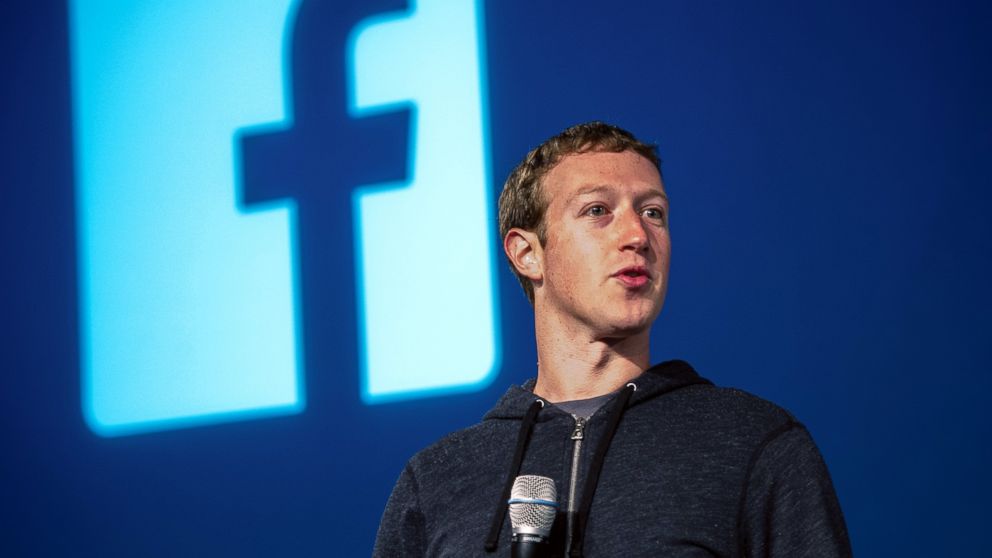
    Mark Zuckerberg didn’t reveal the hotel he stayed in during the testimony while Facebook users share their travel plans to everyone. This pretty much sums up the entire deposition of the Facebook co-founder Mark Zuckerberg. The CEO of the largest social media company, Zuckerberg sat in front of the Congressmen and tried to clarify the role of Facebook in the whole Cambridge Analytica data breach scandal. Leading up to the testimony, it was reported that Facebook had arranged training with DC Consultants for Mark Zuckerberg.

    The testimony, or more so the idea of putting Mark Zuckerberg through his paces, even though exciting for its mere existence, was anything but. All the Senators present at the testimony were inept of the working of social media and the business model of Facebook. And that clearly showed in the five-hour long testimony which was a huge win for Facebook and Mark Zuckerberg. The testimony meant that Facebook was prepared to go under the cosh to prove its innocence or remorse, and it did so and came out pretty much unscathed.
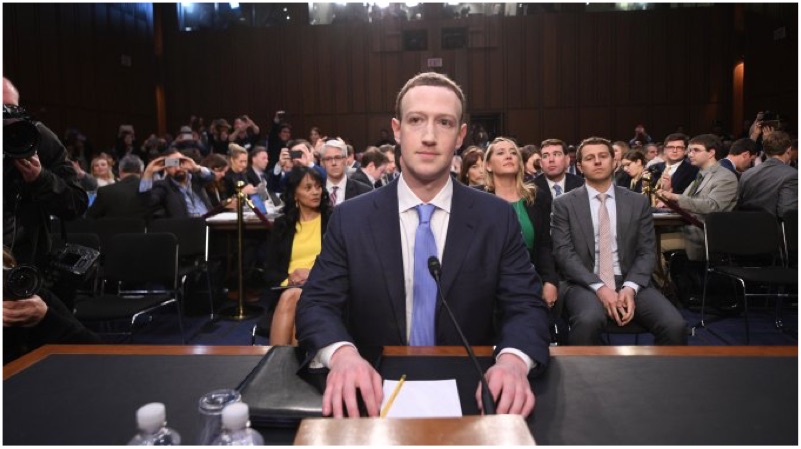
    Mark Zuckerberg clearly knew what was to be done as he dodged any questions that could have had further implications. He repeated a lot of the answers, most of them coming from his own Facebook post from a few weeks ago. That goes on to prove how surfaced the questions were from the Senators. It is worth noting that every Senator had only five minutes with Zuckerberg, which meant that very few asked tough questions and even fewer had the opportunity to follow that up with another query.

    After the testimony, important questions like did Facebook cover up the Cambridge Analytica scandal? Or decide against adding privacy protections earlier to protect its developer platform? Another rising question is whether it is a breach of trust on Facebook’s part to delete Zuckerberg’s Facebook messages out of recipients’ inboxes? Unfortunately, nobody even began to scratch the surface that could have further led to answers to these questions. Whether Zuckerberg would have complied and answered to those questions is a different kettle of fish altogether.

    Facebook’s homework for this testimony also shone through during the questioning. The most common questions asked Zuckerberg were a few things that Facebook had taken care of well in advance. For example, Mark  Zuckerberg was asked about Facebook’s ineptness during the 2016 Election campaign. On 9th of April, Facebook had announced that it had deleted the accounts of Russian GRU intelligence operatives in June 2016.

    Another question that was asked, was “Is Facebook Sorry?” To which Zuckerberg replied:

    We didn’t take a broad enough view of what our responsibility is and that was a huge mistake. That was my mistake.

    The five-hour long testimony ended with Zuckerberg unmoved and calm while many viewers felt let down by the lack of knowledge behind the questions directed at him. The testimony might have left a lot of questions unanswered but, it appears to be a win for Facebook. The social media giant has pretty much laid the facts in front of the world. To prove that the testimony was a success for Facebook, investors rewarded Facebook with a 4.5% share price boost.
  • Despacito YouTube Video Deleted By Hackers

    Despacito YouTube Video Deleted By Hackers

    Update: The video has been recovered by YouTube and is now live on the video streaming platform.

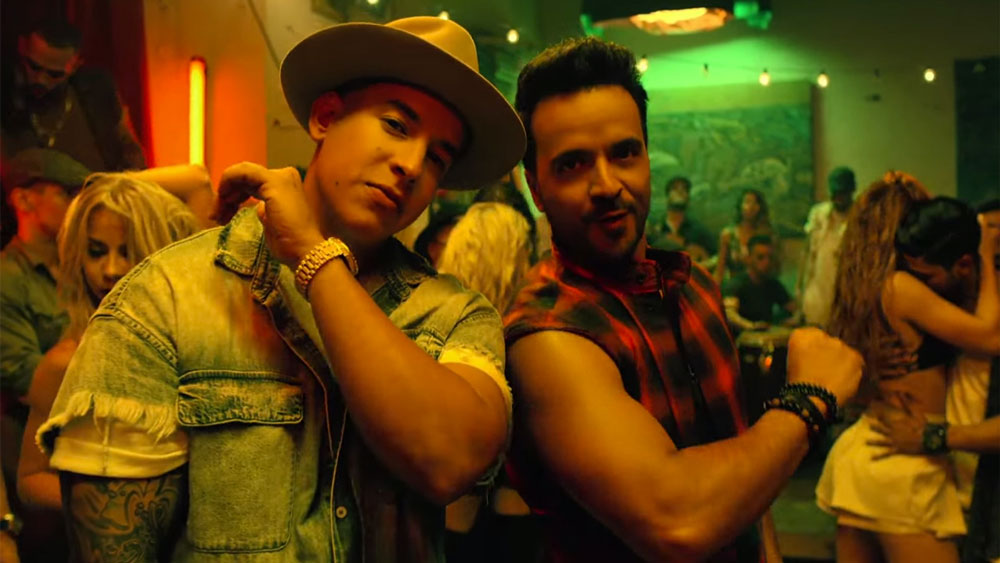
    Luis Fonsi’s song, Despacito became the most-watched video ever on YouTube. Now, after falling victim to a cybercrime, the official video of Despacito has been deleted from YouTube while several accounts of other artists have also been compromised.

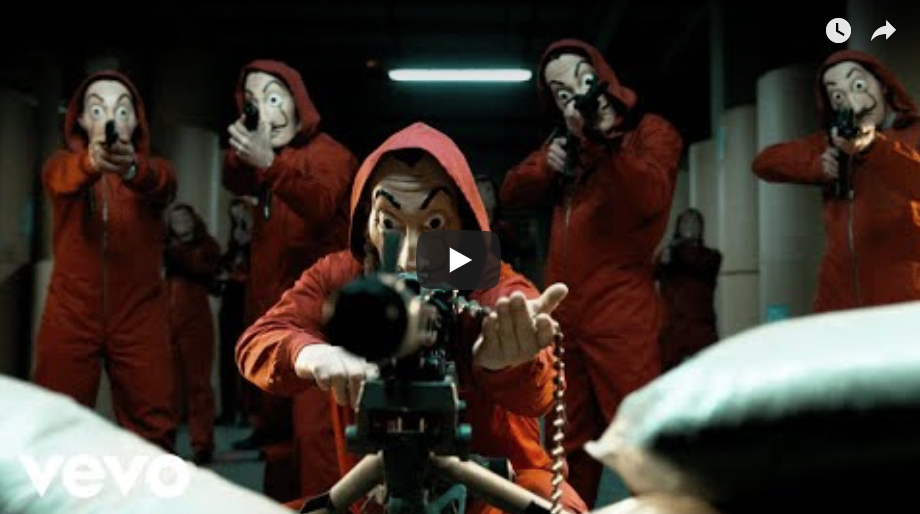
    At first, the thumbnail for the video was altered. The original image was replaced with a group of masked men holding guns and the description was changed by a group of hackers calling themselves Prosox and Kuro’ish. The hackers also wrote “Free Palestine” in the description of many videos. The image of the masked gang members is from the Netflix show, Casa de Papel.

    Apart from Luis Fonsi (creator of Despacito), several other artists’ Vevo accounts including DJ Snake, Shakira, Katy Perry, Taylor Swift and more have been hacked.

    YouTube

    Almost all the videos of these artists are available on YouTube as of now. However, the titles, descriptions and thumbnails of many famous videos have been compromised. It is worth noting that all these videos were uploaded to the Vevo accounts of these artists. There is no clarity about the degree of access these hackers have gained. Whether these hackers have gained access to individual accounts or if there was a wider attack on Vevo accounts.


  • Like WhatsApp, Facebook Will Let Users ‘Unsend’ Messages

    Like WhatsApp, Facebook Will Let Users ‘Unsend’ Messages

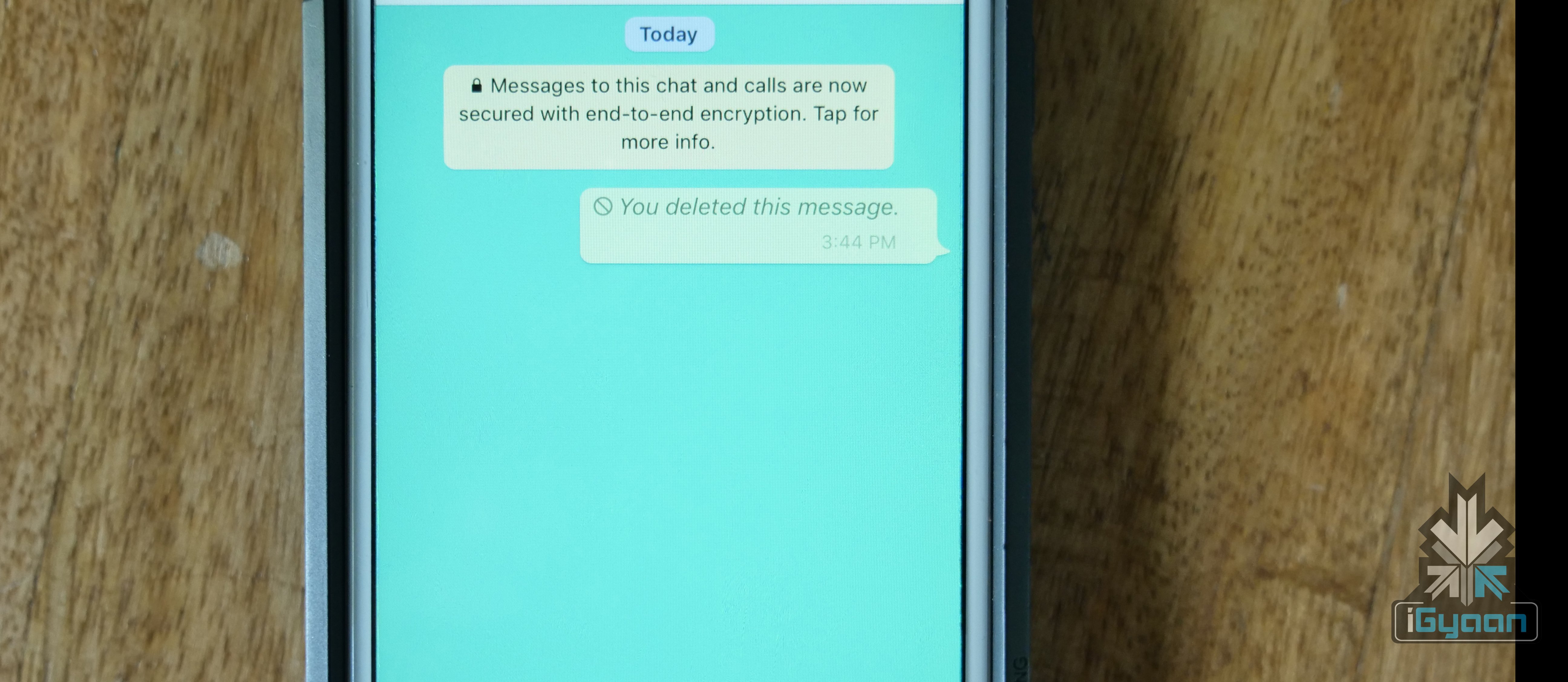
    Over the past few weeks, Facebook has been under the cosh from the media and its users alike. Facebook was accused of leaking private data of over 50 million users which were used by Cambridge Analytica during the 2016 US Presidential Elections. However, the outrage around Facebook and callous handling of sensitive data have increased when it was learned that Facebook deleted messages sent out by Mark Zuckerberg from the recipients’ inbox. It now appears that Facebook is ready to share this luxury with all of its users in the coming months.

    According to a report by TechCrunch, a Facebook spokesperson has confirmed that the social networking company is currently working on the ‘Unsend’ feature’s development. This feature will soon be available for everyone across the globe. A few months ago, WhatsApp also rolled out a similar message wherein users could delete a sent message before it was read by the recipient.

    However, it is worth noting that this feature will work very differently from WhatsApp’s. Another spokesperson told TechCrunch that the only way to implement ‘Unsend’ on Messenger is to set an expiration date for the message. This will, in fact, work very similar to what Snapchat has with its personal messages. Essentially, a user can set a timer on the message before pressing send, once the timer runs out, the message gets deleted. It is like a self-destruct mode but, for messages. It is not yet clear if the recipient will be made aware of the self-destruct mode of the messages they receive.

    While it is okay to delete messages on WhatsApp because of the times you are either sending to or receiving from people you know, the implications of the ‘Unsend’ feature on Facebook are far more severe. On Facebook, users get a lot of messages from strangers which, if taken to court, can be used as evidence. Now, with the new feature, users will have to take a screenshot of every message they feel is important or suspicious.


  • Top Free Video Streaming Services

    Top Free Video Streaming Services

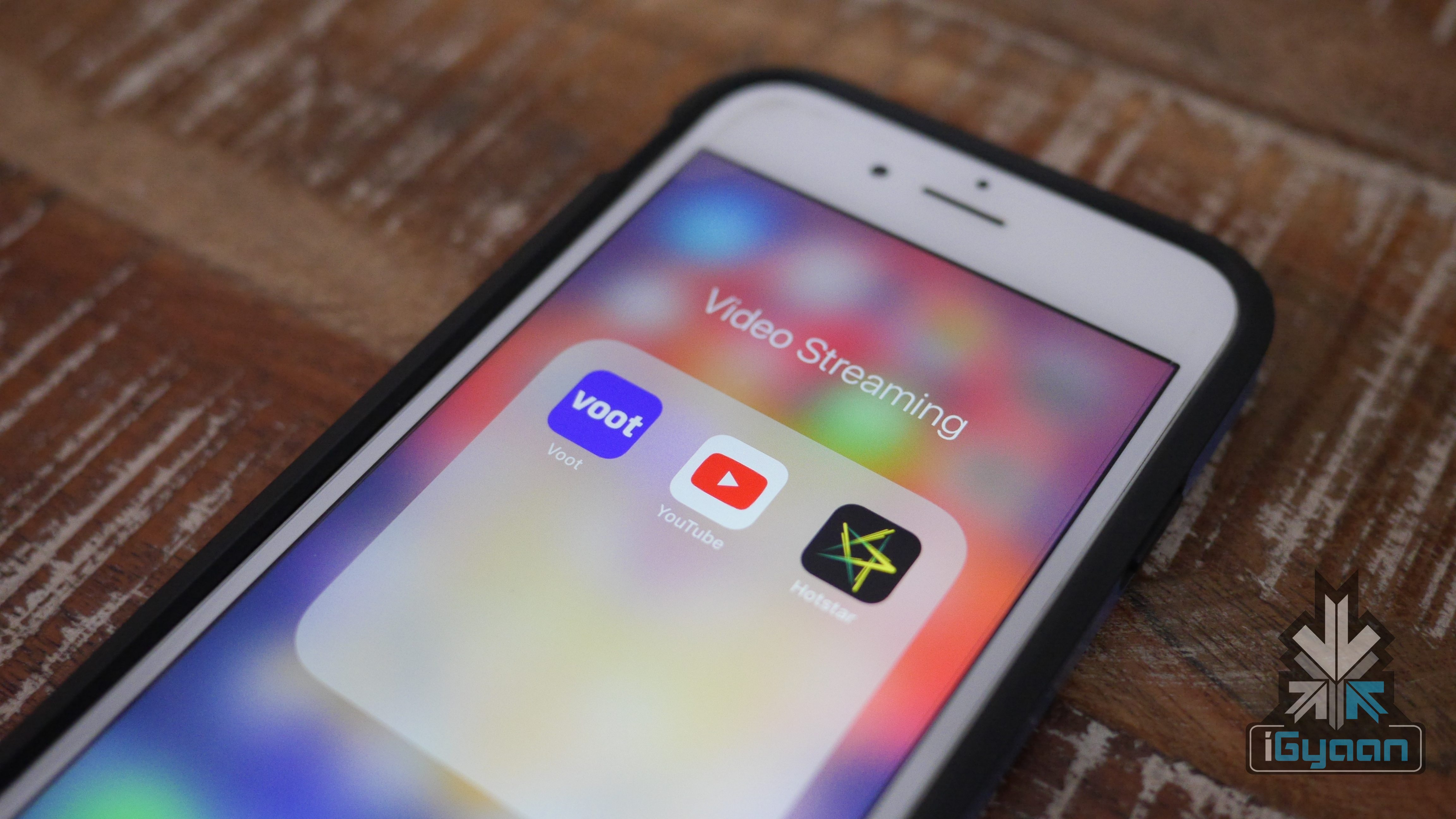
    Streaming services like HBO Go, Amazon Prime Video and Netflix offer a lot of exclusive content. However, a user has to pay a certain amount of money to access these services. Here are top three streaming services available, which offer a lot of content, without charging a rupee. However, as these are free services, these apps generate revenue using in-app advertisements.

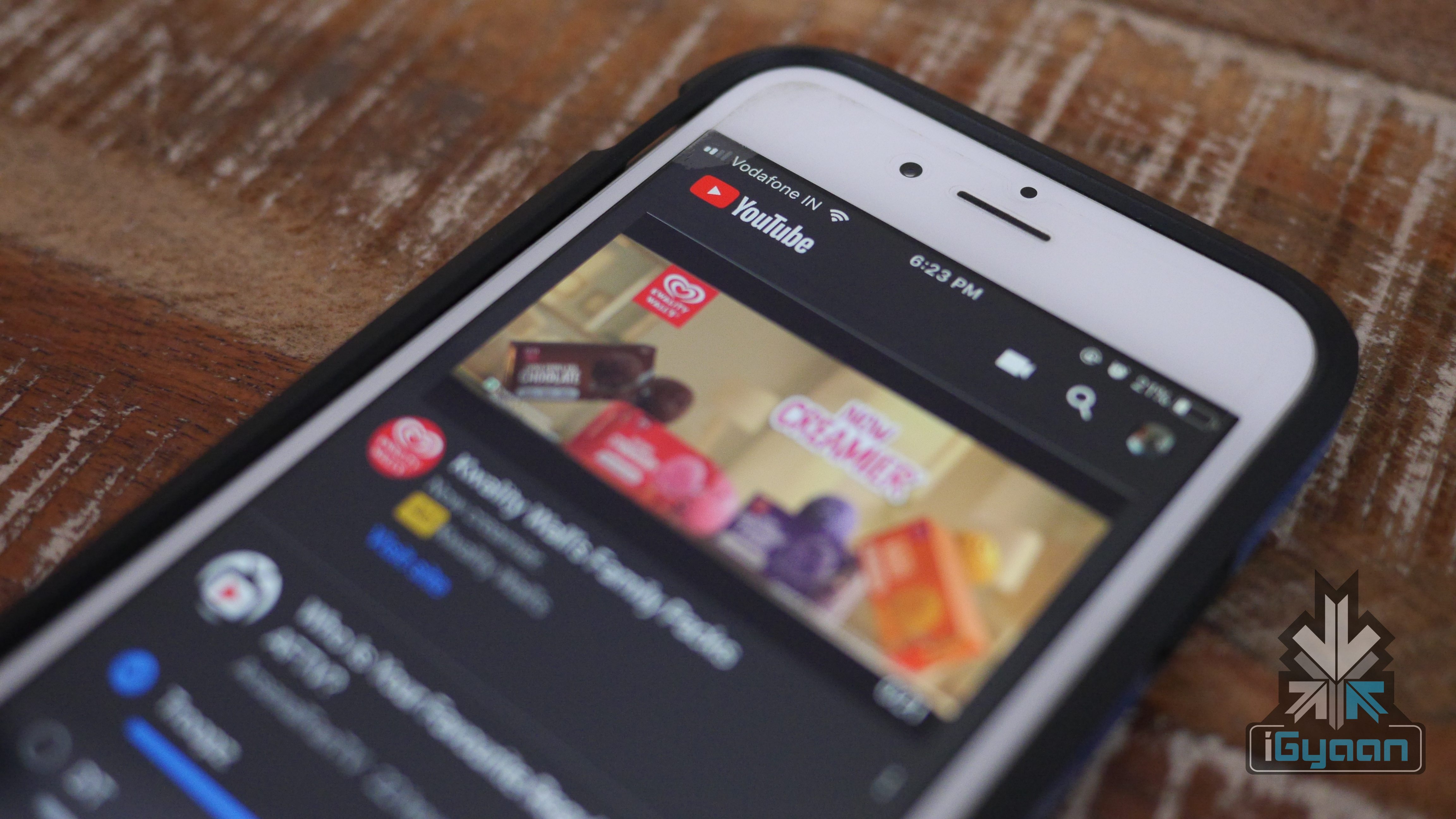
    YouTube

    Video Streaming

    YouTube is our first choice. In most of the smartphones, the application comes pre-installed. The video streaming service has 1,300,000,000+ hours of content to watch, which gets bigger over the time. One can watch the content using YouTube and can also upload the content for the world. Considering our tech-related work, YouTube is a great platform to learn new things, watching movies or your favourite web series. The app is available for Android and iOS devices. Similarly, one can access this platform literally from any device with a browser and a decent internet connection.

    Links:

    Web

    Android

    iOS

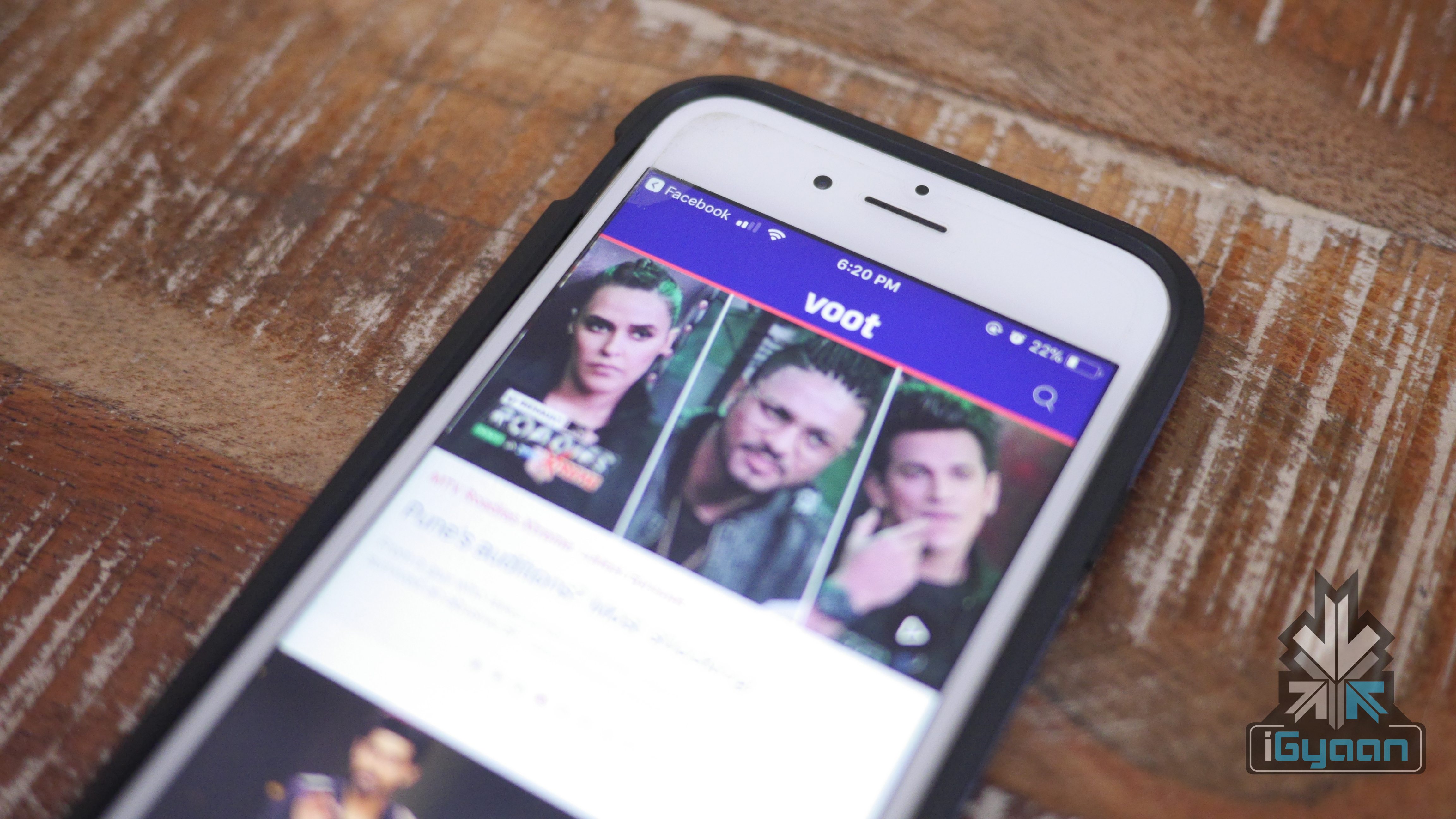
    Voot

    Video Streaming

    Voot, the digital platform is a property of Viacom 18. A user can access the content by signing in to the application or can guest watch as well. The main application has two sections, Voot and Voot KIDS. Entering into the Voot section will offer trending shows and programmes. Based on the viewer’s interest, the recommendation list gets better. One can also lock restrict the general content access for your kids using a parental pin. Shows like Bigg Boss and Roadies are some of the exclusive content available on Voot.

    Links:

    Web

    Android

    iOS

    Hotstar

    Video Streaming

    If you are planning to stream live cricket or football match, then Hotstar is one of the platforms which does that for free. The app has a lot of western content and regional content as well. One can stream new movies, new television series from star network. Additionally, you can avail paid membership to access shows like Game of Thrones and Modern Family.

    Links:

    Web

    Android

    iOS

  • Facebook Won’t Unveil Its Smart Speaker Amid Data Leak Controversy

    Facebook Won’t Unveil Its Smart Speaker Amid Data Leak Controversy

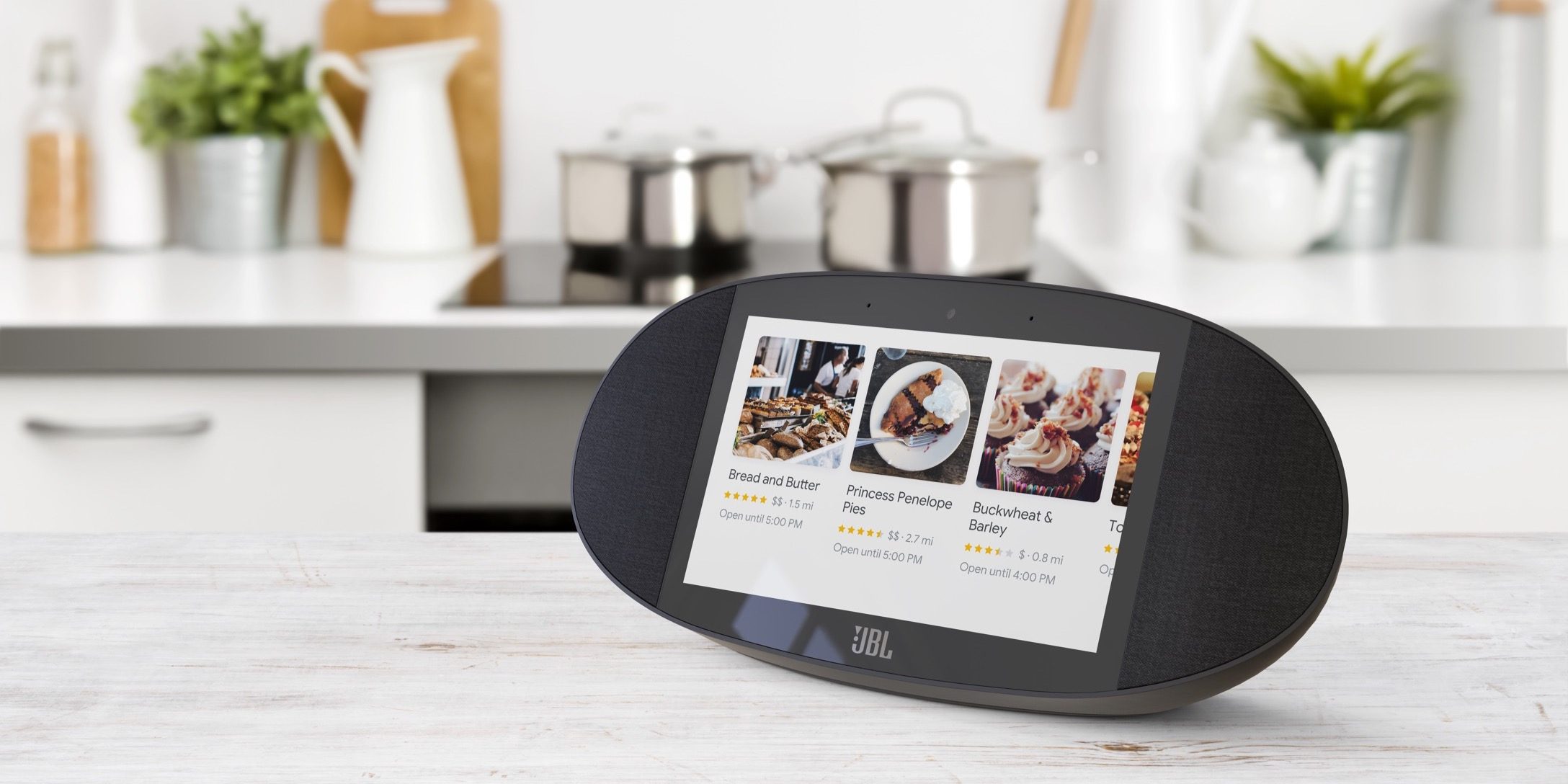
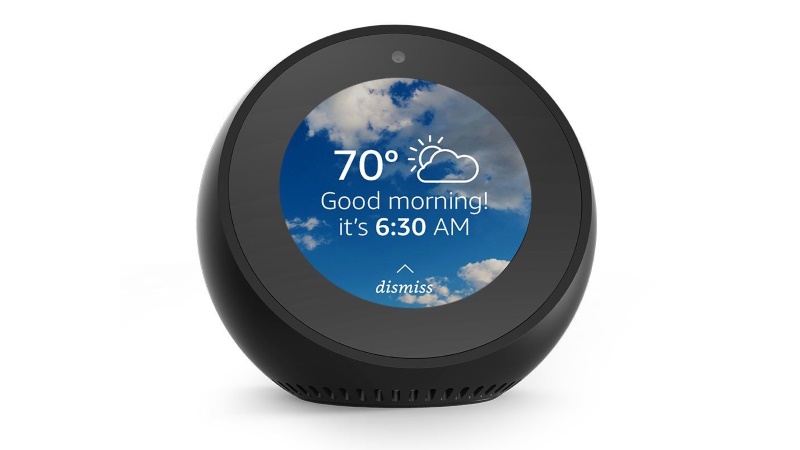
    Facebook was going to unveil its smart speaker at its biggest developer conference in May this year. However, after the recent public outrage, the company has decided not to reveal any product right now. The report claims that Facebook will carefully examine the speakers and make sure it doesn’t violate any data privacy rules.

    Recently, Facebook got pulled into a data leak scandal along with a British analytics firm for unlawfully sharing personal user data. Which in turn could have played a huge role in the US Presidential Elections. The controversy has sparked off a huge debate about social media and Facebook is at the helm of it. It makes sense for Facebook to not unveil a new product line at the point, as it may not be met with a lot of open minds and will be heavily scrutinised, irrespective of how secure it might be.

    Amazon Echo Show

    The report says:

    Facebook’s hardware products are undergoing a deeper review to ensure that they make the right trade-offs regarding user data.

    Even though the smart speaker was not going to be available for purchase before fall, it was planning to unveil the speaker in May. However, the company has now decided to lay off from any announcement until the public outrage cools off.

    It is already a bit late in the smart speaker game, and delaying it further will not help its case. However, looking at the current situation and the kind of situation it is in, the decision might be essential, if not correct. Ever since the controversy, Facebook has lost over US$ 60 billion in market cap and many people have decided to delete their Facebook accounts. However, considering Facebook has an active monthly user base of 2.2 billion people, losing a few here and there won’t have a huge impact.

    Amazon Echo Spot

    The smart speaker will go by the moniker of Portal. A previous report claims that it would have a 13 to 15 inch display. The speaker will respond to voice commands and use facial recognition technology. This is something the company has been taking very seriously off-late. WIth voice and facial recognition, it can provide a personalized experience to different people in the house.

    The Portal could also be a part of Facebook’s plan to become the largest video streaming service. With a huge display and the ease of voice commands, the Portal could become a primary source of video consumption. That, along with its own video streaming service could be a good combination. You could read everything about its new streaming service, Watch here.

  • Mark Zuckerberg Apologises For Facebook Data Scandal In Full-Page Newspaper Advertisements

    Mark Zuckerberg Apologises For Facebook Data Scandal In Full-Page Newspaper Advertisements

    Facebook, over the past few days, has been under tremendous scrutiny. Mark Zuckerberg first posted on Facebook addressing the whole issue. However, the Facebook post looked more like a recap of the controversy and less of an apology. He talked about steps that Facebook will take in order to curb this problem. But, never once said that he or the company was sorry for what had happened.

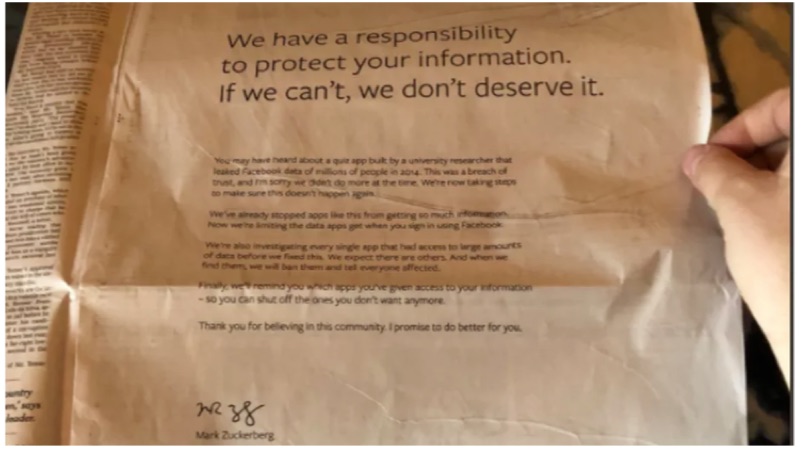
    Now, the social media and giant has taken to print media to issue an apology. Facebook took out several full-page advertisements in newspapers like the New York Times, Wall Street Journal, The Washington Post and several UK papers. The ads take the form of an apology written by Mark Zuckerberg, co-founder and CEO of Facebook Inc.

    The apology, again, talks a lot about the steps Facebook is taking or has taken already to curb data breaching. The apology reiterates that the company has limited the amount of data an app gets when a user signs up through their Facebook account. However, the tone of the ad certainly is a bit more remorseful than the Facebook post from last week. Zuckerberg writes, “This was a breach of trust and I’m sorry we didn’t do more at the time. I promise to do better for you.”.

    A few days ago, a story broke out, exposing a British data analytics firm and its illegal acquisition of private data of about 50 million users. Cambridge Analytica, the firm in question performed work for the campaign of President Donald Trump and made ads for the Defeat Crooked Hillary page. Worth noting that that the page was run by the Make America Number One super PAC (Political Action Committee). Co-incidentally, both the Cambridge Analytica and Make America Number One financed by Robert and Rebekah Mercer, who backed Donald Trump in the general election.

    POTUS Donal Trump

    Ever since the story went public, the repercussions have been severe for the social media giant. Apart from a massive dent in its reputation, the company has been hit with several lawsuits. The hashtag #DeleteFacebook has been trending on social media as well. Moreover, the company has lost over US$ 60 billion in market cap since the controversy began.

  • Facebook CEO Zuckerberg Promises To Protect Personal Data

    Facebook CEO Zuckerberg Promises To Protect Personal Data

    Facebook has been under the scanner for the past few days. The controversy of Cambridge Analytica has sparked a huge debate about Facebook and its data sharing practices. Apparently, Cambridge Analytica performed work for the campaign of President Donald Trump. It made ads for the Defeat Crooked Hillary Facebook page. Co-incidentally, both the Cambridge Analytica and Make America Number One financed by Robert and Rebekah Mercer, who backed Donald Trump in the general election.

    Mark Zuckerberg’s Statement

    Now, Facebook co-founder and CEO, Mark Zuckerberg has come out and addressed the issue. This post comes in a few hours after the #DeleteFacebook started trending across social media. The long post, in a nutshell, talks about the controversy and Facebook’s stance. While talking about the issue in hand, he also outlined a few steps Facebook will take.

    • Facebook will investigate all apps that had access to user data before 2014. This is because it was in 2015 when Facebook changed its Privacy Policy to reduce data access. The company plans on banning any user that had misused the data. Every “thisisyourdigitallife” user will be informed about their data breach. Every user of an app will be informed about it when Facebook bans that app.
    • If someone hasn’t used an app within the last three months, Facebook will turn off the app’s access to their information.
    • From now on, every app that requires a Facebook Login will only have access to name, profile photo and email address.

    The rest of the press release tells us what we have known already. While the steps mentioned by Zuckerberg do make a lot of sense, their implementation is what will matter. Facebook has already lost over US$ 60 million in market cap. Astonishingly, that is more than the entire market capitalisation of Tesla Inc.


  • #DeleteFacebook Is Trending: Here’s What Has Happened

    #DeleteFacebook Is Trending: Here’s What Has Happened

    On the 20th of January, Donal Trump was inaugurated as the United States’ 45th President. Leading up to that day was an excruciating Presidential campaign. Wherein Hillary Clinton lost to Trump on the basis of electoral votes. Even though Clinton was ahead by 2.1% in popular votes, she conceded the election on the 9th of November. Ever since his election, Donal Trump and his Presidential campaign have come under a lot of scrutinies.

    [section label=”Background”]

    A few weeks ago, the Justice Department indicted 13 Russian nationals and 3 companies for interfering in the 2016 presidential election. The Russians stole the identities of American citizens and posed as political activists to deviate the public opinion against a certain Presidential candidate. However, there was no accusation that President Trump or his associates were knowingly part of the conspiracy.

    And now, a British analytics firm, Cambridge Analytica has come under the radar. It has been accused of illegally capturing data of 50 million Facebook users for target-based advertising during the Presidential campaign. Apparently, Cambridge Analytica performed work for the campaign of President Donald Trump and made ads for the Defeat Crooked Hillary Facebook page.

    Worth noting that that the page was run by the Make America Number One super PAC (Political Action Committee). Co-incidentally, both the Cambridge Analytica and Make America Number One financed by Robert and Rebekah Mercer, who backed Donald Trump in the general election.

    [section label=”Key Events”]

    The question arises then, how did a company get hold of personal information of 50 million Facebook users? Illegally, for starters. Apparently, Aleksandr Kogan, a University of Cambridge psychology professor got permission from Facebook to harvest information from users who downloaded his app, thisisyourdigitallife. But, users who downloaded the app gave the professor the permission to collect data on their location, their friends and even the content they had liked. Krogan, then, passed on this data to Cambridge Analytica which violated Facebook’s rules.

    A recent report on Alexander Nix, CEO of Cambridge Analytica has intensified the allegations on the firm.A British television channel aired a report where he is seen discussing potential bribery and entrapment of politicians. However, Cambridge Analytica has since stated that:

    The report was edited and scripted to grossly misrepresent the nature of those conversations.

    That stance did not stick for too long as Alexander was suspended by the company on 20th March 2018. It is worth noting that Christopher Wylie, a former contractor of Cambridge Analytica is the whistleblower. He shared this information with the New York Times and The Observer. Facebook has since suspended his account.

    In a nutshell, all of this corruption was fueled by the availability of such damming data. After the recent accusations of Russian nationals using Facebook to sway voters, this new accusation is much bigger. It has been revealed that since the story broke, Facebook has lost about US$ 50 million in market cap. Also, the hashtag #DeleteFacebook has been trending elsewhere.

  • How To Delete Personal Data On Facebook Without Deleting Your Account

    How To Delete Personal Data On Facebook Without Deleting Your Account

    Facebook is getting a lot of undesired attention. The company is accused of harvesting millions of Facebook user’s personal information to Cambridge Analytica. Even WhatsApp co-founder has tweeted with a hashtag #DeleteFacebook, asking people to delete their Facebook accounts. However, deleting a Facebook account once in for all might not be a feasible solution, as most of the day to day activities are directly connected with it. Instead, remove the private data stored on Facebook.

    Methods to delete personal data

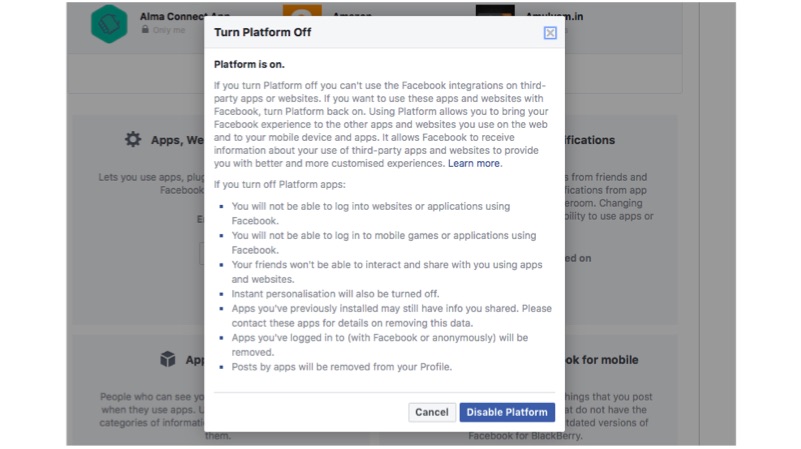
    There are two methods to remove already existing data on Facebook. The first method helps to prevent Facebook from collecting additional data from other platforms like Instagram. Go to Settings>Apps>Websites and plugins then click on disable platform. This action will prevent you from signing-in to other applications or platforms that use your Facebook details. After doing this, you might not be able to play games or access applications. However, the already signed-in applications will still collect your data, until you sign-out of that application individually.

    Facebook

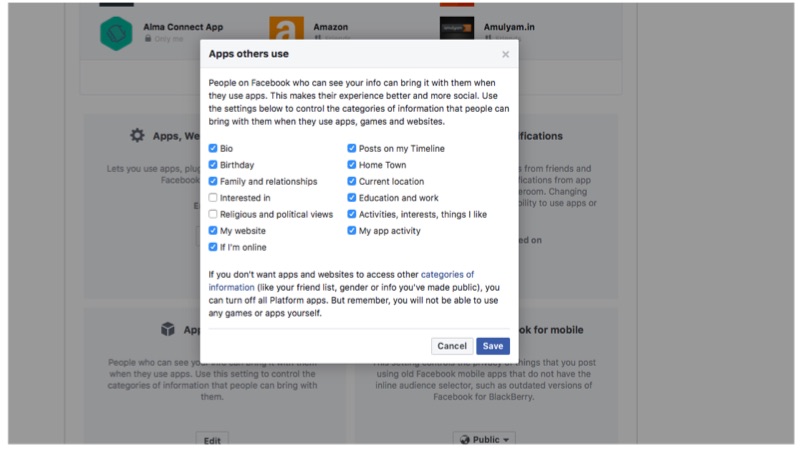
    The second method gives a more refined control over the information that you can share with other platforms. Go to Websites and plugins>Apps Others Use and undo the required checkboxes. The list includes options like your birthday, relation status, interests etc. However, this method might kill some of the app functionality to the third-party apps, which need this information. The page also lists the apps, that you have shared your information with. Remove the apps, that you feel insecure to share your personal data.

    Facebook

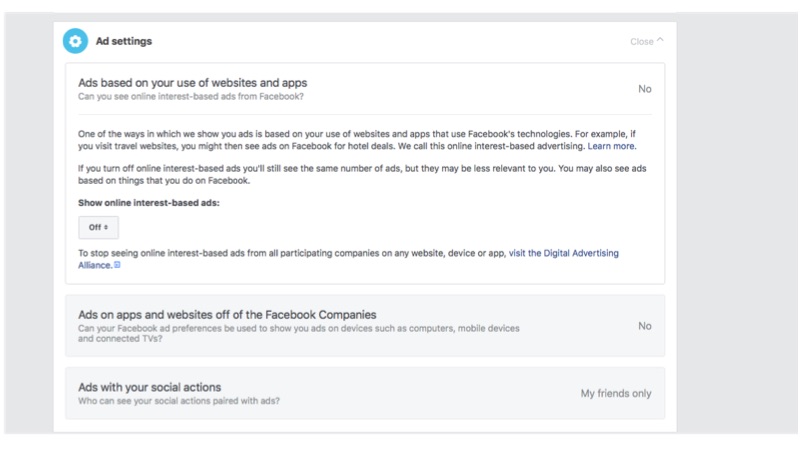
    The last option is to go to Ads section in settings to turn-off data collection from other websites, that you visit on a daily basis. Edit your information section from to not to share your personal information with advertisers. If you want to be a pro-private person on Facebook, use a virtual proxy network (VPN) with an add-on which can block cookies.

    Facebook

  • Facebook Messenger Lite Gets Video Calling Feature

    Facebook Messenger Lite Gets Video Calling Feature

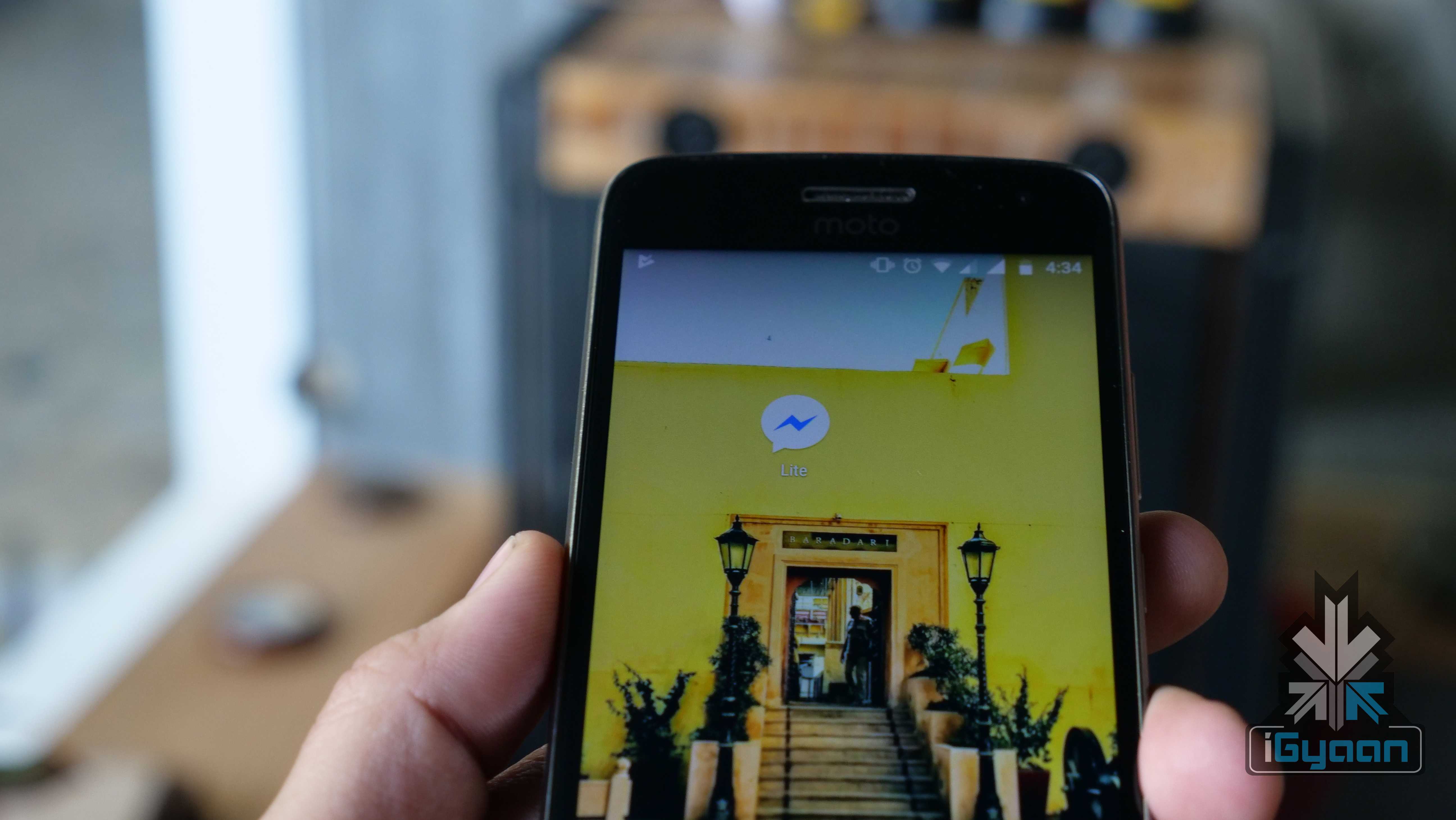
    Facebook Messenger Lite now supports video chats. One has to update the app to version 27.1.0.6.185 to enable video chat. The update weights at 3MB and it is free to download. However, after the download, the app consumes around 35MB of storage space.

    Originally, the Messenger Lite application was launched to serve users with slow internet connectivity in the countries like India and Sri Lanka. However, later on, the app was made available Globally.

    Usually, video chat applications require a lot of high-speed data. However, the Messenger Lite application works even with slow internet connectivity. Facebook claims that 17 million video chats have been made on Messenger. In fact, the number has been doubled compared to the 2016 statistics.

    Messenger Lite

    The original launch didn’t have either voice or video calling feature, which was later added with the updates. In fact, it has all the features like stickers, group chat and Find People like the standard version.

    How to use video chat on Facebook Messenger Lite
    • Open the messenger
    • Click on the user
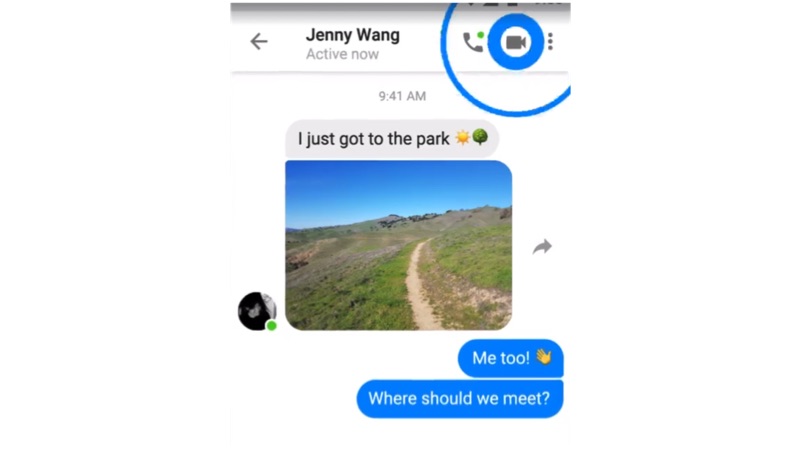
    • Click on the video button to start the conversation
    Note:

    Both the parties should be running on the latest version of either the regular or the Lite app to make video calls.

  • Top Instant Messaging Apps For Android

    Top Instant Messaging Apps For Android

    Not a long time ago, we used to send wishes through postcards, which was later replaced by SMS. However, the rise of the internet has made SMS services redundant. Instant messengers have evolved into more than just text messaging mediums. Users can do things like international video calling to sending money, all in one single app. While these apps are free to use, the internet is the only prerequisite.

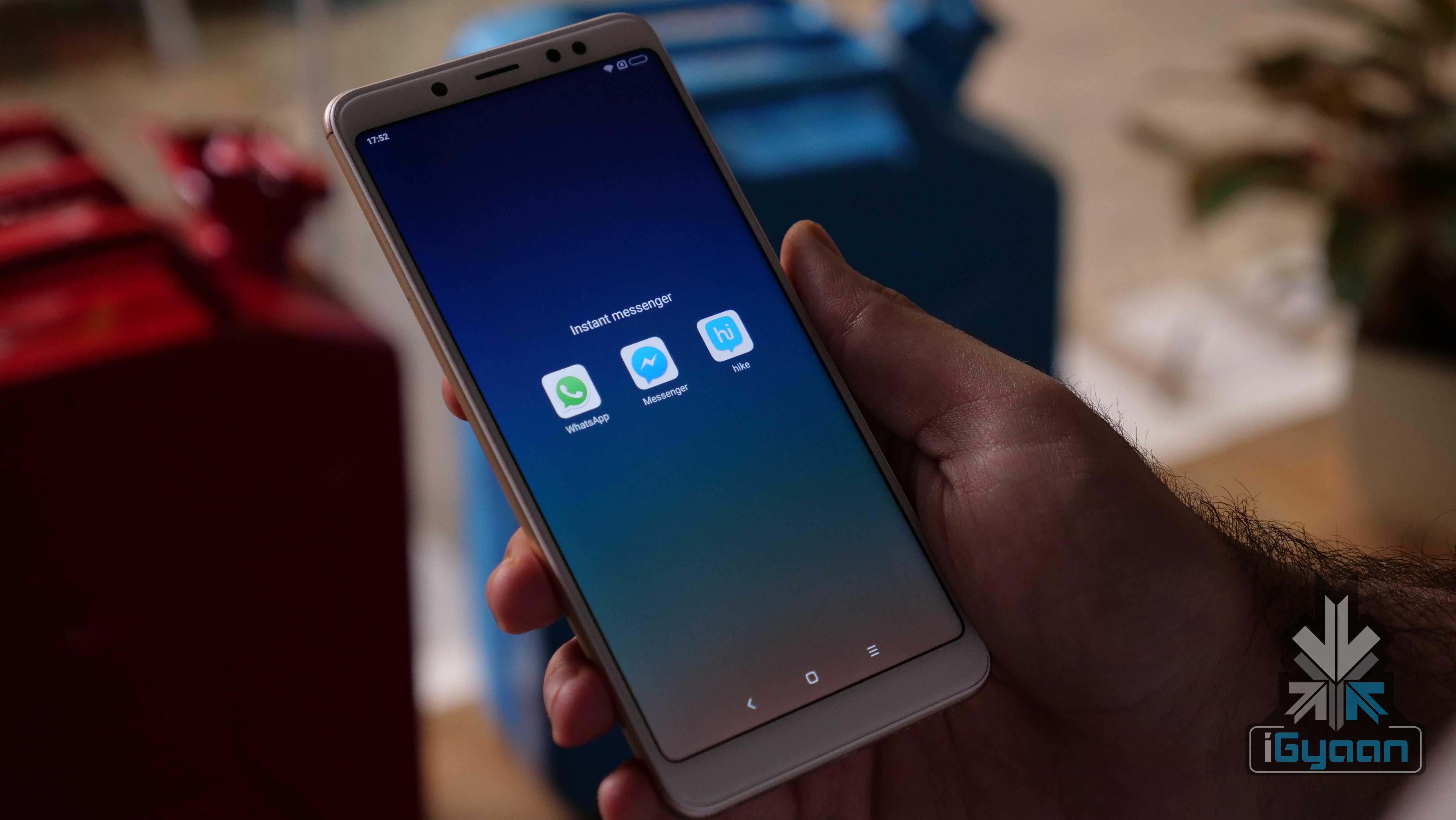
    The instant messengers help for all kind of stuff. From making an international video call to sharing a presentation. However, usually, the only requirement of these apps is the internet. Almost all the instant messengers work fine in either cellular data or a Wi-Fi network. So, here are the top three instant messengers available for Android. However, these three apps are universally compatible, which means they work fine on iOS as well.

    WhatsApp

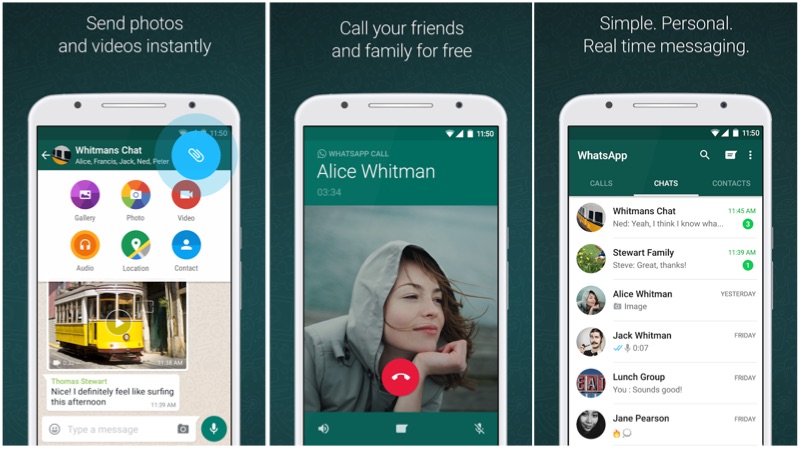
    Without a doubt, WhatsApp has become the most famous instant messaging apps in the world. While there are a few anomalies here and there, almost everyone with a smartphone has WhatsApp nowadays.  The free to use business model with no in-app ads make this one of the best messengers in the business. One can create groups and add up to 256 members.

    Pros:

    • Free to use
    • Ad-free user experience
    • Free voice and video calls
    • Simple UI
    • WhatsApp Pay

    Cons:

    • Requires an active SIM card for activationInstant Messengers
    Facebook Messenger

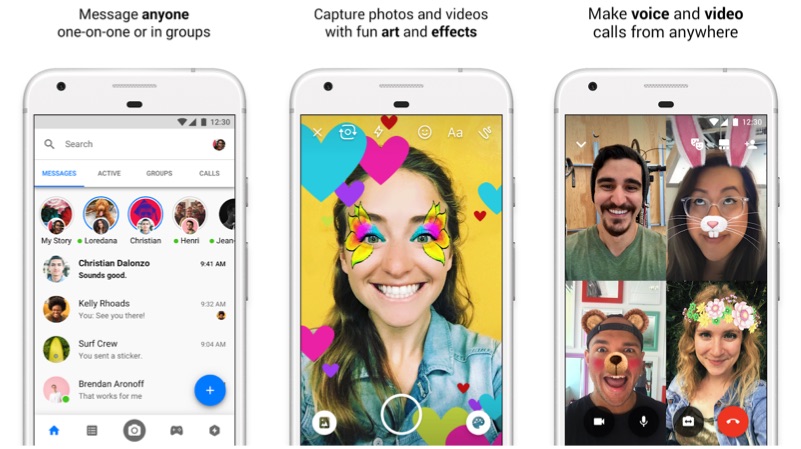
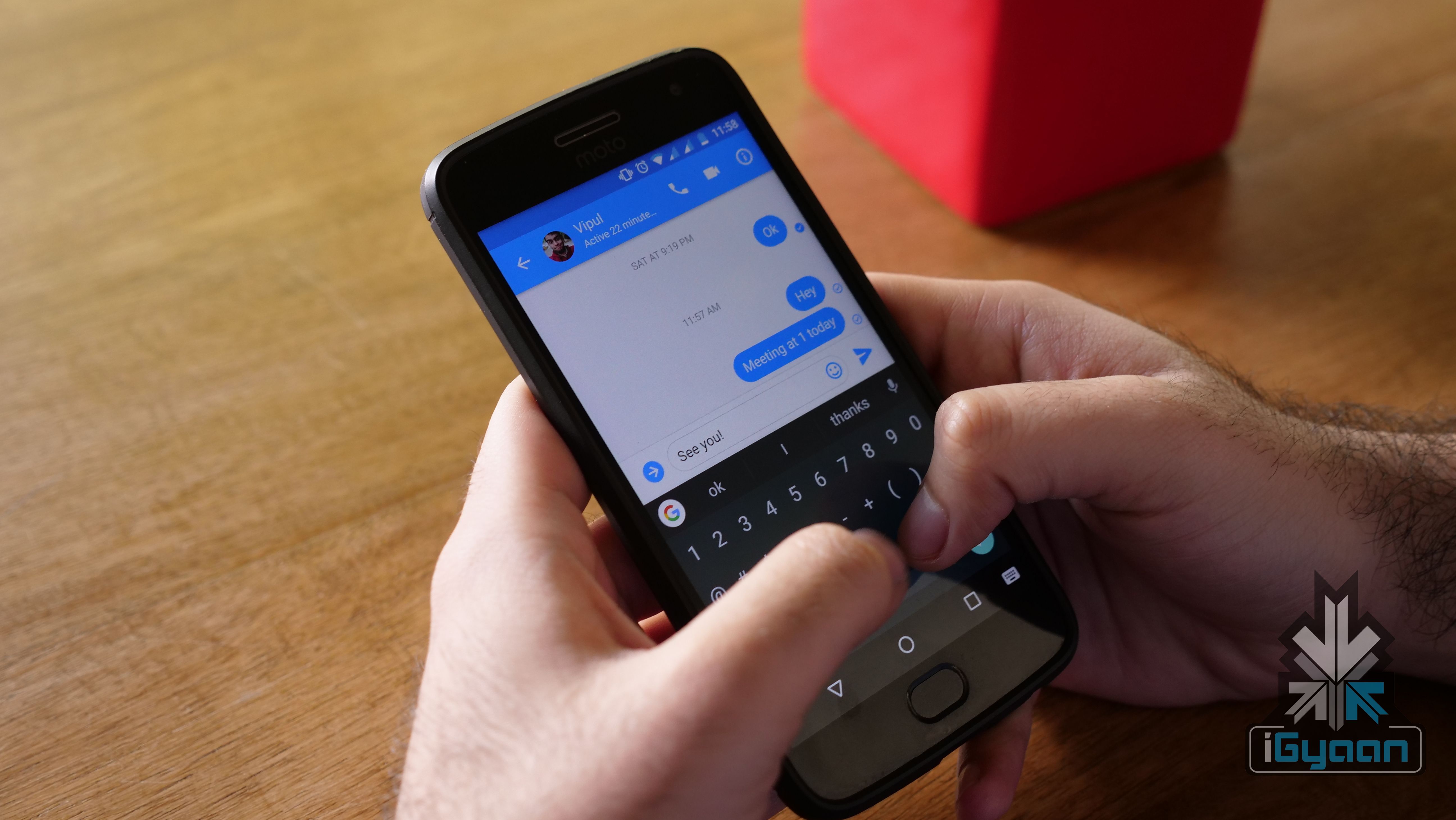
    The Facebook Messenger was something that was forced on to us. Facebook made the Messenger a standalone app and removed the option of chat from its main app. Hence, anyone with a Facebook app, had to move on to the Facebook Messenger as well. But, it has turned out to be a great messaging app, especially for people extremely active on Facebook. However, it has the option of replacing the standard SMS app as well.

    The messenger has two sections, where it differentiates the messages and the active users. The active users are highlighted using a green dot. One can also initiate voice and video calls with a single touch of a button.

    Pros:

    • Free to use
    • Material UI
    • Free voice and video calls

    Cons:

    • In-app ads
    • App consumes a lot of space
    • Complex user experienceInstant Messengers
    Hike

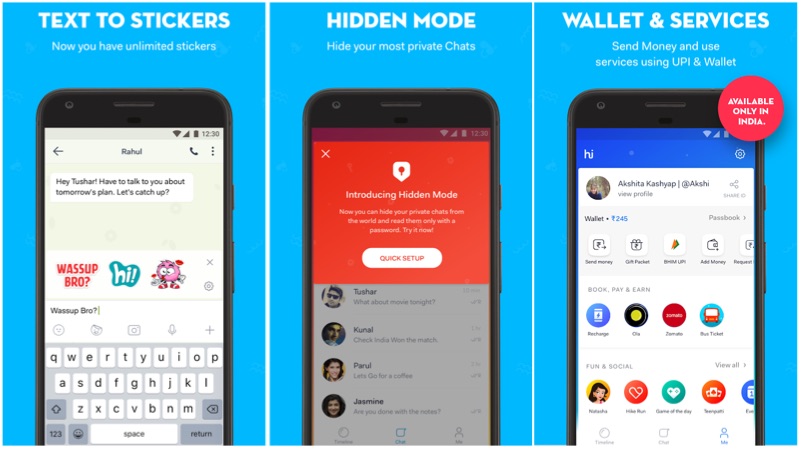
    This is also an interesting instant messenger. Though it resembles WhatsApp, it has its own added advantage. The app comes with a hidden mode, where users can hide their secrete chats. This app also offers free stickers, which can be used instead of words to express a certain feeling. In fact, the app has stickers based on Indian celebrities and their famous dialogues as well.

    Pros:

    • Groups chat with up to 1000 members
    • UPI based Hike wallet
    • Gift packs

    Cons:

    • Small user base
    • In-app adsInstant Messengers

    [poll id=”60″]

  • BlackBerry Sues Facebook For Patent Infringement

    BlackBerry Sues Facebook For Patent Infringement

    Once considered to be one of the biggest mobile makers in the world, BlackBerry has gone through its fair share of dip. Ever since the rise of iOS and Android OS platforms, BlackBerry and its popularity has been on a decline. The BlackBerry Messenger used to be one of the most popular messaging services and has since been replaced by the likes of WhatsApp. However, it appears that BlackBerry feels undone by Facebook as it has sued the social networking company for patent infringement.

    In a Los Angeles Federal Court, BlackBerry, Ltd. filed a lawsuit against Facebook, Inc. for infringing a patent on its messaging technology. The lawsuit focuses on Facebook Messenger and Facebook-owned properties like WhatsApp, Instagram. BlackBerry claims that for several years, it has attempted to have a dialogue with Facebook over the infringed patents.

    Facebook Messenger

    A few things that have been noted in the lawsuit include showing an unread message indicator on top of an icon. Something that WhatsApp and Facebook Messenger introduced a while ago. Here are a few other features noted in the lawsuit:

    • Showing multiple incoming messages in the inbox
    • Not showing timestamps of every message in a thread
    • Selecting a Photo Tag

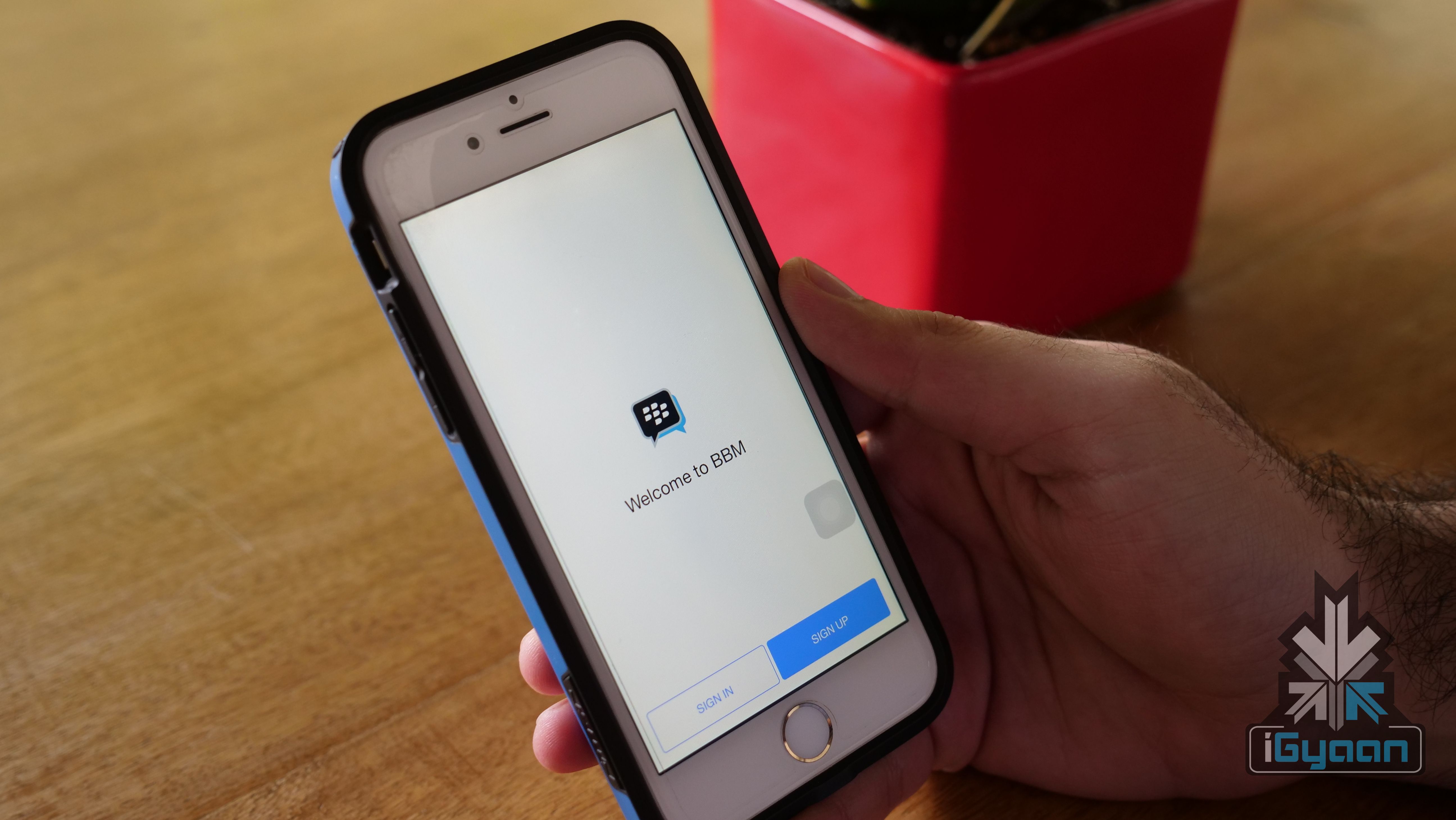
    The lawsuit appears to be related to BBM, once highly popular and now, obsolete. Using BBM, users could send unlimited messages to each other, a lot like iMessage. However, as the popularity of Blackberry devices dwindled, the company made the messaging service available for iOS and Android.

    Considering companies like Apple, Google have similar messaging apps, it is surprising that they weren’t in the firing line as well. Facebook, on the other hand, has come out with a harsh response to the lawsuit:

    BlackBerry’s suit sadly reflects the current state of its messaging business. Having abandoned its efforts to innovate, BlackBerry is now looking to tax the innovation of others. We intend to fight.

    Conclusion

    If past lawsuits are anything to go by, this legal battle will be on for a while.

  • 13 Russians Indicted For Swaying 2016 US Presidential Elections Using Social Media

    13 Russians Indicted For Swaying 2016 US Presidential Elections Using Social Media

    Donal J. Trump is the President of the United States. He won the 2016 Presidential Elections by beating Hilary Clinton. On November 8, 2016, Trump received 306 pledged electoral votes versus 232 for Clinton. The victory was unforeseen by many experts and over the course of the past year, lots of information about the campaign has been unearthed. On the 16th of February, the Justice Department indicted 13 Russian nationals and 3 companies for interfering in the 2016 presidential election.

    The Russians stole the identities of American citizens and posed as political activists to deviate the public opinion against a certain Presidential candidate. However, there was no accusation that President Trump or his associates were knowingly part of the conspiracy.

    The Story

    The Russian nationals used the power and reach of social media to sway public opinions. In today’s world, where the majority of the public gets their news from social media, this is a dangerous proposition. The fact that a few individuals with malice intentions can influence one of the biggest events in the world is quite frightening. This also proves that so many people believe whatever is on social media without fact-checking.

    The Russians carried out a campaign called “Project Lakhta”. It began in early-2014 and targeted a few individuals while siding with others. In early-2016, they intended to attack Hillary Clinton, Senator Ted Cruz, and Senator Marco Rubio, while supporting Bernie Sanders and Donald Trump. After that, they attacked Hilary Clinton and focused on supporting the campaign of Donald Trump.

    Russians

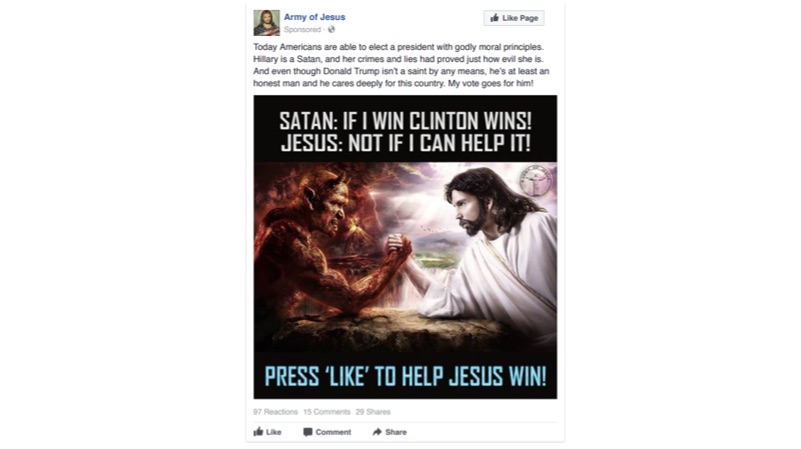
    The accused Russian nationals created fake social media accounts and bought ads to promote their agendas. These advertisements ran between April 2016 and October 2016 and targeted Hilary Clinton. One of the ads mentioned equated Hilary to Satan and Trump to Jesus. This indictment also goes against President Trump’s claims that Russia did not meddle in the elections and that it was all “fake news.”

    While President Trump has not been mentioned as a complicit, same cannot be said about Vladimir Putin. American intelligence officials have publicly said that President Vladimir V. Putin of Russia directed and oversaw Project Lakhta. Two of the three companies hold Russian government contracts.

    Such is the power of social media that if not single-handedly, it can at least sway the public reaction. The use of social media by Russian nationals prove that we believe memes and videos over trusted news outlets. Therefore, we need to take a hard look at what we see on social media and what is really worth believing.

  • JioPhone Gets Official Facebook App Support

    JioPhone Gets Official Facebook App Support

    JioPhone has received a much-needed feature. The JioPhone users can now enjoy fully fledged Facebook natively. The app includes features like push notification, videos, and an optimised news feed. The app has been specially designed by the Facebook team for the KaiOS (special OS based on Firefox OS). The JioPhone will also receive its own version of Google Assistant in the coming months.

    JioPhone is one of the cheapest feature phones that supports 4G LTE with VoLte. The smartphone literally costs nothing (with refundable security deposit), which make sense in the booming market like India. Though the phone supports universal GSM network, the company has locked it to Jio-network only to reduce the misuse. Users can recharge their number for as low as INR 49, which includes unlimited calling and data for 28 days. The company has sold more than 5 million phones, and it is still hard to get a JioPhone without pre-ordering it.

    Specifications:

    For a phone of this calibre, the phone packs decent hardware. The 2.4-inch non-touch panel runs on 1.2 GHz SoC paired with 512 MB RAM and 4 GB storage.

    The phone packs a 2 MP main camera and a VGA selfie camera, which aids in video calling. The 2500 mAh Li-ion battery is user replaceable and will last for an entire day. The phone does offer screen mirroring via a proprietary cable that connects via micro USB port.

    The built-in KaiOS offers exclusive Jio apps like Jio Music, Jio Tv, Jio Magazine, and My Jio. Users can also access Youtube and other streaming services via the web browser.

    Conclusion:

    At the time of launch, the company announced that the phone will feature necessary apps like WhatsApp and Facebook. This looks like a right move in right direction. However, the company haven’t shed any light on the availability of WhatsApp which is the most requested app from the user.

  • Facebook Testing A ‘Downvote’ Button

    Facebook Testing A ‘Downvote’ Button

    Ever since Facebook gained the kind of popularity it possesses right now, the call for a ‘dislike’ button was the loudest. Initially, Facebook said that it would steer clear of a ‘dislike’ button as it could add negativity. However, the company went ahead and added various reactions. One of them is an “angry” reaction which could be substituted as ‘dislike’ button.

    The social networking site is now testing a downvote button that would work similarly to how downvotes are on Reddit and other sites. So far, only a few users in the United States can use this feature. And right now it is in a testing phase for now. However, the downvote button works differently than the dislike button.

    Facebook

    While a dislike button is used to express displeasure or anger towards a post or comment, the downvote button will be different. The downvote button won’t be available for every post, it is designed for comments on posts from public pages. The downvote button would help hide offensive, abusive, or inappropriate comments. Using the downvote button won’t affect the entire post.

    On a lot of websites, a number of downvotes make that particular comment hidden or deleted. Something similar will be implemented on Facebook.

    A Facebook spokesperson has stated that the social network is simply testing this downvote feature so that users can provide feedback about comments on various posts from public pages.

iGyaan Network
Privacy Overview

This website uses cookies so that we can provide you with the best user experience possible. Cookie information is stored in your browser and performs functions such as recognising you when you return to our website and helping our team to understand which sections of the website you find most interesting and useful.