Smartphone News and Reviews, Latest Cellphones, Accessories, New Launches, Specifications, Details with Image and Video from Apple, Samsung, Lenovo, Moto, HTC, Xiaomi, Oneplus, Meizu, Sony, Lava, Micromax Yu Mobile and More.
With Samsung and LG having unveiled their flagship devices at the MWC last month, we now turn our attention back to Apple and its much-rumoured iPhone 7. According to recent reports, Apple submitted a patent application published in January which tells us that the Cupertino giant is working on a dual-lens camera setup for the high-end version of the iPhone 7, possibly the iPhone 7 Plus.
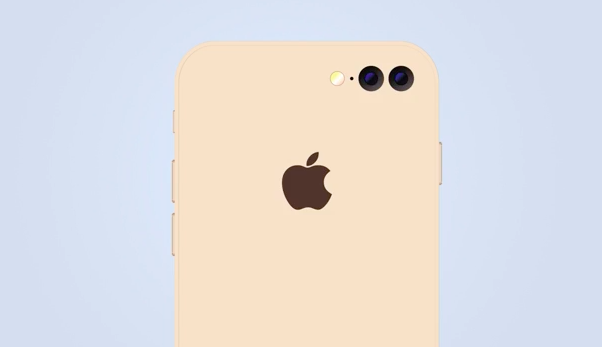
iPhone 7 Dual-Lens Concept
According to the patent, the UI of the camera will show a split-screen view, in which one screen will show a wide-angle shot, and the other will be a zoomed in shot of the subject. The patent shows a dual-camera system that consists of one standard wide-angle lens and one telephoto lens to capture zoomed-in photos and videos.
The lenses can be used simultaneously to take separate photos and videos while Apple software merges the images together in unique ways. Using a lens with a large focal length would also mean that the zoomed in shots will not lose detail and will remain crisp and clear.
MacRumors videographer Matt Gonzalez created a video based on the information from the patent to show an animated concept of what the iPhone 7’s dual lens camera could look likeand how best Apple can utilize this feature.
This of course, is merely a speculation and there is no confirmation that the patent will ever see light of day. However, this rumour is among the most possible features that you can expect from the iPhone 7. With smartphone camera becoming one of the most important features today, and phone makers like Samsung introducing next-gen camera technology, Apple will need to up its game and bring something unique to its camera with the iPhone 7 or suffer the consequence.
We have just come off the recent Mobile World Congress where names like Samsung, LG, and Xiaomi unveiled their flagship devices. Those who followed the unveiling closely will have noticed that the one common trait between the three flagship devices – Galaxy S7, LG G5 and Mi 5 – are that they all featured new and improved camera technology.
Apple has been among the top when it comes to having an exceptional camera in its smartphone. The iPhone 6s that was launched in September, 2015, came with a 12MP f/2.2 rear sensor. But Samsung, with the Galaxy S7 and S7 Edge, intorduced a new Dual Pixel Technology inside its flagship. Apple has more than enough means to make the above patent a reality. We’ll just have to wait and see how it pans out as we approach closer to September.
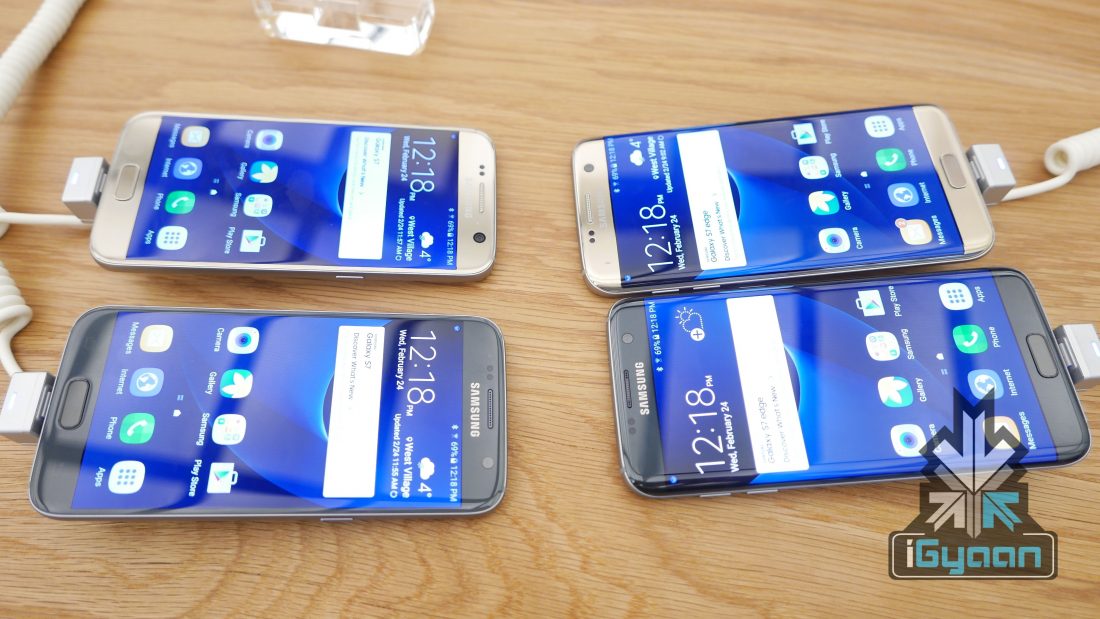
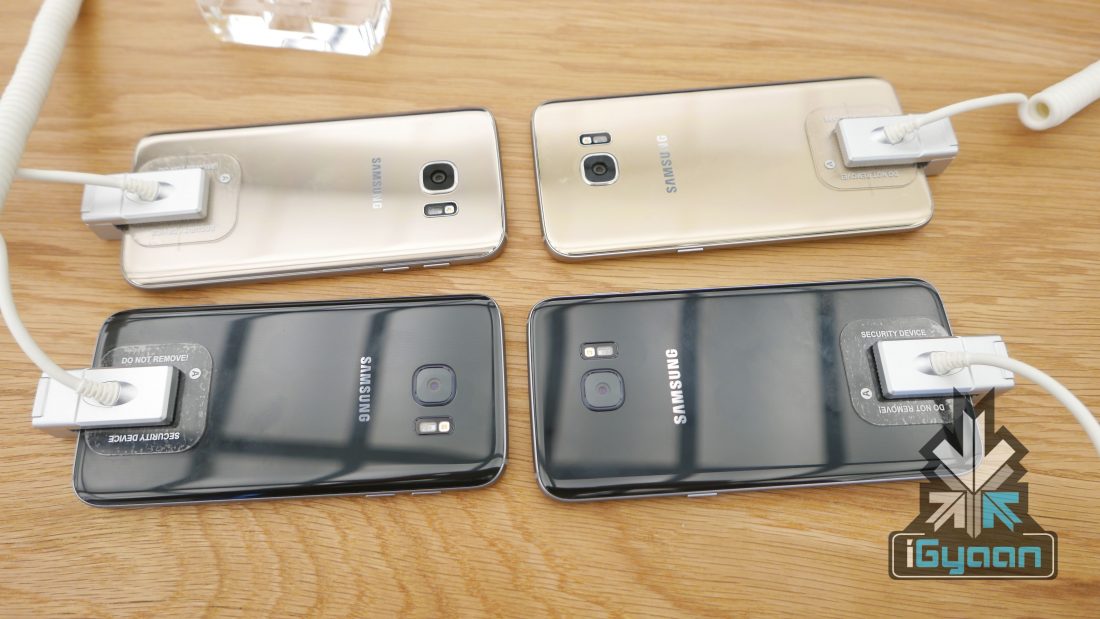
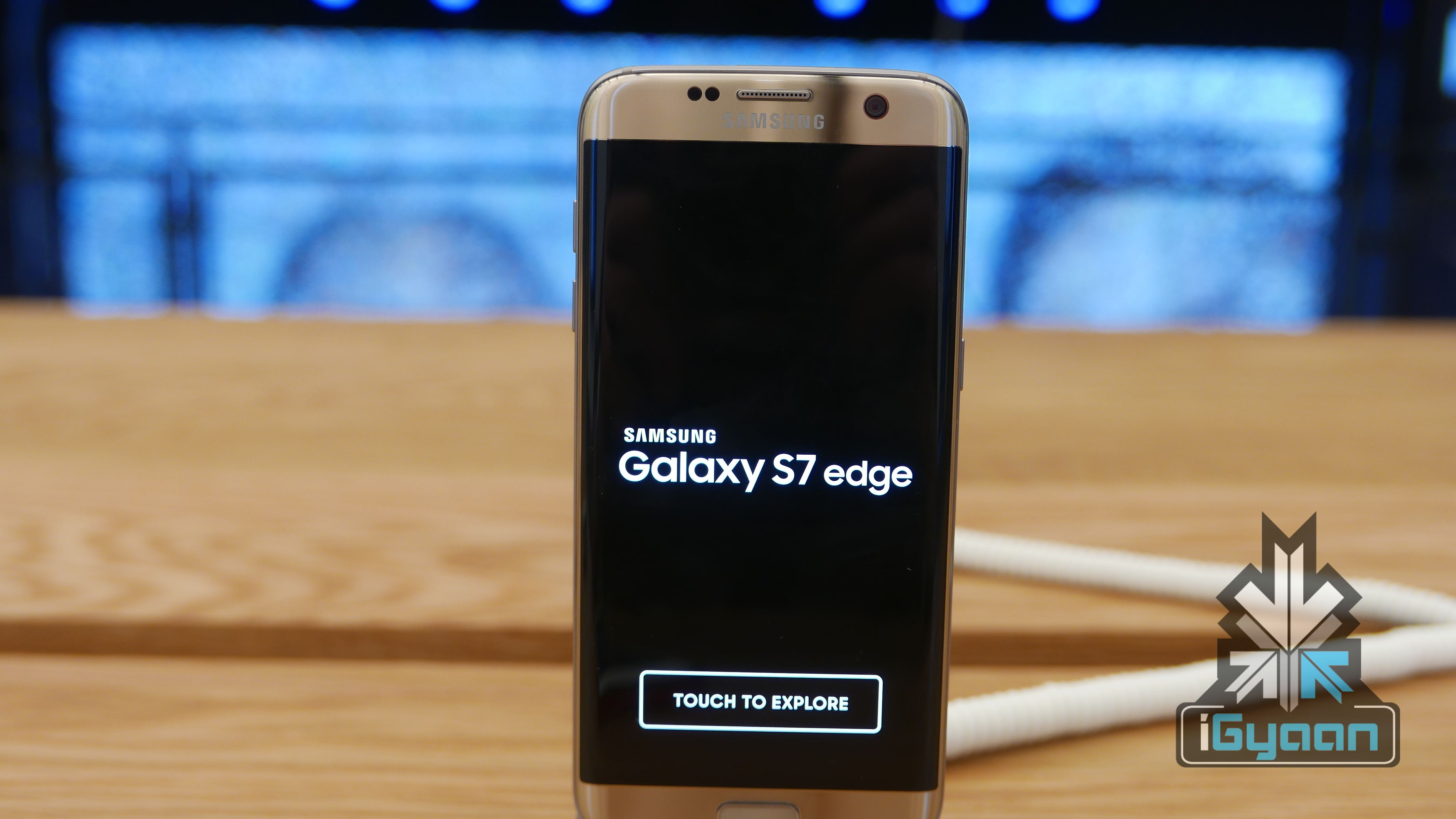
Amidst much fanfare, Samsung has launched its top of the line, Galaxy S7 and Galaxy S7 edge devices in India today. The flagship phones on which Samsung is resting a lot of hope will hit Indian markets from 17th of March, 2016 for a price of Rs 48,900 for the Galaxy S7 and the Galaxy S7 edge will start retail for Rs 56,900. Pre-bookings for the phones begins from today. Samsung has also announced that it’s throwing in a free Gear VR headset on all pre-bookings. The phones will be available in three color options, Black Onyx, Gold Platinum and Silver Titanium.
Samsung’s latest S series phones come with a promise of great performance and best in market specs all draped in a beautiful metal frame covered by Gorilla Glass 4 at the front and back. Both these phones are an extension of a growing effort by Samsung to bring phones with more than just great internals to the market, as it wants the consumers to “rethink what phones can do”.
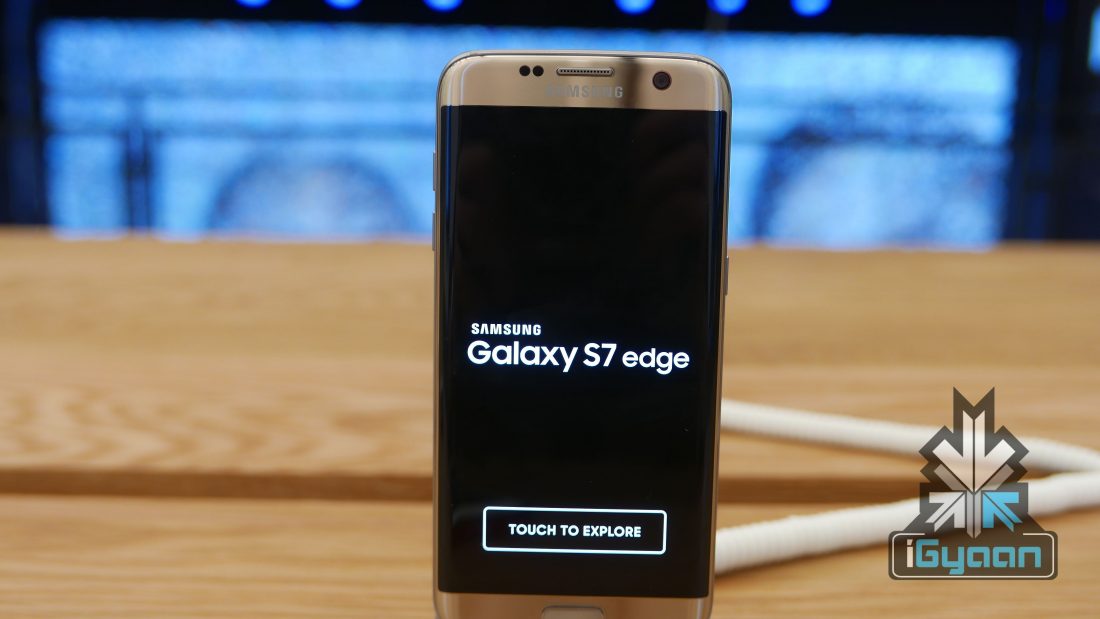
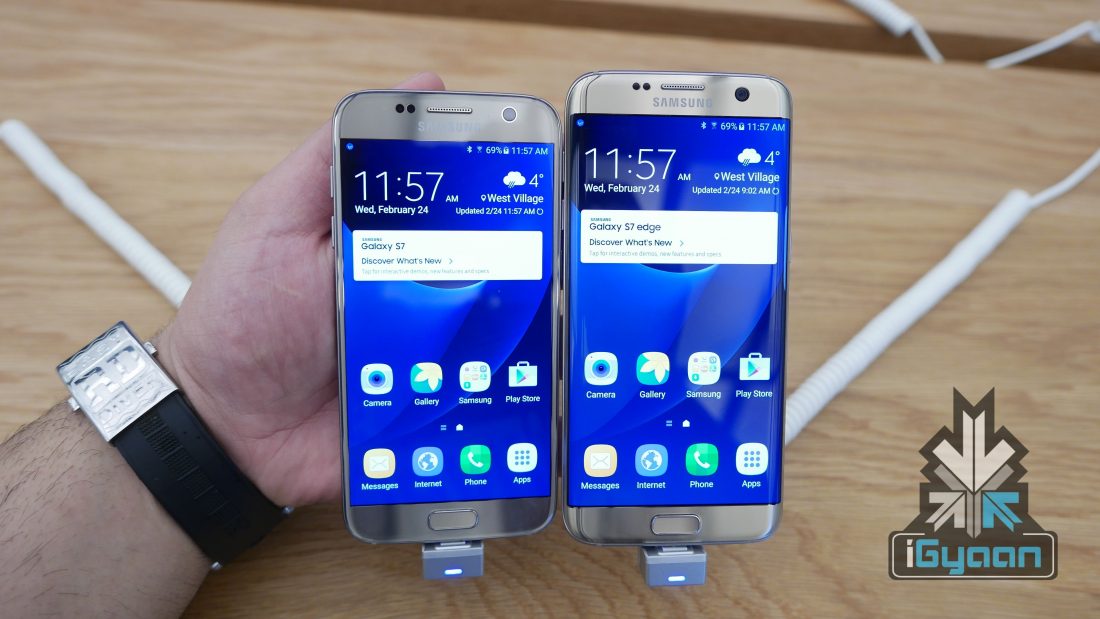
The Galaxy S7 comes equipped with a 5.1-inch Super AMOLED Quad HD display(1440 x 2560), while the more premium S7 edge brings to the users a beautiful 5.5-inch curved Quad HD display(1440 x 2560) which effortlessly melts into the phone’s metal frame to create an elegant looking device. Samsung has decided to bump up the battery on the phones, with the S7 getting a 3000mAh battery pack while the S7 edge getting an upgraded 3600mAh battery.
Both the phones share the rest of the specs including the on board Exynos 8890 SoC paired with 4GB of RAM and up to 64GB internal storage. Both the S7 and S7 Edge feature ‘Dual Pixel’ cameras with 12MP f/1.7 aperture rear camera for better low-light photography and a 5MP front which might just see Samsung dominating the camera department this year.
Both the devices also come with an Always-On display which consumes less than 1% power per hour. The phones come with IP68 rating and are dust and water-proof. The phones also come with a liquid cooling setup to keep the S7 and S7 edge cool during those long gaming sessions. The S7 series also brings with it the Vulkan API and a dedicated “Game Launcher” for an unparalleled gaming experience on a mobile device.
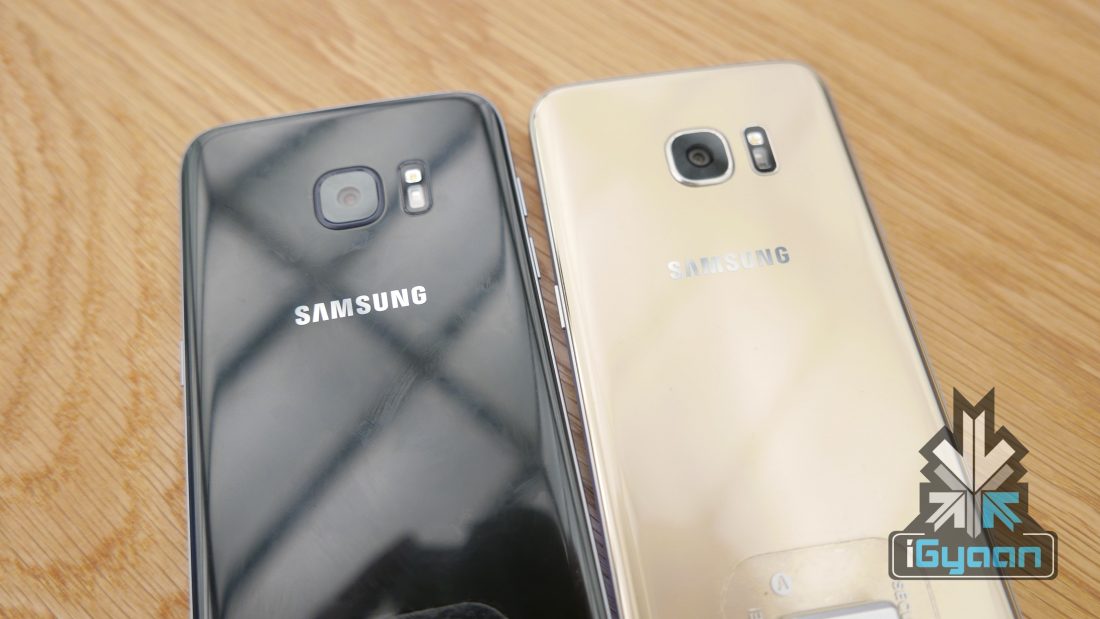
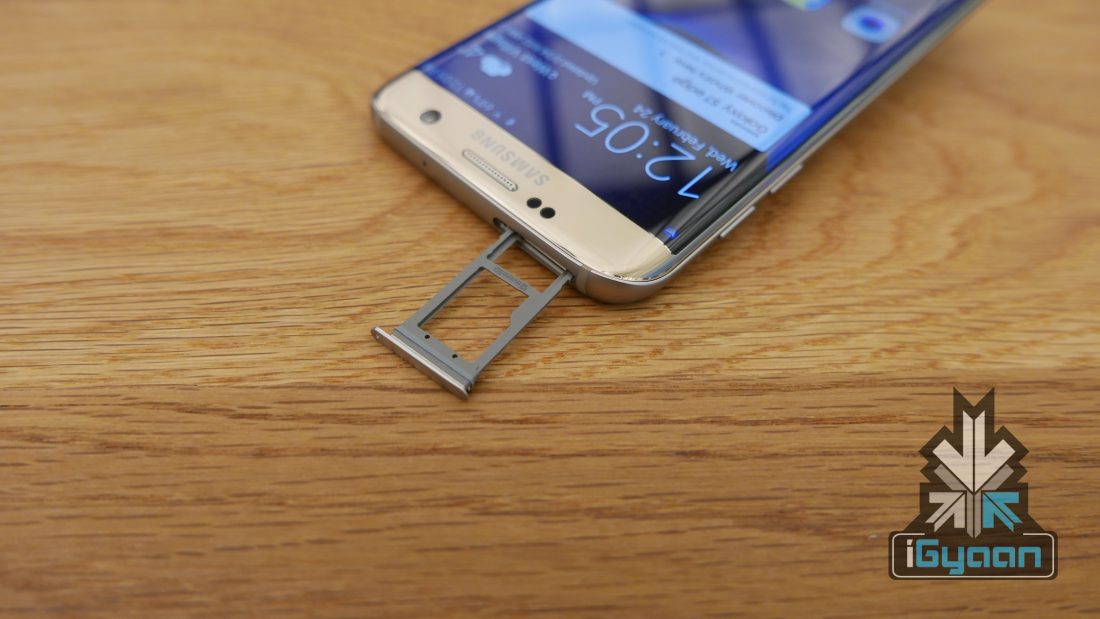
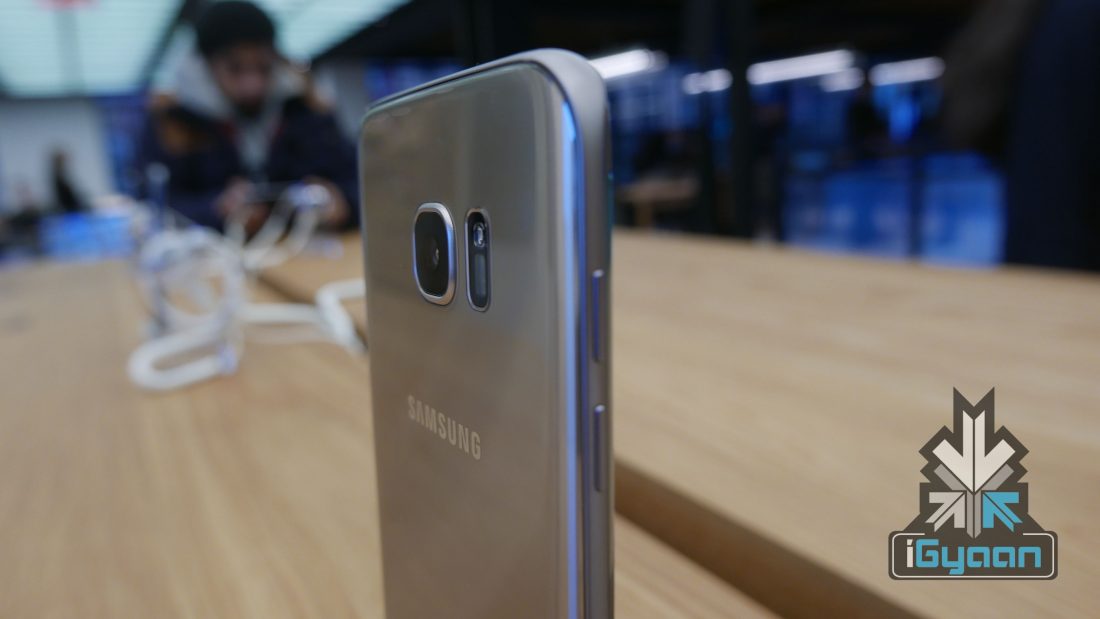
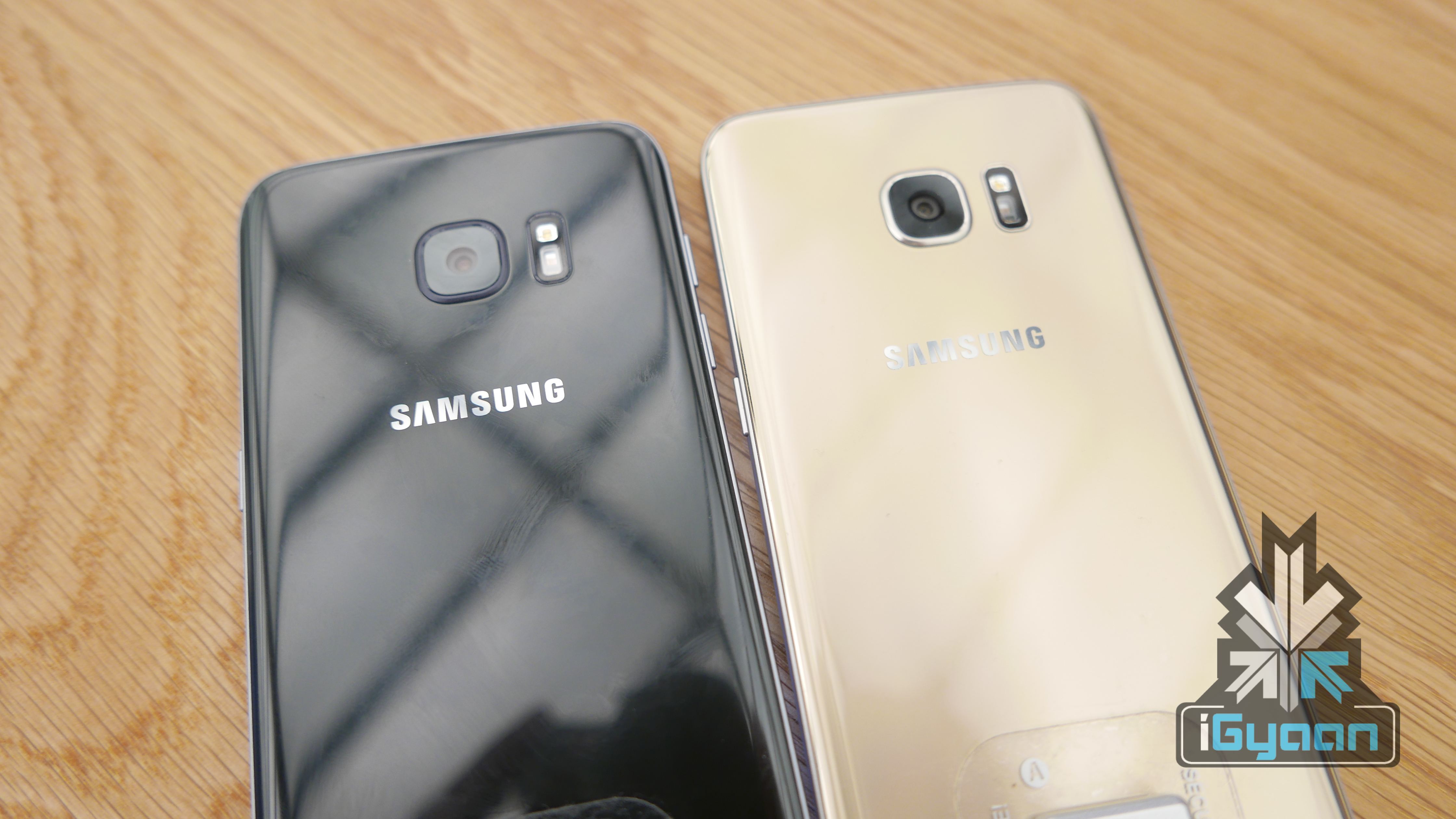
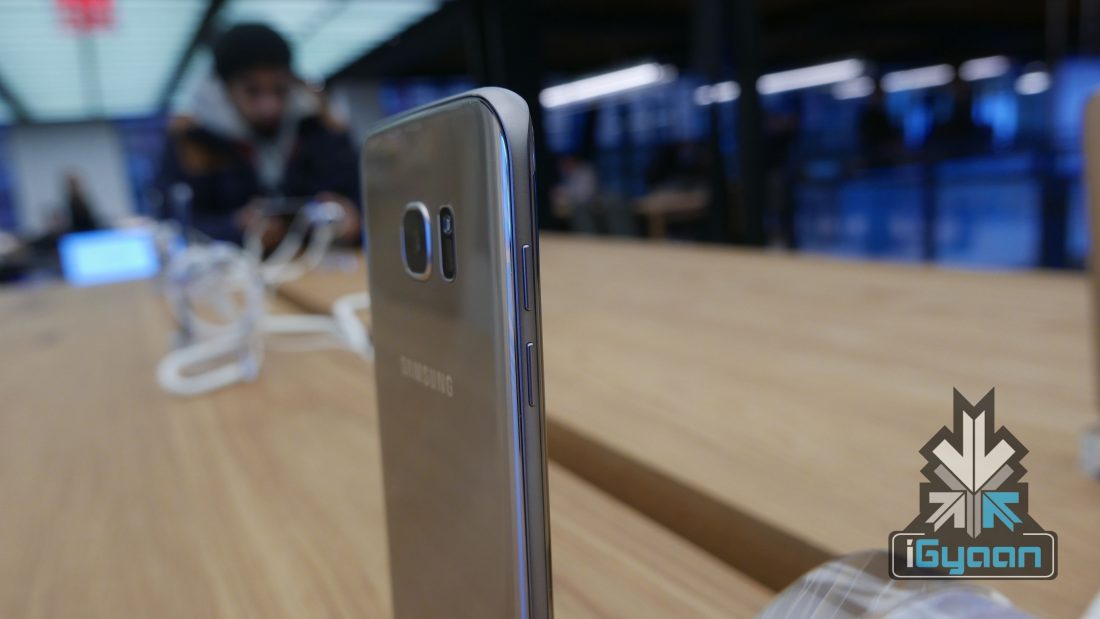
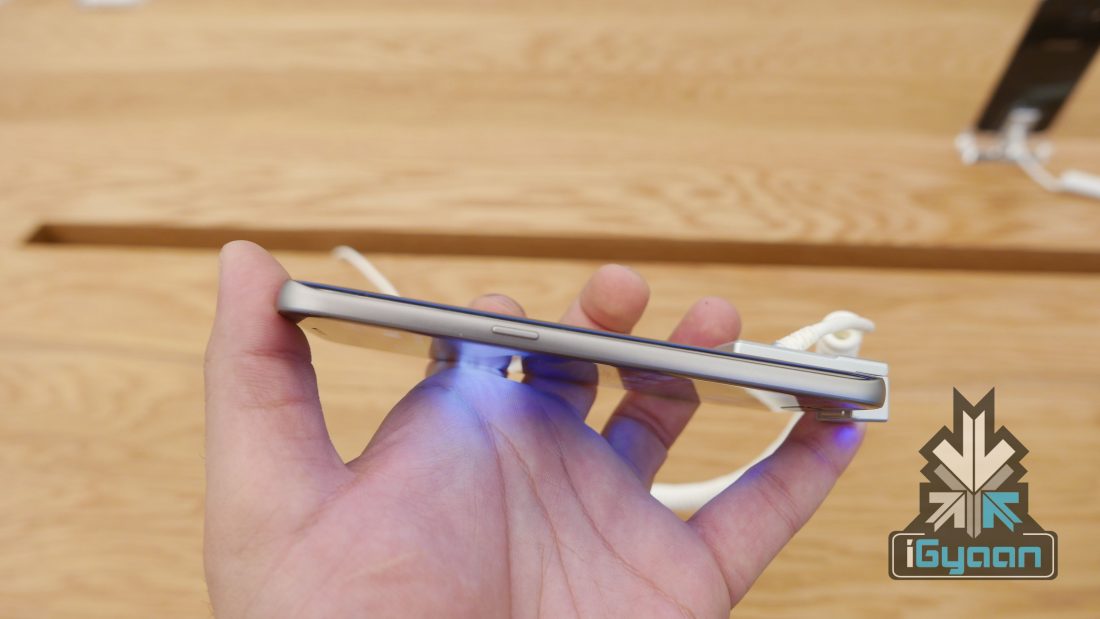
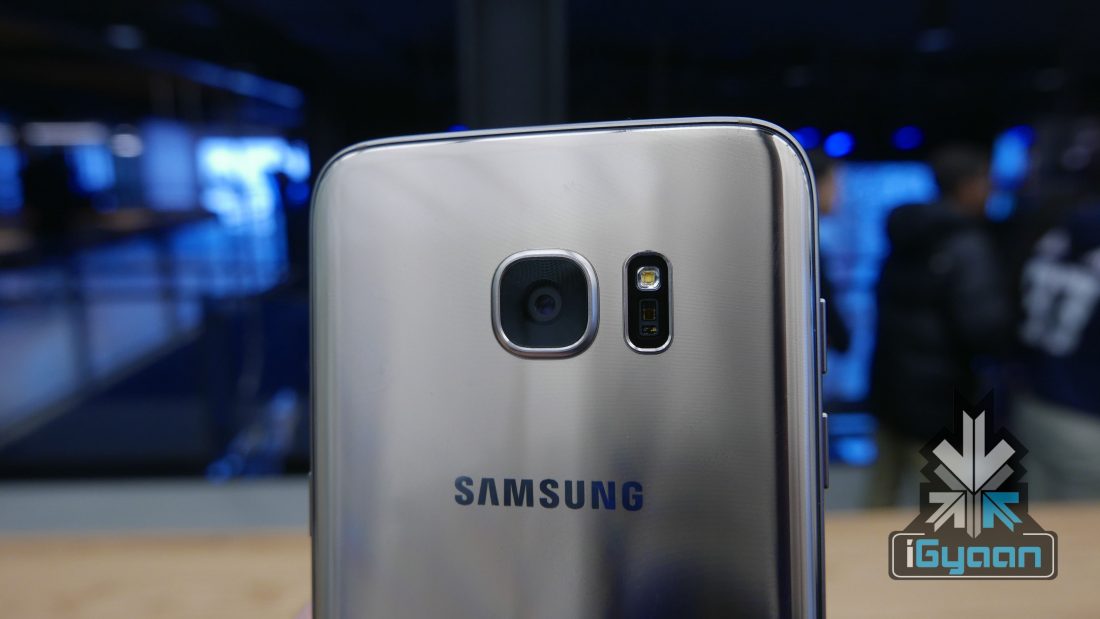
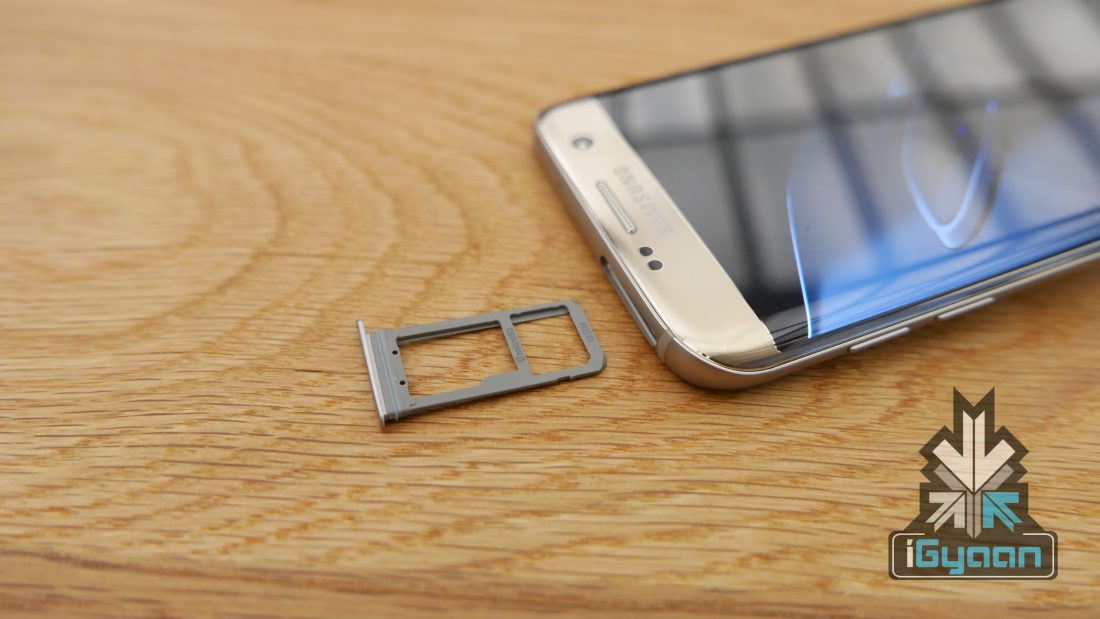
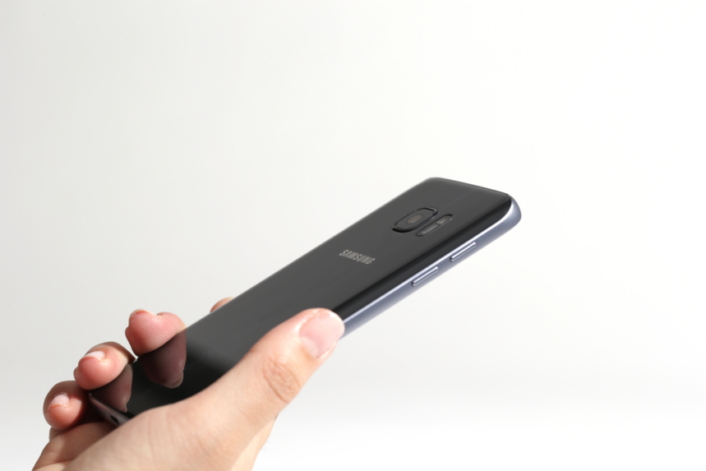
Moving over to the design, the Galaxy S7 and S7 Edge follow the same design language as their S6 counterparts. The S6 devices of last year were beautifully crafted phones and Samsung made a smart move not to change that. Only the standard 5.1-inch S7 will have a curved edge at the back rather than a flat one seen on in the S6. Samsung hasn’t changed the exteriors too much but has simply refined it. It has added a MicroSD tray, and also reduced the camera bump at the back by 1.25mm in a bid to maintain a sleek profile.
Samsung and LG both unveiled their flagship Galaxy S7 and G5 devices at the MWC last month. Samsung today launched the Galaxy S7 and S7 Edge in India at a price of Rs 48,900 and Rs 56,900, respectively. Meanwhile, LG is reportedly going to launch the G5 by the end of July.
Samsung wanted to keep the design language of the Galaxy S7 and S7 Edge similar to its S6 counterparts from last year, only adding a MicrosSD card slot, a curved edge at the back on the Galaxy S7, and next-gen specifications. LG went with a radical new modular design with the G5 and packs some serious under the hood specifications.
Samsung’s Galaxy S7 arrived with pretty much the same design language as the S6 only adds a curved edge at the back and a MicroSD and slot. It’s an evolution on its predecessor, adding only what was missing in the S6 and nothing more. That being said, the S7 still doesn’t come with a USB Type-C port, which was highly expected this time around. The metal is made of a stronger alloy than the S6 and the rounded edges give a smoother feel. The S7 comes with slimmer bezels and narrower body.
The 5.1-inch S7 Super AMOLED display with Quad HD resolution. Two SoC configurations are offered – one being the new Exynos 8890 and the other being Qualcomm’s Snapdragon 820. The device comes with 4GB of RAM and 64GB of internal storage and a bigger 3000mAh battery as compared to its predecessor. A fingerprint sensor is housed in the home button and the phone also features an Always On display and is IP68 certified which means it is dust-proof and water resistant up to 1.5 meters. The S7 does not, however, offer a USB Type-C port but rather sticks with the traditional Micro USB port.
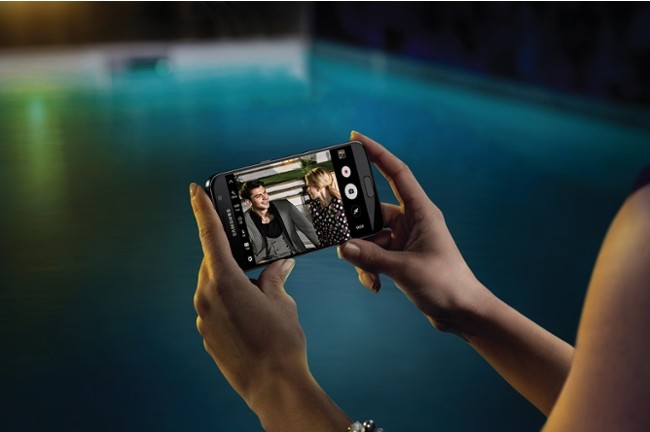
The Galaxy S6 and S6 Edge Plus had incredible cameras that won last year. Both the S7 and S7 Edge employs a ‘Dual Pixel’ image sensor with a 12MP and a large f/1.7 aperture rear camera and a 5MP front. Samsung has boasted of exceptional low-light captures with the Galaxy S7 devices, and it may just dominate the camera department once again this year.
The new sensor allows the device to capture images quickly while ensuring exceptional image quality, regardless of lighting conditions. Samsung has boasted of exceptional low-light captures with the Galaxy S7 devices, and it may just dominate the camera department once again this year. Other camera features include Motion Panorama and Selfie Flash.
The LG G5, on the other hand, comes packing a primary 5.3-inch QHD LCD display with 3D Arc Glass on top. It also comes with an Always On feature that lights up the display for access to important updates. The phone’s construction is full metal unibody and is powered by a Snapdragon 820 chipset, paired with 4GB of RAM and 32GB of internal storage, expandable by up to 200GB with microSD cards. The device offers a USB Type-C port that allows for faster charging.
When it comes to photography, the phone is equipped with dual cameras at the back. A standard 16-megapixel 78-degree lens and another 8-megapixel 135-degree wide angle lens. The LG G5 features a front-facing 8-megapixel camera too for clicking selfies.
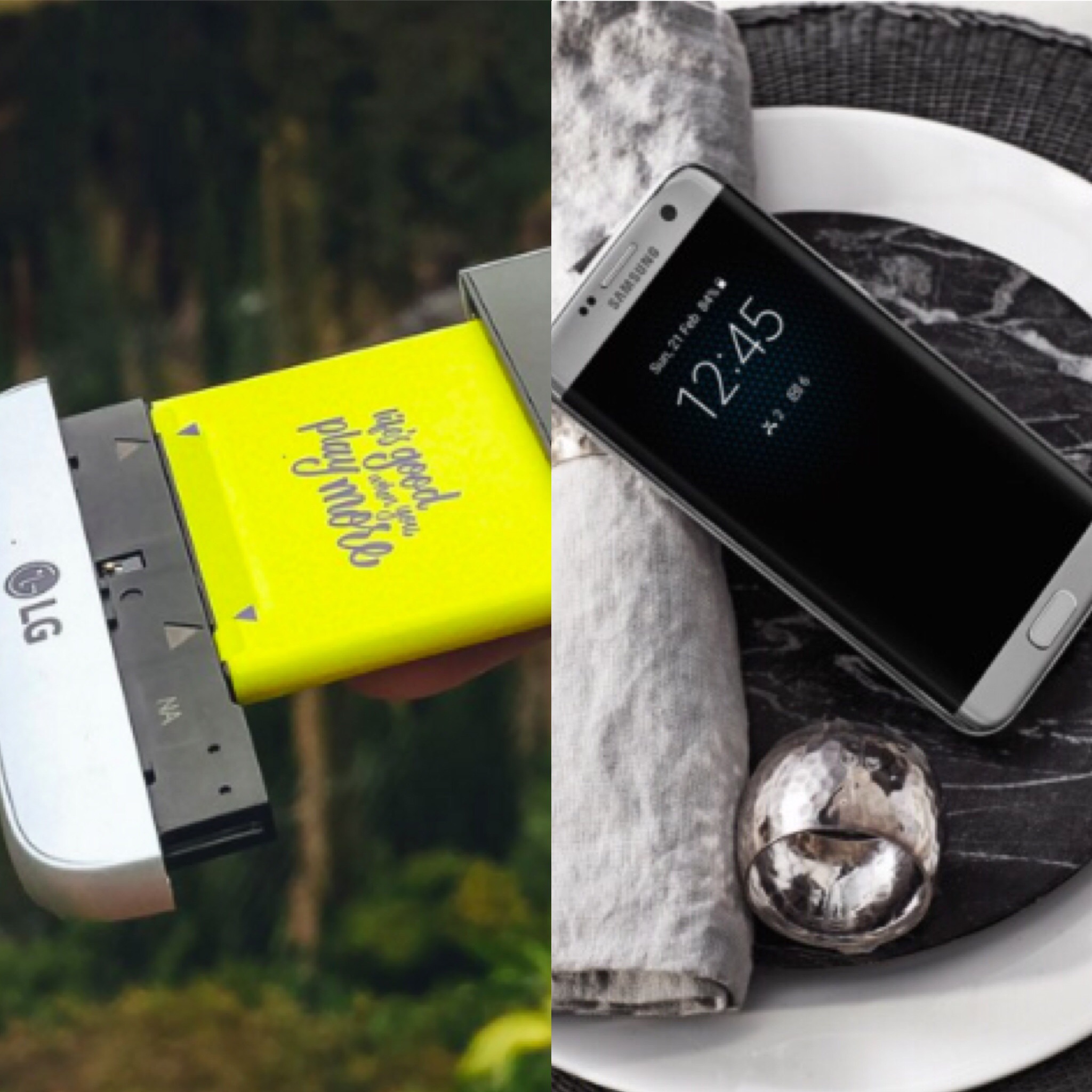
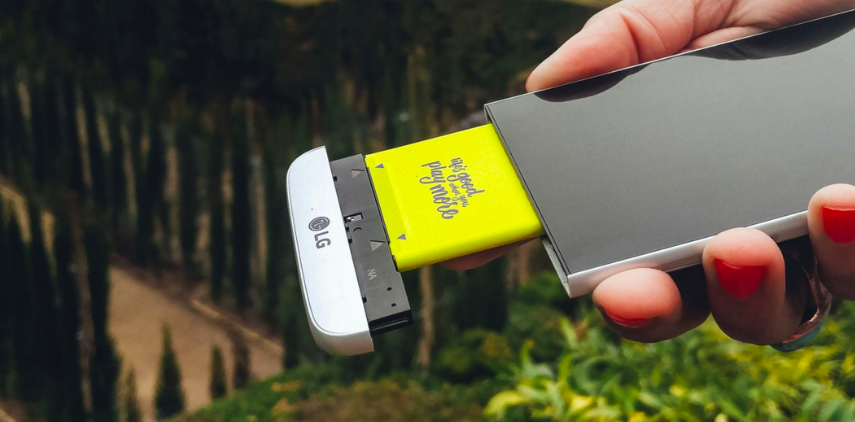
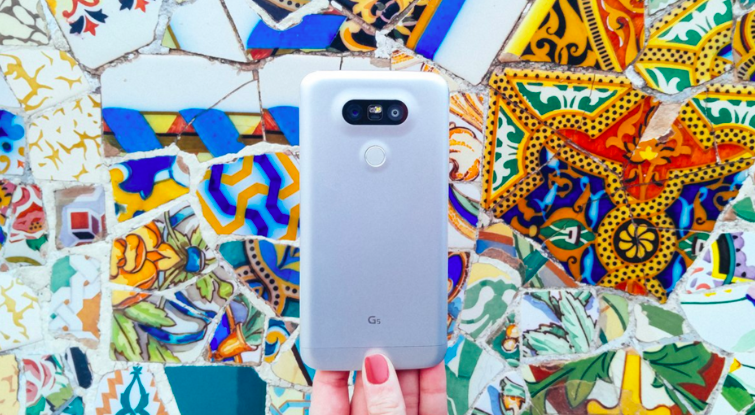
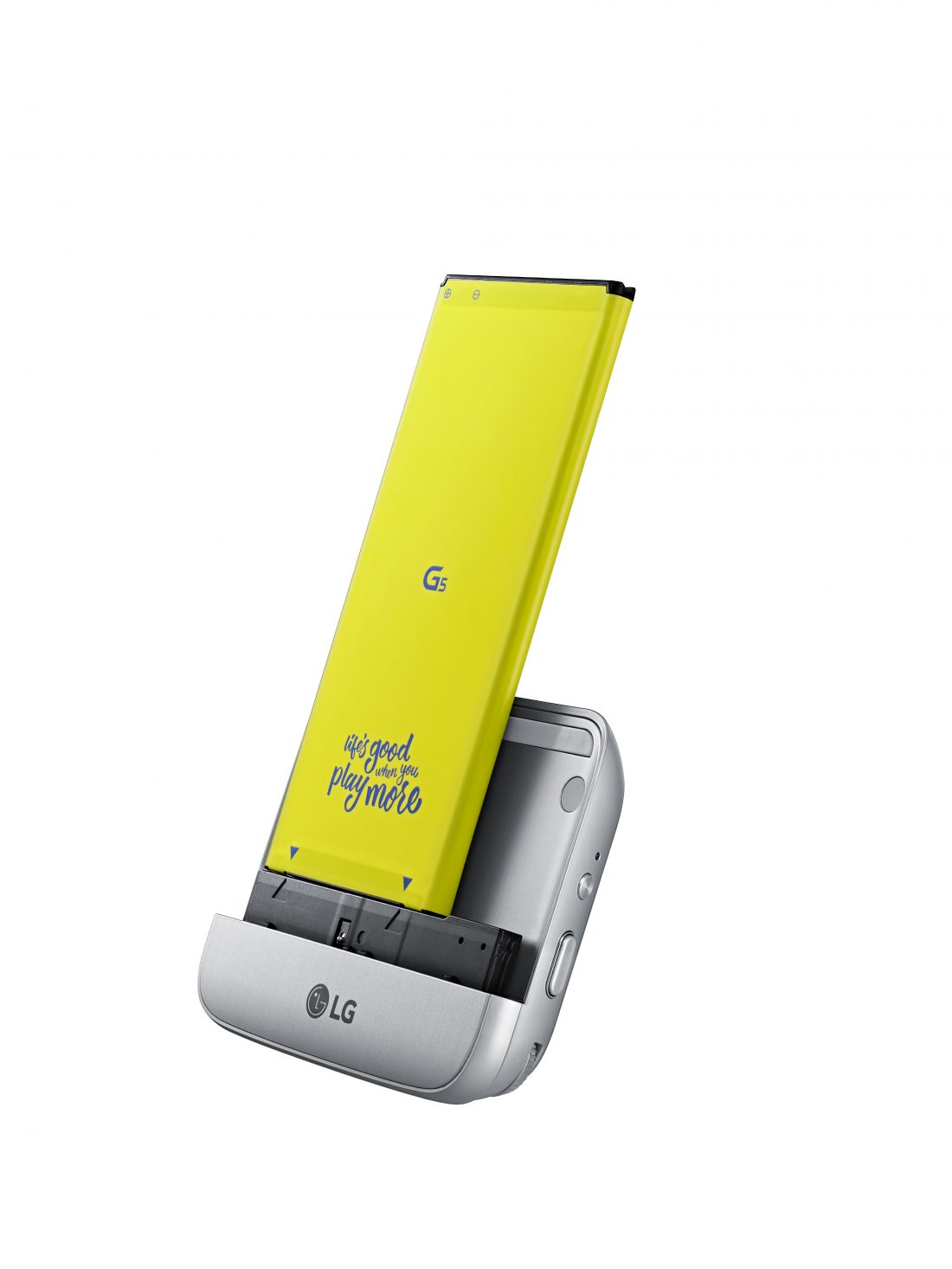
LG has worked hard on the modular design language of the phone. The G5 has a full metal body and comes with impressive specifications but the what sets the phone apart from its competition is the fact that it comes with modular attachments which can be utilised to enhance the camera and battery of the phone. Over to the back, you can see the dual camera module and a rounded fingerprint sensor below it.
Some early AnTuTu benchmark tests show the G5 shattering all records, scoring over the Galaxy S7 by quite a margin. The G5 scores above 130,000 whereas the Galaxy S7 hovers around 110,000 mark.
Check out the spec table for both the devices below to have a better look. Let us know which device is your winner in the comments below.
Specs
Galaxy S7
LG G5
Display
5.1-inch Super AMOLED Quad HD display with Corning Gorilla Glass 5
5.3-inch screen Quad HD IPS display with Corning Gorilla Glass 4
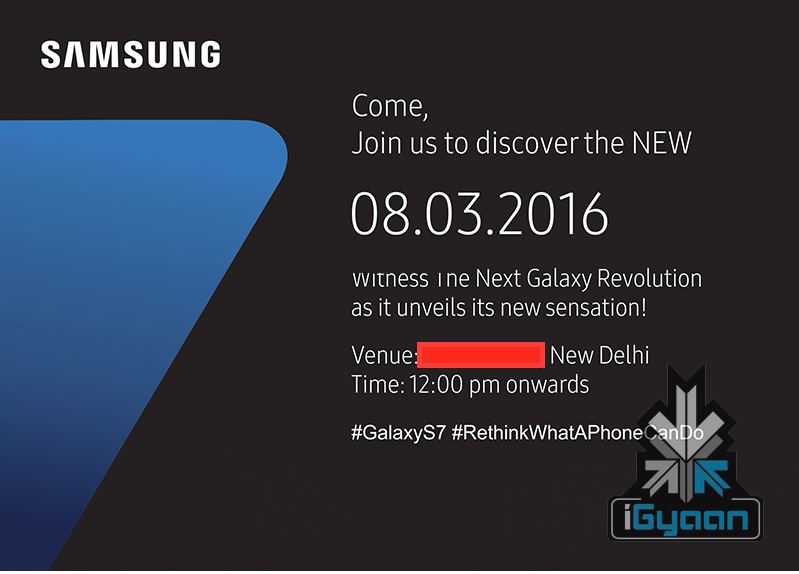
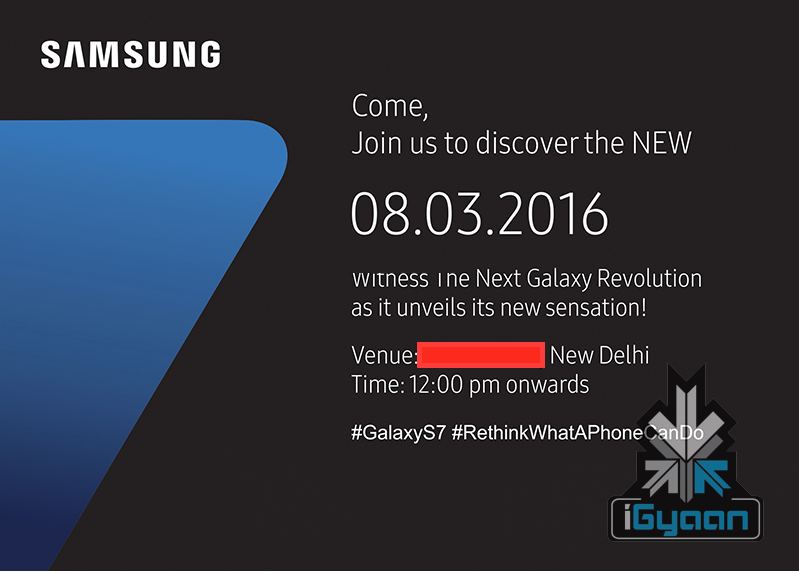
Samsung is all set to launch its much-awaited Galaxy S7 and the Galaxy S7 edge phones for markets in India at a press event in Delhi which will start at 12 in the afternoon on 8th of March,2016. Going into 2016, India remains an important market for the South Korean tech giant, and as such a lot is riding on the duo of flagship phones whose pricing for India will be announced tomorrow.
The Galaxy S series devices which are the best that Samsung has to offer brings to its fans this year the S7 and S7 edge smartphones that are high on specs and look beautiful when it comes to design. Both the phones share under-the-hood specs such as the on board Snapdragon 820/Exynos 8890 SoC paired with 4GB of RAM and up to 64GB internal storage but differ when it comes to the display size which goes up from 5.1-inch QHD present on the S7 to 5.5-inch QHD found on the S7 edge. The latter also comes packing a 3600mAh battery, while the former is equipped with a 3000mAh pack.
Watch the live stream of the launch event for India here.
We’re only a day away from the launch of Samsung’s newest flagship Galaxy S7 and S7 Edge smartphones in India. The devices were unveiled at the MWC last month and will finally make its way to Indian markets tomorrow. As we gear up for the launch and keep our wallets ready, here are some things that you need to know about the Galaxy S7 and S7 Edge.
Galaxy S6 vs S7: What’s Changed?
2015 was a spectacular year for Samsung. The Korean giant launched the Galaxy S6 and S6 Edge smartphones that redefined what a premium smartphone should look and feel like. The Galaxy S6 was praised for its brilliant design language that brought together glass and metal to form a beautiful piece of machinery. Add to this, the S6 came with top-of-the-line specifications including a brilliant camera sensor.
With so much that was done right with the Galaxy S6, it’s not surprising that Samsung decided to stick to the same design language with the successor, Galaxy S7. The new flagship retains the looks, adds a MicroSD card slot, and packs next-gen specifications. But what the S7 also adds is a curved edge at the back that exquisitely blends into the metal frame and gives a great looking shape as well as improves the grip.
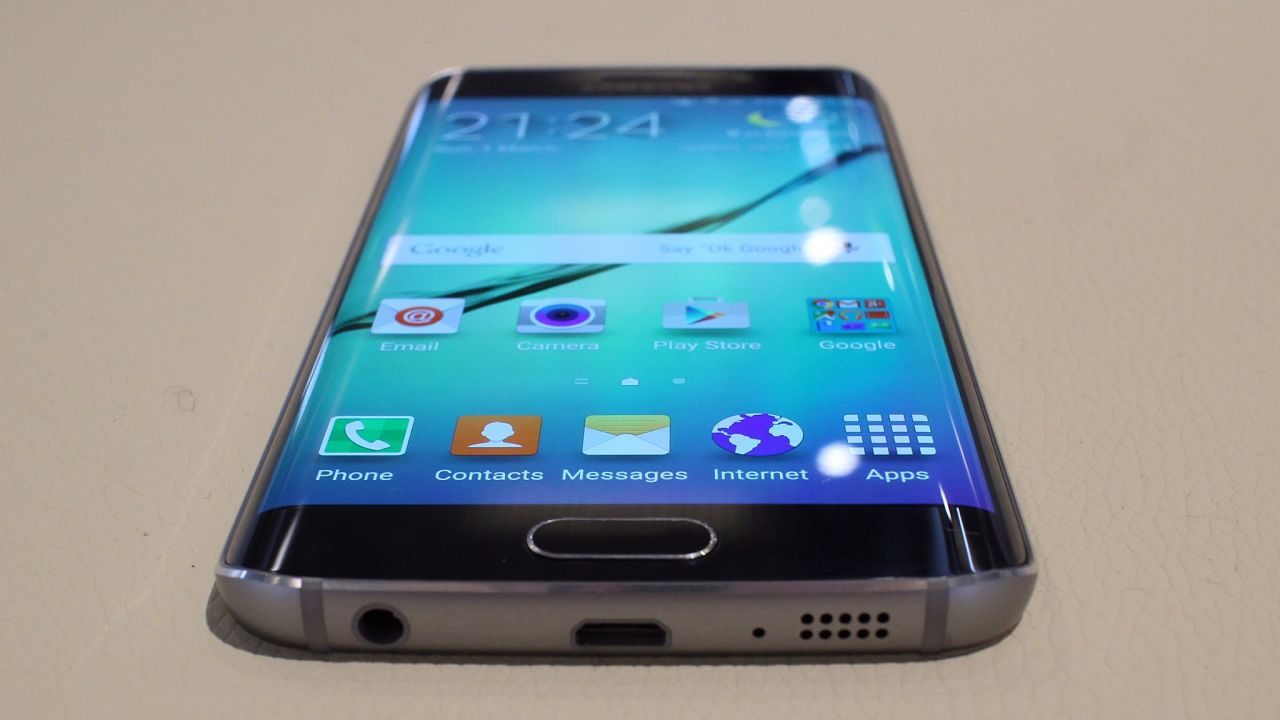
Meanwhile, the Galaxy S6 Edge took things to the next level with a curved dual edge display along with a 5.1-inch screen that brought a brand new aesthetics. The S7 Edge features the same dual edge design but on a bigger 5.5-inch form factor and comes with a QHD Super AMOLED display with a pixel density of 534 ppi compared to the 5.1-inch QHD 577 ppi screen that we saw on the S6 Edge.
The phone also comes with more rounded edges which combined with the rounded edges at the back provides for a far better grip to the user. Samsung claims it has made the camera nearly level in the S7 Edge which carries forward the premium glass and metal design scheme of the S6 Edge while incorporating IP68 waterproofing and dust resistance capabilities.
Seeing as how the Galaxy S7 and S7 Edge are the new flagship devices, it was expected to come with improved specifications. Samsung did well to listen to its fans, improving in areas where it failed with the Galaxy S6 and S6 Edge. One of the biggest concerns regarding last year’s flagships, especially the Galaxy S6 Edge, was the battery. The Galaxy S6 packed a 2550mAh battery while the S6 Edge had a measly 2600mAh battery pack.
The Galaxy S7 and S7 Edge, on the other hand, come with larger batteries which are a sigh of relief for Samsung fans all over. The Galaxy S7 packs a 3000mAh battery while the ‘edge’ version features a huge 3600mAh battery which is a 1000mAh bump compared to the Galaxy S6 Edge.
Galaxy S6 – 2550mAh
Galaxy S7 – 3000mAh
Galaxy S6 Edge – 2600mAh
Galaxy S7 Edge – 3600mAh
Improved Camera with Dual Pixel Technology
Among the bumped up specs inside the new Galaxy S7 and S7 Edge, one new technology that grabbed everyone’s attention at the MWC was the new Dual Pixel technology employed in the rear camera.
The Dual Pixel, essentially, is an improvement or a natural evolution from the Phase-Detection Auto-Focus technology used by many other smartphones. Firstly, Samsung downgraded from 16MP found in the S6 to 12MP in the S7. The decision to do this was to focus more on quality rather than quantity. The 12MP sensor brings 56% bigger individual pixels with1.4um pixels as compared to the S6.
The S7 comes with a wider f/1.7 aperture (the S6 had a f/1.9 aperture) that allows for a lot more light to come in, 25% more to be more accurate. This results in great low-light captures that are sharp and colourful. Much like the human eye, the Dual Pixel technology sends light from the lens to two image sensors separately to adjust the focus.
Price
Sources close to iGyaan have revealed the pricing details of the upcoming set of phones which will start retailing in the country at Rs 55,000 for the regular Galaxy S7, while the more premium Galaxy S7 Edge with a curved display and bigger battery will hit stores with a price tag of Rs 64,000 in Indian markets. Meanwhile, the Galaxy S6 and S6 Edge were launched in April last year priced at Rs 49,900 and Rs 58,900, respectively. Availability of the devices will be known at the launch tomorrow.
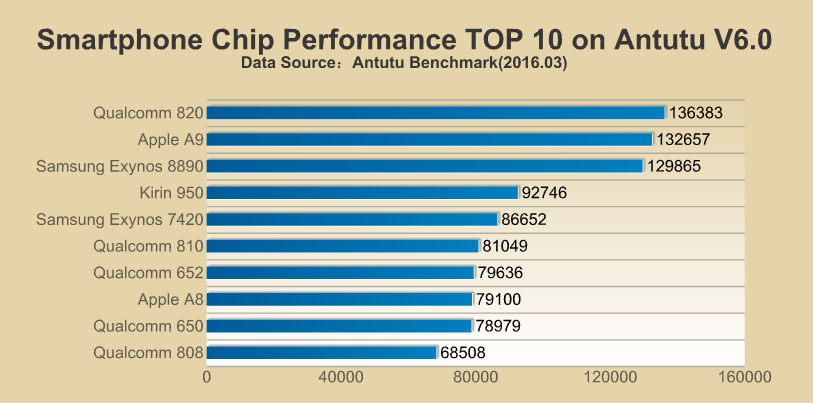
This year, we’ve already seen some brand new smartphone launches that are ready to take the crown for 2016. Most flagship devices that you will see this year will feature Qualcomm’s new Snapdragon 820 chipset. Meanwhile, Apple launched the iPhone 6s late last year with the A9 chipset. Consumers are already spoilt for choice with the number of new, beautifully crafted smartphones but what they really want to know is which chipset takes the cake when it comes to performance.
AnTuTu updated its list of Top-10 performance smartphone chips and it appears that the Snapdragon 820 chip beats all, taking first spot in both performance and GPU tests. The Snapdragon 820 scores 136,383, which is close to 4000 higher than that of Apple A9, while Samsung’s Exynos 8890 chip comes in at third with 129,865. Note that these scores are based on averages and actual running results will be different.
Qualcomm Snapdragon 820-powered smartphones include Samsung Galaxy S7, LeEco Max Pro, Xiaomi Mi5, LG G5, Sony Xperia X Performance, among others.
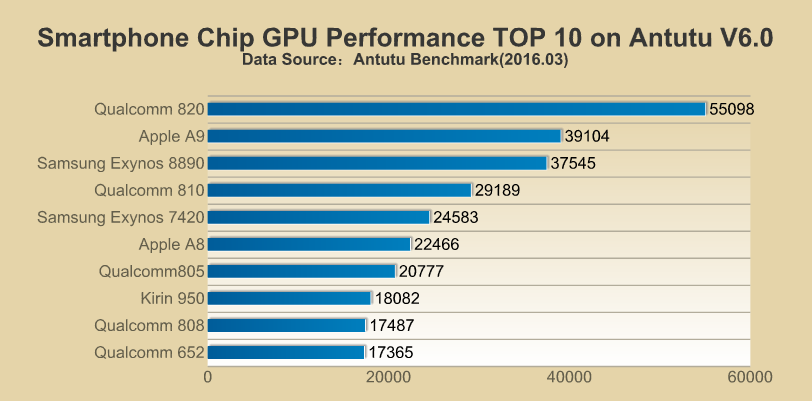
In GPU performance as well, the Snapdragon 820 chipset rules the lot, scoring an impressive 55098 which is miles ahead of Apple A9’s 39104. The Exynos 8890, again, comes in at third with a score of 37545. Over the past few years, smartphone makers have been paying a lot of importance to GPU performance. After all, mobile gaming is a huge market of its own and has slowly become an important aspect when consumers consider purchasing a smartphone.
The Snapdragon 820 chip currently has the highest-performing GPU (Adreno 530). While Apple’s A9 (PowerVR GT7600) and Samsung’s Exynos 8890 (Mali-T880 MP12) battle for the second place, HiSilicon Kirin 950 (Mali-T880 MP4) doesn’t fare too well and stays low alongside Qualcomm Snapdragon 808 (Adreno418) and Snapdragon 652 (Adreno510).
It’s also important to note that the GPU directly relates to screen resolution. Since most phones these days offer 1080p, and 2K resolution, it requires a powerful GPU to allow users to get the most experience out of their smartphone’s display. But GPU and CPU alone aren’t enough to tell you about how a smartphone will perform.
In hand use is the best way to judge what the phone offers the user. Apple may have scored low with the A9 chip, but it still gives a terrific performance. Similarly, the Exynos 8890 also performs impressively, which is probably why Samsung may launch both it and Snapdragon 820 variants in the Indian market when the Galaxy S7 and S7 Edge launch tomorrow.
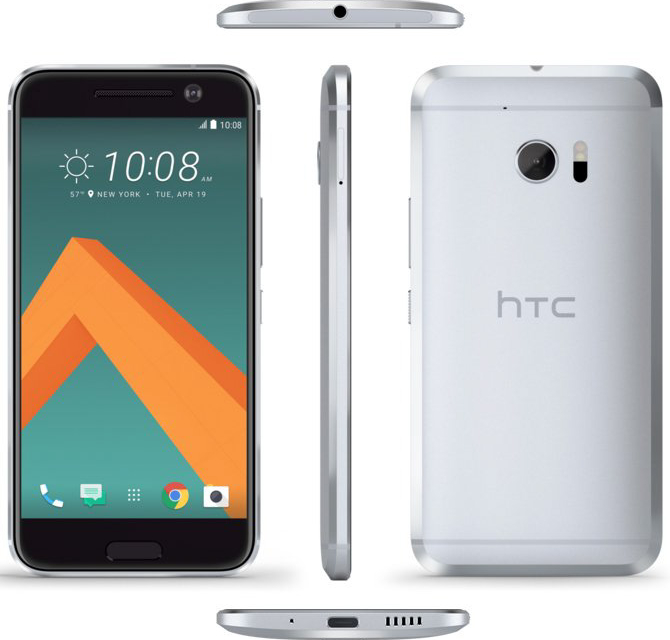
The HTC One M10 now belongs to the list of worst kept tech secrets. The phone has been leaked and rendered all over the internet. A press render of the next HTC One flagship has been leaked by Venture Beat’s Evan Blass aka @eveleaks
This all happened right after @onleaks started a leaking spree of the actual handset and Antutu benchmark scores that pin the device at 109,936 points on the famous benchmark app. This all leaked along with the following information : 5.15″ QHD / SD820 / Adreno 530 / 4GB RAM / 12MP / USB Type-C. Which means that HTC might finally be on the right track as far as specs are concerned, and we also see a home button fingerprint scanner like last year. Now let us hope that HTC gets the pricing right and makes 2016 a year for recovery and not its demise.
Just as the day unfolds, Samsung India has confirmed the launch of its two new flagships the Galaxy S7 and Galaxy S7 Edge in the country on 8th of March. Rumors that pointed us to a launch prior to 10th of March were clearly on track.
The Korean giant rests its year-long launches on the powerful flagships it launches each year beginning. The Samsung Galaxy S6, the Galaxy S6 Edge, and Galaxy S6 Edge Plus paved the way for Samsung in 2015, and the company wants to start quickly with the Galaxy S7 and Galaxy S7 Edge.
Price wise it seems that the corporation may have to deal with many a grunt when the phones, which now offer expandable storage, may be launched close to the Rs. 60k price bracket. (let the kidney jokes begin).
It is also expected that Samsung India may launch both the Exynos and Snapdragon variants in India, in an attempt to woo customers that have in the past complained that the Korean Electronics manufacturer launches crippled handsets in the country.
In the meanwhile, you can watch our hands-on video.
A source close to iGyaan, who have been accurate in the past, state that LG’s newest modular flagship smartphone, the G5, will launch in India by the end of July. The G5 has been said to cost around Rs. 59,000 when it hits the Indian market. Meanwhile, the modules for the G5, called Friends, will also reach the Indian market. The LG Cam Plus camera grip will be priced at Rs 9,000 while the Hi-Fi Plus with B&O Play module will cost Rs 14,999.
On the specifications front, the LG G5 comes packing a primary 5.3-inch QHD LCD display with 3D Arc Glass on top. It also has a cool Always-on feature that lights up the display for access to important updates. The phone’s construction is full metal unibody and is powered by a Snapdragon 820 chipset, paired with 4GB of RAM and 32GB of internal storage, expandable by upto 2TB with microSD cards.
When it comes to photography, the phone is equipped with dual cameras at the back. A standard 16-megapixel 78-degree lens and another 8-megapixel 135-degree wide angle lens. The LG G5 features a front-facing 8-megapixel camera too for clicking selfies.
LG G5 comes packing a 2,800mAh removable battery with Quick Charge 3.0, and when it comes to connectivity it gives users options such as Bluetooth 4.2, NFC and Wi-Fi 802.11ac. The smartphone also features USB Type-C 2.0 port. The G5 runs on Android 6.0 Marshmallow OS with LG’s custom UI on top. The G5 will be available in four different colors, silver, gold, pink and silver.
LG-G5 CAM-Plus
The company also announced modular accessories for the phone at the launch. Most interesting of the lot was the LG Cam Plus module which can be attached to the G5 through the battery slot giving the user “comfortable grip and convenient control of a DSLR” for better imaging and also adds to the battery of the phone taking the capacity up to 4000mAh.
Next is the Hi-Fi Plus with B&O Play module. This is a Hi-Fi DAC audio player which is perfect for audiophiles. It can also play high-definition audio files encoded in 32-bit at 384KHz.
In latest news, sources who have been accurate in the past, have revealed to iGyaan that the long wait for Indian customers for the recently launched Galaxy S7 and Galaxy S7 edge may finally be coming to an end as the South Korean tech giant’s premium offerings might be available in India as soon as 10th March, 2016.
This information falls in line with the previous information provided to us about the S7 series launching before 15th of March in the country. According to the previous reports, the Galaxy S7 will start retailing in the country at Rs 55,000, while the more premium Galaxy S7 edge with a curved display and bigger battery will hit stores with a price tag of Rs 64,000 in Indian markets.
Coming to the specs, The S7 is equipped with a Super AMOLED display with QHD resolution. Two SoC configurations are offered here– one being the new Exynos 8890 and the other being Qualcomm’s Snapdragon 820. The device comes with 4GB of RAM and upto 64GB of internal storage as well as a MicroSD card slot this time around and the battery is bumped upto 3000mAh. A fingerprint sensor is housed in the home button.
The S7 Edge comes with a 5.5-inch Super AMOLED display with QHD resolution. The same SoC configuration as in the Galaxy S7 powers the device along with 4GB RAM and a maximum of 64GB storage. Importantly, the battery on the S7 edge has also been bumped upto a respectable 3600mAh battery pack.
On the camera front, Samsung this year has tried to take its camera up a notch which is why it’s using a new Britecell technology for the Galaxy S7 for better low-light photography. Both the S7 and S7 Edge feature ‘Dual Pixel’ cameras with a 12MP with f/1.7 aperture rear camera and a 5MP front. Samsung has boasted of exceptional low-light captures with the Galaxy S7 devices and it may just dominate the camera department once again this year.
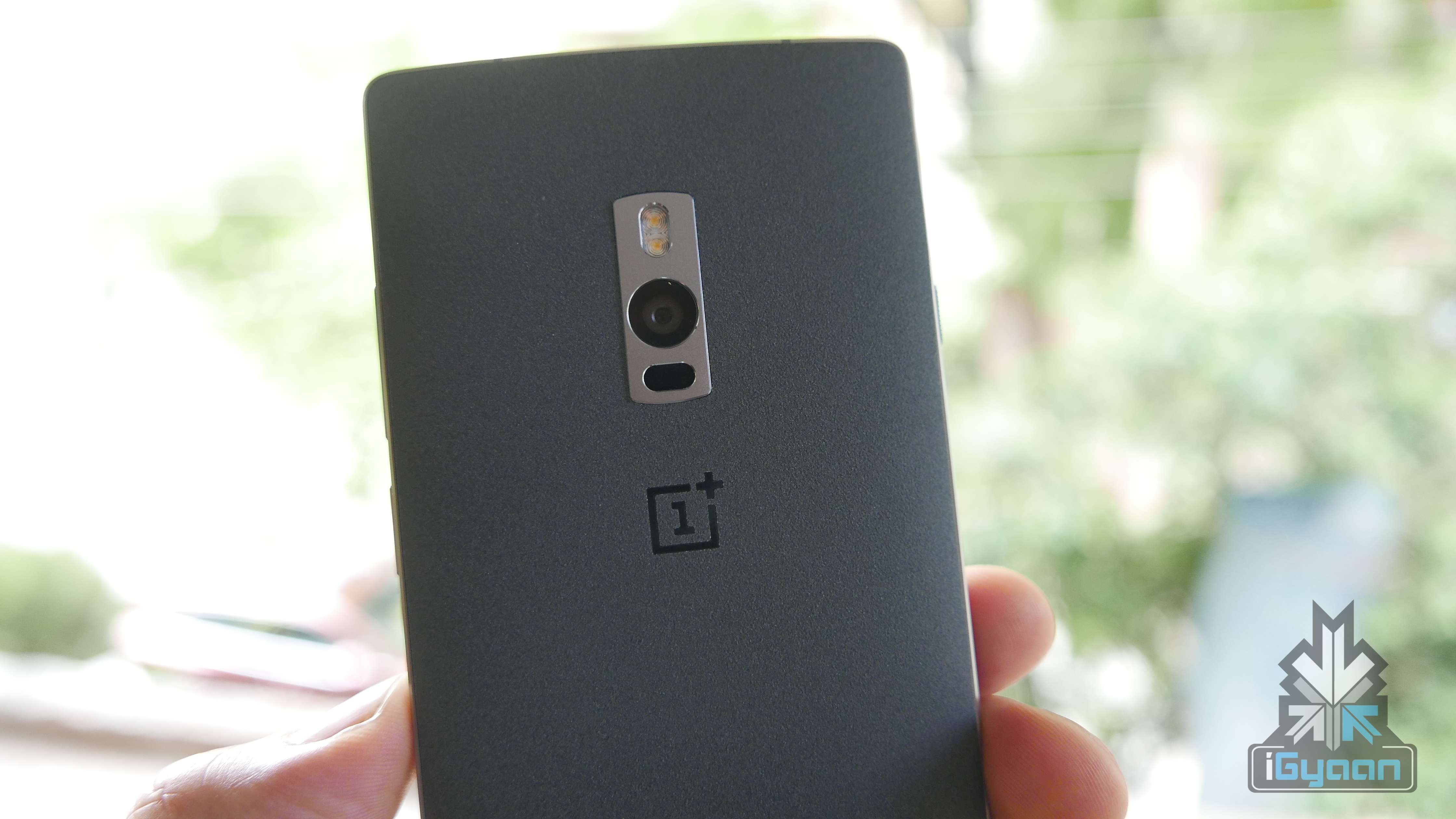
It has been three months into 2016 and we have heard very little about OnePlus’ next flagship killer. We’ve so far received small hints that the company is working on a OnePlus 3 device, but now we have some more to add to that. According to co-founder and CEO Pete Lau, the OnePlus 3 will be ready and available by June this year. This he said during the SURGE tech conference in Bangalore, India.
Add to this, the other co-founder of OnePlus, Carl Pei has confirmed that the OnePlus 3 will sport a whole new design. Though nothing more has been said on the design front and we’ll just have to wait for leaked images to have a better idea of what OnePlus plans to offer.
What we can definitely take away from this is that the OnePlus 3 will stay away from the OnePlus One and 2. The OnePlus 2, much like its predecessor, received very positive reviews and fans found very few faults with the handset. The OnePlus 2 mainly found criticism regarding overheating issues, thanks to the Snapdragon 810 processor.
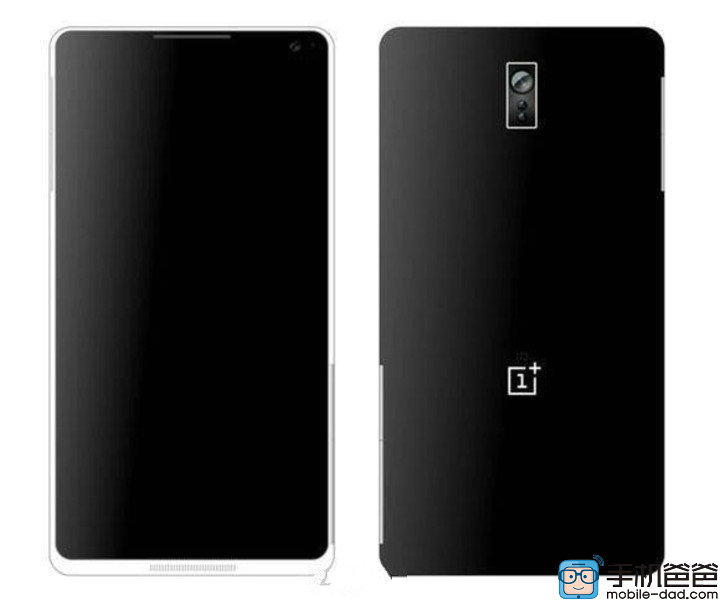
OnePlus 3 Render
From what we’ve heard so far, the new OnePlus device will sport a 5.5-inch Quad HD display and will come in two variants – one with 3GB of RAM and 16GB storage and the other being 4GB RAM and 64GB storage. Rumours also reveal that the handset will arrive with the Snapdragon 820 chipset as most flagship devices this year.
On the camera front, the OnePlus 3 is said to sport a 13MP rear-facing shooter while its front would be of 5MP. The handset is also rumoured to include a removable battery pack MicroSD card support. Early leaked renders of the OnePlus 3 show that the device could feature front speakers and sport a glass back, like the OnePlus X.
So far, the rumoured specifications don’t really offer anything noteworthy. Some of the rumoured specs are similar to the ones found in the OnePlus 2. Seeing as how some of this year’s flagship devices already unveiled feature, at least, one new technology, OnePlus may just have something special for the OnePlus 3. Of course, it’s still early in the day to know anything for sure.
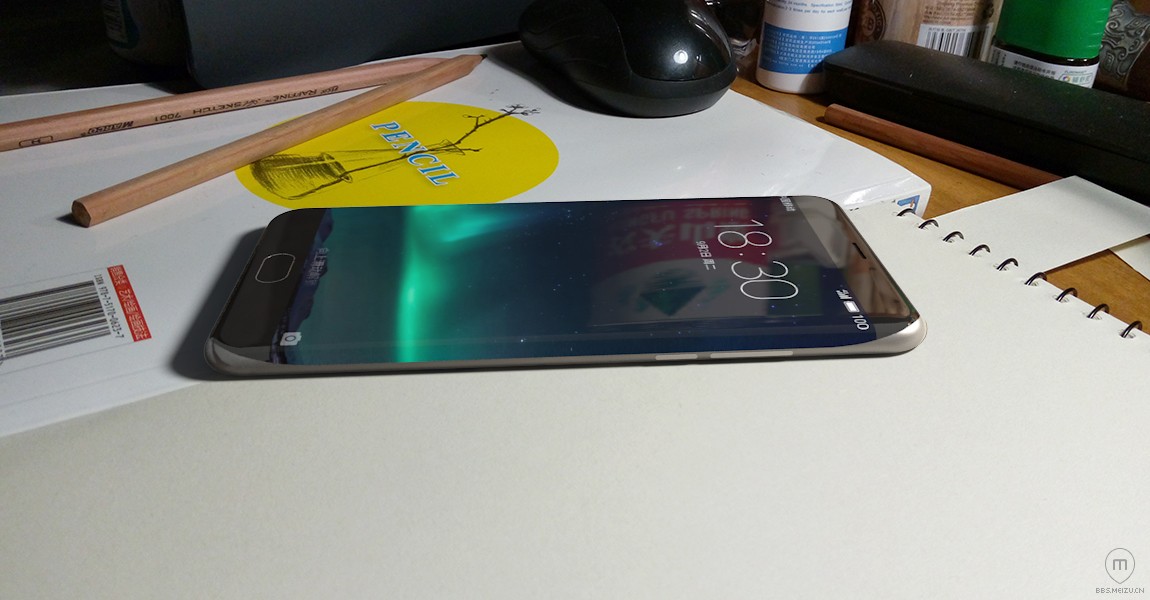
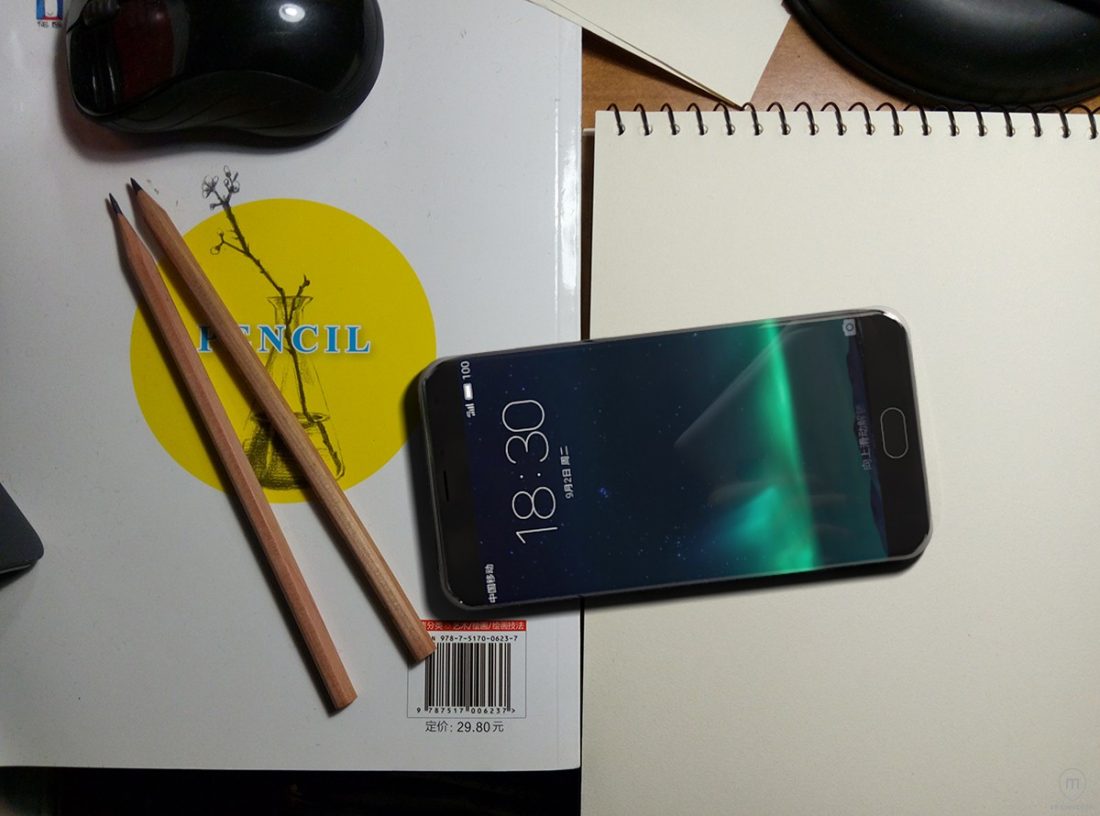
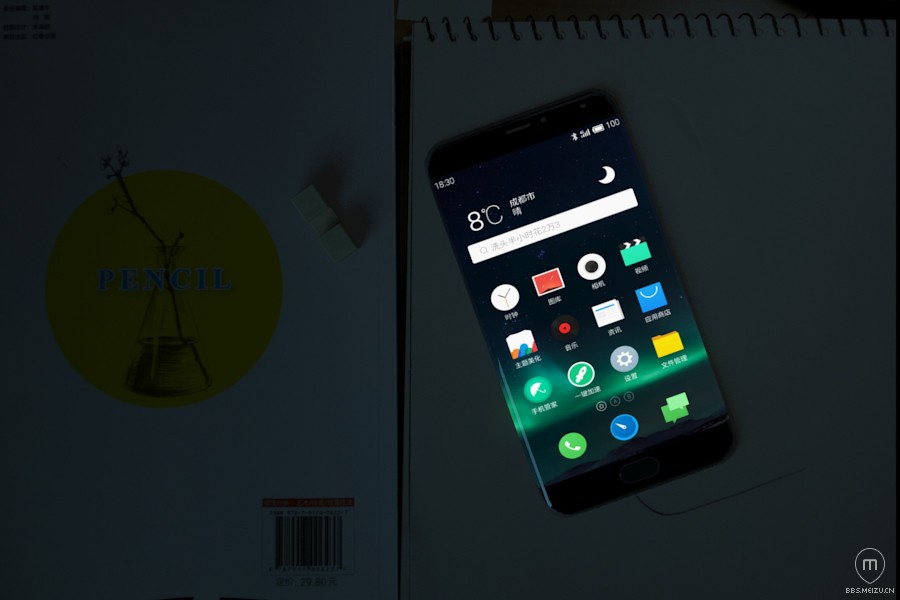
If there’s one thing you’ve got credit Chinese smartphone makers it’s their ability to carve great looking devices. Meizu’s M2 Note, Pro 5 and MX5 are among the company’s most popular, and most loved phones. The MX5, in particular, had some mighty impressive specs including a 20MP Sony sensor and the handset pleased the eyes with slim bezels and a great screen to body ratio. Now, some concept renders of Meizu’s next offering have surfaced online.
Since Meizu has yet to confirm it’s next high-end device, the renders could either be of a MX6 or Pro 6 handset, but we’re leaning more towards the Pro 6. The upcoming MX6 handset is rumoured to pack MediaTek’s Helio X20 chipset with its deca-core CPU and Mali-T880 GPU. That’s right, if rumours are true, the Pro 6 will feature a cool 10-core processor that will likely shatter in multi-core performance in benchmark test (results of which you can expect as we approach closer to the launch of the device).
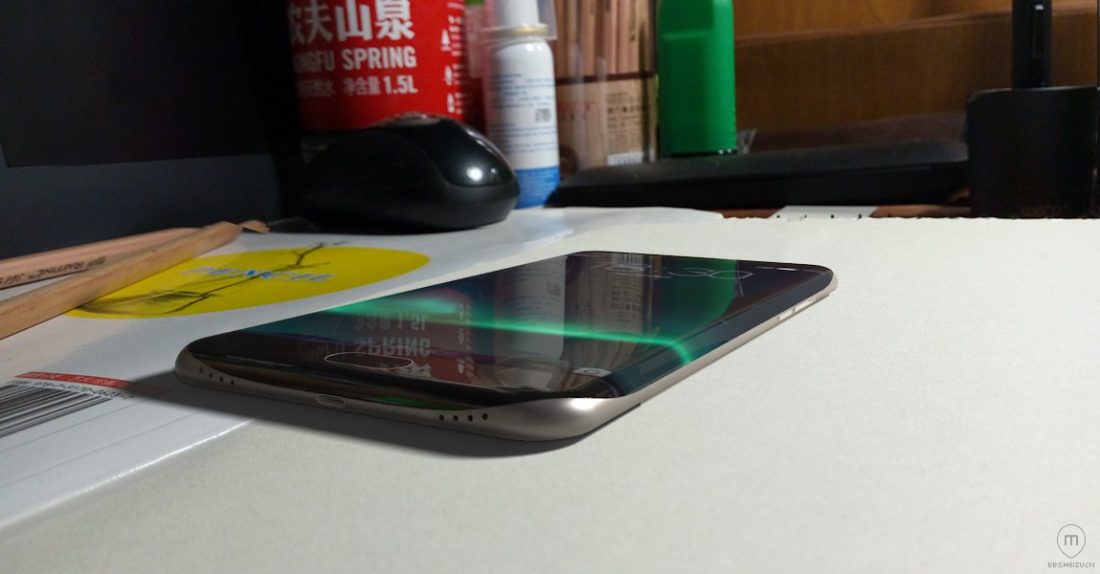
But that’s not all that is being said about the Pro 6. Rumour has it that Meizu is developing it’s own version of Force Touch technology and the device will sport a curved edge design, much like Samsung’s Galaxy S7 Edge and Vivo XPlay 5. It is also being said that the display technology seen in the renders are flexible. Meizu is likely working with a POLED (Plastic OLED) screen for its upcoming handset. You’ll notice that the concept not only shows the display curving at the sides but also from the top and bottom. The phone’s corners are protected by a single piece of smooth aluminium.
The concepts look like something Meizu can pull off. A curved edge design on a phone that could also look like an iPhone (as the Pro 5 did) could make for a smashing combination. Since we’re not sure whether the concepts are of an MX6 or Pro 6 handset, anything is possible as of now. The Pro 5 was a beautiful piece of machinery that, even though mimicked the iPhone, had managed to carve it’s own language, and top notch specs with that.
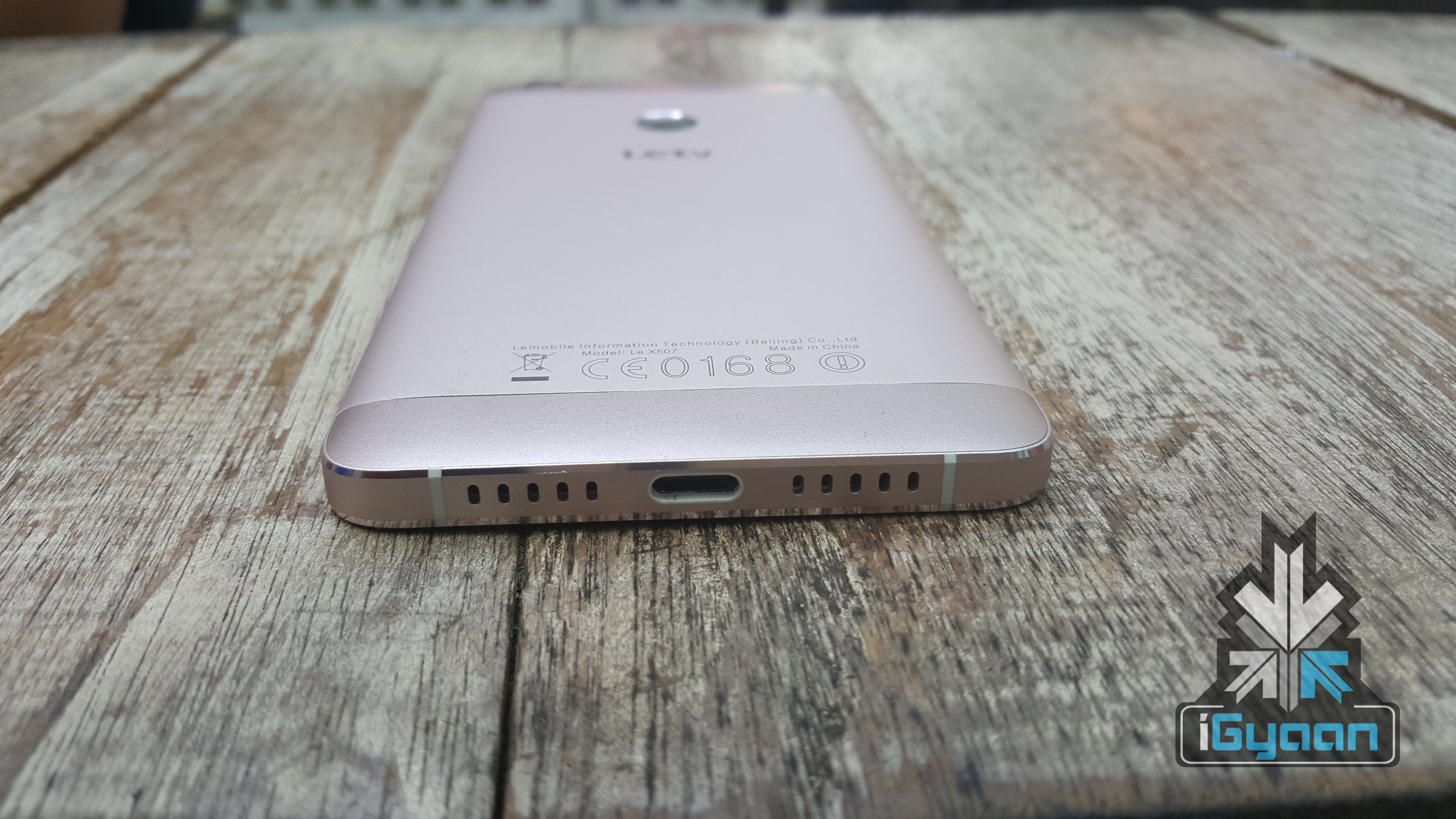
LeEco which recently entered the Indian market with its extremely cost effective product Le1s into the Indian market has today revealed the result of its disruptive moves. The company’s bang for buck smartphone, the Le1s which has gone through the paces of three flash sales has now become India’s top selling mobile phone online.
According to information disseminated by LeEco, the company has set a new record of sales in the country by selling more than 200,000 units of the Le 1s in the India within a month, which it claims to be a new record. LeEco further revealed that received a total of 20,28,000 registrations for the handset which is also a record in itself. To to top things off, the company also received a record-breaking total of 2,20,000 orders for the Le1s within the span of 31 seconds.
Responding to this development, Atul Jain, COO, Smart Electronics Devices, LeEco India said,
We are deeply humbled by the response we have received from our Indian consumers which has helped us achieve this leading industry position in such a short span of time. LeEco is in the true sense a game changer purely because of its disruptive business model and a user-centric ecosystem providing consumers a chance to experience disruptive technology at its best
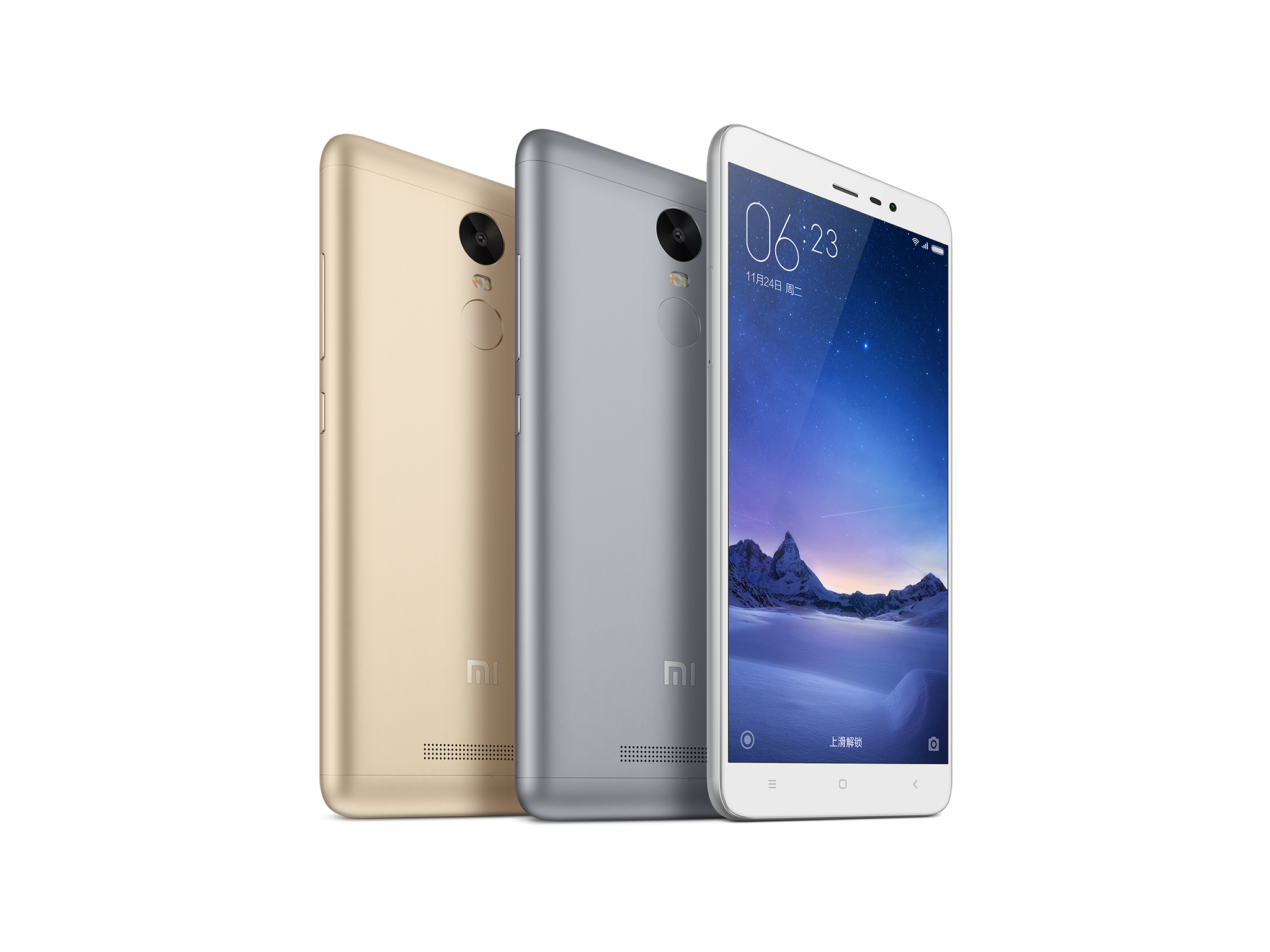
Xiaomi has finally unveiled its Redmi Note 3 phablet in India at an event held at the Talkatora Stadium in Delhi on 3rd March 2016 which saw 8000 Mi fans attend the launch event. This device which has already been launched in China has been highly awaited in India for some time now. Xiaomi which didn’t bring the predecessor to the Redmi Note 3, the Redmi Note 2, to India will look to stir up the market with its latest offering.
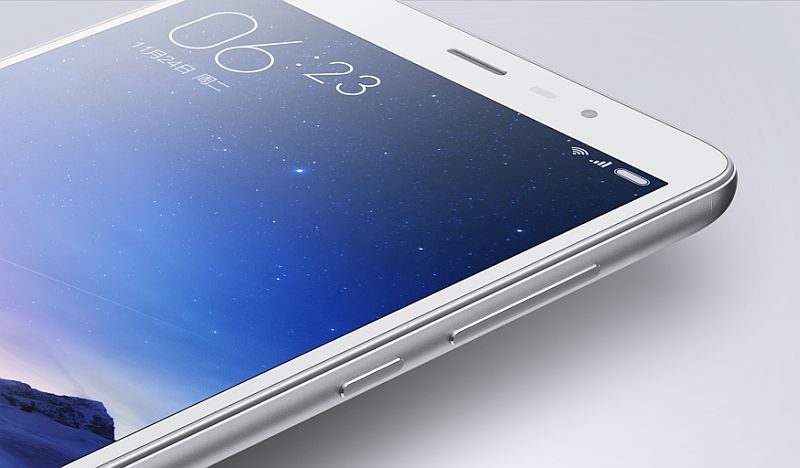
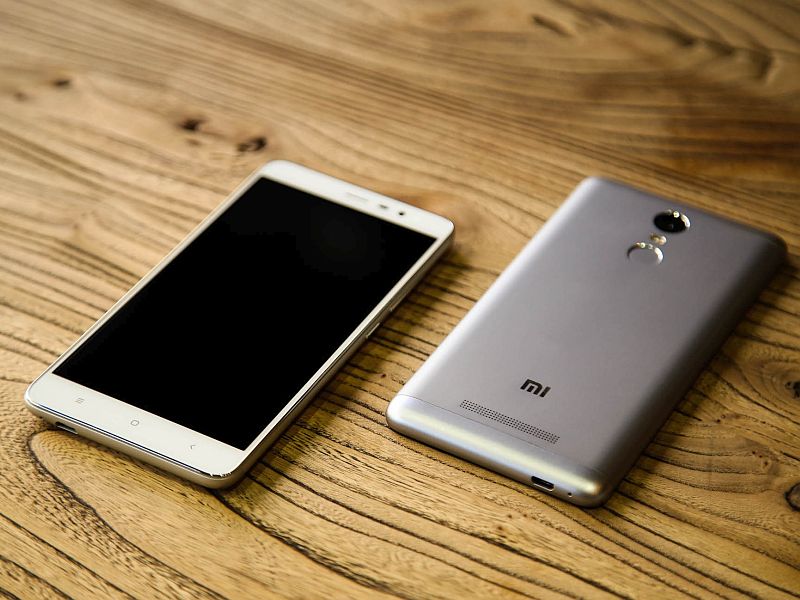
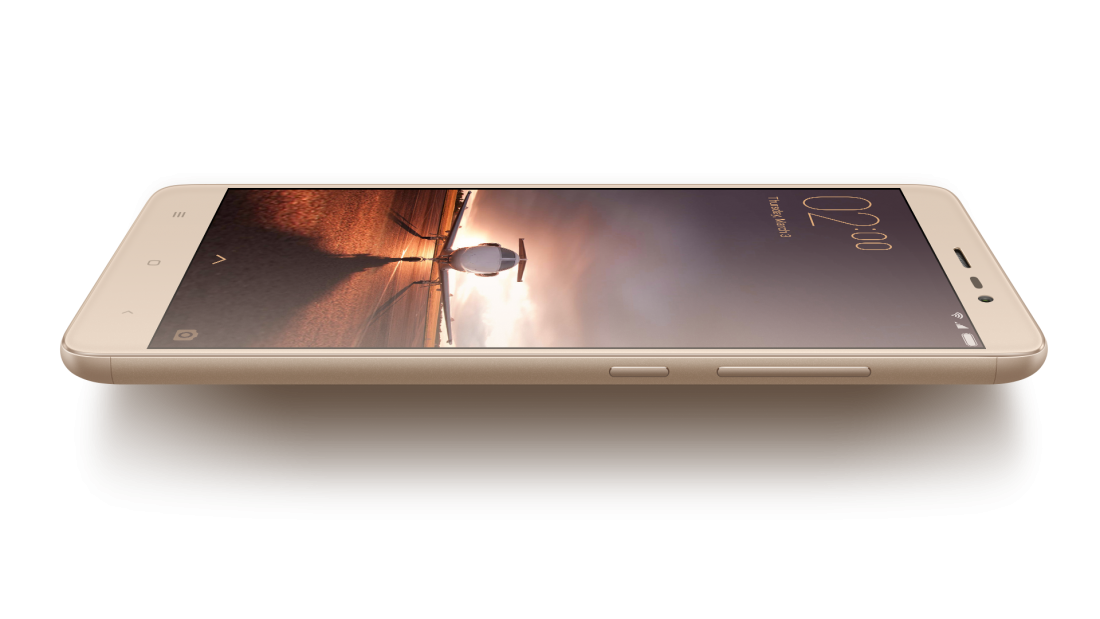
The Redmi Note 3 is an extension of a growing effort by Xiaomi to focus on design and produce beautiful looking phones. This device comes with a full-metal unibody design, with a 5.5-inch 1080p display with pixel density of 403 ppi adorning the front of the phone. It will be available in silver, gold, and gray color options.
The Redmi Note 3 is powered by a Snapdragon 650 SoC that comes with an Adreno 510 GPU. The phablet will come in two variants of 16GB storage with 2GB of RAM, and 32GB storage with 3GB of RAM. Both variants will come packing a non-removable 4,050mAh battery to keep them going through the day.
Coming to the camera, both the variants are equipped with a 16MP rear unit with f/2.0, phase detection autofocus, dual-LED flash and a 5MP front shooter. The Redmi Note 3 also brings with it a fingerprint scanner that can be used to click pictures with both the front and the back camera.
On the connectivity front, the phone comes with dual sim connectivity, Wi-Fi 802.11 a/b/g/n/ac Bluetooth v4.1, A2DP, LE, VoLTE and supports fast battery charging tech. It also runs Android 5.1.1 Lolipop with MIUI 7 skin out of the box. The device with its infrared sensor can also be used as a universal remote for devices in your home.
The pricing of the phone is pretty competitive and for all the impressive under the hood specs the price point of Rs 9,999 for 2GB/16GB variant and the Rs 11,999 for the 3GB/32GB variant is indeed a blockbuster. The phone will go on sale starting 9th march 2 PM in its first flash sale on Amazon, but will later be expanded to offline and other online partners.
Specs
Xiaomi Redmi Note 3
Display
5.5 inches Full HD Display
Resolution
1920 x 1080
Dimensions
150 x 76 x 8.7 mm
Processor
Qualcomm Snapdragon 650 SoC
GPU
Adreno 510
RAM
2GB / 3GB LPDDR4
Storage
16GB / 32GB flash storage
Rear Camera
16 MP, f/2.0, phase detection autofocus, dual-LED
Front Camera
5 MP, f/2.0, 1080p
Expandability
128GB via microSD
Battery
4050mAh
Connectivity
4G+, Wi-Fi 802.11ad, VoLTE, Wi-Fi Direct, hotspot, Bluetooth v4.1, A-GPS, GLONASS, NFC, VoLTE
In news that will excite, as well as disappoint apple fans world over, the Cupertino-based tech giant according to latest reports is all set to bring its next flagship, iPhone 7 in an all new 256GB variant. What the company is going to skip on in returm is the 16GB storage variant.
This move will miff users in growing markets such as India who planned on buying the cheaper 16GB variant of the upcoming phone. The phone is expected to come in 32GB, 64GB,128GB and 256GB variants .No pricing details for the variants is avaialble currently.
Coming to the phone itself, the iPhone 7 is expected to come with an all new design scheme, and is expected to not come with a headphone jack. The phone will also be seeing a new full body speaker chamber that is expected to improve sound quality. For the rest of the specs, the phone will come with 2GB RAM,and the same TFT-LCD display. The processor on the phone should be the A9 SoC.