Category: Mobile

Smartphone News and Reviews, Latest Cellphones, Accessories, New Launches, Specifications, Details with Image and Video from Apple, Samsung, Lenovo, Moto, HTC, Xiaomi, Oneplus, Meizu, Sony, Lava, Micromax Yu Mobile and More.

  • HTC Teases a Powerful One M10 is Coming Soon

    HTC Teases a Powerful One M10 is Coming Soon

    The MWC 2016 might have come to an end with some great flagship launches from the likes of Samsung, LG and Xiaomi. However, HTC is yet to have its day in the sun and has instead saved itself for a solo event in April where it will debut its One M10 flagship device.

    HTC-One-M10-teaser-01

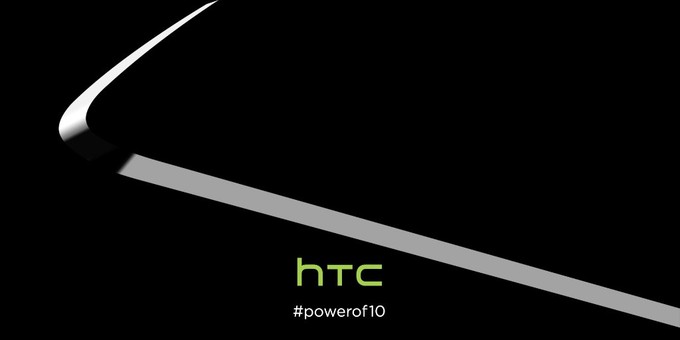
    HTC posted a teaser of the One M10 on Twitter with the hashtag #Powerof10. The teaser itself doesn’t reveal much at all and is simply a silhouette of the device that shows off the metal edge. The teaser’s main purpose, in fact, is in the hashtag that tells us the One M10 will come with some powerful specifications and features.

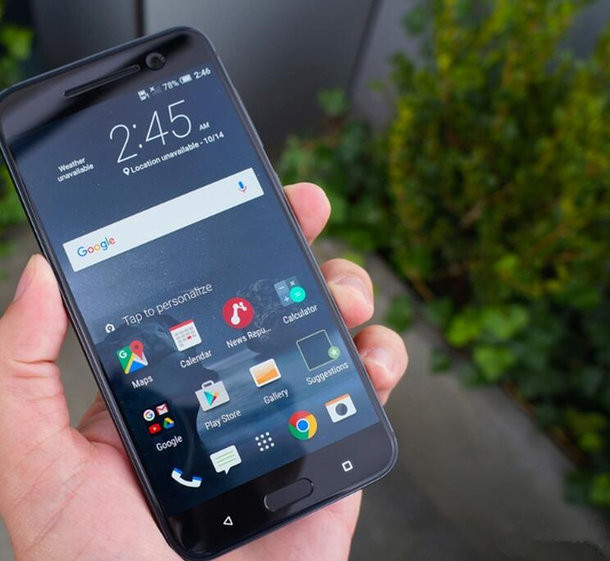
    Over the past few weeks we’ve seen leaked images and renders of what the One M10 will look like and it’s almost certain that the device draws inspiration from the One A9 with a home button and ditching the BoomSoud dual front speakers. We’ll still have to wait and see for the actual unveiling before making a hasty judgement, but the design so far is fairly underwhelming.

    htc-m10-black-2

    The rumoured specs of the One M10 suggest a 5.1-inch QHD AMOLED touchscreen, Qualcomm’s Snapdragon 820 chipset powering the device with 4GB of RAM, 32GB of storage and a microSD card slot. On the camera front lies a 12 MP UltraPixel rear camera with laser autofocus and optical image stabilization. The device will likely run Android 6.0.1 Marshmallow with HTC Sense 8 atop.

  • Le Max Pro vs Xiaomi Mi 5 : Will the Real Flagship Killer Please Stand Up

    Le Max Pro vs Xiaomi Mi 5 : Will the Real Flagship Killer Please Stand Up

    Xiaomi with its announcement of the Xiaomi Mi 5 at events in Beijing and Barcelona today has come to lay claim on the title of being 2016’s biggest flagship killer. The handset which took Xiaomi two years to develop comes with mouth-watering specs at an affordable price point of RMB 1,999(Approx Rs 21,000).

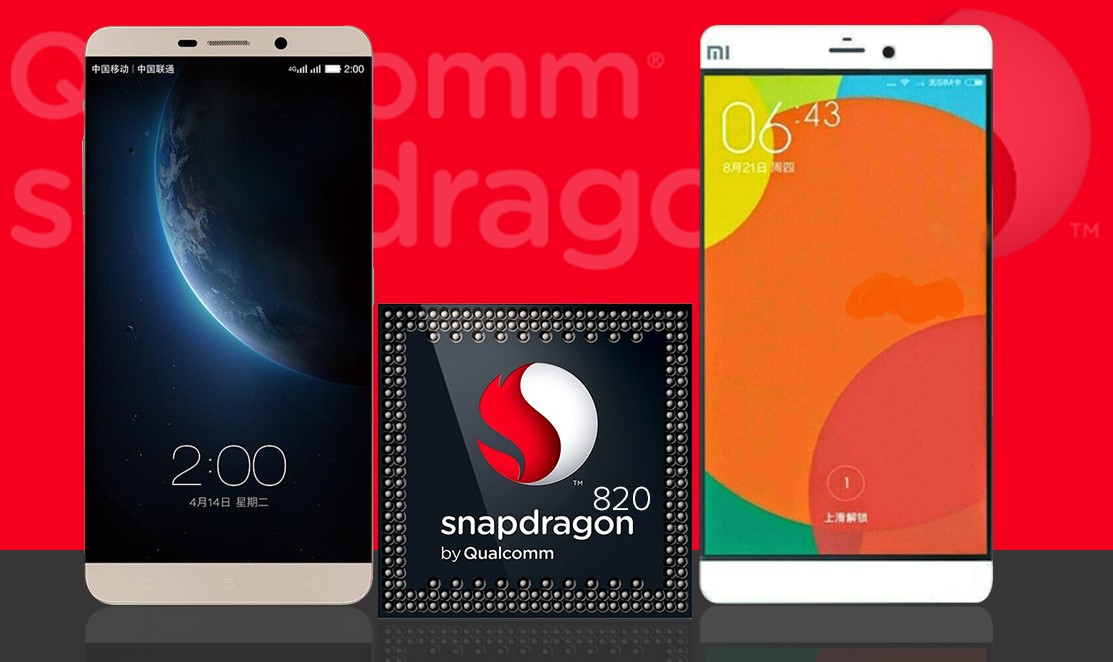
    Xiaomi with the MI 5 will look to eat up into the market share of upcoming flagships such as the LG G5 and Samsung Galaxy S7 when they finally hit Indian markets. But before it can officially take up the mantle of being this year’s best bang for buck flagship killer, it will face tough competition closer to home from the new kid on the block, Le Eco, which only yesterday announced the sale of its Le Max Pro handset for the same price in China.

    So time to find out which of these two is the real flagship slayer of 2016. Let the battle begin.

    game-snapdragon-820-xiaomi-mi-5-and-letv-le-max-pro

    What’s Under the hood?

    The Le Max Pro became the world’s first Snapdragon 820 smartphone to go on sale after 1000 units were made available for purchase yesterday to customers in China, and as expected was quite quickly lapped up by the “Superfans” of the “Superphone”.

    letv-le-max-pro_9819-970x647-c


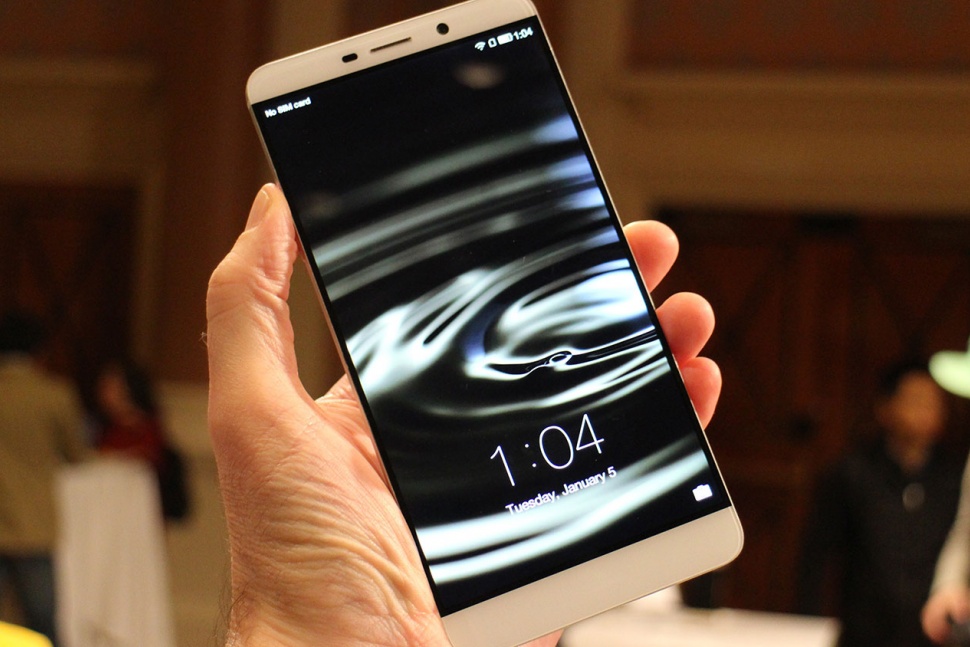
    The Le Max Pro comes to the party equipped with a pretty impressive specs. It sports a 6.33-inch display with QHD resolution which is a massive upgrade over the Xiaomi Mi 5’s 5.15-inch Full HD display, but both the phones find common ground when it comes to the Snapdragon 820 SoC that runs the show for both these devices.The Le Max Pro comes with 4GB of RAM and 64 GB of flash memory while the Mi 5 brings to the table 3GB of RAM and 32GB internal storage.

    Mi 5

    The Le Max Pro has a slight advantage when it comes to the 3,400mAh battery when compared to the 3000mAh battery pack inside Xiaomi’s offering. Both the phones can be charged through a USB Type-C port and also feature fingerprint scanners come running Android 6.0 Marshmallow with their company’s respective skins out of the box.

    Camera

    Camera’s on both the phones are pretty impressive. While Le Max has gone the traditional way and overloaded the specsheet with details about high megapixel count of the phone, Xiaomi has gone ahead and like most big names of the industry has looked towards real world performance in place for extra megapixels to brag about.

    mi5-h1

    Le Max comes with an able  a 21MP sensor for the back of the phone which is expected to take good pictures and a 4MP sensor for the front while Xiaomi has sports a 16-megapixel rear sensor that uses Sony IMX298 with important additions such as PDAF, DTI image enhancements and 4-axis OIS. The front features a 4-megapixel UltraPixel camera which is also expected to better than the Le Max Pro.

    Design

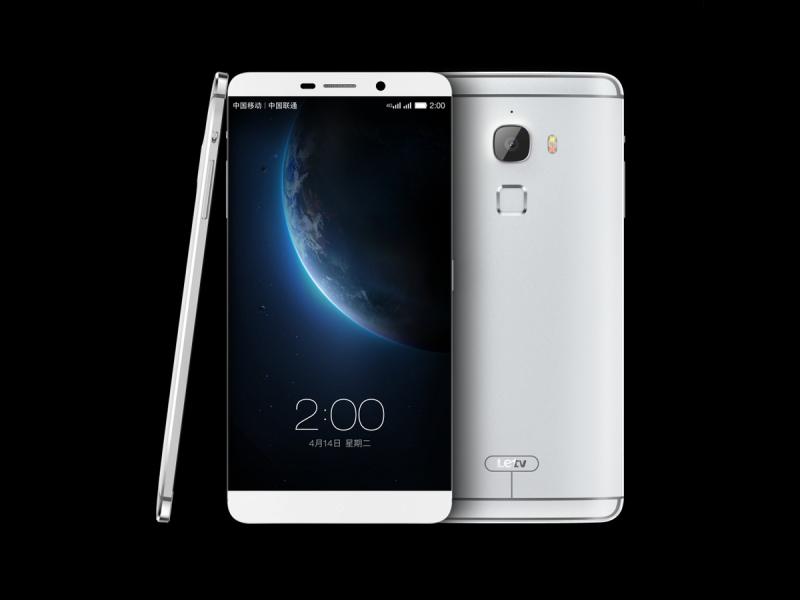
    The Le Max Pro features a bezel-less, full metal unibody design made completely out of aircraft grade aluminum which the company claims is highly durable. It also comes with the world’s first full-floating glass made by Sharp exclusively for LeEco. Because of its size, the phone feels big in the hand and one handed operation is difficult.

    the_le_max_features_akg-tuned_audio_and_a_superfast_21mp_camera

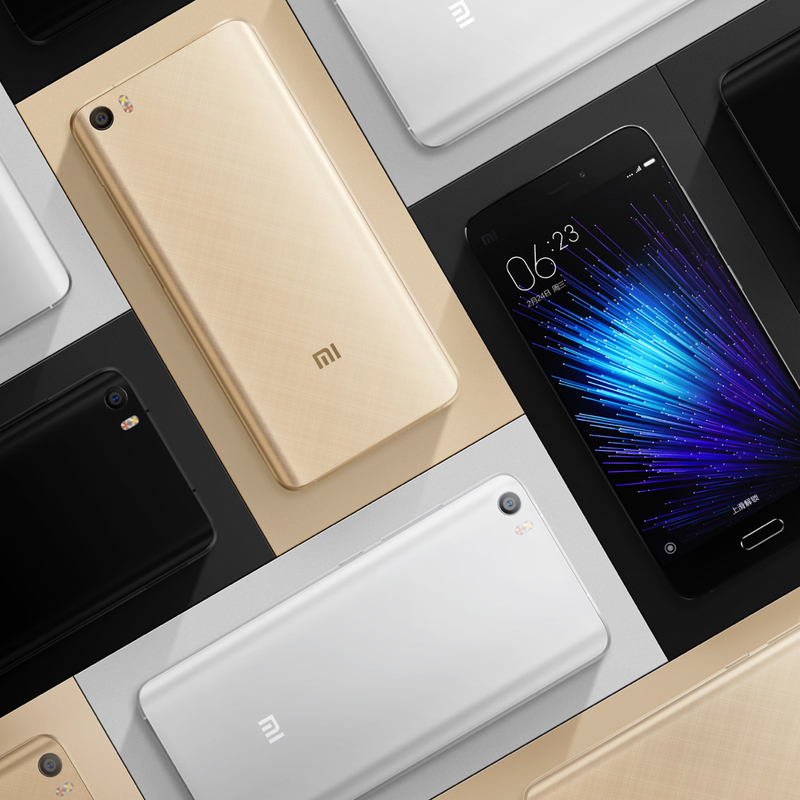
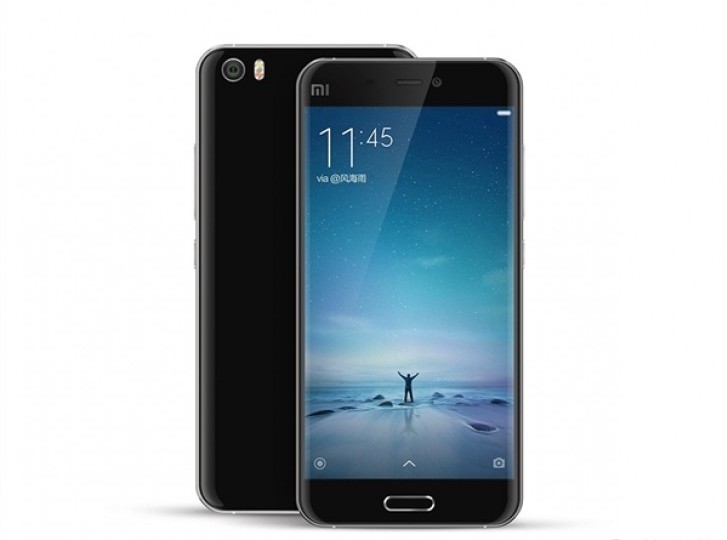
    Coming to the Mi 5, it draws inspiration from the Mi Note in terms of design. The Mi 5 introduces a home button that houses the fingerprint scanner – a first for Xiaomi. The back features a curved edge with a 3D glass body. Meanwhile, the Pro variant comes with a 3D ceramic back. The front features an almost bezel just 6.95mm thick, seamless design and more curved than the Mi Note. The curved ceramic back seamlessly joins the glass on the front.


    Specs

    Le Max Pro

    Xiaomi Mi 5

    Display 6.33-inch display with QHD  5.1.5-inch screen Full HD display
    Resolution 2560 x 1440 1920×1080
    Dimensions 167.10 x 83.50 x 8.90 69.20 x 144.55 x 7.25mm
    Processor Qualcomm Snapdragon 820 Qualcomm Snapdragon 820 Processor
    GPU Adreno 530 Adreno 530
    RAM 4GB 3GB
    Storage 64GB 32GB
    Rear Camera 21 MP Sensor  16MP Sony IMX298, PDAF, 4-axis OIS and f/2.0
    Front Camera 4 MP 4MP UltraPixel
    Expandability N/A  N/A
    Battery 3,400mAh 3000mAh battery Quick Charge 3.0
    Connectivity USB Type-C, 4G+, Wi-Fi 802.11ad, VoLTE, Wi-Fi Direct, hotspot, Bluetooth v4.1, A-GPS, GLONASS, NFC 4G+, Wi-Fi 802.11ad, VoLTE, Wi-Fi Direct, hotspot, Bluetooth v4.1, A-GPS, GLONASS, NFC,
    OS Android 6.0 Marshmallow Android 6.0 Marshmallow with MIUI 7
    Price RMB 1,999 (Rs 21000) RMB 1,999 (Rs 21,000)


  • Xiaomi Mi 5’s 4-Axis OIS Camera Explained

    Xiaomi Mi 5’s 4-Axis OIS Camera Explained

    Xiaomi today finally unveiled its flagship Mi 5 smartphone at the Mobile World Congress. The handset comes with some really pleasing design language that includes curved edge at the back, and some powerful flagship killing specs that include Qualcomm’s new Snapdragon 820 chipset. But apart from these, Xiaomi is really pleased with its new camera module in the Mi 5.

    Mi 5 Camera 01

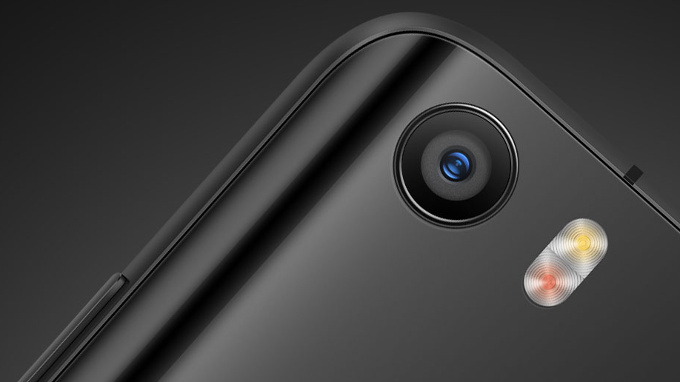
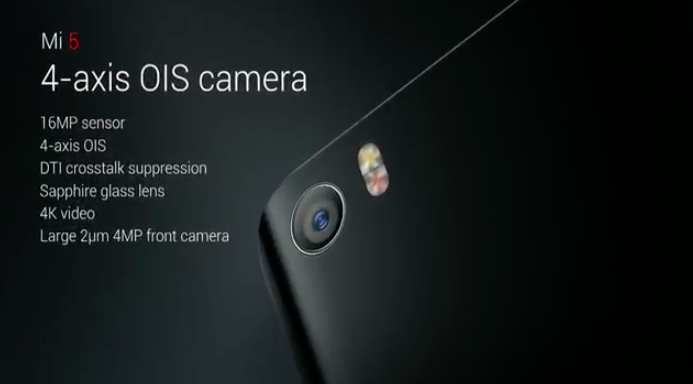
    The Mi 5 sports a 16-megapixel rear sensor that uses Sony IMX298 with PDAF, DTI image enhancement and 4-axis OIS. The front features a 4-megapixel ultra pixel camera. Xiaomi has managed to fit a powerful camera module inside the device with no sign of a camera hump. The device can record 4k videos as well.

    Mi 5 Camera

    It is in the 4-axis OIS that Xiaomi really delights itself. The rear camera promises to capture great images and videos with superior focus. This holds true thanks to its new OIS technology that uses 4-axis rather than the traditional 2-axis that most other smartphones currently use. Xiaomi demonstrated the stability of its camera by comparing it to the iPhone 6s, which is considered to have the best OIS currently in the market.

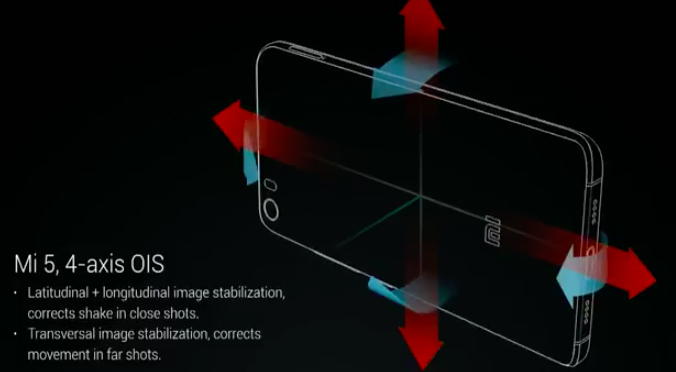
    The 4-axis OIS basically gives you more stability under shaky conditions. While traditional 2-axis OIS can work around rotational movements, the 4-axis can handle transversal as well, because shakiness comes in all directions.

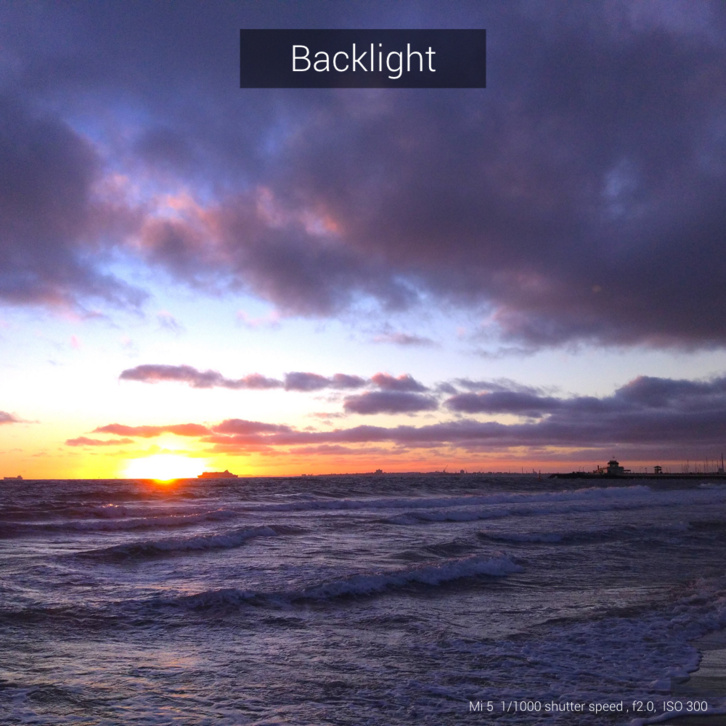
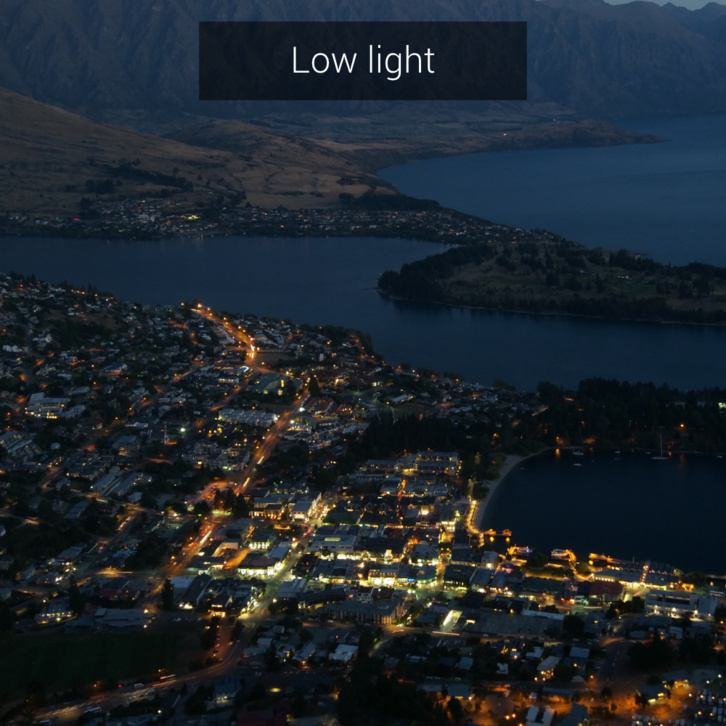
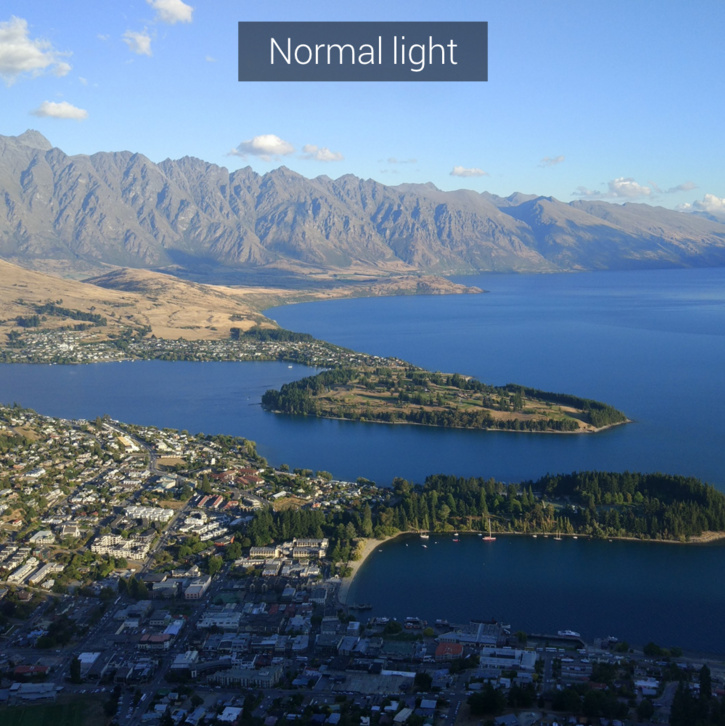
    The 4-axis OIS technology corrects shake in close shots and can capture accurate movement in distant shots as well. All of this translates into smoother, sharper and blur-free images and videos even in low light. Check out some of these camera shots to know just how well the Mi 5 camera works under various settings.

  • Xiaomi Launches the Mi 5 at MWC 2016

    Xiaomi Launches the Mi 5 at MWC 2016

    Xiaomi has finally unveiled its Mi 5 flagship smartphone at MWC 2016 today. This was Xiaomi’s debut event at the MWC where the company’s president Hugo Barra took the stage to unveil its flagship. The Mi 5 is priced at RMB 1,999 (approx. Rs 21,000), while the high-end Pro variant is priced at RMB 2,699 (approx. Rs 28,000).

    Last year, Xiaomi sold around 70 million products. Barra spoke about last year’s Mi Note flagship that used 3D Glass, the Mi 4c with 3080mAh battery, and Redmi Note 3 being the first device to ship with Snapdragon 650. Xiaomi also has a 170 million MIUI users currently.

    xiaomi_mi 5

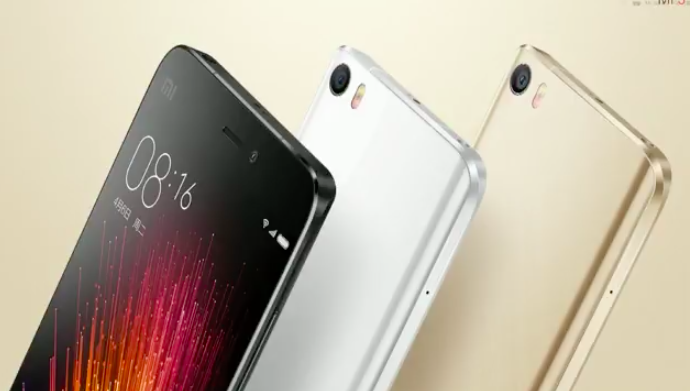
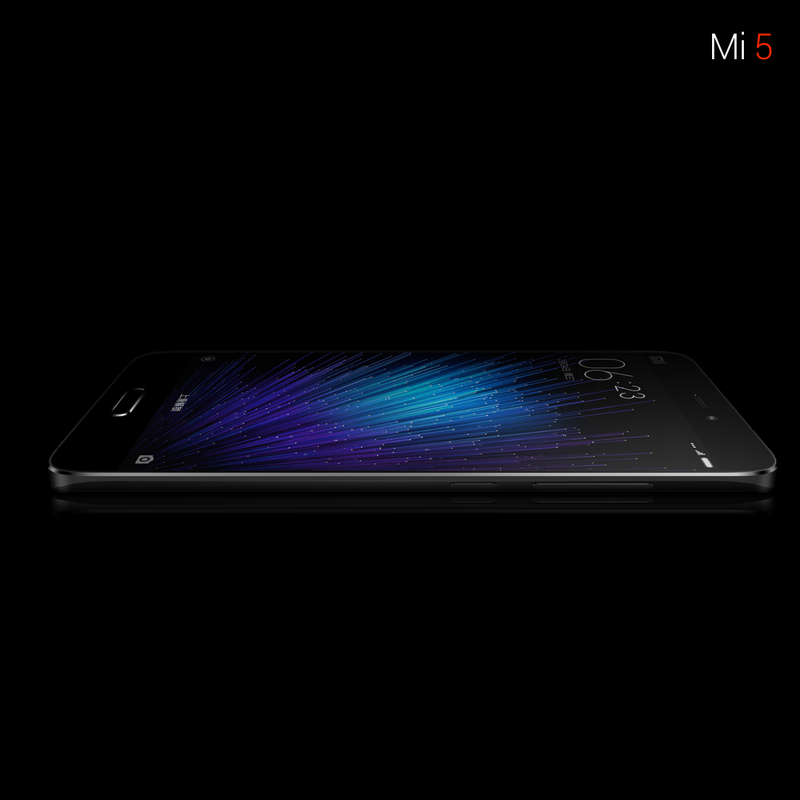
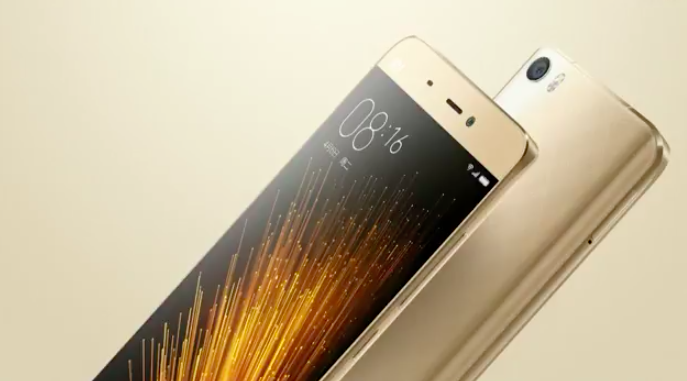
    The Mi 5 draws its inspiration from the Mi Note in terms of design. The Mi 5 introduces a home button that houses the fingerprint scanner – a first for Xiaomi. The back features a curved edge with a 3D glass body. The Mi 5 will be offered in black, white and gold colour options. Meanwhile, the Pro variant comes with a 3D ceramic back. The front features an almost bezel just 6.95mm thick, seamless design and more curved than the Mi Note. The curved ceramic back seamlessly joins the glass on the front.

    The front of the Mi 5 has a good screen to body ratio. Over at the back, the camera is placed at the top left corner with an LED flash. The Mi 5 with a 3D glass weighs in at 129g, which is around 14g lighter than the iPhone 4s.

    Mi 5 02

    The device sports a 5.15-inch Full HD IPS display, a 1080p resolution, ultra-bright 16-LED backlighting with 2.5D curved glass on the front and Corning Gorilla Glass 4. It is powered by the Snapdragon 820 chipset and Adreno 530 GPU. No surprises there. It packs 3GB of RAM and up to 32GB of flash storage, while the Pro variant features a 4GB RAM and 128GB flash, however, there is no MicroSD card slot to be seen. Both variants feature a fast LPDDR4 RAM for a snappy user experience.

    The Mi 5 sports a 16-megapixel rear sensor that uses Sony IMX298 with PDAF, DTI image enhancement and 4-axis OIS. The front features a 4-megapixel UltraPixel camera. Xiaomi has managed to fit a powerful camera module inside the device with no sign of a camera hump. The device can record 4k videos as well.

    Mi 5

    The Xiaomi Mi 5 features 802.11ad an industry-first Wi-Fi connection standard, 4G+, CAT 12 LTE modem (that allows speeds up to 600mbps), and VoLTE all of which promise super fast download speeds and call connection. A battery of 3000mAh will be present inside the Xiaomi Mi 5, similar to the Galaxy S7. The device is also compatible with Qualcomm’s Quick Charge 3.0 and features a USB Type-C port. The Mi 5 also comes with Dual Sim support. Xiaomi also revealed the AnTuTu V6 score at 144,000, which currently tops the LG G5 and Galaxy S7.

    All considered, the Mi 5 offers some truly great specs at a low price, which will surely challenge the flagship devices this year starting with the LG G5 and Samsung’s Galaxy S7. The Mi 5 will be available starting March 1. The device will first hit China followed by India and other international markets in the weeks to follow.

    Check out the full specifications of the Mi 5 below.

    Specs

    Xiaomi Mi 5/ Mi 5 Pro

    Display  5.15-inch Full HD Display with Corning Gorilla Glass 4
    Resolution 1920 x 1080
    Dimensions 69.20 x 144.55 x 7.25mm
    Processor Qualcomm Snapdragon 820 Processor
    GPU Adreno 530
    RAM 3GB / 4GB LPDDR4
    Storage 32GB / 128GB flash storage
    Rear Camera  16MP Sony IMX298, PDAF, 4-axis OIS and f/2.0
    Front Camera 4MP UltraPixel
    Expandability  N/A
    Battery 3000mAh Battery with Quick Charge 3.0
    Connectivity 4G+, Wi-Fi 802.11ad, VoLTE, Wi-Fi Direct, hotspot, Bluetooth v4.1, A-GPS, GLONASS, NFC,
    OS Android 6.0 Marshmallow with MIUI 7
    Price RMB 1,999 (Rs 21,000) / RMB 2,699 (Rs 28,000) (ceramic back)
  • Meizu Drops Plans to Develop a Pro 5 Mini Device

    Meizu Drops Plans to Develop a Pro 5 Mini Device

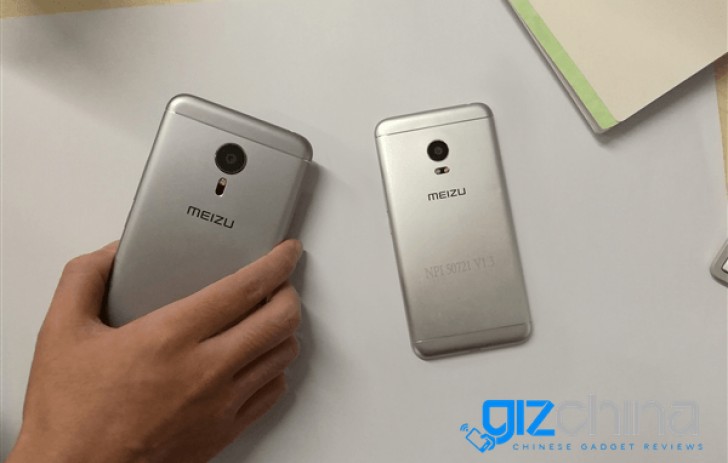
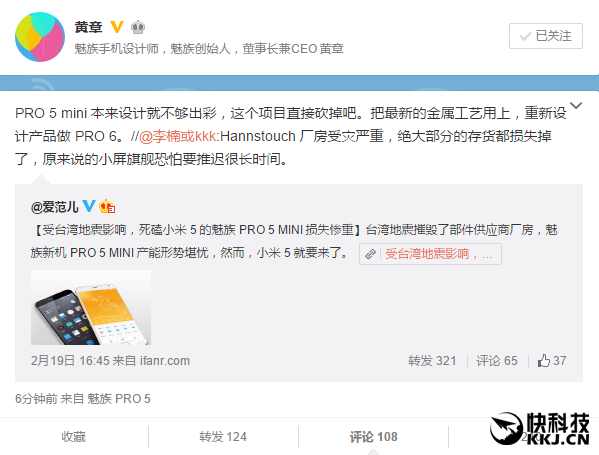
    Latest reports coming out of China reveal that the Meizu has dropped plans of developing a skimmed 4.7-inch mini version of the Meizu Pro 5 which was expected to come to the markets in the upcoming months. This particular news was confirmed by none other than the Chinese company’s founder and CEO Huang Zhang on popular social networking website Sina-Weibo.

    gsmarena_001 (4)

    Zhang revealed the reason behind this change of plans was is the recent earthquake in Taiwan which has significantly affected their manufacturing and supply chain and has lead to most of the company’s inventory being damaged. Hanging on to the Pro 5 mini would have delayed the device beyond acceptable limits so they decided to ditch the project altogether.

    8d8728c53d444c86a011f3db98284dff

    He revealed that they tried their best to keep the device alive, but in the end decided against it as hanging on to the Pro 5 mini would have resulted in massive delays which would have been beyond acceptable limits. Zhang further revealed Meizu will now focus on developing and perfecting the Pro 6 instead.

    Source

  • Sony Says No to Z6, to be Replaced by X Series

    Sony Says No to Z6, to be Replaced by X Series

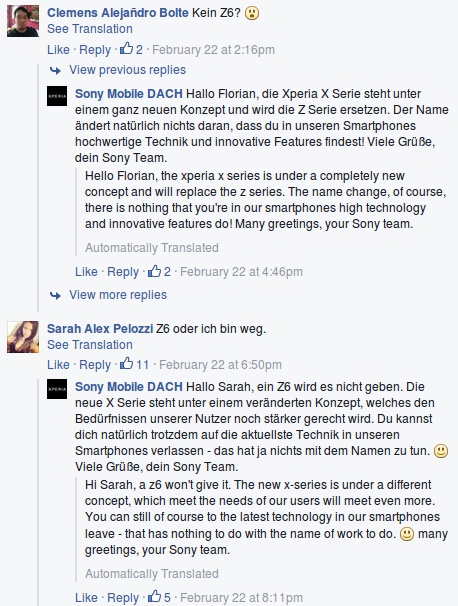
    The Japanese tech company has confirmed today that it will indeed be calling curtains on the much loved Xperia Z series replacing it with the new Xperia X range of devices.The company’s German arm disseminated this information to its loyal customer base on Facebook through comments in response to questions posted about the Z6 on its official page.

    gsmarena_000

    The German arm of Sony in the comments revealed to users that there won’t be a flagship Z6 device but that mantle would rather be taken up by the new X series devicesReplying to a question about the arrival of the Z6, the Sony team said, “A Z6 will not exist. The new X series is under a modified concept that meets the needs of our users even more accessible.”

    sony-xperia-x

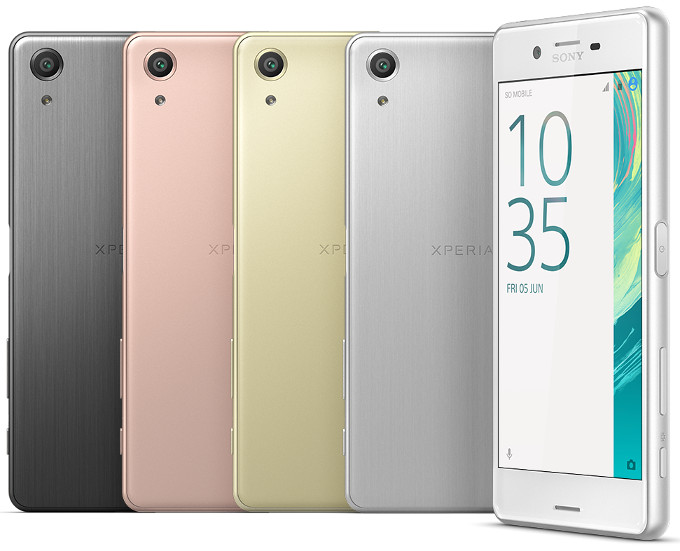
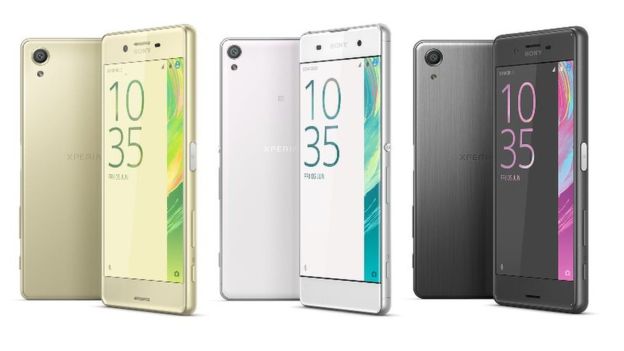
    The X Performance which will be the new flagship for Sony this year sports a 5-inch 1080p Full HD display and is powered by Snapdragon 820. The device, which is the bigger of the three has a premium metal finish with a rectangular chasis and rounded edges and a 2.5D curved glass on top. The X Performance comes with a 23MP rear camera with a  Predictive Hybrid Autofocus, 5x Clear Image Zoom and ISO 12800 sensitivity, and a 13MP selfie shooter.

    The Xperia X and XA also feature Predictive Hybrid Autofocus tech that offers motion tracking. The mid-range devices are powered by the Snapdragon 650 hexa-core processor, run on Android 5.0 Lollipop and come with a 2.5D curved glass on the front and a metallic rear for a premium feel.

  • Xiaomi Mi 5 Launch Event: Watch it Here

    Xiaomi Mi 5 Launch Event: Watch it Here

    Xiaomi is all set to debut at the MWC with its much-anticipated Mi 5 flagship smartphone. The device has been talked about in a great deal for a long time now. We’ve had variety of leaked renders and specifications about the device and in a little over an hour, we’ll know just how much of that is true. You can watch the event, which begins at 1.30pm IST, right here.

    https://www.youtube.com/watch?v=_5xSfaMbLdc

    From what we know so far, the Mi 5 is rumoured to sport a 5.2-inch QHD display with 2.5D curved glass on the front, although rumors of a 5.7-inch Mi 5 have also been doing the rounds. The device will be powered by the Snapdragon 820 chipset. No surprises there. Other rumoured specs include 3GB of RAM for the 32 GB storage model and 4 GB of RAM for the 64 GB storage edition. It will also come with support for microSD card slot. The Xiaomi Mi 5 is expected to feature 802.11ad – an industry-first Wi-Fi connection standard. A battery of 3600 mAh will be present inside the Xiaomi Mi 5. The device should also be compatible with Qualcomm’s Quick Charge 3.0.

    Reports from last week reveal the phone to come with a beefy 26-megapixel camera with f/1.6 lens. The front camera is expected to be an 8-megapixel shooter. The main camera is also expected to come with tech like laser autofocus and Optical Image Stabilization.

    We’ll know exactly how much the rumours about the flagship stay true. Tune in at 1.30pm to watch the event live.

  • Galaxy S7 and S7 Edge to Launch in India Early March Starting Rs 55,000

    Galaxy S7 and S7 Edge to Launch in India Early March Starting Rs 55,000

    In latest news, sources close to Samsung, who have been accurate in the past, state to iGyaan that the long wait for Indian customers for the recently launched Galaxy S7 and Galaxy S7 edge is finally going to come to an end as the South Korean tech giant’s premium offerings will make their way across to Indian shores around mid March, 2016.

    Galaxy-S7-in-the-rain-702x336

    The sources further revealed the pricing details of the upcoming set of phones which will start retailing in the country at Rs 55,000 for the regular Galaxy S7, while the more premium Galaxy S7 edge with a curved display and bigger battery will hit stores with a price tag of Rs 64,000 in Indian markets.

    Coming to the specs, The S7 is equipped with a Super AMOLED display with QHD resolution. Two SoC configurations are offered here– one being the new Exynos 8890 and the other being Qualcomm’s Snapdragon 820. The device comes with 4GB of RAM and upto 64GB of internal storage as well as a MicroSD card slot this time around and the battery is bumped upto 3000mAh. A fingerprint sensor is housed in the home button.

    Galaxy S7 03

    The S7 Edge comes with a 5.5-inch Super AMOLED display with  QHD resolution. The same SoC configuration as in the Galaxy S7 powers the device along with 4GB RAM and a maximum of 64GB storage. Importantly, the battery on the S7 edge has also been bumped upto a respectable  3600mAh battery pack.

    On the camera front, Samsung this year has tried to take its camera up a notch which is why it’s using a new Britecell technology for the Galaxy S7 for better low-light photography. Both the S7 and S7 Edge feature ‘Dual Pixel’ cameras with a 12MP with f/1.7 aperture rear camera and a 5MP front. Samsung has boasted of exceptional low-light captures with the Galaxy S7 devices and it may just dominate the camera department once again this year.

    Specs

    Galaxy S7

    Galaxy S7 Edge

    Display  5.1-inch Super AMOLED QHD display 5.5-inch curved AMOLED QHD display
    Resolution  2560 x 1440 pixels   2560 x 1440 pixels
    Processor Qualcomm Snapdragon 820 Processor/ Exynos 8890  Qualcomm Snapdragon 820 Processor/ Exynos 8890
    GPU Adreno 530  Adreno 530
    RAM 4GB 4GB
    Storage 32GB/ 64GB 32GB/ 64GB
    Rear Camera Dual Pixel 12MP with f/1.7 aperture Dual Pixel 12MP with f/1.7 aperture
    Front Camera Dual Pixel 5MP Dual Pixel 5MP
    Expandability via MicroSD via MicroSD
    Battery 3000mAh battery  3600mAh battery
    Connectivity Wi-Fi 802.11 a/b/g/n/ac, Wi-Fi Direct, hotspot, Bluetooth v4.1, A-GPS, GLONASS, NFC  Wi-Fi 802.11 a/b/g/n/ac, Wi-Fi Direct, hotspot, Bluetooth v4.1, A-GPS, GLONASS, NFC
    OS Android 6.0 Marshmallow  Android 6.0 Marshmallow
    Price RS 55,000 Rs 64,000


  • LG G5 to Launch in India in May

    LG G5 to Launch in India in May

    A source close to iGyaan, who have been accurate in the past, state that LG’s newest modular flagship smartphone, the G5, will launch in India sometime in May. The G5 has been said to cost around Rs. 59,000 when it hits the Indian market. Meanwhile, the modules for the G5, called Friends, will also reach the Indian market. The LG Cam Plus camera grip will be priced at Rs 9,000 while the Hi-Fi Plus with B&O Play module will cost Rs 14,999.

    On the specifications front, the LG G5 comes packing a primary 5.3-inch QHD LCD display with 3D Arc Glass on top. It also has a cool Always-on feature that lights up the display for access to important updates. The phone’s construction is full metal unibody and is powered by a Snapdragon 820 chipset, paired with 4GB of RAM and 32GB of internal storage, expandable by upto 2TB with microSD cards.

    LG G5 01

    When it comes to photography, the phone is equipped with dual cameras at the back. A standard 16-megapixel 78-degree lens and another 8-megapixel 135-degree wide angle lens. The LG G5 features a front-facing 8-megapixel camera too for clicking selfies.

    LG G5 comes packing a 2,800mAh removable battery with Quick Charge 3.0, and when it comes to connectivity it gives users options such as Bluetooth 4.2, NFC and Wi-Fi 802.11ac. The smartphone also features USB Type-C 2.0 port. The G5 runs on Android 6.0 Marshmallow OS with LG’s custom UI on top. The G5 will be available in four different colors, silver, gold, pink and silver.

    LG-G5 CAM-Plus
    LG-G5 CAM-Plus

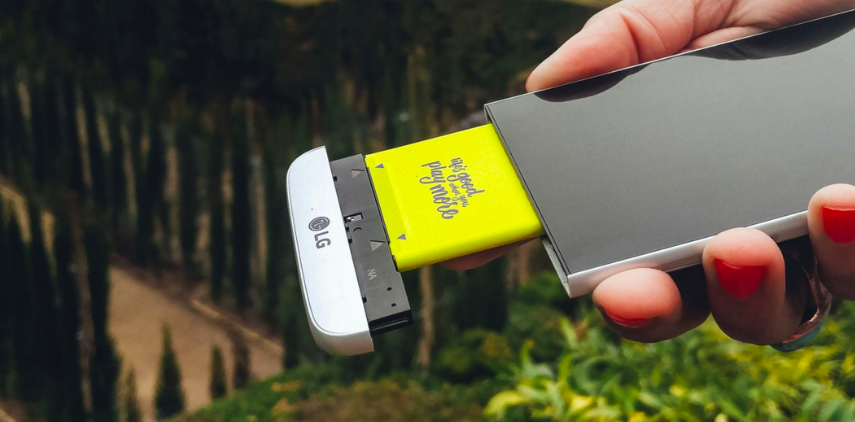
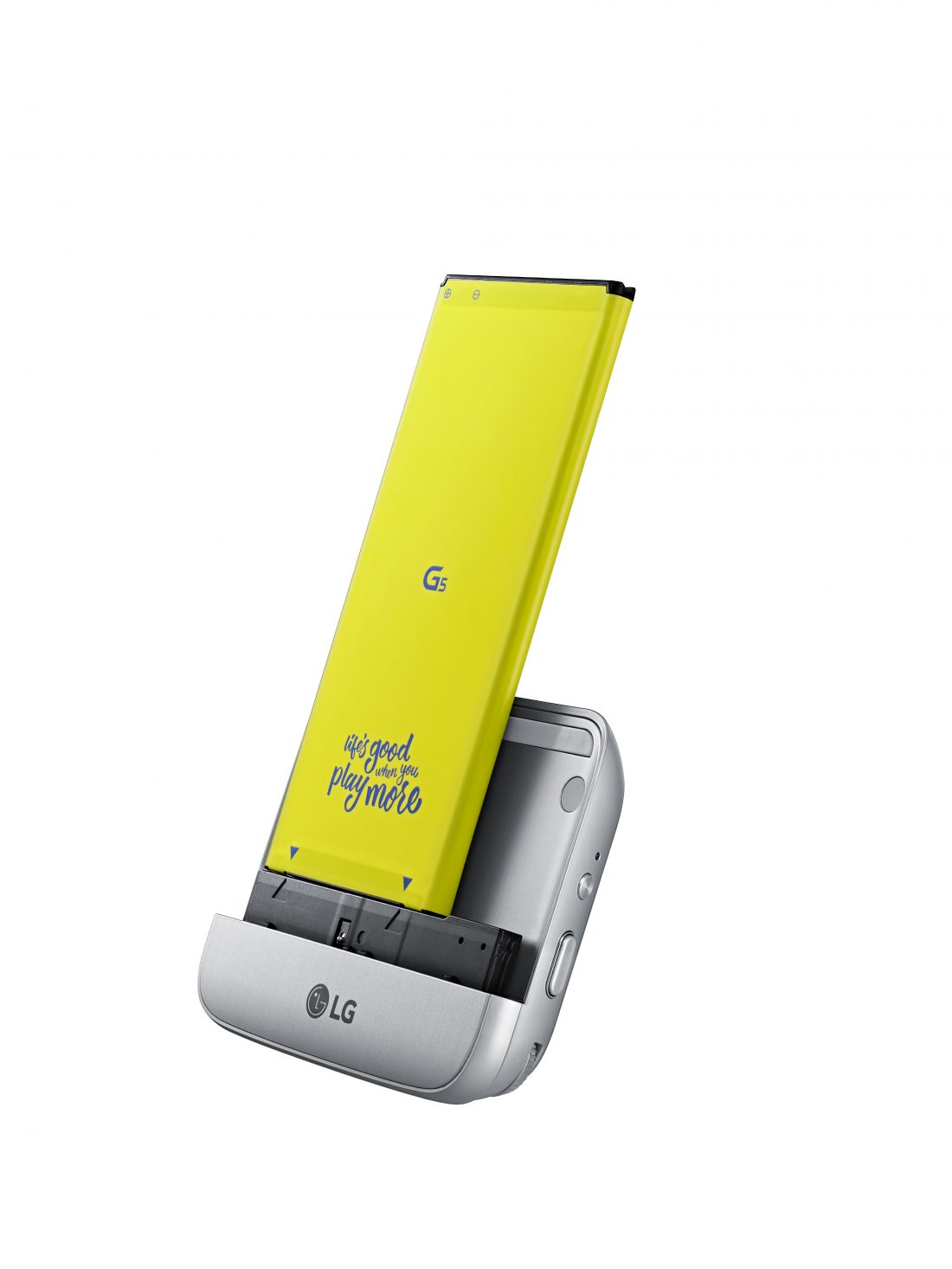
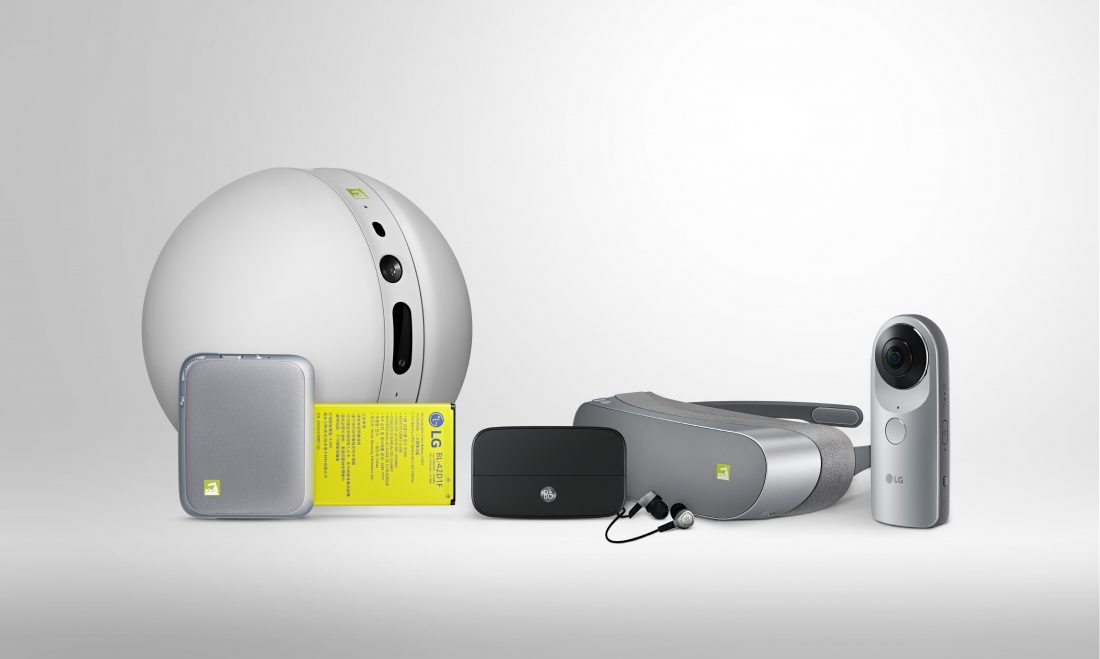
    The company also announced modular accessories for the phone at the launch. Most interesting of the lot was the LG Cam Plus module which can be attached to the G5 through the battery slot giving the user “comfortable grip and convenient control of a DSLR” for better imaging and also adds to the battery of the phone taking the capacity up to 4000mAh.

    Next is the Hi-Fi Plus with B&O Play module. This is a  Hi-Fi DAC audio player which is perfect for audiophiles. It can also play high-definition audio files encoded in 32-bit at 384KHz.

    Specs

    LG G5

    Display  5.3-inch screen Quad HD IPS display
    Resolution  2560 x 1440 / 554ppi
    Processor Qualcomm Snapdragon 820 Processor
    GPU Adreno 530
    RAM 4GB
    Storage 32GB
    Rear Camera  Standard 16MP, Wide 135 degrees 8MP
    Front Camera 8MP
    Expandability Up to 200GB via MicroSD
    Battery 2800mAh battery Quick Charge 3.0
    Connectivity Wi-Fi 802.11 a/b/g/n/ac, Wi-Fi Direct, hotspot, Bluetooth v4.1, A-GPS, GLONASS, NFC,
    OS Android 6.0 Marshmallow with LG custom UI
  • LG G5 vs LG G4: Everything’s Changed

    LG G5 vs LG G4: Everything’s Changed

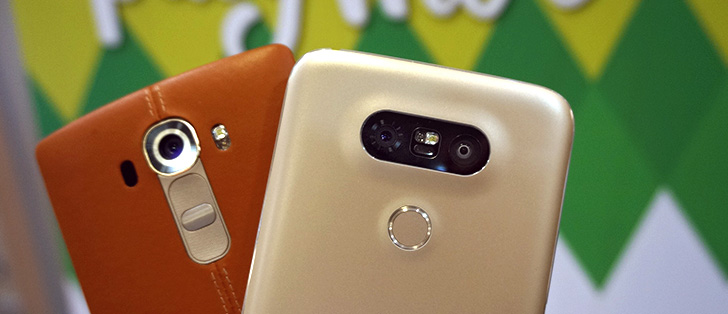
    The opening day fight for the spotlight at the MWC 2016 was always going to be between Samsung and LG. While Samsung had a very sober event, unveiling its S7 devices which didn’t really wow the mass as one would have liked, LG, on the other hand, stole the show with its new modular G5 flagship. Samsung may not have changed too much with the S7, but LG redefined the smartphone with the G5. We look at how much the LG G5 has changed from its G4 predecessor.

    Design

    LG G4
    LG G4

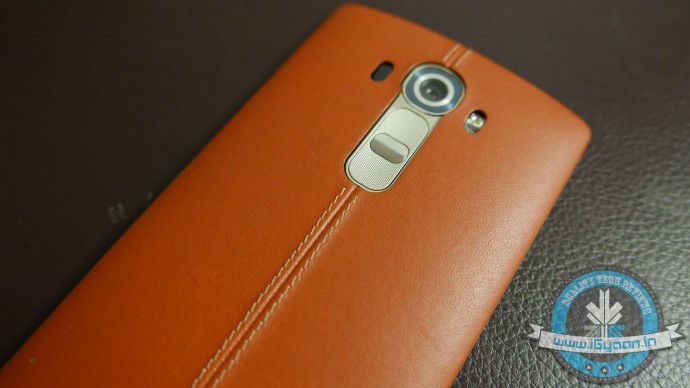
    The LG G4 was designed in a new way back in 2015 with the introduction of a genuine leather back panel that received mixed reactions in certain religious countries. For example in India, LG refrained from mentioning that the leather back panel was made from cow hide, which prevented some people from buying the handset. The use of leather, however, was done in a brilliant way. The back panel takes 12 weeks to manufacture and uses a new technology for a process which normally takes a few days.

    Although some had mixed opinions about the design and use of leather, LG had done it rather tastefully and not only did it look impressive, but also felt great in the hand.

    LG G5
    LG G5

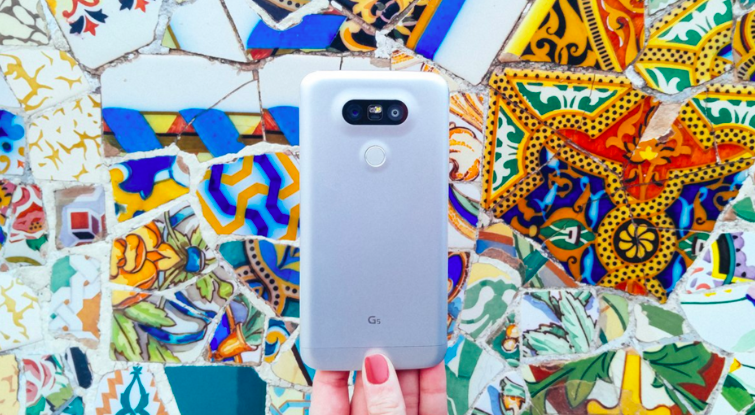
    With the G5, LG again made a drastic design change and incorporated a modular design to its new flagship, which is, in our opinion, a stroke of brilliance. The G5 introduces a full metal body and comes with impressive specifications but the what sets the phone apart from its competition is the fact that it comes with modular attachments which can be utilised to enhance the camera and battery of the phone. Over to the back, you can see the dual camera module and a rounded fingerprint sensor below it which was missing in the G4.

    However, the back of the G5 looks rather dull and pales in comparison to the back of the G4. Of course, this is just going by the images of the G5 and it may just feel good in the hands. The actual look of the G5 isn’t much to brag about but what will really sell it is it’s modular nature.

    Display

    The G4 had a 5.5-inch Quad HD LCD display with a 2560 x 1440 pixel resolution and a pixel density of 534ppi. Now while the display on the G4 was bright and crisp, the size factor and poor battery pack made it hard to make it through an entire day with enough juice.

    LG has reduced the screen size of the G5 from 5.5-inch to a 5.3-inch Quad HD display. This will not only add much sharper colours and brightness, but will also help conserve precious battery life. Add to this, you also have a new Always On mode that displays notifications and messages without having to turn on the phone. The Always On feature uses only 0.8 percent of battery per hour, which means the phone will last a lot longer than the G4.

    Hardware

    Like every new flagship successor, specifications are bound to get a bump. 2016 is the year of the Snapdragon 820 and many flagship devices this year will be sporting that chipset. The G5 is no different. It comes with a smaller 5.3-inch screen as compared to the G4 and is powered by the Snapdragon 820 chipset and Adreno 530 GPU. RAM also gets a bump to 4GB and adds a USB Type-C port. The battery pack drops from 3,000mAh to 2,800mAh, though it is still removable and LG has some ‘Friends’ that bring in some help when needed.

    But the USP of the G5 is its modular design and modules is what you get with the G5. The handset comes with various modules that can be attached to the bottom of the device. LG calles these modules Friends that include LG Cam Plus and LG HI-Fi Plus.

    LG-G5 CAM-Plus
    LG-G5 CAM-Plus

    The LG Cam Plus is a camera module that is attached to the device for grip and raises the battery capacity to 4,000mAh by adding an extra 1,200mAh battery pack module to the existing 2,800mAh pack. The module also includes other camera functions including auto focus with the shutter button and zoom with the analogue dial.

    Next is the Hi-Fi Plus with B&O Play module. This is a  Hi-Fi DAC audio player which is perfect for audiophiles. It can also play high-definition audio files encoded in 32-bit at 384KHz that will offer better sound quality over the 24-bit DAC that is already on the G5.

    Specs

    LG G4

    LG G5

    Display  5.5-inch Quad HD LCD 5.3-inch screen Quad HD IPS display with Corning Gorilla Glass 4
    Resolution  2560 x 1440 pixels / 534 ppi  2560 x 1440 / 554ppi
    Processor Qualcomm Snapdragon 808 with X10 LTE Qualcomm Snapdragon 820 Processor
    GPU Adreno 418 Adreno 530
    RAM 3GB 4GB
    Storage 32GB 32GB
    Rear Camera 16MP  f/1.8 aperture Standard 16MP, Wide 135 degrees 8MP
    Front Camera 8MP  f/1.8 aperture 8MP
    Expandability Up to 2TB via MicroSD Up to 200GB via MicroSD
    Battery 3000mAh battery 2800mAh battery Quick Charge 3.0
    Connectivity Wi-Fi 802.11 a/b/g/n/ac, Wi-Fi Direct, hotspot, Bluetooth v4.1, A-GPS, GLONASS, NFC Wi-Fi 802.11 a/b/g/n/ac, Wi-Fi Direct, hotspot, Bluetooth v4.1, A-GPS, GLONASS, NFC
    OS Android 5.1 Lollipop  Android 6.0 Marshmallow

    Camera

    The G4 had an impressive camera with a 16MP rear and f/1.8 aperture that gave excellent low-light captures. Over the past few years, LG has done well with its camera modules, and is among the top brands in that department.

    LG G5

    The G5 takes the camera module from the G4 and adds a little more to it. The rear camera on the G5 comes in two this time, one with a 16MP sensor and one with an 8MP 135-degree wide angle lens, both together promise a lot more functionality, offering impressive auto wide angle captures. LG has stated that its wide angle camera offers a field of view like a human eye and doesn’t restrict photography like other standard camera modules.

    Conclusion

    LG-G5

    There is no doubt that LG has made some crazy changes with the G5 over the G4. The company did not rest on the laurels of the latter and instead made some bold new changes while still keeping the best parts from last year. LG has basically taken one step forward towards making a truly modular phone a reality.

    LG has dropped a panic bombshell on the audience and the tech industry, and the world should take notice. This is the evolution of smartphone design, and with the future only closer to what modular requirements each customer would have.

  • OPPO Unveils 15-Minute Flash Charge and SmartSensor at MWC 2016

    OPPO Unveils 15-Minute Flash Charge and SmartSensor at MWC 2016

    Oppo, fresh off its major milestone of achieving 50 million smartphone sales in 2015 is looking to capitalise on its good work and has presented today Smart Sensor image stabilization and Super VOOC Flash Charge technologies for smartphones at Mobile World Congress 2016.

    OPPO, as it seems, has made a significant dent in the problem of slow charging of batteries by the introduction of Super VOOC Flash Charge technology. Super VOOC Flash Charge is a marked improvement over 2014’s VOOC Flash Charge tech. The new offering from OPPO takes things to another level by promising 10 hours of talk time with only five minutes of charging, and filling a 2500 mAh battery in only 15 minutes, a never-before-seen speed, as claimed by OPPO.

    “With our commitment to equipping consumers with the best technology, OPPO invests great efforts in technological innovation,” said Mr. Sky Li, OPPO Global Vice-President, Managing Director of International Mobile Business and President of OPPO India. “We are excited to share these breakthrough technologies with the world at MWC 2016 — they’re the result of our commitment to listening to consumers and valuing their feedback to create more delightful user experiences for them in the future.”

    Super VOOC Flash Charge uses a 5V low-voltage pulse-charge algorithm, ensuring a low-temperature charge that’s safe for the battery and dynamically regulating the current to charge the phone in the shortest time possible.  Super VOOC Flash Charge supports Micro USB or type-C interfaces, in line with the global standard.

    SmartSensor Image Stabilization: The first ever sensor-based, pixel-level optical image stabilizer

    According to OPPS claims, OPPO’s SmartSensor which relies on groundbreaking MEMS (micro-electro-mechanical system),  is the first-ever sensor-based solution for smartphones, as well as the smallest optical image stabilizer of any kind in the world.

    OPPO also claims that its SmartSensor tech is better than the competition in the sense that Existing lens-based stabilizers can only correct for vibrations on two axes of motions, the pitch axis, and yaw axis, even though the most common type of unwanted shaking during photography actually takes place on the roll axis. SmartSensor solves this problem, allowing for image stabilization on three axes, pitch, yaw and the all-important roll. Making split-second adjustments with its comb-shaped monocrystalline silicon MEMS, SmartSensor achieves full three-axis image stabilization in a mere 15 milliseconds.

    SmartSensor solves this problem, allowing for image stabilization on three axes, pitch, yaw and the all-important roll. Making split-second adjustments with its comb-shaped monocrystalline silicon MEMS, SmartSensor achieves full three-axis image stabilization in a mere 15 milliseconds. OPPO’s Smart Sensor is also higly efficient and as such OPPO expects it to be a hit in the coming days.

    SmartSensor is the world’s first pixel-level image stabilizer, and if OPPO’s claims are to be believed making OPPO smartphones become essentially like pocket-sized SLR cameras.

  • LeEco’s Le Max Pro Goes on Sale

    LeEco’s Le Max Pro Goes on Sale

    LeEco took over January with a storm. The company that was formerly known as LeTV stole the spotlight at CES 2016 by unveiling the Le Max Pro. Now, at the ongoing MWC, LeEco announced the sale of the Le Max Pro. This makes the Le Max Pro the world’s first Snapdragon 820 smartphone to go on sale after a 1000 units were made available for purchase today. The ‘Superphone’ is priced at RMB 1,999 (Rs 21,000).

    The Le Max Pro sports a 6.33-inch display with QHD resolution powered by Snapdragon 820 chipset. The device will be equipped with 4GB of RAM and 64GB of internal storage. The camera is said to feature a 21MP sensor for the rear and a 4MP sensor for the front. The phone a 3,400mAh battery that can be charged through a USB Type-C port. It also features a fingerprint scanner on the back and runs Android 6.0 Marshmallow.

    letv-le-max-pro_9824-1500x844

    Like the Le Max and Le 1s, the Le Max Pro features a bezel-less, full metal unibody design out of aircraft grade aluminum. It also comes with the world’s first full-floating glass made by Sharp exclusively for LeEco.

    LeEco has made a successful mark in international markets. It had three record-breaking flash sales this month with 220,000 (2.2 lacs) total orders received within 31 seconds, the shortest record of time, and an incredible record of 20,28,000 (20.2 lacs) registrations.

  • Samsung Galaxy S7’s Dual Pixel Technology Explained

    Samsung Galaxy S7’s Dual Pixel Technology Explained

    Samsung unveiled its flagship Galaxy S7 and S7 Edge smartphones at the MWC 2016 on Sunday. The newest flagship devices came bearing pretty much similar looking design language as the Galaxy S6 and S6 Edge, while the main improvements resided within the devices themselves. Among the bumped up specs, one new technology that grabbed everyone’s attention was the new Dual Pixel technology employed in the rear camera.

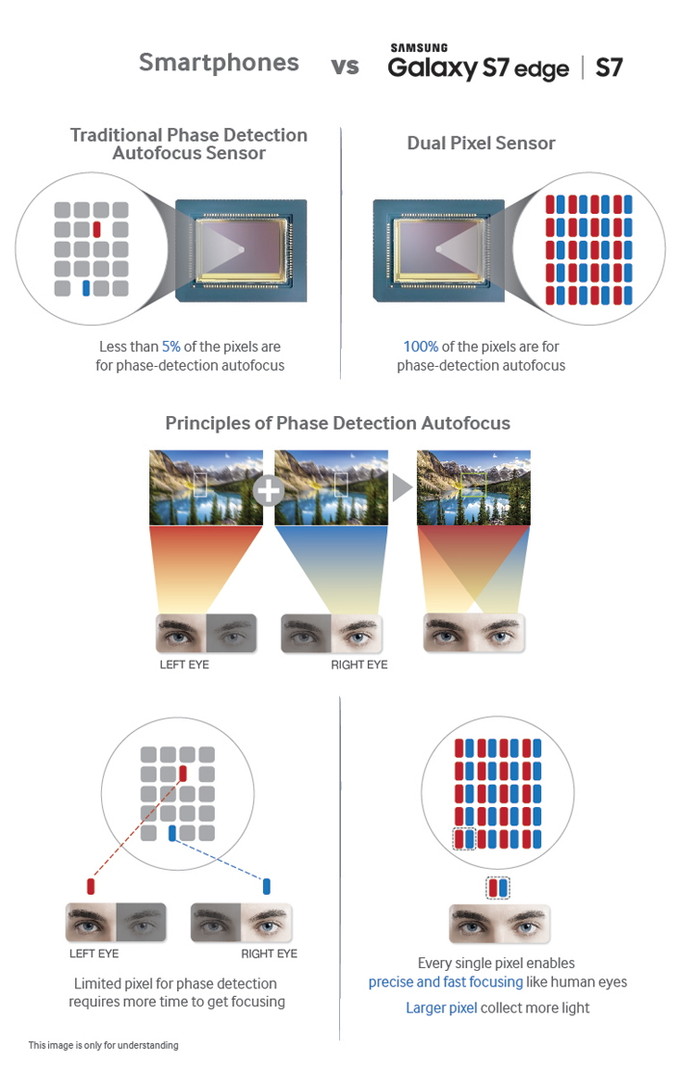
    The Dual Pixel, essentially, is an improvement or a natural evolution from the Phase-Detection Auto-Focus technology used by many other smartphones. Firstly, Samsung downgraded from 16MP found in the S6 to 12MP in the S7. The decision to do this was to focus more on quality rather than quantity. The 12MP sensor brings 56% bigger individual pixels with1.4um pixels as compared to the S6.

    Galaxy S7

    To understand Dual Pixels one needs to first wrap their heads around PDAF. PDAF traditionally uses less than 10% the total number of pixels equipped with focusing photodiodes and uses it strategically in the sensor area to focus on a subject. This requires more time for focusing. Dual Pixel, on the other hand, uses a 100% of the pixels for extremely precise and fast focusing. Using the whole of the pixels also allows more light in.

    This combined with a wider f/1.7 aperture (the S6 had a f/1.9 aperture) allows for a lot more light to come in, 25% more to be more accurate. This results in great low-light captures that are sharp and colourful. The Dual Pixel image sensor splits every single pixel into two photodiodes for on-chip phase detection, promising vastly improved autofocus performance. Much like the human eye, the Dual Pixel technology sends light from the lens to two image sensors seperately to adjust the focus.

    Galaxy-Dual-Pixel-infographic


  • Galaxy S7 Series : Samsung’s Step Towards the Future of Mobile Gaming

    Galaxy S7 Series : Samsung’s Step Towards the Future of Mobile Gaming

    Samsung on the first day of the Mobile World Congress 2016 announced its new flagship, the Galaxy S7 and the Galaxy S7 edge phones to the world. While on the outside the phones might look very similar to their predecessors, but from the inside, the S7 series may well just be a much-awaited leap towards the future of mobile gaming.

    With the Galaxy S7 phones, the company wants users to “rethink what a phone can do”. It has a vision of making mobile games look and feel as much like desktop games as possible on the Samsung Galaxy S7 mobile platform. This is an ambitious project, to say the least, and quite frankly there’s a huge difference between saying “we take games seriously” and delivering on such tall promises, but a quick look at the fancy tech that the Galaxy S7 series comes packing on both the hardware and software front sheds more light at what really Samsung has in store for mobile gamers across the globe.

    Optimized for Performance
    GalaxyS7_Feature_Game_Main_4

    The core requirement for any graphics intensive game is raw processing power at the CPU and GPU’s end. The Samsung Galaxy S7 series phones depending on the variant availability come with the Qualcomm Snapdragon 820 SoC or the Exynos 8890.

    These brand new SoCs will provide more than 30 percent faster CPU processing and more than 60 percent faster GPU processing capabilities when compared to the last generation of chipsets on the Samsung phones. The SoCs on the Samsung S7 series phones are paired with 4GB of RAM for seamless performance, and the Galaxy S7 and S7 edge as a result, have decent firepower to run games available on the Play Store.

    These SoCs as the company claims are going to be great at power efficiency and that working in tandem with the 3000mAh and 3600mAh battery packs on the Galaxy S7 and S7 edge will mean longer gaming sessions.

    Water Cooled Systems to Rival Desktop Machines
    GalaxyS7_HandsOn_Main


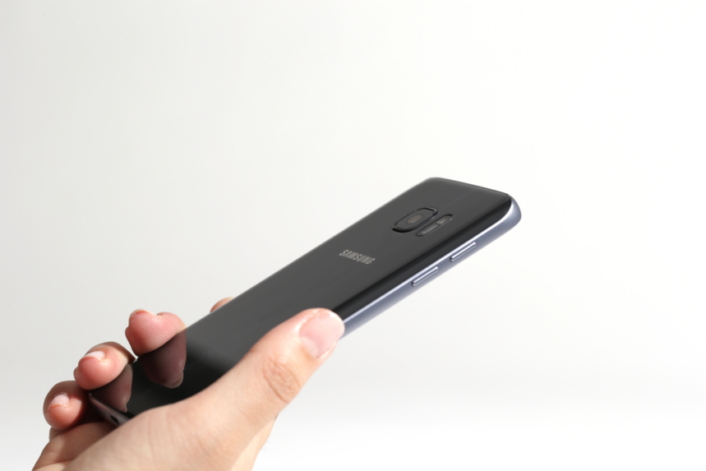
    Phones running high-end multi-core CPUs are notorious for running a bit too hot under stress, and as we know, heat is the ultimate enemy of any gaming machine. No matter the exalted processing capabilities of a phone, or beefy battery packs that they come with, if it runs hot, you game not.

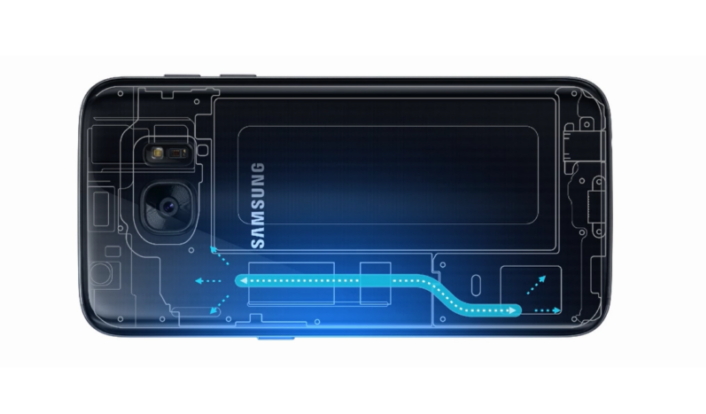
    Samsung in its bid to fight this menace has come up with a system that’s not new to bigger desktop machines but is groundbreaking for mobile devices. The Galaxy S7 and S7 edge are equipped with  a very thin sealed copper liquid based cooling system, enabling these phones to run cool and fast without facing any CPU or GPU throttling. The system keeping the internals of the phone cool will also result in better battery life.

    Vulkan API

    galaxy-s7_gamaing_serious2_l

    Mobile phones benefiting from the great advancements in silicon technology over the years have become smaller, thinner and at the same time grown more powerful. The latest generation of mobile phones bring with them specs which boast of computing power at times even surpassing that of the last generation consoles such as the Xbox 360, and PS3.

    Though at the hardware end the industry has been able to cram in such advanced hardware inside the miniature chassis of these phones, but on the software end, owing to many bottlenecks the industry has not been able to put the hardware at hand to optimum use and recreate the truly immersive gaming experience that is often seen on desktop systems and consoles. With the Galaxy S7 Samsung is taking the first step at changing just that.
    Galaxy S7 03

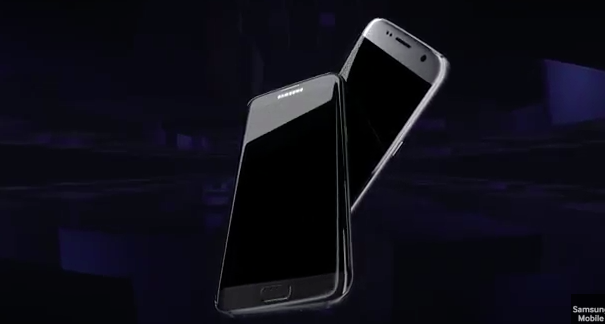
    Galaxy S7 and S7 edge are the first smartphones to utilize Vulkan: the next generation graphics API. The Vulkan API was developed by the Khronos Group using the AMD’s Mantle API as a base.The switch to Vulkan API in the future with supported games will offer users significantly better performance and lesser CPU usage in the form of increased distribution of workload on the multiple cores of the chipset. Multi-Core processing will also see the phone being far more energy efficient at the same time.

    This switch to Vulkan API will further allow processing of games utilising the full power of the Octa-Deca core CPUs, in comparison to the current generation OpenGL ES API which only allowed processing of games using a single core. This will result in more graphic intensive games making its way to the mobile platform, and in real life situations unlock the true potential that mobile devices in our hand hold inside them.

    Game Launcher

    https://www.youtube.com/watch?v=dnzQP8MJTCk

    Just to show Samsung really cares about gaming and gamers on the Galaxy S7 platform, the South Korean tech giant has brought with the Galaxy S7 and Galaxy S7 edge an all new app which it fondly calls the “Game Launcher.”

    It is essentially an evolution of the ” Game Tuner” already available on the last generation S6 devices, and comes with a suite of utilities and nifty tricks for improving user experience while gaming on the Galaxy S7 devices.

    All games on your Galaxy S7 device will automatically be added to the Game Launcher folder and will be accessed from there for what Samsung claims will be a “better experience”, and that’s indeed what the Game Launcher really does.
    GalaxyS7_Feature_Game_Main_3

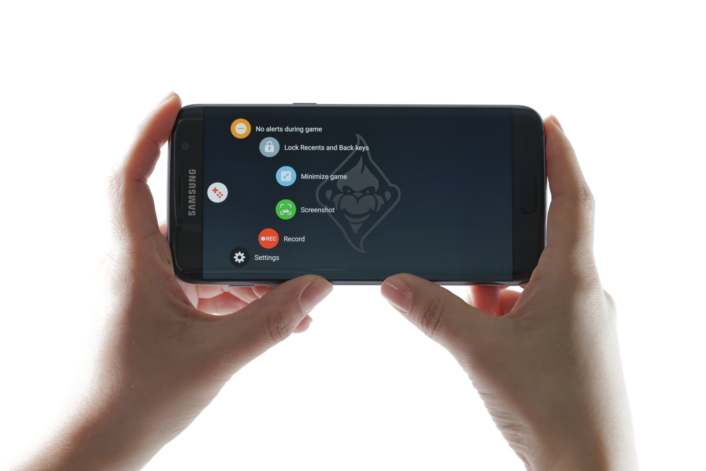
    A new “No Alerts” mode is added which tells the S7 to suppress all notification pop-ups so you can play uninterrupted without the fear of a notification of a SPAM mail ruining your immersive gaming experience. The Game Launcher also allows the user to lock the Recent and Back keys so that accidentally kicking yourself out of a game can be avoided.

    The Game Launcher feature further allows the user to maximize game-playing time through instant downloads, shortcuts and power-saving options. In addition, it also helps you to take screenshots, record your game, scores and rankings, and share them with friends.
     

  • Vivo XPlay 5 with 6GB RAM Leaked in Renders

    Vivo XPlay 5 with 6GB RAM Leaked in Renders

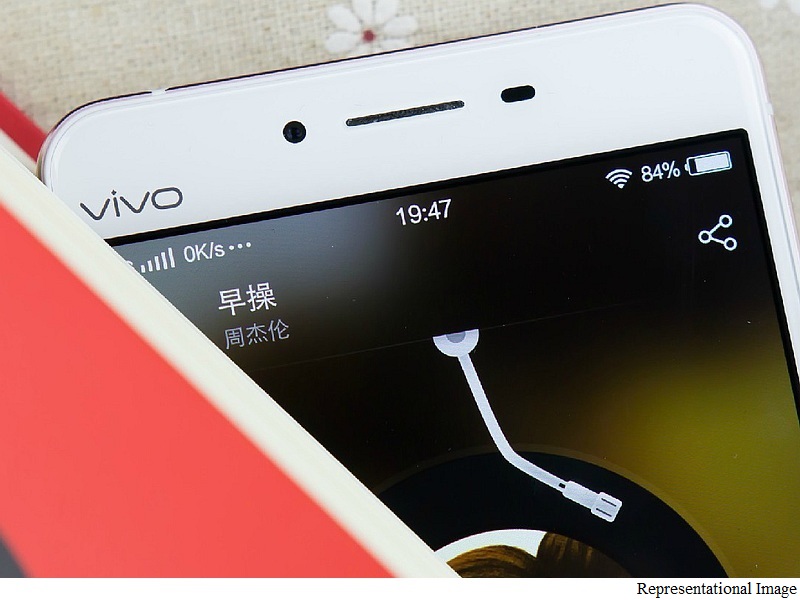
    Vivo had earlier announced a March1 launch of the XPlay 5 – the first smartphone to sport a 6GB RAM. It was only a matter of time before leaked images were leaked showing off the design of the phone before the launch event.

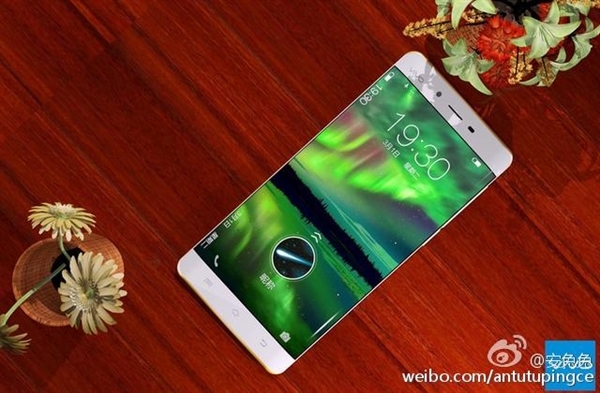
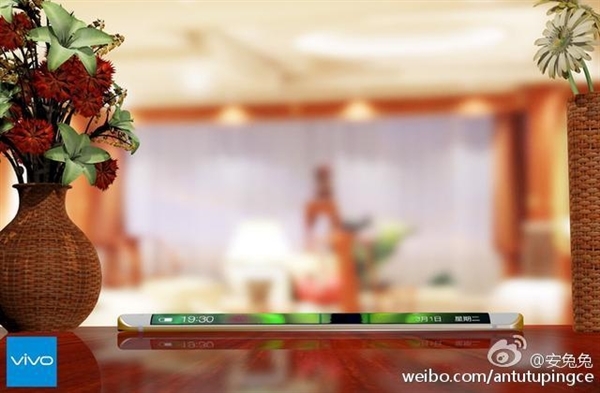
    Apart from 6GB of RAM, the XPlay 5 will come with a Snapdragon 820 processor and will sport a dual curved display, which brings a certain Samsung model to mind. The renders show a beautiful design of the XPlay 5 with a metal body and the curved sides. You also see a square-shaped fingerprint scanner  at the back just below the camera module.

    Vivo 3

    Not much has been revealed about the phone as Vivo has kept it under wraps. The handset is expected sport 6.0-inch QHD with 1440×2560 pixel resolution. Other likely features are a 6MP primary camera on the rear side, 8MP snapper on the front and a massive 4300mAh battery.

    Vivi 01

    Source

iGyaan Network
Privacy Overview

This website uses cookies so that we can provide you with the best user experience possible. Cookie information is stored in your browser and performs functions such as recognising you when you return to our website and helping our team to understand which sections of the website you find most interesting and useful.