Blog

  • Here is an Exclusive look at the HTC M8 : HTC One Successor

    Here is an Exclusive look at the HTC M8 : HTC One Successor

    While we are not far away from the launch of the possible successor of the HTC One (also known as M7), iGyaan has got some images of what may as well be the HTC M8.
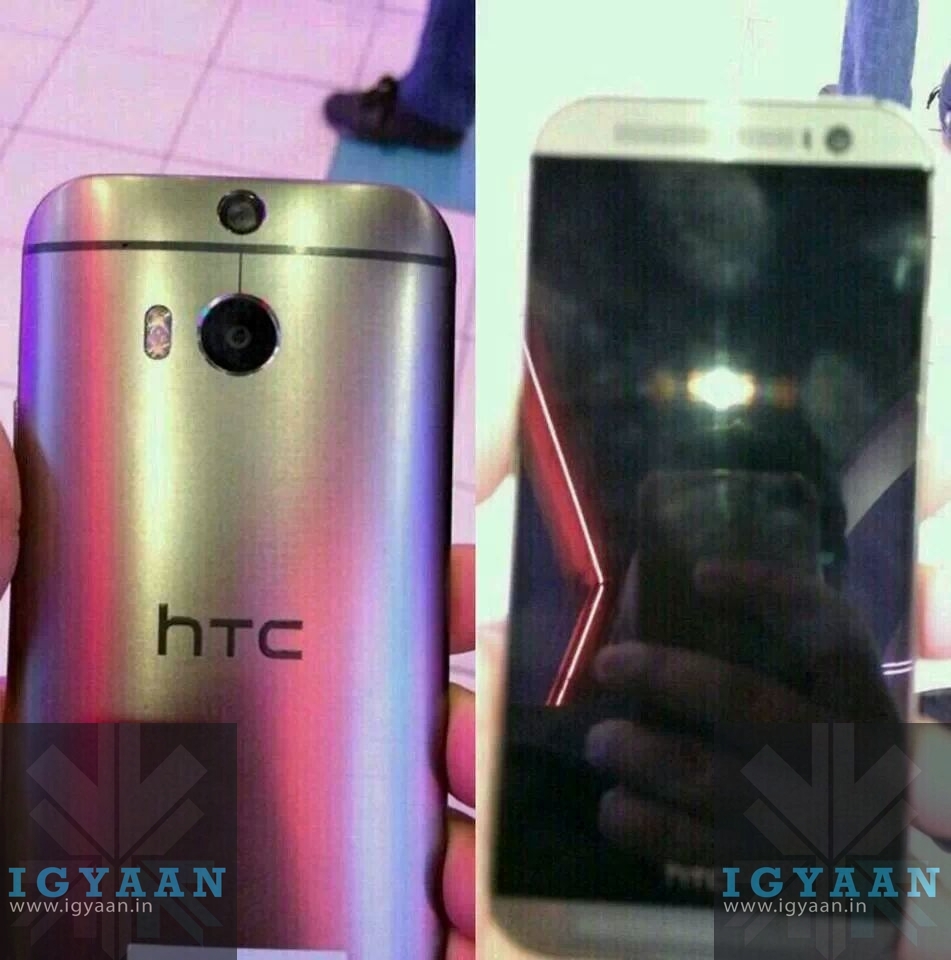
    HTC M8 iGyaan 1

    The handset seen above sports a high quality polished Aluminum casing designed from a single block just like the HTC One. The M8 will have different specs compared to the HTC One including a 5-inch 1080p display powered by the Qualcomm Snapdragon MSM8974 coupled with 3GB of RAM and Sense 6.0 UI on top of Android 4.4.2 KitKat.

    If sources are correct the UltraPixel camera setup at the back is designed to use an 8mp sensor and a 4 MP sensor as opposed to the dual 5MP setup we have all been hearing. The led flash, like the one seen on the Apple iPhone 5s, is a dual-tone type. 

    The front is mostly identical to the HTC One and features a BoomSound speaker setup and lacks physical or dedicated capacitive touch buttons. 

    (Thanks Anonymous Tipster)
  • Qualcomm Will Not Make Snapdragon 802(4k TV) Processor

    Qualcomm Will Not Make Snapdragon 802(4k TV) Processor

    Qualcomm showcased Snapdragon 802, a new chip for televisions at the CES 2014. However, this new chip will not be used in televisions as the company feels the demand of these chips are less then they planned of.

    In a blog from Jon Carvill, who is the Sr. Director, Public Relations for Qualcomm it notes:

    Qualcomm Technologies, Inc. has decided not to commercialize the recently announced Snapdragon 802 processor as the overall demand for processors uniquely designed for smart TVs has proven to be smaller than anticipated. 

    The company also notes this will not affect the production of any other product. However, with the non availability of technology like the Snapdragon 802 chips, it somehow feels that we have restricted ourselves with the technology we move around on daily basis. What do you think ?

    [Qualcomm

  • Rakuten Acquires Viber for $900 million

    Rakuten Acquires Viber for $900 million

    Rakuten(a Japanese electronic commerce and Internet company based in Tokyo) has just got into the mobile communications business by purchasing the internet calling application, Viber for $900 million. 

    Viber is one of the most used application for smartphones, with 300 million users worldwide Viber seems the only competition for Skype. Rakuten has plans to get its approach outside Japan and share its business ideas worldwide. However, Viber is not the first company for Rakuten when it is about acquisition. Rakuten in 2012 acquired Kobo (eReading service), that now offers 4 million eBooks, magazines and newspapers in 190 countries. In 2012, Rakuten acquired Wuaki.tv,(video-on-demand and streaming service) and even more. 

    Rakuten Chairman and CEO, Hiroshi Mikitani, commented:

    I am tremendously excited to welcome Viber to the Rakuten family. Viber delivers the most consistently high quality and convenient messaging and VoIP experience available. Additionally, Viber has introduced a great sticker market and has tremendous potential as a gaming platform. Simply put, Viber understands how people actually want to engage and have built the only service that truly delivers on all fronts. This makes Viber the ideal total consumer engagement platform for Rakuten as we seek to bring our deep understanding of the consumer to vast new audiences through our dynamic ecosystem of Internet Services.”

    Viber CEO and Founder, Talmon Marco, underlined these synergies:

    Rakuten is one of the world’s most important Internet companies. It is truly dominant in its home market of Japan and has been rapidly expanding globally. This combination presents an amazing opportunity for Viber to enhance our rapid user growth in both existing and new markets. Sharing similar aspirations with Rakuten, our vision is to be the world’s No.1 communications platform and our combination with Rakuten is an important step in that direction.”

  • Mozilla Will Include Ads In Its Firefox Browser

    Mozilla Will Include Ads In Its Firefox Browser

    Ads are coming to the New Tab page of Mozilla Firefox. The company announced the new move, Tuesday, during the annual meeting of the Interactive Advertising Bureau in California.

    This is a slight paradigm shift for sure, considering how New Tab pages have remained ad-free before. Darren Herman,  Mozilla’s VP of Content Services, says the content in the new Directory Tile program will  include “pre-packaged content for first-time users.  Some of these tile placements will be from the Mozilla ecosystem, some will be popular websites in a given geographic location, and some will be sponsored content from hand-picked partners to help support Mozilla’s pursuit of our mission.”

    Darren says that Mozilla is “excited about Directory Tiles because it has inherent value to our users, it aligns with our vision of a better Internet through trust and transparency, and it helps Mozilla become more diversified and sustainable as a project. While we have not worked out the entire product roadmap, we are beginning to talk to content partners about the opportunity, and plan to start showing Directory Tiles to new Firefox users as soon as we have the user experience right.”

    The revenue opportunity is significant, as Mozilla sees 100 billion tile impressions in the U.S. alone each year, according to a company spokesperson. 

  • Google $3.2 Billion Nest Deal Now Official

    Google $3.2 Billion Nest Deal Now Official

    Google said in a regulatory filing this morning that it had closed its acquisition of Nest on Feb. 7.

    Nest has always been on Google’s radar. Google Ventures, the company’s startup investment arm, was one of the Nest’s early investors. Google was previously rumored to be building a Nest thermostat competitor, and there were even leaked screenshots of a smart thermostat app built by Google called “EnergySense,” which would let you control the temperature from a smartphone or Web client.

    Google is pretty famous at this point for acquiring vast amounts of data on its users, as well as sharing that data. Co-founder of Nest, Matt Rogers, said in a Q&A on the company’s blog, “Our privacy policy clearly limits the use of customer information to providing and improving Nest’s products and services.” He goes on to claim that will not change. 

    Nest uses complex technology to solve a problem that lots of people have on an everyday basis. That’s what Page wants to do with Google. He wants to use complex technologies to come up with simple solutions for complex problems that huge masses of people have — like controlling their climate of their homes in an energy-efficient way.

    A quick finalization of the deal was expected after the Federal Trade Commission fast-tracked its approval last week.


  • Tim Cook : Google Was Not Committed to Motorola

    There’s plenty to talk about with the sale of Motorola to Lenovo, from what it means for the future of the American Smartphone manufacturer to the reasons Google bought them in the first pace, and everyone seems to have an opinion, including Apple’s CEO Tim Cook. 

    “I wasn’t surprised,” said Cook in an interview with The Wall Street Journal. “Google gets rid of something that’s losing money, something that they’re not committed to.” Cook went on to state that becoming a company that melds hardware, software, and services together is quite difficult and that Google obviously hasn’t quite gotten proficient in this arena, which makes “Apple so special.”

    The CEO further took dig at Google’s Android OS, calling the experience on its tablets ‘crappy,’ because the app is nothing more than a stretched out smartphone app.

    When asked if Apple will do a larger screen iPhone, Cook responded, “What we’ve said is that until the technology is ready, we don’t want to cross that line. We want to give our customers what’s right in all respects – not just the size but in the resolution, in the clarity, in the contrast, in the reliability. There are many different parameters to measure a display and we care about all those, because we know that’s the window to the software.”

    Other comments from Cook revolve around Google’s acquisition of Nest, stating that he and Apple both feel that buying large companies simply for the sake of “being big” and buying them is not what Apple wants or believes in. They are not against buying a large company, they simply care more about buying one that is fit right for them.

  • Google Dodges Fine with EU Antitrust Deal

    Google Dodges Fine with EU Antitrust Deal

    As The Wall Street Journal reports, Google has clinched a settlement in its high-profile case with European Union antitrust regulators to address concerns that it is abusing its dominance in online search.

    EU Antitrust Commissioner Joaquin Almunia said that he’s “strongly convinced” the new proposals sufficiently address the competition concerns, marking a major milestone in the three-year-old case. “This is an important step forward,” he told reporters in Brussels.

    Google had been accused of giving favourable treatment to its own products in search results. The company said it looked forward to resolving the matter.

    As FT reports, on the European Commission’s side, there is still going to be a final approval process. The groups that filed the original complaint against Google will be consulted, but it will not be a formal “market test”. The commission will monitor whether Google sticks to its promises.

    The agreement means the world’s dominant search engine has avoided a process that could have lead to a fine of up to $5 billion, or 10 percent of its 2012 revenue. It must stick to the deal for the next five years. Google has a market share of about 90 percent of Internet searches in Europe, compared with around 70 percent in the U.S.

    However, Google may still face a second EU investigation, this time into its Android operating system for smartphones, with potentially bigger risks for the company.

  • Twitter Commerce Will Allow Users To Buy Directly From Tweets

    According to a recent report on the Re/code site, popular social network Twitter appears to be getting serious about commerce on its service; and is probably close to finalizing an agreement with payment services firm Stripe. 

    The site posted mockups, reportedly created by Fancy, of what would be called Twitter Commerce, a new program that would allow people to purchase items through Twitter. The documents, discovered in a public area of Fancy.com’s website, showed a “buy” button embedded directly in tweets. Customers would have to provide Twitter with payment credentials prior to using the service. 

    Twitter will report its first ever quarterly earnings next Wednesday with investors and analysts sure to be interested in Twitter Commerce and other plans for bringing in revenue. 

    Twitter’s decision to add revenue streams may be a good move for the company but following the recent series of hacks on the social network site raises questions about the safety of user’s financial data.


  • Twitter Buys 900 IBM Patents

    Twitter has agreed to buy 900 patents from International Business Machines Corp. to gain access to new technology and build a defense against infringement suits.

    The deal came about a month after Twitter revealed that IBM had accused it of violating three of its patents related to advertising, “resource locators,” and discovery of contacts. Twitter was willing at that time to handle the situation outside of court, and it appears it went that way.

    A cross-licensing agreement will help safeguard Twitter against similar claims in the future. The most high profile exhibit of buying patents to curb future lawsuits would be Google’s purchase of Motorola Mobility.

    IBM is one of the industry’s largest research spenders and stockpilers of intellectual property, a consistent leader in US patent filings and the owner of some 41,000 patents. Twitter is following on the heels of Facebook, which itself faced similar claims before its own 2012 IPO. 

    Twitter is seeking to get more revenue from retailers and is trying to make it easier for users to shop via its 140-character messages.

  • Olympus OM-D E-M10 Mirrorless Camera Announced

    Olympus OM-D E-M10 Mirrorless Camera Announced

    The Olympus OM-D E-M10 is the latest addition to Olympus’ OM-D CSC camera line-up. The new interchangeable lens camera (ILC) shares the retro looks of the E-M1 and M5, but in a more compact form factor with consumer-friendly features including a built-in flash.

    The E-M10 has a 16-megapixel sensor, Olympus’ new TruePic VII processor, and ZUIKO optics, with 81-point FAST AF borrowed from the EM-1 and Tracking AF. There’s in-body, 3-axis VCM IS, and 8fps sequential shooting, and Olympus has even found space for a pop-up flash and a live-view EVF with 100-percent coverage to go with the 3-inch, 1037k dot LCD. ISO 100-25600 is supported.

    The OM-D E-M10 also has built-in Wi-Fi, a pop-up flash and is compatible with all micro four thirds lenses. 

    There are also 2 HDR modes, interval shooting modes with time-lapse movie capture, a Live Composite Mode for long exposure shot previews and 12 art filters. 

    The Olympus OM-D E-M10 is available from mid-February for £529.99 body only, in black or silver. There’s also a kit for £699.99, which comes with an M.Zuiko Digital 14-42mm 1:3.5-5.6 EZ pancake electronic zoom lens. 

  • Nintendo Executives Take Pay Cuts For Faltering Wii Sales

    Nintendo Executives Take Pay Cuts For Faltering Wii Sales

    Following some pretty miserable financial results, Nintendo president Satoru Iwata has said he will take a 50% cut to his salary. For at least the next five months, Iwata will take home half as much money as usual, and other prominent executive staff will see pay reductions as well. Shigeru Miyamoto and Genyo Takeda, will take a 30% pay cut, while other board members will take a 20% pay cut.

    The cuts will stay in place until June, when the board will see if it deserves to go back to normal. That will depend not so much on a turnaround in the Wii U’s fortunes – which won’t really be evident until nearer Christmas – but in how Nintendo presents itself to investors and convinces them it has a new plan for turning themselves around.

    The struggling Japanese gaming firm revealed profits slumped 30 per cent in the nine months to December, falling to 10.2 billion yen (£60 million).

    Nintendo also warned it expects sales to “decrease significantly” in  the current quarter as Christmas sales end.

    The Super Mario Brothers and Donkey Kong creator has been weighed down by weaker-than-expected sales of its Wii U console, launched at the end of 2012.

    Nintendo will be holding a big corporate meeting tomorrow to outline and plan its new business strategy. 

  • Android Gingerbread Users Will Soon be Able to Use BBM App

    Android Gingerbread Users Will Soon be Able to Use BBM App

    Blackberry’s Messenger app has been available on Android ever since its dramatic launch. However the BBM application was only available for users on Android Ice Cream Sandwich and above, but Blackberry clearly wants BBM to be used by all so the company decided to make the BBM app available for the Gingerbread Android users. 

    BlackBerry has just confirmed that the BBM app will also be available on Android Gingerbread in the month of February. Gingerbread takes 21 percent of over all Android platforms, and BlackBerry mentions in the blog that they are expecting lot of more downloads for the app after it is made available for Gingerbread. 

    [Source]

  • Video : iOS in The Car Functionality Shown Off

    Video : iOS in The Car Functionality Shown Off

    Last week, app developer Steven Troughton-Smith shared a series of screenshots of what seemed to be Apple’s “iOS in the Car” feature announced by Apple as “coming soon” to iOS 7 devices.

    The developer has now taken this a step further by posting a video showing the feature running via iPhone Simulator. The video below shows iOS in the car running on iOS 7.0.3 in the iOS Simulator software which is available for developers, the in dash display is shown by an 800 x 480 pixel window.

    [youtube url=”http://www.youtube.com/watch?v=M5OZMu5u0yU”]

    Apple first demoed the new feature at the Worldwide Developers Conference in June 2013. During an earnings call last summer, Apple CEO Tim Cook called the feature a “key focus” for the company.

    Since then, a number of car manufacturers have announced their support for the feature. These have included: Acura, Chevrolet, Mercedes-Benz, Hyundai, Kia, Volvo, Opel, and Jaguar.

     Troughton-Smith points out that the iOS in the Car feature supports multiple resolutions of external displays, touch input and hardware controls, and voice input.

    – Supports Multiple Resolutions 
    – Supports touchscreens (presumably single-touch?), hardware buttons, wheels and touchpads 
    – Does not support multitasking – car display will always show same current on-screen app as iPhone (which can be locked/asleep) 
    – Whitelisted to specific Apple apps – no public API for developers [yet?] 
    – Has no keyboard UI – voice recognition as input 
    – UI clearly subject to change 
    – Missing functionality in video is due to iOS Simulator not containing all the stock iOS apps

  • Opera App Store Reaches 200,000 Apps and 105 Million Monthly Visitors

    Opera App Store Reaches 200,000 Apps and 105 Million Monthly Visitors

    Opera says its effort to build an app store are starting to show traction, with the site now garnering more than 100 million visitors per month with a catalog of more than 200,000 apps for Android, BlackBerry, Symbian, iOS and Java.

    As it stands the store currently plays host to over 200,000 apps and has also undergone a redesign back in 2013 which presumably helped play a part in seeing its user base grow. According to Lars Boilesen, the CEO of Software, “In just over two years, the Mobile Store has shown strong growth – from 18 million monthly visitors to 100 million, and has seen a fivefold increase in the number of apps offered. The compression technology in Opera’s browsers, combined with the broad portfolio of apps in the Opera Mobile Store across many different platforms, have resulted in massive adoption of the store worldwide.”

    Users can access the Mobile Store via Opera’s flagship Mini, Mobile Classic and Opera for Android mobile browsers. The store has been proven as an effective mobile-content distribution platform in several of the world’s fastest-growing mobile markets including India, Russia, Brazil, Indonesia and South Africa

  • Ericsson and Samsung Reach Agreement on Patent War

    Ericsson and Samsung Reach Agreement on Patent War

    Companies getting sued by other companies, this is something we hear almost everyday. Developing new technology these days brings up some or the other lawsuit. We are sure none of us like this dispute among the companies, and it seems Samsung also wants that.

    Ericsson and Samsung have reached an agreement on global patent licenses between the two companies. The cross license agreement covers patents relating to GSM, UMTS, and LTE standards for both networks and handsets. This agreement has placed with a huge payment of 650 Million USD, which is also said to be followed by some regular payments. 

    “We are pleased that we could reach a mutually fair and reasonable agreement with Samsung. We always viewed litigation as a last resort,” said Kasim Alfalahi, Chief Intellectual Property Officer at Ericsson. “This agreement allows us to continue to focus on bringing new technology to the global market and provides an incentive to other innovators to share their own ideas.”

    This agreement ends complaints made by both companies against each other before the International Trade Commission (ITC) as well as the lawsuits before the U.S. District Court for the Eastern District of Texas. This agreement has put end to this patent issue and we hope now these companies will concentrate on innovation as they did earlier. Peace!

iGyaan Network
Privacy Overview

This website uses cookies so that we can provide you with the best user experience possible. Cookie information is stored in your browser and performs functions such as recognising you when you return to our website and helping our team to understand which sections of the website you find most interesting and useful.