Google’s CEO, Eric Schmidt, has confirmed to the press that the company is activating 1.5 million Android devices every day.
That’s 200,000 additional devices per day than the most recent status update, when Google shared in September that 1.3 million Android devices were being activated daily.
Schmidt made these remarks during All Things D’s Dive Into Mobile conference, where he stated that Android has 700,000 apps available.
Schmidt also talked about some things that would hep spur on more growth. Pricing is definitely on their mind, and device for the $100 price point is something that Google will be hitting quickly. Could we assume a new Nexus tablet at Google I/O that is $99? Quite possibly.
The vocal CEO also stated he believes there will be one billion Android phones in the world by the end of the year, up from a projected 750 million stated some time ago.
Of course, Schmidt didn’t just talk numbers the entire time, because that would be boring. He touched on subjects like Facebook Home and the Maps situation with Apple.
When asked if Google was worried about Facebook Home, Schmidt dismissed the idea entirely.
“We’re phenomenally happy that people are using Android in these ways. You can’t have half-open source. It’s open source,” Schmidt said.
“From our perspective, we really want them to use [Google Maps],” Schmidt said. “It’d be easy to take the app in the store and use it as their basic one.”
A new build of Windows 8.1 has surfaced on file sharing networks this week along with a host of screenshots providing a fresh look at Microsoft’s plans for its Windows 8 upgrade. The latest leak shows some new features including a file explorer in the Metro interface, new animations, greater SkyDrive integration and others.
The leaked build 9369 hit the web a few hours ago but users are already starting to uncover features that were not present in the previous leaked Windows 8.1 build such as the new Files app. This application may be the file manager for Windows 8.1 and we are getting another look at the application courtesy of build 9369.
The video and screenshots posted online reveal a file explorer app in the Metro apps list, that allows you to explore system files as well as SkyDrive files. There is a new button on the Metro start screen for accessing the app list, clicking on that takes you to the apps list. The little orb will disappear if you use a touch screen PC. The apps can be sorted by name, date installed and most used. The apps page also includes a search bar at the top corner.
Image Courtesy : Neowin
Snap view has also been updated to make it easier for you to choose where you want to Snap the app to, even featuring a cool animation. This feature makes it easier than ever to see exactly where your app is being snapped to.
It’s not yet clear if Microsoft plans to make “Files” part of the final version of Windows 8.1, but more information will probably be providedin June at the BUILD developer conference.
Apple has been named in an article listing several websites and app stores being investigated in China for providing pornographic content.
The People’s Daily article is not featured prominently in Wednesday’s paper, nor does it make efforts to emphasize Apple, which is listed next to the names of other app stores singled out in the middle of the second paragraph of the article. According to Apple’s terms of use, pornographic content is not allowed on its app store.
Apple has been scrutinized by the Chinese government over pornographic content before, and it’s not the only major company to come under fire for this. Back in 2009, Chine Central Television accused Google of spreading pornography, leading to hacks that cause Google to move its operations to Hong Kong the following year.
As the Wall Street Journal reports, the Chinese government is better known for its crackdowns on politically sensitive content, but it has also long sought to keep pornography off the web in China. To accomplish this quixotic task, it has launched repeated campaigns to block illicit material online, shuttered hundreds of websites and blog accounts, and even called Internet executives into industry-wide meetings to call for greater vigilance. Occasionally the Chinese government will use bans on pornography to censor politically sensitive content, according to analysts.
Apple was recently criticized by Chinese media over its hardware warranty policy, forcing CEO Tim Cook to publicly apologize and announce a few changes to that policy.
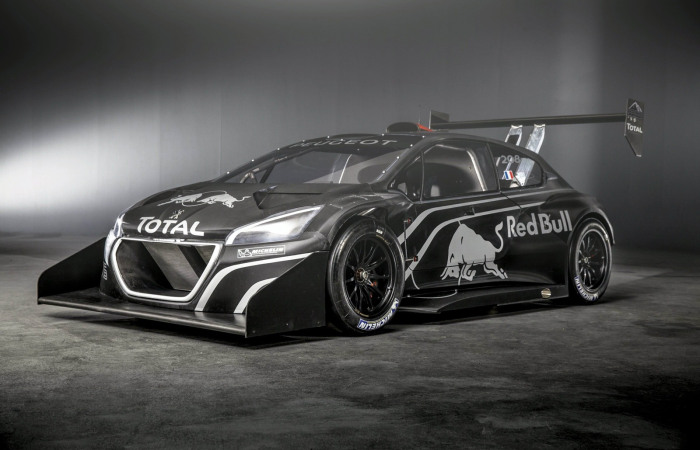
In 1988, former Finnish World Rally Champion (WRC), Ari Vatanen won the Pikes Peak International Hill Climb in a record-breaking time with his turbochargedPeugeot 405 T16. This famous feat was documented in an equally famous short film by Jean Louis Mourey called ‘Climb Dance’. Peugeot is now making a return to Pikes Peak after a 14-year absence with the stunning 208 T16. The radically designed car will be piloted by the most successful driver in WRC history and a record 9-time champion, Sebastien Loeb.
Beast. Red Bull gives you wings.
If Loeb was Batman, the 208 T16 would do a fair job of playing the batmobile. Save for the head and taillights, and the basic outline of the car, nothing is resemblant of the production Peugeot 208. Sporting extreme proportions, the body has been designed for maximum aerodynamic performance. The carbon body sports a massive rear wing borrowed from the Le Mans-winning Peugeot 908, and a gigantic splitter at the front evident of the focus on aerodynamics. The V6 turbo petrol engine has been tuned to produce more than 800 bhp to compensate for the loss in output as the air gets thin at high altitudes, and the Peugeot is fitted with 2 self-locking differentials so as to ensure that the right wheels get the power at the right time. Peugeot said performance specifications and final livery will be revealed soon. Whether it will retain the black exterior apparently is undecided.
The Pikes Peak International Hill Climb aka The Race to the Clouds, is an annual automobile and motorcycle hillclimb to the summit of Pikes Peak in Colorado Springs, USA. The 19.99 km long climb begins at a height of 1,440 m and ends at 4,300 m offering a different kind of challenge to racers and teams than usual track racing. It is now the second oldest motorsport event in the USA, with the first edition held back in 1916.
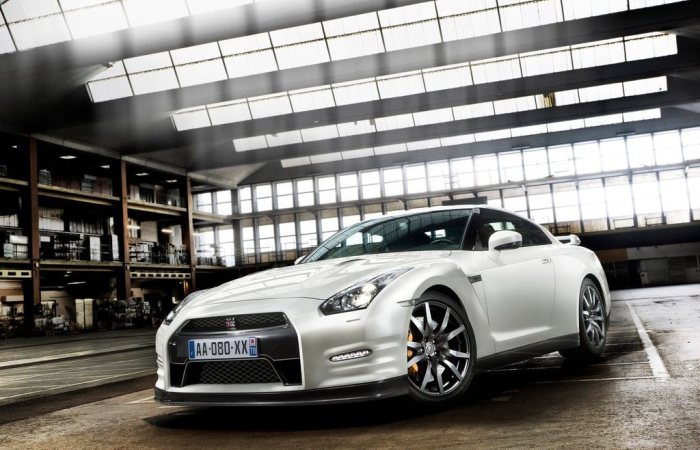
No petrolhead in the world needs an introduction to the Nissan GT-R. Disturbingly fast and ridiculously awesome, the GT-R holds a unique place in the world of motoring. Relatively practical and cheaper to the cars it’s usually compared with, the GT-R may just be Nissan’s only contribution to the world of supercars. This intoxicating cocktail of characteristics makes it a very interesting animal altogether, powerful and glorious, yet not the leader of the pack. However, the GT-R didn’t pop up in the middle of the night out of nowhere. It’s a carefully crafted successor to a long lineage of cars worthy of their own plaques in the automotive hall of fame. If you were unaware of the GT-R before just now, I’d like you to meet Godzilla.
It all began with the 1969 Nissan Skyline GT-R, the first ever to flaunt Gran Turismo Racer as its name. With a 2.0-litre 160 bhp engine, it was marketed alongside the Nissan R380 racecar, to showcase the Skyline’s racing heritage. A replacement came in 1973 but due to a gas crisis in the early 70s, demand for sports cars plummeted, and only 197 cars were produced. This was the last GT-R until 1989, when Nissan dropped the R32 on the world.
The Nismo R32 eats your car for breakfast. Image credit: illmotion.com
Nissan designed the GT-R R32 to dominate Group A racing. Regulations required the engine to multiply its displacement by 1.7 putting the Skyline in the 4000 cc class. This further required the use of 10-inch wide tyres, so Nissan developed a special all-wheel drive system to assist it with traction. Then they realised that this added a 100 kg of weight. What do Nissan do next? They decided to put a 2.6-litre engine in, compete in the 4500 cc class with 11-inch wide tyres and a new engine block. And the result? A beast of a car producing a mammoth 600 bhp. This kind of stuff only happens in storybooks, and at Nissan’s engineering labs.
The all-wheel drive system and the 2.6-litre made its way on to the production R32 GT-R. But due to Group A homologation rules, Nissan was required to sell a series of the Skyline GT-R which more accurately reflected the car they use in Group A racing. This series was launched in 1990 as the Skyline GT-R Nismo edition (Nismo or Nissan Motorsport being Nissan’s high performance division). 500 Nismo R32 Evolution models were sold to the public and 60 were held by Nissan to be made into race cars. A lighter car with an upgraded engine came with the GT-R N1 in 1991 designed for Group N racing. To celebrate the success of the R32 in both Group A and Group N racing, 1993 saw the introduction of an even higher performance model, the Skyline GT-R V-Spec (Victory Specification) and the V-Spec II in 1994. Performance stats like those of the R32 GT-R were unheard of in a car which cost less than $35,000. The R32 was a humongous success selling almost 44,000 cars.
Image credit: Matthew Everingham
The R33 GT-R came in 1995 with a few powertrain refinements but the same engine as the R32. The V-Spec edition had a sport suspension with lower ground clearance, a new all wheel drive system with an active limited slip diff, and 4-wheel independent ABS. Late 1997 saw the arrival of the high performance Nismo R33 400R with an upgraded engine producing 400 bhp and 470 Nm of torque. Capable of hitting 97 kmph in 4.0 seconds and a top speed of over 300 kmph, only 44 400Rs ever saw the day of light making it a collector’s item. The R33 was the first production car to lap the hallowed Nürburgring racetrack in under 8 minutes.
1999 saw the arrival of the arguably the most influential Skyline GT-R to date. The R34 Skyline GT-R and its numerous variants are the reason the GT-R name still exists today, and how. An instant hit with the growing tuner car culture in Japan and the US, the R34 was immortalised in pop culture through the Fast and the Furious films, the Initial D manga series and the Gran Turismo video games. The standard GT-R opted for a 2.6-litre engine and all wheel drive system. A major change was the 5.8″ multifunction display on the dashboard which tried to satisfy the inner geek in all of us by showing different live readings of engine and vehicle statistics. Multiple high performance variants were introduced such as the V-Spec and V-Spec II having racing suspensions, revised ECU maps and underbody diffusers. 2002 saw the coming of the GT-R V-spec II Nür and the Skyline GT-R M-spec Nür, named after Nürburgring where the Skyline was developed. The V-Spec II Nür had over 330 bhp under the hood, but due to its unbelievable tunability, tuners have been able to churn out over 500 bhp from even standard R34 GT-R’s. Over 3 years, the R34 was released in a total of 9 variants selling more than 12,000 cars.
Nismo Skyline R34 GT R Z Tune
The R34 was a real gamechanger for the Skyline range. The GT-R was suddenly an international underground phenomenon. Home-tuned street racer GT-Rs were popping up all over the States and Japan. It was successful on the track as well. People were amazed how Nissan had managed to milk so much performance from a relatively small engine and a relatively cheap mid-range car. There was genuine disappointment among the automotive world and genuine enthusiasts when Nissan announced in 2002 that the GT-R name would no longer be associated with the Skyline. The Skyline still exists in form of the Infiniti G35 range, but its not really a Skyline, is it? Tuners went back to their Toyota Supras, Honda Civics and Mitsubishi Evos quite baffled.
Once in a while a GT-R R34 V-Spec pops up in the ‘used cars’ section of the classifieds, and its not long before a 30 year old banker is standing in his garage with a spanner in hand, admiring the car he dreamed of owning when he was a 17 year old. As for the successor to the Skyline GT-R, Nissan had a few tricks up their sleeves. More on that in part II, to be out soon.
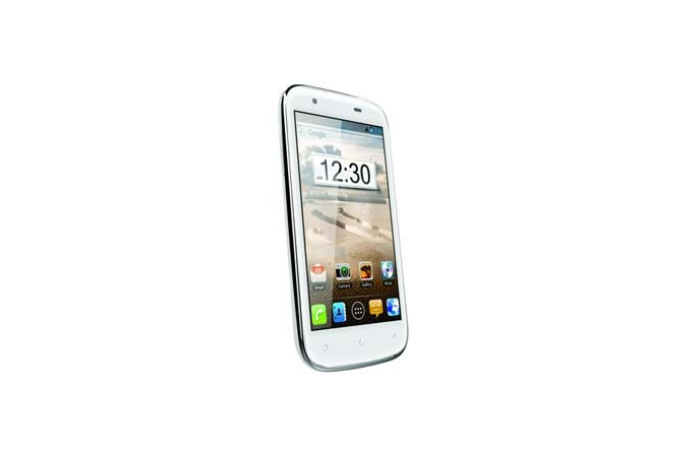
Intex has launched the Intex Aqua Wonder Quadcore for Rs. 9,990. A quad-core smartphone running on Android 4.1.2 Jelly Bean.
In terms of specifications, the Intex Aqua Wonder Quadcore features a 4.5-inch capacitive 540×960 touchscreen with IPS panel screen technology. As the name suggests, it is powered by a MediaTek MT6589 quad-core processor and comes with 512MB of RAM. The smartphone has 1.93GB of internal storage, of which 1.93 GB is user accessible. The internal storage can be expanded by up to 32GB through a microSD card.
It has an 8-megapixel auto focus rear camera with dual LED flash and 2-megapixel one on the front. It is a dual-SIM smartphone (WCDMA+GSM). Other connectivity options include 3G video calling, Wi-Fi, GPS and Bluetooth 4.0. The Intex Aqua Wonder Quadcore is powered by a 1,800mAh battery.
Intex is giving a free pouch and screen guard along with a purchase of this smartphone.
Commenting on the launch of its quad-core phone, Sanjay Kumar Kalirona, GM – Mobile Business, Intex Technologies (I) Ltd. said, “At Intex, we endeavor to bring innovative mobile solutions to mobile users of today. Reaffirming our commitment to quality and pioneering technologies, the newly launched Aqua Wonder quad core smartphone is a step towards empowering consumers in semi-urban towns and cities with cutting edge technology at an affordable price.”
Apart from the launch of Aqua Wonder Quadcore, two more smartphones – Aqua Glow and Aqua Active have appeared on official Intex website. These smartphones will be powered by Android 2.3 and will be priced around the Rs 5,000/- mark.
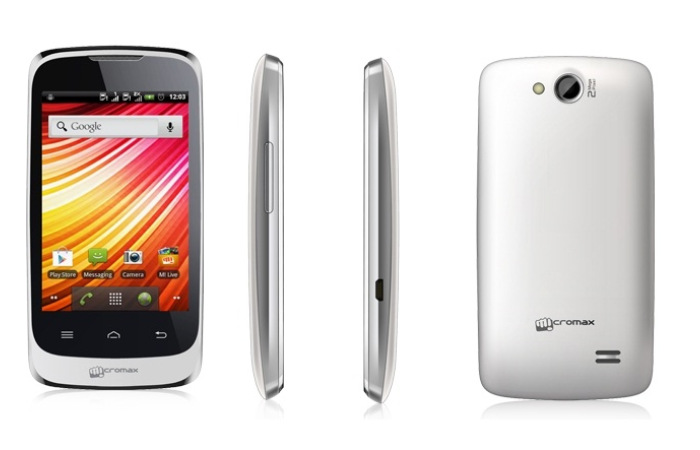
Following in the footsteps of the A35 Bolt, launched in February, Micromax has expanded the series with the Micromax Bolt A51, which is now available online. It is priced at Rs 4,599/-.
The Micromax Bolt A51 is powered by an 832MHz Broadcom processor and comes with a 3.5-inch HVGA display. The smartphone runs on dated Android 2.3.7 (Gingerbread). There is a 1500 mAh battery, which as per the company, gives 4.5 hours of talktime and standby time of 140 hours. At the back there is a 2-megapixel camera and 0.3-megapixel front camera. It is a dual-SIM smartphone that comes with 256MB of RAM and 512MB of ROM with microSD card slot to accommodate up to 32GB cards. Connectivity options include 3G, Wi-Fi, and Bluetooth.
The Micromax Bolt A51 comes with pre-loaded applications such as MiStore and MiBuddy.
With its low-price tag and pretty descent features, Bolt A51 poses a stiff challenge to Nokia’s Asha series and Samsung’s Rex series affordable smartphones. It will also be competing with the likes of Samsung Galaxy Music Duos, Spice Mi-352 and Intex Aqua Trendy in this price-segment.
To celebrate 40 years since the first successfully produced functional prototype VHS player was created YouTube has introduced “tape mode” to give modern online videos that often scratchy VHS look.
If they want, users can now press a button on certain videos that will take them back to a time when movies were fuzzy and sound unreliable.
When clicked, the player plays your videos with the white noise, static, and shakes that characterized worn out tapes, or tapes played or recorded on worn out players.
“Not too long ago, the video tape was the media of choice for living rooms around the world. In celebration of the 57th birthday of the first commercial video cassette recorder, check out a fun VHS mode for the Youtube player to relive the magic feel of vintage video tapes,” explained a very brief post to Google+.
“On select videos, you’ll find a VHS button in the bottom right of the player – just click to turn back the clock and enjoy the static and fuzzy motion of the VHS era.”
The Ampex VRX-1000 is considered as the world’s first commercial VHS players and it made its debut on 14 April, 1956 at the US National Association of Radio and Television Broadcasters Convention.
Makes you realize how far we’ve come as far as video quality is concerned! Nicely done YouTube!
The Xbox Live gaming and entertainment platform suffered a major outage for several hours on Saturday, rendering significant elements of the console useless.
Gamers were unable to sign into their accounts so were unable to engage in multiplayer action, or access the suite of entertainment apps that are tied to Xbox Live subscriptions (i.e. Netflix, YouTube, etc.).
In a statement provided to Game Informer, a Microsoft representative informed that the outage was due to routine maintenance. Some individuals had claimed that hacking brought the service down yesterday. But Microsoft assured that this is false.
For the most part, Microsoft has addressed the issue and users are now able to sign in to the service, though some lingering issues remain. For example, Microsoft says users may experience “difficulties” creating new or accessing existing Minecraft game saves, and listening to music via Last.fm is spotty. In both cases, Microsoft says it’s working on a fix.
In the meantime, these problems underscore why gamers take issue with the concept of an always-on console. It’s been rumored that the Xbox 720 (Durango) will feature an always-on Internet requirement, and Microsoft has yet to confirm or deny if the rumors are true. In cases where Microsoft is having problems on its end, an always-on requirement could render the console unusable.
WithXbox Live outages not exactly a once-in-a-blue-moon occurrence, where would this leave gamers every time the company has problems with the online portion of its service?
By now, you may have heard that Twitter is launching it’s own music service tomorrow dubbed Twitter Music. Although some is known about the service, there is still a lot that is unknown. Fortunately for audiophiles, there has been some more information leaked about the new service.
As TheNextWeb reports, the latest information comes from the site’s code: designer Youssef Sarhan has discovered the service will have both a Web interface and a separate app, will offer streaming, as well as integrate with Spotify, Rdio, iTunes, Soundcloud, Vevo and YouTube.
Youssef followed the trail of source code that eventually led to this:
Other notable features include artist biographies, being able to compose tweets from the music app, follow other users, charts and shows, being able to buy songs, verified users, and search (TNW discovered these last two):
.artist-bio
.iconmusic-compose-tweet-btn-bg
.iconmusic-profile-large-following-btn
.iconmusic-menu-charts
.iconmusic-menu-shows
.iconmusic-player-btn-buy
.iconmusic-verified-small
.search-tooltip .iconmusic-btn-search-close
The following image gives us an idea regarding the UI of Twitter Music
This is what the player will look like, again referenced in the CSS for the page :
Are you anticipating Twitter Music? Is there one particular feature that you would like to see? Leave a comment below and let us know what you think!
The record had been taken away after Guinness decided that the car used to achieve the 267.8 mph record speed didn’t qualify as a production car, since it had a deactivated speed limiter unlike the one sold to the public. With the speed limiter, the production Veyron SS was capable of hitting a ‘disappointing’ 258 mph.
Guinness gave the following statement to ‘Sunday Times’ of the UK explaining why the Veyron SS was given the title back,
Following a thorough review conducted with a number of external experts, Guinness World Records is pleased to announce the confirmation of Bugatti’s record of Fastest production car achieved by the Veyron 16.4 Super Sport. The focus of the review was with respect to what may constitute a modification to a car’s standard specification. Having evaluated all the necessary information, Guinness World Records is now satisfied that a change to the speed limiter does not alter the fundamental design of the car or its engine.
So Bugatti now owns both World’s Fastest Production Car and World’s Fastest Convertible speed records. But with the Hennessey Venom GT making waves, SSC’s Ultimate Aero TT and the awaited Tuatara as well as Koenigsegg’s claims of the Agera R capable of hitting 270 mph, expect this battle to heat up quickly.
Android Developer Paul O’Brien, has done it again. First, he unleashed Facebook Home apks before the initial release. Now, he has made Facebook Home available to all devices, even unrooted ones. That is correct. You do not have to be rooted to give Facebook Home a try.
The folks at Modaco extracted the Facebook Home APK file and made it available for all those in other countries than the US.
Paul O’Brian of Modaco found a way to patch the files necessary to run Facebook Home on unsupported devices and made it available for download. He patched a version of the Home app to keep it from figuring out what device you’ve just loaded it onto.
As TechCrunch explains,
All you really need to do is pop into your Android device’s settings and make sure it’s set to install applications from unknown sources (it’s in the “Security” section). From there, you just have to download and install his patched versions of the Facebook Home app, as well as his patched Facebook and Facebook Messenger apps too. Already have those latter two apps installed? You’ll have to uninstall both of them and load up O’Brien’s cooked versions in order for Home to work properly.
That could pose an issue for some of the more curious among you — certain devices that have the Facebook app baked into it by the manufacturer (like the HTC One, for example) won’t play nice with this version of the Home app unless you root the device and remove the Facebook app yourself. Thankfully, rooting most popular devices is way easier than it used to be, but be sure to do your homework if you think you may take the plunge.
Facebook’s ‘exclusive’ product reserved for the HTC One, One X, One X+, Samsung Galaxy S3, S4 and Note 2 debuted in the Play store on 13th of April, 2013 and has garnered a lackluster two-and-a-half stars rating with near 2 thousand votes.
This news should come as a blow to HTC, which released the HTC First, a phone which supposedly was a part of the select group of devices destined to get Facebook Home.
For more details on how to download and install this APK file, head over to Modaco.
For a long time, CyanogenMOD has been the salvation for many users on aging Android hardware, cutting through the bloated, slow OEM experience to bring you a clean build of Android’s finest.
Despite needing to know your way around a command prompt, Android hacking has become somewhat mainstream over the last couple of years; processes have shortened and become more straightforward and users feel more comfortable ripping the bloated sheath from a brand new phone to find its AOSP guts underneath.
As MobileSyrup reports, Milestone builds are available to users who want the latest feature sets of CyanogenMOD, in this case version 10.1, without all the risky nightly business going on. Milestone 3, or M3 for short, builds are now available to most devices compatible with CyanogenMOD. These include the Nexus series as well as popular Samsung, HTC and LG devices, along with a few Acer and Asus tablets.
If you already have an older version of CM running on your device, go to Settings -> About phone -> CyanogenMod updates -> Check for Updates. For anybody just getting started with CM, hit the download site and look for your model.
Builds for different devices will be rolling out for a while, so keep checking the Cyanogen space if yours hasn’t been published yet.
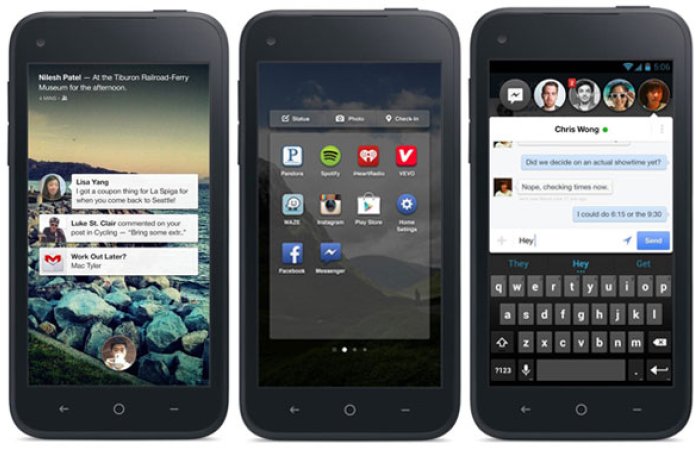
Facebook Home has officially launched on the Google Play Store. After some leaks and the update of the Messenger app which included the Chatheads feature, Facebook Home is now available for download, for the US only for now.
Facebook Home currently supports installation on the HTC One X, HTC One X+, Samsung Galaxy S3, and Samsung Galaxy Note II. Once you’re able to get your hands on an HTC One or Samsung Galaxy S4, those models will support Home, as well.
In case you missed it, Facebook Home is essentially a launcher that turns your phone into an all-encompassing Facebook device. Cover feed is a feature that places your friends status and posts in the center of your screen, and Chat Heads is essentially a redesigned Messenger that displays a floating chat window when using other apps.
Facebook’s Messenger app for Android was updated this morning with the Chat Head feature, which is available for any device that can run the Facebook Messenger app.
People have raised concerns about privacy and security with Facebook Home, questioning the company about data collection and the decision to create a default setting where a Home-loaded phone provides access to a Facebook account on the lockscreen.
For what it’s worth, Facebook’s chief privacy officer of policy Erin Egan and chief privacy officer of products Michael Richter responded to some of those queries in a joint blog post, stating that Facebook Home does not compromise privacy.
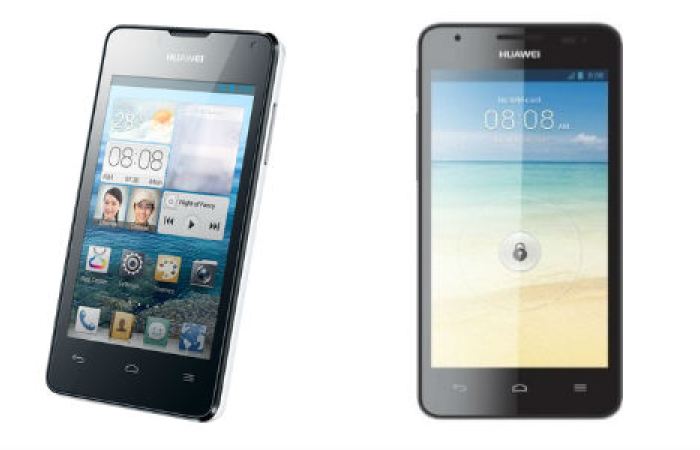
Huawei has launched its two new additions to the Ascend lineup in India, the Ascend G510 and Ascend Y300.
Huawei Ascend G510 and Ascend Y300 run on Android 4.1 (Jelly Bean) operating system along with a layer of Huawei’s new Emotion UI.
The Huawei Ascend G510 sports a 4.5-inch TFT LCD display with a resolution of 480×854 pixels and colour depth of 16M. The phone is powered by a 1.2GHz Qualcomm ARM Cortex-A5, dual-core processor along wtih 512MB of RAM. It has an internal storage capacity of 1GB that can be expanded by up to 32GB via microSD card.
The phone sports a 5-megapixel rear camera and a 0.3-megapixel front shooter. It includes a 1700 mAh battery, which as per the company gives 5 hours of talk time and 320 hours of standby time. The Huawei Ascend G510 offers connectivity and file sharing with Wi-Fi Direct, Bluetooth and DLNA.
The Huawei Ascend Y300 is a budget smartphone. It sports a 4-inch TFT LCD display with a resolution of 480×800 pixels and colour depth of 16M. The phone is powered by a 1GHz Qualcomm ARM Cortex-A5, dual-core processor and has 512MB of RAM. It has an internal storage capacity of 1GB that can be expanded by up to 32GB via microSD card. The smartphone sports a 5-megapixel rear camera and a 0.3-megapixel front shooter. It includes a 1730 mAh battery, promising 5 hours of talk time and 320 hours of standby time.
The Huawei Me Widget allows users to better utilise their Huawei smartphone screens by combining favourite contacts, Gallery, Audio Player, Weather and Clock in a single customisable widget. With five preloaded themes, users can customise their UI with themes, wallpaper and fonts.
The Emotion UI also features a “Smart Tutorial” that offers assistance to help entry-level users learn the ins and outs of the UI. With Profiles, users can select a profile that is most suited to their current context of use. And finally, a special dialer combines Call Log and Dialer for users’ convenience.
“We are very excited to introduce our new range in the Huawei Ascend series with Emotion UI, which lets users get the most out of their smartphones. Not only are Ascend G510 & Y300 exceptionally good-looking and power-packed smartphones, but also come with Emotion UI to let users personalize their phones to reflect their moods and personality. Backed by our pan-India service network and better prices, we are giving smarter mobile Internet devices to more number of Indians.” said Victor Shan, President of Huawei Device India.
The Ascend G510 smartphone is priced at Rs 10,990 and the Ascend Y300 is priced at Rs 7980.