Check out this weeks alternative Outdoor take on the Weekly Tech Focus and tell us how you liked it.
2: X CAP
4: BMW
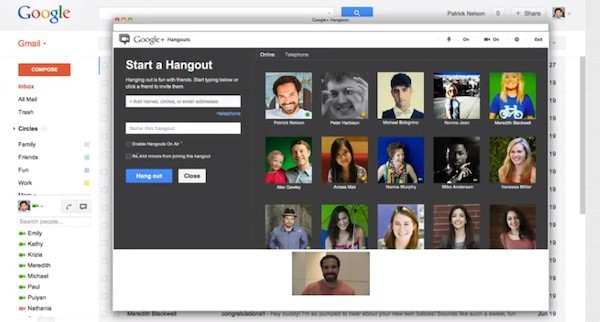
Google has really begun to promote their new Hangouts. You can now start a Hangout with up to nine friends or colleagues straight from Gmail with a click of a button. It provides access to people with an Android or iOS device and those on Google+ in a web browser.
[toggle_box title=”Google Hangouts” width=”Width of toggle box”]
Since the introduction of Gmail video chat back in 2008, many of you have told us that you love the direct, personal communication it provides. That’s why we’re excited to announce that video chat is being upgraded to a more modern video calling technology — Google+ Hangouts.
Unlike the old video chat, which was based on peer-to-peer technology, Hangouts utilize the power of Google’s network to deliver higher reliability and enhanced quality. You’ll be able to chat with all the same people you did before and, in fact, with Hangouts you’ll now be able to reach them not only when they are using Gmail but also if they are on Google+ in the browser or on their Android or iOS devices.
All Gmail users will benefit from this upgrade, but if you and the person you’re chatting with also use Google+, you’ll get even more from the Hangouts experience. You’ll be able to video chat with up to nine people at once, watch YouTube videos together, collaborate on Google documents and share your screen. Plus, Hangouts has a bunch of fun effects that you can try out…because any conversation is better when you’re wearing a virtual mustache or pirate hat.
[/toggle_box]

Taiwan’s National Cheng Kung University said Monday it has filed a patent infringement complaint against Apple Inc. in a U.S. court over the Siri voice command system used in the latest iPhone and iPad models, marking the latest patent spat against the Cupertino, Calif.-company.
In a filing to the district court of eastern Texas, the university alleged that Apple’s Siri voice-activated assistant, which allows users to make phone calls and perform other tasks with voice commands, violated two of its patents: a speech recognition system and another system that controls how the device interact with a user’s voice command.
The university is asking for an undisclosed sum of damages from Apple, according to the filing dated Friday.
Apple has been facing ongoing legal battles against other smartphone makers including Samsung Electronics Co. and HTC Corp. over patents on mobile device technology and features. Apart from seeking monetary damages, a ruling against Apple could effectively block shipments of its devices to some countries and significantly change the competitive landscape.
Apple introduced Siri last fall through the 4S iPhone and has been advertising it as a big differentiator for the hit device. The technology can perform a variety of tasks from searching for information to sending an email to scheduling meetings by voice. Unlike other types of voice-activated services, Siri can perceive normal human speech patterns.

The website that started massive image uploading has now given its image service yet another makeover. The new Facebook Image management will be a new tool for thumbing through galleries across the site, presenting photos in a new square format with the option to “highlight” certain shots to increase their footprint on the page.
The new system is yet to go live, But, Facebook has already made the announcement so expect it soon.
Today we’re announcing improvements to the photos section that make viewing photos more enjoyable.
[toggle_box title=”Facebook Images PR” width=”Width of toggle box”]
See bigger photos
Now when you click Photos at the top of your timeline, you’ll see larger pictures that fill up the page. You can use the menu to find shots you’re tagged in, pictures you’ve shared and albums you’ve created.
Showcase photos you like
With your Facebook photos all in one section, it’s simple to show friends your favorites. Click the star button to make important photos stand out.
We’ll continue to improve the experience and then begin rolling out globally. To learn more about the tools you can use to make your photos look better, visit the Help Center.
[/toggle_box]


The Black Element Cyclone Edition gaming mouse from Thermaltake has been designed for those long gaming sessions.
A 6,000 rpm rotor directed right at the point where your fingers sit on the mouse buttons. Priced at US $80 (IN Rs. 4000). The patent pending design promises to keep noise down to a sub-environmental 21.7dB, while delivering an airflow of 2.6 cubic feet per minute —
The fan can alternatively be removed, and the mouse comes standard with a 6,500 dpi laser sensor, an adjustable weight of up to 22.5 grams and a “military-grade” grip coating.


The iPhone 5, iPad mini and perhaps two other Apple devices could be announced at a Sept. 12 event, according to a new report.
Long rumored to premiere in October, the sixth-generation iPhone is now reportedly expected to be announced in September, including a new report Monday by iMore.
The report says Apple will announce the new phone and the iPad mini, a 7-inch screen version of the iPad, six weeks from now, citing “sources who have proven accurate in the past.”
Though the report is unsure about the iPad mini’s actual launch date, it gives a specific launch date for the iPhone 5: Sept. 21, which is a date that’s been rumored before.
Along with the two iOS devices, iMore also reports Apple will use the event to launch a new iPod nano.
Along with the nano, iMore speculates that a new iPod Touch could also be announced. Recent reports have said the Touch could be in for a fairly substantial redesign as is expected for the new iPhone.
The next iPhone is expected to have a better and longer screen, at 4 inches, as well as other redesigns, including a new back plate and a smaller dock connector.


Oracle Corp. on Monday agreed to acquire network-technology provider Xsigo Systems Inc. for an undisclosed sum, broadening the software giant’s already growing footprint in the data center.
Based in San Jose, Calif., Xsigo provides appliances that more efficiently manage the tangle of connections needed to access stored data. The technology cuts electricity costs and boosts performance for companies that manage large data centers.
Privately held Xsigo has more than 300 enterprise customers, according to its website, including Verizon Communications Inc. (VZ) and BT Group PLC (BT).
Oracle’s latest acquisition, expected to close this fall, comes as more companies opt to run their computer systems in the cloud–a catch-all term for software and data accessed online rather than through an onsite machine.
Managing the software and servers that support such systems has become a multibillion-dollar business, prompting Oracle Chief Executive Larry Ellison, who once dismissed the “cloud” term as “complete gibberish,” to actively pursue the model along with his Silicon Valley peers.
Cloud computing relies on virtualization, a process that allows users to run the operations of several computers on a single machine. The process puts an enormous burden on networks.
Now, cloud-computing companies are taking a growing interest in controlling the routers and switches of networks by using a similar virtualization model in order to manage data-center hardware and cut down on bottlenecks and inefficiencies.
VMware Inc. (VMW), which pioneered the virtualization model with software, last week agreed to pay up to $1.26 billion for networking-software provider Nicira Inc.
Xsigo’s technology differs from Nicira’s, which uses software to virtually manage an entire network. Xsigo’s hardware addresses a narrower part of the cloud.
“Most people think of software-defined networking as something that creates a new network…on top of the existing physical network,” ISI Group analyst Brian Marshall said.
Oracle also has remained active in the software sector. Just this month, the technology giant agreed to buy the social-marketing company Involver and said it would acquire privately held Skire, a provider of capital program management and facilities management applications.
Oracle has also bought the cloud-based customer service company RightNow Technologies Inc. for $1.43 billion and the human-resources software maker Taleo Corp. for $1.9 billion.
“They are already racing ahead on the software side,” said Global Equities Research analyst Trip Chowdhry. “Now they are strengthening their cloud infrastructure.”
Xsigo, founded in 2004, was funded by Kleiner Perkins, Khosla Ventures, Greylock Partners and North Bridge Venture Partners.


Internet giant Google has unveiled what it says is the world’s fastest internet connection through its ultra-high speed service, offering lightning-fast access of one gigabit per second.
The service, which uses optical fibre to deliver speeds far in excess of traditional web services, offers speeds faster than almost anywhere else on Earth.
After being chosen more than two years ago by Google as the place to unveil its fledgling Google Fiber gigabit-speed Internet and cable television services, residents of Kansas City are already signing up to be the first customers now that Google has started to take preregistrations.
Google Fiber’s ultra high-speed connections and television offerings are aimed at surpassing those of current providers, allowing users to search live channels, Netflix, YouTube, recorded shows and tens of thousands of hours of on-demand programming.
However, no phone service is available.
“The phone is really a 1940s thing. Why have a landline? It’s sitting there, you use it once every two weeks,” Mr Pichette said.
Google said it also intends to roll out product packages for businesses, but would not provide details.
Google Fiber includes more than 100 networks and costs $120 a month for a package of TV, 1 gigabit per second Internet speeds and 1 terabyte of cloud storage.
“People are going to have high expectations for this. The worst thing they can do is come out and disappoint.” said Mr Ben Schachter, an analyst with Macquarie Research.
Google is also offering an Internet-only package priced at $70 a month. The download speeds would be around 1 gigabit a second, according to Google executives.
Google is charging a $300 installation fee, saying consumers should treat it as a “home improvement” cost.


Apple Inc. held discussions with Twitter Inc. more than a year ago about taking a strategic investment in the short-messaging service, according to a person familiar with the talks.
People familiar with the matter said there are no current formal investment or acquisition discussions between the companies.
News of the investment talks was first reported by the New York Times.
Since the discussions between Twitter and Apple ended, the landscape has shifted for many fast-growing Web start-ups, both public and private. Facebook Inc. had a rocky initial public offering in May, and its shares are now down more than a third below their IPO price. Valuations of other high-profile tech companies, including Groupon Inc. and Zynga Inc. also continue to fall to earth — developments that have made investors question rich valuations placed on consumer-Internet start-ups such as Twitter.
While Apple has been hugely successful in selling phones and tablets, it has little traction in social networking, which has become a major engine of activity on the Web and on mobile devices. Social media are increasingly influencing how people spend their time and money an important consideration for Apple, which also sells applications, games, music and movies.
Apple has not made many friends in social media. Its relationship with Facebook, for example, has been strained since a deal to build Facebook features into Ping, Apple’s music-centric social network, fell apart. Facebook is also aligned with Microsoft, which owns a small stake in it. And Google, an Apple rival in the phone market, has been pushing its own social network, Google Plus.
[quote]“Apple doesn’t have to own a social network,’’ Timothy D. Cook, Apple’s Chief Executive, said at a recent technology conference. “But does Apple need to be social? Yes.’’[/quote]
Twitter and Apple have already been working together. Recently, Apple has tightly sewn Twitter features into its software for phones, tablets and computers, while, behind the scenes, Twitter has put more resources into managing its relationship with Apple.
Though an investment in Twitter would not be a big financial move for Apple by any stretch — it has $117 billion in liquid investments, and it quietly agreed to buy a mobile security company for $356 million on Friday — it would be one of Mr. Cook’s most important strategic decisions as Chief Executive.
And it would be an uncommon arrangement for Apple, which tends to buy small startups that are then absorbed into the company.
But such a deal would give Apple more access to Twitter’s deep understanding of the social Web, and pave the way for closer Twitter integration into Apple’s products.
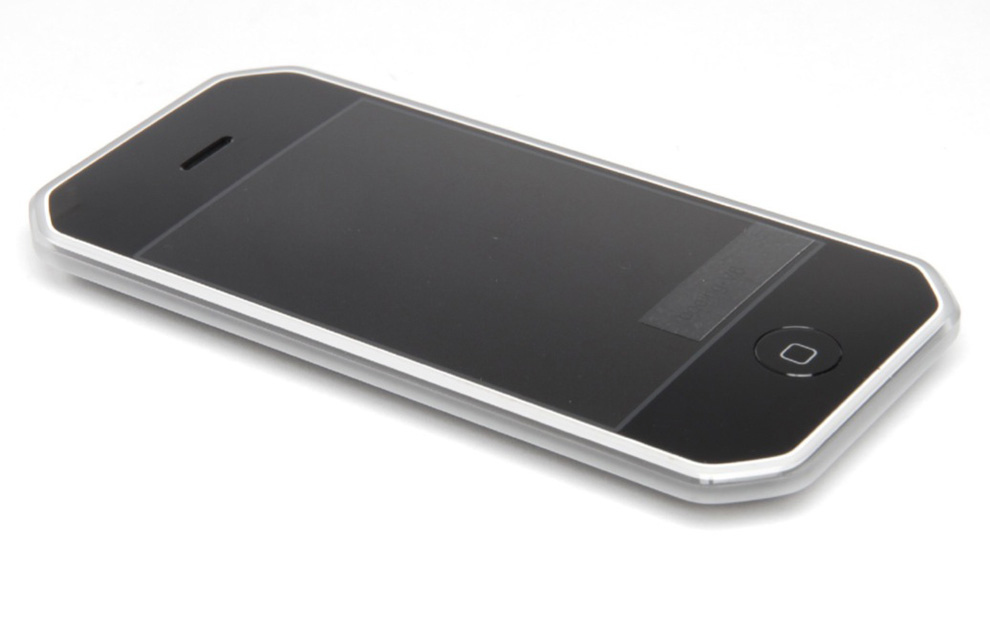
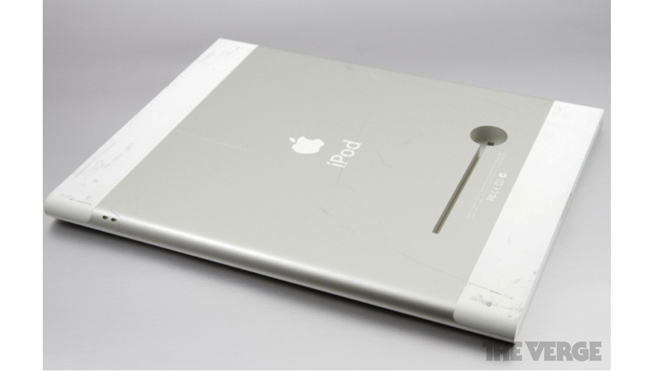
Early concepts of Apple’s market-leading iProducts revealed as a result of a sprawling legal battle with arch-rival Samsung show wacky ideas — including octagonal shapes, handles and kickstands.
Images revealed by tech news site The Verge, show Apple was intent on pursuing a kickstand for its tablet, with multiple iPad prototypes working through how such a stand would work.
Other renderings show a version of the iPad that never was, with molded grips integrated into the frame to make it easier to hold.
“Many of the iPad prototypes also feature ‘iPod’ on the back, perhaps giving insight into Apple’s early naming considerations,” the site noted.
Meanwhile, sleuths at Buzzfeed uncovered an alternate version of the iPhone with squared off edges — an early version of the game-changing smartphone that carried the prototype name N90.
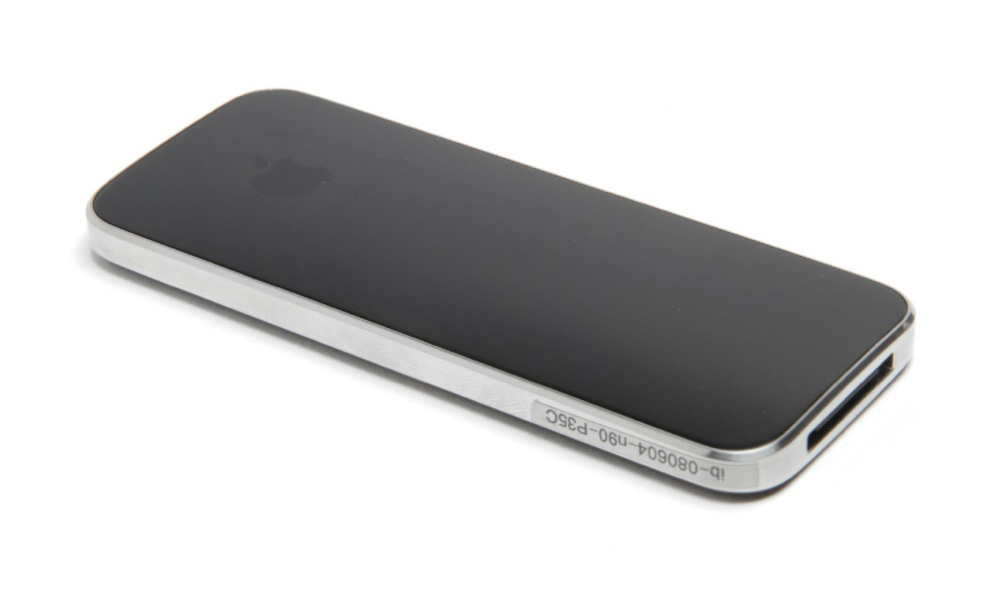
The device is clearly similar to Apple’s glass-and-metal design, but different enough to catch the eye.
Source : Fox News
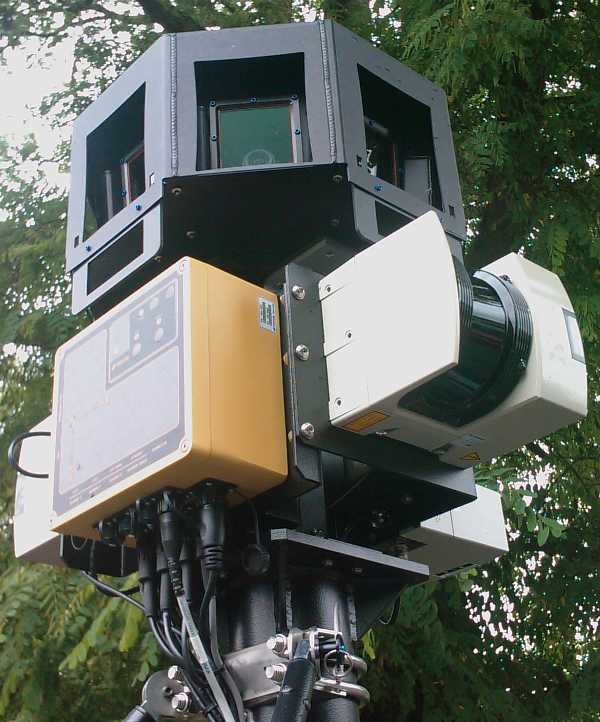
Google Inc said on Friday it had not kept its promise to delete all the personal data, such as emails, its Street View cars collected in Britain and other countries in 2010.
The data should have been wiped almost 18 months ago as part of a deal signed by the firm in November 2010. Google has been told to give the data to the UK’s Information Commissioner (ICO) for forensic analysis.
The ICO said it was co-ordinating its response with other European privacy bodies.
In May 2010 it was revealed that Google had scooped up about 600 gigabytes of personal data from unsecured wireless networks while gathering images and location data for Street View.
Google apologised for gathering the data and said it was a “mistake”. The blunder led to legal action, fines and investigations around the world.
In the UK, Google gave an undertaking to destroy the data it was holding and issued a statement saying it had done so in December 2010. However, said the ICO, Google had recently contacted it to report that some of the data it had gathered had not been deleted.
The company approached the ICO with the revelation to find out how it should act. In response, the ICO told Google to hand over the data immediately “so that we can subject it to forensic analysis before deciding on the necessary course of action”.
Google were fined $25,000 in April for impeding a U.S. investigation into Street View data collection.


Apple Inc has agreed to buy AuthenTec Inc for $8.00 per share, the maker of fingerprint sensor chips used in personal computers said, in a deal valued at about $356 million.
AuthenTec makes security software and chips for mobile phones that it licenses to companies such as Samsung Electronics Co Ltd (. It also produces chips for fingerprint recognition and near-field communication (NFC).
Melbourne, Florida-based Authentec disclosed the deal in a filing with the U.S. Securities and Exchange Commission.
Based on Thursday’s closing price $5.07, the offer represents a premium of 58 percent for AuthenTec’s shares.
AuthenTec, which also counts Lenovo Group Ltd , Fujitsu Ltd and Dell Inc ( as customers, has annual revenue of about $70 million.

Nuance Communications said that its next-generation of its Swype touch keyboard will support ‘Hinglish,’ a cross between Hindi and English, in an effort to cater to India’s mobile market.
Going forward Swype will recognize Hinglish words like chai, paani, desi, garam and masti.
The new version of Swype contains unique adaptive capabilities that enable it to understand user’s preferences and typing patterns over time. This allows the application to become smarter and more personalised every time it is being used. It learns from the users every time they type or swipe their fingers to create words and offers them the next time they use the keypad by offering not just word suggestion but whole sentence suggestions as well.

The Google Talk IM and video chat service suffered a massive global outage beginning early on Thursday, leaving users mum for more than four hours. The service was restored around 8.25PM.
The outage was first reported by users on Twitter, a social networking website. “Google talk being down is massively annoying! You don’t realise how much you take it for granted,” Pete Gould, a Twitter user said.
Many Google Talk users reported that they could log into the service, saw their contacts with the respective status but failed to send messages to them. Some other users could not log in. The service is not only used by people to keep in touch with friends but has also become a popular way to interact with co-workers in offices.

Hacking experts have demonstrated ways to attack Android smartphones using methods they said work on virtually all such devices in use today, despite recent efforts by search engine giant Google to boost protection.
Google spokeswoman Gina Scigliano declined to comment on the security concerns or the new research.
Accuvant researcher Charlie Miller demonstrated a method for delivering malicious code to Android phones using a new Android feature known as near field communications. “I can take over your phone,” Miller said.
Near field communications allow users to share photos with friends, make payments or exchange other data by bringing Android phones within a few centimeters of similarly equipped devices such as another phone or a payment terminal.
Miller said he figured out how to create a device the size of a postage stamp that could be stuck in an inconspicuous place such as near a cash register at a restaurant. When an Android user walks by, the phone would get infected, said Miller.
He spent five years as a global network exploit analyst at the U.S. National Security Agency, where his tasks included breaking into foreign computer systems.
Miller and another hacking expert, Georg Wicherski of CrowdStrike, have also infected an Android phone with a piece of malicious code that Wicherski unveiled in February.
That piece of software exploits a security flaw in the Android browser that was publicly disclosed by Google’s Chrome browser development team, according to Wicherski.
Google has fixed the flaw in Chrome, which is frequently updated, so that most users are now protected, he said.
But Wicherski said Android users are still vulnerable because carriers and device manufacturers have not pushed those fixes or patches out to users.