Blog

  • Tech 101 – How Touch Screens Work

    Tech 101 – How Touch Screens Work

    Previously, we’ve explained How Liquid Crystal Displays Work as well as How OLED Displays Work. Today, we’re going to explain how Touch Screens Work.

    Touch Screens are all the rage today. You’ll find them in many devices like tablets, smart-phones, computer monitors, PDAs, ATMs, table tops, kiosks etc. A touch screen can use multiple inputs from your fingers to styluses and even sausages! But how does this marvel of technology really work? There are many different types of touch screen displays. You will hear many marketing gimmicks regarding capacitive or resistive technology, but most people just don’t know the difference. Read on to learn more about this fascinating technology.

     The first touch screen was made all the way back in 1965 by E.A. Johnson at the Royal Radar Establishment, Malvern, UK. Since that first prototype, many methods of detecting touch on a display have been developed. The most widely used touch screen technologies are explained below:

    Resistive Touch Screens

    A resistive touch screen is composed of many layers. The two most important layers are made of a flexible polymer which are coated with a resistive material and are separated with an air gap or microdots. The resistive material is applied in lines on each sheet and they are placed perpendicular to each other. When a person touches their finger to a resistive touch screen, the two layers are pressed together, and the points of intersection on the two layers allow the processor to accurately measure the position of the touch.

    When pressure is applied to the screen, a uniform voltage is applied to the first sheet, and the second sheet measures the voltage as distance along the first sheet, which gives the X coordinate. Similarly, when the X coordinate has been ascertained, a voltage is applied to the second sheet, and the first sheet is used to measure the distance, which gives the Y coordinate. These measurements take place in only a few milliseconds, which means that a touch is registered as soon as contact is made.

    Since these types of touch screens rely on a point of contact between the two resistive layers, any pointing device like a finger or stylus can be used on them. These screens are also quite inexpensive to manufacture as they don’t require any specialized components. Due to the design of these screens, registering multiple points of contact was not possible due to vectoring issues. However, new technology is now available that overcomes these vectoring issues and allows multiple points of contact to be measured.


    Capacitive Touch Screens

    Capacitive touch screens can be based on two different technologies:

    Surface Capacitance

    This is the most basic form of capacitive touch screen technology. One side of the insulator is coated with a conductive layer. A voltage is applied to this conductive layer, which results in a uniform electrostatic field. When you bring your finger in contact with the screen, a capacitor is formed dynamically. This changes the electrostatic field across the screen and this change is measured by sensors placed in the four corners of the screen. The point of contact can be accurately measured based on the change in capacitance in the four corners of the screen. The greater the change in any corner, the closer the point of touch is to that corner. As there are no moving parts, these types of capacitive touch screens are very durable and are used in industrial applications as well as kiosks.


    Projected Capacitance

    Projected capacitive touch screens work on a principle similar to the matrix found in Liquid Crystal Displays. There can be either a single layer on which an X-Y grid is etched to form a grid pattern of electrodes or two separate perpendicular layers on which parallel lines are etched to form the grid. There are two basic types of projected capacitance technologies – Mutual capacitance and self capacitance.

    • Mutual Capacitance: These types of capacitive displays have a capacitor at every intersection along the grid. A voltage is applied across the rows or columns which creates a local electric field across the display. When it is touched with a finger or capacitive stylus, the capacitance at each point on the grid changes, which can be measured and gives an accurate location of the point o contact. This technology can measure multiple points of touch.
    • Self Capacitance: This type of capacitive touch screen can have the same grid pattern as a Mutual Capacitance screen but the rows and columns operate independently. With this type of screen, the capacitive load of a finger is measured on each row and column by a current meter which gives the point of touch. These types of screens can only measure one point of touch at a time.

    Projected Capacitance touch screens can operate without direct contact and can have a layer of insulation between the user and the screen itself. However, they require the use of a capacitive input device in the form of a human finger or a specialized stylus with a capacitive foam tip. These types of touchscreens are more expensive to manufacture than resistive touch screens. They also face issues when in contact with any capacitive material like water.


    Infrared Touch Screens

    These types of touch screens work on a very simple principle. Infrared LEDs or lasers are used to form an X-Y grid on the surface of the screen. These transmitters are coupled with receivers that monitor the grid pattern. When a touch event occurs, the infrared light from the transmitters is blocked in that region. The receivers that are no longer detecting an infrared signal are used to measure the exact point of contact.

    Infrared touch screens face many problems from objects that obstruct the infrared grid such as smudges on the screen and dust particles. Any kind of input can be taken on these screen from fingers to gloves to styluses.


    So now that you know how a touch screen works, we hope that you can have a new-found appreciation for all the devices that use this technology. A tremendous amount of research and hard work has been put in to make an input interface for a sense that most of us take for granted – Touch.


  • McAfee Family Protection Software Launched in India (PR)

    McAfee Family Protection Software Launched in India (PR)

    McAfee has launched its Family Protection Software in India. This software is not only an antivirus tool but it also provides content filters to protect children from the hazards of the Internet. It is designed to provide parents with an insight into the digital lives of their children. Read the Press Release for more information.


    [toggle title_open=”Collapse Press Release” title_closed=”Expand Press Release” hide=”yes” border=”yes” style=”default” excerpt_length=”0″ read_more_text=”Read More” read_less_text=”Read Less” include_excerpt_html=”no”]

    McAfee announced the launch of McAfee® Family Protection, a parental control program that protects children of all ages from online risks while allowing them the freedom to safely explore the Internet.

     “Online concerns for tweens and teens are not what they were two years ago” said Venkat Krishnapur, Senior Director, McAfee India. “The threat landscape has changed dramatically – especially in the context of how children of various ages in urban India use the internet and how they are exposed to various forms of threats online. McAfee Family Protection is a powerful tool that helps parents get better insight to the digital lifestyles of their children. Parents can choose to block categories of sites, filter out only a handful of sites, or block nothing at all and simply review online activity reports. Its innovative features such as online activity reports, age appropriate settings and YouTube, games and website blocking and so on gives Indian parents a powerful tool to ensure their kids stay safe when using the Internet.”

     Use of the Internet by Indian children and new parenting challenges:

     McAfee commissioned Synovate, to conduct a comprehensive research titled ‘How safe are Indian kids online?’  across 10 cities- New Delhi, Mumbai, Pune, Ludhiana, Kolkata, Ahmedabad, Bangalore, Chennai, Hyderabad, and Cochin, covering 500 children and 496 parents. Following are key highlights of the revelations from this survey:

    •  62% of all polled kids have shared personal information online.
    • 58% kids share their home addresses on the internet.
    • 39% of all polled kids do not tell their parents about these online activities
    • 12% of all polled kids had been victims of some kind of cyber threat

    “These findings are extremely relevant from the perspective of Indian parents. As the internet evolves into a new platform for self expression and social interaction, children are indiscriminately indulging in information exchange leading to an increasing rate of cyber exploits. The introduction of technologies like McAfee Family Protection is a step in the right direction as it enables us parents to understand, handhold and mould our children’s online persona and behavior”, said Anindita Mishra- McAfee Cybermum India.

    In the context of these newfound online threats, McAfee Family Protection offers a host of essential features to enable Indian families in monitoring their children’s online activities:

    • Age-Appropriate Settings – Settings are customized according to age-groups
    • Filtering for Music and Online Games –Parents can decide what rating of content children have access to. Types of filtering include:
      • Songs with explicit lyrics from iTunes
      • Access to online gaming sites
      • Viewing of objectionable videos on YouTube
    • Encrypted website blocking blocks teens from accessing proxy sites so they cannot try to bypass content filters
    • Program blocking enables parents to block any program, including file sharing networks which can lead to malware infections on PCs
    • Instant messaging monitoring enables parents to monitor and record complete instant message conversations to alert them of improper dialogue with strangers
    • Time limits help families manage the amount of time their children spend online: families are able to set the day and/or time for when their child can access the Internet
    • Email blocking pre-approves email accounts that a child is able to access and blocks emails from unknown sources
    • Instant email alerts can be sent to parents when access to objectionable material is attempted
    • Social network filtering records all social network postings that contain profanity and posts that include confidential information that has been predetermined by parents–such as a home address, phone, school name, etc


    [/toggle]

  • Traveling Wave Reactors – The New Nuclear Power Source

    Traveling Wave Reactors – The New Nuclear Power Source

    Conventional nuclear reactors use Uranium 235 as their power source. However, out of all the Uranium that we dig up, only about 1% is U-235 while the rest is composed of, its not so reactive cousin, U-238. So what can we do with this U-238? Well according to some new research, we can now use U-238 as a fuel to power a new generation of nuclear reactors.

    Bill Gates has funded a new startup called Terrapower which is attempting to build the first prototype of a new type of nuclear reactor called a traveling wave reactor. this reactor will be using uranium 238 as a fuel source. How this will work is that a bunch of uranium 238 rods will be placed around a rod of uranium 235. This rod of U235 will kickstart the entire process. The uranium 238 gets converted into plutonium 239. This will generate heat and keep the entire reaction going, and as it propagates outwards from the center in a kind of wave, more rods of U-238 can be added to keep it going. Once the fuel gets used up, it can be used to kickstart a new reaction.

    What this basically means is that you can burn the expensive fuel, you can burn the cheap fuel, you can burn the waste from other nuclear reactors and generate electricity from the whole thing. If we start extracting Uranium from sea water, which is apparently easy to do, we can provide enough electricity to power the entire human race without any problems for thousands of years.

  • Nokia OVI store now sending 7 Million downloads a day

    Nokia OVI store now sending 7 Million downloads a day

    Nokia has announced that its Ovi Store has served a record 7.62 million downloads, this figure is more than twice of the 3 Million seen in October last year.

    In addition, Nokia said downloads more than tripled in India, which remains at the top in terms of downloaded volumes. Calculating on basis of totals, the Apple App Store serves about 16 million downloads a day.

  • Thinner iPhone 5 Confirmed by Leaked silicone cases

    Thinner iPhone 5 Confirmed by Leaked silicone cases

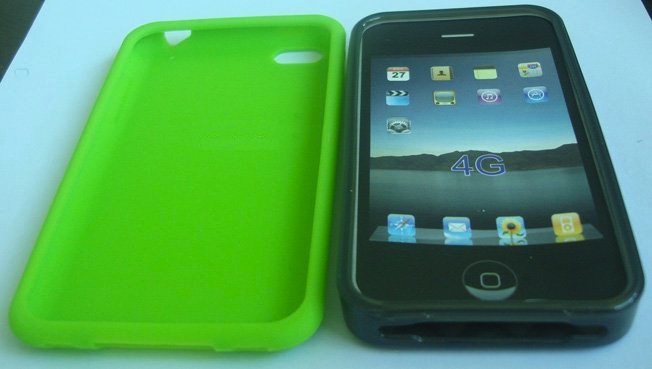
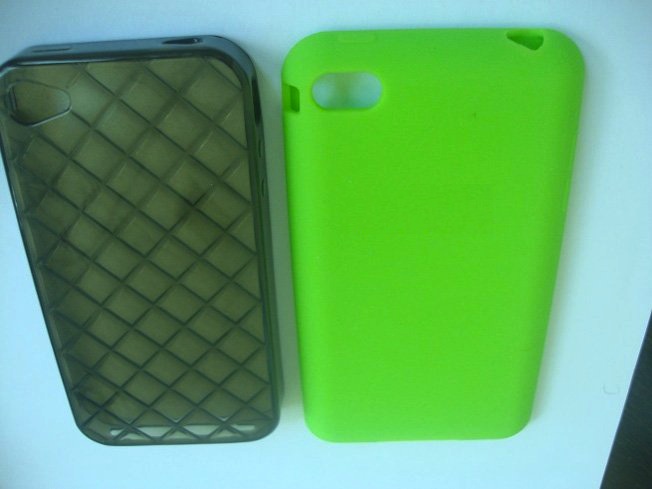
    Several cases for the next gen of iPhone have been leaked online, looking at the images the case looks definitely thinner than the existing iPhone 4s case. Although they are also identical to the shape an design of the iPod touch, suggesting an iPod touch with camera flash. Several manufacturers have also claimed to be shipping their cases for retail for the iPhone 5.


    The device is expected to be announced in August and shipped in September, Either way its going to be an exciting quarter.

  • Leaked: HTC’s first 10 inch Tablet Puccini

    Leaked: HTC’s first 10 inch Tablet Puccini

    HTC’s first 10 inch tablet has been leaked, in conjunction the device looks almost identical to its predecessor the HTC Flyer.

    The device features

    • 10 inch screen
    • 8 Megapixel camera
    • Dual led flash
    • Stereo speakers and a microphone
    • Stylus input
    • 1.5GHz processor
    • Android Honeycomb
    • HTC Sense
    • 4G LTE radio
    Looks like a interesting tablet device, as always we hope with this device from HTC we can expect the same build quality.
    [BGR]
  • Apple Batteries Hacked

    Apple Batteries Hacked

    Did you know that the batteries in your Macbook can be hacked? You didn’t? Well now you do. Laptop batteries have evolved from being just batteries to a system that incorporates a microprocessor with a firmware to control it. This firmware performs various functions such as charging and discharging the battery, providing information on battery condition and charge rates, and telling the computer how much juice is left.

    Apple has, in the past, released hotfixes for malfunctioning batteries, and by analyzing these hotfixes, security researcher Charlie Miller has gained direct access to the embedded firmware. He has found some flaws in Apple’s firmware which allow malicious code to be embedded. So what can this malicious coded do? Well for starters it can brick your battery, which means that it will neither charge nor discharge itself. It could provide false information about the battery to the computer. This code can also execute software on your MacBook and no amount of anti-virus software and system formats can get rid of it, because its not on the system.

    The good news is that no amount of malicious code can make your battery overheat and explode. The bad news is that patching these vulnerabilities means that Apple will no longer be able to provide hotfixes for its batteries.


  • Apple working on a 15 inch and 17 inch UltraThin Notebook pc

    Apple working on a 15 inch and 17 inch UltraThin Notebook pc

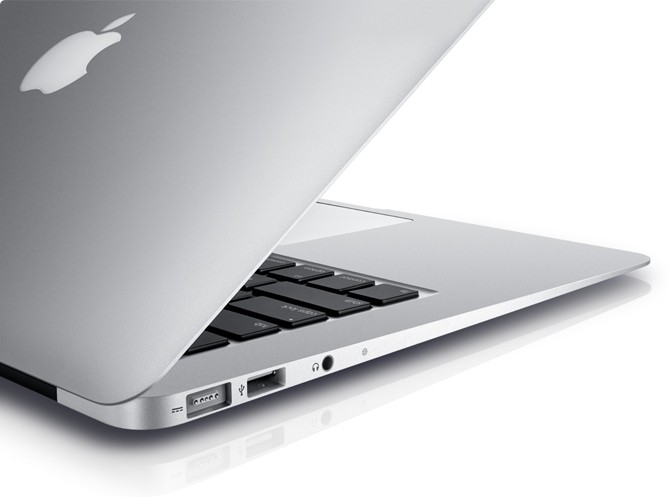
    Apple is in the last stages of testing a 15 inch ultra thin Notebook pc that will be part of the MacBook family. According to various reports by TUAW and MacRumors the devices will be 15 inch and 17 inch in size will fall under the Macbook Pro Lineup and will be available in time for christmas.

    The ultra-thin market is also about to get much more competitive this fall as Intel’s partners begin launching their notebooks.

  • Microsoft Ready To Distribute The Cloud To Your Home

    Microsoft Ready To Distribute The Cloud To Your Home

    The cloud is a hot topic today. Not only is it popular, it literally generates a lot of heat. Data-centers are a huge investment and require a lot of power to run the machines as well as to keep them cool. On a very basic level, a computer efficiently converts electricity to heat, while processing some data, the same way a car engine converts petrol to heat, while also turning the wheels of the car.

    This analogy has led researchers at Microsoft to come up with the idea of distributing the physical hardware of the cloud from a single data-center into multiple smaller installations that could replace the furnaces in a house or office building. These data furnaces would consume electricity and crunch numbers while simultaneously using the excess heat for spatial or water heating.

    Using the data furnaces would have a number of advantages over conventional furnaces. Typically, the exhaust air from a computer is between 100 to 120 degrees fahrenheit. For homeowners, this exhaust air can be used to heat rooms as well as water for washing clothes. For company’s that build and operate data-centers, the physical cost of setting up the building as well as the cost of cooling the servers would be zero. In this situation, provided the companies pay for the electricity and Internet costs (which they would have to pay for anyways), everyone wins.

  • Windows Phone ‘Mango’ released to vendors

    Windows Phone ‘Mango’ released to vendors

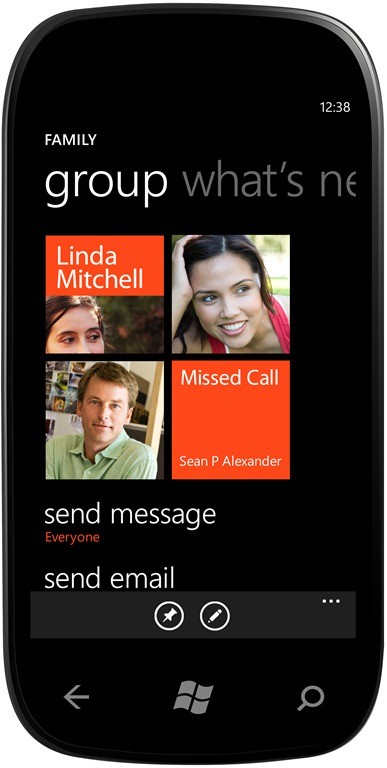
    Microsoft confirmed on its Windows Team Blog on Monday that it has released the RTM build of Windows Phone “Mango” to manufacturing partners.

    This marks the point in the development process where we hand code to our handset and mobile operator partners to optimize Mango for their specific phone and network configurations,” explained Microsoft’s Windows Phone corporate vice president Terry Myerson.

     Microsoft has said Mango will deliver more than 500 new features to the Windows Phone platform, including Internet Explorer 9 and deeper social network integration. Mango is also set to release sometime in August to all existing devices. 

    Microsoft also plans to release  Nokia, HTC, LG, Samsung, Dell, Acer, Fujitsu and ZTE branded Windows Phone ‘Mango’ devices.

    [Microsoft]

  • Apple will Launch a Cheaper iPad 3 this year?

    Apple will Launch a Cheaper iPad 3 this year?

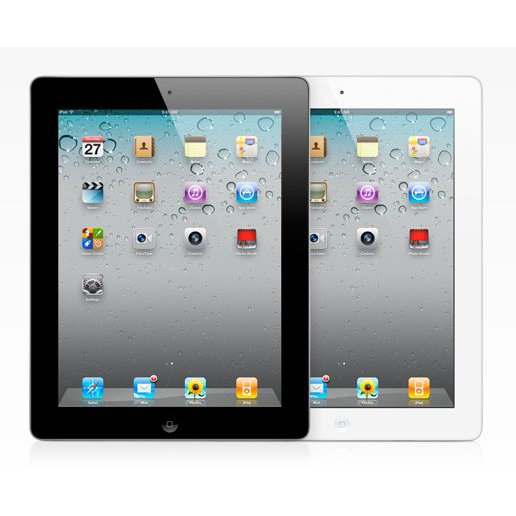
    According to several reports, Apple has signed deals with various parts suppliers for the release of its next gen iPad this year. in a report DigiTimes claims Taiwan-based component manufacturers including Novatek Microelectronics, Richtek Technology, Capella Microsystems and Integrated Memory Logic have been awarded contracts to supply integrated circuits for the iPad 3.

    This is contrary to earlier reports of a pro / HD / Premium iPad 3DigiTimes states that Apple is seeking to utilize lower cost parts from Taiwanese suppliers in order to “compete with an array of tablet PCs to be launched by rivals in the second half of 2011″.

    We believe the search for cheaper vendor could be possibly for a cheaper retina display for Apple’s manufacturing process and not for the supposed end result cheaper iPad.

    [DigiTimes]

  • Bang & Olufsen intros BeoSound 5 Encore calls it affordable (PR)

    Bang & Olufsen intros BeoSound 5 Encore calls it affordable (PR)

    Bang & Olufsen has just announced the new BeoSound 5 Encore, calling it an affordable yet luxurious piece of audio hardware. Compared to the  BeoSound 5 the new  BeoSound 5 Encore comes in at a mere $3350 or Rs. 1,70,000.

    BeoSound 5 Encore carries over the 10.4-inch LCD / scroll wheel controller from its predecessor. It has multiple inputs for content, via USB, NAS, A2DP Bluetooth, or from one of 13,000 internet radio stations. 


    [toggle title_open=”Collapse” title_closed=”Read The Press Release” hide=”yes” border=”yes” style=”default” excerpt_length=”0″ read_more_text=”Read More” read_less_text=”Read Less” include_excerpt_html=”no”]Bang & Olufsen Launches BeoSound 5 Encore Digital Music System

    Presenting a window to the world of digital music with patented playlist technology and convenient “plug and play” operation

    Arlington Heights, IL – July 25, 2011 /PRNewswire/ – Bang & Olufsen, the worldwide provider of exclusive, custom made audio and video products, announces the arrival of its BeoSound 5 Encore – a digital music system that allows for easy navigation to one’s preferred digital music library, access to over 13,000 internet radio stations and a high quality listening experience featuring an award winning playlist technology, intuitive graphical user interface, and an interactive, convenient operation for the end user. BeoSound 5 Encore is the new addition to the BeoSound 5 digital audio family. It is Bang & Olufsen’s plug-n-play answer to a growing demand in the era of digital music, as it allows for easy access of one’s music library without a complicated navigation process. BeoSound 5 Encore acts as an all-consuming sound hub with content conveniently and instantly arranged by album, artist, track, or ‘favorites’ category. It can be used as a stand-alone audio system or in a multi-source/multi-room application.

    “BeoSound 5 Encore represents the first step into the new digital world where both permanent and temporary devices constantly change,” states Zean Nielsen, President of Bang & Olufsen America, Inc. “We believe BeoSound 5 Encore acknowledges the different customer levels – in terms of familiarity with the digital music paradigm – and will appeal to both the technologically advanced and those that prefer a more simplistic way of interacting and navigating with ones preferred digital music library.”

    A variety of sources and genres

    BeoSound 5 Encore offers easy access to more than 13,000 internet radio stations from all over the world, and with every possible genre and language represented. The quality of the stations is monitored and constantly updated automatically by Bang & Olufsen.

    In addition to internet radio, BeoSound 5 Encore can browse and play music from a plethora of sources; a connected hard disc, a NAS server, a computer, a USB stick or a handheld device. It supports music in lossless quality; therefore it is possible to enjoy the full qualities of one’s favorite music tracks.

    BeoSound 5 Encore is an excellent and simple solution for those wanting to clean up the mess of a physical, CD-based music collection. Simply connect Encore to a pair of Bang & Olufsen speakers and the setup is complete. It can work as your primary music system connected to the internet (either wired or wirelessly) with access to internet radio and music on a server, or a USB connected hard disc. Additionally, it can also act as an access point for your secondary music devices.

    The customer can connect up to eight BeoSound 5 Encores to the same server, with the added benefit of being able to play different music content in different rooms at the same time. Resulting in less arguments with the family about what to listen to, and where. Everyone can simultaneously enjoy their favorite tunes in the comfort of their own room, be it internet radio or digital music files, and the music is still stored in one place.

    Re-inventing the wheel

    BeoSound 5 Encore conveniently presents a rich choice of content in a well-organized way, appealing to those who desire simplicity and easy access. Visually it proudly displays its design heritage from BeoSound 5 with a unique mixture of mechanical tactile elements and a strong graphical expression.

    BeoSound 5 Encore features a 10.4″ full graphical display and a magical wheel that easily scrolls through even the greatest of music collections at the spin of a finger. With a number of different options for wall, table or floor placement, BeoSound 5 Encore will easily fit into any home decor. Additionally, it has been specially designed with permanent sockets hidden for concealed and elegant cabling. Also, sockets for temporary devices such as USB sticks, portable players or headphones are easily accessible below the display.
    Automatic playlist with a high IQ

    The patented MOTS ‘More of the Same’ algorithm, is an award-winning Bang & Olufsen technology. It automatically captures the unique musical identity of a track and then builds a playlist of similar music – based on parameters such as sound, dynamics, and rhythmic aspects of a particular track.

    Being the intelligent playlist of the future, MOTS automatically generates a playlist when the user accesses the content of a USB or WLAN/LAN connected device, leaving the end user with more time to rediscover the music collection, instead of manually having to select a number of tracks every time. It is a fast and convenient way to set the musical scene for any mood or setting, (i.e. a dinner party or a laid-back evening on the couch). Additionally, the customer can select a particular favorite playlist offered by MOTS, by simply saving the track initially selected, and then the customer can listen to the specific playlist whenever desired.

    With the launch of BeoSound 5 Encore, Bang & Olufsen is now able to offer customers two different state-of-the-art digital audio solutions which – with their individual advantages – are designed to exceed the expectations of any discerning customer eager to take the next step into the world of digital music. BeoSound 5 Encore is available for purchase in all Bang & Olufsen showrooms in August 2011. It retails at $3350.00.

    Bang & Olufsen was founded in Struer, Denmark, in 1925 by Peter Bang and Svend Olufsen, two innovative, young engineers devoted to high quality audio reproduction. Since then, the brand has become an icon of performance and design excellence through its long-standing craftsmanship tradition and the strongest possible commitment to high-tech research and development.

    Still at the forefront of domestic technology, Bang & Olufsen has extended its comprehensive experience with integrated audio and video solutions for the home to other areas such as the hospitality and automotive industries in recent years. Consequently, its current product range epitomizes seamless media experiences in the home as well as in the car and on the move.

    For more information on Bang & Olufsen, please visit www.bang-olufsen.com.[/toggle]

    [Bang & Olufsen]

  • Canon launches X Mark I Mouse Lite with inbuilt 10 digit Calculator (PR)

    Canon launches X Mark I Mouse Lite with inbuilt 10 digit Calculator (PR)

    Canon does not fail to impress us, this time its a bluetooth laser mouse, which not only looks slick, but also packs a 10 digit full fledged calculator. Called the  X Mark I Mouse, not only will this device serve as a calculator on your mouse , it will also act as a 10 digit bluetooth numeric keypad.  The company’s camera design team helped to create the hybrid input device, which also includes a trio of mouse buttons and laser tracking.

    Canon also announced a Numeric Keypad separately, X Mark I Keypad is a full-size calculator with Bluetooth support that’s powered by either AAA batteries or a built-in solar panel.

    Both the keypad and the mouse will sell for US$59.99 or Rs 2750. respectively. Will be available for purchase in August and September.

    [toggle title_open=”Collapse” title_closed=”Read the Press Release” hide=”yes” border=”yes” style=”default” excerpt_length=”0″ read_more_text=”Read More” read_less_text=”Read Less” include_excerpt_html=”no”]CANON U.S.A. ANNOUNCES NEW DESKTOP ACCESSORIES FOR TODAY’S BUSINESS PROFESSIONALS

    New Products Expand Canon Technology into New Markets

    LAKE SUCCESS, N.Y., July 26, 2011 – Canon U.S.A., Inc., a leader in digital imaging, has strengthened the X Mark I series of products today with the launch of two new desktop business accessories, the X Mark I Mouse Lite and the X Mark I Keypad. Designed with input from Canon’s Camera design team, these sleek and stylish products are the ideal extension to a laptop’s standard keyboard, helping to improve overall work efficiency for business professionals working remotely.

    “The addition of the X Mark I Keypad and X Mark I Mouse Lite marks Canon’s entry into a new product category,” said Yuichi Ishizuka, executive vice president and general manager, Imaging Technologies and Communications Group, Canon U.S.A. “Canon recognizes that business professionals are always on the search for tools that help improve work efficiency and we feel these new products will certainly accomplish this task.”

    The three-in-one Canon X Mark I Mouse Lite combines the functionality of a laser mouse in addition to a keypad and 10-digit calculator making it ideal for the traveling business professional along with anyone interested in minimizing the number of accessories in a workspace. Available in either black or white, the X Mark I Mouse Lite is compatible with Windows PC or Mac laptops, has three mouse buttons and Bluetooth 2.01 connectivity. In addition, this new mouse has a low battery indicator to avoid running out of power unexpectedly.

    Designed for the on-the-go business professional, the Canon X Mark I Keypad provides users with a two-in-one keypad in addition to a 10-digit Semi-Desktop Calculator that can be easily paired with either a Windows PC or Mac laptop through Bluetooth 2.01. Powered by solar and AAA batteries, the X Mark I Keypad is available in black or white.

    The Canon X Mark I Mouse Lite will have an estimated selling price of $59.99 and is expected to become available in August while the Canon X Mark I Keypad will have an estimated selling price of $59.99 and is expected to ship in September[/toggle]

  • New Sony Walkman now available in UK, with Wireless streaming

    New Sony Walkman now available in UK, with Wireless streaming

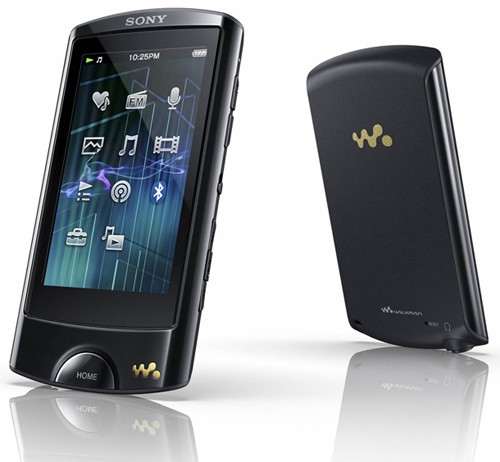
    Sony WalkmanUK’s big online retailer BUY.com is now stocking what appears to be the next Sony Walkman. The model  NWZA865B packs a 16 gig internal storage for your media, but also has wireless file sharing and music streaming capabilities. The device will range from capacities of 8GB to 64GB, the 16GB model is available online for £130 ($213) (IN Rs. 10,000).


    [Play.com]

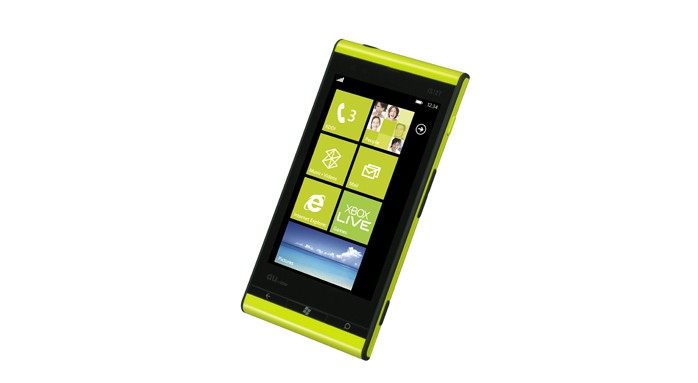
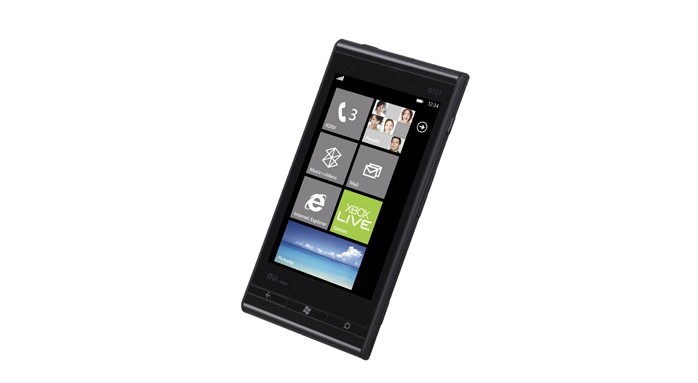
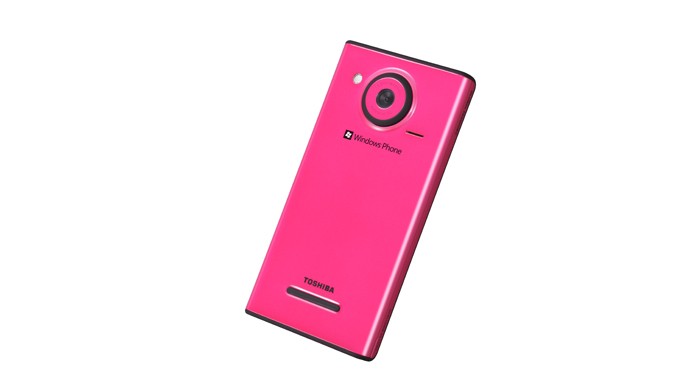
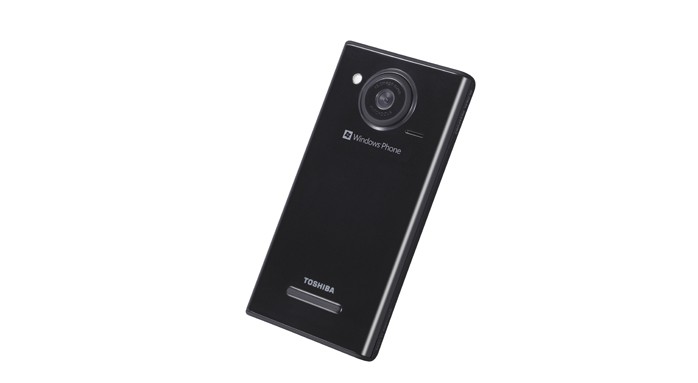
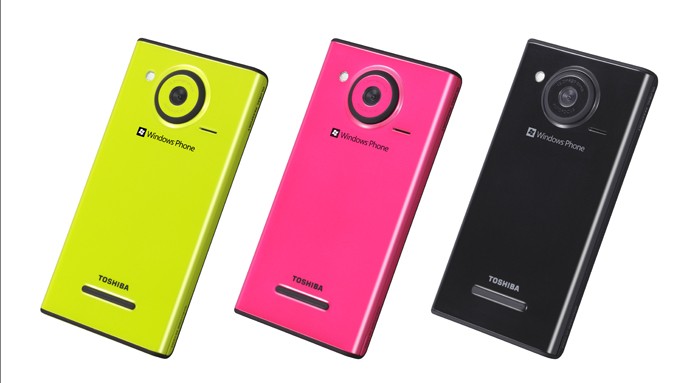
  • Fujitsu Toshiba  au IS12T is the world’s first Mango phone

    Fujitsu Toshiba au IS12T is the world’s first Mango phone

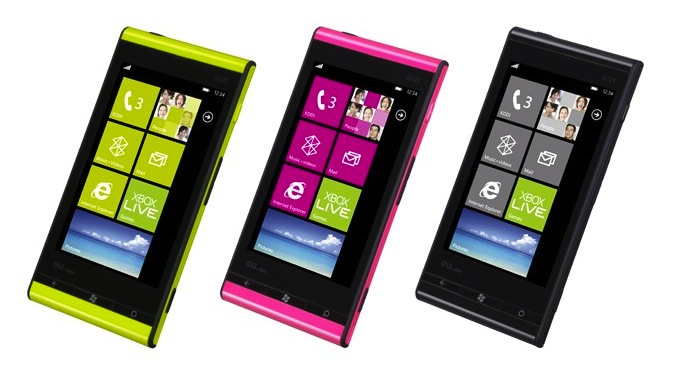
    Fujitsu Toshiba mobile communications have just announced the au IS12T, world’s first Mango phone. The device is not only waterproof but also packs in decent specs including a massive camera.

    • 3.7″ WXGA screen
    • Qualcomm’s MSM8655 CPU
    • 13.2 megapixel camera with autofocus
    • 32GB of flash storage
    • Bluetooth (2.1 + EDR) and WiFi (802.11b/g/n)
    The device was just launched in Japan so don’t expect an Indian version anytime soon.
iGyaan Network
Privacy Overview

This website uses cookies so that we can provide you with the best user experience possible. Cookie information is stored in your browser and performs functions such as recognising you when you return to our website and helping our team to understand which sections of the website you find most interesting and useful.