Blog

  • iRiver Story HD – Google’s New E-Book Reader

    iRiver Story HD – Google’s New E-Book Reader

    Google had launched an e-bookstore in December but the store never really took off as using it with an e-book reader was quite a pain. You had to download stuff to your PC and sync it across to your device. Now, a new e-book reader is all set to change that process and challenge the likes of the Kindle and the Nook.

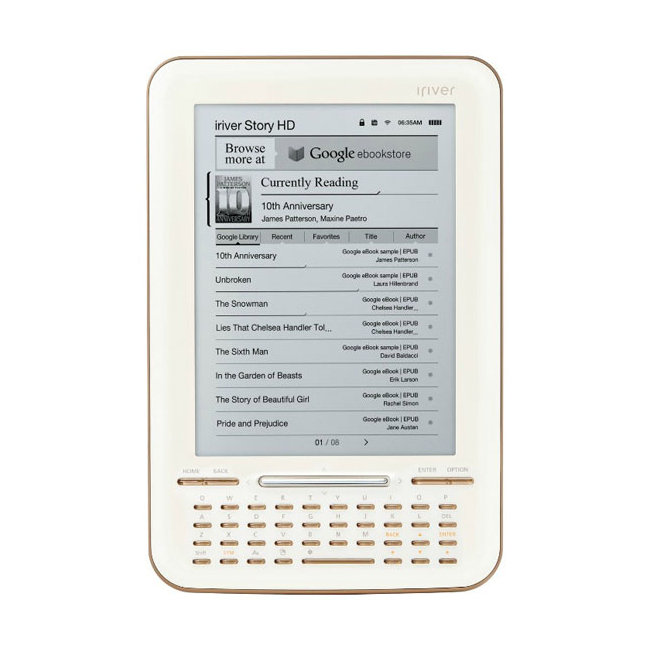
    Created by iRiver, the company behind a range of MP3 players, the device is called the Story HD and hooks directly into the Google Library. The Story HD will pull books directly from the Google Library without having to use a PC to perform a sync to the device. This means that the device will have access to over three million free titles as well as access to hundreds of thousands of paid books.

    There are over 80 devices that currently support Google’s e-book format when synced via a PC including the Kindle and the Nook. None of the readers natively support the e-bookstore however, if you have a smartphone, you could just use the Google Books app to access the store.

    The iRiver Story HD will be available for $140 online. The device will have built in WiFi as well as a black and white screen with a QWERTY keyboard. For comparison, the Nook and the Kindle are available for the same price as well.

  • Acer Aspire Ethos

    Acer Aspire Ethos

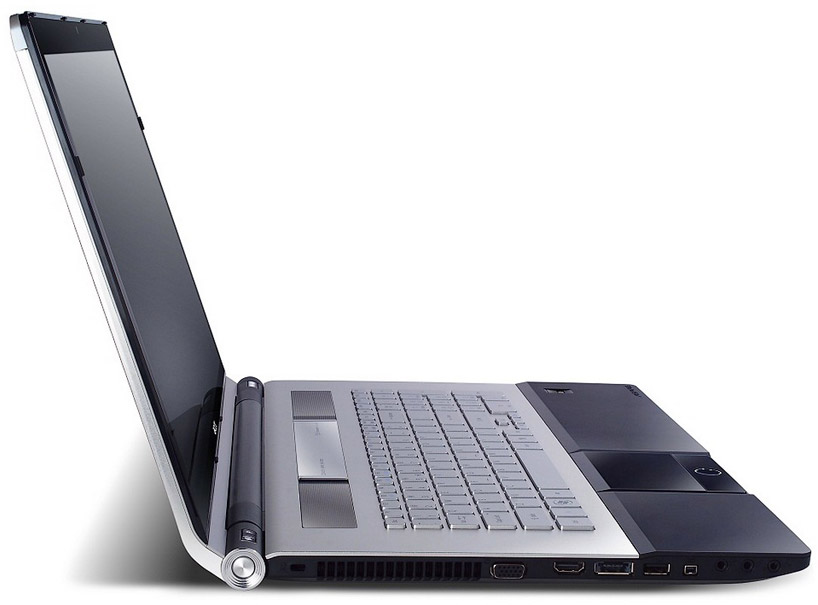
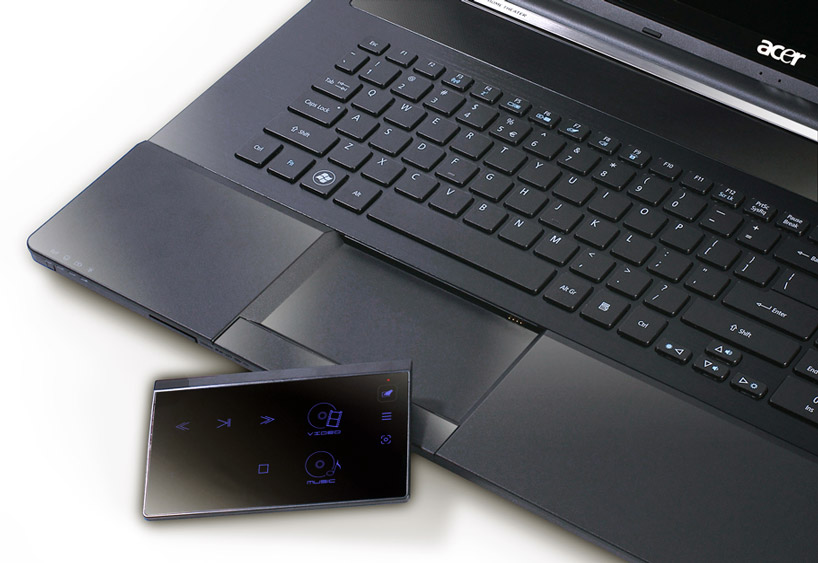
    Acer’s new Ethos laptop series was designed from the ground up for entertainment and features a removable track pad that doubles up as a remote alongside powerful audio and video ready hardware.

    The detachable track pad, is capable of controlling multimedia playback on the device from a distance, and features a sensor enabling it to be used either horizontally or vertically. The Aspire Ethos also features Acer’s Clear.Fi media sharing platform, enabling digital media stored on any Clear.Fi-ready device on the home network to be shared and accessed from any other.

    The 8951G model of the Ethos boasts 5 built in Dolby speakers as well a a pair of Acer sub-woofers for surround-like sound and has a full HD 1920x1080p 18.4 inch display. The 5951G comes with 2 built in speakers and an Acer Bass Boost system along with a 15.6inch 1366×768 display.

    The frame-less laptop utilizes Intel’s Turbo Boost Technology 2.0 on top of Intel Core I Processors, alongside a Nvidia Geforce T500 graphics processor. The integrated power-smart long-life battery lasts over three times as long as conventional notebook batteries. A USB 3.0 port, multi-in-1 card reader, web-cam, and built-in microphone round out the hardware offerings of the device, while an instant on arcade key permits fast booting for movie, music, and photo playback. Mobile devices may be charged via USB even when the laptop itself is turned off.

  • The Samsung NC215s – The Solar Powered Netbook

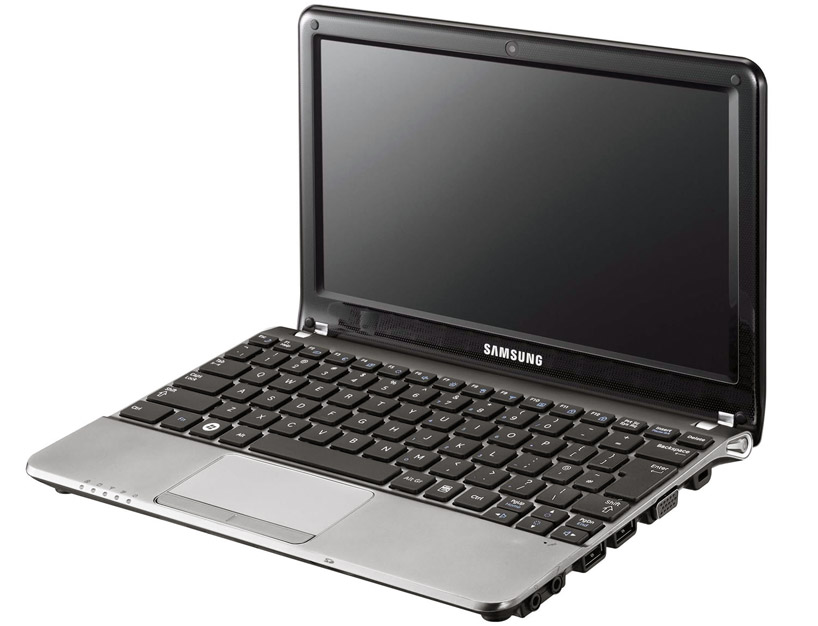
    The Samsung NC215s – The Solar Powered Netbook

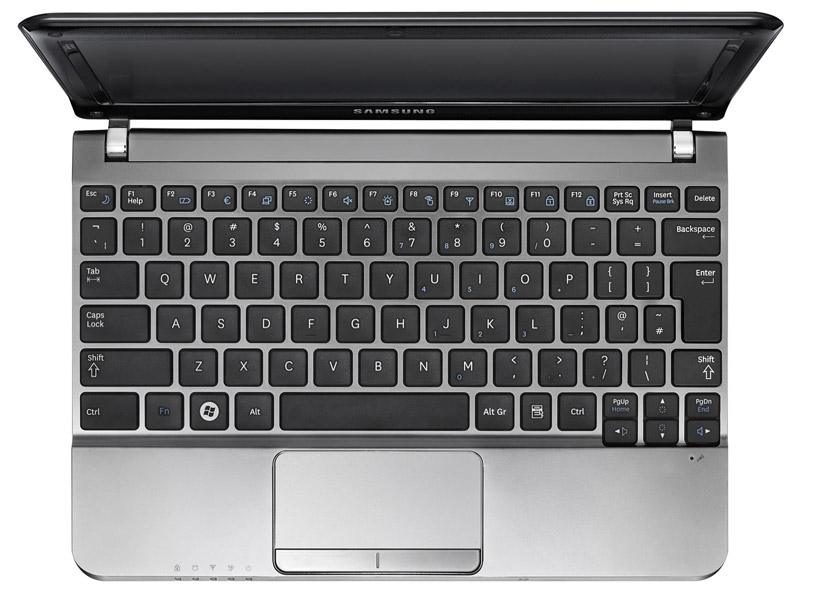
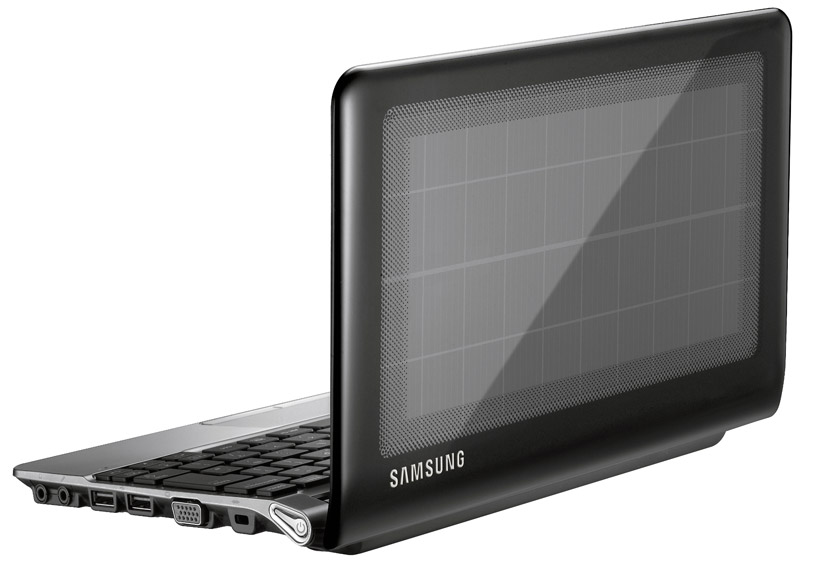
    Samsung has released a Solar powered netbook that will be available in the US and Russia. The rear side of the display houses a solar panel that can generate an hours worth of power for every two hours of exposure to direct sunlight.

    The netbook’s 10.1 inch 1024x600px display is specially designed for extra brightness and is also layered with an anti reflective coating  for use outdoors. The netbook features either a dual-core N570 or single-core N455 Intel Atom processor, with a choice of a 250 or 320 GB harddrive. A sleep mode called ‘Samsung Fast Start’ combines the stability of hibernation with the fast reloading of sleep, while ‘sleep-and-charge’ enables the charging of external USB devices even when the computer is off. A full charge of the six-cell battery is reported to provide up to 14 hours of use. The Samsung NC215S is expected to be released in the United States in early July at a cost of 400 USD, and in Russia in early august, for 13,999 rubles (500 USD).

  • The Air Pick – Release Your Inner Rock Star

    The Air Pick – Release Your Inner Rock Star

    There have been many times that we’ve heard a song and strummed on our air guitars imagining ourselves to be Jimmy Page or Jimmy Hendrix. We thought we were awesome and the crowds went wild for us. Well, when we landed back into reality, we realized that not only did we not know how to play the guitar, but we didn’t even have one.

    Well those days are past because a new product is on the market for all of us air guitarists. It’s called the Air Pick. The Air Pick is shaped like a standard plectrum and has a speaker with some electronics built in. It comes pre-loaded with up to 3 songs and can play the chords in time to your strumming. Songs would include such classics as Smoke on the Water, Born to be Wild and Satisfaction. It’s time to release your inner Rock Star.


  • Edit : The iPhone 5, What to Expect?

    Edit : The iPhone 5, What to Expect?

    The Anticipation clock of most humans starts to ring with the sight of an Apple Product Launch. This time around people are expecting 3 new launches. The iPod refresh, the iPad with some minor changes and most importantly the iPhone 5 (or iPhone 4s). 

    The iPhone is the most successful smartphone ever made, with in excess of 18.5 million devices sold this year the iPhone has set records that are yet to be matched. Why everyone loves the iPhone? There could be several answers:

    • The User Interface
    • The OS
    • The Hardware
    • The Looks
    • The Company Name / Brand Value
    • Pricing
    It could be any or all of the factors from above, we really don’t know.  The iPhone has always been marketed as a magical device, with the right amount of hype. Keeping price at a point where it was just above the competition and just low enough to be an approachable target (for those looking for a smart phone) . This strategy has also led people into believing that Apple Devices are super premium and most people in India still hold them at gold value (sometimes more value that those useless super value phones).
    Whatever the reason behind the iPhones popularity, we know a new one is coming and following rumors and yearly cycles , here is what we think the iPhone 5 is going to be like.

    Name

    The most obvious guess for a name of the upcoming iPhone would be the iPhone 5 , but unless Apple is planning some major changes the new iPhone may just as well be called the iPhone 4s. Whatever said and done the word “iPhone” will be there and a 5 would sound much better than an iPhone 4s. Some people suggest that the new device will be called iPhone 4 HD,  but that seems like an unlikely name for a device from Cupertino.

    Hardware

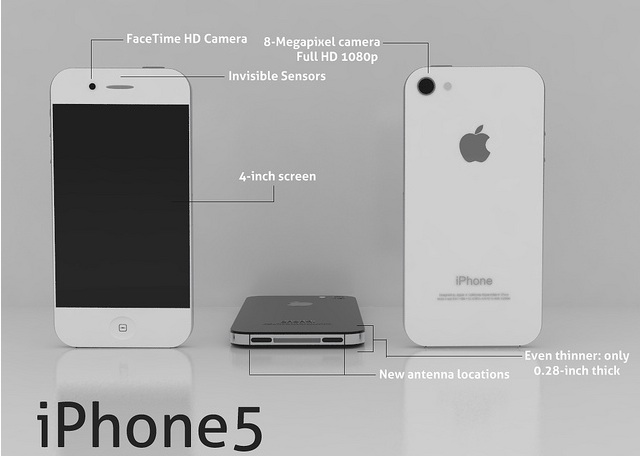
    There is no guessing the obvious, Apple has already shown off their A5 chipset in the iPad 2 , and just like the iPhone 4 had the iPads chip, the next iPhone will have the new Apple dual core A5 chip. This will boost the speed and performance of the iPhone 5 (we are just going to stick to that name for now)  upto four times. Also, in tow will be RAM upgrades and a bigger 8 megapixel camera sensor, which has been talked about

    Various rumors and speculation points to a larger Edge to Edge display on the front of the device. A possible 3.8 inch or even 4 inch capacitive display can do no harm to Apple’s Jesus phone, giving it a larger screen – real estate would require pumping in more pixels per inch to retain the “Retina Display” badge.

    Design 

    Now this is where the controversy starts. The iPhone 4 had a impressively new design which was loved by everyone when it was launched. Mostly everyone appreciated the new stainless steel design, although there were some who said that it was not as nice looking as the original iPhone. The new design brought a lot of possibilities for Apple especially in the components department. A machined design meant that they could stuff their components into the phone and still have room for a large battery. The frame of the iPhone was the most impressively designed structure to be ever used in a SmartPhone, leaving only the glass front and back in question, which did end up weakening the whole device and making it prone to damage.

    The Antenna design, dubbed Antennagate put Apple in the wrong kind of limelight and has ever since been know as the “break all or make all” theory for last years Jesus phone. Everyone thought the antenna problem would diminish the sales of the iPhone 4, but it actually gave them so much publicity that the device did better than expectations from the company HQ.

    Using a similar antenna on the next iPhone would be a not-so-smart move from Apple, although there are those who would still buy the device, a large chunk of the audience would think that Apple ignores the consumer, and  move onto alternatives.

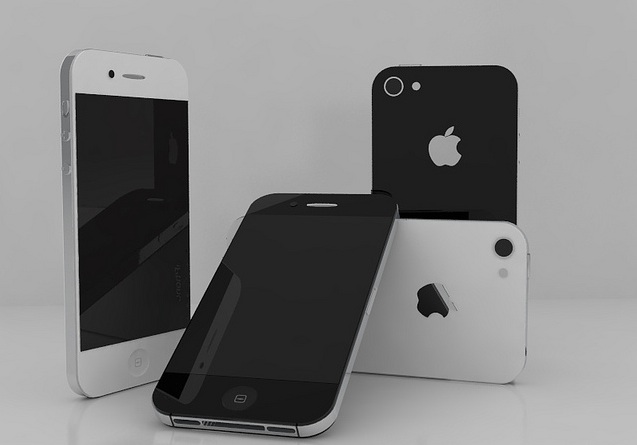
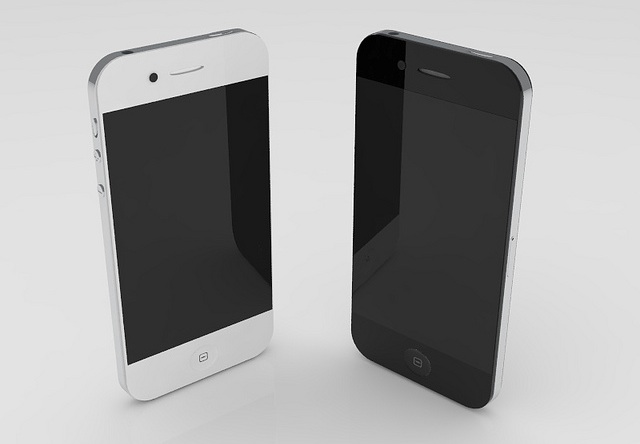
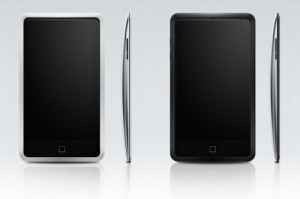
    The tear drop design has had many references in rumors of the upcoming iPhone 5, a device machined out of Aluminum (unibody is Apple’s forté) which is really slim for the most part but thicker in arears that will  hold the antenna and battery. A device of such design will do fantastically well with the young consumer base of Apple’s baby.
     

    Operating System

    We all know the iPhone 5 will have the iOS 5, which will radically enhance the usability of the phone. With dedicated notifications, iMessage, iCloud, Newsstand, Twitter integration, Wireless Device syncing, new photo editing, and the use of volume button as a dedicated camera shutter release. The iOS 5 is ready to give stiff competition to its competitors, still remaining the most secure and bug free mobile OS below the stratosphere . There are still basic features missing from the iOS, bluetooth file transfer being one of them.

    One More Thing!

    Apple may introduce a new cheaper iPhone this year, to target the Android buying generation. A similar strategy already kind of exists with the iPhone 4 being the pedigree and the iPhone 3Gs being sold for Rs. 19,990 (USD 400). 

    But these rumors point to a completely new and cheaper device id, possibly a US $ 200 iPhone ( they could relaunch the 3GS at 200 $/ or drop in a sim card in the iPod touch). Nobody really knows till Steve walks up on stage ( hopefully) with the next “Magical” device and amazes the audience watching the event worldwide. 

    No matter how many expectations are met, the iPhone 5 is coming and its coming soon. So hold on to your monies and wait for its arrival, for you never know what technologies might make you drop loyalties and compel you to make the switch.

    Here is a list-up of all the expectations we have

    • A Completely new design
    • An 8 Megapixel  camera possibly on the opposite side of the back panel.
    • Separate Camera Flash for better allumination
    • Larger screen with the same Retina resolution
    • The new A5 chip with 1 GB RAM
    • 32/64 Gb capacities
    • HD Facetime Camera
    • Slimmer profile
    • Back panel made out of tougher glass/ Aluminum / Steel
    Expectations can run wild, leave a comment below if you have any other expectations!

    [polldaddy poll=5223743]
  • Introducing the USB Vault

    Introducing the USB Vault

    Are you paranoid about your data? Have you ever misplaced (read lost) your pen drive? Is software encryption not good enough for you? If you answered yes to these questions, then have we got the device for you!

    A Russian designer felt that his data wasn’t secure so he drafted up a design in AutoCAD and came up with this device. It adds a layer of physical security to a regular pen drive by adding a five wheel combination lock to it. Specifics are scarce but we believe the device was laser-cut from the design and is made of brass.

    Not only does the device look cool, but it appears to be secure as well. We’ve lost our fair share of pen drives over the years, but we imagine that with such a device, if nothing else, our data WILL be secure.

  • Printable Antenna Generates Electricity from Out of the Blue

    Printable Antenna Generates Electricity from Out of the Blue

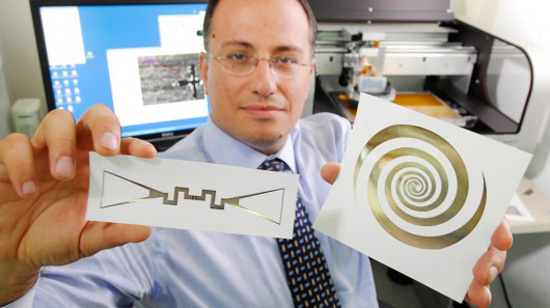
    WiFi networks, Cellphone and Radio Signals. These are just a few of the waves that are spamming the Electro Magnetic Spectrum around you most of the time. You can harvest this energy for more than its intended use. With printable antennas, you can power battery free electronics in most urban environments.

    Since this technology is still in its infancy and generates only a few milliwatts, so don’t expect it to power your cellphone or laptop anytime soon. What this technology is good for is powering networks of sensors in locations that don’t have electrical outlets, batteries or access to solar power. This could be a temperature sensor placed in the wall of your home, or a sensor built into the body of your car to check for structural damage. These sensors could also be teamed up with capacitors to collect power and send short bursts of wireless data to a receiver nearby.

    Theoretically, the amount of electricity generated could be increased in two ways. The first way would involve stacking these antennas one on top of the other and the second way would be to increase the surface area of each antenna. Combined, perhaps we could have a self charging battery or phone in the near future. We can only hope…

  • Toshiba Unveils a New CMOS Sensor

    Toshiba Unveils a New CMOS Sensor

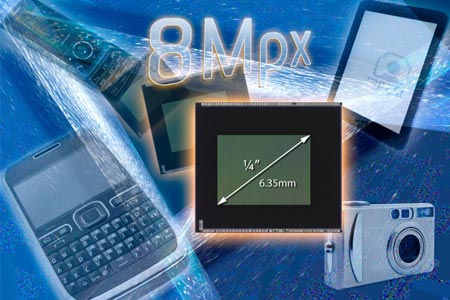
    Toshiba has released a new CMOS image sensor with a 0.25 inch optical format. This new sensor has the smallest pixel size to date of 1.12 micrometers and delivers cutting edge peformance with its built in back-side illumination technology.

    The sensor has been designed to accomodate tight form factors and still capture high definition images. Due to this feature, the company expects it to be embedded into mobile devices such as cameras, smartphones, tablets and even laptops in the near future. The 8.08 MP sensor can capture video at 60 frames per second at both 720p and 1080p resolutions.

    Andrew Burt, vice president, Analog and Imaging Business Unit, System LSI Group, TAEC had this to say,

    As smartphones and other portable digital devices move to smaller form factors, image sensors must also shrink in size. This presents imaging subsystem designers with a challenge: how do you get smaller and smaller image sensors to support higher image resolutions when miniaturization can cause a fall off in performance? Our BSI technology overcomes this problem by deploying the lens on the rear of the sensor, on its silicon substrate, not on the front, where wiring limits light absorption. This positioning boosts light sensitivity and absorption, and allows Toshiba to make finer quality image pixels in smaller-sized CMOS image sensors. This increased sensitivity also makes our BSI CMOS image sensors more suitable for video applications, such as video capture or video chat.

  • LG joins the Android QWERTY bandwagon with Optimus Pro

    LG joins the Android QWERTY bandwagon with Optimus Pro

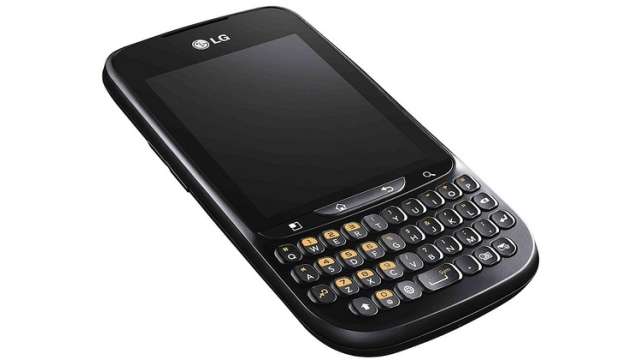
    Looks like a Samsung Galaxy Pro competitor from Samsung competitor – The LG Optimus Pro is on sale in Italy and coming to the rest of the world soon. Known specs include Android 2.3 gingerbread a 2.8 inch QVGA touchscreen and a 3.2 MP camera. All of this will run on a 800MHZ processor and 256mb of RAM. The device has a nice Candy Bar design and should fare well against competition if the pricing is right. Currently it sells for €179 which seems a tad bit high.

  • HTC will start Bootloader Unlock in August – HTC Sensation on the List

    HTC will start Bootloader Unlock in August – HTC Sensation on the List

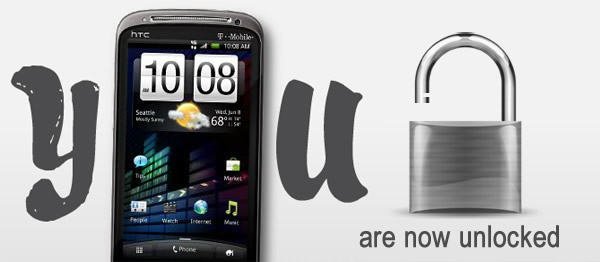
    HTC has confirmed via their official Facebook fan page that they will start unlocking bootloaders in their popular phones come August. On the List is the HTC Sensation (global – yes the one in India) along with Sensation 4G on T-Mobile and the EVO 3D on Sprint. 

    HTC wont stop there and says that it will continue to provide unlocking capabilities to other devices as time progresses.


    **UPDATE 7/10**

    We wanted to provide an update on HTC’s progress with bringing bootloader unlocking to our newest phones. We know how excited some of you are for this capability, and we’ve put significant resources behind making this change as soon as possible. While we wish we could flip a simple switch and unlock all bootloaders across our device portfolio, this is actually a complex challenge that requires a new software build and extensive testing to deliver the best possible customer experience.

    We’re thrilled to announce today that software updates to support bootloader unlocking will begin rolling out in August for the global HTC Sensation, followed by the HTC Sensation 4G on T-Mobile USA and the HTC EVO 3D on Sprint. We’re in the testing phase for the unlocking capability now, and we expect it to be fully operational by early September for devices that have received the software updates. We’ll continue rolling out the unlocking capability over time to other devices as part of maintenance releases and new shipments.

    HTC continues its commitment to unlocking bootloaders and supporting the developer community. Because of the importance of this community to us, please expect an update on this about every few weeks as we make progress toward launch. Thank you for your patience and continued support!

    [HTC on Facebook]

  • iPhone 5 with Edge to Edge Screen Spotted on Screen Grabs? Video

    iPhone 5 with Edge to Edge Screen Spotted on Screen Grabs? Video

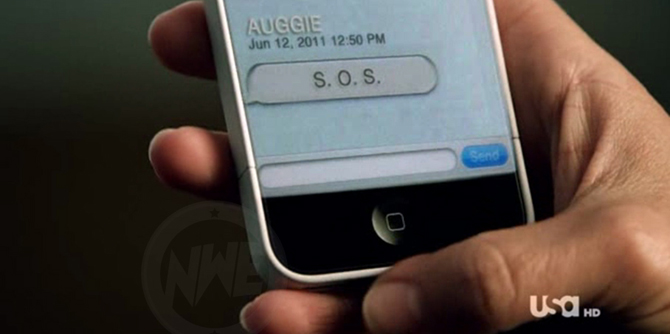
    A mockup of iPhone 5 was spotted on TV show Covert Affairs, Although it resembles a lot of rumors we have hearing lately, it is a clear video implant of the device. 

  • New Macbook air to come July 13th, Even Mac OS X Lion , After Store Update

    New Macbook air to come July 13th, Even Mac OS X Lion , After Store Update

    The inter-webs are abuzz with news of Apple Sale Item refresh on the 13th of July. This news comes as many have confirmed that Apple has started to ask Apple Store employees to prepare for an “overnight” shift on July 13th.

    Many claim that the Macbook air and Lion OS X will be available from the 14th of July in Apple Stores. and the Macbook Air refresh will bring a lot of new things, including SandyBridge processors and Thunderbolt I/O.

    A black Macbook Air (premium) is also in the “AIR”, but seems highly unlikely.

  • Apple Planning to Kill WebOS Wireless Sharing, With a Patent of Their Own

    Apple Planning to Kill WebOS Wireless Sharing, With a Patent of Their Own

    Looks like Apple is preparing to end HP’s “Touch to Share” in one single sweep. As the folks fro PatentlyApple found in the new patent 20110163944, the new wireless sharing feature that could allow users to quickly and easily transfer files from various iOS devices. a user might be able to “pour” the files from an iPhone onto an iPad in one single gesture or motion of the wrist.

  • Apple May release an iPod Touch 3G, Data only

    Apple May release an iPod Touch 3G, Data only


    Looks like Apple might bring a total of three new things to the Table this September. New iPhone 5, revised iPad 2 ( 3) and a totally new iPod 3g?. Yes you read it right, several sources including a dutch website claim that Apple will release a 3G iPod touch this year. Similar to the iPad , the iPod touch 3G will only be able to use the onboard radio for data connectivity and not to make phone calls. 

    But we know there is always a work around for that, right?

    So essentially a total of three totally revamped iOS devices are heading your way in September. We sure hope you start saving up!

    [Read]

  • Lens Free Camera Developed at Cornell

    Lens Free Camera Developed at Cornell

    Patrick Gill, a postdoctoral associate, led a team that invented the camera in the laboratory of Alyosha Molnar, assistant professor of computing and electrical engineering at Cornell. Their working prototype, resolves images 20 pixels across, which is not studio quality but is quite impressive from a camera that’s only a hundredth of a millimeter thick. The camera was developed to shed light onto objects that were previously hard to see.

    Gill’s camera looks like a tiny compact disc and is made of a flat piece of doped silicone, which makes its manufacturing costs amount to just a few cents. The camera is incredibly small and light and is much cheaper than traditional small cameras which cost a dollar or more to manufacture and require bulky focusing optics.

    The scientists call the camera a Planar Fourier Capture Array (PFCA) since it uses the principles of the Fourier transformation, which is a mathematical tool that allows multiple ways of capturing the same information. The scientists would continue to refine the camera’s resolution and efficiency as they believe that such a device can have a multitude of applications. It could be used in devices that need to measure the angle of the sun or in a simple robot that requires a vision system to navigate.

iGyaan Network
Privacy Overview

This website uses cookies so that we can provide you with the best user experience possible. Cookie information is stored in your browser and performs functions such as recognising you when you return to our website and helping our team to understand which sections of the website you find most interesting and useful.