Tag: Airport

  • UK Readies Itself  With Military-Grade Protection From Drones

    UK Readies Itself With Military-Grade Protection From Drones

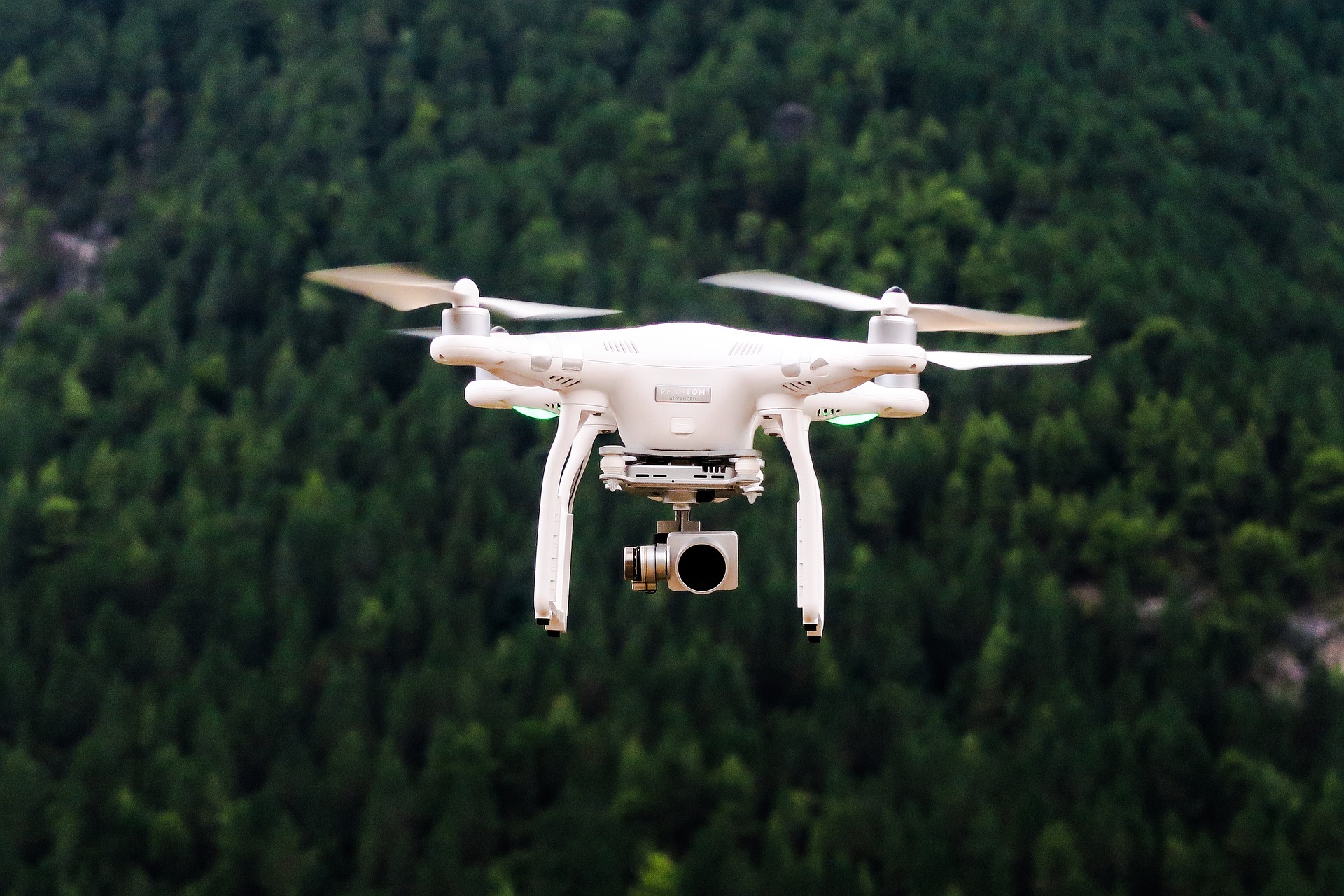
    After a few disastrous incidents of flight delays, cancellations and near misses, UK is all set to put regulations in place for drone flights near airports. It is also reported that all major UK airports now have or will soon have military grade anti-drone equipment.
    UK’s Drone Regulations

    Very recently the military were called in to help when drone sightings causing massive delays at Heathrow Airport. Another such incident involved Gatwick airport when drone flights caused major disruption affecting 140,000 passengers just before Christmas. UK government wishes to or already has technology installed at other critical infrastructure such as prisons, power stations and military sites. Gatwick Airport in a statement said that it had spent £5m to prevent future attacks.

    The current drone regulations in UK suggests:

    • Drone must be in line of sight at all times
    • Not within 50m of people, vehicles or buildings
    • No higher than 120m

    The government in UK are also said to expand technology to detect and repel drones from sites like airports and prisons. A new legislation will reportedly give police additional powers to land drones. They will also be granted the power to require users to produce the appropriate documentation if they deem it necessary.
    India’s Drone Regulations

    On the other hand, India lifted the blanket ban that it had put in place for a long time, in December 2018. However, this has been lifted partially and will now allow commercial activities and drone flights. Drone Regulation 1.0 is a step to open up the use of Remotely Piloted Aircraft (RPAs) for commercial activities.
    The regulation is formulated by the Ministry of Civil Aviation and it has created a huge base for a drone ecosystem in the country. Under this regulation the airspace has been partitioned into Red Zone (flying not permitted), Yellow Zone (controlled) and Green Zone (automatic permission). Permission to fly a drone can be taken using an App. The app is called Digital Sky. 

    The current regulations for a drone flight in India are:

    • During day light (except those flying in enclosed spaces)
    • Within visual line of sight (VLoS)
    • A maximum height of 400 feet above ground limit (AGL)

    Drones will not be able to take flight in “no drone zones”. These include areas close to airports, international borders, State Secretariat Complex in state capitals, strategic locations/vital and military installations. If your drone flight causes damage or injury, you might face penalties under the Aircraft Act 1934, and charged under the IPC sections 287, 336, 337, and 338 which can include anything between Rs 250 fine to two years in jail. 
  • India’s Cochin Airport Has 100% Free Electricity Via a Massive Solar Project

    India’s Cochin Airport Has 100% Free Electricity Via a Massive Solar Project

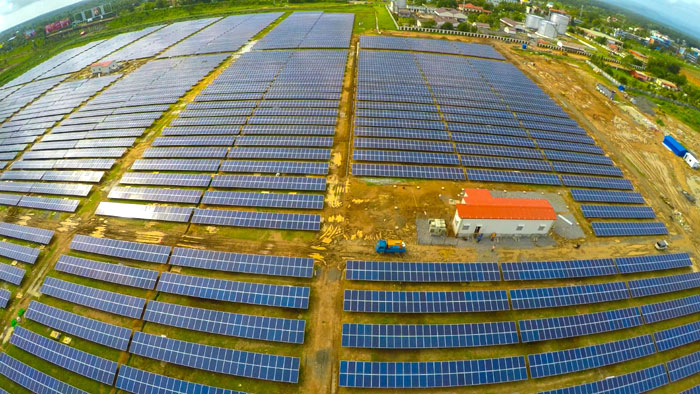
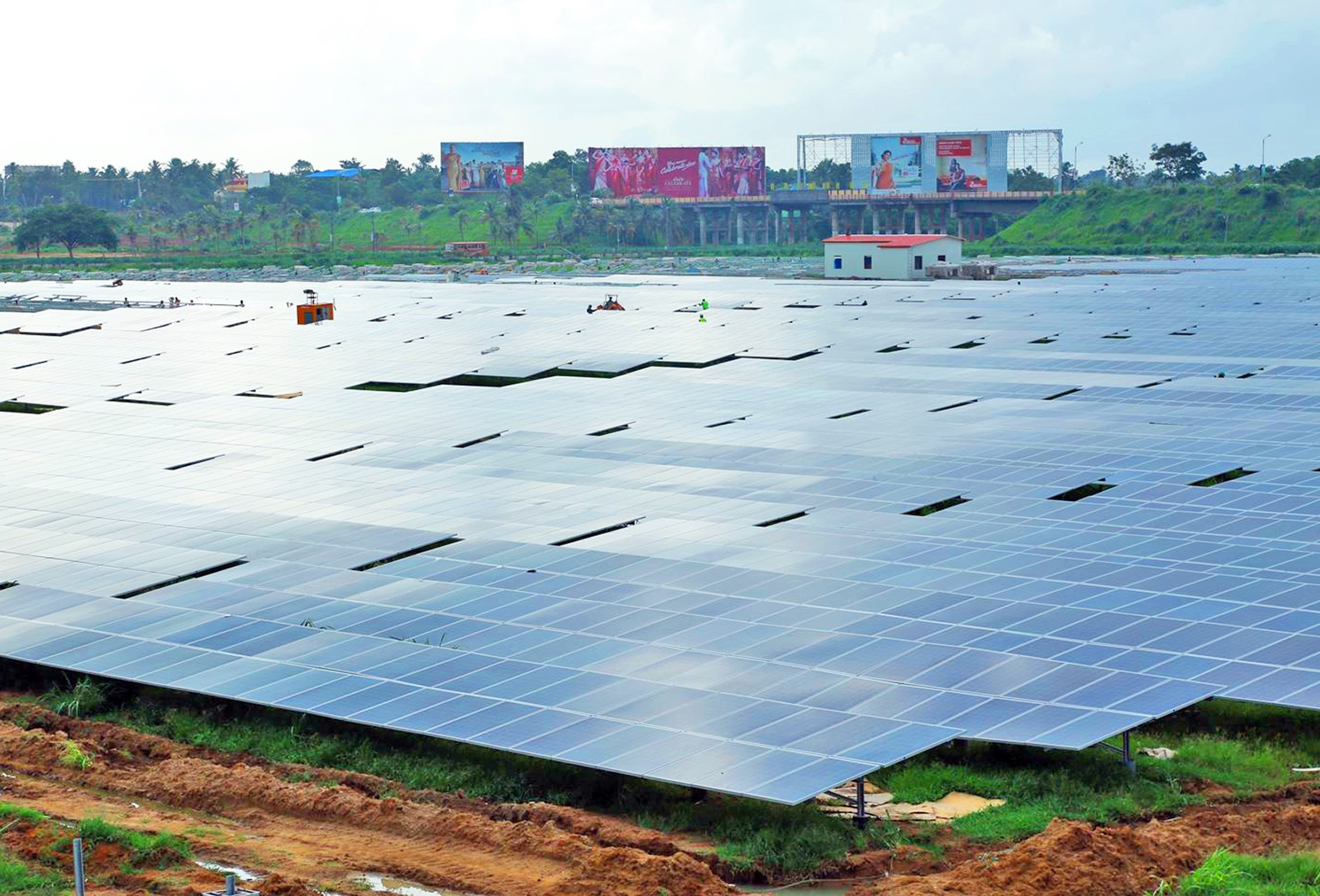
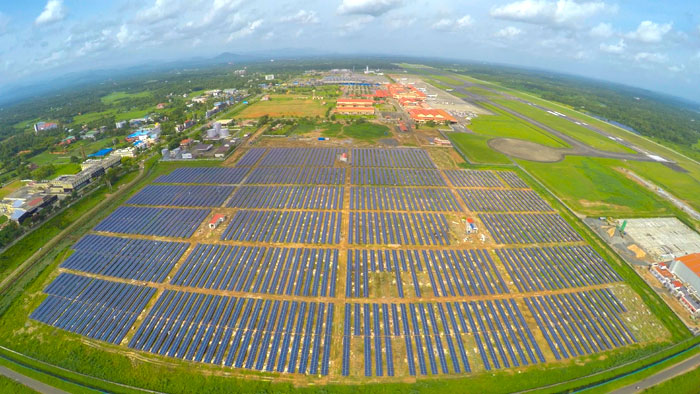
    Cochin Airport in India became the world’s first airport to become completely self-reliant as far as electricity is concerned.

    The project, worth $10 Million, began in 2013 and was completed in 2015, it comprises of 46,150 solar panels laid on 45 acres of land near the airport’s cargo complex. Cochin airport’s solar power plant produces 50,000 to 60,000 units of electricity per day to for consumption by all facilities at the International airport.

    When we had realized that the power bill is on the higher side, we contemplated possibilities. Then the idea of tapping the green power came in. We consume around 48,000 unit (KWh) a day. So if we can produce the same, that too by strictly adhering to the green and sustainable development model of infrastructure development that we always follow, that would transcend a message to the world. Now this has become the world’s first airport fully operates on solar power ” -Said Mr.V.J.Kurian IAS, Managing Director, Cochin International Airport Ltd.

    This plant will produce 18 million units of clean power an annual power equivalent for 10,000 homes for one year. Over the next 25 years, this green energy project will avoid carbon dioxide emissions from coal-fired power plants by more than 3 lakh metric tons, which is equivalent to planting 3 million trees or not driving 750 miles.

    cochin solar feild

    Initially Kolkata-based M/s Vikram Solar Pvt. Ltd. was responsible for the 400 polycrystalline modules of an output of 250Wp and five Refu-sol 20kW capacity string inverters were used in this plant as a trial. After completion, the airport has so far saved more than 550 Metric Tonnes of CO2 emission.

    This solar project in itself is an incredible feat, and the fact that the whole airport is self-sustainable for at least the next 25 years makes it even more impressive

    Source

  • Cochin Becomes India’s First and World’s Largest Solar Powered Airport

    Cochin Becomes India’s First and World’s Largest Solar Powered Airport

    Cochin becomes India’s first city to have an airport entirely powered by solar energy. This comes as great news for a country already struggling with electricity deficit.  The city, famous for its beauty and the consequent tourism, now has another feather added to its cap. The airport is also the largest in the world to operate completely on solar power.Cochin International Airport

    The solar plant was constructed by German engineering giant Bosch with a specification of 12 MWp. It consists of 46,150 solar panels across 45 acres to generate power. The airport further possesses 100 kilowatt peak (kWp) rooftop photovoltaic (PV) plant which was first built in 2013.

    According to the Airport Authority’s website, the plant would be able to cut down on carbon emissions over the next 25 years in quantities equivalent to planting 3 million trees, or not driving 1.2 billion km (750 million miles). Inspired by the success of the Cochin airport, the government of India plans to equip 30 airports across the country in the same manner.

  • Here’s Why You Shouldn’t Show Your Boarding Pass at International Airports

    Here’s Why You Shouldn’t Show Your Boarding Pass at International Airports

    Air travellers are refusing to show their boarding passes to the shops in the airport after finding out that the shops were using the information to avoid paying VAT, that too, without giving an added discount to customers. The revolt of sorts, took place on August 8th.

    Popular airport stores like WHSmith and Boots are now having to deal with angry customers who are outright refusing to show their boarding passes, just to ‘boost retailers’ profits. It has also been said that readers are now coming out and backing the Independent’s campaign to end the rip off many citizens have been witnessing.

    “That’s the last time I show an airport shop my boarding card on principle,” said one tweeter.

    The reason that shops don’t want to pay the 20% VAT is because passengers travelling outside the European Union have no purchase tax. Research suggests most of these stores don’t pass the savings on to customers.

    A possible solution to this problem is if retailers share the reclaimed VAT with its customers, however the retailers have refused to give in to a dual pricing system, deeming it a ‘practical impossibility.’

    Source:[tw-button size=”medium” background=”#07ABE2″ color=”” target=”_self” link=”http://www.independent.co.uk/news/uk/home-news/air-travellers-refusing-to-show-boarding-passes-at-airport-shops-after-news-that-the-information-is-used-by-stores-to-avoid-paying-vat-10449107.html”]Independent.uk[/tw-button]

iGyaan Network
Privacy Overview

This website uses cookies so that we can provide you with the best user experience possible. Cookie information is stored in your browser and performs functions such as recognising you when you return to our website and helping our team to understand which sections of the website you find most interesting and useful.