The Apple Watch is the first smartwatch by the Cupertino-based giant, and the company is extremely proud of it, especially its apps. Yesterday the CEO of Apple, Tim Cook while disclosing about the total earnings of the company, boasted about the massive amount of apps ready for the Apple Watch. Tim stated that over 3,500 apps were available.
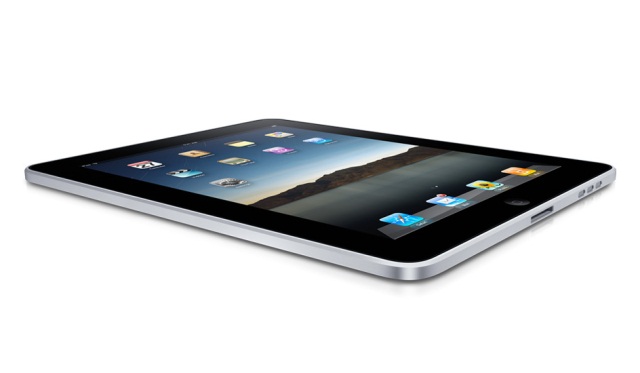
Cook further elaborated how significant this figure is as the iPad had only had 1,000 apps ready at its launch in 2010, and iPhone App Store had just 500 apps when it first debuted in July 2008.
Cook briefed in a meeting –
We’re far ahead from where we expected to be from an application point of view. We had an internal goal of beating that 1,000 [that the iPad had] and we exceeded that.
As Apple allowed the third-party apps to make their presence on its Watch, developers have been submitting the ready apps for approval since March 31. The creation of apps wasn’t an easy task for developers as Apple limited the access to functional hardware. Most of those apps have been approved, and Apple Watch users can install any tool from the plethora of apps. Some of the Indian apps for the Apple Watch include NDTV News, HDFC and Cleartrip.
This seems like an important announcement, however we need to keep it in mind that the presence of apps was considerably less in 2010, when the iPad was first introduced. It would not be fair to compare the iPad with the Apple Watch. Recently, it was also learnt that developers are also creating a set of games for the wearable, which is a challenge. Know more about the Apple Watch games here.
If you fancy owning a little bit of Apple history in the form of one of the very first Apple 1 computer systems, you will be pleased to learn that one of the rare Apple 1 computer systems is now available at auction by Christie’s auction house with a starting price of $300,000.
The first Apple computer designed way back in 1976 by Steve Jobs and Steve Wozniak. The Apple 1 computer was the foundation of the business that the two Steve’s created in the 70’s and is firmly seen as a piece of technology history.
The owner is a 70-year old man named Ted Perry who acquired the computer by trading some computer parts at a second-hand swap somewhere between 1979 and 1980.
The device still works, Perry affirms, and he says he has kept the computer mostly in a cardboard box since he acquired it more than 33 years ago. The new auction for Perry’s Apple 1 kicks off on June 24, next Monday, and will last until July 9, MacRumors said.
Though the Apple I sold modestly, an estimated 200 units, proceeds and experience gained from the project helped to set the foundation for the Apple II, the personal computer which would help to kick off the home computing revolution and make Apple a household name. Over time, the first Apple model became a collector’s item as Apple built itself into one of the most successful companies of all time.
Experts claim that only 30 to 50 of the first Apple computers are still alive and kicking.
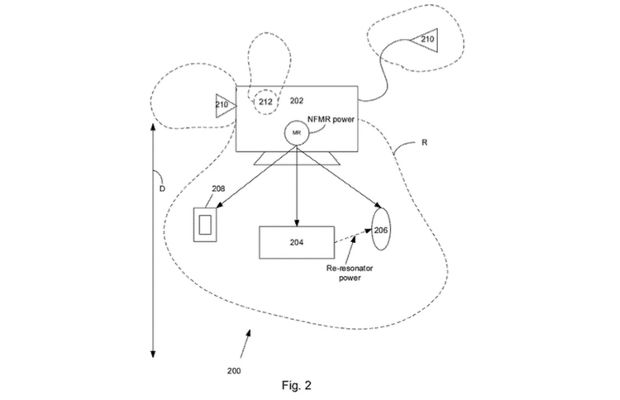
When it comes to wireless charging, today’s options aren’t exactly as cord-free as the label would suggest. Things like charging mats or other wireless docking options are fine and all, but adding more accessories and bulky cases to the mix is often more trouble than it’s worth. As Wired reports, a patent filed this week by Apple side steps these pesky add-ons and could offer true wireless charging for the first time on Apple hardware.
An Apple patent application published Thursday, “Wireless Power Utilization in a Local Computing Environment,” uses a different approach. Apple’s implementation would utilize a near-field magnetic resonance (NFMR) power supply to deliver juice to nearby devices that have an NFMR resonator circuit within.
In the patent filed by Apple, the company claims they will “utilize a near-field magnetic resonance (NFMR) power supply to deliver juice to nearby devices that have an NFMR resonator circuit within.” This approach would create a “virtual charging area” within about a yard of this power supply, which would thereby charge your device.
A secondary benefit is that wireless devices like the mouse and keyboard could ditch their batteries, helping the environment. Eco responsibility is a cause that, despite challenges with product repairability, Apple is quite dedicated to.
The iPad mini and the “fourth generation iPad” went on sale last Friday. The iPad mini is smaller, thinner and lighter than any previous version of the 10-inch iPad and Apple sent out a very interesting press release today. Usually when a product launches they boast about the millions of sales it produced in 3-days. This time around they did – claiming that “Three Million iPads in Three Days” – but that number combines both the iPad mini and the fourth-gen iPad with Retina display.
[quote]No clear numbers on how the iPad mini specifically performed. Tim Cook, Apple’s CEO, noted that“Customers around the world love the new iPad mini and fourth generation iPad. We set a new launch weekend record and practically sold out of iPad minis. We’re working hard to build more quickly to meet the incredible demand.”[/quote]
This “practically sold out of iPad mini” is somewhat new for Apple. They have repeatedly sold out of product on launch weekend. The iPad mini was released in 34 countries on Friday. Perhaps people are waiting for the 3G version to be released in a couple weeks.
Regardless, 3 million iPad sales in something to be proud of.
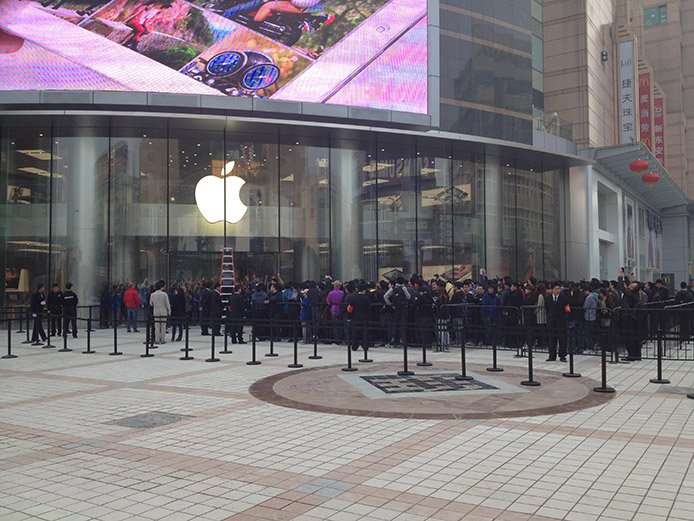
Apple’s largest store in Asia opened in Beijing on Saturday. The store, located in the city’s commercial street of Wangfujing, is Apple Inc’s third in Beijing.
John Browett, Apple’s senior vice president of retail, had previously said the new store is the company’s largest store in Asia, with an area of 2,300 square meters and more than 300 employees.
Big Apple events in Beijing tend to get a little rowdy, but Saturday’s opening, tightly controlled by dozens of security personnel, went smoothly. A half hour before doors opened, hundreds of employees in the company’s typical blue t-shirts lined up in formation, slapped high fives with one another and the crowd. Some even jogged around the perimeter of the store, drumming up excitement from customers. By 10 a.m., the line barricades were removed, although a steady stream of customers continued to file in.
It was reported on Thursday that Apple Senior Vice President of Retail John Browett visited the Wangfujing location to offer media a guided tour of what he called the best store Apple has built in Asia. The executive also let loose that construction of a fourth Chinese location was already well underway in Shenzhen, a city in which Foxconn and other Apple manufacturing partners run major fabrication facilities.
New iPad owners on the MacRumors forums and Apple’s own support community complain that the iPad’s lower left corner is getting warm during extended use. As usual with all new Apple products things tend to go out of hand. So without wasting any time on the matter Apple has issued a statement on the matter.
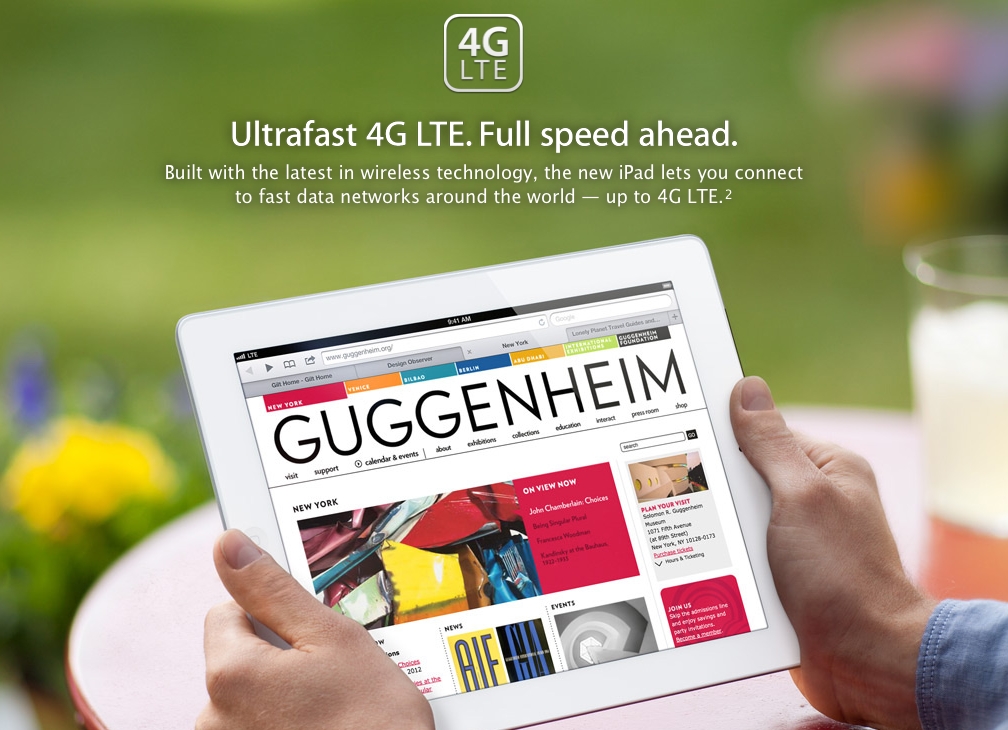
The new iPad delivers a stunning Retina display, A5X chip, support for 4G LTE plus 10 hours of battery life, all while operating well within our thermal specifications. If customers have any concerns they should contact AppleCare.”
2011 was a year of Samsung, the company has taken the consumer electronics market by storm, grabbing attention one way or another. Samsung also led as India’s number one manufacturer for mobile phones in all categories. From basic feature phones to high end Smart phones, the company has managed to challenge all odds and gain the market respect.
But all this does not come cheap, Samsung employs a huge amount of its annual earning into marketing. In 2011 alone Samsung is estimated to have spent over US $ 2 Billion in advertising their products. Out of which a major 40% is targeted towards mobile devices and 6-7 % towards new phones. Samsung also deploys twice that amount into market research and development, so that its teams know what the next big thing from the company is going to be.
Galaxy S2
In 2011 Samsung took a huge stab at Apple’s dominant spot as the world leader in smartphone sales. By quarter 3 2011 Samsung had replaced Apple as the world most selling smartphone manufacturer ( if you consider number of handsets and not just one model of handset). Samsung Galaxy S2 was the phone that changed everything for Samsung, the new innovations in the field of mobility that challenged design and construction, and innovative softwares threw huge limelight on Samsung’s potential in this market space. Android loyalists were drawn by Samsung’s willingness to answer to their demands and stuffing their handsets with all features requested (and more) by the users.
Who ever imagined a device like the Galaxy Note, a fully capacitive screen that had massive scribbling promise, a handwriting recognizing monster with the capabilities of real time editing and project handling. Live annotations and screen captures were there in previous Samsung handsets, but the precision with with the Note is able to do these tasks is excellent. People want change and innovation and that what Samsung has started to give to its users.
The South Korean company is earning high praise for the design of its new line of OLED television sets, its oversized Galaxy Note smartphone and its
Galaxy Tab 750
new line of laptops, dubbed Series 9. Samsung has held the title of the top TV maker for the past six years, and recently surpassed Apple Inc. to become the world’s top smartphone manufacturer. Samsung posted a US$4.5-billion profit in the most recent quarter, one of the best in the company’s history.
The Company now has set its sights on the personal computer and tablet markets, hoping to replicate the success the company has had in its smartphone and television businesses. Targeting their efforts at Apple, Hewlett-Packard Co. and Dell Inc, companies which are current leaders in the domain. This won’t be easy for Samsung either especially because globally they don’t even fall in the top 5 PC manufacturers category.
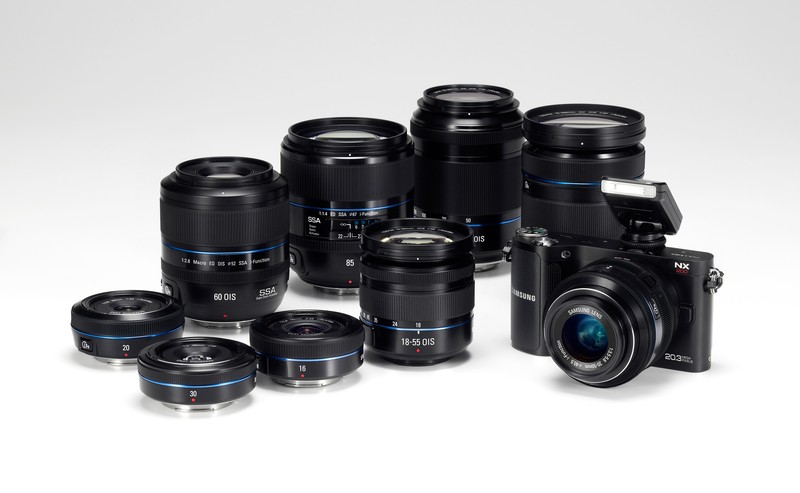
nx System Camera
One of Samsung’s biggest strengths is its component manufacturing facilities. Samsung itself manufactures 75% of the components used in its TVs, PCs and smartphones, enabling the company to innovate and test new products quickly. Samsung is also emerging big in a category seldom seen with asian companies, Cameras. With a exciting range of digital point and shoot cameras from the company, including innovative flip lcd type cameras. The company also has pioneered the professional SLR segment with their range of NX cameras, that are getting appreciation from professional Photographers.
The future of the brand also seems bright, as people have less and less faith in Apple’s ability to give what the users want. The next revision of the iPad and the iPhone 5 no longer seem as exciting as the Samsung Galaxy S3 or the Galaxy Tab 3 headed our way in 2012.
Its been a long time since our last edit, this one was long over due. The smartphone industry is ever changing, with constant evolutions in a battlefield of major companies and small startups. In a world where companies become large in a matter of months and fall even faster, we can only guess what the future holds in the massive divide.