Tag: ban

  • SMS Curb May Lead to 7-8% Revenue Loss To Mobile Companies

    SMS Curb May Lead to 7-8% Revenue Loss To Mobile Companies

    Restriction on SMSes to five per day is not only causing problems for millions of mobile phone users but may also lead to loss of 7-8 percent revenue of telecom operators for the month.

    The government had banned bulk SMSes and MMSes for 15 days across the country from 18 August to check spread of
    rumours which has led to exodus of people from northeastern states from cities like Bangalore, Hyderabad and Pune.

    There were reports of widespread circulation of SMSes and MMSes containing misleading information about Assam violence, threats to people from northeast states living in other parts of the country and doctored videos.

    While pre-paid mobile users, who account for over 90 percent of the 930 million mobile subscriber base, are unable to send more than five messages per day, postpaid users do not seem to be facing any problem.

    People across the country wanting to wish their friends and relatives for Eid are feeling the pinch of the government order restricting the text messages.

    “A ban of 15 days means they could lose around seven to eight percent of revenue this month from this service alone,” Cellular Operators Association of India (COAI) Director General Rajan S Mathews said.

    Operators on an average get 15-18 per cent revenue from data services of which SMS is a part, he said.

    Mathews, however, added that “all the members will definitely make every effort to abide by the rules, as national security and human lives are at stake.”

    Youngsters are the largest users of SMS and many of them are upset by the restriction. “I wanted to SMS my Eid greetings to friends as it is not possible to call everyone. However, after five messages, I am unable to send anymore messages. As a subscriber, I feel cheated,” Pragya Gupta, a student at Delhi University said.

    The order, which limits the number of SMS’ a subscriber can send for the next 15 days, was given after bulk messages were circulated that provoked exodus of northeast people from various cities like Bangalore and Pune. “SMS has become a way of life. As a media professional, I need to stay in touch with industry peers and it is generally over messages. However, with this ban, we are finding it difficult and it is impacting our work,” Rakesh Kumar Jha, a PR professional said.

    He, however, added that “the situation is very sensitive and I can understand the government’s decision to ban bulk sms in order to prevent any untoward incident”.

    Subscribers trying to send their sixth SMS received messages like “As per the government’s order, your limit is 5 SMS a day”.

    The order however does not cover transactional messages related to banking, financial institutes and railways.

    [FirstPost]

  • Apple rejoins environmental registry

    Apple rejoins environmental registry

    Apple has rejoined an environmental ratings scheme a week after quitting the program. The firm published a letter on its site saying it had realized the move had been “a mistake” after many of its customers had complained.

    The u-turn follows an announcement by San Francisco city officials that they planned to ban local agencies from buying Apple Mac computers saying at the time that they hoped Apple would reconsider.

    Apple helped set up the EPEAT (Electronic Product Environmental Assessment Tool) registry in 2006. It is designed to identify which electronic devices pose the least risk to the environment.

    In dropping out last month from the registry, Apple offered no explanation but speculation centered around its use of batteries on some MacBooks which are glued into the frame and thus are not easily recycled.

  • US Court lifts Galaxy Nexus smartphone ban, tablet still blocked

    US Court lifts Galaxy Nexus smartphone ban, tablet still blocked

    Whoops! Something went wrong!

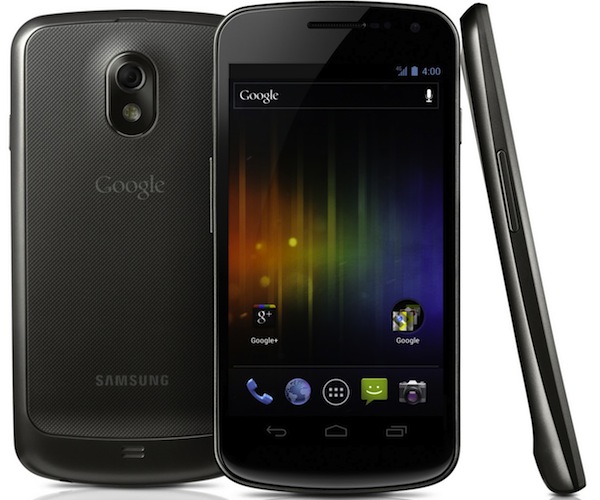
    A US appeals court gave Samsung a temporary reprieve Friday on the sale of its Galaxy Nexus 7 smartphones while leaving intact a court ban on US sales of its tablet computers in a patent battle with Apple.

    In two rulings in the bitter patent dispute, the US Court of Appeals in the capital Washington gave one to Apple and one to Samsung, but only temporarily.

    But the “stay” was just temporary until the panel receives arguments from Apple, which argues the phone infringes on patents in its iPhone.

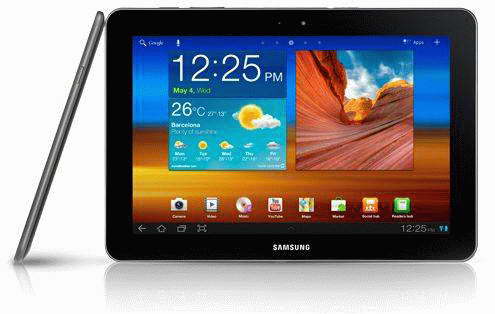
    In a separate decision, the appellate judges refused to lift Koh’s injunction on the 10-inch Galaxy Tab computer, which Apple claimed was copied from the iPad.

    The court panel in Washington ordered Apple to respond by July 12, while denying a Samsung request to stay, or halt the injunction.

    Both Galaxy devices are powered by Android operating software that Google makes available for free to gadget makers. Nexus is the Mountain View, California-based technology company’s own branded line.

  • Delhi High Court to hear Facebook and Google Appeal today

    Delhi High Court to hear Facebook and Google Appeal today

    The Delhi high court will on Thursday take up the pleas filed by Google India and Facebook India challenging the summons issued by the lower court, for ‘offensive material’ posted on their websites.

    Google and Facebook on Tuesday said that it was impossible for them to control the internet content uploaded by billions of people. Senior advocate Neeraj Kishan Kaul, appearing for Google India, had said that the summons issued to social networking sites by a metropolitan magistrate showed complete lack of understanding about how the online system worked.

    The issue relates to a constitutional issue of freedom of speech and expression, and suppressing it was not possible as the right to freedom of speech in democratic India separates us from a totalitarian regime like China

    Neeraj Kishan Kaul

    The advocate had tried to mention the fact that Google India and Google Inc. were infact two different entities and that Google India had no control over the actions of the US counterpart, nor are they responsible for it.

    While companies in the US protest the SOPA and PIPA, India is still fighting for freedom of speech and expression of mind.

  • Delhi High Court to hear Facebook and Google’s petition

    Delhi High Court to hear Facebook and Google’s petition

    The Delhi High Court will hear the petition filed by Google and Facebook challenging the trial court’s order to prosecute them for objectionable content. Google, Facebook and 19 other social networking sites faced legal action for offences of promoting enmity between classes after Kapil Sibal led govt. team granted sanction to prosecute them on Friday.

    The government is threatening to block Google and Facebook like in china if the companies fail to comply.

    Like China, we will block all such websites, they need to check on offensive and objectionable material and remove such content from their web pages

    -Justice Suresh Kait

    The trial court had earlier summoned representatives from 21 of the internet based companies including Facebook, Microsoft, Google, Yahoo and Youtube. A legal complaint has been filed under Section 292 (sale of obscene books etc), 293 (sale of obscene objects to young person etc) and 120-B (criminal conspiracy) of the IPC. The court ordered the sites to remove all “anti-religious” or “anti-social” contents by February 6, 2012.

    Google India, senior counsel Mukul Rohatgi talking against this matter said

    Billions of people across the globe, post their articles on the website. Yes, they may be defamatory, obscene but cannot be checked, The US-based Google Inc is the service provider and not me (Google India) and hence, we are not liable for the action of my holding company. Moreover, it is criminal case where a vicarious liability cannot be fastened on a company which has no role, whatsoever, in the alleged offence.

    -Mukul Rohatgi 

    The govt. countered this statement by stating that the Indian Office can ask the US office to then remove such content.


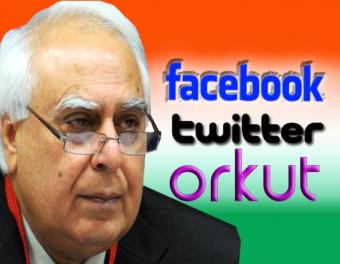
  • Kapil Sibal aims to control Social Media

    Kapil Sibal aims to control Social Media

    Bye bye democracy and welcome communism, India is heading the China way, as Kapi Sibal contacts Facebook, Google, Yahoo and Microsoft in order to control the content that is rolled into free space, demanding they ban material that could incite tensions on the subcontinent.  This all happened after his team spotted a group criticizing Sonia Gandhi on Facebook.

    Wow talk about talking everything personally!

    [Reuters]

  • German court permanently bans Samsung Galaxy Tab 10.1 in Apple vs Samsung, Indian courts approached

    German court permanently bans Samsung Galaxy Tab 10.1 in Apple vs Samsung, Indian courts approached

    German judge Johanna Brueckner-Hoffman has ruled in Apple’s favor on Friday by banning Samsung from selling its GALAXY Tab 1o.1 tablets in Germany.

    The court is of the opinion that Apple’s minimalistic design isn’t the only technical solution to make a tablet computer, other designs are possible

    – Said the Judge

    Apple has also blocked Samsung from selling its GALAXY Tab 10.1 in Australia until a court there rules whether or not the tablet infringes on 10 of Apple’s patents. Apple has also approached the Indian courts to seek ban on sales of the Galaxy 750 in India. The benefit for Samsung here is that Apple will not be able to use the german courts ruling, because the name of the two devices is different. i.e. the Galaxy 750 in India and Galaxy Tab 10.1 rest of the world. Whether Samsung India was already expecting the legal battle is unknown.

    Samsung, meanwhile, plans to appeal the ruling in a higher court and a spokesman said 

    We are disappointed with this ruling and believe it severely limits consumer choice in Germany.”

  • German Court Removes Ban on Galaxy Tab 10.1 Sales in EU

    German Court Removes Ban on Galaxy Tab 10.1 Sales in EU

    The courts have gone in favor of Samsung and the  Düsseldorf regional court in Germany announced on Tuesday that it is partially lifting its original injunction that banned Samsung from selling its Galaxy Tab 10.1 tablet in all of the European Union excluding the Netherlands.

    According to sources , an Official from the court said:

    It is unclear if The Court has the ability or the power to ban the sales outside of Germany in the first place

    Apple also recently banned the sale of the Galaxy Tab in Australia recently, yet Samsung is all set to appeal the ban on the 25th of Aug. The sale of the Galaxy Tab 10.1 will go undeterred in India. The bans could also be a possible reason for the name change of the tablets in India : the Galaxy 750 is the rebranded Galaxy tab 10.1 ( to avoid Apple’s radar?).

    It also looks fruitless for Apple to file an injunction in India, since the Legal proceedings itself will take months and by then Samsung will be all sold out.

  • Google+ Blocked in China

    Google+ Blocked in China

    China, as a country has banned Facebook, Twitter, Flickr and Foursquare. Its newest target has been the Google+ service, which promises to give a better social networking experience than Facebook. A Chinese Internet Analyst Sage Brennan had this to say:

    [quote]This was the quickest blockage I can remember … The speed with which they moved to block Google+ was surprising, but I couldn’t be less surprised to see it blocked.[/quote]


    China has discouraged the use of online forums with a political tinge and has been wary of all foreign social networks after growing fears of uprisings in Egypt, Syria, Tunisia and Libya which were fuelled by social networks. Instead of continuing under a Chinese censorship, Google opted to pull out its search engine from mainland China last year. A few weeks ago, there were allegations that Google’s email service, Gmail, was hacked by Chinese hackers.

    With the launch of Google+, Google wants to redefine social networking by fixing the alleged imperfections in the Facebook model. They say that the way we connect with people has to be re-worked. Right now, they say that the existing social network model has reduced friends to the status of fast food, where people wrap each other in friend paper. At the moment, we’re bombarded with updates from all of our ‘friends’. But in reality, you share something with your friends, another thing with your parents and a third thing with your boss.

    The core of Google+ lies in its ability to define ‘circles’. Circles are basically groups that allow you to define what you are sharing and with who. There are also a host of other services like +Sparks (Strike up a conversation, about pretty much anything), +Hangouts (stop by and say hello), +Mobile (share what’s around), +Location, +Instant Upload, +Huddle and +You.

    The service is going through a limited trial at the moment and is scheduled for release soon.

  • iCloud Bans Windows XP Users

    Apple has announced that it will not allow Windows XP users access to its digital locker, iCloud. Tucked into the bottom of the iCloud release, Apple states that users would have to have Windows Vista or Windows 7 to gain access. Based on recent Stats, this cuts out over half the PC population which still uses Microsoft’s aging operating system.

    This is not the first time that XP users have been let out of a software launch. Microsoft itself showed the boot to XP users when it launched the new Internet Explorer 9 browser which does not and never will run on Windows XP.

  • Indian Government Bans Nokia’s Push Email Service

    Indian Government Bans Nokia’s Push Email Service

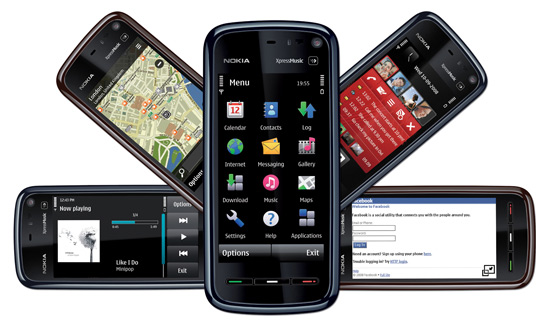
    Nokia’s upcoming push email service has been banned by the Indian Government. The Ministry of Home Affairs has relayed directives to the Department of Telecom stating that Nokia’s new push email product should not be permitted to launch in India until a system is put in place that will allow the government to monitor communications sent a received on devices.


    “In view of the Intelligence Bureau’s report, Department of Telecommunications is requested to advice the Telecom Service Providers not to launch Nokia’s proposed pushmail/powermail service without putting in place monitoring facilities to the satisfaction of the LEAs,” Said the Telecom Department.


    A similar thing had happened with RIM’s Blackberry servers, back in 2010.

iGyaan Network
Privacy Overview

This website uses cookies so that we can provide you with the best user experience possible. Cookie information is stored in your browser and performs functions such as recognising you when you return to our website and helping our team to understand which sections of the website you find most interesting and useful.